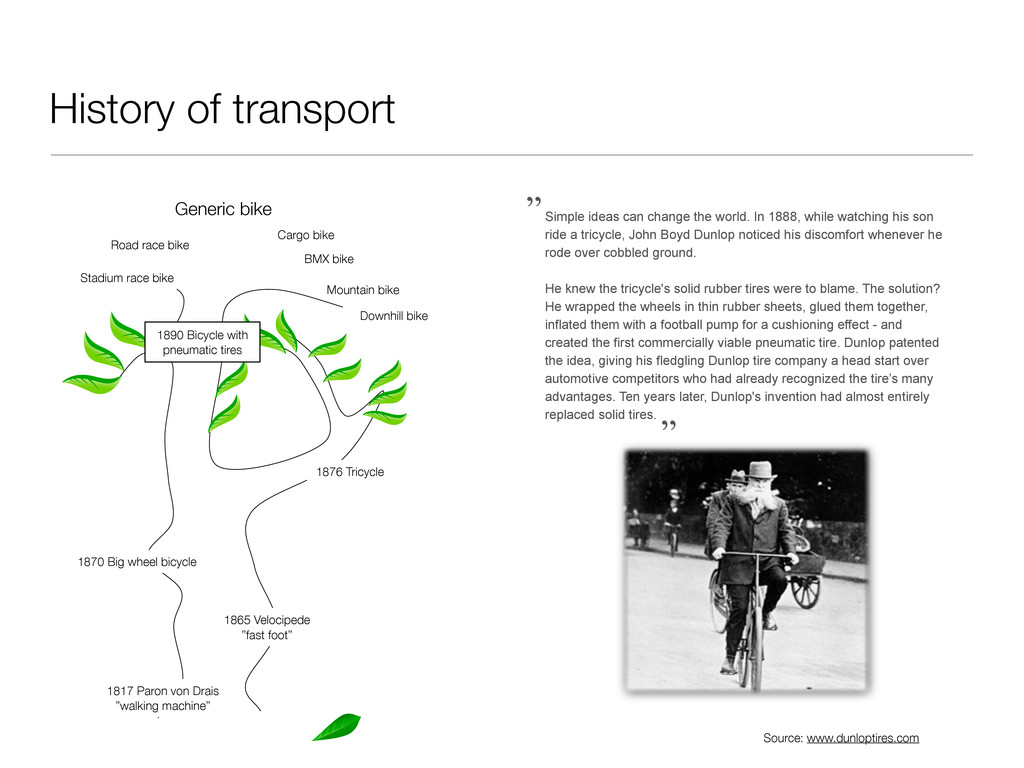
Velocipede ”fast foot” 1870 Big wheel bicycle 1876 Tricycle 1890 Bicycle with pneumatic tires Road race bike Stadium race bike Generic bike Cargo bike Mountain bike BMX bike Downhill bike Source: www.dunloptires.com Simple ideas can change the world. In 1888, while watching his son ride a tricycle, John Boyd Dunlop noticed his discomfort whenever he rode over cobbled ground. He knew the tricycle's solid rubber tires were to blame. The solution? He wrapped the wheels in thin rubber sheets, glued them together, inflated them with a football pump for a cushioning effect - and created the first commercially viable pneumatic tire. Dunlop patented the idea, giving his fledgling Dunlop tire company a head start over automotive competitors who had already recognized the tire’s many advantages. Ten years later, Dunlop's invention had almost entirely replaced solid tires. ” „
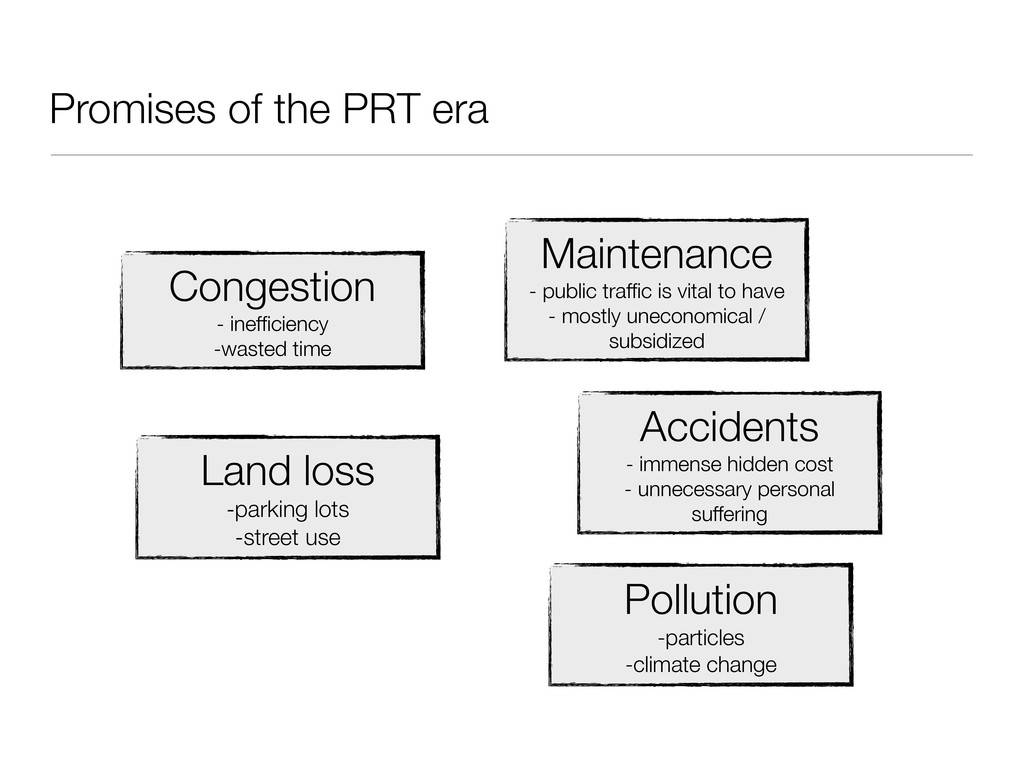
Accidents - immense hidden cost - unnecessary personal suffering Land loss -parking lots -street use Pollution -particles -climate change Maintenance - public traffic is vital to have - mostly uneconomical / subsidized
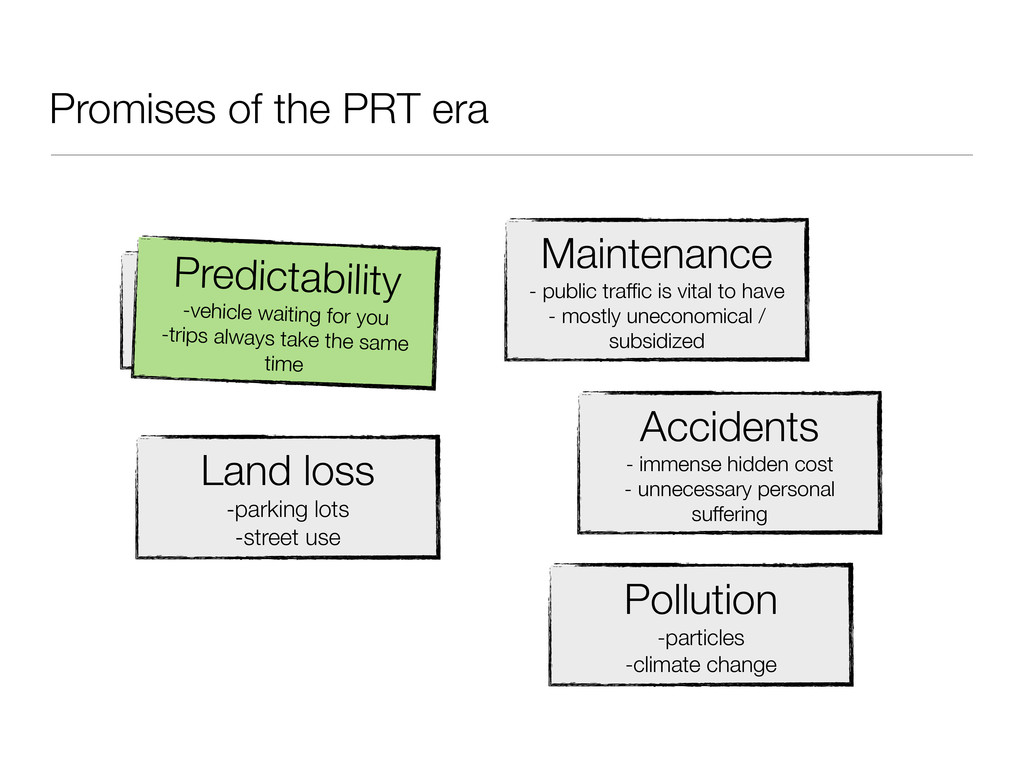
Accidents - immense hidden cost - unnecessary personal suffering Land loss -parking lots -street use Pollution -particles -climate change Predictability -vehicle waiting for you -trips always take the same time Maintenance - public traffic is vital to have - mostly uneconomical / subsidized
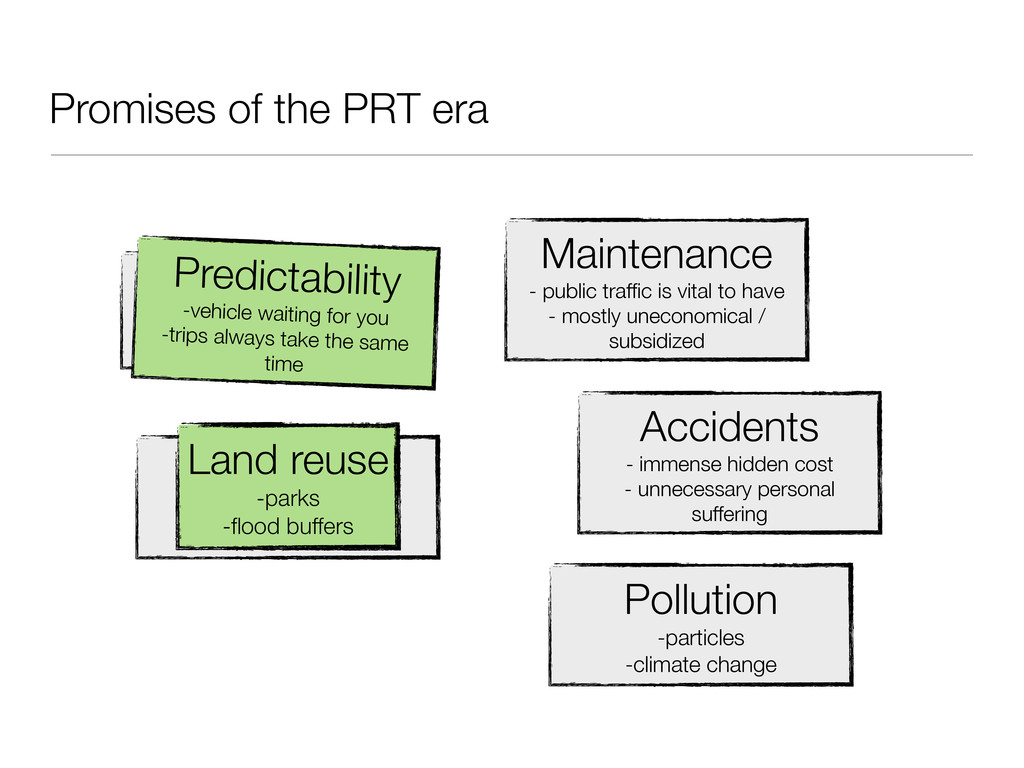
Accidents - immense hidden cost - unnecessary personal suffering Land loss -parking lots -street use Pollution -particles -climate change Predictability -vehicle waiting for you -trips always take the same time Land reuse -parks -flood buffers Maintenance - public traffic is vital to have - mostly uneconomical / subsidized
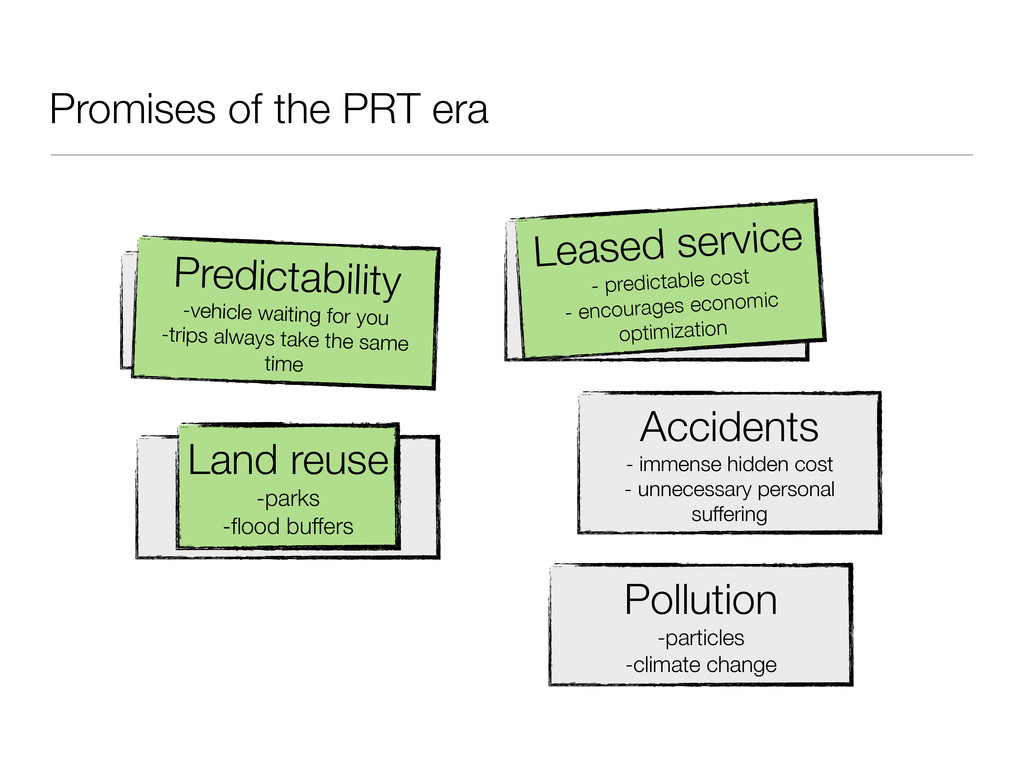
Accidents - immense hidden cost - unnecessary personal suffering Land loss -parking lots -street use Pollution -particles -climate change Predictability -vehicle waiting for you -trips always take the same time Land reuse -parks -flood buffers Maintenance - public traffic is vital to have - mostly uneconomical / subsidized Leased service - predictable cost - encourages economic optimization
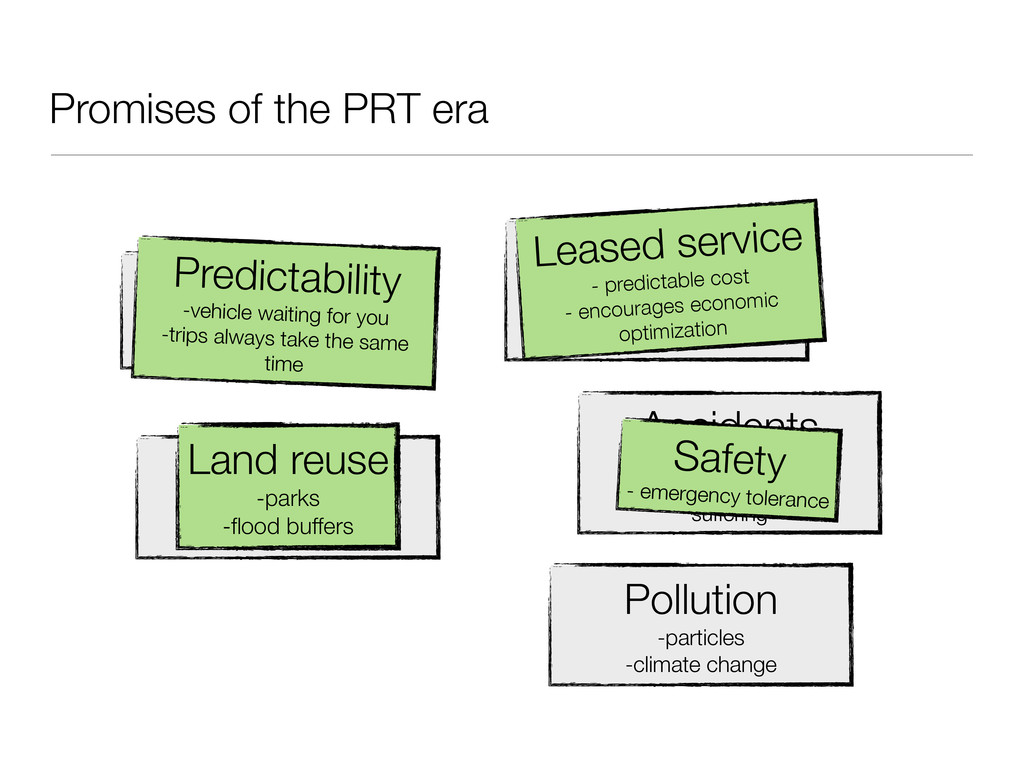
Accidents - immense hidden cost - unnecessary personal suffering Land loss -parking lots -street use Pollution -particles -climate change Predictability -vehicle waiting for you -trips always take the same time Safety - emergency tolerance Land reuse -parks -flood buffers Maintenance - public traffic is vital to have - mostly uneconomical / subsidized Leased service - predictable cost - encourages economic optimization
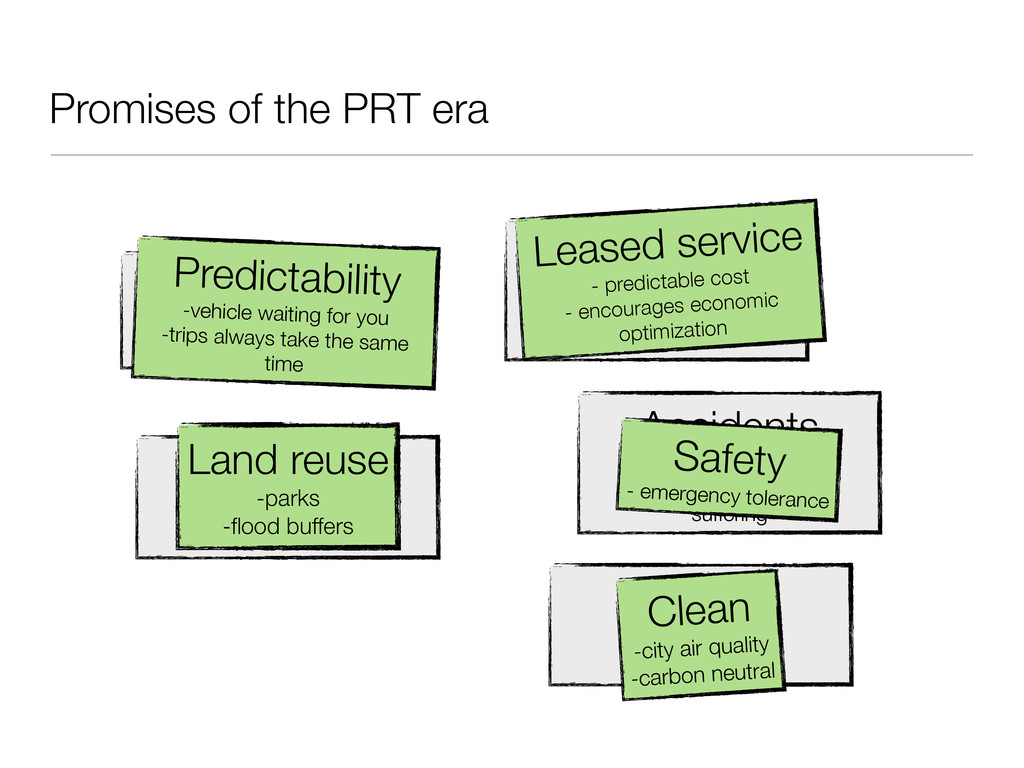
Accidents - immense hidden cost - unnecessary personal suffering Land loss -parking lots -street use Pollution -particles -climate change Predictability -vehicle waiting for you -trips always take the same time Safety - emergency tolerance Land reuse -parks -flood buffers Clean -city air quality -carbon neutral Maintenance - public traffic is vital to have - mostly uneconomical / subsidized Leased service - predictable cost - encourages economic optimization
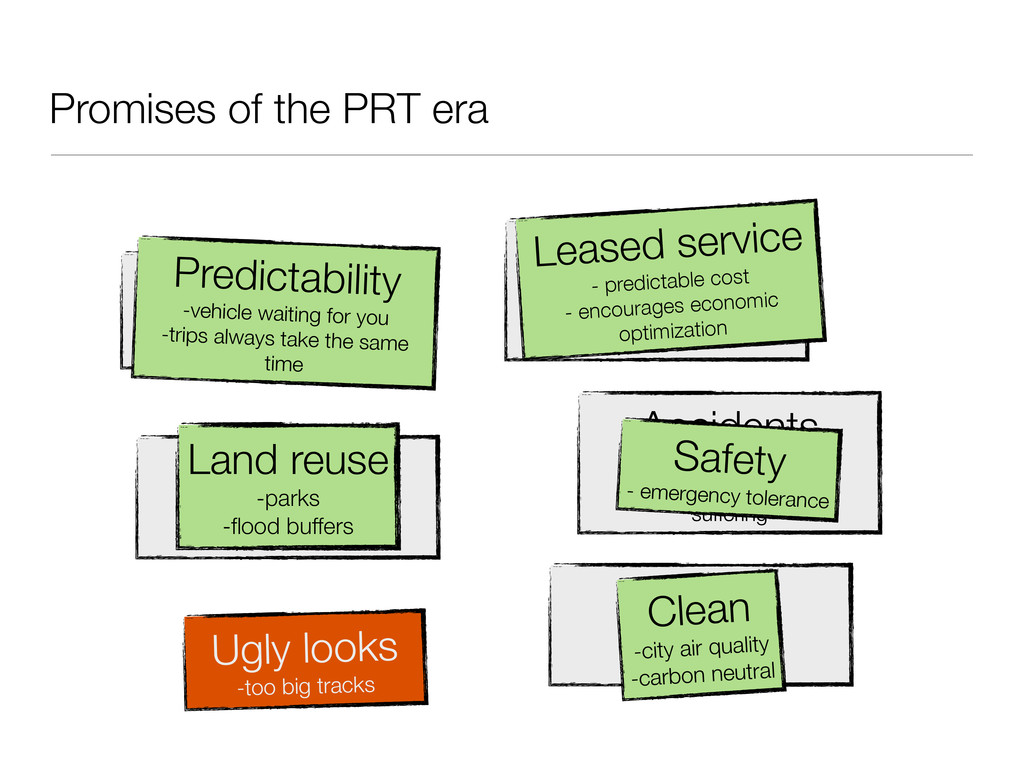
Accidents - immense hidden cost - unnecessary personal suffering Land loss -parking lots -street use Pollution -particles -climate change Predictability -vehicle waiting for you -trips always take the same time Safety - emergency tolerance Land reuse -parks -flood buffers Clean -city air quality -carbon neutral Maintenance - public traffic is vital to have - mostly uneconomical / subsidized Leased service - predictable cost - encourages economic optimization Ugly looks -too big tracks
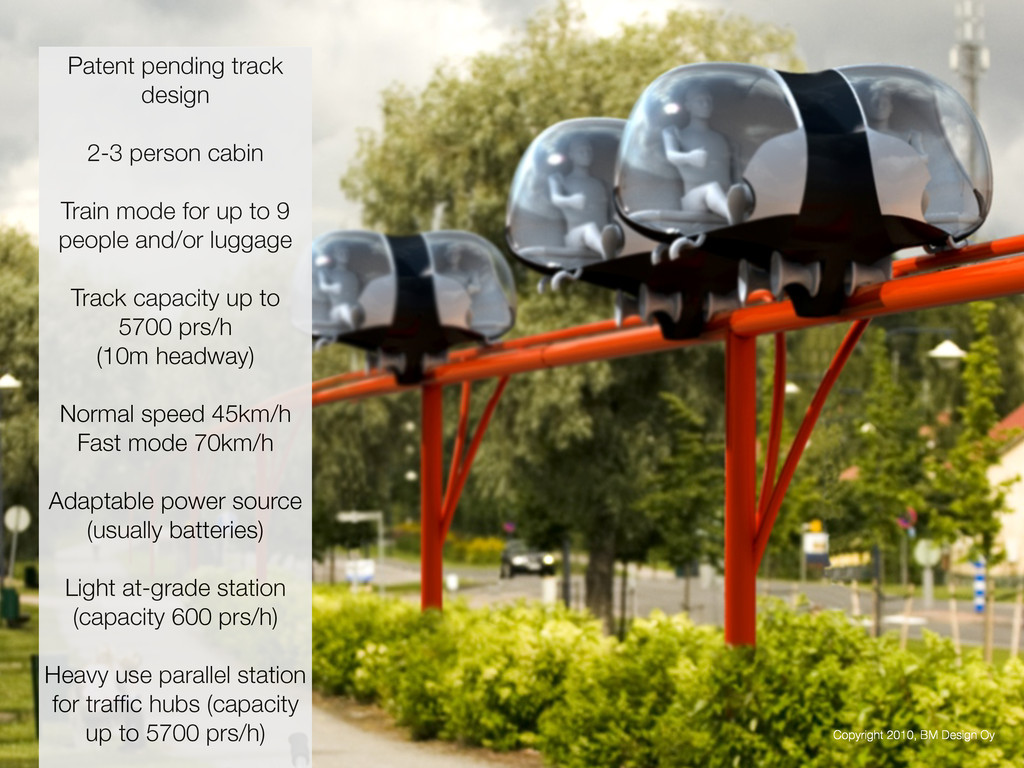
up to 9 people and/or luggage Track capacity up to 5700 prs/h (10m headway) Normal speed 45km/h Fast mode 70km/h Adaptable power source (usually batteries) Light at-grade station (capacity 600 prs/h) Heavy use parallel station for traffic hubs (capacity up to 5700 prs/h) Copyright 2010, BM Design Oy
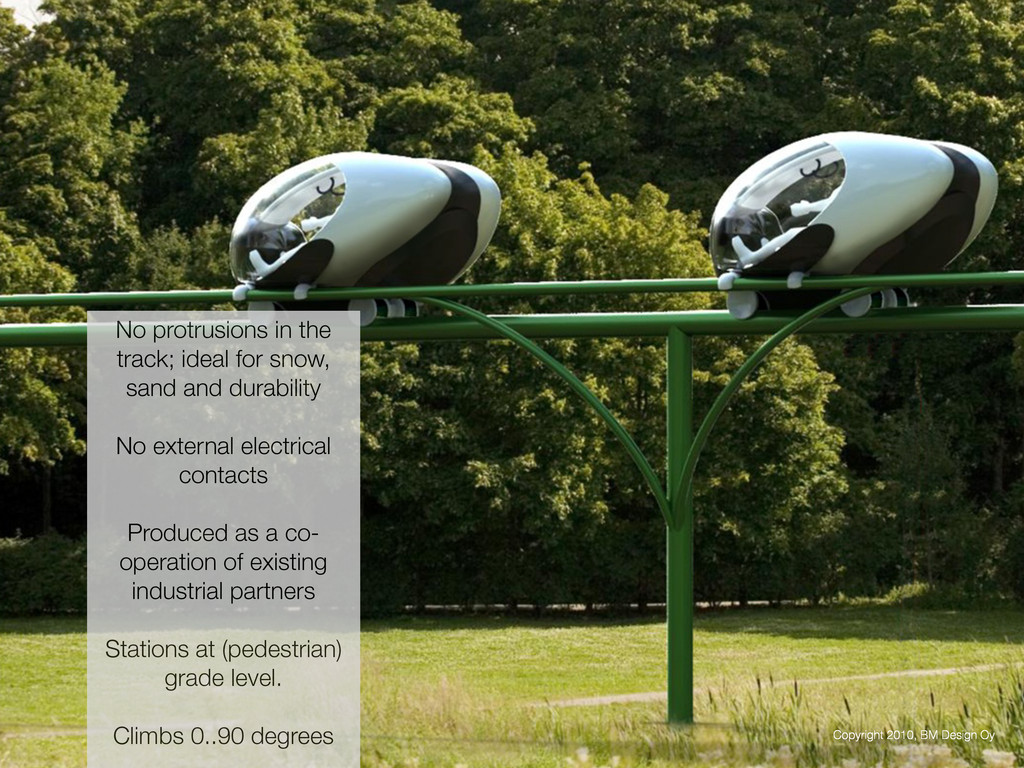
durability No external electrical contacts Produced as a co- operation of existing industrial partners Stations at (pedestrian) grade level. Climbs 0..90 degrees Copyright 2010, BM Design Oy
and back Tourist locations - highly varying seasonal needs - allows placing parking lots further away from the attractions (and/or having many) Historical sites -very little digging work is required -fits in tight places -i.e. Greek islands
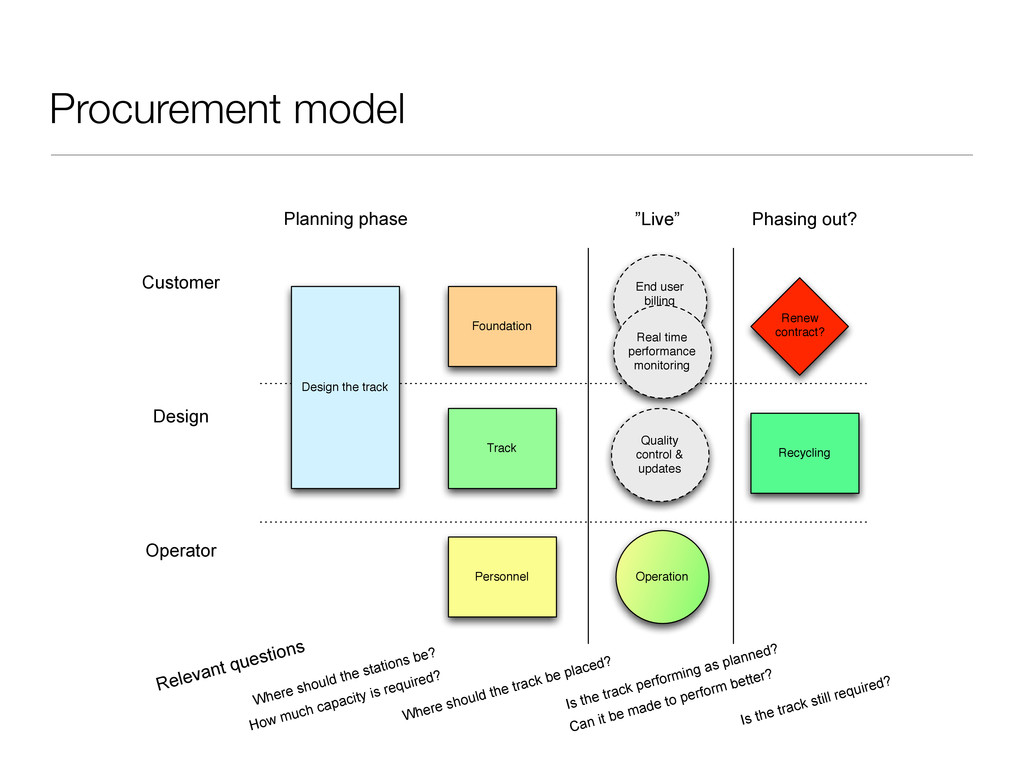
Track Personnel Operation End user billing (optional) Renew contract? Recycling Quality control & updates Design phase "Live" End of line Relevant questions - Where should the stations be? - How much capacity is required? - Where should the track go? - Is the track performing its function - Can it be made to perform better? - Is the track still required? Design the track Real time performance monitoring Procurement model Where should the stations be? How much capacity is required? Where should the track be placed? Is the track performing as planned? Can it be made to perform better? Is the track still required? Relevant questions Customer Design Operator Planning phase ”Live” Phasing out?
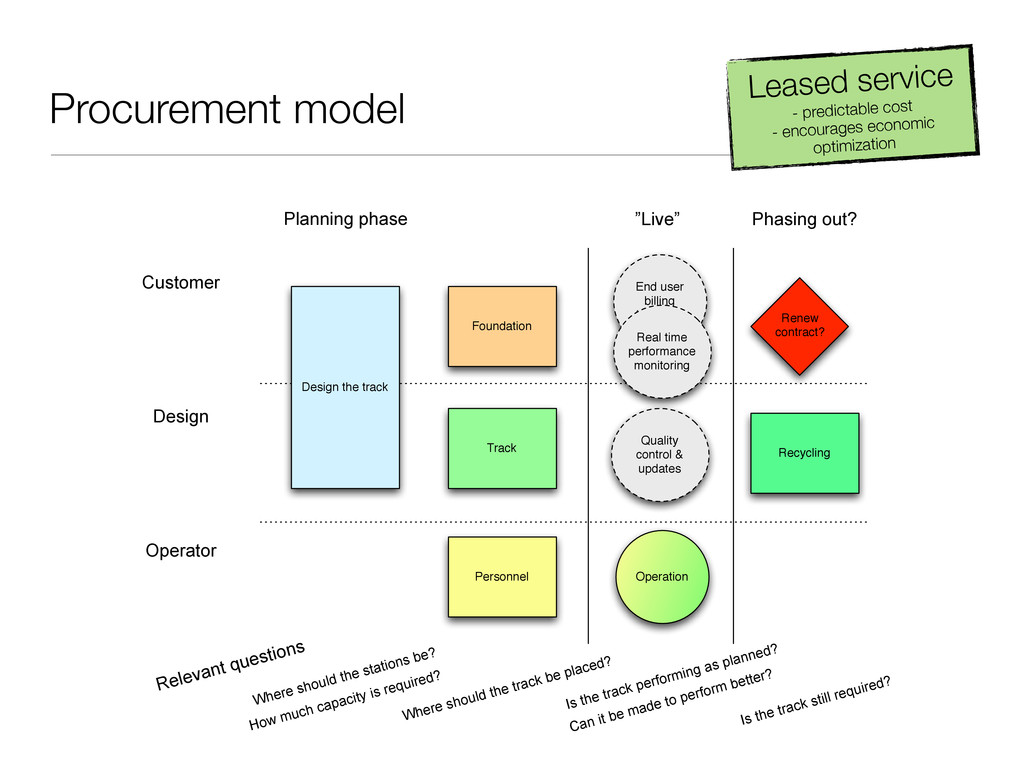
Track Personnel Operation End user billing (optional) Renew contract? Recycling Quality control & updates Design phase "Live" End of line Relevant questions - Where should the stations be? - How much capacity is required? - Where should the track go? - Is the track performing its function - Can it be made to perform better? - Is the track still required? Design the track Real time performance monitoring Procurement model Leased service - predictable cost - encourages economic optimization Where should the stations be? How much capacity is required? Where should the track be placed? Is the track performing as planned? Can it be made to perform better? Is the track still required? Relevant questions Customer Design Operator Planning phase ”Live” Phasing out?
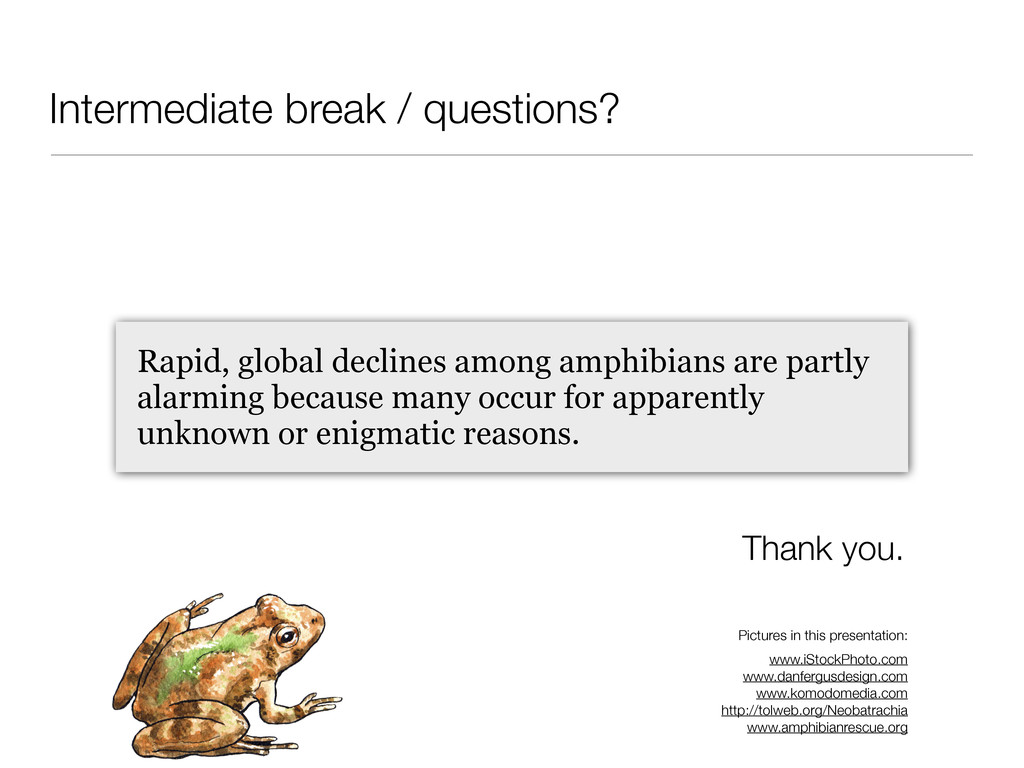
www.komodomedia.com http://tolweb.org/Neobatrachia www.amphibianrescue.org Rapid, global declines among amphibians are partly alarming because many occur for apparently unknown or enigmatic reasons. Thank you.


 bmdesignhki
 shogo4131
 gionn
 takonda
 sansantech
 pfn
 daidaidai
 rfdnxbro
 kaminashi
 glaforge
 tokuty
 kworkdev
 nealle
 speakerdeck
 addyosmani
 jacobtomlinson
 samtorres
 maltzj
 sugarenia
 akosma
 thoeni
 ryanjones
 codingconduct
 marcelosomers
 raygrieselhuber