Upgrade to Pro — share decks privately, control downloads, hide ads and more …

The Benefits of Anti-Money Laundering (AML) Reg...

Avatar for Brandy Pena Brandy Pena
July 07, 2026
3

The Benefits of Anti-Money Laundering (AML) Regulations

Federal law enforcement agencies including the Financial Crimes Enforcement Network (FinCEN) and U.S. Department of Justice (DOJ) rely heavily on whistleblowers to help them uncover violations of the Bank Secrecy Act (BSA) and other federal anti-money laundering (AML) statutes. Whistleblower complaints can assist these agencies with taking judicial or administrative action, and these actions can lead to monetary sanctions and other penalties.

Avatar for Brandy Pena

Brandy Pena

July 07, 2026

Transcript

  1. 1. Protecting the Financial System from Criminal Exploitation AML regulations

    help safeguard financial institutions from being used as channels for illicit funds. Without these controls, criminals could easily move dirty money through banks and investment firms, undermining the integrity of the entire financial system. By enforcing AML compliance, institutions can detect suspicious transactions and prevent fraudulent activities.
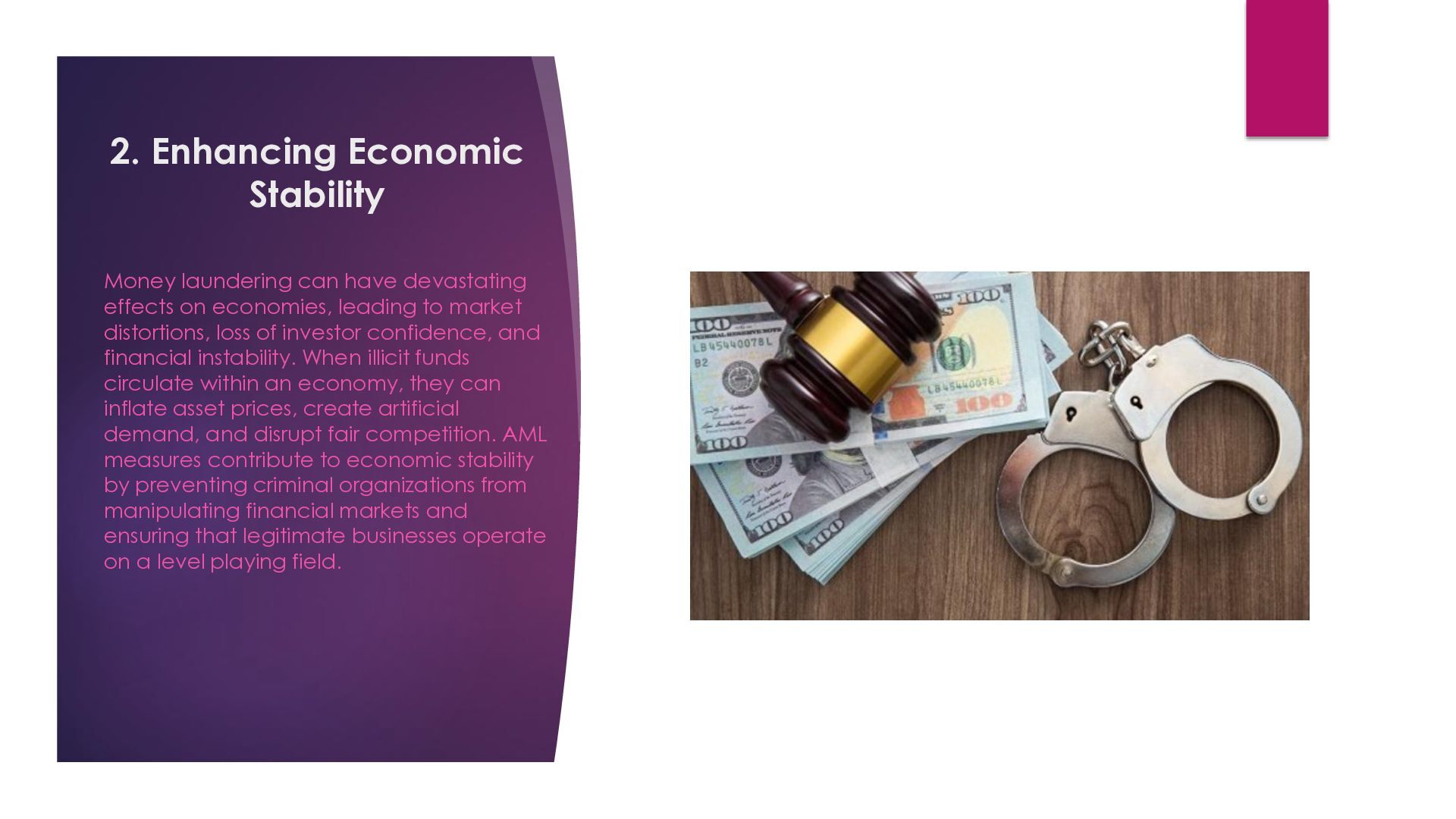
  2. 2. Enhancing Economic Stability Money laundering can have devastating effects

    on economies, leading to market distortions, loss of investor confidence, and financial instability. When illicit funds circulate within an economy, they can inflate asset prices, create artificial demand, and disrupt fair competition. AML measures contribute to economic stability by preventing criminal organizations from manipulating financial markets and ensuring that legitimate businesses operate on a level playing field.
  3. 3. Reducing Crime and Corruption The proceeds of money laundering

    often fund further criminal activities, including drug trafficking, terrorism, human trafficking, and corruption. By enforcing AML regulations, authorities can cut off financial support for these illegal enterprises, making it harder for criminals to operate. Additionally, AML efforts promote transparency in financial transactions, reducing opportunities for bribery and corruption within governments and corporations.
  4. 4. Strengthening International Reputation and Compliance Countries with weak AML

    frameworks risk being blacklisted by international financial bodies such as the Financial Action Task Force (FATF). This can lead to restrictions on trade, foreign investment, and access to global financial markets. By implementing and adhering to AML standards, countries enhance their international credibility and ensure seamless integration with the global financial system.
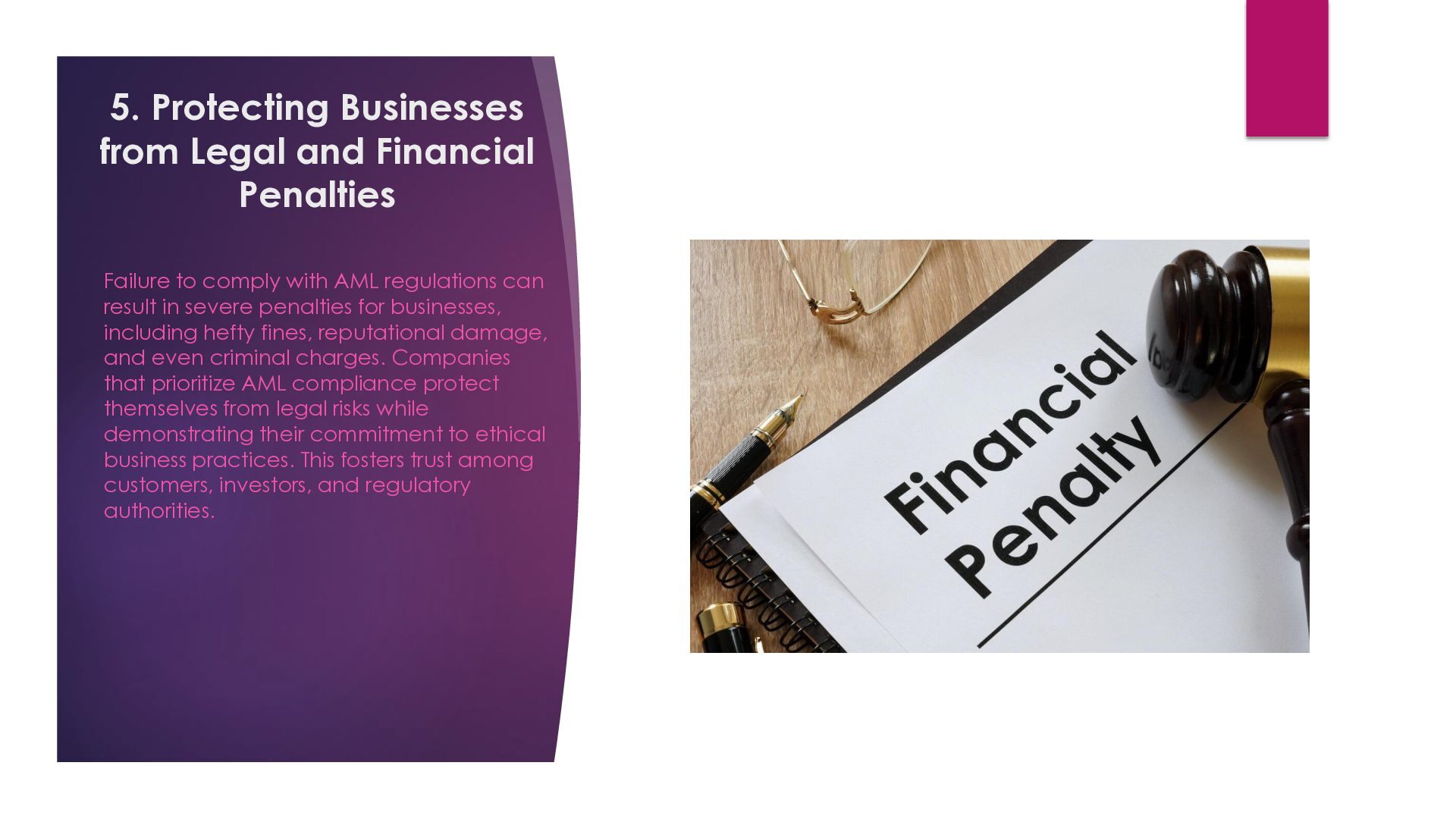
  5. 5. Protecting Businesses from Legal and Financial Penalties Failure to

    comply with AML regulations can result in severe penalties for businesses, including hefty fines, reputational damage, and even criminal charges. Companies that prioritize AML compliance protect themselves from legal risks while demonstrating their commitment to ethical business practices. This fosters trust among customers, investors, and regulatory authorities.
  6. 6. Improving Customer Trust and Confidence Consumers and investors are

    more likely to engage with financial institutions that prioritize security and transparency. AML measures reassure customers that their funds are safe and that they are not inadvertently involved in illicit activities. By preventing fraud and financial crimes, businesses build stronger relationships with their clientele and maintain long-term trust.
  7. 7. Facilitating Cross- Border Trade and Investments Strong AML regulations

    create a secure environment for international trade and investment. Financial institutions that comply with global AML standards can operate more easily across borders, fostering international business partnerships. Investors are also more willing to invest in countries with robust AML frameworks, as they reduce the risks associated with money laundering and fraud.