Upgrade to Pro — share decks privately, control downloads, hide ads and more …

Behavior Driven Development

Behavior Driven Development

Presented by Peter Brown and Alan Peabody on Oct. 26, 2011

BTVWAG

May 19, 2012

Transcript

33 slides
  1. Overview • Testing: Why? and What? • Test Driven Development

    • Behavior Driven Development ◦ Acceptance & Unit Tests ◦ Cucumber ◦ RSpec • Continuous Testing • General Tips
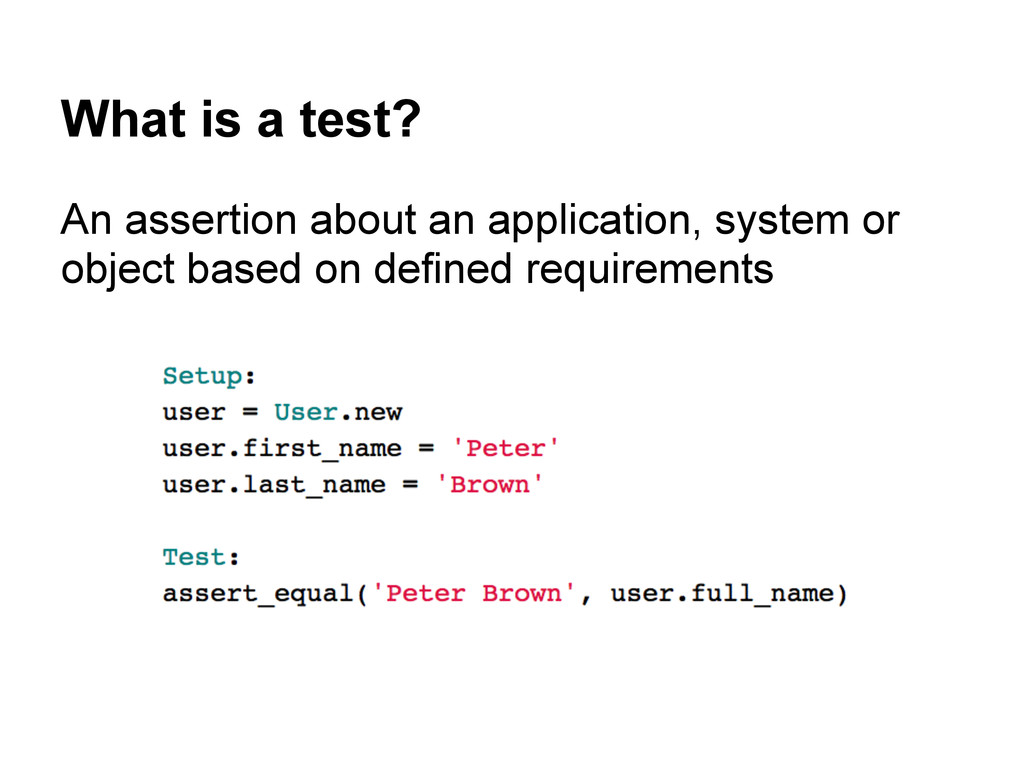
  2. What is a test? An assertion about an application, system

    or object based on defined requirements
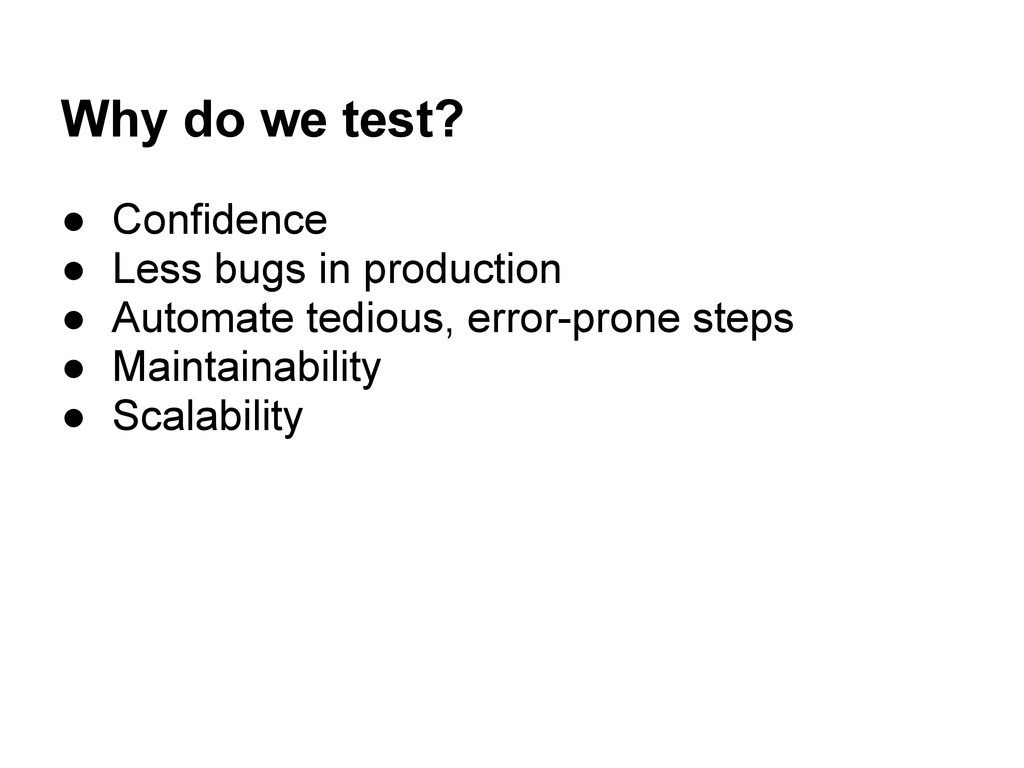
  3. Why do we test? • Confidence • Less bugs in

    production • Automate tedious, error-prone steps • Maintainability • Scalability
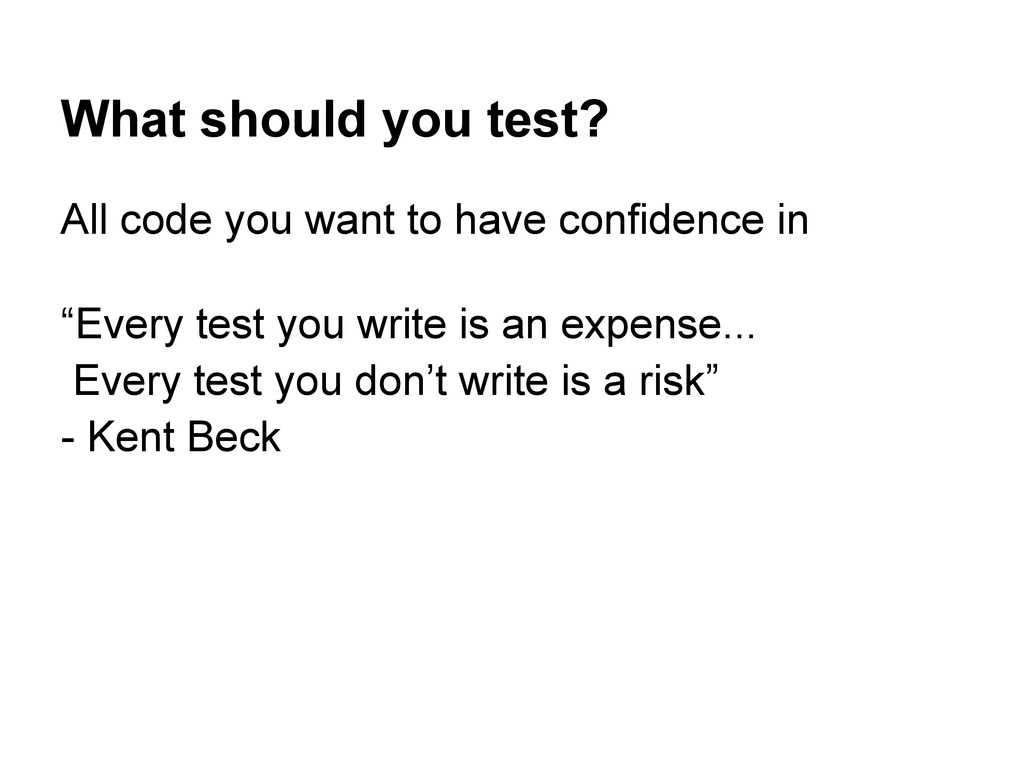
  4. What should you test? All code you want to have

    confidence in “Every test you write is an expense... Every test you don’t write is a risk” - Kent Beck
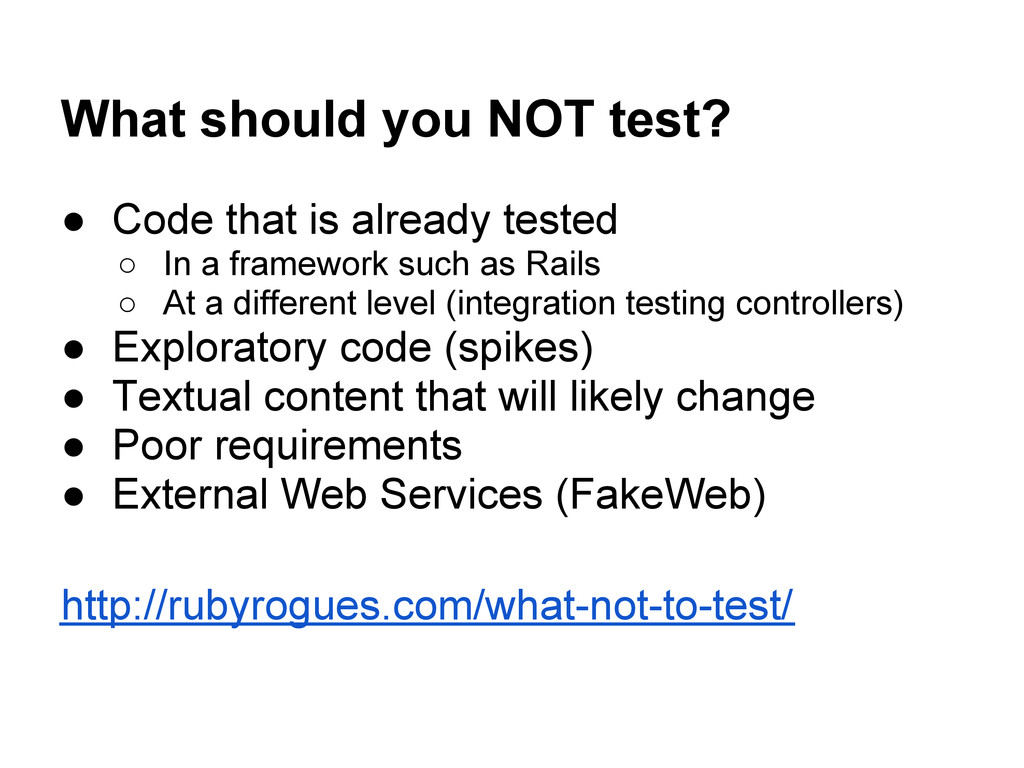
  5. What should you NOT test? • Code that is already

    tested ◦ In a framework such as Rails ◦ At a different level (integration testing controllers) • Exploratory code (spikes) • Textual content that will likely change • Poor requirements • External Web Services (FakeWeb) http://rubyrogues.com/what-not-to-test/
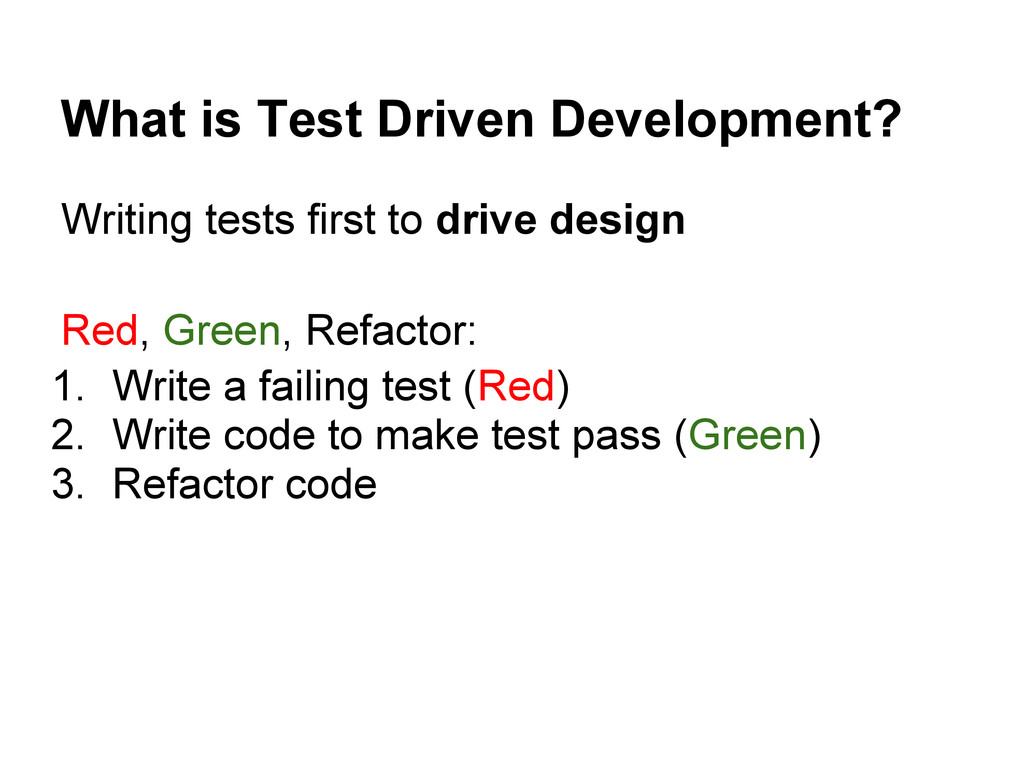
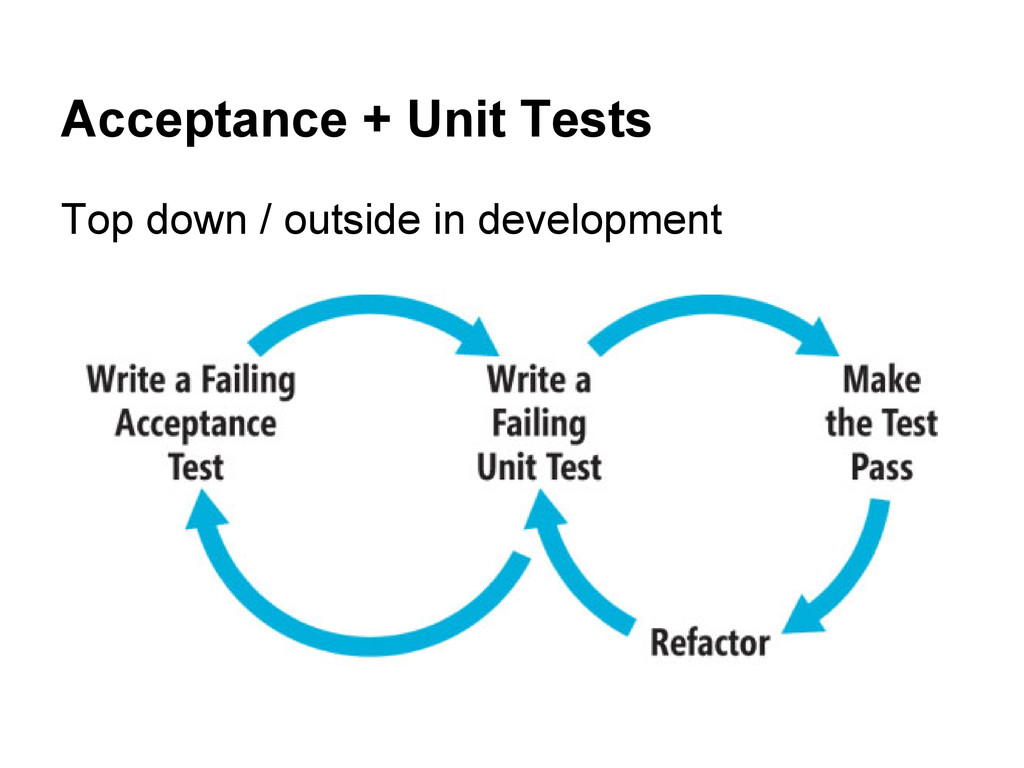
  6. Writing tests first to drive design Red, Green, Refactor: 1.

    Write a failing test (Red) 2. Write code to make test pass (Green) 3. Refactor code What is Test Driven Development?
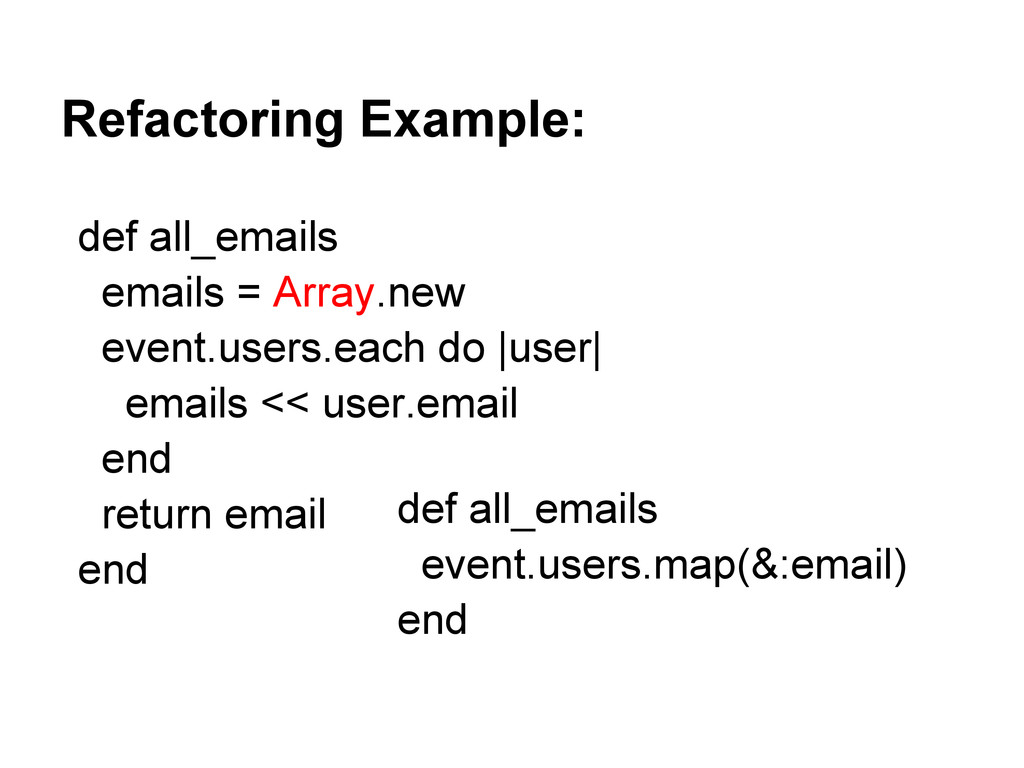
  7. def all_emails emails = Array.new event.users.each do |user| emails <<

    user.email end return email end def all_emails event.users.map(&:email) end Refactoring Example:
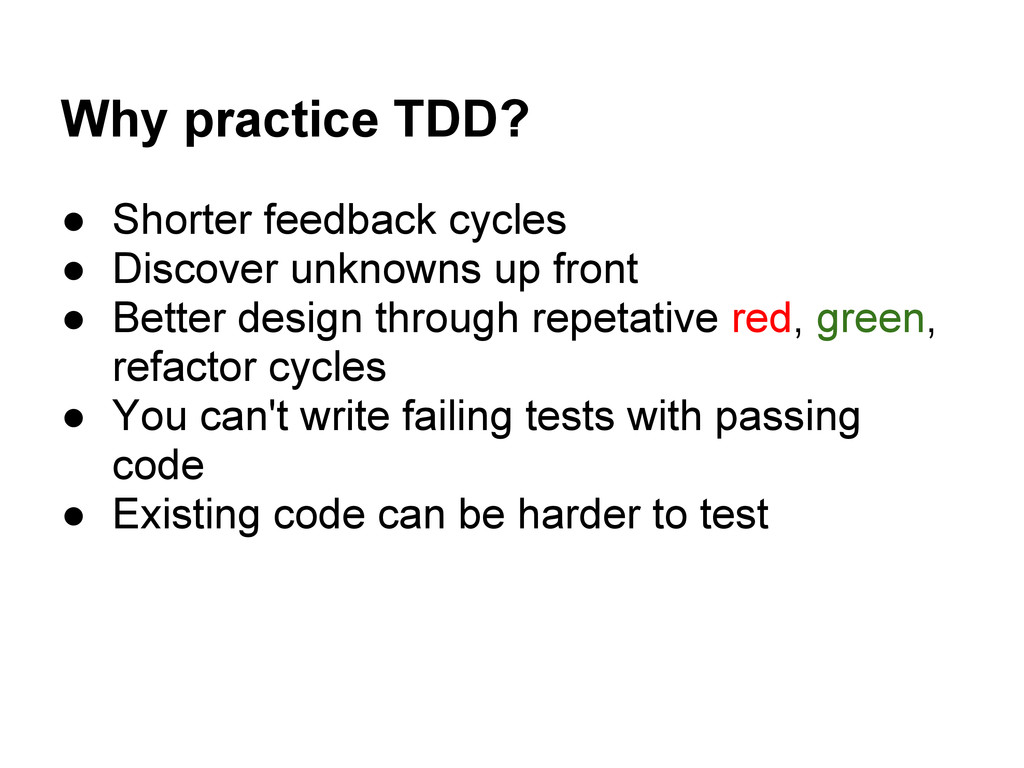
  8. Why practice TDD? • Shorter feedback cycles • Discover unknowns

    up front • Better design through repetative red, green, refactor cycles • You can't write failing tests with passing code • Existing code can be harder to test
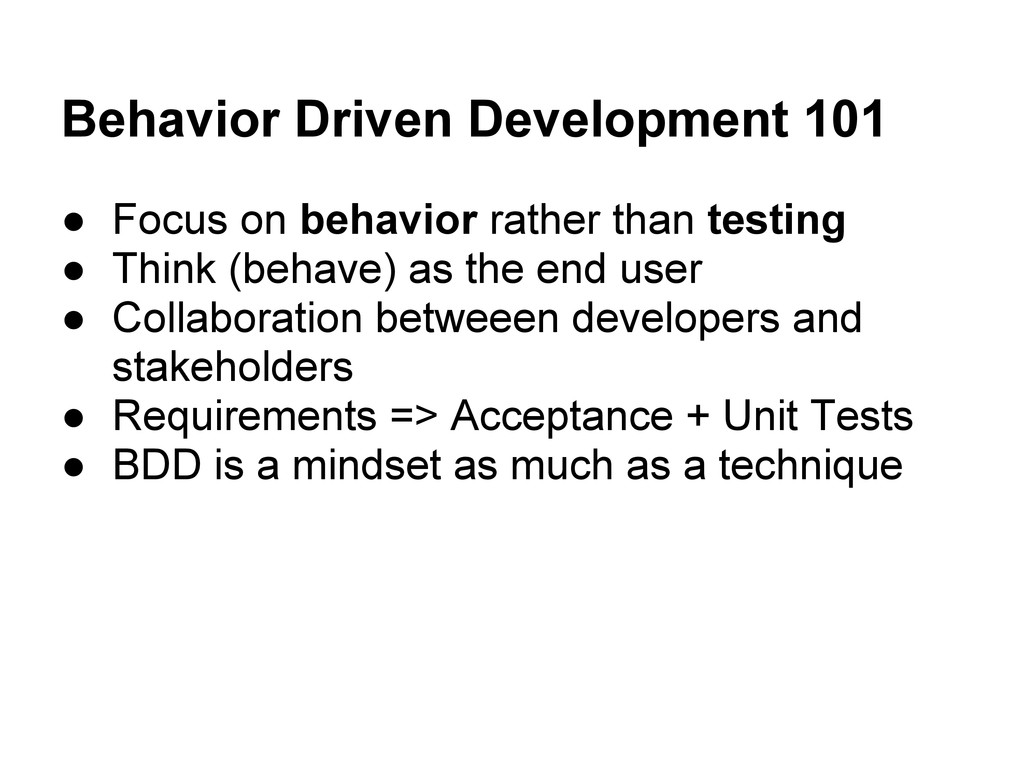
  9. • Focus on behavior rather than testing • Think (behave)

    as the end user • Collaboration betweeen developers and stakeholders • Requirements => Acceptance + Unit Tests • BDD is a mindset as much as a technique Behavior Driven Development 101
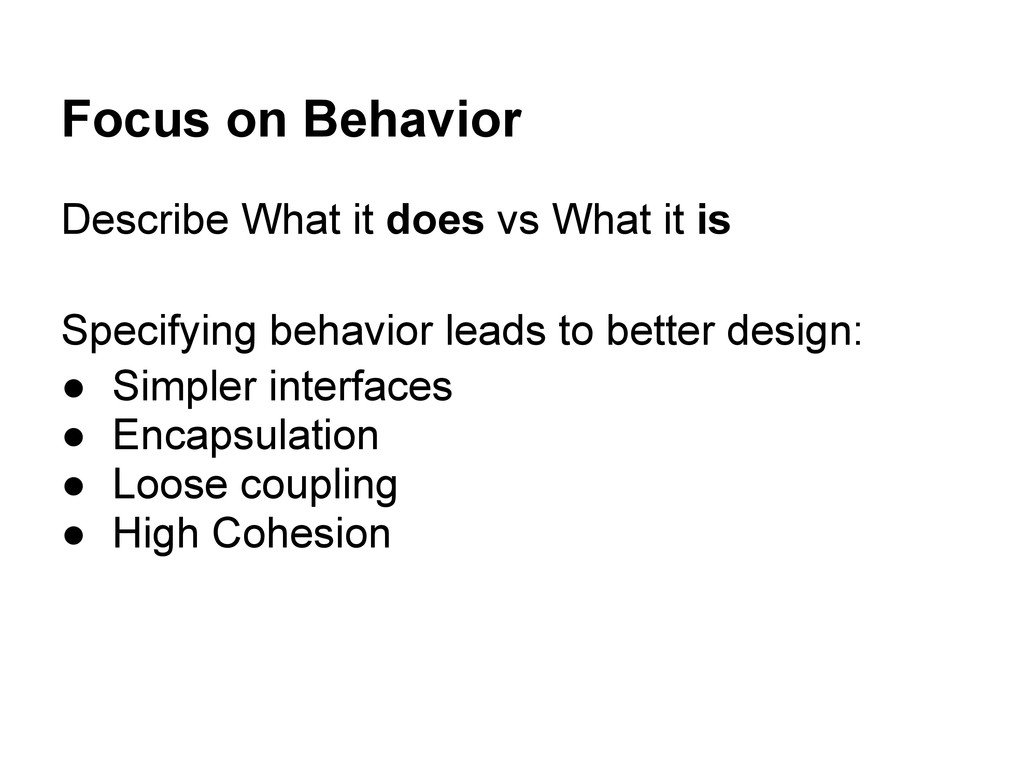
  10. Describe What it does vs What it is Specifying behavior

    leads to better design: • Simpler interfaces • Encapsulation • Loose coupling • High Cohesion Focus on Behavior
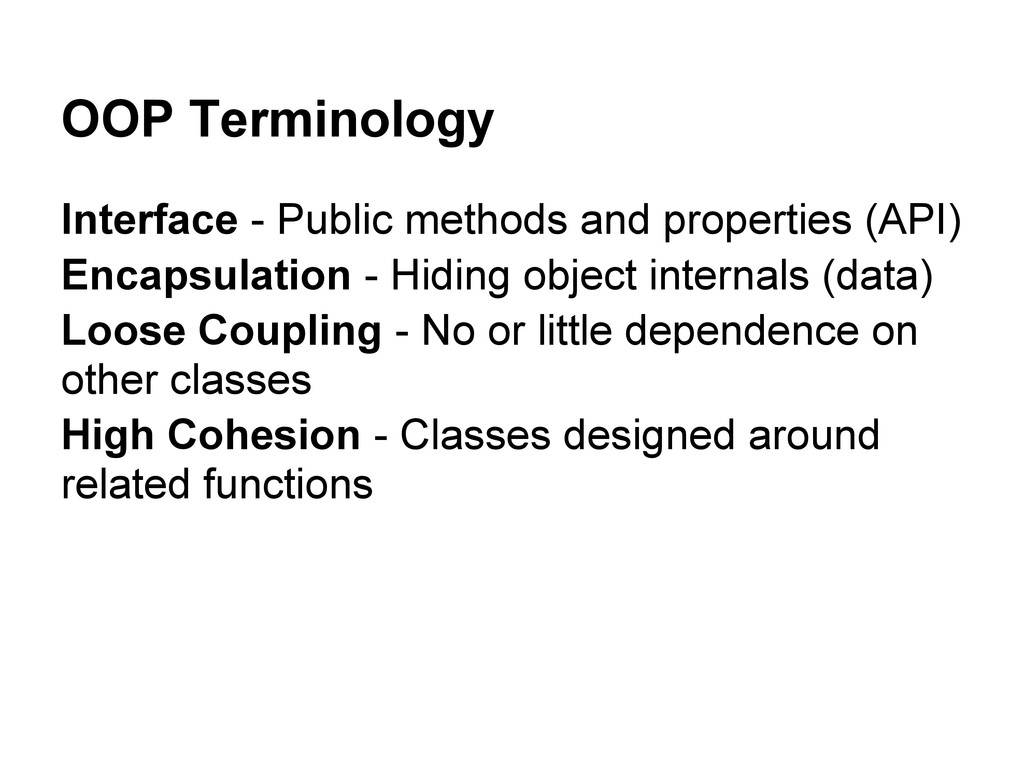
  11. OOP Terminology Interface - Public methods and properties (API) Encapsulation

    - Hiding object internals (data) Loose Coupling - No or little dependence on other classes High Cohesion - Classes designed around related functions
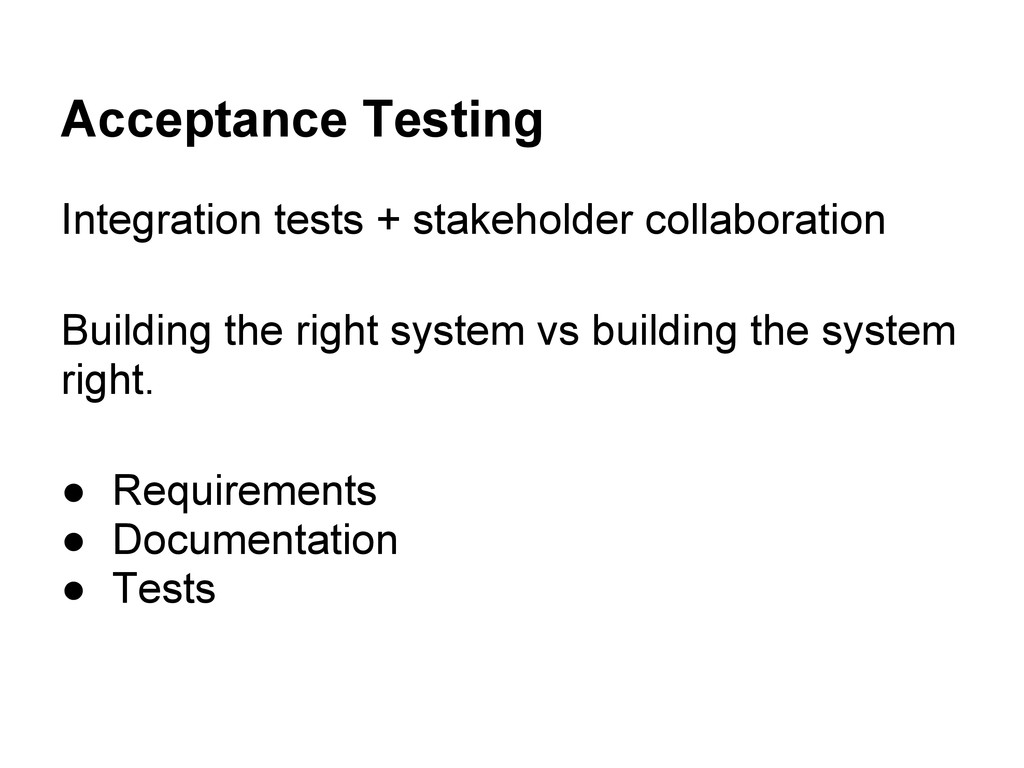
  12. Acceptance Testing Integration tests + stakeholder collaboration Building the right

    system vs building the system right. • Requirements • Documentation • Tests
  13. Acceptance Testing Continued Example: Signing up as a new user

    User Story: As someone without a user account I want to create a new account So that I can sign into the application Acceptance Test: User signs up for account, receives email, and can log into account.
  14. Unit Testing Designing small units of behavior for individual classes.

    • Isolate classes while testing • Simplify interfaces • Use mock objects (test doubles)
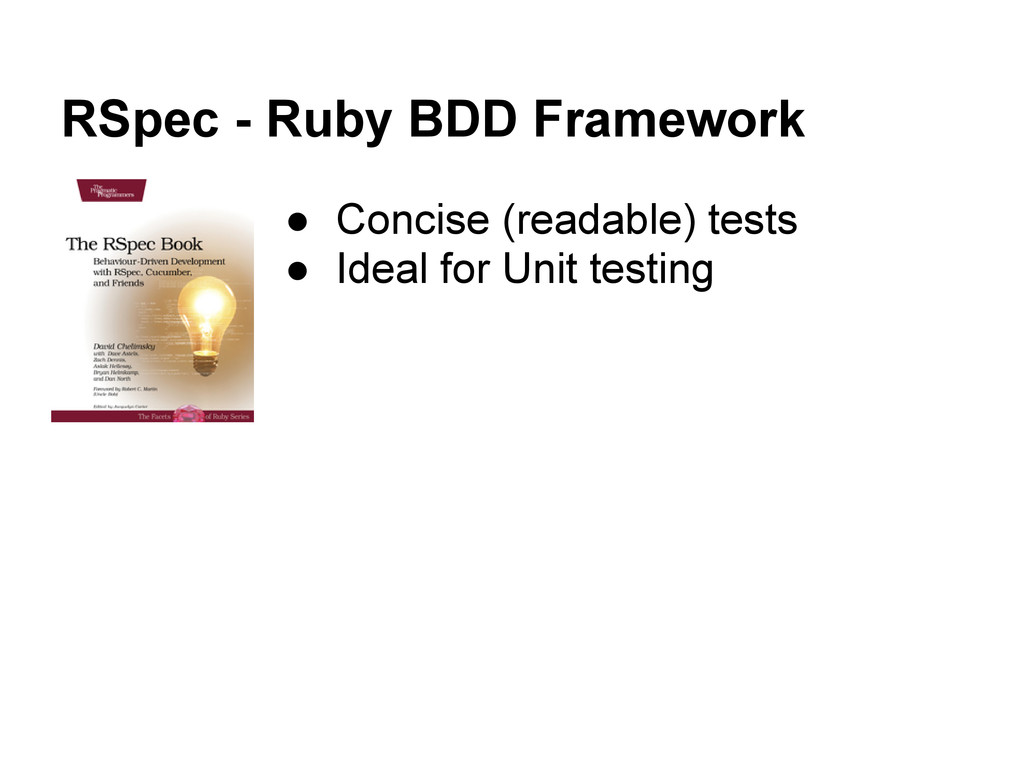
  15. BDD In Use - Tools of the Trade Cucumber -

    Cross platform, acceptance testing Rspec - Ruby BDD platform, ideal for unit tests Jasmine - JS BDD
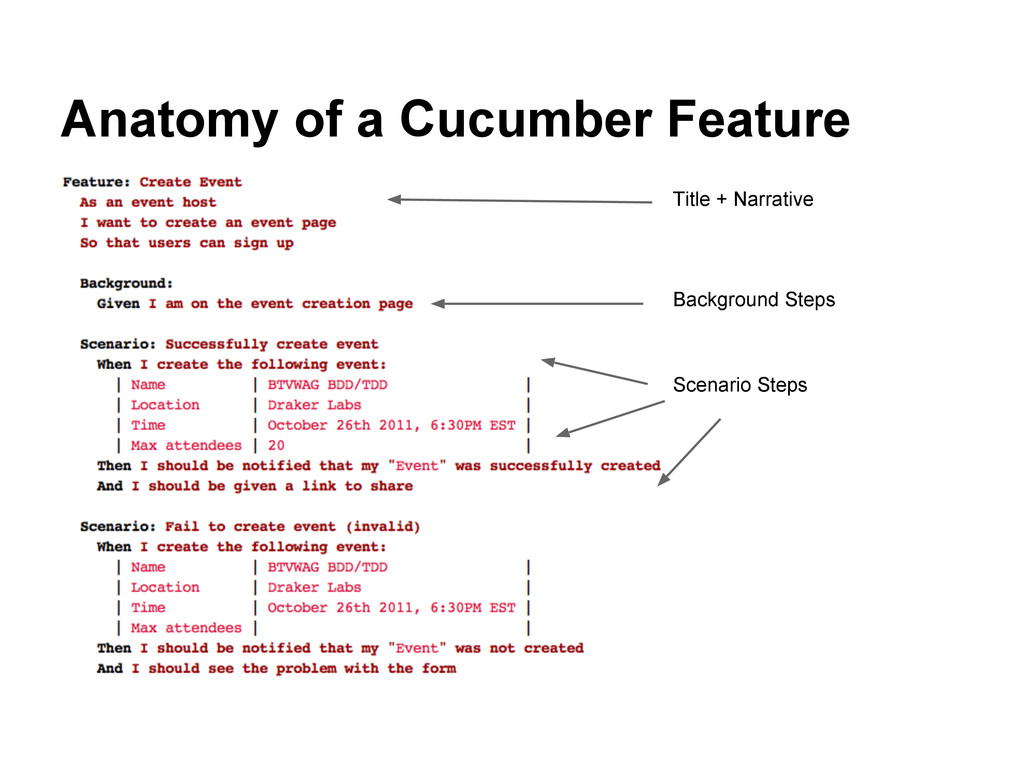
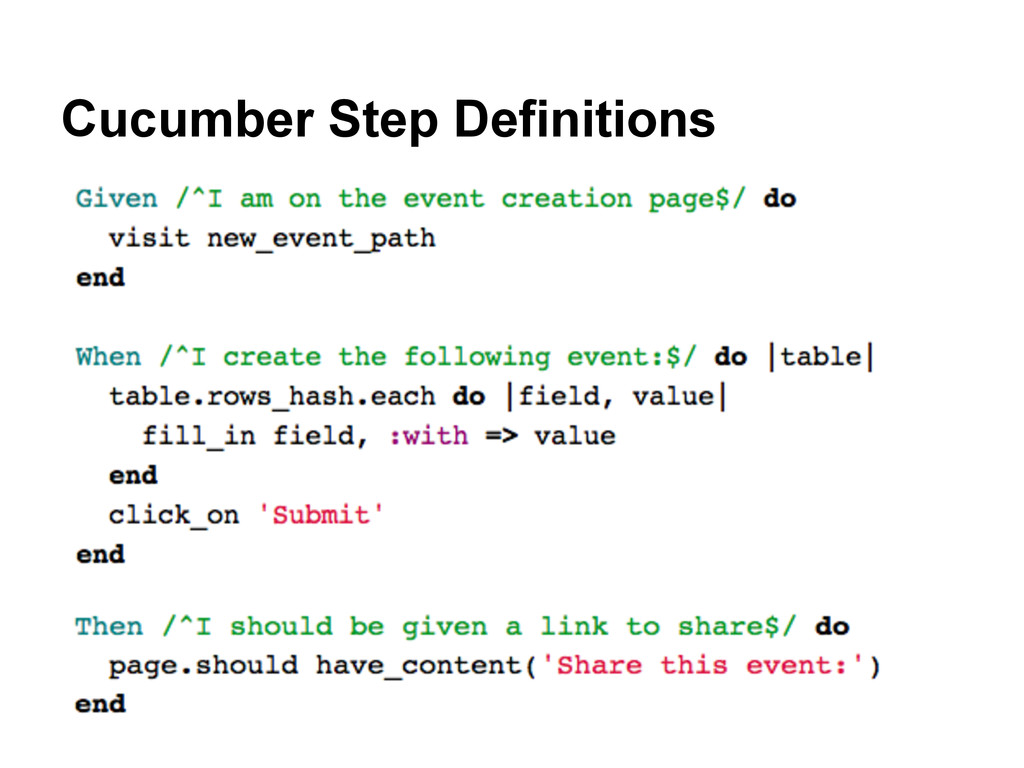
  16. Write automated tests for simple or complex systems in plain

    english (Gherkin) Expands upon Agile user stories Ideal for acceptance testing & stakeholder collaboration
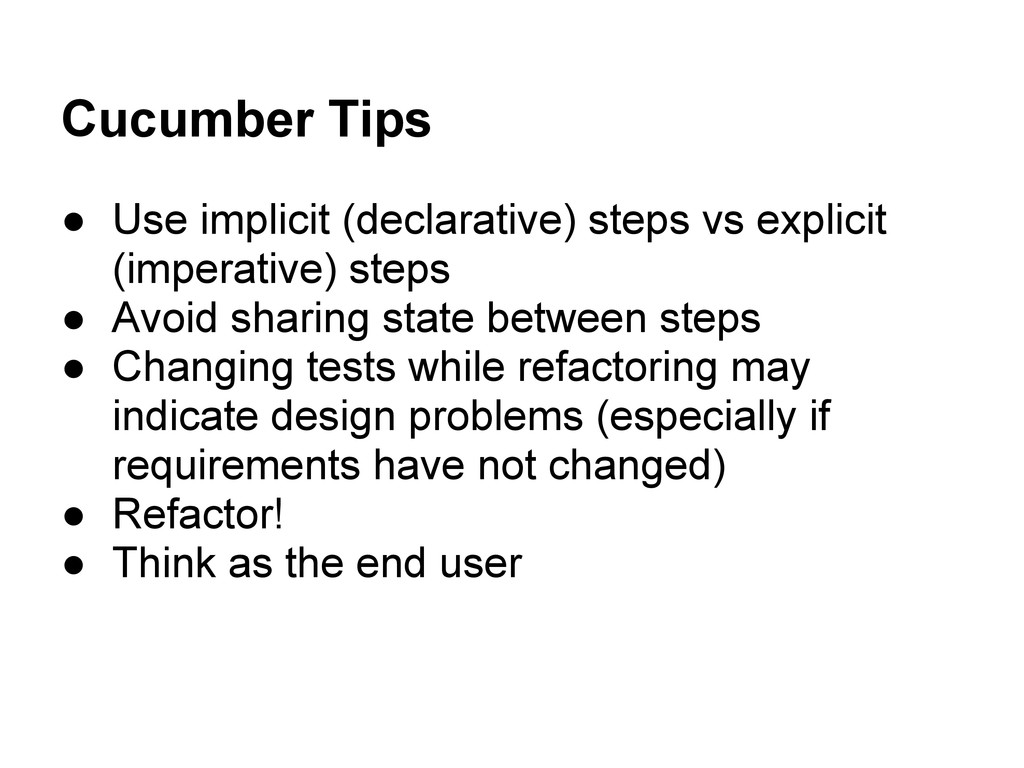
  17. Cucumber Tips • Use implicit (declarative) steps vs explicit (imperative)

    steps • Avoid sharing state between steps • Changing tests while refactoring may indicate design problems (especially if requirements have not changed) • Refactor! • Think as the end user
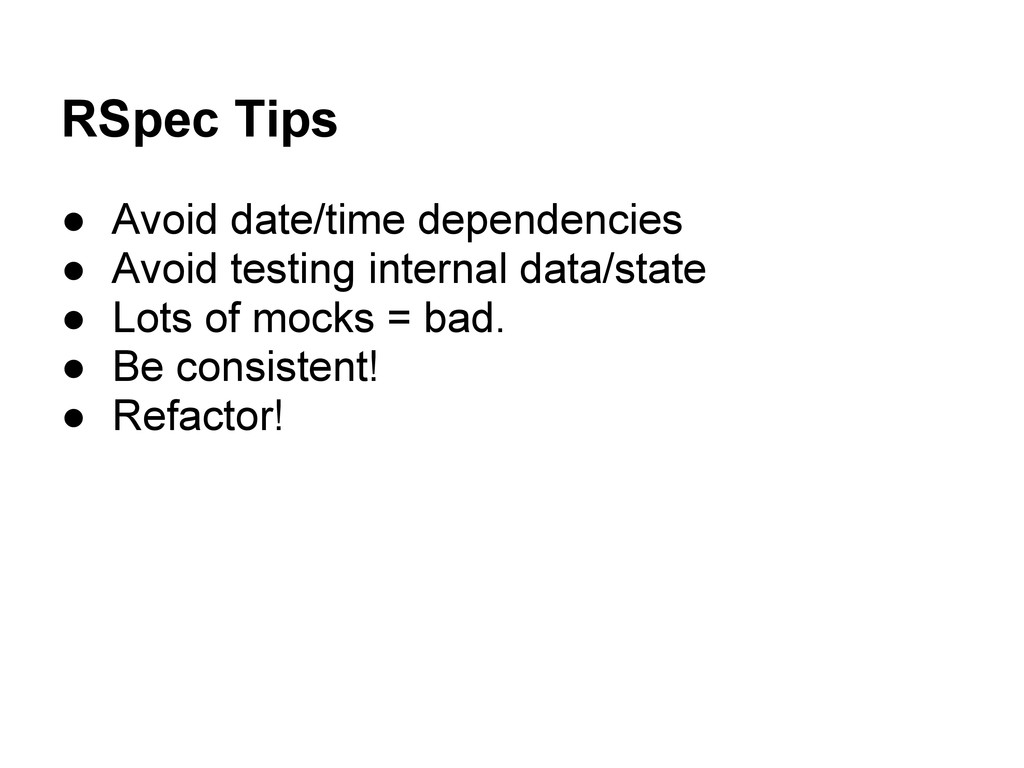
  18. RSpec Tips • Avoid date/time dependencies • Avoid testing internal

    data/state • Lots of mocks = bad. • Be consistent! • Refactor!
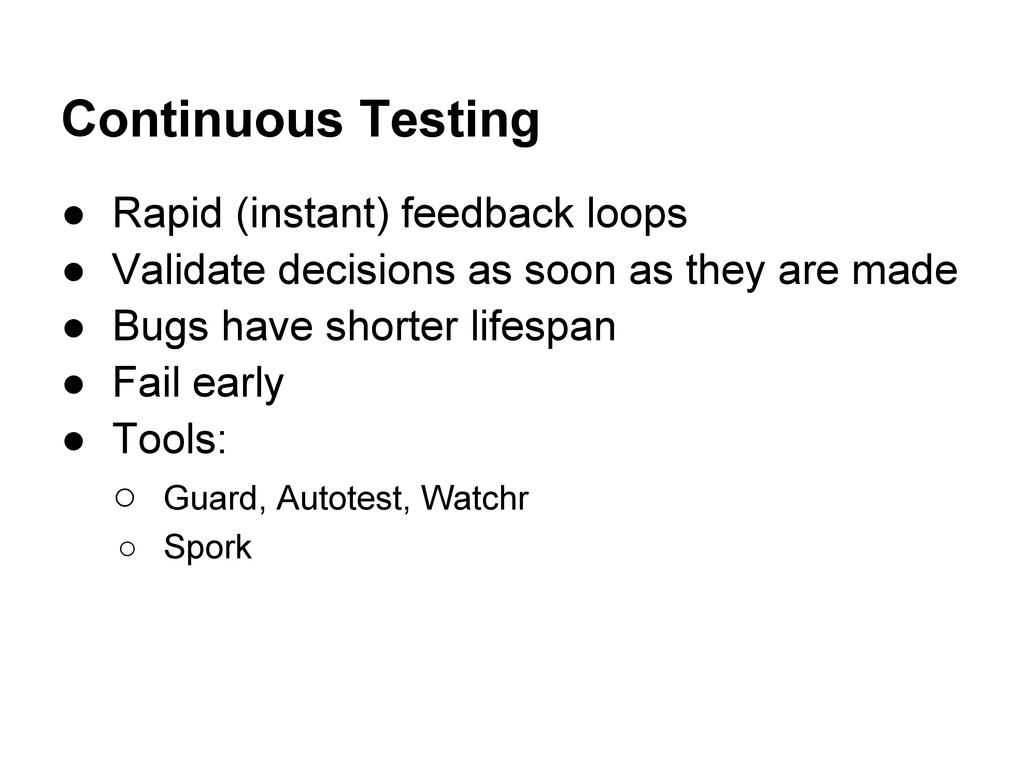
  19. Continuous Testing • Rapid (instant) feedback loops • Validate decisions

    as soon as they are made • Bugs have shorter lifespan • Fail early • Tools: ◦ Guard, Autotest, Watchr ◦ Spork
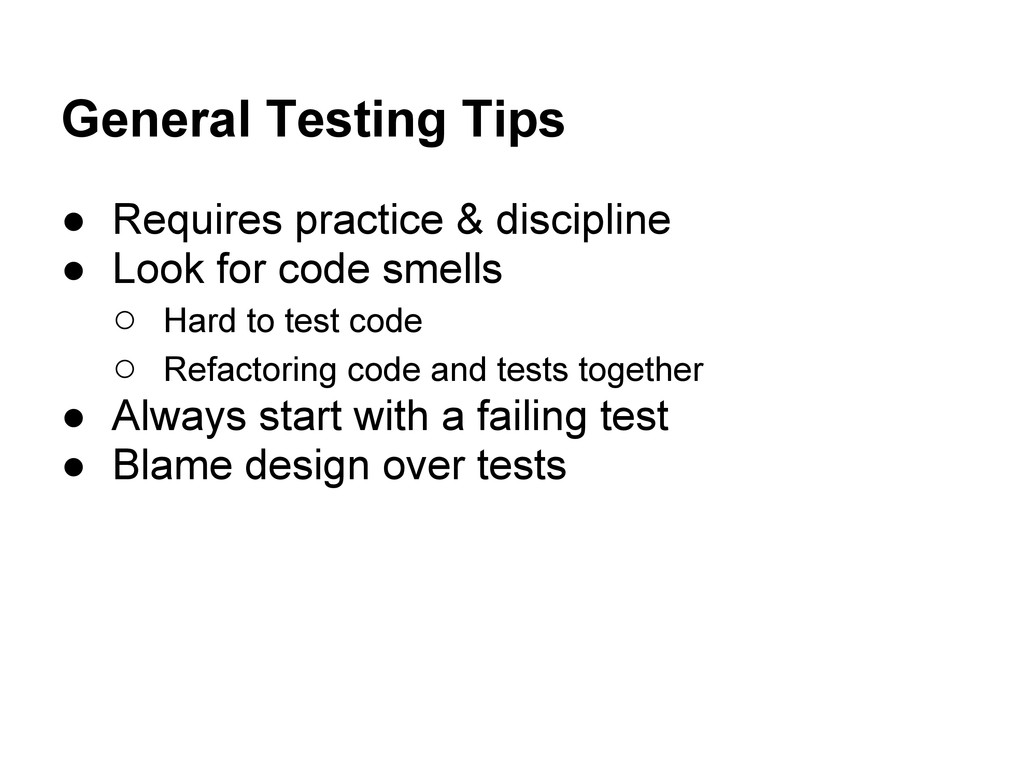
  20. • Requires practice & discipline • Look for code smells

    ◦ Hard to test code ◦ Refactoring code and tests together • Always start with a failing test • Blame design over tests General Testing Tips
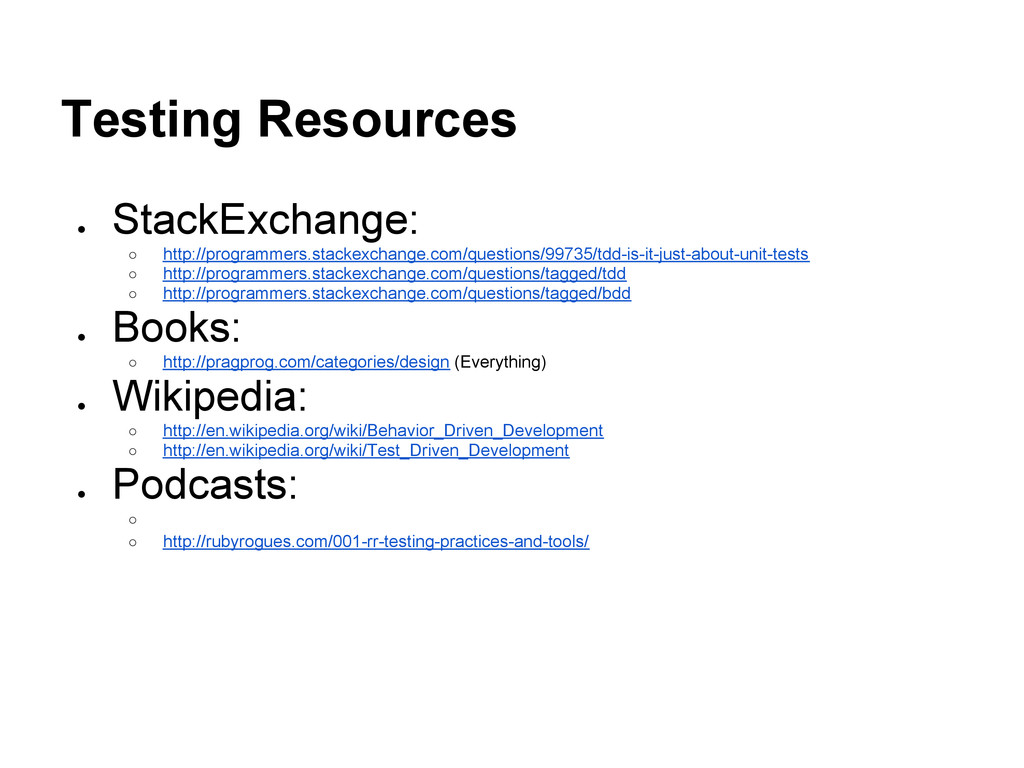
  21. Testing Resources • StackExchange: ◦ http://programmers.stackexchange.com/questions/99735/tdd-is-it-just-about-unit-tests ◦ http://programmers.stackexchange.com/questions/tagged/tdd ◦ http://programmers.stackexchange.com/questions/tagged/bdd

    • Books: ◦ http://pragprog.com/categories/design (Everything) • Wikipedia: ◦ http://en.wikipedia.org/wiki/Behavior_Driven_Development ◦ http://en.wikipedia.org/wiki/Test_Driven_Development • Podcasts: ◦ ◦ http://rubyrogues.com/001-rr-testing-practices-and-tools/

More Decks by BTVWAG

Other Decks in Technology