Upgrade to Pro — share decks privately, control downloads, hide ads and more …

Consumer Behavior in Product Management - A dee...

Consumer Behavior in Product Management - A deep analysis

(This was a presentation prepared for a guest lecture at IIM-Bangalore for students of the Consumer Behavior elective)

A few techniques on applying Consumer Behavior concepts (like Personality, Attitude, Motivation, Perception and Learning) to the area of Product Design is discussed.

Avatar for Karthik Srinivasan

Karthik Srinivasan

July 27, 2018
Tweet

More Decks by Karthik Srinivasan

Other Decks in Technology

Transcript

  1. TOPICS TO DISCUSS TODAY 1. Background of this lecture 2.

    Con-B in Prod-Man a. Applying ‘Personality’ concepts b. Applying ‘Motivation’ concepts c. Applying ‘Perception’ concepts d. Applying ‘Attitude’ concepts e. Applying ‘Learning’ concepts 3. Concluding thoughts 4. Quiz!
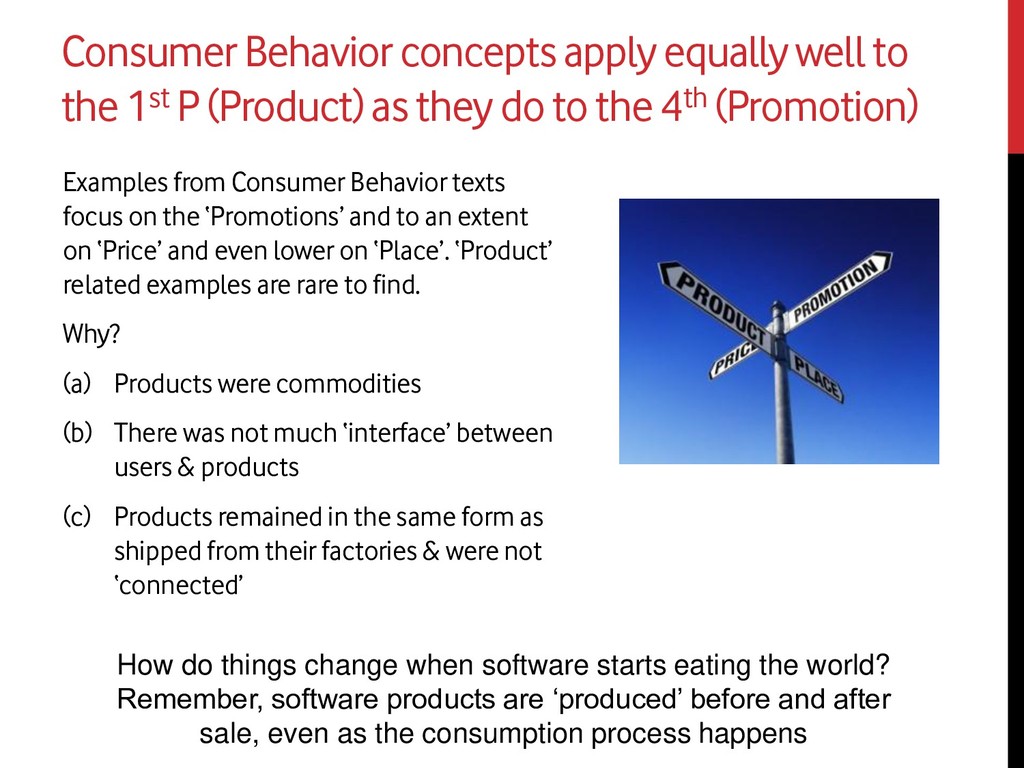
  2. Consumer Behavior concepts apply equally well to the 1st P

    (Product) as they do to the 4th (Promotion) Examples from Consumer Behavior texts focus on the ‘Promotions’ and to an extent on ‘Price’ and even lower on ‘Place’. ‘Product’ related examples are rare to find. Why? (a) Products were commodities (b) There was not much ‘interface’ between users & products (c) Products remained in the same form as shipped from their factories & were not ‘connected’ How do things change when software starts eating the world? Remember, software products are ‘produced’ before and after sale, even as the consumption process happens
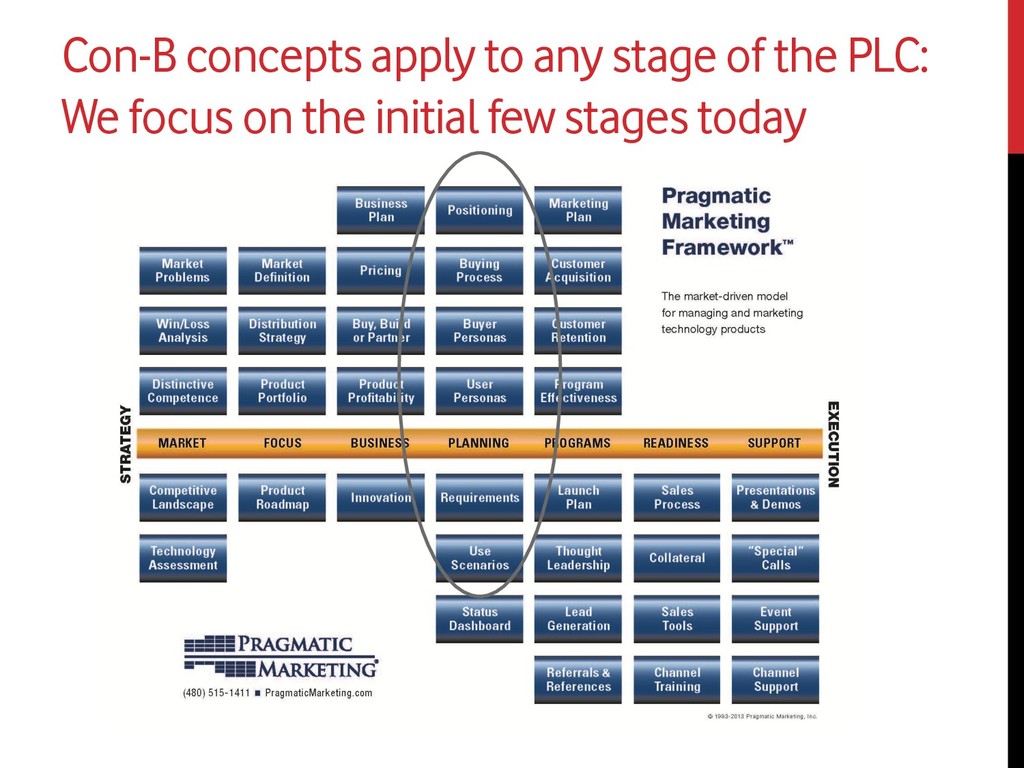
  3. Con-B concepts apply to any stage of the PLC: We

    focus on the initial few stages today
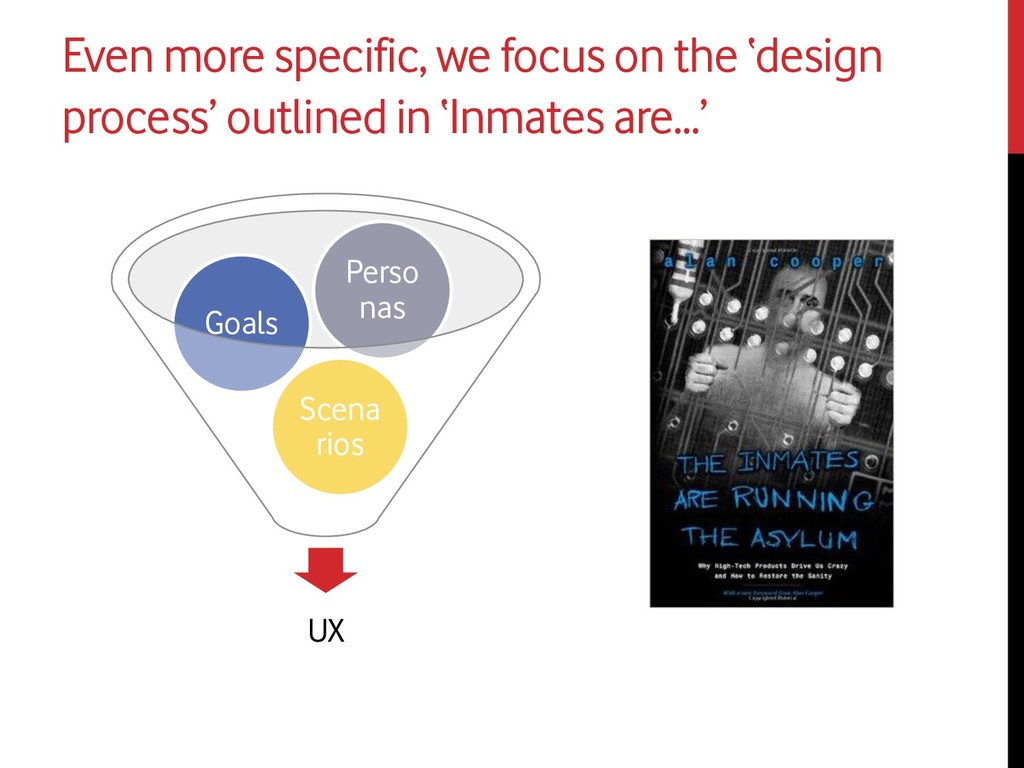
  4. Even more specific, we focus on the ‘design process’ outlined

    in ‘Inmates are…’ UX Scena rios Goals Perso nas
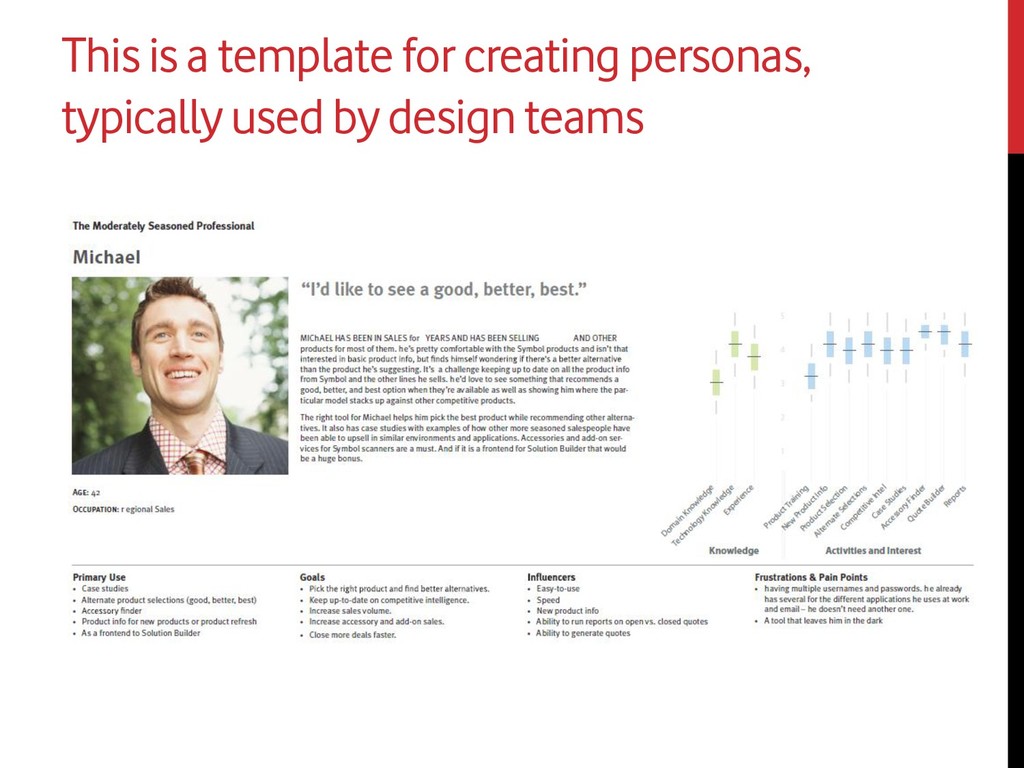
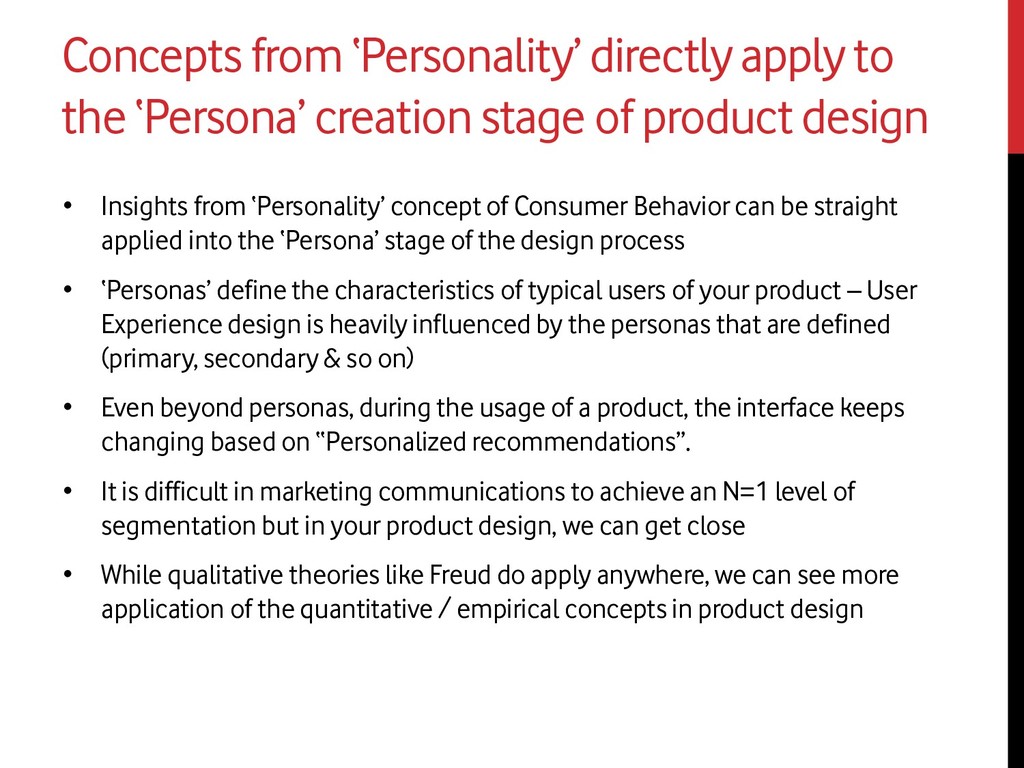
  5. Concepts from ‘Personality’ directly apply to the ‘Persona’ creation stage

    of product design • Insights from ‘Personality’ concept of Consumer Behavior can be straight applied into the ‘Persona’ stage of the design process • ‘Personas’ define the characteristics of typical users of your product – User Experience design is heavily influenced by the personas that are defined (primary, secondary & so on) • Even beyond personas, during the usage of a product, the interface keeps changing based on “Personalized recommendations”. • It is difficult in marketing communications to achieve an N=1 level of segmentation but in your product design, we can get close • While qualitative theories like Freud do apply anywhere, we can see more application of the quantitative / empirical concepts in product design
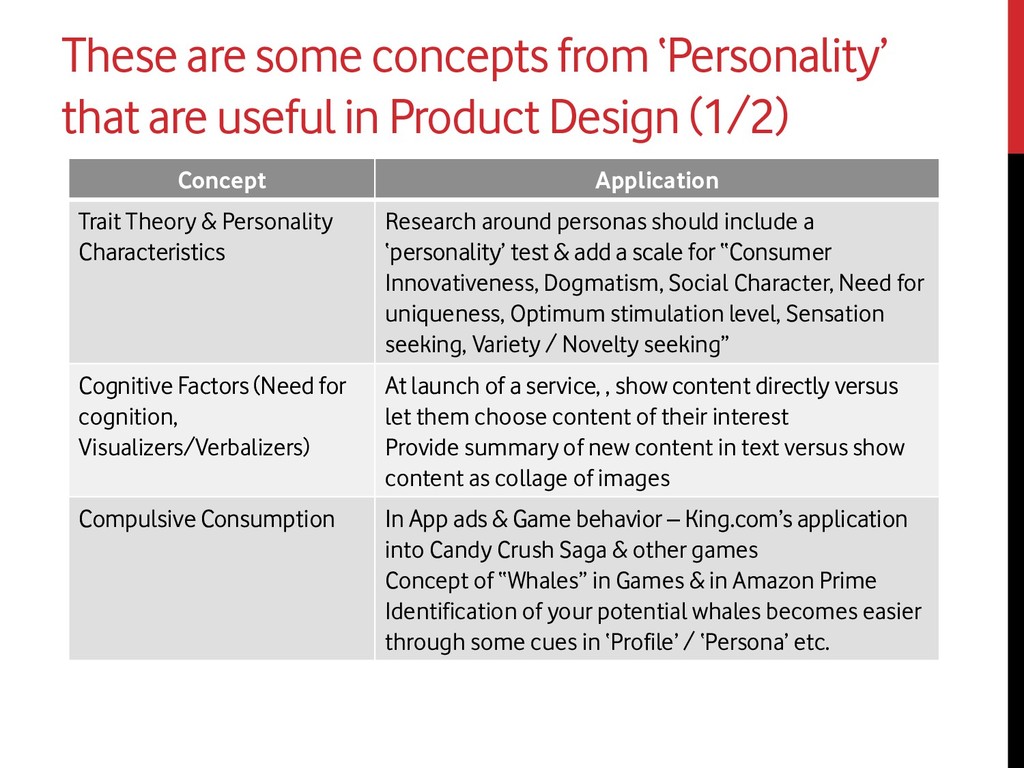
  6. These are some concepts from ‘Personality’ that are useful in

    Product Design (1/2) Concept Application Trait Theory & Personality Characteristics Research around personas should include a ‘personality’ test & add a scale for “Consumer Innovativeness, Dogmatism, Social Character, Need for uniqueness, Optimum stimulation level, Sensation seeking, Variety / Novelty seeking” Cognitive Factors (Need for cognition, Visualizers/Verbalizers) At launch of a service, , show content directly versus let them choose content of their interest Provide summary of new content in text versus show content as collage of images Compulsive Consumption In App ads & Game behavior – King.com’s application into Candy Crush Saga & other games Concept of “Whales” in Games & in Amazon Prime Identification of your potential whales becomes easier through some cues in ‘Profile’ / ‘Persona’ etc.
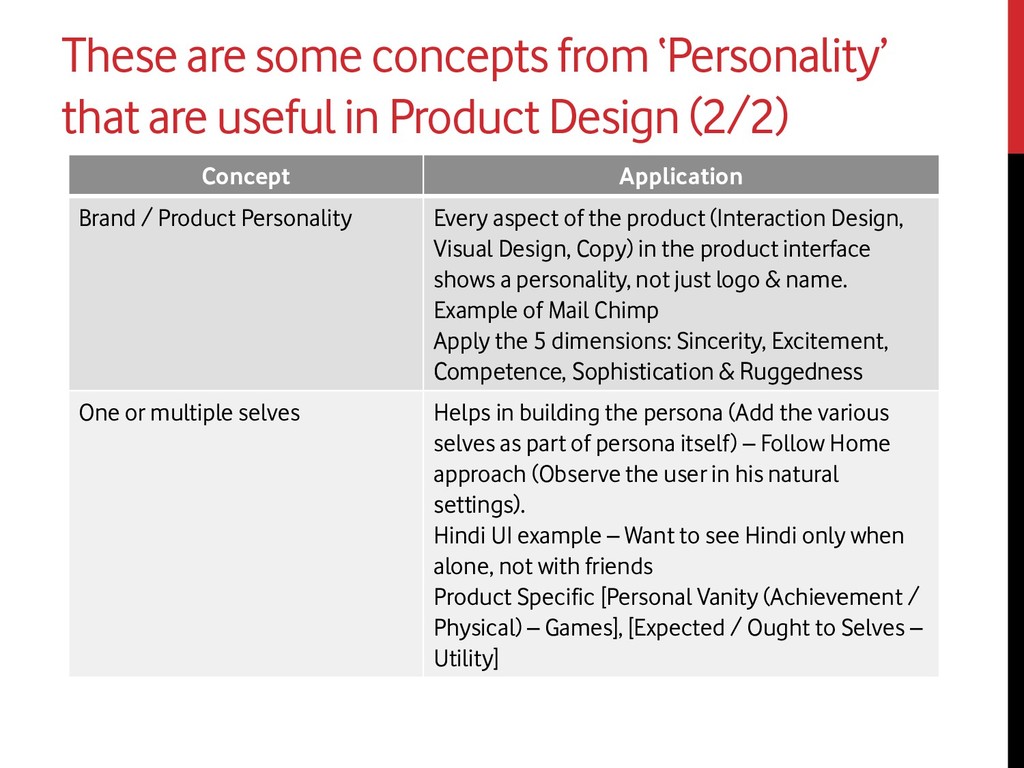
  7. These are some concepts from ‘Personality’ that are useful in

    Product Design (2/2) Concept Application Brand / Product Personality Every aspect of the product (Interaction Design, Visual Design, Copy) in the product interface shows a personality, not just logo & name. Example of Mail Chimp Apply the 5 dimensions: Sincerity, Excitement, Competence, Sophistication & Ruggedness One or multiple selves Helps in building the persona (Add the various selves as part of persona itself) – Follow Home approach (Observe the user in his natural settings). Hindi UI example – Want to see Hindi only when alone, not with friends Product Specific [Personal Vanity (Achievement / Physical) – Games], [Expected / Ought to Selves – Utility]
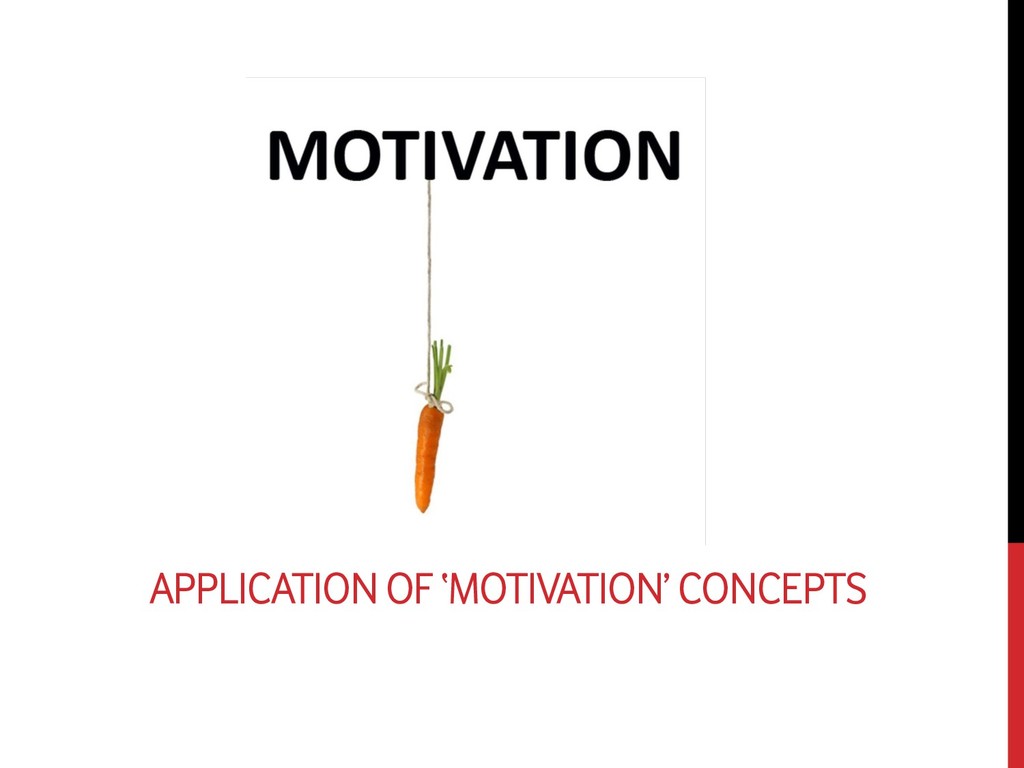
  8. Concepts from ‘Motivation’ directly apply to the ‘Goals Identification’ stage

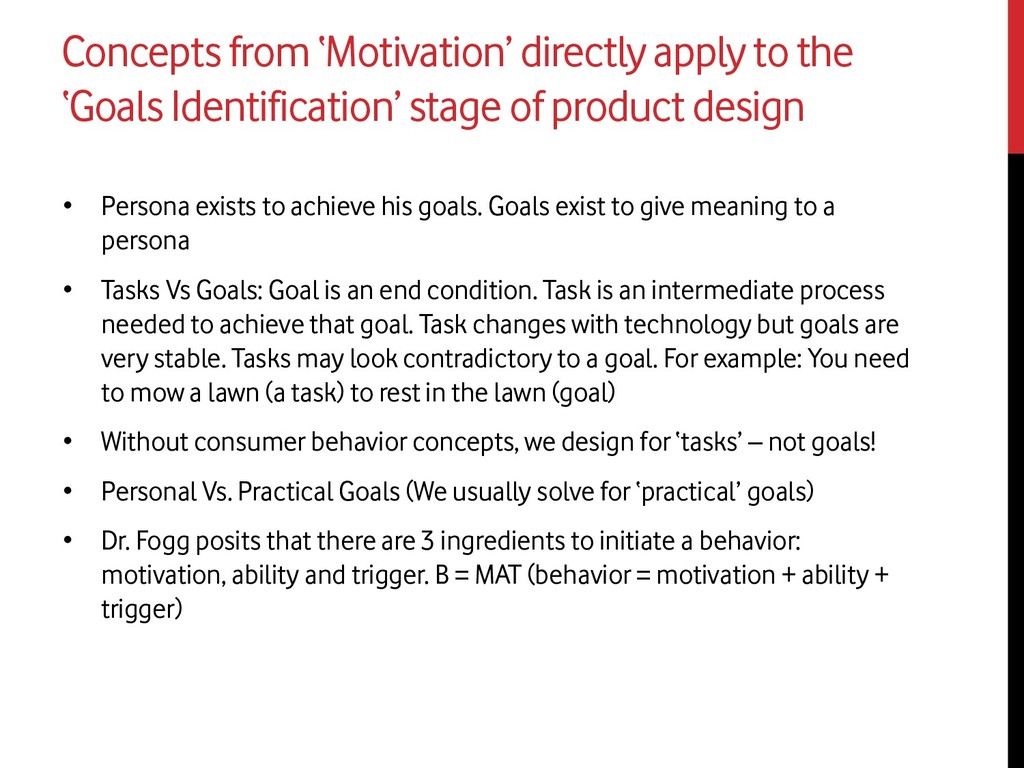
    of product design • Persona exists to achieve his goals. Goals exist to give meaning to a persona • Tasks Vs Goals: Goal is an end condition. Task is an intermediate process needed to achieve that goal. Task changes with technology but goals are very stable. Tasks may look contradictory to a goal. For example: You need to mow a lawn (a task) to rest in the lawn (goal) • Without consumer behavior concepts, we design for ‘tasks’ – not goals! • Personal Vs. Practical Goals (We usually solve for ‘practical’ goals) • Dr. Fogg posits that there are 3 ingredients to initiate a behavior: motivation, ability and trigger. B = MAT (behavior = motivation + ability + trigger)
  9. These are some concepts from ‘Motivation’ that are useful in

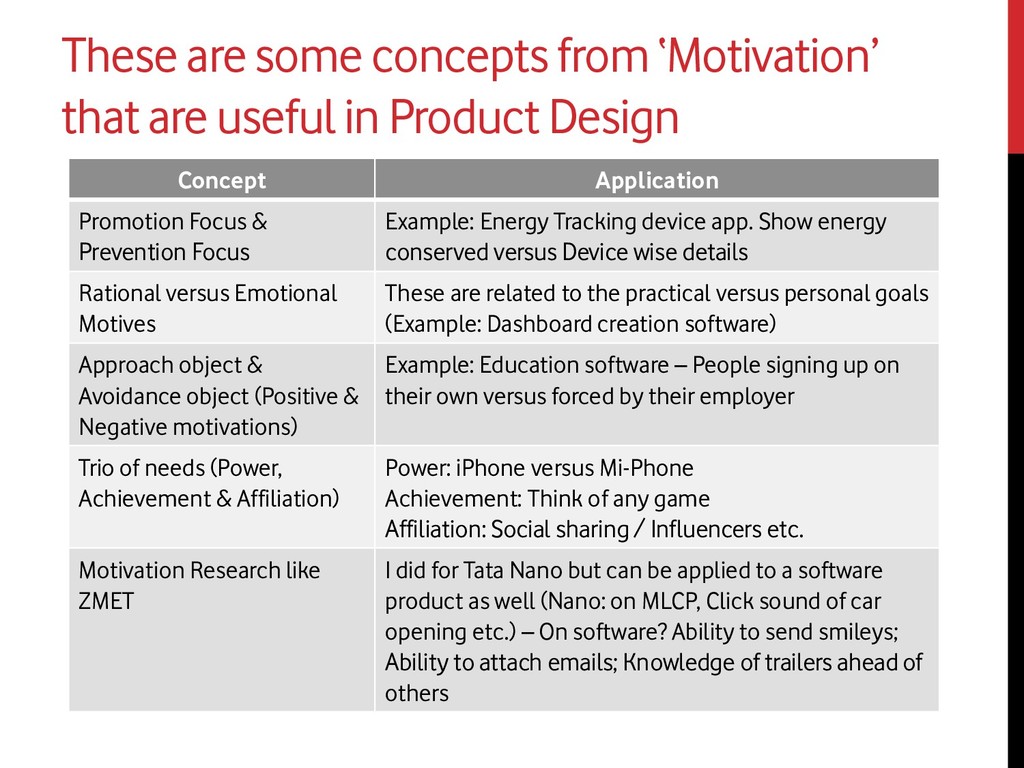
    Product Design Concept Application Promotion Focus & Prevention Focus Example: Energy Tracking device app. Show energy conserved versus Device wise details Rational versus Emotional Motives These are related to the practical versus personal goals (Example: Dashboard creation software) Approach object & Avoidance object (Positive & Negative motivations) Example: Education software – People signing up on their own versus forced by their employer Trio of needs (Power, Achievement & Affiliation) Power: iPhone versus Mi-Phone Achievement: Think of any game Affiliation: Social sharing / Influencers etc. Motivation Research like ZMET I did for Tata Nano but can be applied to a software product as well (Nano: on MLCP, Click sound of car opening etc.) – On software? Ability to send smileys; Ability to attach emails; Knowledge of trailers ahead of others
  10. Concepts from ‘Perception’ directly apply to the ‘User testing’ stage

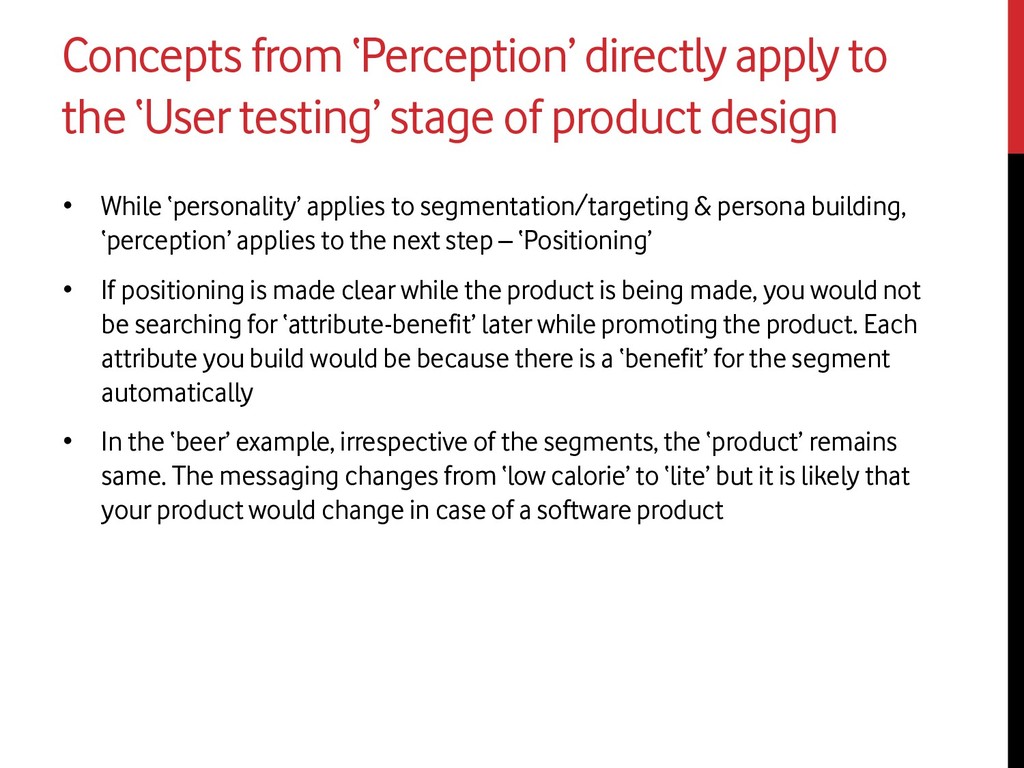
    of product design • While ‘personality’ applies to segmentation/targeting & persona building, ‘perception’ applies to the next step – ‘Positioning’ • If positioning is made clear while the product is being made, you would not be searching for ‘attribute-benefit’ later while promoting the product. Each attribute you build would be because there is a ‘benefit’ for the segment automatically • In the ‘beer’ example, irrespective of the segments, the ‘product’ remains same. The messaging changes from ‘low calorie’ to ‘lite’ but it is likely that your product would change in case of a software product
  11. These are some concepts from ‘Perception’ that are useful in

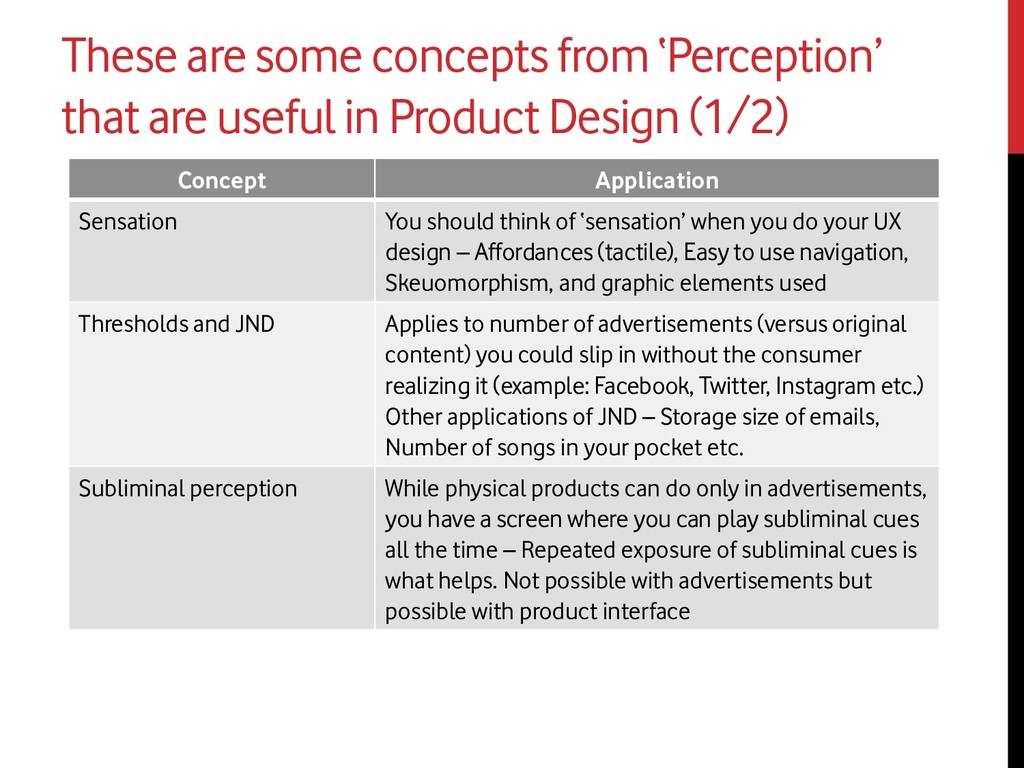
    Product Design (1/2) Concept Application Sensation You should think of ‘sensation’ when you do your UX design – Affordances (tactile), Easy to use navigation, Skeuomorphism, and graphic elements used Thresholds and JND Applies to number of advertisements (versus original content) you could slip in without the consumer realizing it (example: Facebook, Twitter, Instagram etc.) Other applications of JND – Storage size of emails, Number of songs in your pocket etc. Subliminal perception While physical products can do only in advertisements, you have a screen where you can play subliminal cues all the time – Repeated exposure of subliminal cues is what helps. Not possible with advertisements but possible with product interface
  12. These are some concepts from ‘Perception’ that are useful in

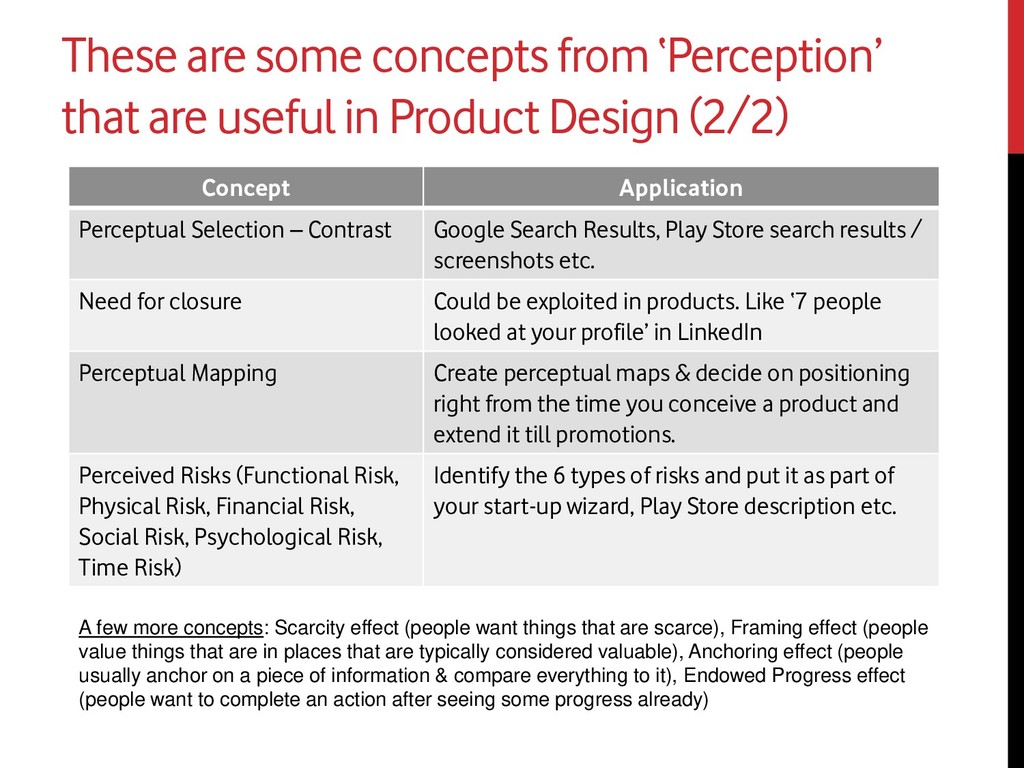
    Product Design (2/2) Concept Application Perceptual Selection – Contrast Google Search Results, Play Store search results / screenshots etc. Need for closure Could be exploited in products. Like ‘7 people looked at your profile’ in LinkedIn Perceptual Mapping Create perceptual maps & decide on positioning right from the time you conceive a product and extend it till promotions. Perceived Risks (Functional Risk, Physical Risk, Financial Risk, Social Risk, Psychological Risk, Time Risk) Identify the 6 types of risks and put it as part of your start-up wizard, Play Store description etc. A few more concepts: Scarcity effect (people want things that are scarce), Framing effect (people value things that are in places that are typically considered valuable), Anchoring effect (people usually anchor on a piece of information & compare everything to it), Endowed Progress effect (people want to complete an action after seeing some progress already)
  13. Concepts from ‘Attitude’ directly apply to the ‘User Testing’ stage,

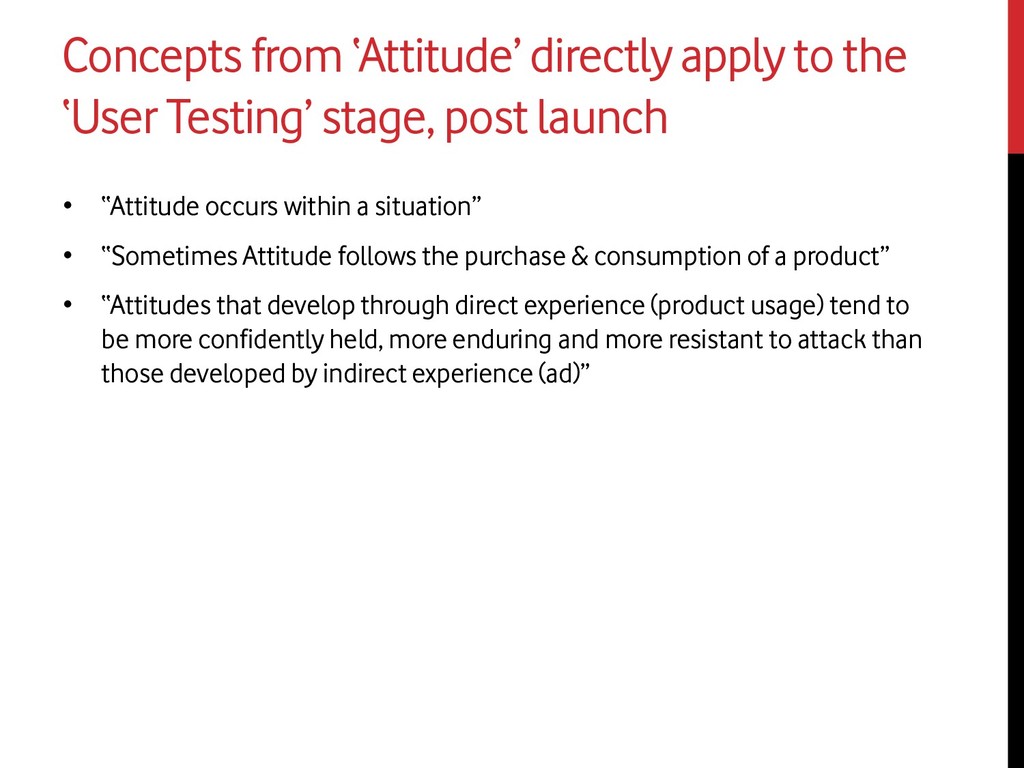
    post launch • “Attitude occurs within a situation” • “Sometimes Attitude follows the purchase & consumption of a product” • “Attitudes that develop through direct experience (product usage) tend to be more confidently held, more enduring and more resistant to attack than those developed by indirect experience (ad)”
  14. These are some concepts from ‘Attitude’ that are useful in

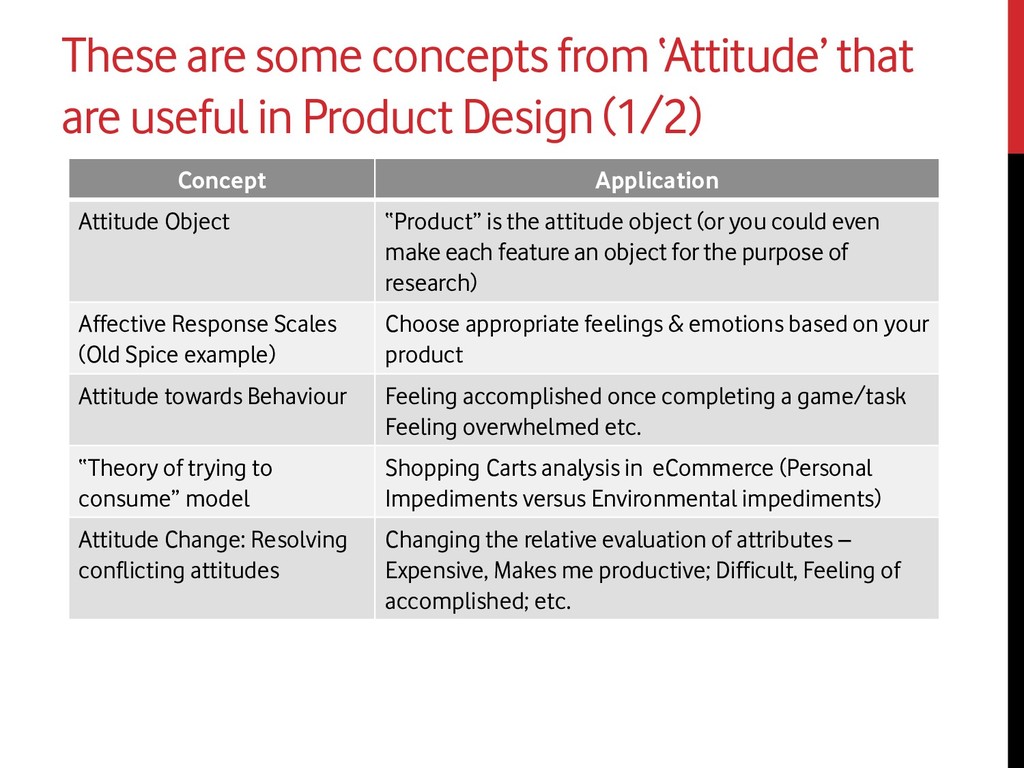
    Product Design (1/2) Concept Application Attitude Object “Product” is the attitude object (or you could even make each feature an object for the purpose of research) Affective Response Scales (Old Spice example) Choose appropriate feelings & emotions based on your product Attitude towards Behaviour Feeling accomplished once completing a game/task Feeling overwhelmed etc. “Theory of trying to consume” model Shopping Carts analysis in eCommerce (Personal Impediments versus Environmental impediments) Attitude Change: Resolving conflicting attitudes Changing the relative evaluation of attributes – Expensive, Makes me productive; Difficult, Feeling of accomplished; etc.
  15. These are some concepts from ‘Attitude’ that are useful in

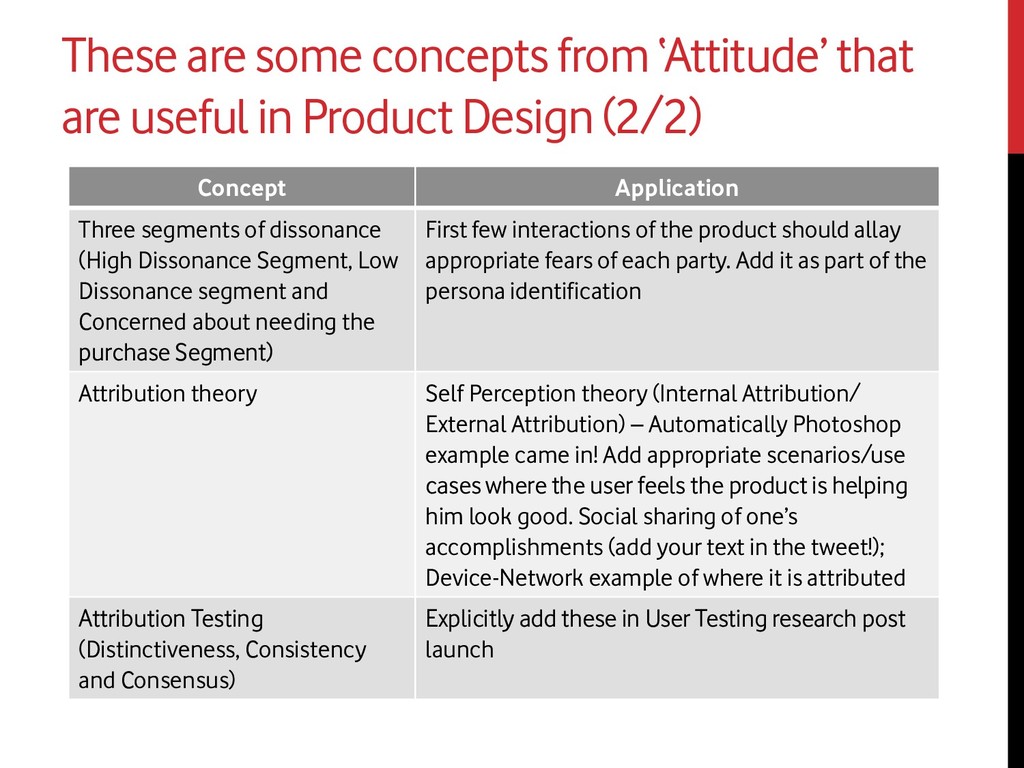
    Product Design (2/2) Concept Application Three segments of dissonance (High Dissonance Segment, Low Dissonance segment and Concerned about needing the purchase Segment) First few interactions of the product should allay appropriate fears of each party. Add it as part of the persona identification Attribution theory Self Perception theory (Internal Attribution/ External Attribution) – Automatically Photoshop example came in! Add appropriate scenarios/use cases where the user feels the product is helping him look good. Social sharing of one’s accomplishments (add your text in the tweet!); Device-Network example of where it is attributed Attribution Testing (Distinctiveness, Consistency and Consensus) Explicitly add these in User Testing research post launch
  16. These are some concepts from ‘Learning’ that are useful in

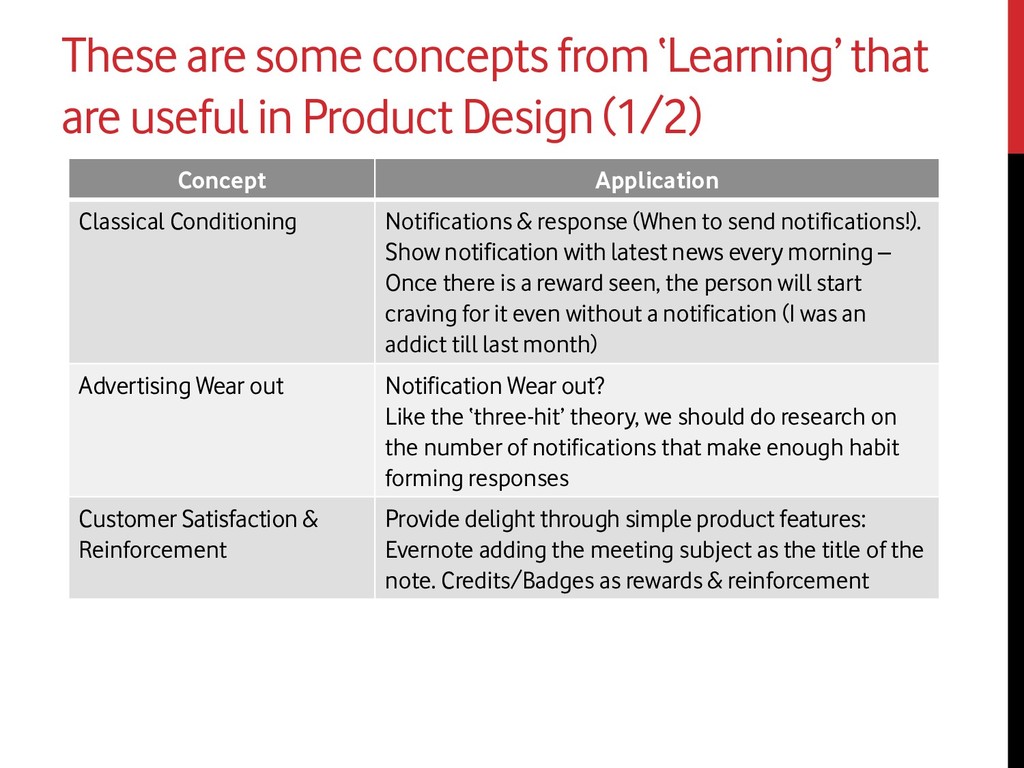
    Product Design (1/2) Concept Application Classical Conditioning Notifications & response (When to send notifications!). Show notification with latest news every morning – Once there is a reward seen, the person will start craving for it even without a notification (I was an addict till last month) Advertising Wear out Notification Wear out? Like the ‘three-hit’ theory, we should do research on the number of notifications that make enough habit forming responses Customer Satisfaction & Reinforcement Provide delight through simple product features: Evernote adding the meeting subject as the title of the note. Credits/Badges as rewards & reinforcement
  17. These are some concepts from ‘Learning’ that are useful in

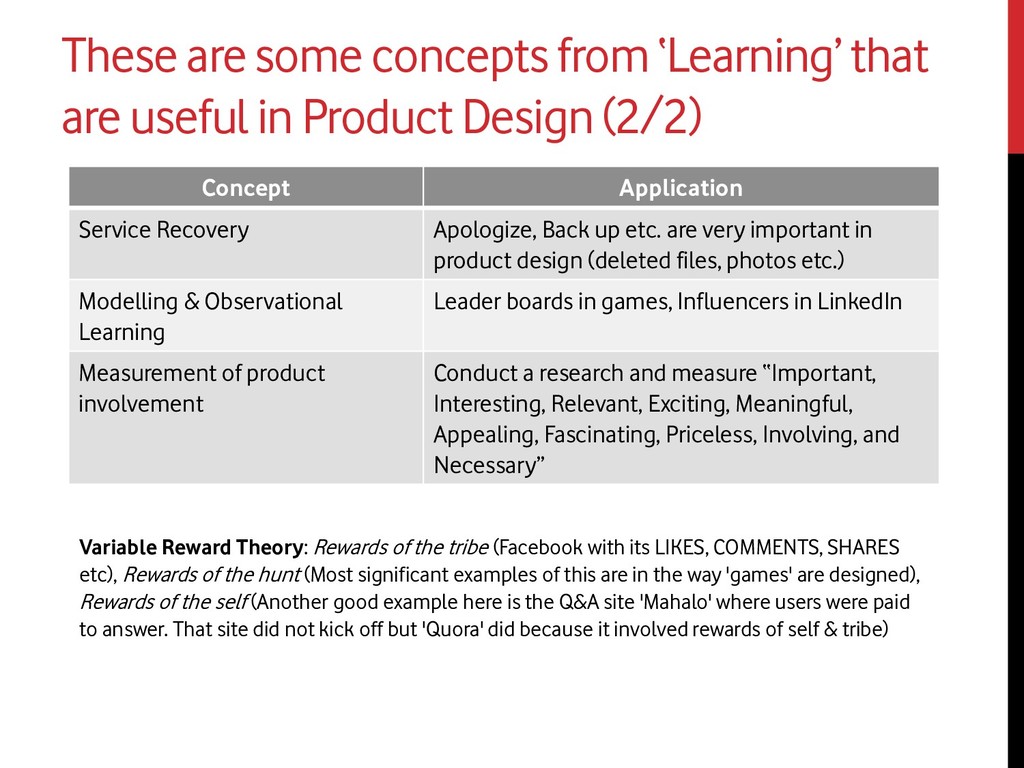
    Product Design (2/2) Concept Application Service Recovery Apologize, Back up etc. are very important in product design (deleted files, photos etc.) Modelling & Observational Learning Leader boards in games, Influencers in LinkedIn Measurement of product involvement Conduct a research and measure “Important, Interesting, Relevant, Exciting, Meaningful, Appealing, Fascinating, Priceless, Involving, and Necessary” Variable Reward Theory: Rewards of the tribe (Facebook with its LIKES, COMMENTS, SHARES etc), Rewards of the hunt (Most significant examples of this are in the way 'games' are designed), Rewards of the self (Another good example here is the Q&A site 'Mahalo' where users were paid to answer. That site did not kick off but 'Quora' did because it involved rewards of self & tribe)
  18. What more could go into a ‘persona’, applying Con B

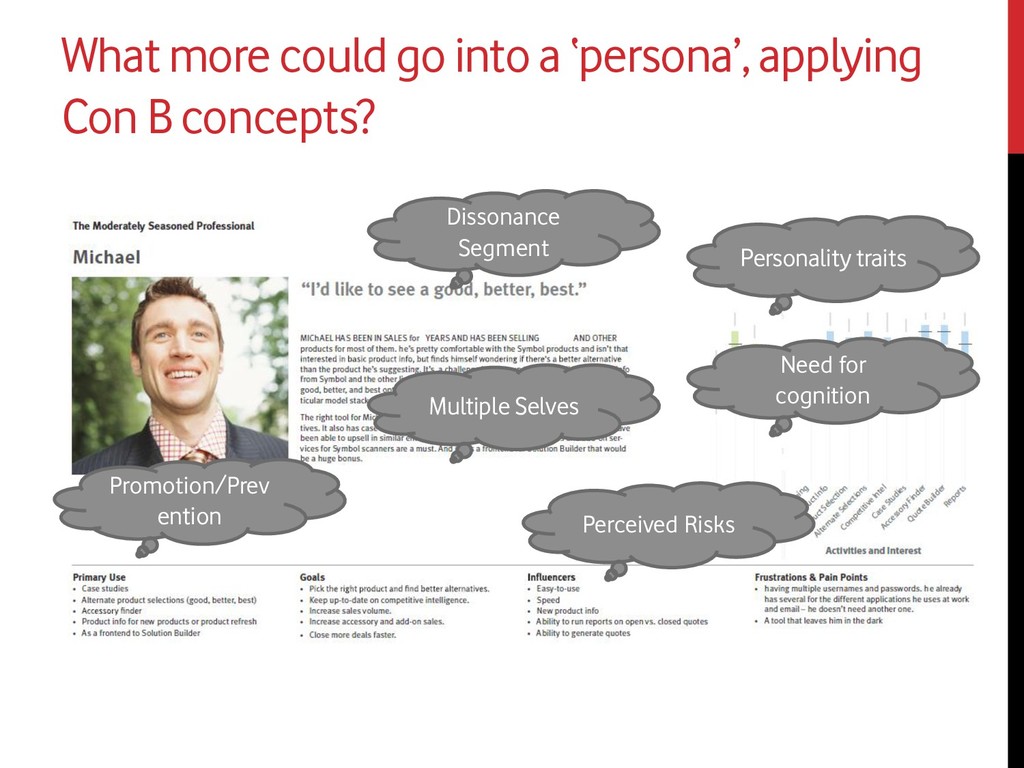
    concepts? Personality traits Multiple Selves Dissonance Segment Need for cognition Promotion/Prev ention Perceived Risks
  19. End Notes Hope this served as a good enough introduction.

    We have just scratched the surface on this. We can go a lot deeper into each concept and apply to a product – Someone could take it up a their ‘final’ project
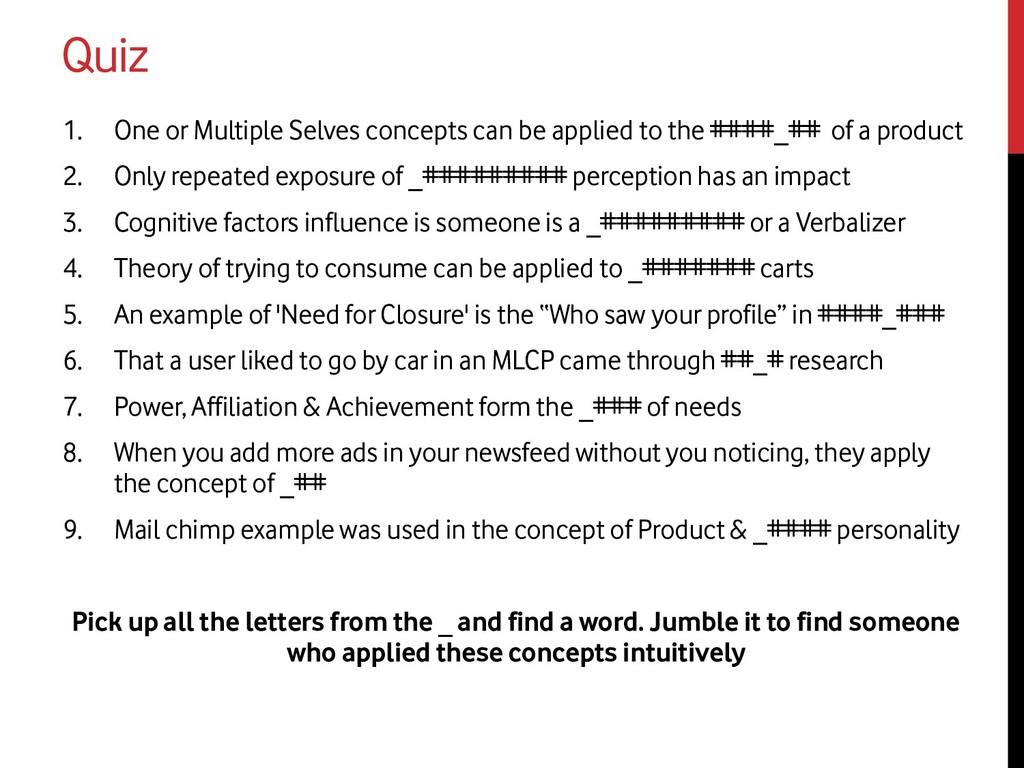
  20. Quiz 1. One or Multiple Selves concepts can be applied

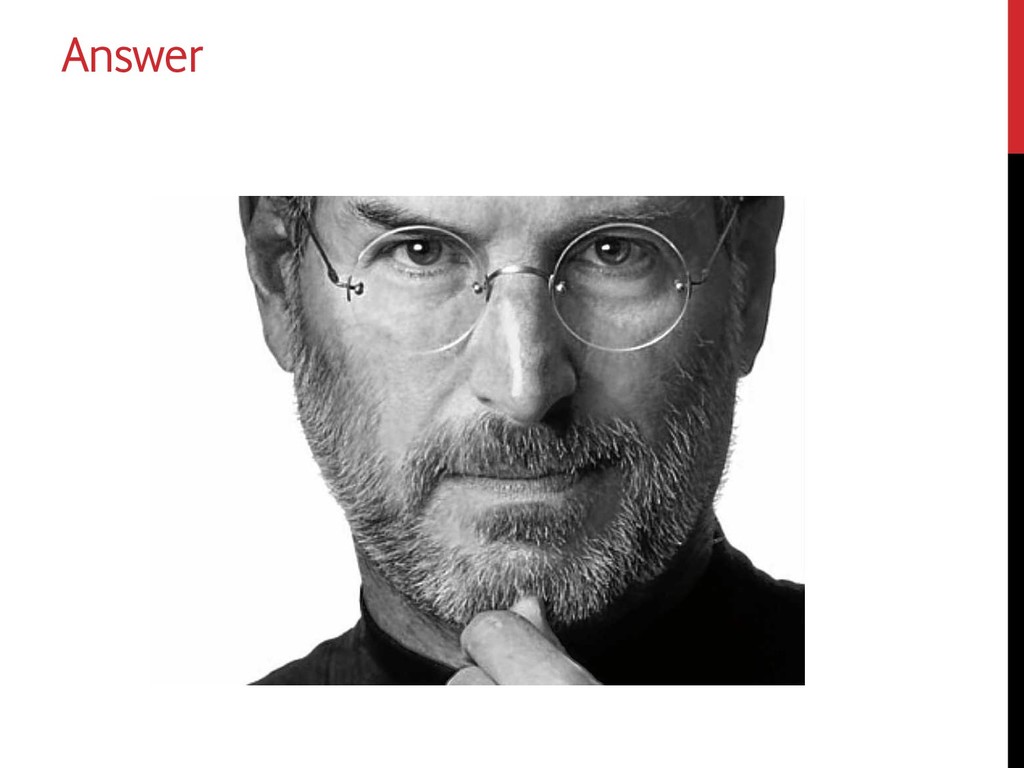
    to the ####_## of a product 2. Only repeated exposure of _######### perception has an impact 3. Cognitive factors influence is someone is a _######### or a Verbalizer 4. Theory of trying to consume can be applied to _####### carts 5. An example of 'Need for Closure' is the “Who saw your profile” in ####_### 6. That a user liked to go by car in an MLCP came through ##_# research 7. Power, Affiliation & Achievement form the _### of needs 8. When you add more ads in your newsfeed without you noticing, they apply the concept of _## 9. Mail chimp example was used in the concept of Product & _#### personality Pick up all the letters from the _ and find a word. Jumble it to find someone who applied these concepts intuitively