Coconut products are like the superheroes of the kitchen – from coconut oil to milk, they bring a tropical punch to your meals while being versatile and good for you. It's like adding a bit of paradise to your plate!
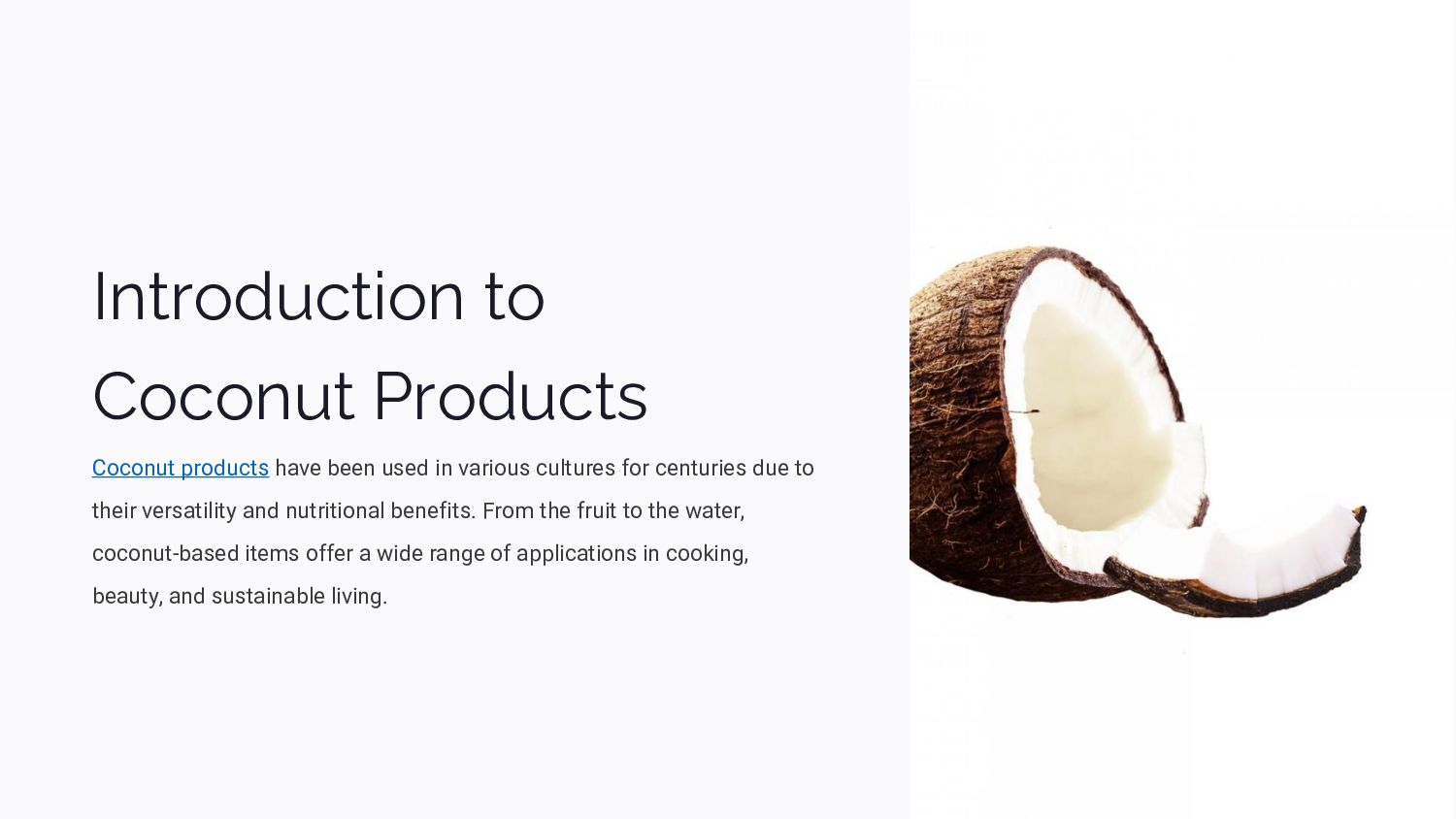
various cultures for centuries due to their versatility and nutritional benefits. From the fruit to the water, coconut-based items offer a wide range of applications in cooking, beauty, and sustainable living.
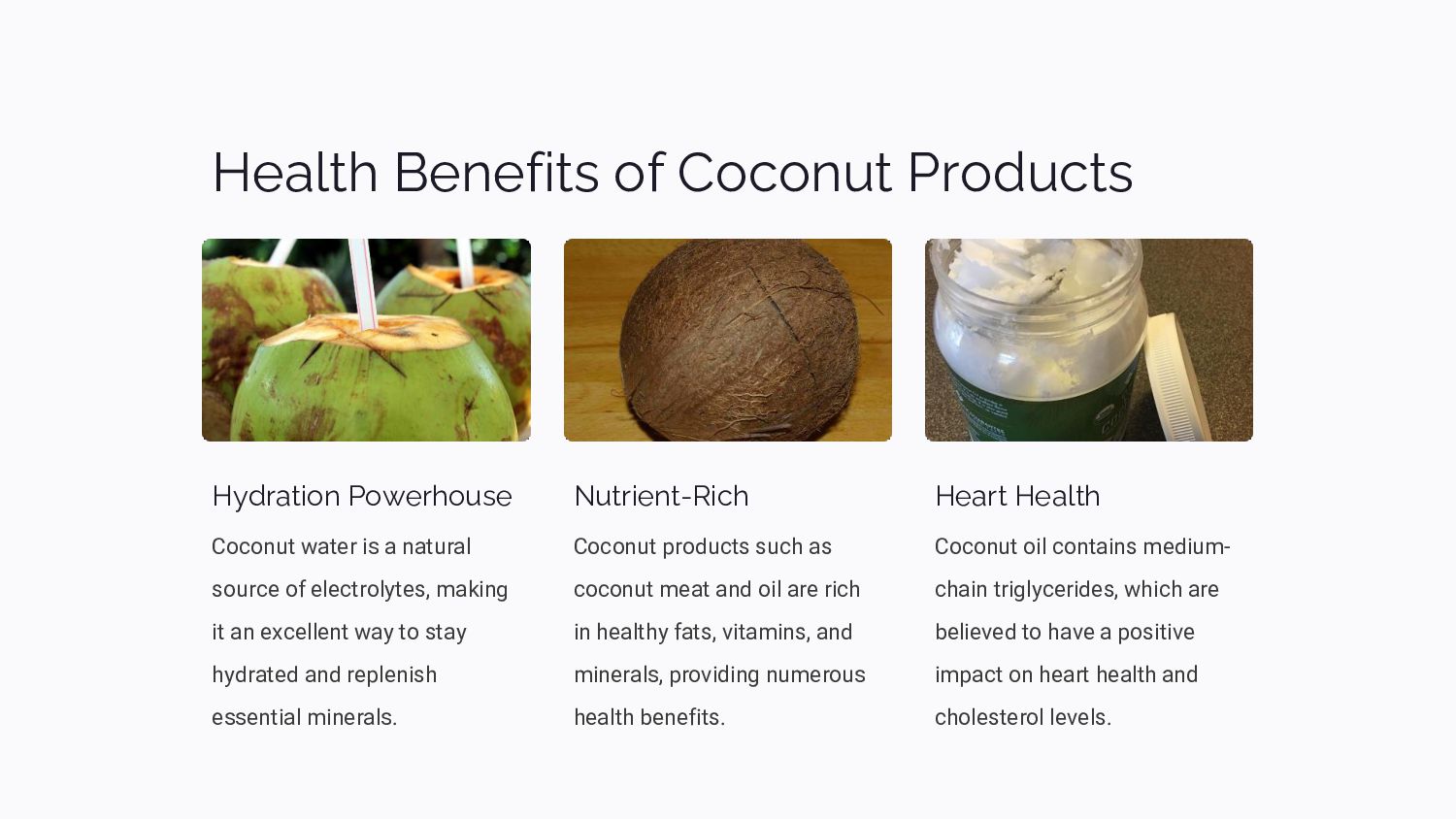
a natural source of electrolytes, making it an excellent way to stay hydrated and replenish essential minerals. Nutrient-Rich Coconut products such as coconut meat and oil are rich in healthy fats, vitamins, and minerals, providing numerous health benefits. Heart Health Coconut oil contains medium- chain triglycerides, which are believed to have a positive impact on heart health and cholesterol levels.
coconut milk is often used in curries, smoothies, and dairy-free desserts. Coconut Sugar A natural sweetener with low glycemic index, perfect for baking and sweetening beverages. Coconut Flour A gluten-free alternative for baking, known for its high fiber and protein content.
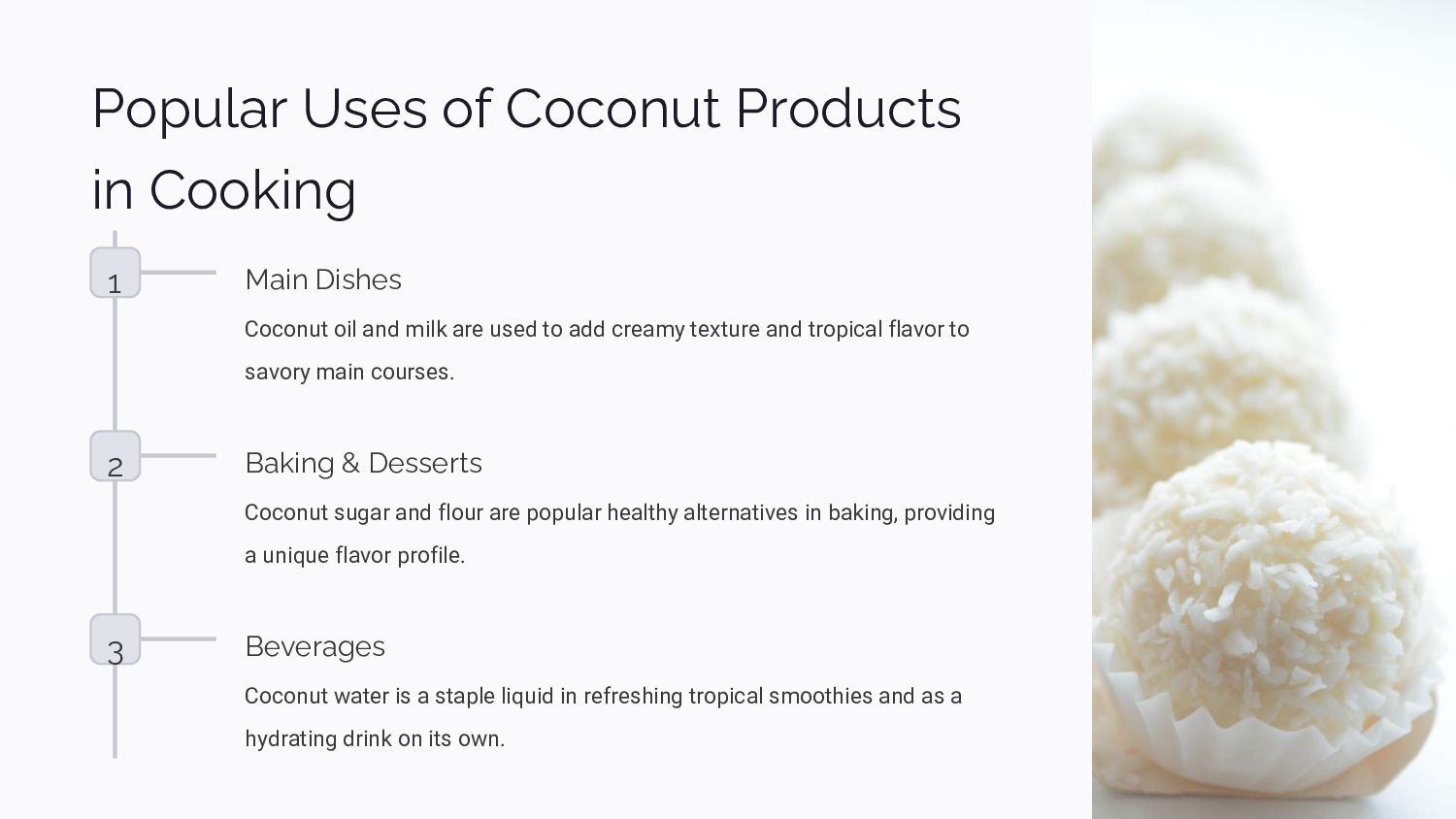
Coconut oil and milk are used to add creamy texture and tropical flavor to savory main courses. 2 Baking & Desserts Coconut sugar and flour are popular healthy alternatives in baking, providing a unique flavor profile. 3 Beverages Coconut water is a staple liquid in refreshing tropical smoothies and as a hydrating drink on its own.
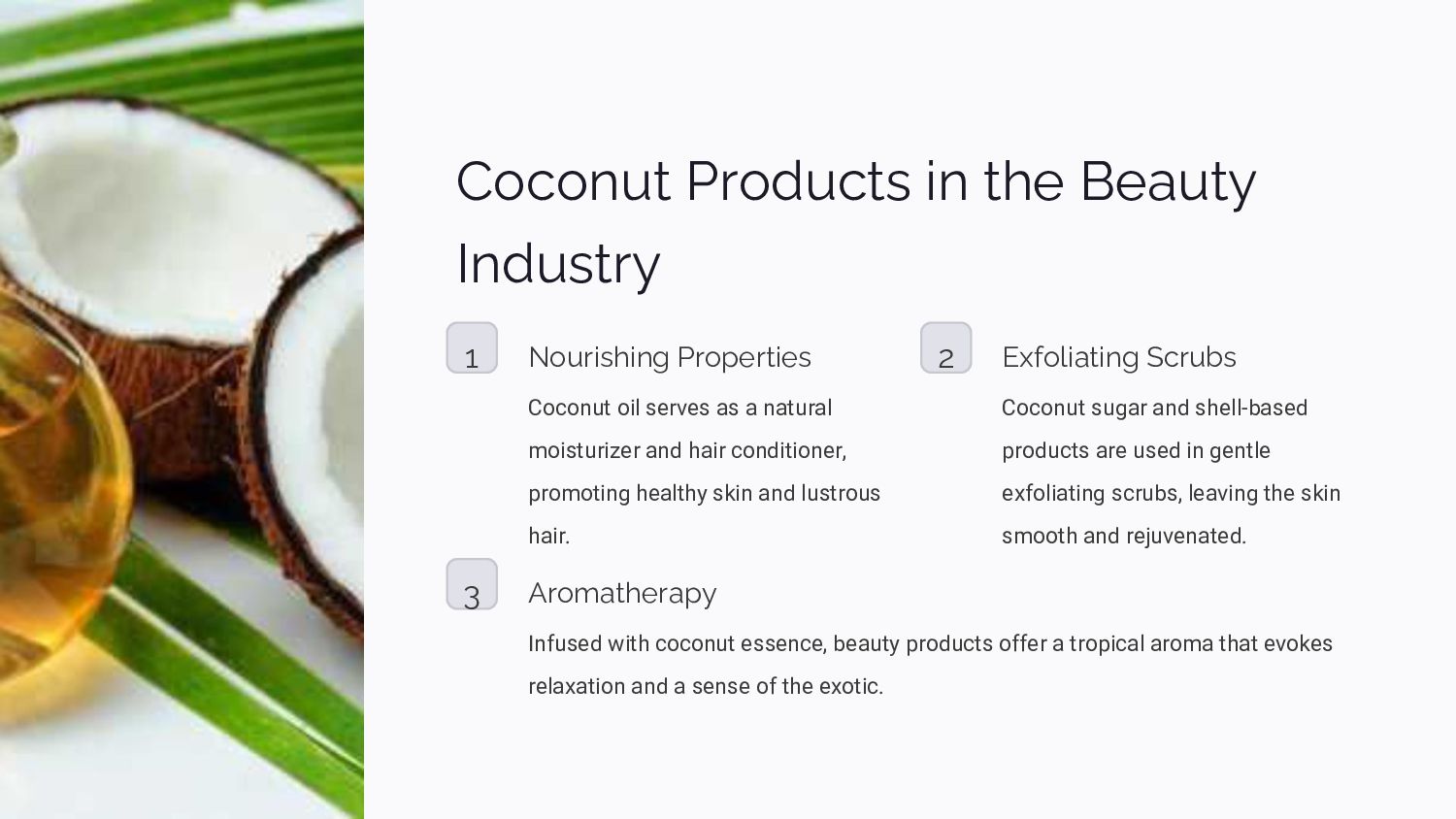
oil serves as a natural moisturizer and hair conditioner, promoting healthy skin and lustrous hair. 2 Exfoliating Scrubs Coconut sugar and shell-based products are used in gentle exfoliating scrubs, leaving the skin smooth and rejuvenated. 3 Aromatherapy Infused with coconut essence, beauty products offer a tropical aroma that evokes relaxation and a sense of the exotic.
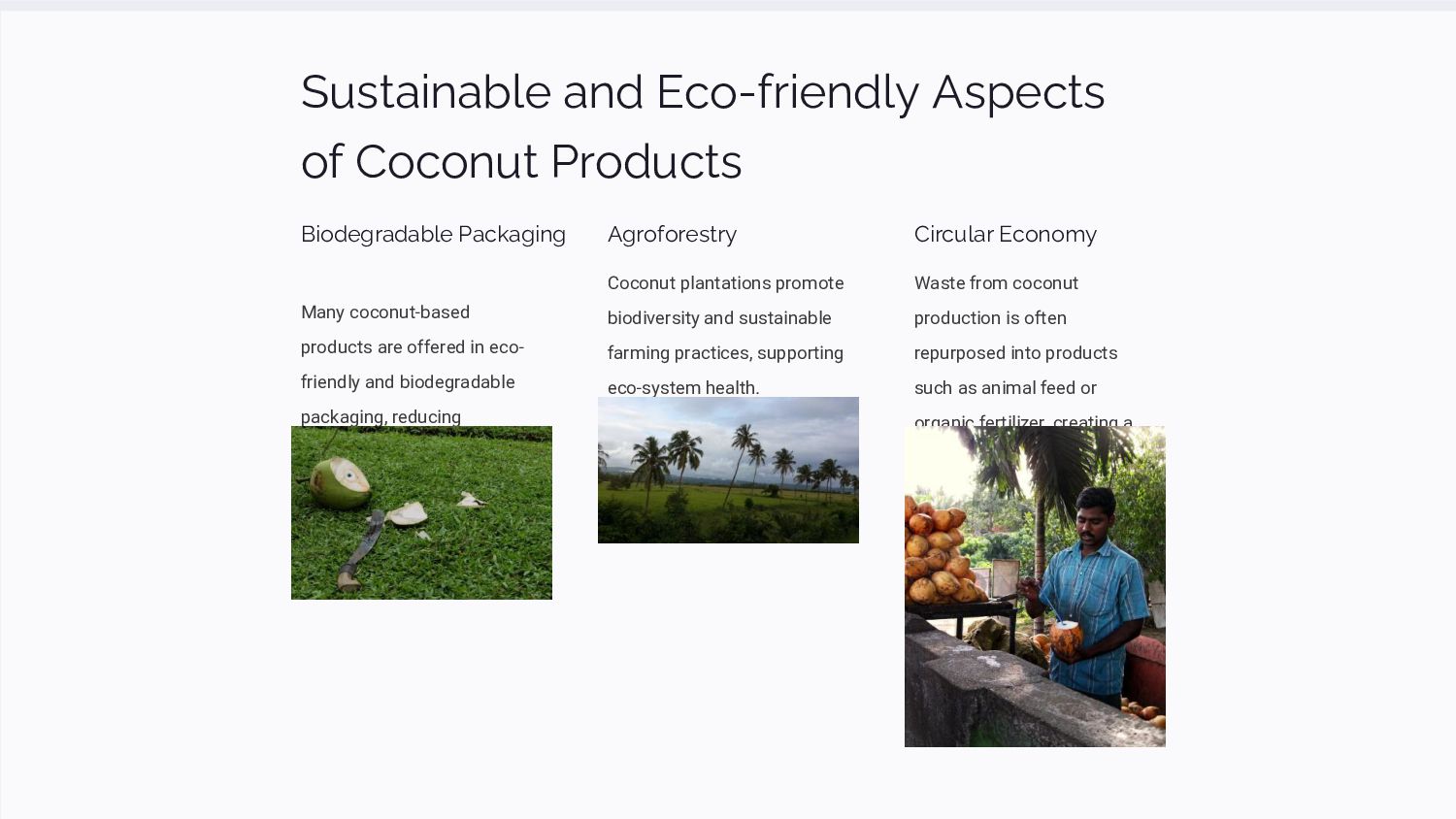
coconut-based products are offered in eco- friendly and biodegradable packaging, reducing environmental impact. Agroforestry Coconut plantations promote biodiversity and sustainable farming practices, supporting eco-system health. Circular Economy Waste from coconut production is often repurposed into products such as animal feed or organic fertilizer, creating a circular economy.
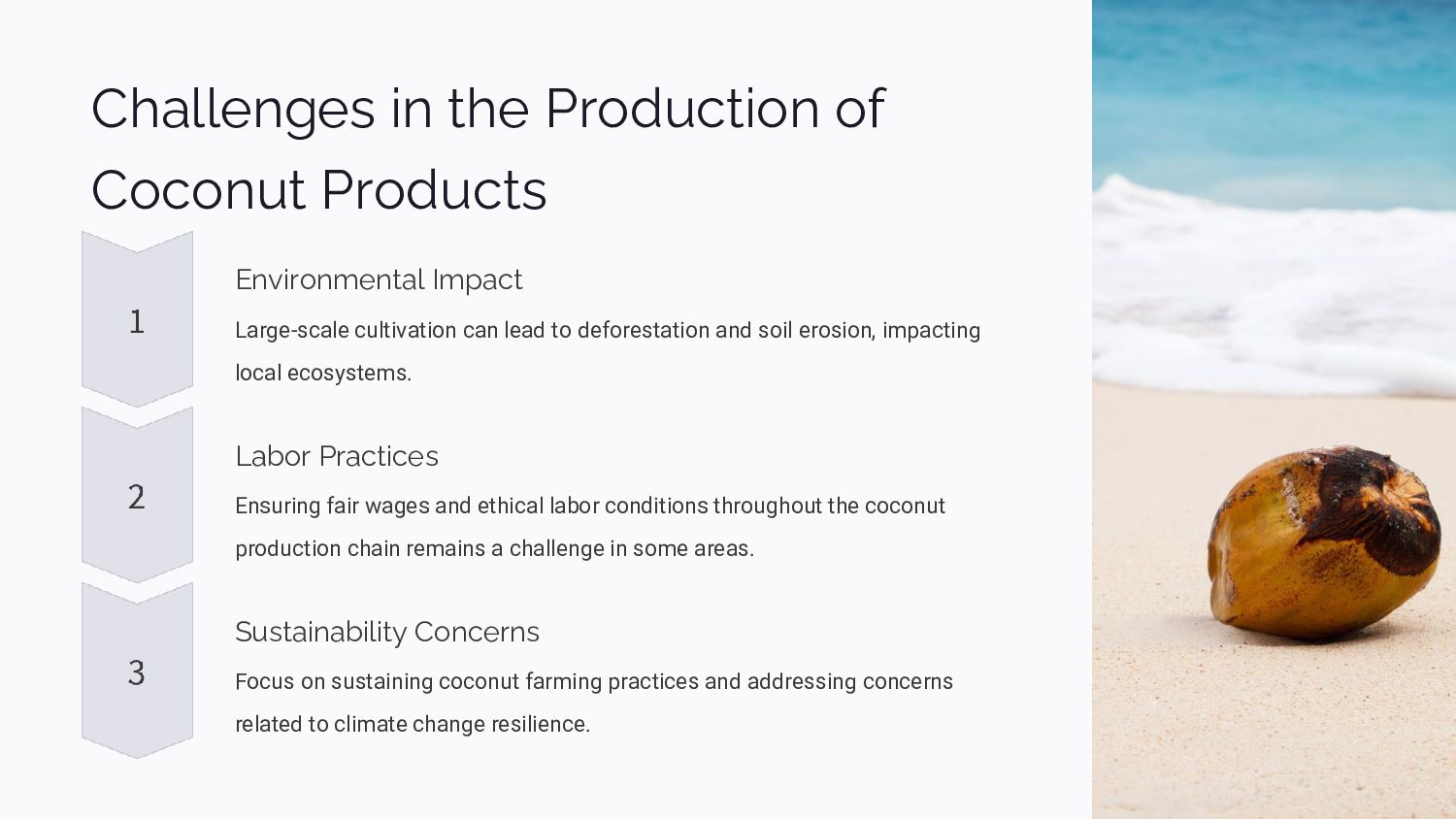
cultivation can lead to deforestation and soil erosion, impacting local ecosystems. Labor Practices Ensuring fair wages and ethical labor conditions throughout the coconut production chain remains a challenge in some areas. Sustainability Concerns Focus on sustaining coconut farming practices and addressing concerns related to climate change resilience.
& Wellness Sustainability Innovative Applications The increasing demand for natural health and wellness products has contributed to the rise of coconut-based solutions. Continued emphasis on sustainable coconut farming methods and eco-friendly product packaging is expected. Anticipated growth in new coconut product formulations and uses, tapping into diverse industries.


 addyosmani
 hannesfritz
 aleyda
 marketingsoph
 csswizardry
 trishagee
 reverentgeek
 techseoconnect
 jonoalderson
 akademiya2063
 aemeredith