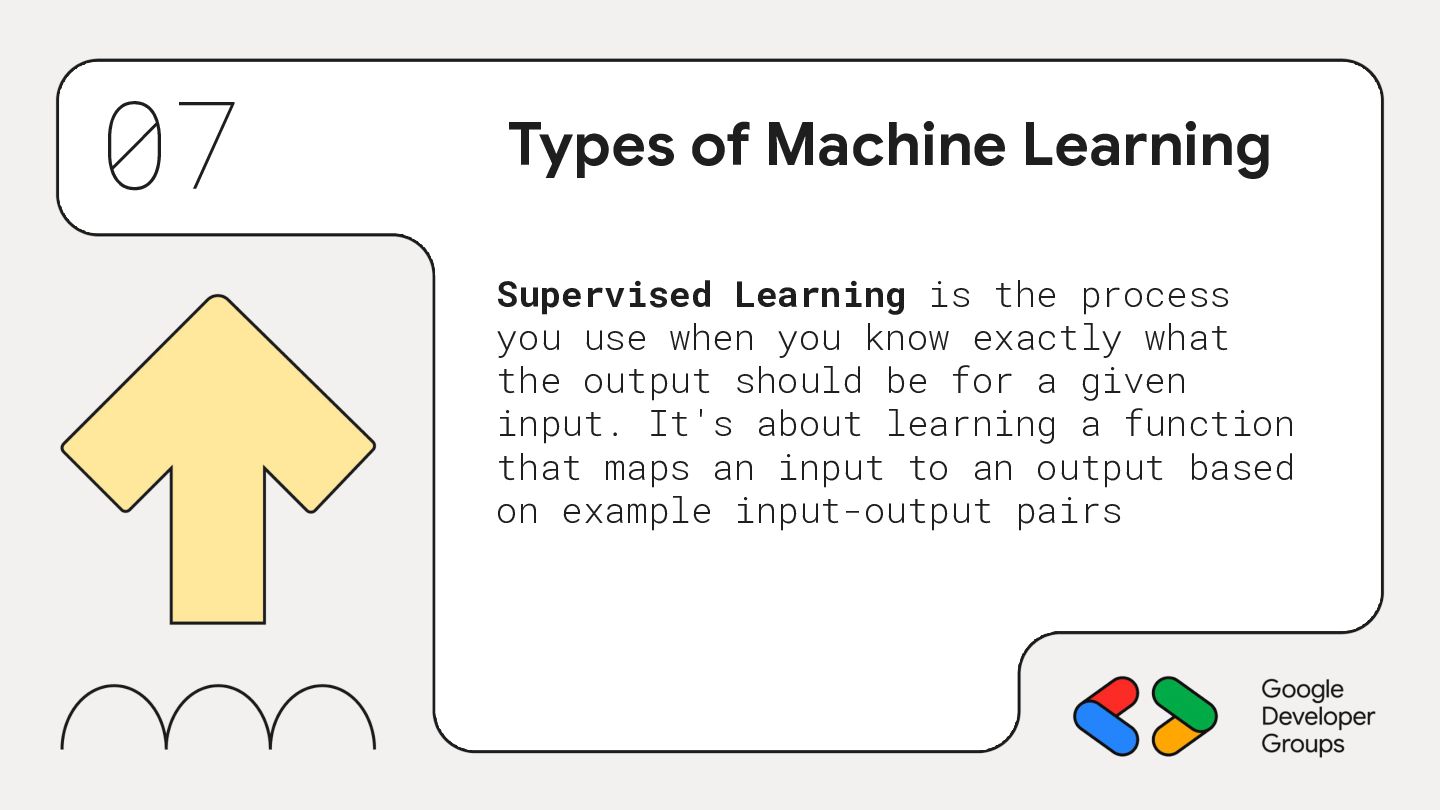
you use when you know exactly what the output should be for a given input. It's about learning a function that maps an input to an output based on example input-output pairs
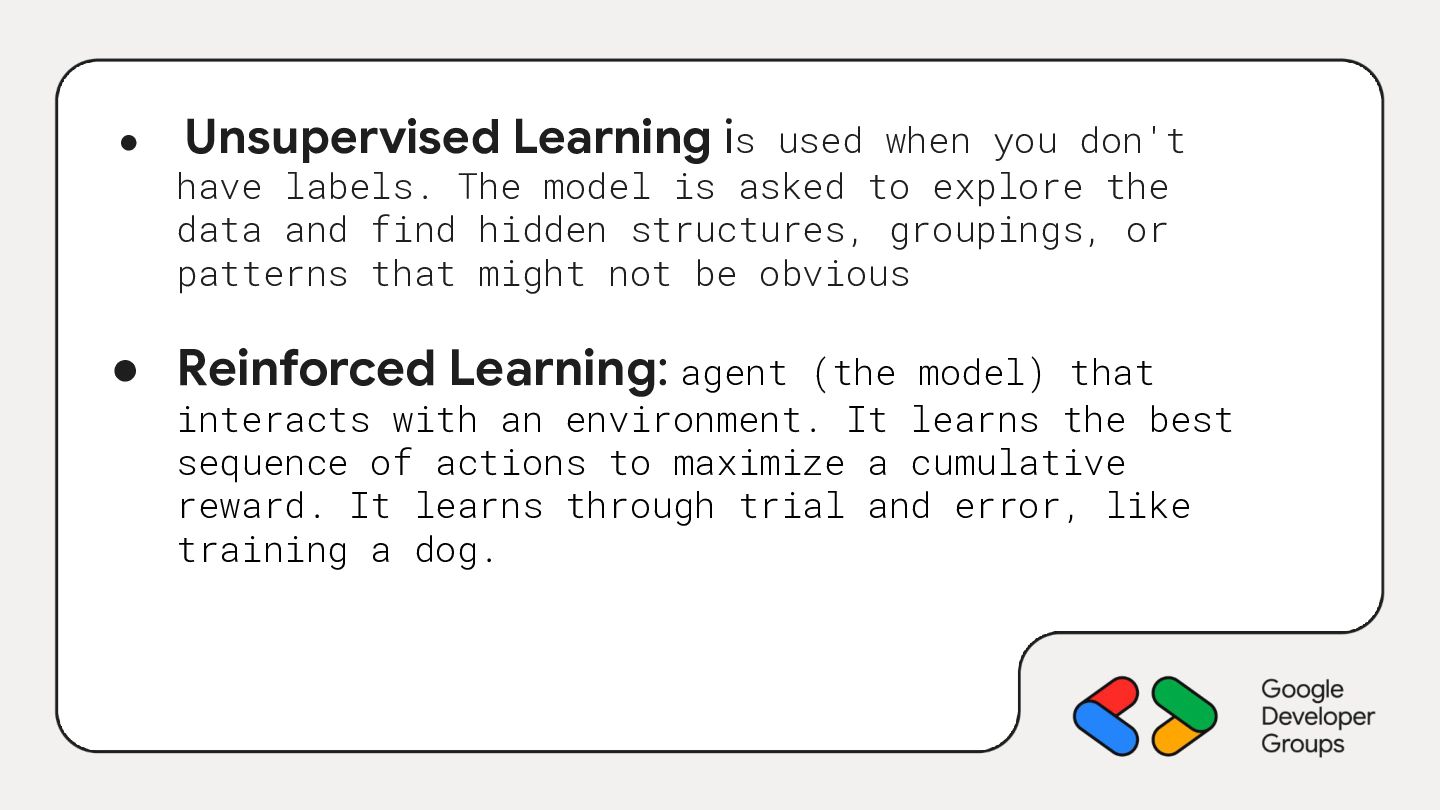
The model is asked to explore the data and find hidden structures, groupings, or patterns that might not be obvious • Reinforced Learning: agent (the model) that interacts with an environment. It learns the best sequence of actions to maximize a cumulative reward. It learns through trial and error, like training a dog.
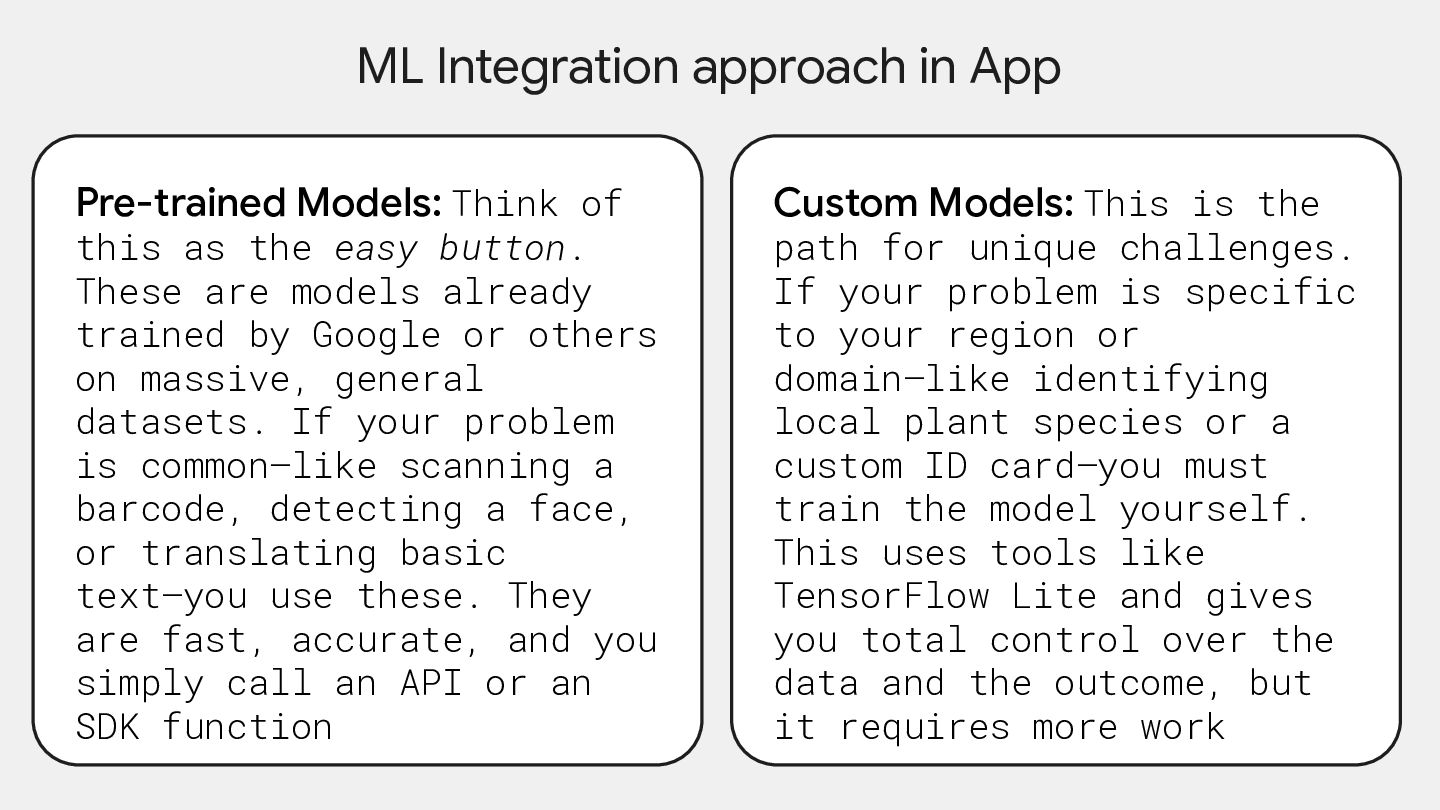
as the easy button. These are models already trained by Google or others on massive, general datasets. If your problem is common—like scanning a barcode, detecting a face, or translating basic text—you use these. They are fast, accurate, and you simply call an API or an SDK function Custom Models: This is the path for unique challenges. If your problem is specific to your region or domain—like identifying local plant species or a custom ID card—you must train the model yourself. This uses tools like TensorFlow Lite and gives you total control over the data and the outcome, but it requires more work
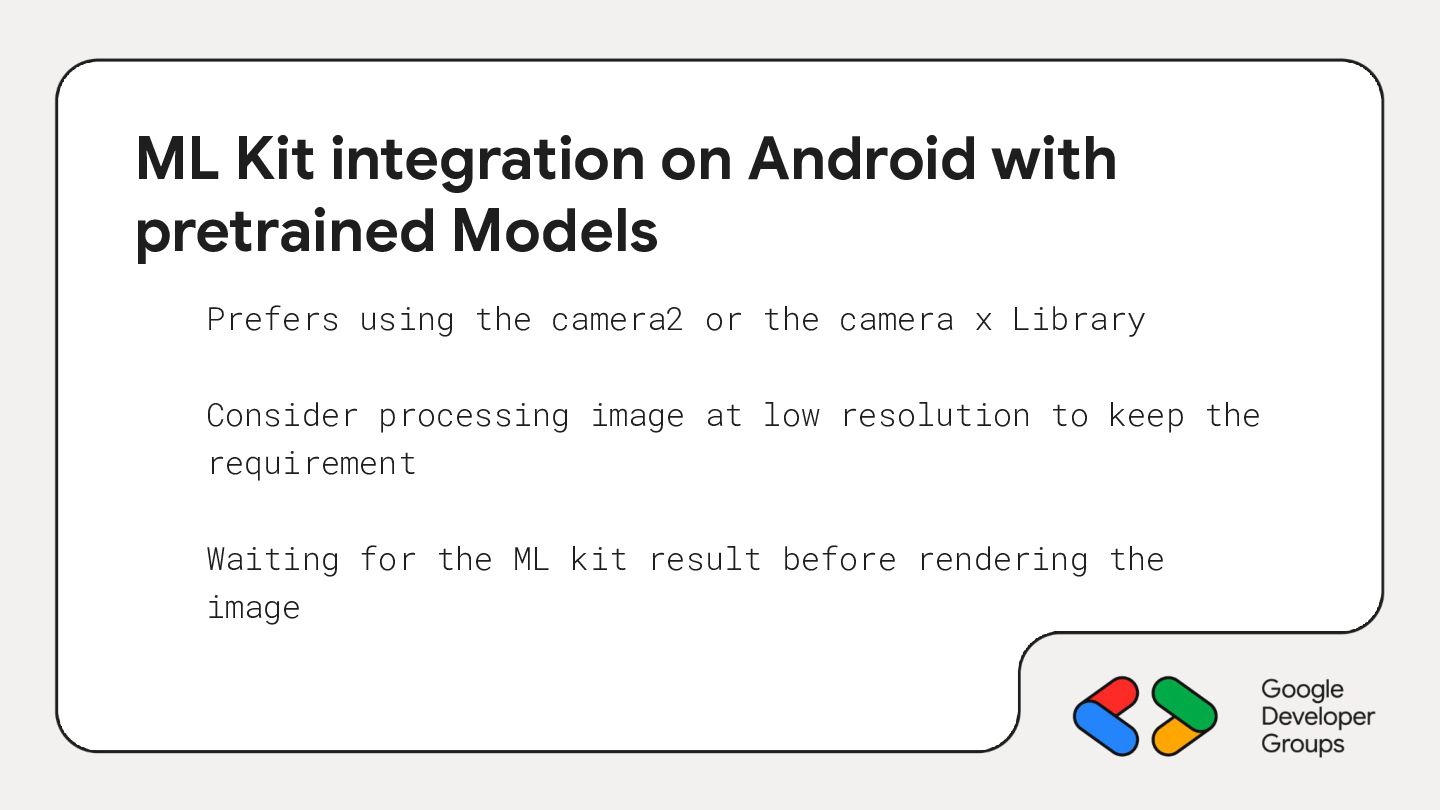
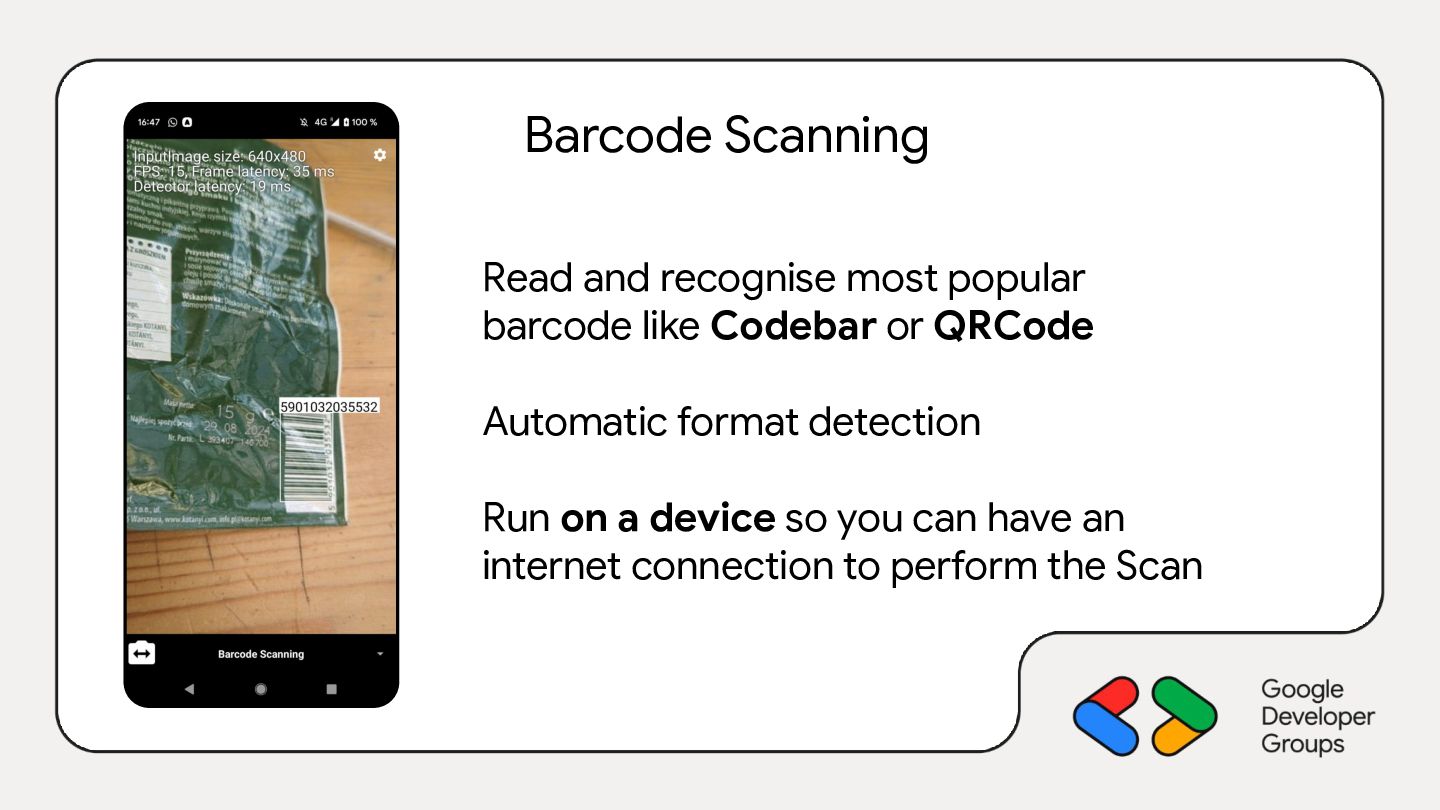
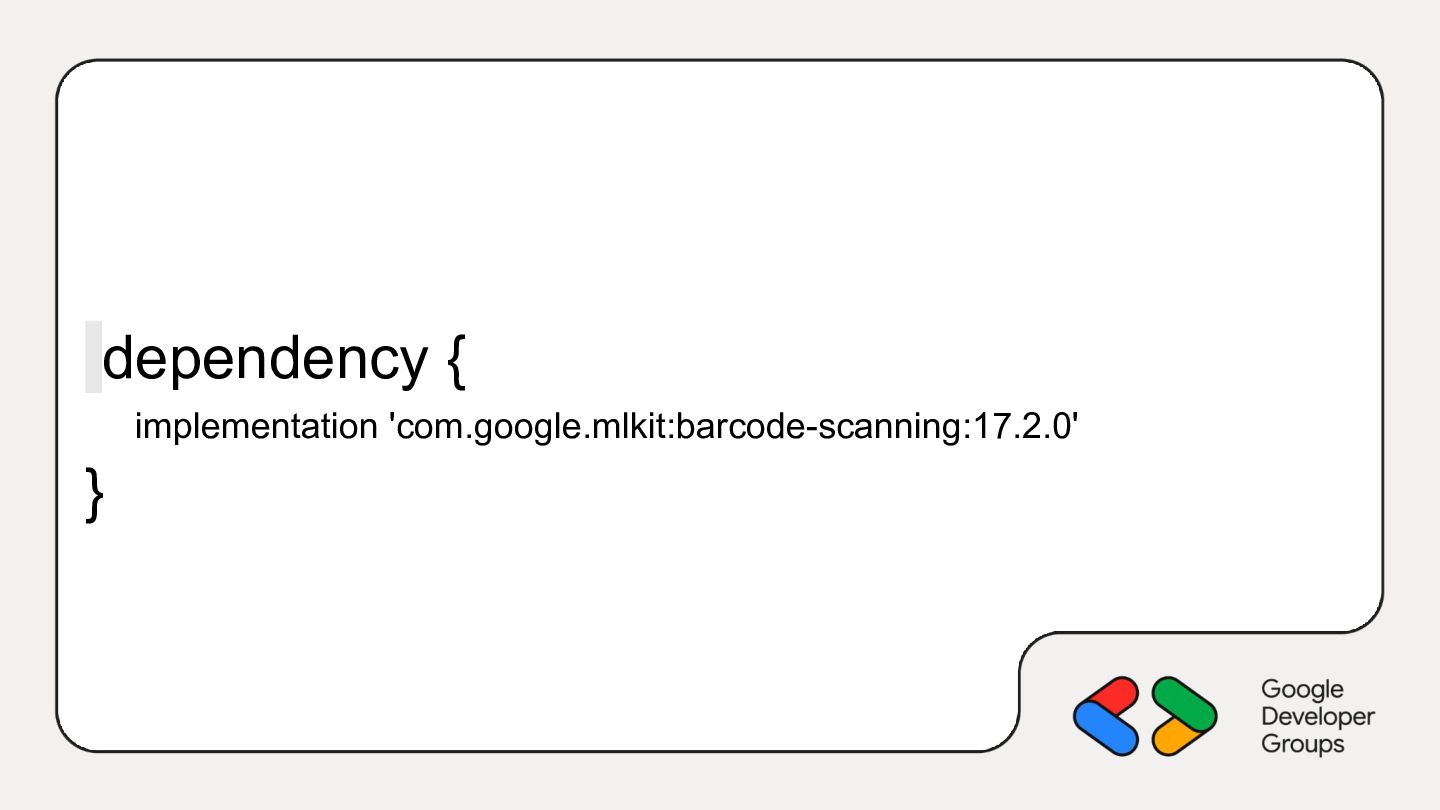
the camera2 or the camera x Library Consider processing image at low resolution to keep the requirement Waiting for the ML kit result before rendering the image
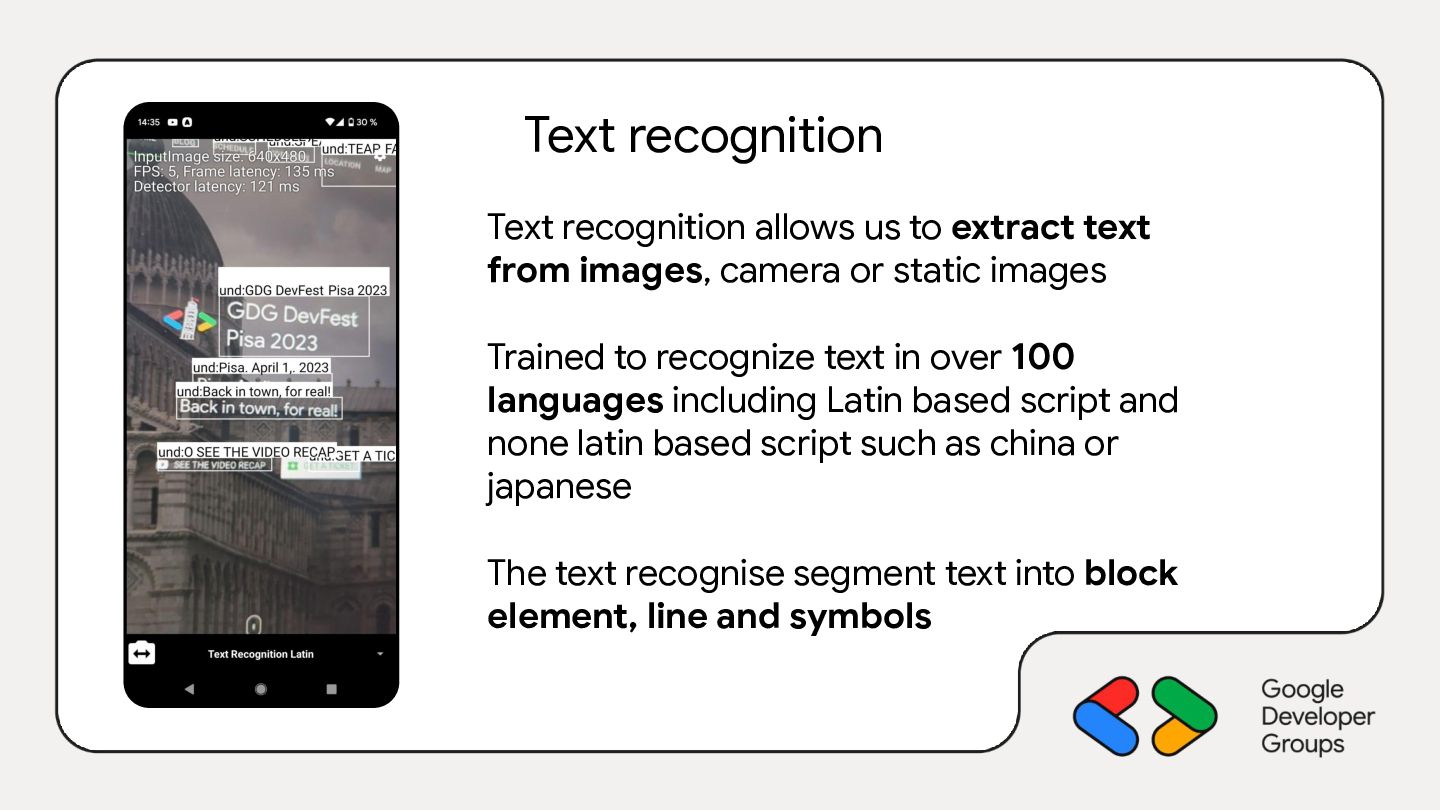
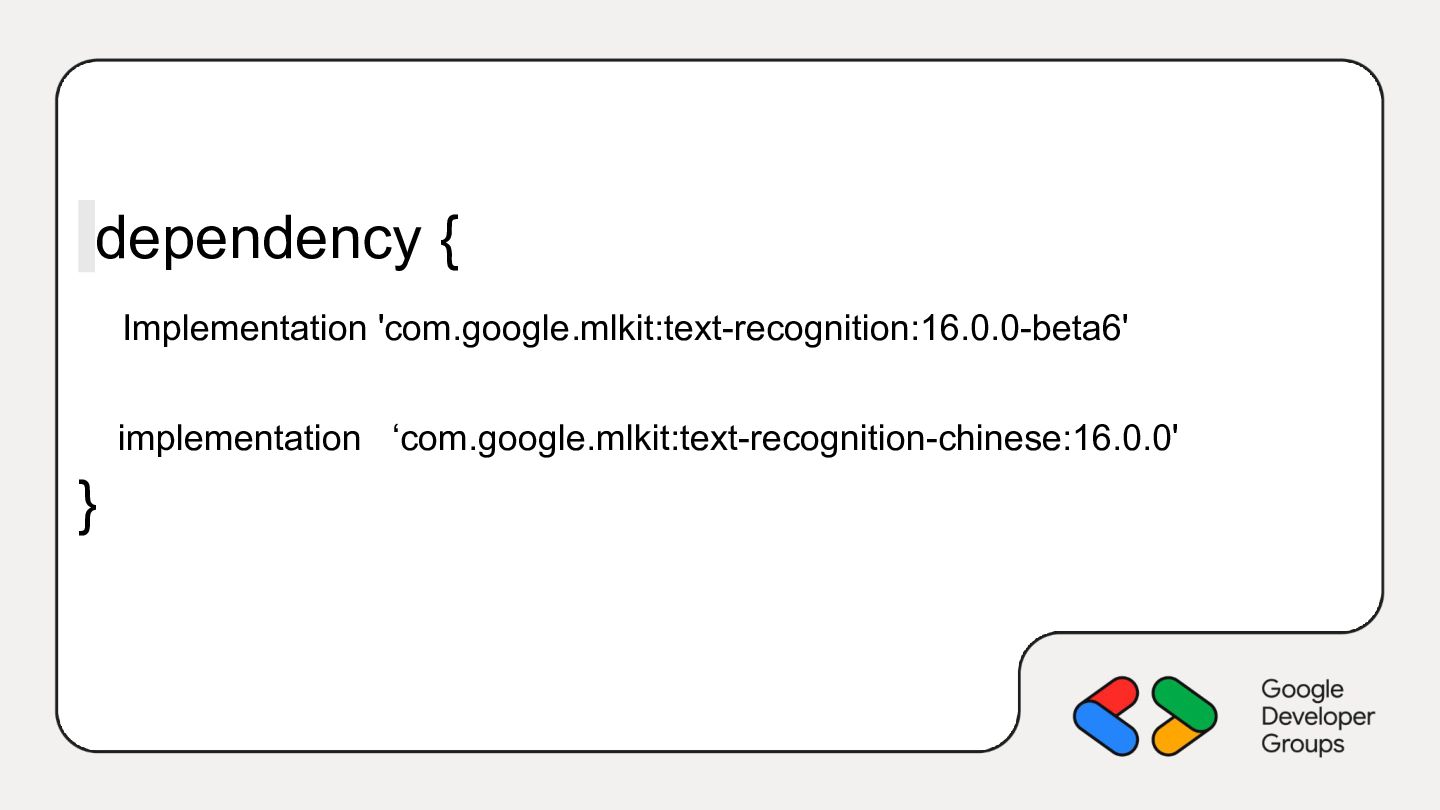
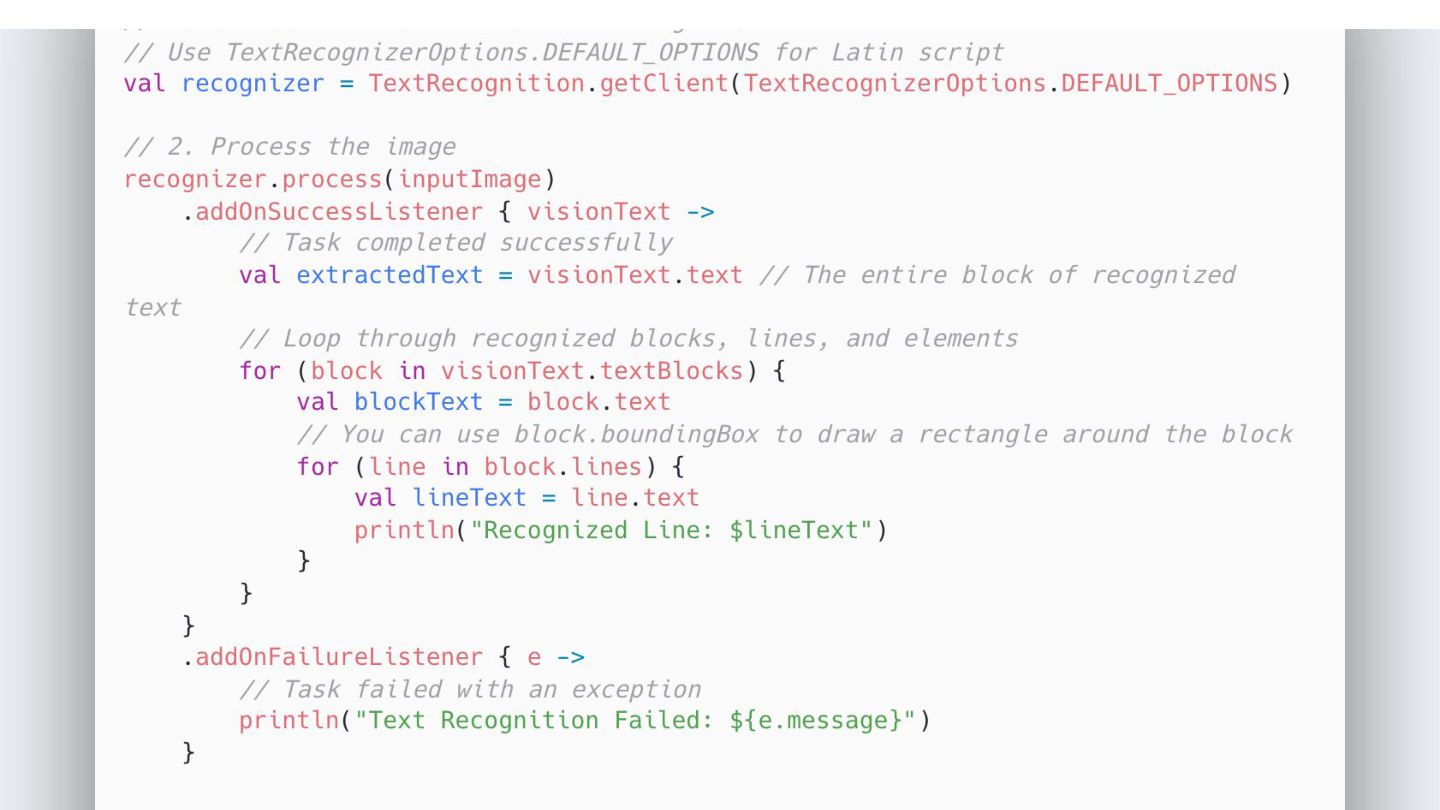
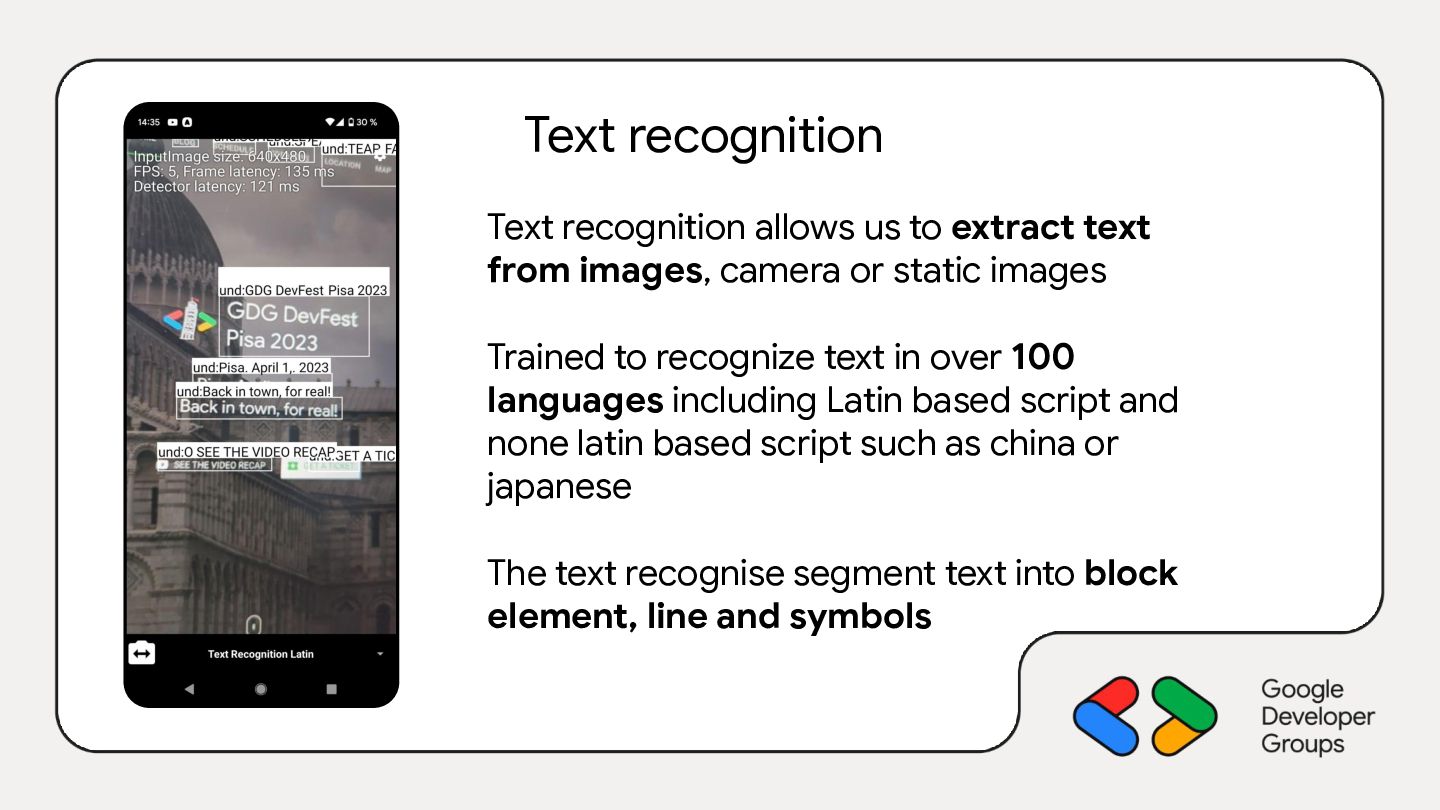
images, camera or static images Trained to recognize text in over 100 languages including Latin based script and none latin based script such as china or japanese The text recognise segment text into block element, line and symbols
images, camera or static images Trained to recognize text in over 100 languages including Latin based script and none latin based script such as china or japanese The text recognise segment text into block element, line and symbols
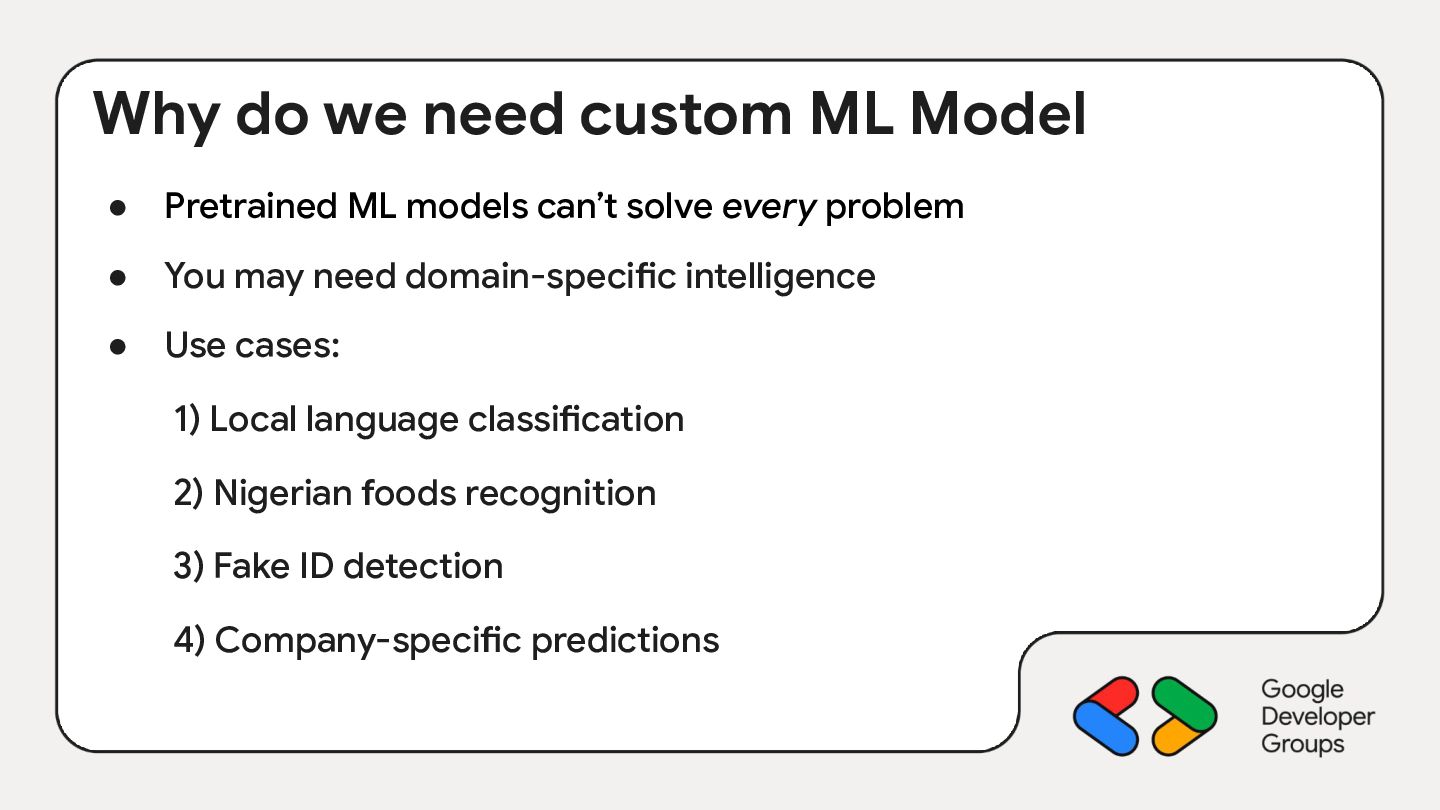
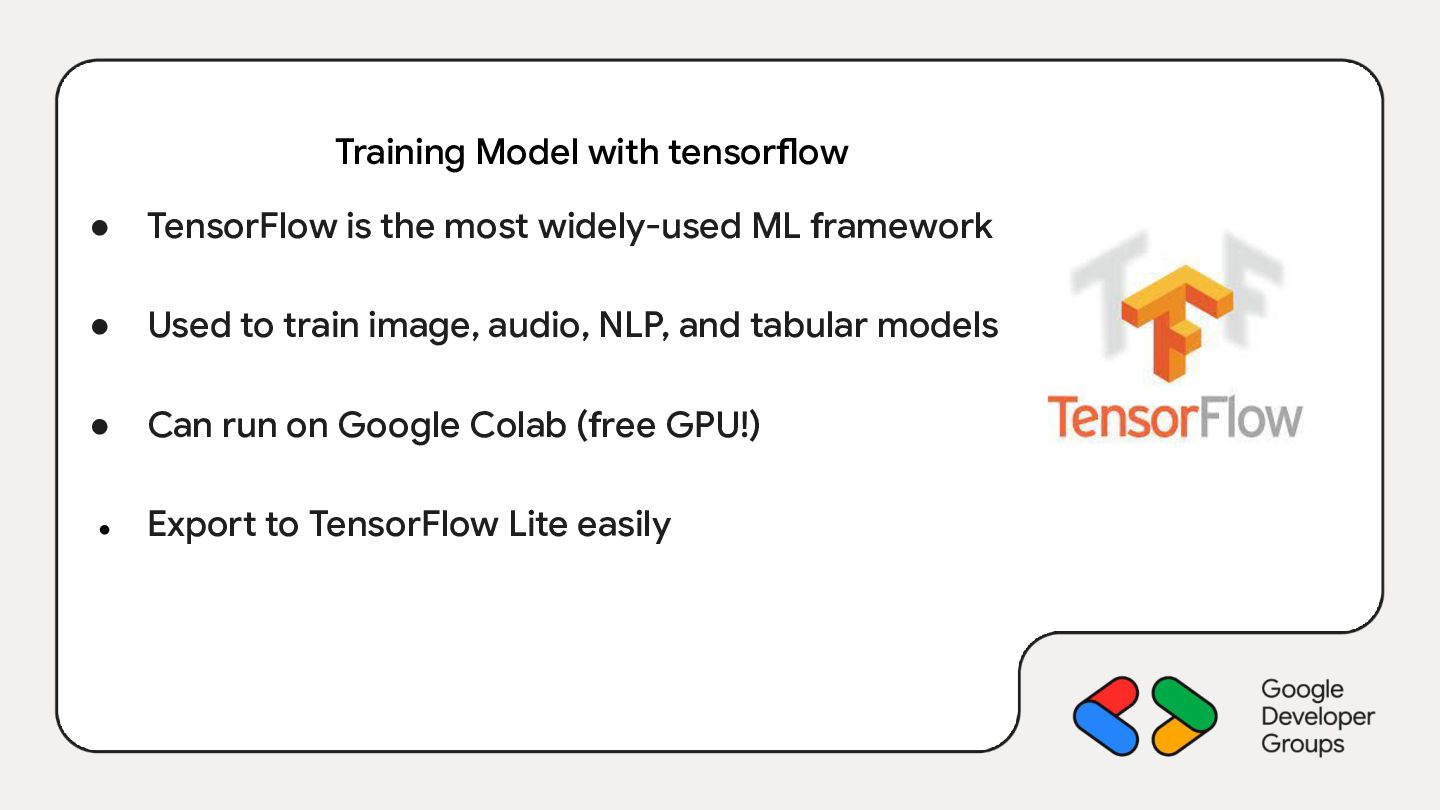
models can’t solve every problem • You may need domain-specific intelligence • Use cases: 1) Local language classification 2) Nigerian foods recognition 3) Fake ID detection 4) Company-specific predictions


 cyberiyke
 marktimemedia
 jlugia
 tomoyanonymous
 gurzu
gurzu
 mraible
 philnash
 morganepeng
 joshbly
 mojombo
 lemiorhan
 inesmontani
 rasagy