Upgrade to Pro — share decks privately, control downloads, hide ads and more …

Books for Everyone

Books for Everyone

Different roles in software engineering need different skills, and books are one of the best places to learn them from people who have done it before.

This talk walks through the software development lifecycle and recommends one book for each stage, from product strategy and requirements to architecture, design, testing, CI/CD and production.

The second half covers what decides whether the lifecycle works at all: communication, leadership, teams, strategy, management and culture.

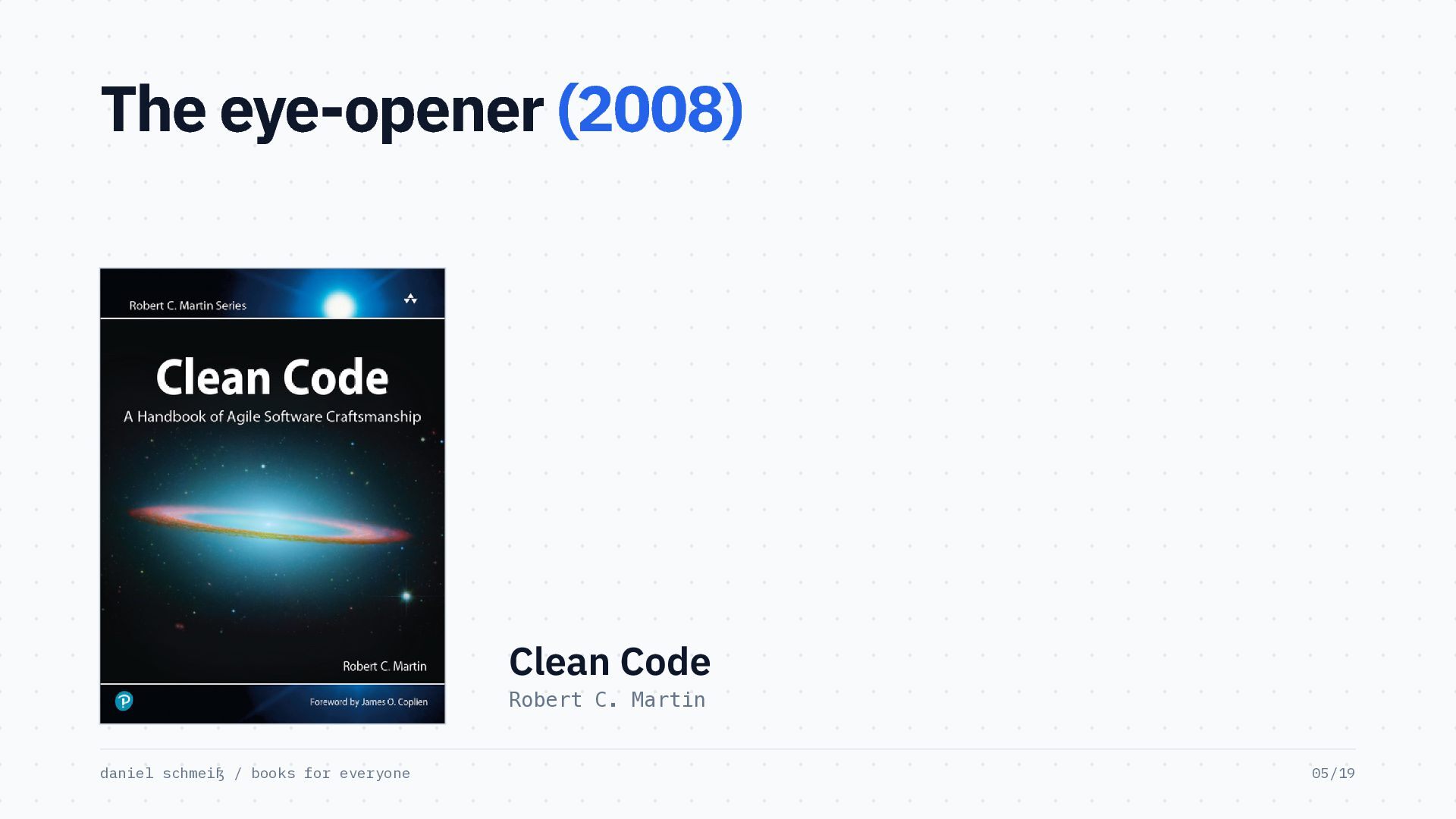
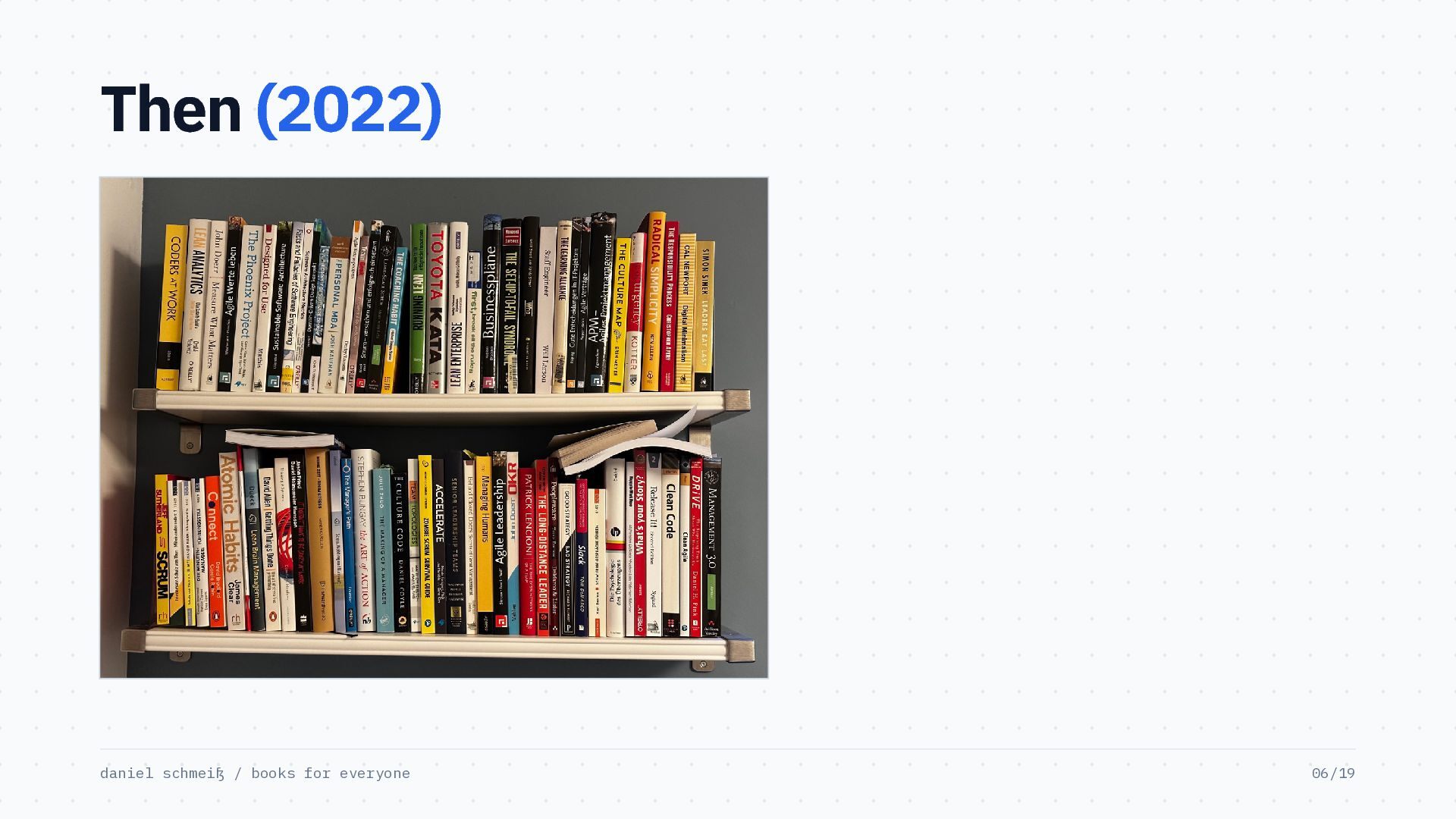
A personal selection of 18 books, from Clean Code in 2008 to today's bookshelf.

Daniel Schmeiß · https://www.linkedin.com/in/danielschmeiss/

Avatar for Daniel Schmeiß

Daniel Schmeiß

October 13, 2026

More Decks by Daniel Schmeiß

Other Decks in Technology

Transcript

  1. // FIELD NOTES Books for Everyone The ultimate source of

    information and guidance in the software development world Daniel Schmeiß linkedin.com/in/danielschmeiss
  2. DISCLAIMER Highly individual. The following book recommendations are personal —

    and only a small selection. daniel schmeiß / books for everyone 02/19
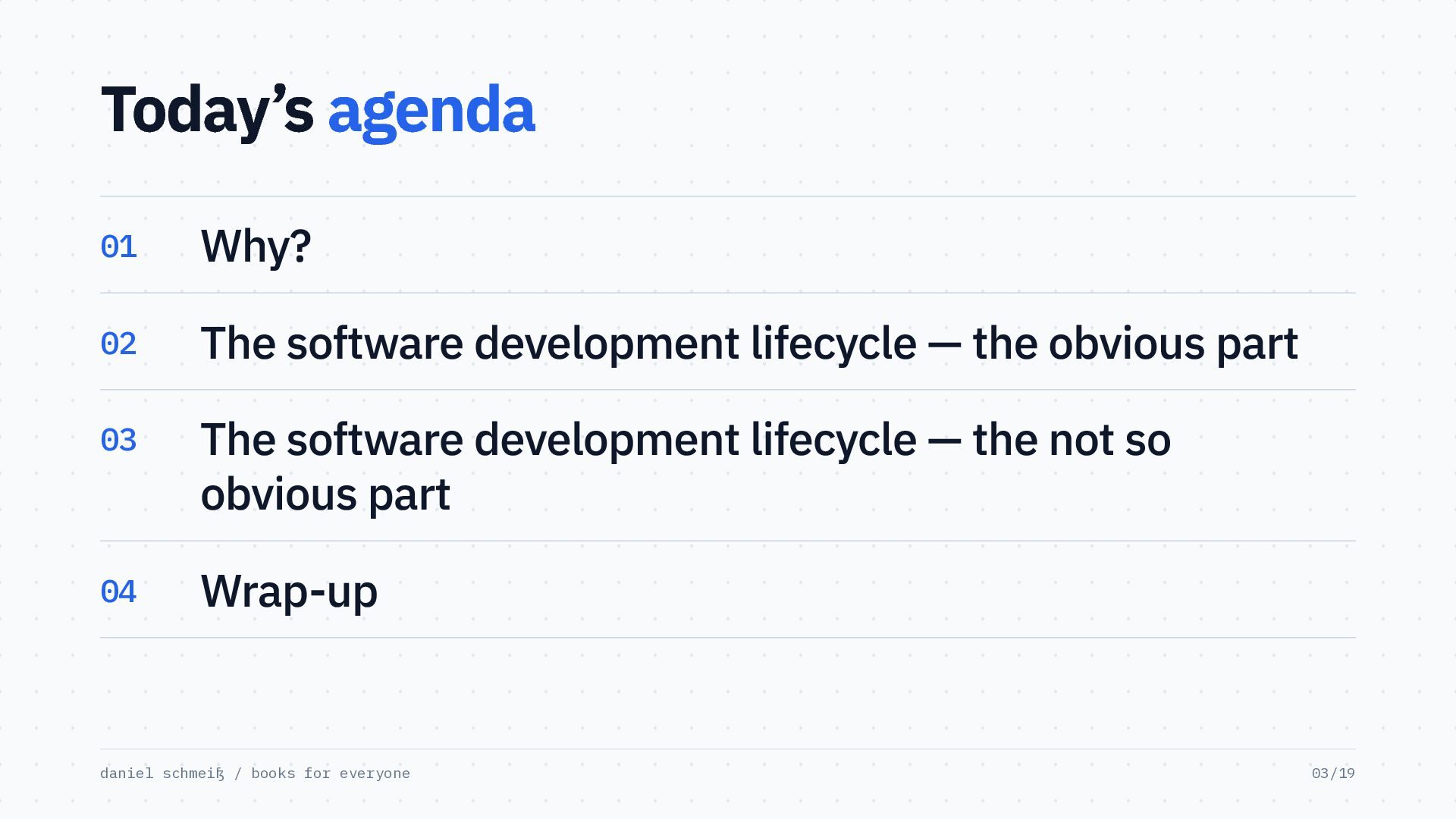
  3. Today’s agenda 01 Why? 02 The software development lifecycle —

    the obvious part 03 The software development lifecycle — the not so obvious part 04 Wrap-up daniel schmeiß / books for everyone 03/19
  4. Why? My journey → I got into software books during

    my computer science studies (2006–2010) → Different roles in software engineering require different skills and approaches → Where do you find guidance and best practices? daniel schmeiß / books for everyone 04/19
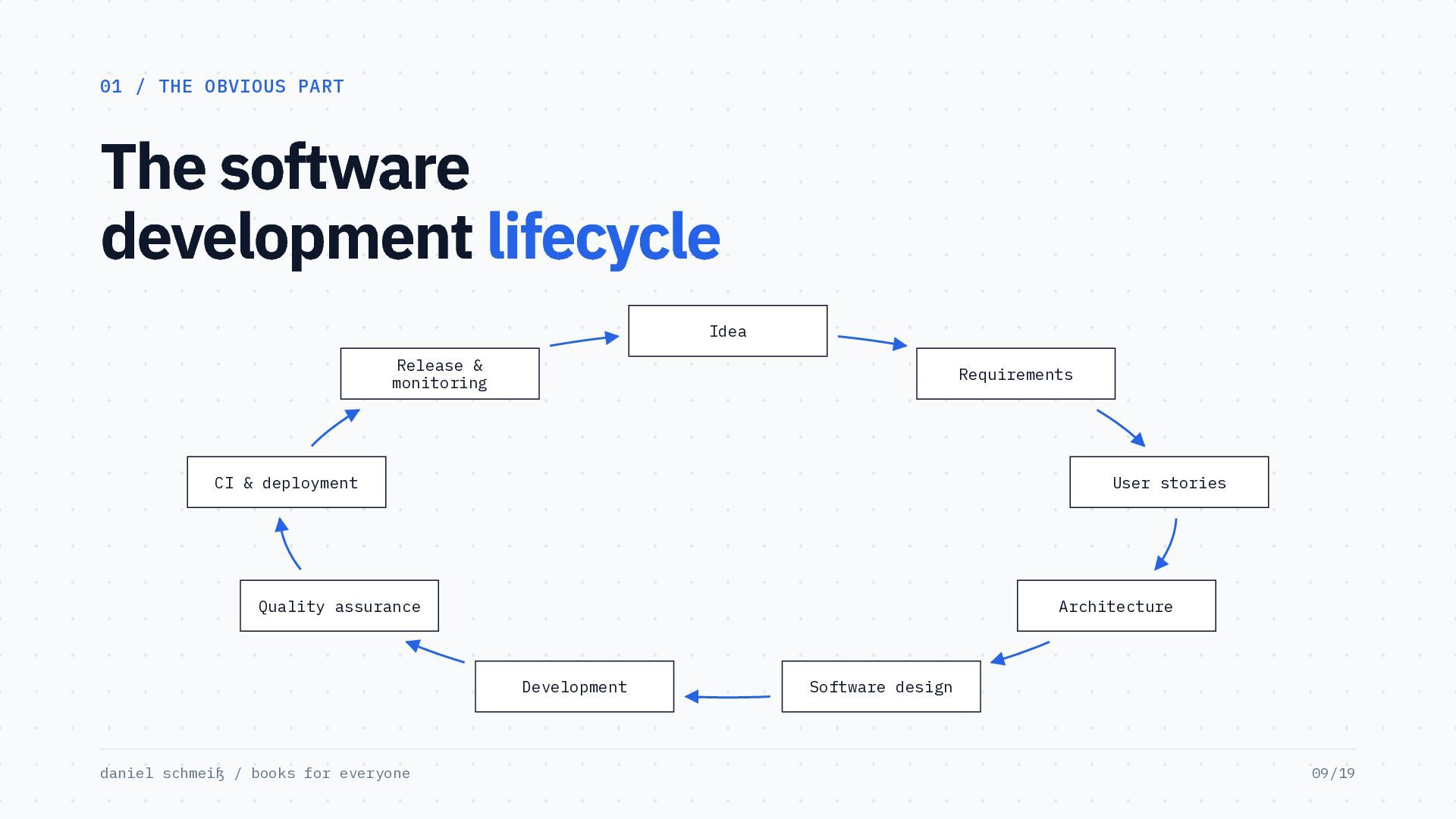
  5. 01 / THE OBVIOUS PART The software development lifecycle Idea

    Release & monitoring Requirements CI & deployment User stories Quality assurance Architecture Development daniel schmeiß / books for everyone Software design 09/19
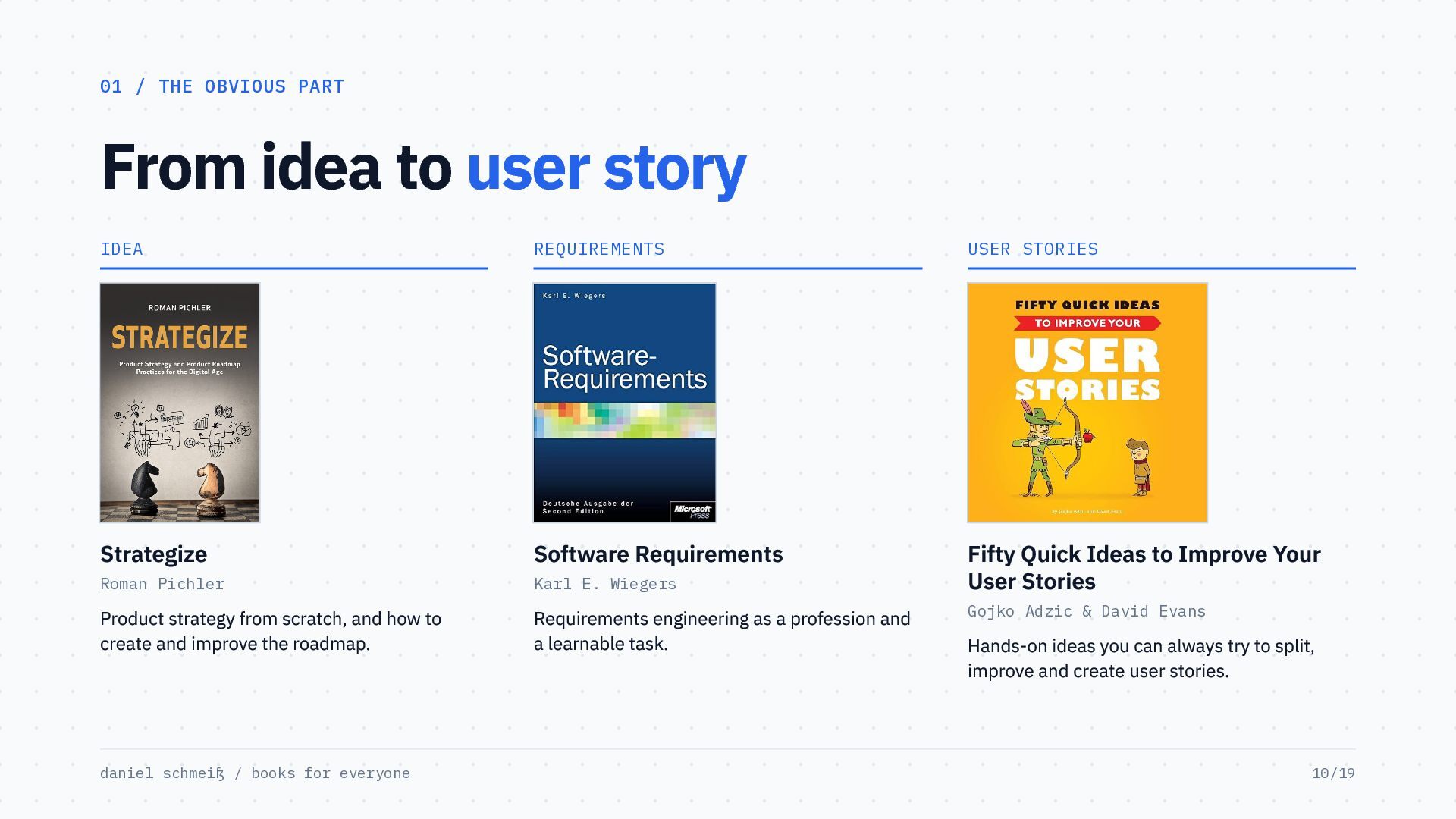
  6. 01 / THE OBVIOUS PART From idea to user story

    IDEA REQUIREMENTS USER STORIES Strategize Software Requirements Roman Pichler Karl E. Wiegers Fifty Quick Ideas to Improve Your User Stories Product strategy from scratch, and how to create and improve the roadmap. Requirements engineering as a profession and a learnable task. daniel schmeiß / books for everyone Gojko Adzic & David Evans Hands-on ideas you can always try to split, improve and create user stories. 10/19
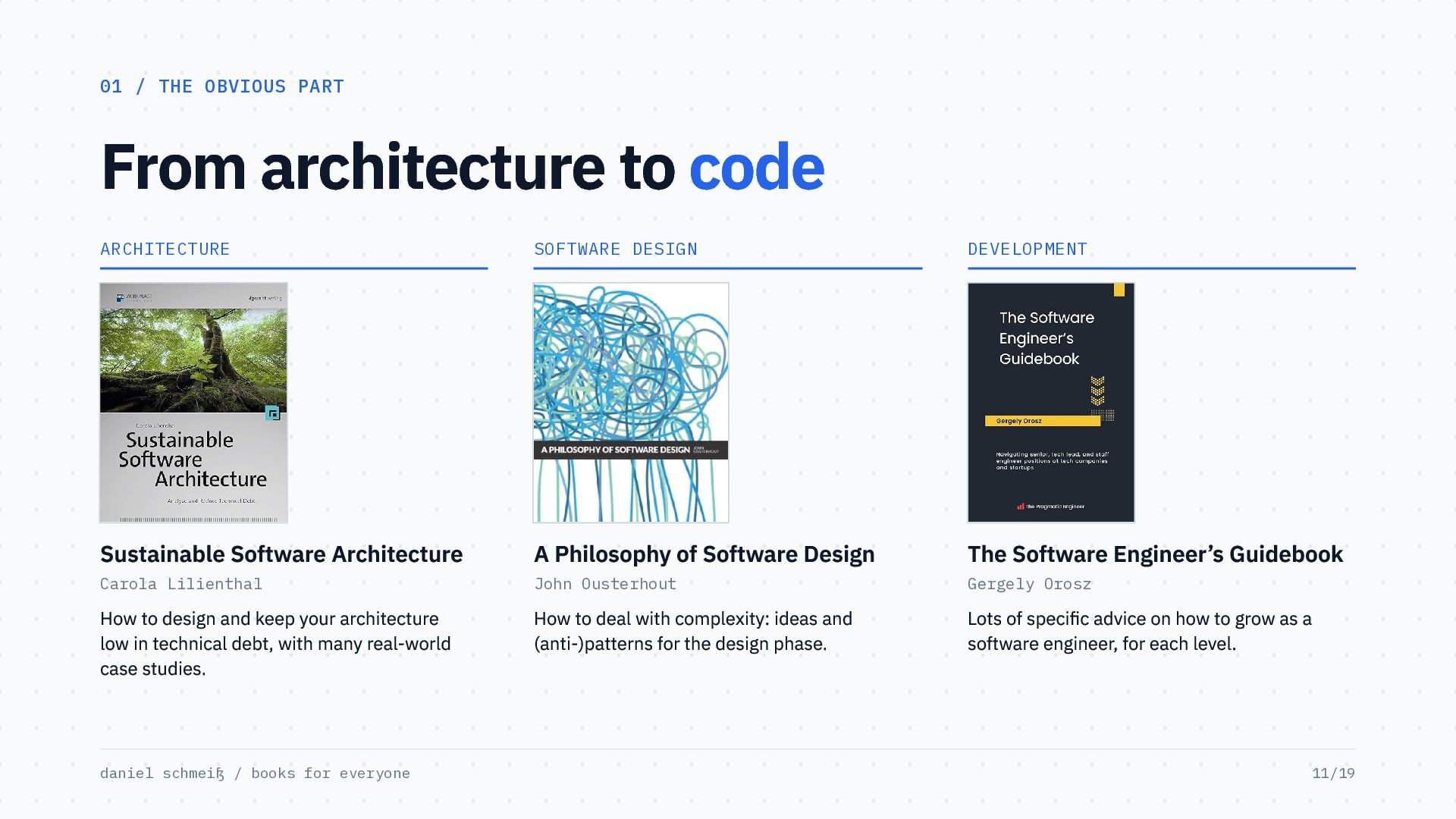
  7. 01 / THE OBVIOUS PART From architecture to code ARCHITECTURE

    SOFTWARE DESIGN DEVELOPMENT Sustainable Software Architecture A Philosophy of Software Design The Software Engineer’s Guidebook Carola Lilienthal John Ousterhout Gergely Orosz How to design and keep your architecture low in technical debt, with many real-world case studies. How to deal with complexity: ideas and (anti-)patterns for the design phase. Lots of specific advice on how to grow as a software engineer, for each level. daniel schmeiß / books for everyone 11/19
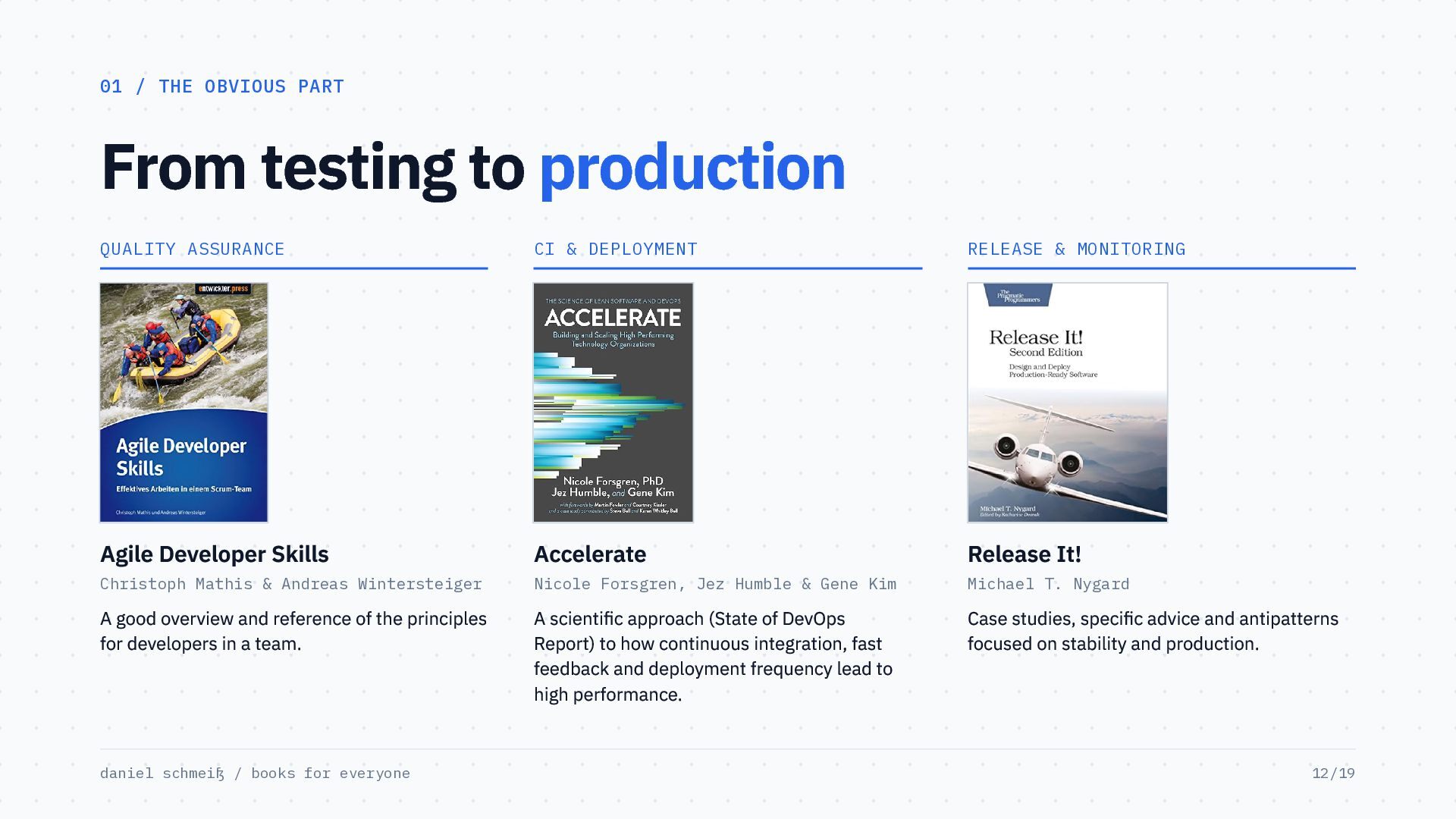
  8. 01 / THE OBVIOUS PART From testing to production QUALITY

    ASSURANCE CI & DEPLOYMENT RELEASE & MONITORING Agile Developer Skills Accelerate Release It! Christoph Mathis & Andreas Wintersteiger Nicole Forsgren, Jez Humble & Gene Kim Michael T. Nygard A good overview and reference of the principles for developers in a team. A scientific approach (State of DevOps Report) to how continuous integration, fast feedback and deployment frequency lead to Case studies, specific advice and antipatterns focused on stability and production. high performance. daniel schmeiß / books for everyone 12/19
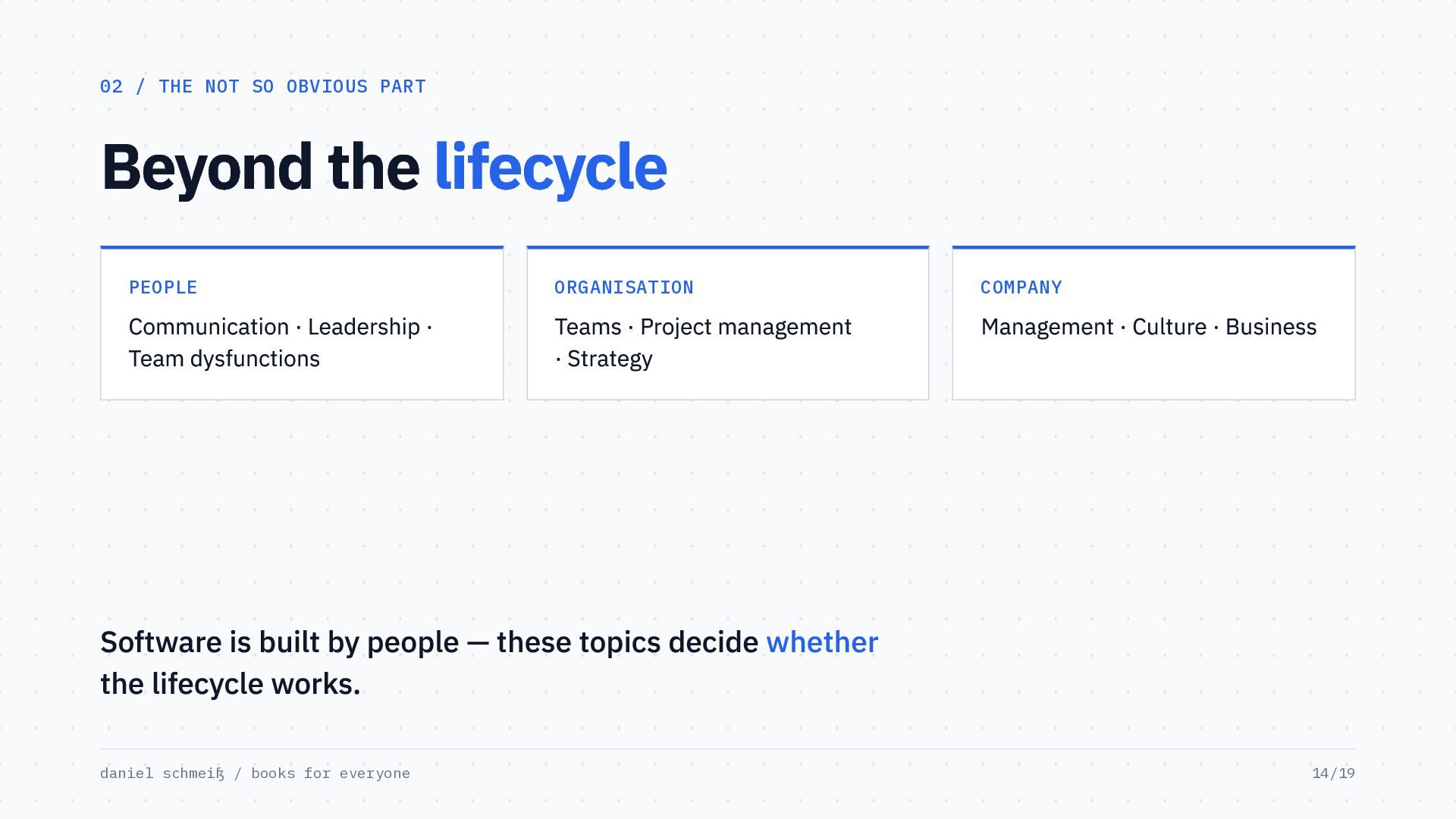
  9. 02 / THE NOT SO OBVIOUS PART Beyond the lifecycle

    PEOPLE ORGANISATION COMPANY Communication · Leadership · Team dysfunctions Teams · Project management · Strategy Management · Culture · Business Software is built by people — these topics decide whether the lifecycle works. daniel schmeiß / books for everyone 14/19
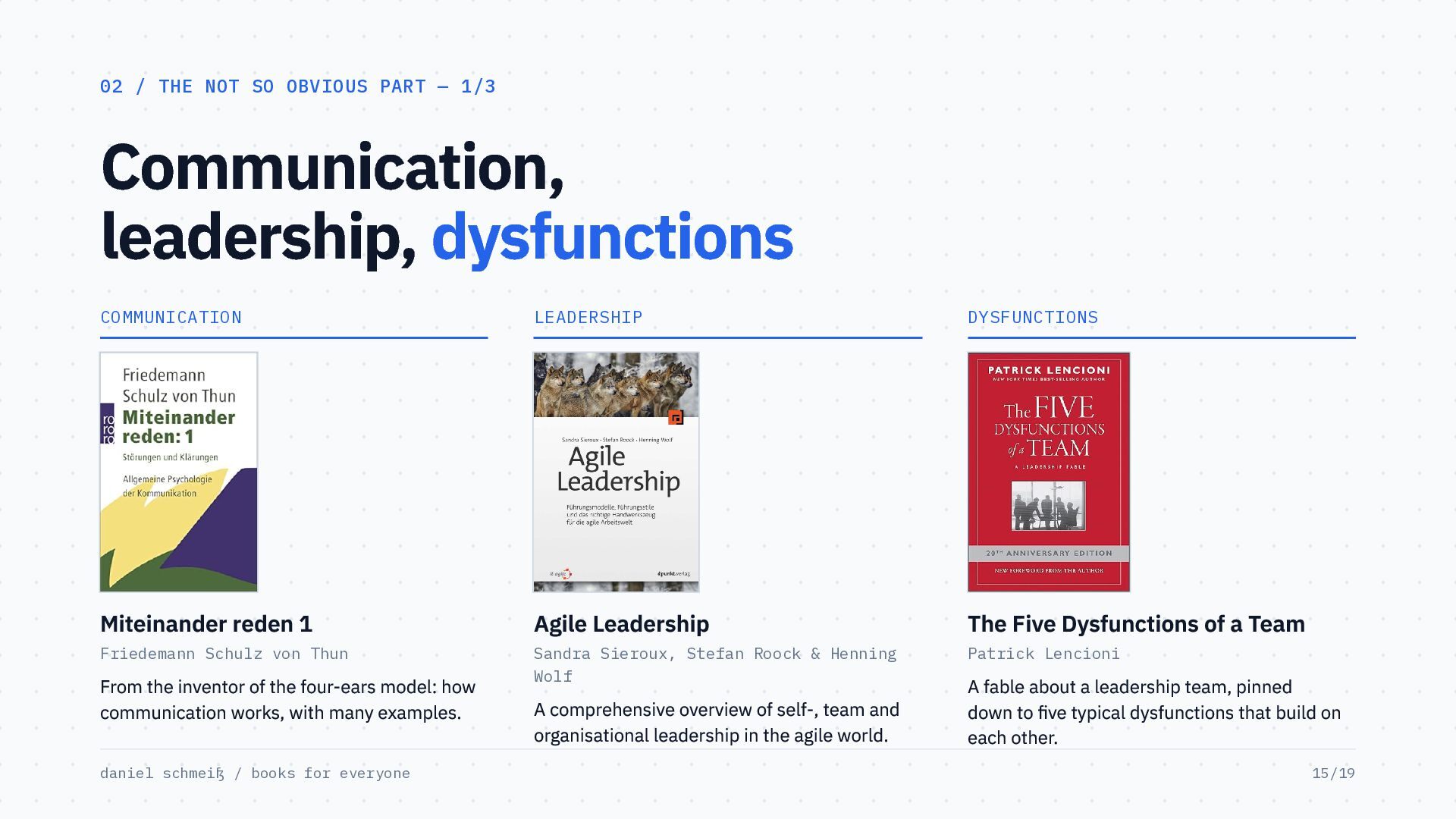
  10. 02 / THE NOT SO OBVIOUS PART — 1/3 Communication,

    leadership, dysfunctions COMMUNICATION LEADERSHIP DYSFUNCTIONS Miteinander reden 1 Agile Leadership The Five Dysfunctions of a Team Friedemann Schulz von Thun Sandra Sieroux, Stefan Roock & Henning Wolf Patrick Lencioni A comprehensive overview of self-, team and down to five typical dysfunctions that build on each other. From the inventor of the four-ears model: how communication works, with many examples. organisational leadership in the agile world. daniel schmeiß / books for everyone A fable about a leadership team, pinned 15/19
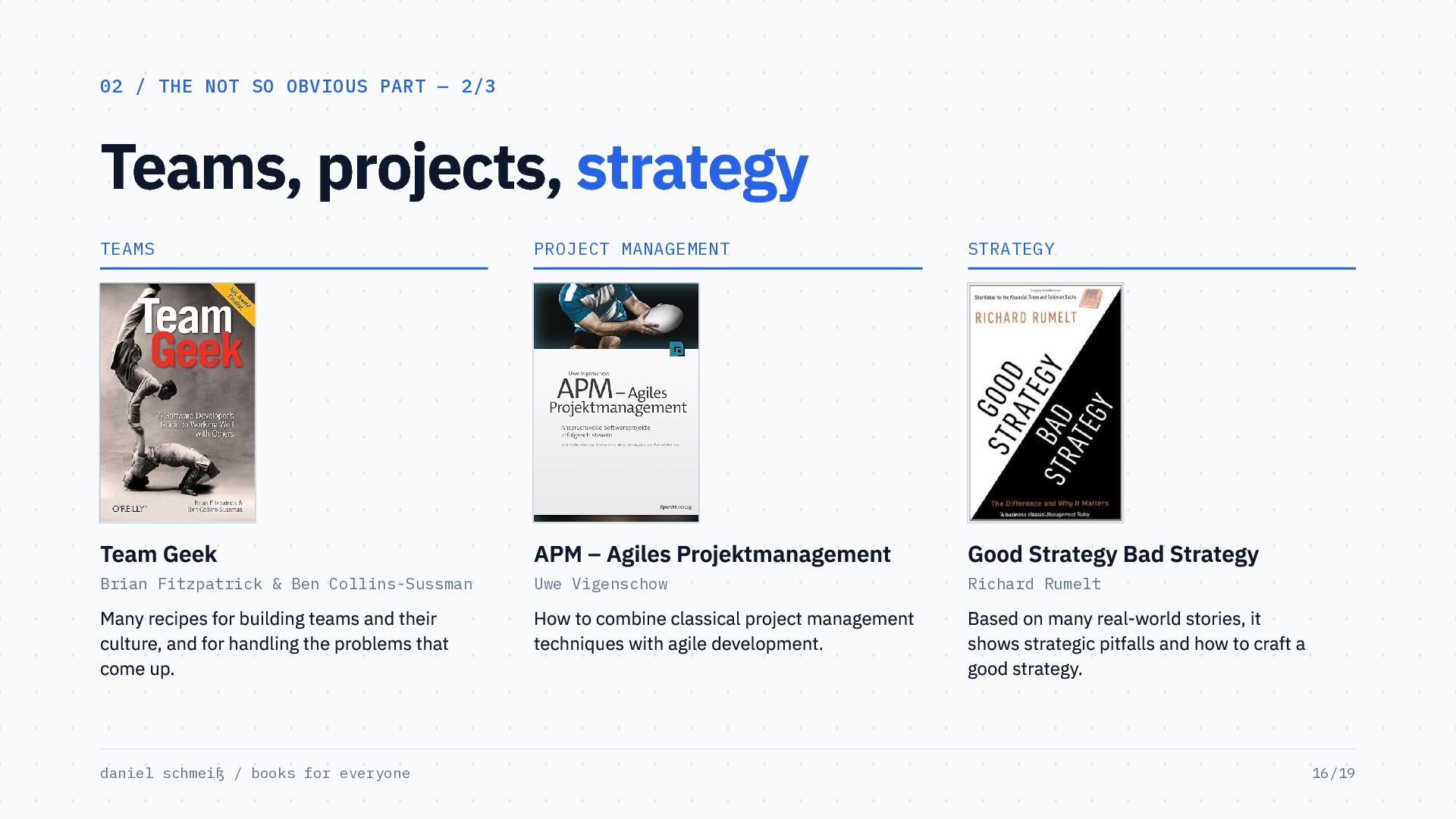
  11. 02 / THE NOT SO OBVIOUS PART — 2/3 Teams,

    projects, strategy TEAMS PROJECT MANAGEMENT STRATEGY Team Geek APM – Agiles Projektmanagement Good Strategy Bad Strategy Brian Fitzpatrick & Ben Collins-Sussman Uwe Vigenschow Richard Rumelt Many recipes for building teams and their culture, and for handling the problems that come up. How to combine classical project management techniques with agile development. Based on many real-world stories, it shows strategic pitfalls and how to craft a good strategy. daniel schmeiß / books for everyone 16/19
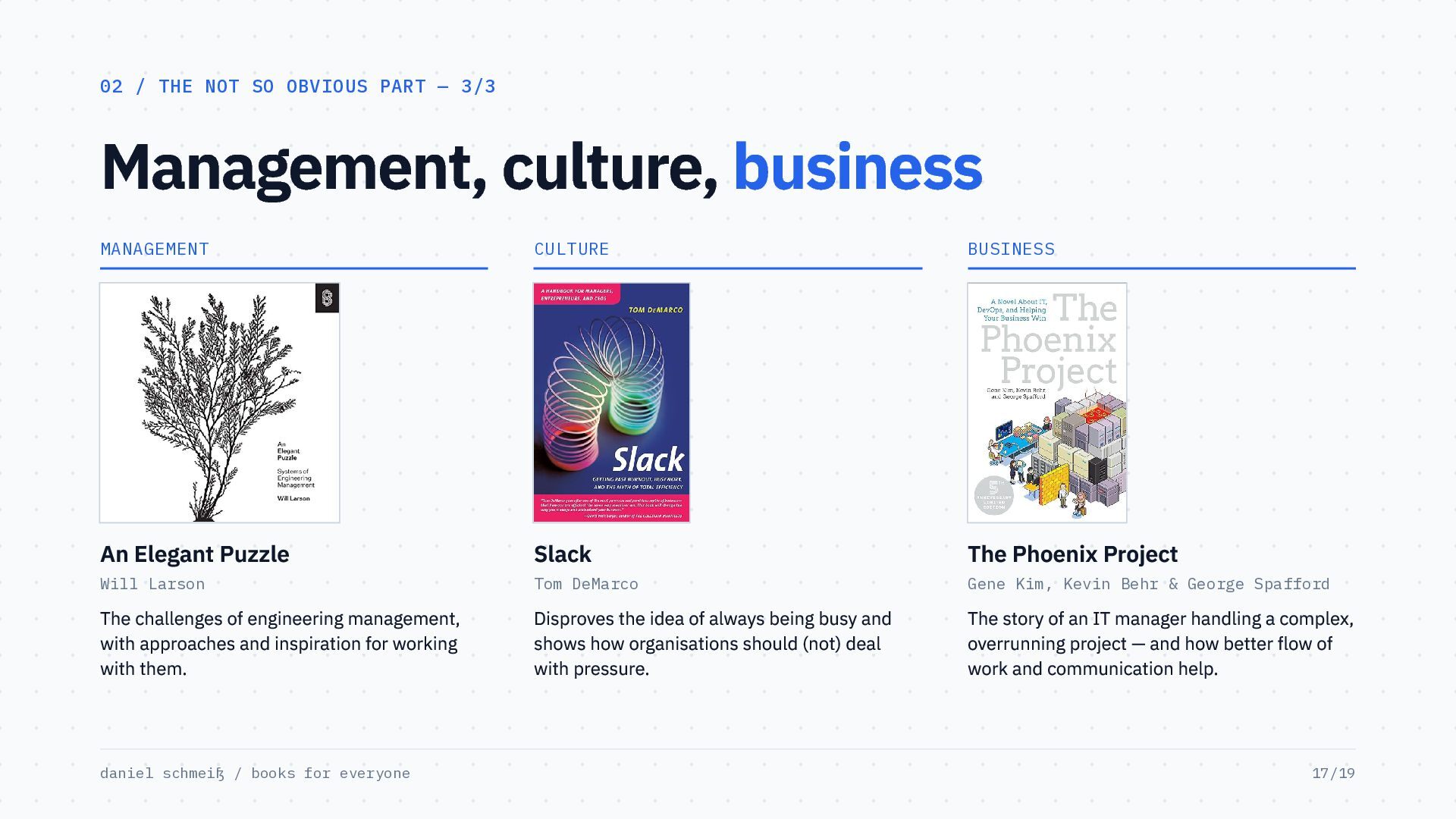
  12. 02 / THE NOT SO OBVIOUS PART — 3/3 Management,

    culture, business MANAGEMENT CULTURE BUSINESS An Elegant Puzzle Slack The Phoenix Project Will Larson Tom DeMarco Gene Kim, Kevin Behr & George Spafford The challenges of engineering management, with approaches and inspiration for working with them. Disproves the idea of always being busy and shows how organisations should (not) deal with pressure. The story of an IT manager handling a complex, overrunning project — and how better flow of work and communication help. daniel schmeiß / books for everyone 17/19
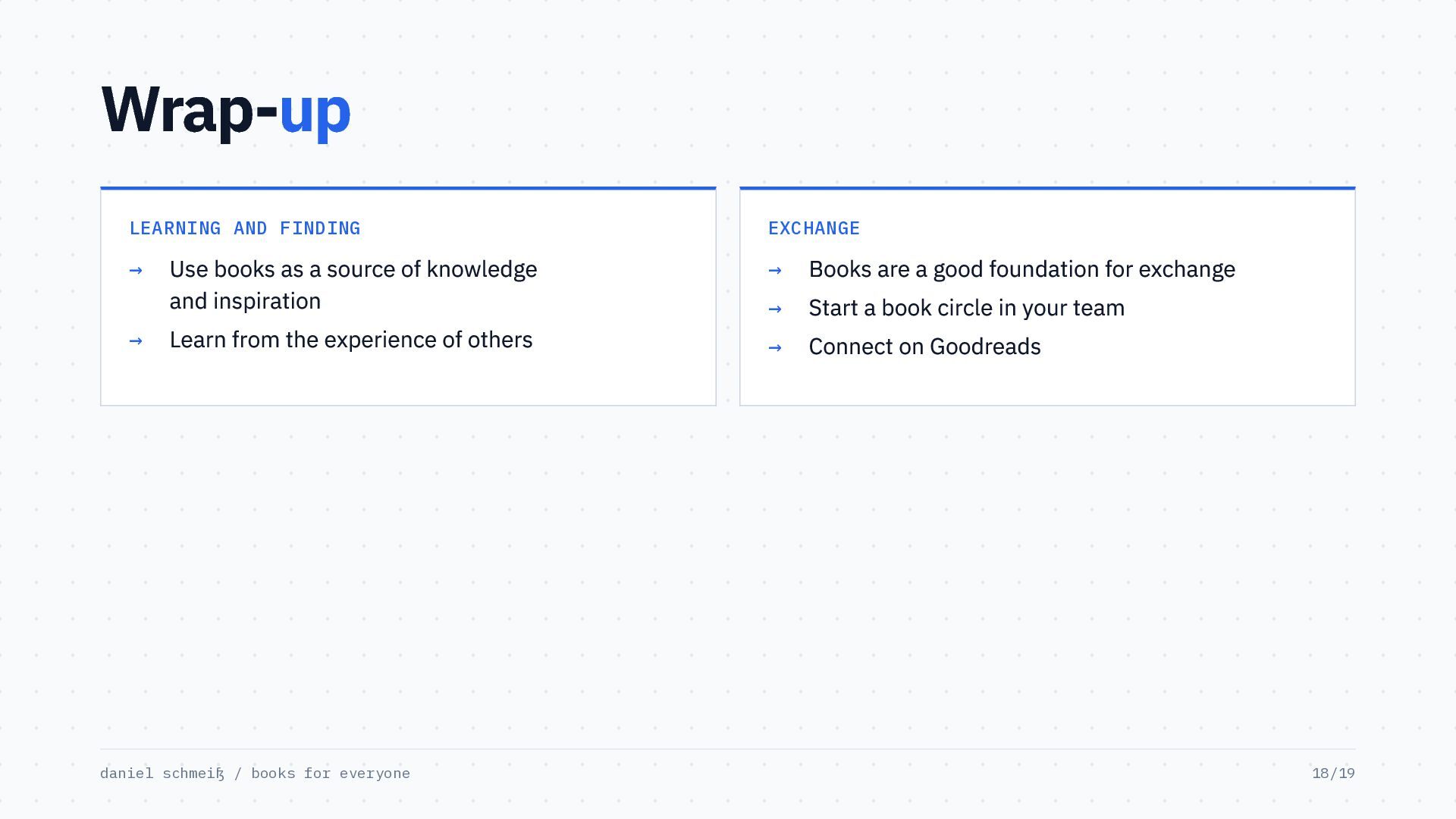
  13. Wrap-up LEARNING AND FINDING EXCHANGE → Use books as a

    source of knowledge and inspiration → Books are a good foundation for exchange → Start a book circle in your team Learn from the experience of others → Connect on Goodreads → daniel schmeiß / books for everyone 18/19
  14. // THE END Thank you. Books are the ultimate source

    of guidance — happy reading. Daniel Schmeiß linkedin.com/in/danielschmeiss