Upgrade to Pro — share decks privately, control downloads, hide ads and more …

know about this on pagew seo

know about this on pagew seo

On-page SEO refers to the optimization techniques applied directly to the content and HTML source code of a webpage to improve its search engine rankings and visibility. The goal is to make a page more attractive and accessible to both users and search engines like Google. Key elements of on-page SEO include:

Avatar for rohit sharma

rohit sharma

December 26, 2024

Other Decks in Marketing & SEO

Transcript

  1. 1.DIGITAL MARKETRING SEO INTRO  Keyword Research  Title 

    Meta Description  Content optimization  H1 to H6 Heading Tag  Robots tag  Robots txt file  URL optimization  Sitemap.xml  Sitemap.HTML  Loading speed optimization  Schema code setup
  2. KEYWORD RESEARCH  Doing keyword research is important for SEO

    because it reveals what people are searching for online, helps to understand search intent, assists in finding new content ideas, and more. In this article, you will learn why keyword research is important for SEO.  Find Keywords Relevant To Your Business & Show Ads When Customers Search For Your Product. Get Keyword Ideas With Google Keyword Planner.
  3. Title \meta description  An SEO title, also known as

    a title tag, is the clickable headline that appears on SERPs. It acts as a concise summary of the content on a webpage and is critical for both user engagement and search engine rankings. The meta description is a short snippet that appears under the title tag on SERPs.  Title tags and meta descriptions are important for SEO because they help search engines and users understand what a page is about and encourage users to click through to the site
  4. Content optimization in SEO  Content optimization in SEO is

    important because it helps search engines and users understand your content.
  5. H1 to H6 Heading tag  By using H1 to

    H6 tags strategically and following best practices, you can enhance the visibility of your content and improve your search rankings. Remember, headings are not just for search engines; they also benefit your audience by making your content more accessible and engaging.
  6. ROBOTS TAG SEO  A robots meta tag is used

    to control how a page is indexed and served to users in search engines.
  7. A ROBOTS TXT FILE SEO 1. A robots.txt file is

    a plain text file that tells search engine crawlers which URLs they can access on a website.
  8. URL optimization  URL optimization, or Uniform Resource Locator (URL)

    optimization, is the process of improving a website's URL structure to make it more accessible to users and search engines.  The tool URL optimization chek gtmetrix.com
  9. Sitemap.xml  Search engines use sitemaps to find and crawl

    website pages, then add them to search results.
  10. SITEMAP.HTML  An HTML sitemap is a file that lists

    all the pages on a website and provides links to them:
  11. Loading speed optimization  Page load speed optimization is the

    process of making changes to a website to make it load faster. A faster page load speed can: Improve user experience, Increase engagement, Increase conversion rates, and Improve search engine rankings  Page speed insights = tool chek  Optimizing the loading speed of a website is important because it can:
  12. Schema code setup  Schema markup is code that helps

    search engines understand the content of a web page, which can improve a page's visibility and ranking in search results:
  13. On Page Seo Tools  Xml.sitemap.com  Page speed insights

     Rich results test  Google search console [GSc] = A free tool that helps website owners understand and improve their site”s performance in google search  Gtmetrix.com
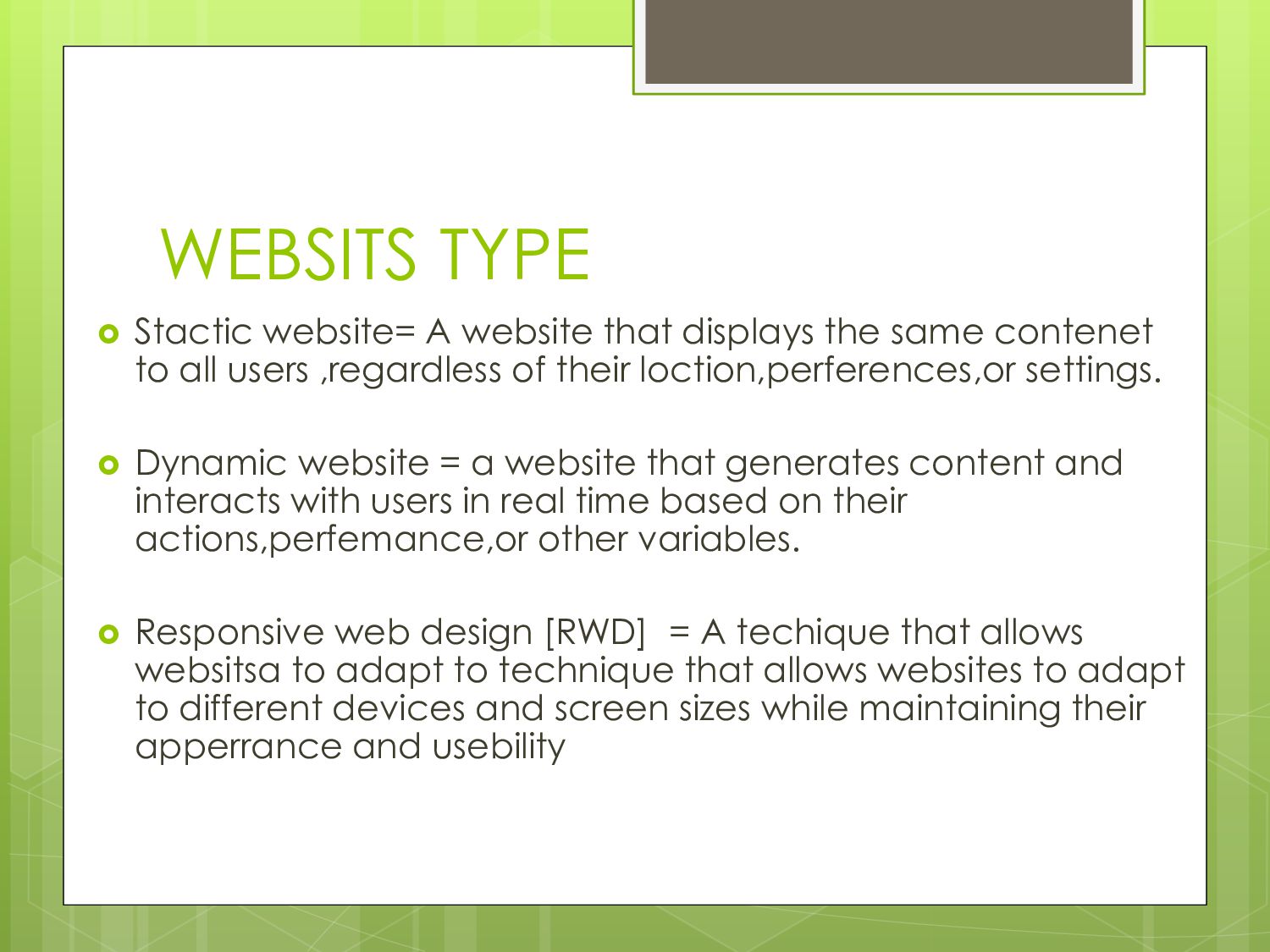
  14. WEBSITS TYPE  Stactic website= A website that displays the

    same contenet to all users ,regardless of their loction,perferences,or settings.  Dynamic website = a website that generates content and interacts with users in real time based on their actions,perfemance,or other variables.  Responsive web design [RWD] = A techique that allows websitsa to adapt to technique that allows websites to adapt to different devices and screen sizes while maintaining their apperrance and usebility