perceiving its environment through sensors and acting upon that environment through effectors.” Artificial intelligence : a modern approach by Stuart Russell, Peter Norvig “ Multiagent systems are made up of multiple interacting intelligent agents (…) able to cooperate, compete, communicate, act flexibly and exercise control over their behavior within the frame of their objectives” Multiagent Systems. Retrieved from https://mitpress.mit.edu/books/multiagent-systems-0
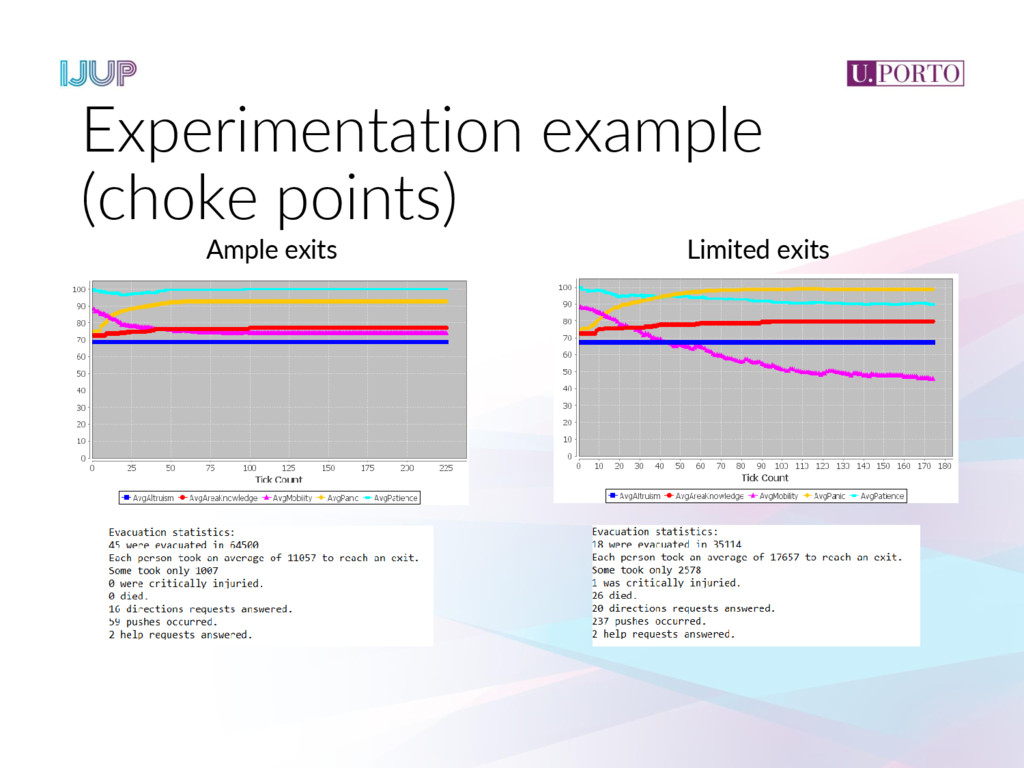
on automatons or on agents. • Both the fluid dynamics and the automatons based approaches fail to consider the non deterministic nature of human behaviour.
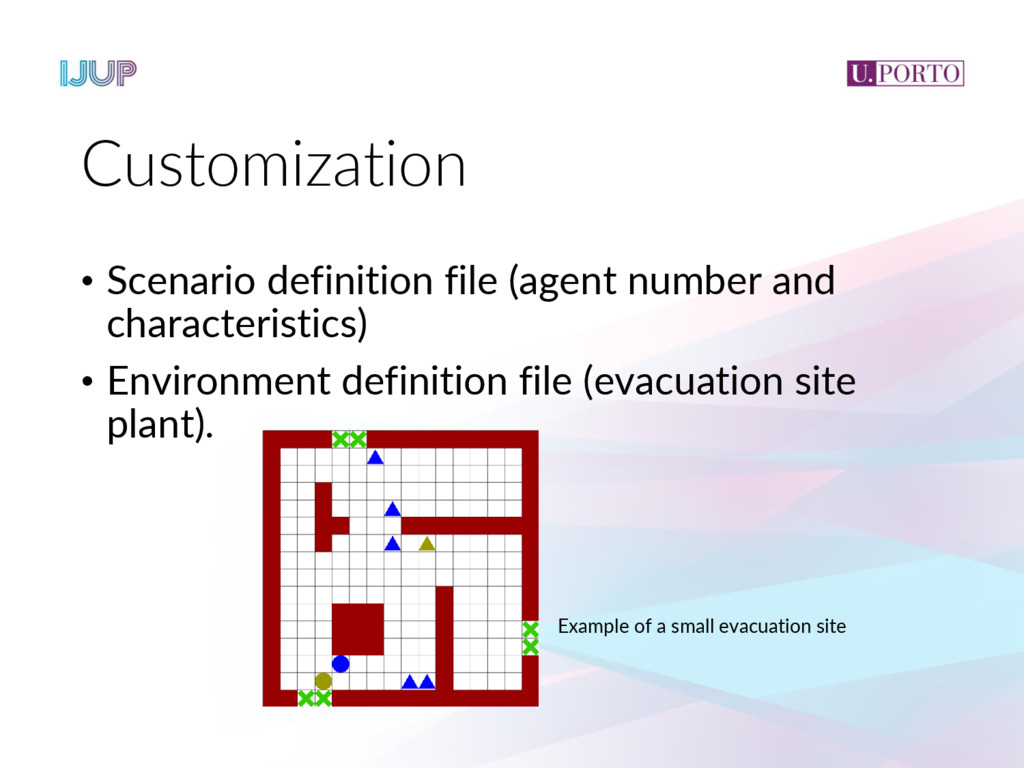
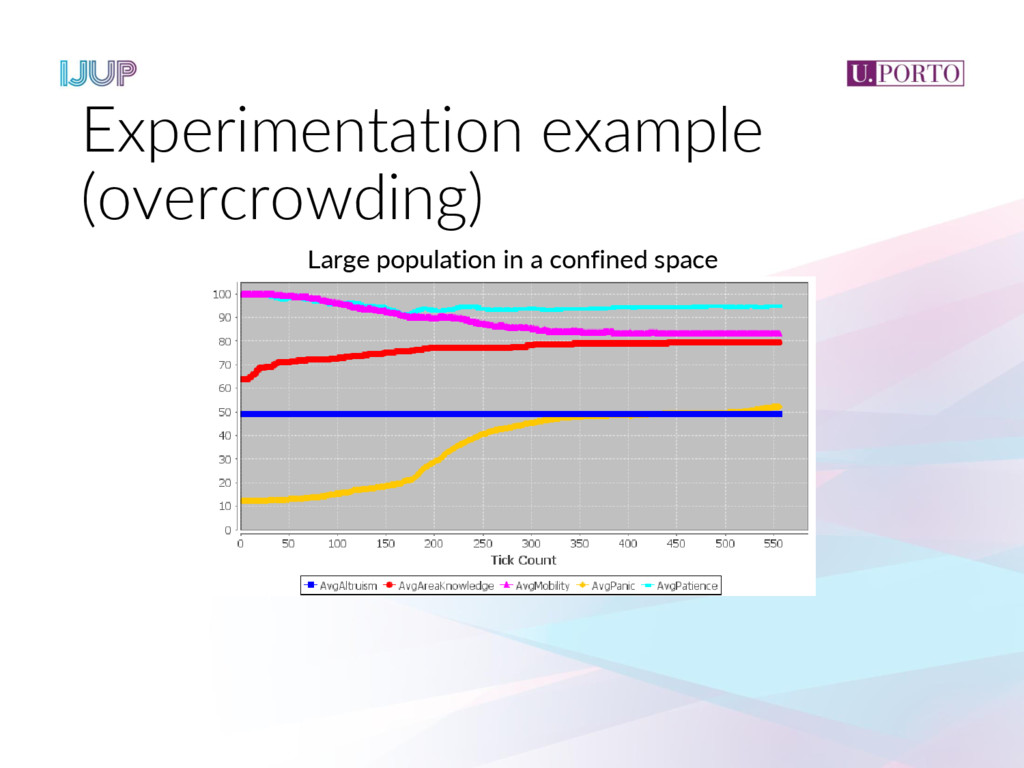
scenarios. • Model agent’s behaviour according to various agent attributes. • Capable of running different evacuation scenarios in different environments.
prone to pushing any agent that is blocking its desired path. A push increases the level of panic and decreases the level of mobility of the pushed agent. • Affecting attributes: panic.
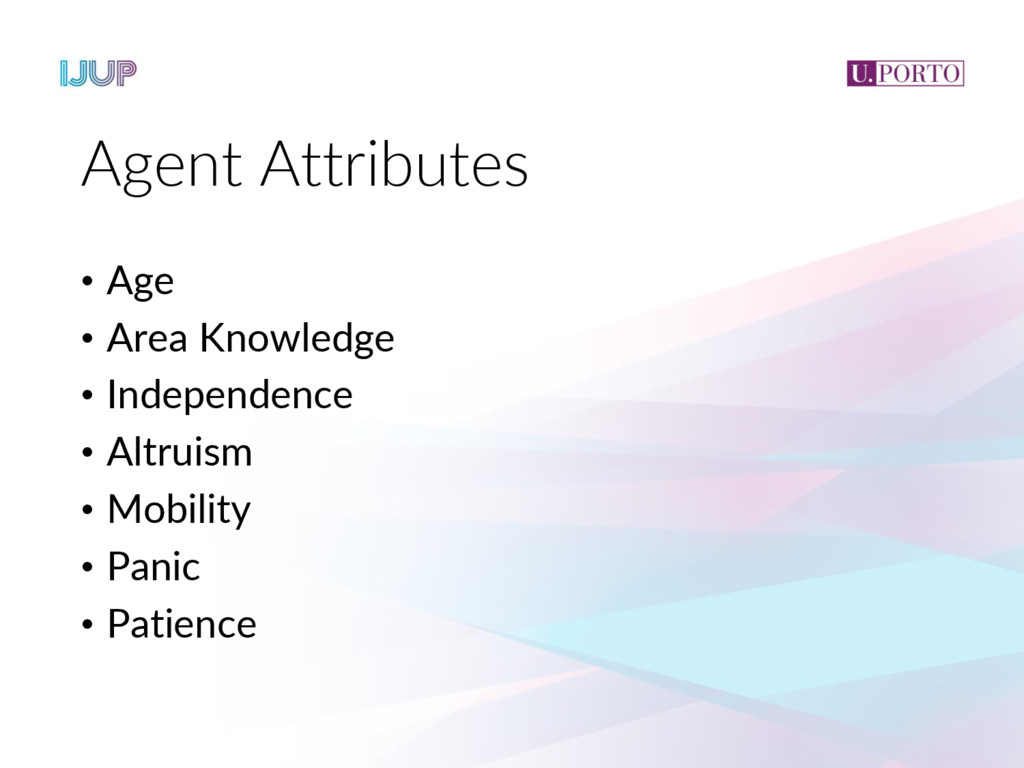
injured agent by carrying it to the exit. • The injured agent can choose the “best” help if there are more than one agent offering help. • Affecting attributes: mobility, altruism and panic.
exit. • Can be divided into four possibilities, in order of priority: best path, visible exit, following crowds and random movement. • Affecting attributes: mobility, panic, area knowledge, patience and independence.
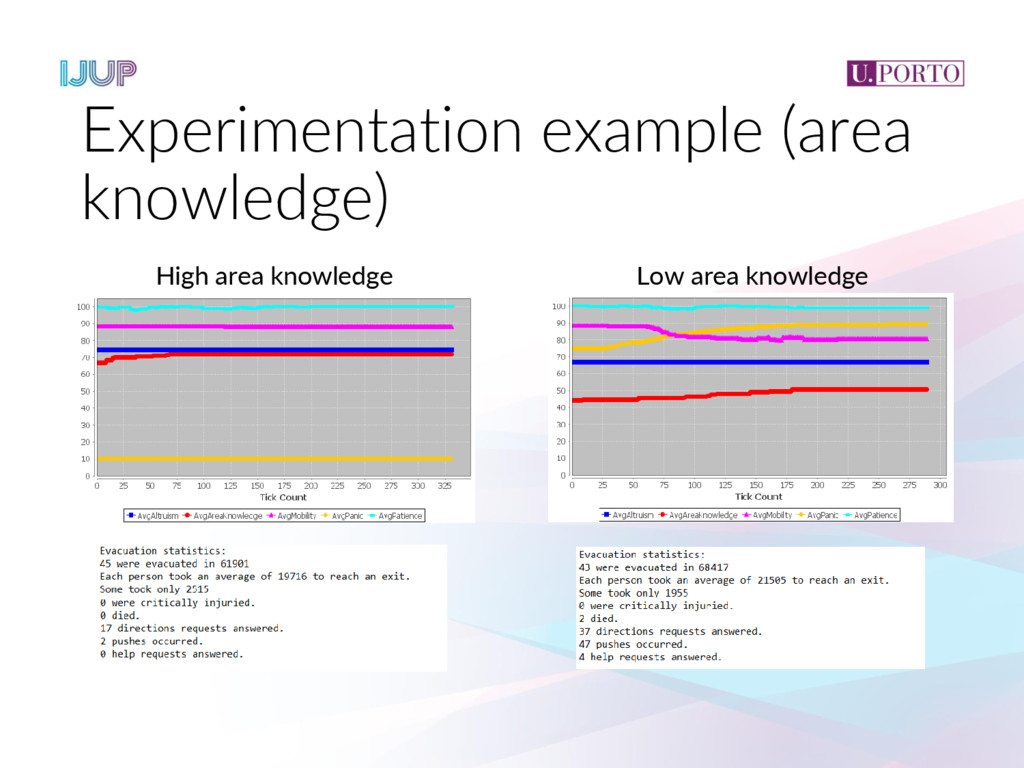
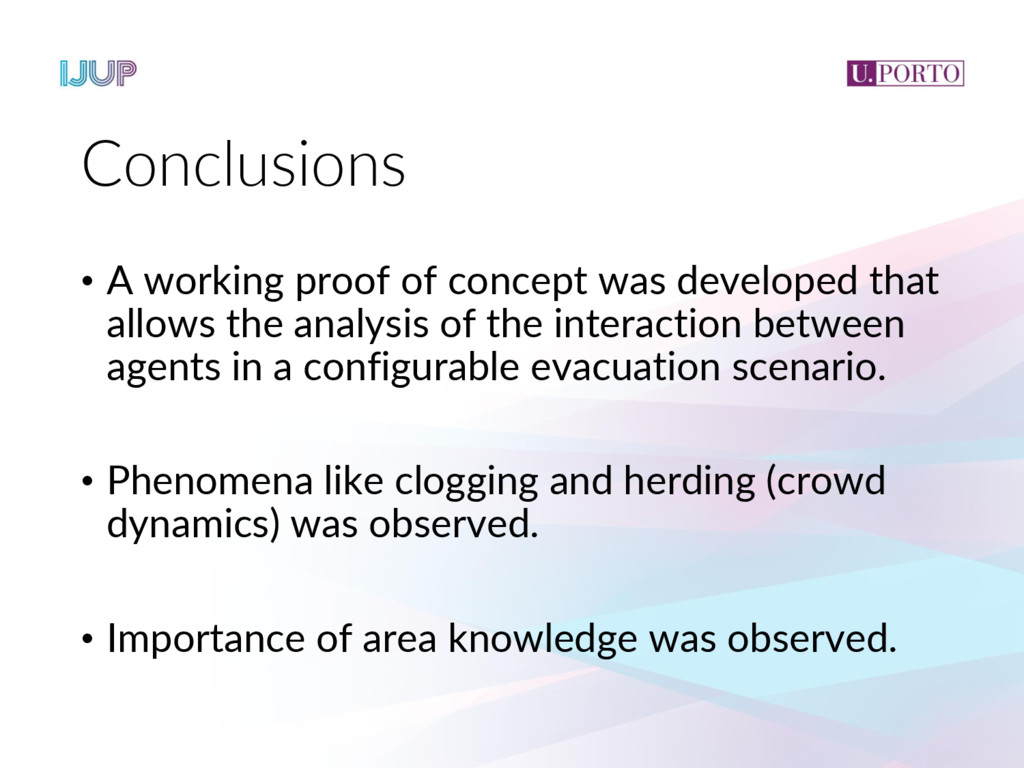
allows the analysis of the interaction between agents in a configurable evacuation scenario. • Phenomena like clogging and herding (crowd dynamics) was observed. • Importance of area knowledge was observed.


 dominguesgm
 kawashimo0
 oniak3ibm
 ___akari11
 taiseiue
 marcoroth
 ichirokano2
 y0hgi
 findyinc
 o0h
 nao_randd
 hollycummins
 mayunak
 lcolladotor
 codingconduct
 rkendrick25
 emna__ayadi
 lauravandoore
 thekraken
 samlambert
 asonas
 erikaheidi
 colly
 ks91