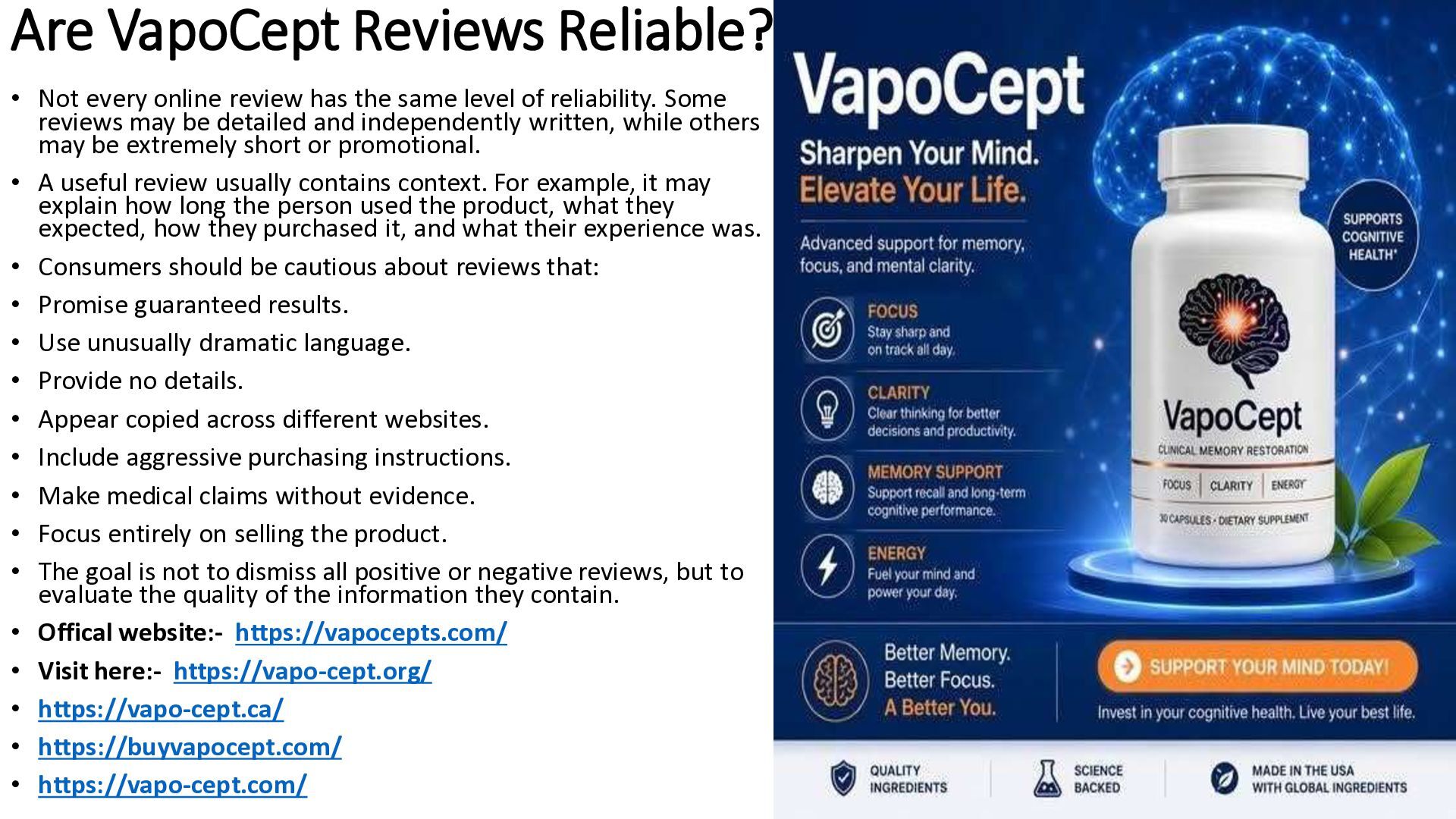
VapoCept Canada: What Canadian Buyers Should Check
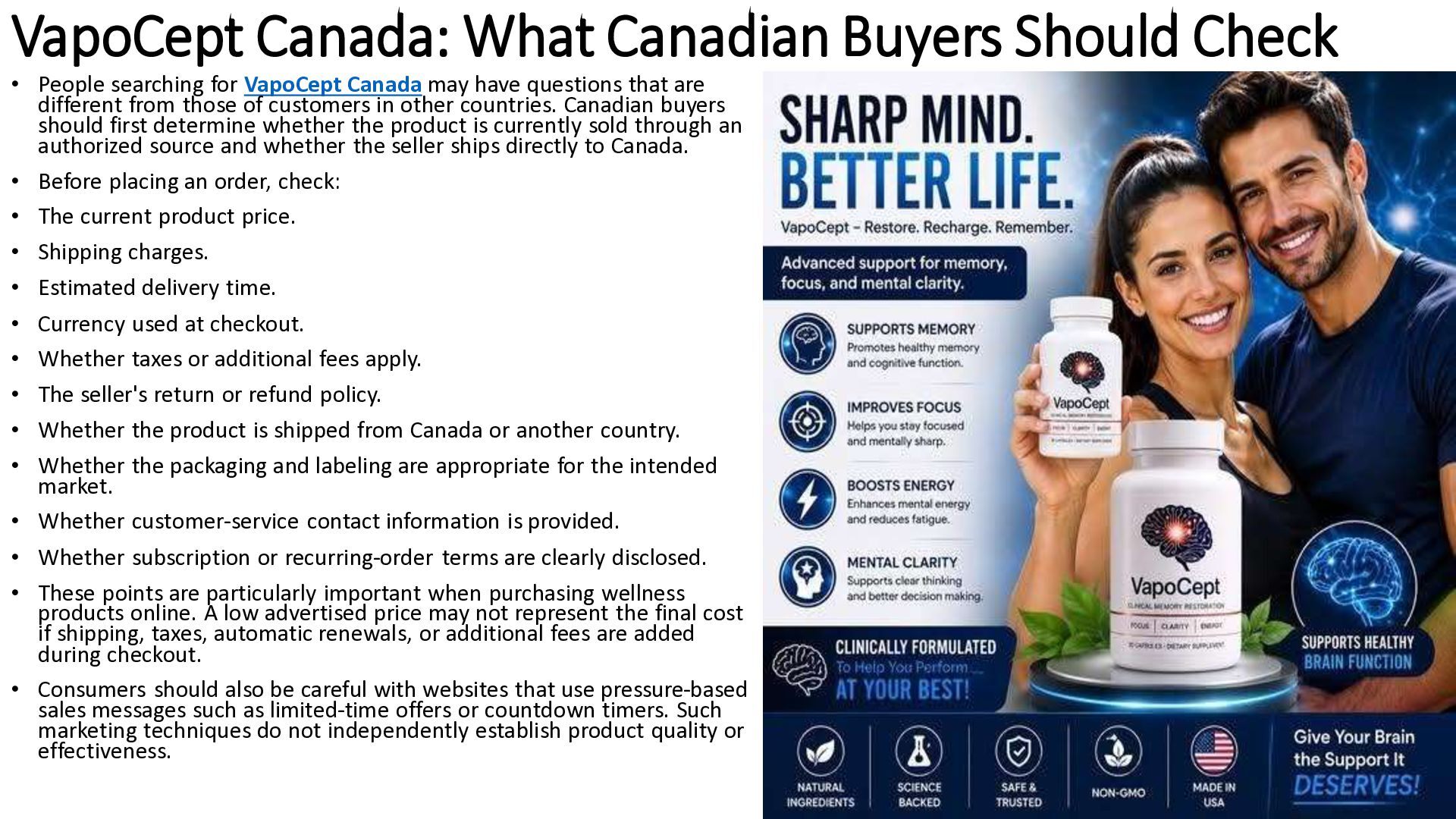
People searching for VapoCept Canada may have questions that are different from those of customers in other countries. Canadian buyers should first determine whether the product is currently sold through an authorized source and whether the seller ships directly to Canada.
Before placing an order, check:
• The current product price.
• Shipping charges.
• Estimated delivery time.
• Currency used at checkout.
• Whether taxes or additional fees apply.
• The seller's return or refund policy.
• Whether the product is shipped from Canada or another country.
• Whether the packaging and labeling are appropriate for the intended market.
• Whether customer-service contact information is provided.
• Whether subscription or recurring-order terms are clearly disclosed.
These points are particularly important when purchasing wellness products online. A low advertised price may not represent the final cost if shipping, taxes, automatic renewals, or additional fees are added during checkout.
Consumers should also be careful with websites that use pressure-based sales messages such as limited-time offers or countdown timers. Such marketing techniques do not independently establish product quality or effectiveness.
VapoCept Reviews: Why Consumer Feedback Matters
Customer reviews can provide useful information about the purchasing experience, packaging, taste, ease of use, delivery, customer service, and other practical issues. However, reviews should be interpreted carefully.
A positive review is an individual's experience, not necessarily evidence that everyone will experience the same result. Similarly, a negative review does not automatically establish that a product is defective. The circumstances surrounding each review matter.
When examining VapoCept Reviews, look for recurring patterns rather than focusing on one extremely positive or negative comment. For example, if multiple independent customers consistently mention the same shipping issue, packaging problem, or difficulty with the product, that pattern may be more informative than a single review.
Useful questions include:
1. Does the reviewer explain how long they used the product?
2. Does the review describe the purchasing experience separately from product results?
3. Does the reviewer mention how the product was used?
4. Are specific details provided?
5. Do multiple reviewers report similar experiences?
6. Does the review appear to be independently written?
7. Is the review associated with a verified purchase where that information is available?
This approach can make online research more meaningful.
Understanding the Product Label
One of the most important parts of evaluating VapoCept is reviewing its actual product label. Marketing pages can change, but the physical label should provide the clearest information about the product's composition and directions.
Check the ingredient panel carefully. Look at the amount of each listed ingredient rather than simply looking for familiar ingredient names. The presence of an ingredient does not automatically mean that the product will produce a particular outcome.
Consumers should also check serving instructions. Taking more than the recommended amount does not necessarily improve results and could increase the risk of unwanted effects.
If an ingredient is unfamiliar, consumers can research it using reputable medical, government, or academic sources. This is especially important when someone takes prescription medication or has an existing medical condition.
Potential Benefits: What Should Consumers Consider?
VapoCept may be promoted with certain benefits depending on the product's current marketing materials. Consumers should distinguish between a manufacturer's description, customer anecdotes, and independently established evidence.
A responsible evaluation can ask:
• What benefit is the product specifically intended to support?
• Are the ingredients associated with that purpose?
• Is there human research on those ingredients?
• Were the amounts studied comparable to the amounts in the product?
• Is there evidence concerning the finished product itself?
• Are claims based primarily on testimonials?
• Are limitations or warnings clearly disclosed?
This distinction is important because evidence for an individual ingredient does not automatically prove that a particular commercial formulation will produce the same effect.


 kuraryu0128
 natsumidnx
 speakbuddy
 c0rp_mdm
 caddireat
 reiwatravel_0405
 makaibito
 superstudio
 sasukefinanciallab
 e5ua
 yoshikikonishi_
 gatechnologies
 jnunemaker
 marktimemedia
 tammyeverts
 techseoconnect
 frankvandijk
 jonyablonski
 schlessera
 kastner
 jct
 garrettdimon
 sugarenia