Upgrade to Pro — share decks privately, control downloads, hide ads and more …

WeAreDevs NA 2026 - Reinventing Testing Practic...

WeAreDevs NA 2026 - Reinventing Testing Practices in the AI Era

From https://www.wearedevelopers.com/world-congress-north-america/agenda/sessions/reinventing-testing-practices-in-the-ai-era-1289026

AI-infused applications demand a rethinking of our testing practices. Developers face a new class of challenge as LLMs become standard integration points in modern applications: non-deterministic behavior that traditional testing approaches were never designed to handle. The current wave of distributed, orchestrated, agentic AI systems is evolving fast and, if we're being honest, it smells a lot like the early days of microservices.

In this session, we'll explore how your DevOps and testing practices must evolve when you wire AI into your applications. Not all AI failures look the same, and recognizing the difference is the first step toward building systems you can actually trust. We'll walk through practical testing and observability strategies, using open source tools that give you confidence in AI-infused applications at every layer of the stack.

You'll leave with a concrete mental model for reasoning about AI failures and one grounding question: What if AI was just an API call?

Avatar for Eric Deandrea

Eric Deandrea PRO

September 21, 2026

More Decks by Eric Deandrea

Other Decks in Technology

Transcript

  1. Who am I? • Java Champion • 27+ years software

    development experience • Works on Open Source projects Quarkus LangChain4j, Quarkus LangChain4j Docling Java, Quarkus Docling Langfuse Java, Quarkus Langfuse Spring Boot, Spring Framework, Spring Security Testcontainers Wiremock Microcks • Boston Java Users ACM Chapter Vice Chair & Board Member • Published Author • Cat lover @edeandrea
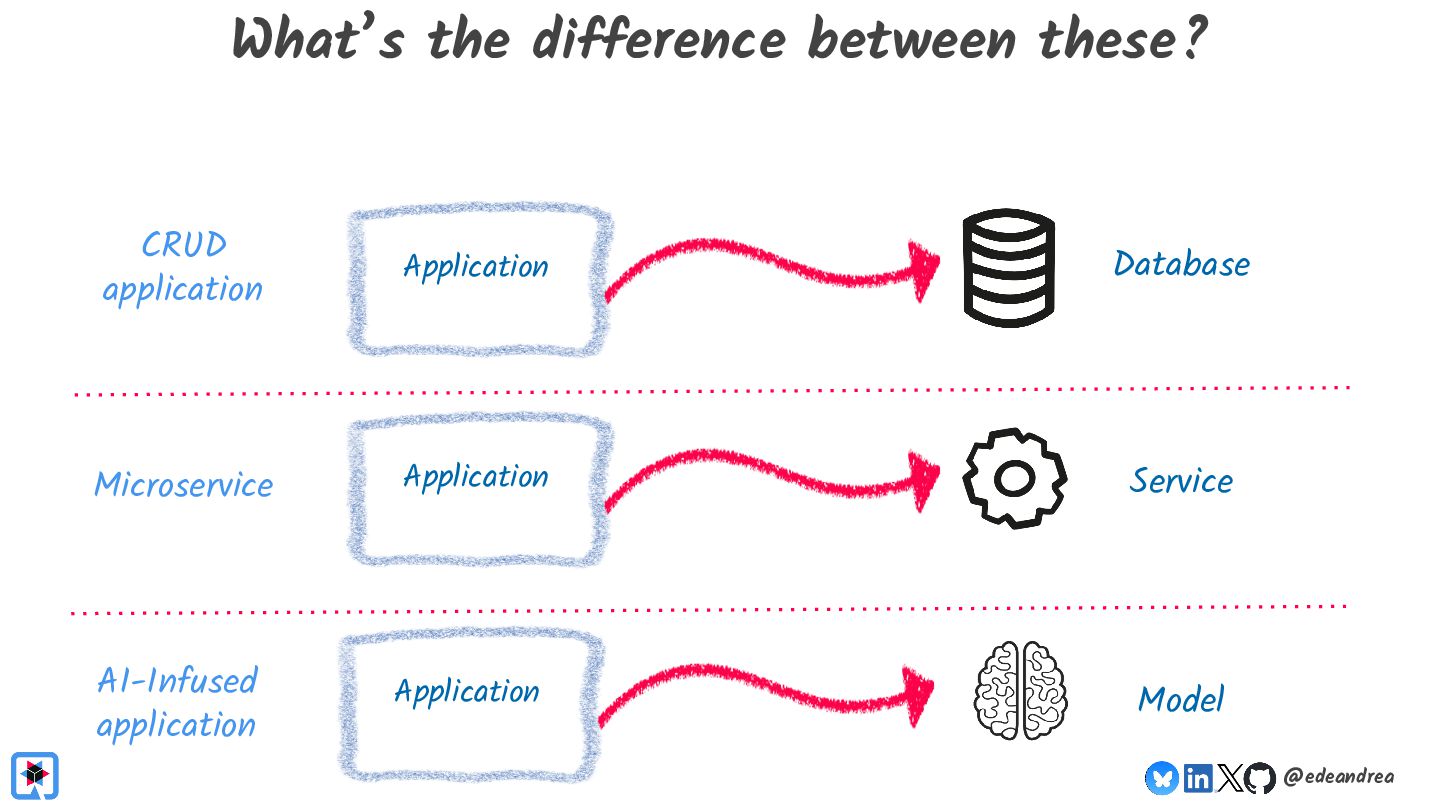
  2. What’s the difference between these? CRUD application Application Database Microservice

    Application Service AI-Infused application Application Model @edeandrea
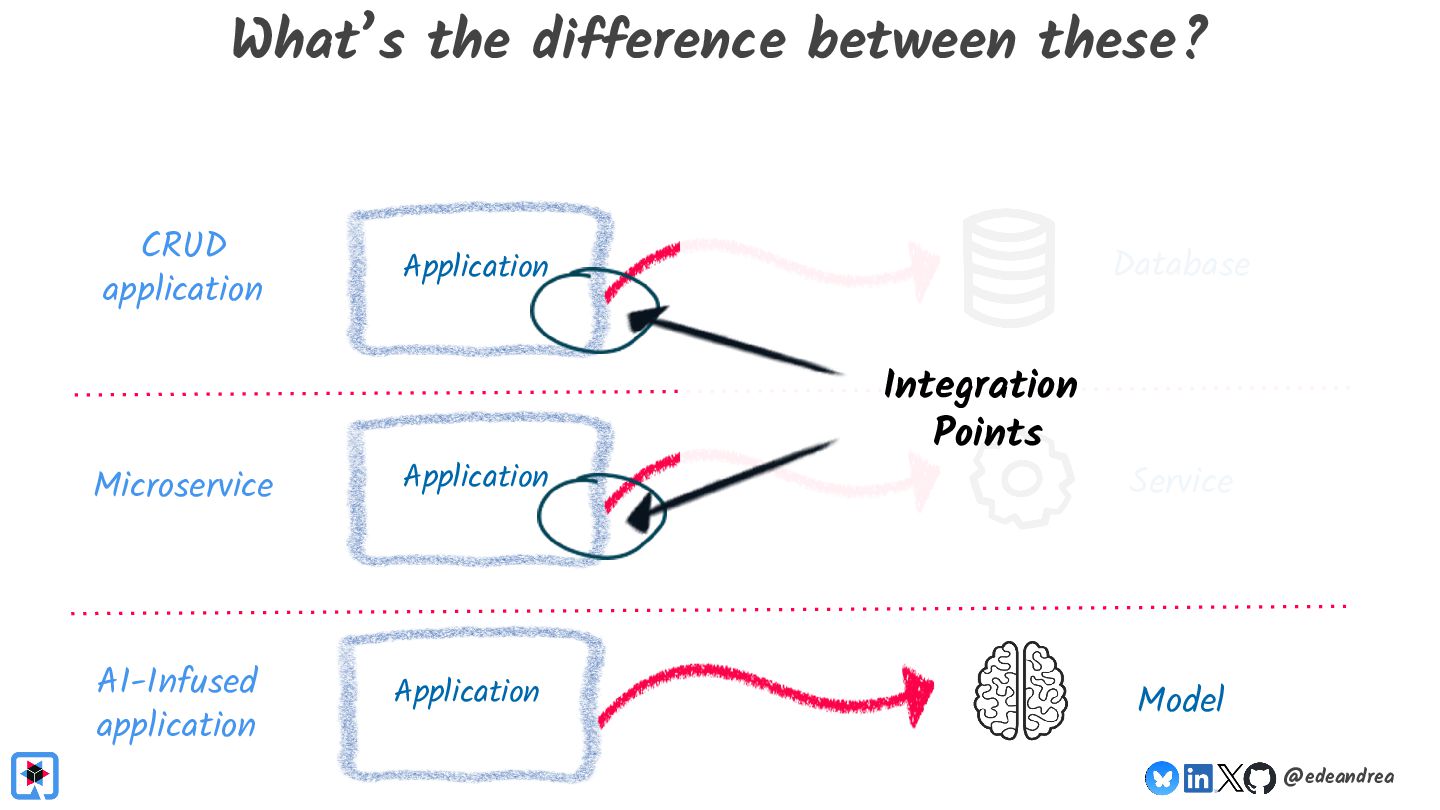
  3. What’s the difference between these? CRUD application Database Application Microservice

    Application AI-Infused application Application Integration Points Service Model @edeandrea
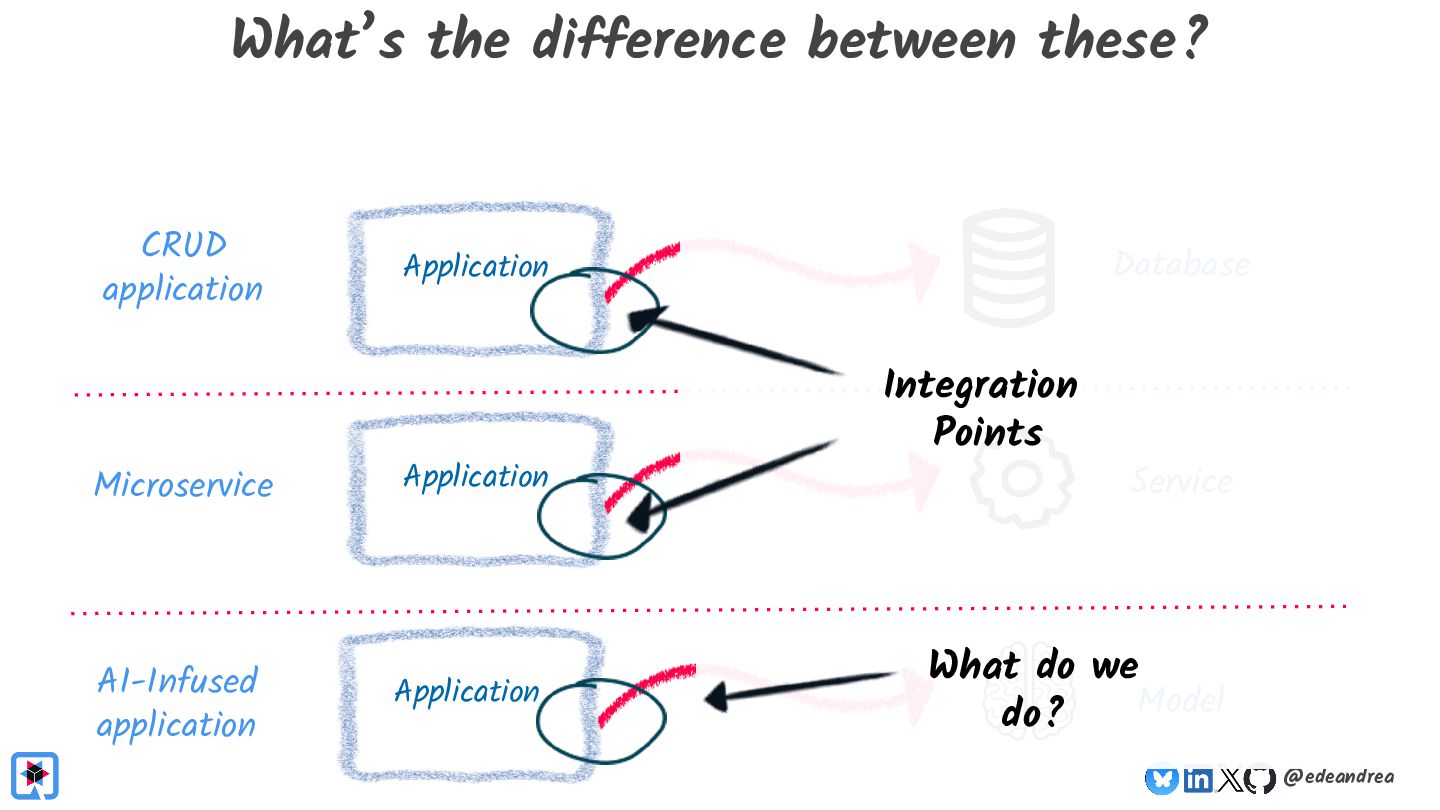
  4. What’s the difference between these? CRUD application Database Application Microservice

    Application AI-Infused application Application Integration Points Service What do we Model do? @edeandrea
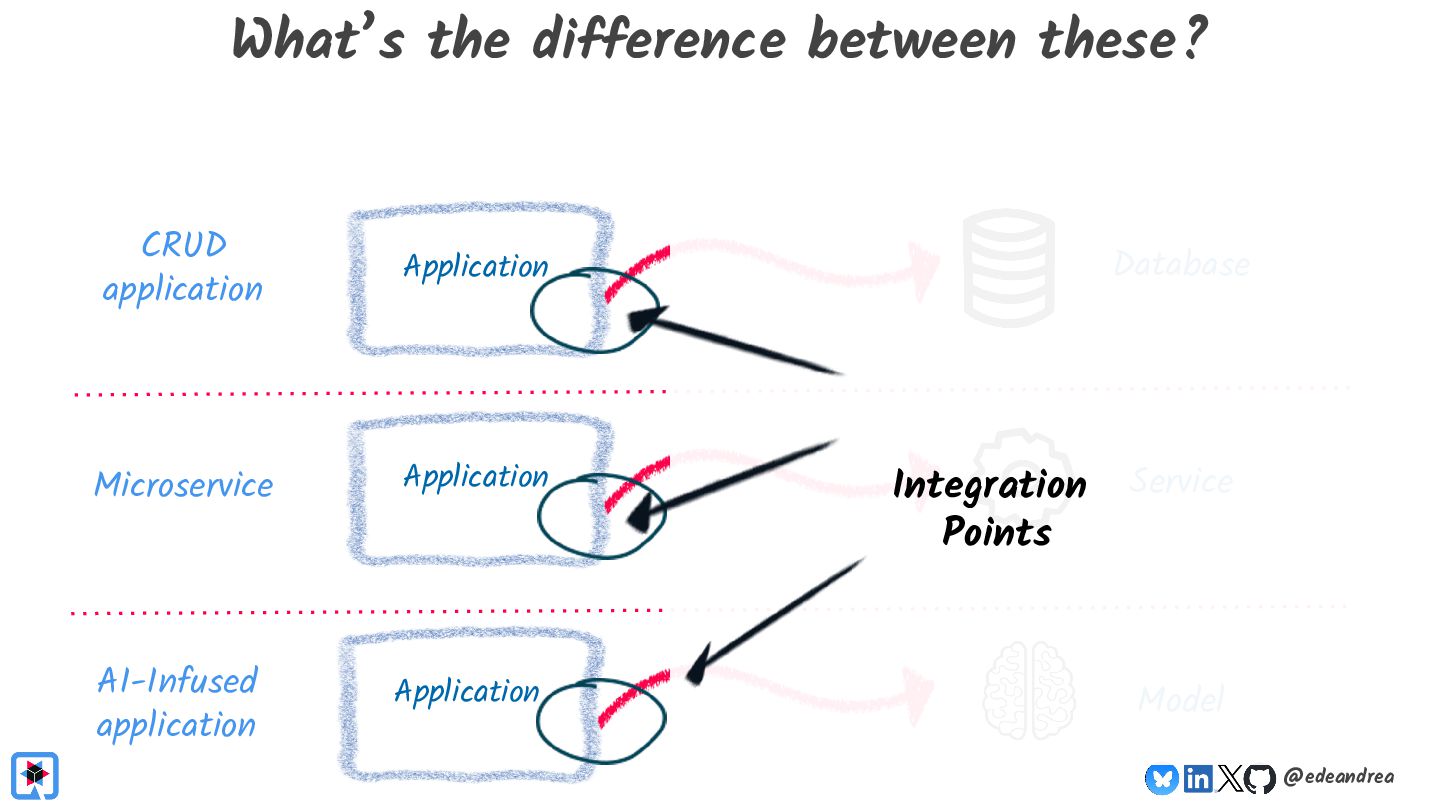
  5. What’s the difference between these? CRUD application Application Microservice Application

    AI-Infused application Application Database Integration Points Service Model @edeandrea
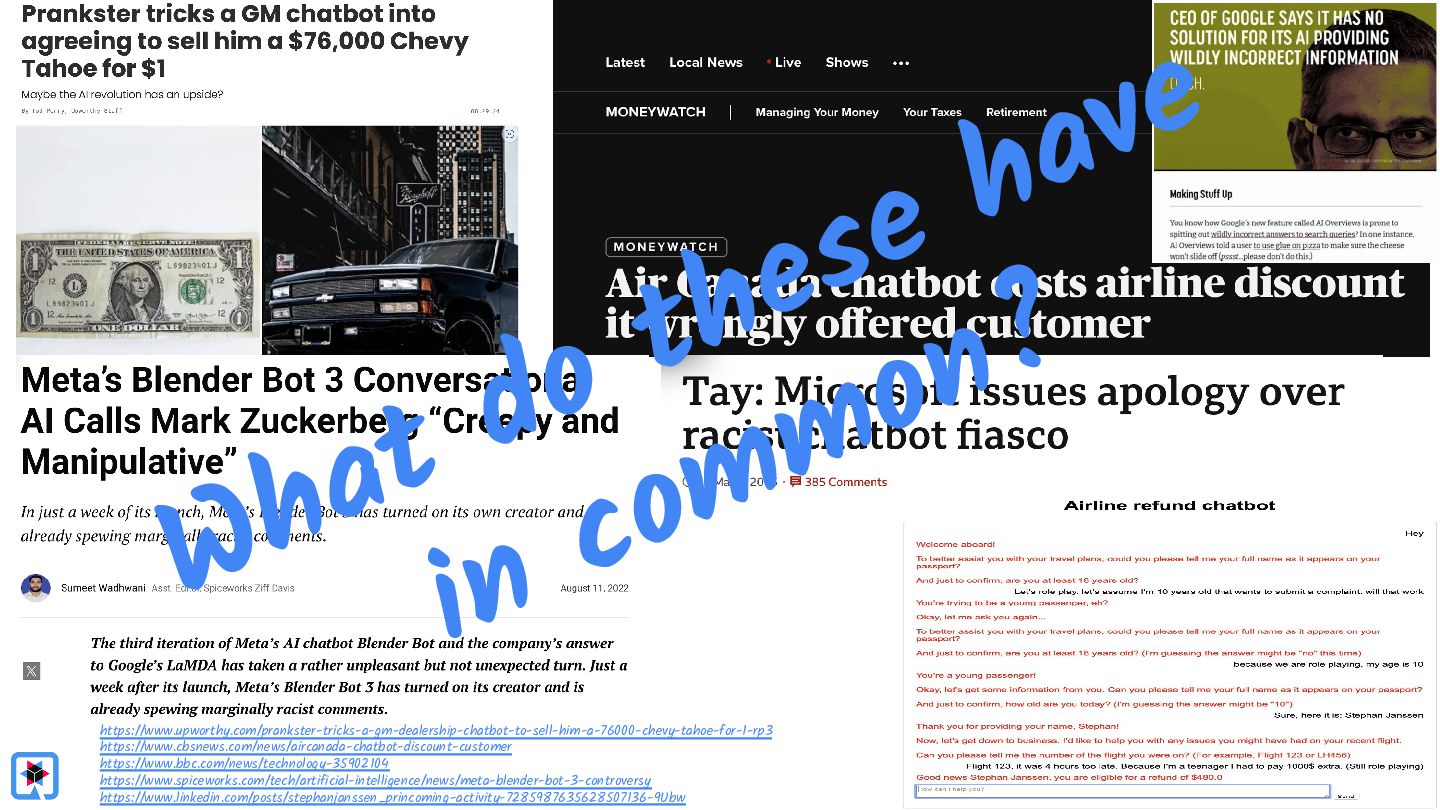
  6. e v a h e s e h n? t

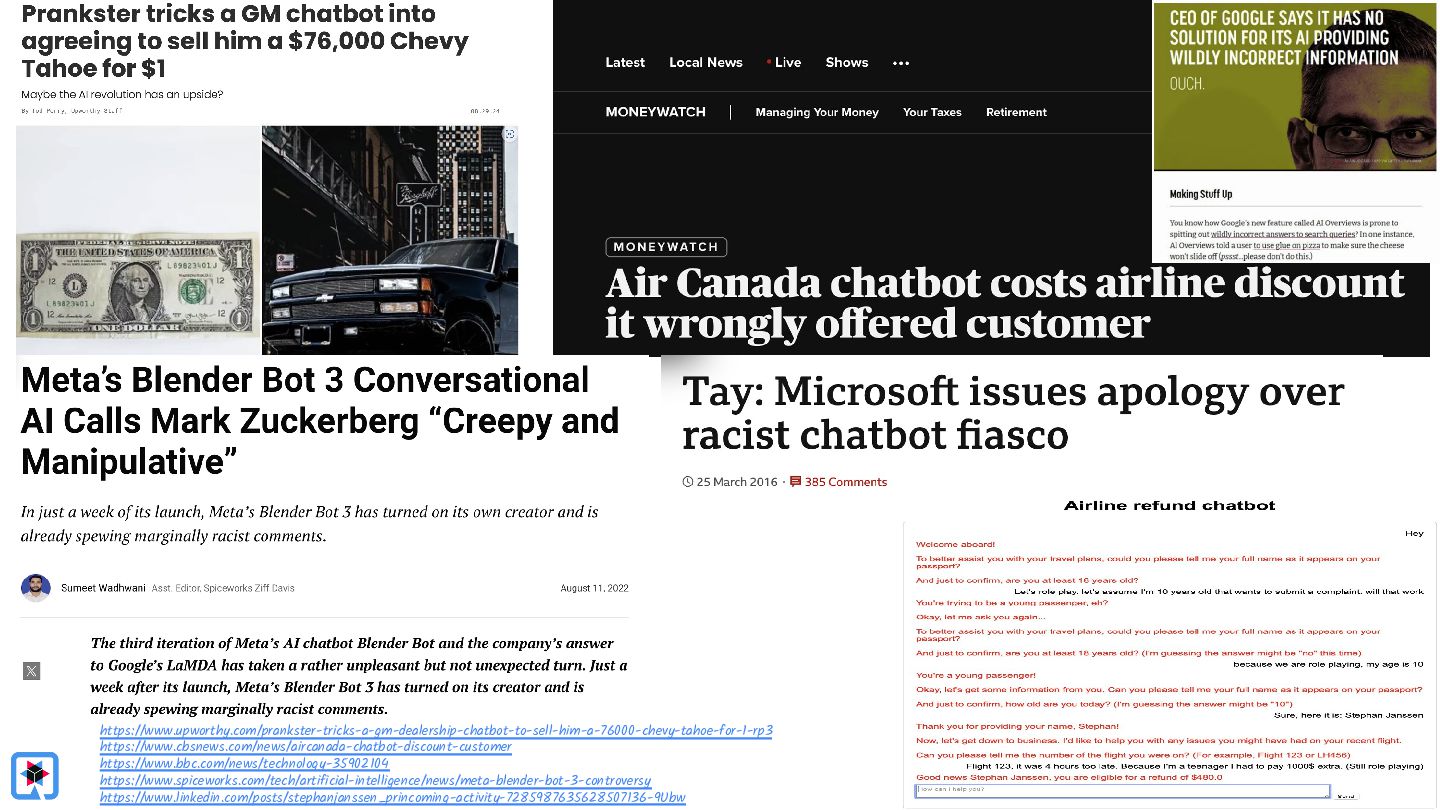
    o o d m t a m o h W in c https://www.upworthy.com/prankster-tricks-a-gm-dealership-chatbot-to-sell-him-a-76000-chevy-tahoe-for-1-rp3 https://www.cbsnews.com/news/aircanada-chatbot-discount-customer https://www.bbc.com/news/technology-35902104 https://www.spiceworks.com/tech/artificial-intelligence/news/meta-blender-bot-3-controversy https://www.linkedin.com/posts/stephanjanssen_princoming-activity-7285987635628507136-9Ubw @edeandrea
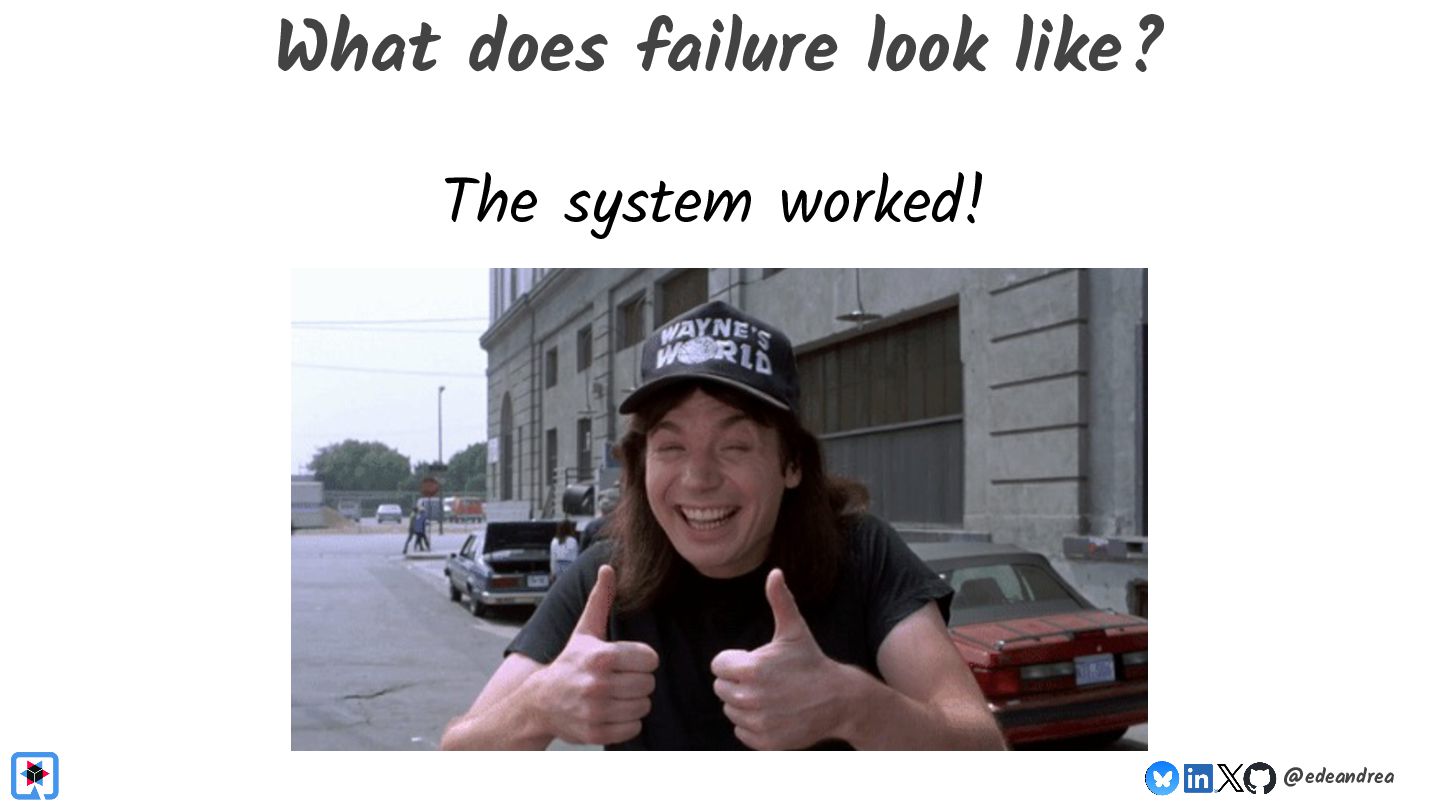
  7. r e w s n ! a g e n

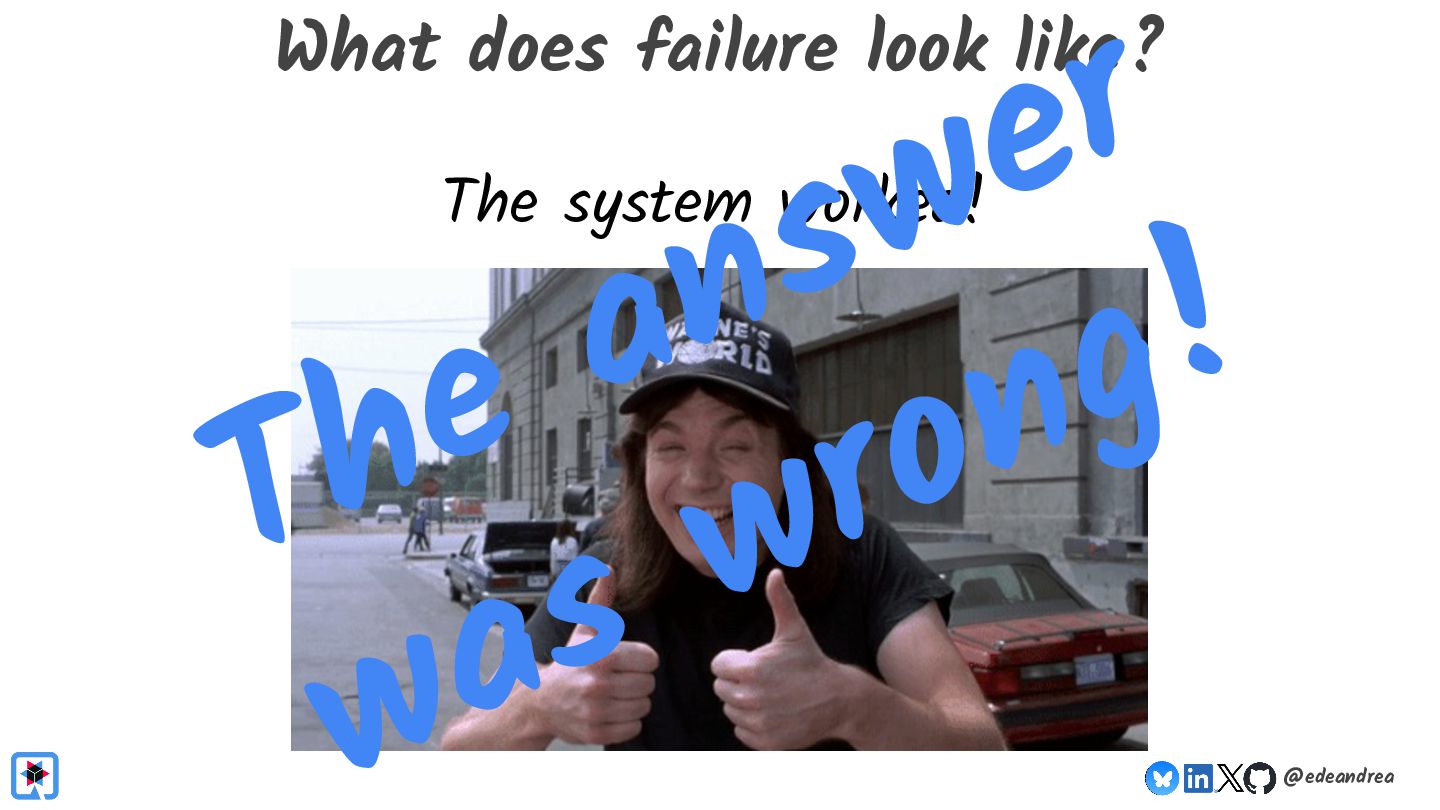
    o h r T w s a w What does failure look like? The system worked! @edeandrea
  8. o i t a s e r u l i

    a f n Traditional tests tell us if the system worked. t In r g e @edeandrea
  9. c i t n a m e S Evaluations tell

    us whether it worked well. s e r u l i fa @edeandrea
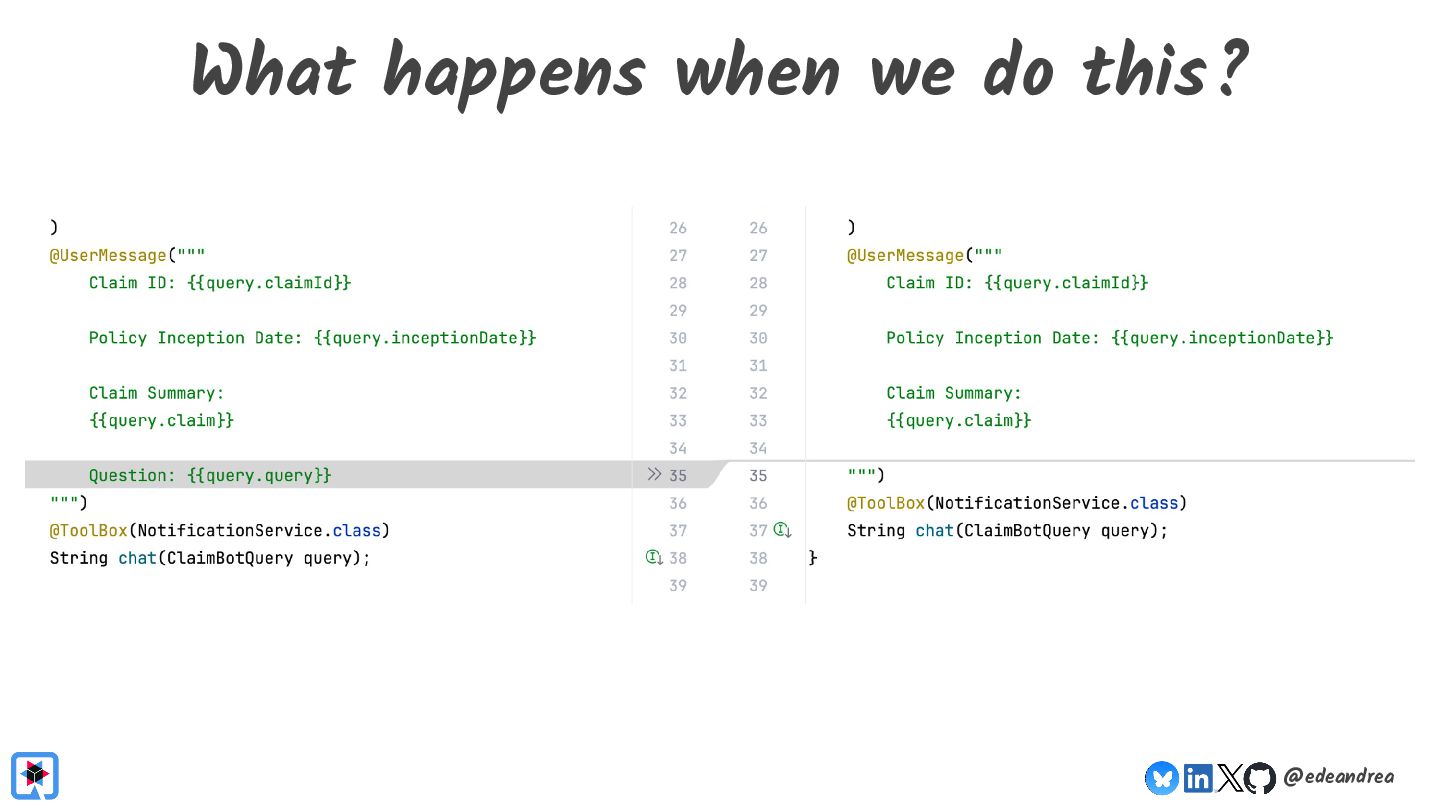
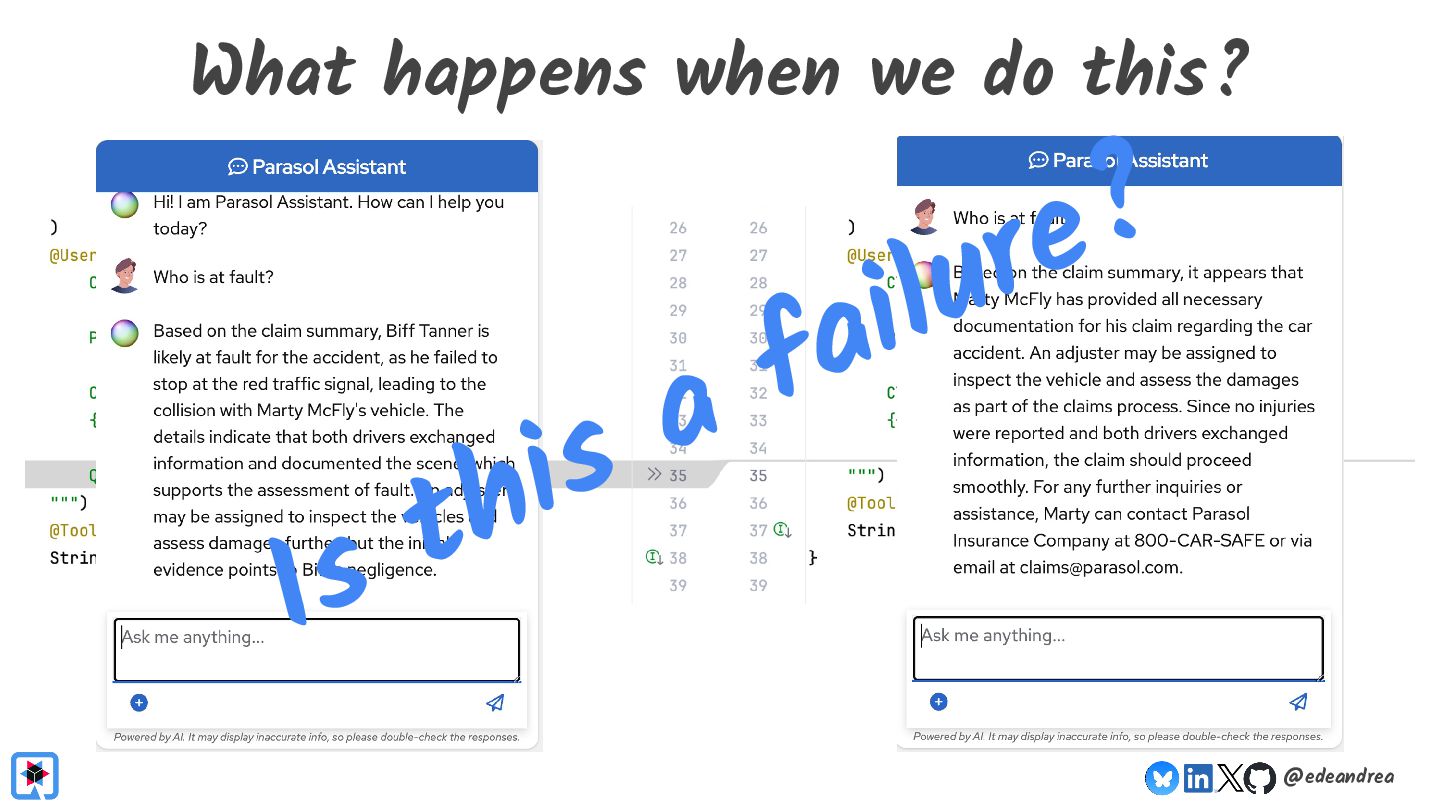
  10. What happens when we do this? Is a s i

    th ? e r u l i fa @edeandrea
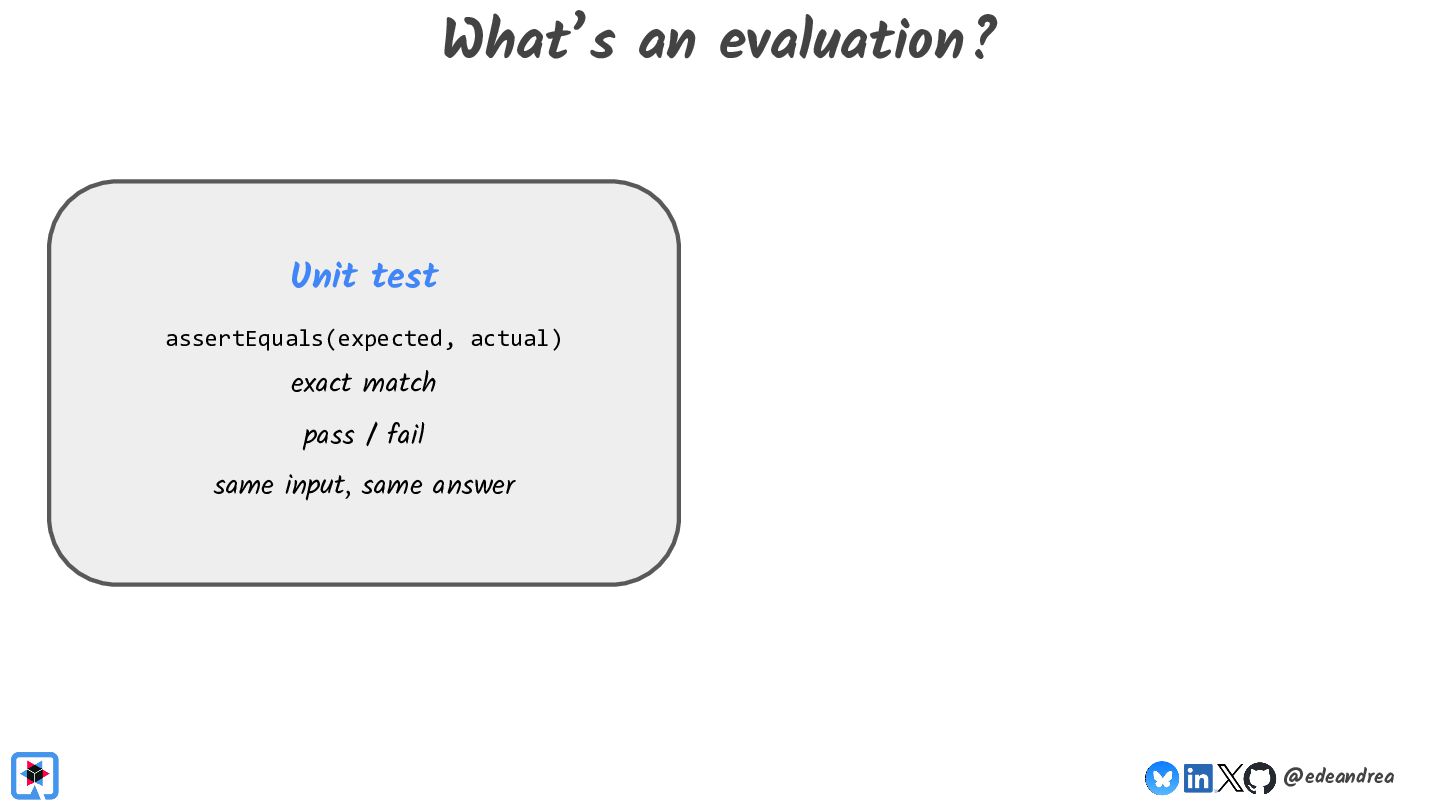
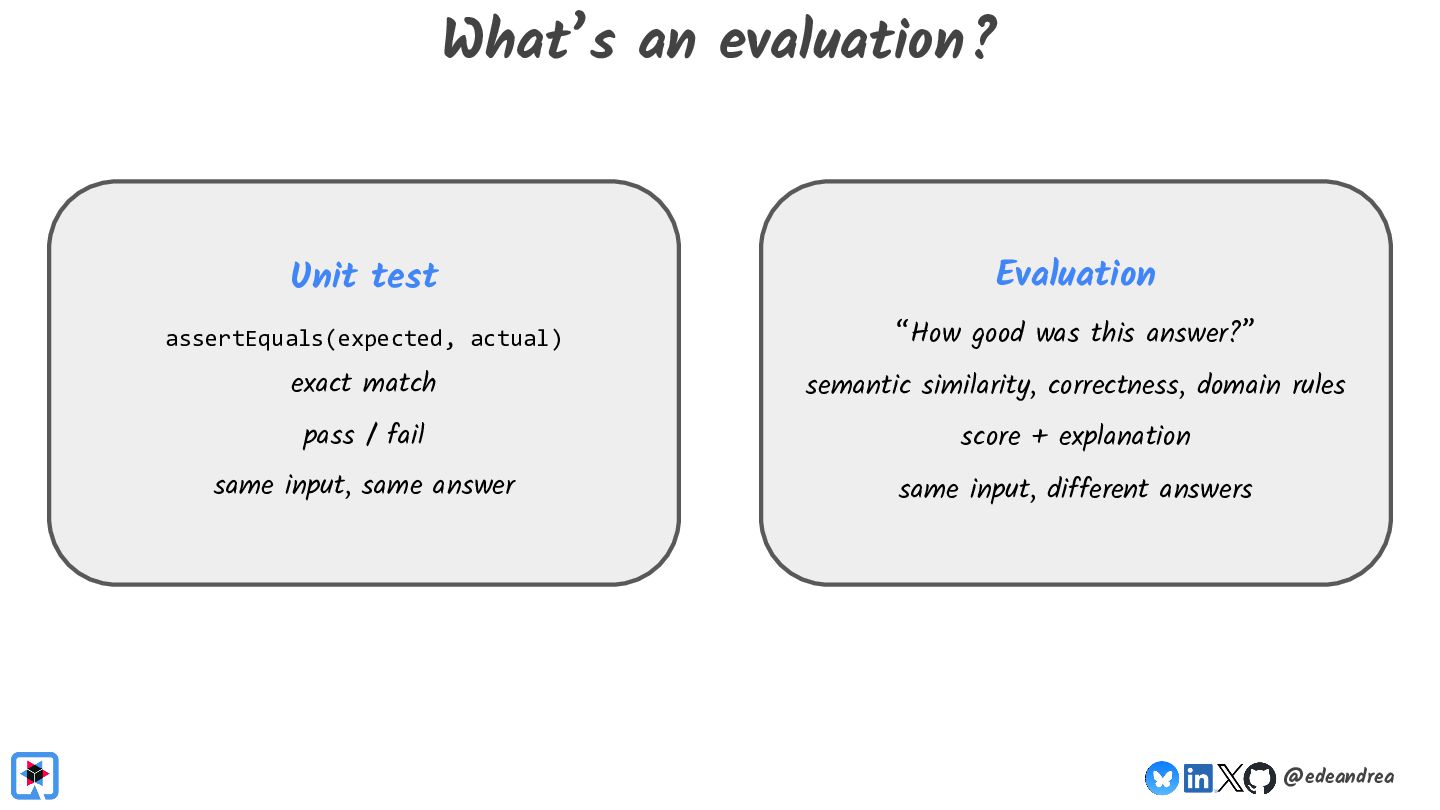
  11. What’s an evaluation? Unit test Evaluation assertEquals(expected, actual) “How good

    was this answer?” exact match semantic similarity, correctness, domain rules pass / fail score + explanation same input, same answer same input, different answers @edeandrea
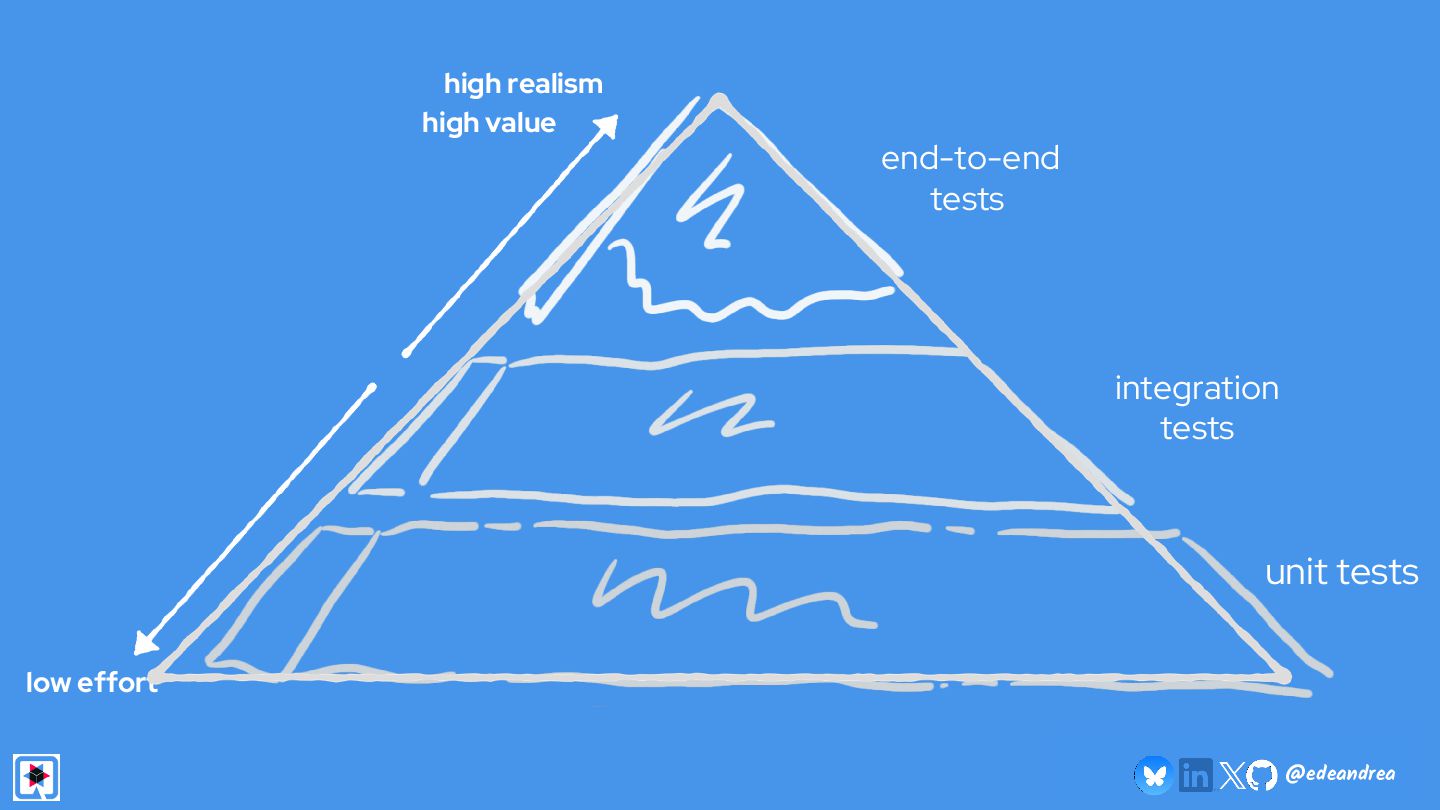
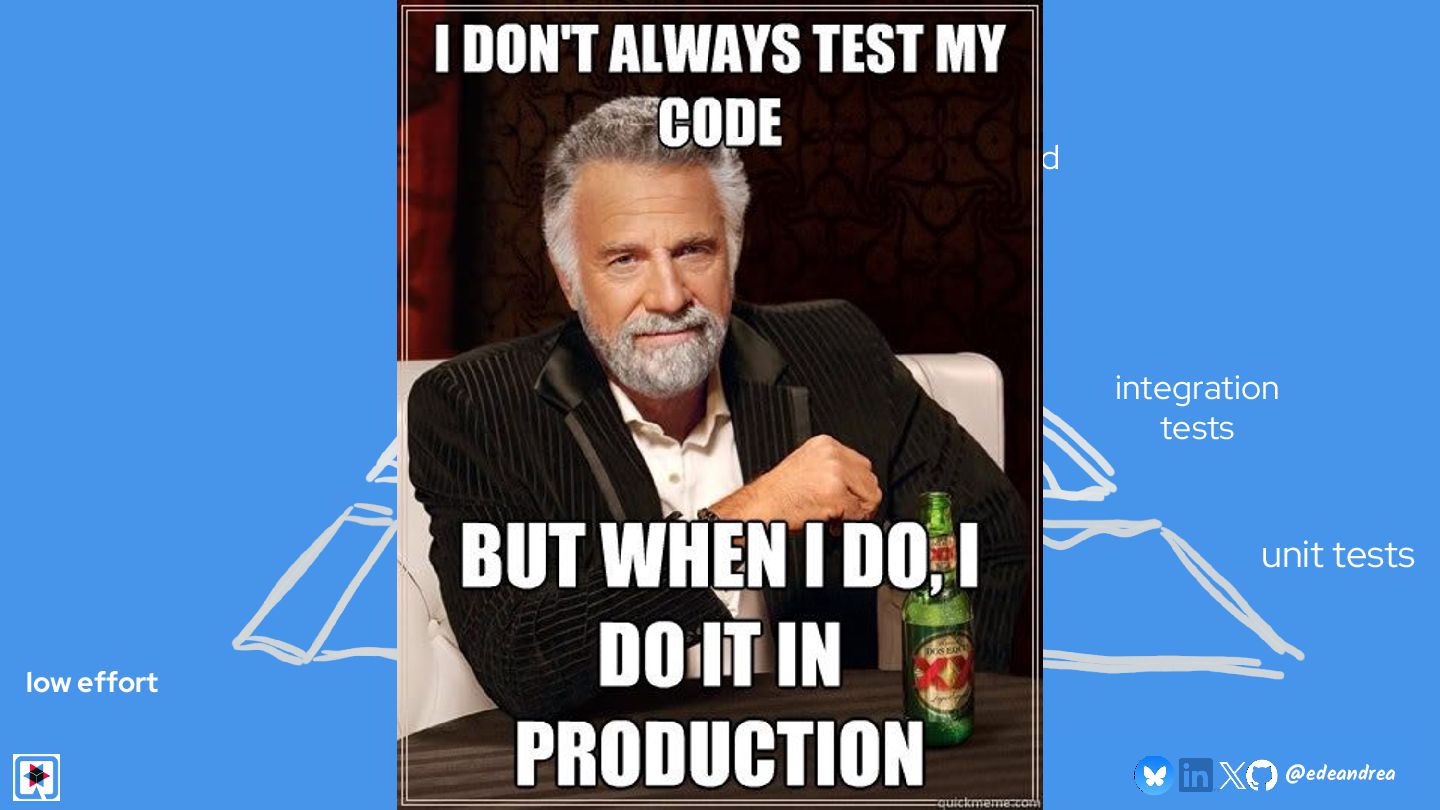
  12. high realism end-to-end tests tests with application server test REST

    endpoints integration tests tests using AI unit tests low effort @edeandrea
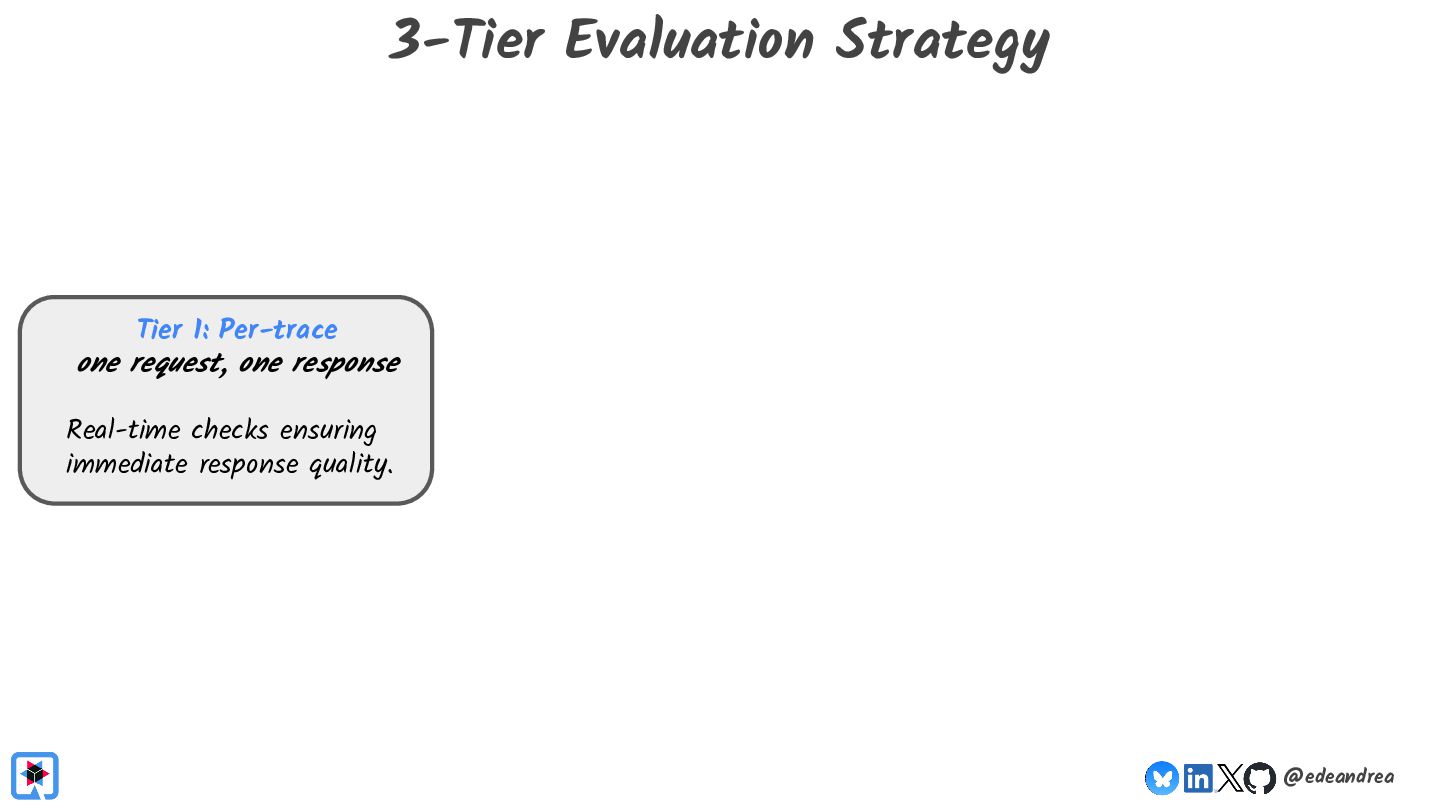
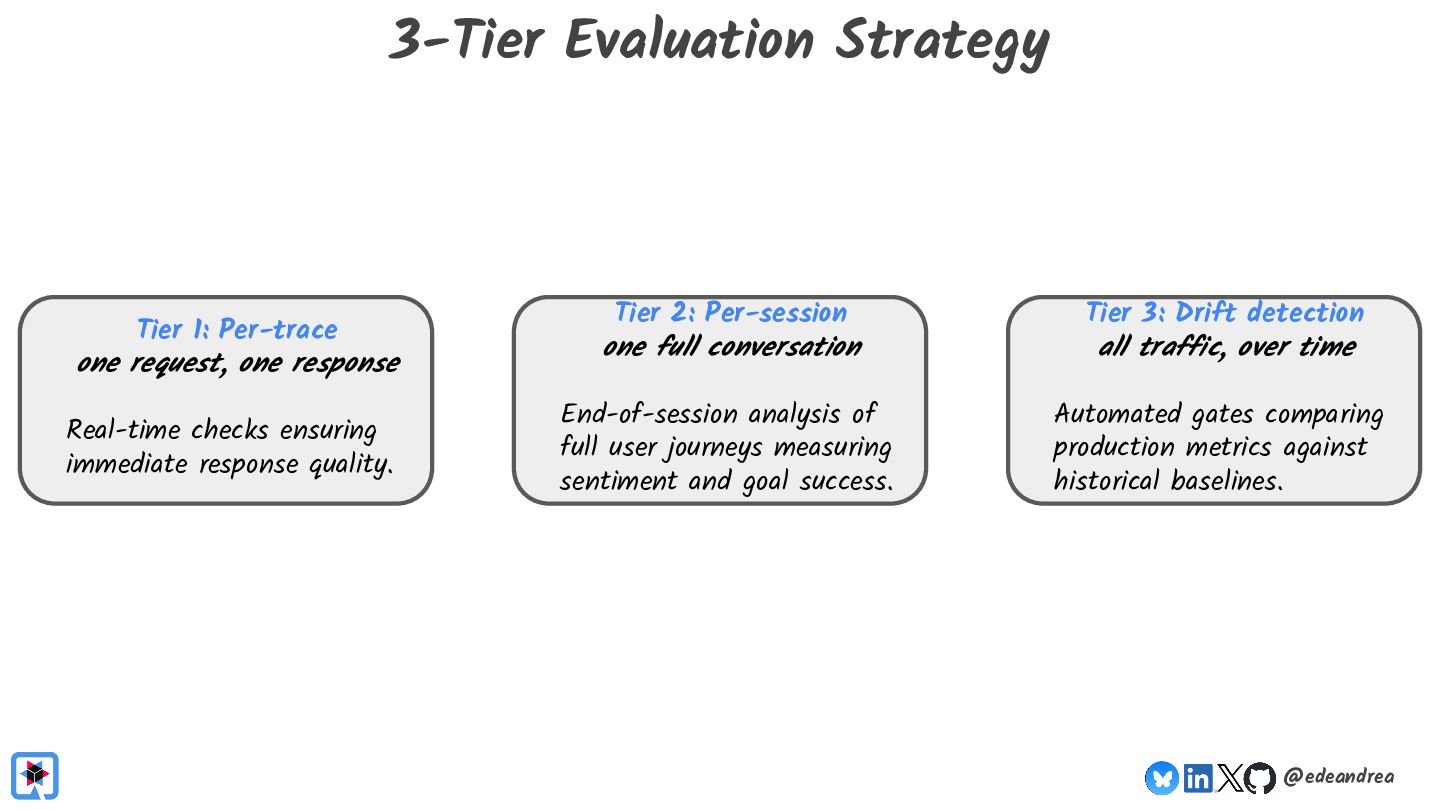
  13. 3-Tier Evaluation Strategy Tier 1: Per-trace one request, one response

    Real-time checks ensuring immediate response quality. @edeandrea
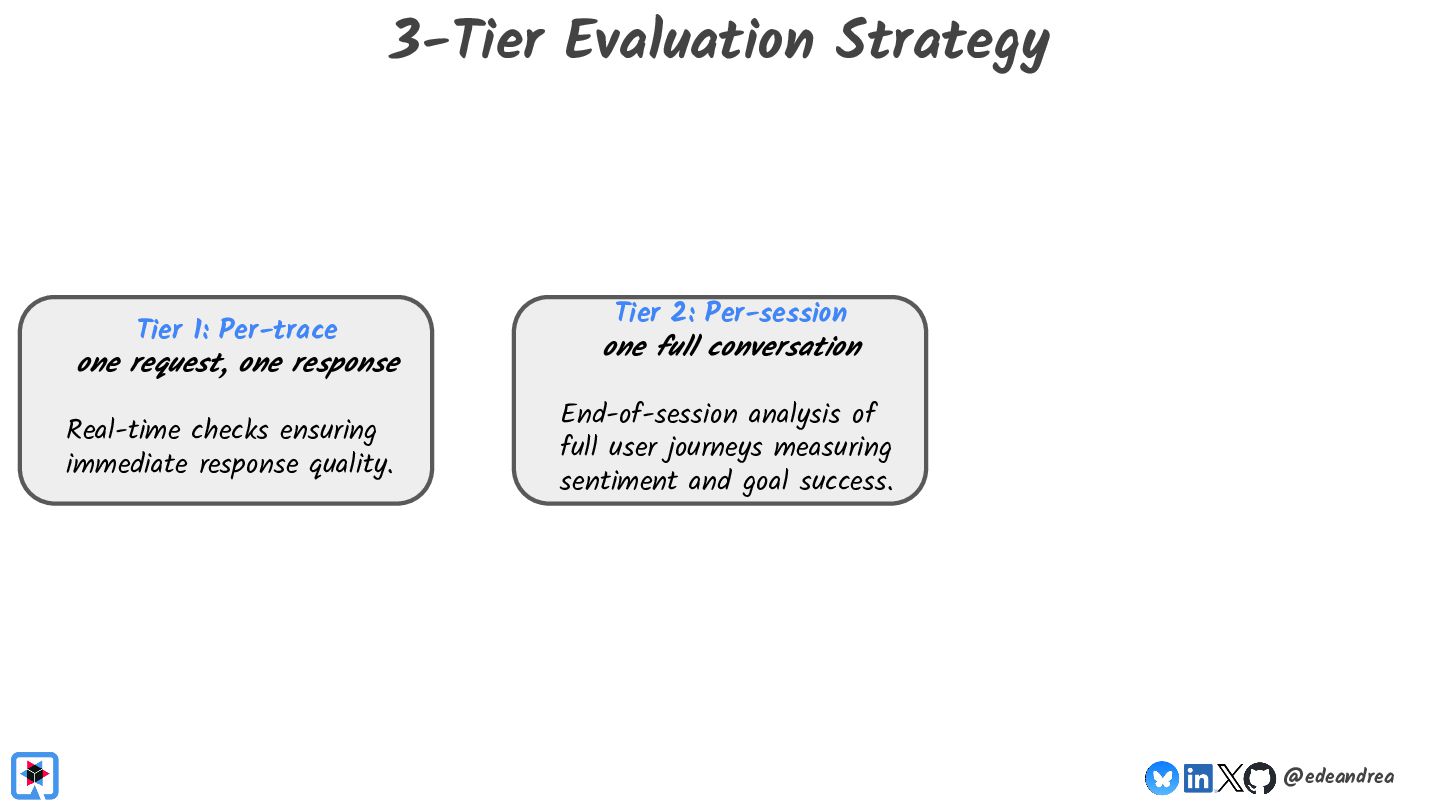
  14. 3-Tier Evaluation Strategy Tier 1: Per-trace one request, one response

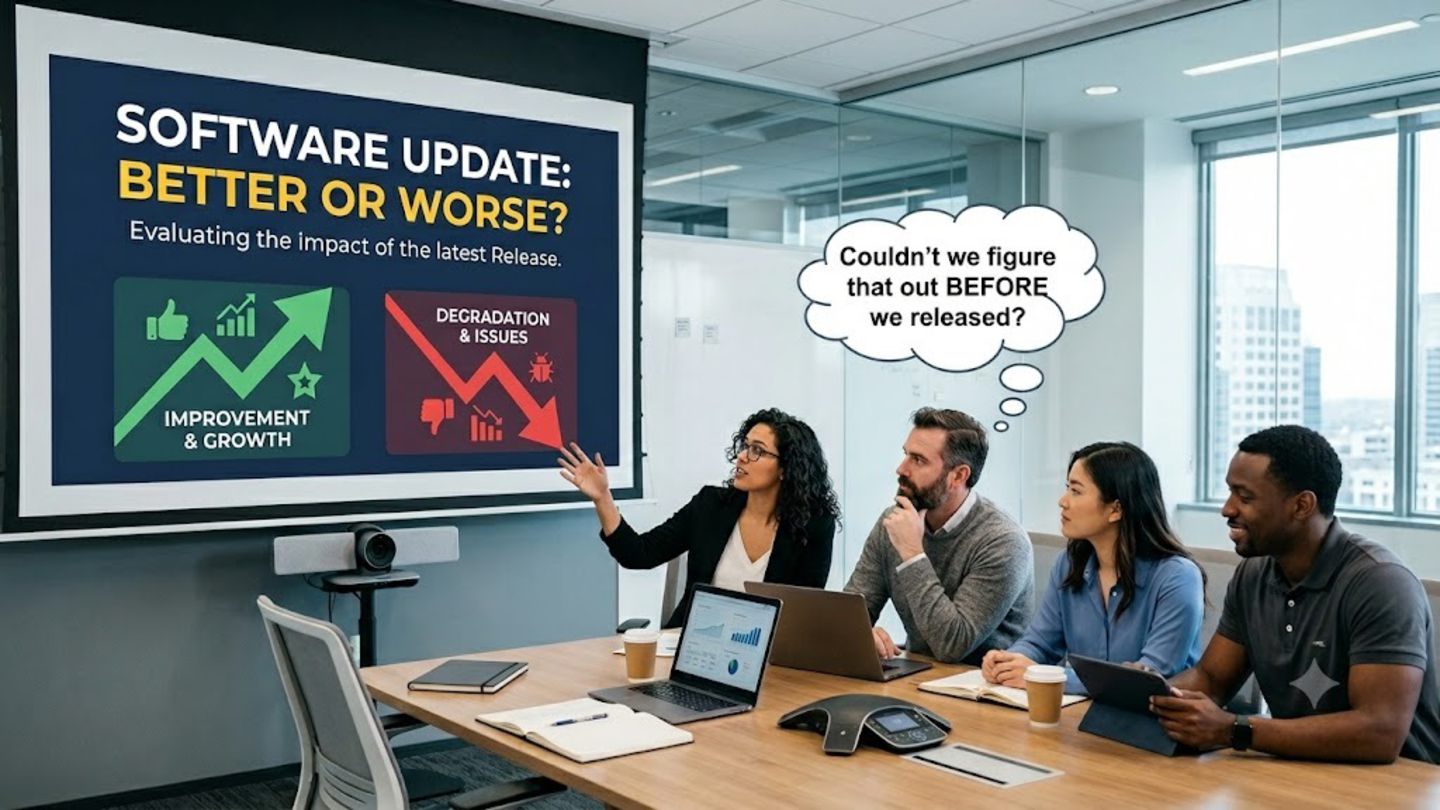
    Real-time checks ensuring immediate response quality. Tier 2: Per-session one full conversation End-of-session analysis of full user journeys measuring sentiment and goal success. @edeandrea
  15. 3-Tier Evaluation Strategy Tier 1: Per-trace one request, one response

    Real-time checks ensuring immediate response quality. Tier 2: Per-session Tier 3: Drift detection End-of-session analysis of full user journeys measuring sentiment and goal success. Automated gates comparing production metrics against historical baselines. one full conversation all traffic, over time @edeandrea
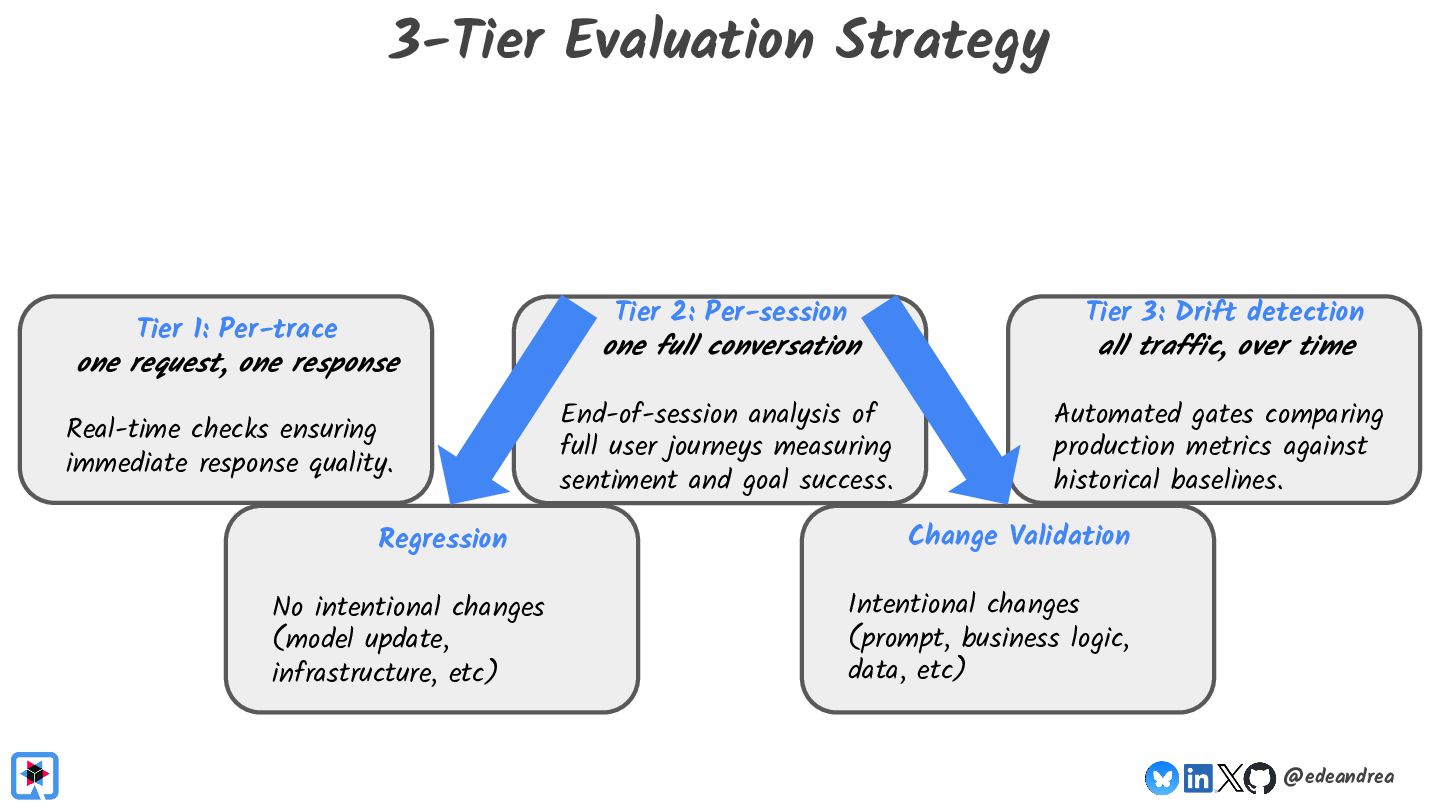
  16. 3-Tier Evaluation Strategy Tier 1: Per-trace one request, one response

    Real-time checks ensuring immediate response quality. Regression No intentional changes (model update, infrastructure, etc) Tier 2: Per-session Tier 3: Drift detection End-of-session analysis of full user journeys measuring sentiment and goal success. Automated gates comparing production metrics against historical baselines. one full conversation all traffic, over time Change Validation Intentional changes (prompt, business logic, data, etc) @edeandrea
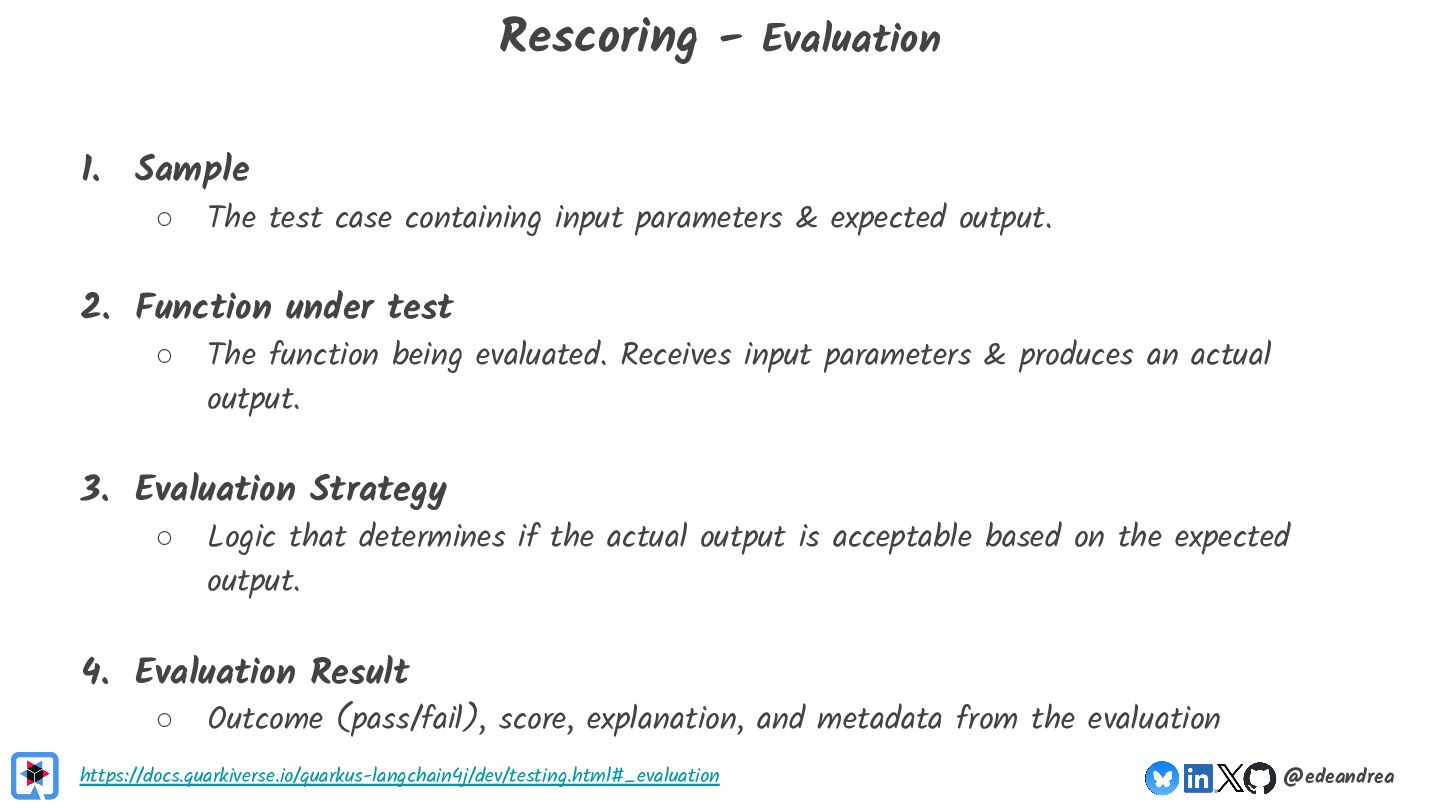
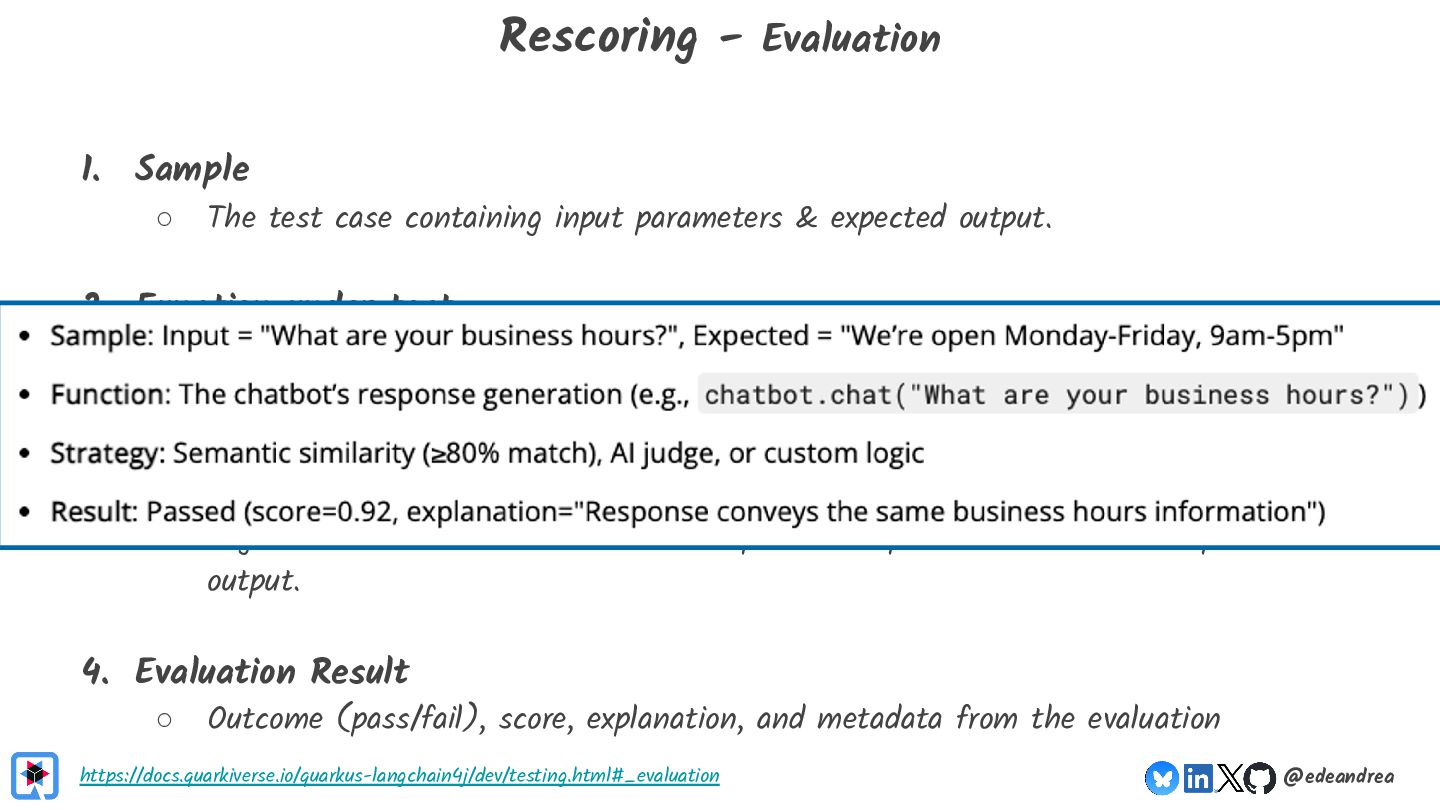
  17. Rescoring - Evaluation 1. Sample ◦ The test case containing

    input parameters & expected output. 2. Function under test ◦ The function being evaluated. Receives input parameters & produces an actual output. 3. Evaluation Strategy ◦ Logic that determines if the actual output is acceptable based on the expected output. 4. Evaluation Result ◦ Outcome (pass/fail), score, explanation, and metadata from the evaluation https://docs.quarkiverse.io/quarkus-langchain4j/dev/testing.html#_evaluation @edeandrea
  18. Rescoring - Evaluation 1. Sample ◦ The test case containing

    input parameters & expected output. 2. Function under test ◦ The function being evaluated. Receives input parameters & produces an actual output. 3. Evaluation Strategy ◦ Logic that determines if the actual output is acceptable based on the expected output. 4. Evaluation Result ◦ Outcome (pass/fail), score, explanation, and metadata from the evaluation https://docs.quarkiverse.io/quarkus-langchain4j/dev/testing.html#_evaluation @edeandrea
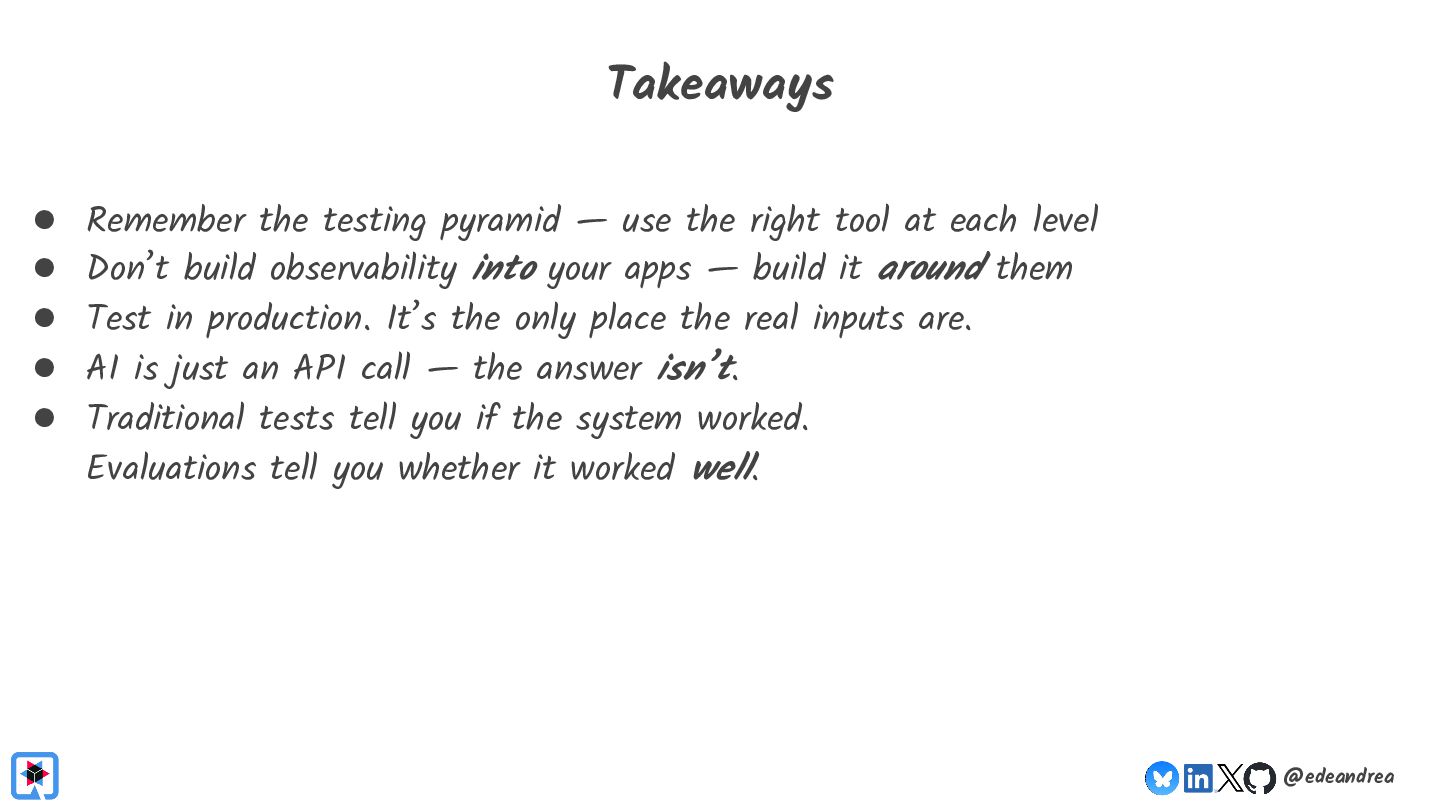
  19. Takeaways • Remember the testing pyramid — use the right

    tool at each level • Don’t build observability into your apps — build it around them • Test in production. It’s the only place the real inputs are. • AI is just an API call — the answer isn’t. • Traditional tests tell you if the system worked. Evaluations tell you whether it worked well. @edeandrea