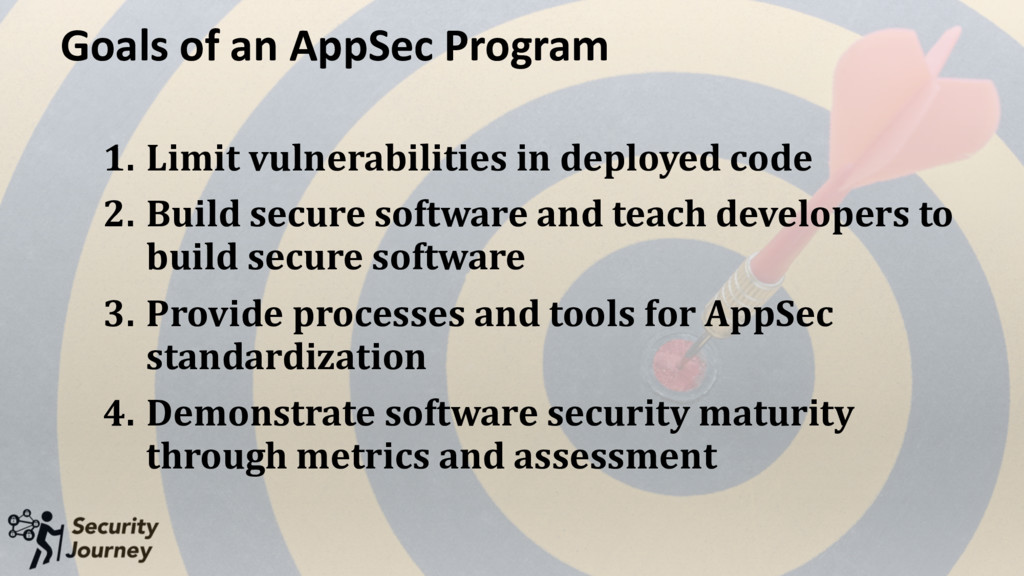
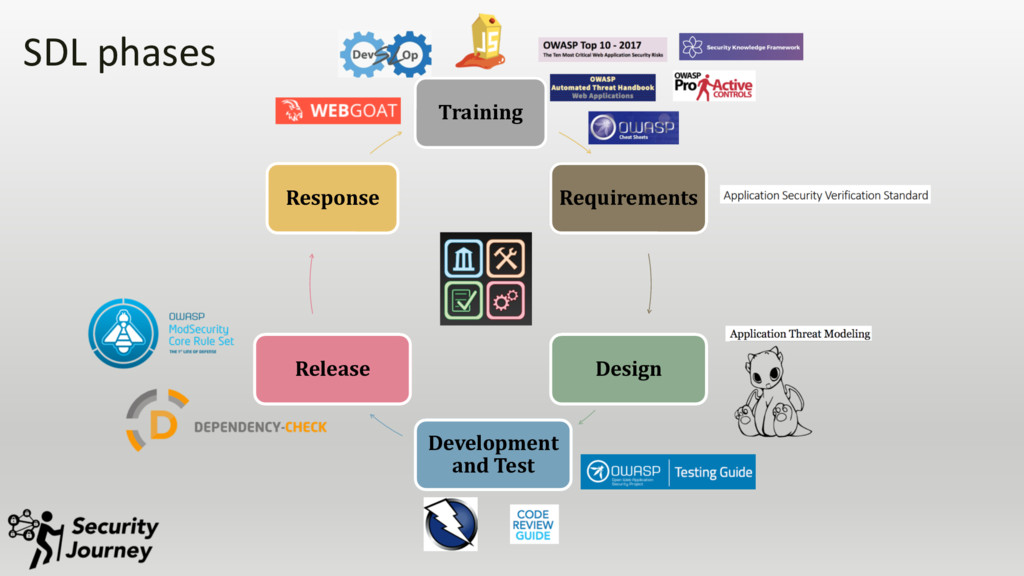
code 2. Build secure software and teach developers to build secure software 3. Provide processes and tools for AppSec standardization 4. Demonstrate software security maturity through metrics and assessment
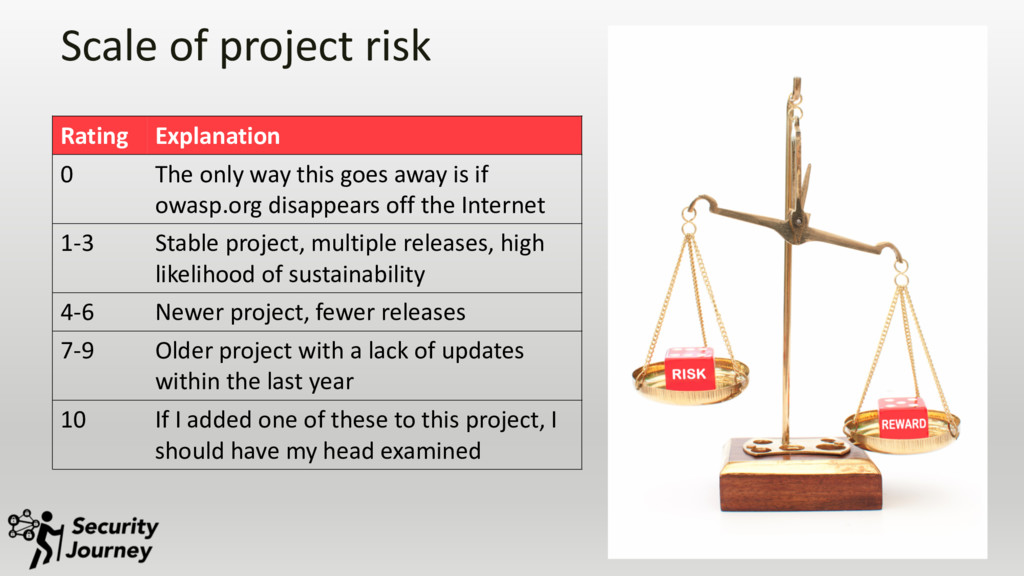
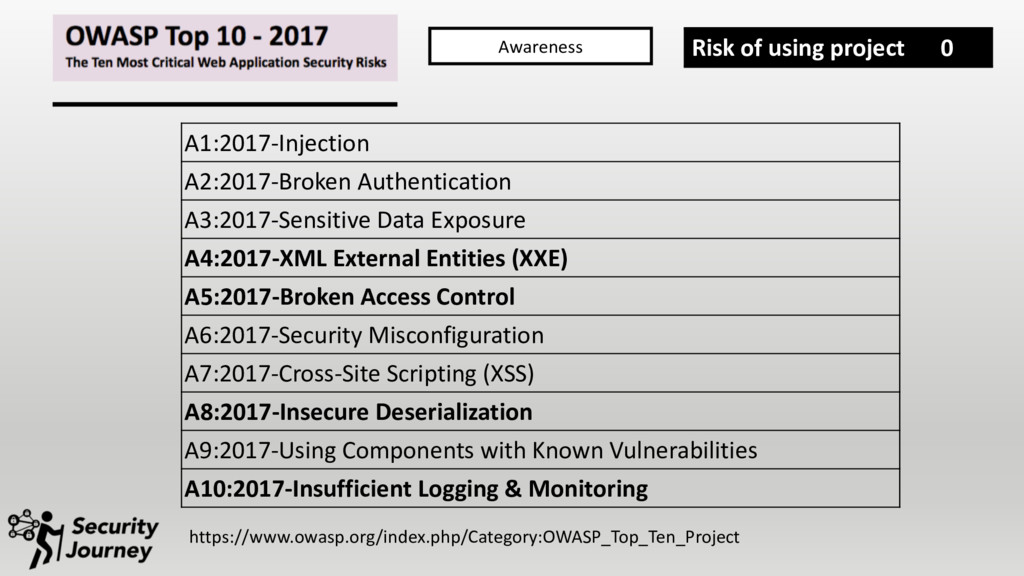
this goes away is if owasp.org disappears off the Internet 1-3 Stable project, multiple releases, high likelihood of sustainability 4-6 Newer project, fewer releases 7-9 Older project with a lack of updates within the last year 10 If I added one of these to this project, I should have my head examined
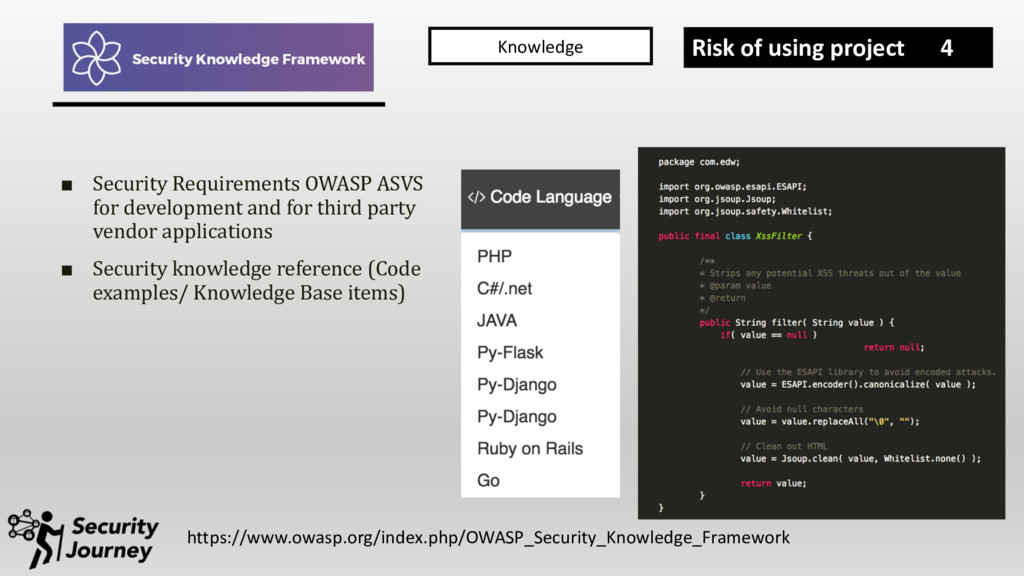
party vendor applications ▪ Security knowledge reference (Code examples/ Knowledge Base items) Risk of using project 4 Knowledge https://www.owasp.org/index.php/OWASP_Security_Knowledge_Framework
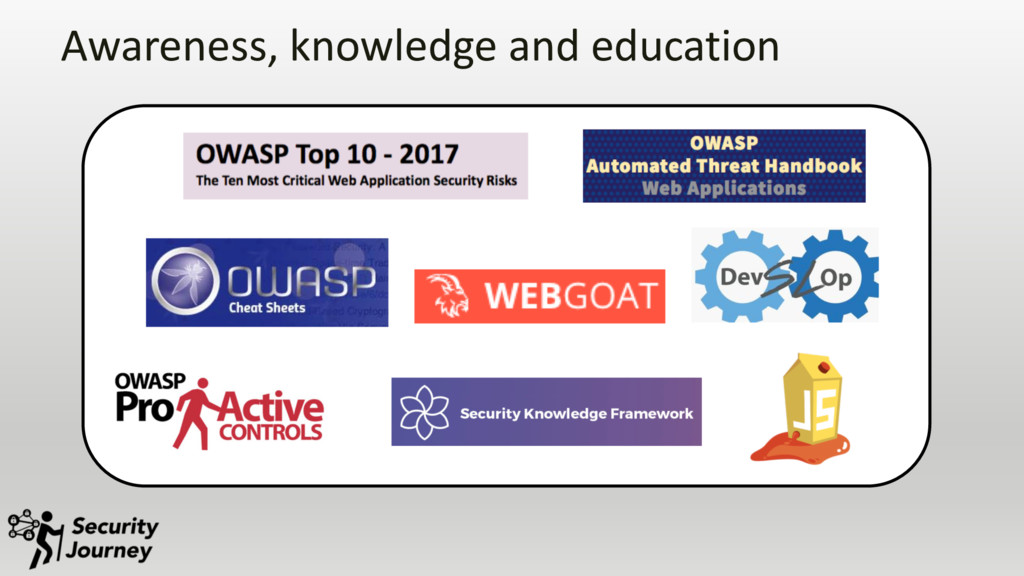
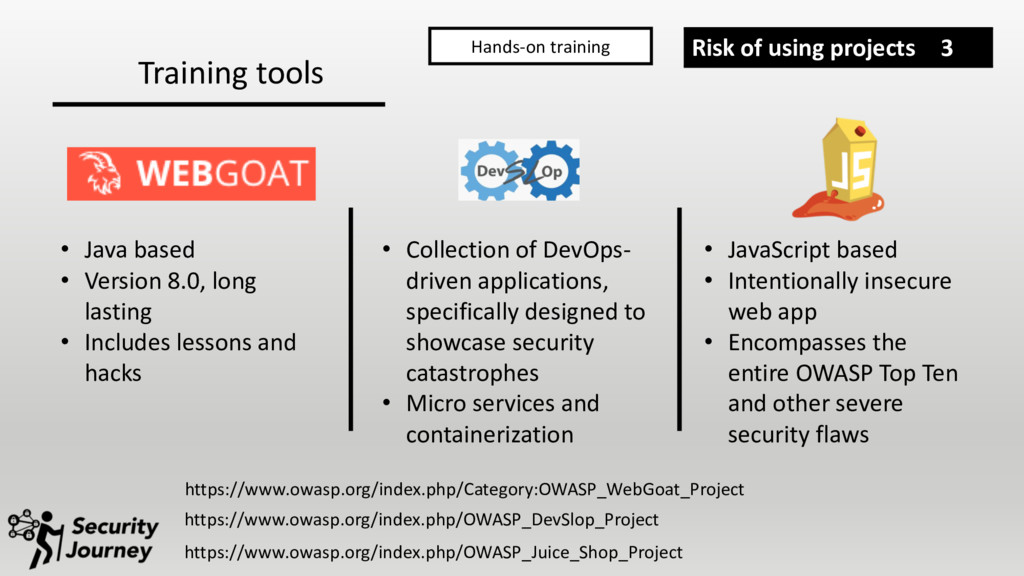
• Java based • Version 8.0, long lasting • Includes lessons and hacks • Collection of DevOps- driven applications, specifically designed to showcase security catastrophes • Micro services and containerization • JavaScript based • Intentionally insecure web app • Encompasses the entire OWASP Top Ten and other severe security flaws https://www.owasp.org/index.php/OWASP_DevSlop_Project https://www.owasp.org/index.php/OWASP_Juice_Shop_Project
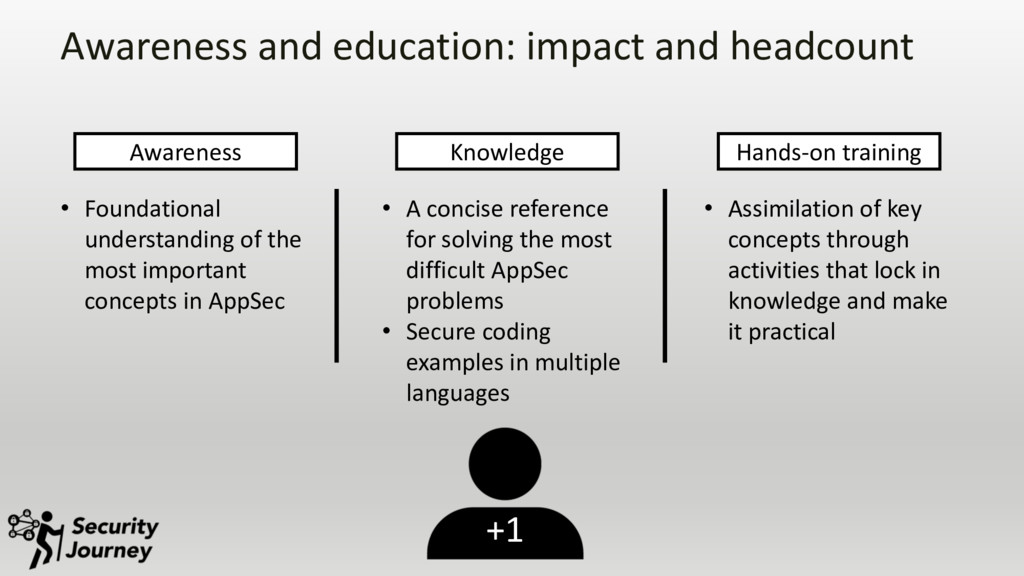
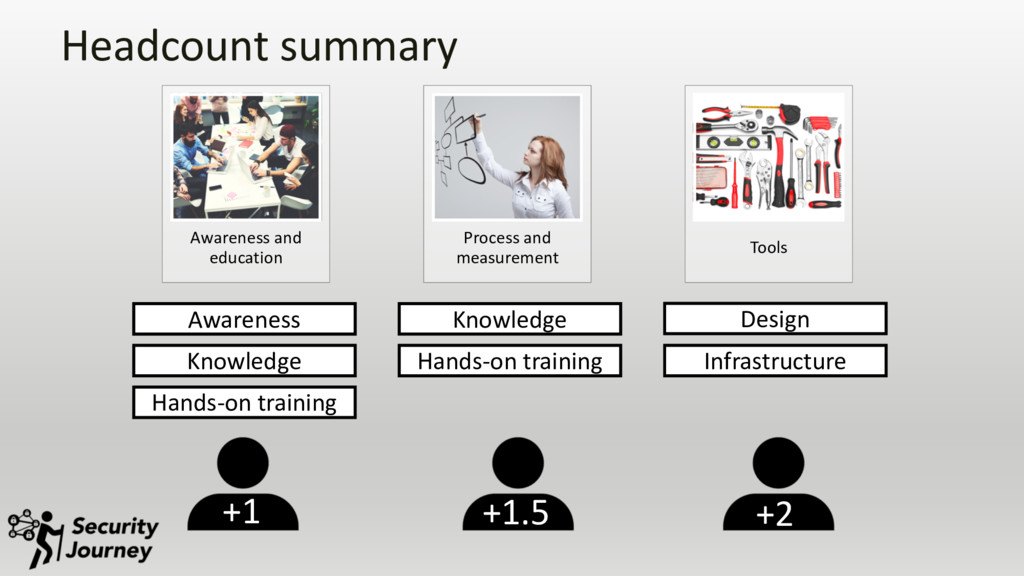
• Foundational understanding of the most important concepts in AppSec • A concise reference for solving the most difficult AppSec problems • Secure coding examples in multiple languages • Assimilation of key concepts through activities that lock in knowledge and make it practical +1
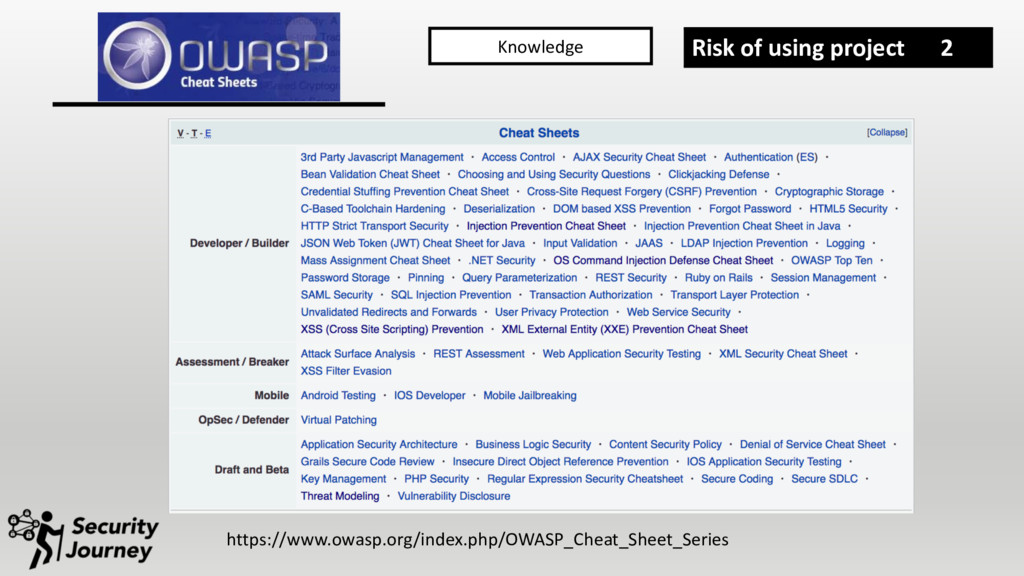
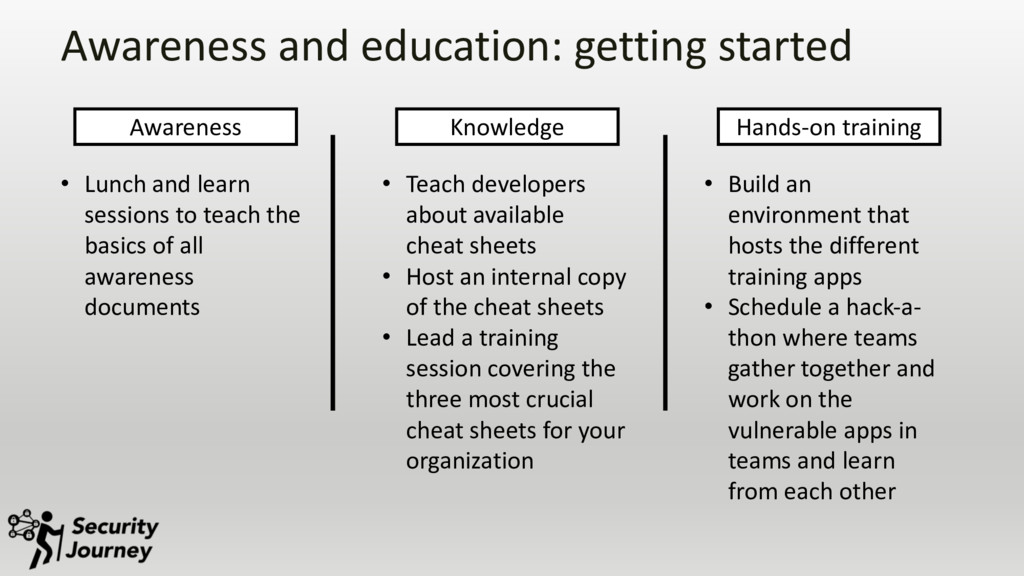
Lunch and learn sessions to teach the basics of all awareness documents • Teach developers about available cheat sheets • Host an internal copy of the cheat sheets • Lead a training session covering the three most crucial cheat sheets for your organization • Build an environment that hosts the different training apps • Schedule a hack-a- thon where teams gather together and work on the vulnerable apps in teams and learn from each other
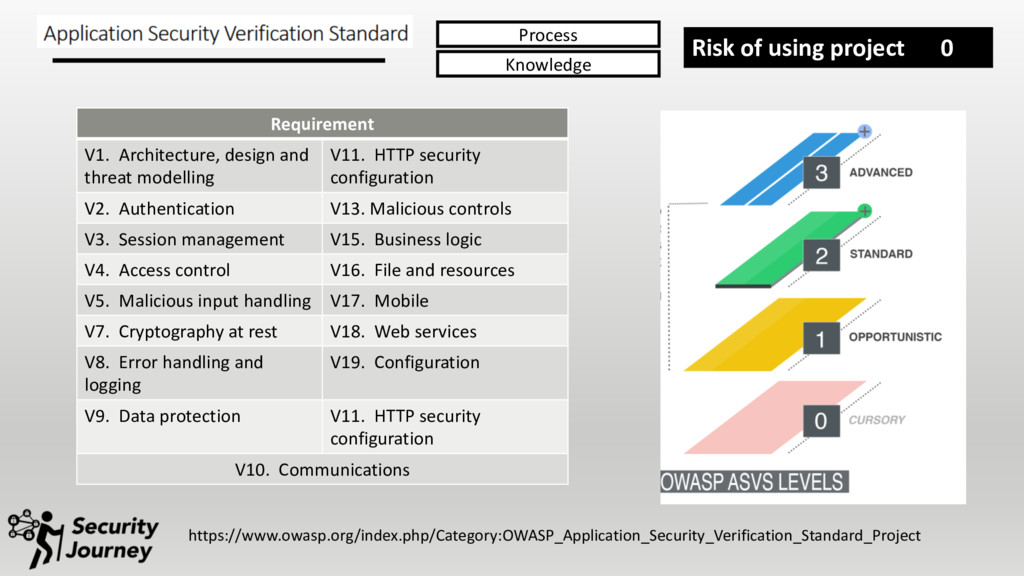
a list of security requirements. Each of these require be mapped to security-specific features and capabilities that must be built int developers. Figure 1 - OWASP Application Security Verification Standard 3.0 Levels https://www.owasp.org/index.php/Category:OWASP_Application_Security_Verification_Standard_Project Knowledge Requirement V1. Architecture, design and threat modelling V11. HTTP security configuration V2. Authentication V13. Malicious controls V3. Session management V15. Business logic V4. Access control V16. File and resources V5. Malicious input handling V17. Mobile V7. Cryptography at rest V18. Web services V8. Error handling and logging V19. Configuration V9. Data protection V11. HTTP security configuration V10. Communications
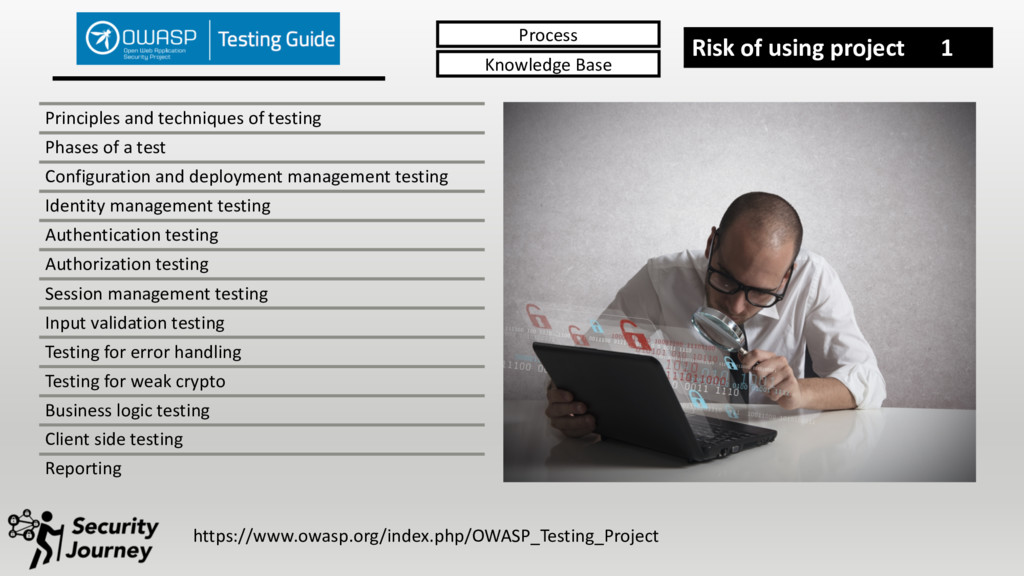
Phases of a test Configuration and deployment management testing Identity management testing Authentication testing Authorization testing Session management testing Input validation testing Testing for error handling Testing for weak crypto Business logic testing Client side testing Reporting https://www.owasp.org/index.php/OWASP_Testing_Project Process Knowledge Base
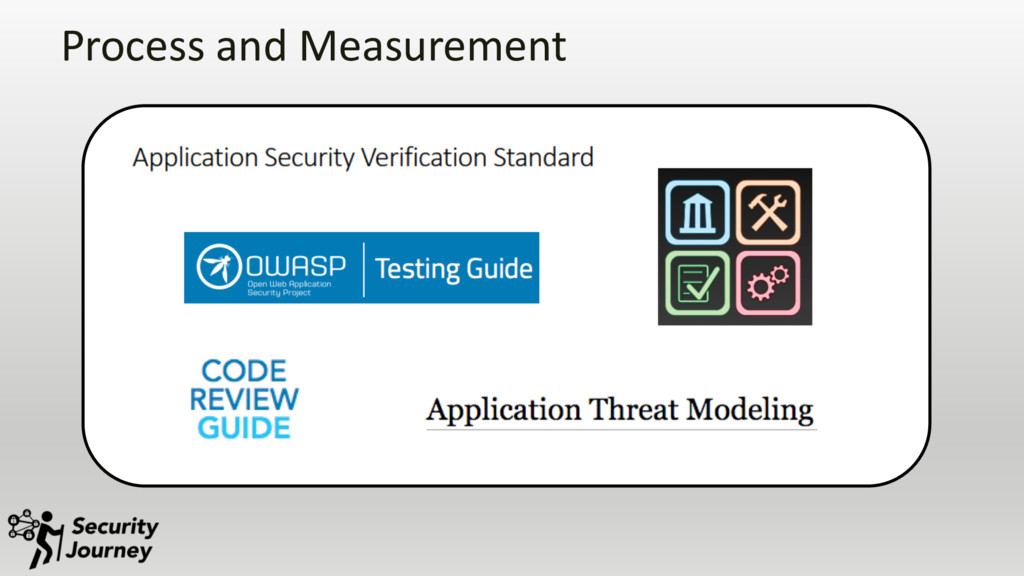
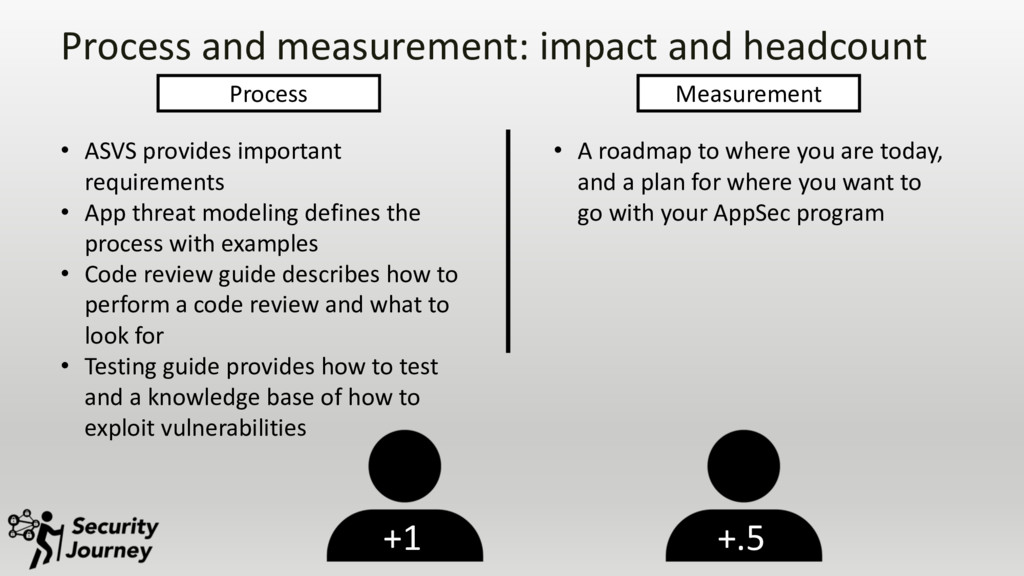
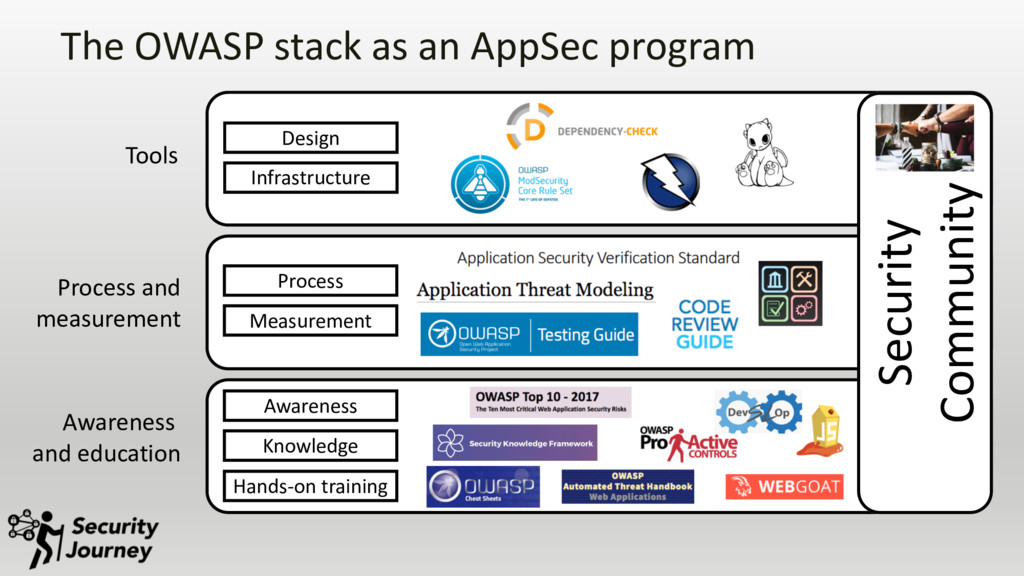
provides important requirements • App threat modeling defines the process with examples • Code review guide describes how to perform a code review and what to look for • Testing guide provides how to test and a knowledge base of how to exploit vulnerabilities • A roadmap to where you are today, and a plan for where you want to go with your AppSec program +1 +.5
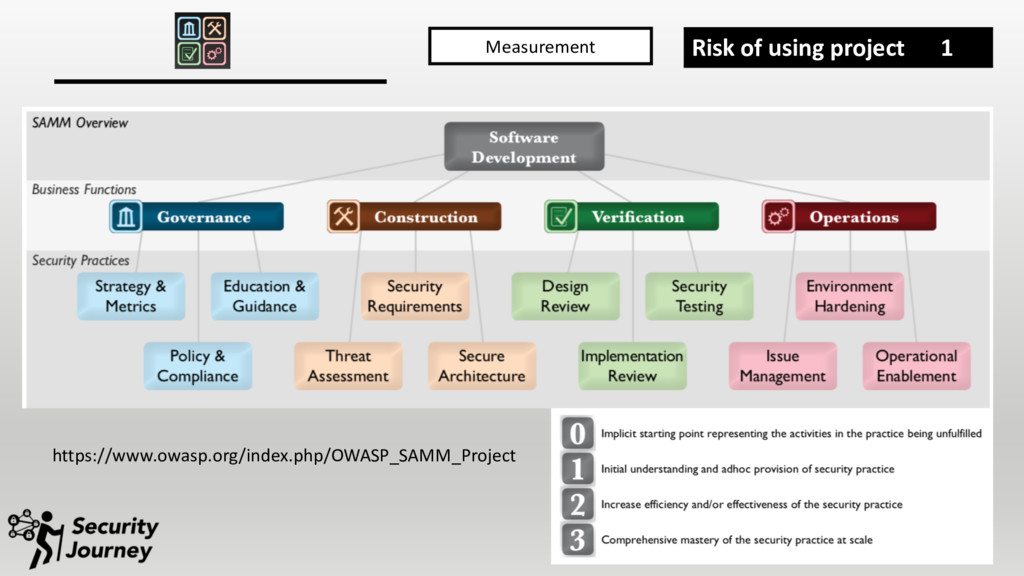
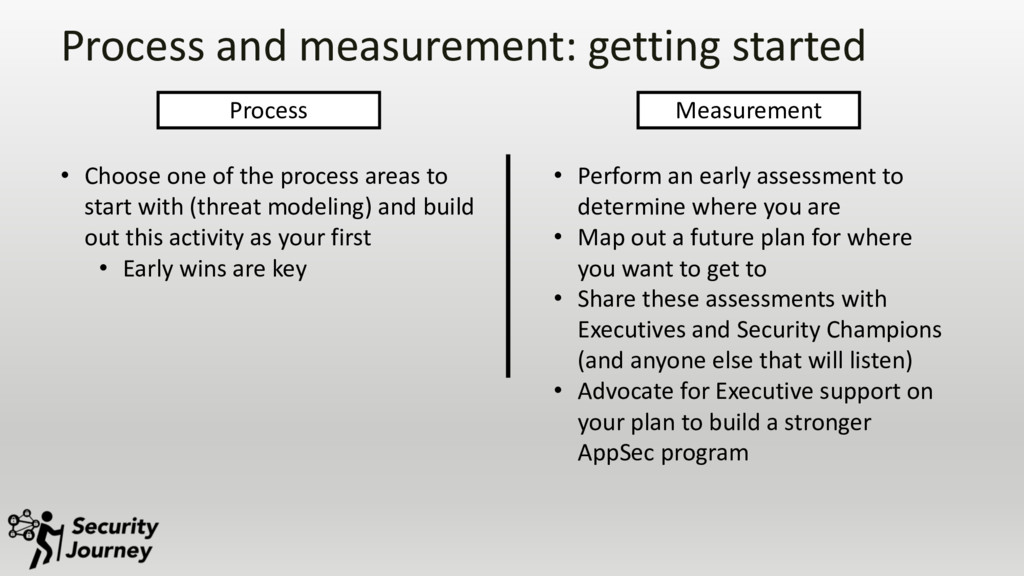
process areas to start with (threat modeling) and build out this activity as your first • Early wins are key • Perform an early assessment to determine where you are • Map out a future plan for where you want to get to • Share these assessments with Executives and Security Champions (and anyone else that will listen) • Advocate for Executive support on your plan to build a stronger AppSec program Process Measurement
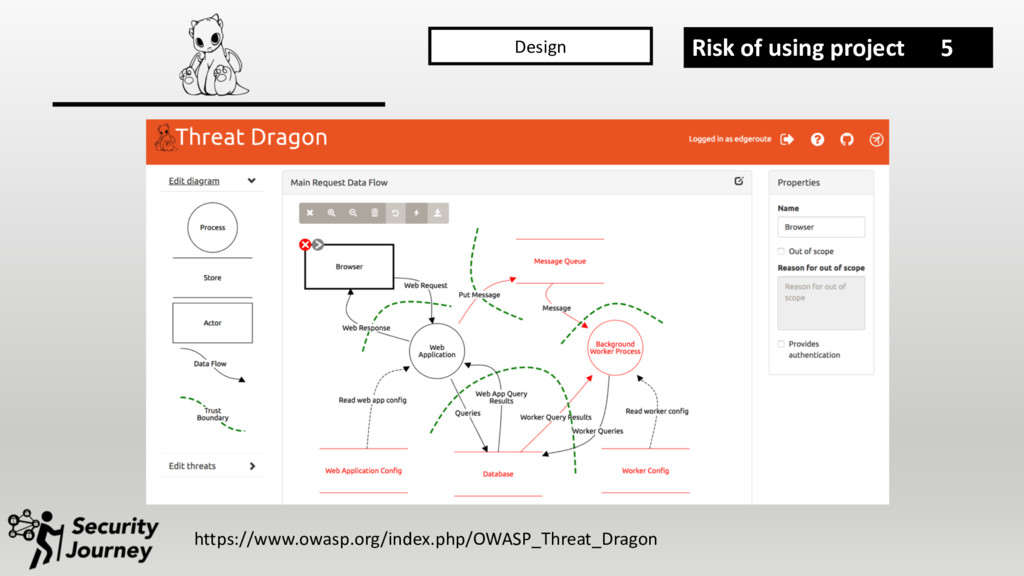
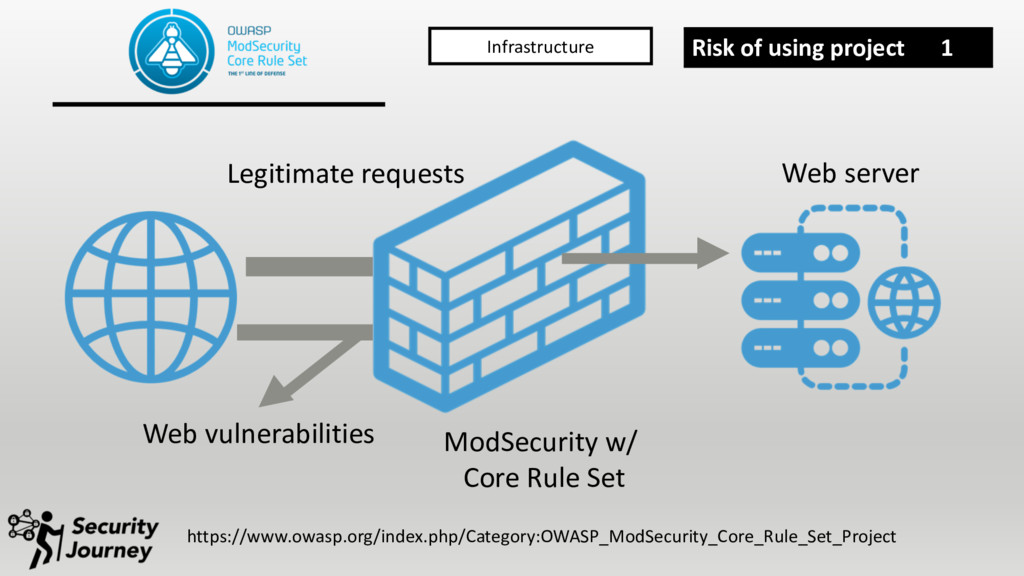
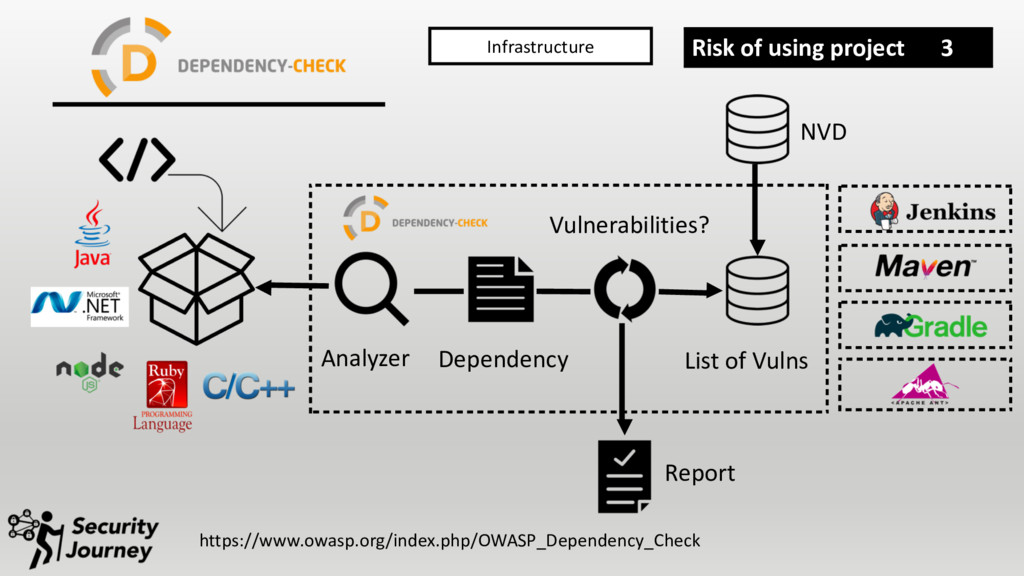
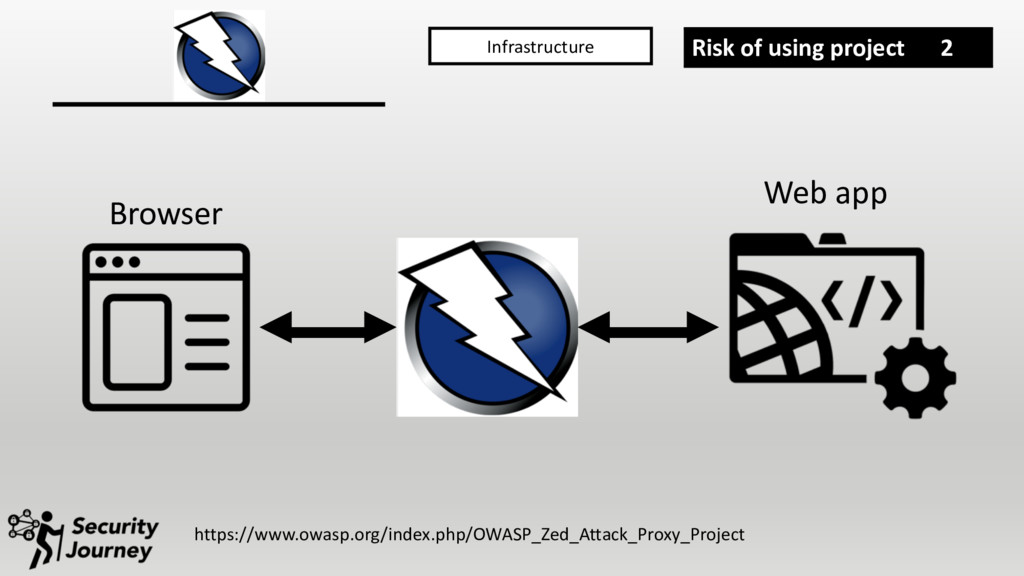
a new, web based approach to capturing threats that will reach Enterprise status if it delivers on the roadmap • CRS provides a true WAF solution • Dependency check identifies vulnerable 3rd party software • ZAP provides DAST, and plugs in to any dev methodology +1 +1
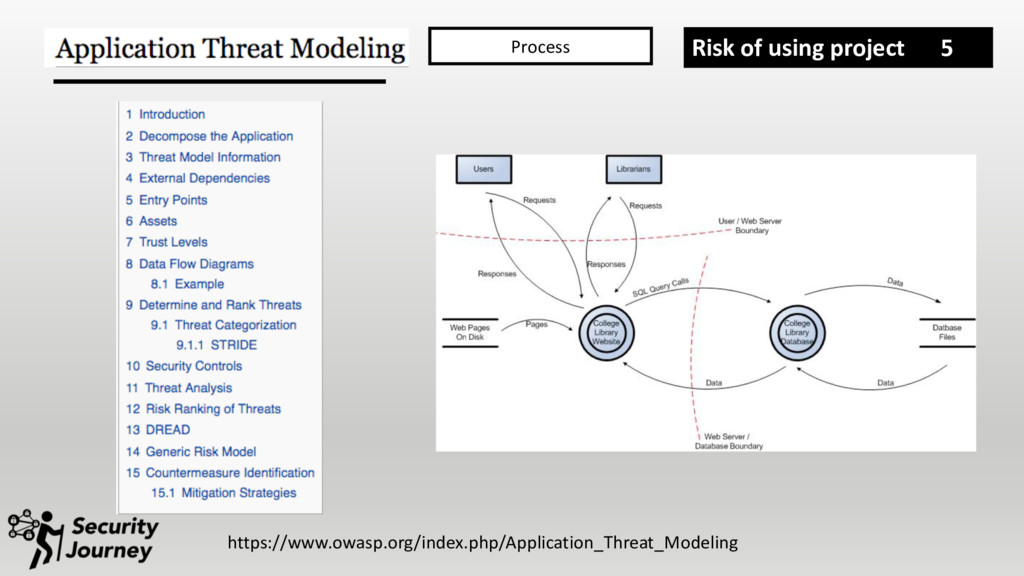
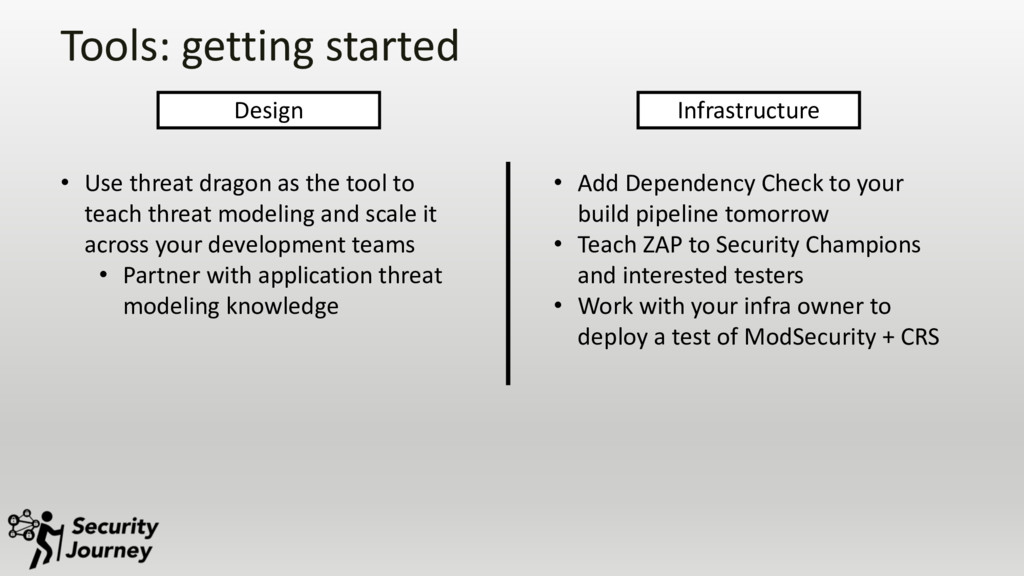
to teach threat modeling and scale it across your development teams • Partner with application threat modeling knowledge • Add Dependency Check to your build pipeline tomorrow • Teach ZAP to Security Champions and interested testers • Work with your infra owner to deploy a test of ModSecurity + CRS Design Infrastructure
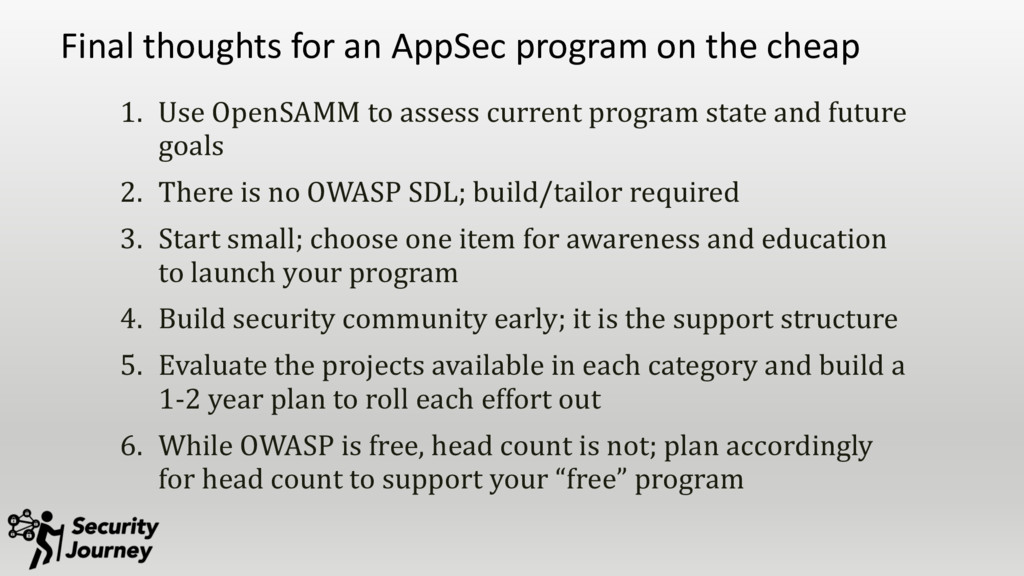
Use OpenSAMM to assess current program state and future goals 2. There is no OWASP SDL; build/tailor required 3. Start small; choose one item for awareness and education to launch your program 4. Build security community early; it is the support structure 5. Evaluate the projects available in each category and build a 1-2 year plan to roll each effort out 6. While OWASP is free, head count is not; plan accordingly for head count to support your “free” program


 edgeroute
 ludicmind
 terurou
 pei0804
 ymrl
ymrl
 kairim0
 masakiokuda
 kawametho
 recruitengineers
 oracle4engineer
 yama3133
 baseballyama
 yakumo
 marketingsoph
 kastner
 inesmontani
 ryanjones
 jct
jct
 aleyda
 techseoconnect
 addyosmani
 badams
 jakevdp
 sabderemane
 ivargrimstad



![Q+A and Thank you! Chris Romeo, CEO / Co-Founder [email protected]](https://files.speakerdeck.com/presentations/fb0a0b296cca419bb91a99a195624f9c/slide_43.jpg)