Upgrade to Pro — share decks privately, control downloads, hide ads and more …

Mobile Development in C++

Mobile Development in C++

Almost every tech company out there eventually find themselves searching for ways to reduce the overhead of implementing the same digital product multiple times, and with us it was not different. After launching a whole new product using Reactive Native, we started looking at options for our main application, iAuditor, available on iOS and Android.

It is been around one year since we started using C++ as our technology of choice to support a shared implementation across our iOS and Android applications.

This became a hot topic again recently, when Dropbox published this article on their Engineering Blog. While the road up to this point has been full of bumps and learnings, we are still adopting C++ on most of our mobile applications codebase, and today I wanted to share with you all some key points on how we are aiming to make it successful on the long run.

Avatar for Eduardo Lino

Eduardo Lino

October 01, 2019

Other Decks in Programming

Transcript

  1. 2 Why? Build once, use everywhere Consistent style and architecture

    Improve code quality and test coverage Speed up development Keep the native UX
  2. Let's talk about... 3 • How the application architecture looks

    like • What is our day-to-day workflow • How it impacted us • What is next
  3. 5 Tools To make our life easier gRPC and Protocol

    Buffers RocksDB Djinni C++ v17
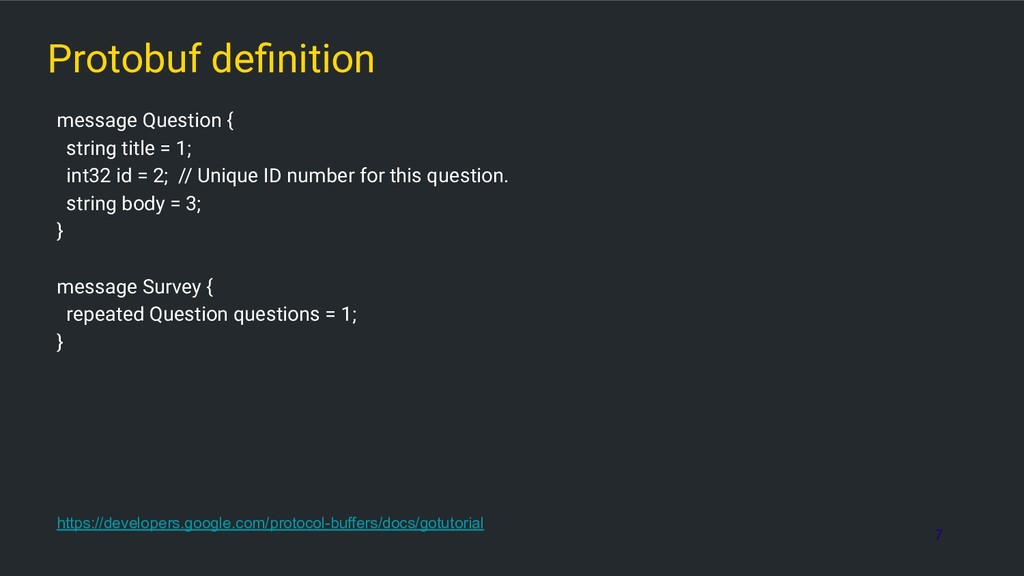
  4. Protobuf definition 7 message Question { string title = 1;

    int32 id = 2; // Unique ID number for this question. string body = 3; } message Survey { repeated Question questions = 1; } https://developers.google.com/protocol-buffers/docs/gotutorial
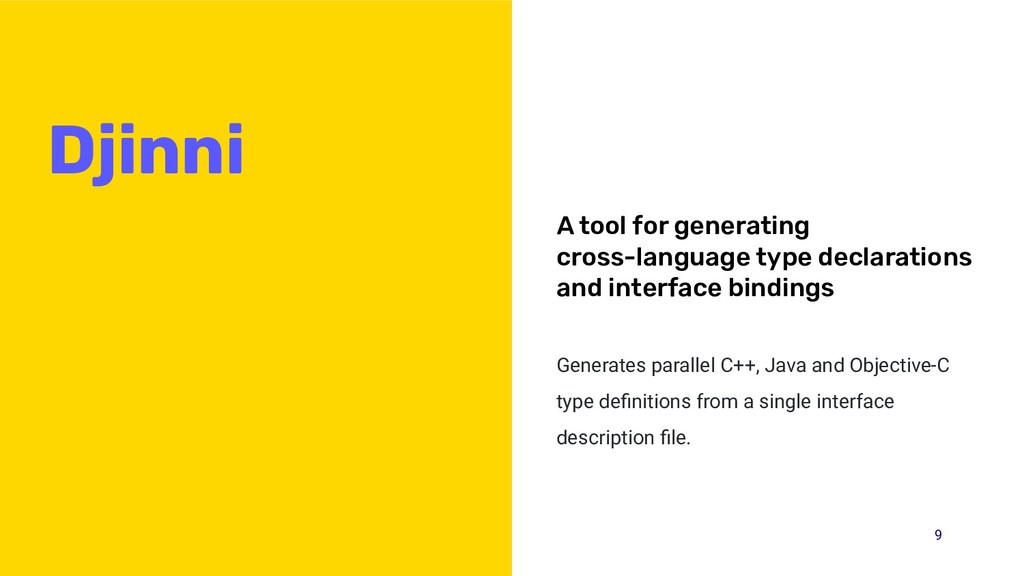
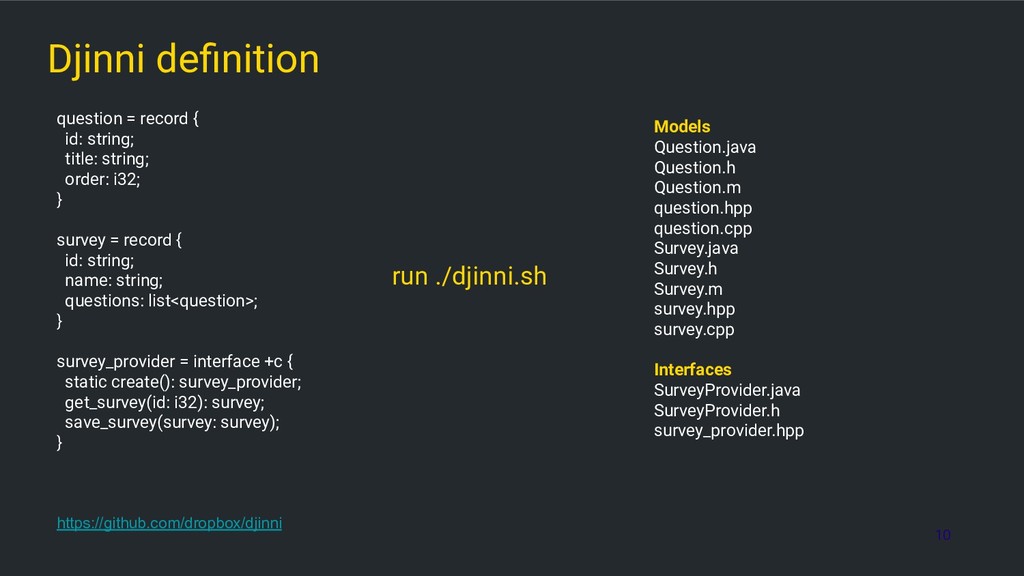
  5. 9 Djinni A tool for generating cross-language type declarations and

    interface bindings Generates parallel C++, Java and Objective-C type definitions from a single interface description file.
  6. Djinni definition 10 question = record { id: string; title:

    string; order: i32; } survey = record { id: string; name: string; questions: list<question>; } survey_provider = interface +c { static create(): survey_provider; get_survey(id: i32): survey; save_survey(survey: survey); } https://github.com/dropbox/djinni Models Question.java Question.h Question.m question.hpp question.cpp Survey.java Survey.h Survey.m survey.hpp survey.cpp Interfaces SurveyProvider.java SurveyProvider.h survey_provider.hpp run ./djinni.sh
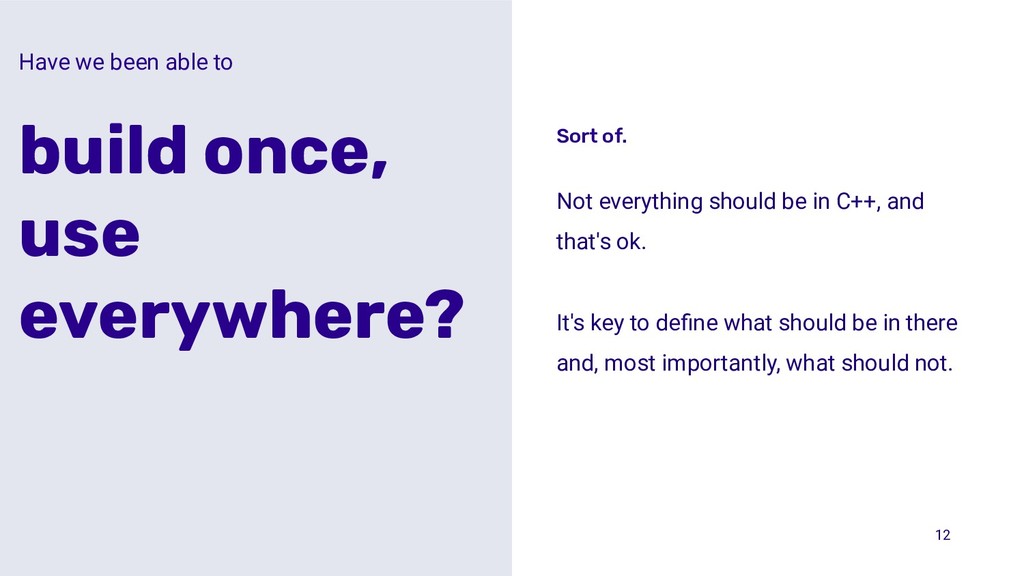
  7. 12 build once, use everywhere? Have we been able to

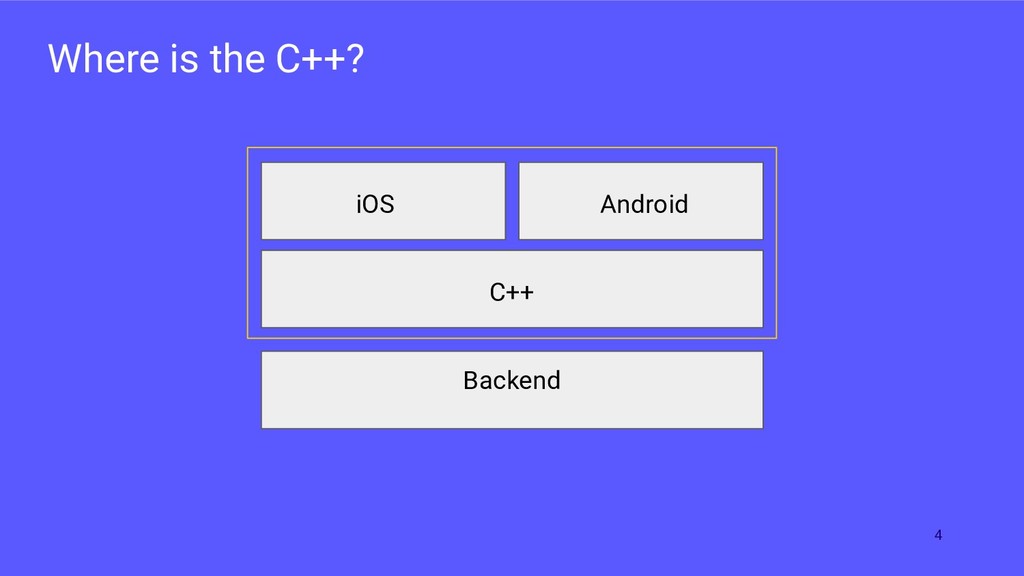
    Not everything should be in C++, and that's ok. It's key to define what should be in there and, most importantly, what should not. Sort of.
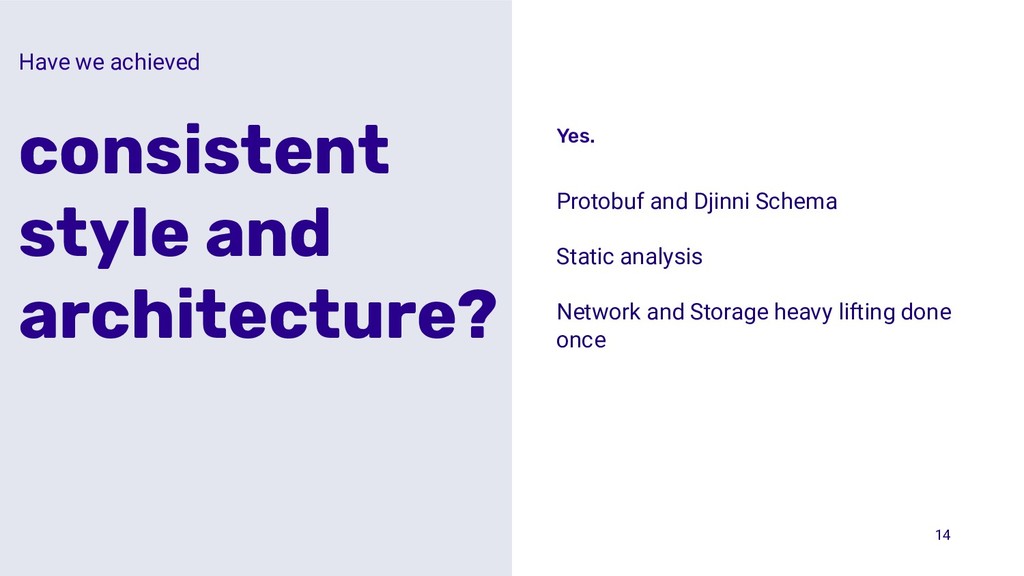
  8. 14 consistent style and architecture? Have we achieved Protobuf and

    Djinni Schema Static analysis Network and Storage heavy lifting done once Yes.
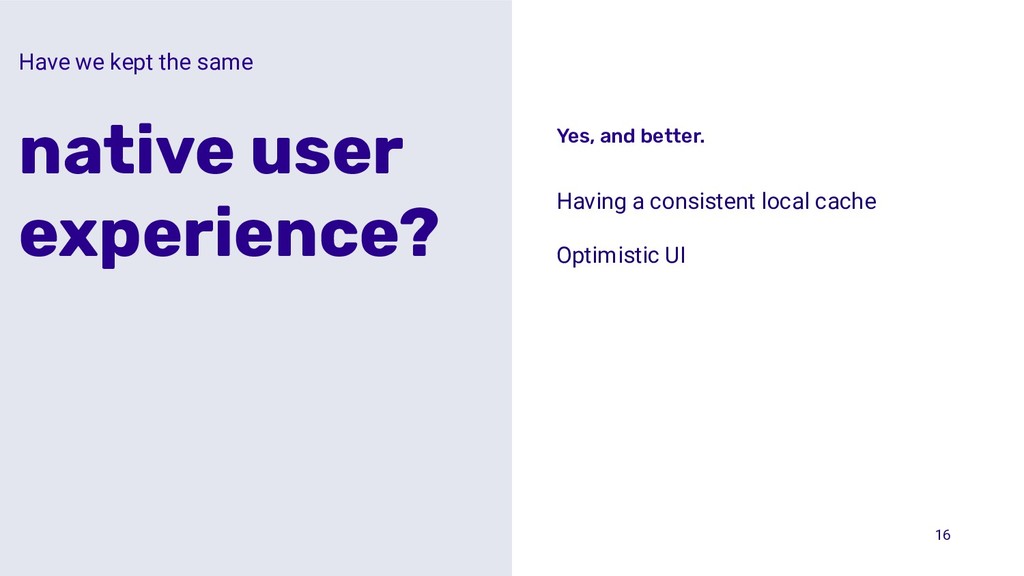
  9. 16 native user experience? Have we kept the same Having

    a consistent local cache Optimistic UI Yes, and better.
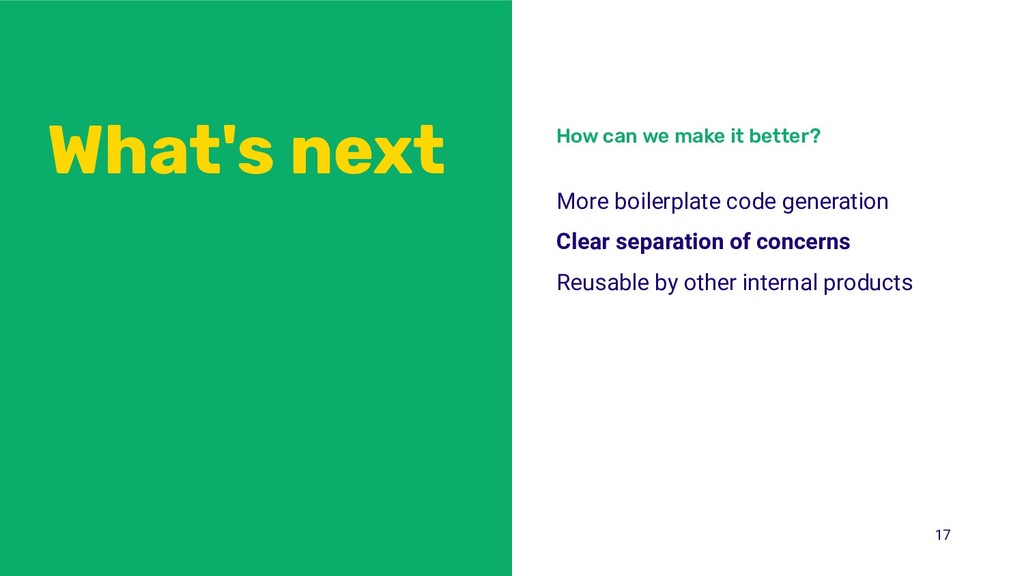
  10. 17 What's next More boilerplate code generation Clear separation of

    concerns Reusable by other internal products How can we make it better?