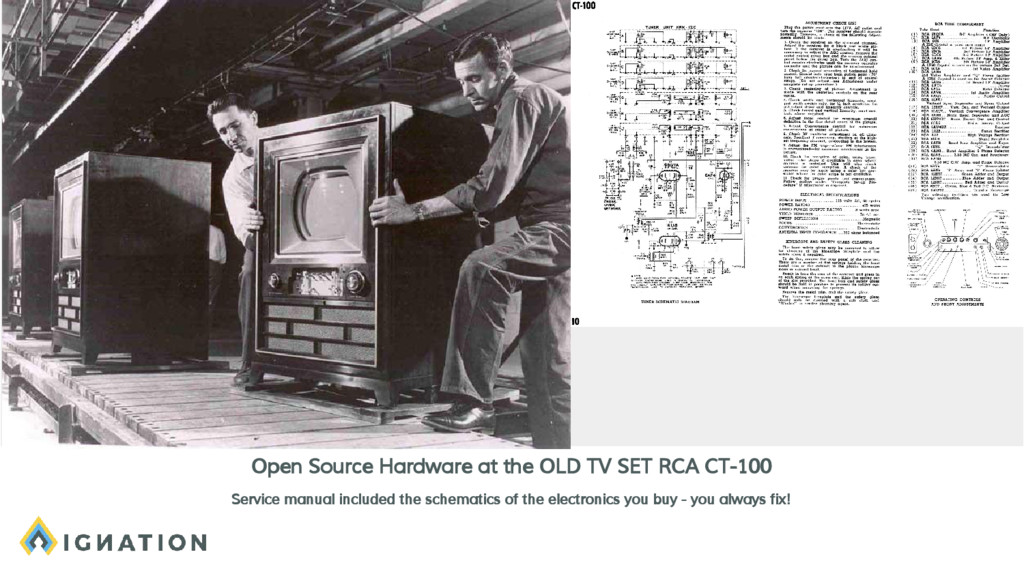
Open source an origin story to freedom covers the origin on open source, the two main currents in the landscape and the options we now have how to go forward.
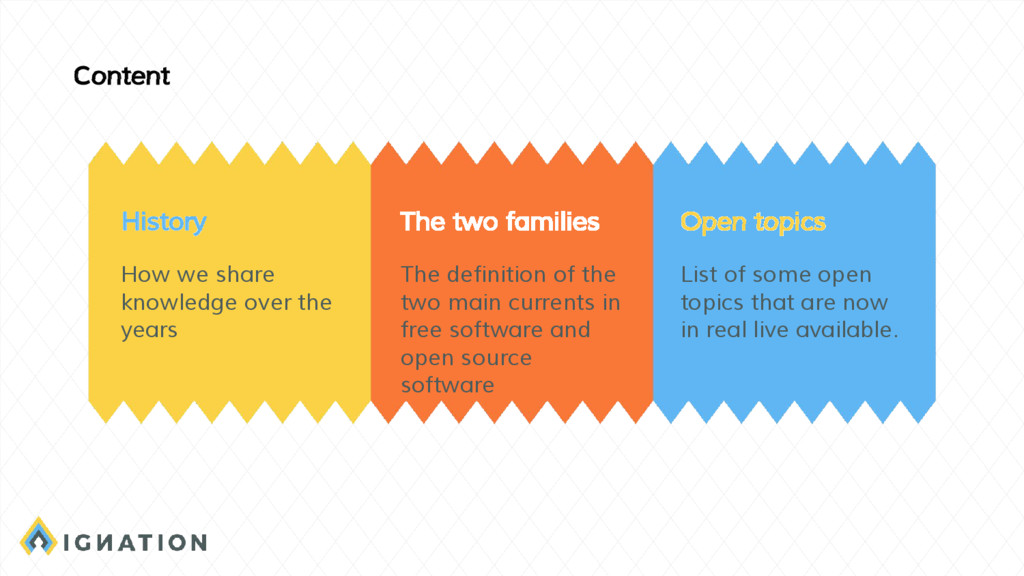
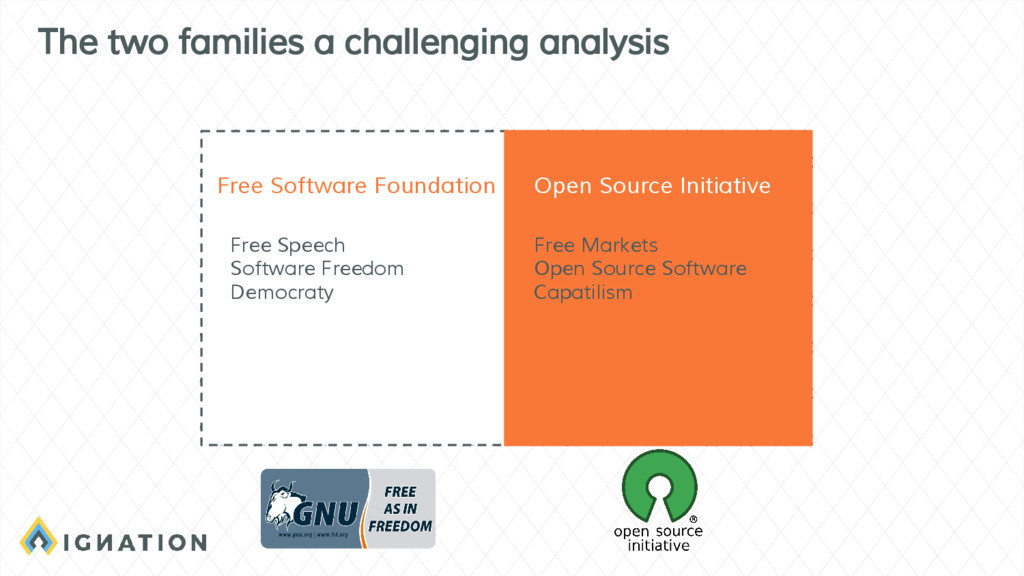
two families The definition of the two main currents in free software and open source software Open topics List of some open topics that are now in real live available.
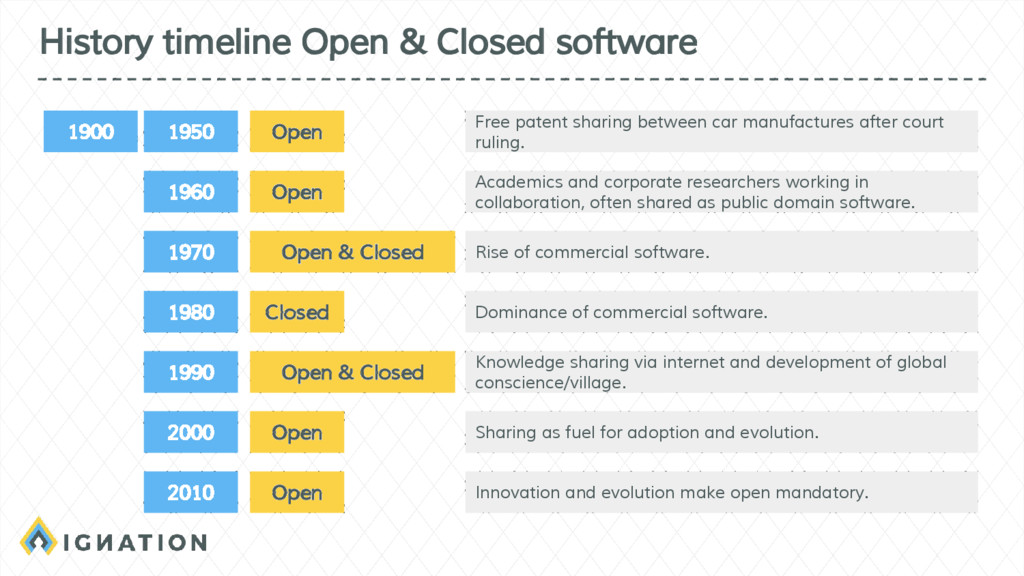
corporate researchers working in collaboration, often shared as public domain software. 1970 Open & Closed Rise of commercial software. 1980 Closed Dominance of commercial software. 1990 Open & Closed Knowledge sharing via internet and development of global conscience/village. 2000 Open Sharing as fuel for adoption and evolution. 2010 Open Innovation and evolution make open mandatory. 1950 Open 1900 Free patent sharing between car manufactures after court ruling.
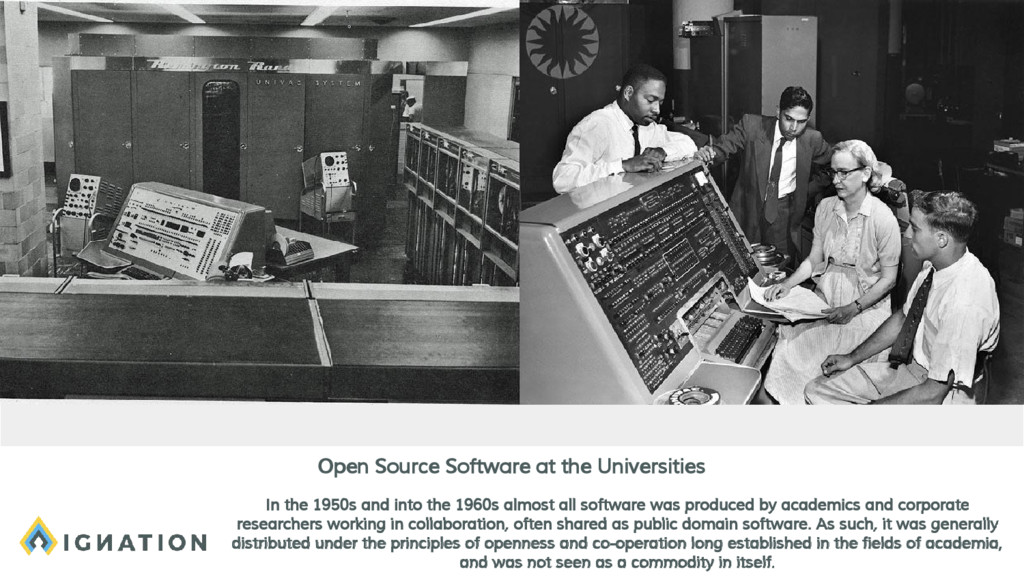
was produced by academics and corporate researchers working in collaboration, often shared as public domain software. As such, it was generally distributed under the principles of openness and co-operation long established in the fields of academia, and was not seen as a commodity in itself. Open Source Software at the Universities
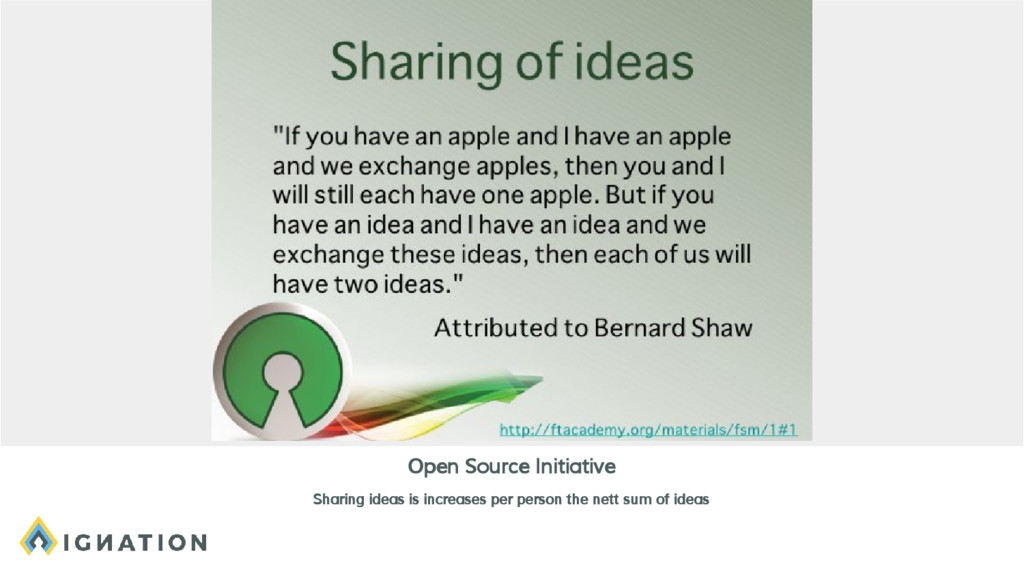
1967 was also distributed with source code included. User groups such as that of the IBM 701, called SHARE, and that of Digital Equipment Corporation (DEC), called DECUS were formed to facilitate the exchange of software. "SHARE is not an acronym; it's what we do.” Open Source Software as Standard
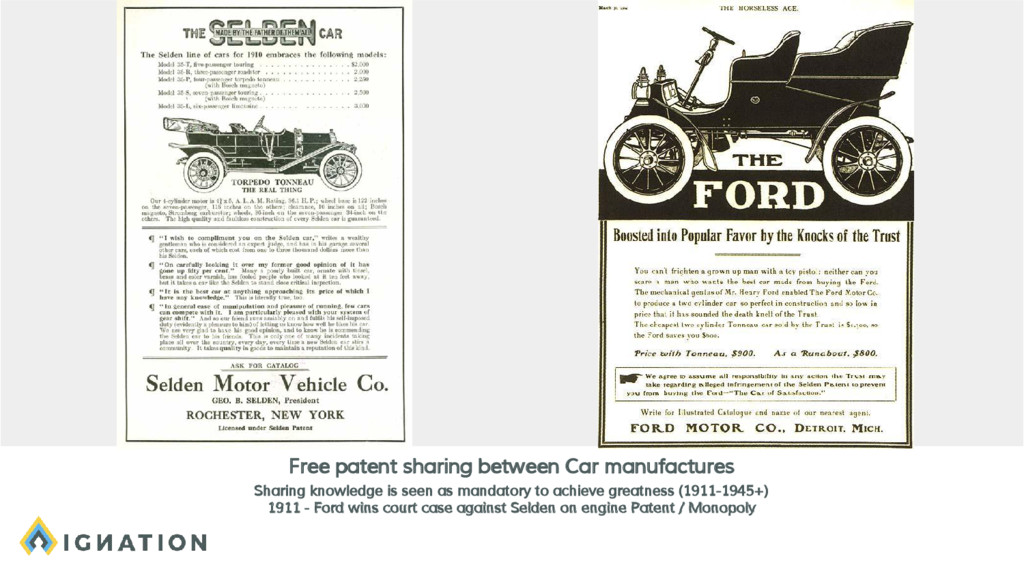
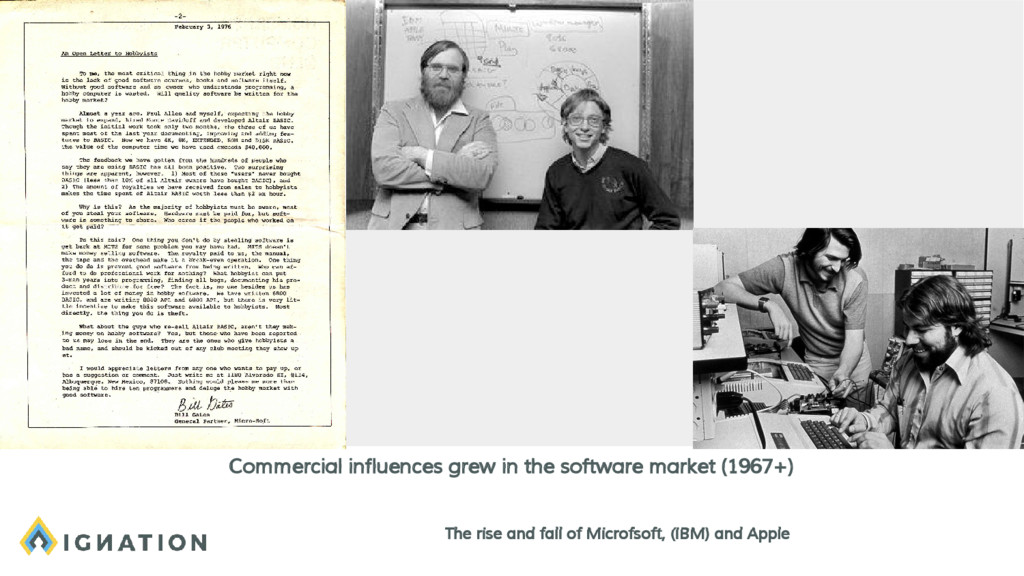
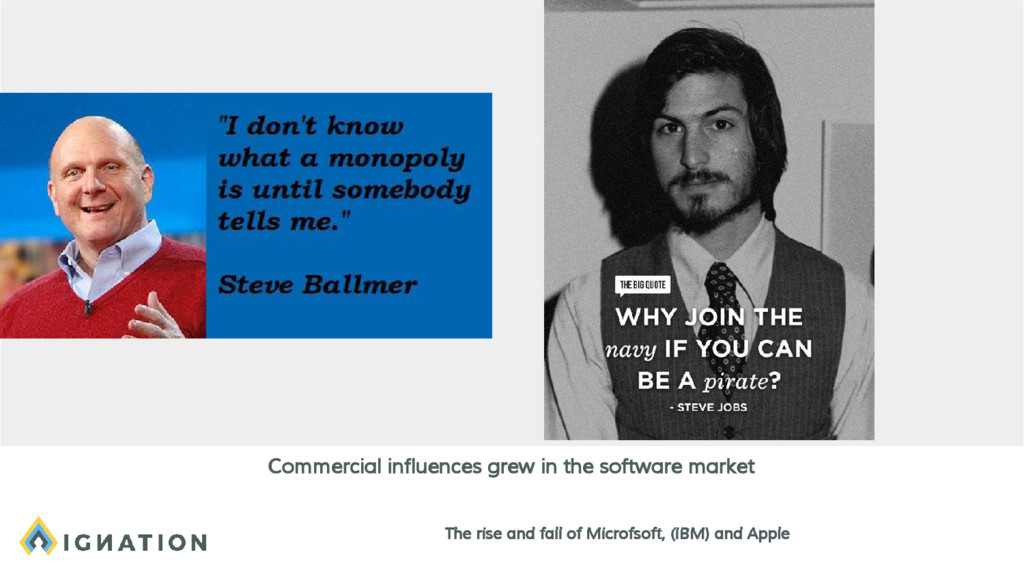
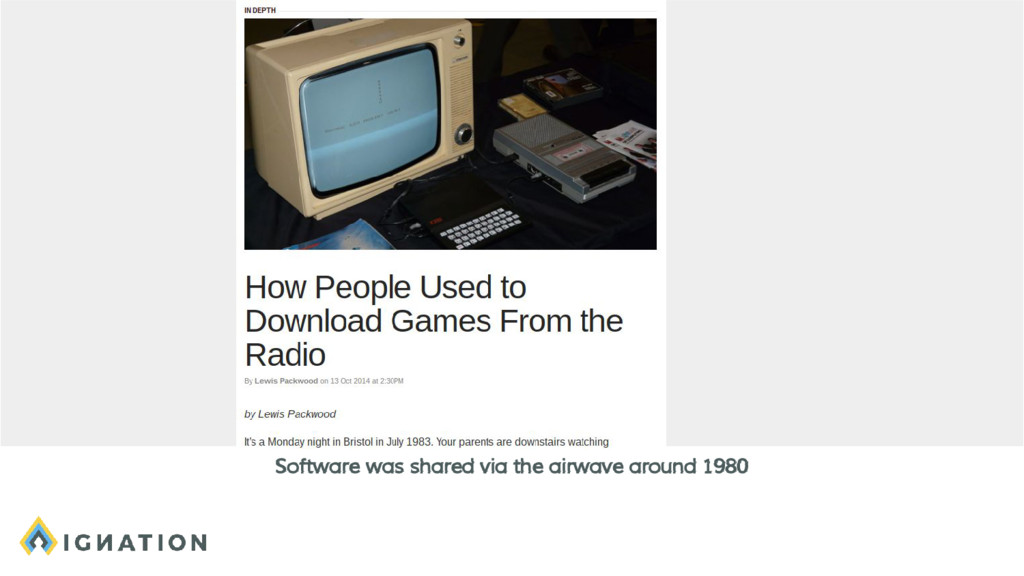
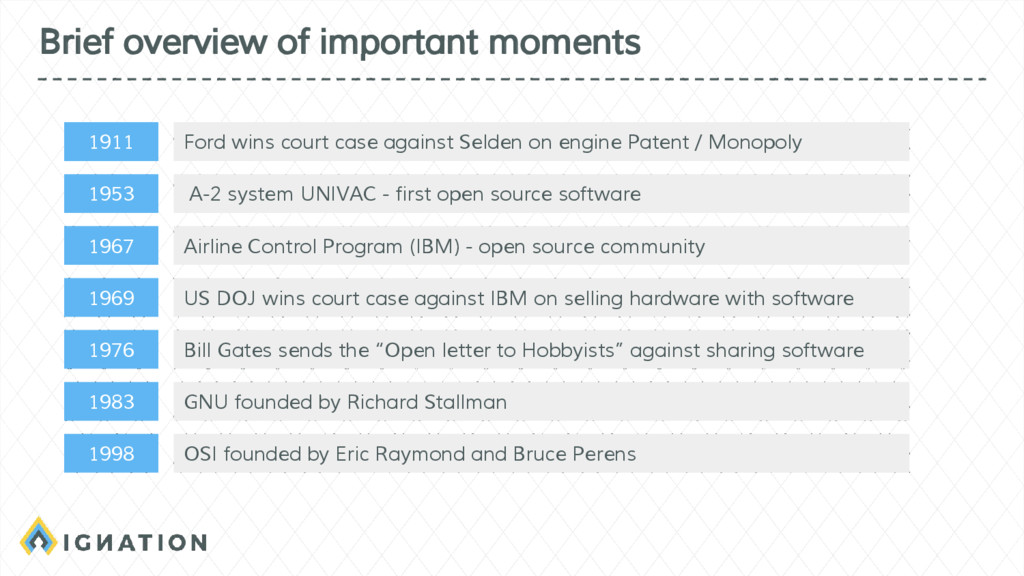
overview of important moments 1967 Airline Control Program (IBM) - open source community 1969 US DOJ wins court case against IBM on selling hardware with software 1976 Bill Gates sends the “Open letter to Hobbyists” against sharing software 1983 GNU founded by Richard Stallman 1998 OSI founded by Eric Raymond and Bruce Perens 1911 Ford wins court case against Selden on engine Patent / Monopoly
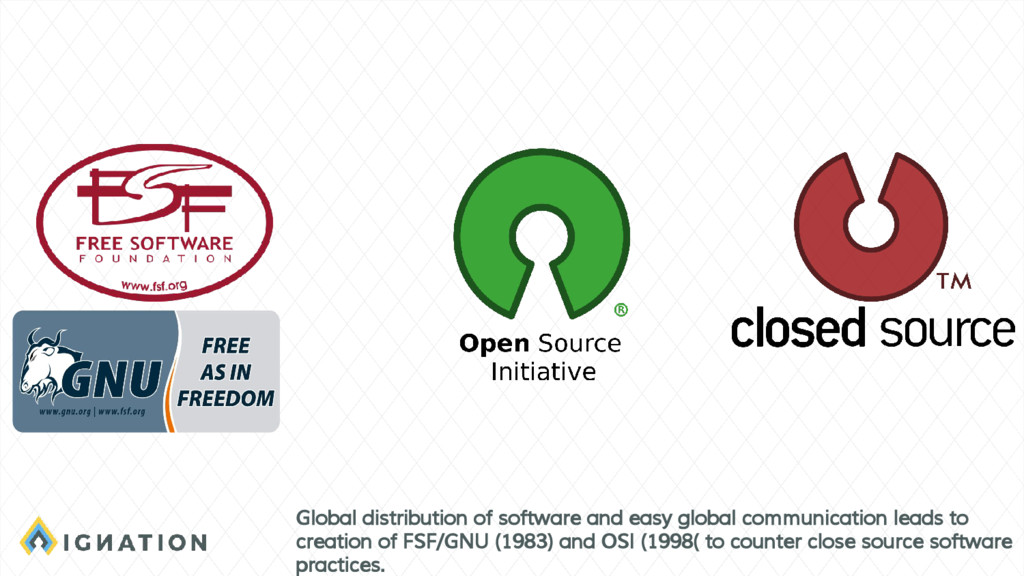
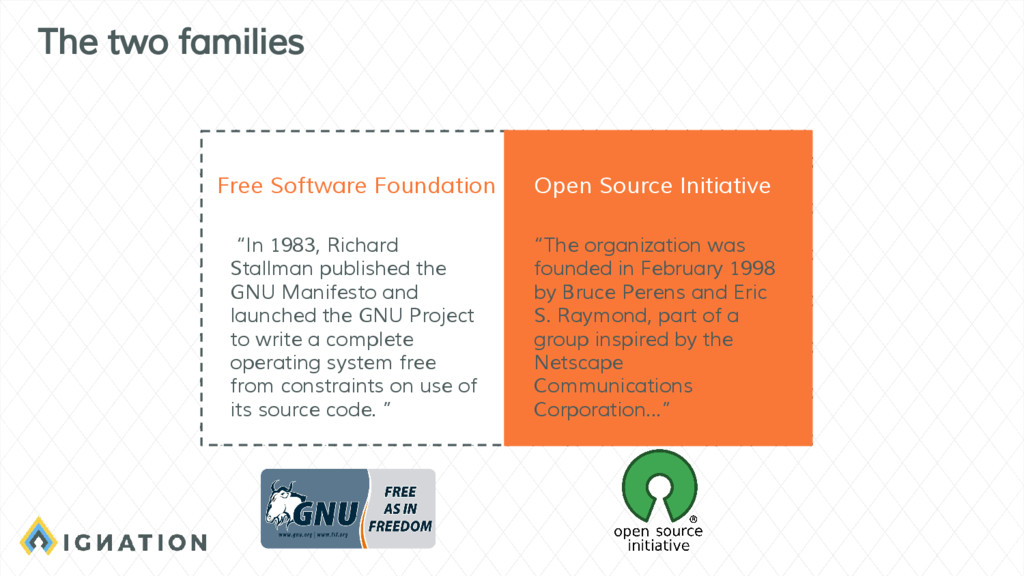
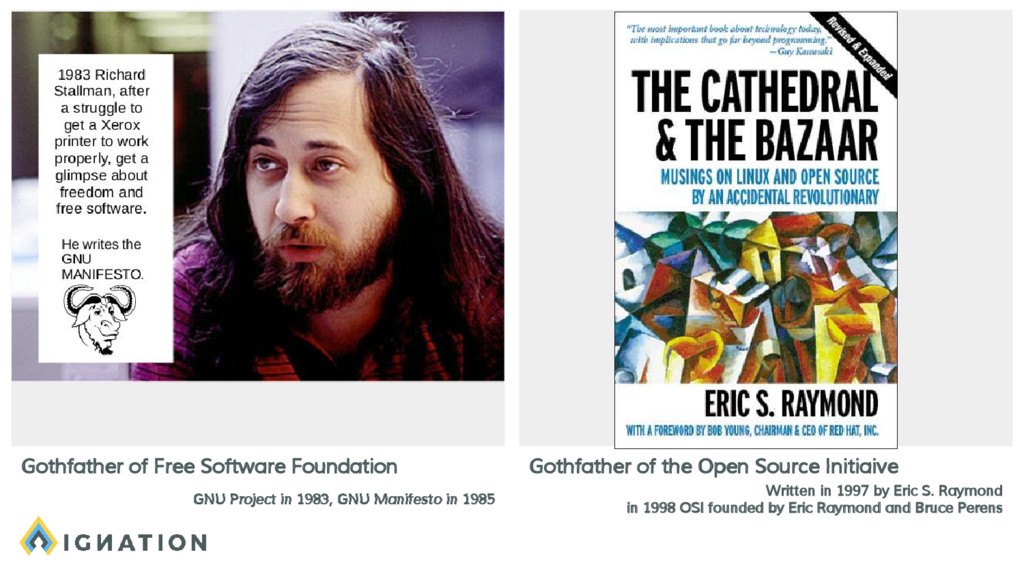
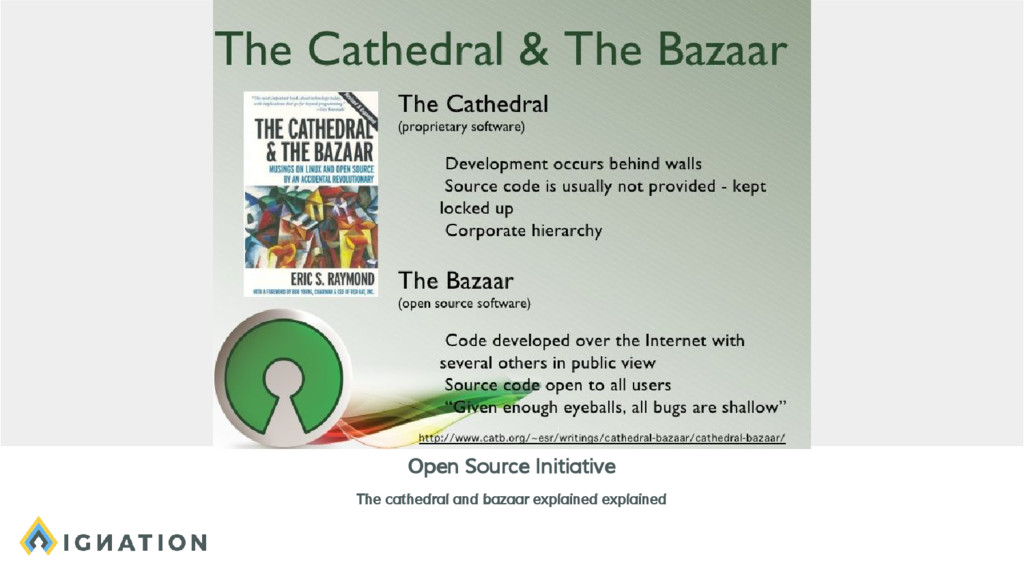
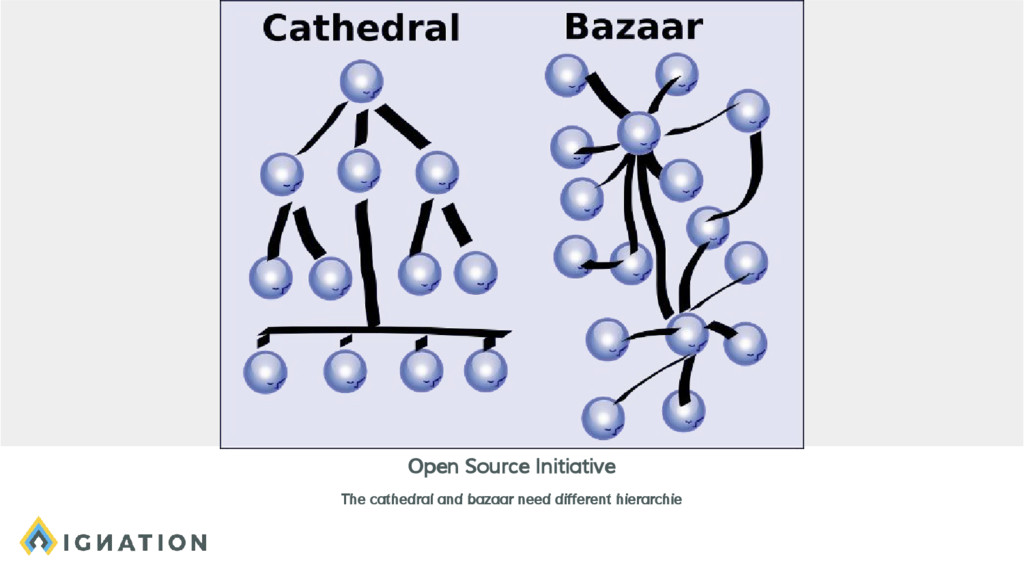
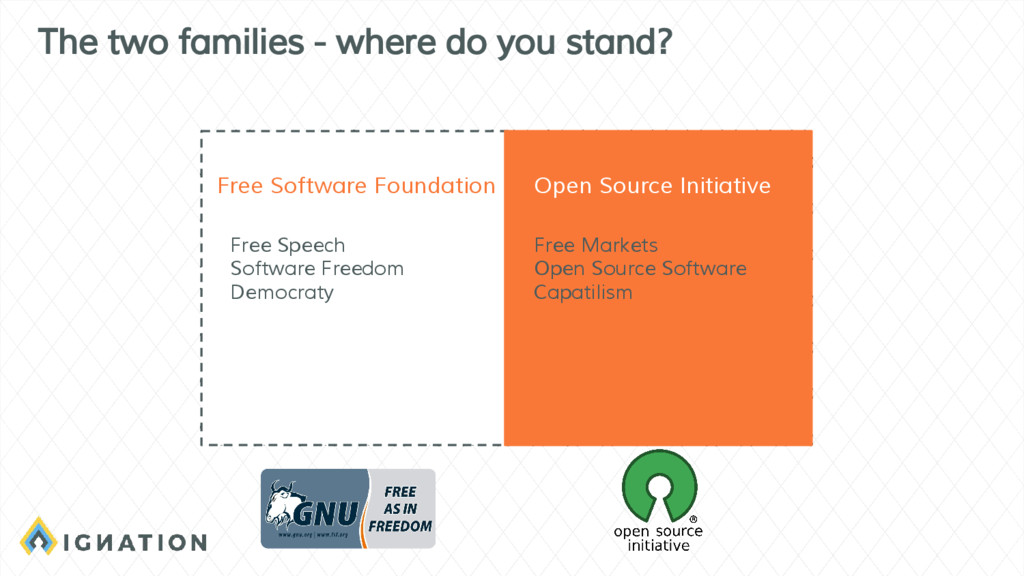
published the GNU Manifesto and launched the GNU Project to write a complete operating system free from constraints on use of its source code. ” “The organization was founded in February 1998 by Bruce Perens and Eric S. Raymond, part of a group inspired by the Netscape Communications Corporation...” The two families
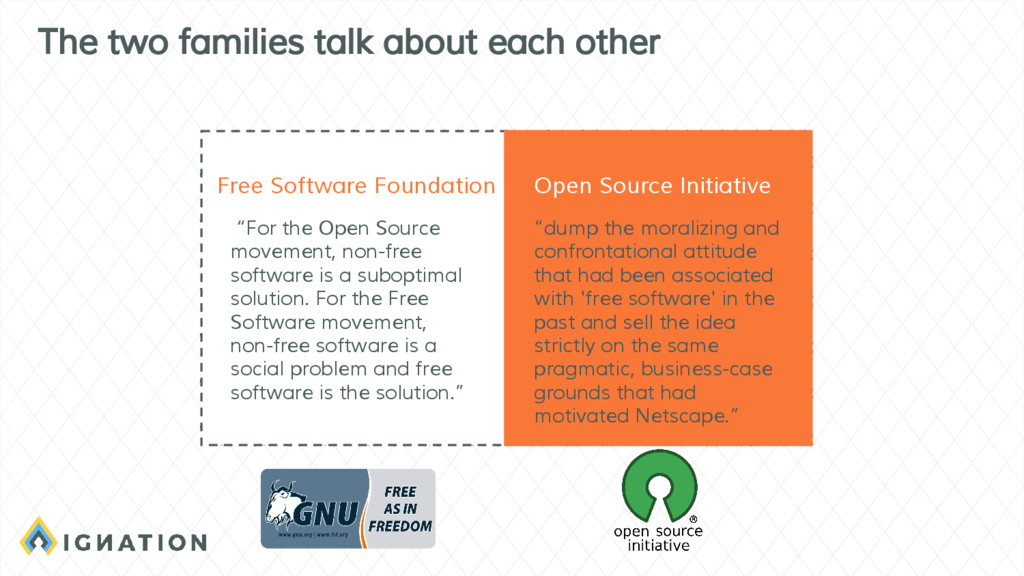
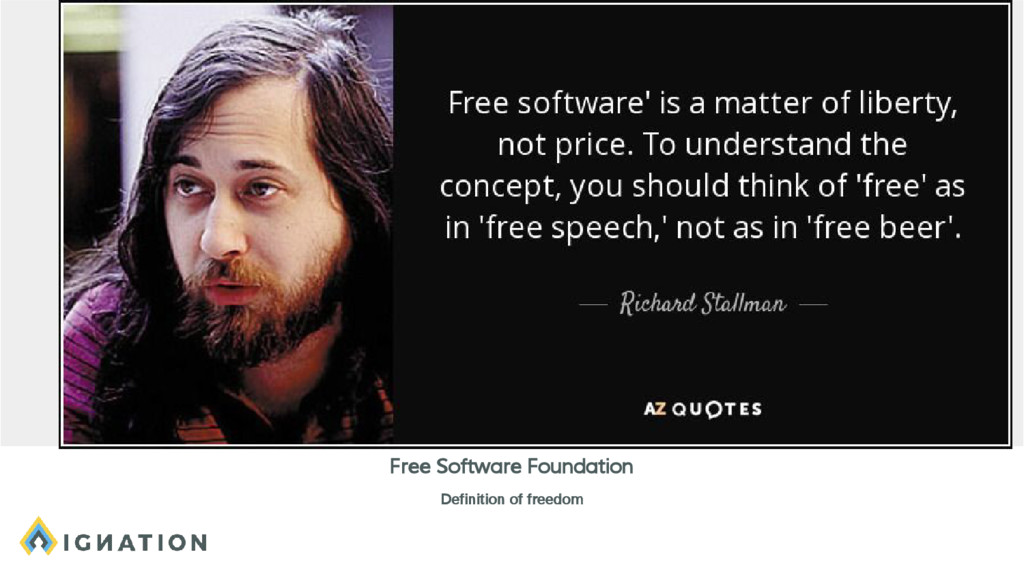
movement, non-free software is a suboptimal solution. For the Free Software movement, non-free software is a social problem and free software is the solution.” “dump the moralizing and confrontational attitude that had been associated with 'free software' in the past and sell the idea strictly on the same pragmatic, business-case grounds that had motivated Netscape.” The two families talk about each other
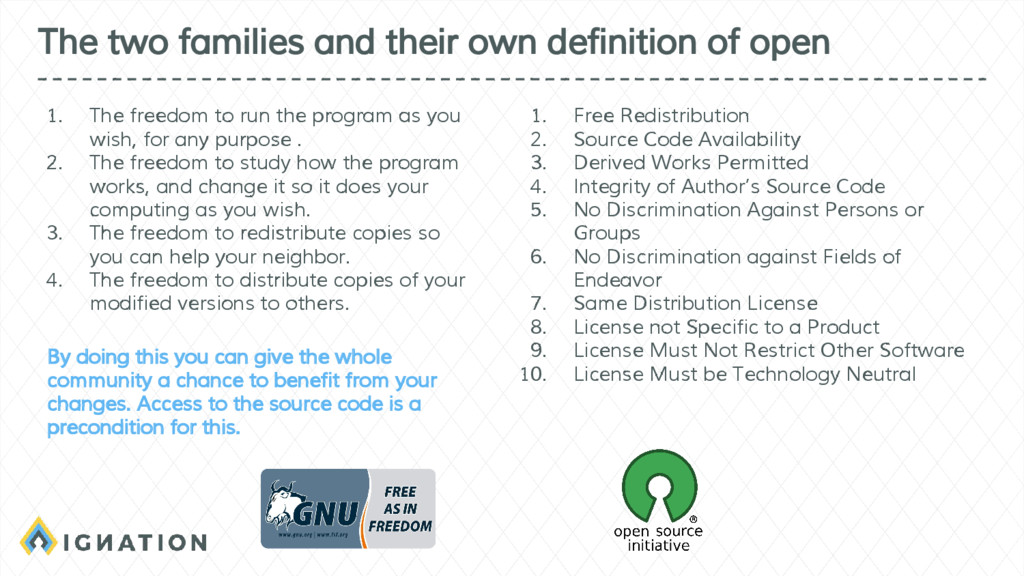
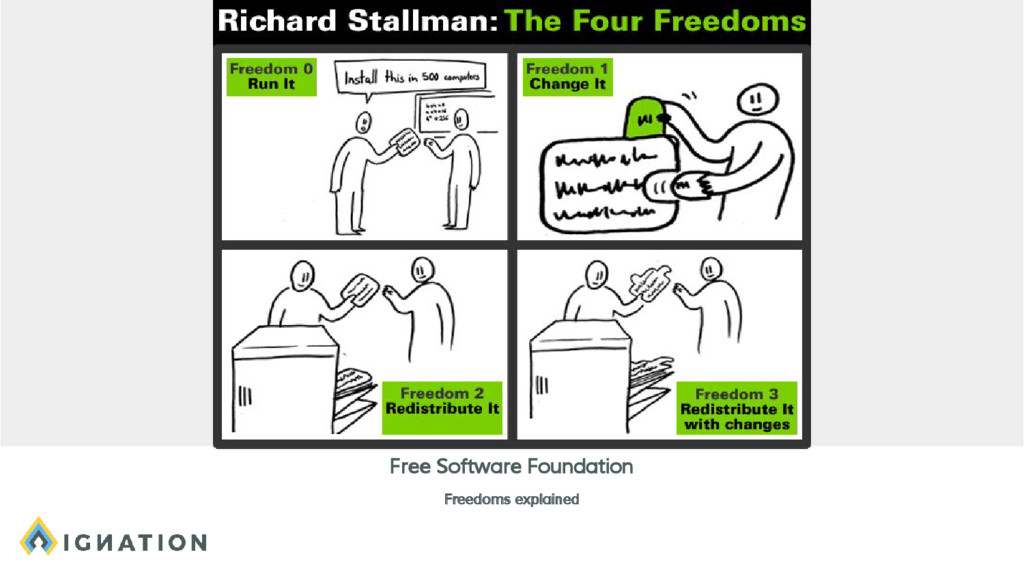
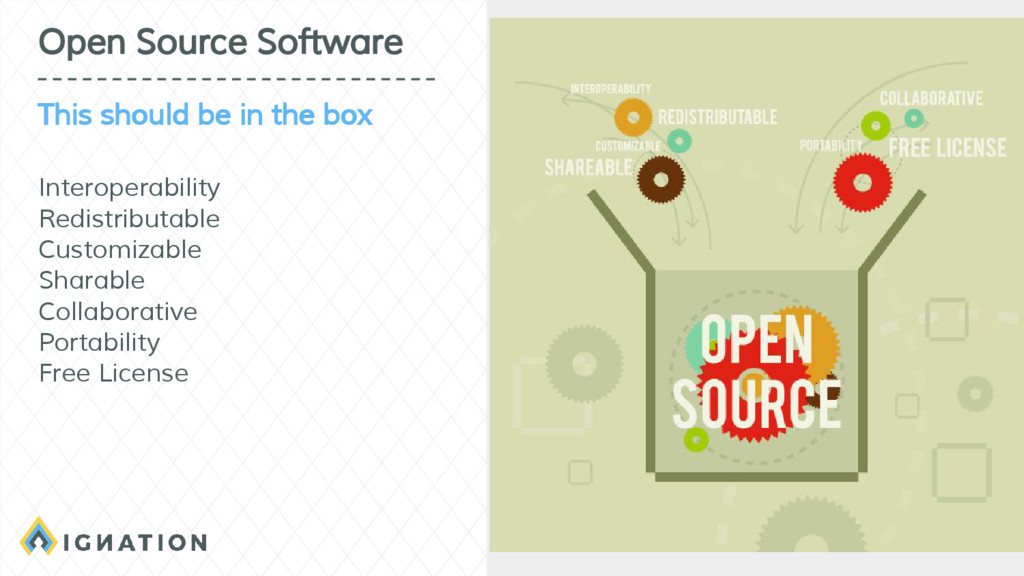
for any purpose . 2. The freedom to study how the program works, and change it so it does your computing as you wish. 3. The freedom to redistribute copies so you can help your neighbor. 4. The freedom to distribute copies of your modified versions to others. 1. Free Redistribution 2. Source Code Availability 3. Derived Works Permitted 4. Integrity of Author’s Source Code 5. No Discrimination Against Persons or Groups 6. No Discrimination against Fields of Endeavor 7. Same Distribution License 8. License not Specific to a Product 9. License Must Not Restrict Other Software 10. License Must be Technology Neutral The two families and their own definition of open By doing this you can give the whole community a chance to benefit from your changes. Access to the source code is a precondition for this.
founded by Eric Raymond and Bruce Perens Gothfather of Free Software Foundation GNU Project in 1983, GNU Manifesto in 1985 Gothfather of the Open Source Initiaive
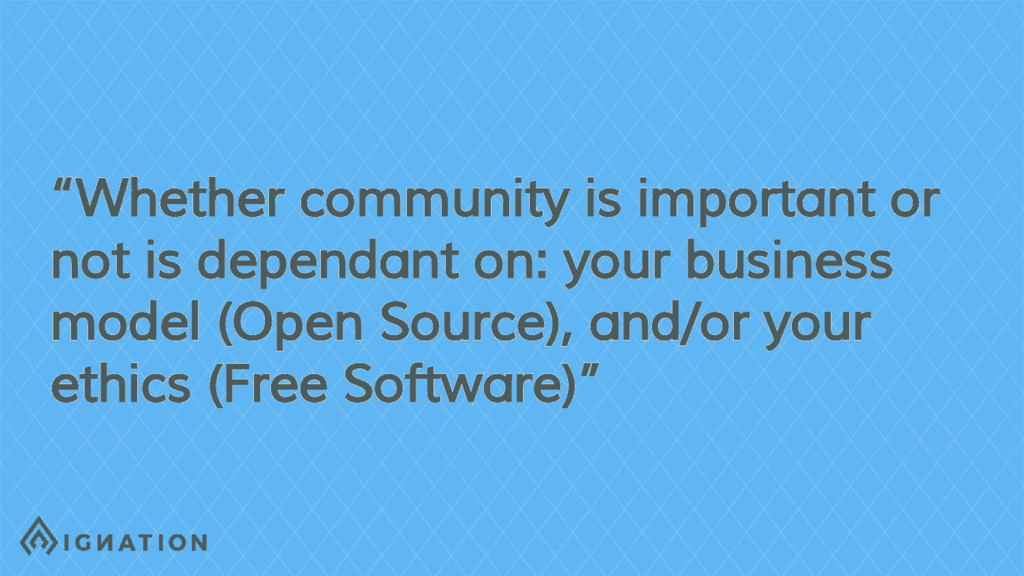
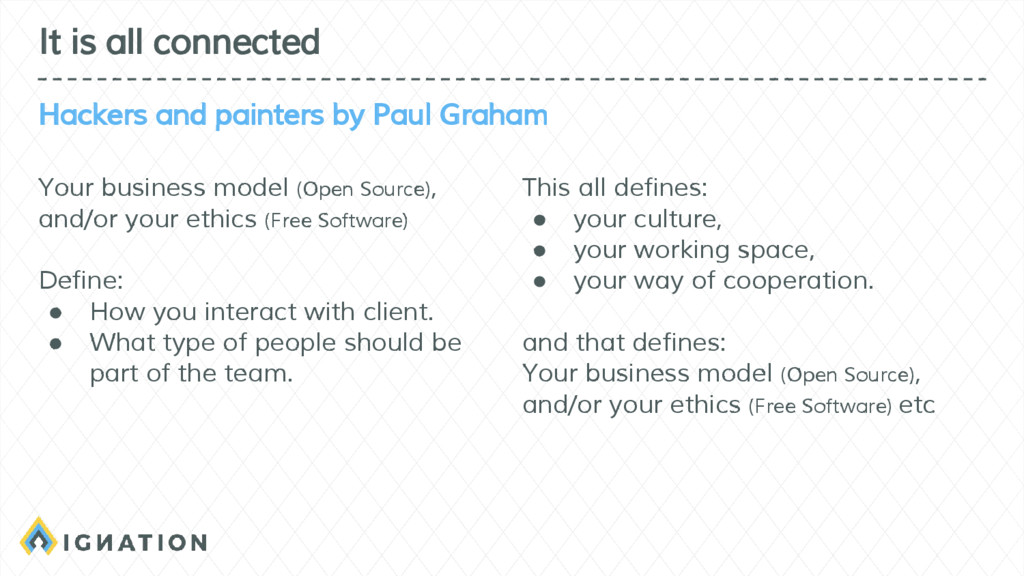
Define: • How you interact with client. • What type of people should be part of the team. This all defines: • your culture, • your working space, • your way of cooperation. and that defines: Your business model (Open Source), and/or your ethics (Free Software) etc It is all connected Hackers and painters by Paul Graham
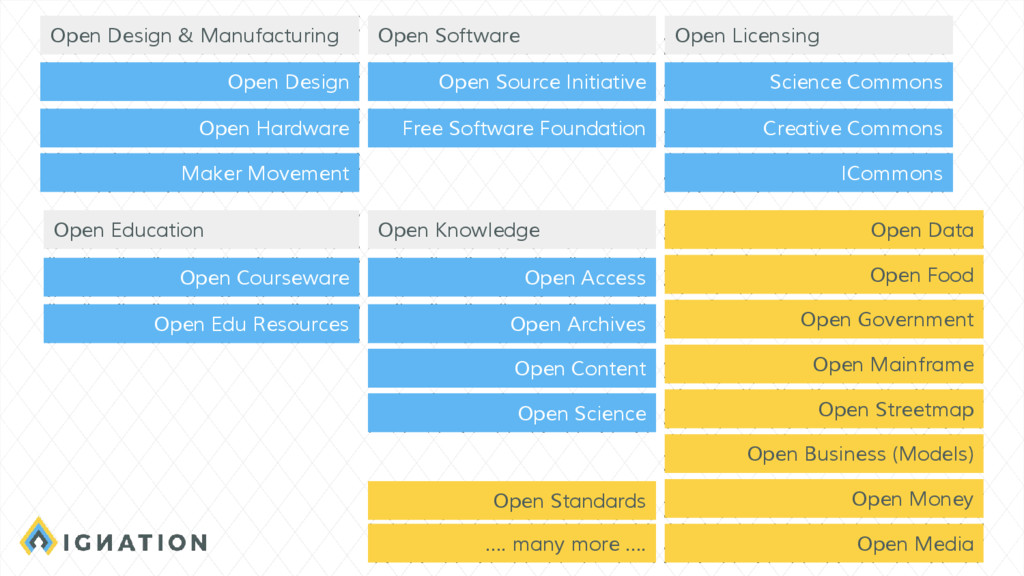
Open Education Open Knowledge Open Hardware Maker Movement Open Source Initiative Free Software Foundation Science Commons Creative Commons ICommons Open Courseware Open Edu Resources Open Science Open Access Open Archives Open Content Open Data Open Food Open Government Open Mainframe Open Streetmap Open Business (Models) Open Money Open Media Open Standards …. many more ….


 shumei_ito
 shugo
 codmoninc
 takahashim
 sansantech
 pfn
 grimoh
 bgpat
 yu23ki14
 oikon48
 ivry_presentationmaterials
 mhrtech
 ipullrank
 charlesmeaden
 nikkihalliwell
 kevinliebholz
 jnunemaker
 lcolladotor
 lynnandtonic
 addyosmani
 tomoyanonymous
 rkendrick25
 akademiya2063
 bethany