Share
Embed
[PyconUS 2024] Having fun with Pydantic and pattern matching
Pattern matching has been with us since Python3.10. Since the introduction of the match-case statement, we've got a powerful and elegant tool to control the flow of the program.
This talk is to showcase a real-world scenario of handling different messages coming from a broker, using match-case and Pydantic.
Sebastian Buczyński
May 18, 2024
Transcript
60 slides
-
• Software Architect @ Sauce Labs • Trainer / Consultant
@ Bottega IT Minds • I like memes • Blogger @ breadcrumbscollector.tech • Educate Pythonistas about software engineering whoami -
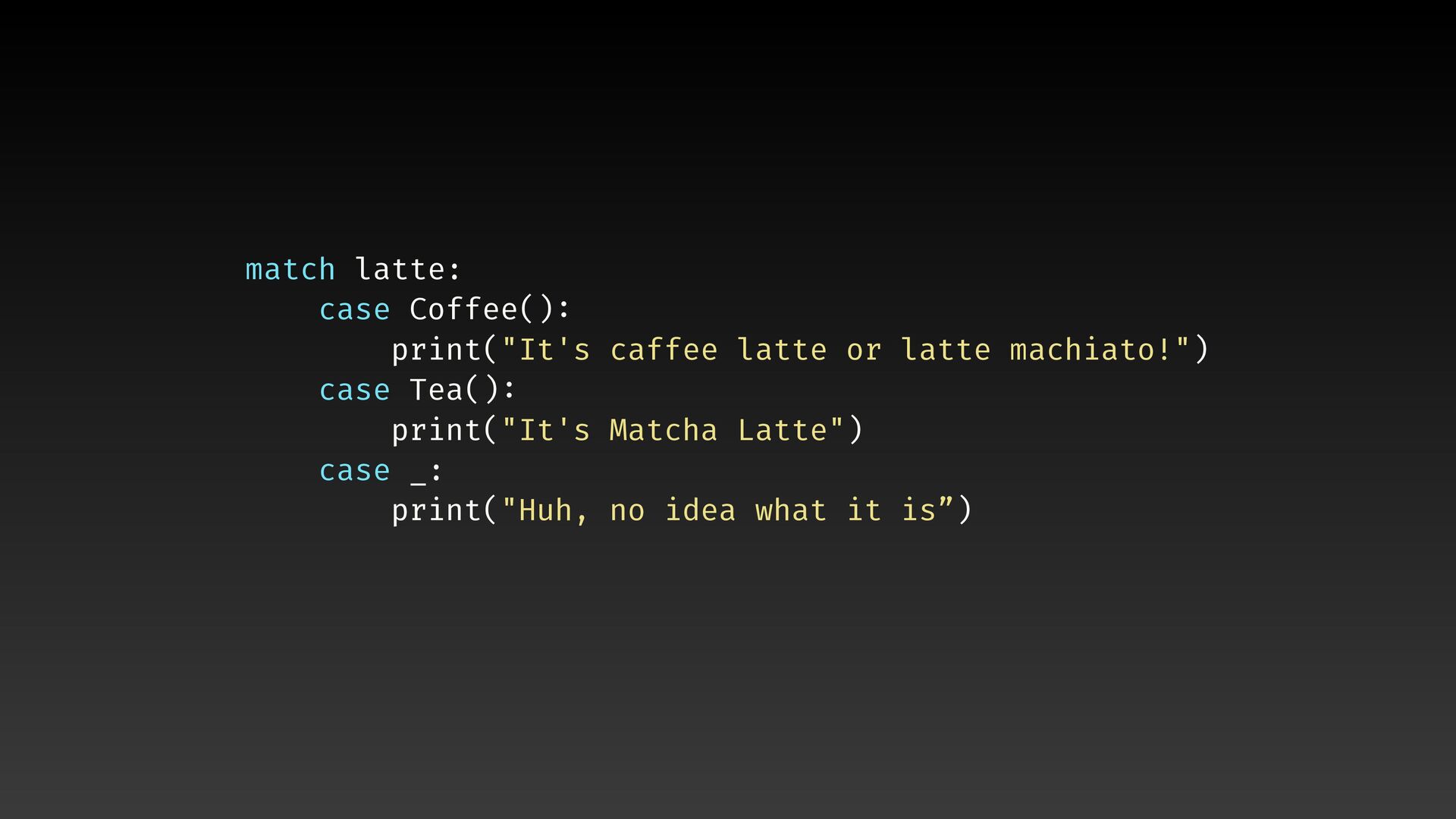
match latte: case Coffee() : print("It's caffee latte or latte
machiato!") case Tea() : print("It's Matcha Latte") case _: print("Huh, no idea what it is”) -
match latte: case Coffee() : print("It's caffee latte or latte
machiato!") case Tea() : print("It's Matcha Latte") case _: print("Huh, no idea what is it") -
match latte: case Coffee() : print("It's caffee latte or latte
machiato!") case Tea() : print("It's Matcha Latte") case _: print("Huh, no idea what is it") -
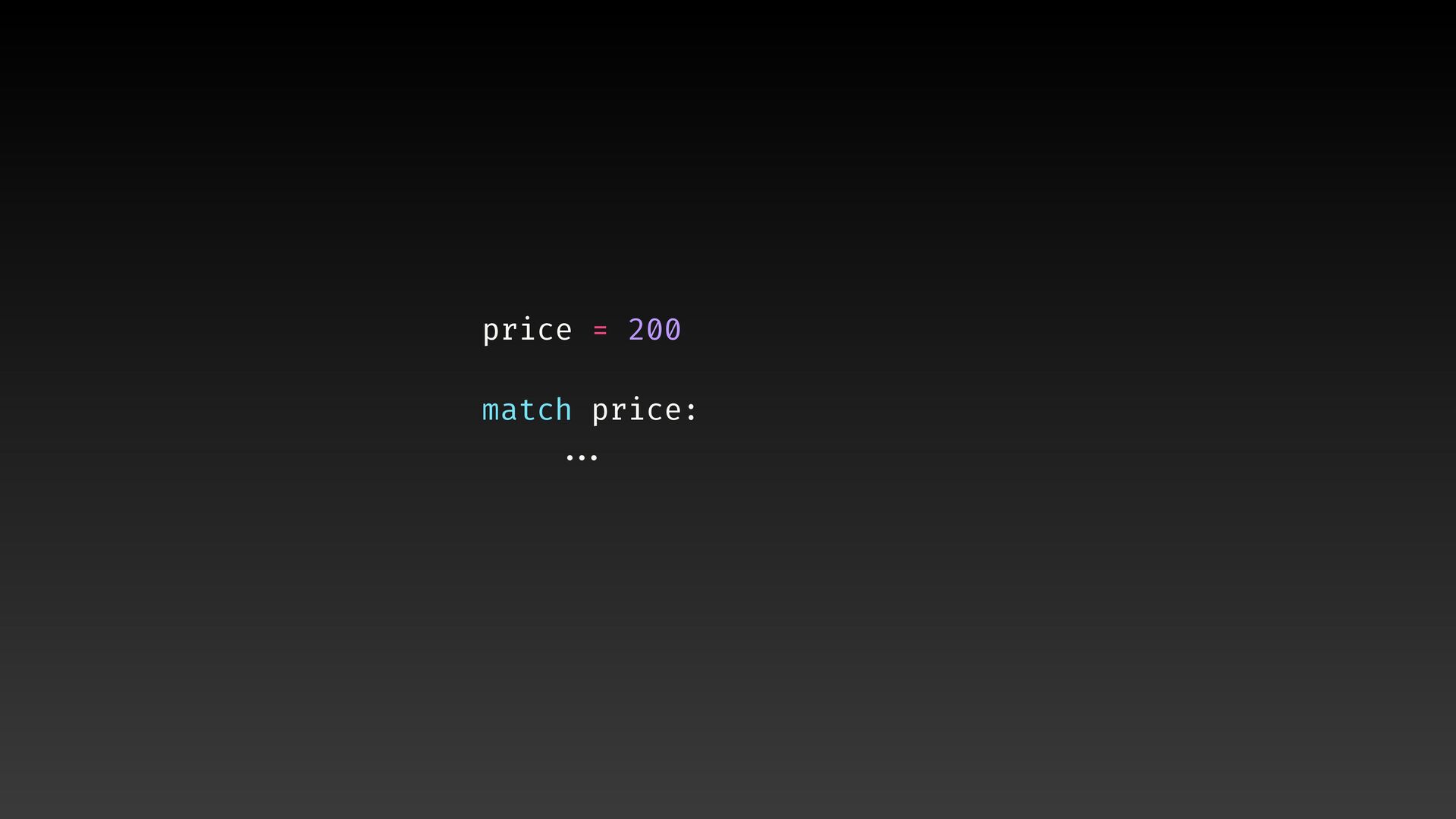
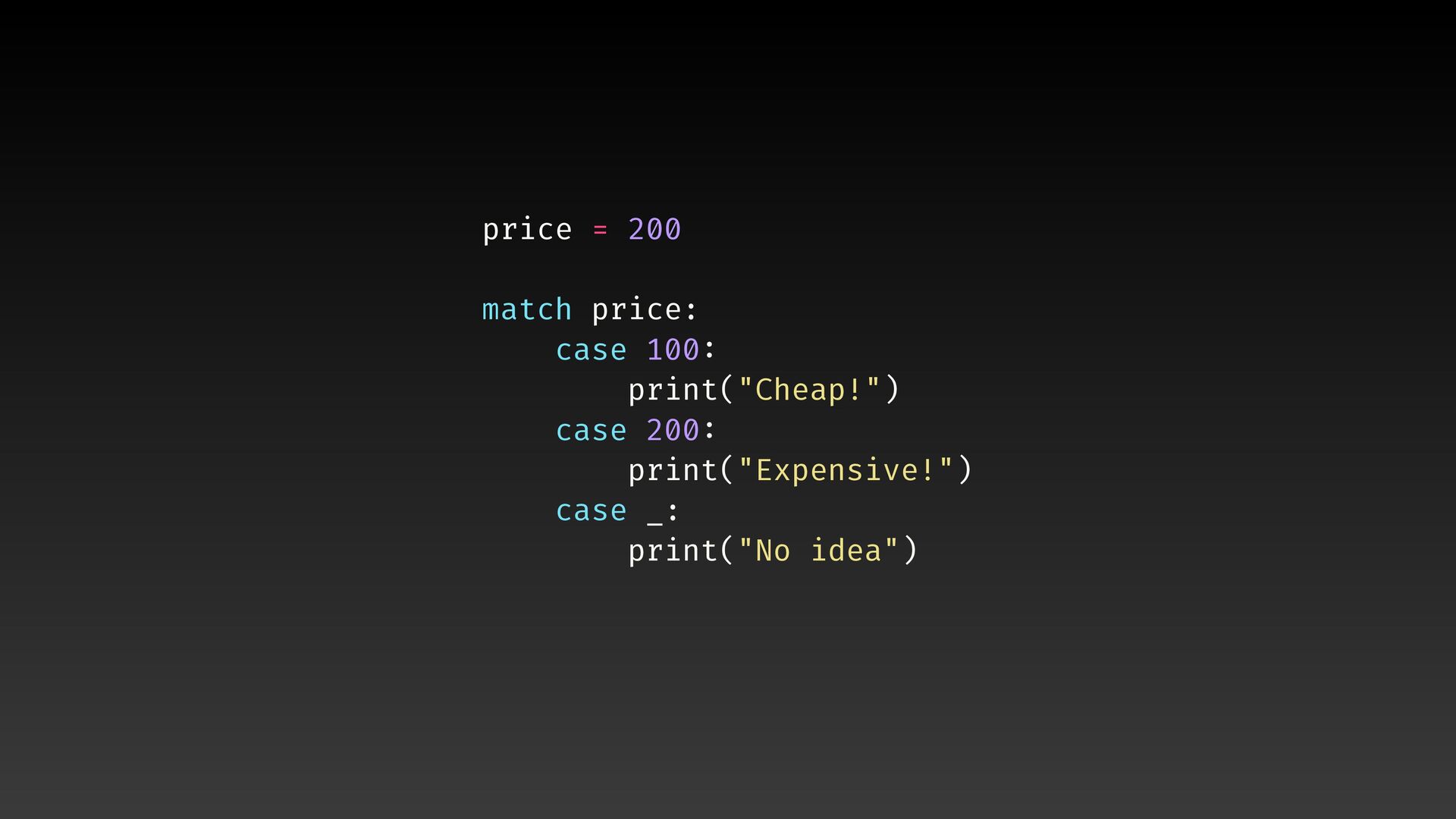
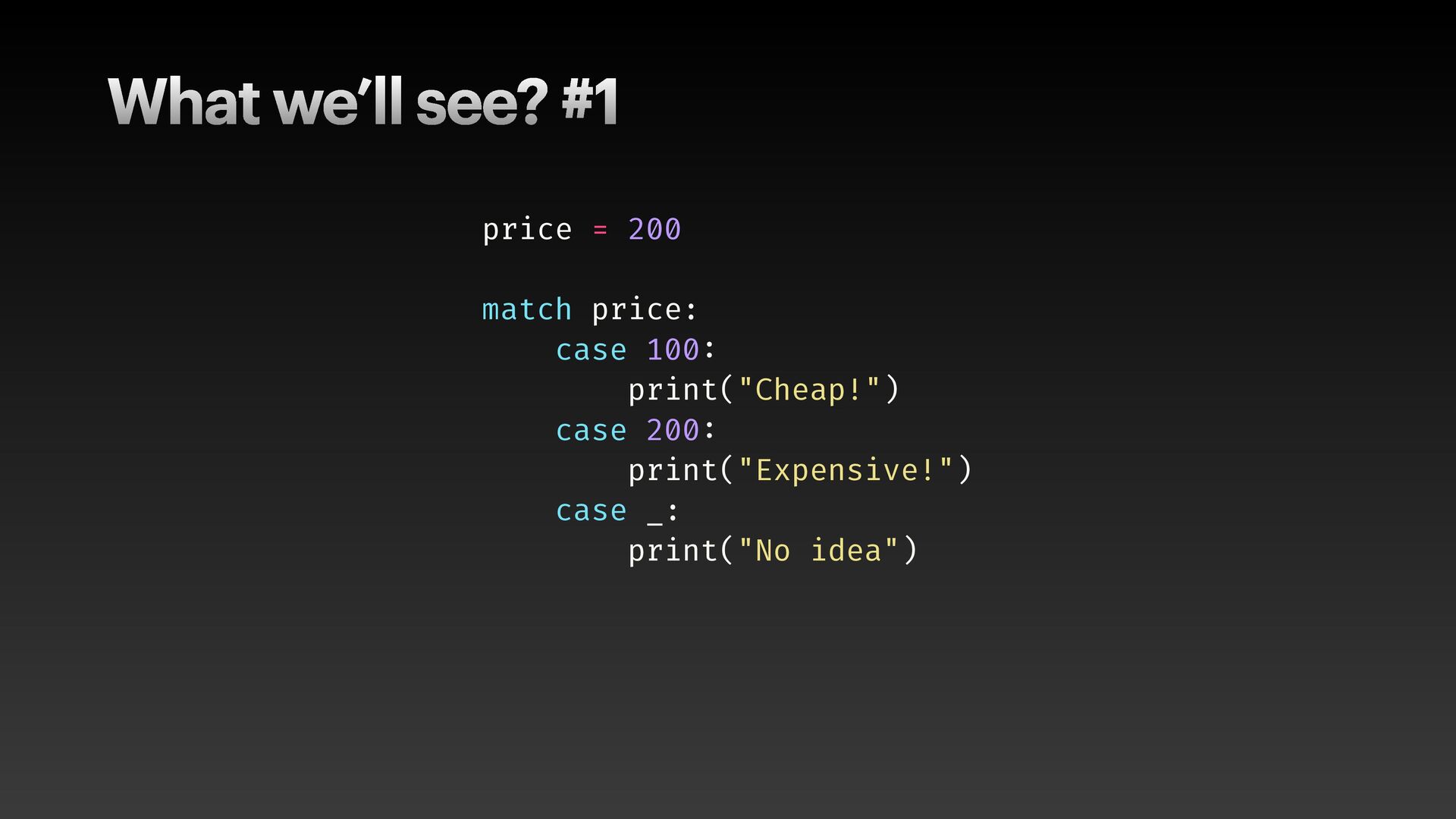
price = 200 match price: case 100 : print("Cheap!") case
200 : print("Expensive!") case _: print("No idea") -
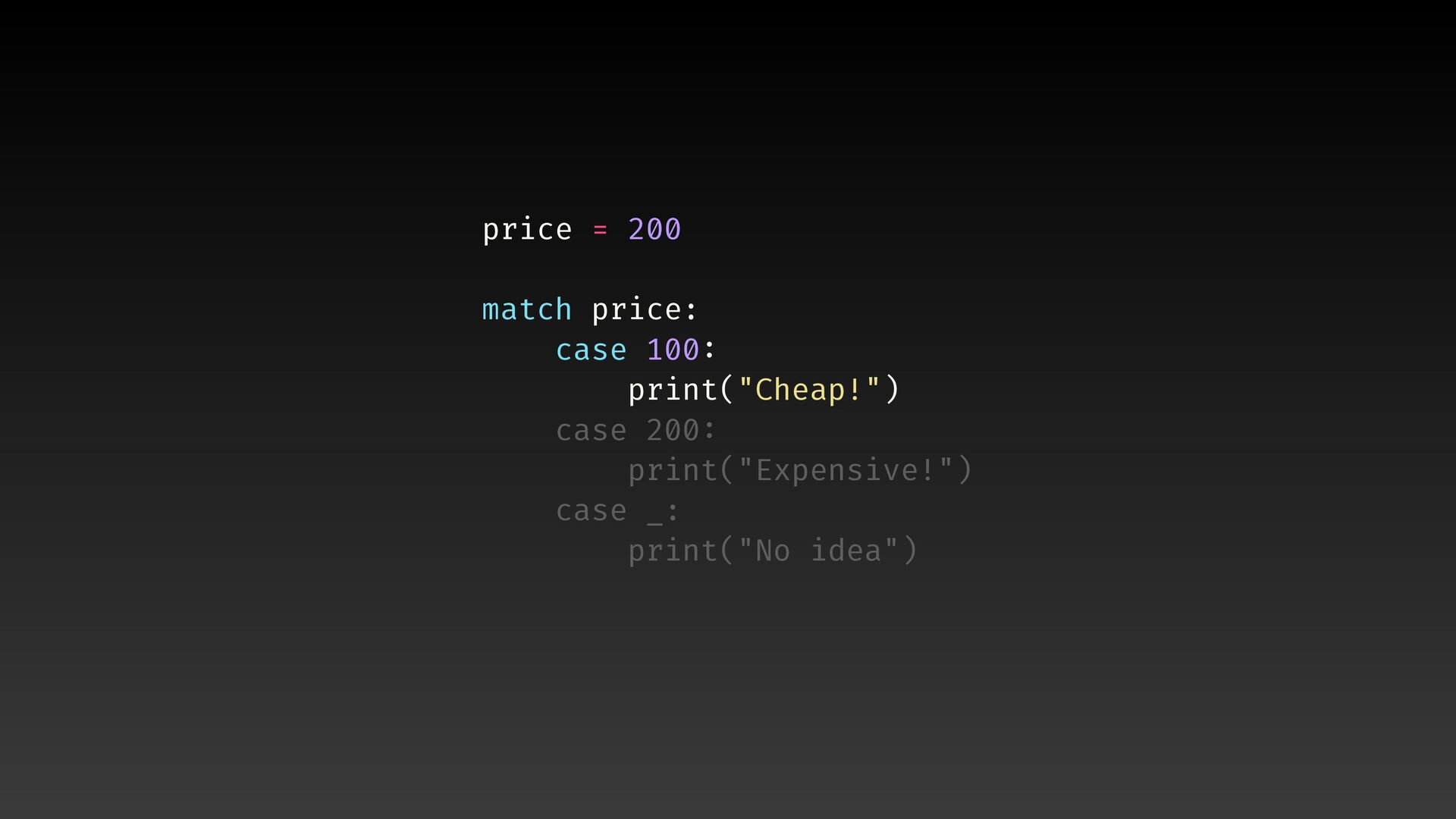
price = 200 match price: case 100 : print("Cheap!") case
200 : print("Expensive!") case _: print("No idea") -
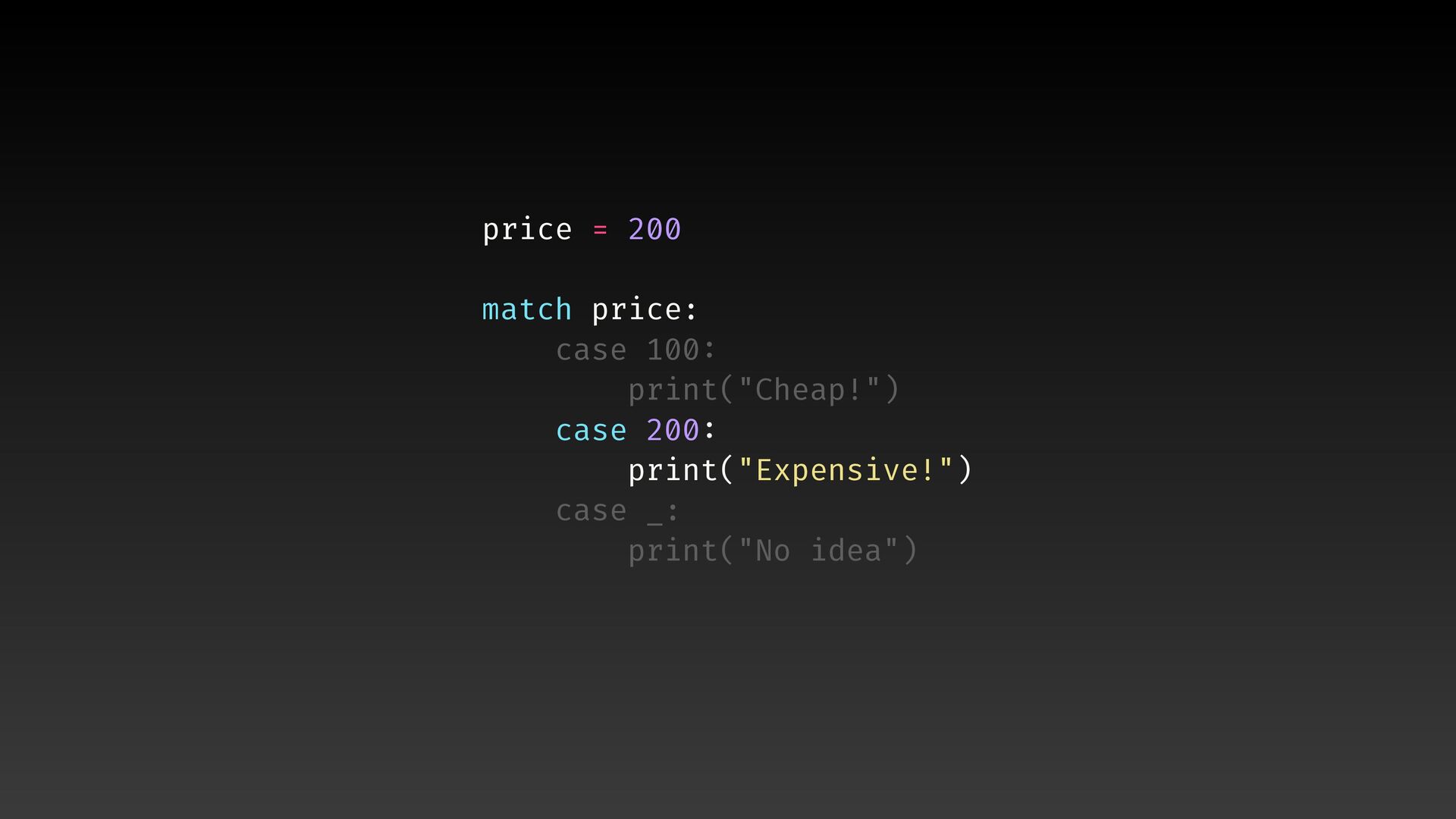
price = 200 match price: case 100 : print("Cheap!") case
200 : print("Expensive!") case _: print("No idea") -
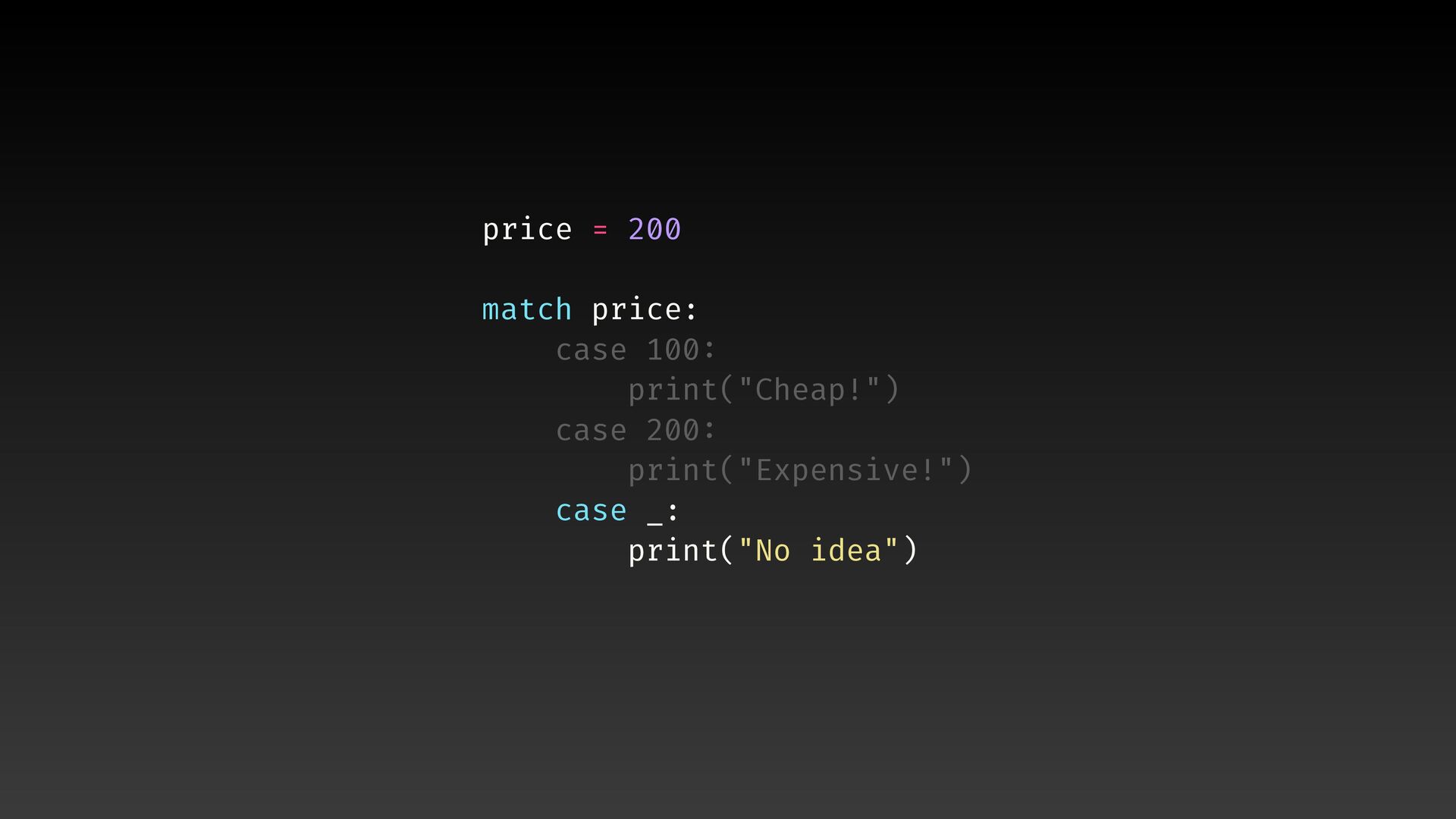
price = 200 match price: case 100 : print("Cheap!") case
200 : print("Expensive!") case _: print("No idea") -
price = 200 match price: case 100 : print("Cheap!") case
200 : print("Expensive!") case _: print("No idea") What we’ll see? #1 -
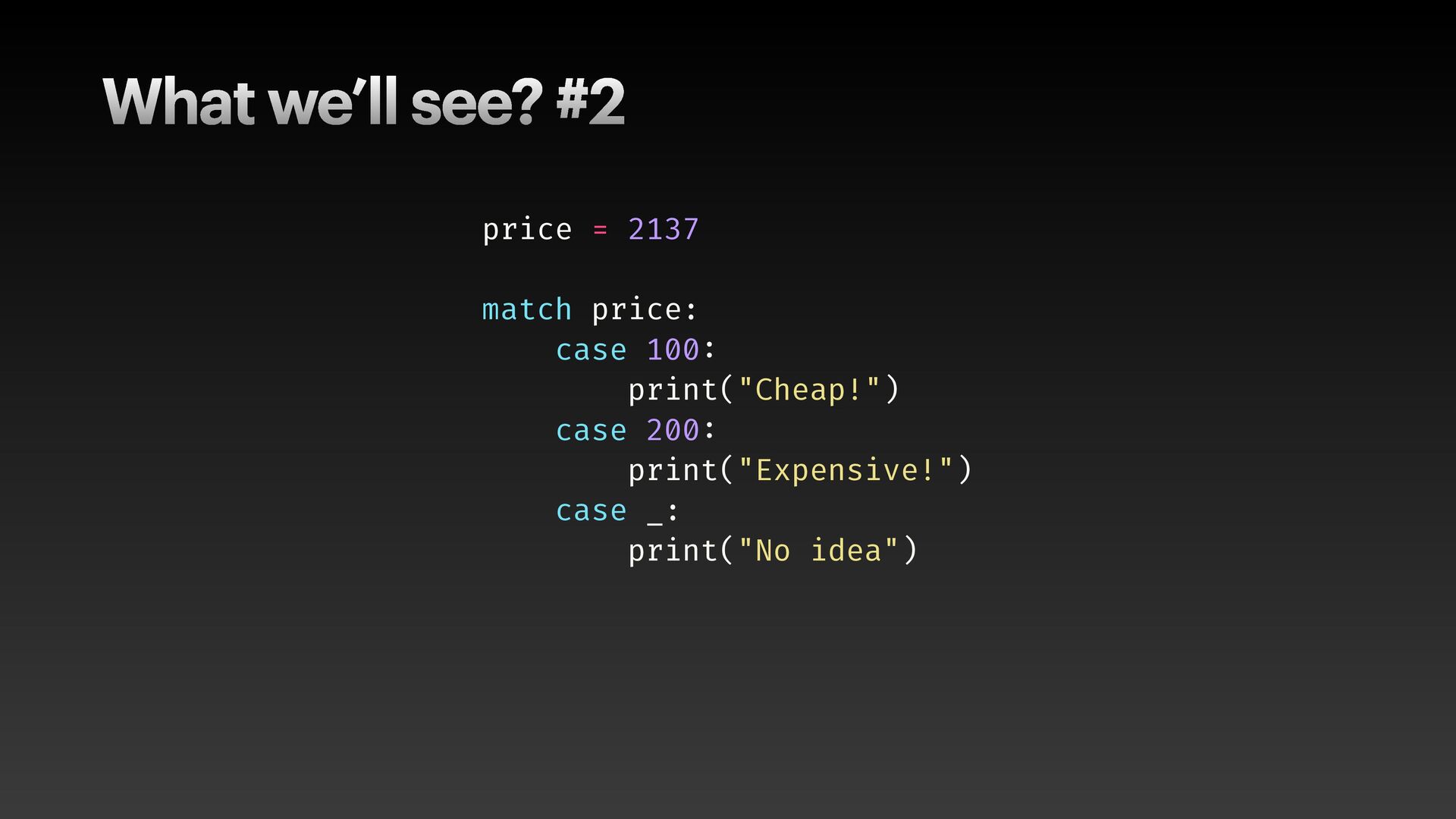
price = 2137 match price: case 100 : print("Cheap!") case
200 : print("Expensive!") case _: print("No idea") What we’ll see? #2 -
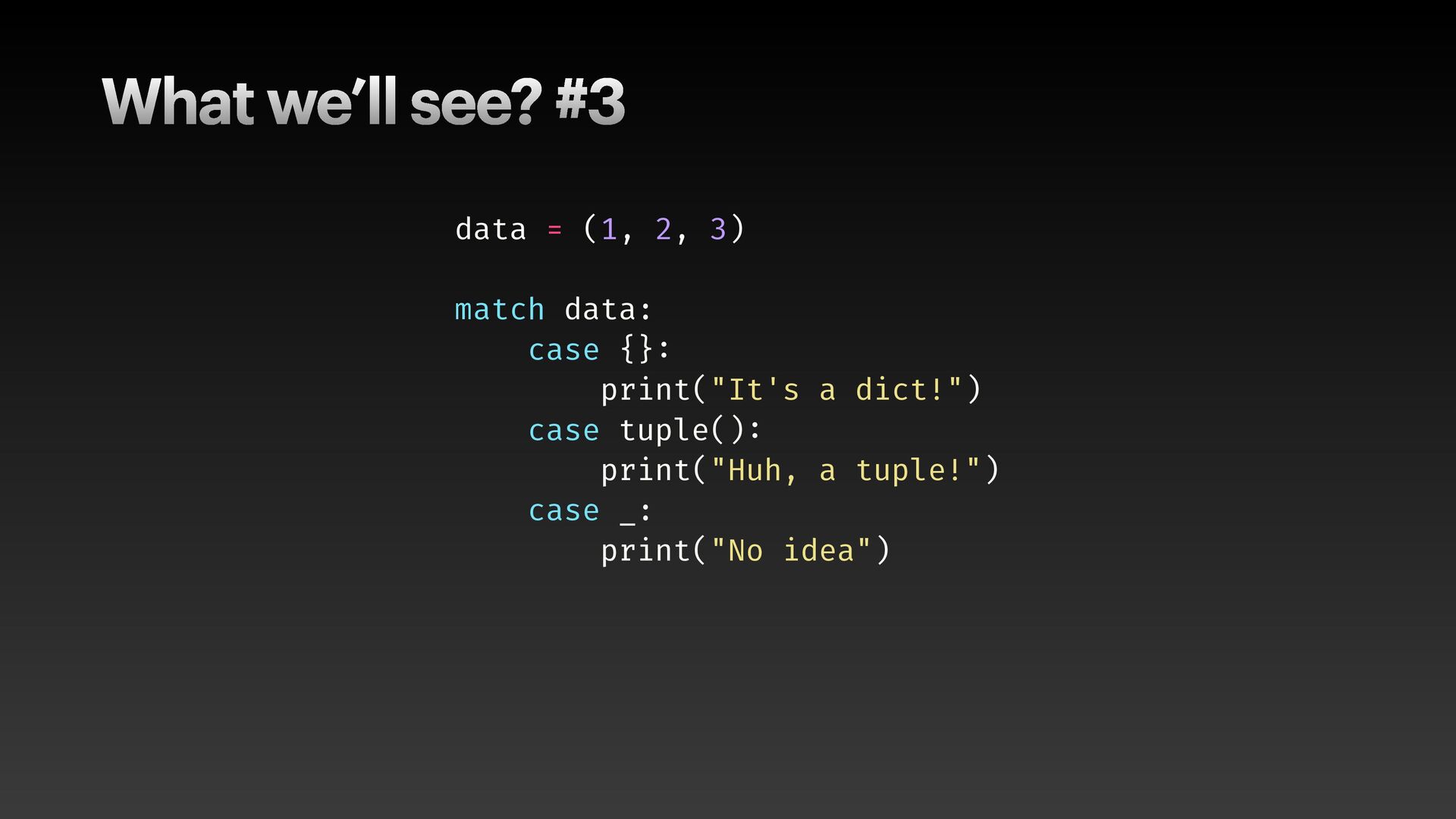
data = (1, 2, 3) match data: case {} :
print("It's a dict!") case tuple() : print("Huh, a tuple!") case _: print("No idea") What we’ll see? #3 -
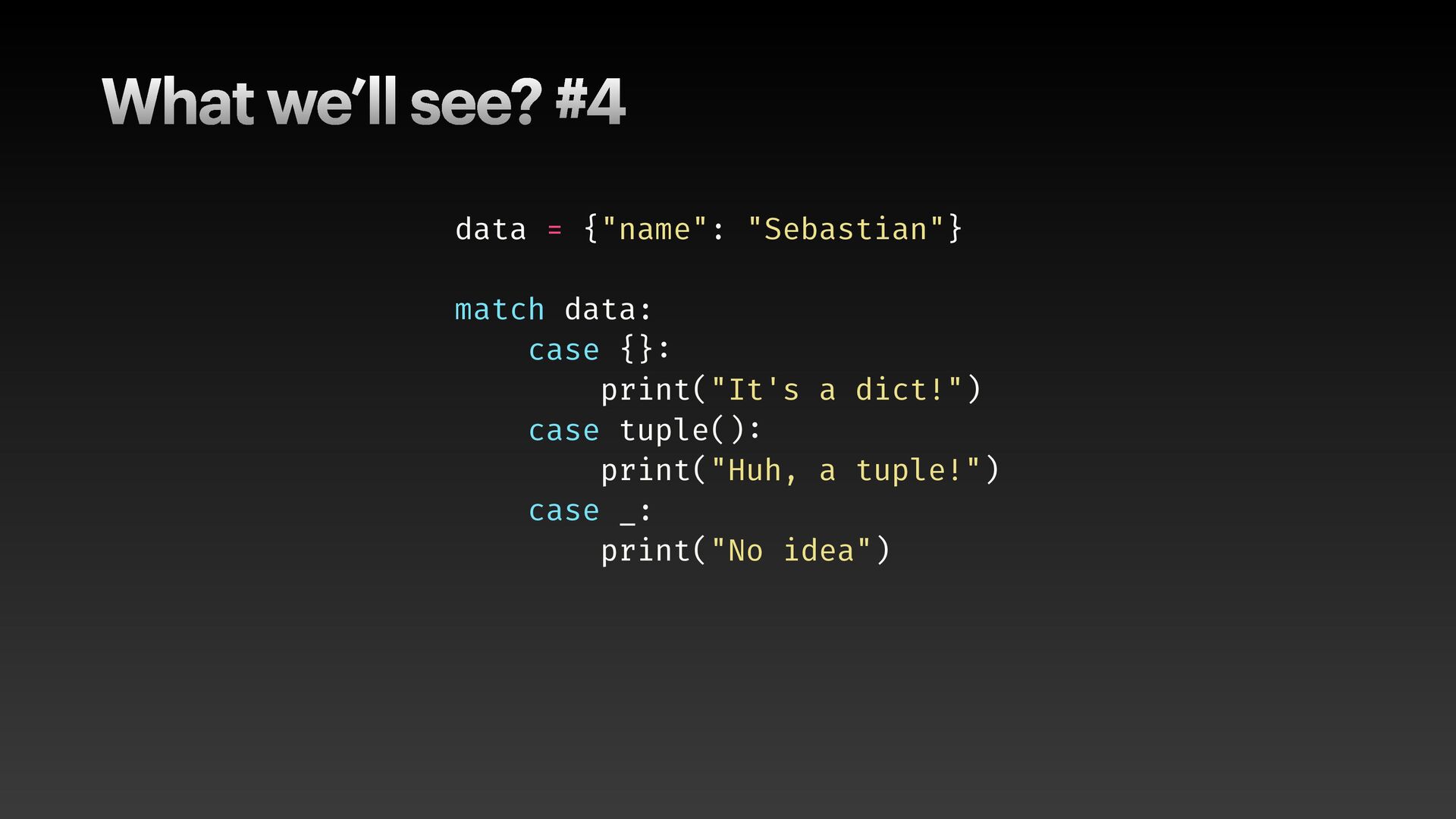
data = {"name": "Sebastian"} match data: case {} : print("It's
a dict!") case tuple() : print("Huh, a tuple!") case _: print("No idea") What we’ll see? #4 -
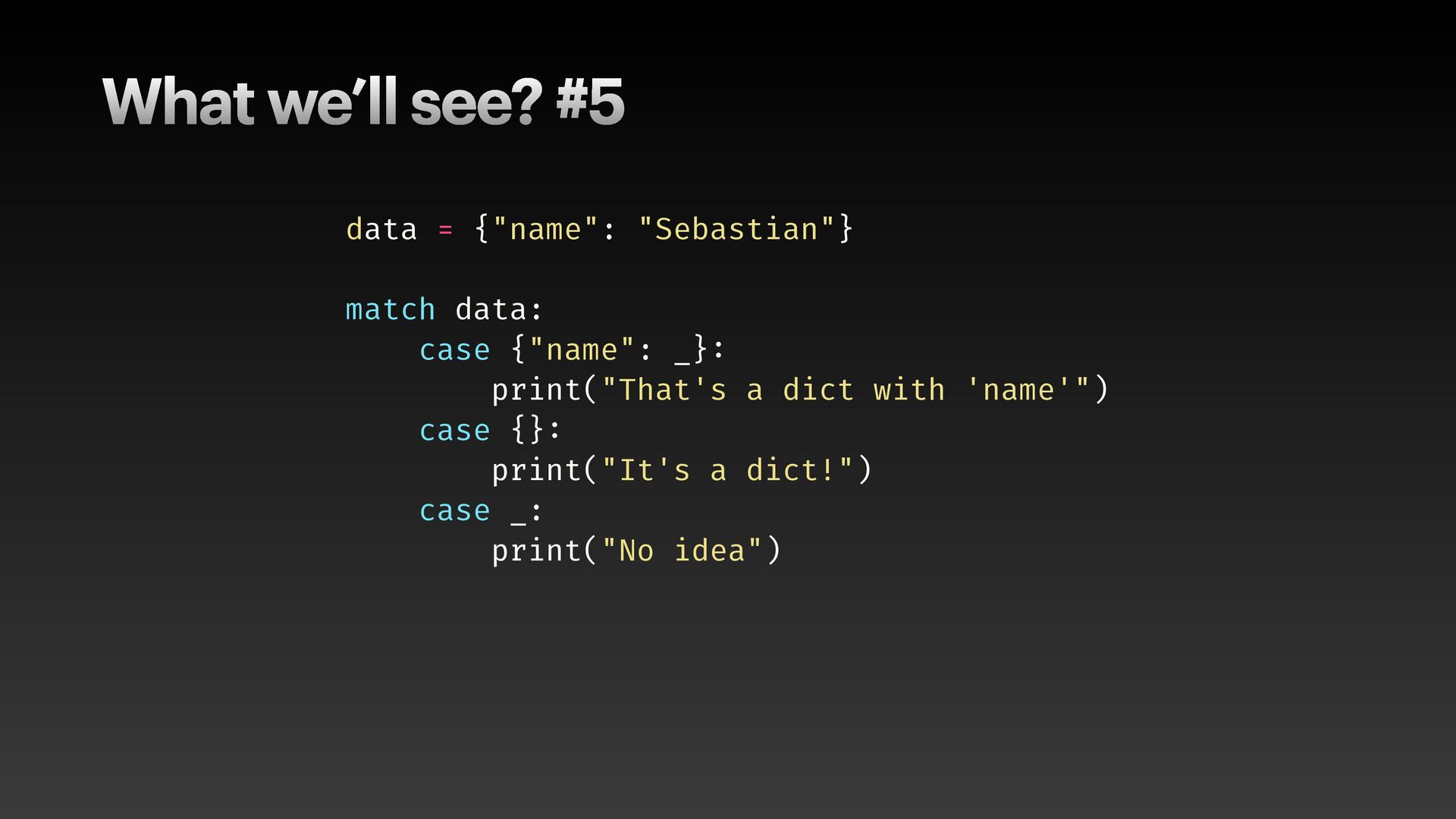
What we’ll see? #5 data = {"name": "Sebastian"} match data:
case {"name": _} : print("That's a dict with 'name'") case {} : print("It's a dict!") case _: print("No idea") -
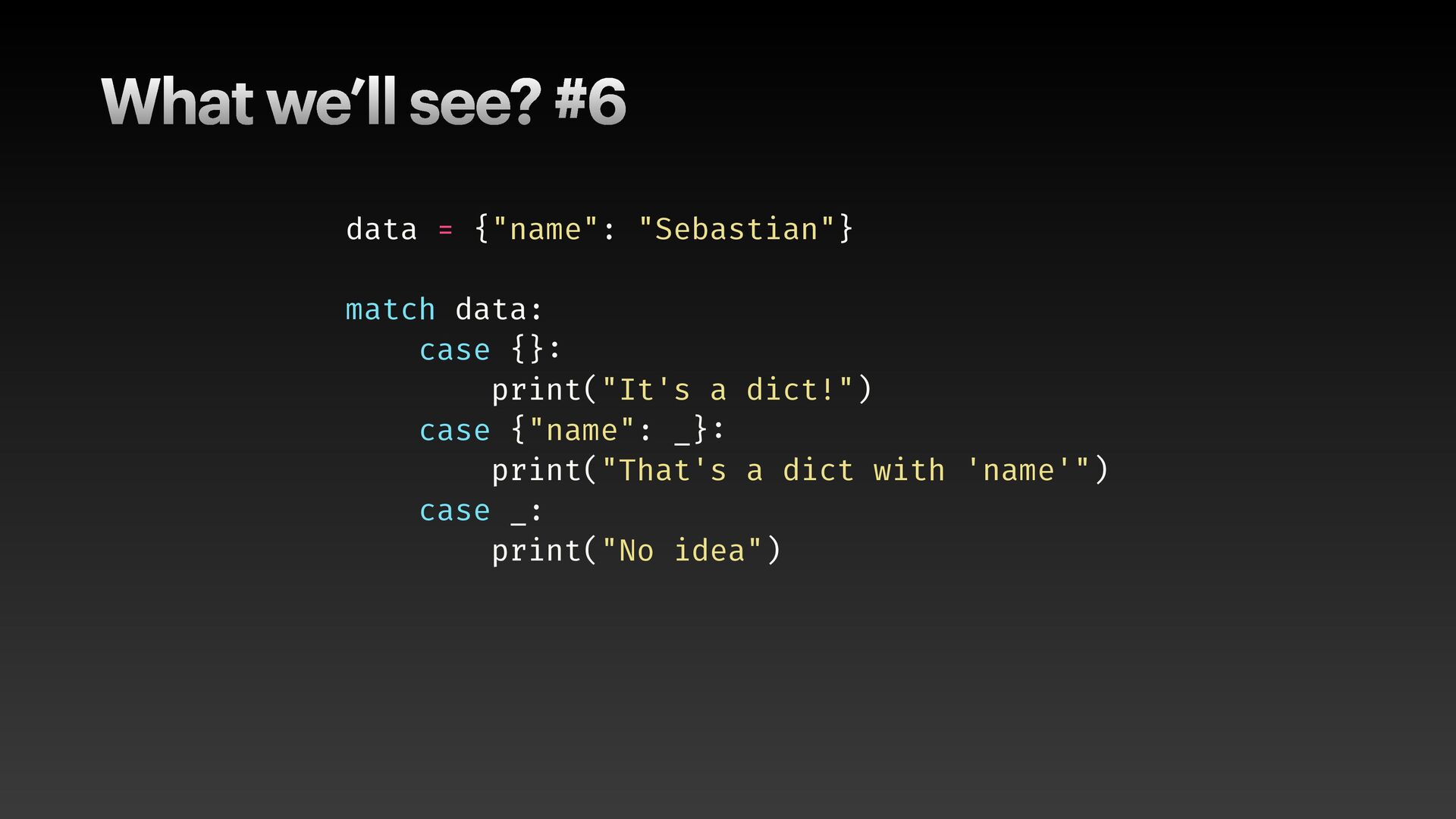
What we’ll see? #6 data = {"name": "Sebastian"} match data:
case {} : print("It's a dict!") case {"name": _} : print("That's a dict with 'name'") case _: print("No idea") -
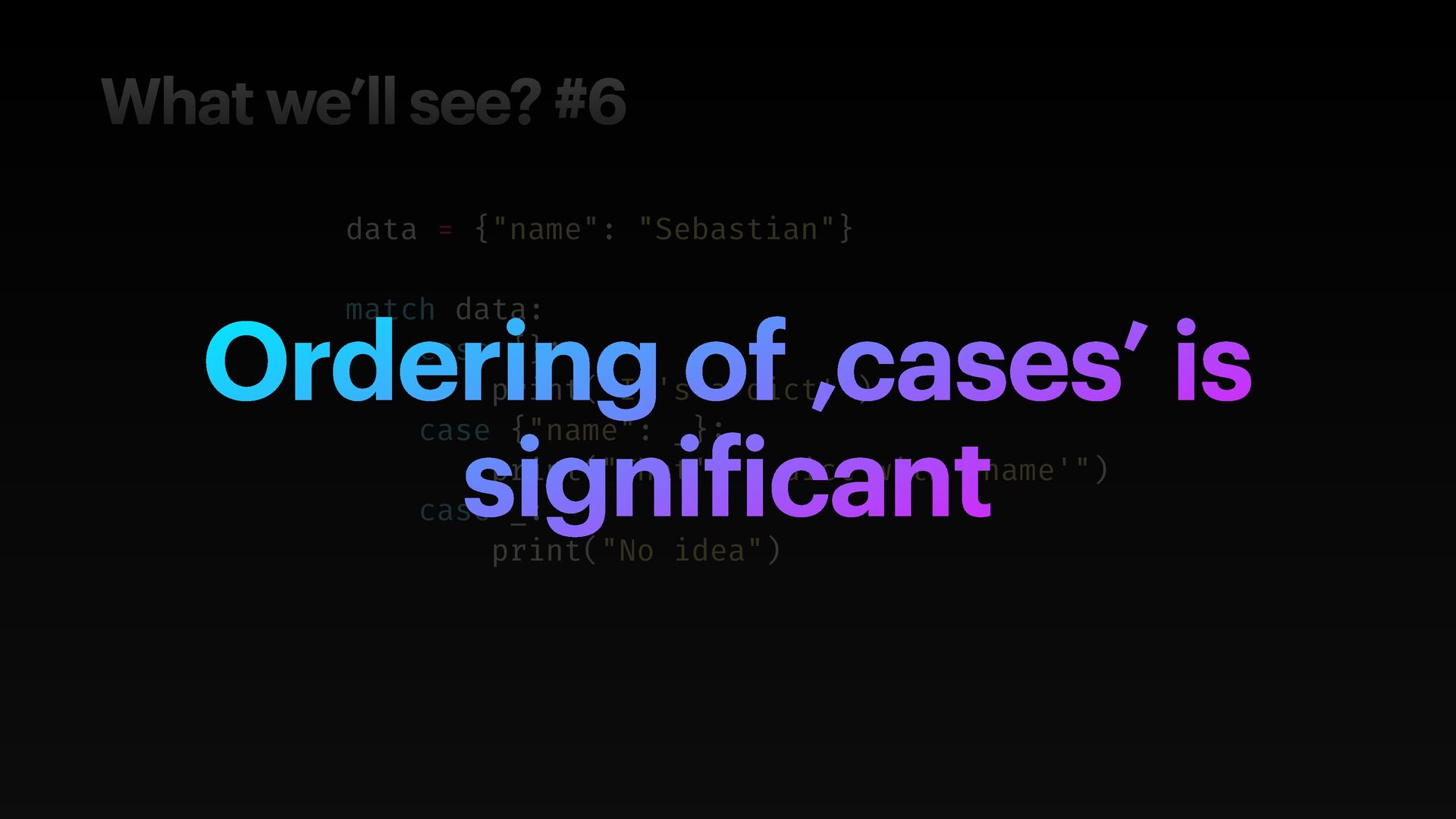
What we’ll see? #6 data = {"name": "Sebastian"} match data:
case {} : print("It's a dict!") case {"name": _} : print("That's a dict with 'name'") case _: print("No idea") Ordering of ‚cases’ is signi f icant -
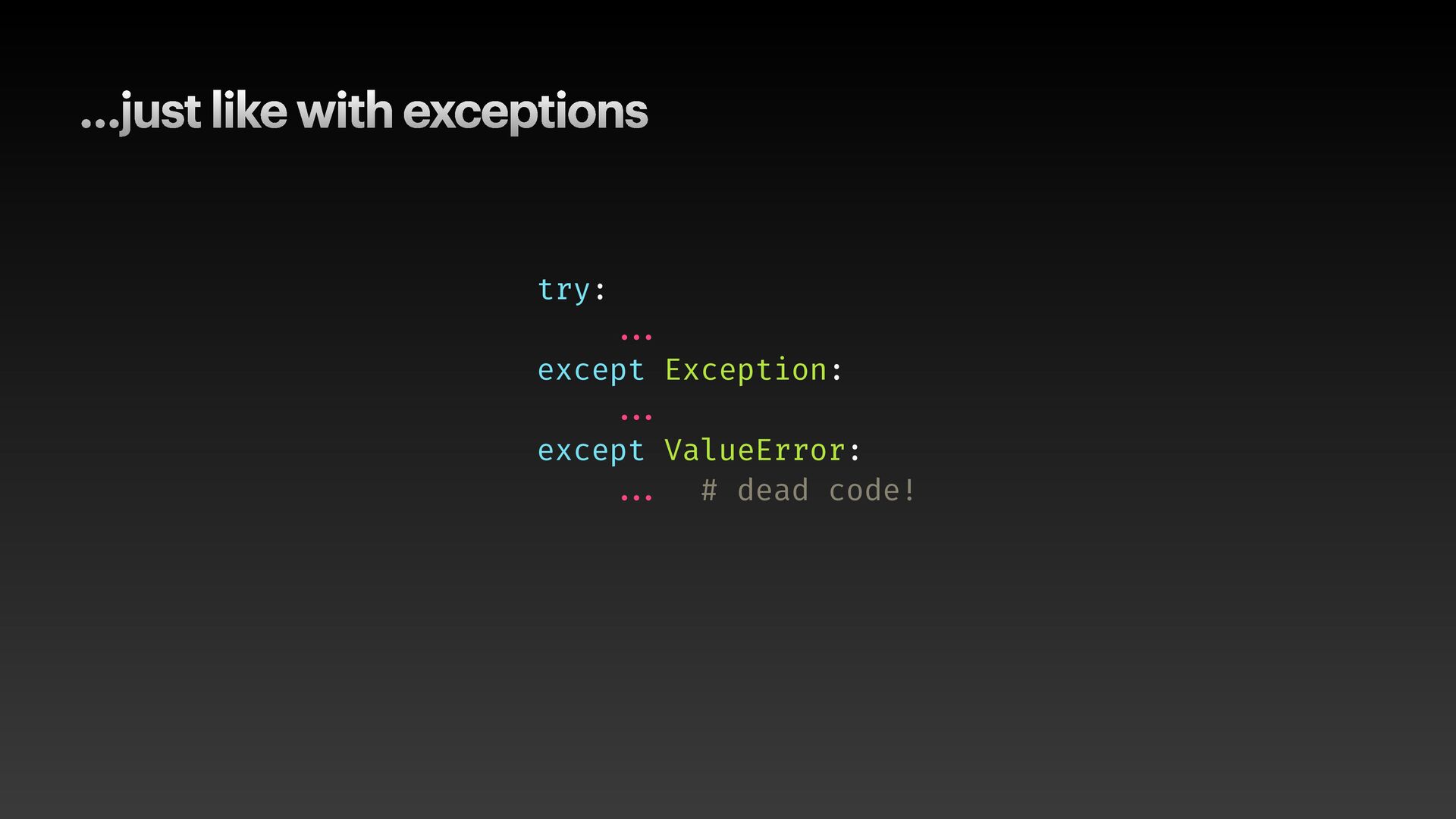
…just like with exceptions try: ... except Exception: ... except
ValueError: ... # dead code! -
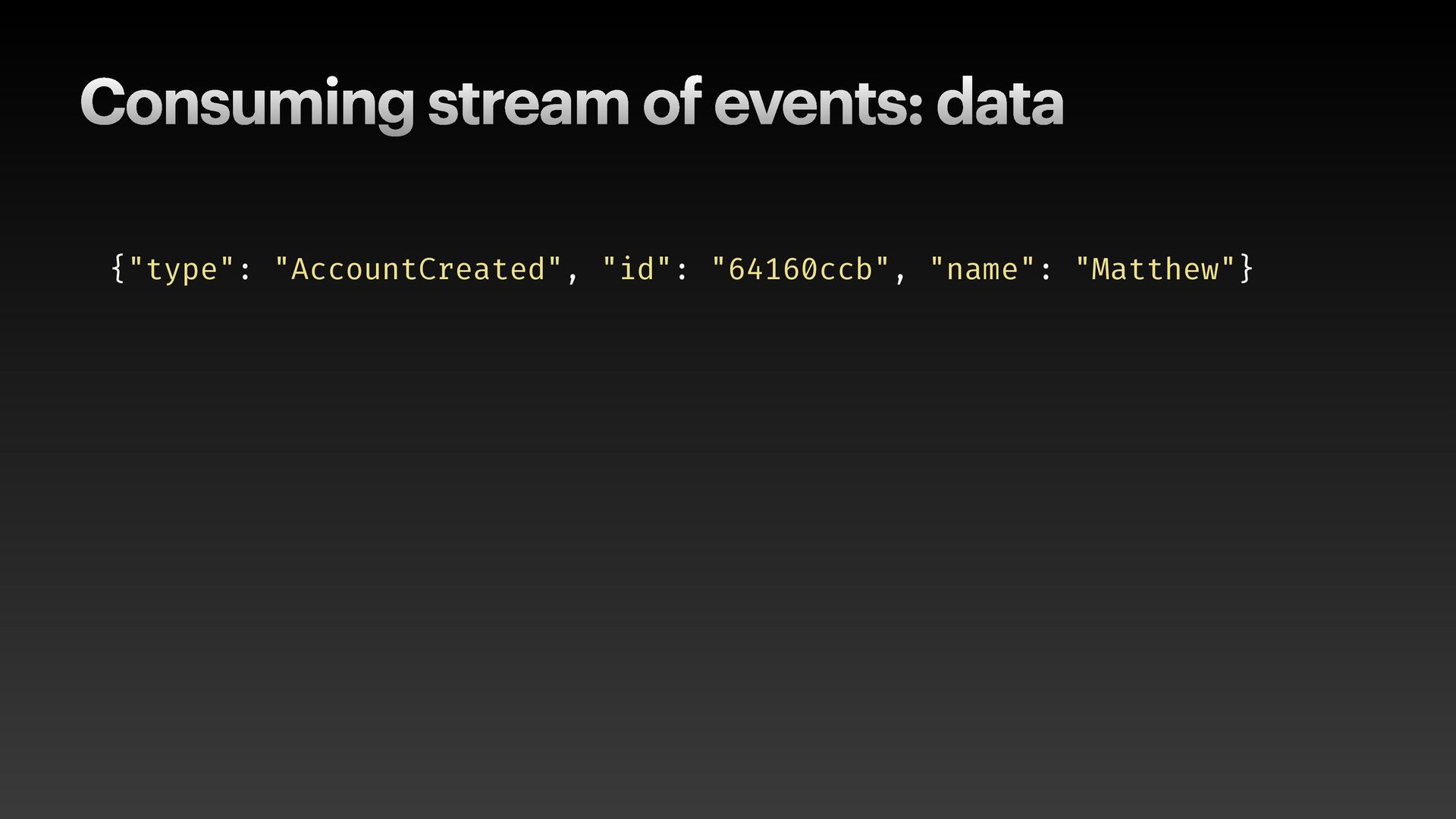
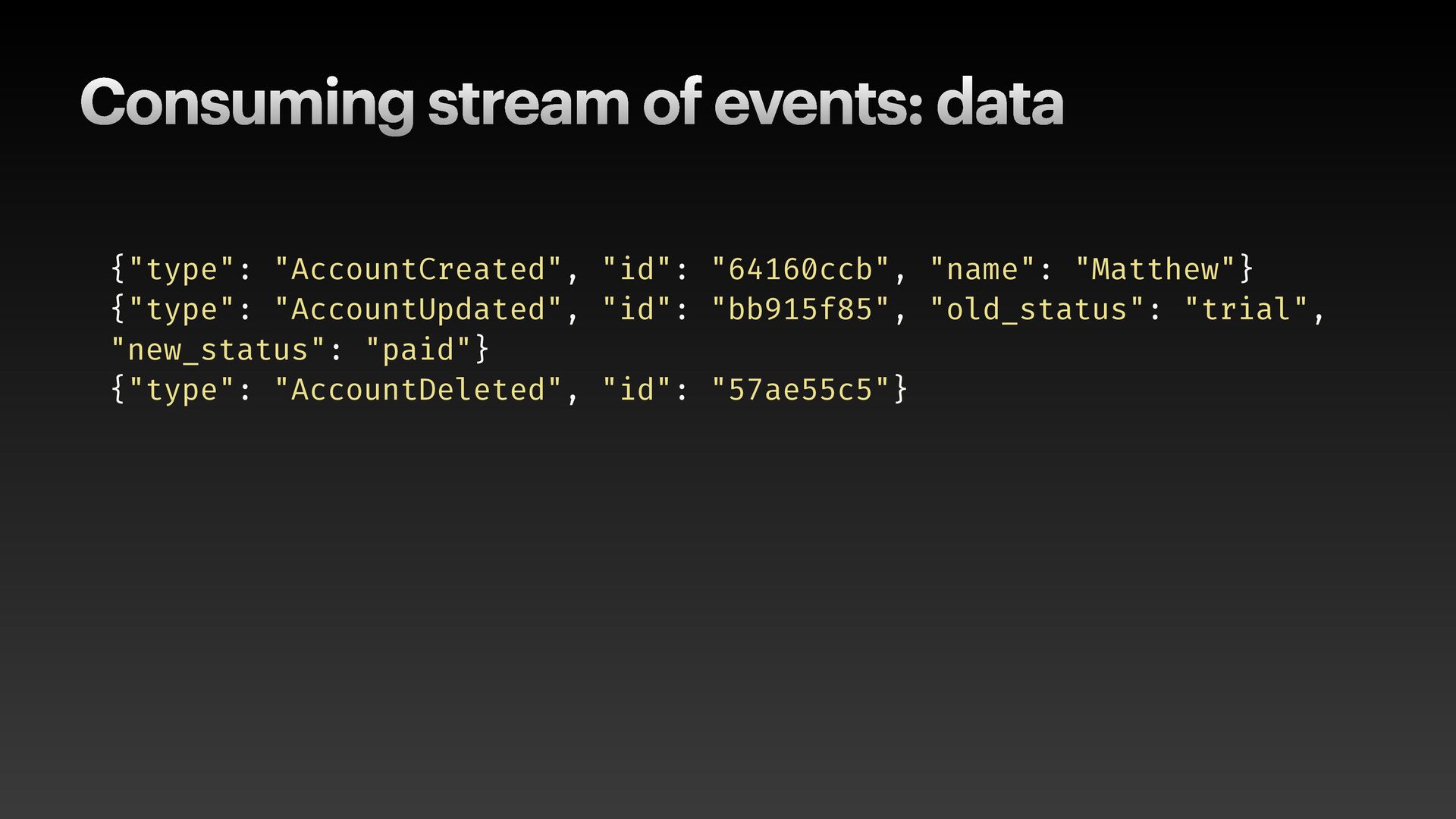
Consuming stream of events: data {"type": "AccountCreated", "id": "64160ccb", "name":
"Matthew"} {"type": "AccountUpdated", "id": "bb915f85", "old_status": "trial", "new_status": "paid"} {"type": "AccountDeleted", "id": "57ae55c5"} -
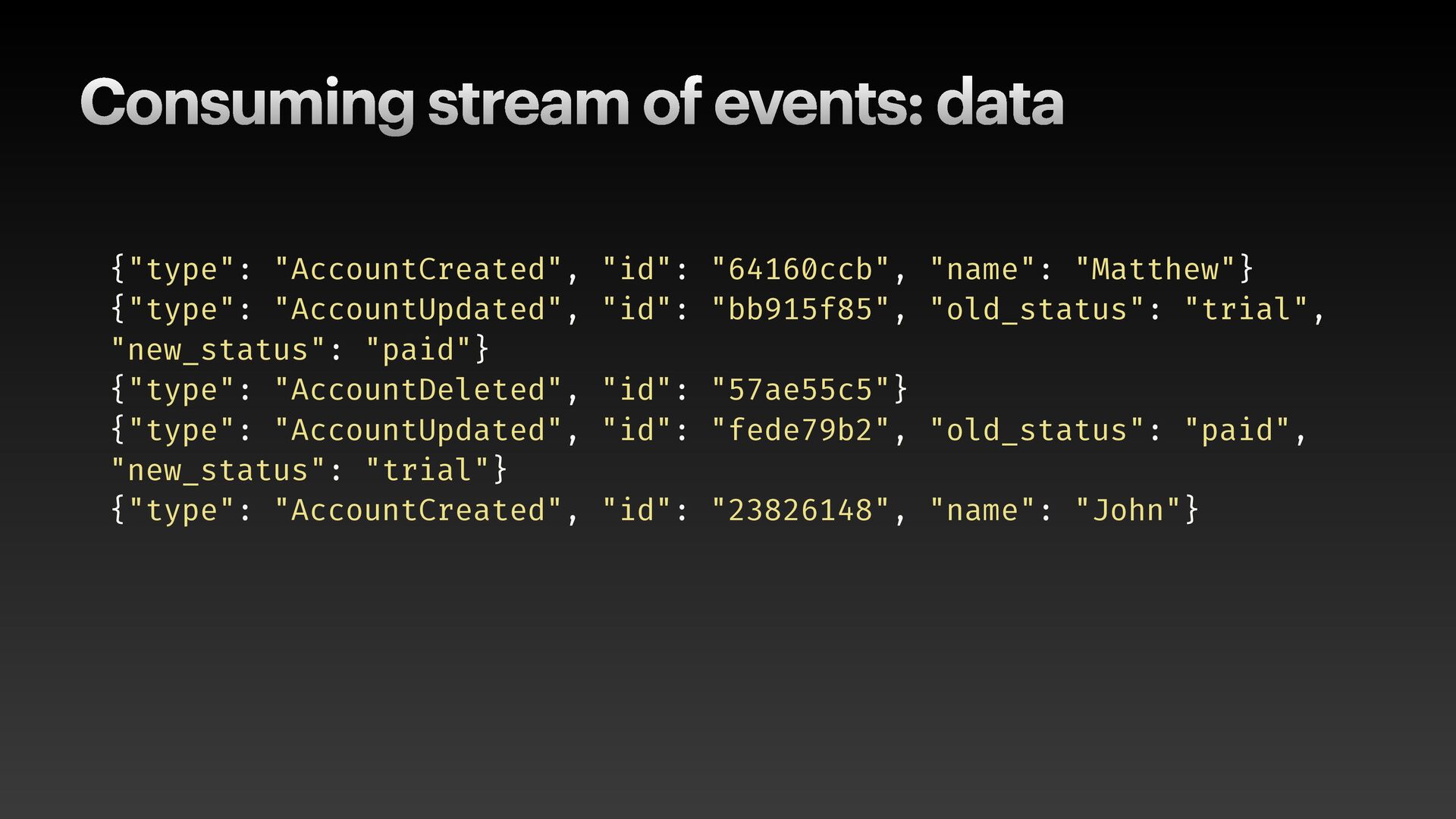
Consuming stream of events: data {"type": "AccountCreated", "id": "64160ccb", "name":
"Matthew"} {"type": "AccountUpdated", "id": "bb915f85", "old_status": "trial", "new_status": "paid"} {"type": "AccountDeleted", "id": "57ae55c5"} {"type": "AccountUpdated", "id": "fede79b2", "old_status": "paid", "new_status": "trial"} {"type": "AccountCreated", "id": "23826148", "name": "John"} -
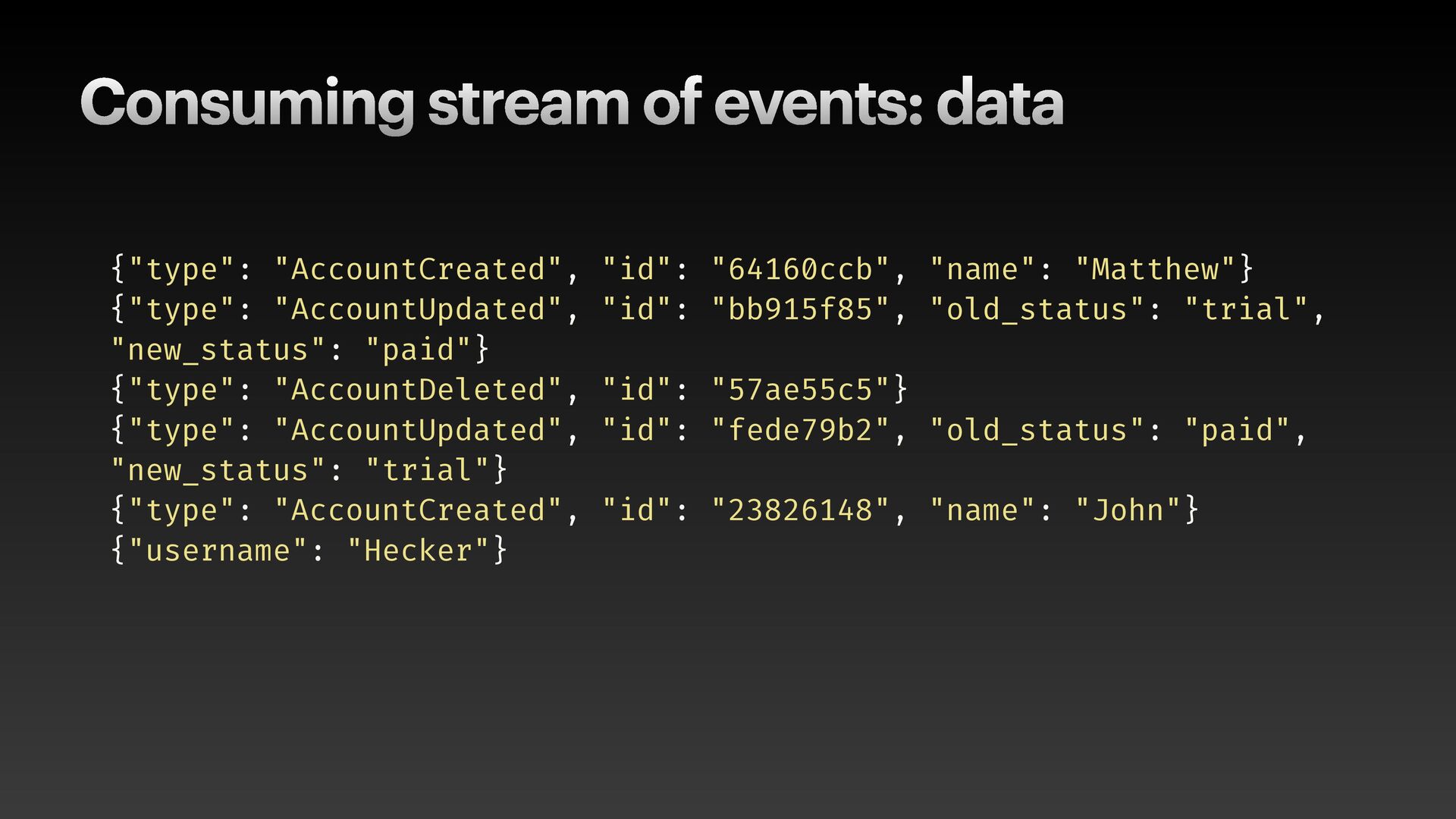
Consuming stream of events: data {"type": "AccountCreated", "id": "64160ccb", "name":
"Matthew"} {"type": "AccountUpdated", "id": "bb915f85", "old_status": "trial", "new_status": "paid"} {"type": "AccountDeleted", "id": "57ae55c5"} {"type": "AccountUpdated", "id": "fede79b2", "old_status": "paid", "new_status": "trial"} {"type": "AccountCreated", "id": "23826148", "name": "John"} {"username": "Hecker"} -
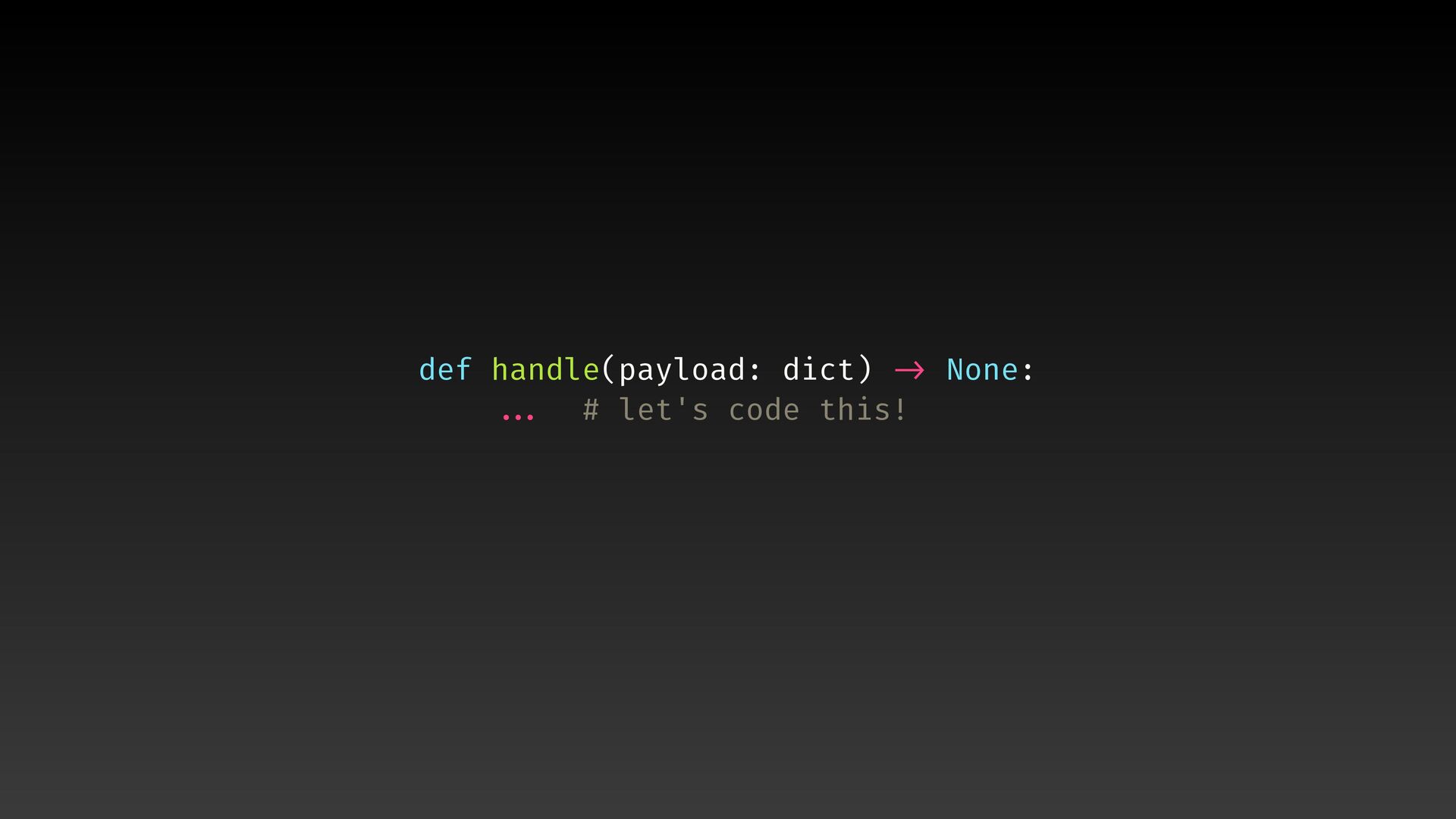
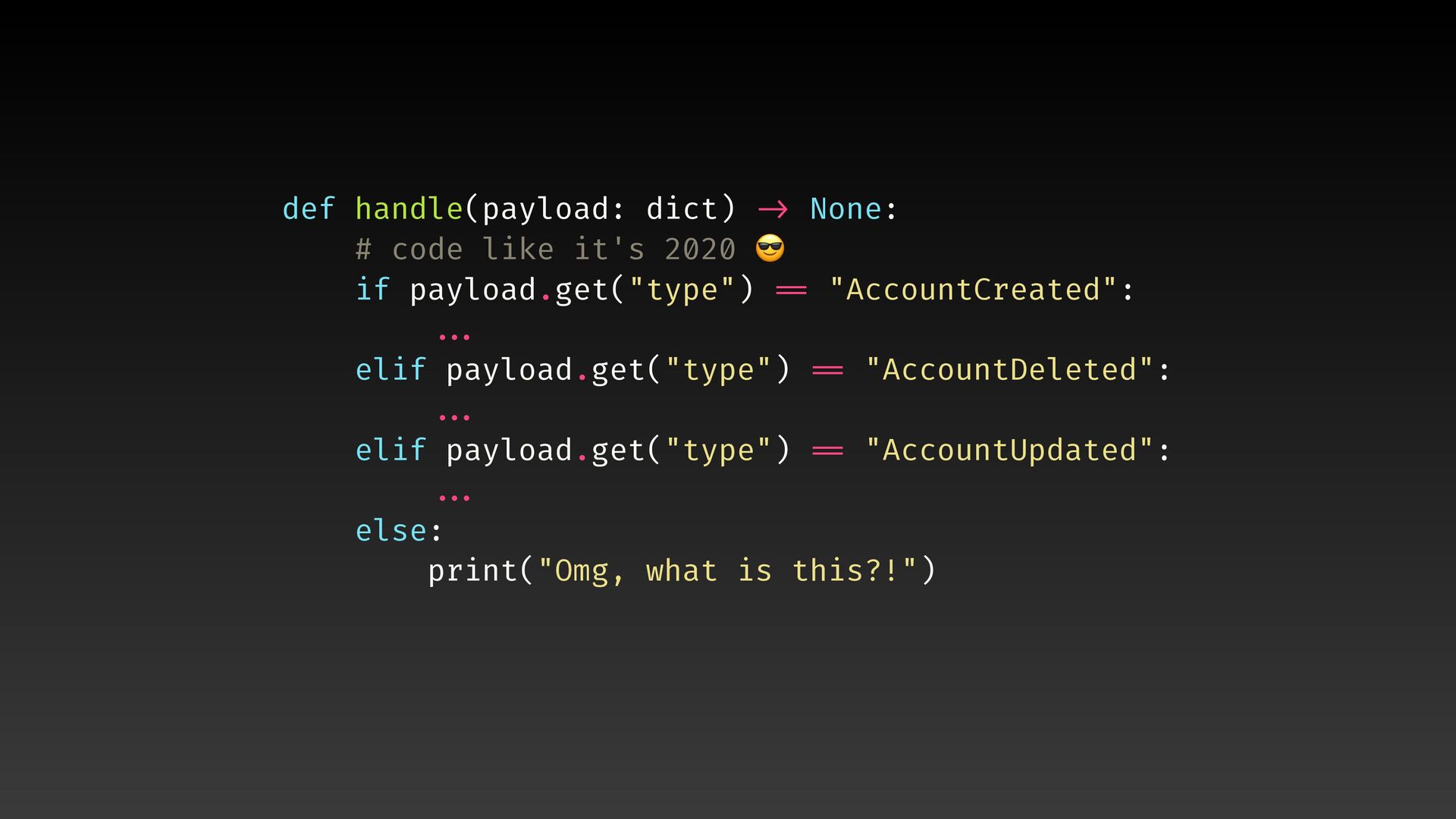
def handle(payload: dict) -> None: # code like it's 2020
😎 if payload.get("type") == "AccountCreated": ... elif payload.get("type") == "AccountDeleted": ... elif payload.get("type") == "AccountUpdated": ... else: print("Omg, what is this?!") -
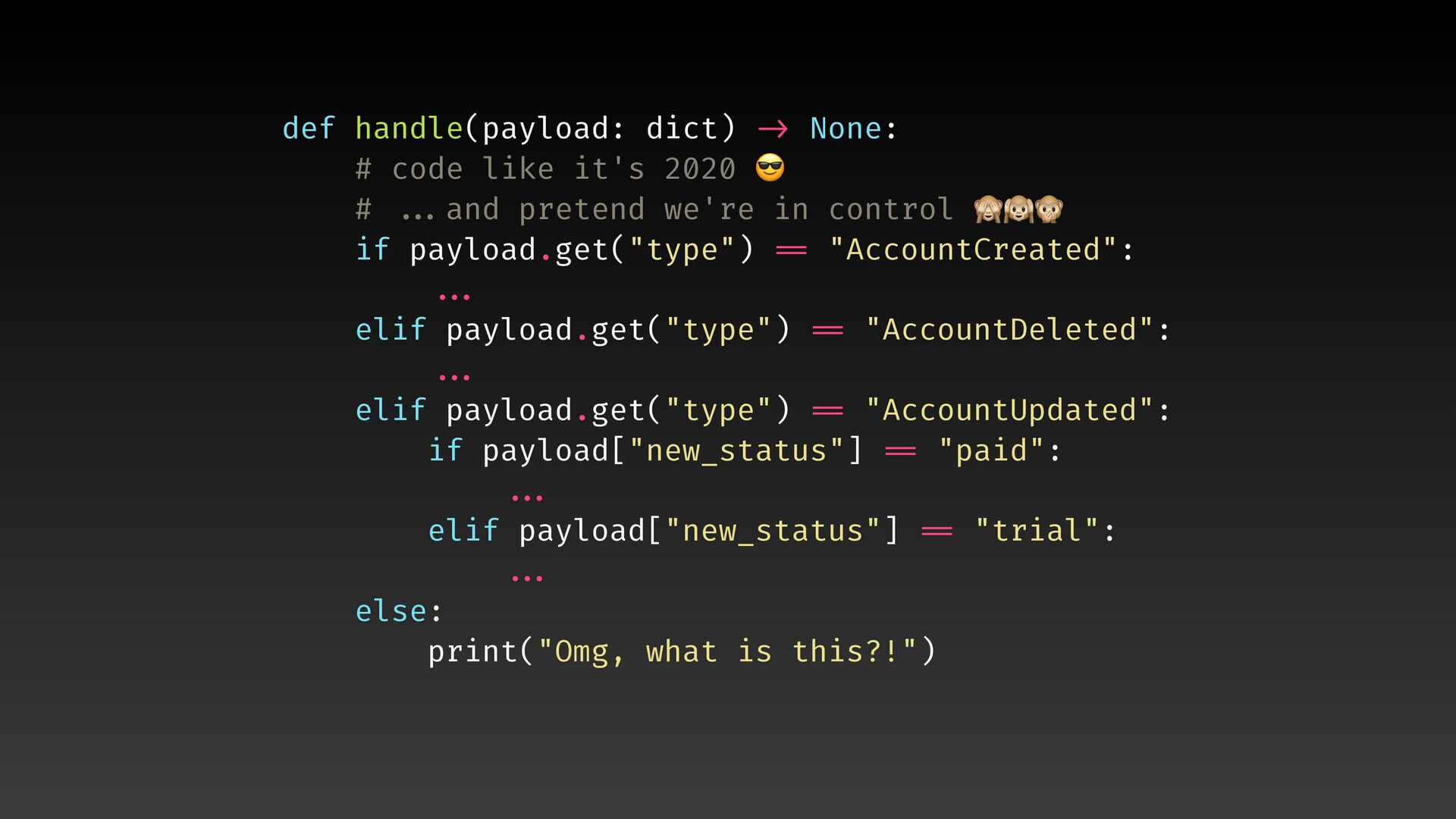
def handle(payload: dict) -> None: # code like it's 2020
😎 # ... and pretend we're in control 🙈🙉🙊 if payload.get("type") == "AccountCreated": ... elif payload.get("type") == "AccountDeleted": ... elif payload.get("type") == "AccountUpdated": if payload["new_status"] == "paid": ... elif payload["new_status"] == "trial": ... else: print("Omg, what is this?!") -
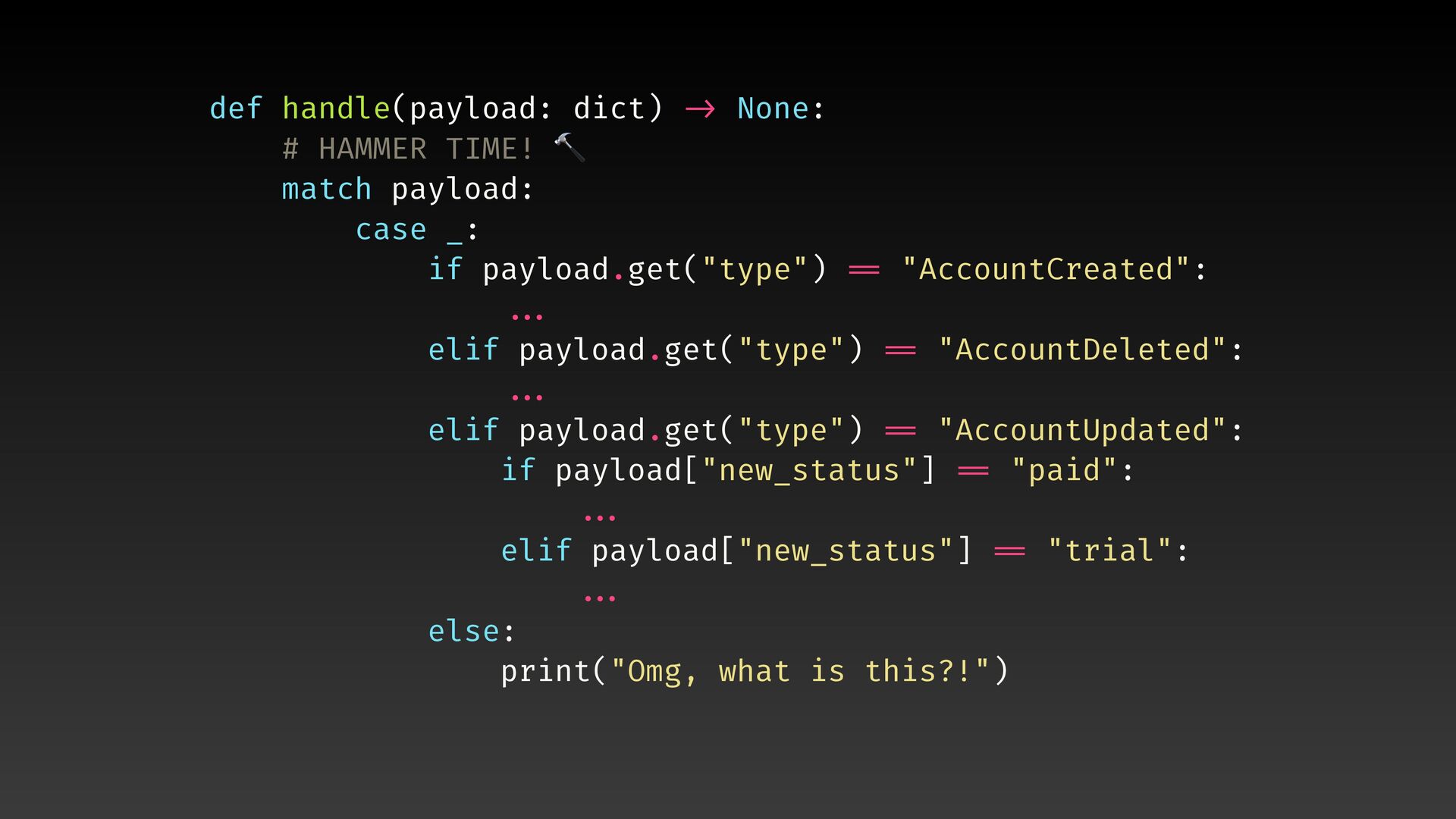
def handle(payload: dict) -> None: # HAMMER TIME! 🔨 match
payload: case _: if payload.get("type") == "AccountCreated": ... elif payload.get("type") == "AccountDeleted": ... elif payload.get("type") == "AccountUpdated": if payload["new_status"] == "paid": ... elif payload["new_status"] == "trial": ... else: print("Omg, what is this?!") -
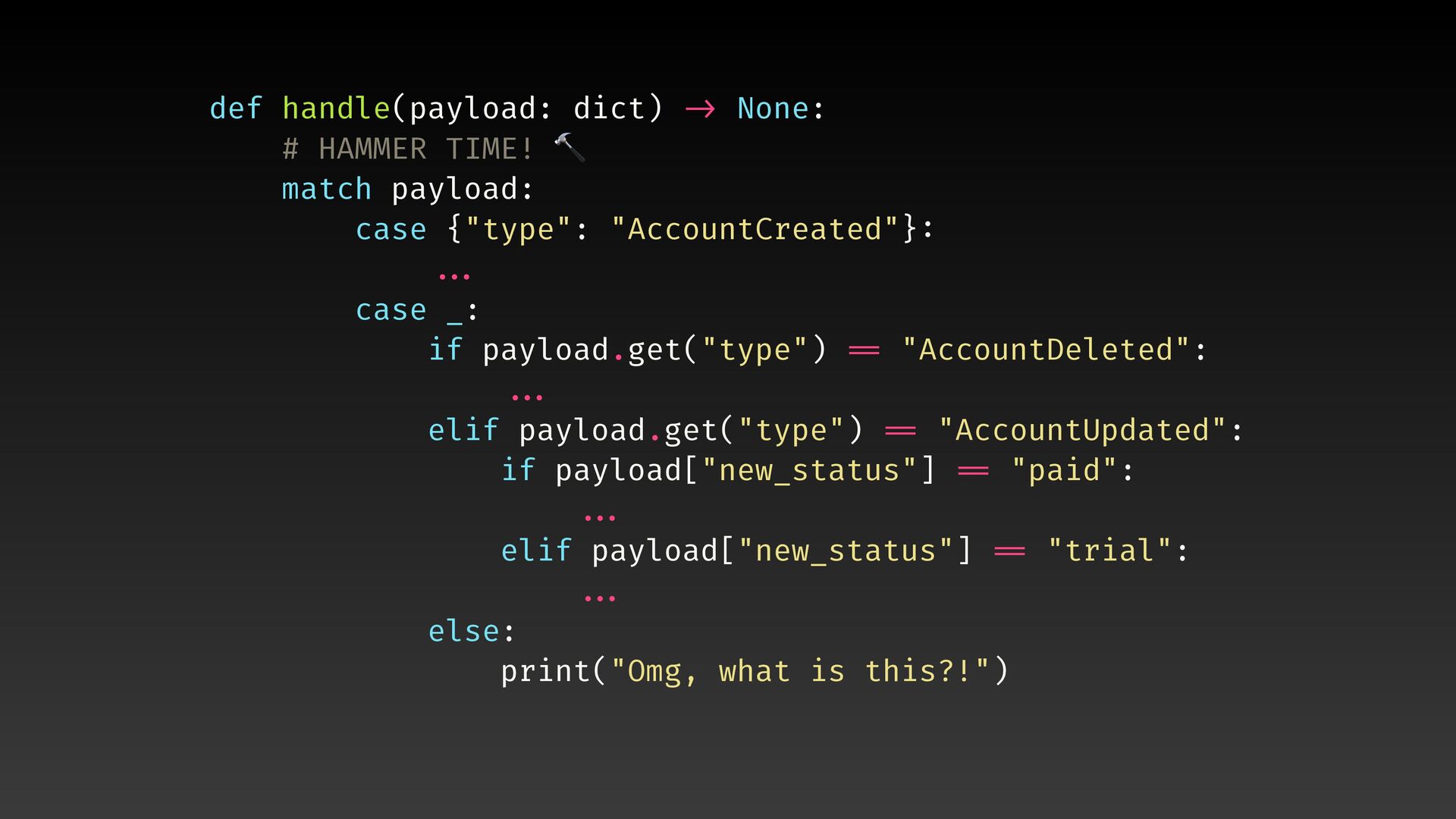
def handle(payload: dict) -> None: # HAMMER TIME! 🔨 match
payload: case {"type": "AccountCreated"} : ... case _: if payload.get("type") == "AccountDeleted": ... elif payload.get("type") == "AccountUpdated": if payload["new_status"] == "paid": ... elif payload["new_status"] == "trial": ... else: print("Omg, what is this?!") -
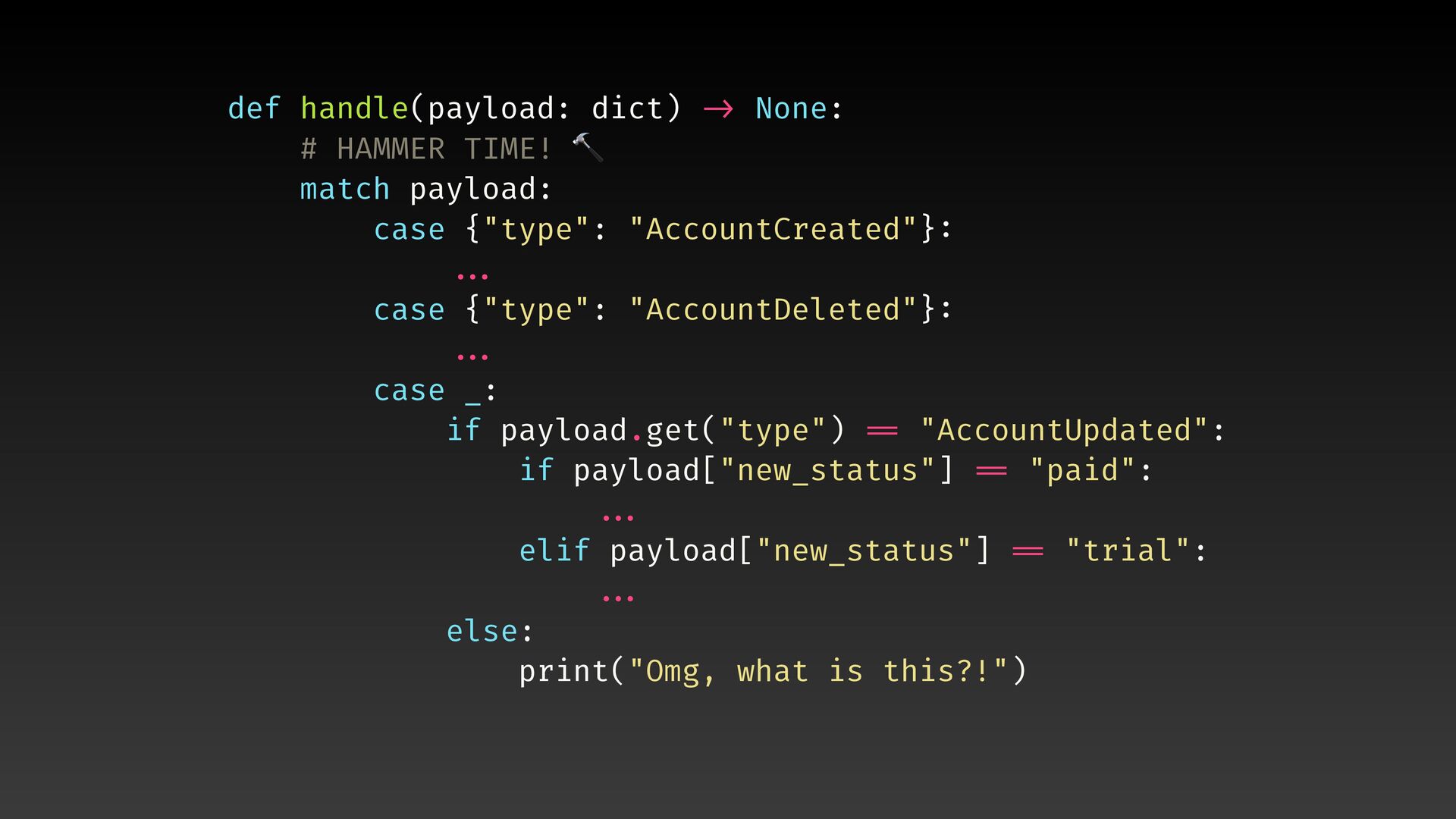
def handle(payload: dict) -> None: # HAMMER TIME! 🔨 match
payload: case {"type": "AccountCreated"} : ... case {"type": "AccountDeleted"} : ... case _: if payload.get("type") == "AccountUpdated": if payload["new_status"] == "paid": ... elif payload["new_status"] == "trial": ... else: print("Omg, what is this?!") -
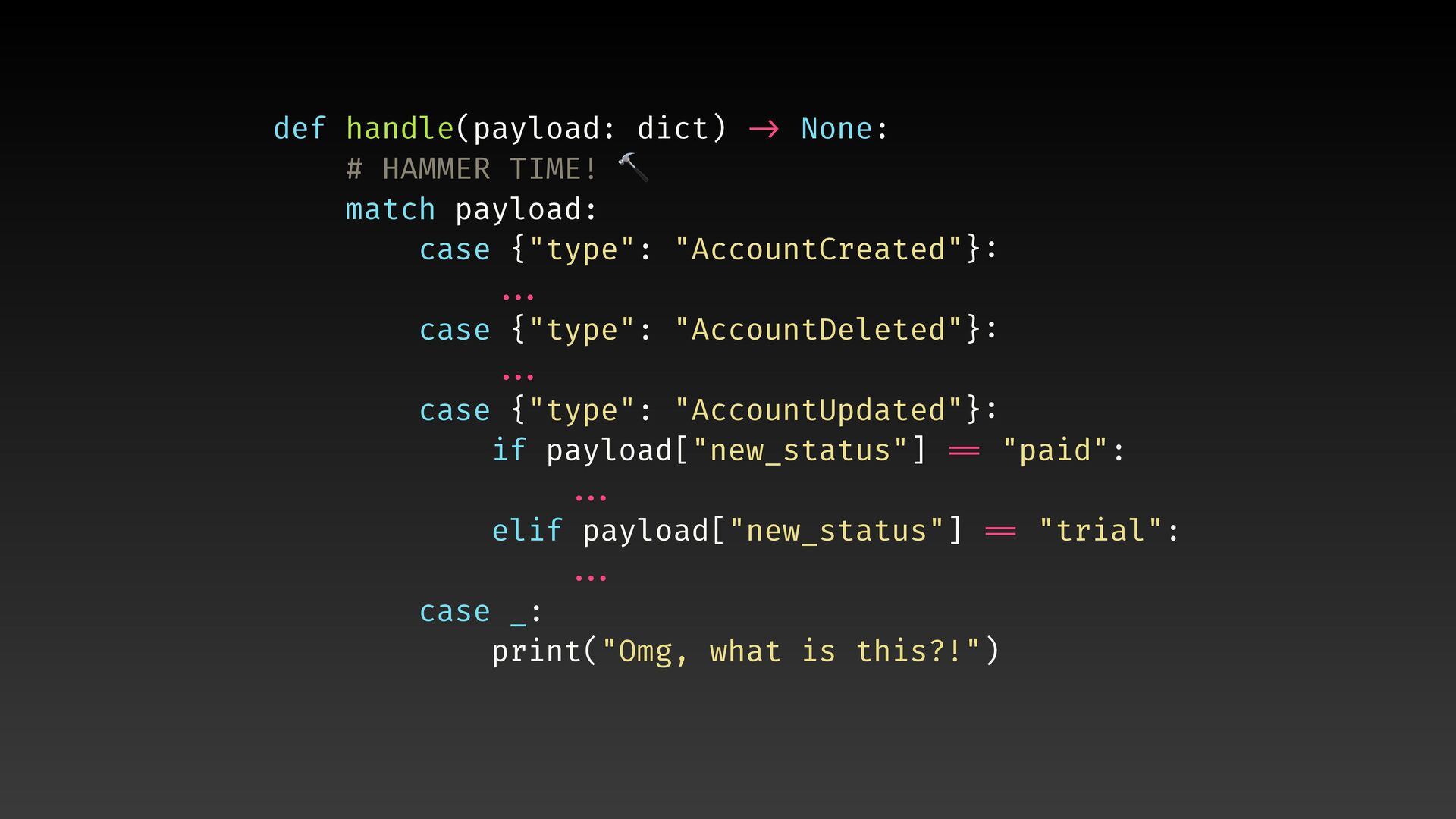
def handle(payload: dict) -> None: # HAMMER TIME! 🔨 match
payload: case {"type": "AccountCreated"} : ... case {"type": "AccountDeleted"} : ... case {"type": "AccountUpdated"} : if payload["new_status"] == "paid": ... elif payload["new_status"] == "trial": ... case _: print("Omg, what is this?!") -
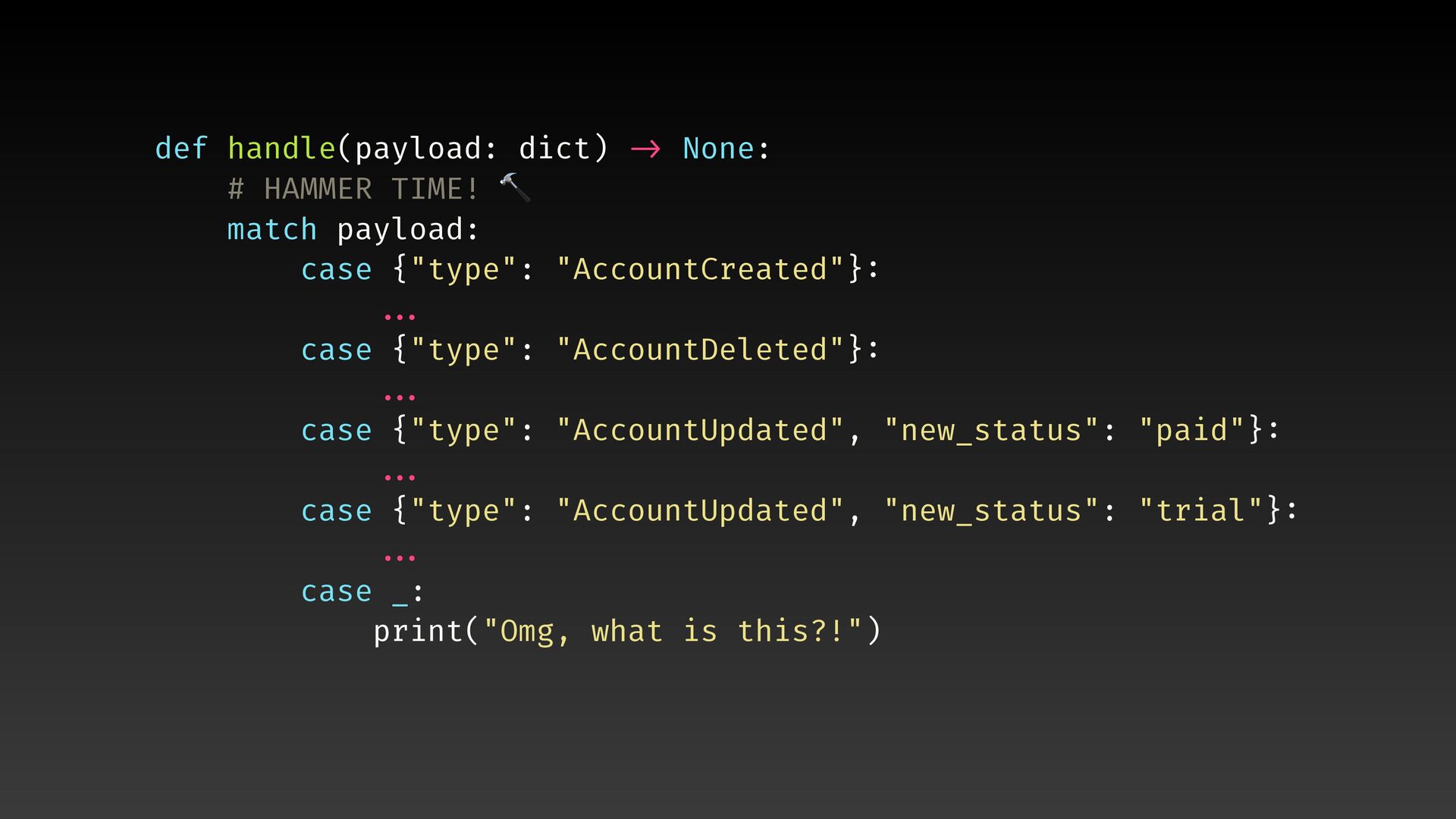
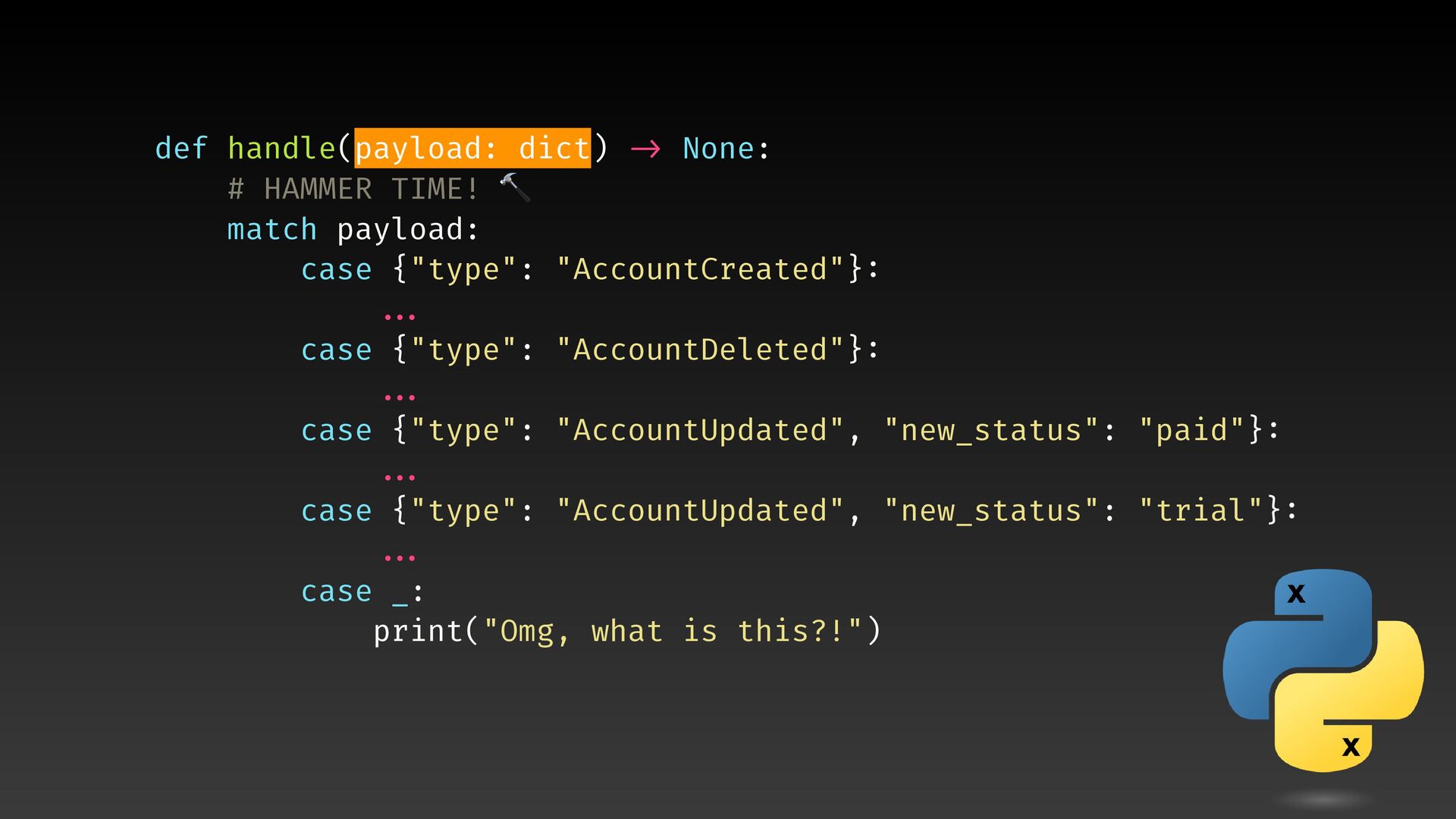
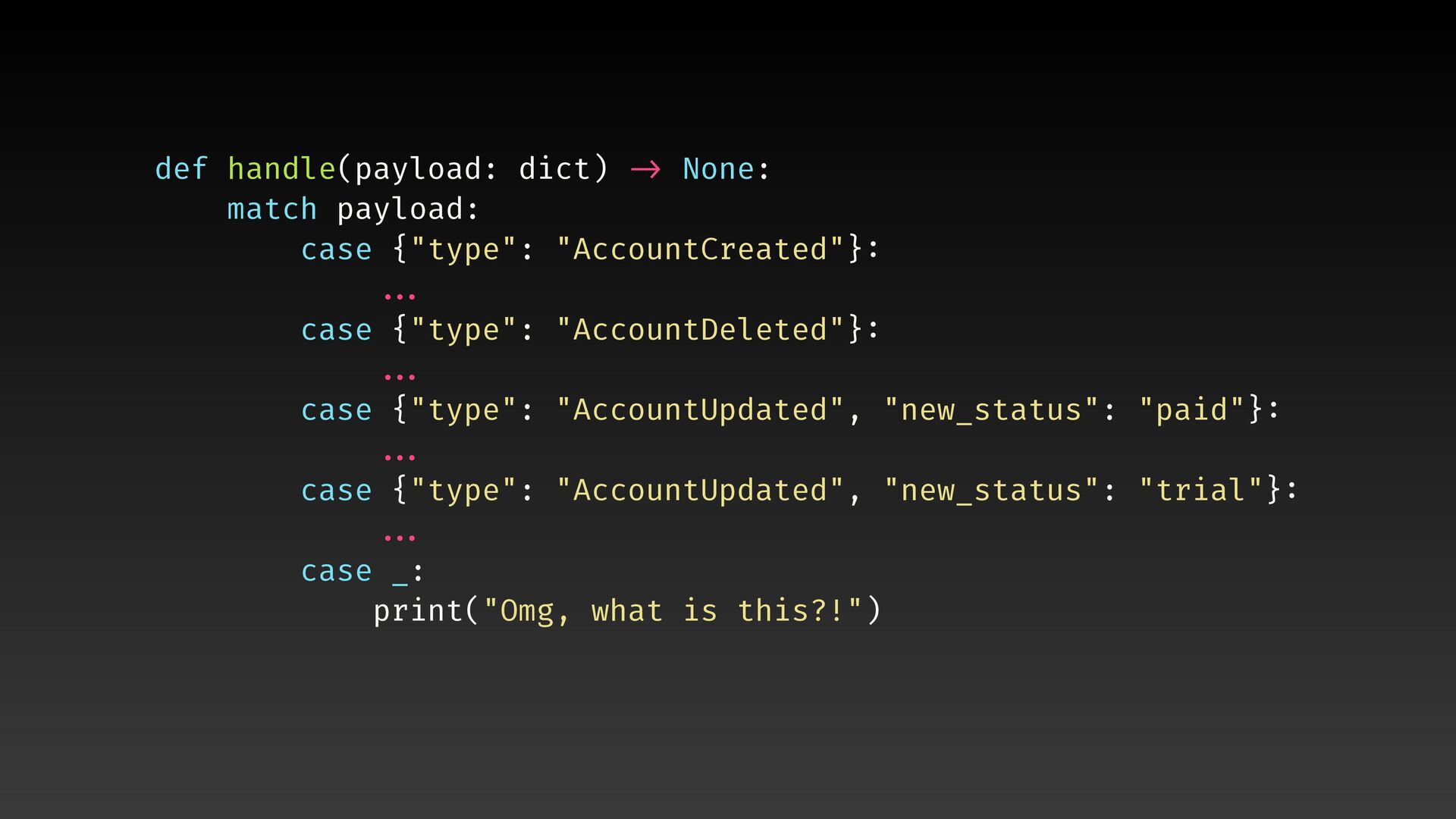
def handle(payload: dict) -> None: # HAMMER TIME! 🔨 match
payload: case {"type": "AccountCreated"} : ... case {"type": "AccountDeleted"} : ... case {"type": "AccountUpdated", "new_status": "paid"} : ... case {"type": "AccountUpdated", "new_status": "trial"} : ... case _: print("Omg, what is this?!") -
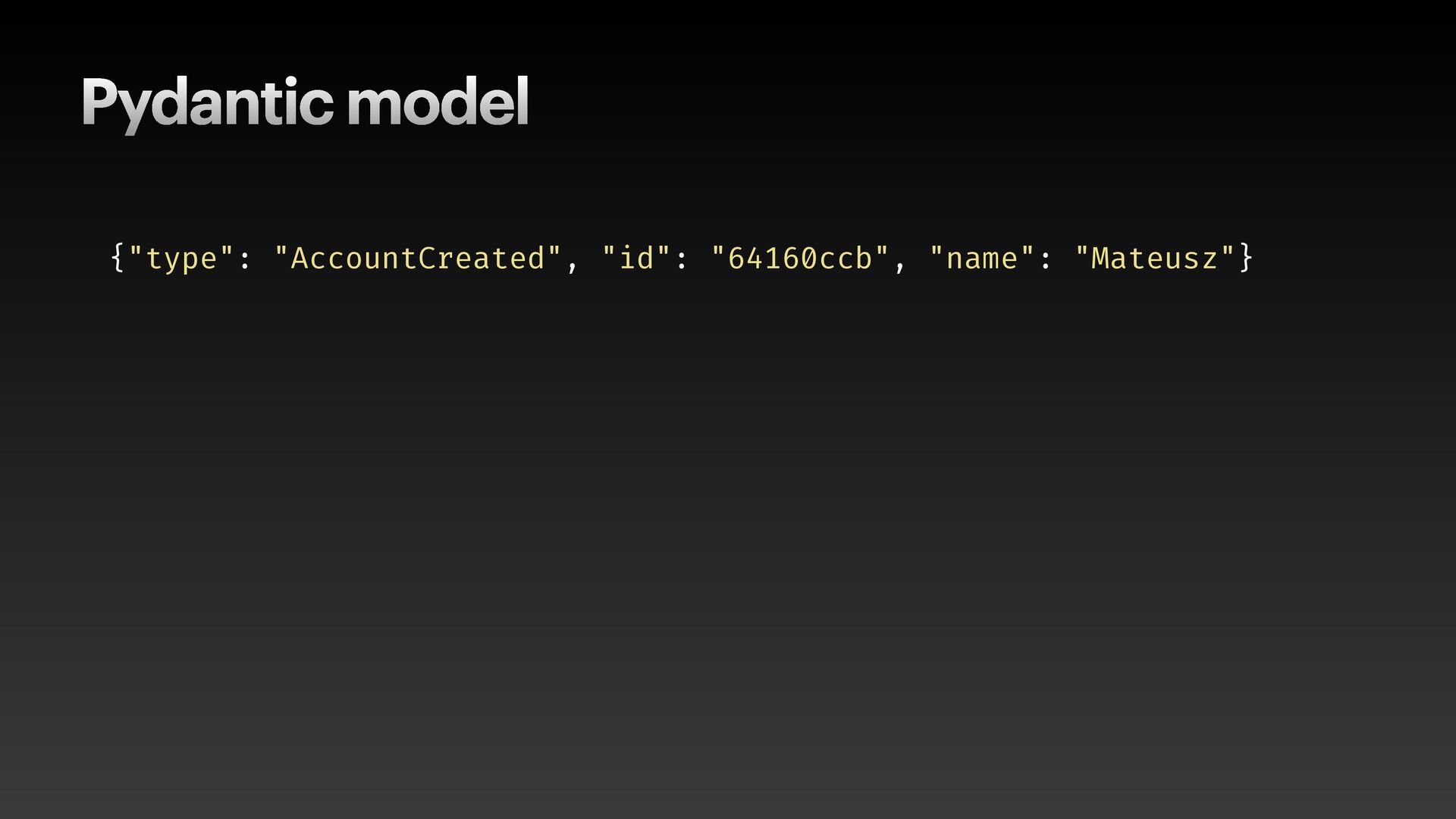
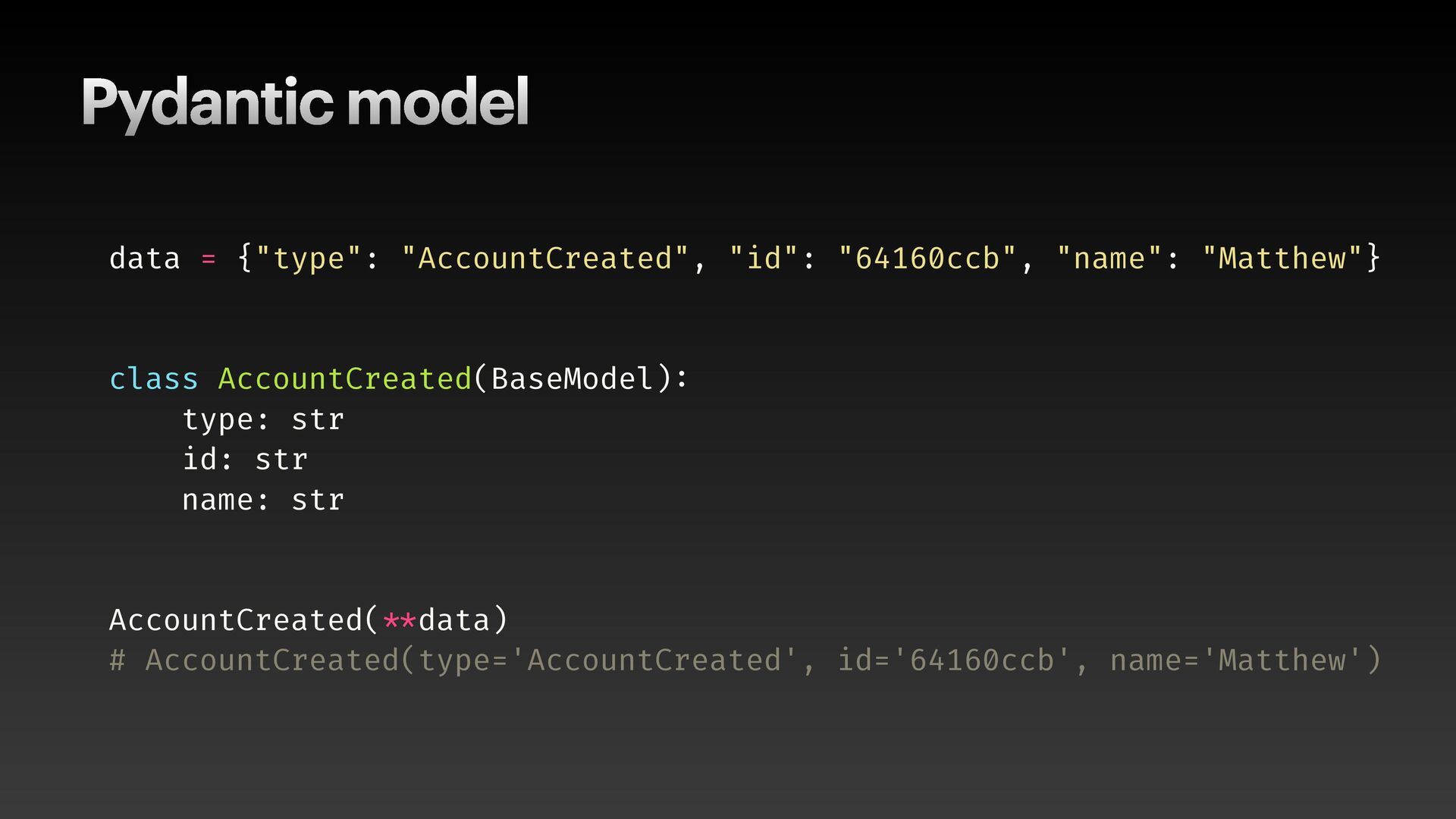
Pydantic model data = {"type": "AccountCreated", "id": "64160ccb", "name": "Matthew"}
class AccountCreated(BaseModel) : type: str id: str name: str AccountCreated( ** data) # AccountCreated(type='AccountCreated', id='64160ccb', name='Matthew') -
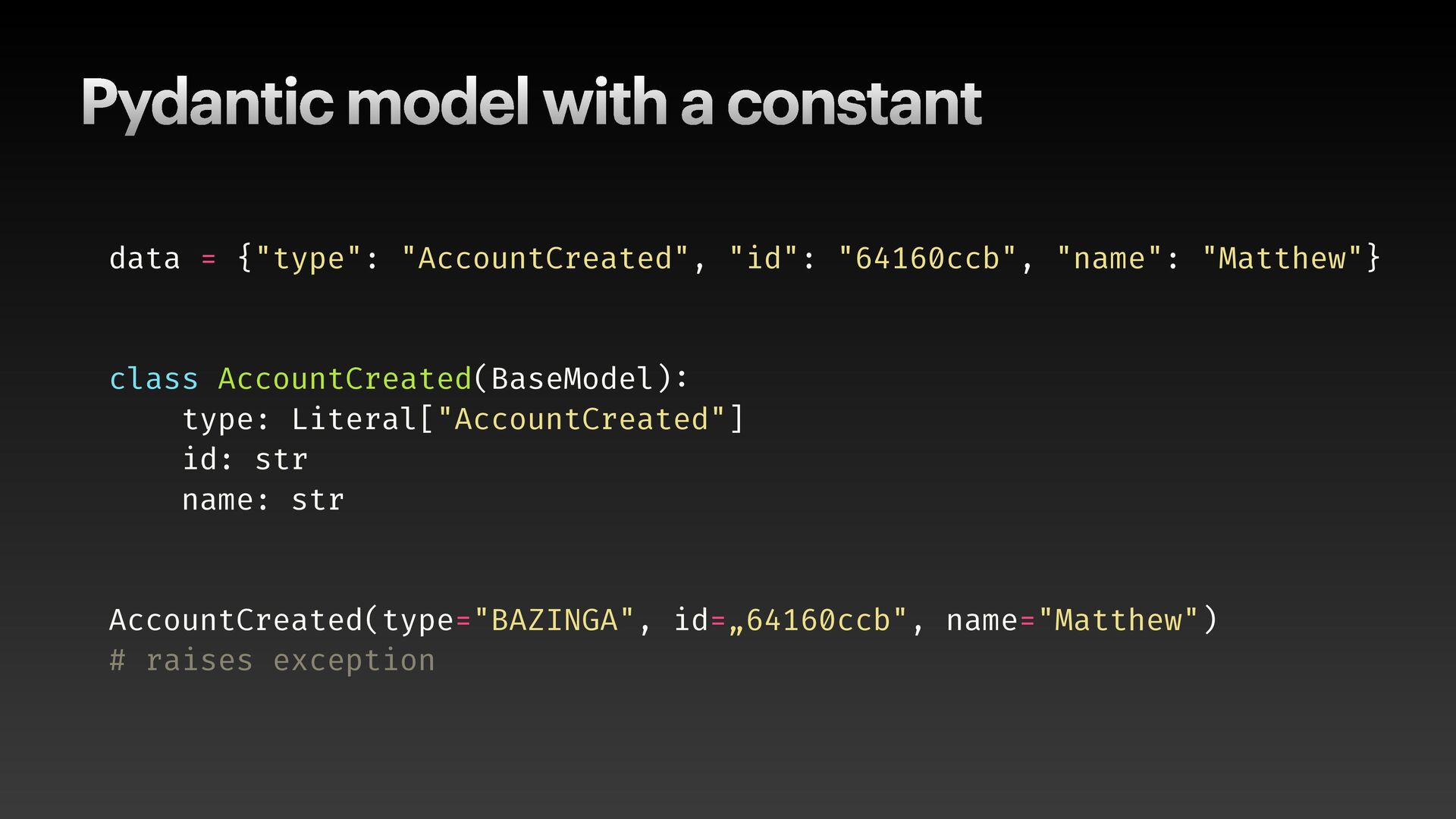
Pydantic model with a constant data = {"type": "AccountCreated", "id":
"64160ccb", "name": "Matthew"} class AccountCreated(BaseModel) : type: Literal["AccountCreated"] id: str name: str AccountCreated(type="BAZINGA", id=„64160ccb", name="Matthew") # raises exception -
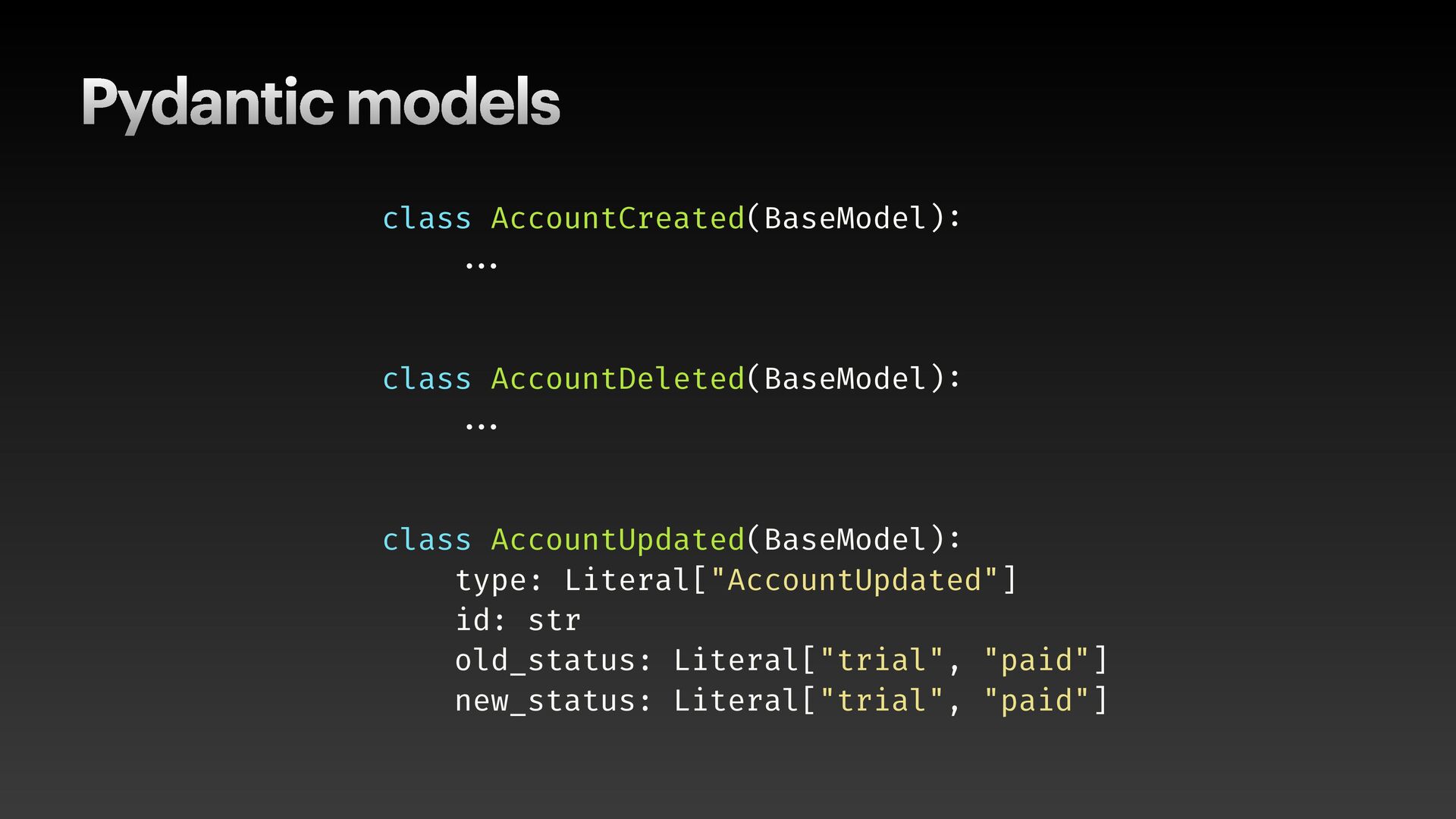
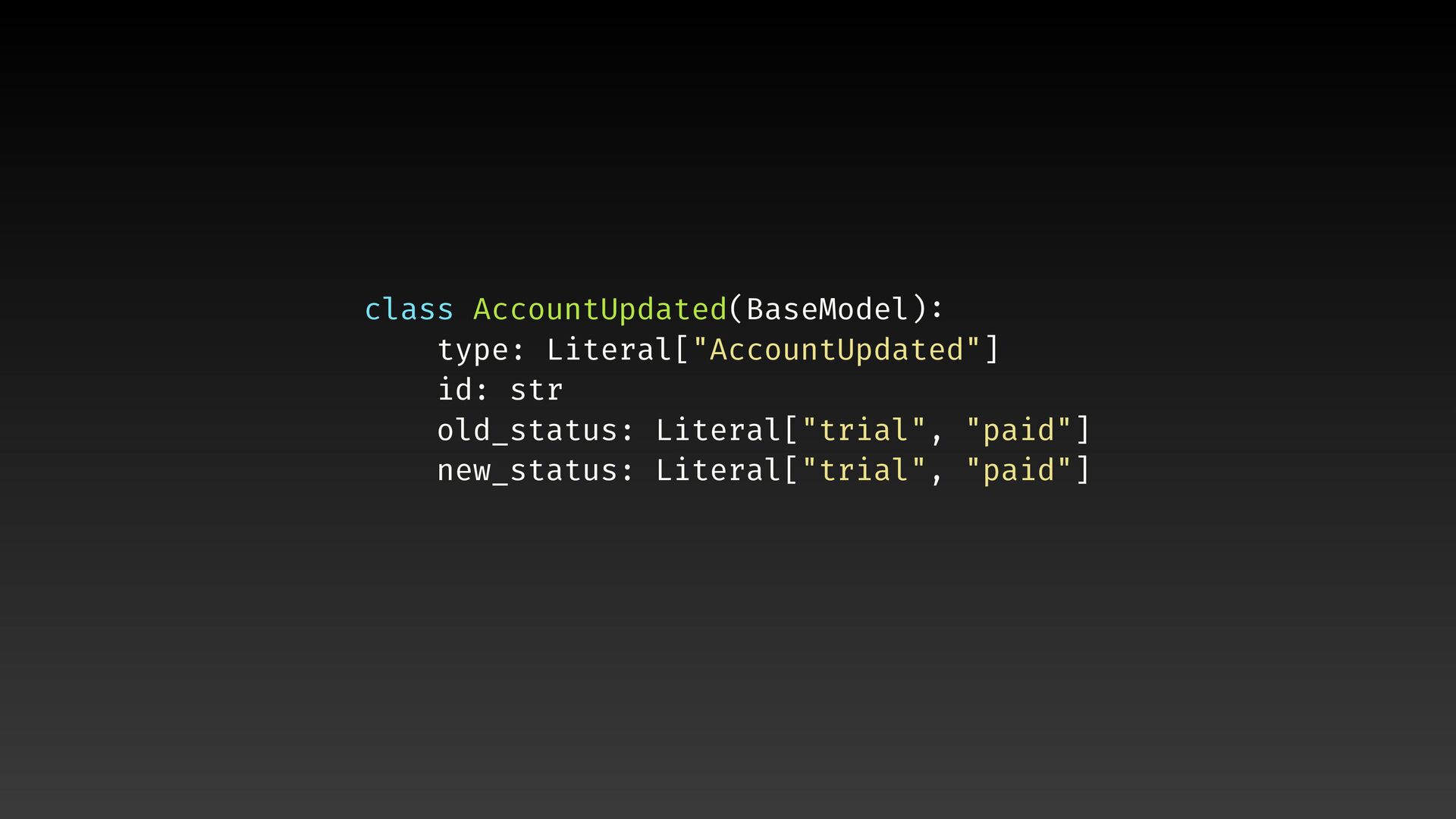
Pydantic models class AccountCreated(BaseModel) : ... class AccountDeleted(BaseModel) : ...
class AccountUpdated(BaseModel) : type: Literal["AccountUpdated"] id: str old_status: Literal["trial", "paid"] new_status: Literal["trial", "paid"] -
def handle(payload: dict) -> None: match payload: case {"type": "AccountCreated"}
: ... case {"type": "AccountDeleted"} : ... case {"type": "AccountUpdated", "new_status": "paid"} : ... case {"type": "AccountUpdated", "new_status": "trial"} : ... case _: print("Omg, what is this?!") -
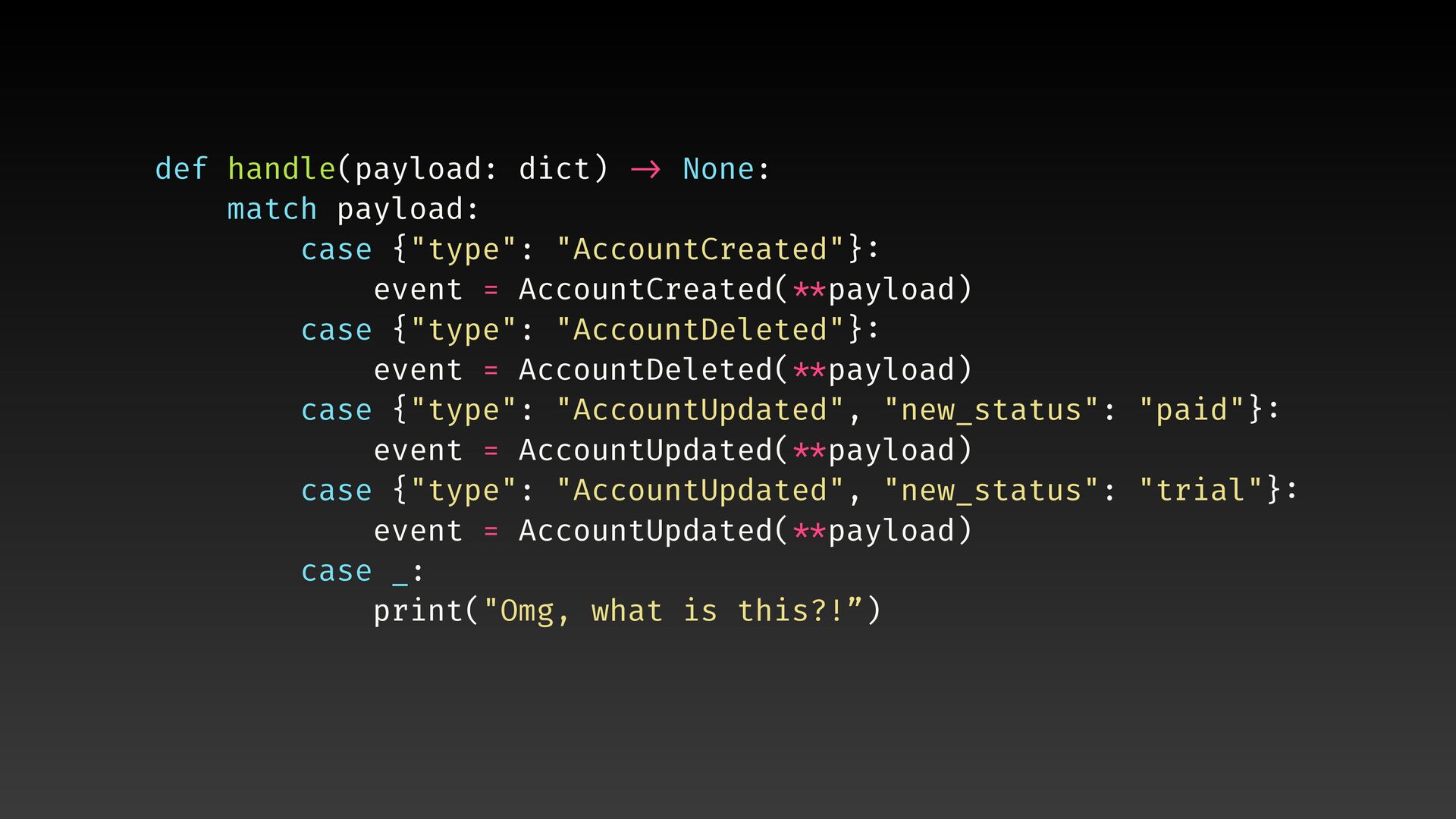
def handle(payload: dict) -> None: match payload: case {"type": "AccountCreated"}
: event = AccountCreated( ** payload) case {"type": "AccountDeleted"} : event = AccountDeleted( ** payload) case {"type": "AccountUpdated", "new_status": "paid"} : event = AccountUpdated( ** payload) case {"type": "AccountUpdated", "new_status": "trial"} : event = AccountUpdated( ** payload) case _: print("Omg, what is this?!”) -
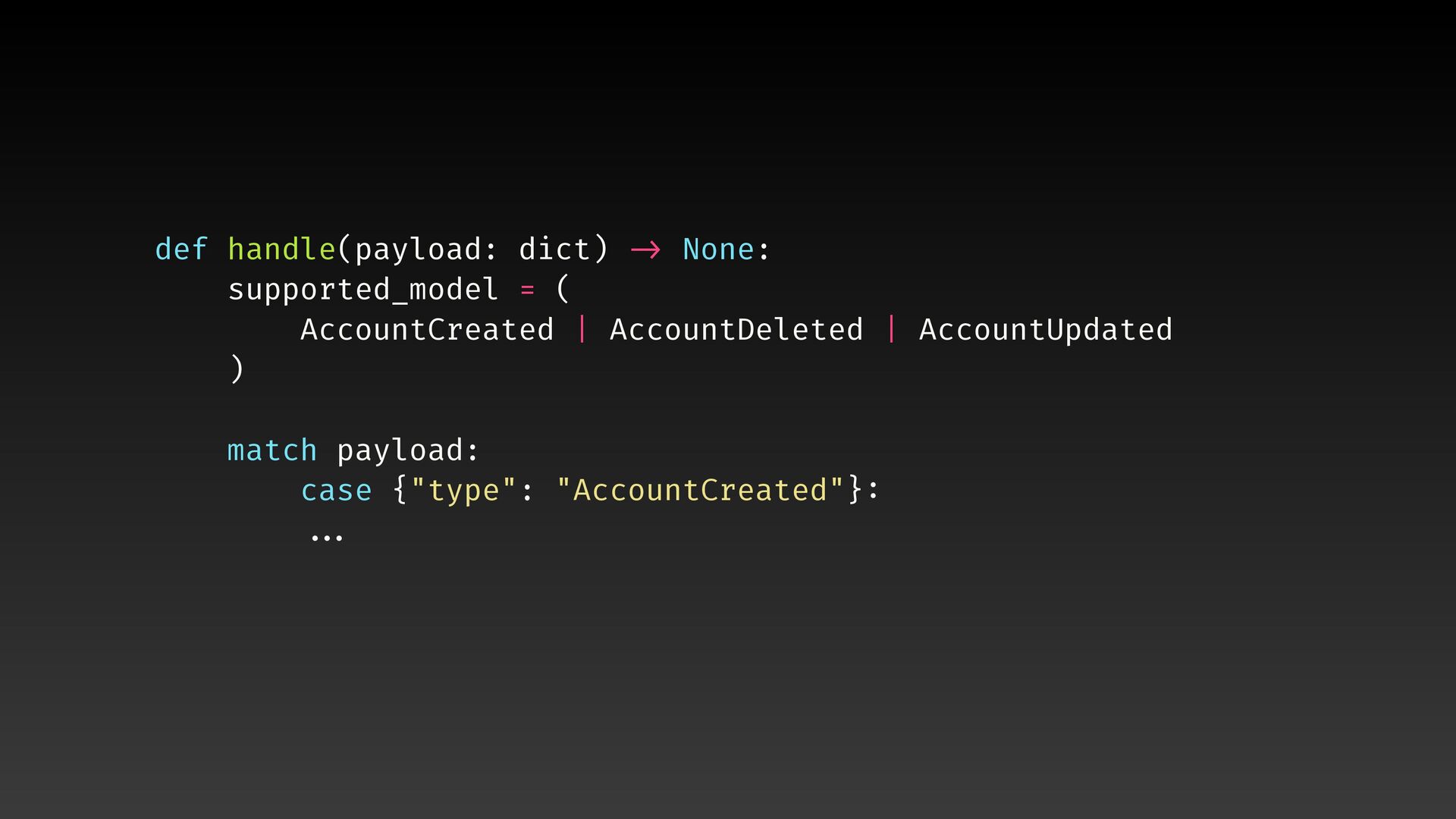
def handle(payload: dict) -> None: supported_model = ( AccountCreated |
AccountDeleted | AccountUpdated ) match payload: case {"type": "AccountCreated"} : ... -
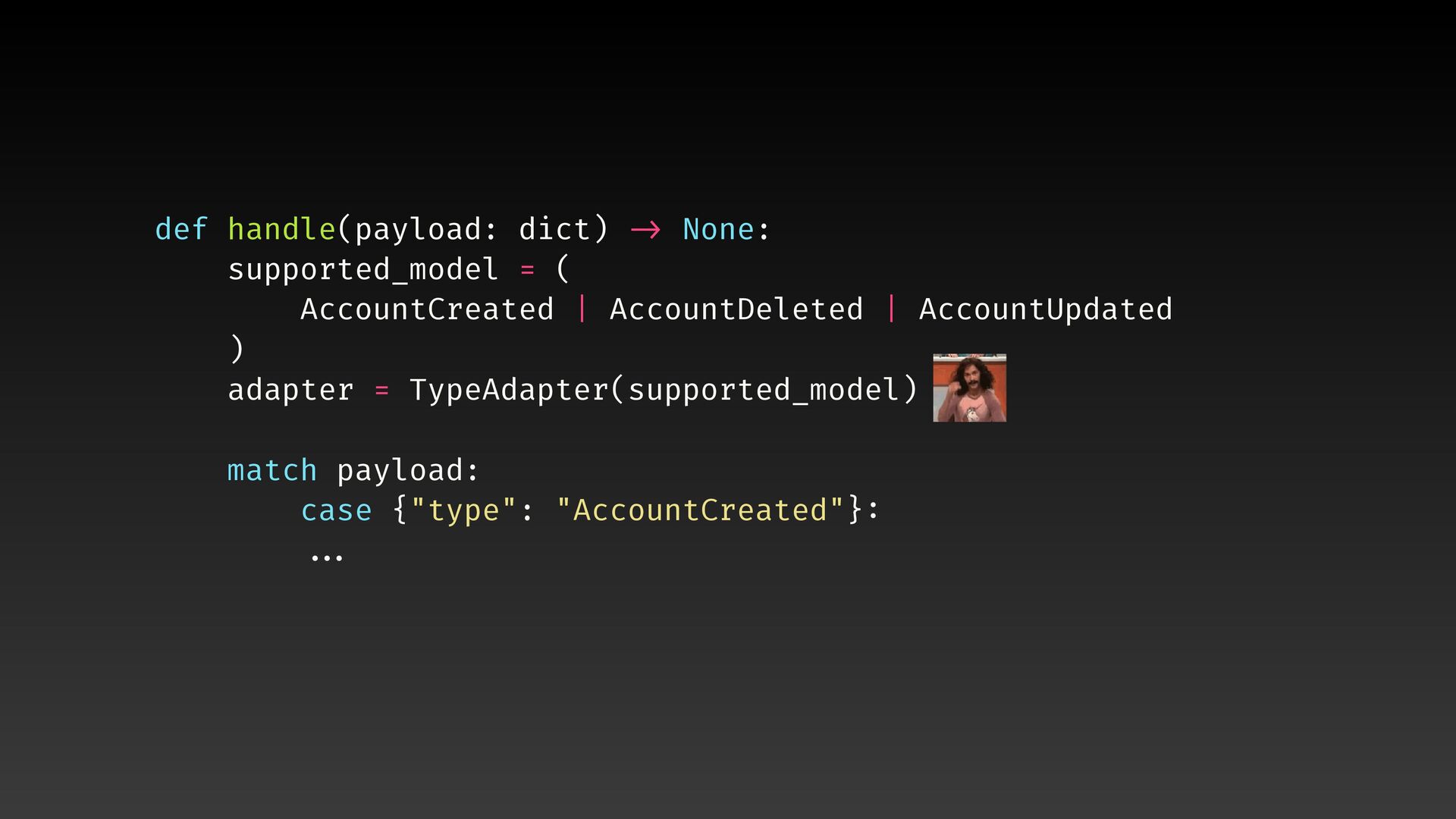
def handle(payload: dict) -> None: supported_model = ( AccountCreated |
AccountDeleted | AccountUpdated ) adapter = TypeAdapter(supported_model) match payload: case {"type": "AccountCreated"} : ... -
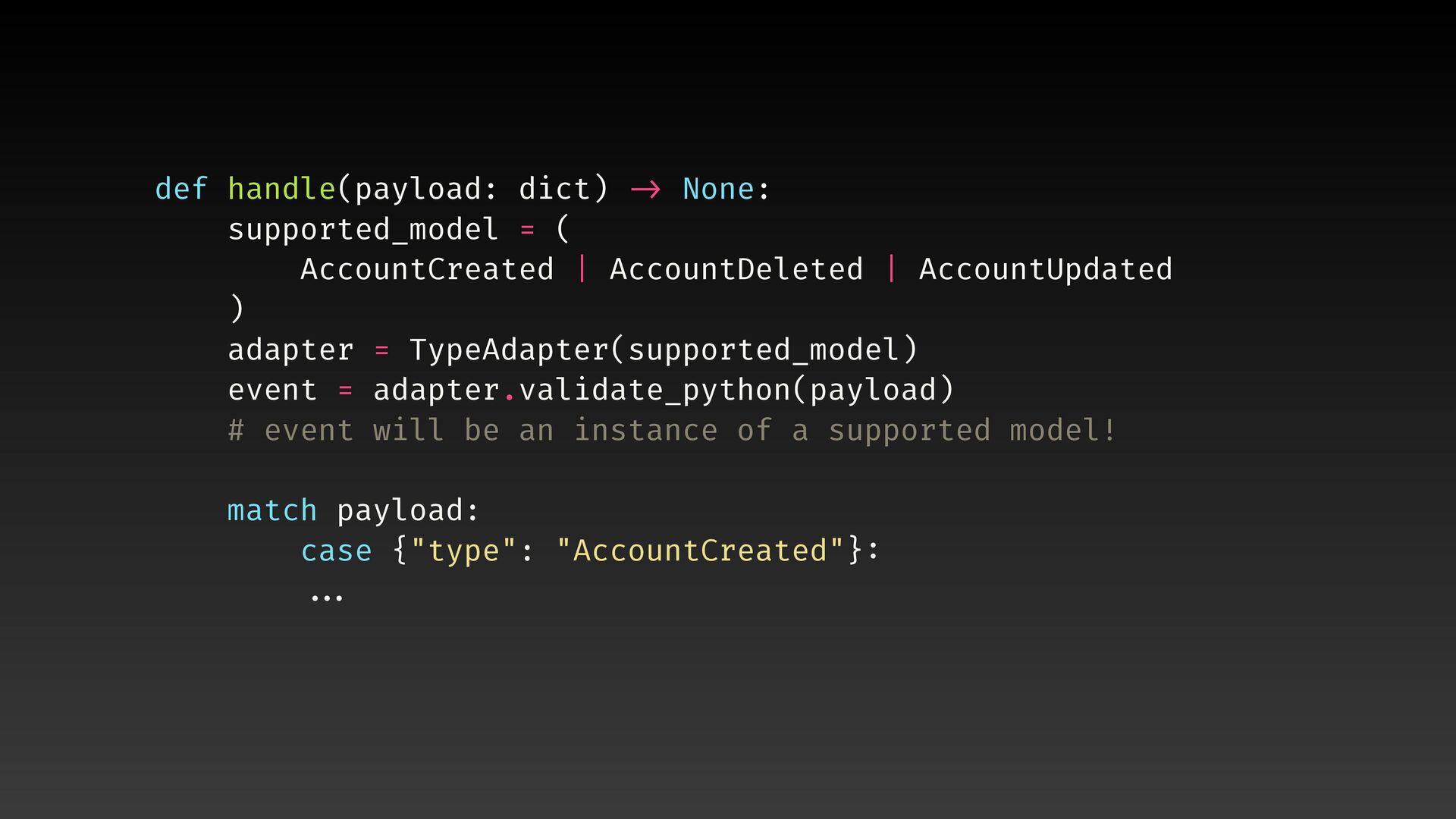
def handle(payload: dict) -> None: supported_model = ( AccountCreated |
AccountDeleted | AccountUpdated ) adapter = TypeAdapter(supported_model) event = adapter.validate_python(payload) # event will be an instance of a supported model! match payload: case {"type": "AccountCreated"} : ... -
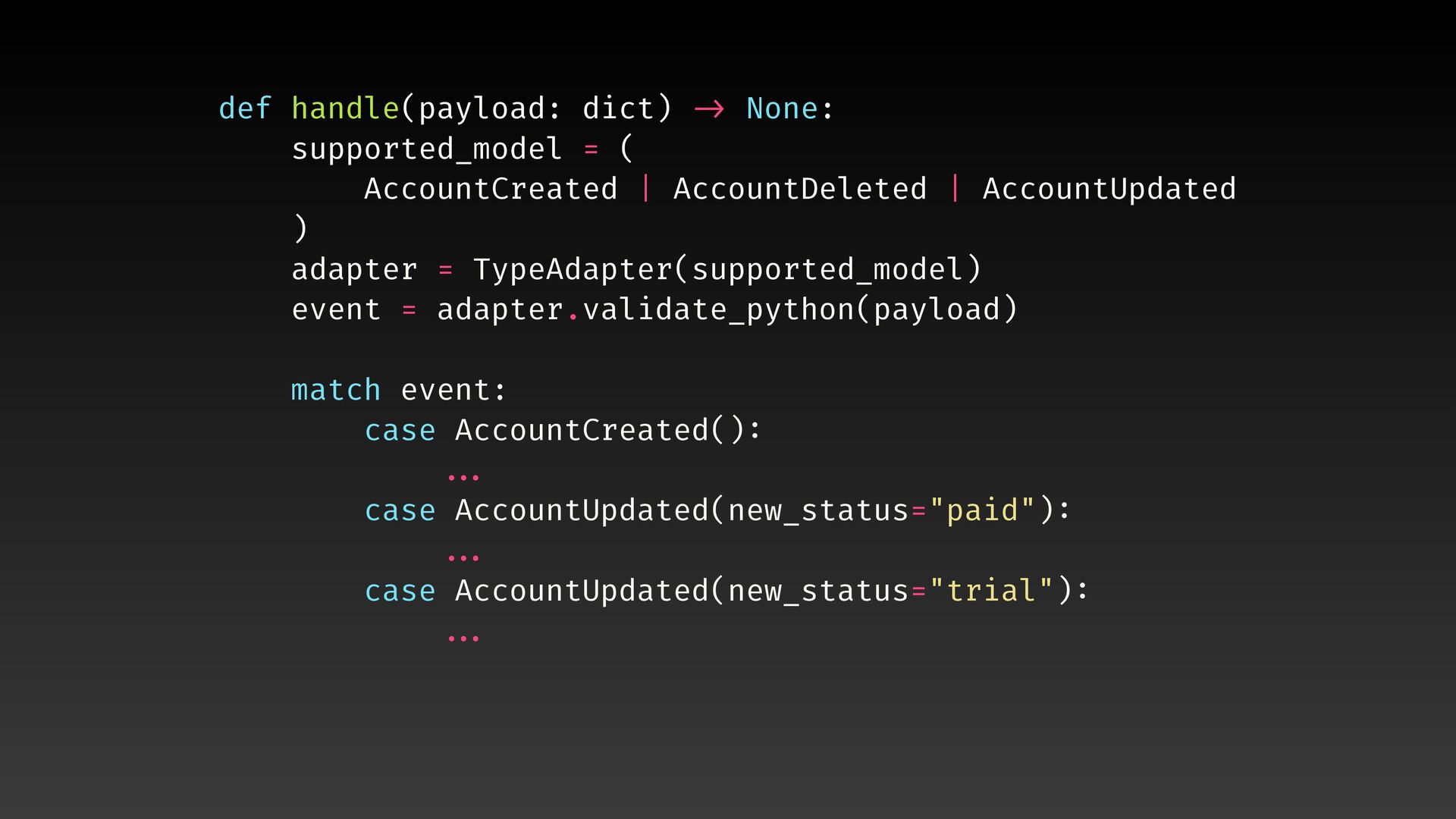
def handle(payload: dict) -> None: supported_model = ( AccountCreated |
AccountDeleted | AccountUpdated ) adapter = TypeAdapter(supported_model) event = adapter.validate_python(payload) match event: case AccountCreated() : ... case AccountUpdated(new_status="paid") : ... case AccountUpdated(new_status="trial") : ... -
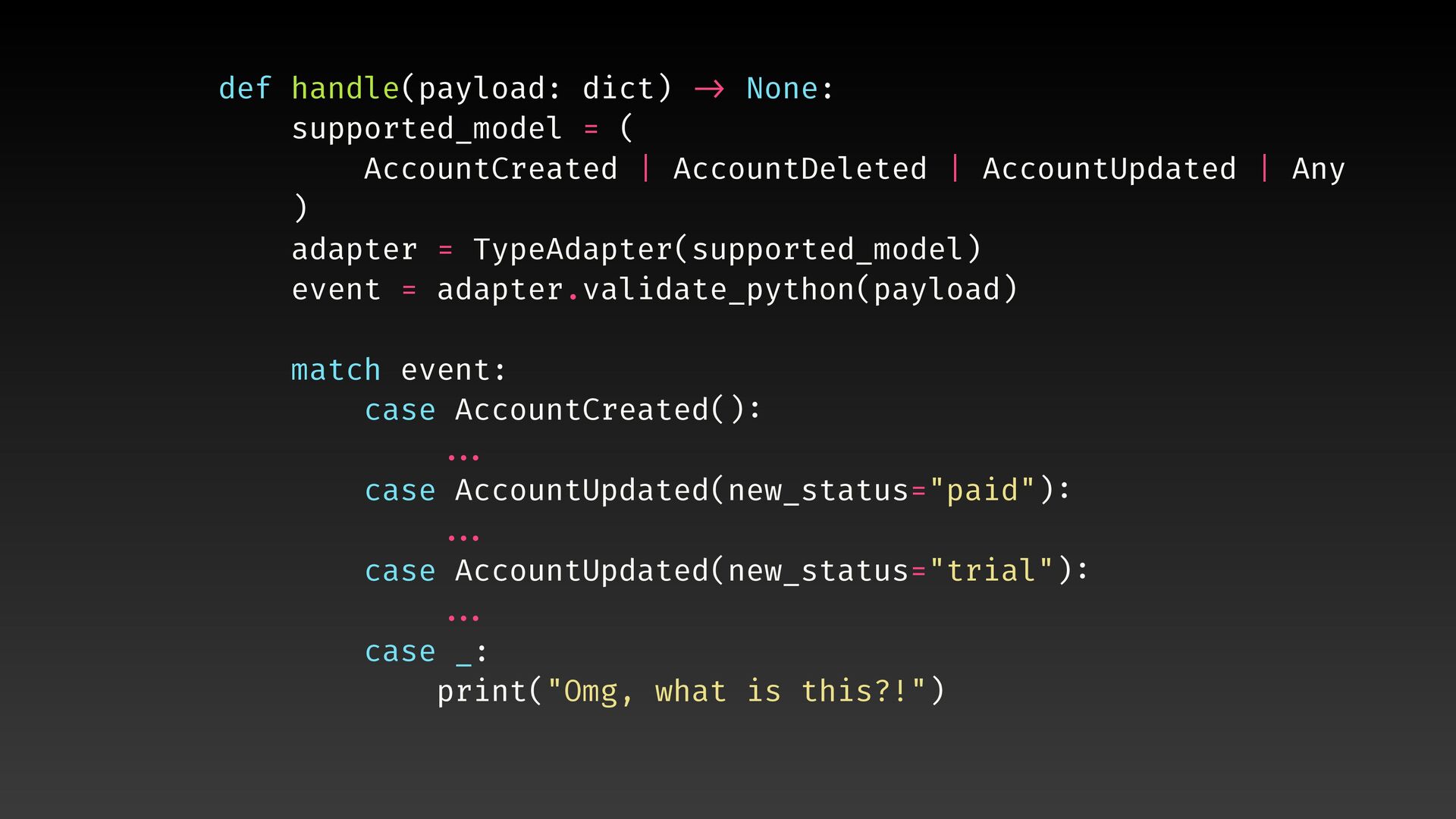
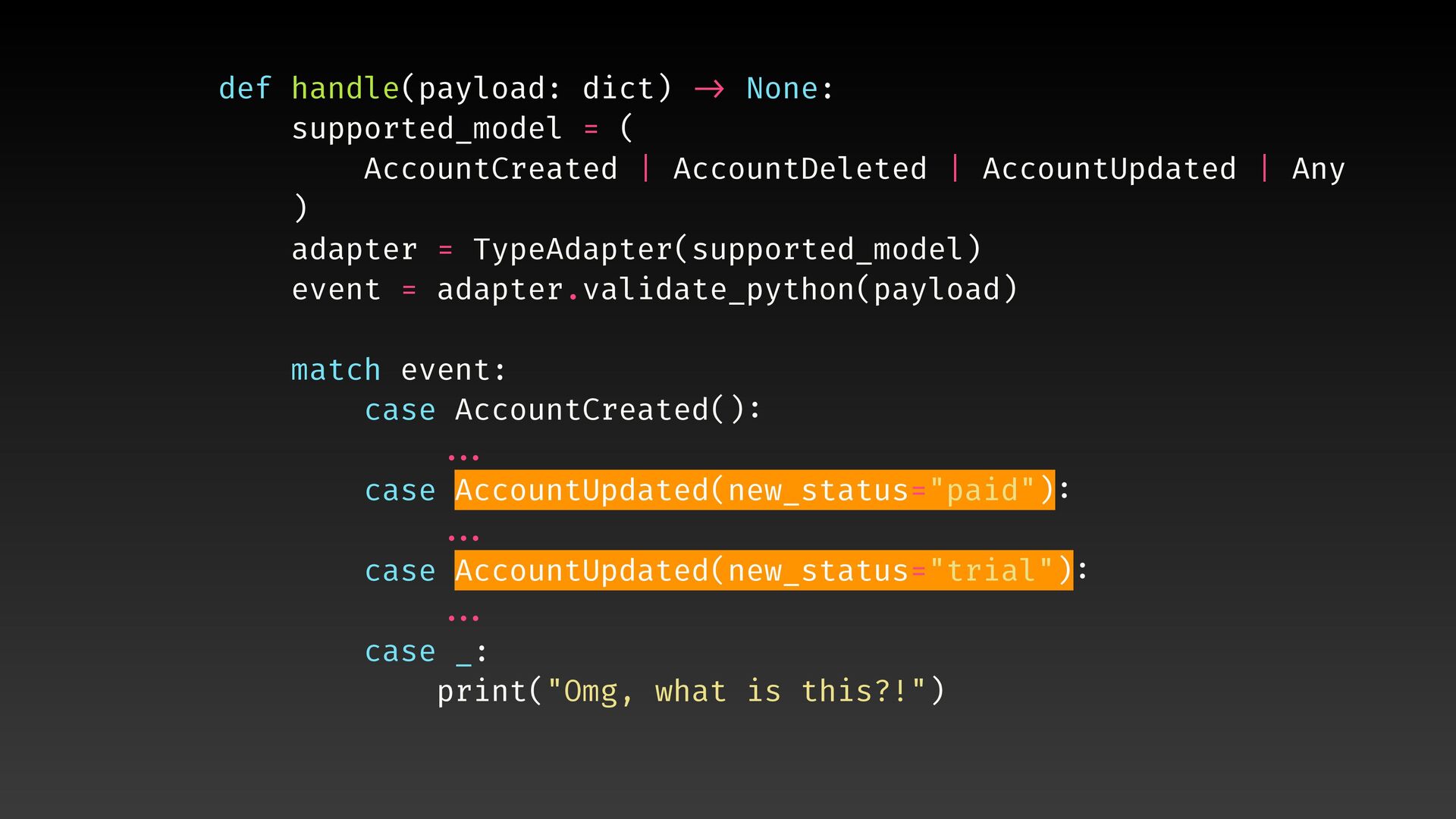
def handle(payload: dict) -> None: supported_model = ( AccountCreated |
AccountDeleted | AccountUpdated | Any ) adapter = TypeAdapter(supported_model) event = adapter.validate_python(payload) match event: case AccountCreated() : ... case AccountUpdated(new_status="paid") : ... case AccountUpdated(new_status="trial") : ... case _: print("Omg, what is this?!") -
class AccountUpdated(BaseModel) : type: Literal["AccountUpdated"] id: str old_status: Literal["trial", "paid"]
new_status: Literal["trial", "paid"] -
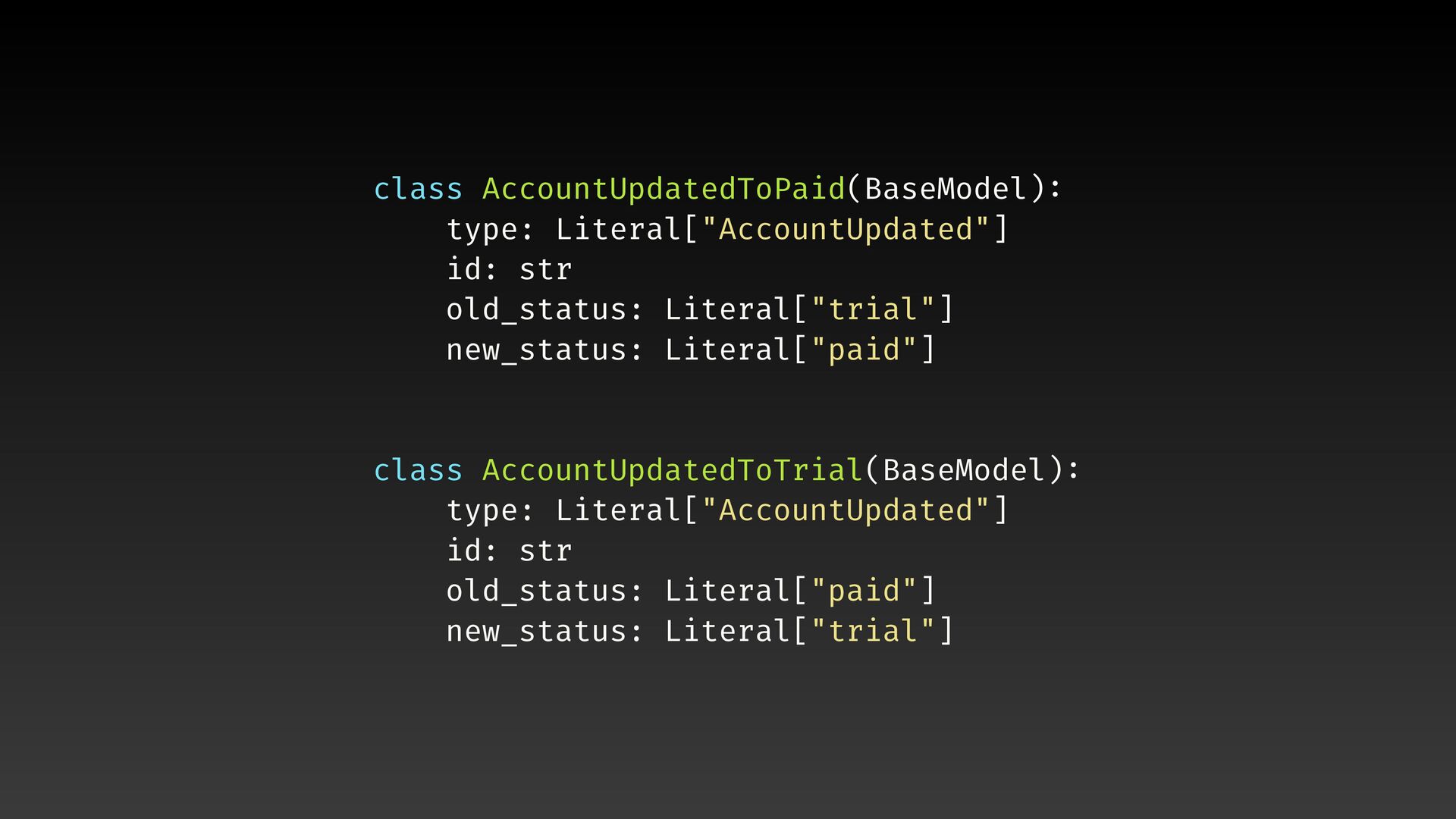
class AccountUpdatedToPaid(BaseModel) : type: Literal["AccountUpdated"] id: str old_status: Literal["trial"] new_status:
Literal["paid"] class AccountUpdatedToTrial(BaseModel) : type: Literal["AccountUpdated"] id: str old_status: Literal["paid"] new_status: Literal["trial"] -
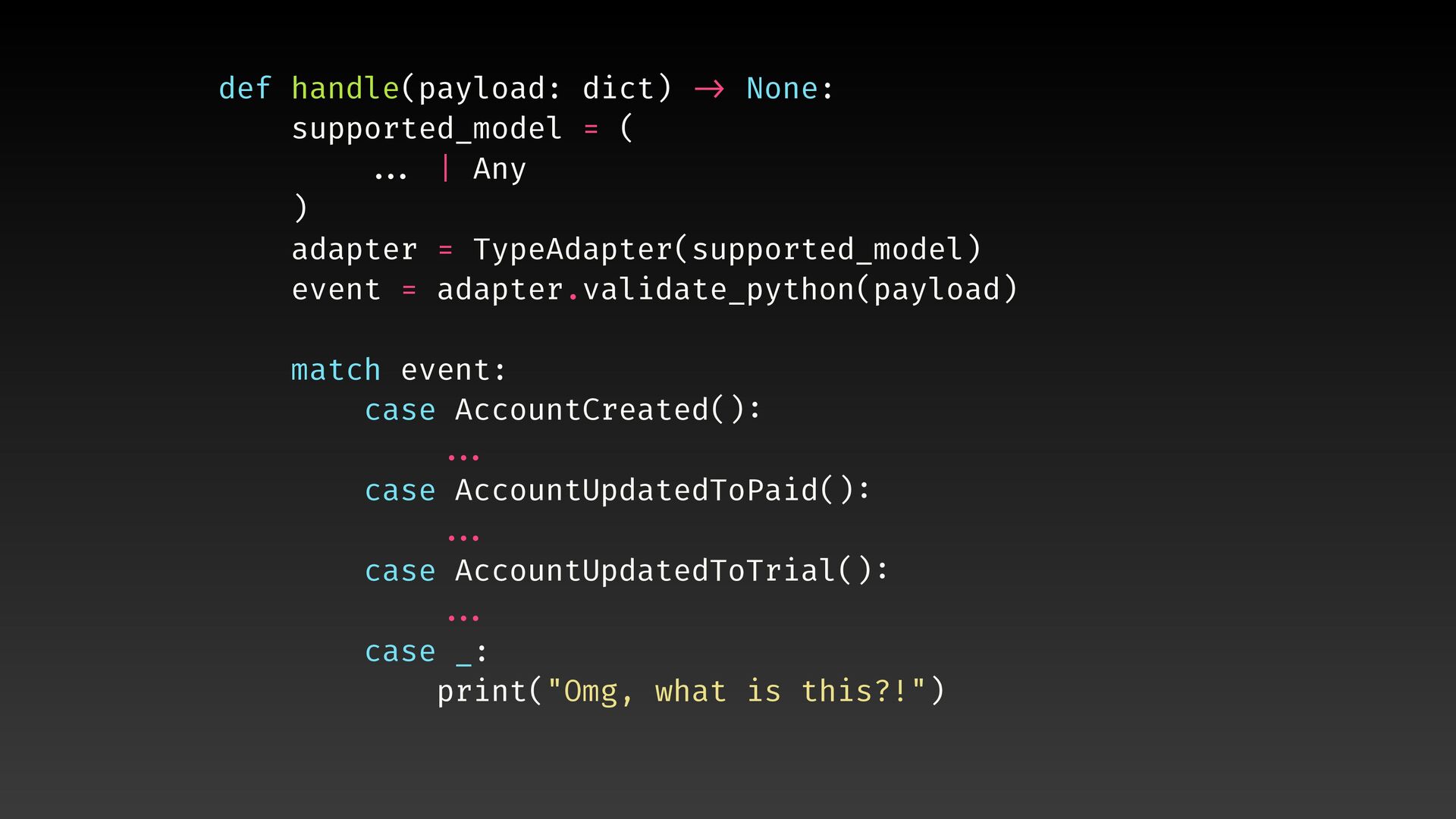
def handle(payload: dict) -> None: supported_model = ( ... |
Any ) adapter = TypeAdapter(supported_model) event = adapter.validate_python(payload) match event: case AccountCreated() : ... case AccountUpdatedToPaid() : ... case AccountUpdatedToTrial() : ... case _: print("Omg, what is this?!") -
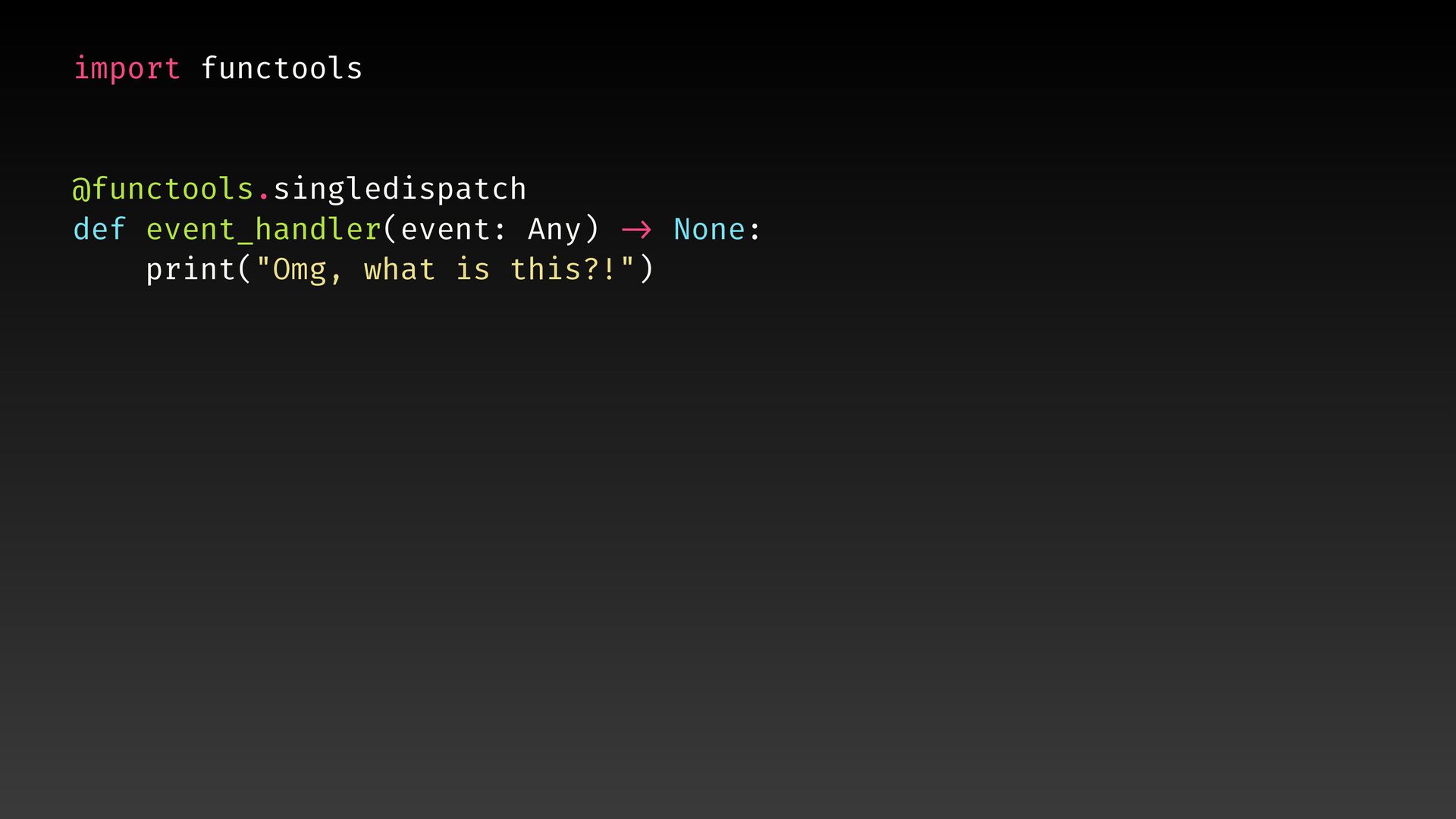
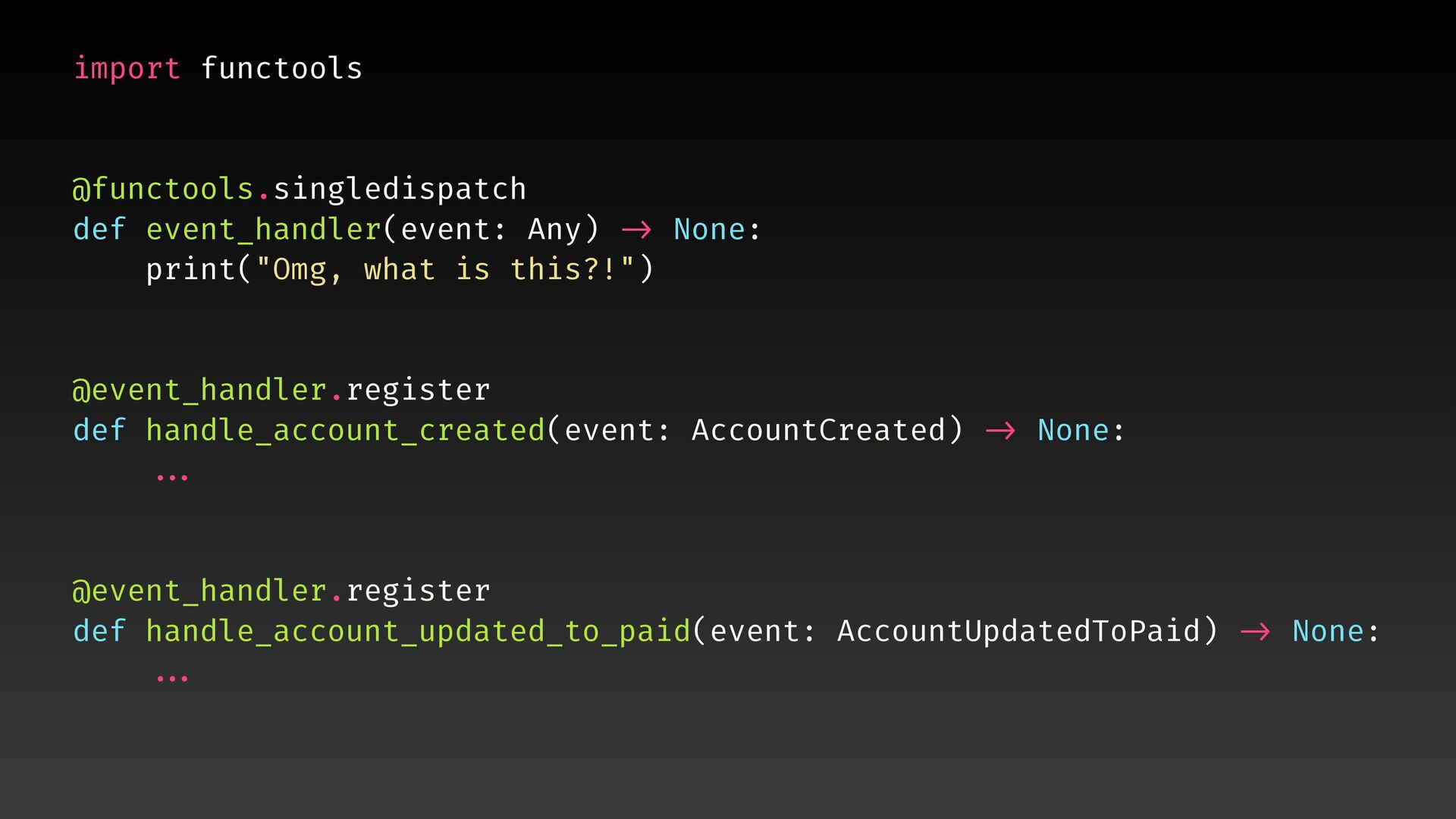
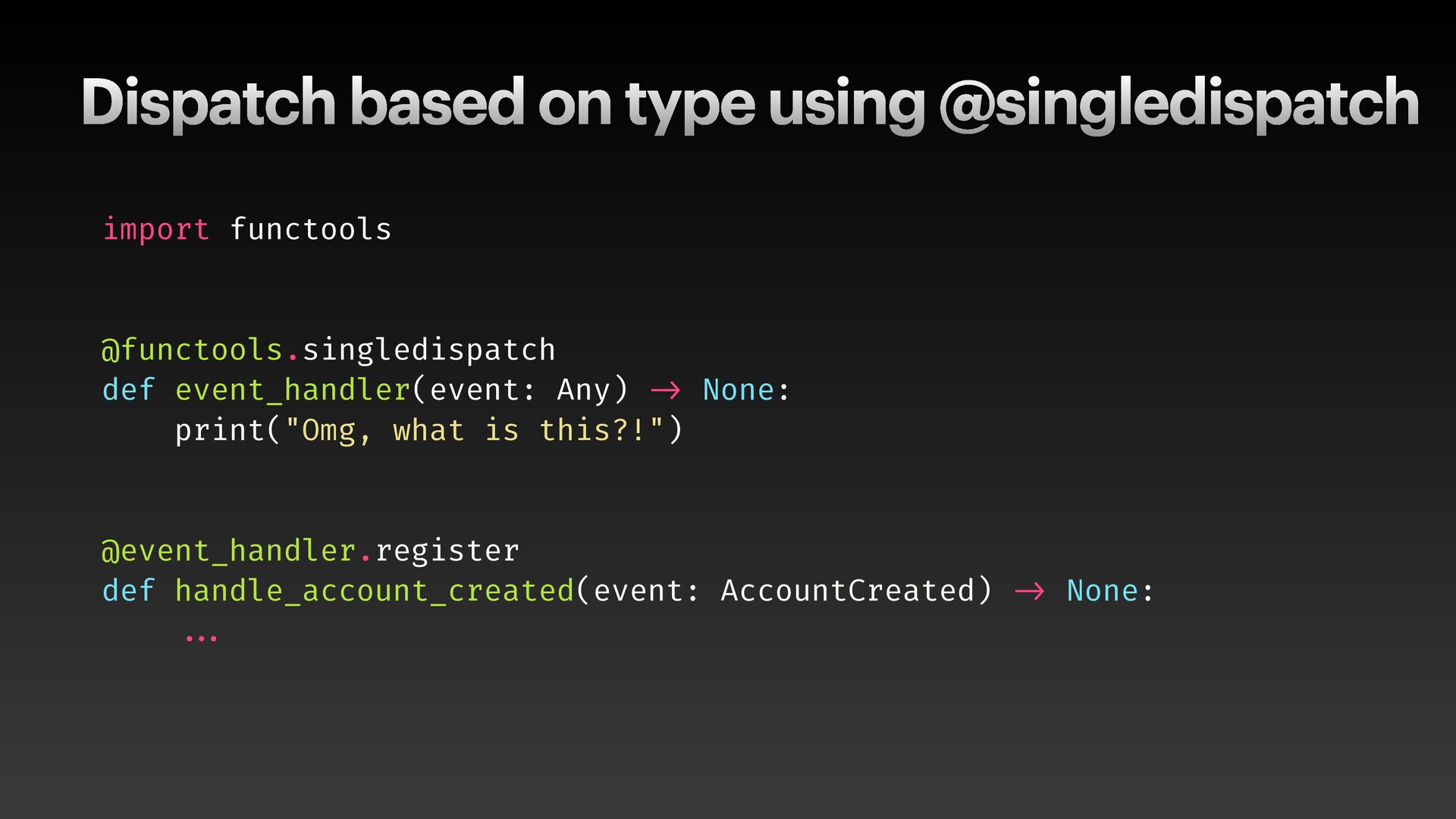
import functools @functools.singledispatch def event_handler(event: Any) -> None: print("Omg, what
is this?!") @event_handler.register def handle_account_created(event: AccountCreated) -> None: ... @event_handler.register def handle_account_updated_to_paid(event: AccountUpdatedToPaid) -> None: ... -
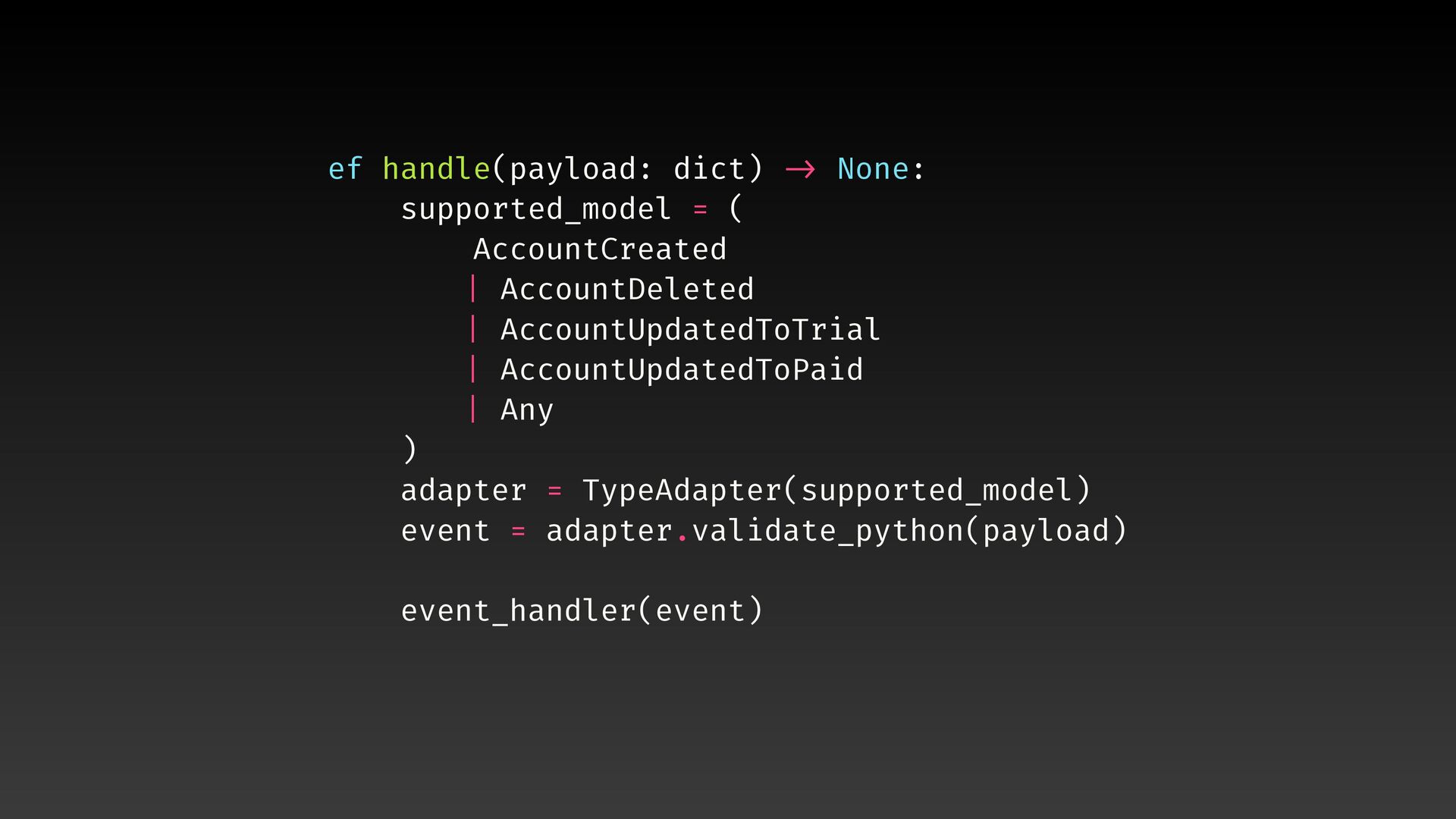
ef handle(payload: dict) -> None: supported_model = ( AccountCreated |
AccountDeleted | AccountUpdatedToTrial | AccountUpdatedToPaid | Any ) adapter = TypeAdapter(supported_model) event = adapter.validate_python(payload) event_handler(event) -
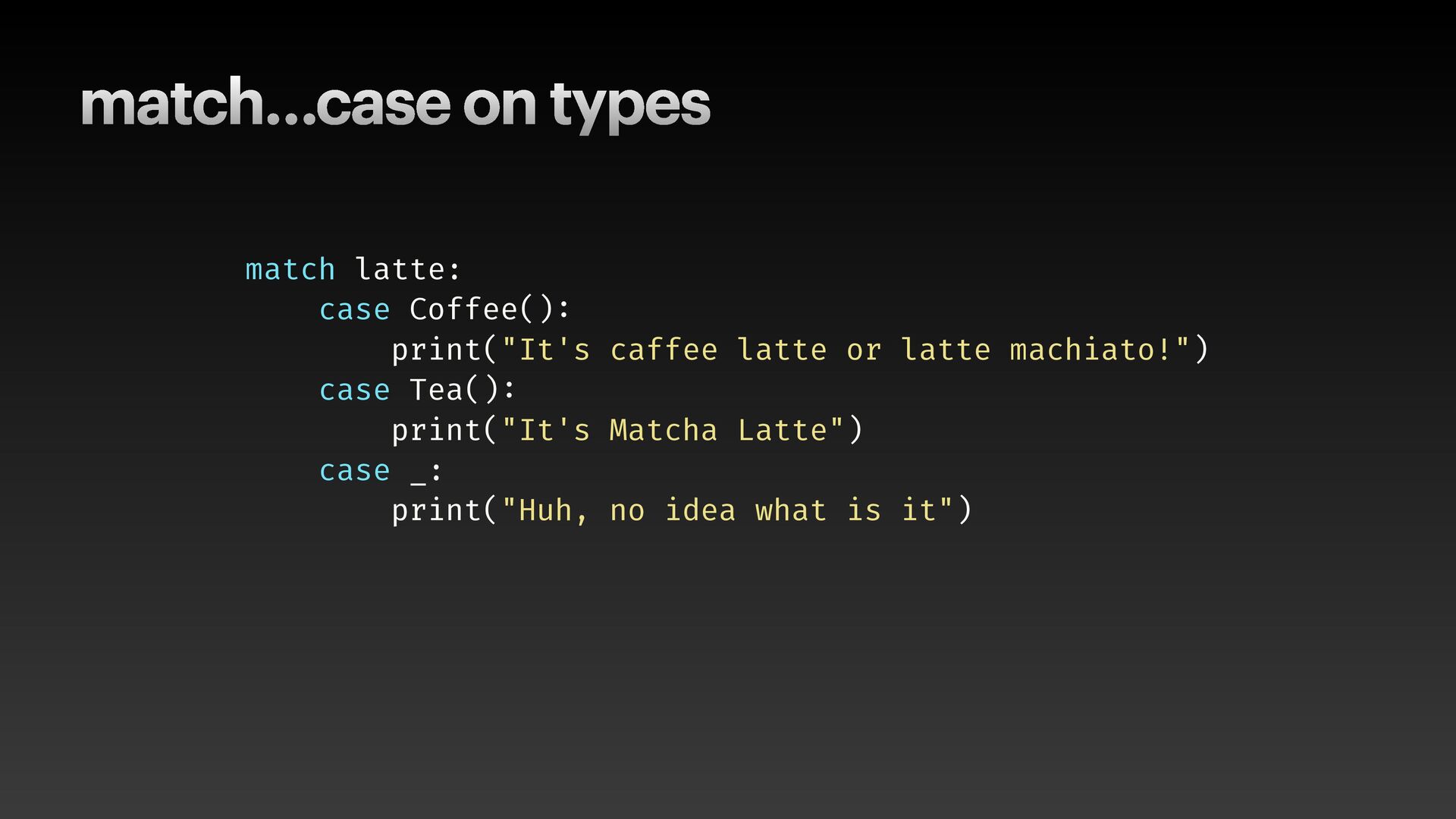
match latte: case Coffee() : print("It's caffee latte or latte
machiato!") case Tea() : print("It's Matcha Latte") case _: print("Huh, no idea what is it") match…case on types -
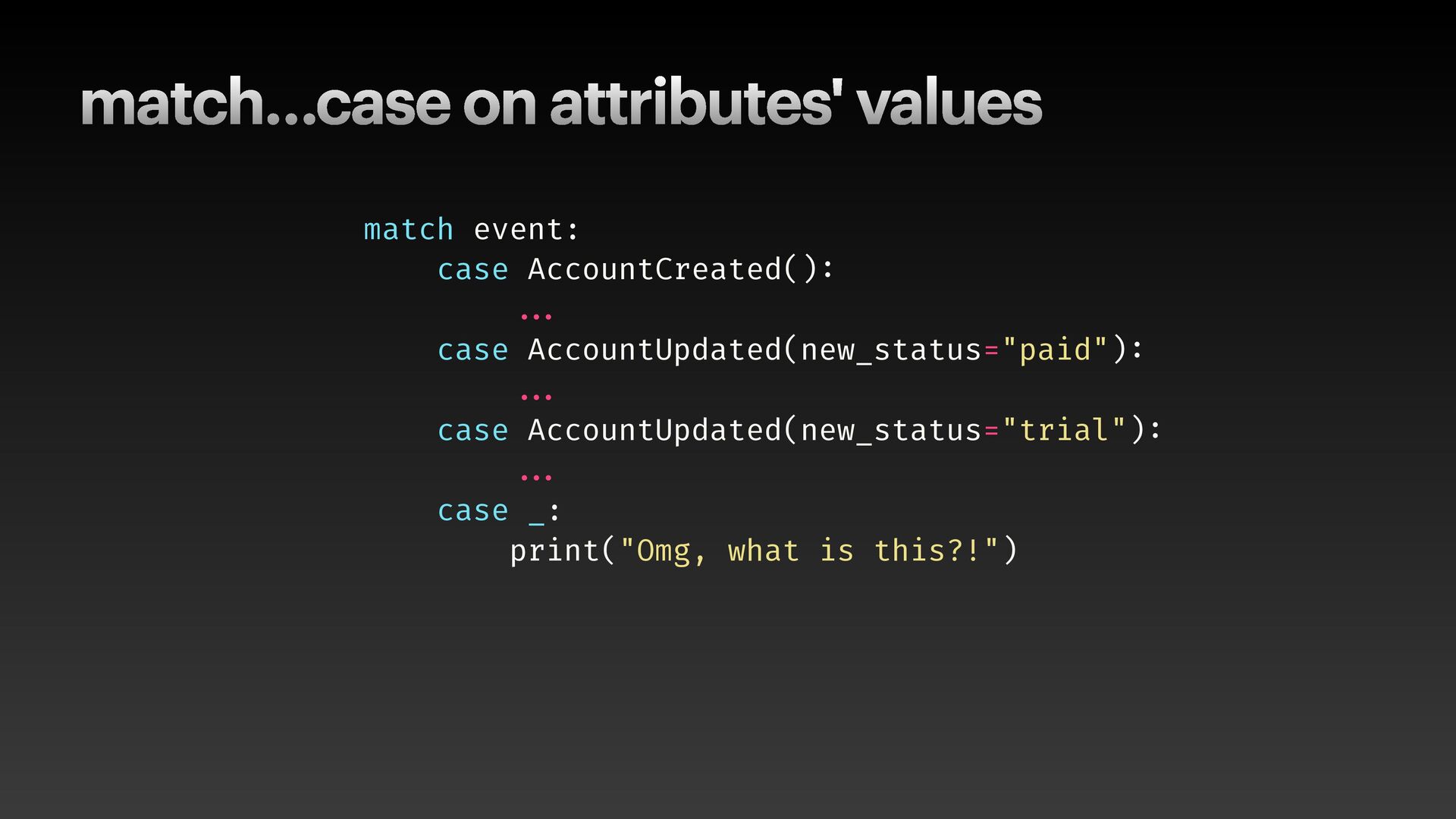
match event: case AccountCreated() : ... case AccountUpdated(new_status="paid") : ...
case AccountUpdated(new_status="trial") : ... case _: print("Omg, what is this?!") match…case on attributes' values -
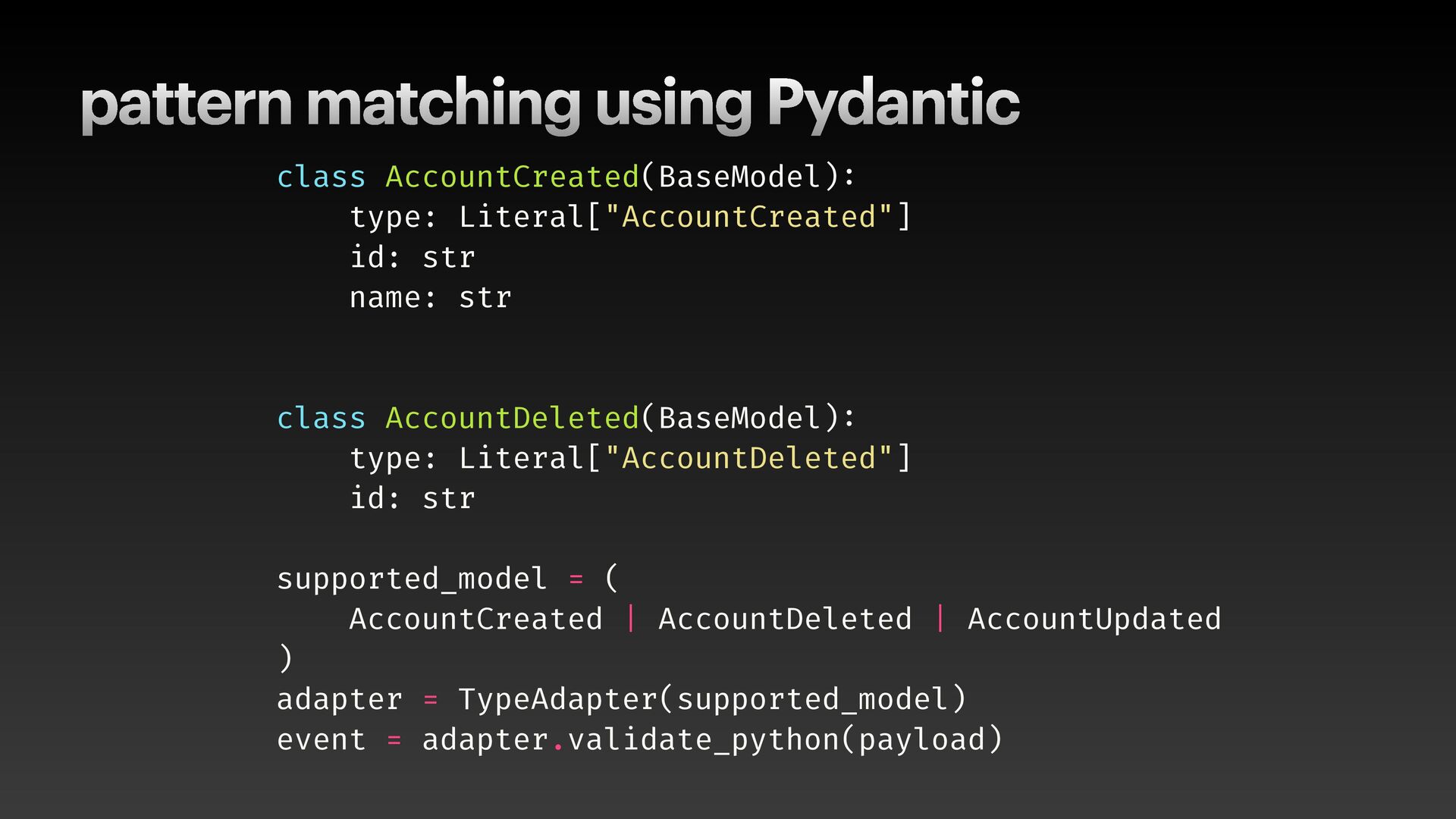
pattern matching using Pydantic class AccountCreated(BaseModel) : type: Literal["AccountCreated"] id:
str name: str class AccountDeleted(BaseModel) : type: Literal["AccountDeleted"] id: str supported_model = ( AccountCreated | AccountDeleted | AccountUpdated ) adapter = TypeAdapter(supported_model) event = adapter.validate_python(payload) -
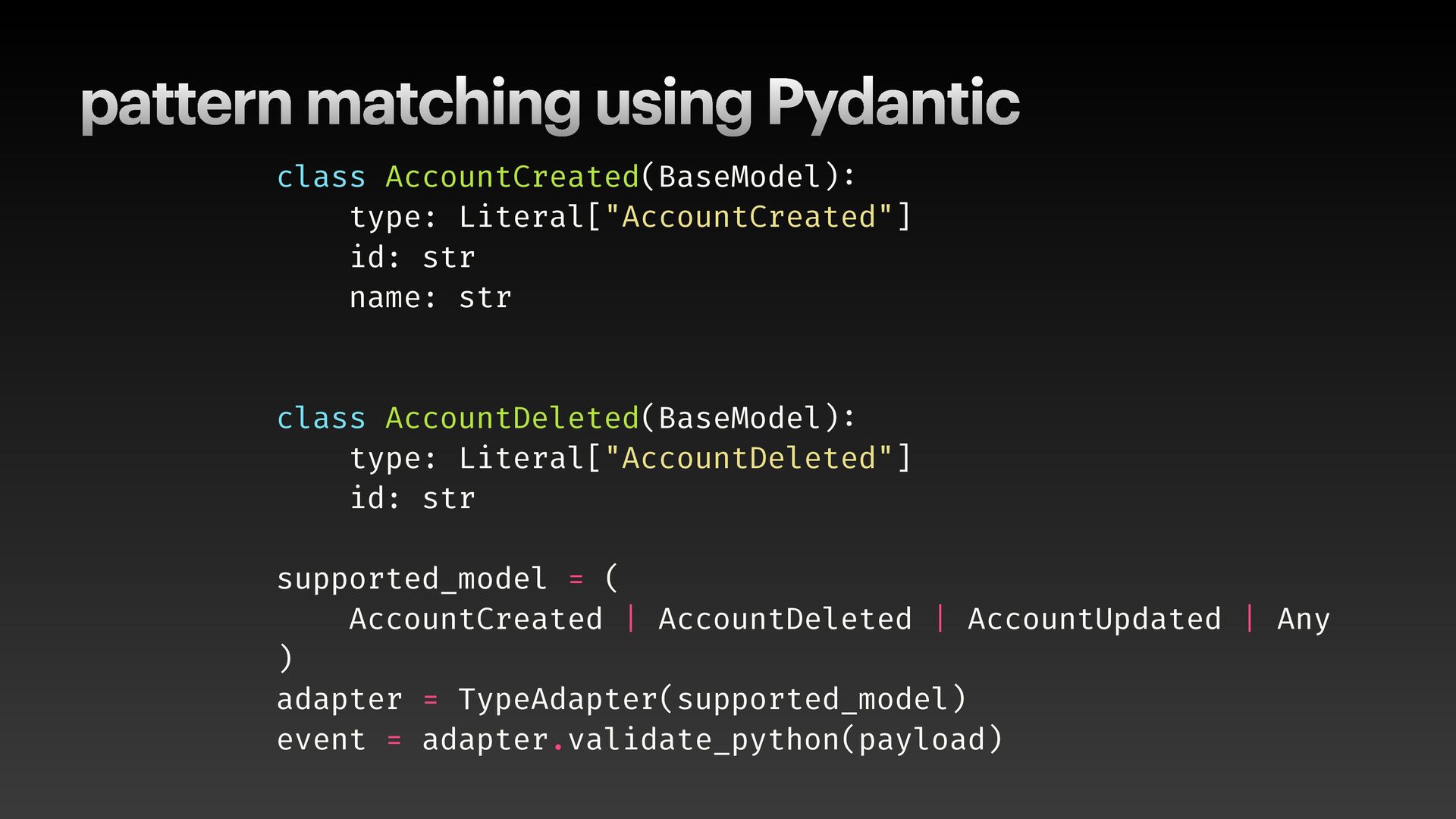
pattern matching using Pydantic class AccountCreated(BaseModel) : type: Literal["AccountCreated"] id:
str name: str class AccountDeleted(BaseModel) : type: Literal["AccountDeleted"] id: str supported_model = ( AccountCreated | AccountDeleted | AccountUpdated | Any ) adapter = TypeAdapter(supported_model) event = adapter.validate_python(payload) -
Dispatch based on type using @singledispatch import functools @functools.singledispatch def
event_handler(event: Any) -> None: print("Omg, what is this?!") @event_handler.register def handle_account_created(event: AccountCreated) -> None: ...