That Feels Alive Skills You Need to Become a Community Manager Career Paths in Community Management Transitioning From Support Roles Into Leadership Conclusion
practice of creating, nurturing, and growing groups of people who share common interests, goals, or experiences. It involves building trust, fostering collaboration, and ensuring members feel a sense of belonging. 01
Empathy: Connect with people by listening deeply and responding authentically. Content Creation & Storytelling: Share content that informs, inspires, and sparks engagement. Analytics & Reporting: Track growth, engagement, and retention to show impact and adjust strategies. 02
Design systems and initiatives that align with long-term goals. Event Hosting & Facilitation: Run interactive online/offline events to boost energy and build bonds. Networking & Collaboration: Partner with other teams, organizations, or influencers to strengthen community impact. 03
in roles like customer support, social media management, or as active volunteers. Growth happens when you shift from reactive tasks (answering questions, fixing issues) to proactive leadership (shaping culture, leading initiatives, setting systems). Leadership means creating an environment where members thrive, collaborate, and grow, even without your constant presence. 04
empower volunteers. Celebrate milestones, birthdays, wins, and success stories to humanize the community. Introduce consistent activities: AMAs, challenges, workshops, or study groups, to keep engagement alive. Actively ask for member feedback and involve them in decision-making. Keep the mission, vision, and values visible so members feel aligned and motivated. 05
rules are followed and discussions stay respectful. Community Coordinator: Organizes activities, manages content schedules, and supports operations. Community Manager: Builds engagement strategies, manages growth, and represents the community’s voice. 06
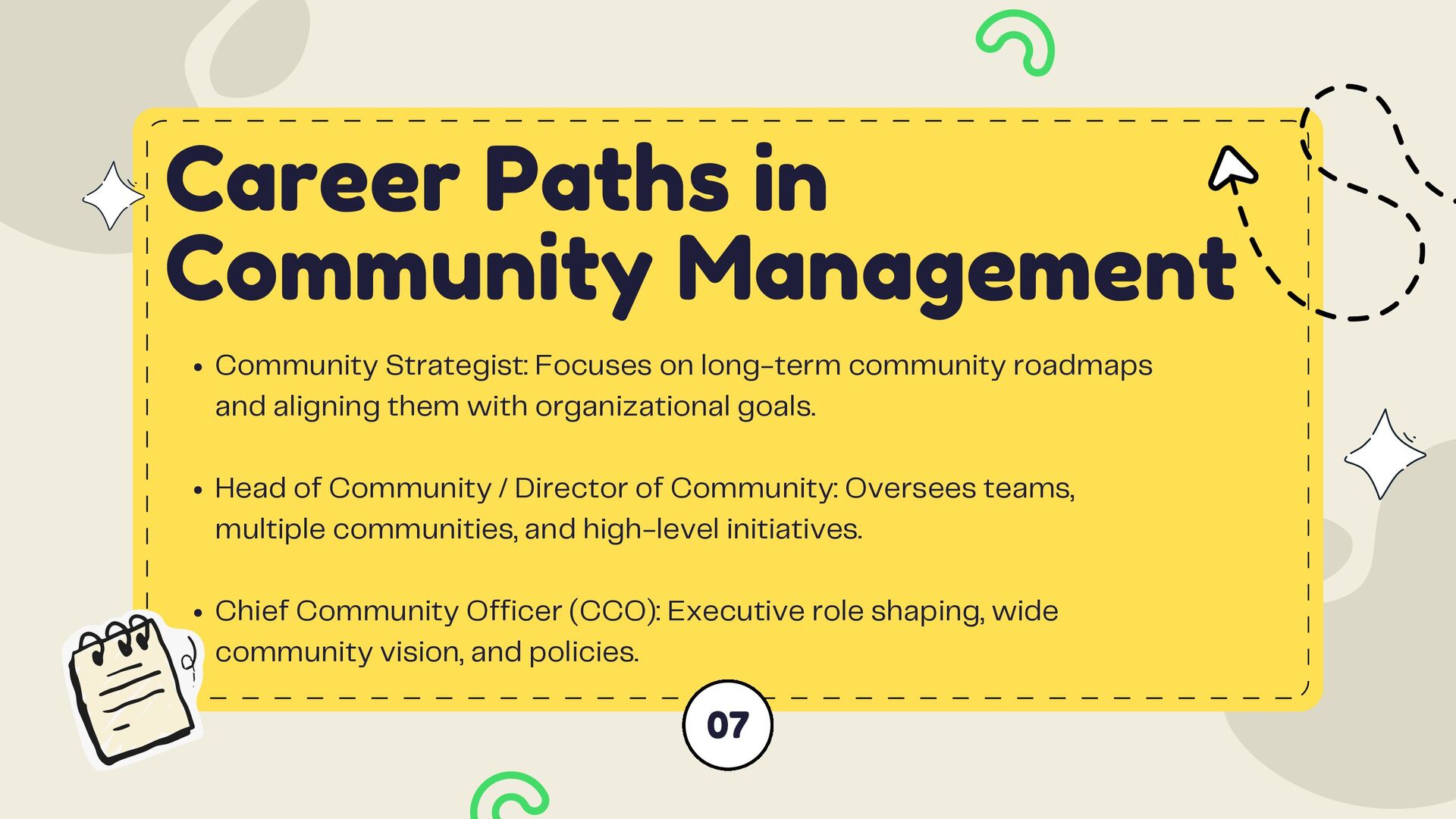
community roadmaps and aligning them with organizational goals. Head of Community / Director of Community: Oversees teams, multiple communities, and high-level initiatives. Chief Community Officer (CCO): Executive role shaping, wide community vision, and policies. 07
up regularly. Prioritize value over numbers: An engaged small community is more impactful than a large silent one. Create experiences, not just content: People remember how you made them feel. 08
thrives even when you're not there. Stay adaptable: Communities evolve; successful managers learn, adjust, and innovate in response to change. Invest in personal growth: Learn from other managers, attend conferences, and keep upgrading your skills. 09


 yazm
 namiki64
 codmoninc
 odashi
 persolserverworks
 carta_engineering
 riyaamemiya
 kash1064
 techtekt
 shumei_ito
 kairim0
 rfdnxbro
 aarron
 geshan
 ryanjones
 baasie
 skipperchong
 addyosmani
 katarinadahlin
 cassininazir
 takai
 tmiket
 aleyda
 ipullrank