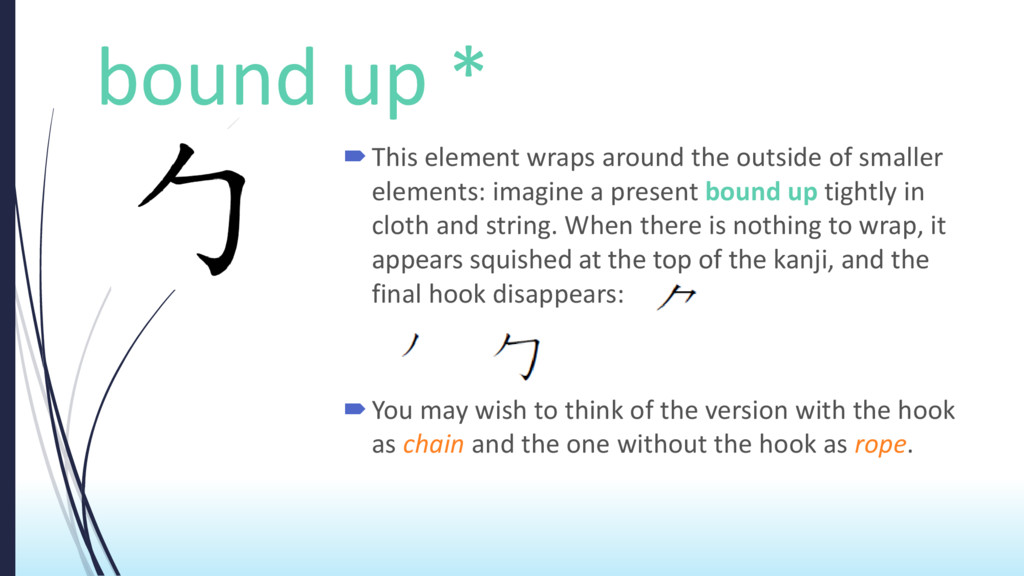
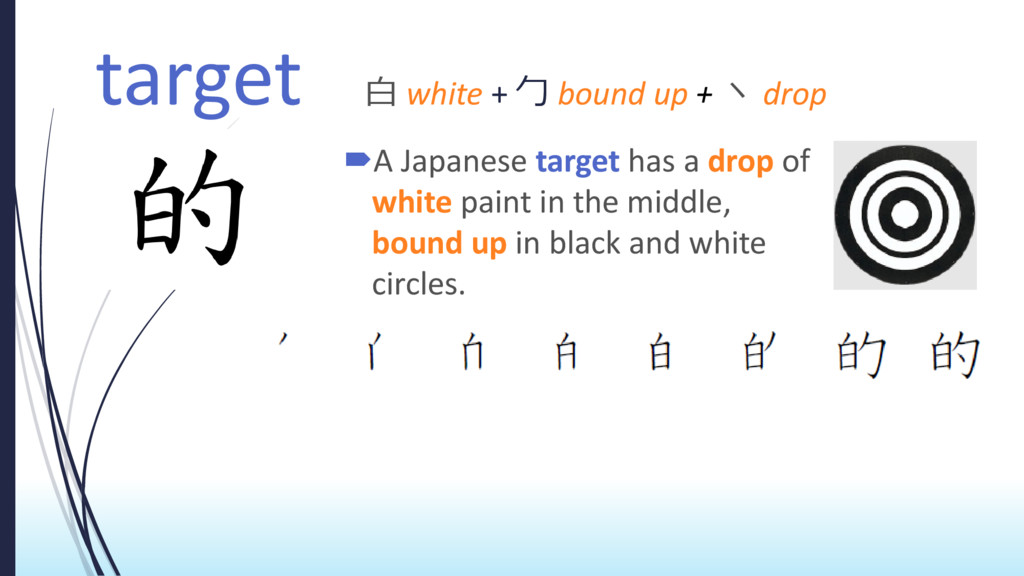
smaller elements: imagine a present bound up tightly in cloth and string. When there is nothing to wrap, it appears squished at the top of the kanji, and the final hook disappears: You may wish to think of the version with the hook as chain and the one without the hook as rope.
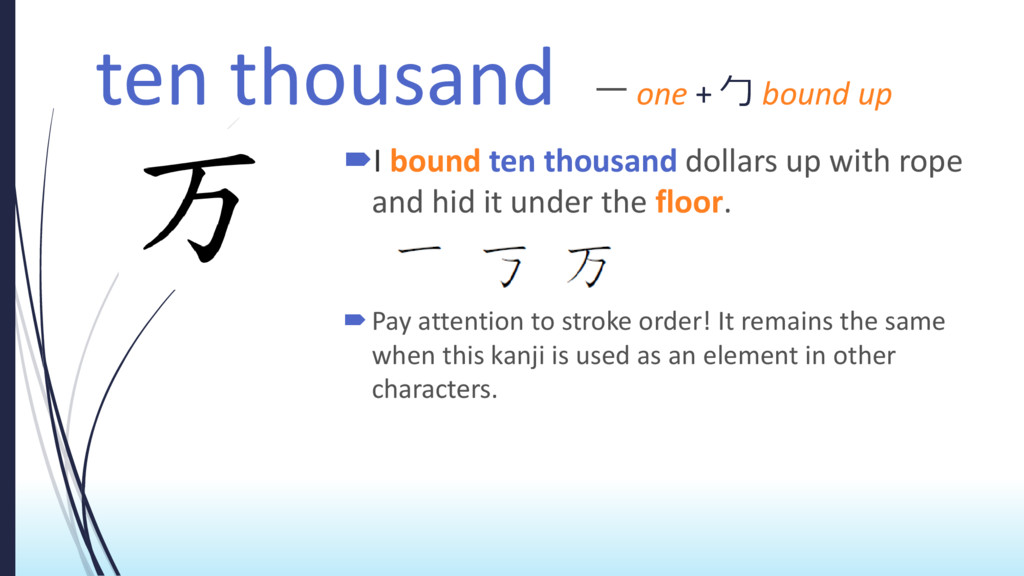
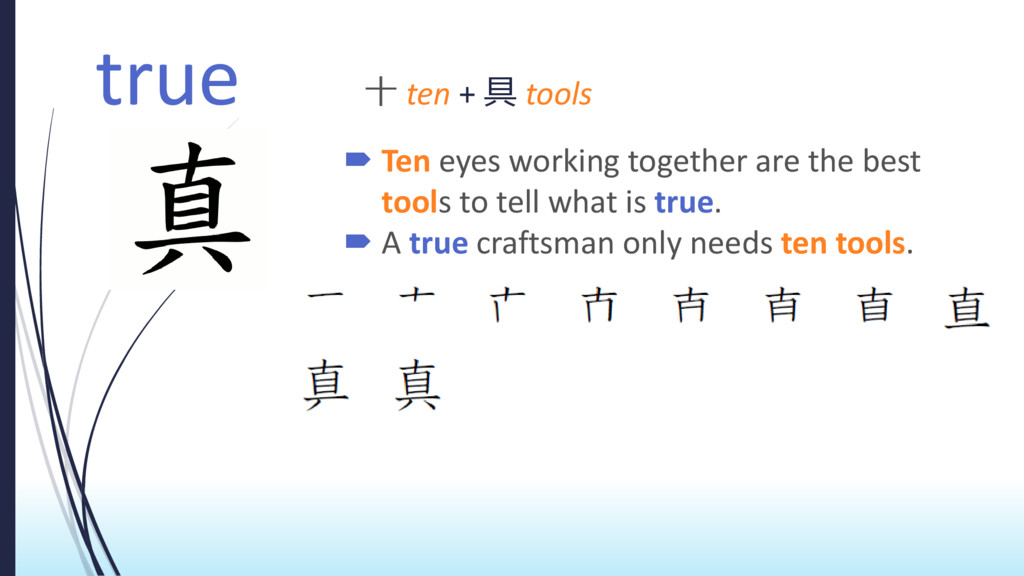
ten thousand dollars up with rope and hid it under the floor. Pay attention to stroke order! It remains the same when this kanji is used as an element in other characters.
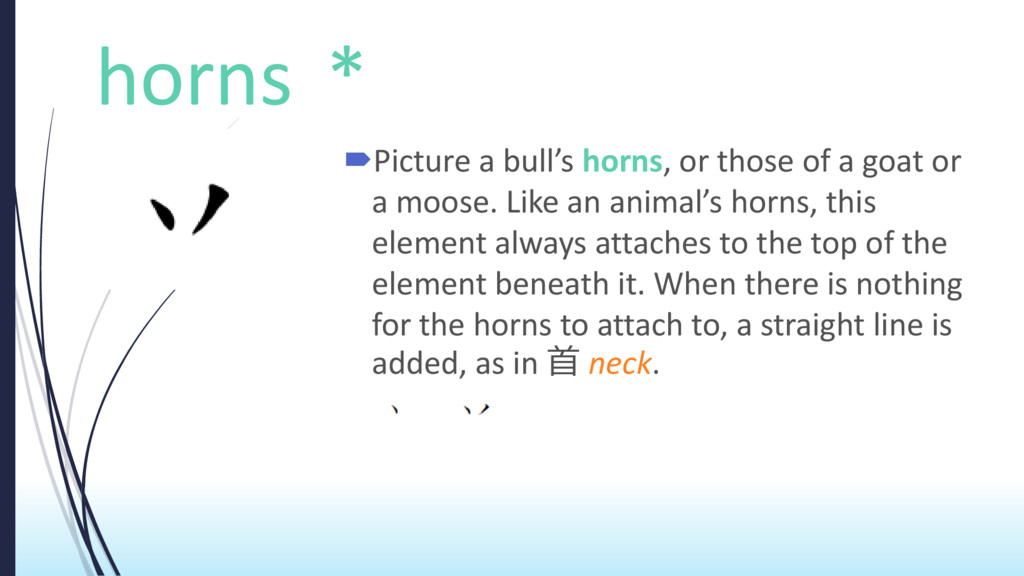
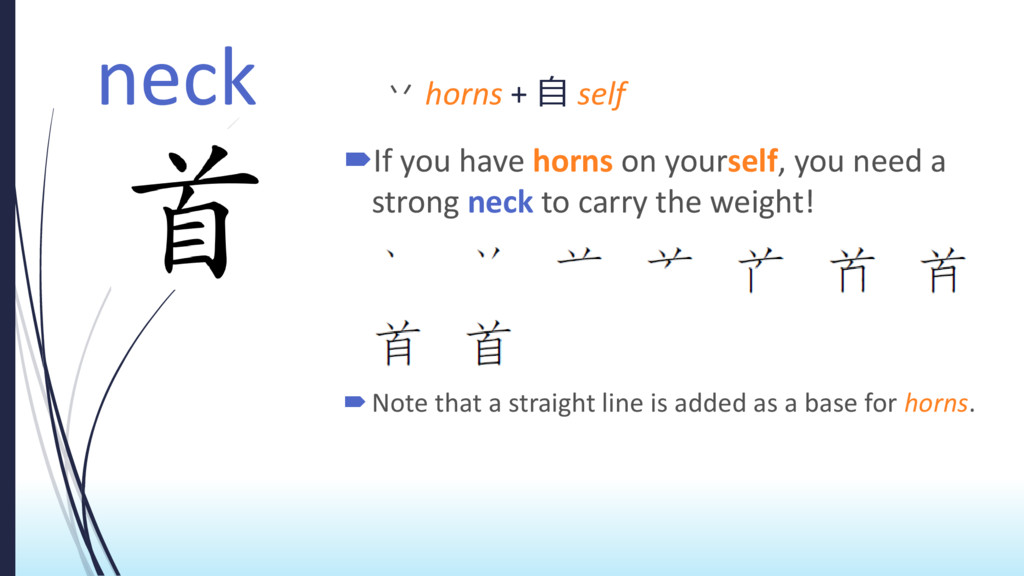
goat or a moose. Like an animal’s horns, this element always attaches to the top of the element beneath it. When there is nothing for the horns to attach to, a straight line is added, as in 首 neck.
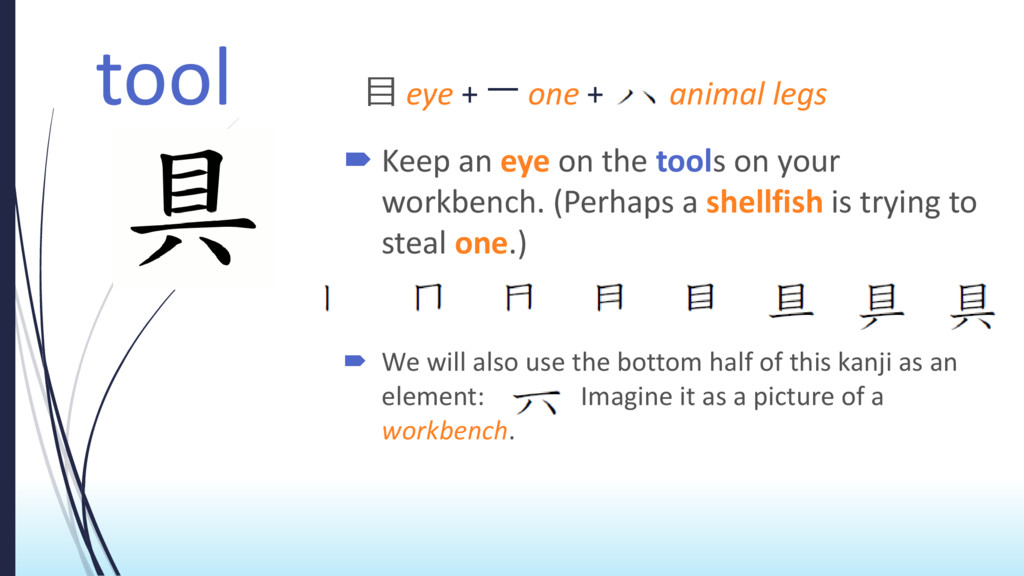
Keep an eye on the tools on your workbench. (Perhaps a shellfish is trying to steal one.) We will also use the bottom half of this kanji as an element: Imagine it as a picture of a workbench.
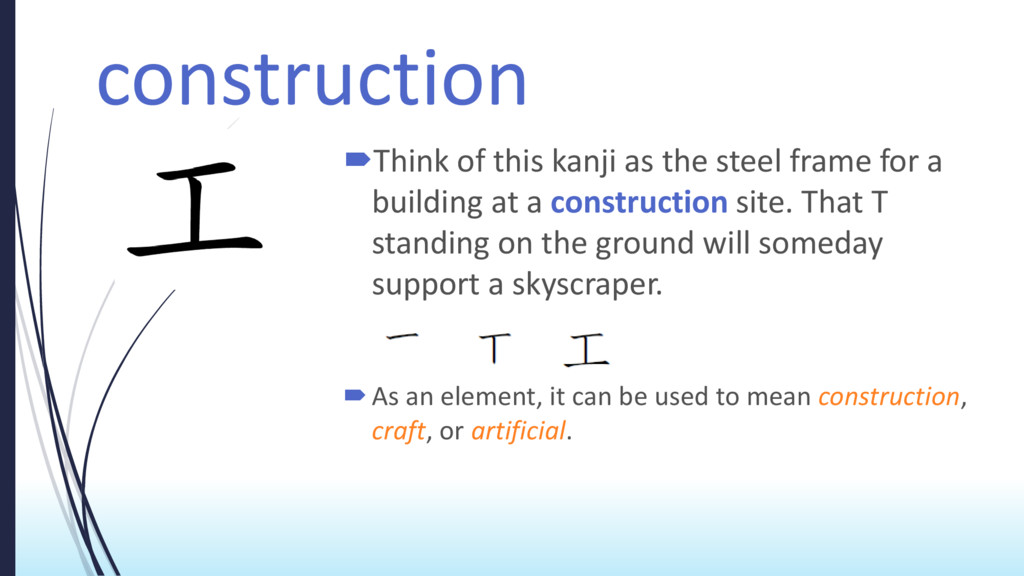
a building at a construction site. That T standing on the ground will someday support a skyscraper. As an element, it can be used to mean construction, craft, or artificial.
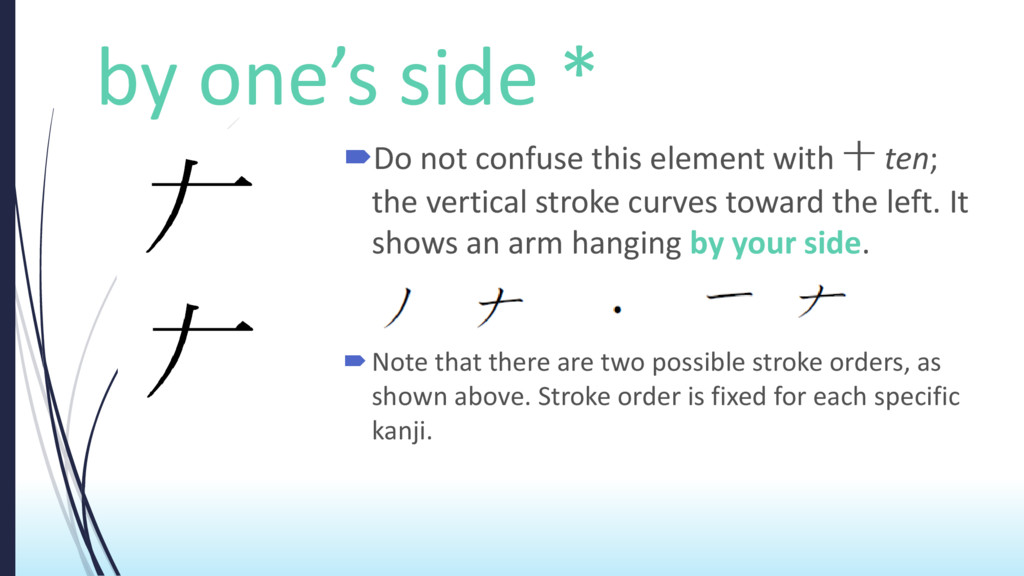
十 ten; the vertical stroke curves toward the left. It shows an arm hanging by your side. Note that there are two possible stroke orders, as shown above. Stroke order is fixed for each specific kanji.
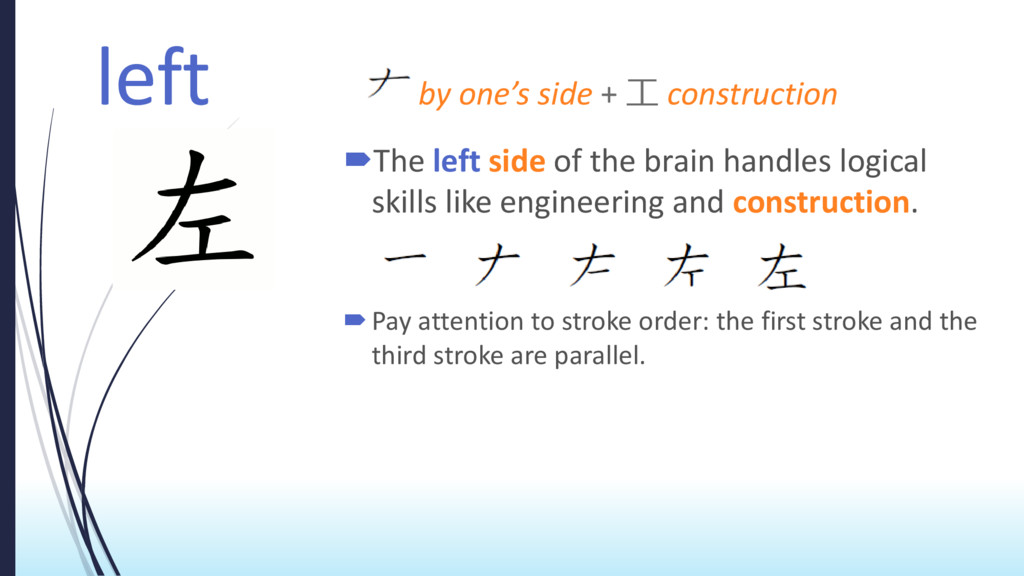
of the brain handles logical skills like engineering and construction. Pay attention to stroke order: the first stroke and the third stroke are parallel.
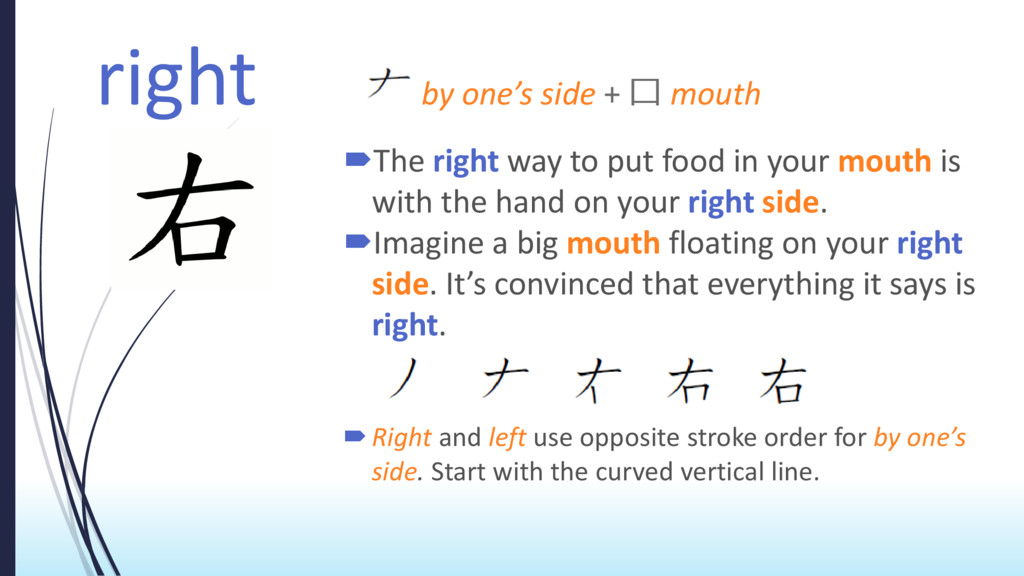
to put food in your mouth is with the hand on your right side. Imagine a big mouth floating on your right side. It’s convinced that everything it says is right. Right and left use opposite stroke order for by one’s side. Start with the curved vertical line.


 etardiff
 akihiro_kokubo
 moore
moore
 aleyda
 sarafernandez
 lauravandoore
 sferik
 csswizardry
 inesmontani
 brad_frost
 reverentgeek
 varn
varn
 sabderemane