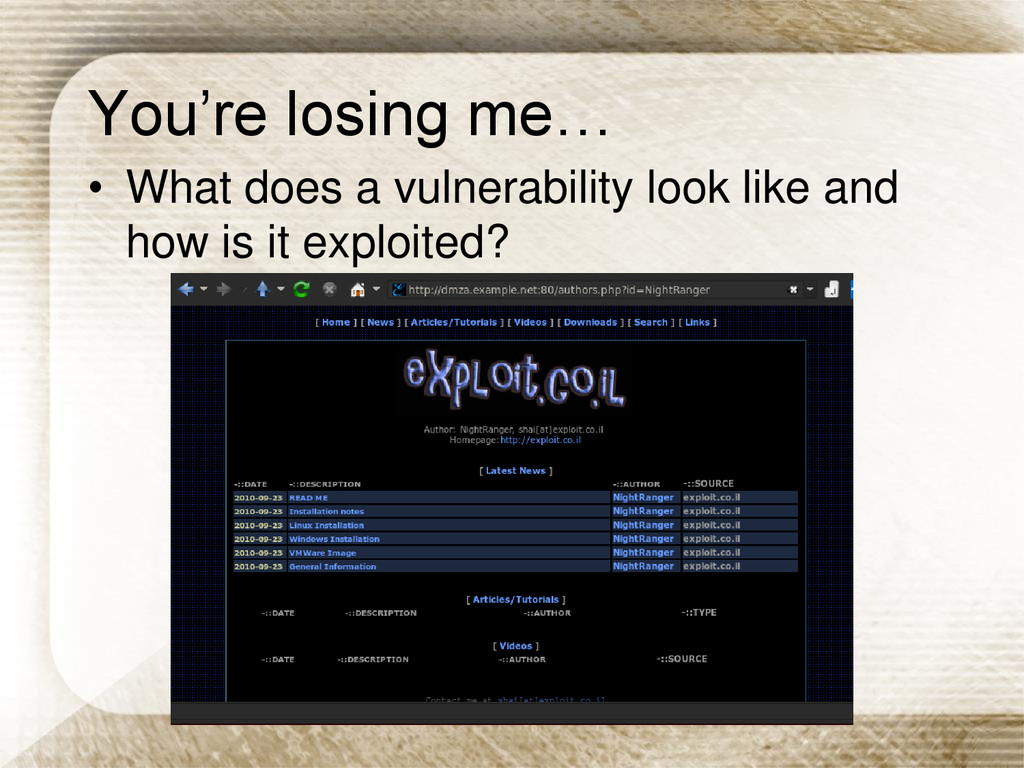
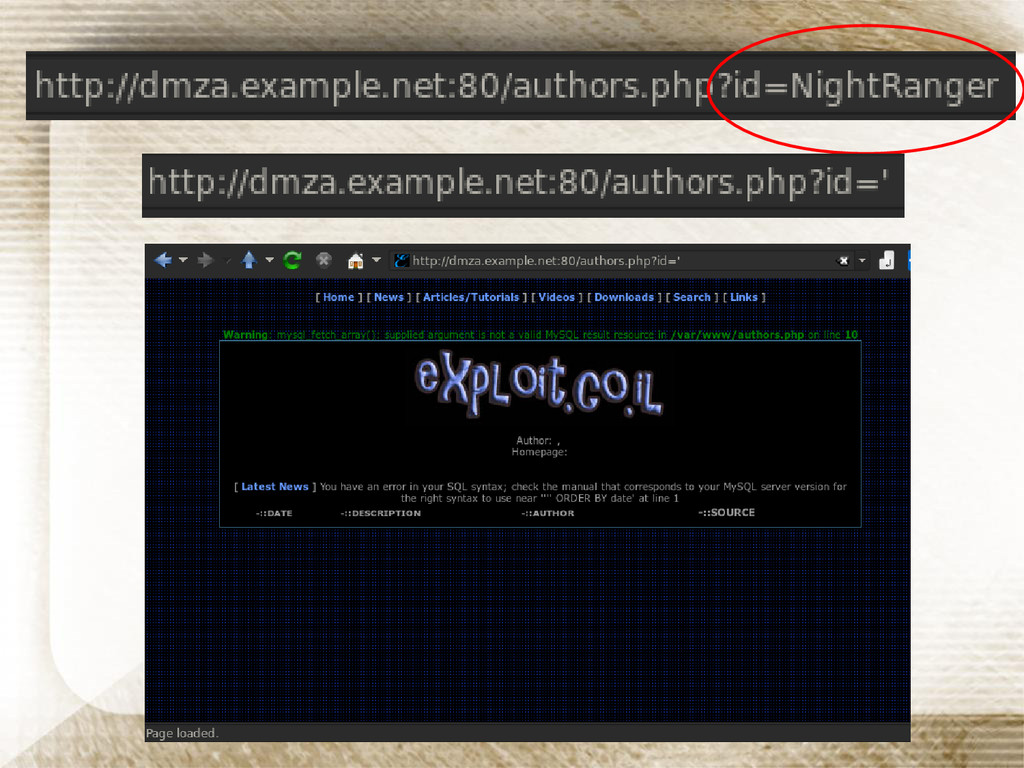
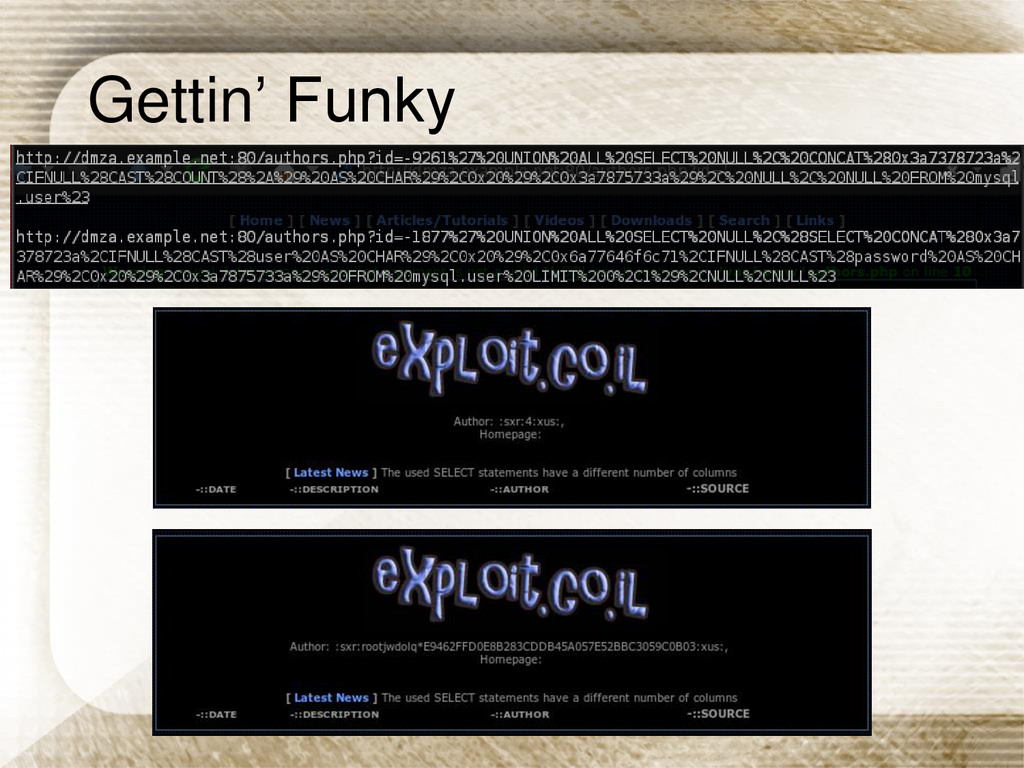
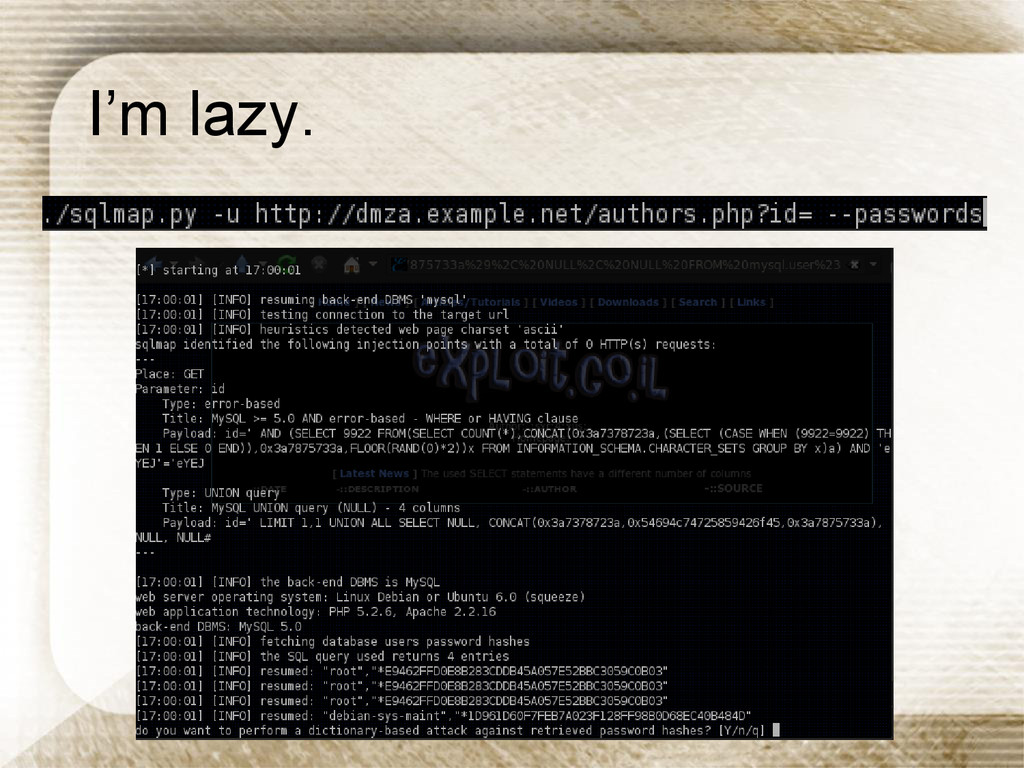
that allow the software to behave in an unexpected manner. • So what? – Vulnerabilities lead to “exploits”, the malicious usage of a vulnerability to disrupt or misuse the software. • One of the functions of “IT Security” is the prevention of this malicious activity. – This can be through inclusion in the SDLC or through controls that exist external to the SDLC.
on security (a little) and are told to use “secure development patterns”. • Does this work? – Security is NOT a developer priority – features are. – Developer skill and knowledge varies – and security is very specialized. – Development means “figuring out how to make it work”. When it’s working then security elements are typically added.
is happening, sometimes “static code analysis” is done. – But few developers understand the results. • When development and testing are complete, the application is scanned with “dynamic analysis” and “penetration testing”. • Security-related bugs are found and quickly patched by development just before the application goes to Production. – Usually by developers who have already moved on to building the next feature.
secure code. • Scanning and remediating issues helps harden the application. • Having individuals trained in security performing development and interpreting scan results means more secure code.
have a high turnover rate. • Future application updates tend to introduce new vulnerabilities… and aren’t always subject to full security scanning. – SDLCs move FAST now! • Security bugs are usually classified as less important than bugs in functionality.
– The “perimeter” is gone. – The world is moving faster. – The attackers are getting better. • “With more attacks, more applications, less control, and less time to work, I can’t keep up.” – A Security Guy
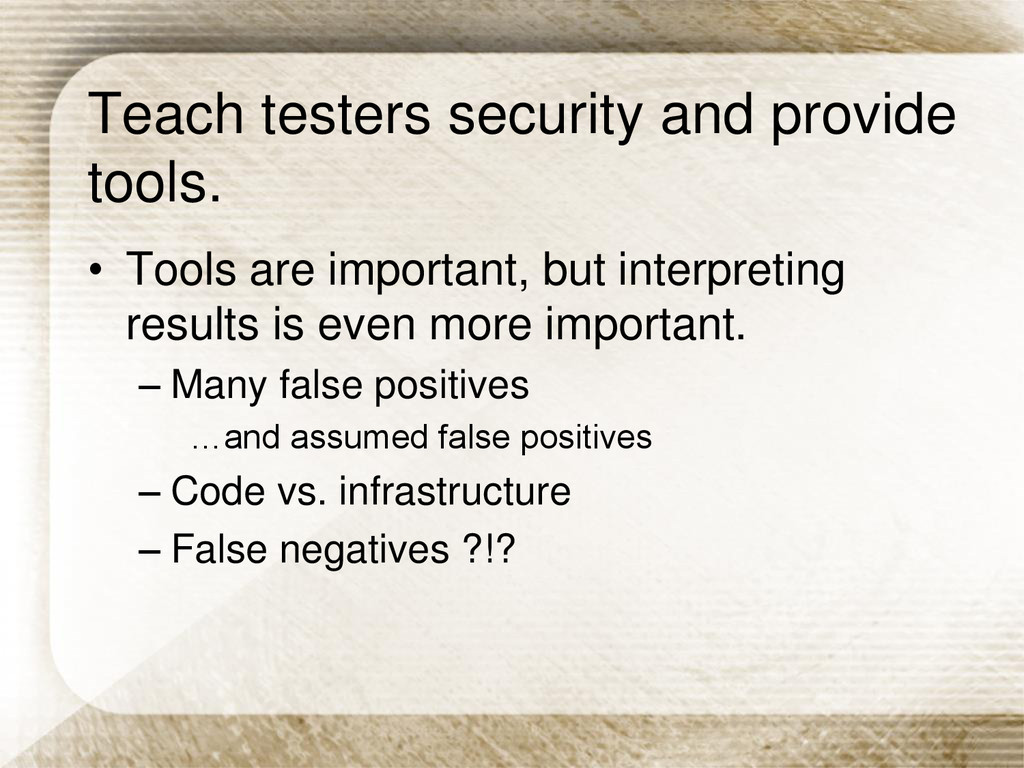
the security guys can be used by anyone as long as they can interpret the results. • This is no different from other forms of application testing; it’s just different use cases. • Tools + knowledge = Better testing results!
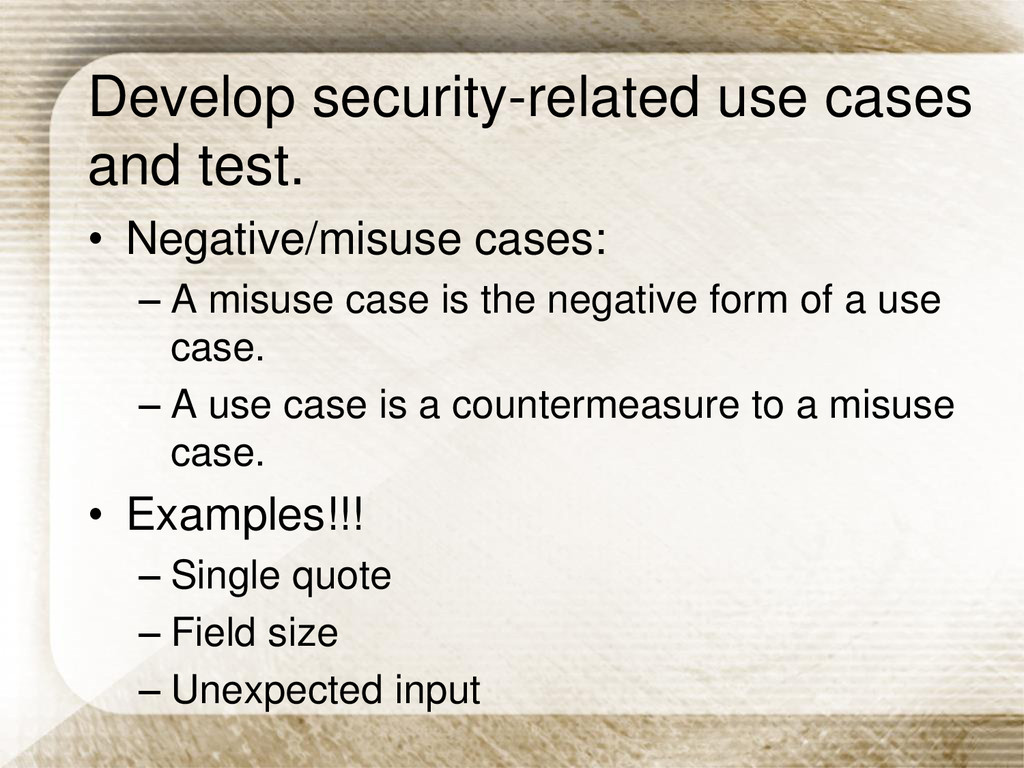
A misuse case is the negative form of a use case. – A use case is a countermeasure to a misuse case. • Examples!!! – Single quote – Field size – Unexpected input
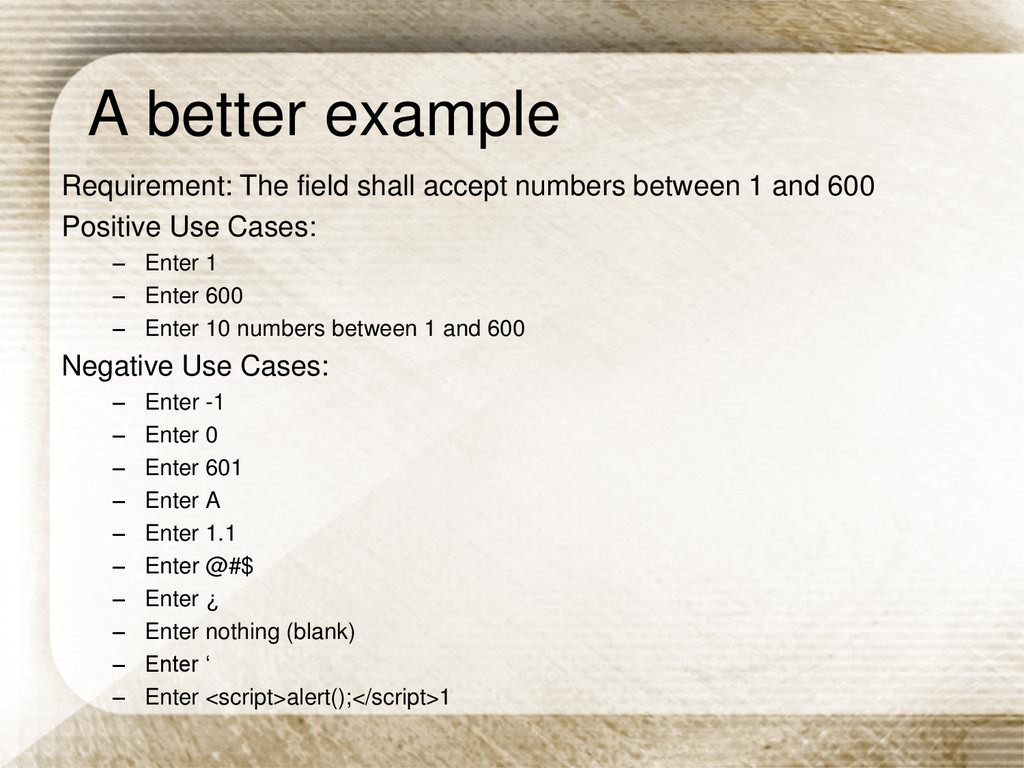
1 and 600 Positive Use Cases: – Enter 1 – Enter 600 – Enter 10 numbers between 1 and 600 Negative Use Cases: – Enter -1 – Enter 0 – Enter 601 – Enter A – Enter 1.1 – Enter @#$ – Enter ¿ – Enter nothing (blank) – Enter ‘ – Enter <script>alert();</script>1
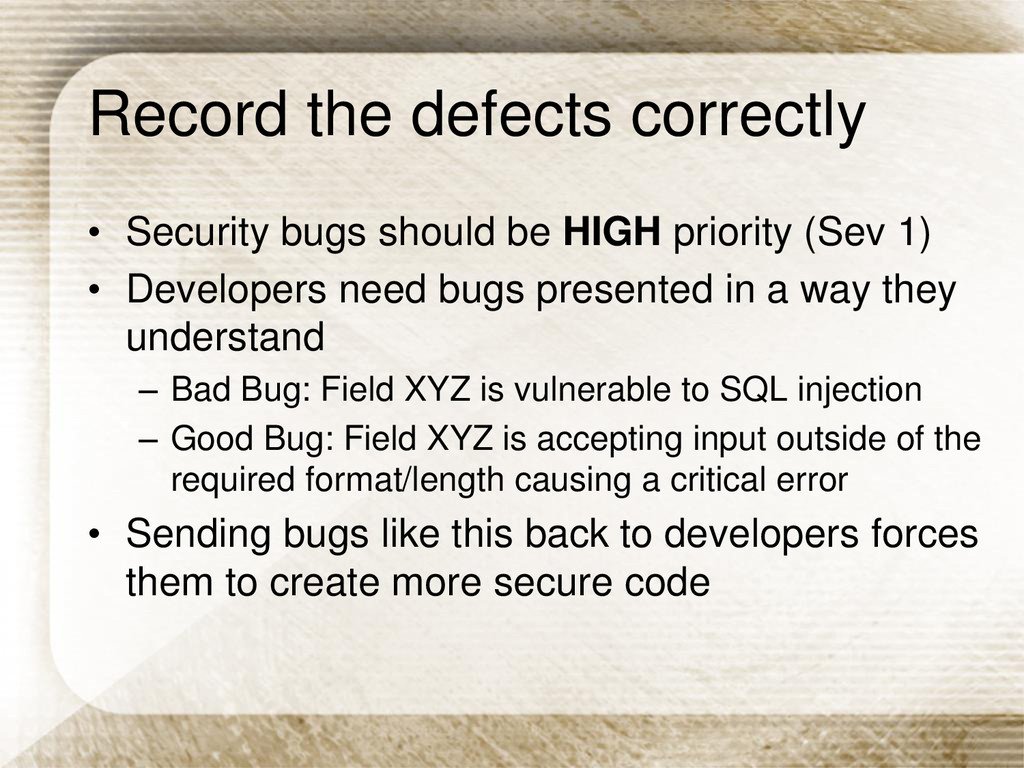
priority (Sev 1) • Developers need bugs presented in a way they understand – Bad Bug: Field XYZ is vulnerable to SQL injection – Good Bug: Field XYZ is accepting input outside of the required format/length causing a critical error • Sending bugs like this back to developers forces them to create more secure code
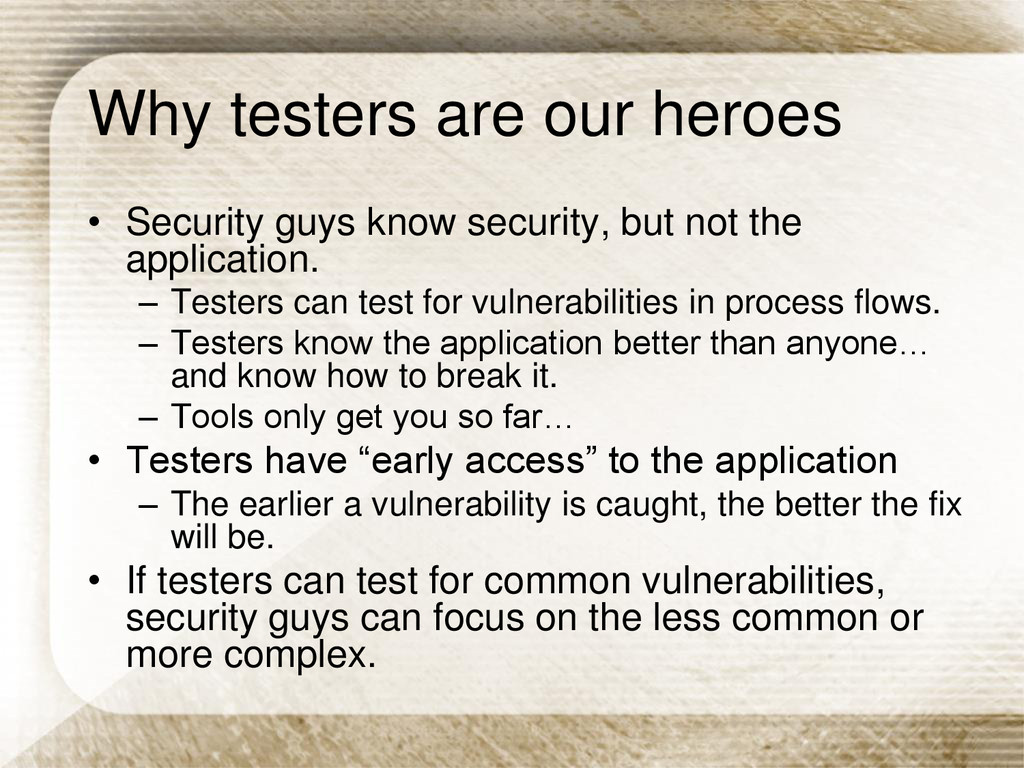
but not the application. – Testers can test for vulnerabilities in process flows. – Testers know the application better than anyone… and know how to break it. – Tools only get you so far… • Testers have “early access” to the application – The earlier a vulnerability is caught, the better the fix will be. • If testers can test for common vulnerabilities, security guys can focus on the less common or more complex.
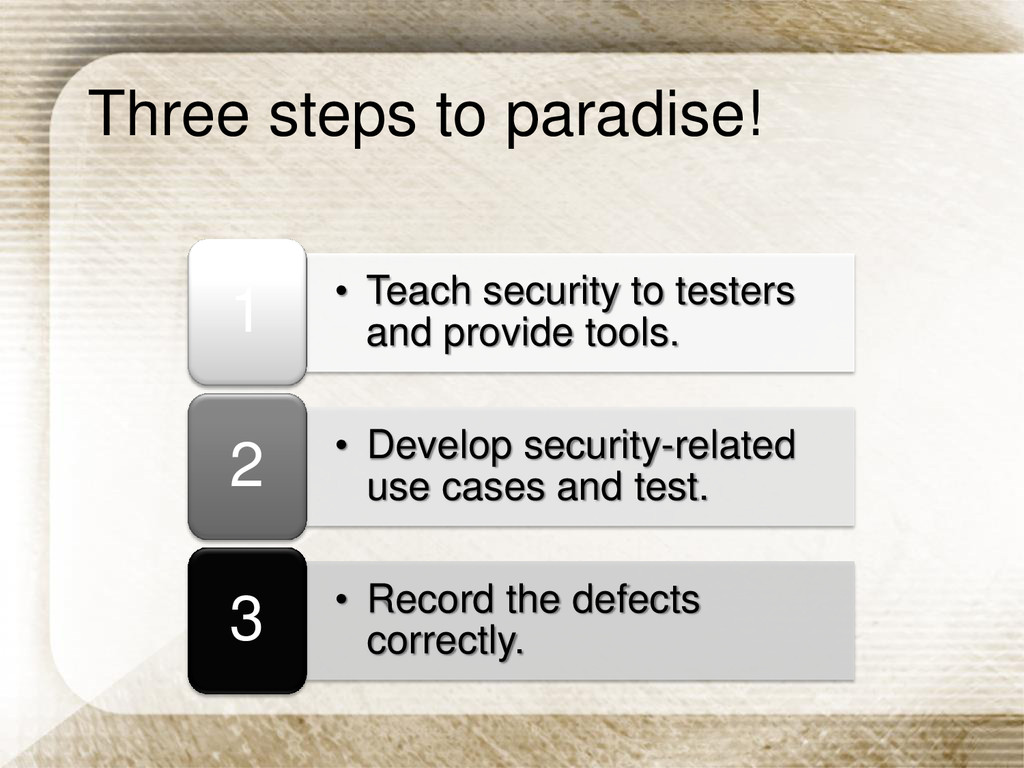
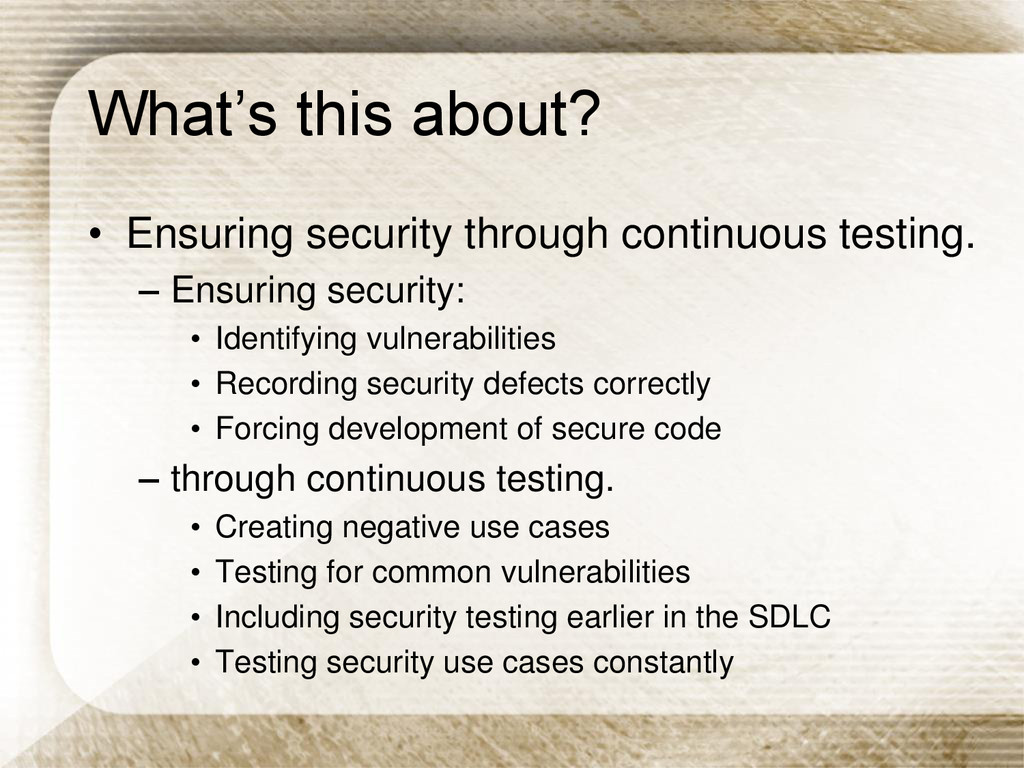
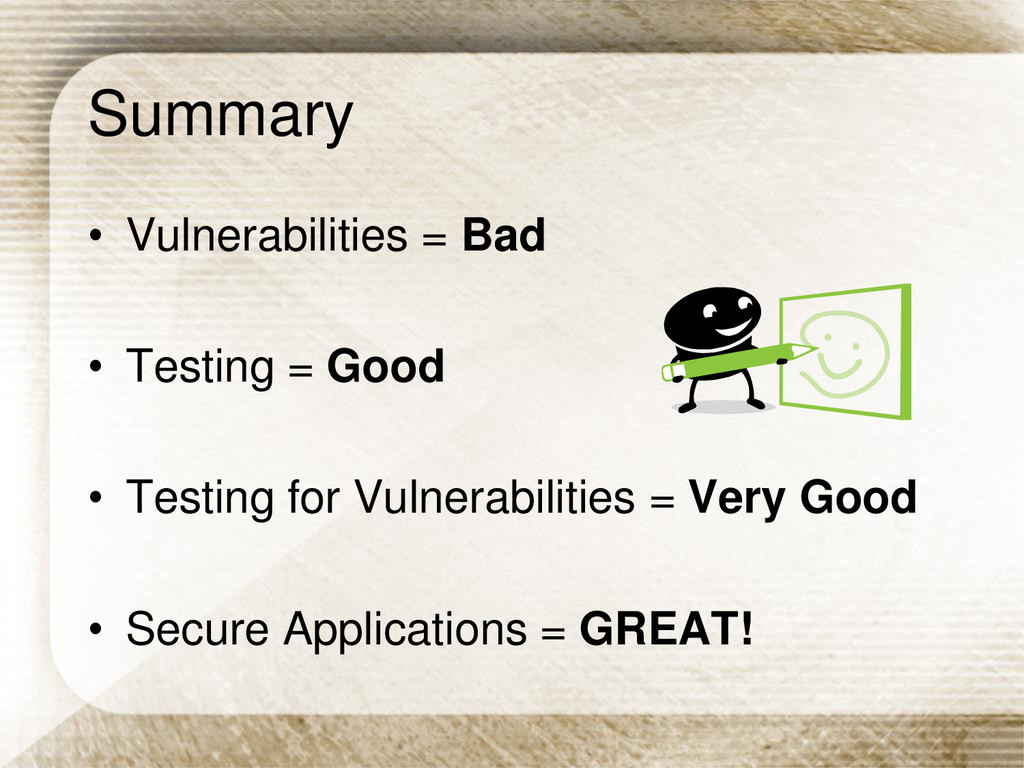
Ensuring security: • Identifying vulnerabilities • Recording security defects correctly • Forcing development of secure code – through continuous testing. • Creating negative use cases • Testing for common vulnerabilities • Including security testing earlier in the SDLC • Testing security use cases constantly
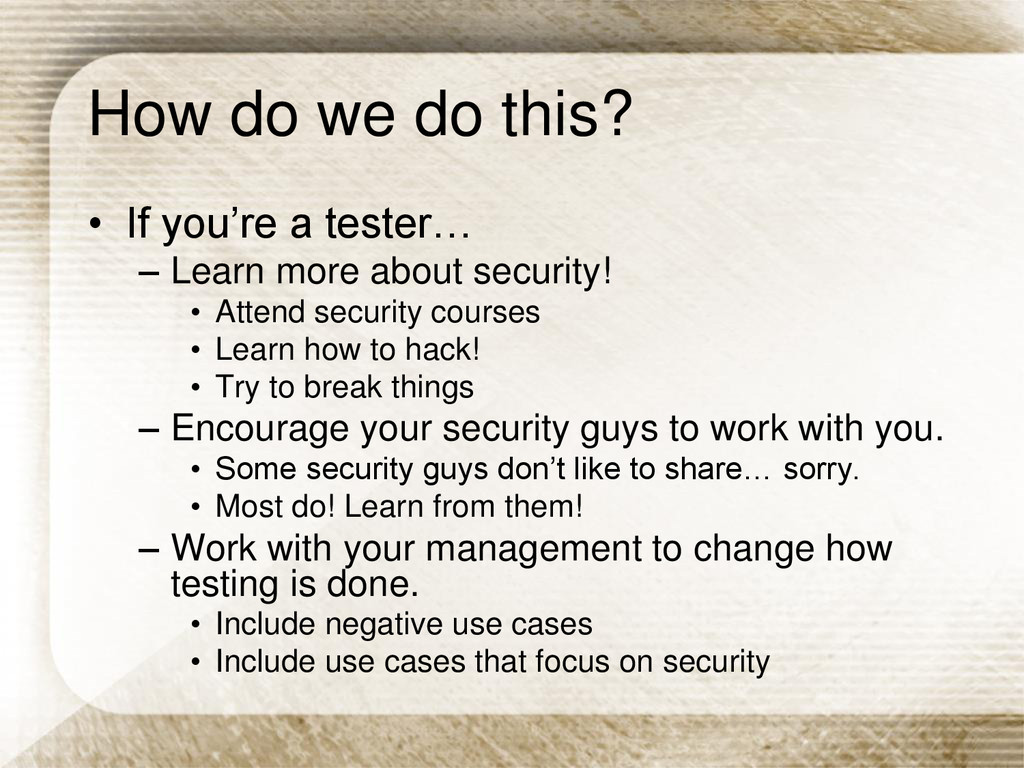
– Learn more about security! • Attend security courses • Learn how to hack! • Try to break things – Encourage your security guys to work with you. • Some security guys don’t like to share… sorry. • Most do! Learn from them! – Work with your management to change how testing is done. • Include negative use cases • Include use cases that focus on security
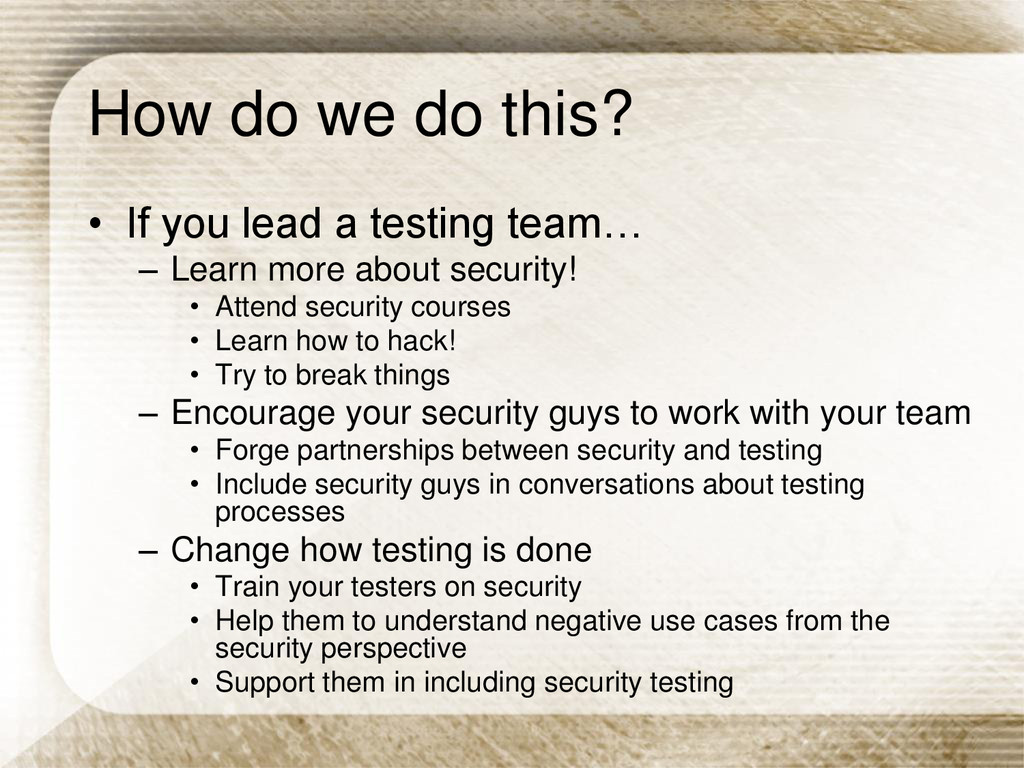
testing team… – Learn more about security! • Attend security courses • Learn how to hack! • Try to break things – Encourage your security guys to work with your team • Forge partnerships between security and testing • Include security guys in conversations about testing processes – Change how testing is done • Train your testers on security • Help them to understand negative use cases from the security perspective • Support them in including security testing
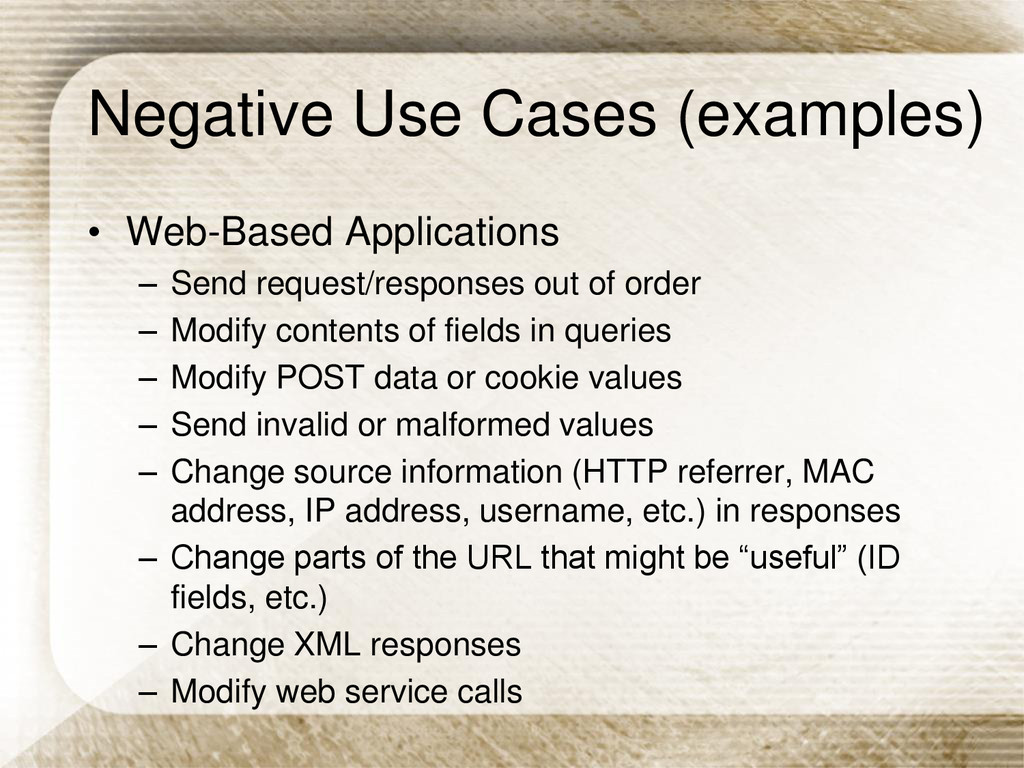
out of order – Modify contents of fields in queries – Modify POST data or cookie values – Send invalid or malformed values – Change source information (HTTP referrer, MAC address, IP address, username, etc.) in responses – Change parts of the URL that might be “useful” (ID fields, etc.) – Change XML responses – Modify web service calls
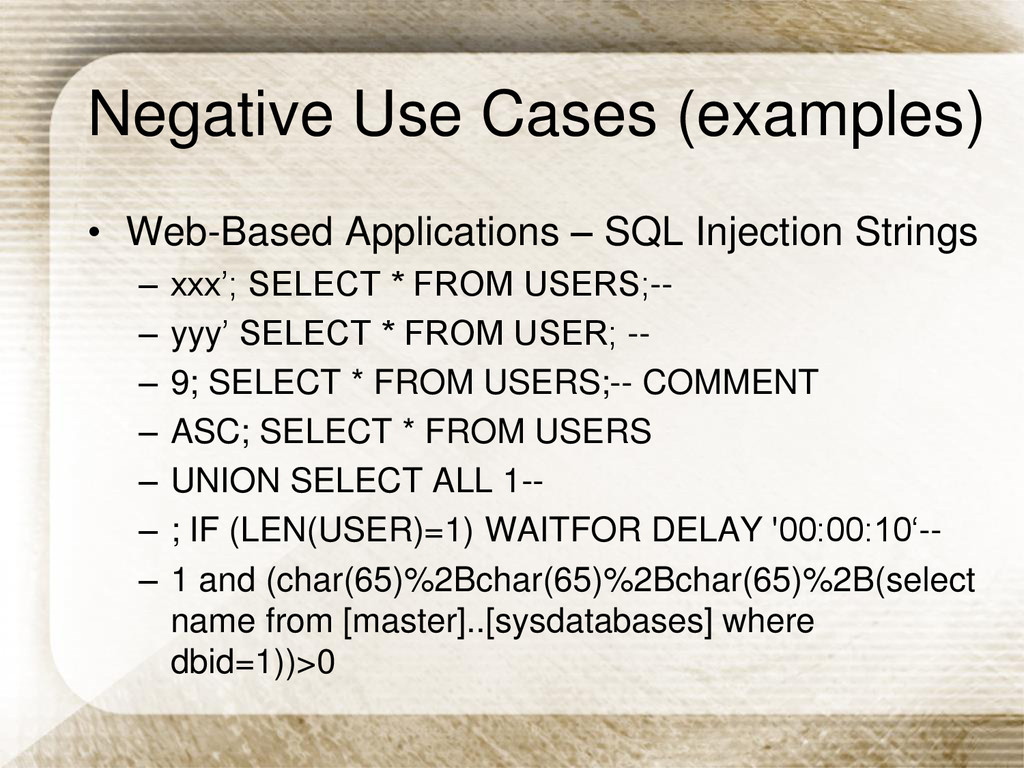
Strings – xxx’; SELECT * FROM USERS;-- – yyy’ SELECT * FROM USER; -- – 9; SELECT * FROM USERS;-- COMMENT – ASC; SELECT * FROM USERS – UNION SELECT ALL 1-- – ; IF (LEN(USER)=1) WAITFOR DELAY '00:00:10‘-- – 1 and (char(65)%2Bchar(65)%2Bchar(65)%2B(select name from [master]..[sysdatabases] where dbid=1))>0


 persolserverworks
 ymotongpoo
 grimoh
 pfn
 puhitaku
 akhino
 satomasahiro2005
 kakehashi
 terapyon
 jyouryuusui
 takuroabe
 kworkdev
 baasie
 ryanjones
 keathley
 yeseniaperezcruz
 helenjbeal
 danielanewman
 marktimemedia
 reverentgeek
 mojombo
 lindahogenes
 holman