Y . M O S TL Y . She spent three weeks on a portfolio site. Every photo placed by hand. She shared it everywhere she could think of. Two months later, she searched her own name on Google. Page two. Nobody scrolls to page two.
a search engine understanding your page and guessing at it. Search engines read code, words, and signals. SEO means making all three easy to read. RANKING JUST MEANS A SEARCH ENGINE TRUSTS YOU ENOUGH TO HAND YOU OVER.
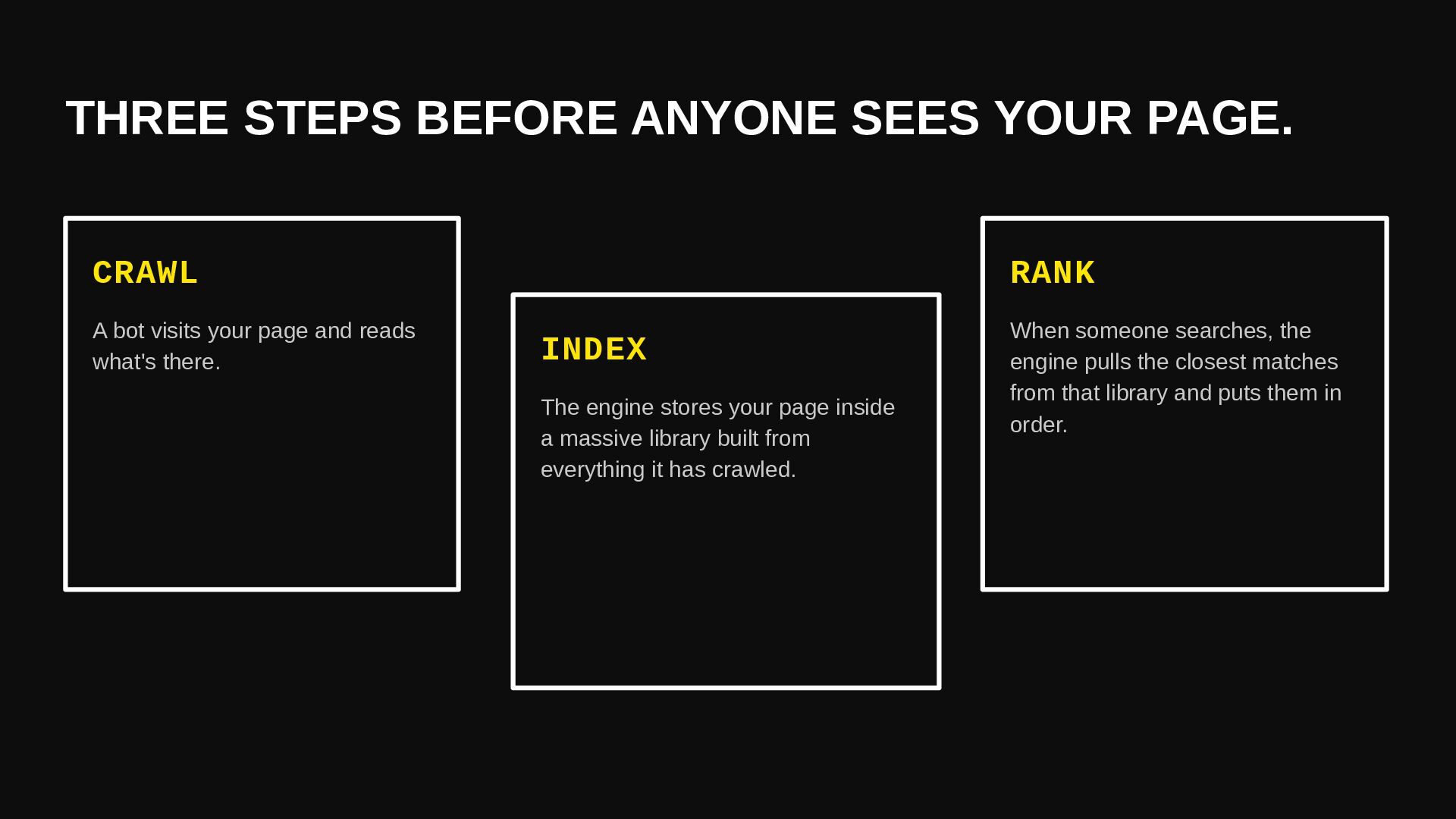
visits your page and reads what's there. INDEX The engine stores your page inside a massive library built from everything it has crawled. RANK When someone searches, the engine pulls the closest matches from that library and puts them in order.
people can type the exact same words and want completely different things. Someone searching "best running shoes" might want a buying guide, or might want one specific shoe in stock right now. Google has already decided which one most searchers want, and it ranks pages built for that intent. Guess wrong, and no amount of keyword stuffing saves the page.
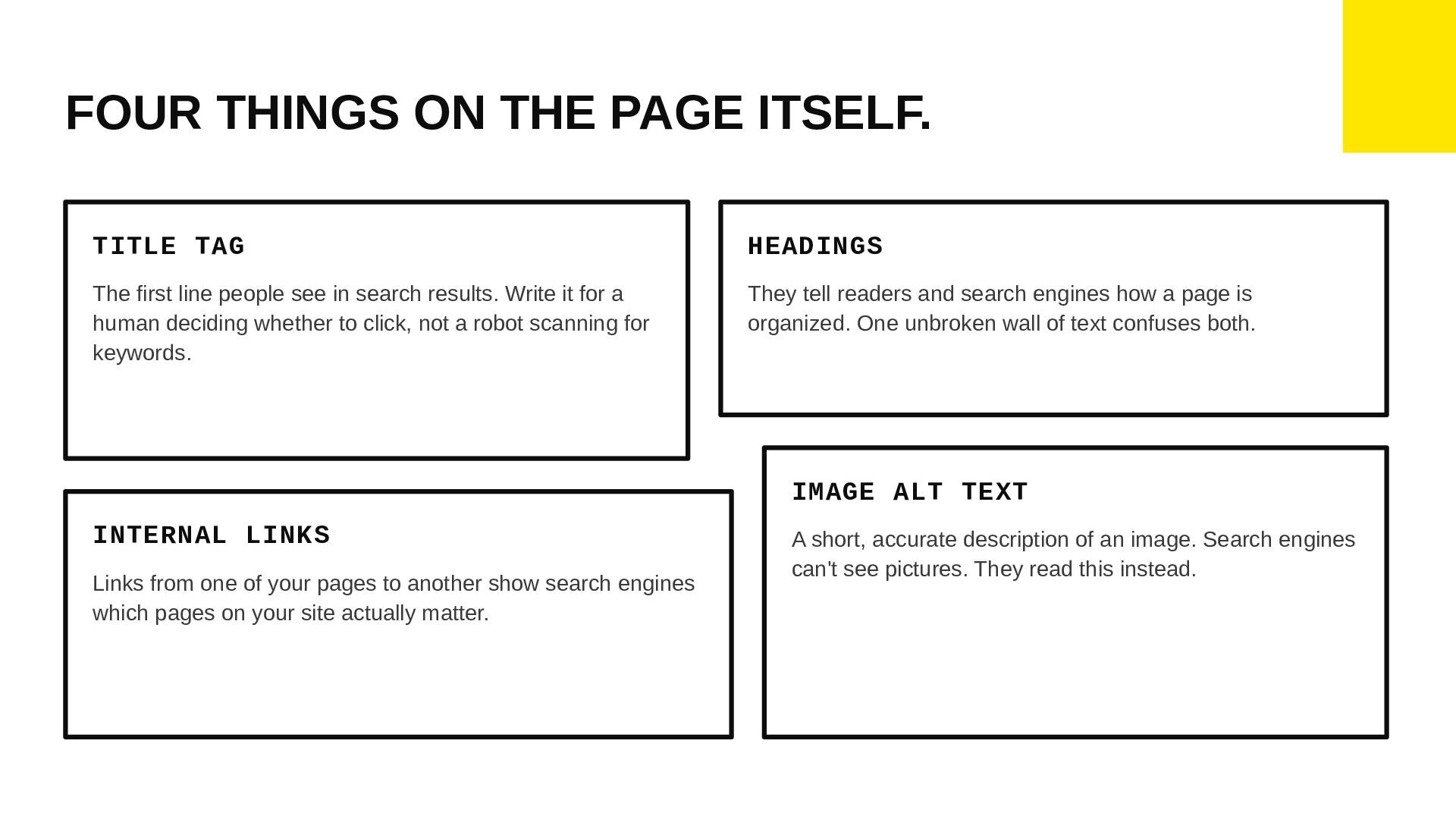
line people see in search results. Write it for a human deciding whether to click, not a robot scanning for keywords. HEADINGS They tell readers and search engines how a page is organized. One unbroken wall of text confuses both. INTERNAL LINKS Links from one of your pages to another show search engines which pages on your site actually matter. IMAGE ALT TEXT A short, accurate description of an image. Search engines can't see pictures. They read this instead.
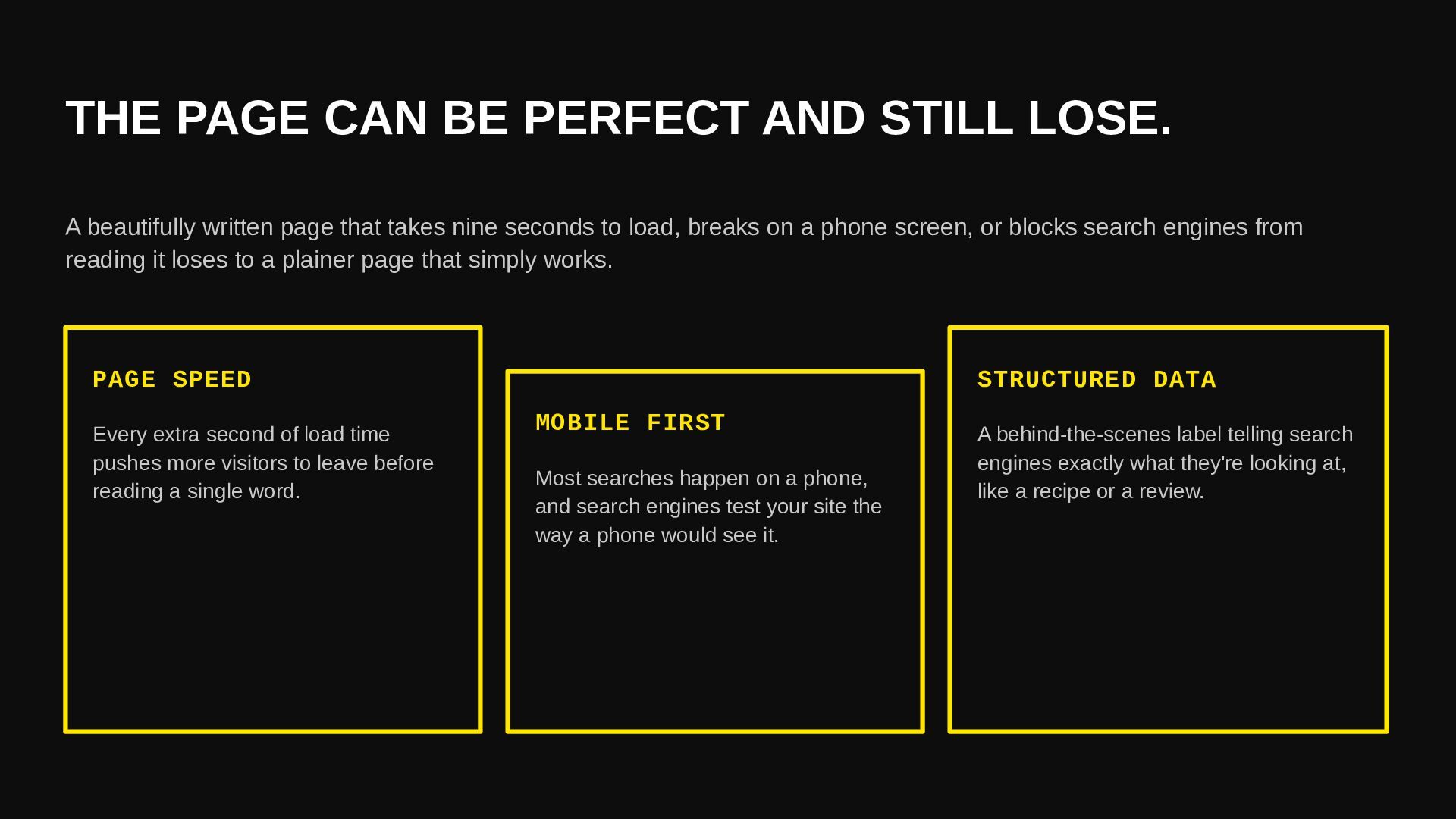
written page that takes nine seconds to load, breaks on a phone screen, or blocks search engines from reading it loses to a plainer page that simply works. PAGE SPEED Every extra second of load time pushes more visitors to leave before reading a single word. MOBILE FIRST Most searches happen on a phone, and search engines test your site the way a phone would see it. STRUCTURED DATA A behind-the-scenes label telling search engines exactly what they're looking at, like a recipe or a review.
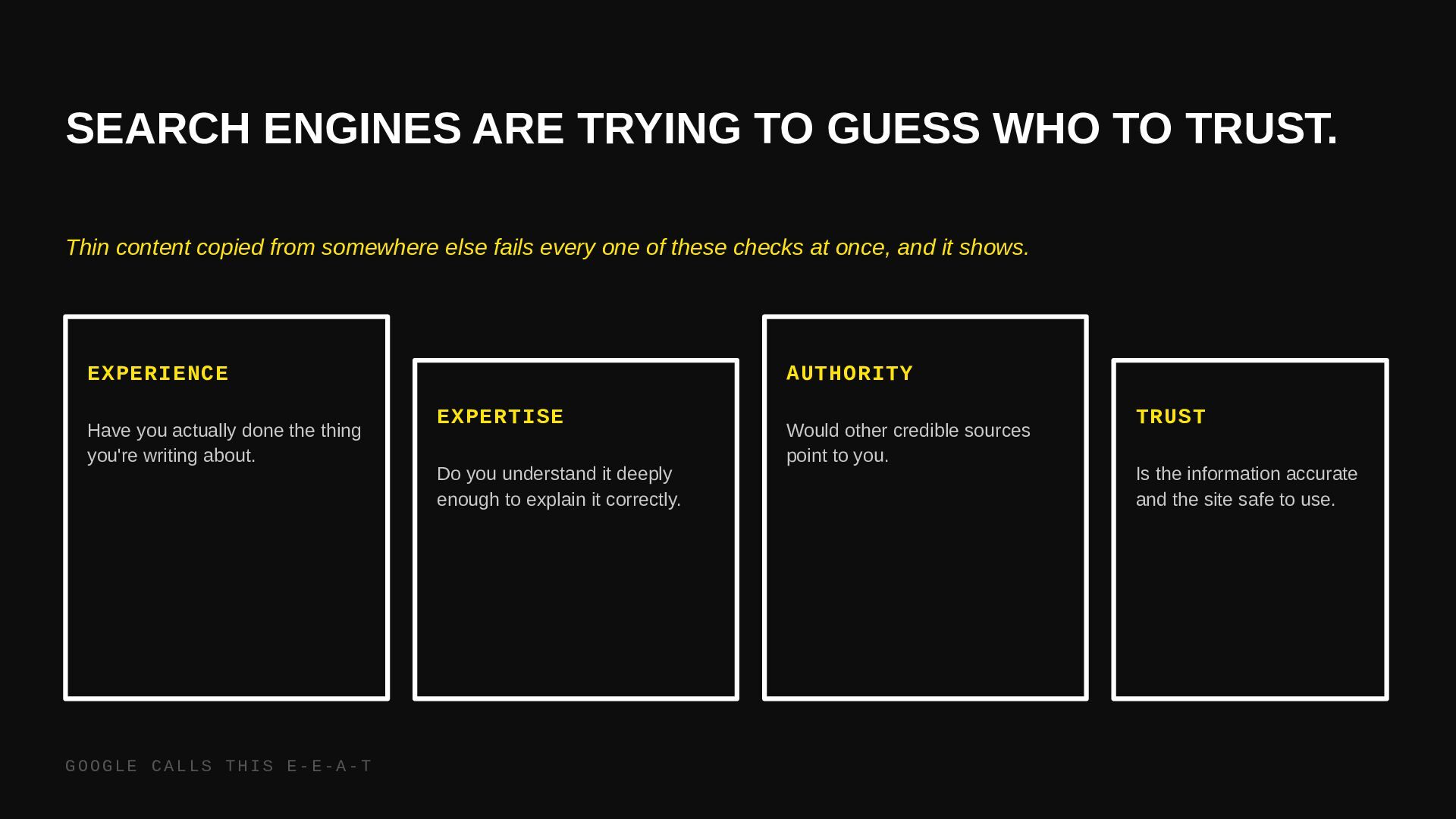
content copied from somewhere else fails every one of these checks at once, and it shows. EXPERIENCE Have you actually done the thing you're writing about. EXPERTISE Do you understand it deeply enough to explain it correctly. AUTHORITY Would other credible sources point to you. TRUST Is the information accurate and the site safe to use. GOOGLE CALLS THIS E-E-A-T
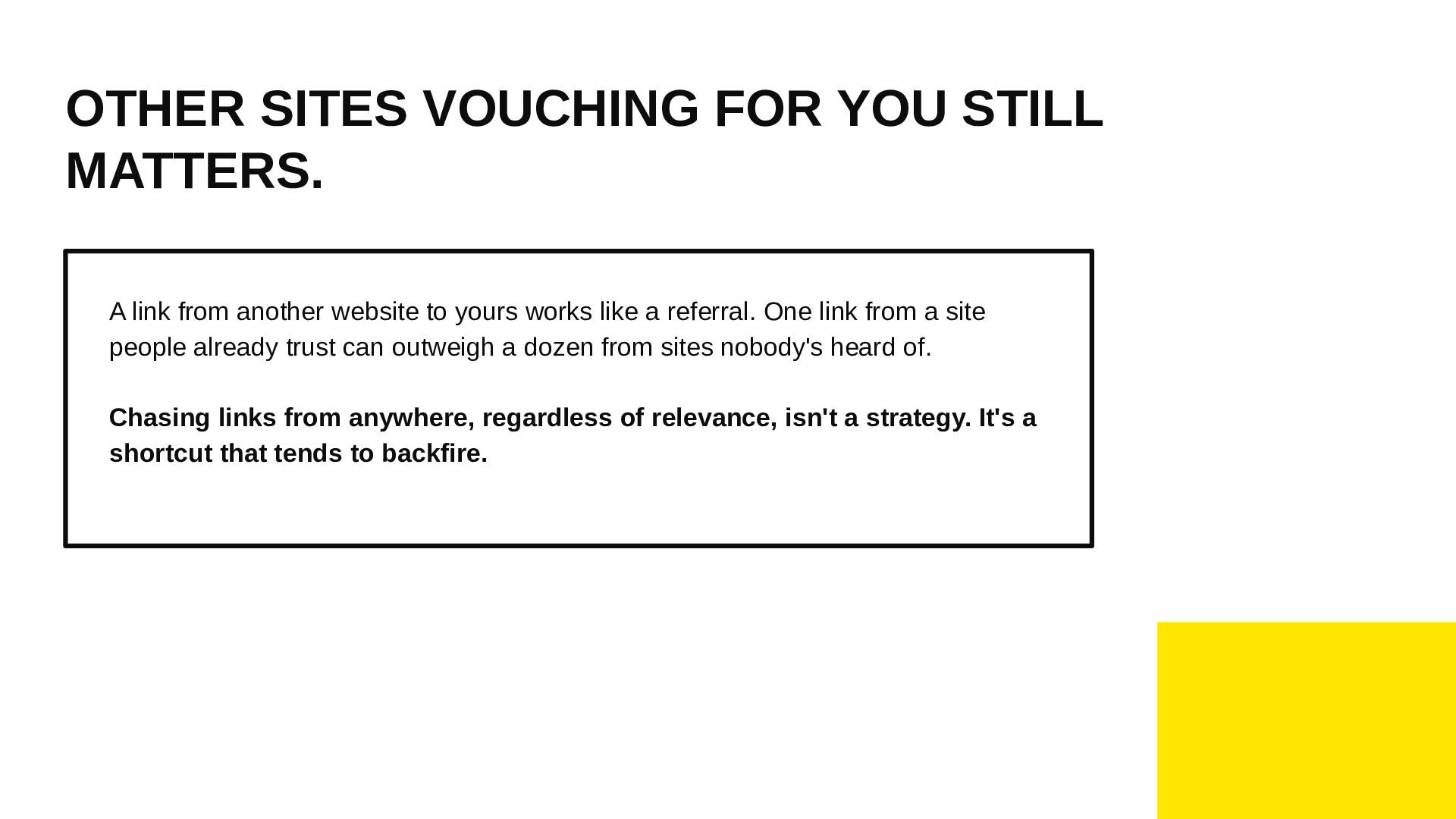
another website to yours works like a referral. One link from a site people already trust can outweigh a dozen from sites nobody's heard of. Chasing links from anywhere, regardless of relevance, isn't a strategy. It's a shortcut that tends to backfire.
clicks a result and bounces straight back to the search page seconds later, that tells the search engine the page didn't deliver. Confusing layouts, pop-ups that block the screen, and pages that make people hunt for the answer all quietly push rankings down, even when every keyword is technically correct. A FAST CLICK BACK TO SEARCH READS LIKE A REJECTION.
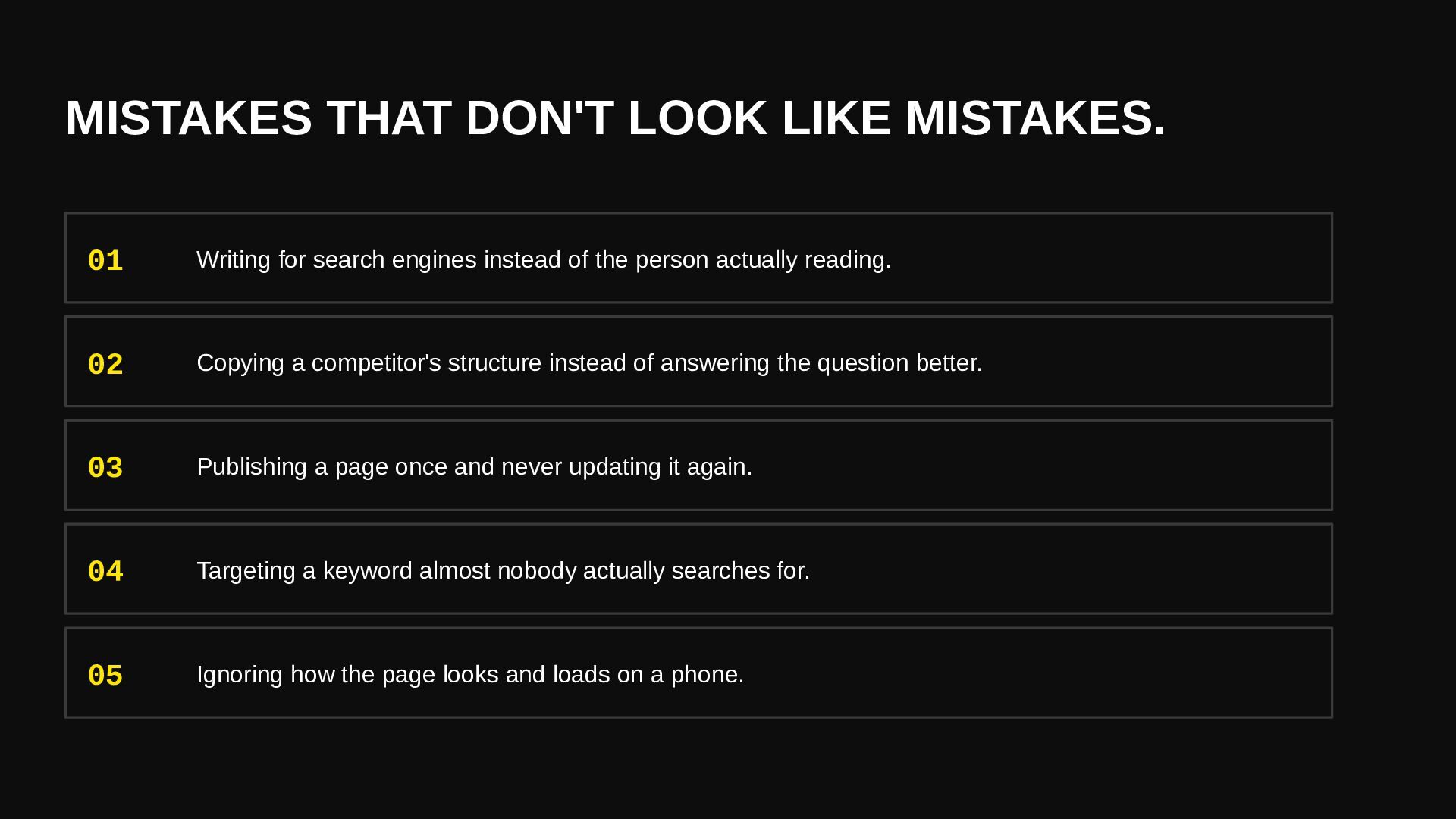
engines instead of the person actually reading. 02 Copying a competitor's structure instead of answering the question better. 03 Publishing a page once and never updating it again. 04 Targeting a keyword almost nobody actually searches for. 05 Ignoring how the page looks and loads on a phone.
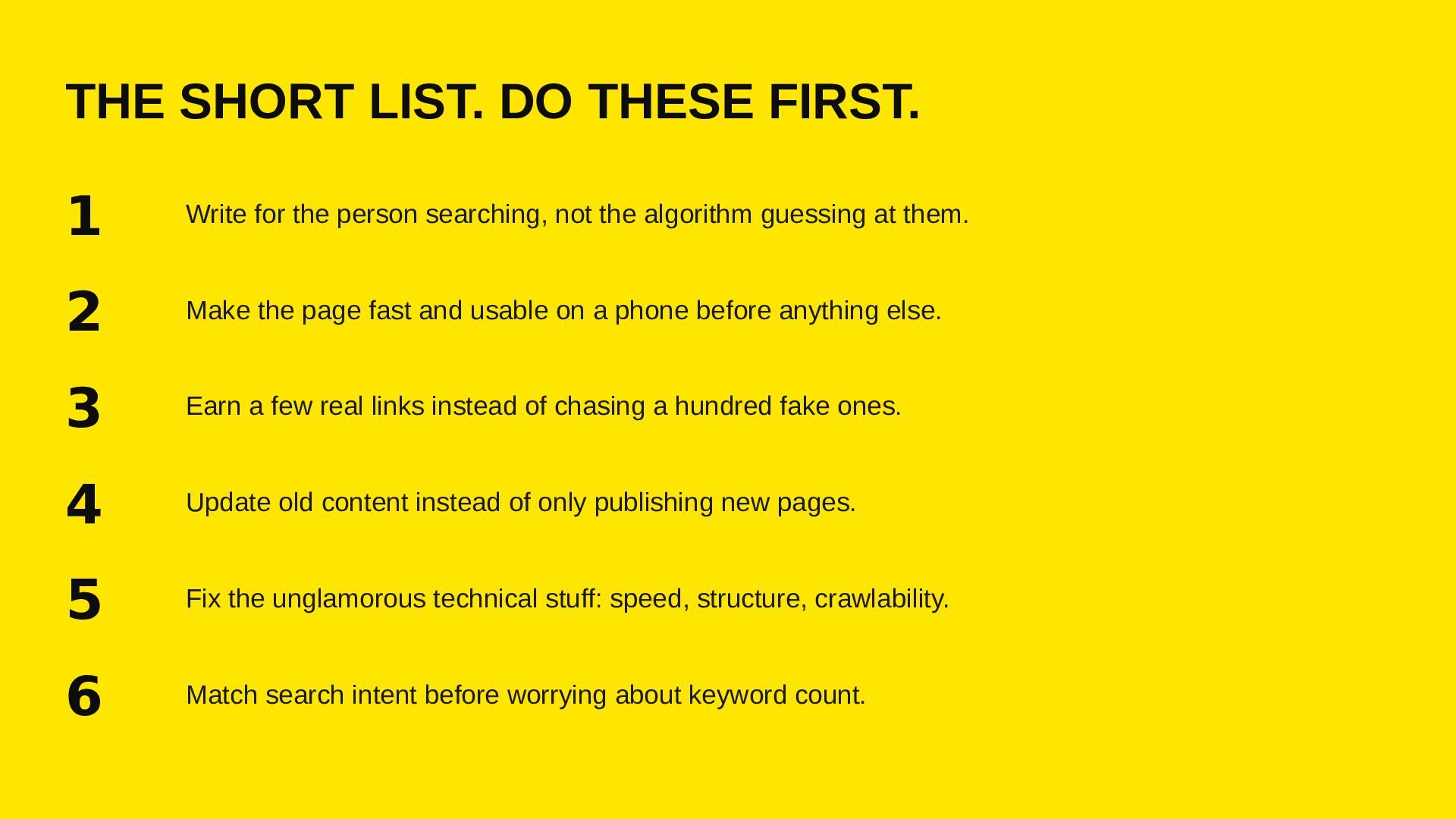
person searching, not the algorithm guessing at them. 2 Make the page fast and usable on a phone before anything else. 3 Earn a few real links instead of chasing a hundred fake ones. 4 Update old content instead of only publishing new pages. 5 Fix the unglamorous technical stuff: speed, structure, crawlability. 6 Match search intent before worrying about keyword count.
mostly. Faster pages, clearer titles, a few real backlinks, content that actually answered what people were typing. Page one, third result. Nothing about the work was complicated. It just finally got done. RANKING ISN'T MAGIC. IT'S MAINTENANCE.


 yigarashi
 sarosaro
 zjchahalis
 amandafloq
 pelogia
 greggifford
 joshbly
 pmeyers7
 portentint
 novasell
 aleyda
 charlesmeaden
 chriscoyier
 sonatard
 skoyamalab
 lauravandoore
 mfonobong
 427marketing
 aki_iinuma
 ammeep
 colly
 productmarketing
 addyosmani
 honnibal