AI automation streamlines business processes, reduces manual work, improves accuracy, boosts efficiency, and helps organisations scale with confidence.
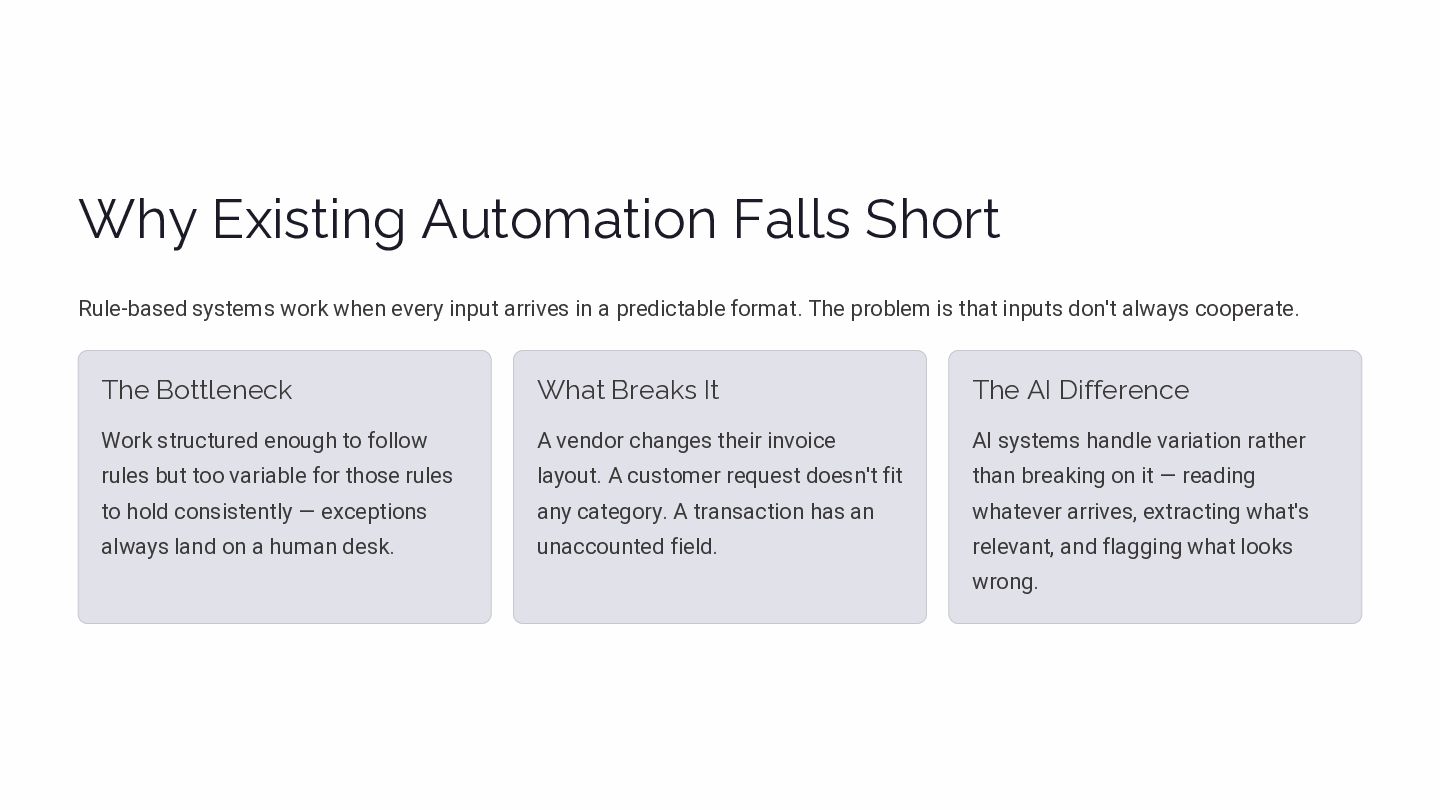
input arrives in a predictable format. The problem is that inputs don't always cooperate. The Bottleneck What Breaks It The AI Difference Work structured enough to follow A vendor changes their invoice AI systems handle variation rather rules but too variable for those rules layout. A customer request doesn't fit than breaking on it — reading to hold consistently — exceptions any category. A transaction has an whatever arrives, extracting what's always land on a human desk. unaccounted field. relevant, and flagging what looks wrong.
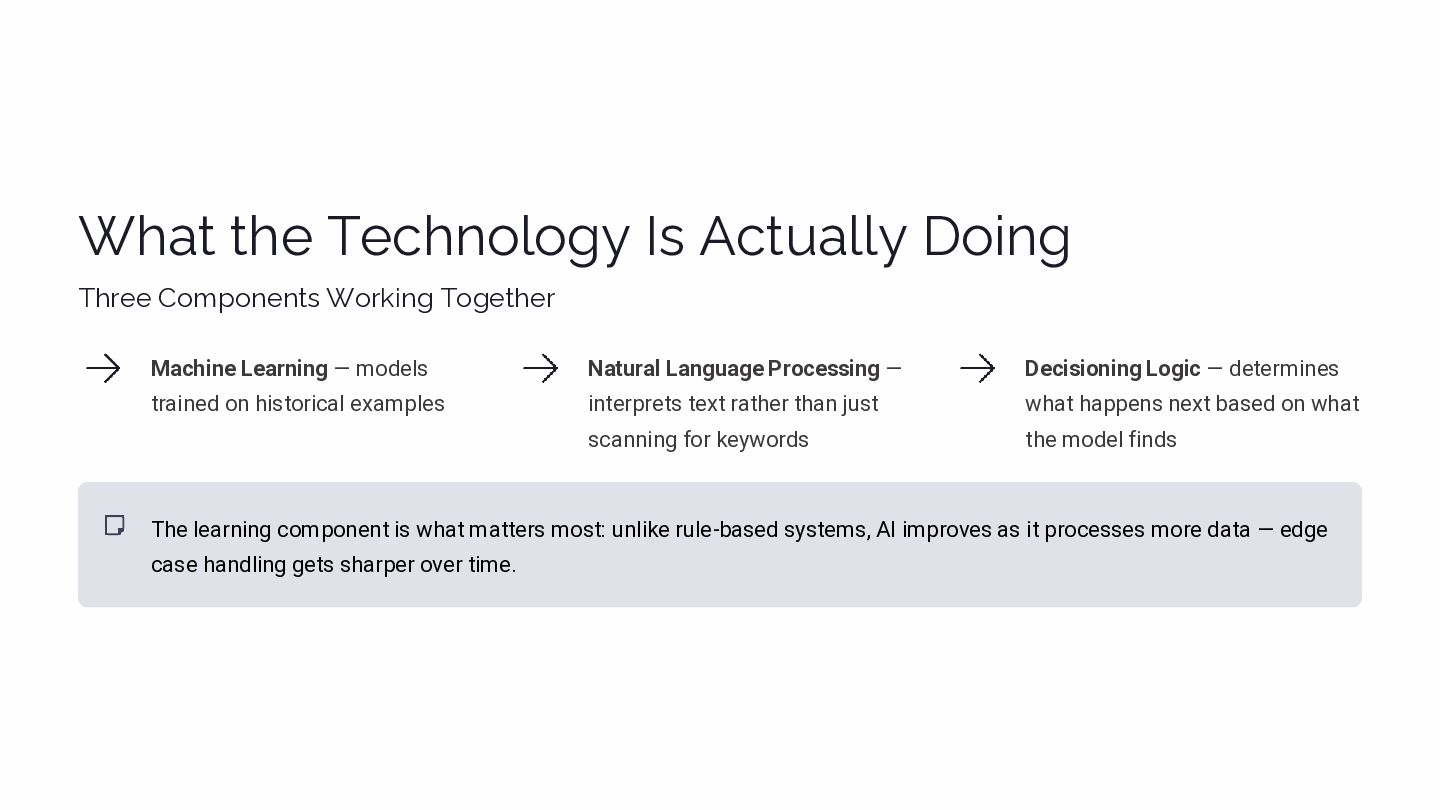
Machine Learning — models Natural Language Processing — Decisioning Logic — determines trained on historical examples interprets text rather than just what happens next based on what scanning for keywords the model finds The learning component is what matters most: unlike rule-based systems, AI improves as it processes more data — edge case handling gets sharper over time.
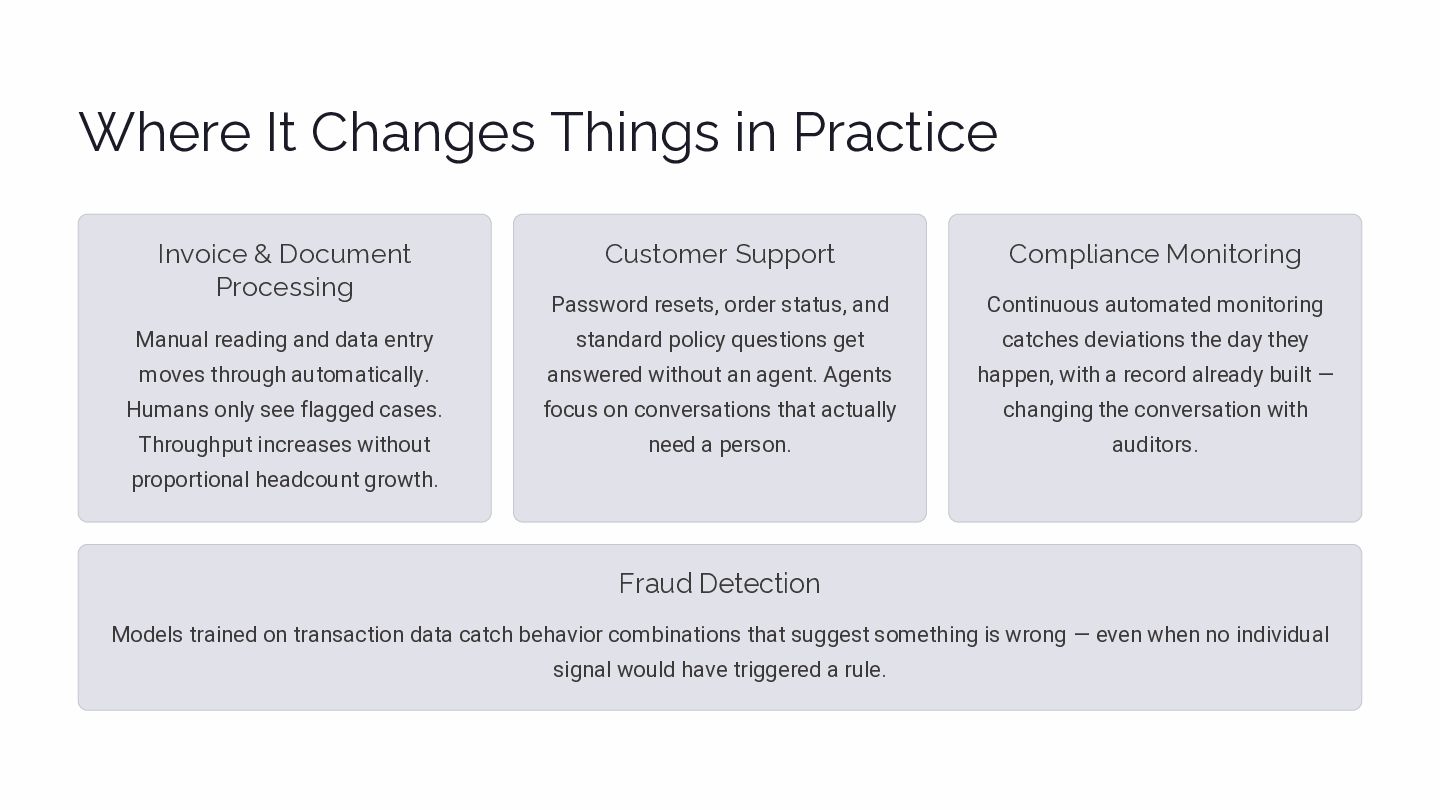
Customer Support Compliance Monitoring Password resets, order status, and Continuous automated monitoring Manual reading and data entry standard policy questions get catches deviations the day they moves through automatically. answered without an agent. Agents happen, with a record already built — Humans only see flagged cases. focus on conversations that actually changing the conversation with Throughput increases without need a person. auditors. proportional headcount growth. Fraud Detection Models trained on transaction data catch behavior combinations that suggest something is wrong — even when no individual signal would have triggered a rule.
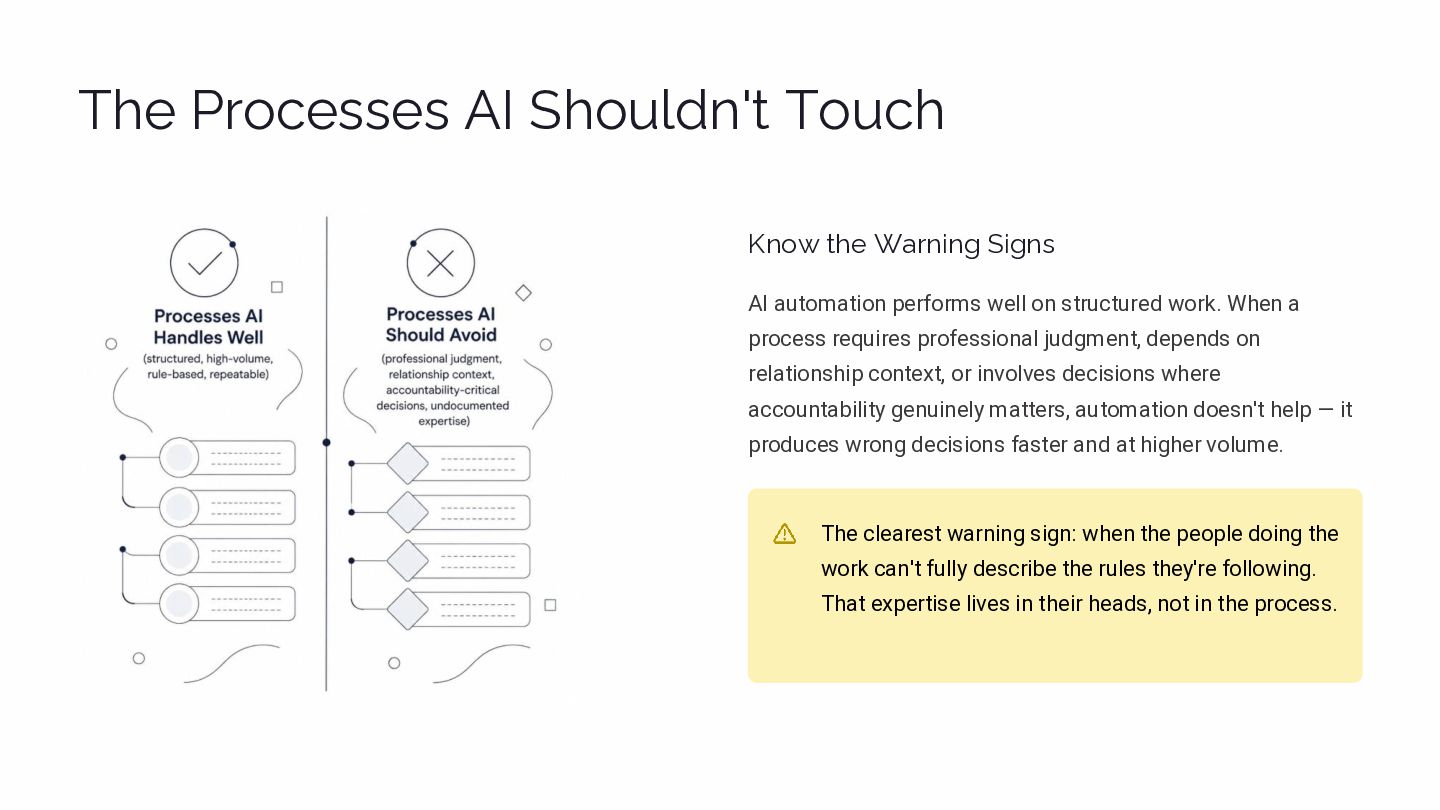
automation performs well on structured work. When a process requires professional judgment, depends on relationship context, or involves decisions where accountability genuinely matters, automation doesn't help — it produces wrong decisions faster and at higher volume. The clearest warning sign: when the people doing the work can't fully describe the rules they're following. That expertise lives in their heads, not in the process.
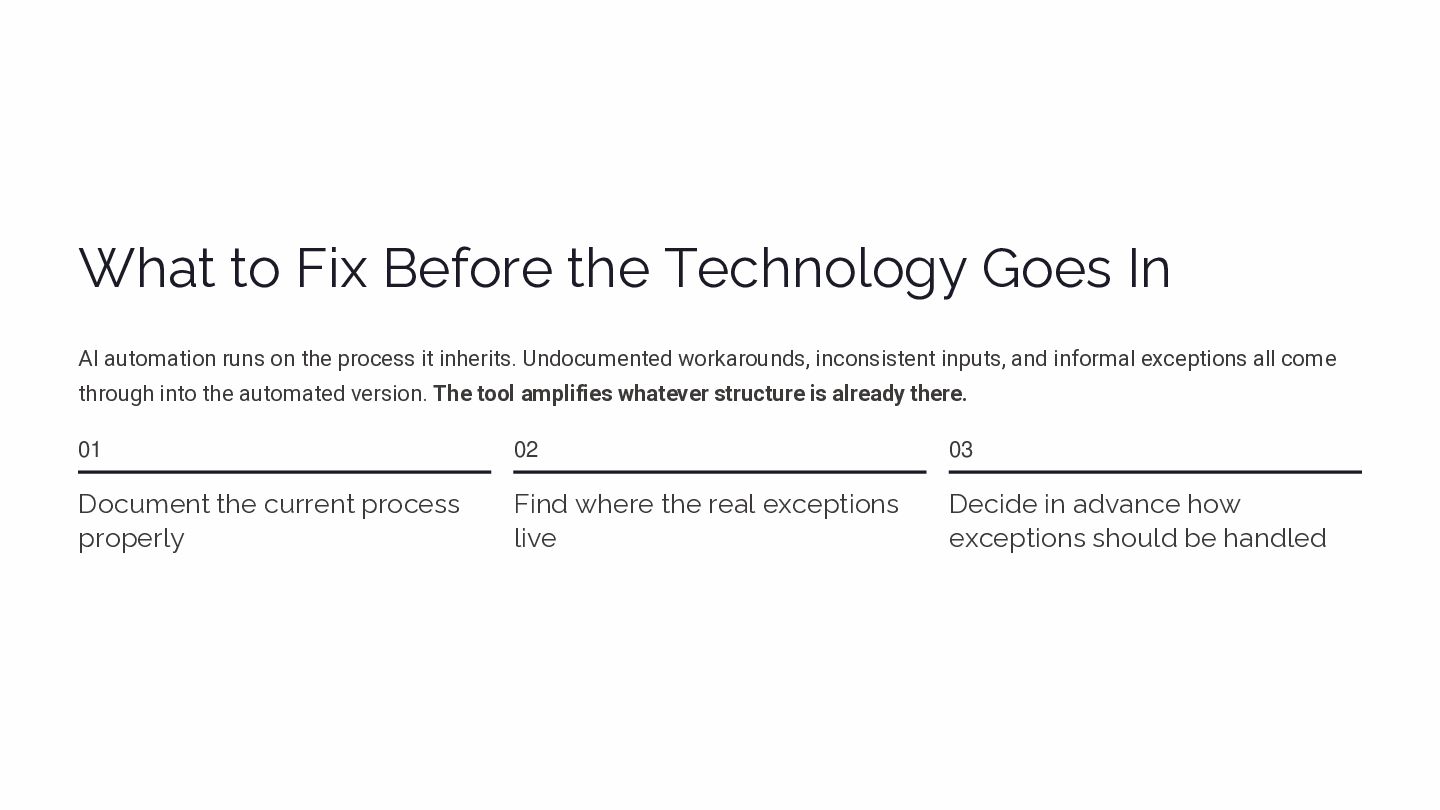
runs on the process it inherits. Undocumented workarounds, inconsistent inputs, and informal exceptions all come through into the automated version. The tool amplifies whatever structure is already there. 01 02 03 Document the current process properly Find where the real exceptions live Decide in advance how exceptions should be handled
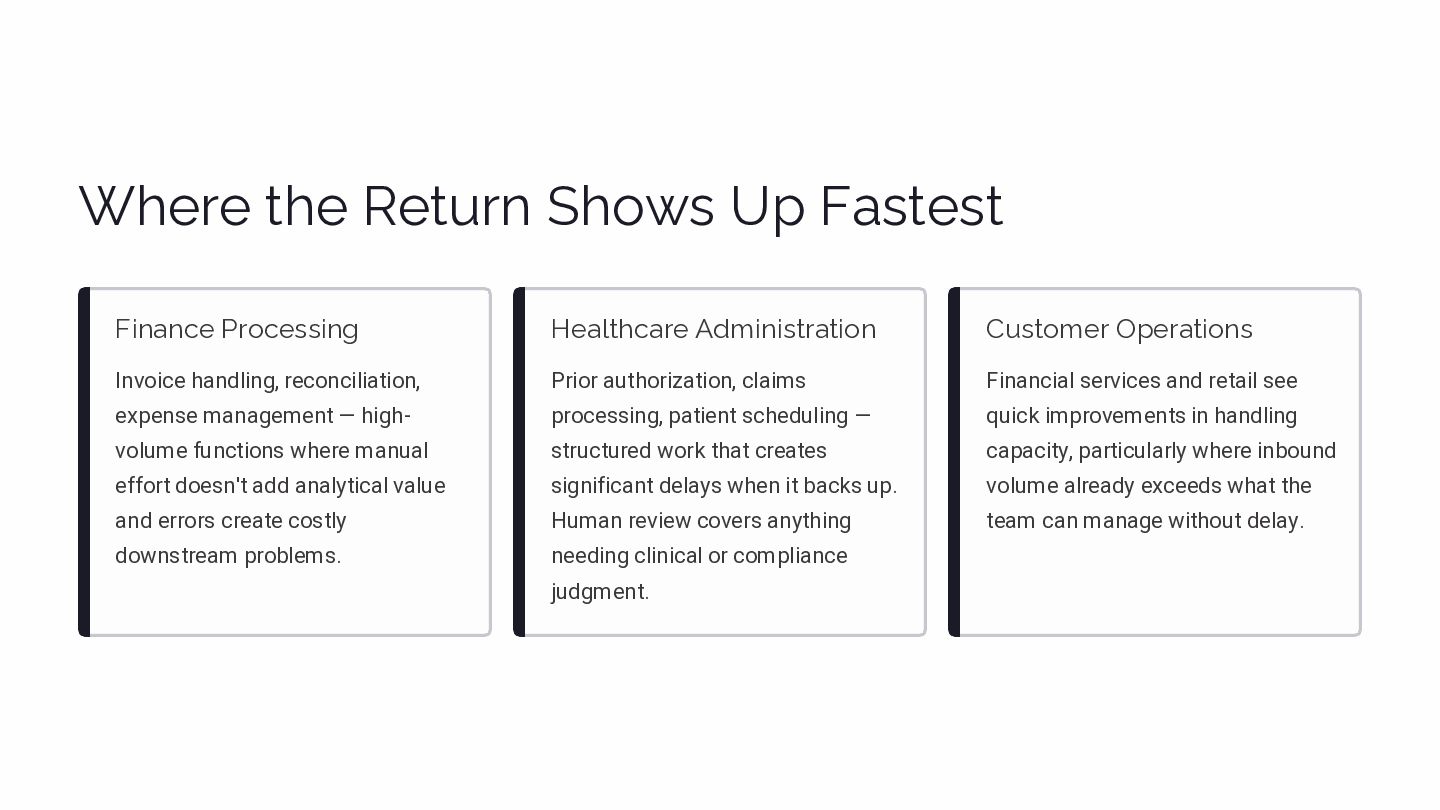
Customer Operations Invoice handling, reconciliation, Prior authorization, claims Financial services and retail see expense management — high- processing, patient scheduling — quick improvements in handling volume functions where manual structured work that creates capacity, particularly where inbound effort doesn't add analytical value significant delays when it backs up. volume already exceeds what the and errors create costly Human review covers anything team can manage without delay. downstream problems. needing clinical or compliance judgment.
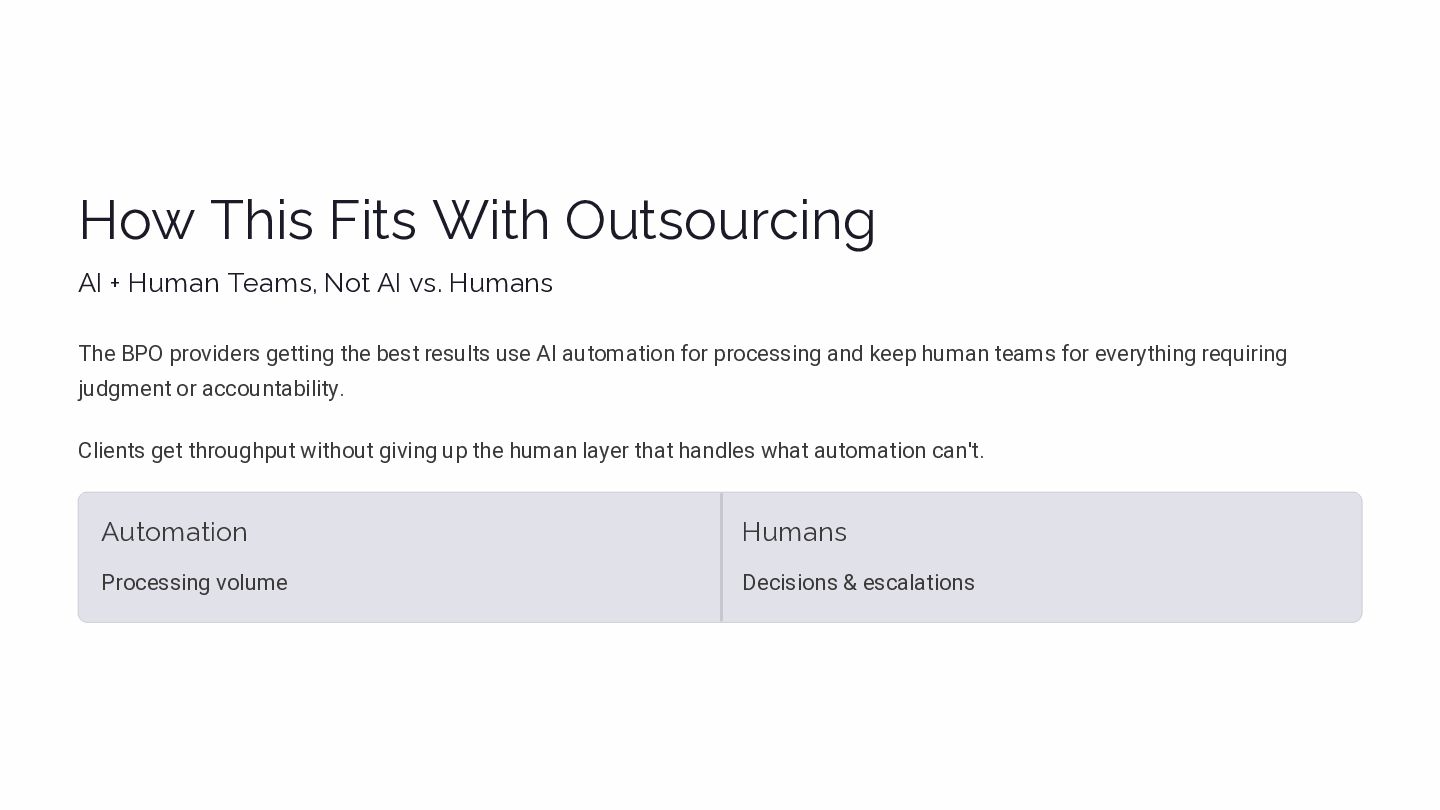
AI vs. Humans The BPO providers getting the best results use AI automation for processing and keep human teams for everything requiring judgment or accountability. Clients get throughput without giving up the human layer that handles what automation can't. Automation Humans Processing volume Decisions & escalations
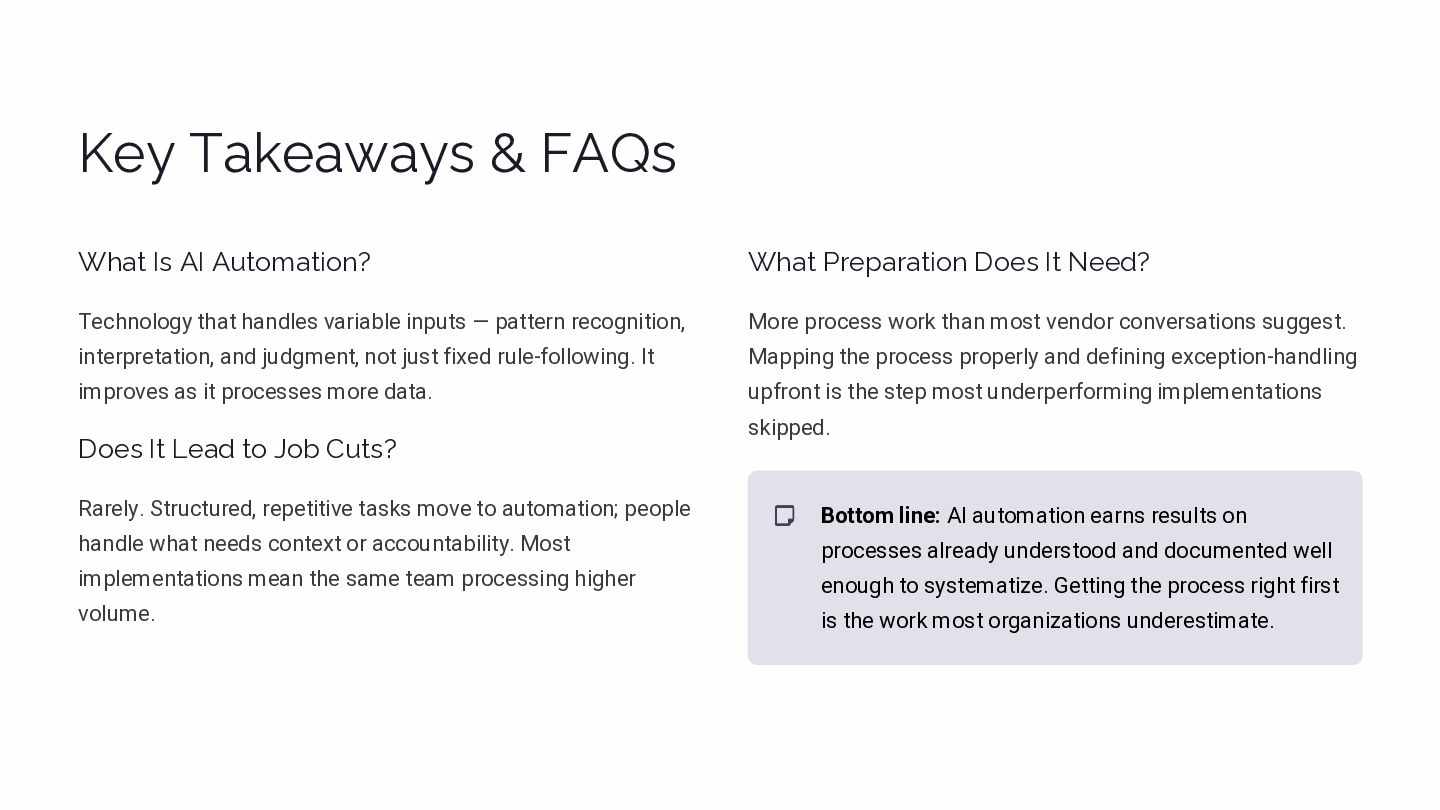
Does It Need? Technology that handles variable inputs — pattern recognition, More process work than most vendor conversations suggest. interpretation, and judgment, not just fixed rule-following. It Mapping the process properly and defining exception-handling improves as it processes more data. upfront is the step most underperforming implementations Does It Lead to Job Cuts? skipped. Rarely. Structured, repetitive tasks move to automation; people Bottom line: AI automation earns results on handle what needs context or accountability. Most processes already understood and documented well implementations mean the same team processing higher enough to systematize. Getting the process right first volume. is the work most organizations underestimate.
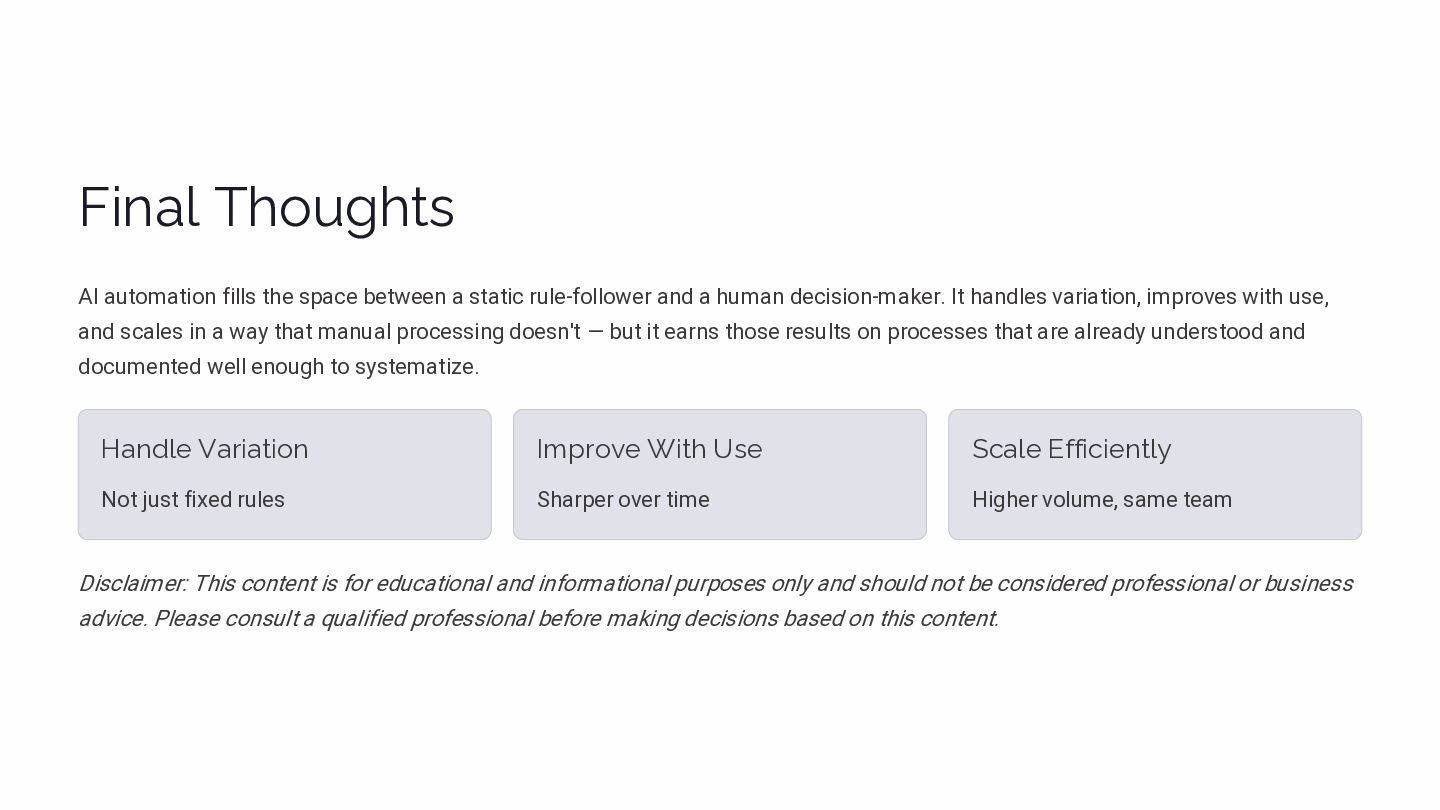
rule-follower and a human decision-maker. It handles variation, improves with use, and scales in a way that manual processing doesn't — but it earns those results on processes that are already understood and documented well enough to systematize. Handle Variation Improve With Use Scale Efficiently Not just fixed rules Sharper over time Higher volume, same team Disclaimer: This content is for educational and informational purposes only and should not be considered professional or business advice. Please consult a qualified professional before making decisions based on this content.


 katarinadahlin
 clarasoteras
 pelogia
 yigarashi
 yunheechoi
 zjchahalis
 125483
 speedyindexteam
 decabbit
 samtorres
 portentint
 ryanjones
 axbom
 chriscoyier
 inesmontani
 bryan
 aleyda
 philnash
 lfama
 samanthasiow
 lemiorhan
 lara
 tamaranovitovic