Upgrade to Pro — share decks privately, control downloads, hide ads and more …

Innovating with Google Mobile Vision APIs

Innovating with Google Mobile Vision APIs

This talk is about using the Android platform and Google Vision APIs in building a fully digital out of home signage advertising platform (adKandi) with cool features like facial tracking data and mood/sentiment analysis while optimizing for best result and security.

Avatar for Akapo Damilola Francis

Akapo Damilola Francis

November 18, 2017

Other Decks in Technology
Transcript

  1. Innovating with google mobile vision apis A case for adKandi,

    the greatest thing since sliced bread.
  2. Well, sup!! Akapo Damilola F. • Android, iOS, IoT &&

    Anything that solves the problem. • Senior Consultant, Andela Inc. • Can sing sometimes. Scared to death of HTML and CSS. • Twitter: @_fdamilola • Ignore the fake smile ->
  3. The world is changing • We’re getting access to cool

    tools used by big tech. Machine learning tools, AI models etc. • These “tools” are opening up opportunities to explore and solve unique problems. • Devices are evolving, becoming more powerful thus making edge computing much more easier
  4. tools • Microsoft: Project Oxford (https://github.com/Microsoft/ProjectOxford -ClientSDK) • Google: Cloud

    & Mobile vision, Tensorflow (https://cloud.google.com/vision/, https://developers.google.com/vision/, https://www.tensorflow.org) • IBM: Watson (https://www.ibm.com/watson/)
  5. Google CLOUD vision apis • Image processing on Google Cloud

    • Easily detect broad sets of objects in your images, from flowers, animals, or transportation to thousands of other object categories commonly found within images • Vision API enables you to detect different types of inappropriate content from adult to violent content. • Image sentiment analysis and OCR • Has a version for mobile
  6. ENTERS GOOGLE mobile VISION Google Mobile Vision APIs had what

    we needed to get started. [P.S] We tried a number of other mobile focused Vision related SDKs but none stuck like the Vision API.
  7. Why google mobile vision api • Able to detect faces

    in video and pictures • Works offline (After initial setup) • Works locally • Easy to integrate • Free free free
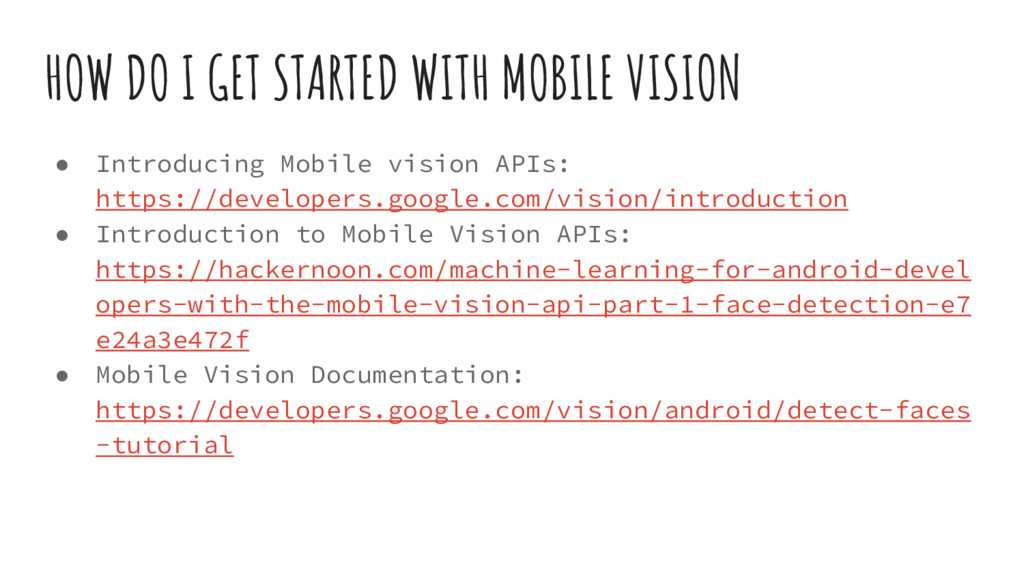
  8. HOW DO I GET STARTED WITH MOBILE VISION • Introducing

    Mobile vision APIs: https://developers.google.com/vision/introduction • Introduction to Mobile Vision APIs: https://hackernoon.com/machine-learning-for-android-devel opers-with-the-mobile-vision-api-part-1-face-detection-e7 e24a3e472f • Mobile Vision Documentation: https://developers.google.com/vision/android/detect-faces -tutorial
  9. Cont: HOW DO I GET STARTED WITH MOBILE VISION •

    “Seeing is Believing” talk by Moyin • Totally Watch: https://www.youtube.com/watch?v=704qQzEnT0I
  10. point(x, y) The point of this talk is to give

    you a glimpse into how we used Google Vision APIs in solving a couple of interesting problems in the digital advertising domain. Let’s talk about adKandi and the problems therein.
  11. adKandi: Coolest thing since sliced bread adKandi is digital-out-of-home advertising

    platform that enables distribution of digital content to remote locations. Adverts and Candies.
  12. adKandi: Coolest thing since sliced bread This simply means adKandi

    is a platform that provides advertisers with the means to distribute, track and measure the conversion rates of their advert content as efficiently as possible.
  13. ADKANDI: COOLEST THING SINCE SLICED BREAD Pfft! Why is this

    a big deal? To answer that question, I’ll need to explain what digital-out-of-home advertising platforms are and why they are “kewl”.
  14. ADVERT distribution channels YOU’RE FAMILIAR WITH • Internet Advertising (Google,

    Facebook, Twitter, Snapchat) • TV/Radio Advertising • Newspapers • Fill in the gaps maybe? :)
  15. “DIGITAL OUT OF HOME” - yes please I think one

    of the greatest advances we’ve had in tech over the past couple of years is the Internet of Things.
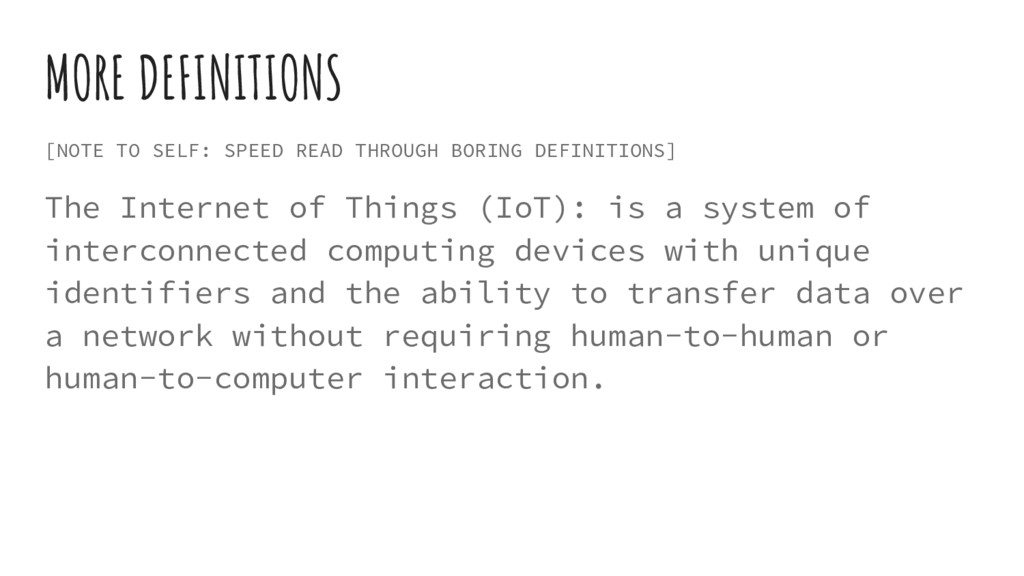
  16. MORE DEFINITIONS [NOTE TO SELF: SPEED READ THROUGH BORING DEFINITIONS]

    The Internet of Things (IoT): is a system of interconnected computing devices with unique identifiers and the ability to transfer data over a network without requiring human-to-human or human-to-computer interaction.
  17. “DIGITAL OUT OF HOME” - yes please!!! Digital out of

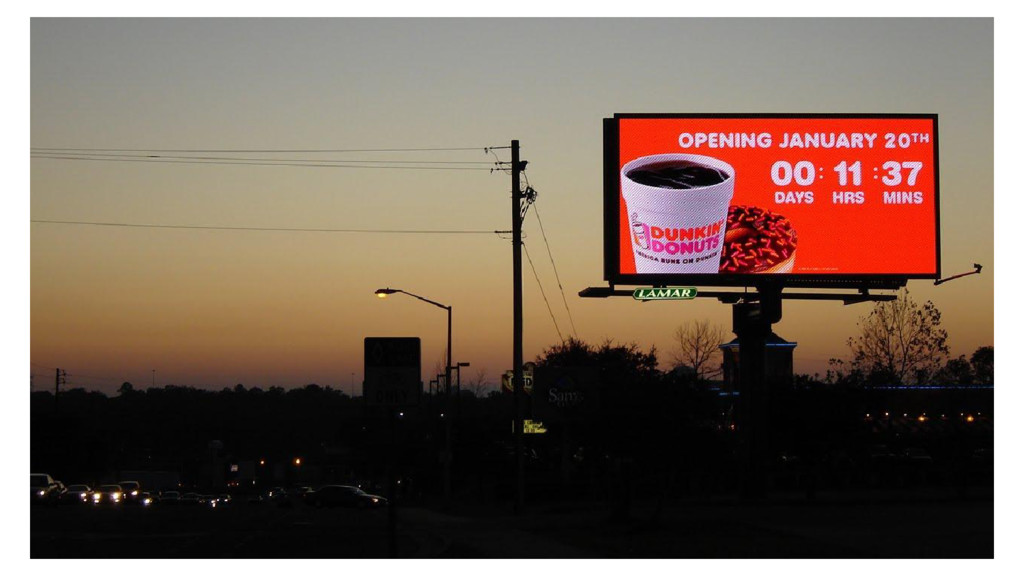
    home advertising is advertising that reaches users outside their homes. Traditionally, this implies advertising on digital billboards, electronic signage, transit advertising, etc etc.
  18. What makes this type of advertising exciting? Let’s look at

    a couple of pictures first before we get into that. P.S: I personally prefer this kind of advertising because it takes the “cookies” off my computer.
  19. EXHIBIT 1: women's aid ad campaign In 2015, A U.K.

    advocacy group created an ad campaign using a digital billboard that shows a woman with cuts and bruises across her face — as passersby look at the woman, the wounds on her face start to heal and disappear. The billboard, which was produced by ad agency WCRS and media company Ocean Outdoor, uses facial recognition technology to sense how many people are looking its way. [Play Video 1]
  20. EXHIBIT 2 2014... Apotek, a pharmacy brand, outfitted subway platform

    ads in Stockholm with ultrasonic sensors that discerned when a train was coming. The ad featured a model with a lush mane, and when the train came, her hair flapped in the wind and she struggled to keep it in place. [Play Video 2]
  21. ABOUT engagement Can you think of ads or campaigns that

    have over the years caught your attention and think about why they may have caught your attention? Now that we’re all reminiscing, let me take your through the thought process that birthed adKandi.
  22. WOW!! This is all cool... DOOH with the level of

    technology we just watched can be quite expensive and usually takes a lot of time to build. What if you wanted to build your own DOOH platform while making it extensible and eventually able to perform voodoo? What would you need to make that possible?
  23. We want nice things Once you get a glimpse at

    the potential of DOOH systems. You’ll likely want to build one. There are three core components needed in this context. 1. An extensible OS platform to run your DOOH system on 2. Connectivity support 3. Support for media in varying formats
  24. We can have nice things Luckily for us the Android

    platform.... • Is extensible (Supports Mobile vision duh!!) and quite pervasive. • Has support for connectivity (Bluetooth, Wifi, Ethernet, Sim cards) • Can play media in various formats adKandi runs on high tablets, TVs and anything that runs Android.
  25. We have a platform now... Let’s define a problem statement.

    I think this should work... “Build a DOOH platform with configurable advert formats and super awesomeeeeeeeee” Let’s start small ehn, no vess. Skynet wasn’t built in a day.
  26. Our DOOH System aka adkandi Using the defined problem statement,

    we built our first MVP. adKandi could... • Display ads with different formats, on different android devices • Display ads on TV setups at different locations • Display ads based on a schedule • Provide an amount of user feedback on adverts But this didn’t exactly cut it.
  27. Adverts are nice but feedback is platinum Providing feedback led

    us to ask more questions like 1. What good ways do we measure conversion and engagement rate of a particular advert? 2. How can we categorize these feedback and make it useful to advertising agencies? 3. How do we make the process such that we leverage on the devices themselves to process this information? Devices are getting more powerful by the day so edge computing for the win.
  28. Solving the feedback problem We figured out the best way

    to go about this would be to use the Vision API in • Estimating the number of people who see these ads. • Perform mood(sentiment analysis) of each individual watching the ads • Measure viewer stay time and mood over the duration of watching the advert
  29. ADKANDI II Questions like • How do we measure how

    long a face stares at an advert? • How do we infer emotions these ads trigger with the viewers? • What demographic does the viewer fall into? The working theory here was, while not all encompassing, the Vision API should be able to pick up faces of people definitely looking at the screen.
  30. What we did Using Mobile Vision face detection APIs, we

    were able to • Track faces watching an ad, we called them “eye-ball” count. • Provide QR code access to exclusive content provided by the adverts. This way we could give advertising agencies fairly accurate estimates of people interacted at their ads.
  31. One of many problems solved. Now, we needed to be

    able to tell how those faces reacted while watching the ads to help us answer our initial questions concerning feedback....
  32. Pertinent questions • Did they like or dislike your ads?

    • Did they smile or frown while watching it? • Are they likely to buy your product based on inference from their response? Important and vital information to advertising agencies.
  33. Obvious NEXT STEPS We needed a way to measure viewer

    sentiments while watching adverts. Using M.Vision face tracking APIs, we were able to measure viewer sentiment over the duration which an advert played.
  34. How? The mobile vision API lets you track individual faces.

    With it, we were able to... • Detect unique faces (Eyeball count) • Detect unique face landmarks • Classify sentiment (Estimate if the viewer is smiling or not) All over the duration of an advert being displayed.
  35. Statistics will save you Now, we have enough data to

    crunch, make inference from, make suggestions and a bunch of other interesting things. All of these without compromising your privacy, serving you cookies you don’t want or shoving banners in your face. Advertising agencies can have their badly needed data.
  36. Internet of things By leveraging on user devices and the

    connectivity advantage of the adKandi platform we were able to explore the IOT domain. Let’s say you walk into a store and have any of our partner apps installed, you can get pushed vouchers, coupons, trivias, discount cards etc.
  37. tHings Considered First, security was very important. We had to

    make sure that data collected was secure and the system wasn’t easy to compromise.
  38. tHings Considered Building for the African context first brought in

    the need for a lot of redundancy, app auto-restarts, caching, fault tolerance etc.
  39. More goodies Building adKandi with an OS in mind gave

    us time to build a much more interactive system using IOT. This is the point where I go vague as there’s only so much company detail I can share.
  40. Fun fact We only measure this when you watch an

    advert. Not before or after, only during. And it’s totally anonymous.
  41. Ethics: don’t be evil Building a solution like adKandi touches

    on the subject of ethics a lot. Data was secured, deleted appropriately and we didn’t go out of our way to be assholes.
  42. Ethics: because we don’t discuss it enough “That you can

    doesn’t mean you should” - Me I think it’s important to know when to draw the line when software engineering is involved. With the progress being made in AI and machine learning, we have to make sure we do not end up building a skynet. I sure as hell don’t want to be that guy. :)
  43. EXPLORE THESE ARTICLES • Introduction to Mobile Vision APIs: https://hackernoon.com/machine-learning-for-android-devel

    opers-with-the-mobile-vision-api-part-1-face-detection-e7 e24a3e472f • Mobile Vision Documentation: https://developers.google.com/vision/android/detect-faces -tutorial