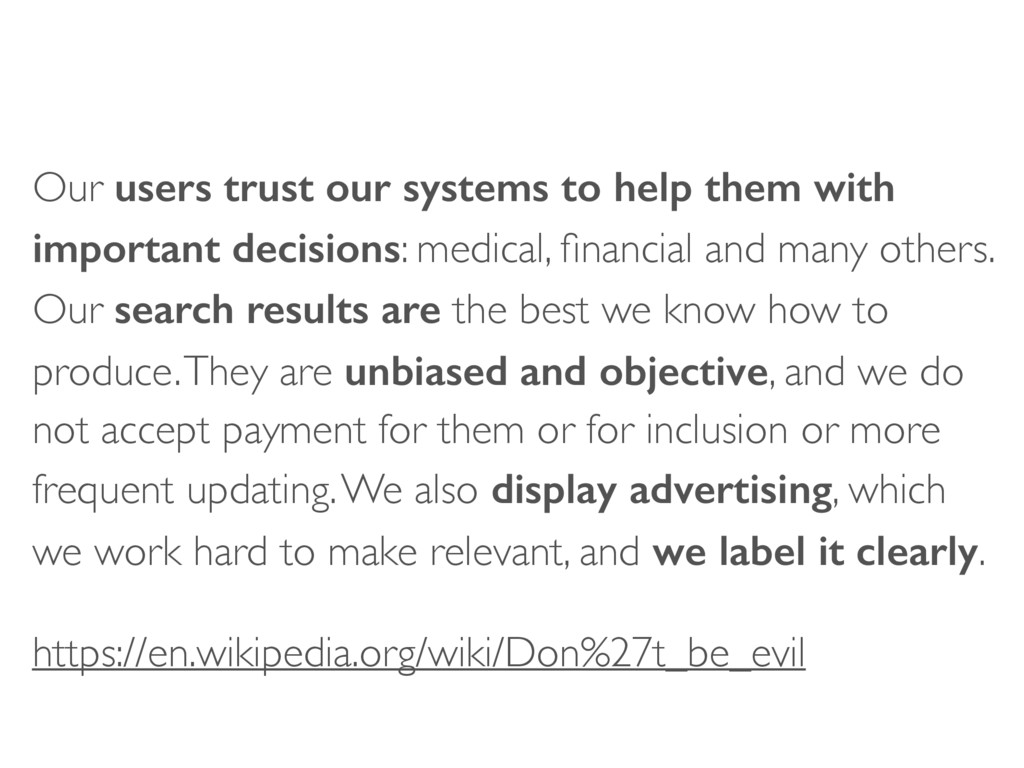
decisions: medical, financial and many others. Our search results are the best we know how to produce. They are unbiased and objective, and we do not accept payment for them or for inclusion or more frequent updating. We also display advertising, which we work hard to make relevant, and we label it clearly. https://en.wikipedia.org/wiki/Don%27t_be_evil
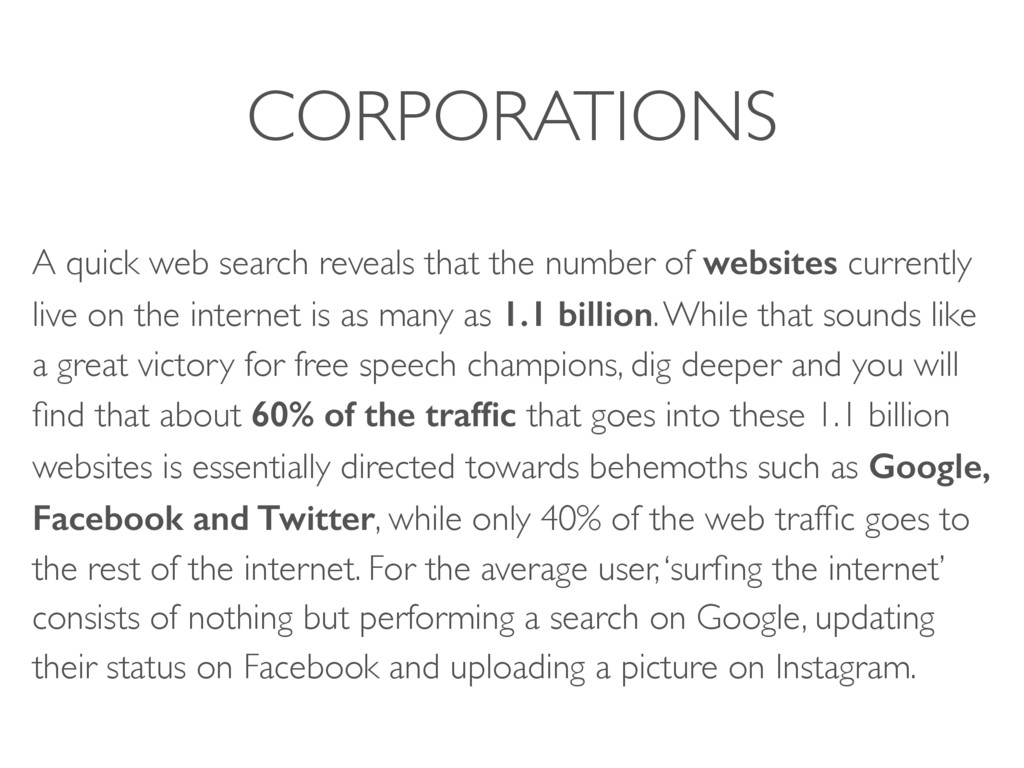
websites currently live on the internet is as many as 1.1 billion. While that sounds like a great victory for free speech champions, dig deeper and you will find that about 60% of the traffic that goes into these 1.1 billion websites is essentially directed towards behemoths such as Google, Facebook and Twitter, while only 40% of the web traffic goes to the rest of the internet. For the average user, ‘surfing the internet’ consists of nothing but performing a search on Google, updating their status on Facebook and uploading a picture on Instagram.
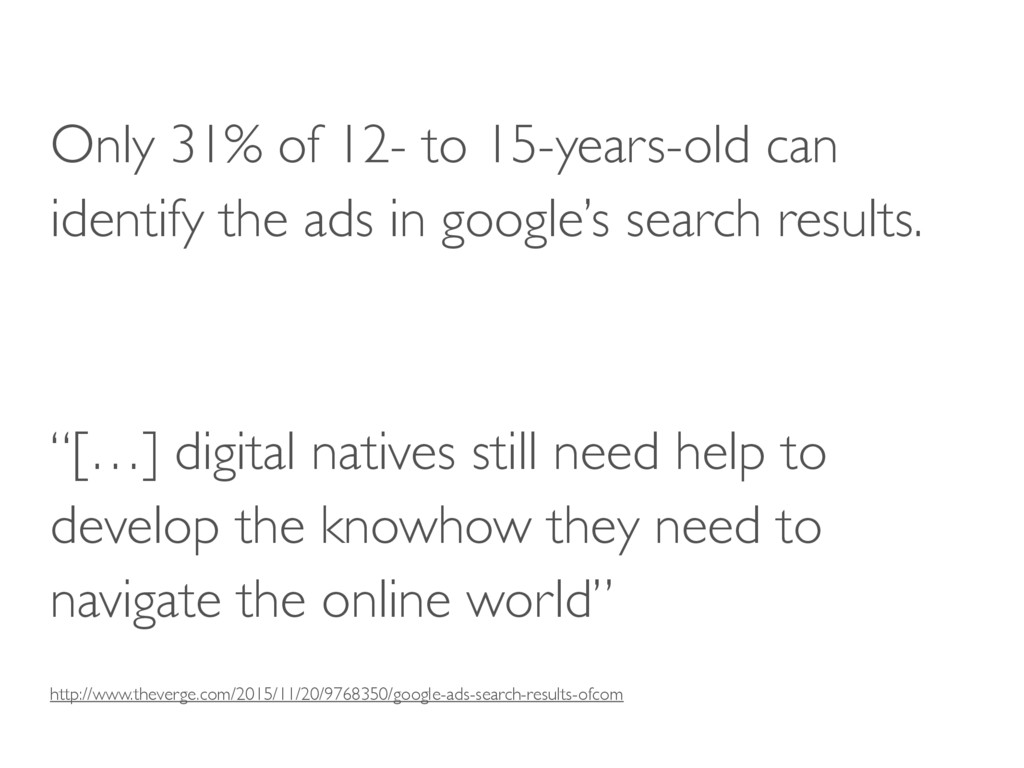
in google’s search results. “[…] digital natives still need help to develop the knowhow they need to navigate the online world” http://www.theverge.com/2015/11/20/9768350/google-ads-search-results-ofcom
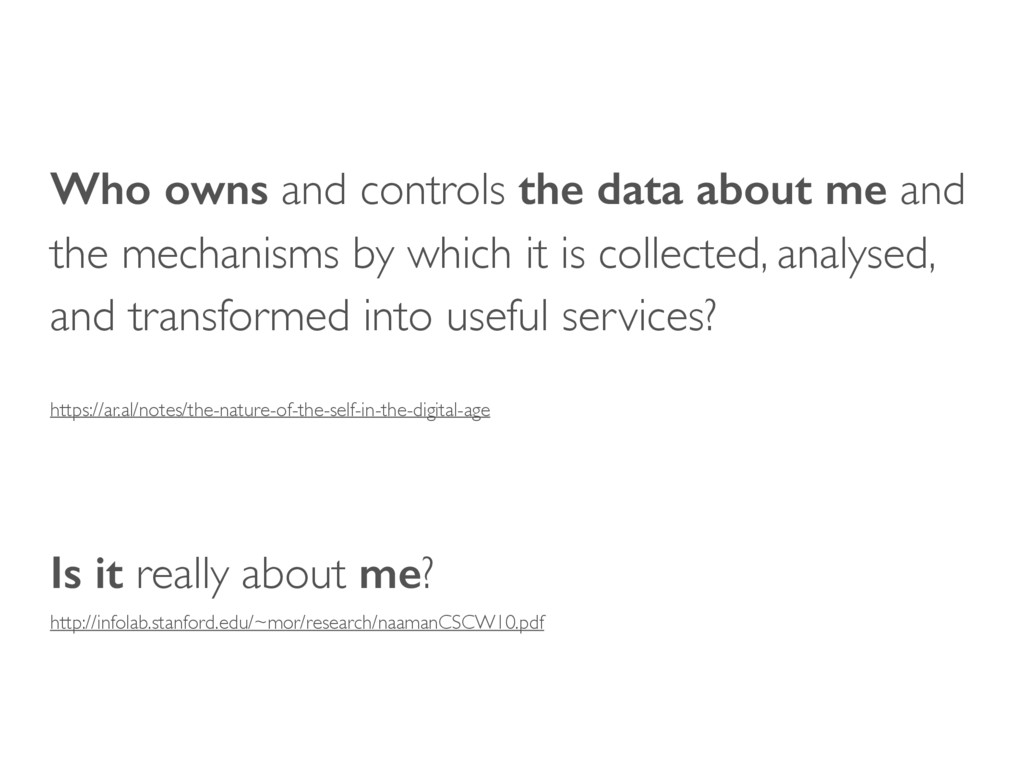
mechanisms by which it is collected, analysed, and transformed into useful services? https://ar.al/notes/the-nature-of-the-self-in-the-digital-age Is it really about me? http://infolab.stanford.edu/~mor/research/naamanCSCW10.pdf
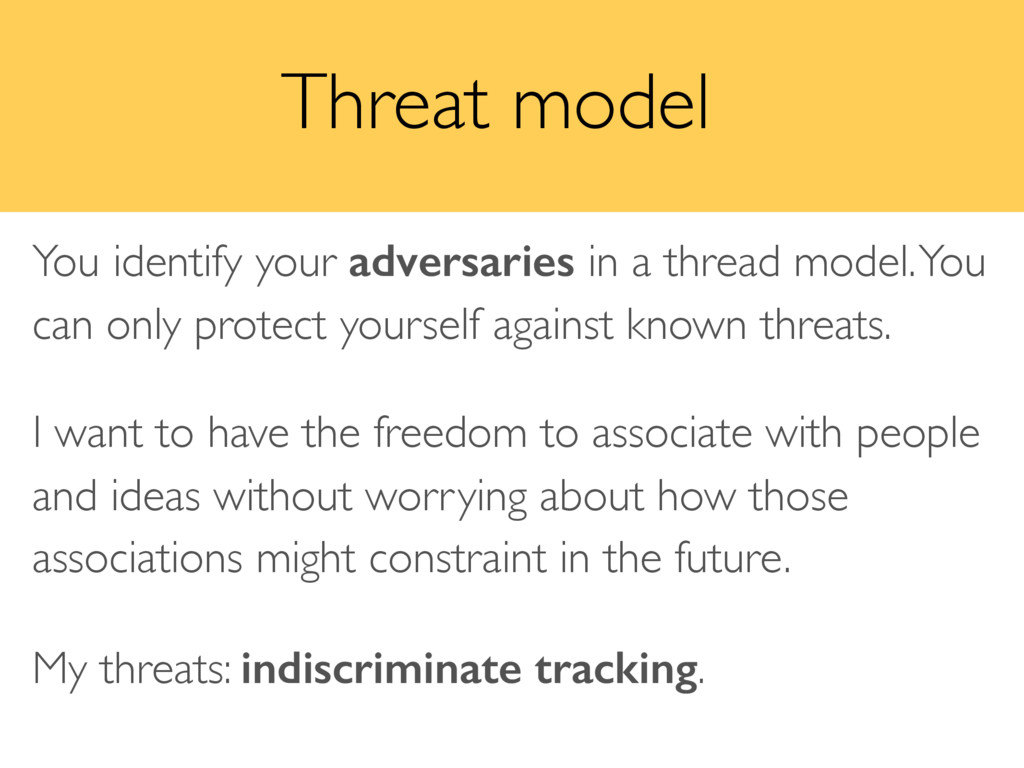
You can only protect yourself against known threats. I want to have the freedom to associate with people and ideas without worrying about how those associations might constraint in the future. My threats: indiscriminate tracking.
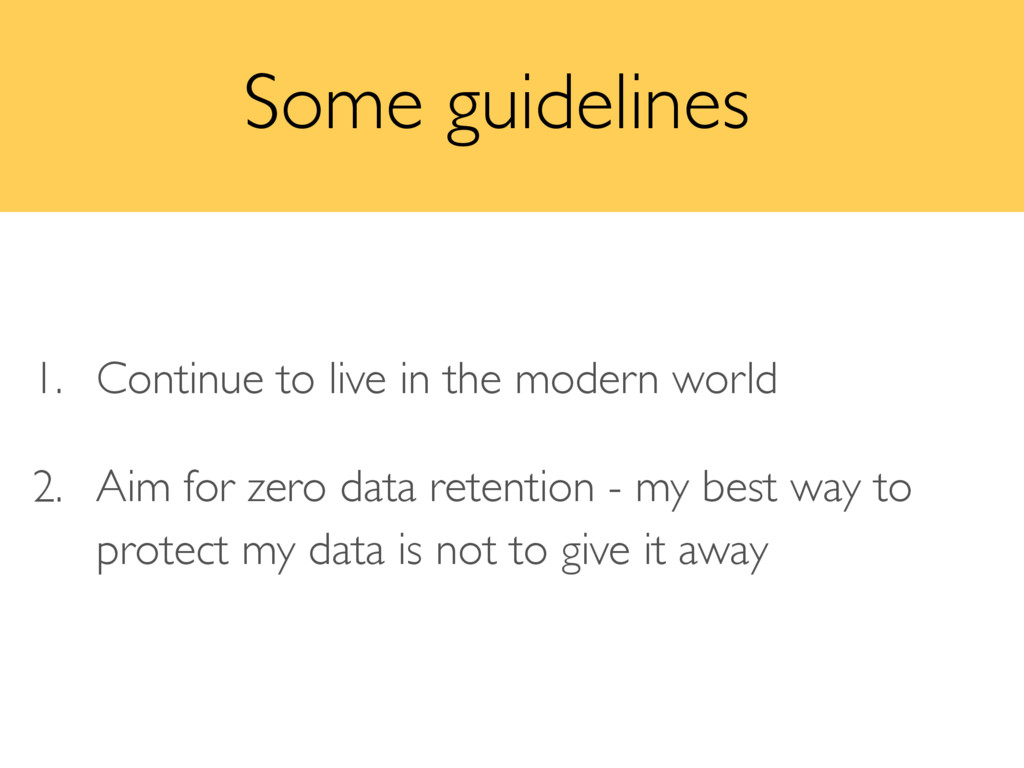
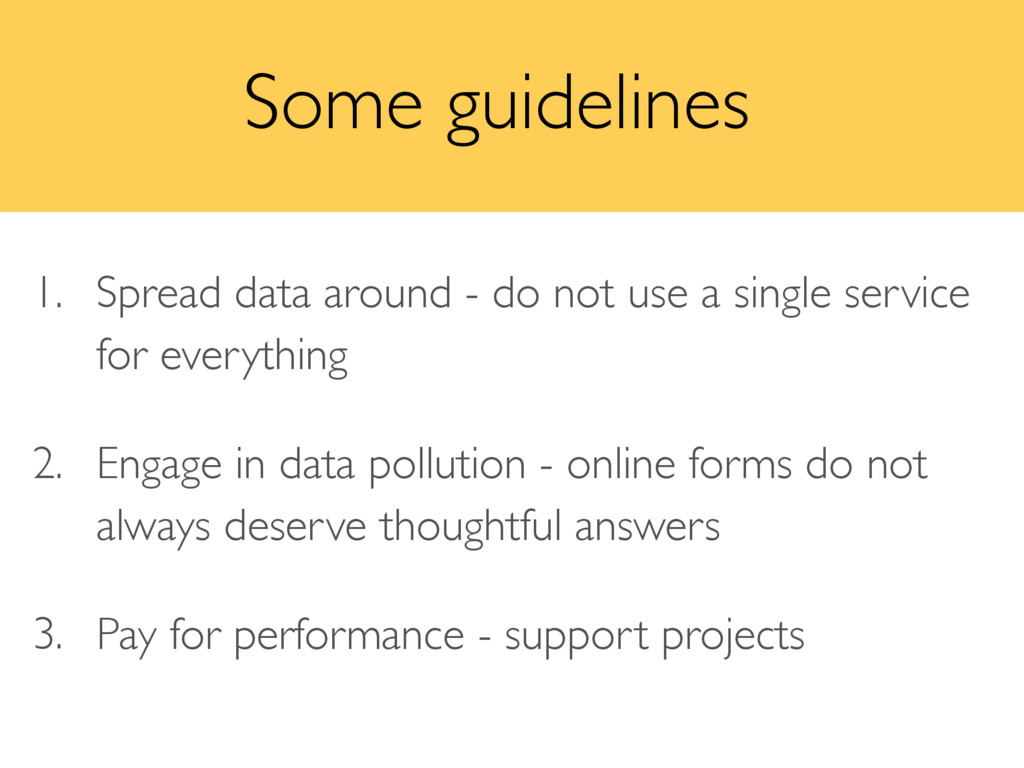
a single service for everything 2. Engage in data pollution - online forms do not always deserve thoughtful answers 3. Pay for performance - support projects


 hell03610
 athug
athug
 bgpat
bgpat
 yut0naga1_fa
 baseballyama
 ufried
 toshimaru
 takanorip
 y_sera15
 furuton
 kash1064
 naruoga
 mot_techtalk
 skipperchong
 ipullrank
 lindahogenes
 tammyeverts
 reverentgeek
 cassininazir
 addyosmani
 aleyda
 marcelosomers
 sarafernandez
 baasie