expensive, so leading edge, could be so useless. And then it occurred to me that a computer is a stupid machine with the ability to do incredibly smart things, while computer programmers are smart people with the ability to do incredibly stupid things. They are, in short, a perfect match. (Bill Bryson)
stands between doing the right things and doing things right. There is surely nothing quite so useless as doing with great efficiency what should not be done at all. (Peter F. Drucker)
Owner is responsible for maximizing the value of the product resulting from work of the Development Team. https://www.scrumguides.org/scrum-guide.html#team-po
Owner is responsible for maximizing the value of the product resulting from work of the Development Team. https://www.scrumguides.org/scrum-guide.html#team-po
to go from here? The Cheshire Cat: That depends a good deal on where you want to get to. Alice: I don't much care where. The Cheshire Cat: Then it doesn't much matter which way you go.
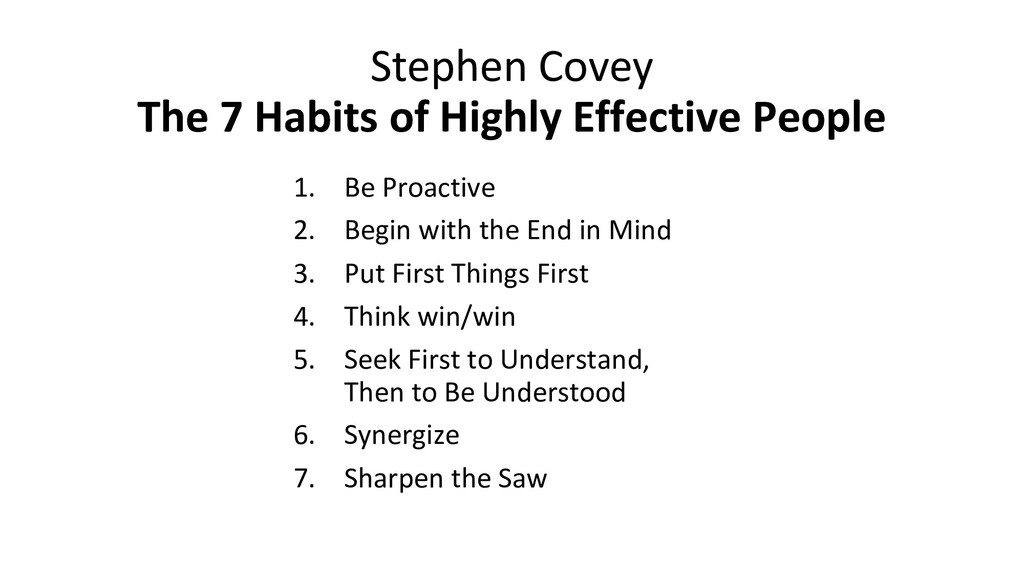
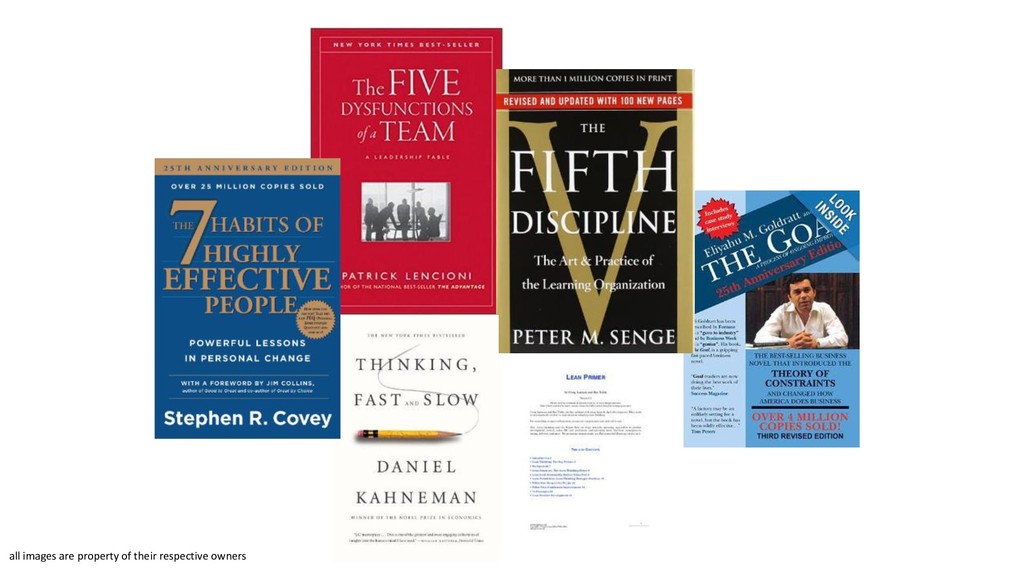
Be Proactive 2. Begin with the End in Mind 3. Put First Things First 4. Think win/win 5. Seek First to Understand, Then to Be Understood 6. Synergize 7. Sharpen the Saw
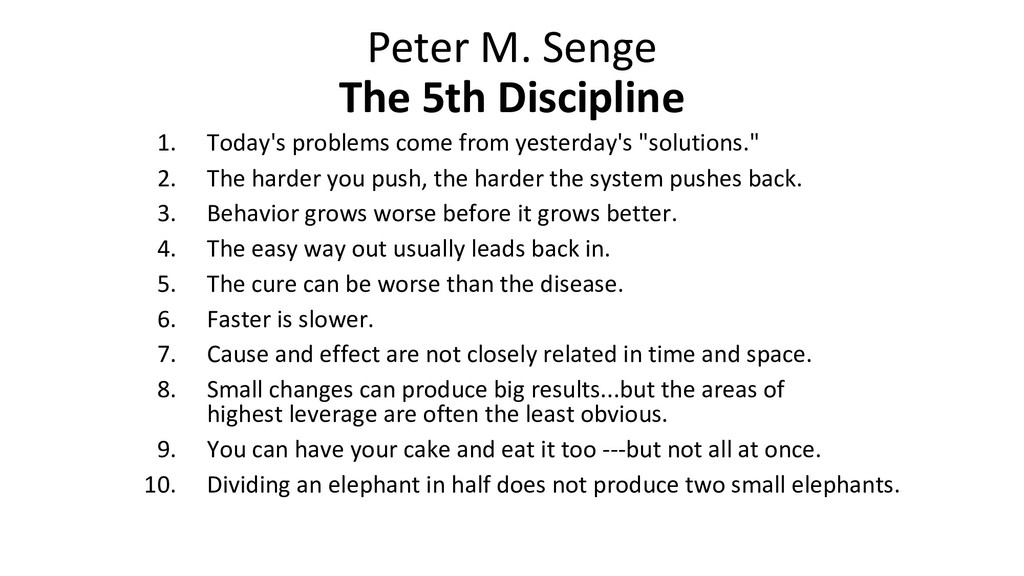
from yesterday's "solutions." 2. The harder you push, the harder the system pushes back. 3. Behavior grows worse before it grows better. 4. The easy way out usually leads back in. 5. The cure can be worse than the disease. 6. Faster is slower. 7. Cause and effect are not closely related in time and space. 8. Small changes can produce big results...but the areas of highest leverage are often the least obvious. 9. You can have your cake and eat it too ---but not all at once. 10. Dividing an elephant in half does not produce two small elephants.
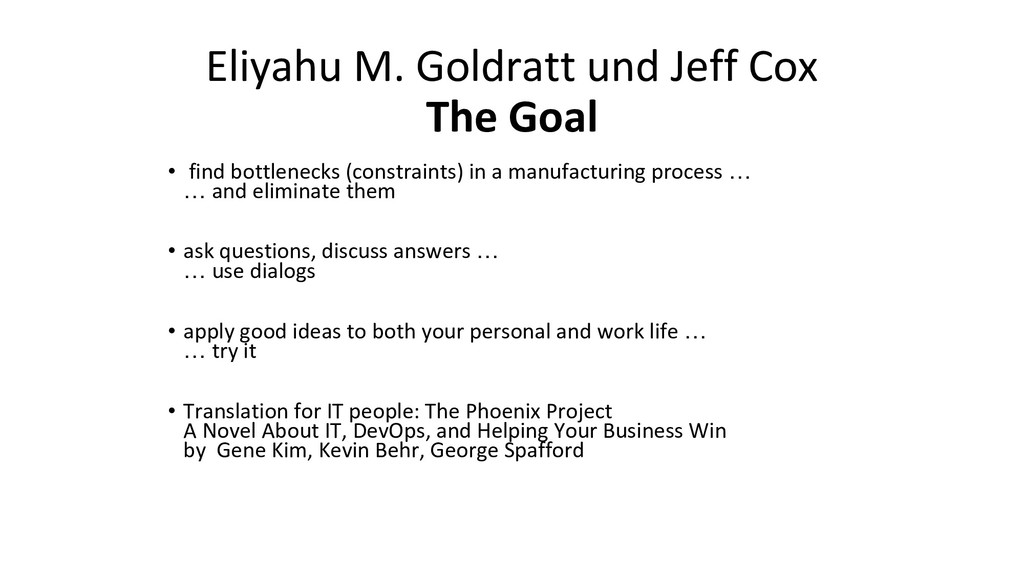
bottlenecks (constraints) in a manufacturing process … … and eliminate them • ask questions, discuss answers … … use dialogs • apply good ideas to both your personal and work life … … try it • Translation for IT people: The Phoenix Project A Novel About IT, DevOps, and Helping Your Business Win by Gene Kim, Kevin Behr, George Spafford
… be surprised There is literature outside the usual categories like IT , software development , etc. whose reading nevertheless ( or perhaps because ) contributes much to the personal development of product owners
in this presentation are fictitious. No identification with actual persons, places, buildings, and products is intended or should be inferred. No animals were harmed during the making of this presentation. You may wake up now ☺ See next slide for suggested podcasts


 malna
malna
 todatomohiro
 takeshisumida_
 kintotechdev
 roms
roms
.jpg) yoshikikonishi_
yoshikikonishi_
 nessu_inc
 uluru_hr
 tamagakiyuya
 so_kotani
 kamadamakoto
 neuroenergia
 smashingmag
 tammyeverts
 aleyda
 konakalab
 inesmontani
 soudai
 marketingsoph
 ipullrank
 techseoconnect
 lemiorhan