fully present in situations we cannot control and patient as a genuine meaning and a direction unfold. It means seeing familiar things in new ways, listening rather than speaking, learning from patients rather than teaching them, and cultivating the capacity to be amazed. It means recognizing the power of our own humanity to make a difference in the lives of others and valuing it as highly as our expertise. Finally it means discovering that health care is a front-row seat on mystery and sitting in that seat with open eyes.” Making Health Care Whole Christina Puchalski, MD and Betty Ferrell (2010)
complete physical, mental, spiritual and social well-being and not just the absence of disease or infirmity.” http://www.medizin-ethik.ch/publik/spirituality_definition_health.htm
humanity through which persons seek ultimate meaning, purpose and transcendence and experience relationship to self, family, others, community, society, nature and the significant or sacred. Spirituality is expressed through beliefs, values, traditions and practices.” (from a meeting with George Washington Institute on Spirituality and Health, Geneva, 2013)
and/or worship of a supernatural being or power, especially a personal God or gods. Religion is a particular system of faith and worship People with similar spiritual beliefs often gather together for structured and systematic expression of their spirituality
have a positive impact on the patient’s emotional, social and physical well-being. In order to effectively address total pain in palliative care, we must be able to address a person’s spiritual pain. Spirituality is an important aspect of a person’s functioning and must be assessed and addressed to provide holistic, patient focused care and support Understanding a patient’s spirituality is crucial to understanding him or her and how s/he deals with illness, treatment, death and bereavement. This is more than praying for patients. Addressing spiritual issues helps empower patients and facilitates communication and quality treatment planning that meets the individual’s needs and desires.
meaning and purpose in life through connectedness with self, others, art, music, literature, nature, and/or a power greater than oneself. (Puchalski, 2012)
of a sense of spiritual emptiness • Showing emotional detachment from self and others • Expressing concern, anger, resentment, fear— over the meaning of life, suffering death • Requesting spiritual assistance for a disturbance in belief system or faith (Puchalski, 2012)
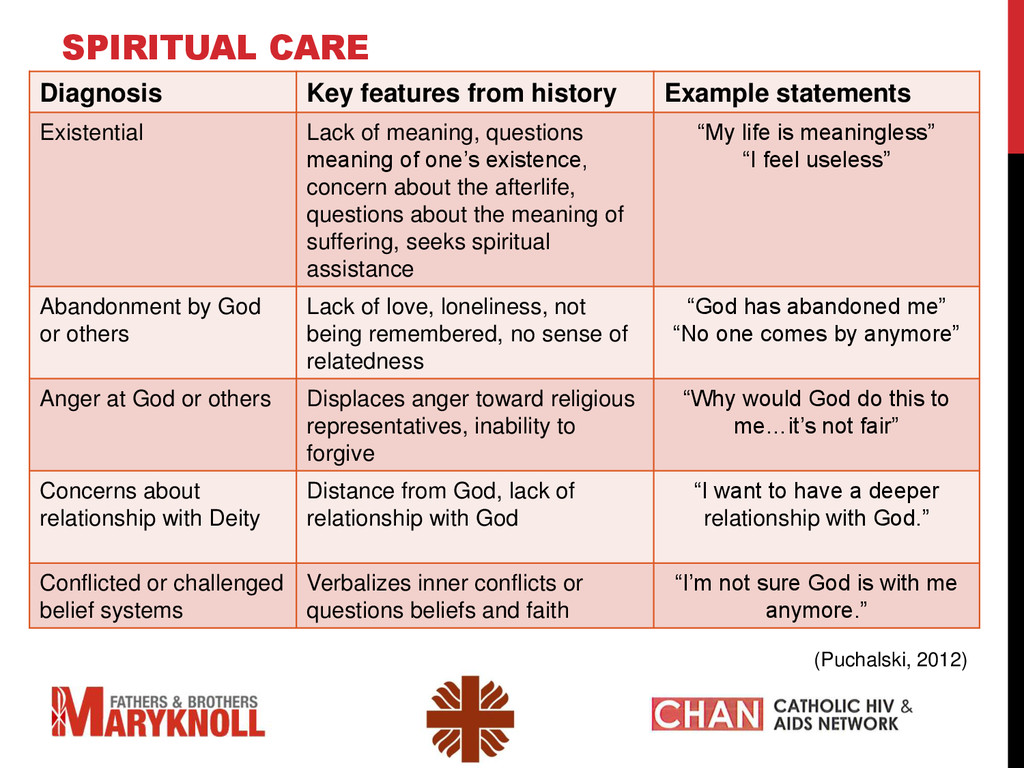
Lack of meaning, questions meaning of one’s existence, concern about the afterlife, questions about the meaning of suffering, seeks spiritual assistance “My life is meaningless” “I feel useless” Abandonment by God or others Lack of love, loneliness, not being remembered, no sense of relatedness “God has abandoned me” “No one comes by anymore” Anger at God or others Displaces anger toward religious representatives, inability to forgive “Why would God do this to me…it’s not fair” Concerns about relationship with Deity Distance from God, lack of relationship with God “I want to have a deeper relationship with God.” Conflicted or challenged belief systems Verbalizes inner conflicts or questions beliefs and faith “I’m not sure God is with me anymore.” (Puchalski, 2012)
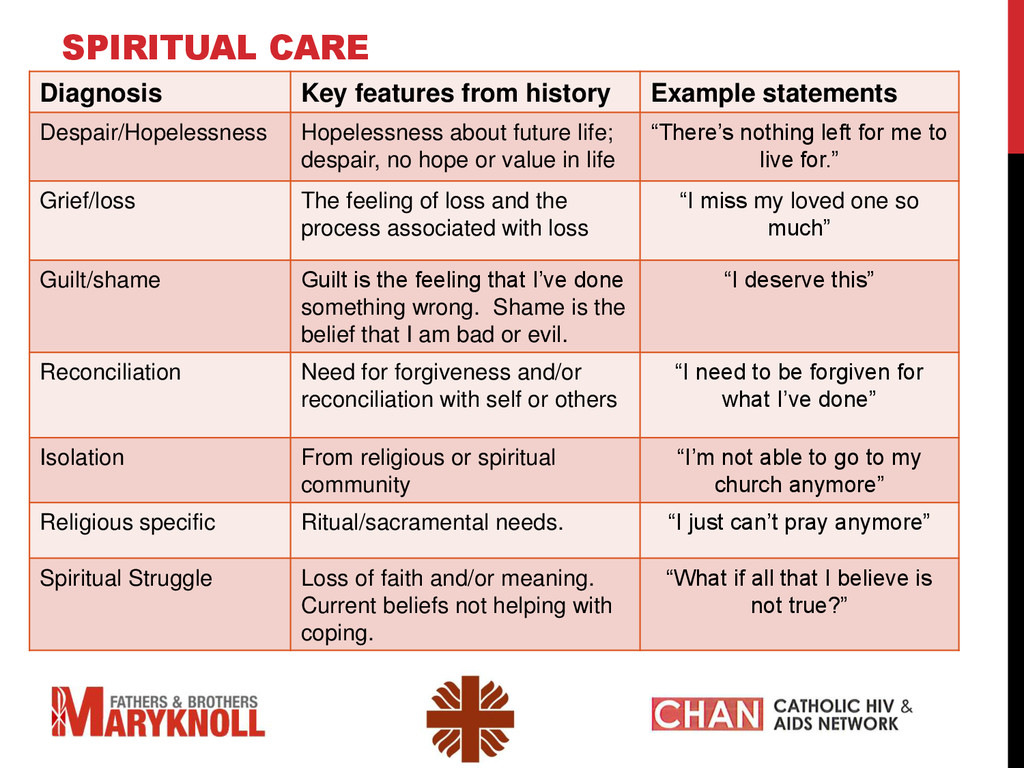
Hopelessness about future life; despair, no hope or value in life “There’s nothing left for me to live for.” Grief/loss The feeling of loss and the process associated with loss “I miss my loved one so much” Guilt/shame Guilt is the feeling that I’ve done something wrong. Shame is the belief that I am bad or evil. “I deserve this” Reconciliation Need for forgiveness and/or reconciliation with self or others “I need to be forgiven for what I’ve done” Isolation From religious or spiritual community “I’m not able to go to my church anymore” Religious specific Ritual/sacramental needs. “I just can’t pray anymore” Spiritual Struggle Loss of faith and/or meaning. Current beliefs not helping with coping. “What if all that I believe is not true?”
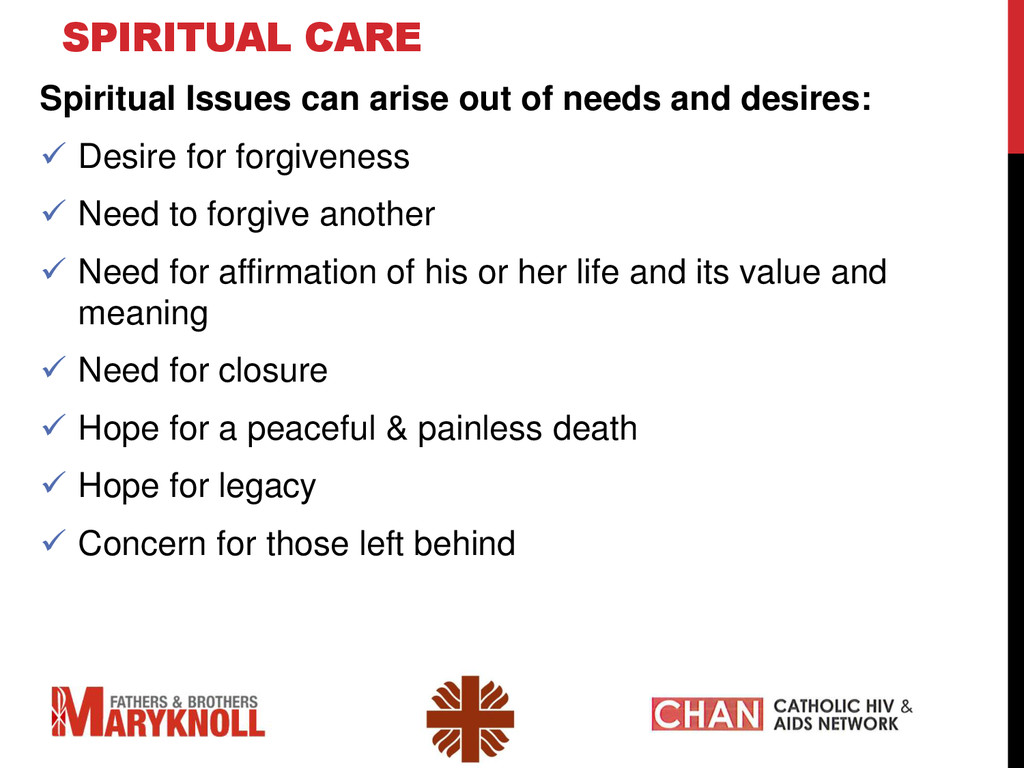
desires: Desire for forgiveness Need to forgive another Need for affirmation of his or her life and its value and meaning Need for closure Hope for a peaceful & painless death Hope for legacy Concern for those left behind
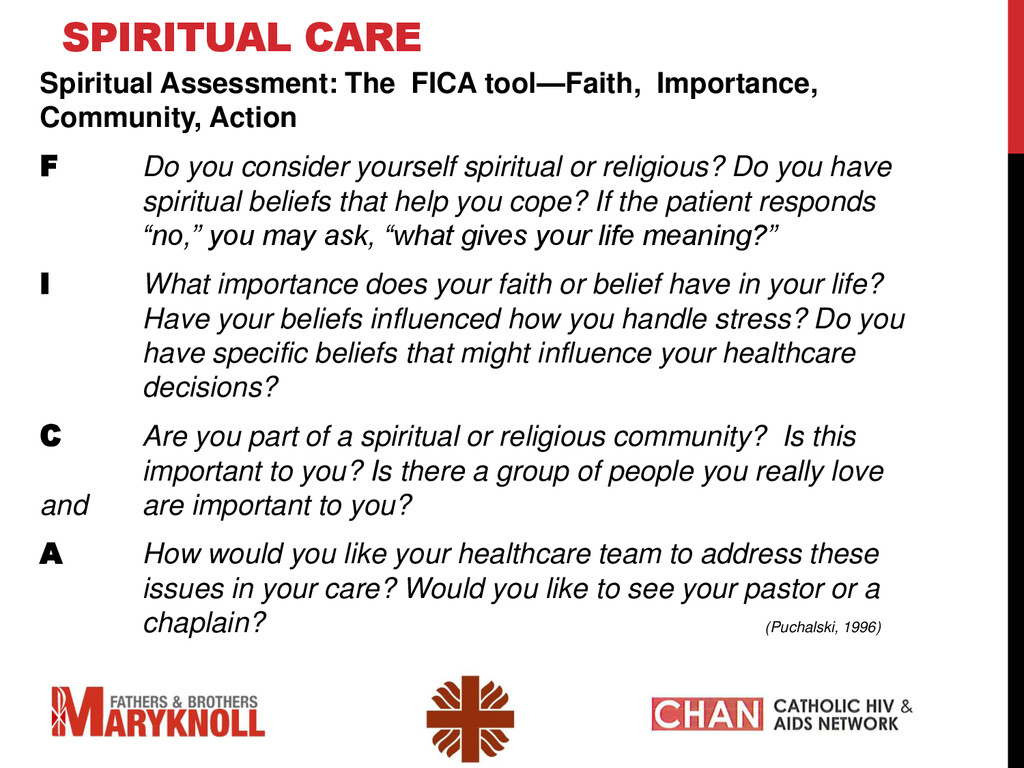
F Do you consider yourself spiritual or religious? Do you have spiritual beliefs that help you cope? If the patient responds “no,” you may ask, “what gives your life meaning?” I What importance does your faith or belief have in your life? Have your beliefs influenced how you handle stress? Do you have specific beliefs that might influence your healthcare decisions? C Are you part of a spiritual or religious community? Is this important to you? Is there a group of people you really love and are important to you? A How would you like your healthcare team to address these issues in your care? Would you like to see your pastor or a chaplain? (Puchalski, 1996)
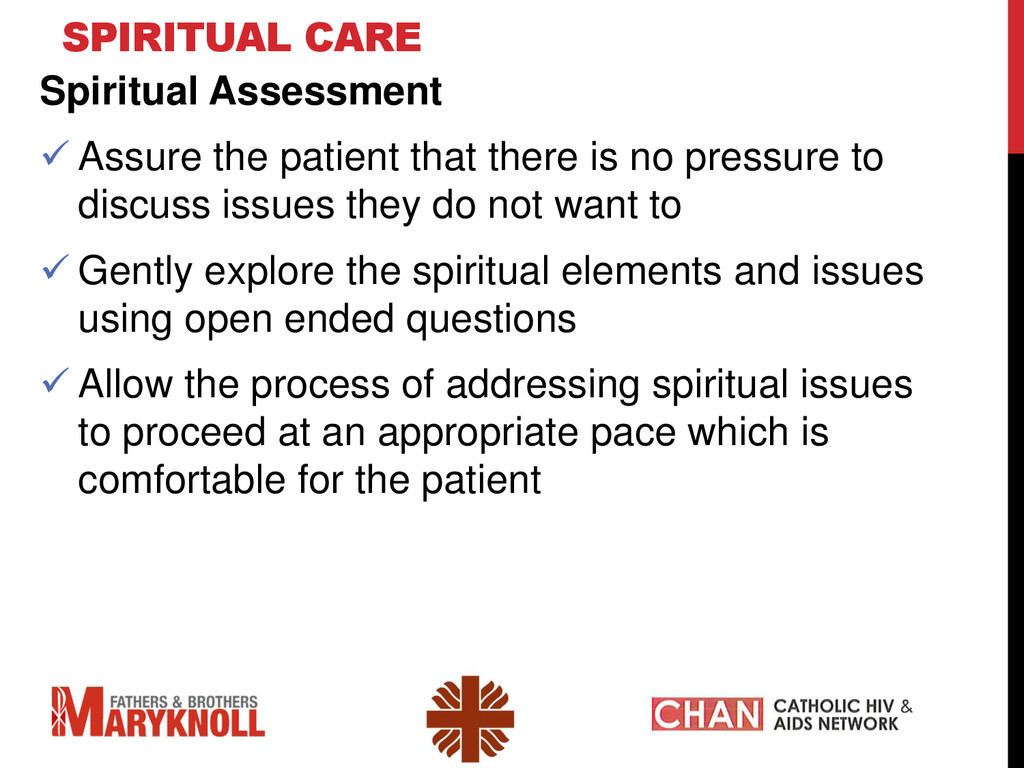
is no pressure to discuss issues they do not want to Gently explore the spiritual elements and issues using open ended questions Allow the process of addressing spiritual issues to proceed at an appropriate pace which is comfortable for the patient
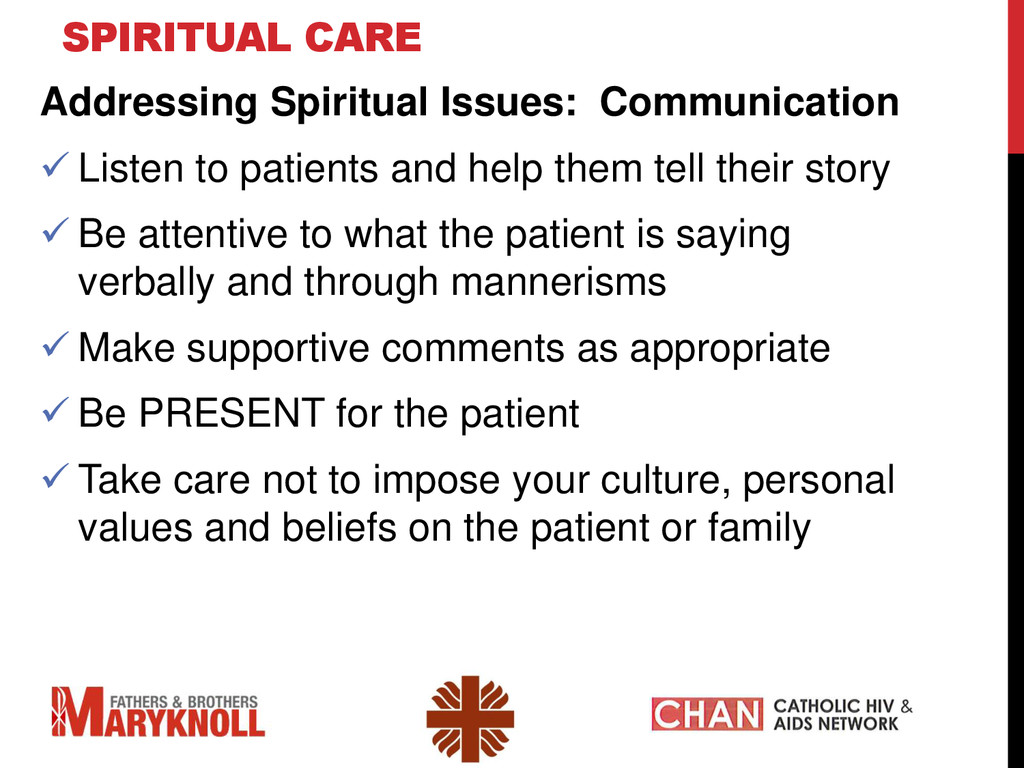
and help them tell their story Be attentive to what the patient is saying verbally and through mannerisms Make supportive comments as appropriate Be PRESENT for the patient Take care not to impose your culture, personal values and beliefs on the patient or family
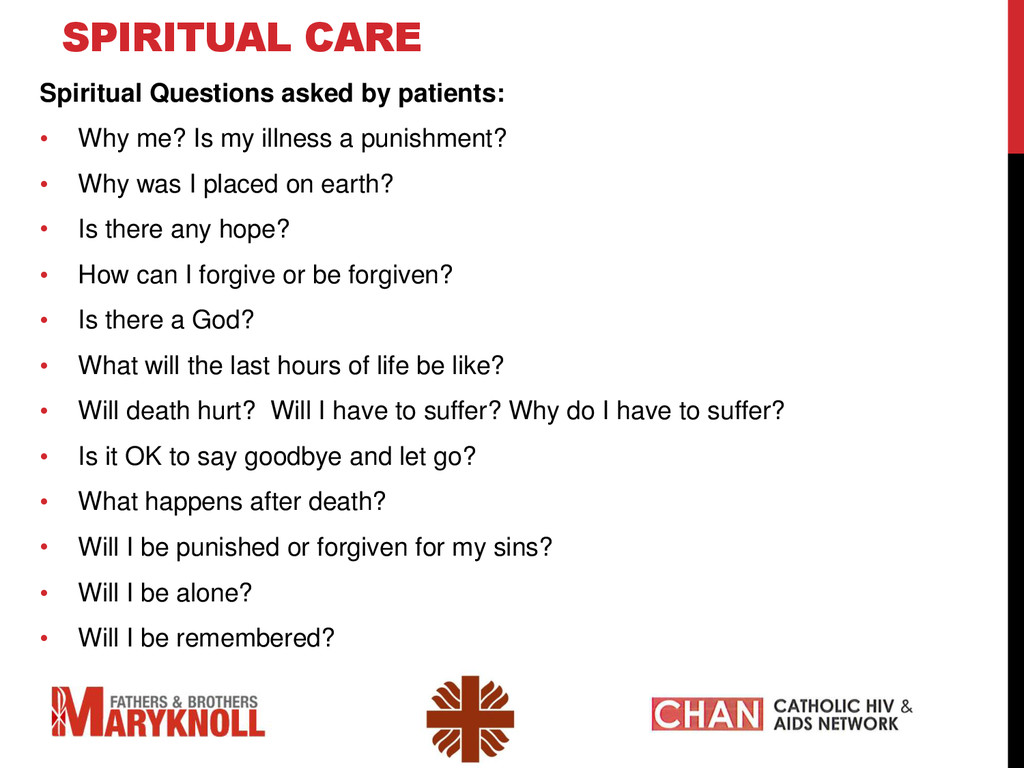
Is my illness a punishment? • Why was I placed on earth? • Is there any hope? • How can I forgive or be forgiven? • Is there a God? • What will the last hours of life be like? • Will death hurt? Will I have to suffer? Why do I have to suffer? • Is it OK to say goodbye and let go? • What happens after death? • Will I be punished or forgiven for my sins? • Will I be alone? • Will I be remembered?
can result when spiritual issues and questions are not adequately or satisfactorily addressed Pain of a spiritual origin must be addressed holistically and is not responsive to analgesics alone. Patients with spiritual pain may appear: Lonely, isolated, and helpless Restless and experience acute anxiety or guilt Withdrawn and depressed Angry, hostile and irritable Experience fearful dreams and nightmares
a secure, caring environment Listen and help the person sort through the varied emotions that accompany a life-threatening illness Do not strive to change the patients beliefs, instead accompany the patient in his or her journey There may be questions you are not able to answer. Do not be afraid to say, “I don’t know.” Feelings of guilt can be a normal part of the grieving process Prepare for death Explore whether the person wants to speak to a spiritual or religious leader Above all, take the time to BE PRESENT.
angry patient who has demonstrated negative feelings towards God or religion Do not impose your own belief or prayer on anyone. Ask the person what he or she wants then find find the appropriate person to meet these needs The PATIENT and not the health care provider must always guide this process
narrowly defined destination. With traditional health care, there is diagnosis, prognosis and treatment. The goal of a cure is to remove disease pathology. A cure is absolute, it is either present or absent. A focus of whole-person care is healing. Healing is understood as more of a journey, with often unexpected twists and turns. Healing involves the person’s physical well-being, but also focuses on emotional, social and spiritual well-being and how these four components interact with each other. Healing may involve removing pathology, but it may also involve helping the person live and die peacefully with that pathology. As a part of healing, the caregiver accompanies the patient on their journey, meeting them where they are at any given time, and having a supportive role even to the end. There's always hope for healing.
yourself before attempting spiritual care: • What is the meaning of my life and my death? • What is my own understanding of Spirituality? • What is the purpose of my life? • What do I value most, and what is most important in my life? • What do I honestly believe about life, death and the afterlife? • What is the quality of my relationships with my family and close friends?
accept the religious beliefs of patients, but are urged to respect the patient and their beliefs Spiritual needs may be more important to the well-being of the patient than medical or nursing care. The lack of quality spiritual care may result in significant pain for patient and family members Always ask the person about their spiritual rituals and practices, and what brings them comfort and peace Reference: (2010) Bodek, Hillel. Spirituality in Palliative & End-of-Life Care
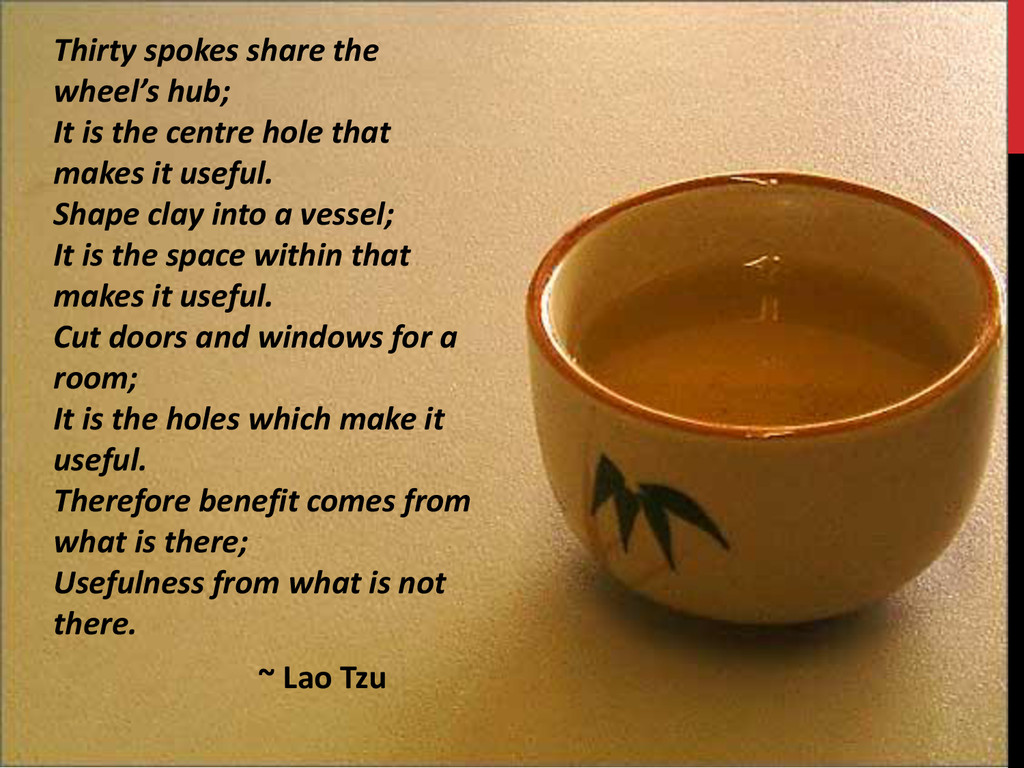
hole that makes it useful. Shape clay into a vessel; It is the space within that makes it useful. Cut doors and windows for a room; It is the holes which make it useful. Therefore benefit comes from what is there; Usefulness from what is not there. ~ Lao Tzu
Twitter: @nvrflycoach Additional Resources on Spirituality and Health: The Global Network on Spirituality and Health: http://www.gnsah.org Articles on Spirituality, HIV and Health: https://www.dropbox.com/sh/yu9k3gvti54bb71/AABbgxTtFOuIGCQbwTB_fzHqa


 hivaidscathconf
 eileencodes
 elsirapls
 pwiseman
 aleyda
 cargoodrich
 stuffmc
 danielanewman
 jct
 hatefulcrawdad
 akosma
 marketingsoph
 schlessera