Upgrade to Pro — share decks privately, control downloads, hide ads and more …

Textile ERP Software

HM Technologies
October 30, 2026
8

Textile ERP Software

HM Technologies' Textile ERP helps textile manufacturers manage raw materials, coordinate production processes, track product quality, and control costs. With customized ERP solutions, businesses can streamline workflows, gain better operational visibility, and manage manufacturing activities more efficiently.

Website: https://hm-technologies.com/erp-for-textile-industry

HM Technologies

October 30, 2026

Transcript

10 slides
  1. CASE STUDY PRESENTATION Textile Manufacturing ERP Connecting end-to-end production processes

    from fiber to finished goods with HM Technologies. HM Technologies | Enterprise Solutions
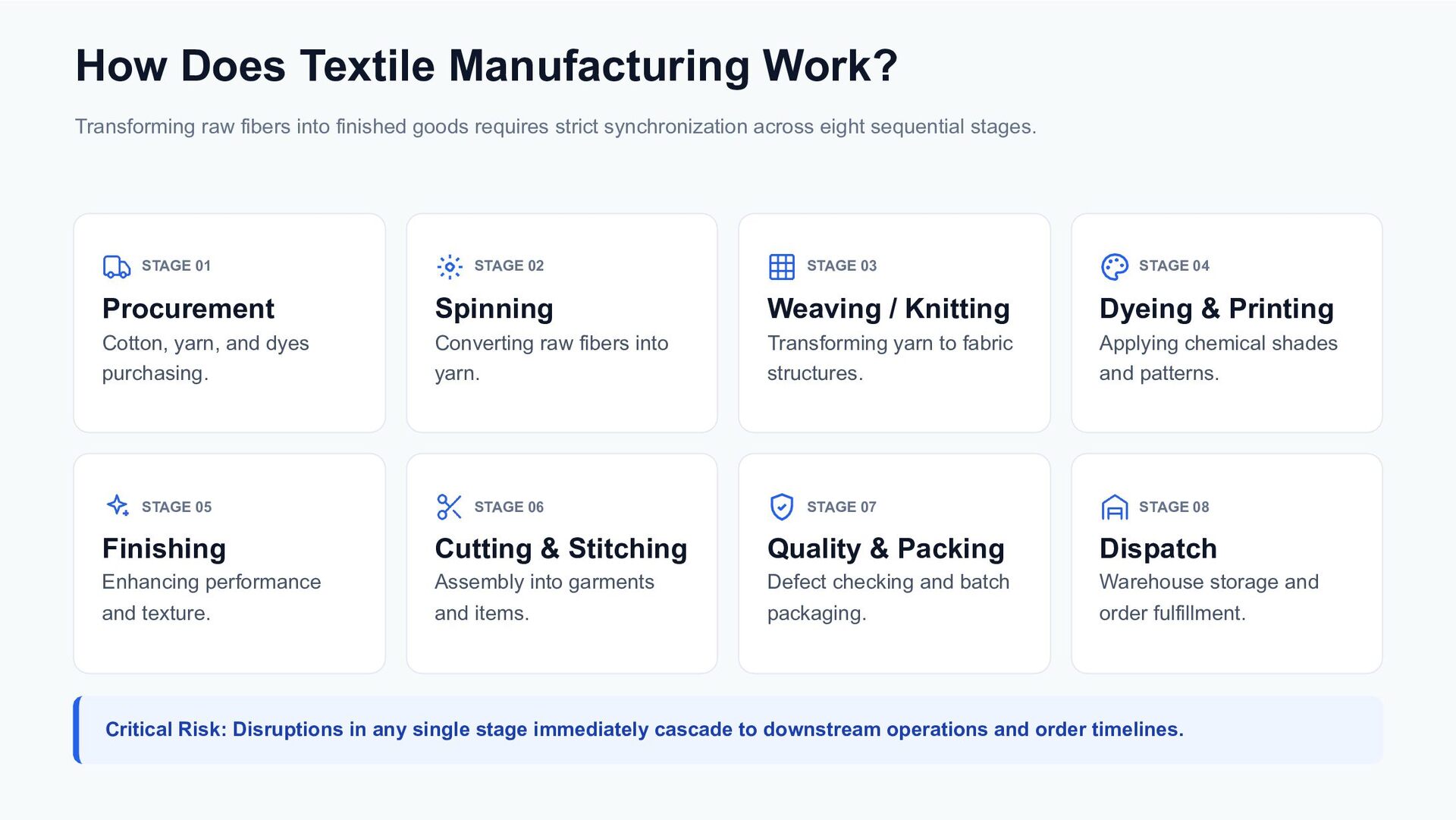
  2. How Does Textile Manufacturing Work? Transforming raw fibers into finished

    goods requires strict synchronization across eight sequential stages. STAGE 01 STAGE 02 STAGE 03 STAGE 04 Procurement Spinning Weaving / Knitting Dyeing & Printing Cotton, yarn, and dyes purchasing. Converting raw fibers into yarn. Transforming yarn to fabric structures. Applying chemical shades and patterns. STAGE 05 STAGE 06 STAGE 07 STAGE 08 Finishing Cutting & Stitching Quality & Packing Dispatch Enhancing performance Assembly into garments Defect checking and batch Warehouse storage and and texture. and items. packaging. order fulfillment. Critical Risk: Disruptions in any single stage immediately cascade to downstream operations and order timelines.
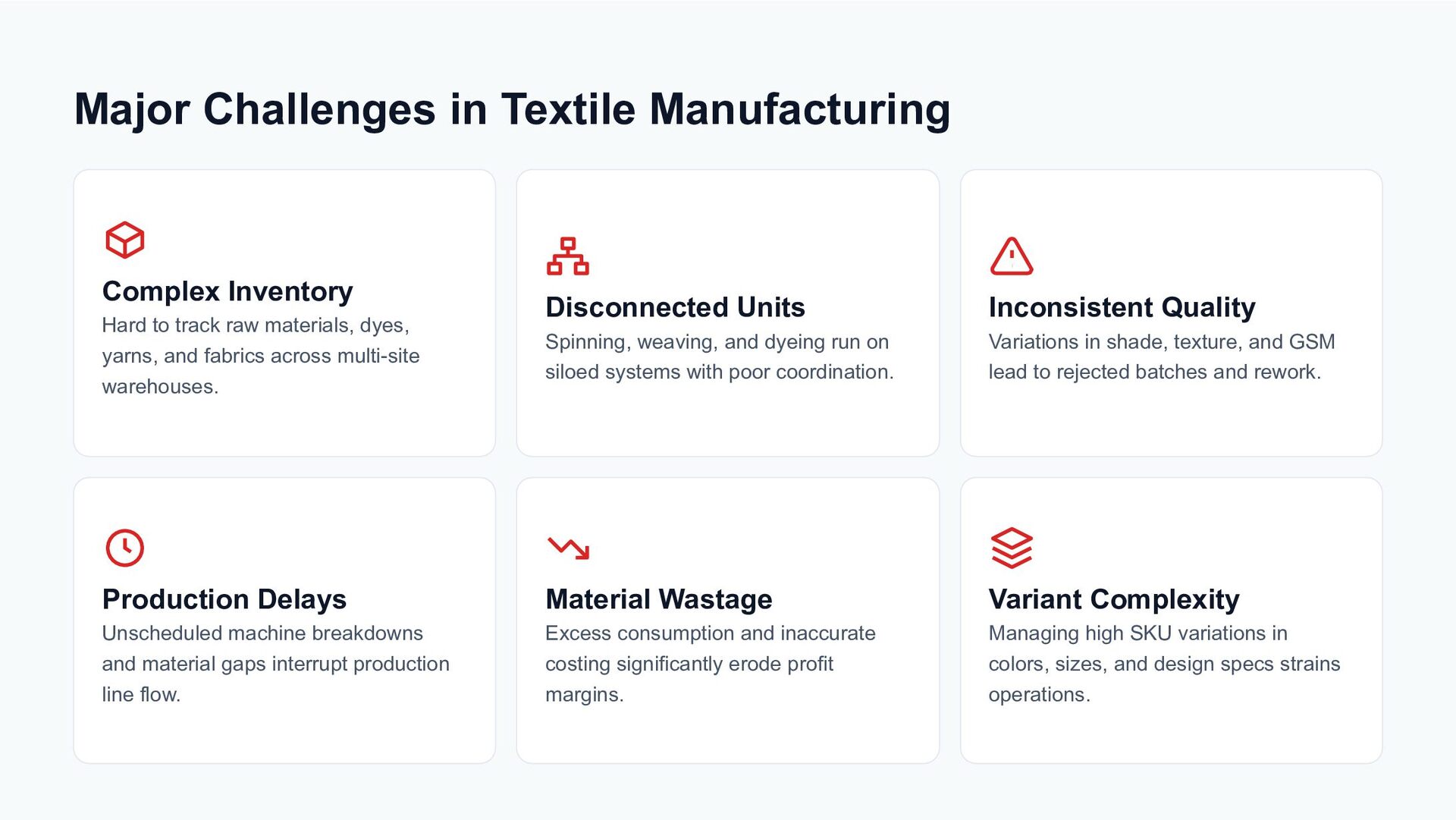
  3. Major Challenges in Textile Manufacturing Complex Inventory Disconnected Units Inconsistent

    Quality Spinning, weaving, and dyeing run on siloed systems with poor coordination. Variations in shade, texture, and GSM lead to rejected batches and rework. Production Delays Material Wastage Variant Complexity Unscheduled machine breakdowns and material gaps interrupt production line flow. Excess consumption and inaccurate costing significantly erode profit margins. Managing high SKU variations in colors, sizes, and design specs strains operations. Hard to track raw materials, dyes, yarns, and fabrics across multi-site warehouses.
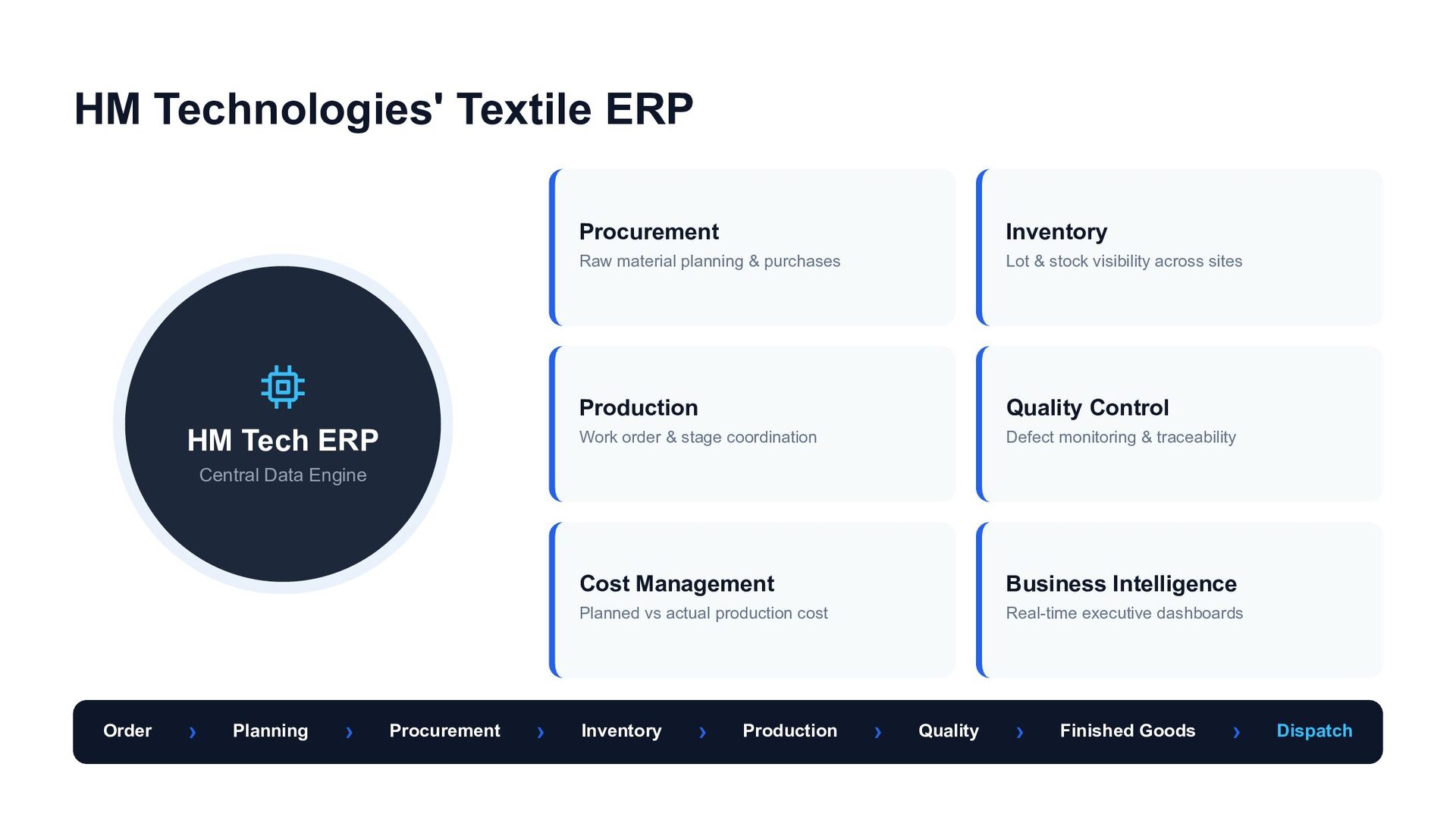
  4. HM Technologies' Textile ERP HM Tech ERP Procurement Inventory Raw

    material planning & purchases Lot & stock visibility across sites Production Quality Control Work order & stage coordination Defect monitoring & traceability Cost Management Business Intelligence Planned vs actual production cost Real-time executive dashboards Central Data Engine Order › Planning › Procurement › Inventory › Production › Quality › Finished Goods › Dispatch
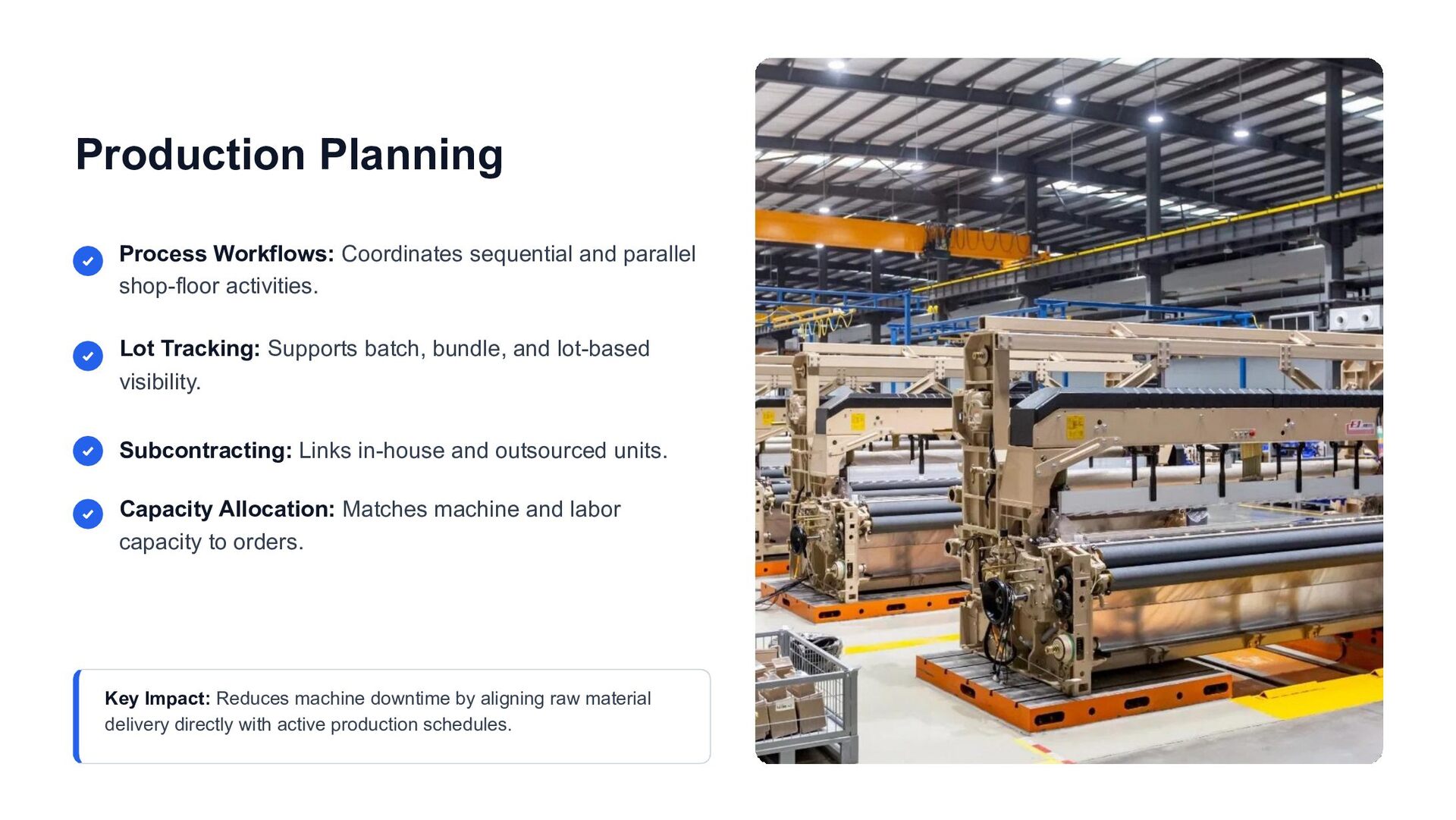
  5. Production Planning Process Workflows: Coordinates sequential and parallel shop-floor activities.

    Lot Tracking: Supports batch, bundle, and lot-based visibility. Subcontracting: Links in-house and outsourced units. Capacity Allocation: Matches machine and labor capacity to orders. Key Impact: Reduces machine downtime by aligning raw material delivery directly with active production schedules.
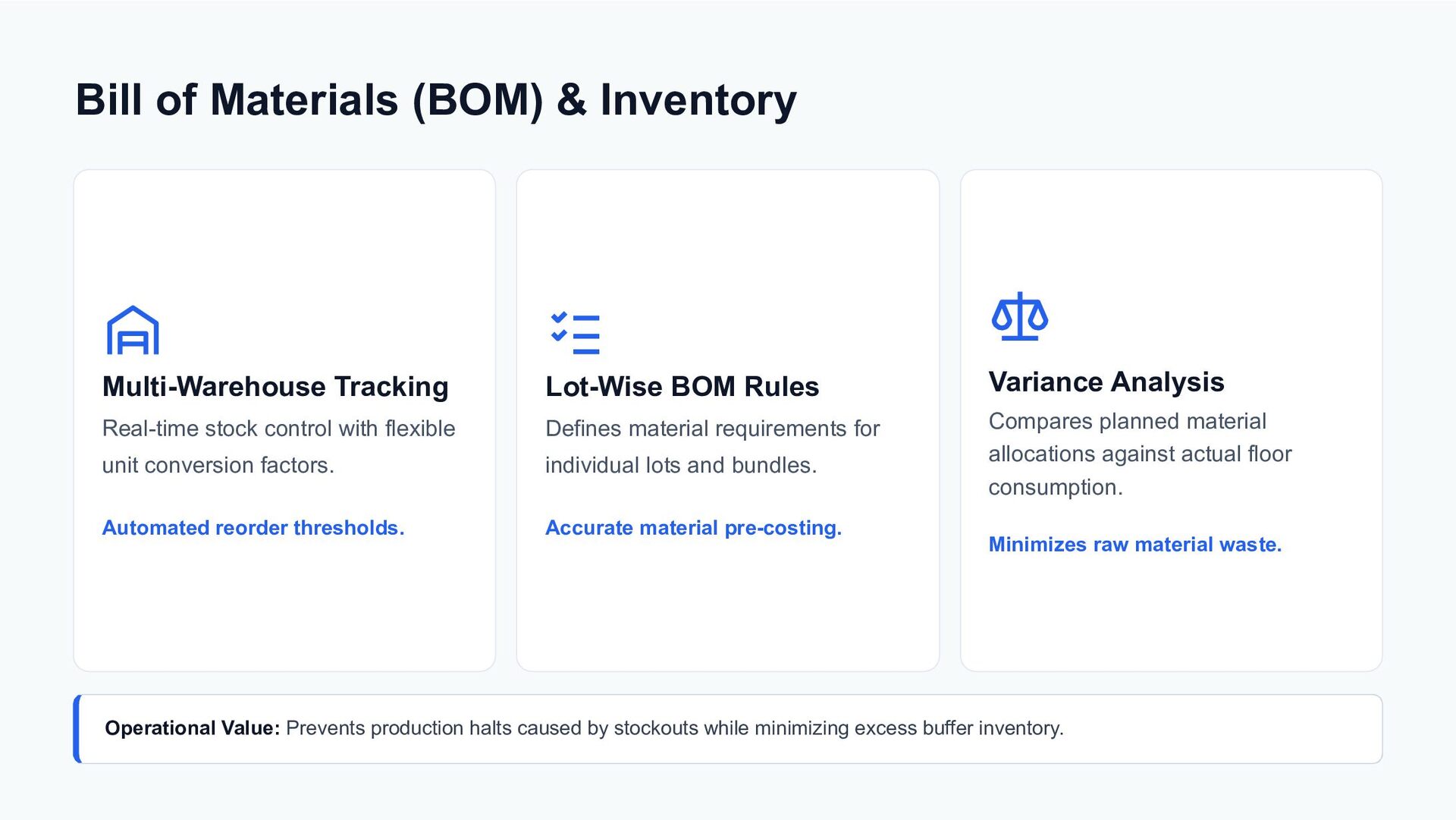
  6. Bill of Materials (BOM) & Inventory Multi-Warehouse Tracking Lot-Wise BOM

    Rules Variance Analysis Real-time stock control with flexible Defines material requirements for unit conversion factors. individual lots and bundles. Compares planned material allocations against actual floor consumption. Automated reorder thresholds. Accurate material pre-costing. Minimizes raw material waste. Operational Value: Prevents production halts caused by stockouts while minimizing excess buffer inventory.
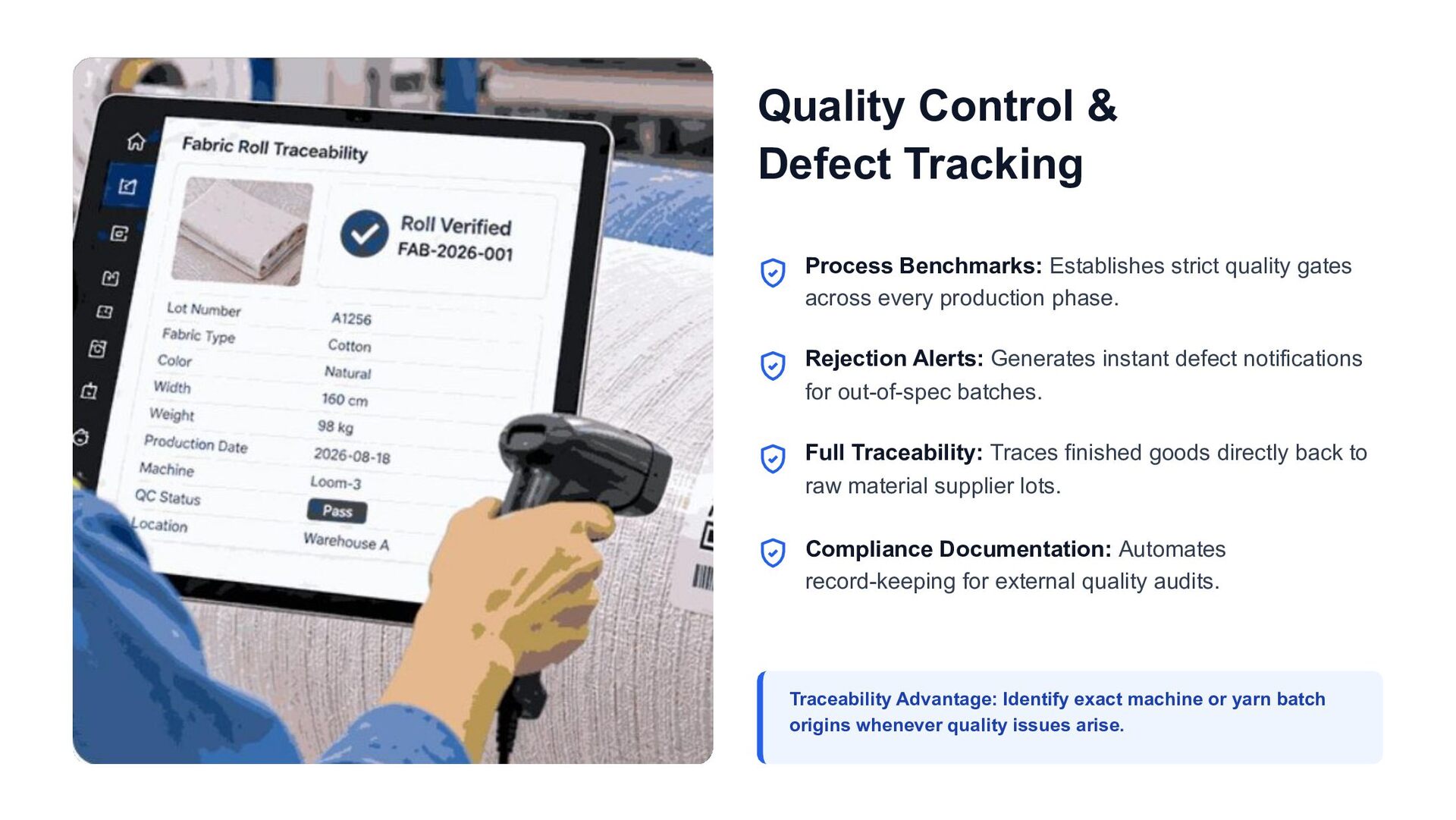
  7. Quality Control & Defect Tracking Process Benchmarks: Establishes strict quality

    gates across every production phase. Rejection Alerts: Generates instant defect notifications for out-of-spec batches. Full Traceability: Traces finished goods directly back to raw material supplier lots. Compliance Documentation: Automates record-keeping for external quality audits. Traceability Advantage: Identify exact machine or yarn batch origins whenever quality issues arise.
  8. Order Management & Dispatch Order Synchronization Connects customer orders directly

    to procurement and shop-floor schedules. Supports custom sample-based production runs. Customer-Centric Workflow Priority Delivery Dynamically prioritizes production queues based on hard delivery deadlines and supplier lead times. On-Time Delivery Protection Multi-Location Logistics Purchasing History Coordinates inventory movement, sales orders, and warehouse dispatch across regional hubs. Provides full visibility into vendor performance, lead-time compliance, and historical material costs. Unified Multi-Site Control Supplier Intelligence
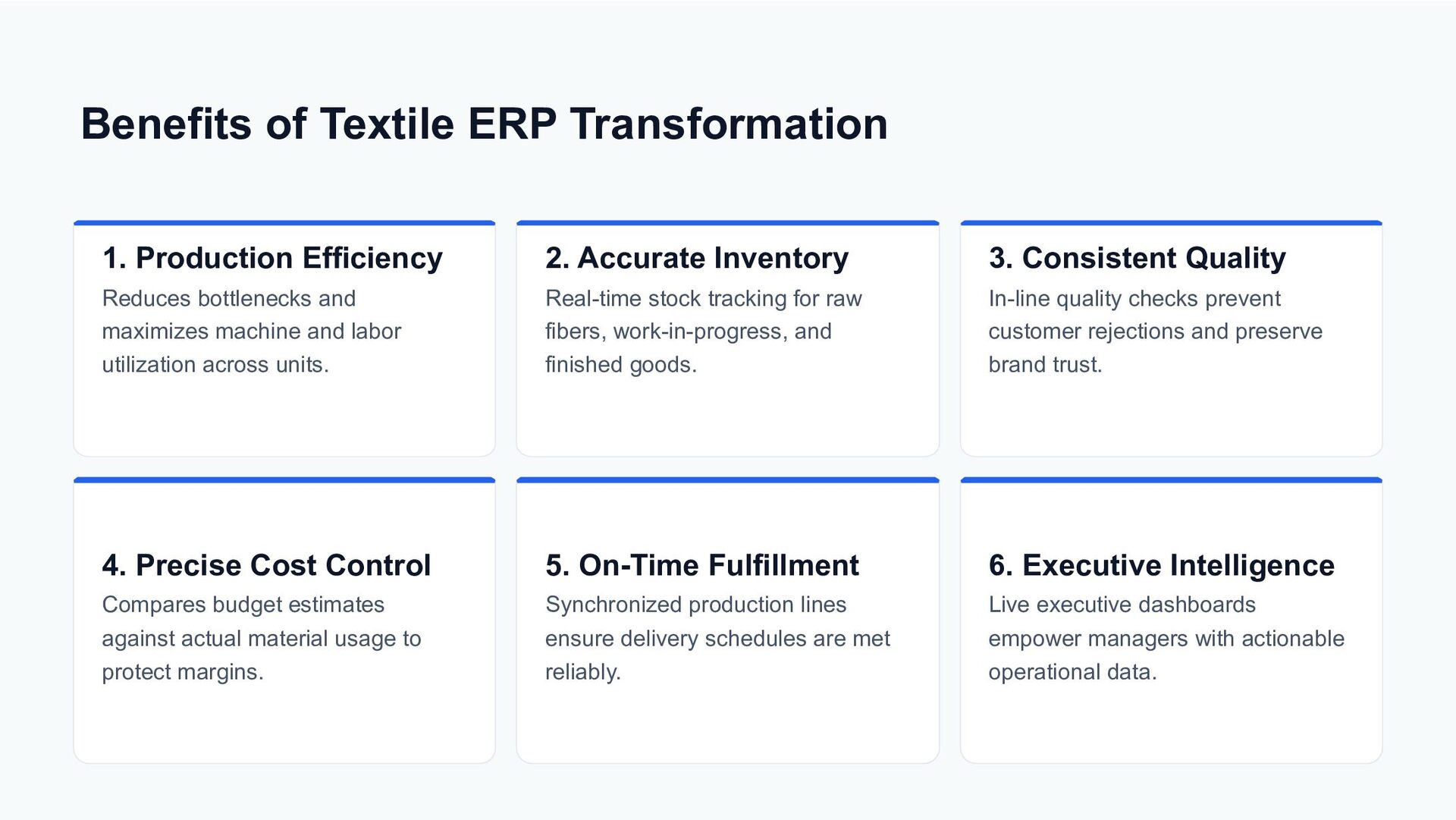
  9. Benefits of Textile ERP Transformation 1. Production Efficiency 2. Accurate

    Inventory 3. Consistent Quality Reduces bottlenecks and maximizes machine and labor utilization across units. Real-time stock tracking for raw fibers, work-in-progress, and finished goods. In-line quality checks prevent customer rejections and preserve brand trust. 4. Precise Cost Control 5. On-Time Fulfillment 6. Executive Intelligence Compares budget estimates against actual material usage to protect margins. Synchronized production lines ensure delivery schedules are met reliably. Live executive dashboards empower managers with actionable operational data.