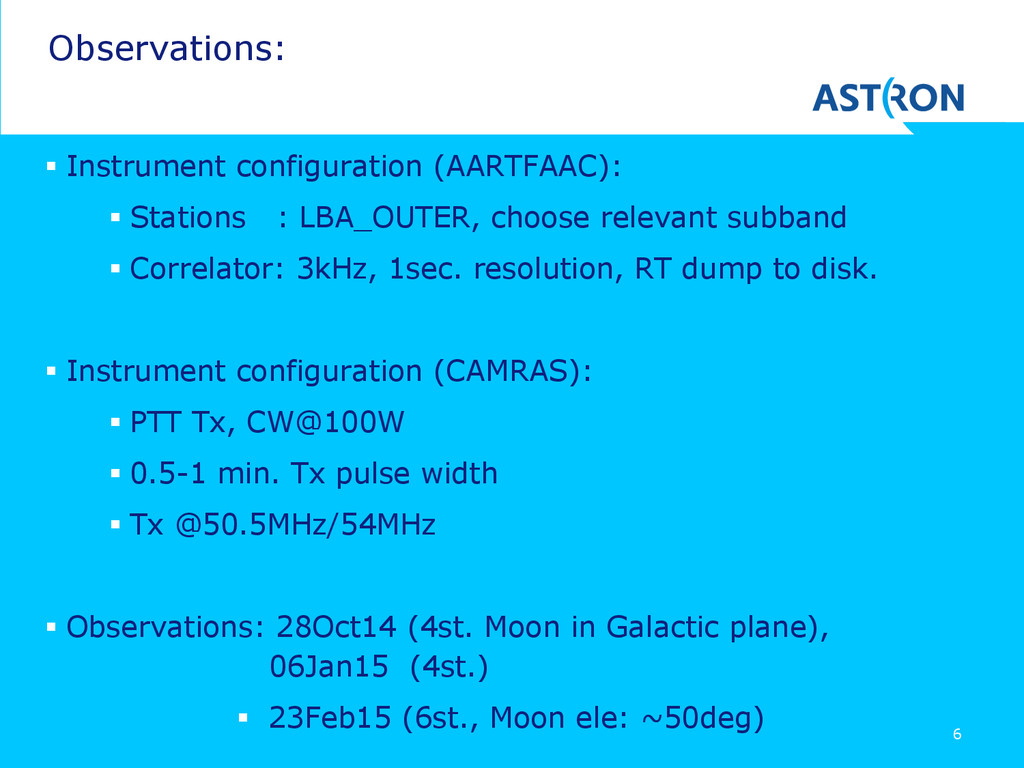
the Netherlands Organisation for Scientific Research (NWO) Moonlighting with AARTFAAC Peeyush Prasad, for the AARTFAAC group (in collaboration with CAMRAS, Erik vd Wal) 15 Apr 2015 LOFAR Status Meeting
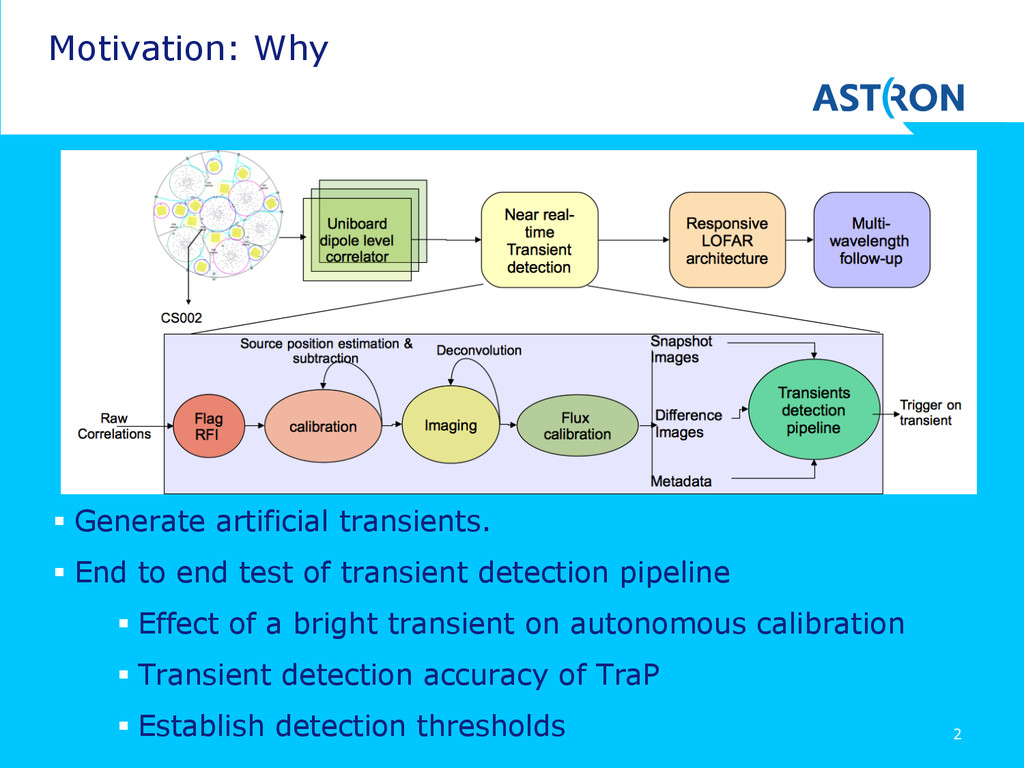
test of transient detection pipeline § Effect of a bright transient on autonomous calibration § Transient detection accuracy of TraP § Establish detection thresholds 2
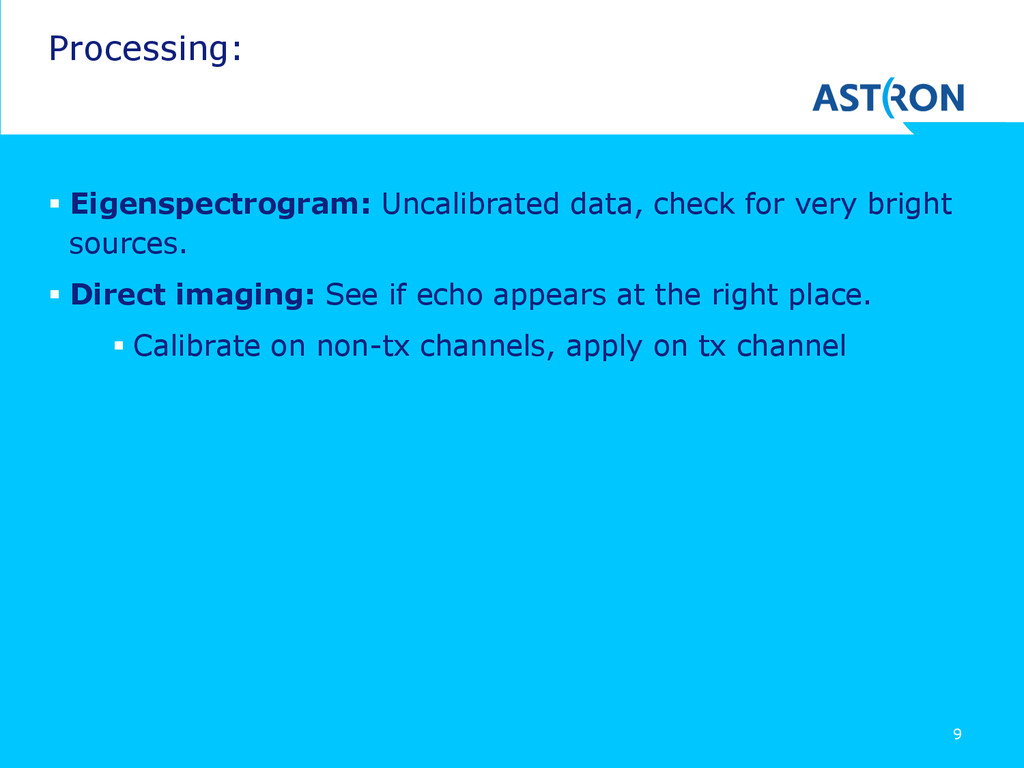
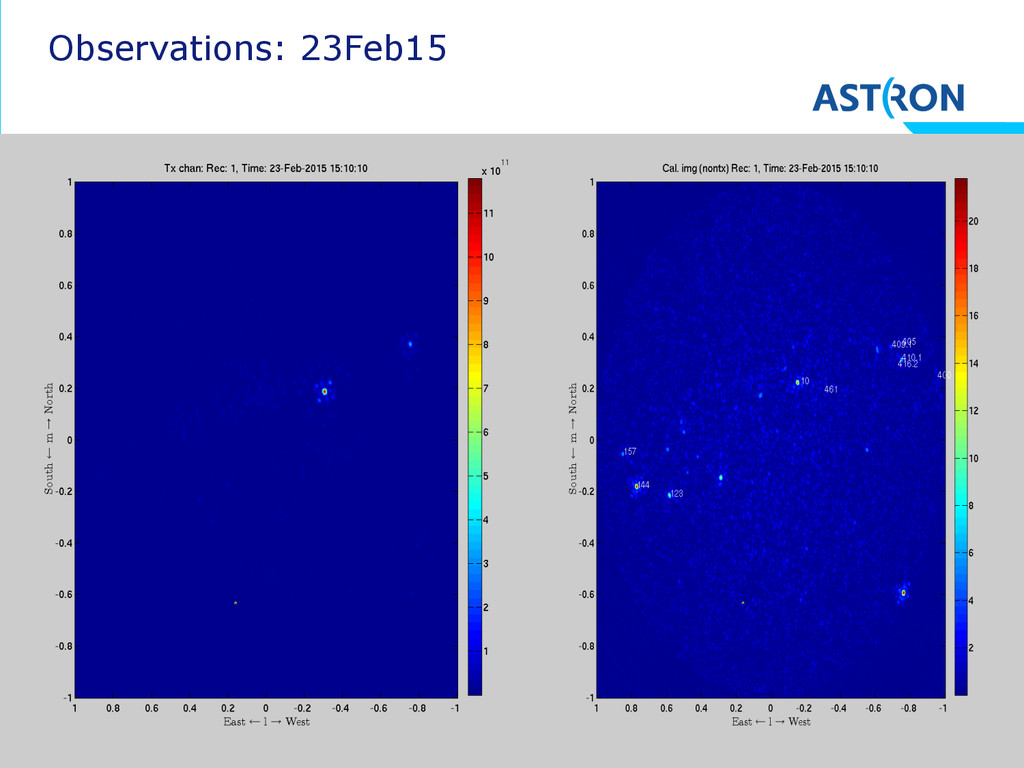
§ Direct imaging: See if echo appears at the right place. § Calibrate on non-tx channels, apply on tx channel § Not seen. Direct Tx signal too bright. Needs to be subtracted. 14
§ Direct imaging: See if echo appears at the right place. § Calibrate on non-tx channels, apply on tx channel § Not seen. Direct Tx signal too bright. Needs to be subtracted. § Temporal differencing: Cancels direct tx, reduces SCN. § Also cancels echo, except for last sample before switch off. Not seen. 15
§ Direct imaging: See if echo appears at the right place. § Calibrate on non-tx channels, apply on tx channel § Not seen. Direct Tx signal too bright. Needs to be subtracted. § Temporal differencing: Cancels direct tx, reduces SCN. § Also cancels echo, except for last sample before switch off. Not seen. § Spectral differencing: Cancels sky signal, reduces SCN. § Calibrate on direct Tx signal, subtract via modeling. 16
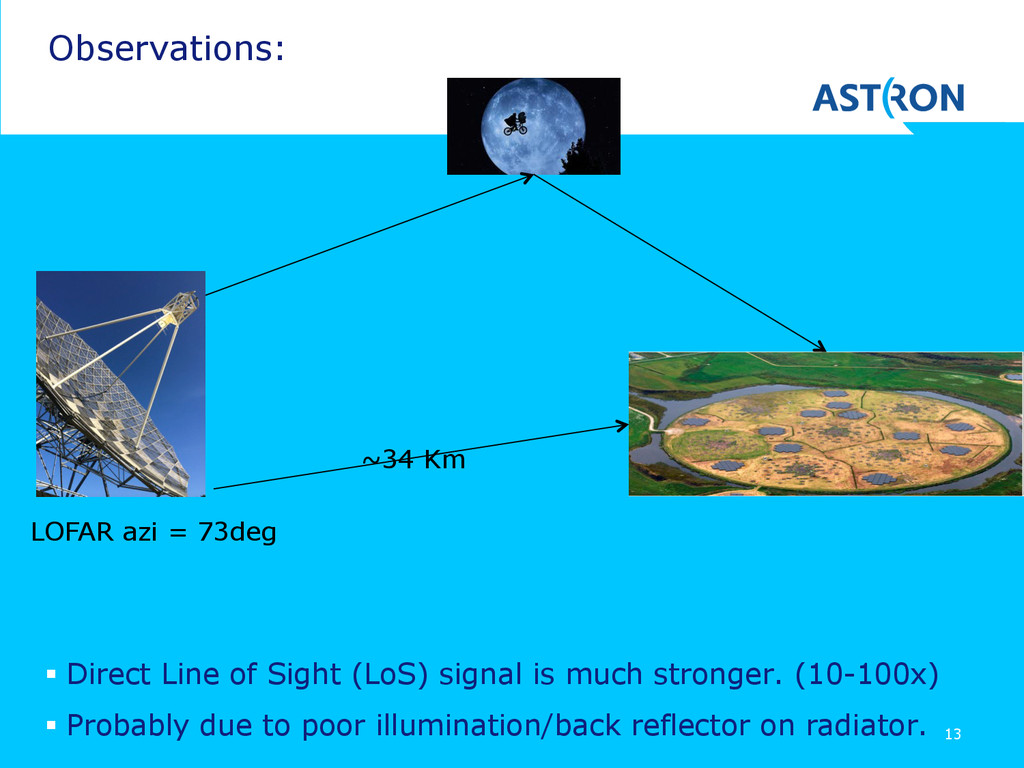
visible after a little integration. § Transmission leakage appears as strong source in AARTFAAC, detrimental to integration. § Leakage from dish can be successfully modeled and subtracted. § Leakage signal illuminates a large area, causing reflections off aircraft to be detected at lower levels (difficult to model). 18


 eumesy
 junkashihara
 analokmaus
 ayaniwa
 shibuiwilliam
 rfujii
 yumulab
 kinoue_smarthr
 microbaseinc
 enochan
 mickey_0226
 sishi
sishi
 addyosmani
 lauravandoore
 badams
 lindahogenes
 greggifford
 inesmontani
 deanohume
 livdayseo
 nikkihalliwell
 reverentgeek
 geshan
 notwaldorf