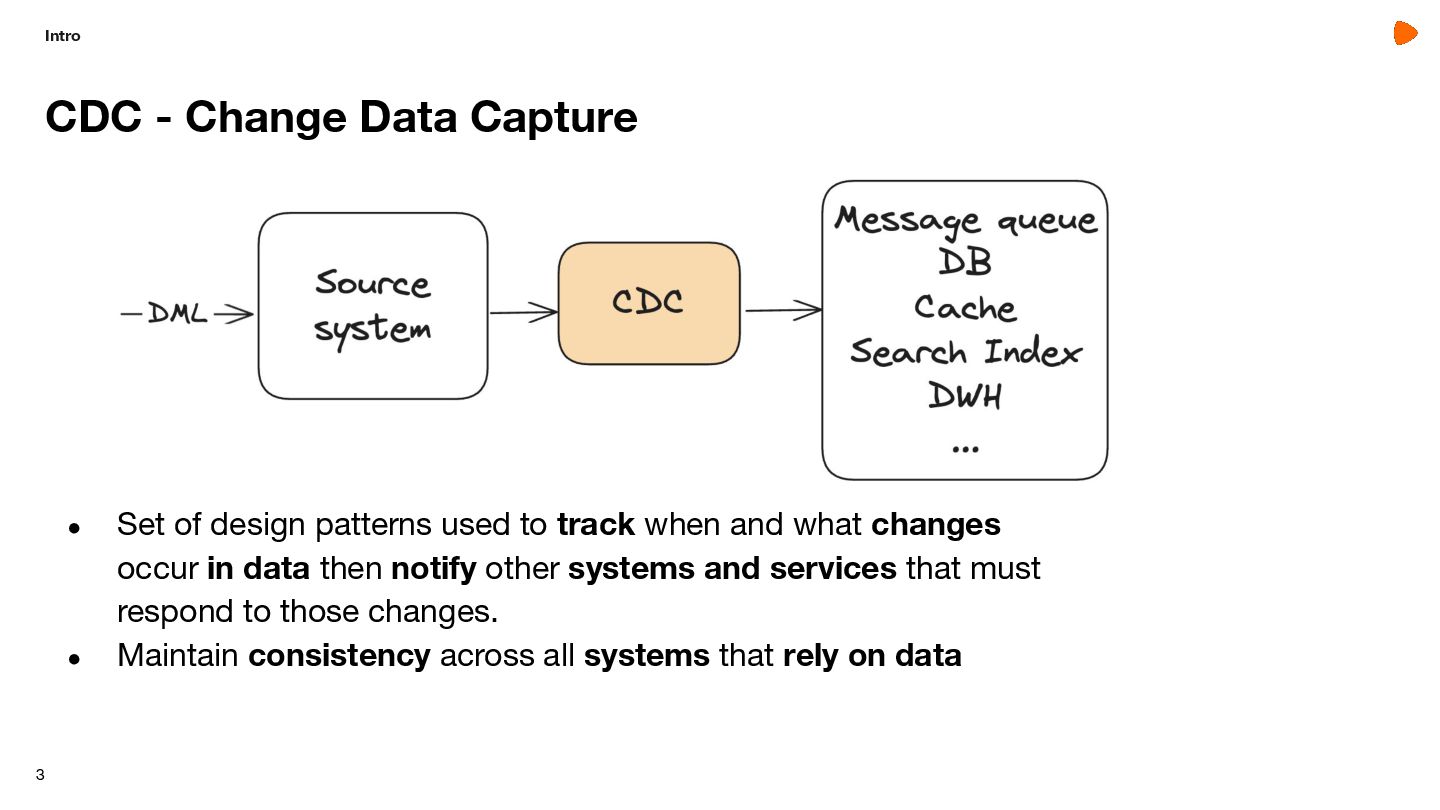
what changes occur in data then notify other systems and services that must respond to those changes. • Maintain consistency across all systems that rely on data Intro CDC - Change Data Capture 3
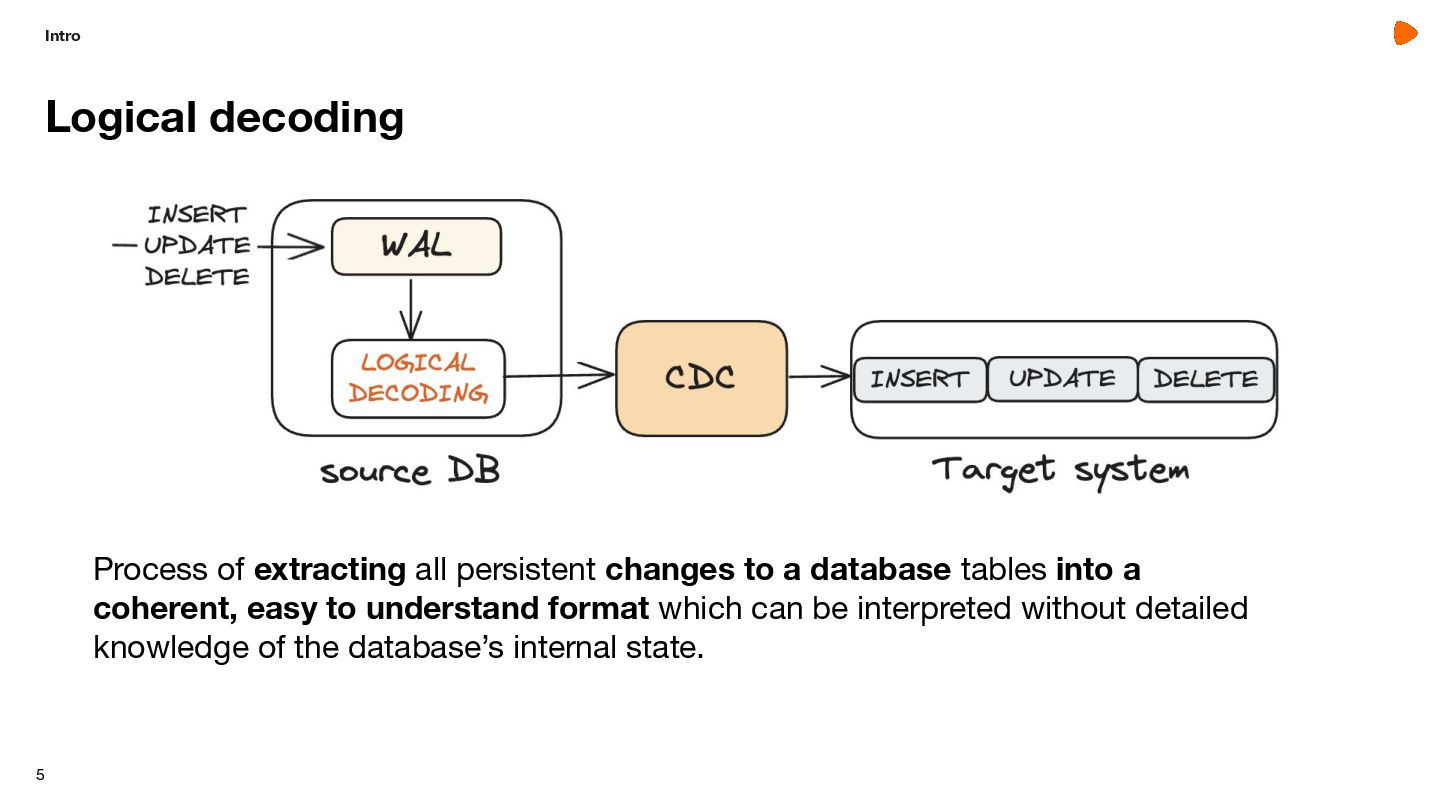
into a coherent, easy to understand format which can be interpreted without detailed knowledge of the database’s internal state. Intro Logical decoding 5
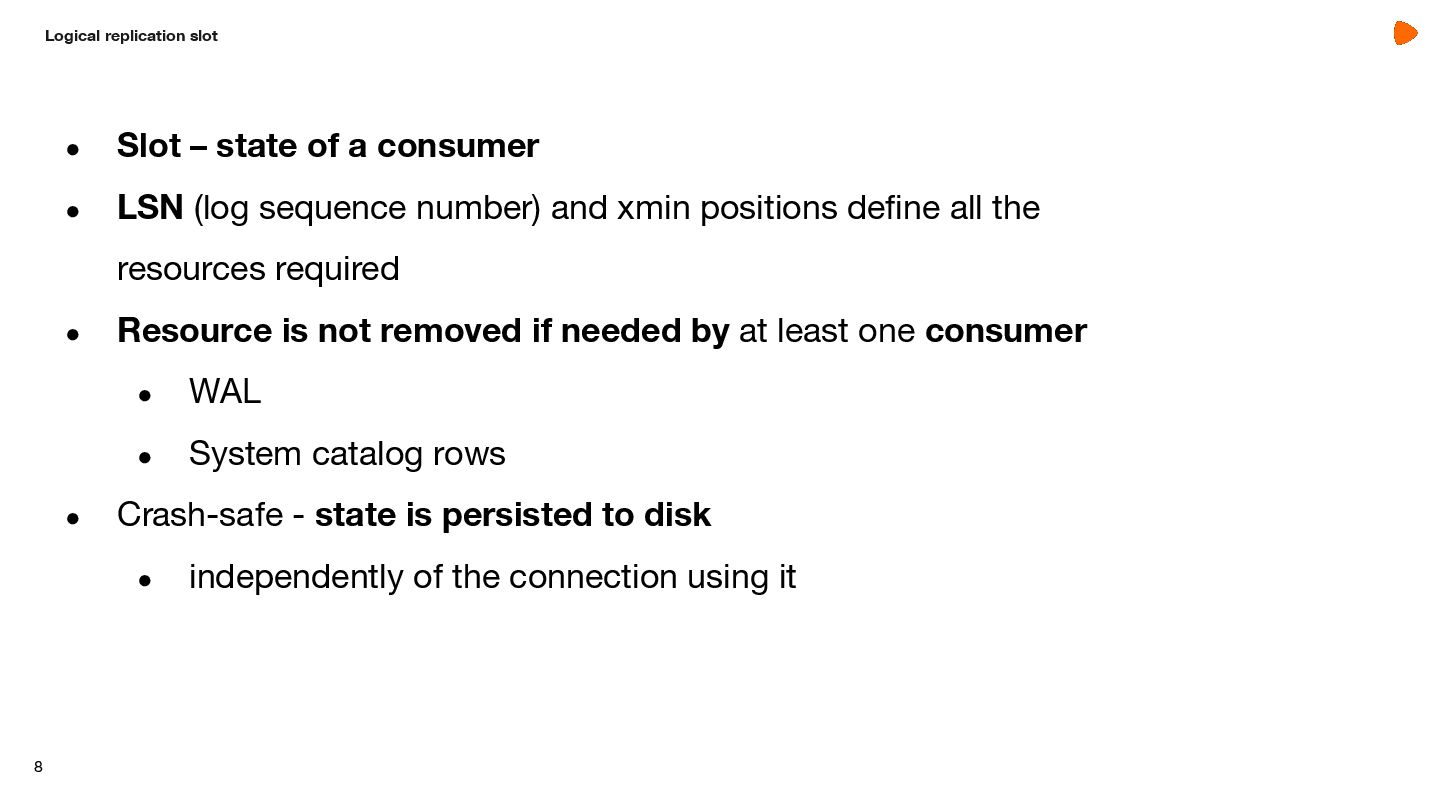
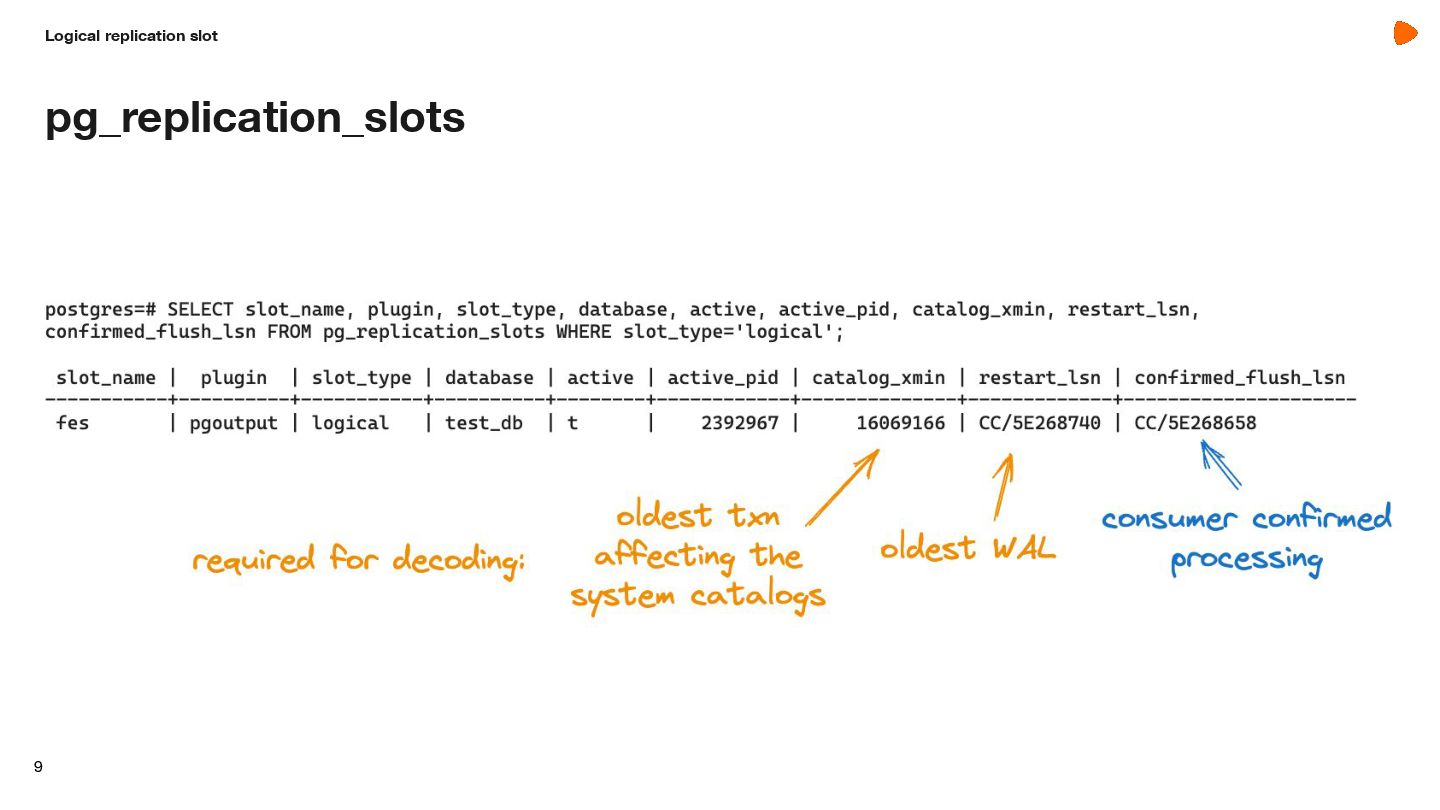
consumer • LSN (log sequence number) and xmin positions define all the resources required • Resource is not removed if needed by at least one consumer • WAL • System catalog rows • Crash-safe - state is persisted to disk • independently of the connection using it
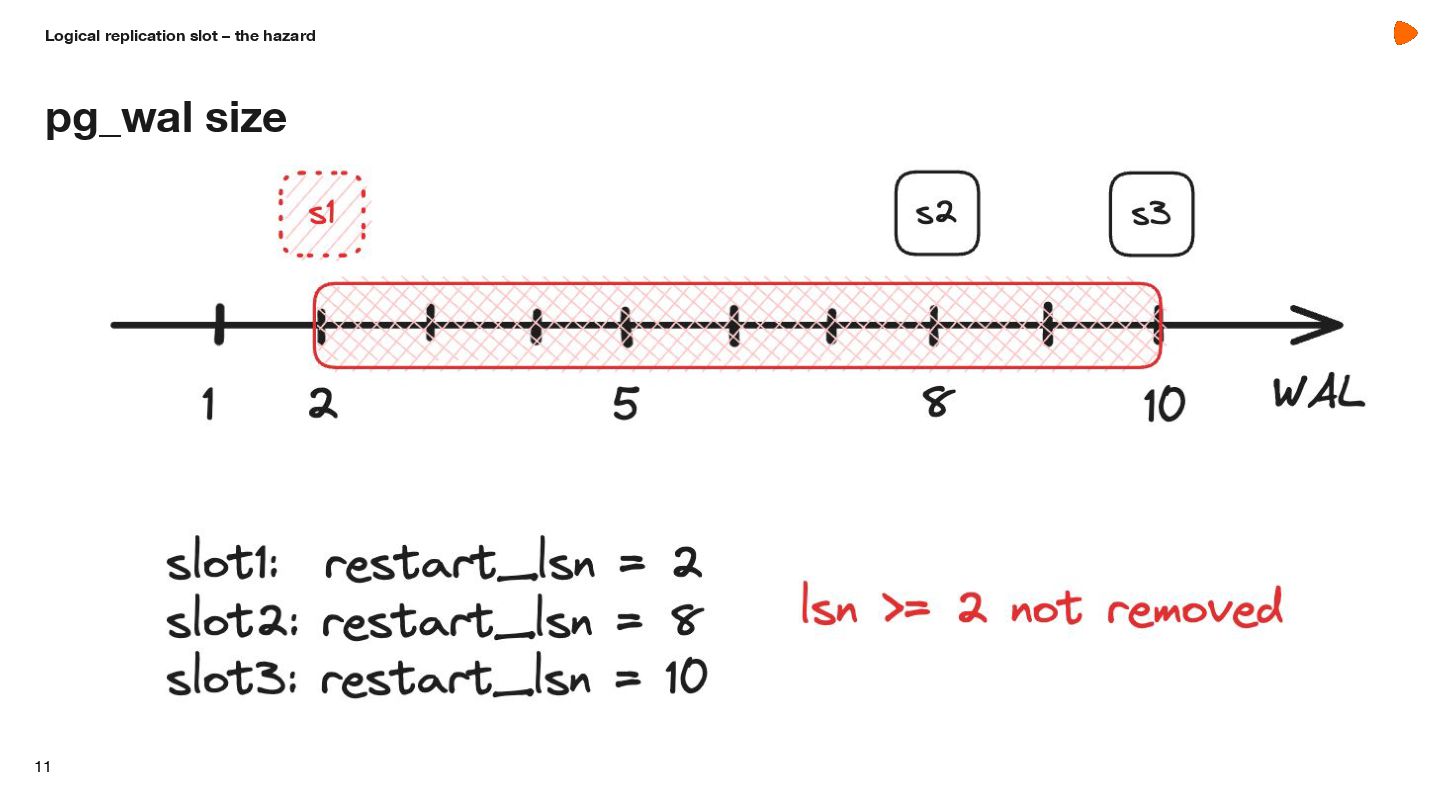
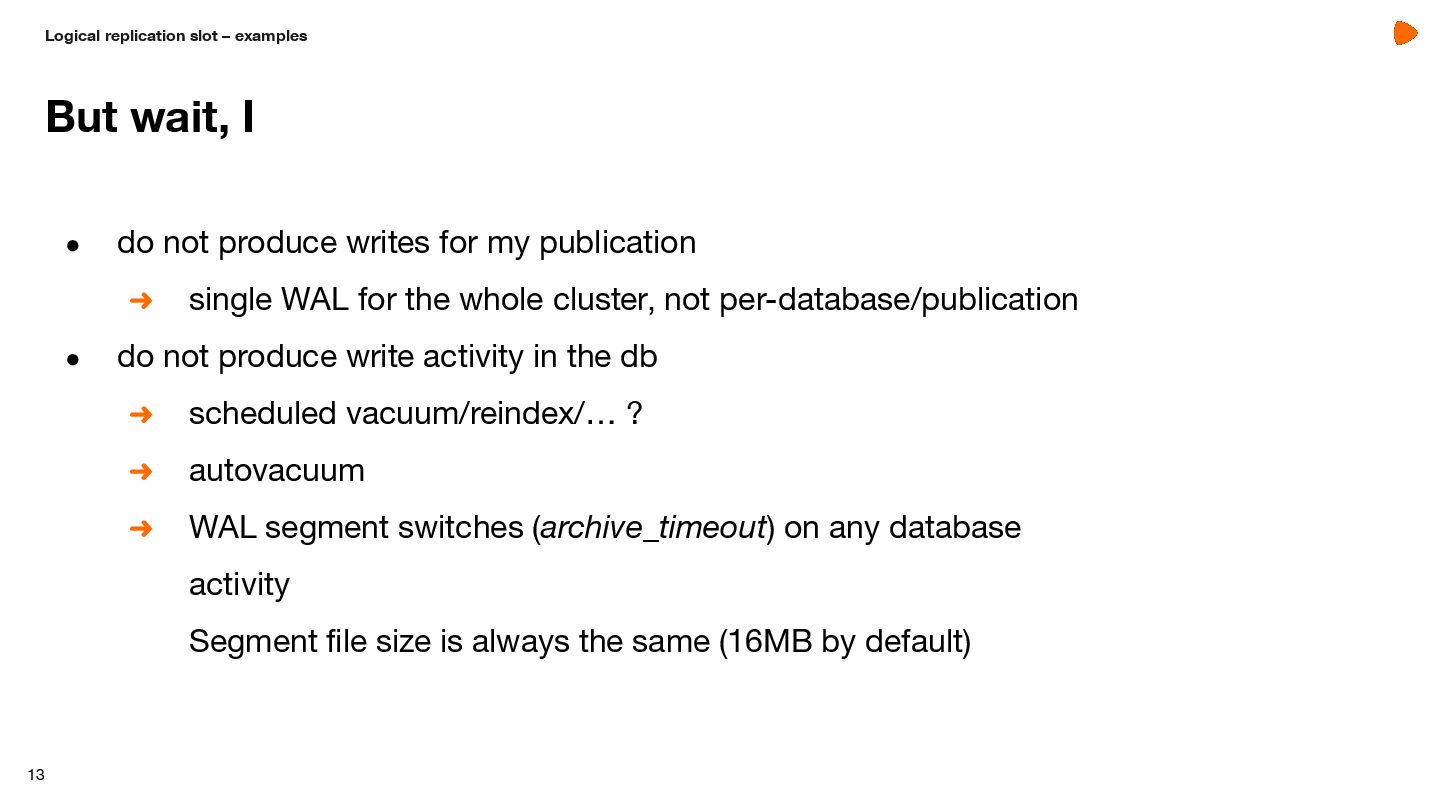
WAL for the whole cluster, not per-database/publication • do not produce write activity in the db ➜ scheduled vacuum/reindex/… ? ➜ autovacuum ➜ WAL segment switches (archive_timeout) on any database activity Segment file size is always the same (16MB by default) Logical replication slot – examples But wait, I 13
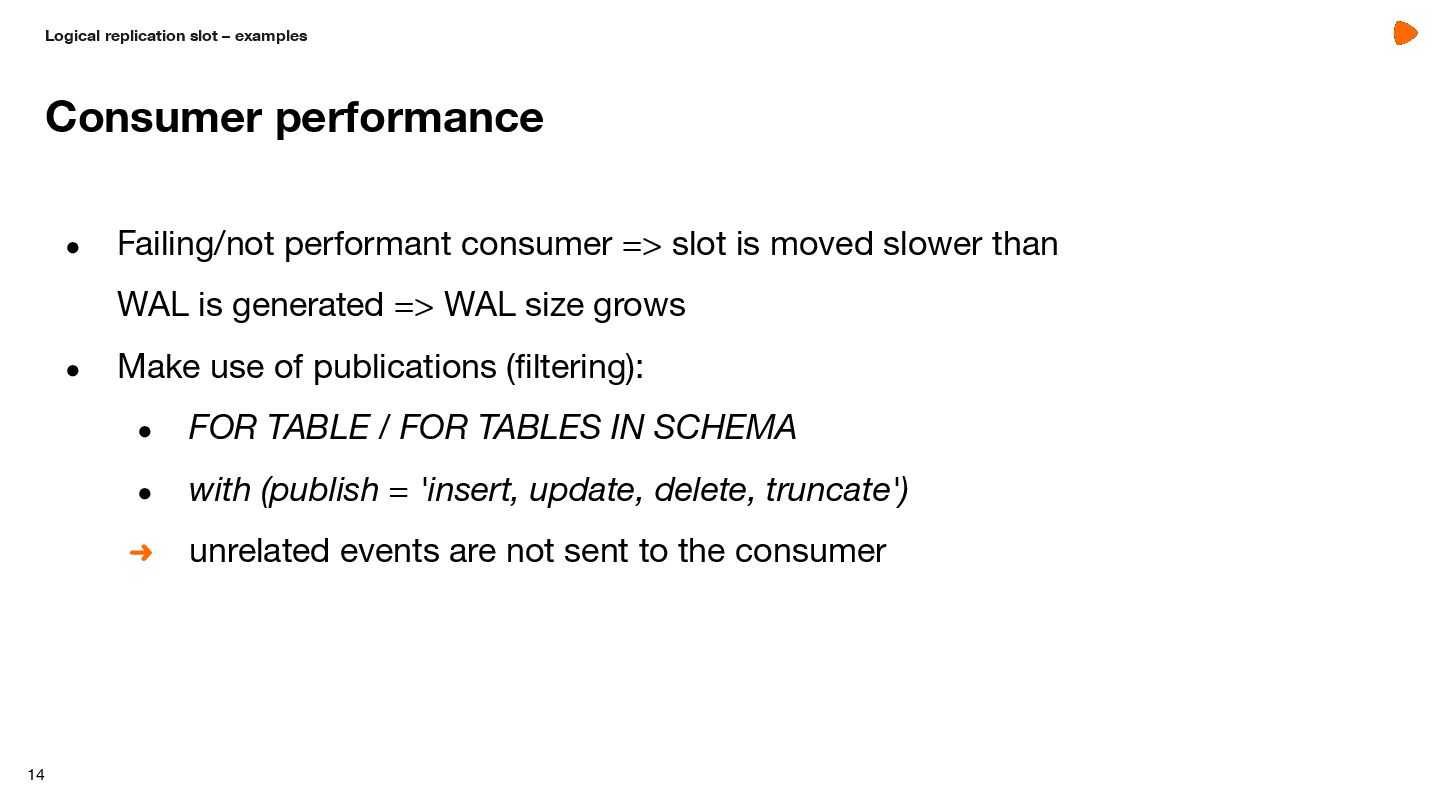
WAL is generated => WAL size grows • Make use of publications (filtering): • FOR TABLE / FOR TABLES IN SCHEMA • with (publish = 'insert, update, delete, truncate') ➜ unrelated events are not sent to the consumer Logical replication slot – examples Consumer performance 14
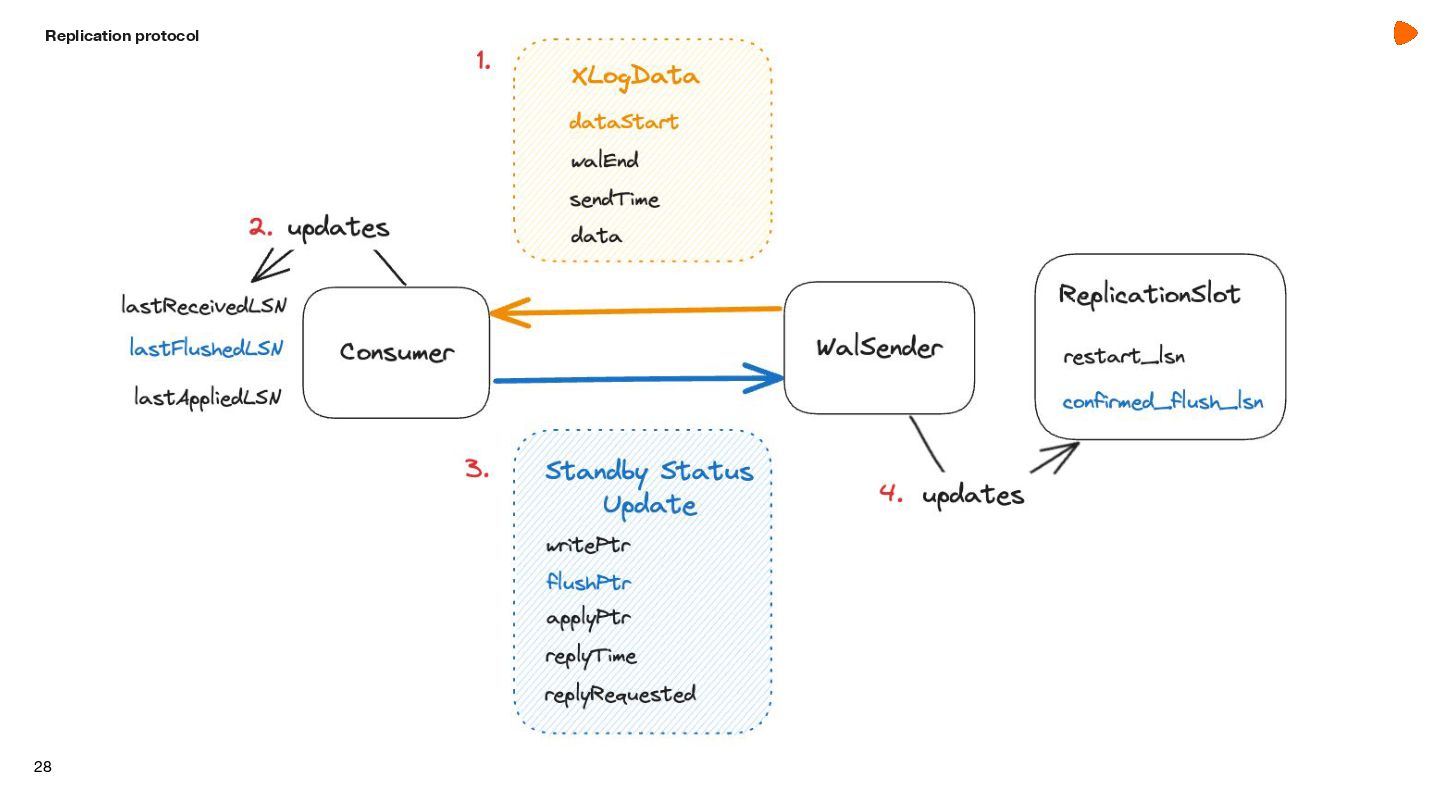
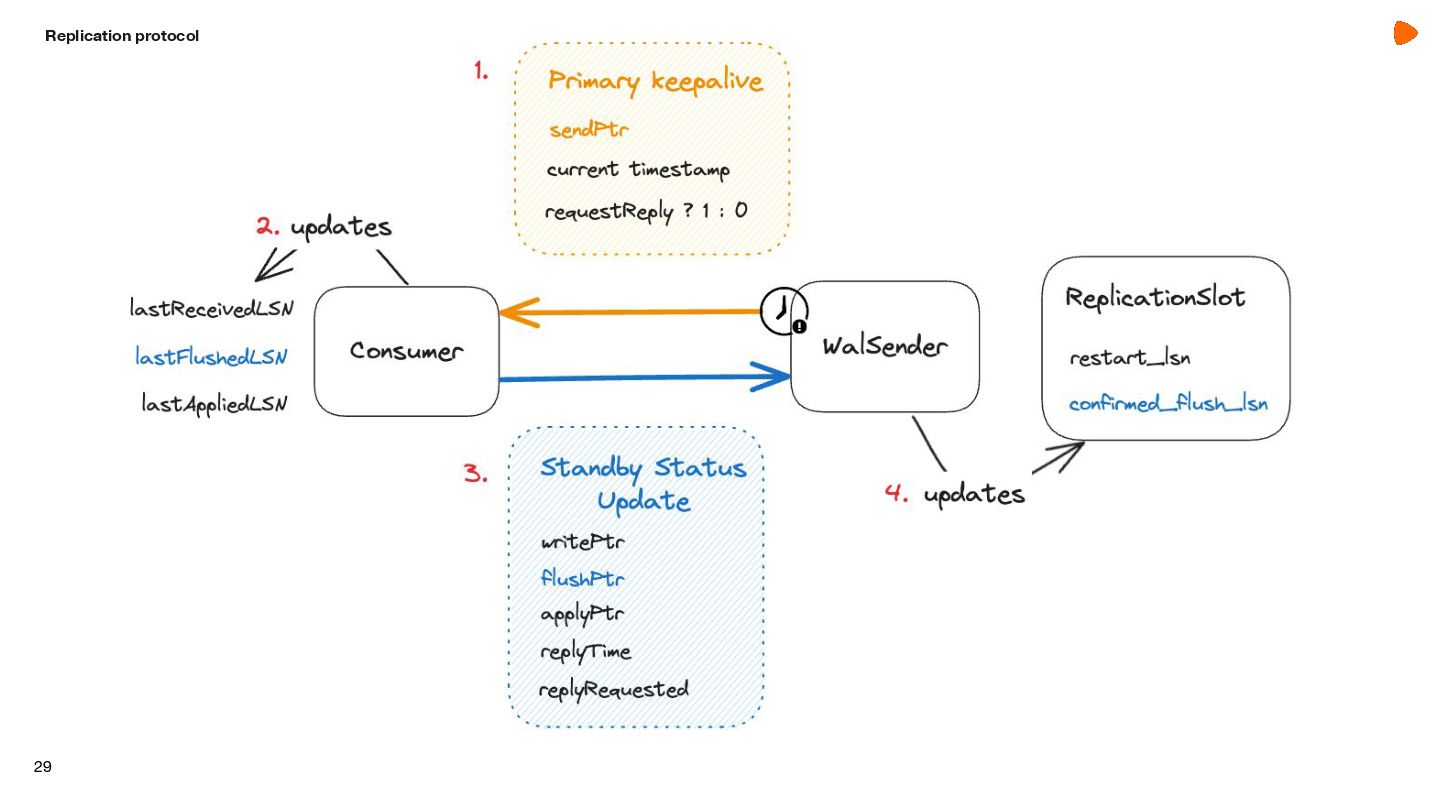
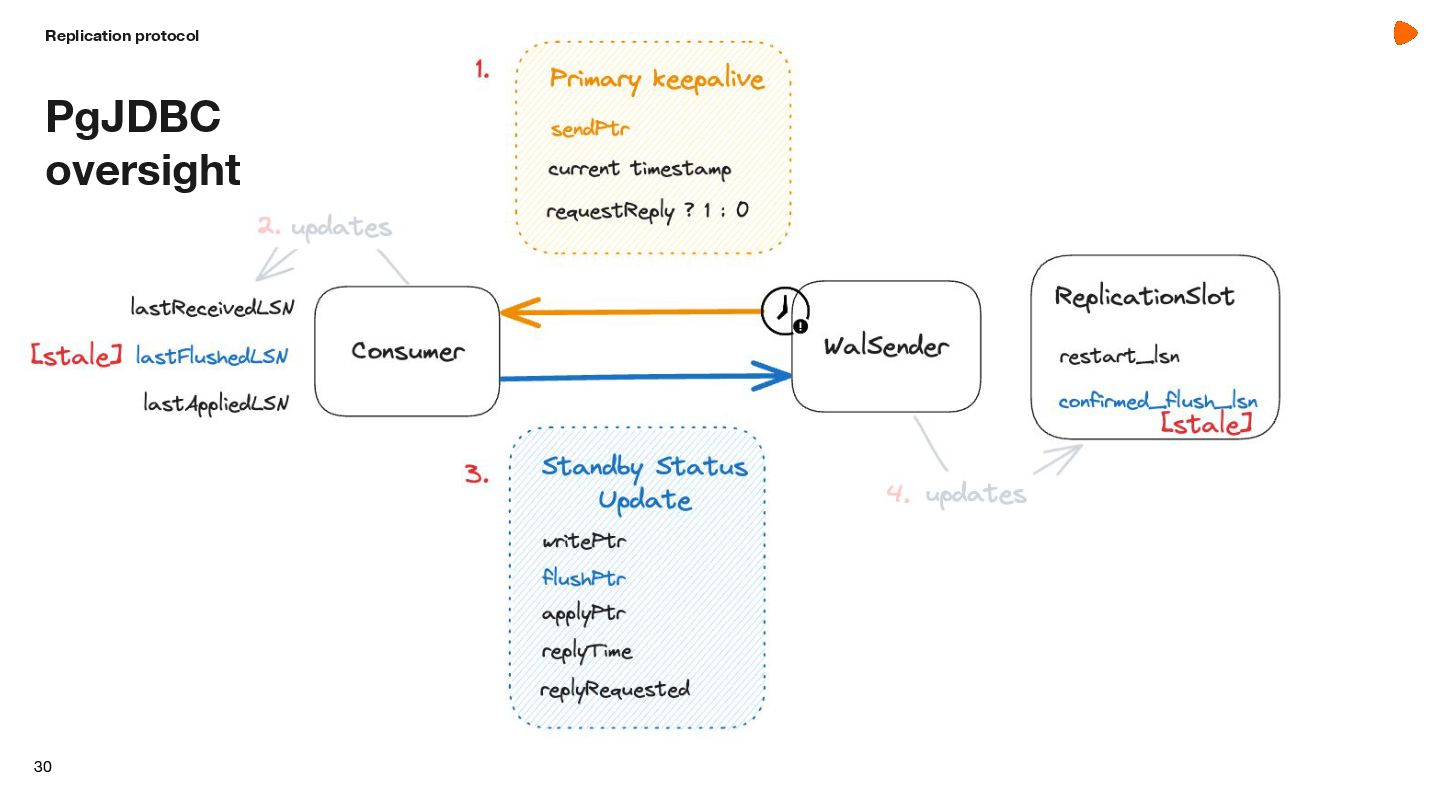
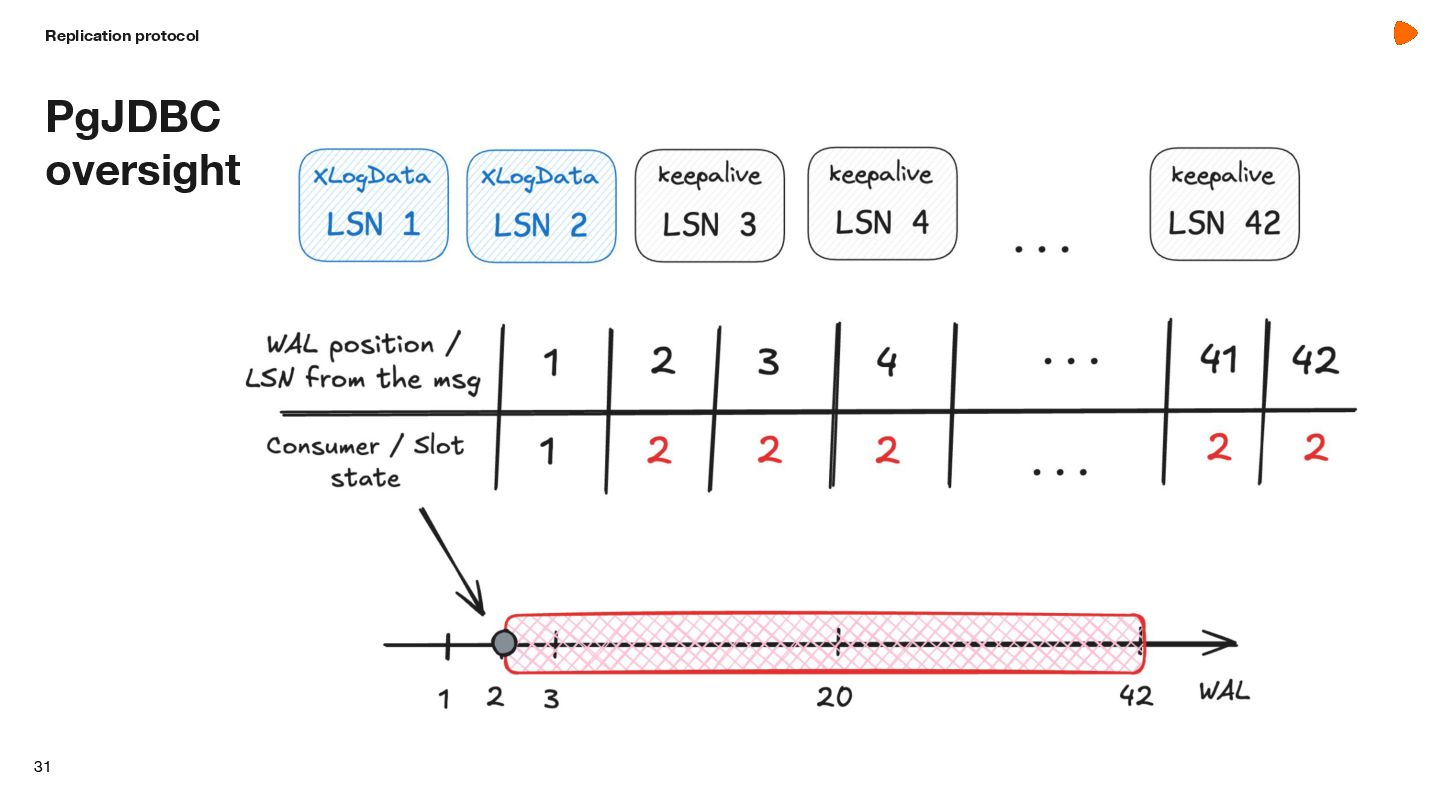
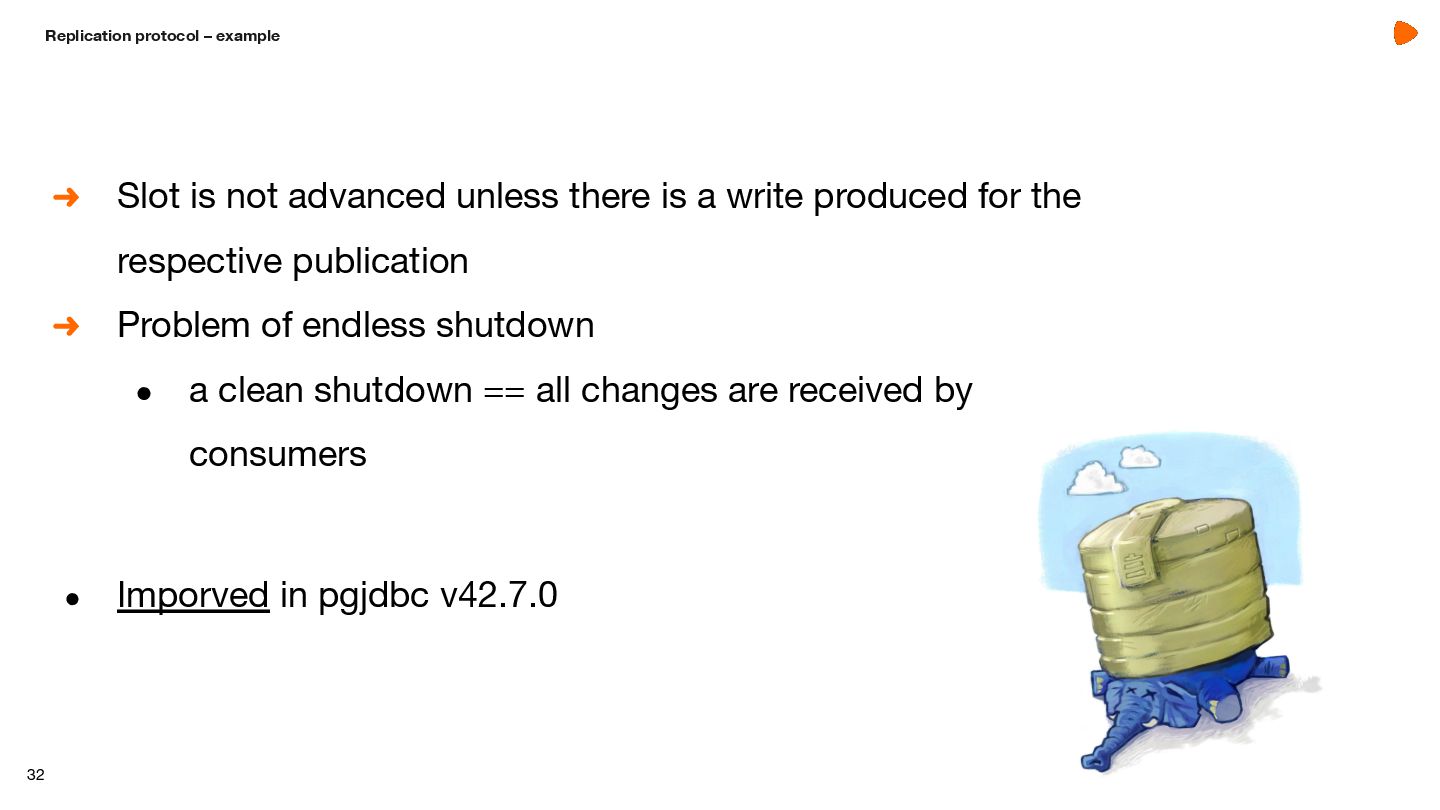
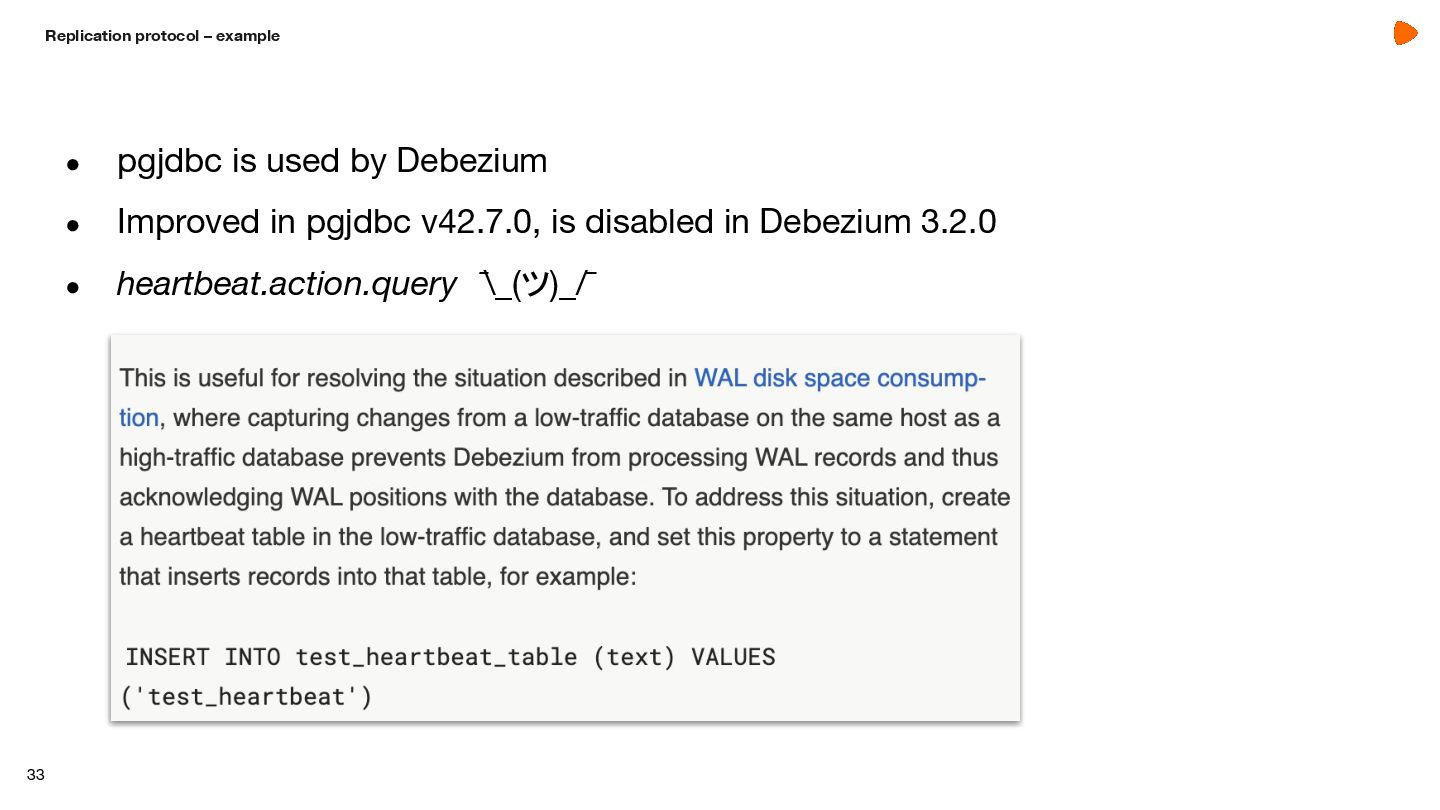
produced for the respective publication ➜ Problem of endless shutdown • a clean shutdown == all changes are received by consumers • Imporved in pgjdbc v42.7.0 Replication protocol – example 32
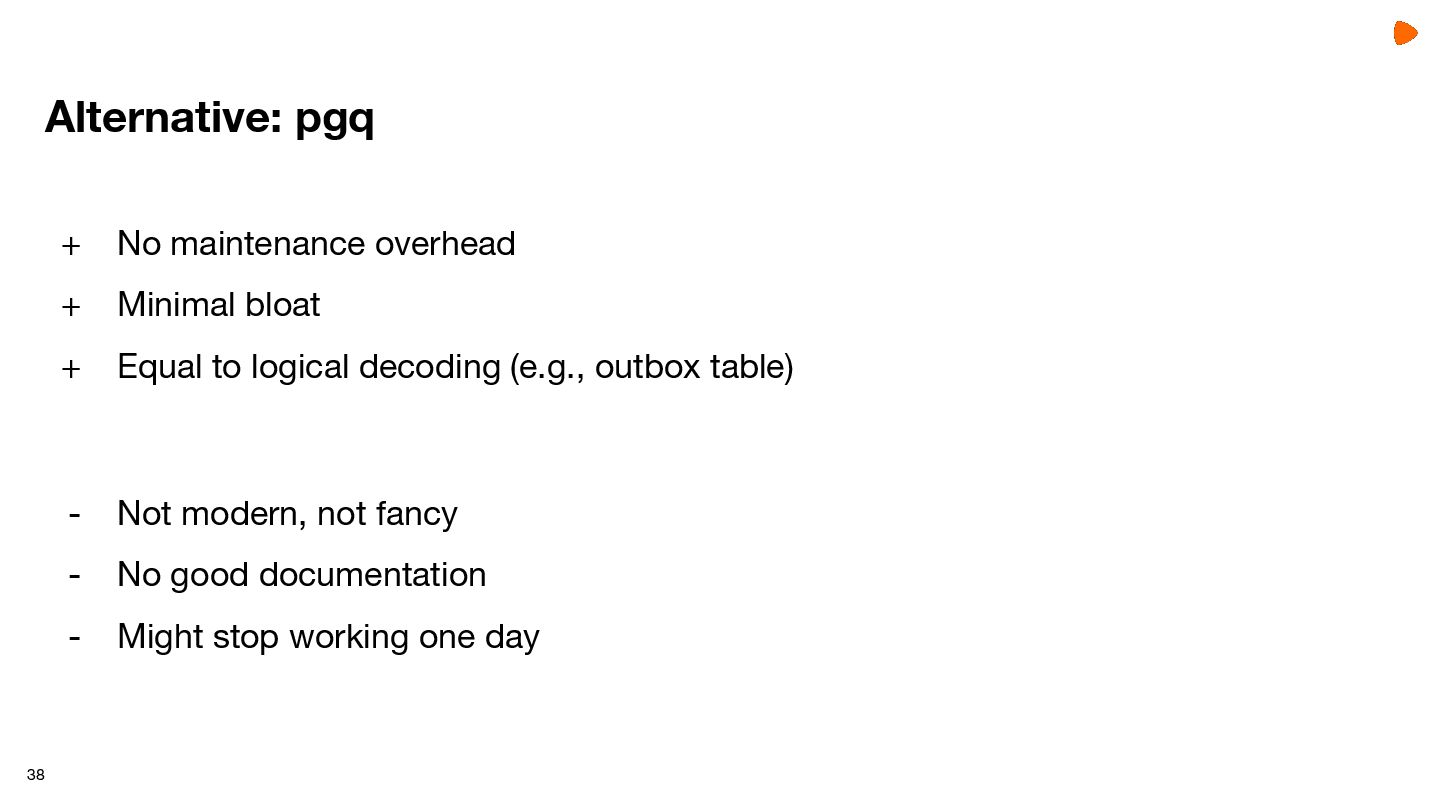
• Slot is active and advancing • Free disk space • Delete unused slots • Use the proper protocol implementation • Know your workload, evaluate other approaches 34


 hugh0capet
 rfdnxbro
 riyaamemiya
 jyouryuusui
 occhi
occhi
 koukihosaka
 akizhou
 willnet
 gogutan
 yukisakai1225
 sansan33
 odashi
 ivry_presentationmaterials
 baasie
 stephenakadiri
 hannesfritz
 techseoconnect
 dougneiner
 gr2m
gr2m
 akademiya2063
 denniskardys
 codingconduct
 michaelherold
 kevinliebholz
 cassininazir
![• [PG17+] • sync_replication_slots GUC (per standby) • pg_create_logical_replication_slot(name, plugin,](https://files.speakerdeck.com/presentations/bb59ad4d86b8424db26698f18cd54f63/slide_14.jpg)
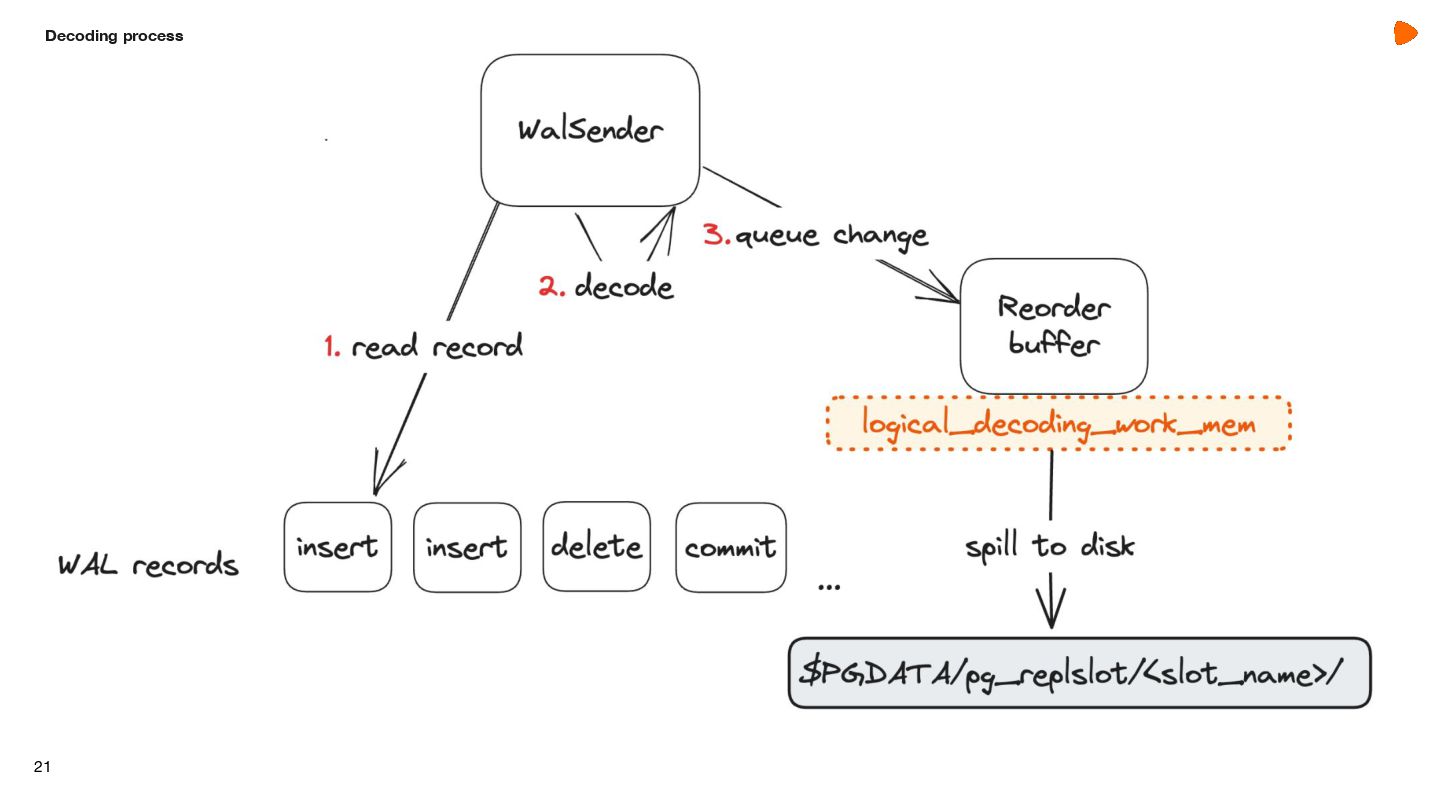
![22 Decoding process pg_stat_replication_slots [PG14+] docs](https://files.speakerdeck.com/presentations/bb59ad4d86b8424db26698f18cd54f63/slide_21.jpg)