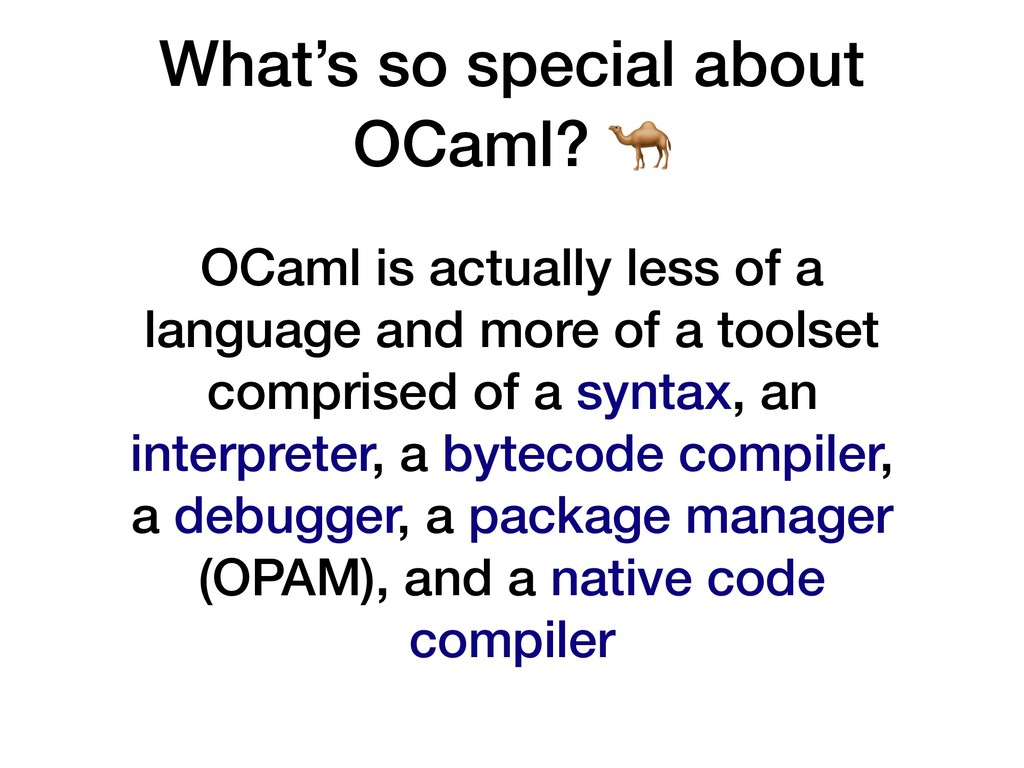
a toolset comprised of a syntax, an interpreter, a bytecode compiler, a debugger, a package manager (OPAM), and a native code compiler What’s so special about OCaml?
replaced Facebook can develop Reason as a syntax for OCaml Bloomberg can develop BuckScript as a compiler for OCaml to JavaScript And if something like WebAssembly gets super popular the compiler could just as easily be replaced with a different one for that What’s so special about OCaml?
replaced Facebook can develop Reason as a syntax for OCaml Bloomberg can develop BuckScript as a compiler for OCaml to JavaScript And if something like WebAssembly gets super popular the compiler could just as easily be replaced with a different one for that What’s so special about OCaml?
replaced Facebook can develop Reason as a syntax for OCaml Bloomberg can develop BuckleScript as a compiler for OCaml to JavaScript And if something like WebAssembly gets super popular the compiler could just as easily be replaced with a different one for that What’s so special about OCaml?
replaced Facebook can develop Reason as a syntax for OCaml Bloomberg can develop BuckleScript as a compiler for OCaml to JavaScript And if something like WebAssembly gets super popular the compiler could just as easily be replaced with a different one for that What’s so special about OCaml?
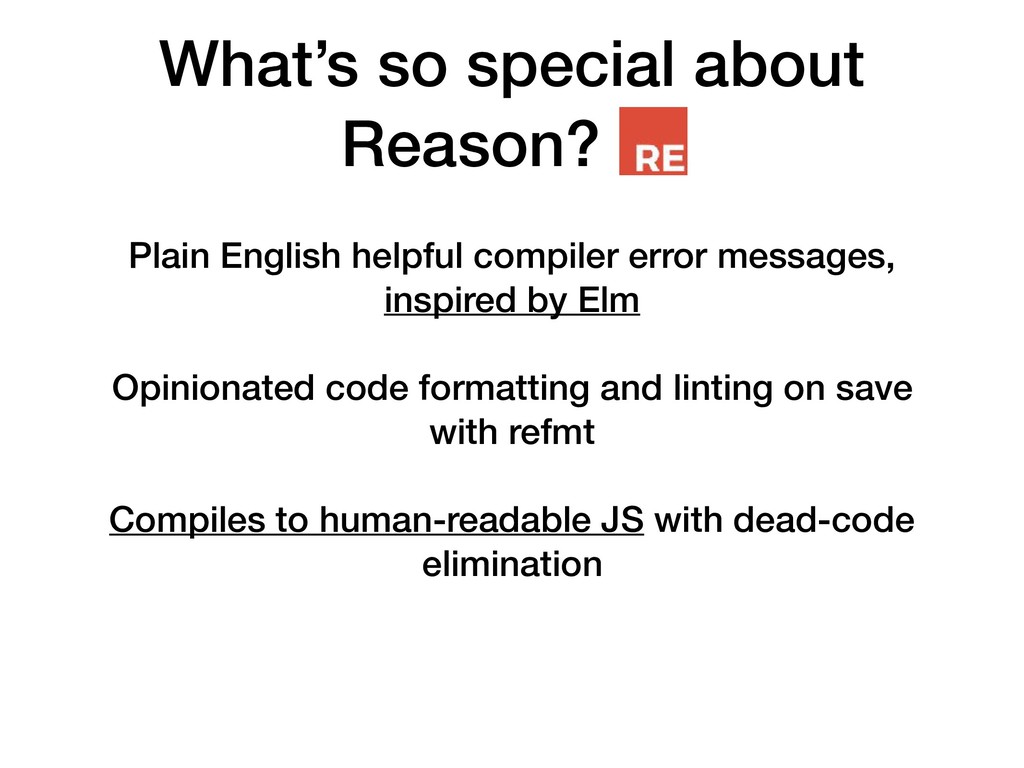
can develop Reason as a syntax for OCaml Bloomberg can develop BuckScript as a compiler for OCaml to JavaScript And if something like WebAssembly gets super popular the compiler could just as easily be replaced with a different one for that What’s so special about Reason?
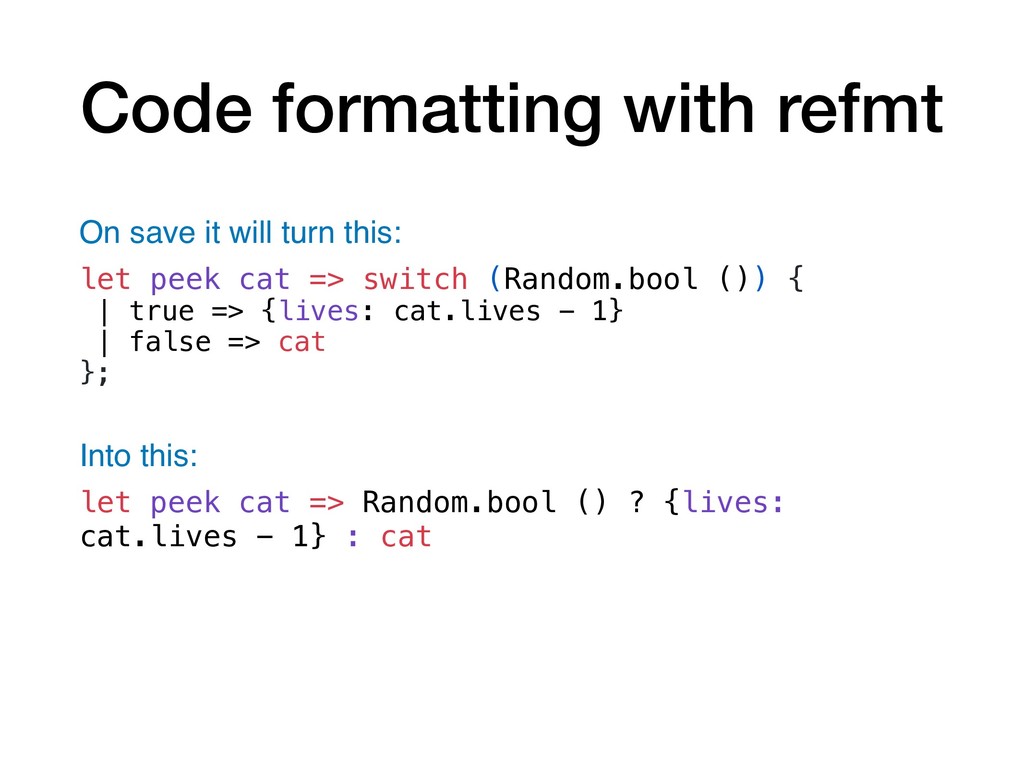
code formatting and linting on save with refmt Compiles to human-readable JS with does dead- code elimination Typing built in What’s so special about Reason?
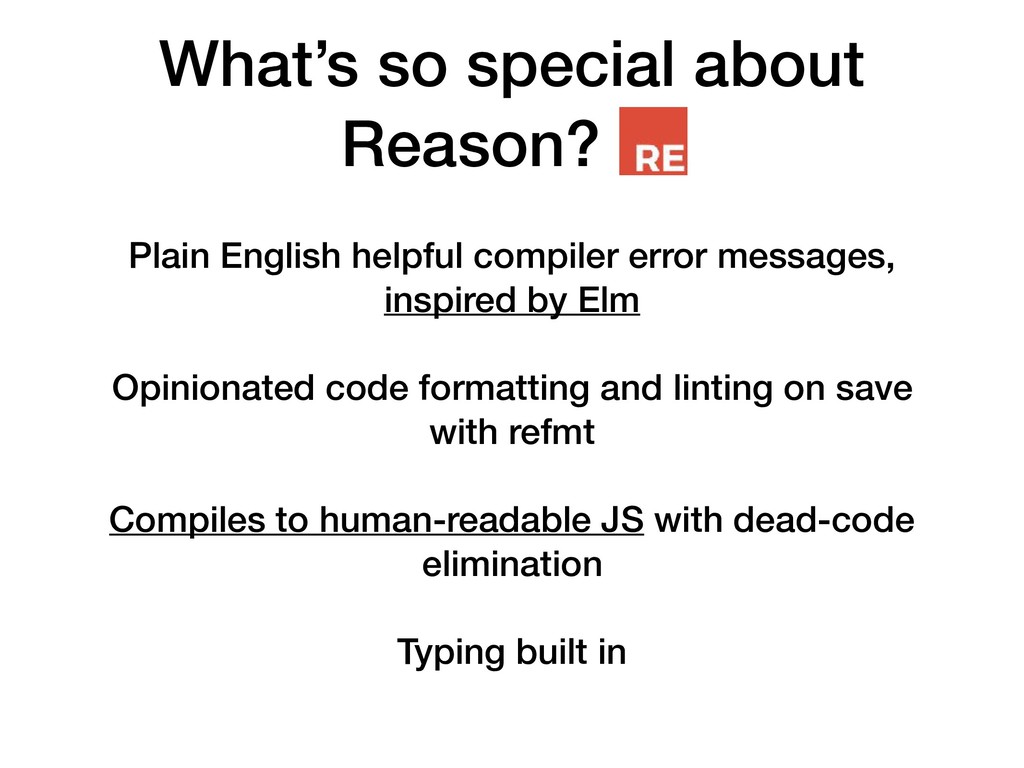
code formatting and linting on save with refmt Compiles to human-readable JS with dead-code elimination Typing built in What’s so special about Reason?
code formatting and linting on save with refmt Compiles to human-readable JS with dead-code elimination Typing built in What’s so special about Reason?
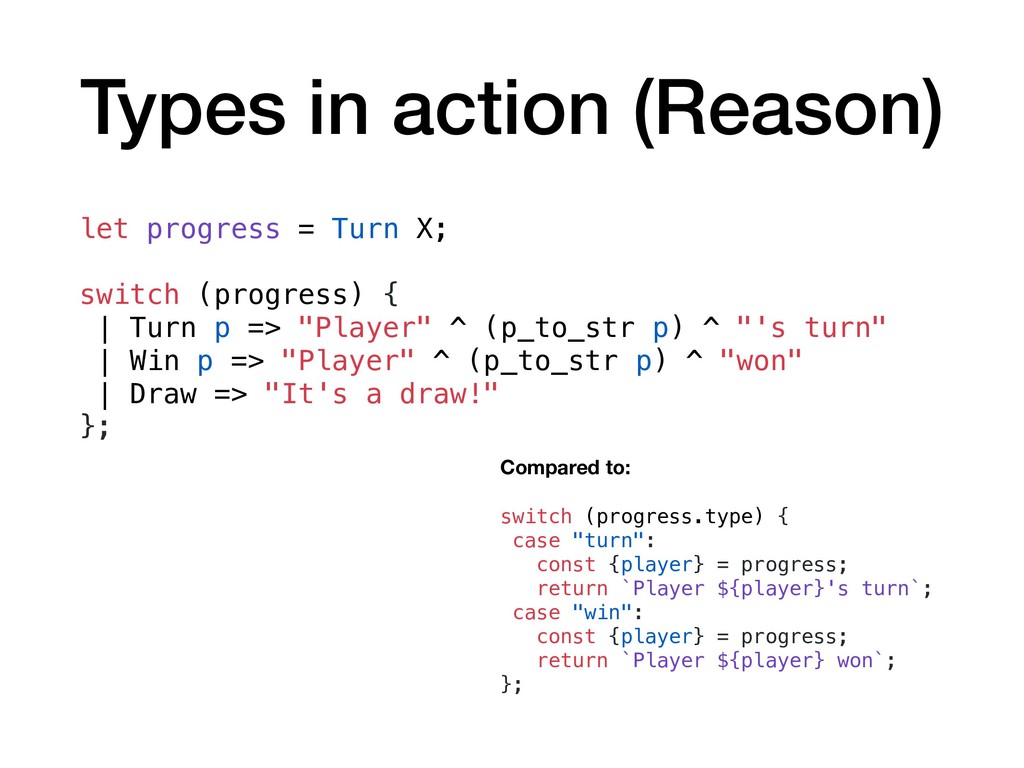
this part of the presentation from a fun talk by Patrick Stapfer (@ryyppy) at the ReasonML London meetup Full code for the provided example can be found at github.com/ryyppy/reason-lnd
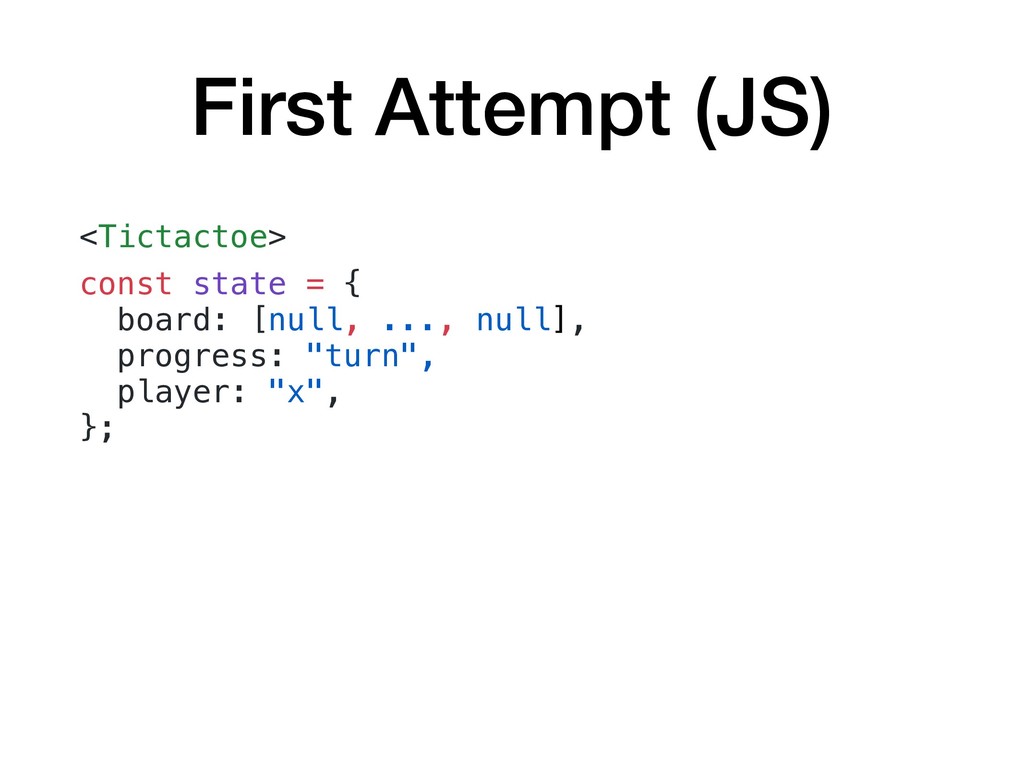
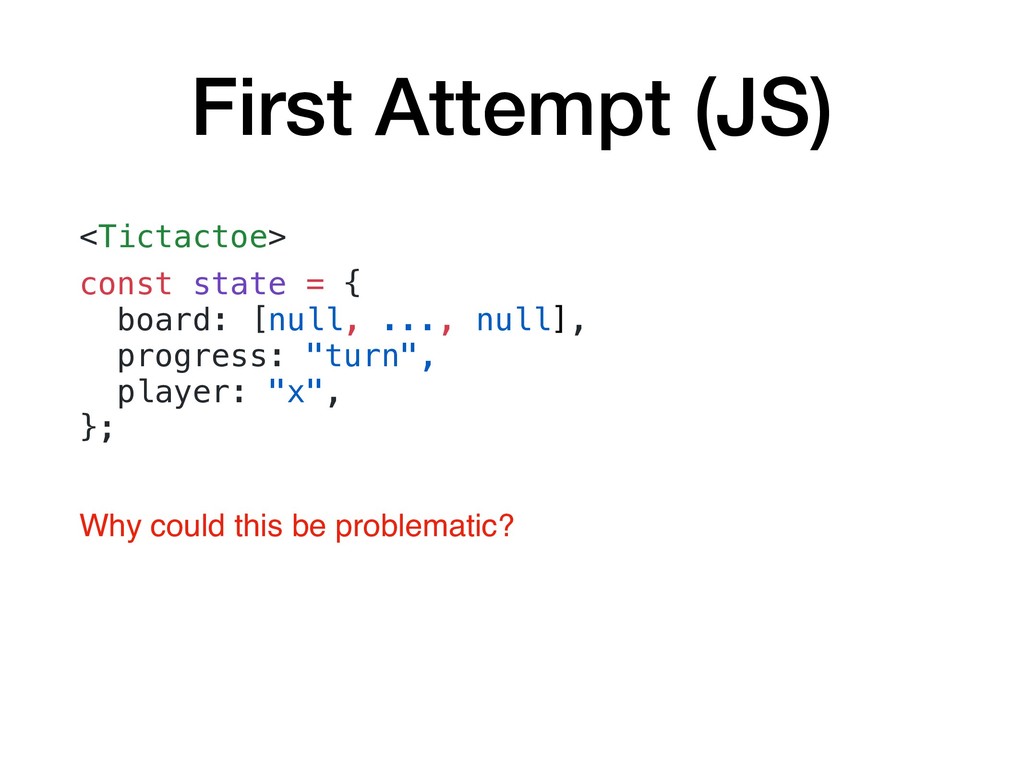
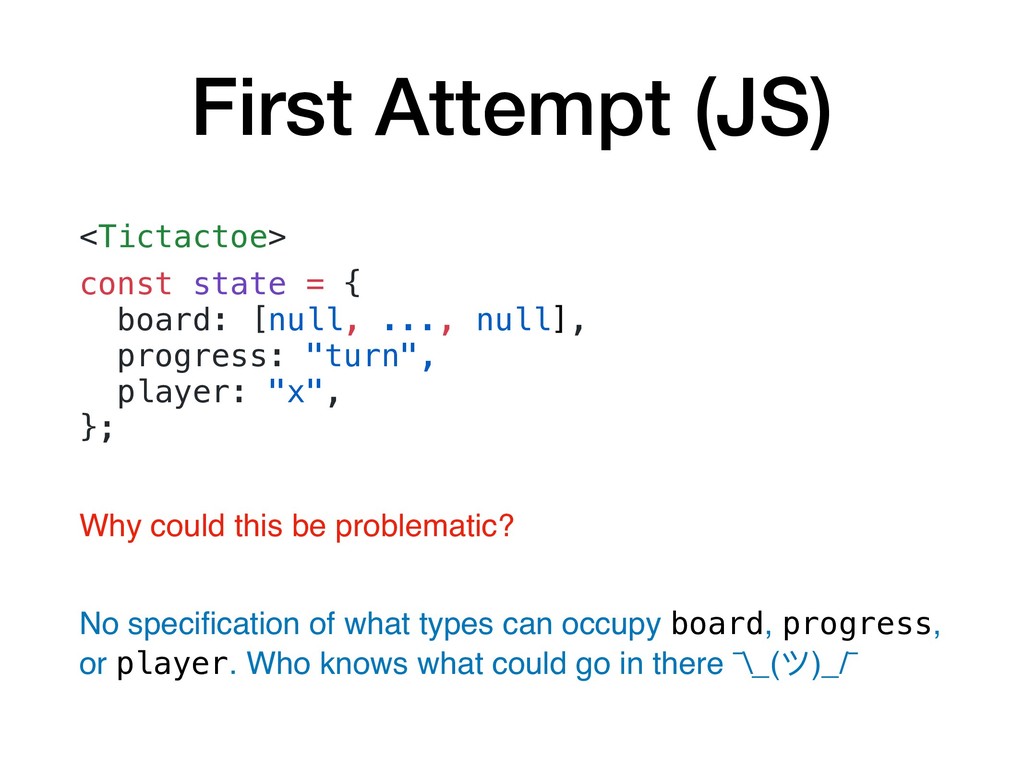
..., null], progress: "turn", player: "x", }; Why could this be problematic? No specification of what types can occupy board, progress, or player. Who knows what could go in there ¯\_(ツ)_/¯
..., null], progress: "turn", player: "x", }; Why could this be problematic? No specification of what types can occupy board, progress, or player. Who knows what could go in there ¯\_(ツ)_/¯
..., null], progress: "turn", player: "x", }; Why could this be problematic? No specification of what types can occupy board, progress, or player. Who knows what could go in there ¯\_(ツ)_/¯
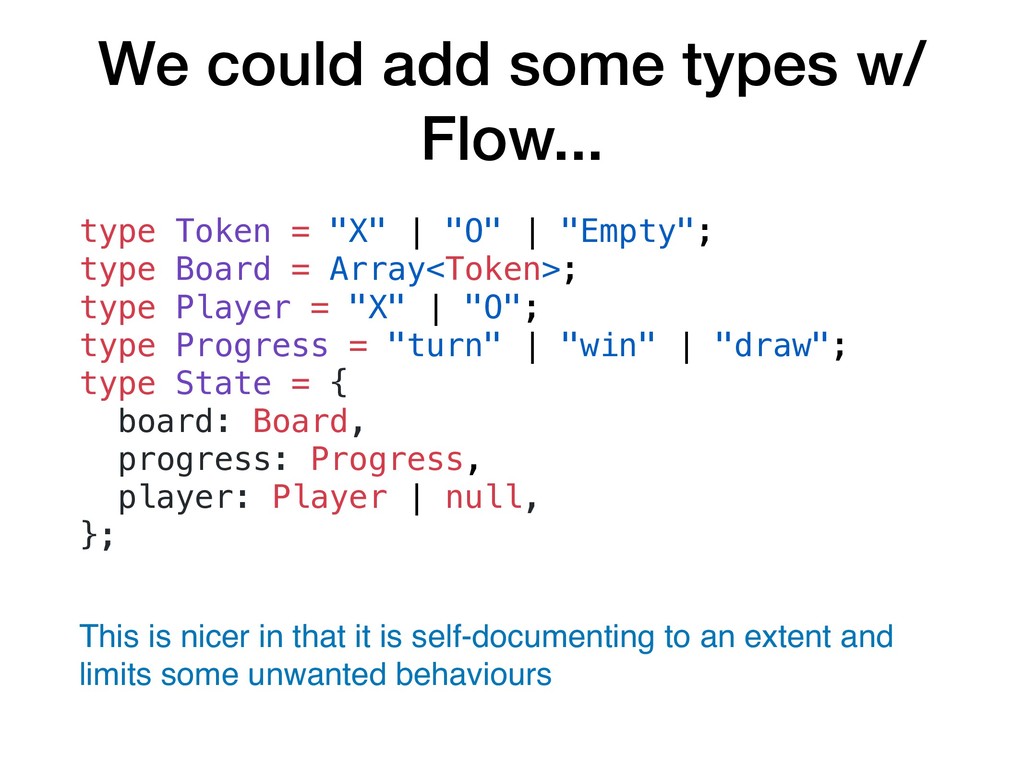
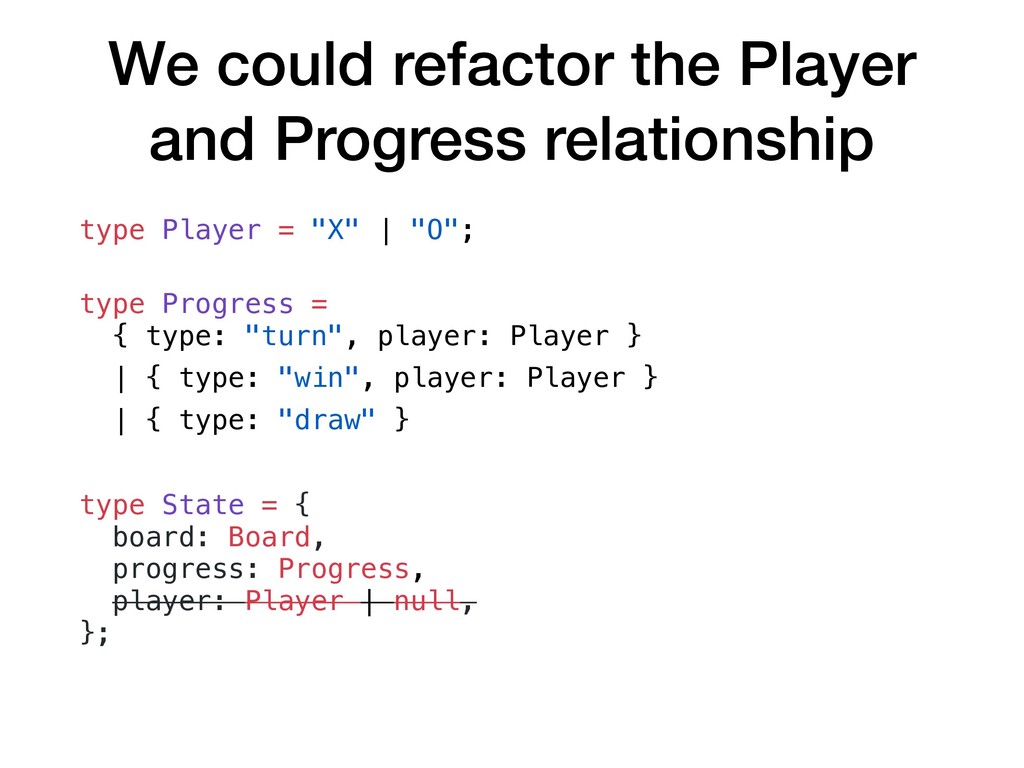
"X" | "O" | "Empty"; type Board = Array<Token>; type Player = "X" | "O"; type Progress = "turn" | "win" | "draw"; type State = { board: Board, progress: Progress, player: Player | null, }; This is nicer in that it is self-documenting to an extent and limits some unwanted behaviours
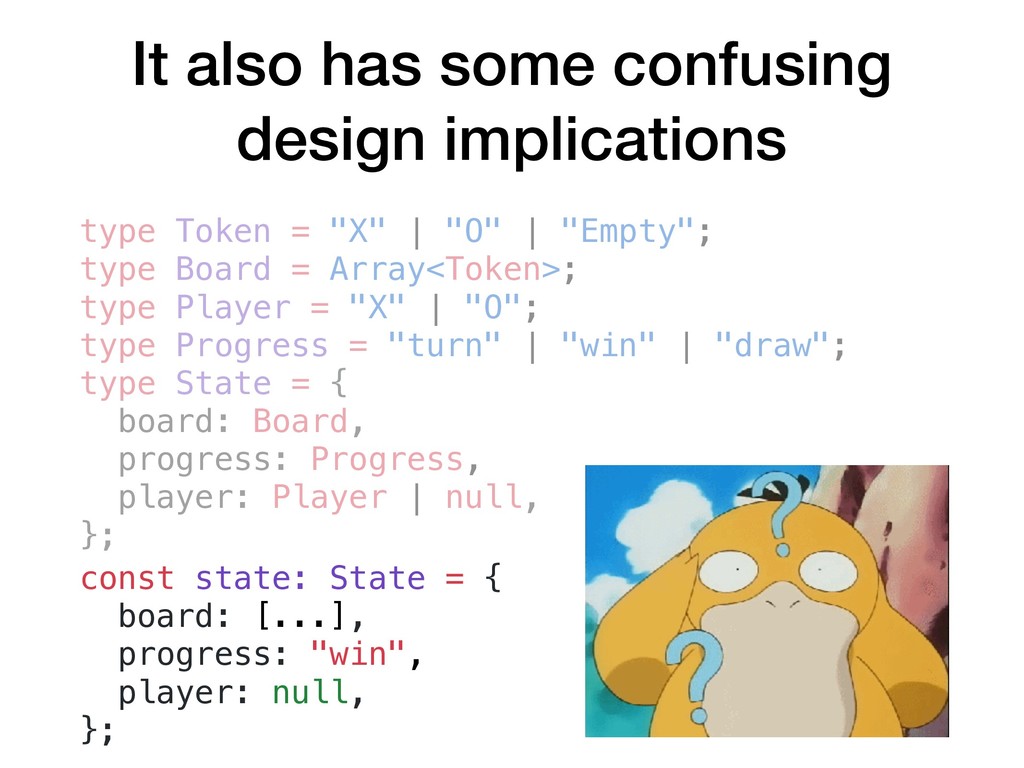
"X" | "O" | "Empty"; type Board = Array<Token>; type Player = "X" | "O"; type Progress = "turn" | "win" | "draw"; type State = { board: Board, progress: Progress, player: Player | null, }; This is nicer in that it is self-documenting to an extent and limits some unwanted behaviours. const state: State = { board: [...], progress: "win", player: null, };
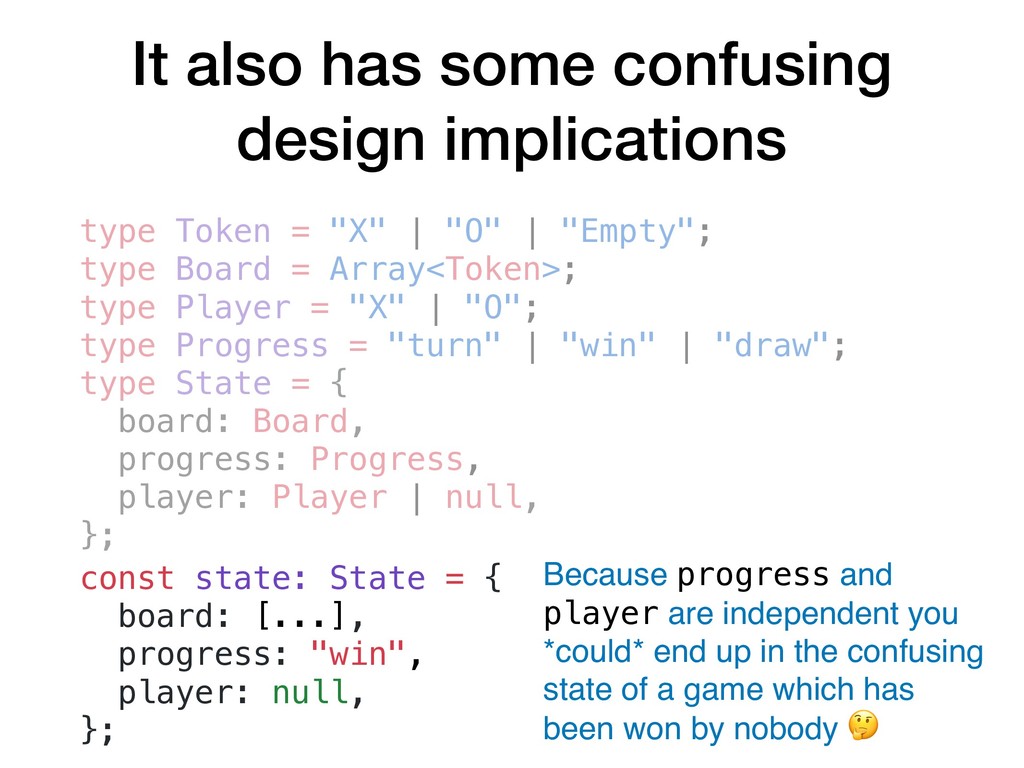
"X" | "O" | "Empty"; type Board = Array<Token>; type Player = "X" | "O"; type Progress = "turn" | "win" | "draw"; type State = { board: Board, progress: Progress, player: Player | null, }; This is nicer in that it is self-documenting to an extent and limits some unwanted behaviours. const state: State = { board: [...], progress: "win", player: null, }; Because progress and player are independent you *could* end up in the confusing state of a game which has been won by nobody
token = | X | O | Empty type board = ... type player = | X | O type progress = | Turn player | Win player | Draw type state = { board: board progress: progress, };
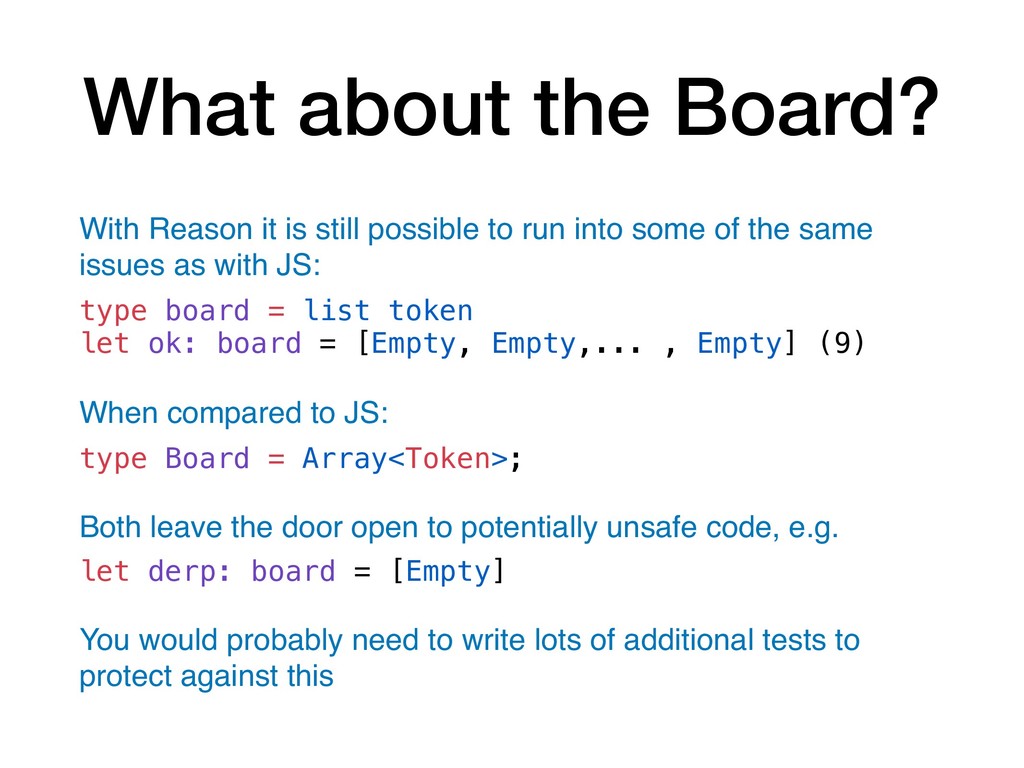
to run into some of the same issues as with JS: type board = list token let ok: board = [Empty, Empty,... , Empty] (9) When compared to JS: type Board = Array<Token>; Both leave the door open to potentially unsafe code, e.g. let derp: board = [Empty] You would probably need to write lots of additional tests to protect against this


 siroemk
 suneo3476
 tosite
 neuecc
 timakin
 uyuki234
 kenjiyoneyama
 kishida
 colorful12
 sylph01
 iwatsukayura
 minodriven
 greggifford
 codingconduct
 cassininazir
 rasmusluckow
 panda_program
 cargoodrich
 addyosmani
 tammyeverts
 marcoroth
 reverentgeek
 mraible