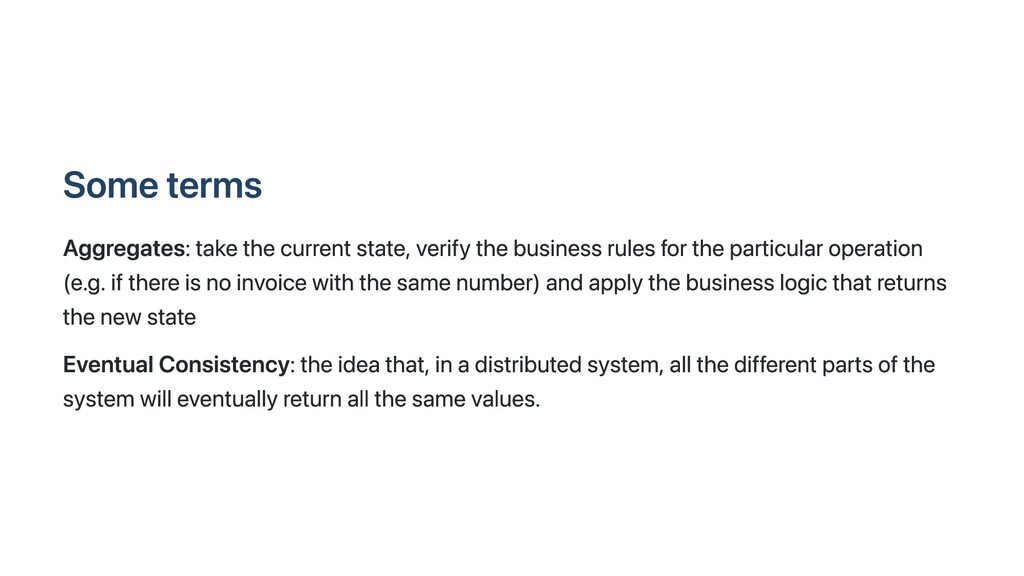
rules for the particular operation (e.g. if there is no invoice with the same number) and apply the business logic that returns the new state Eventual Consistency: the idea that, in a distributed system, all the different parts of the system will eventually return all the same values.
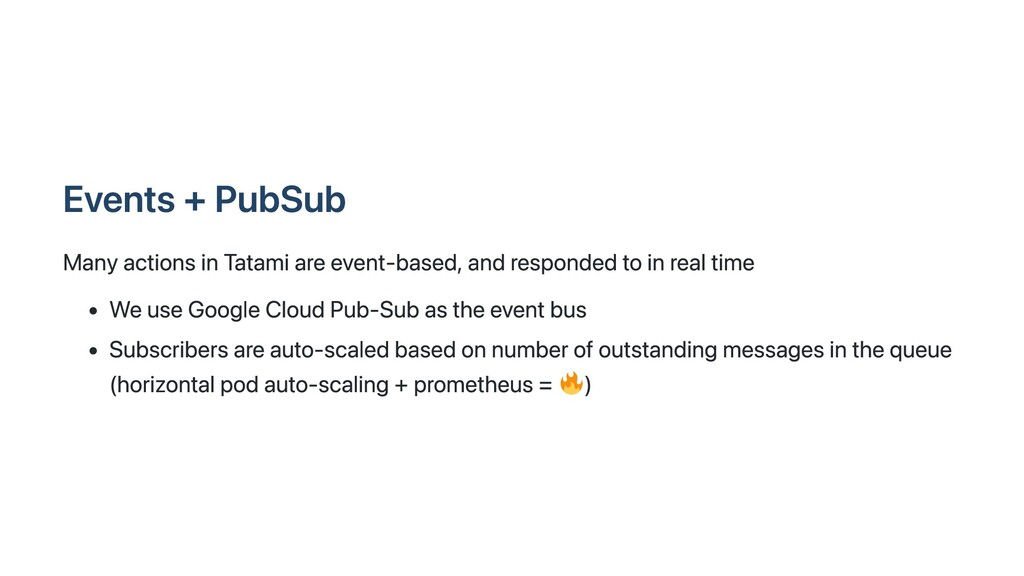
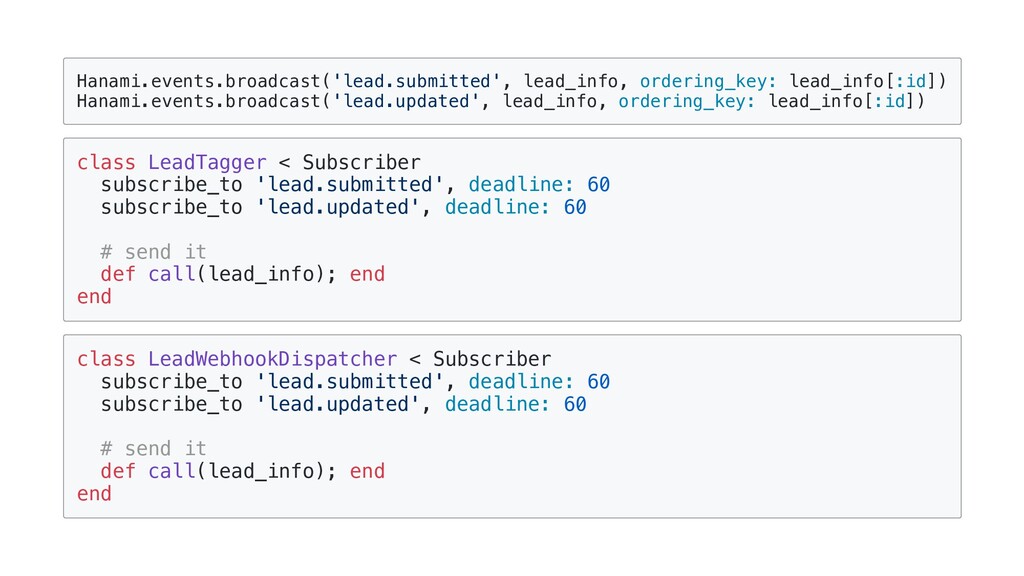
responded to in real time We use Google Cloud Pub-Sub as the event bus Subscribers are auto-scaled based on number of outstanding messages in the queue (horizontal pod auto-scaling + prometheus = )
useful to DHQ users, we also have structured/typed approach to event sourcing, so can make it look pretty in the UI. Think “activity log.” It makes use of DB triggers, some materialized views, and POROs to do it.
event sourcing pattern: phone calls are events chats are events a form fill is an event reviews are events comments, assignments, uploads, etc are stored as events, too! The other things, like inferred prospects, flow out of that “event stream.” The purists would call them projections.
which does “event sourcing,” since the mental model is easier to understand and more natural, since we are talking about concrete things that happen in the real world. A developer doesn’t have to try to explain to a reactor or aggregate to a PM, or vice versa. Maybe we’ll call it “organic” event sourcing, USDA approved!


 steliosf
 suneo3476
 deka_morita
 marcoroth
 uyuki234
 irinanazarova
 siroemk
 ivargrimstad
 jame2408
 oniak3ibm
 lef237
 akit37
 eileencodes
 chriscoyier
 aemeredith
 aarron
 frankvandijk
 schlessera
 gurzu
 morganepeng
 greggifford
 jeffersonlam
 csswizardry
 katarinadahlin