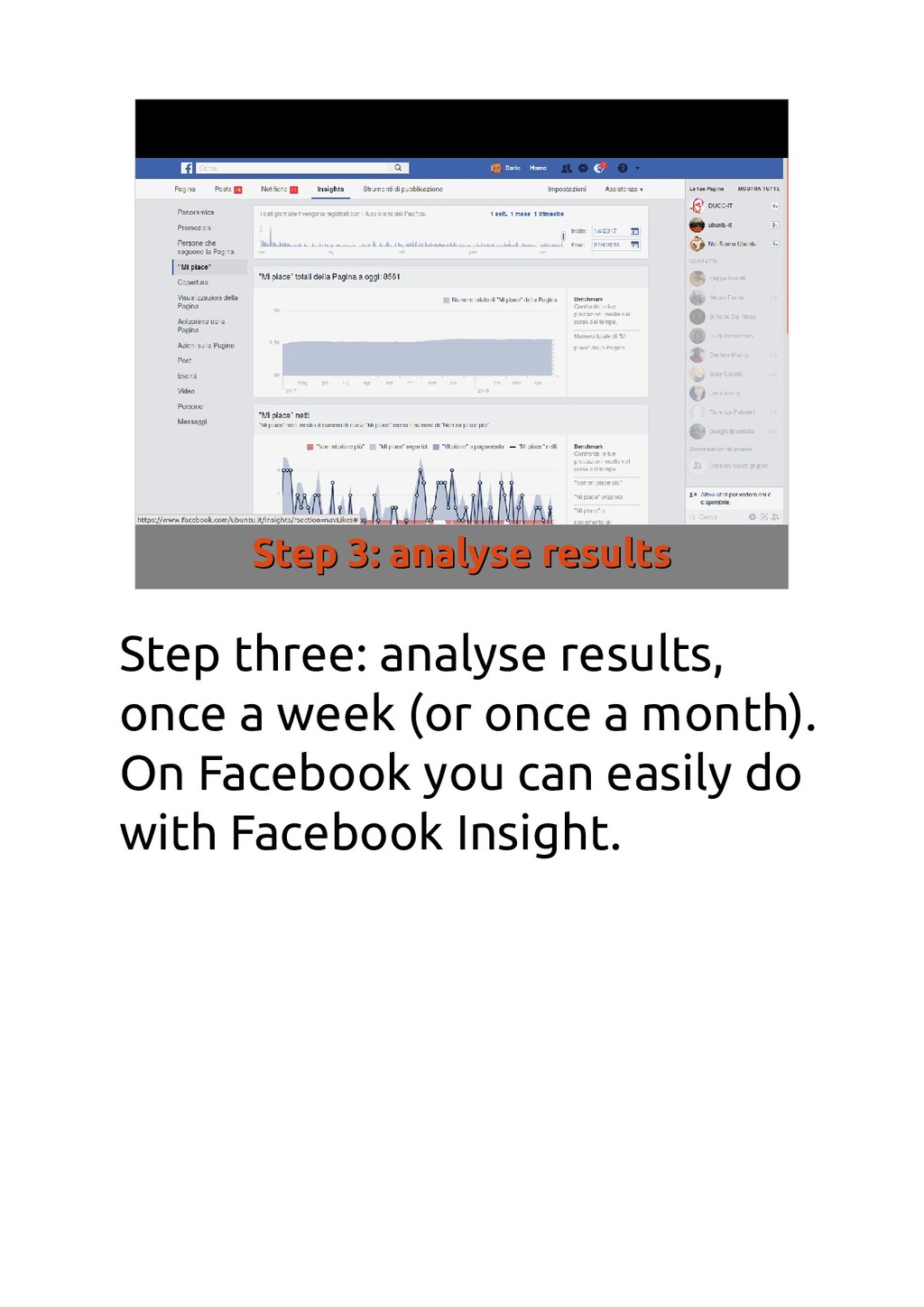
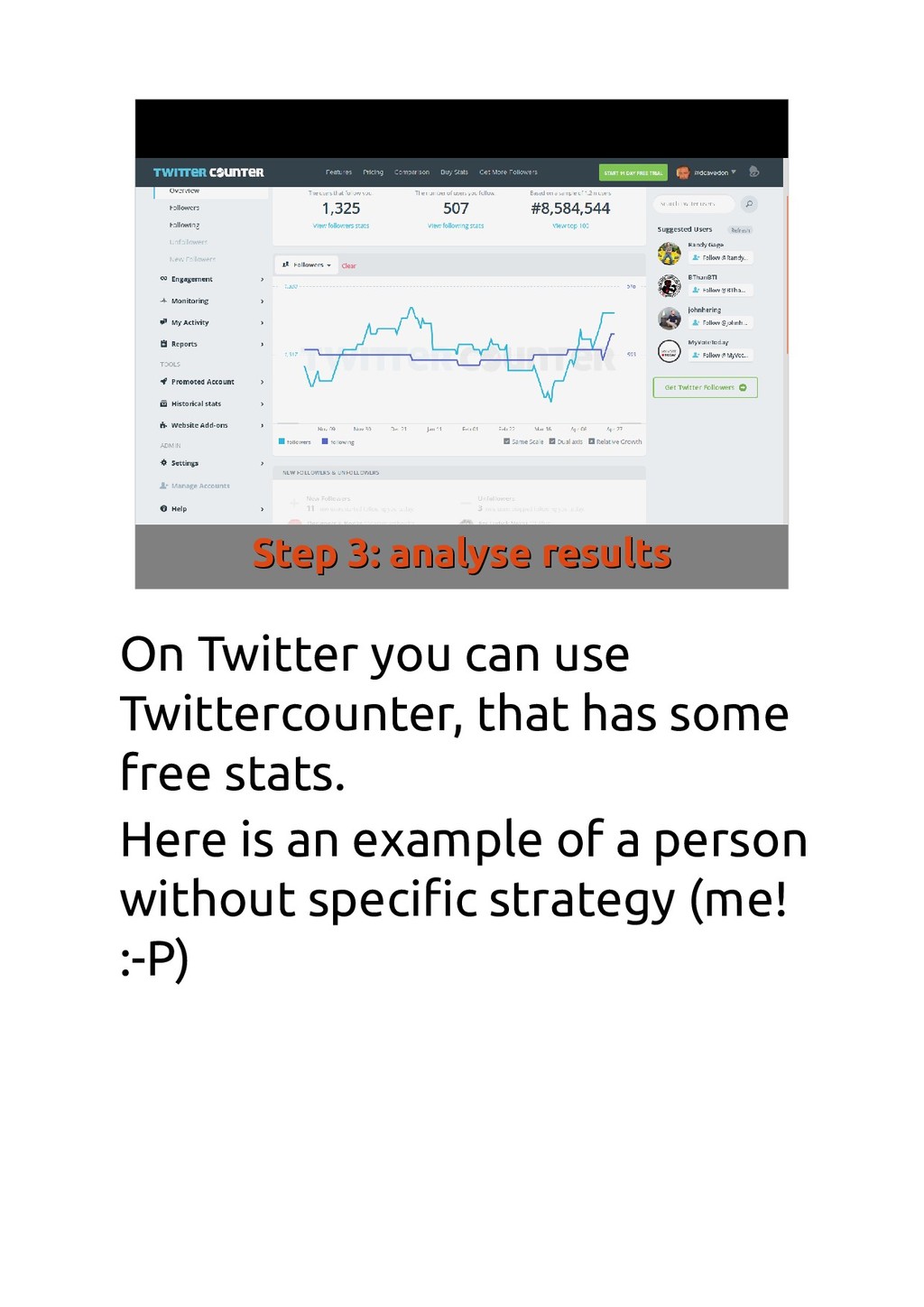
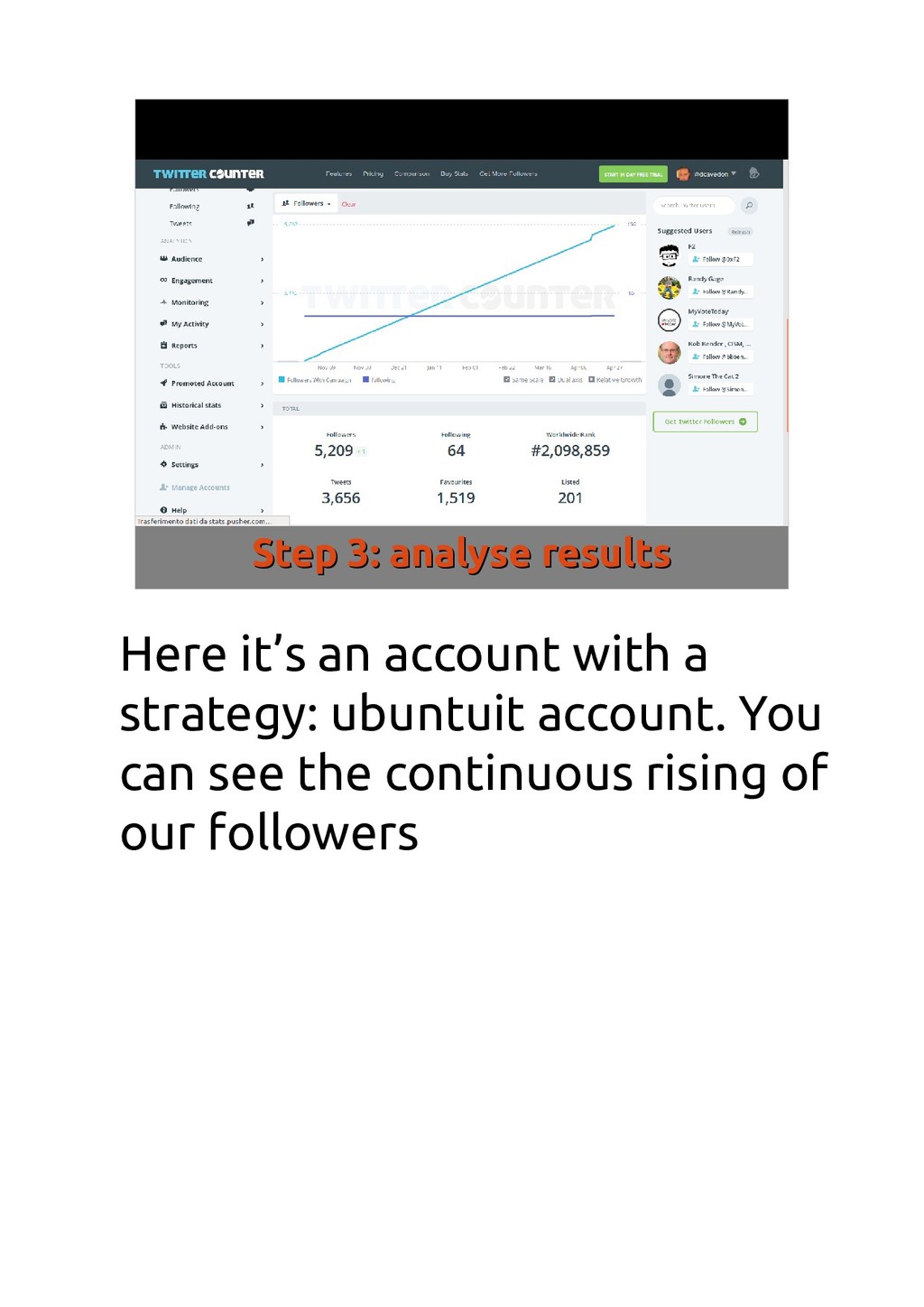
Some advice on how even smallest open source communities can use social media to engage users, involve new people in development and make a better world.
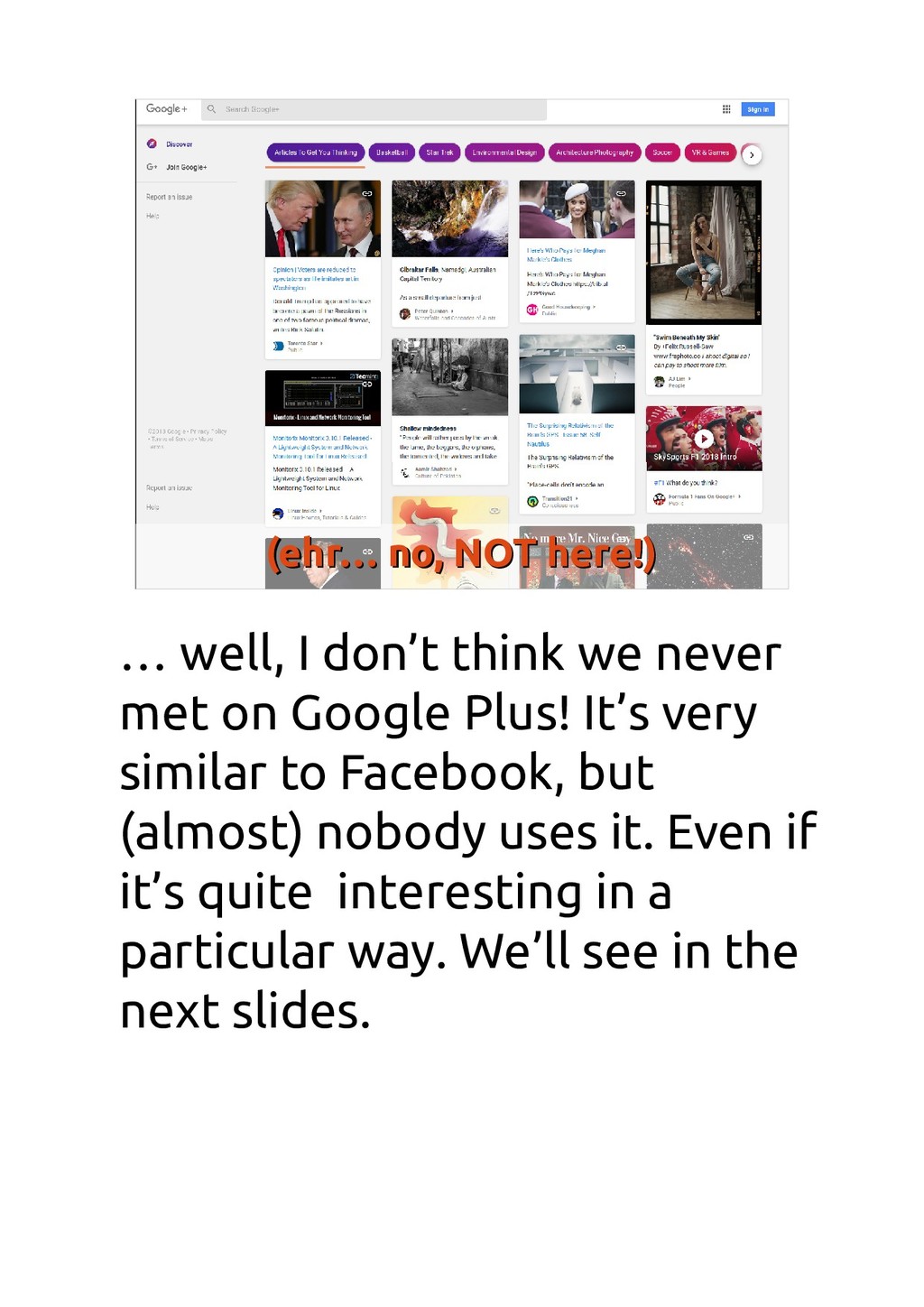
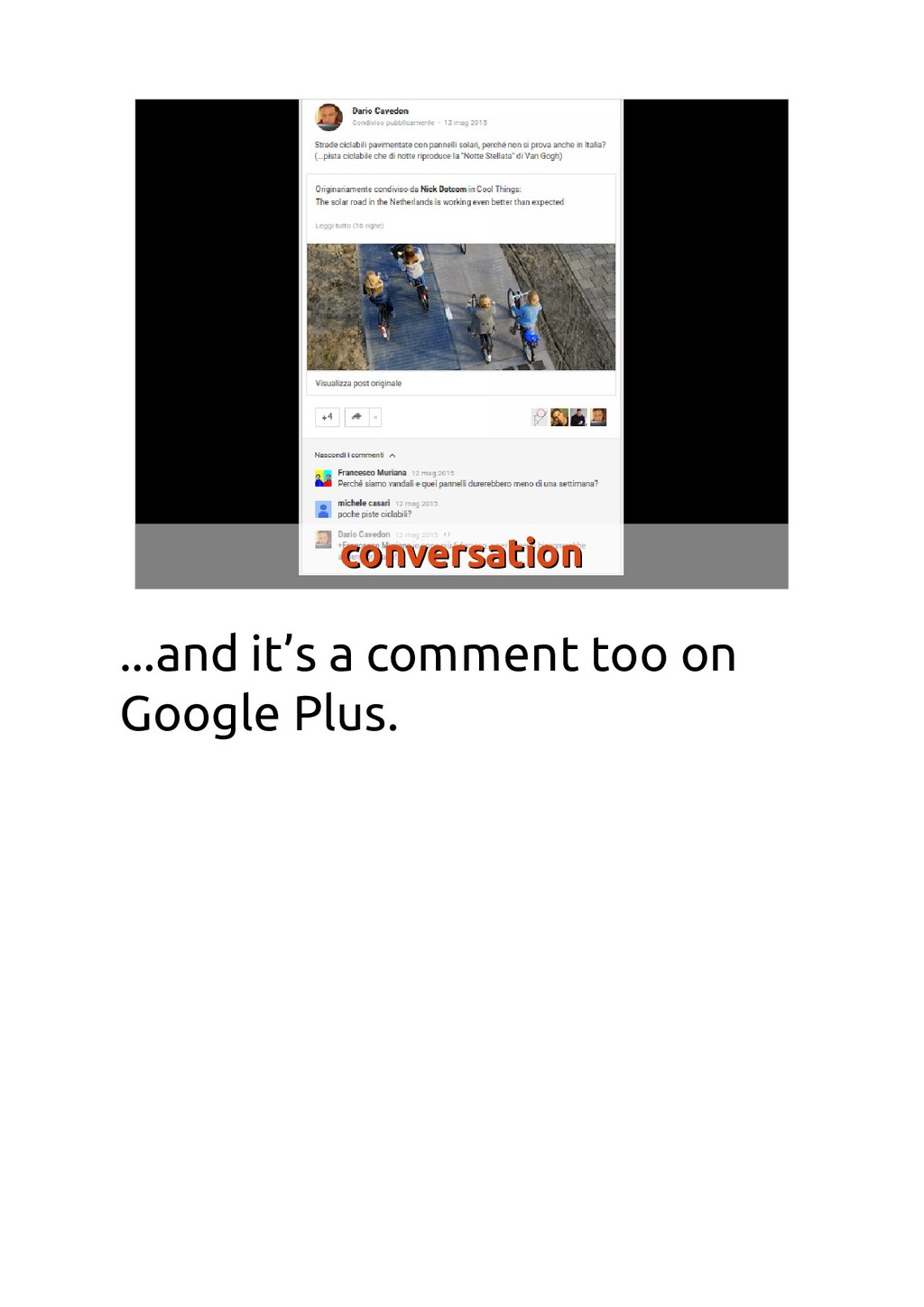
I don’t think we never met on Google Plus! It’s very similar to Facebook, but (almost) nobody uses it. Even if it’s quite interesting in a particular way. We’ll see in the next slides.
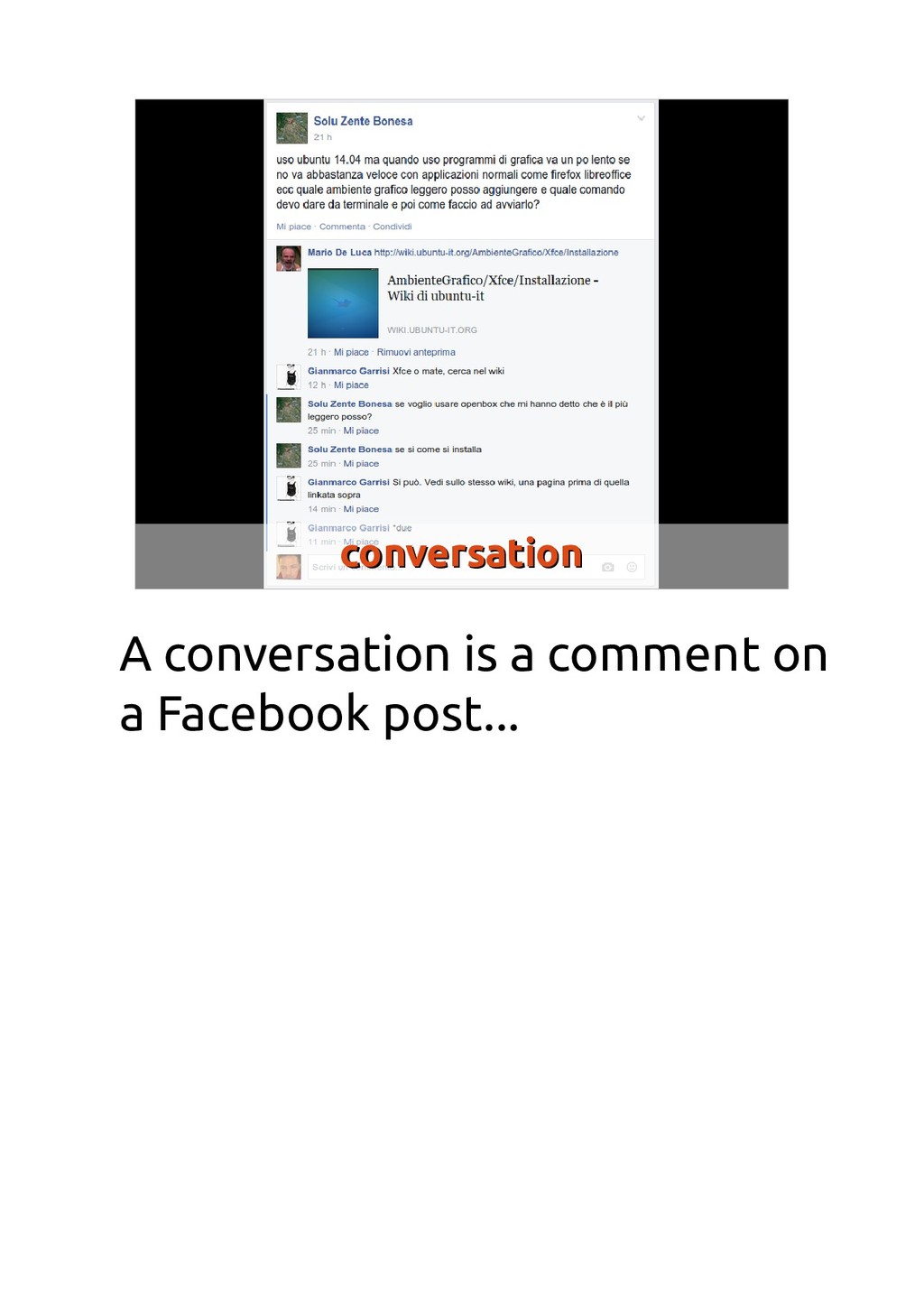
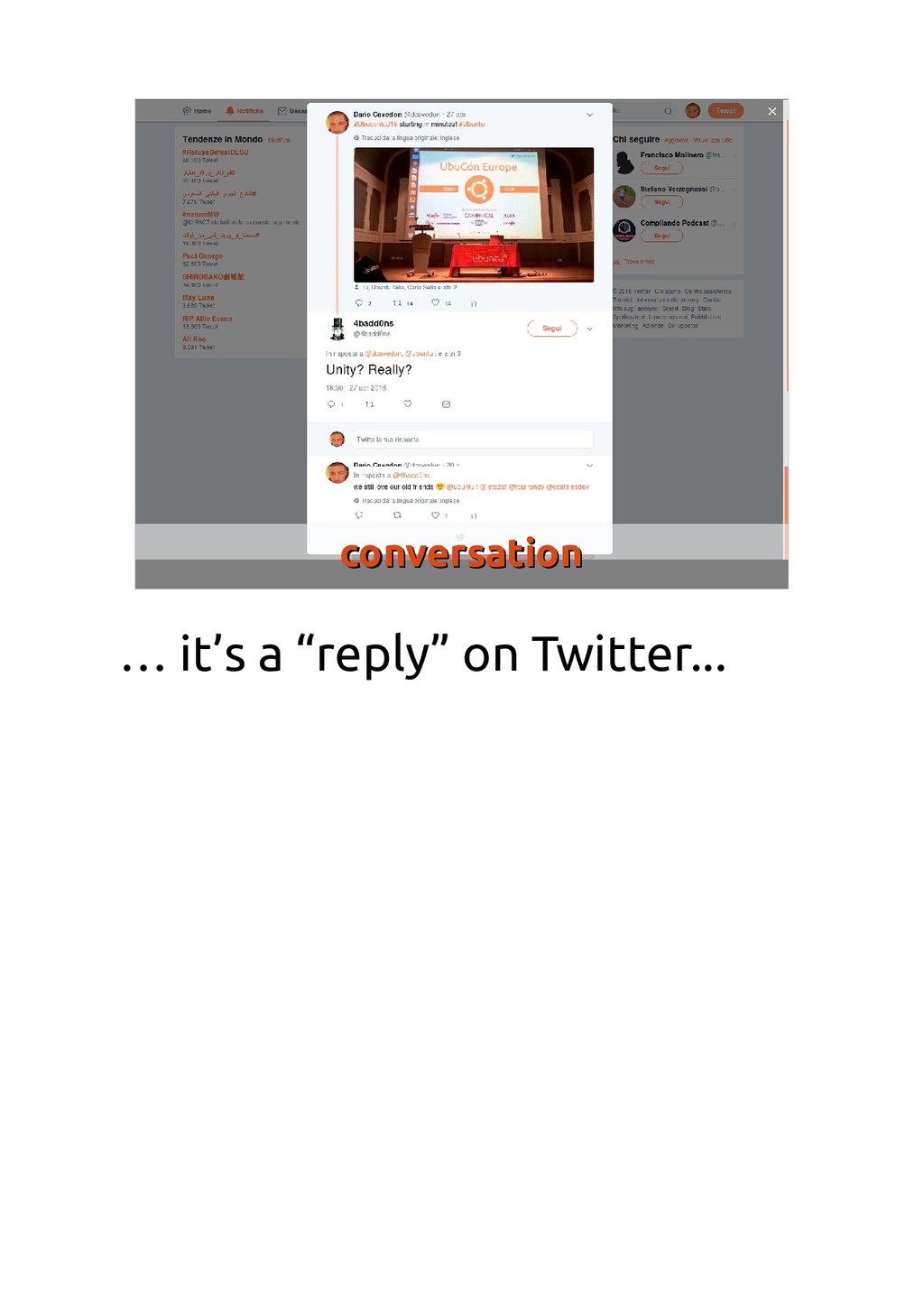
A conversation is a comment to a post or in replying to another comment. It doesn’t have to necessarly be positive: a negative comment it’s a “conversation” too.
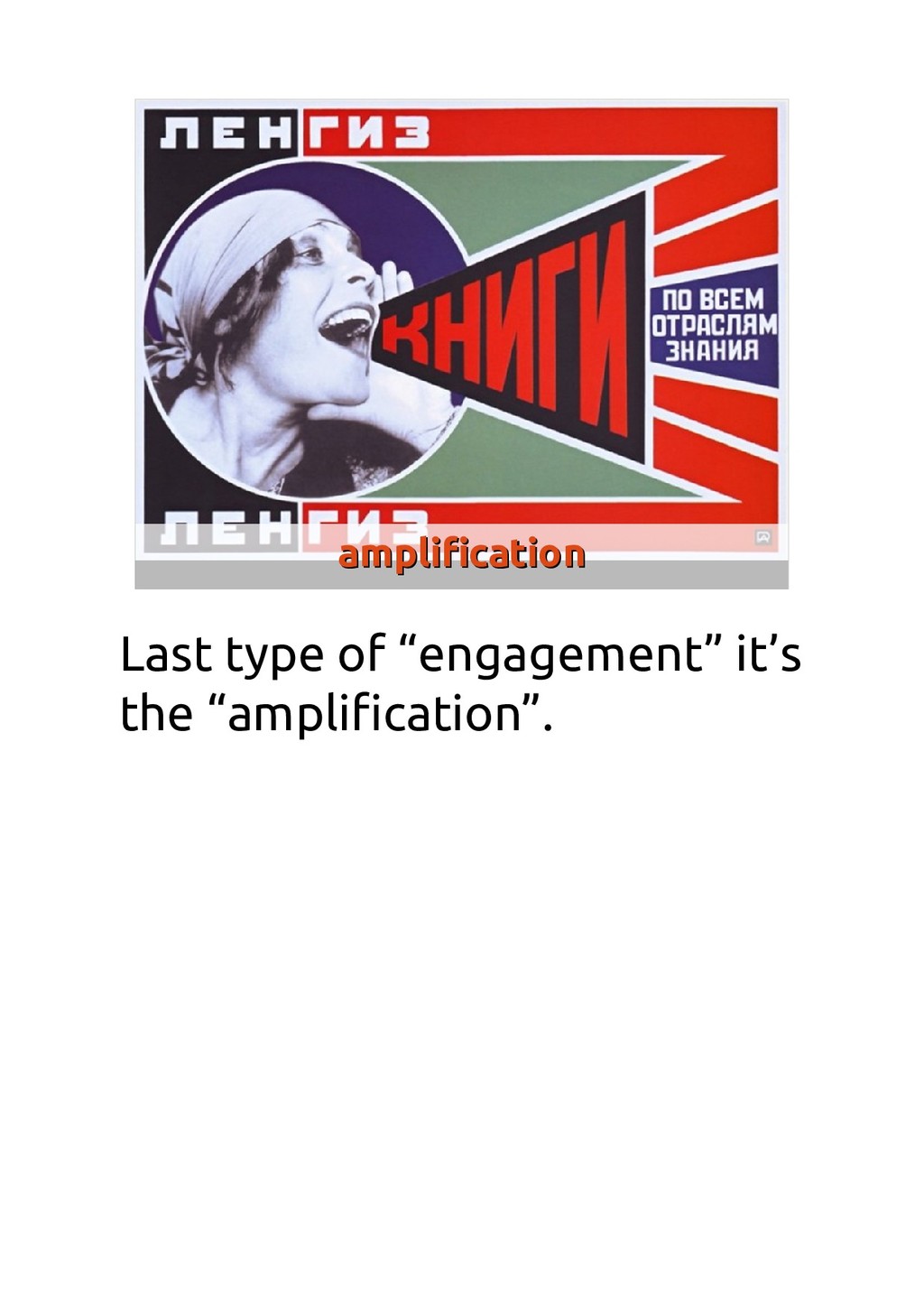
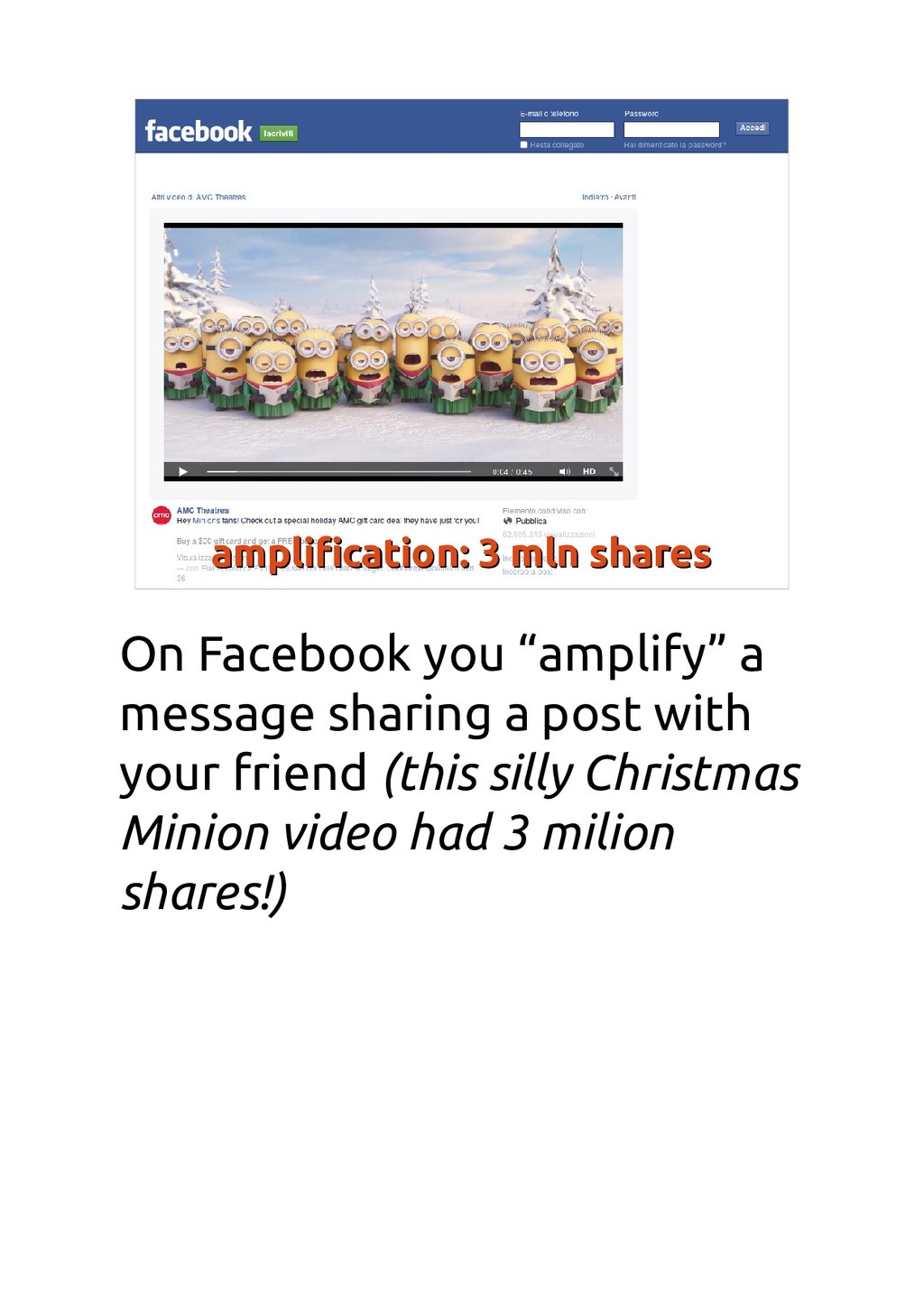
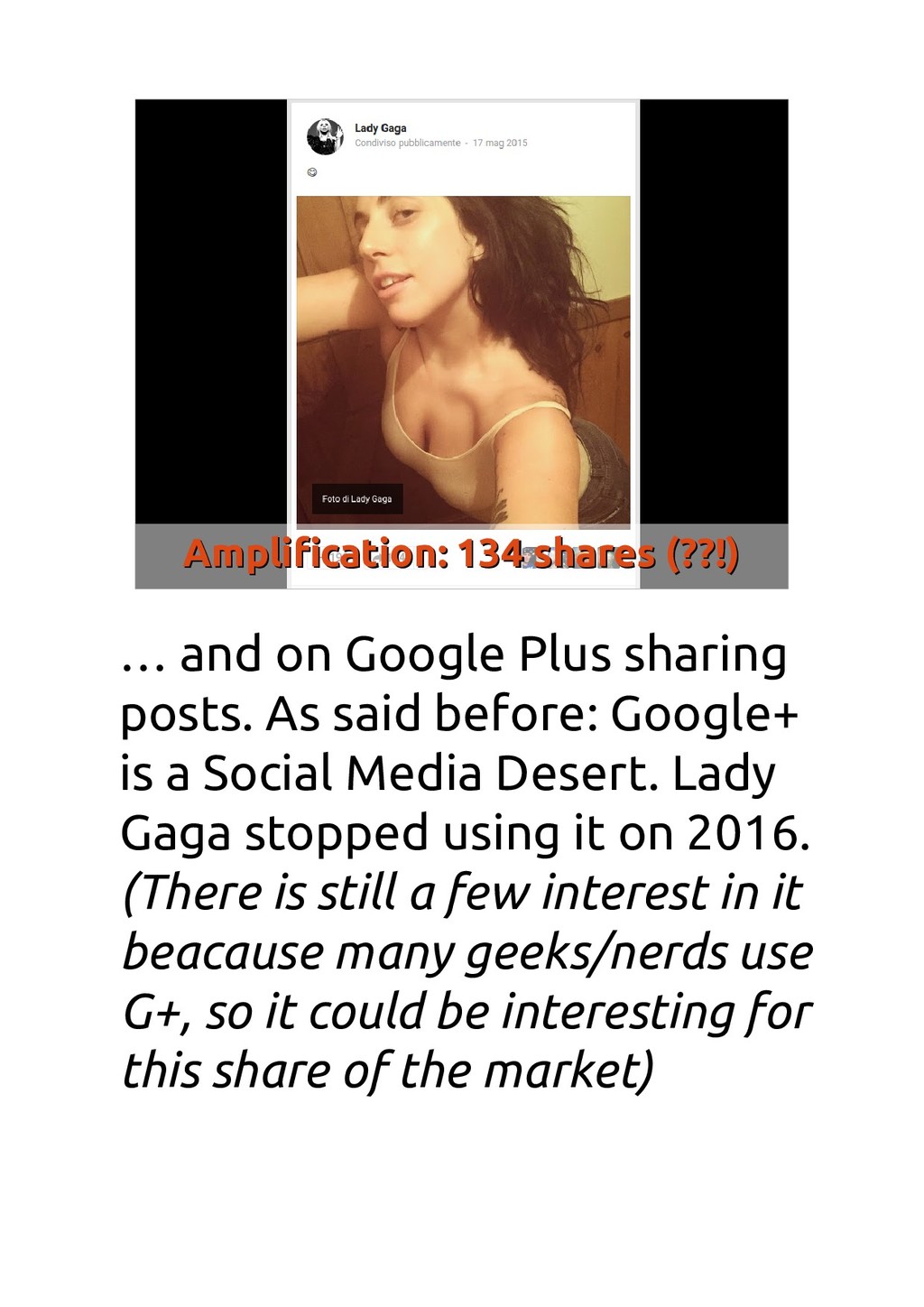
on Google Plus sharing posts. As said before: Google+ is a Social Media Desert. Lady Gaga stopped using it on 2016. (There is still a few interest in it beacause many geeks/nerds use G+, so it could be interesting for this share of the market)
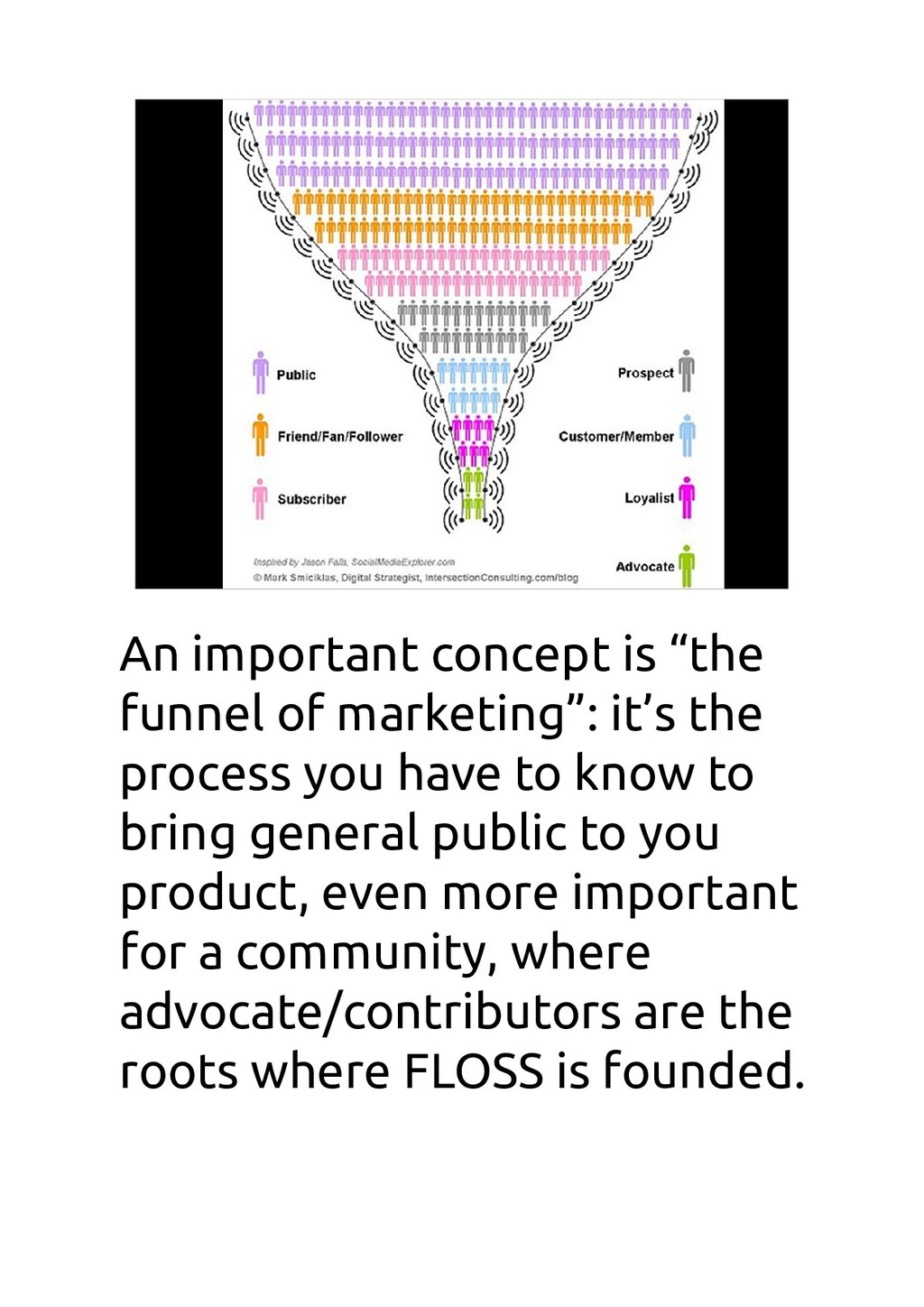
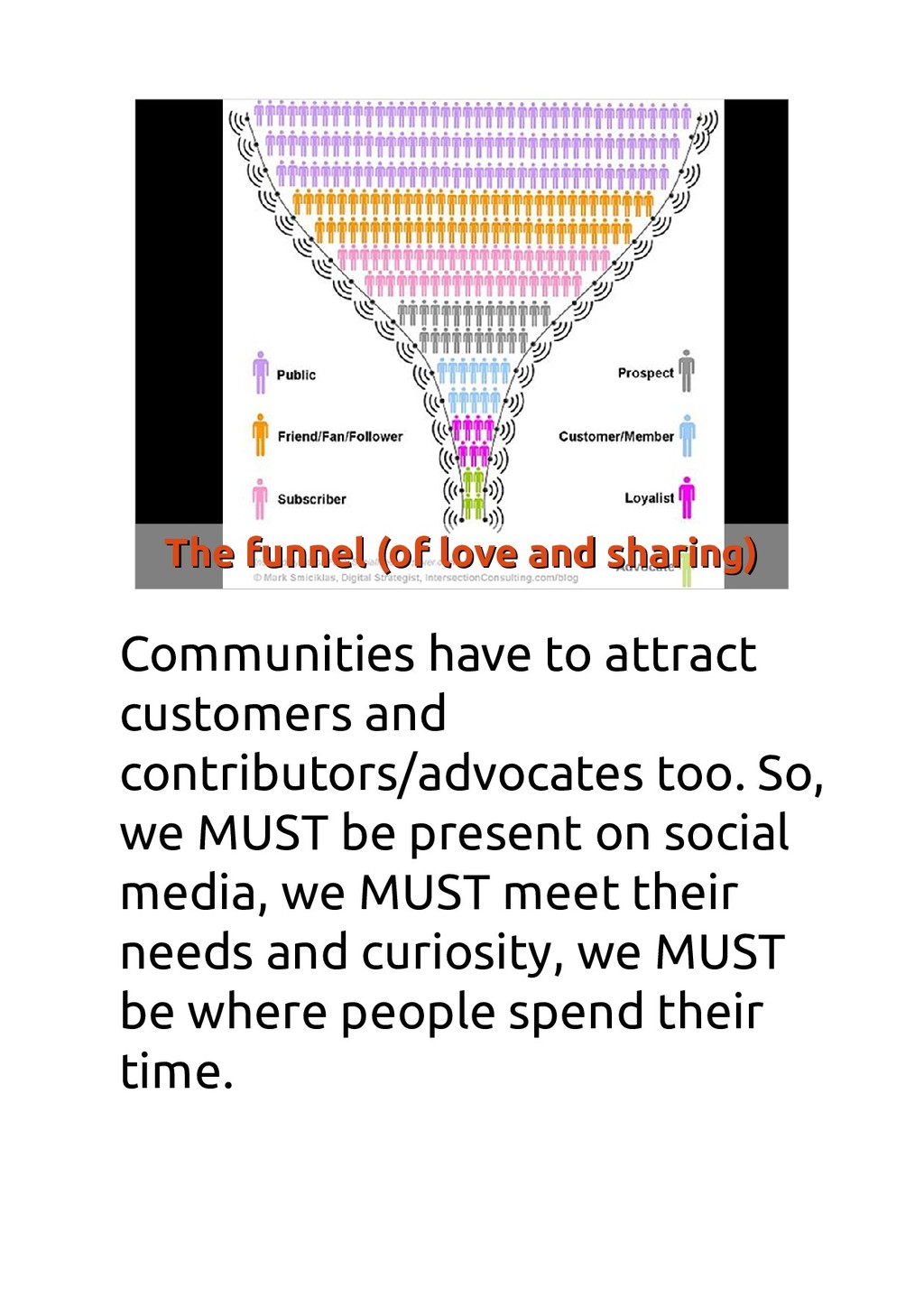
process you have to know to bring general public to you product, even more important for a community, where advocate/contributors are the roots where FLOSS is founded.
and sharing) Communities have to attract customers and contributors/advocates too. So, we MUST be present on social media, we MUST meet their needs and curiosity, we MUST be where people spend their time.
what to do for a strategy. Step zero, make an assessment: what is my target? What kind of people use my product? Where do they meet? What are their interests?
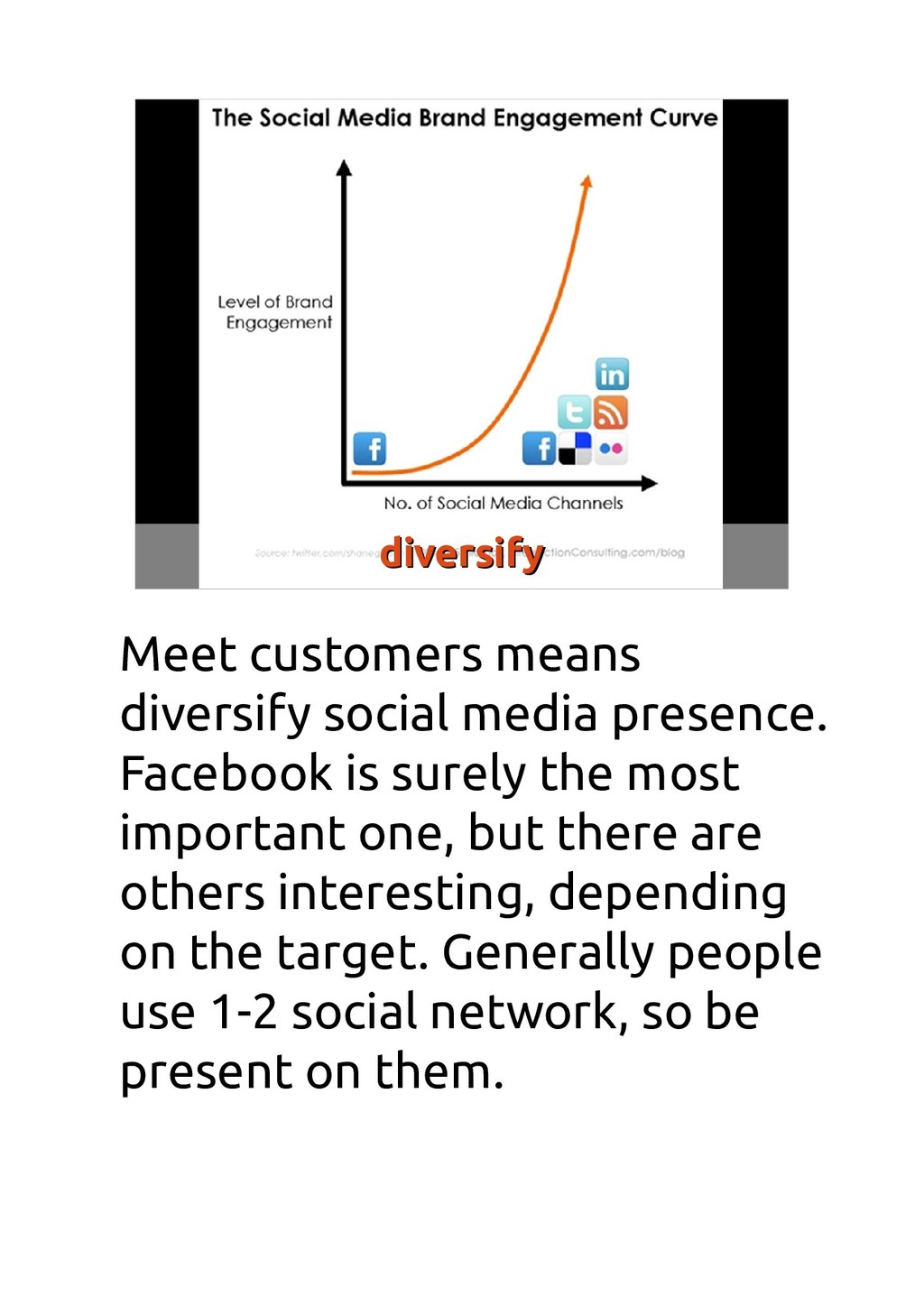
is surely the most important one, but there are others interesting, depending on the target. Generally people use 1-2 social network, so be present on them.
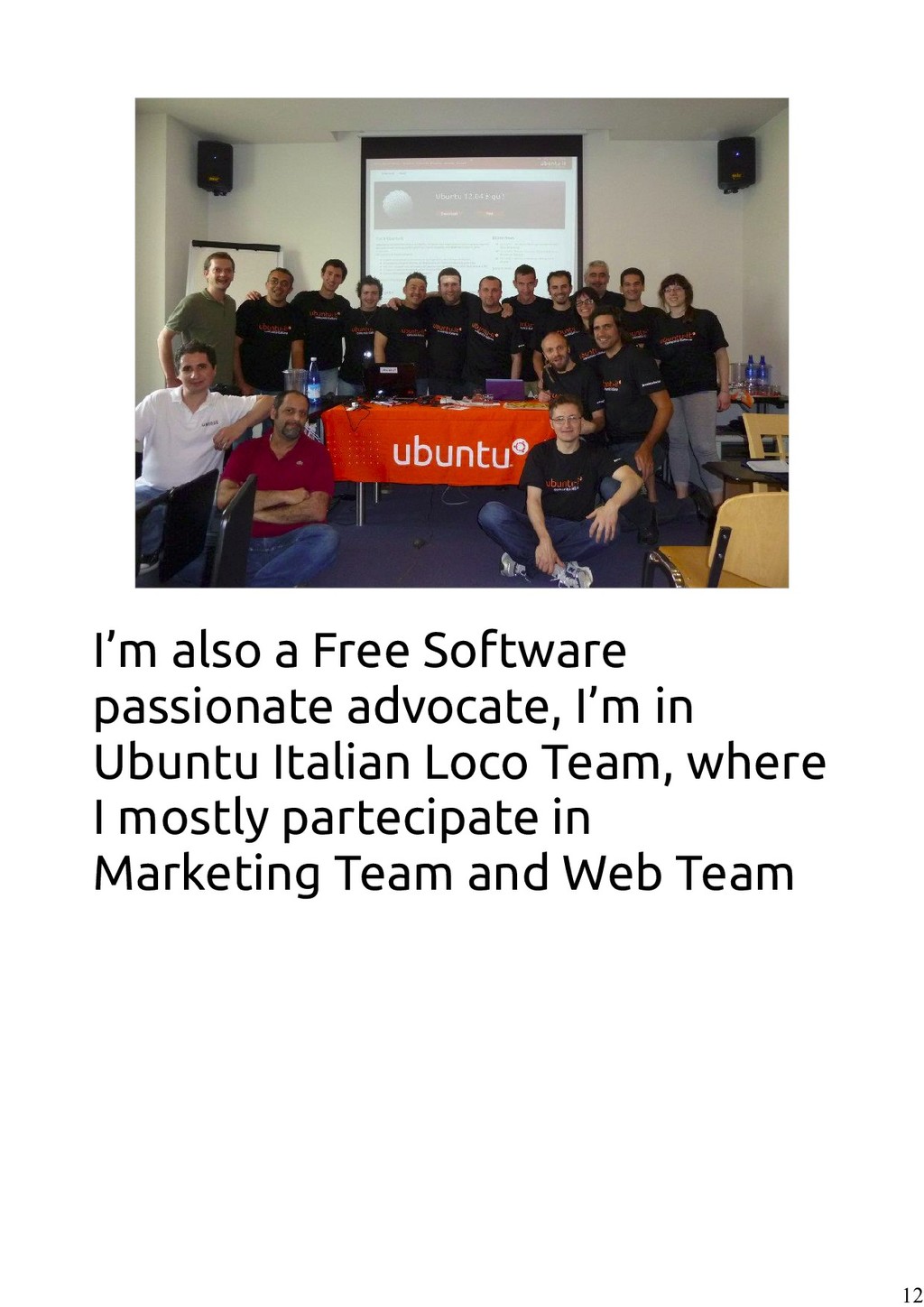
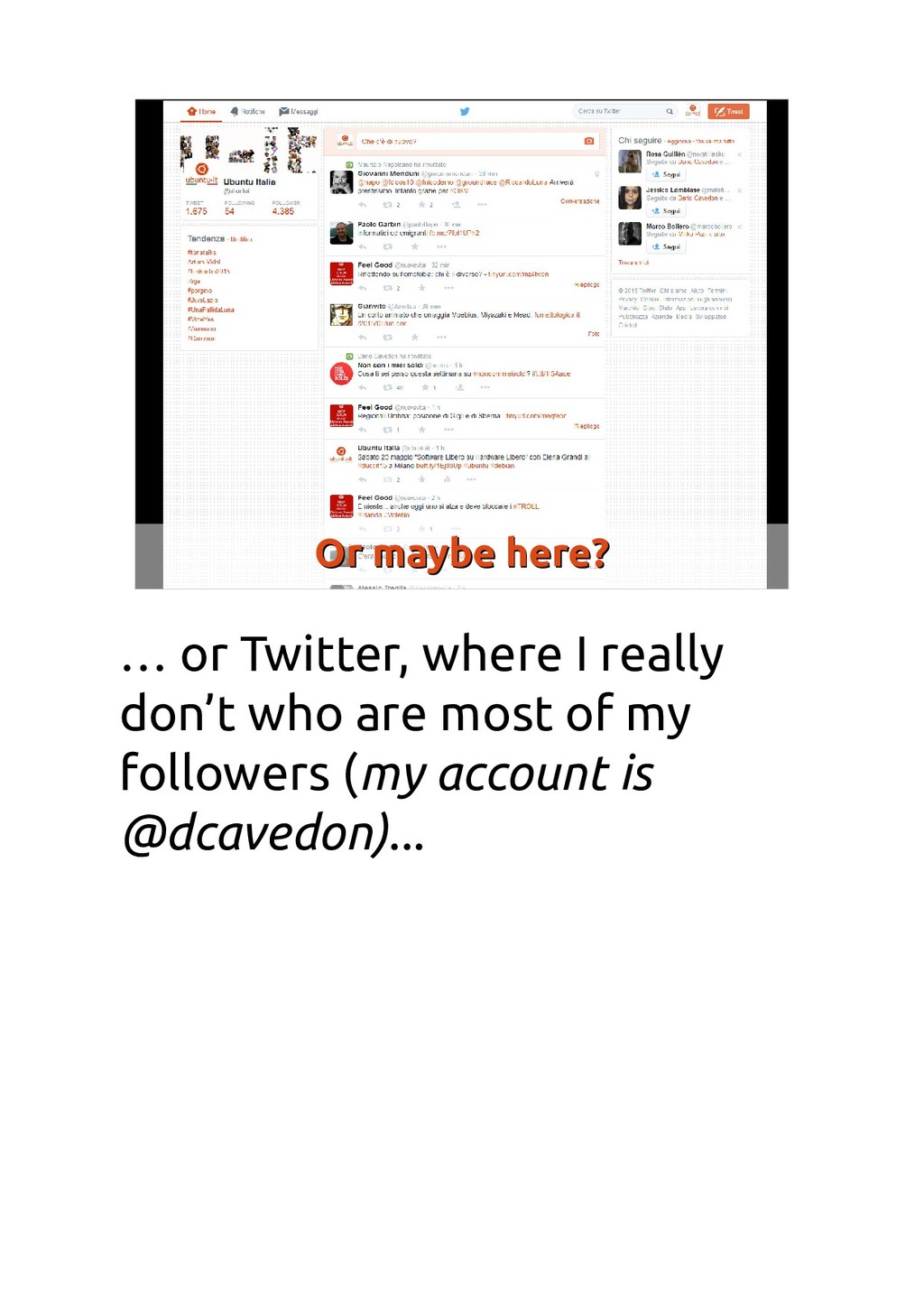
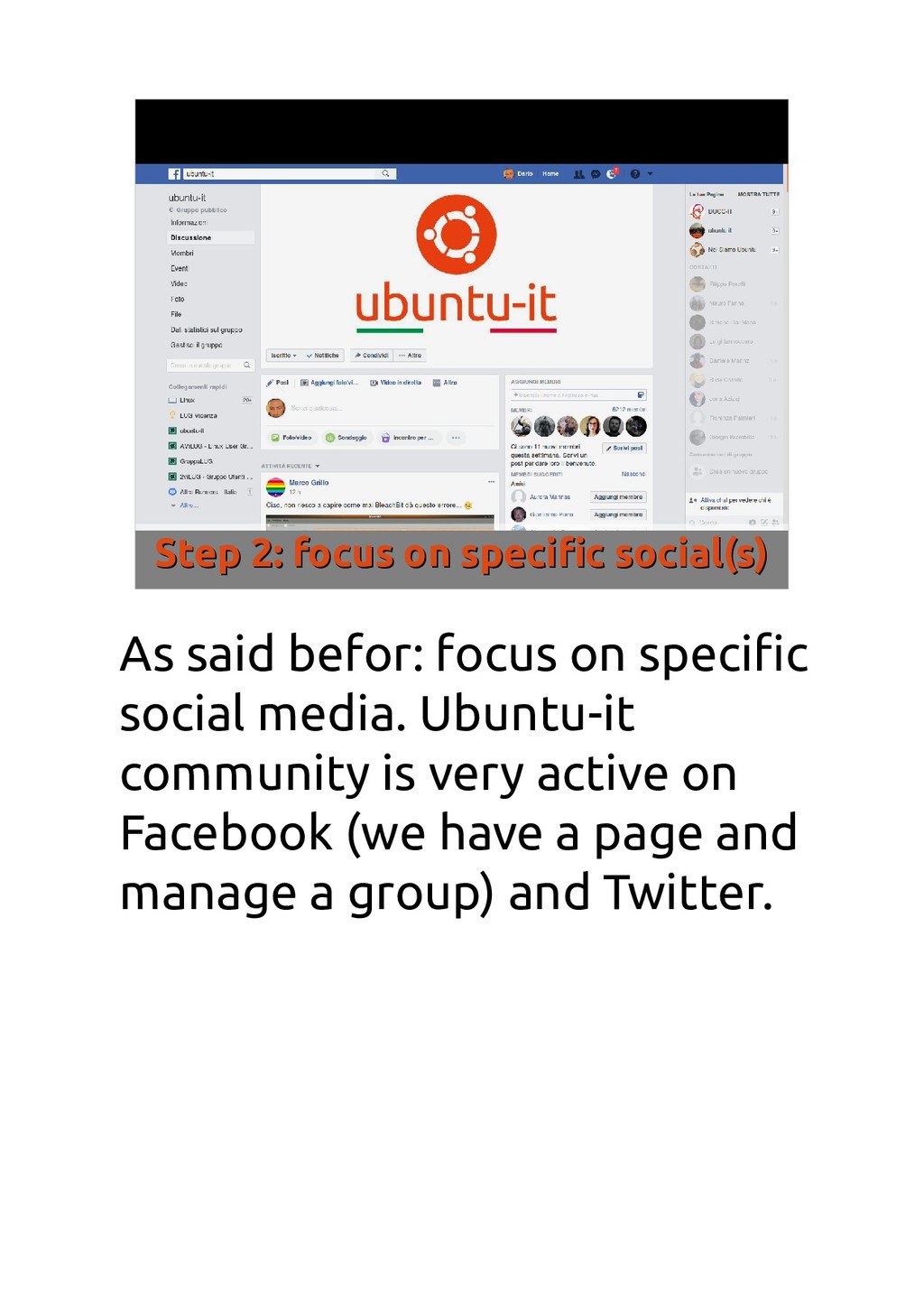
specific social(s) As said befor: focus on specific social media. Ubuntu-it community is very active on Facebook (we have a page and manage a group) and Twitter.
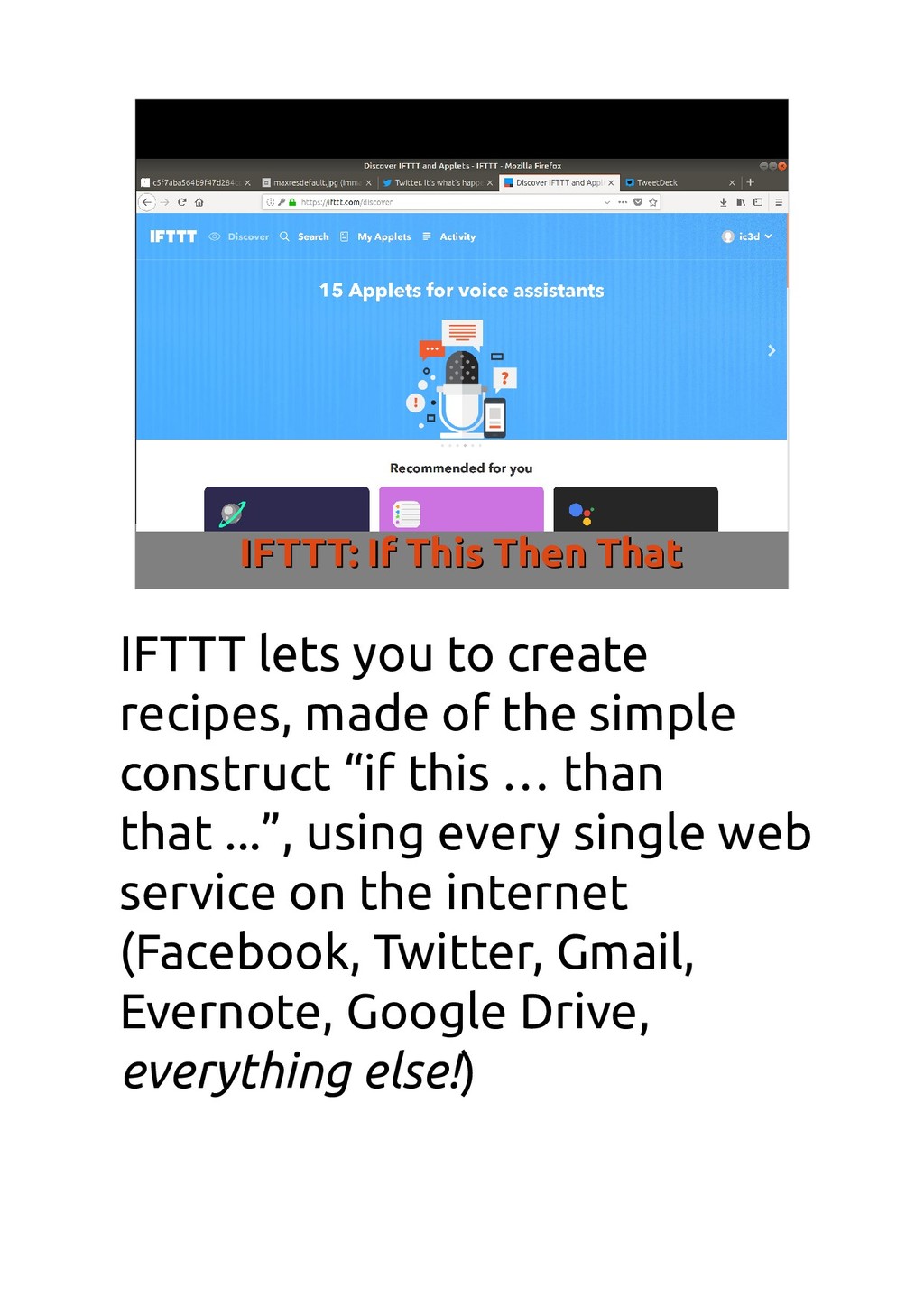
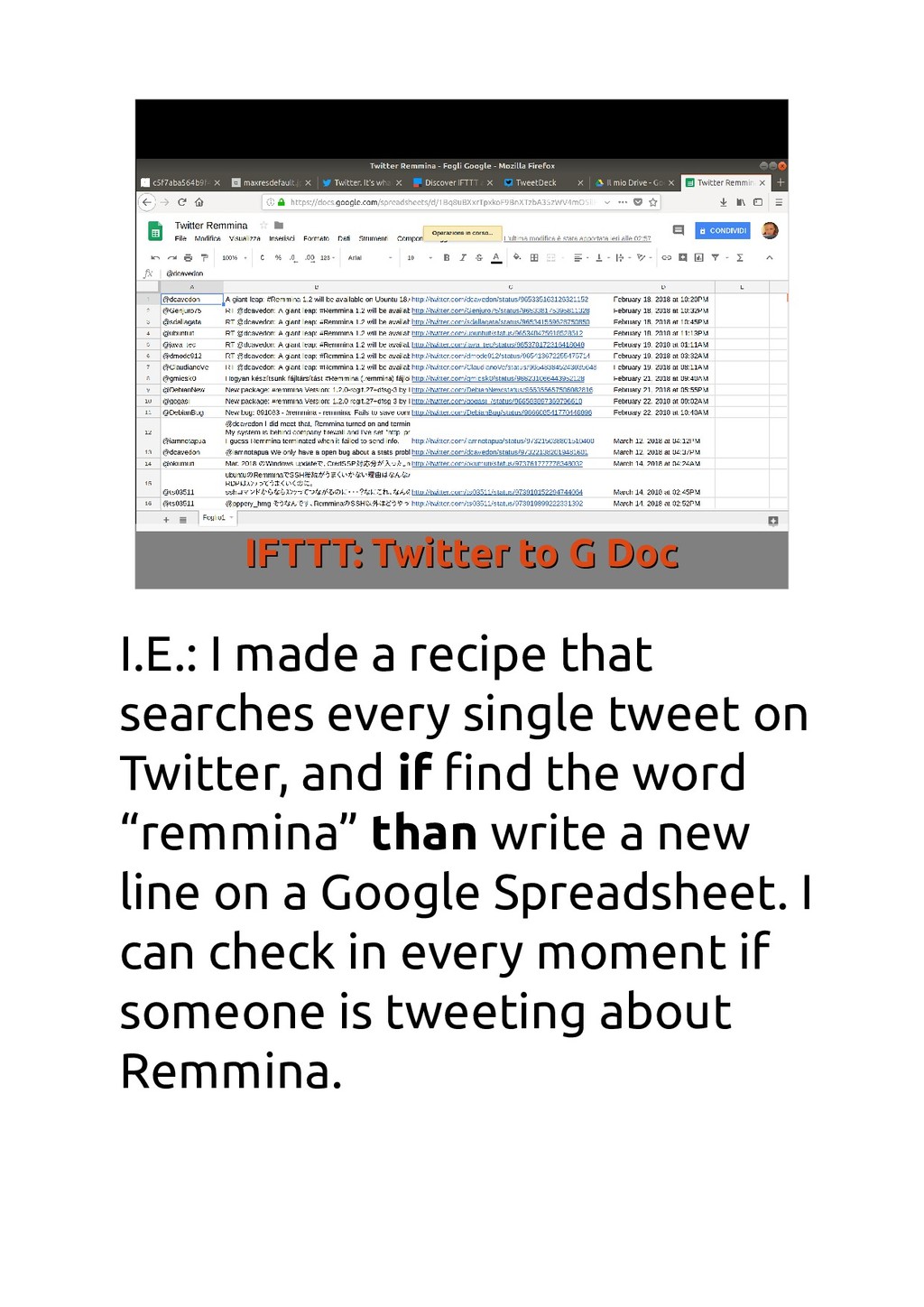
IFTTT lets you to create recipes, made of the simple construct “if this … than that ...”, using every single web service on the internet (Facebook, Twitter, Gmail, Evernote, Google Drive, everything else!)
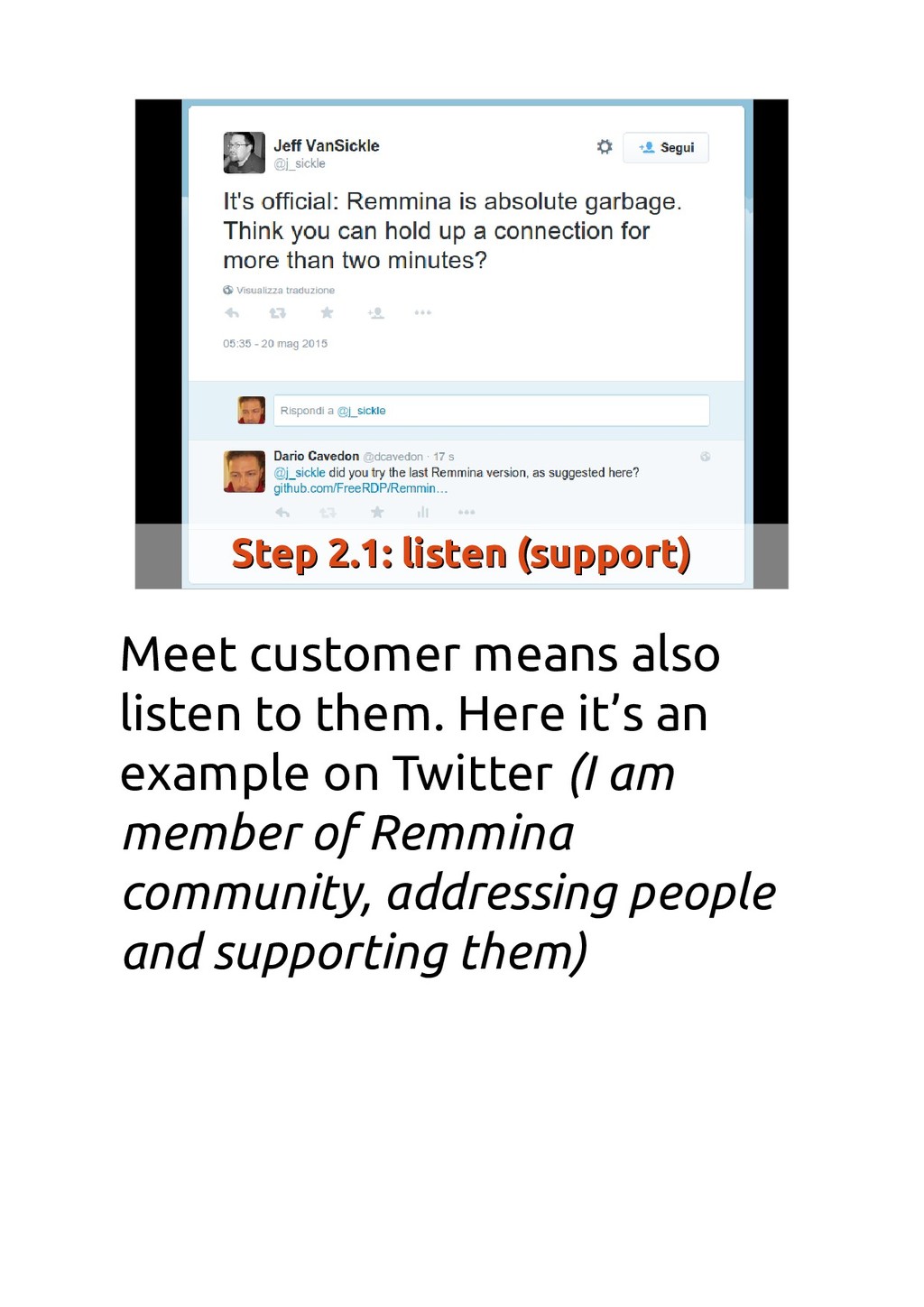
I.E.: I made a recipe that searches every single tweet on Twitter, and if find the word “remmina” than write a new line on a Google Spreadsheet. I can check in every moment if someone is tweeting about Remmina.
April 28th 2018 Dario Cavedon Dario Cavedon [email protected][email protected] Credits – bibliography : Block notes https://flic.kr/p/RmSmB1 Big Ben https://flic.kr/p/9Xhsqu Social media strategy: https://blog.bufferapp.com/social-media-strategy


 teamlab
 carta_engineering
 keeg
 kentapapa
 ishikawa_satoru
 nealle
 pfn
 jozono
 gionn
 maimyyym
 shuta13
 oikon48
 aleyda
 lara
 smashingmag
 jacobian
 irinanazarova
 minecr
 tessaabrams
 lindahogenes
 eileencodes
 caitiem20
 samlambert
 keavy