and have an implicit meaning. ➢ Data can be anything such as : name, image ,sound etc. ➢ E.g “Mohammad” , “20”, “student” is a data. ➢ When data is processed, its converted into a meaningful form , its known as information. 02/08/2016 2
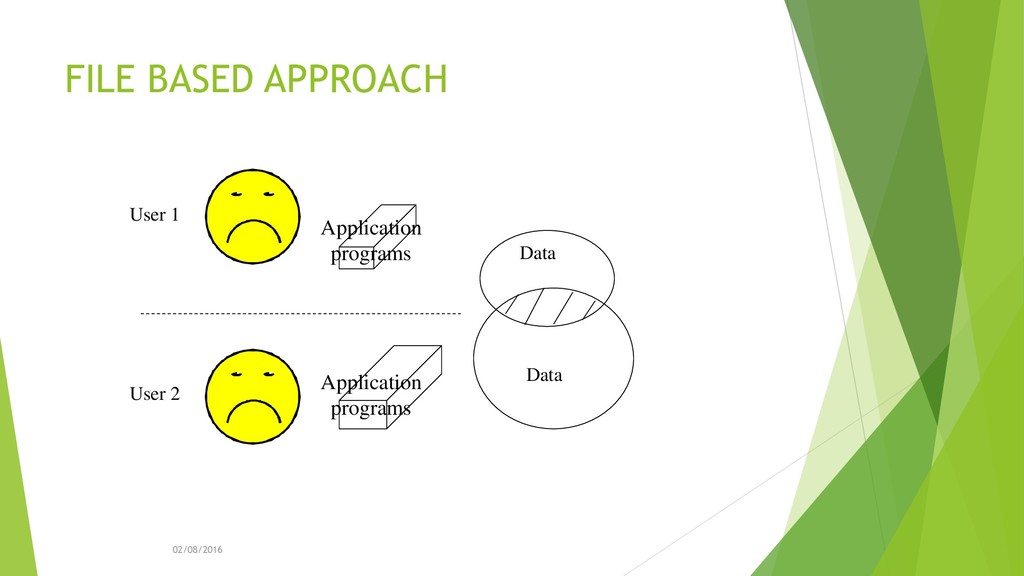
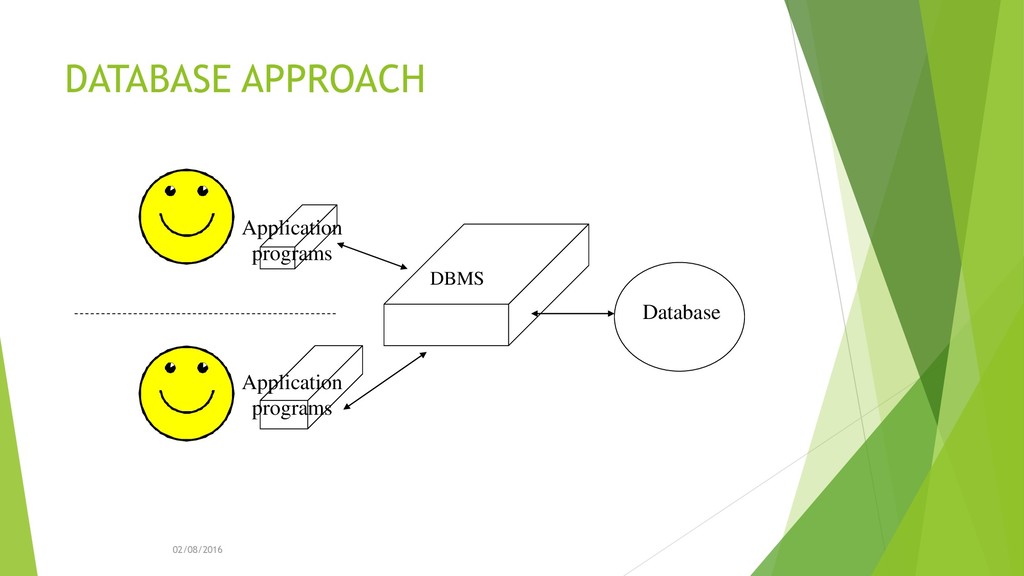
manage data File-based approach: An approach that utilizes a collection of application programs which performs services to end-users (e.g. Reports). Each program defines and manages its own data. Database approach: An approach that data is collected and manipulated using specific software called Database Management System, and many programs share this data. 02/08/2016 3
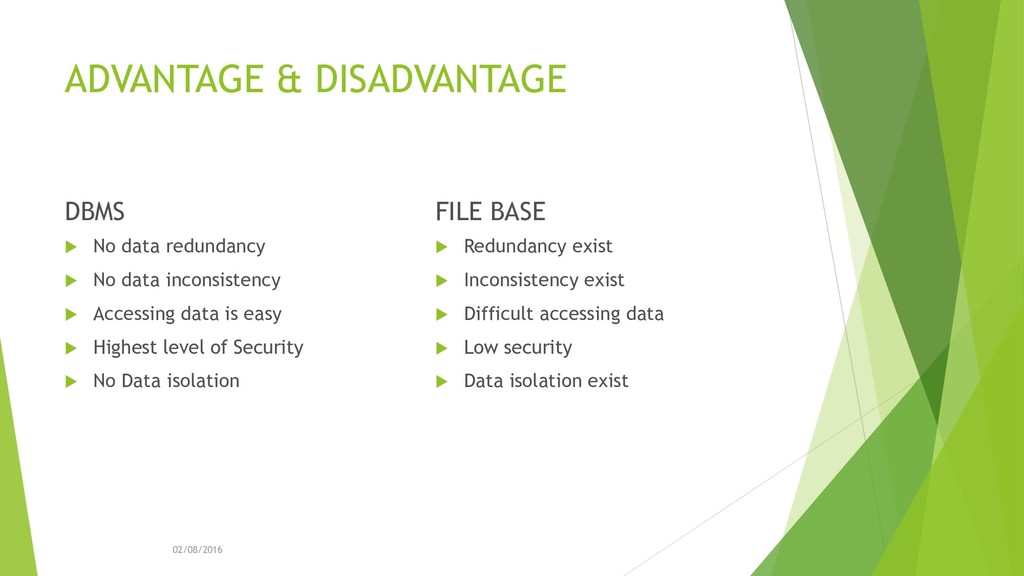
data inconsistency Accessing data is easy Highest level of Security No Data isolation FILE BASE Redundancy exist Inconsistency exist Difficult accessing data Low security Data isolation exist 02/08/2016 6
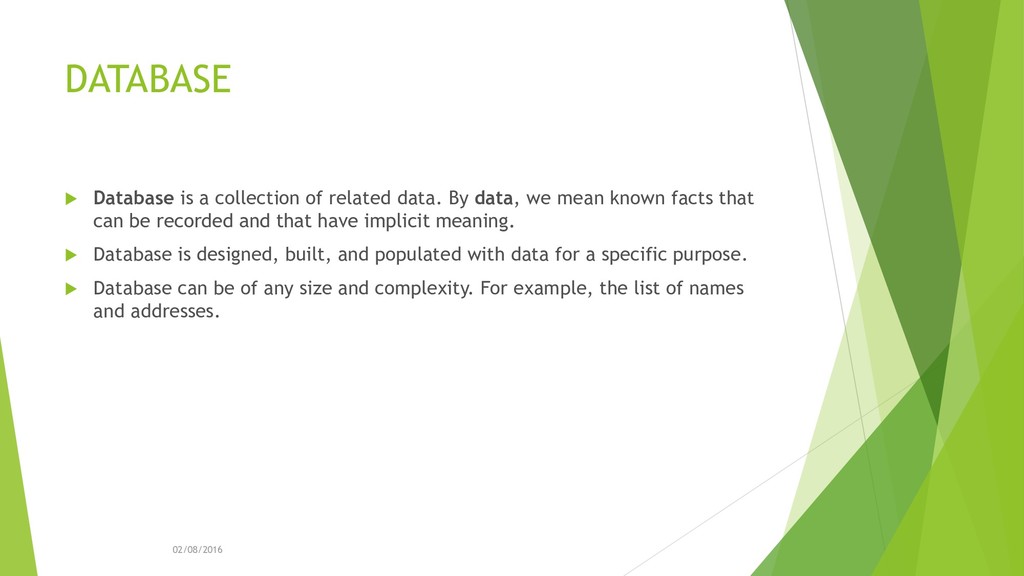
data, we mean known facts that can be recorded and that have implicit meaning. Database is designed, built, and populated with data for a specific purpose. Database can be of any size and complexity. For example, the list of names and addresses. 02/08/2016 7
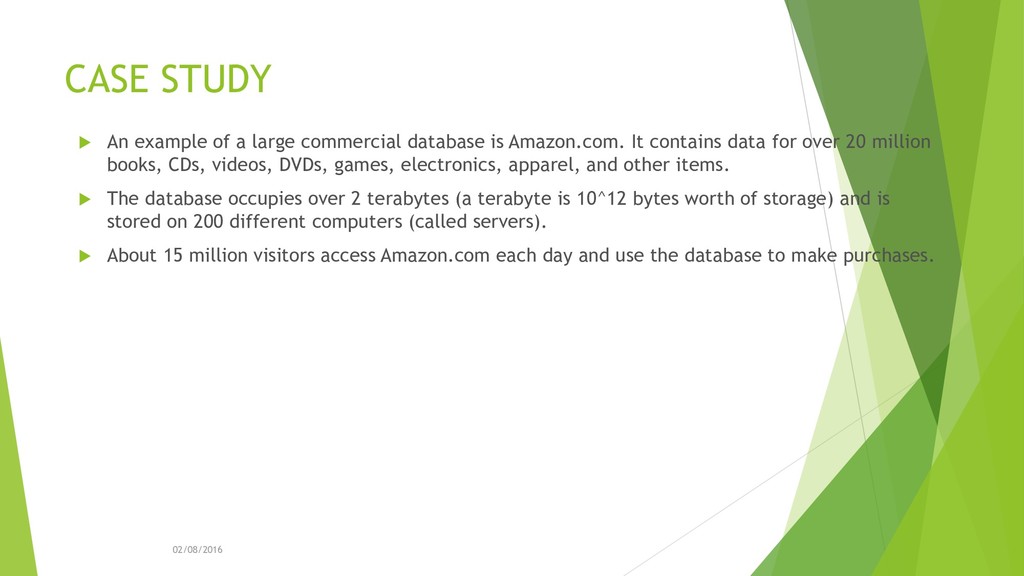
is Amazon.com. It contains data for over 20 million books, CDs, videos, DVDs, games, electronics, apparel, and other items. The database occupies over 2 terabytes (a terabyte is 10^12 bytes worth of storage) and is stored on 200 different computers (called servers). About 15 million visitors access Amazon.com each day and use the database to make purchases. 02/08/2016 8
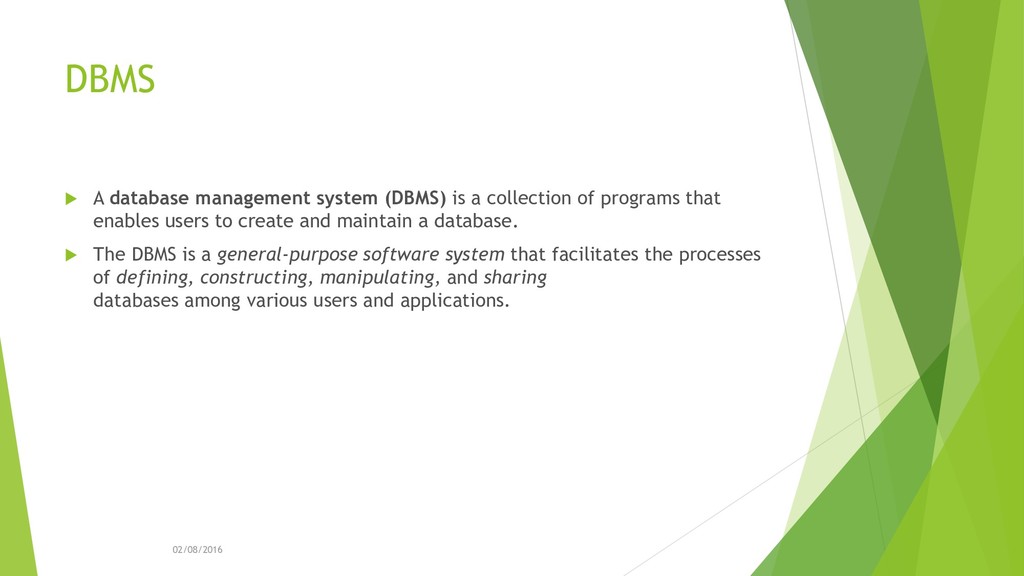
of programs that enables users to create and maintain a database. The DBMS is a general-purpose software system that facilitates the processes of defining, constructing, manipulating, and sharing databases among various users and applications. 02/08/2016 9
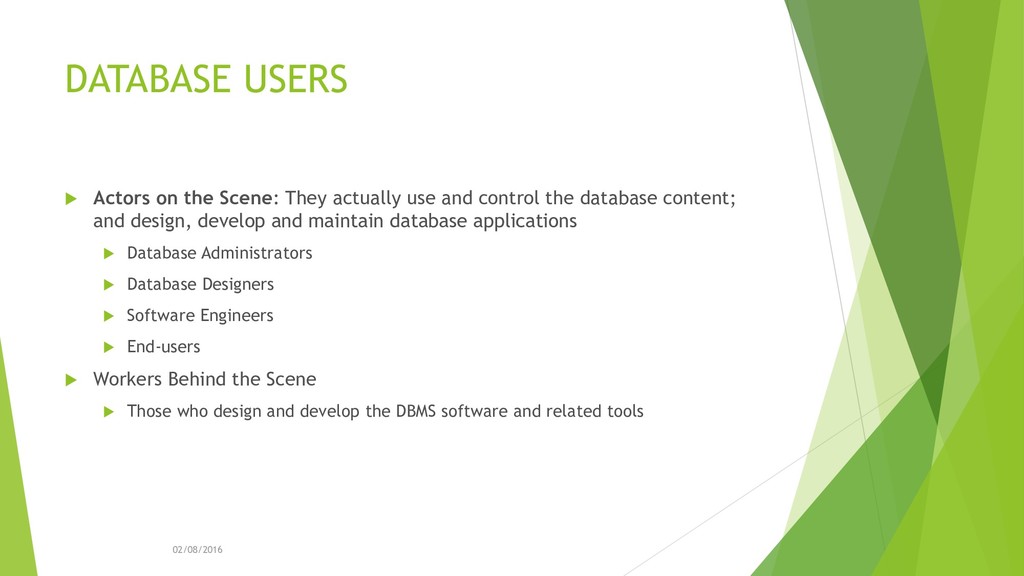
and control the database content; and design, develop and maintain database applications Database Administrators Database Designers Software Engineers End-users Workers Behind the Scene Those who design and develop the DBMS software and related tools 02/08/2016 11
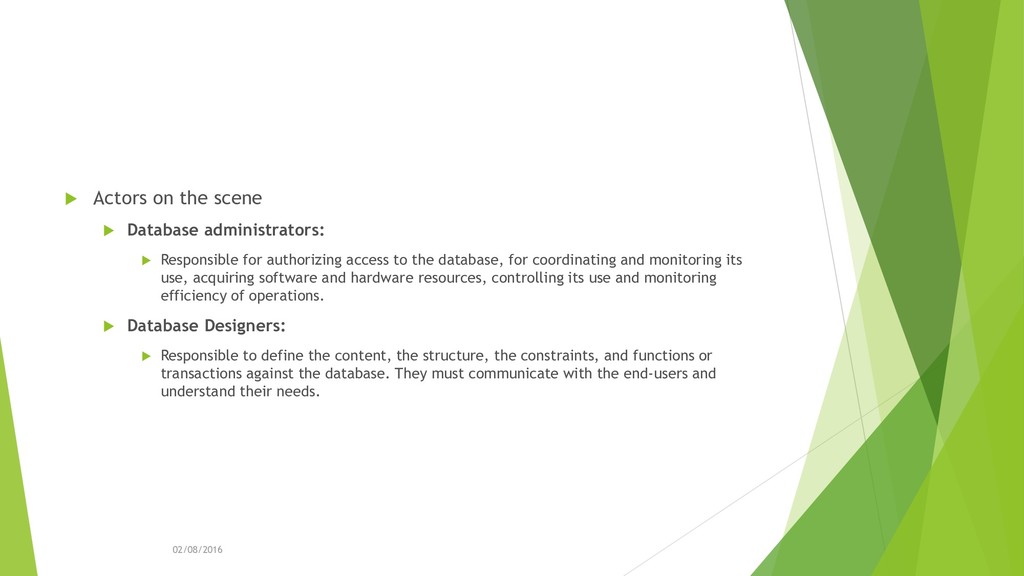
for authorizing access to the database, for coordinating and monitoring its use, acquiring software and hardware resources, controlling its use and monitoring efficiency of operations. Database Designers: Responsible to define the content, the structure, the constraints, and functions or transactions against the database. They must communicate with the end-users and understand their needs. 02/08/2016 12
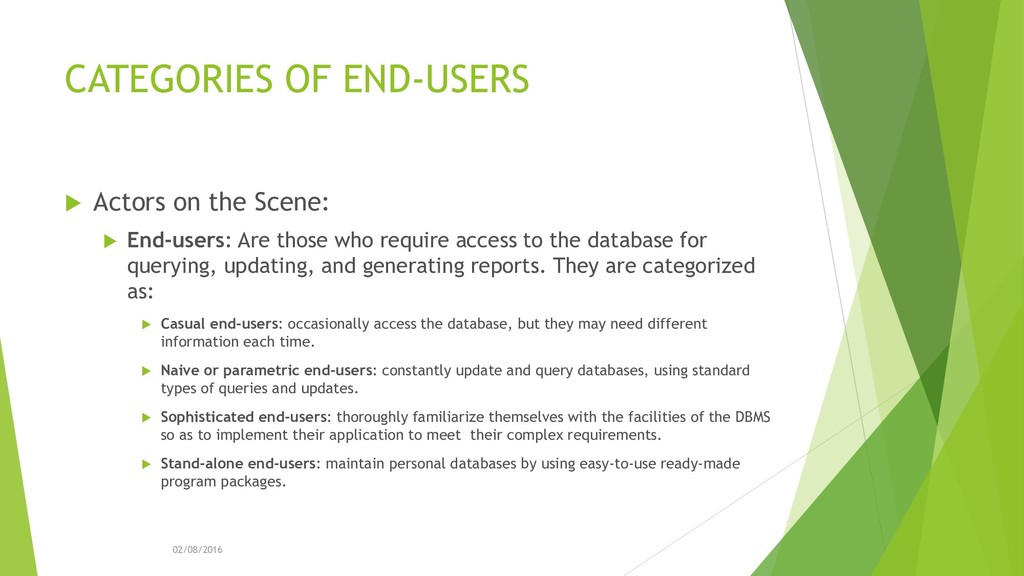
Are those who require access to the database for querying, updating, and generating reports. They are categorized as: Casual end-users: occasionally access the database, but they may need different information each time. Naive or parametric end-users: constantly update and query databases, using standard types of queries and updates. Sophisticated end-users: thoroughly familiarize themselves with the facilities of the DBMS so as to implement their application to meet their complex requirements. Stand-alone end-users: maintain personal databases by using easy-to-use ready-made program packages. 02/08/2016 13


 idattijo4code
 tmikov2023
 ___akari11
 texmeijin
 falcon8823
 akase244
 akit37
 dske104
 koic
 yumnumm
 marcoroth
 sorah
 naokihaba
 davidcarrasco
 mayunak
 jonoalderson
 csswizardry
 reverentgeek
 wayneb77
 rakko
 axbom
 holman
 inesmontani
 lindahogenes
 tamaranovitovic