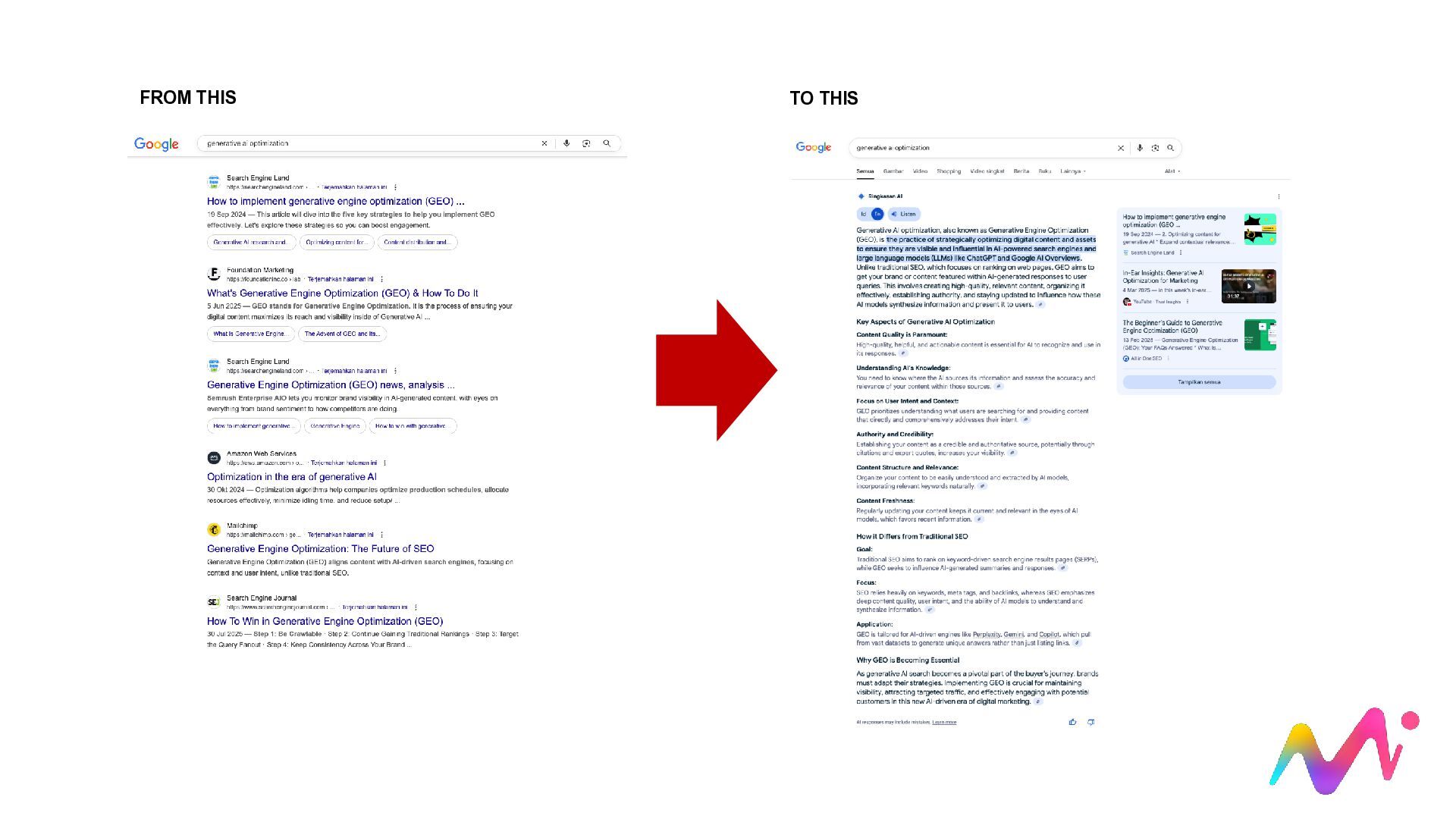
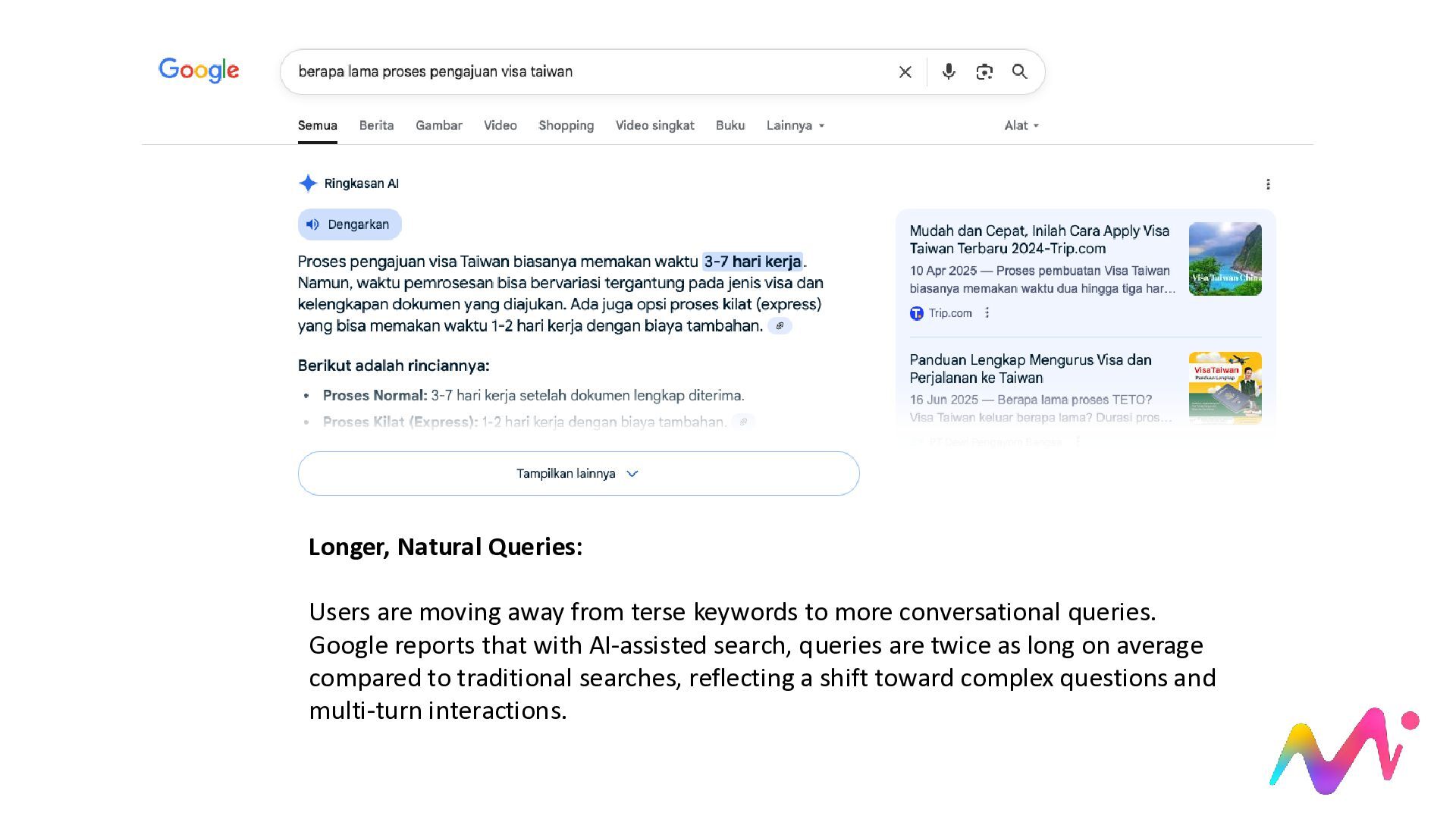
to more conversational queries. Google reports that with AI-assisted search, queries are twice as long on average compared to traditional searches, reflecting a shift toward complex questions and multi-turn interactions.
queries, often conducting single, isolated searches (e.g., “Sepatu lari”), usually with navigational or transactional purposes. The interaction generally concludes after the initial query and selection. • AI-Powered Search: Users engage in extended, conversational queries and follow-up questions, involving multi-turn interactions. Queries tend to be more detailed and task-driven (e.g., “Kasih saran dong sepatu lari yang bagus yang harganya di bawah 1jt”). The AI assistant maintains context throughout the dialogue, delivering a more dynamic and engaging search experience.
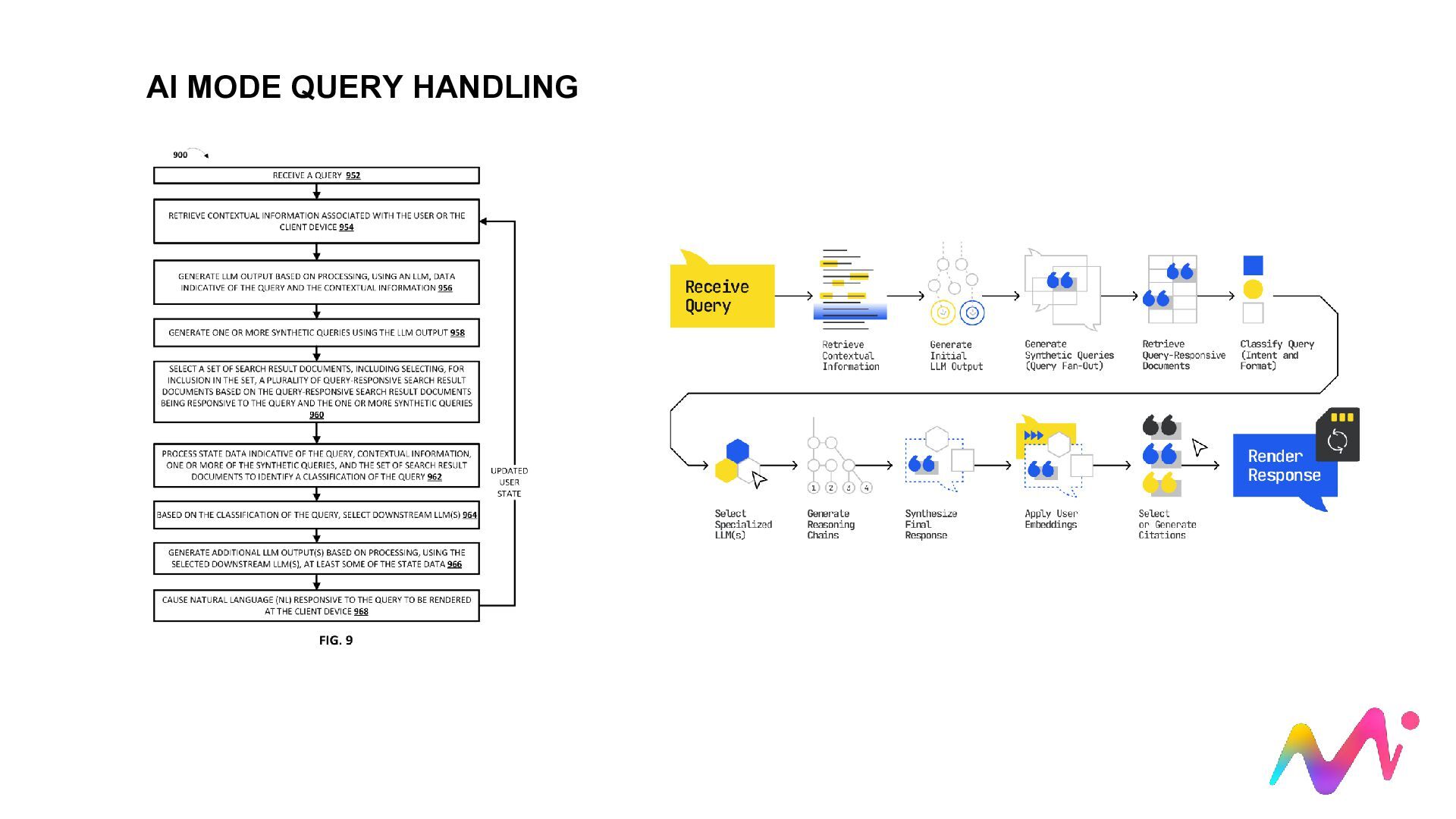
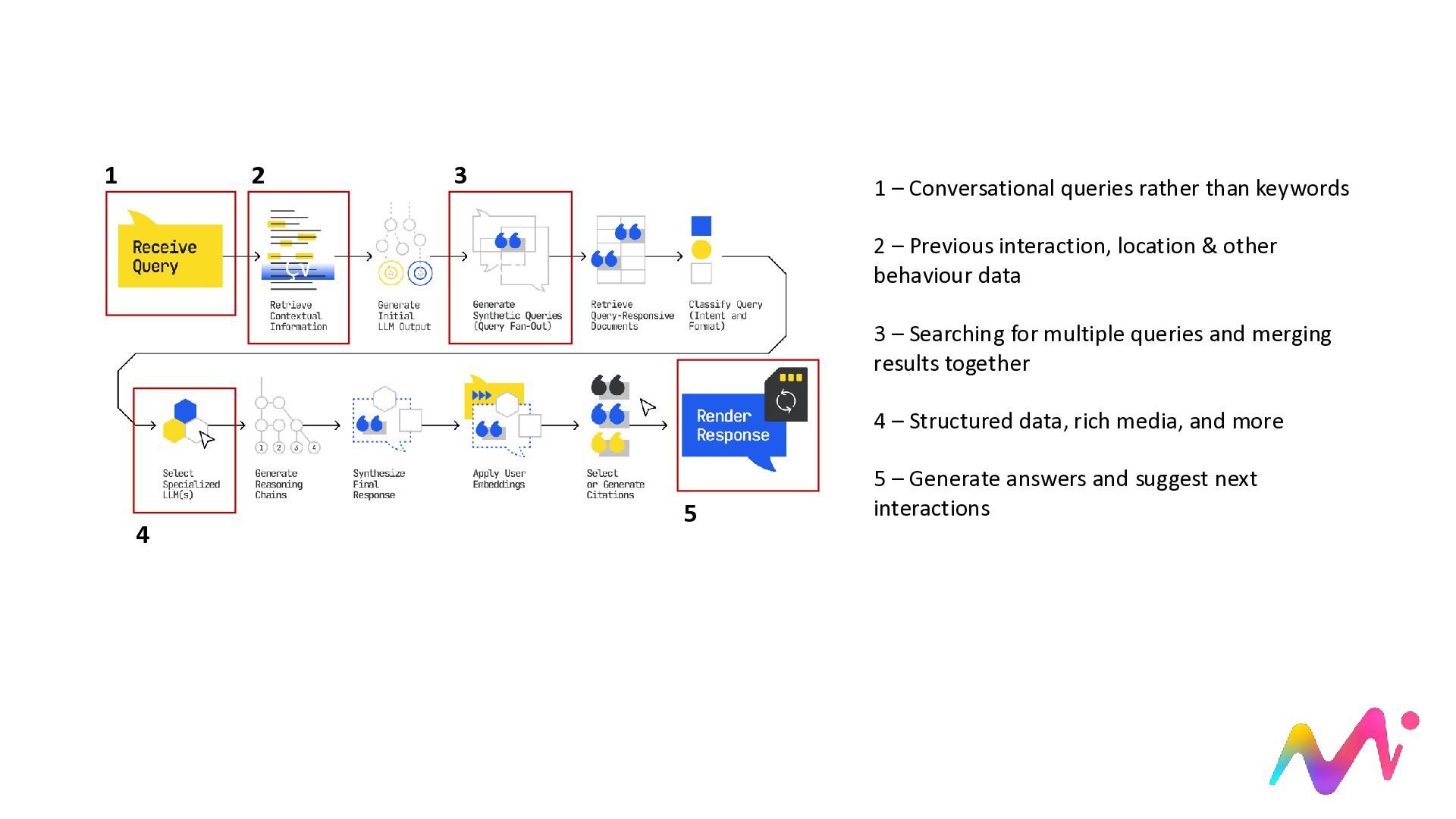
and returns results ranked by relevance to that one query. The user refines or tries a different query manually if needed. AI-POWERED SEARCH: The AI will often split or expand the query into multiple sub-queries automatically (a query fan-out technique). It searches various angles of the question in parallel and retrieves multiple snippets or pieces of information, then combines them into a single answer
Conversational queries rather than keywords 2 – Previous interaction, location & other behaviour data 3 – Searching for multiple queries and merging results together 4 – Structured data, rich media, and more 5 – Generate answers and suggest next interactions
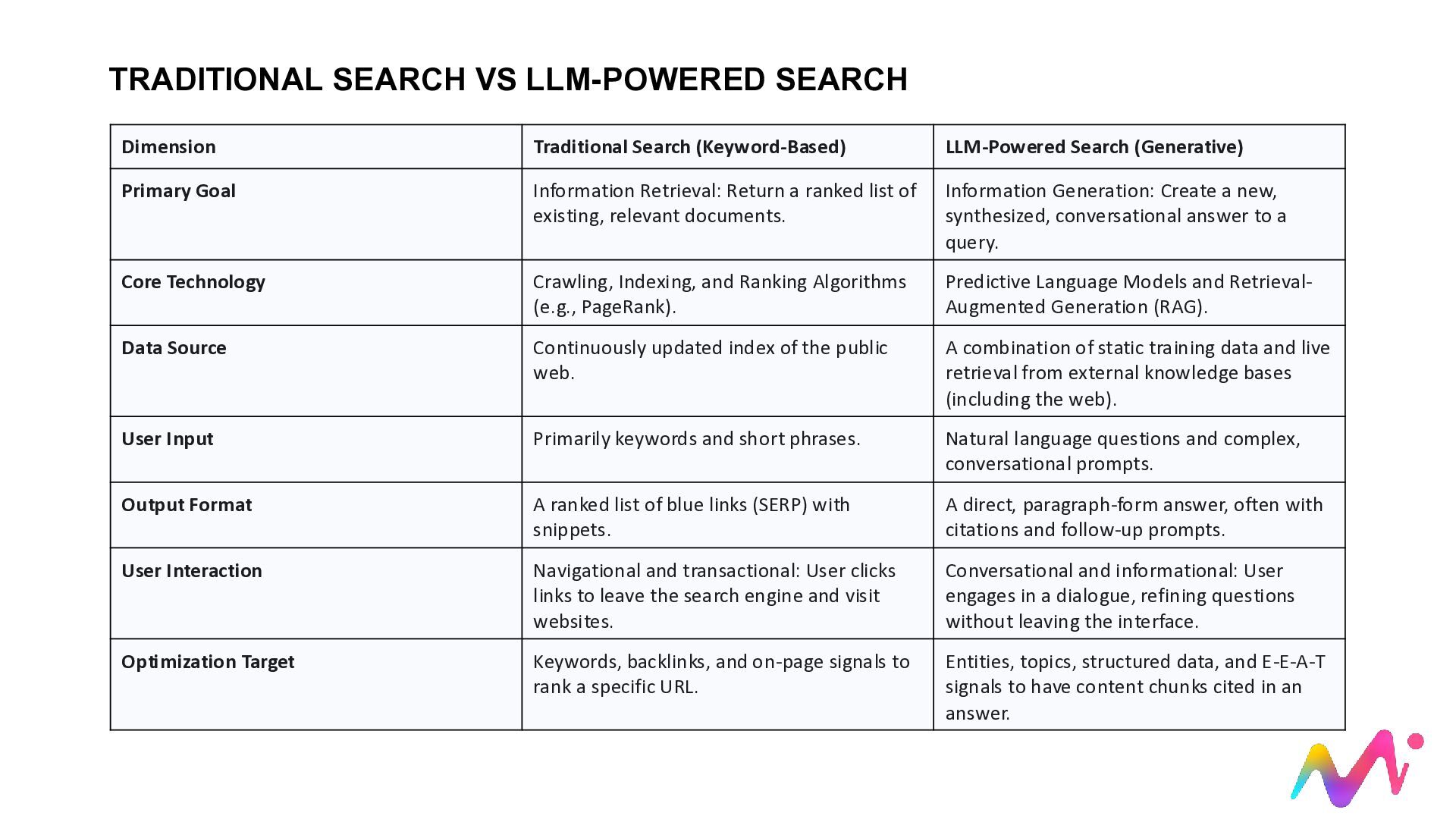
Search (Generative) Primary Goal Information Retrieval: Return a ranked list of existing, relevant documents. Information Generation: Create a new, synthesized, conversational answer to a query. Core Technology Crawling, Indexing, and Ranking Algorithms (e.g., PageRank). Predictive Language Models and Retrieval- Augmented Generation (RAG). Data Source Continuously updated index of the public web. A combination of static training data and live retrieval from external knowledge bases (including the web). User Input Primarily keywords and short phrases. Natural language questions and complex, conversational prompts. Output Format A ranked list of blue links (SERP) with snippets. A direct, paragraph-form answer, often with citations and follow-up prompts. User Interaction Navigational and transactional: User clicks links to leave the search engine and visit websites. Conversational and informational: User engages in a dialogue, refining questions without leaving the interface. Optimization Target Keywords, backlinks, and on-page signals to rank a specific URL. Entities, topics, structured data, and E-E-A-T signals to have content chunks cited in an answer.
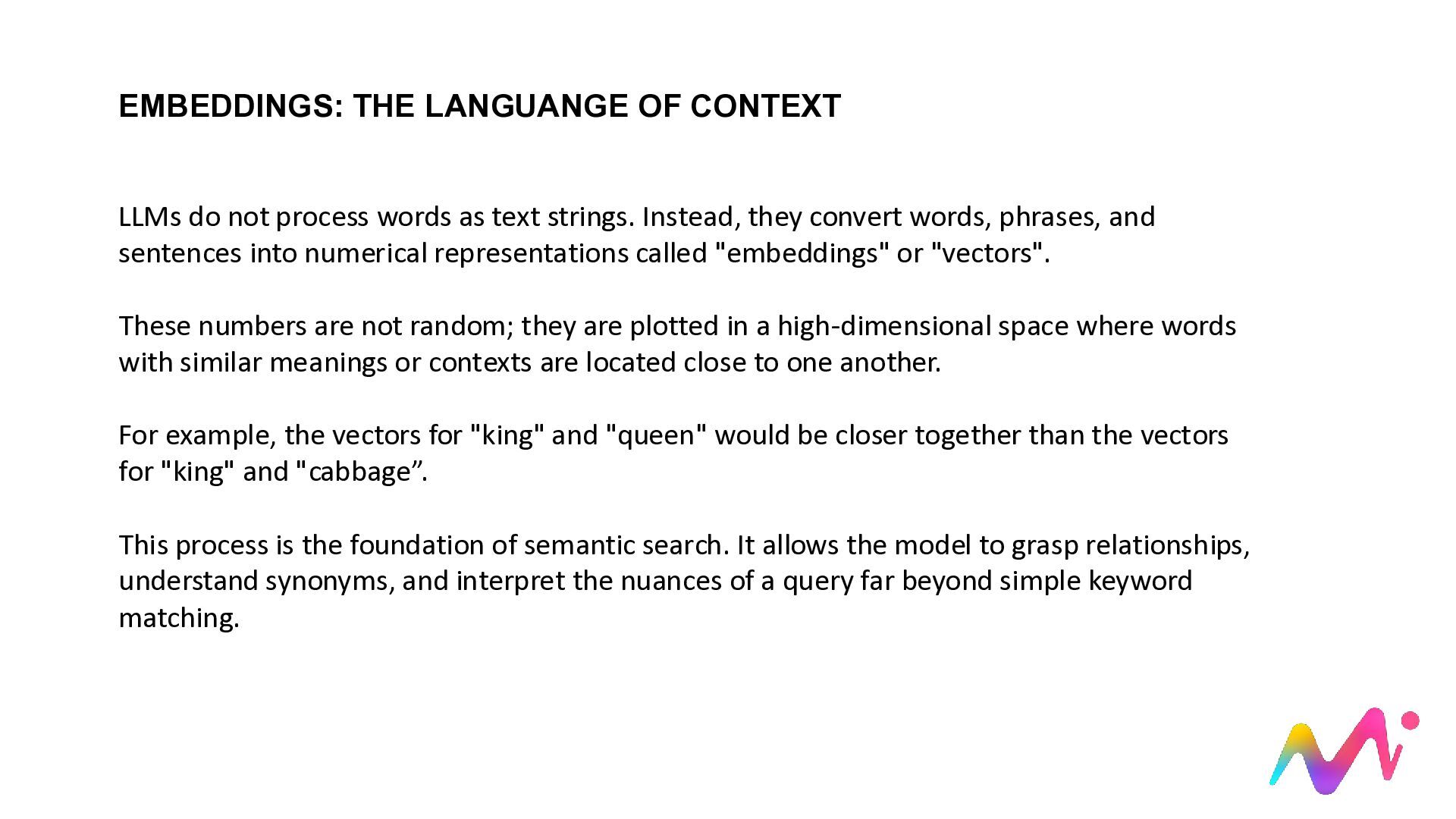
as text strings. Instead, they convert words, phrases, and sentences into numerical representations called "embeddings" or "vectors". These numbers are not random; they are plotted in a high-dimensional space where words with similar meanings or contexts are located close to one another. For example, the vectors for "king" and "queen" would be closer together than the vectors for "king" and "cabbage”. This process is the foundation of semantic search. It allows the model to grasp relationships, understand synonyms, and interpret the nuances of a query far beyond simple keyword matching.
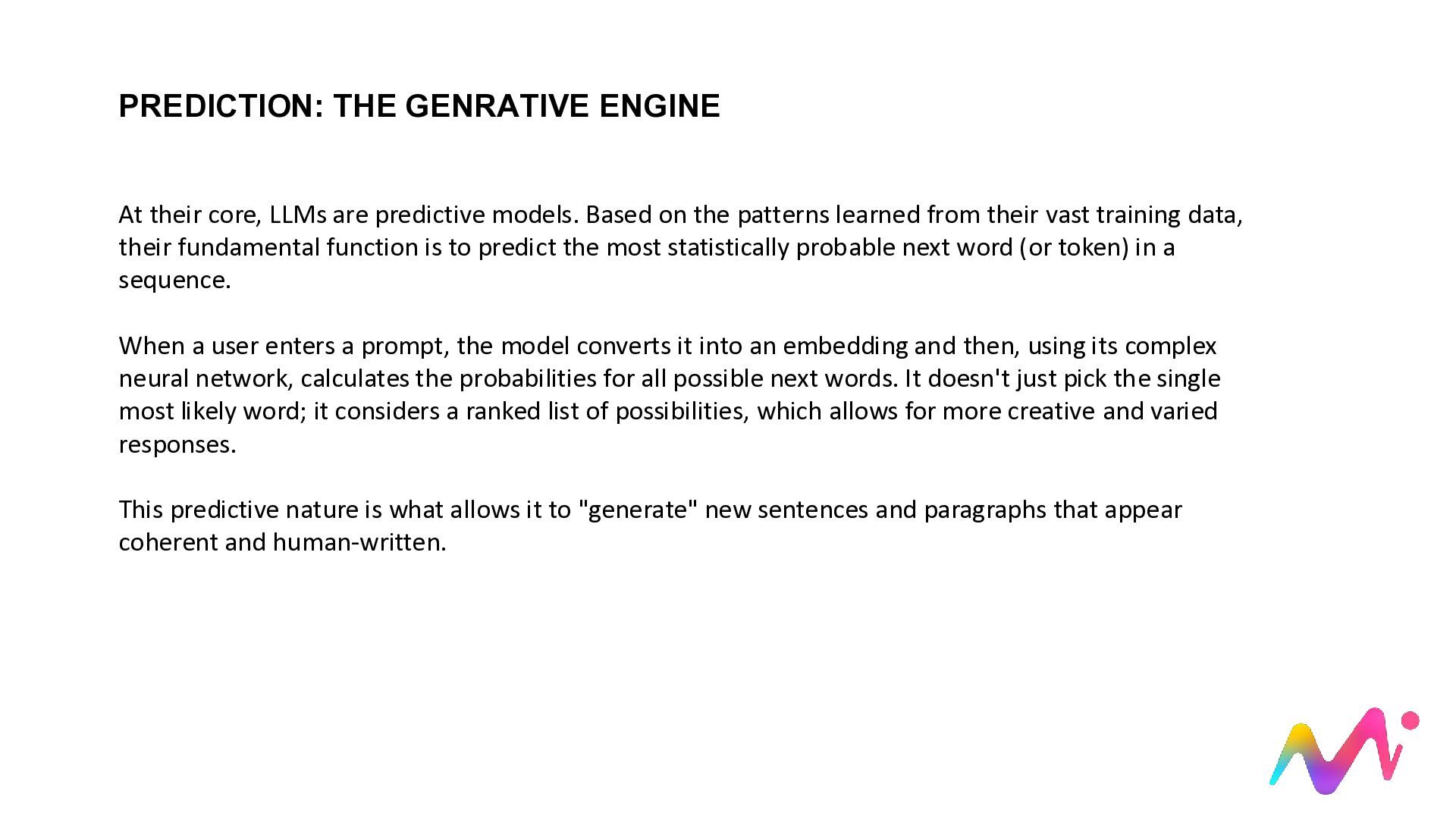
models. Based on the patterns learned from their vast training data, their fundamental function is to predict the most statistically probable next word (or token) in a sequence. When a user enters a prompt, the model converts it into an embedding and then, using its complex neural network, calculates the probabilities for all possible next words. It doesn't just pick the single most likely word; it considers a ranked list of possibilities, which allows for more creative and varied responses. This predictive nature is what allows it to "generate" new sentences and paragraphs that appear coherent and human-written.
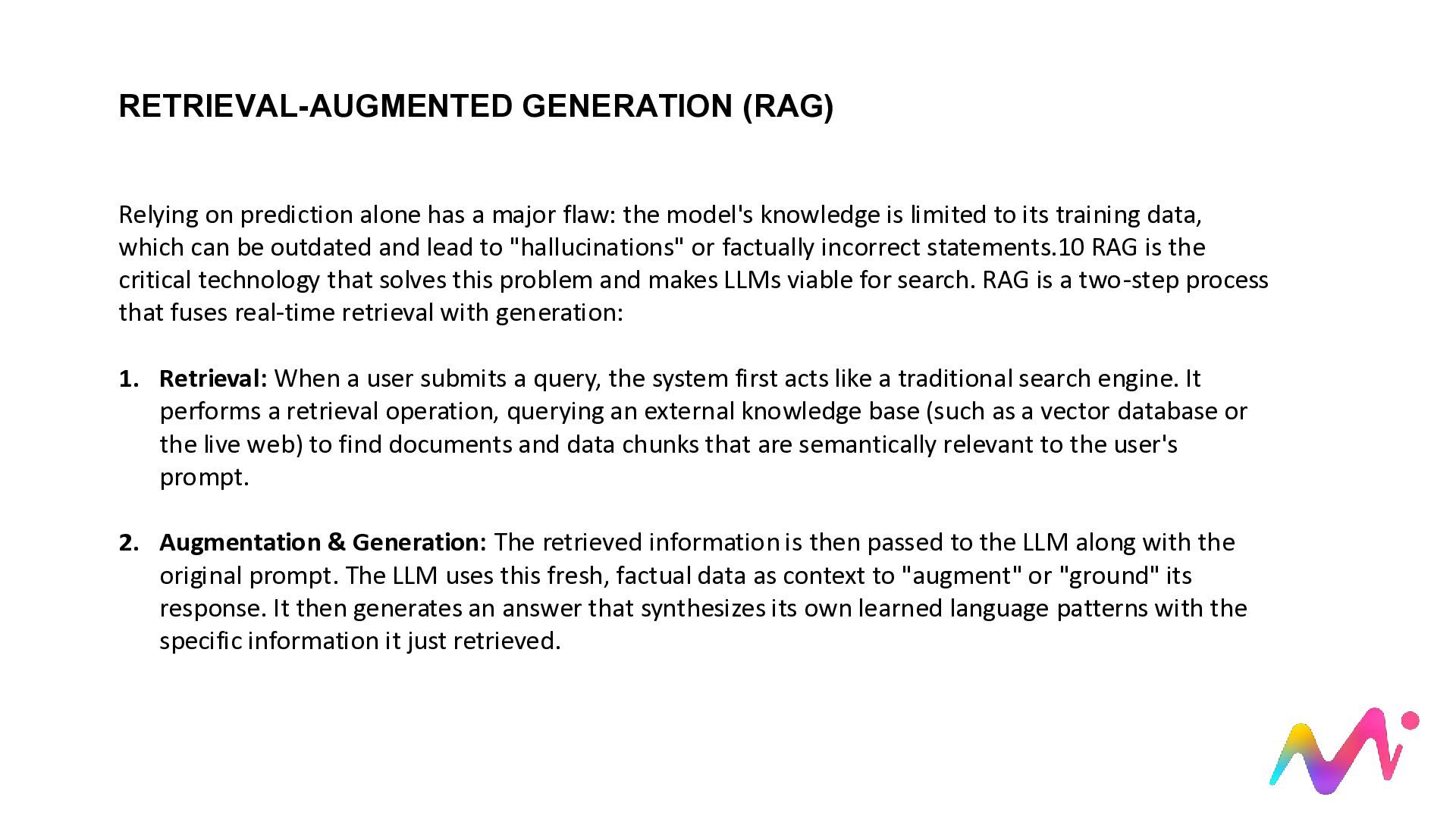
flaw: the model's knowledge is limited to its training data, which can be outdated and lead to "hallucinations" or factually incorrect statements.10 RAG is the critical technology that solves this problem and makes LLMs viable for search. RAG is a two-step process that fuses real-time retrieval with generation: 1. Retrieval: When a user submits a query, the system first acts like a traditional search engine. It performs a retrieval operation, querying an external knowledge base (such as a vector database or the live web) to find documents and data chunks that are semantically relevant to the user's prompt. 2. Augmentation & Generation: The retrieved information is then passed to the LLM along with the original prompt. The LLM uses this fresh, factual data as context to "augment" or "ground" its response. It then generates an answer that synthesizes its own learned language patterns with the specific information it just retrieved.
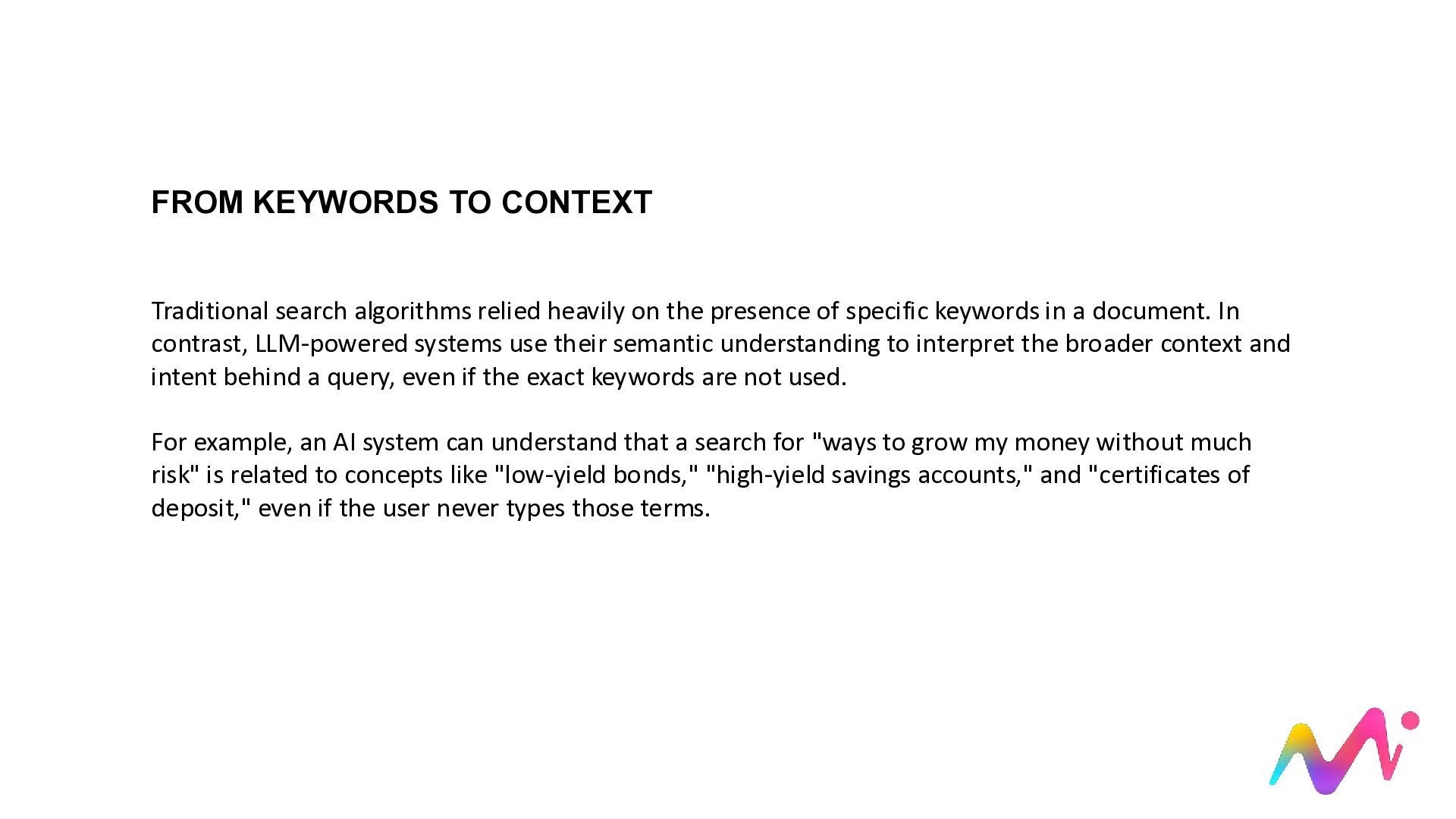
the presence of specific keywords in a document. In contrast, LLM-powered systems use their semantic understanding to interpret the broader context and intent behind a query, even if the exact keywords are not used. For example, an AI system can understand that a search for "ways to grow my money without much risk" is related to concepts like "low-yield bonds," "high-yield savings accounts," and "certificates of deposit," even if the user never types those terms.
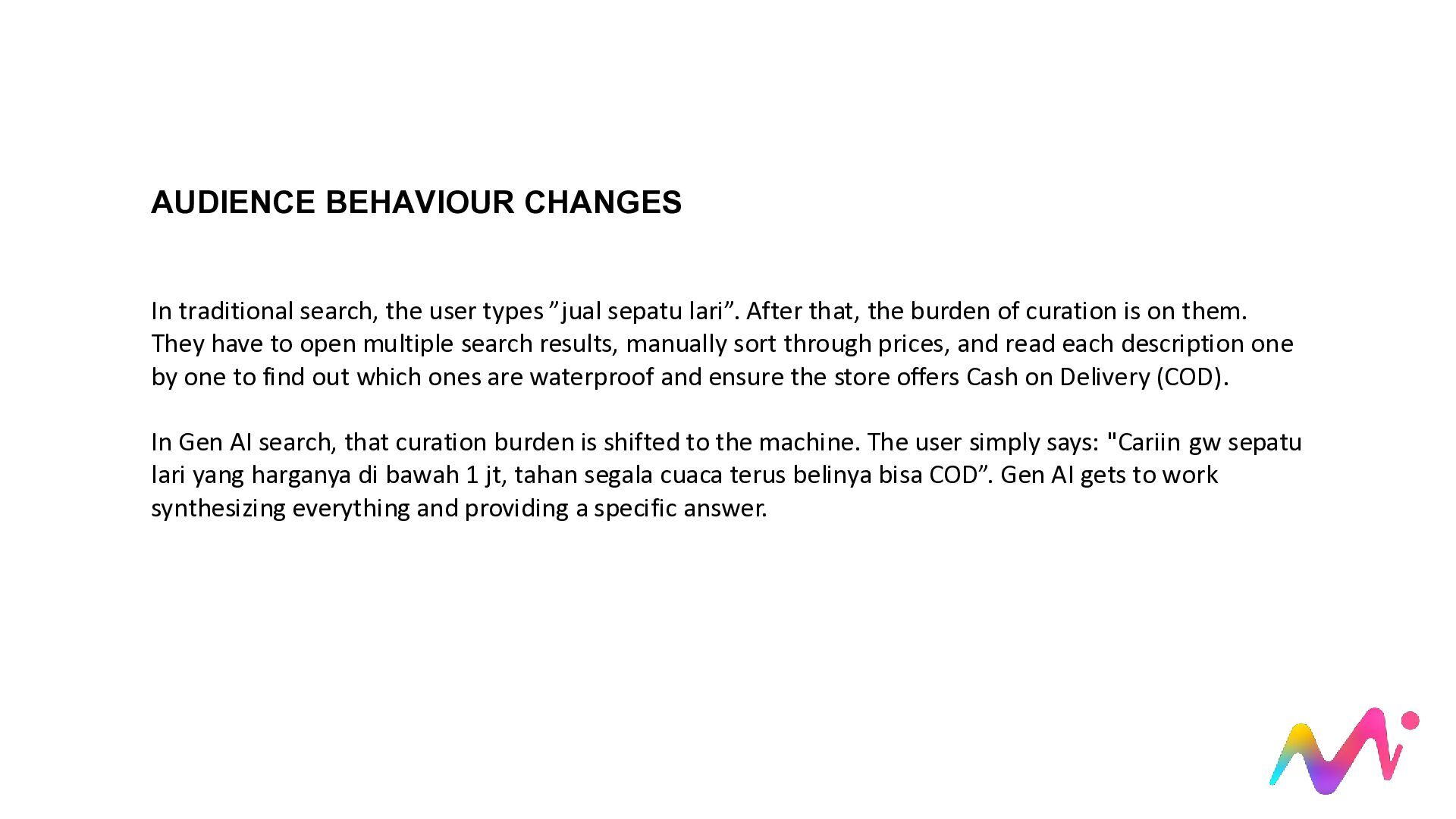
sepatu lari”. After that, the burden of curation is on them. They have to open multiple search results, manually sort through prices, and read each description one by one to find out which ones are waterproof and ensure the store offers Cash on Delivery (COD). In Gen AI search, that curation burden is shifted to the machine. The user simply says: "Cariin gw sepatu lari yang harganya di bawah 1 jt, tahan segala cuaca terus belinya bisa COD”. Gen AI gets to work synthesizing everything and providing a specific answer.
They can maintain context across multiple turns of a dialogue, allowing users to ask follow-up questions to refine their search without starting over. A user can ask, "What are the best hiking boots for wide feet?" and follow up with, "Which of those are waterproof and under $200?”. The AI understands that "those" refers to the boots from the previous query. This transforms search from a series of discrete transactions into a continuous, exploratory conversation.
longer the entire webpage. The RAG process often breaks down source documents into smaller, semantically relevant "chunks" of information. The LLM then selects the most relevant chunks from multiple sources to construct its answer. This means success is less about having the single best page on a topic and more about having the most accurate, well-articulated, and easily extractable answer chunk for a specific aspect of that topic. This also makes content structure—using clear headings, bullet points, and Q&A formats—paramount, as it makes content more "chunkable" and thus more retrievable by AI systems. This evolution effectively transforms the role of SEO from webpage optimization to what could be described as "knowledge base curation”. A brand's website becomes a structured knowledge base that feeds these AI systems, and the job of the SEO is to ensure this knowledge is accurate, comprehensive, and, most importantly, machine-readable.
of direct, first-hand knowledge. For content creators, this means incorporating personal narratives, case studies, and unique, tangible evidence like photos or videos of them using a product or visiting a location. Expertise, Authoritativeness, and Trustworthiness: • Expertise is demonstrated by showcasing the creator's qualifications, credentials, or professional background in the subject. This can be achieved through detailed author bios with links to professional profiles like LinkedIn. • Authoritativeness is built over time by consistently publishing high-quality, original content and earning backlinks or mentions from other reputable websites and media outlets. • Finally, trustworthiness is a cumulative signal established through transparency about who is behind the content, a positive brand reputation, and adhering to ethical content practices.
are designed to find and cite unique facts and data. When a brand publishes original studies, quantitative reports, or data-driven case studies, it establishes itself as a unique, authoritative source that other platforms will want to reference. Lists and Tables Both readers and LLMs appreciate content that is easy to skim. The use of bullet points for key takeaways and comparison tables for features or pricing breaks down complex information into clean, digestible chunks that AI can easily pull from and cite. Step-by-Step How-to Guides This format is inherently structured and actionable, making it ideal for AI models to use for interactive answers or zero- click searches. Q&A and FAQ Pages This format directly mirrors the conversational nature of AI search platforms and is a highly effective tactic for gaining visibility. Providing short, clear answers to common questions is a key best practice for improving LLM visibility.
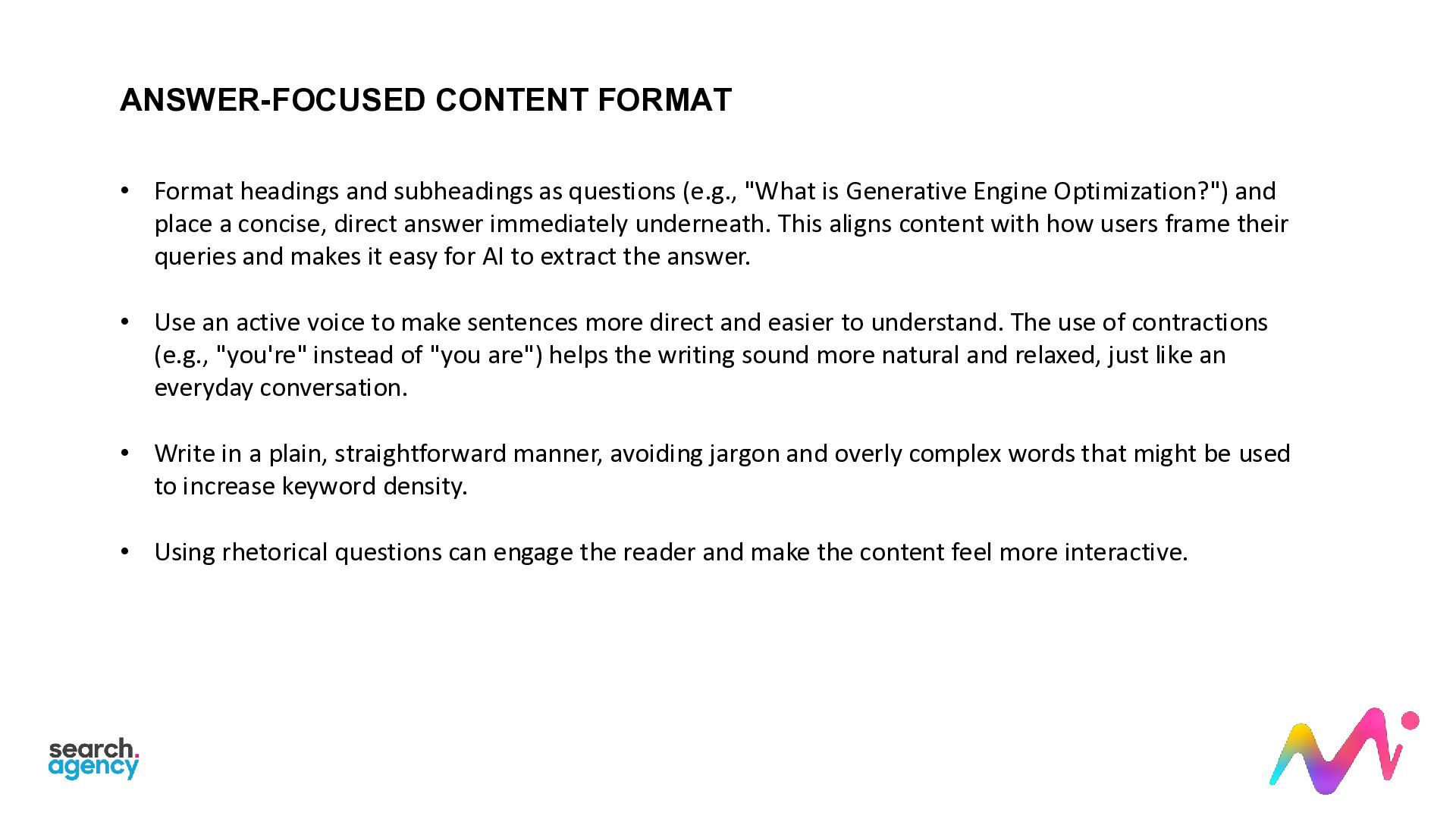
(e.g., "What is Generative Engine Optimization?") and place a concise, direct answer immediately underneath. This aligns content with how users frame their queries and makes it easy for AI to extract the answer. • Use an active voice to make sentences more direct and easier to understand. The use of contractions (e.g., "you're" instead of "you are") helps the writing sound more natural and relaxed, just like an everyday conversation. • Write in a plain, straightforward manner, avoiding jargon and overly complex words that might be used to increase keyword density. • Using rhetorical questions can engage the reader and make the content feel more interactive.
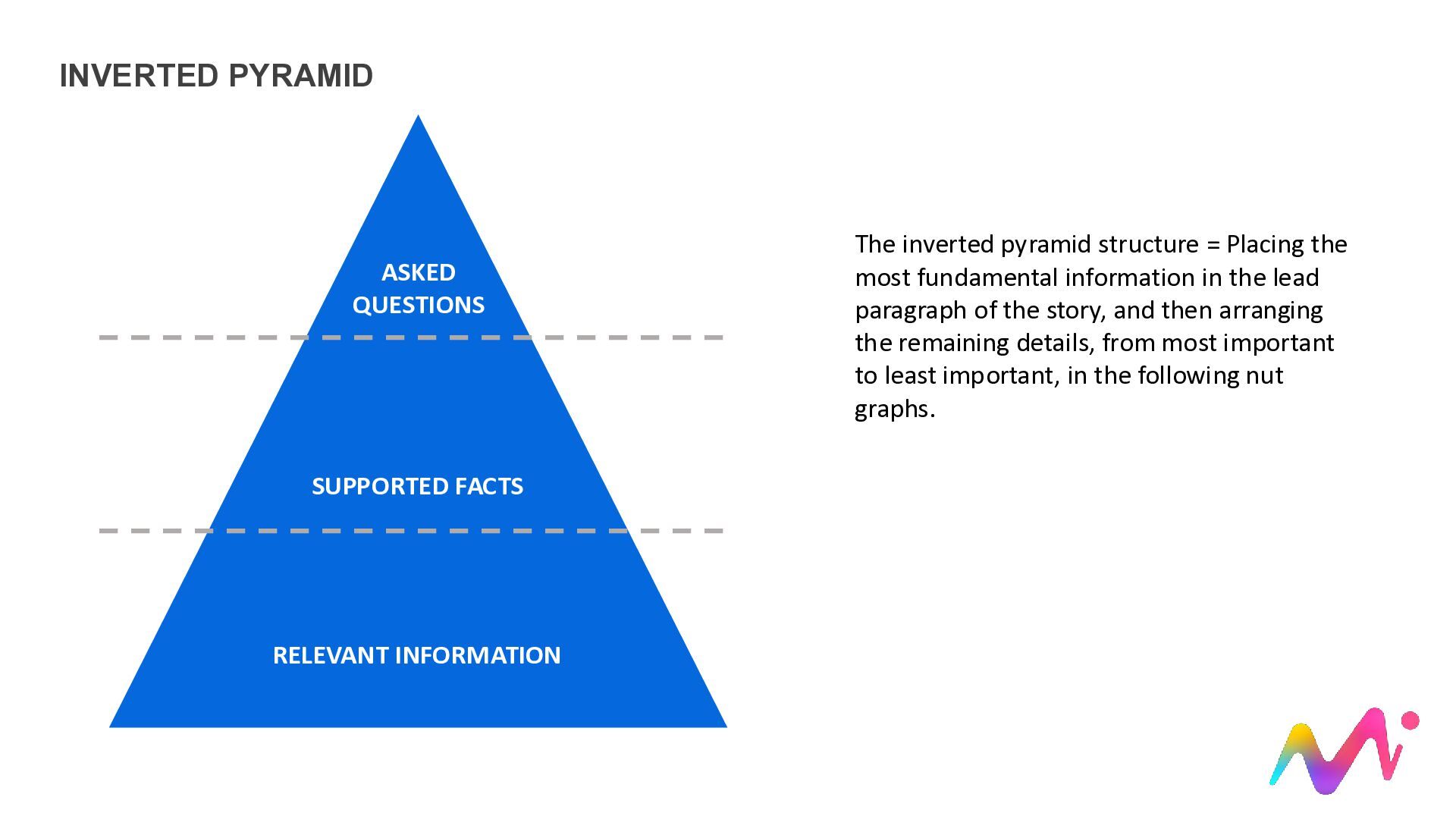
pyramid structure = Placing the most fundamental information in the lead paragraph of the story, and then arranging the remaining details, from most important to least important, in the following nut graphs.
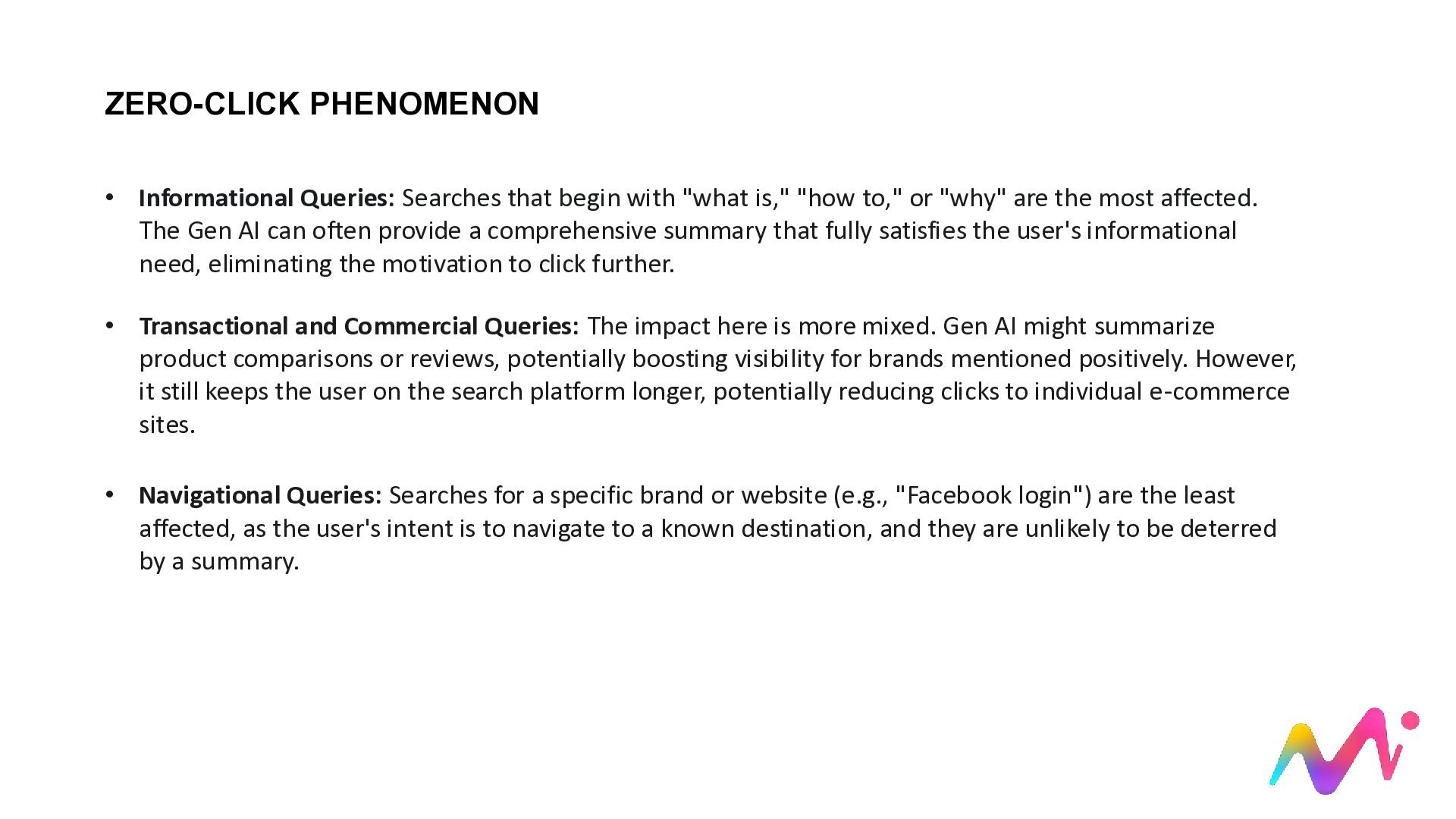
is," "how to," or "why" are the most affected. The Gen AI can often provide a comprehensive summary that fully satisfies the user's informational need, eliminating the motivation to click further. • Transactional and Commercial Queries: The impact here is more mixed. Gen AI might summarize product comparisons or reviews, potentially boosting visibility for brands mentioned positively. However, it still keeps the user on the search platform longer, potentially reducing clicks to individual e-commerce sites. • Navigational Queries: Searches for a specific brand or website (e.g., "Facebook login") are the least affected, as the user's intent is to navigate to a known destination, and they are unlikely to be deterred by a summary.
faces an existential threat. Global search referral traffic to the world's top publishers has dropped significantly, with some outlets seeing declines of 27% year-over-year. Major news sites like The New York Times and The Guardian have reported substantial losses in referral traffic, and many smaller, independent sites have been forced to shut down or completely reinvent their distribution models. • E-commerce: The shopping experience is also being transformed. GEN AI are integrating features from marketplace, providing detailed product snapshots, price comparisons, reviews, and even virtual try-on capabilities directly within the search results. This centralizes the product discovery and comparison phase on search platform, shifting the initial point of contact away from individual retail websites and potentially commoditizing brands that are not featured prominently in the AI-generated summaries.
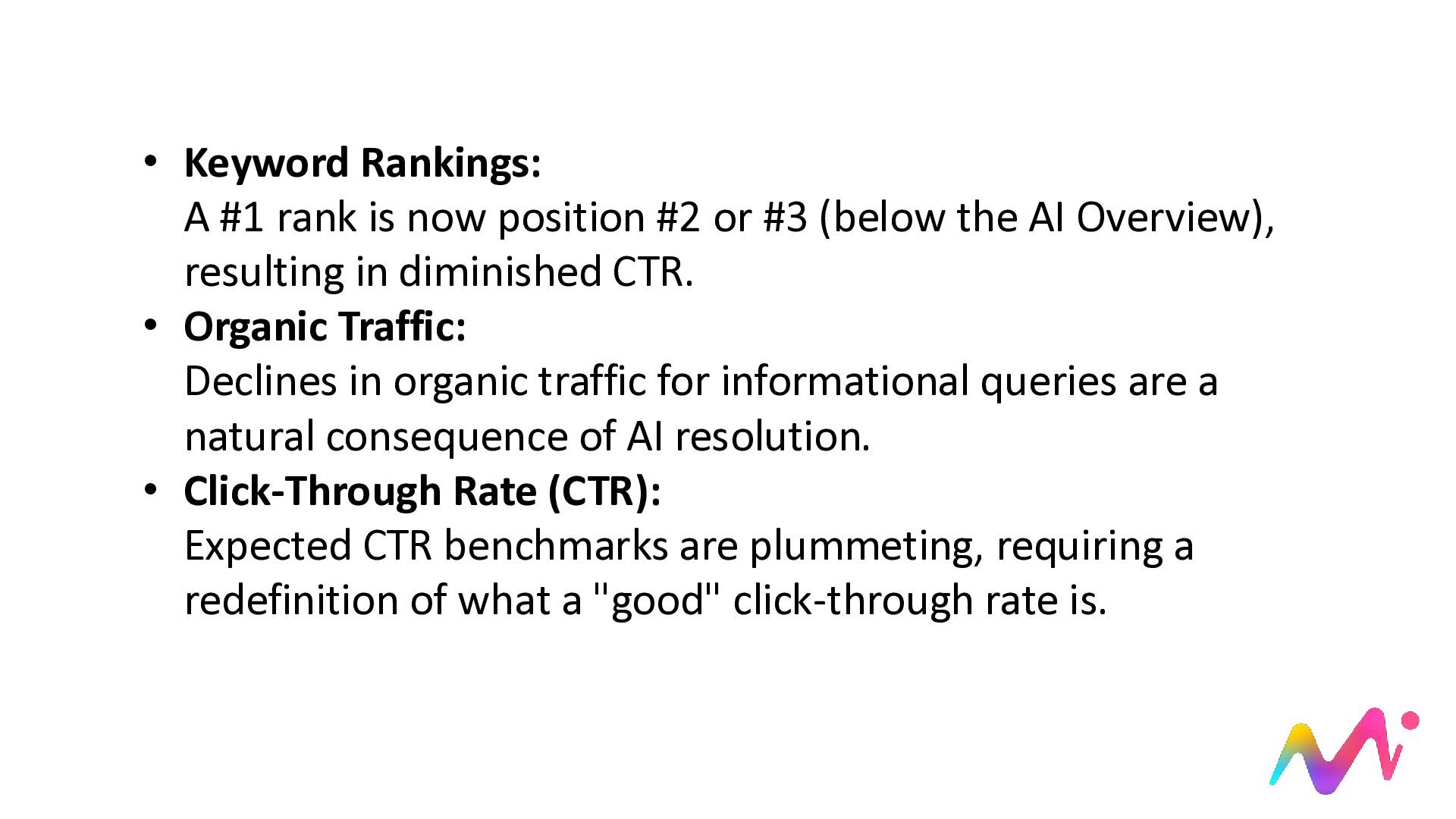
or #3 (below the AI Overview), resulting in diminished CTR. • Organic Traffic: Declines in organic traffic for informational queries are a natural consequence of AI resolution. • Click-Through Rate (CTR): Expected CTR benchmarks are plummeting, requiring a redefinition of what a "good" click-through rate is.
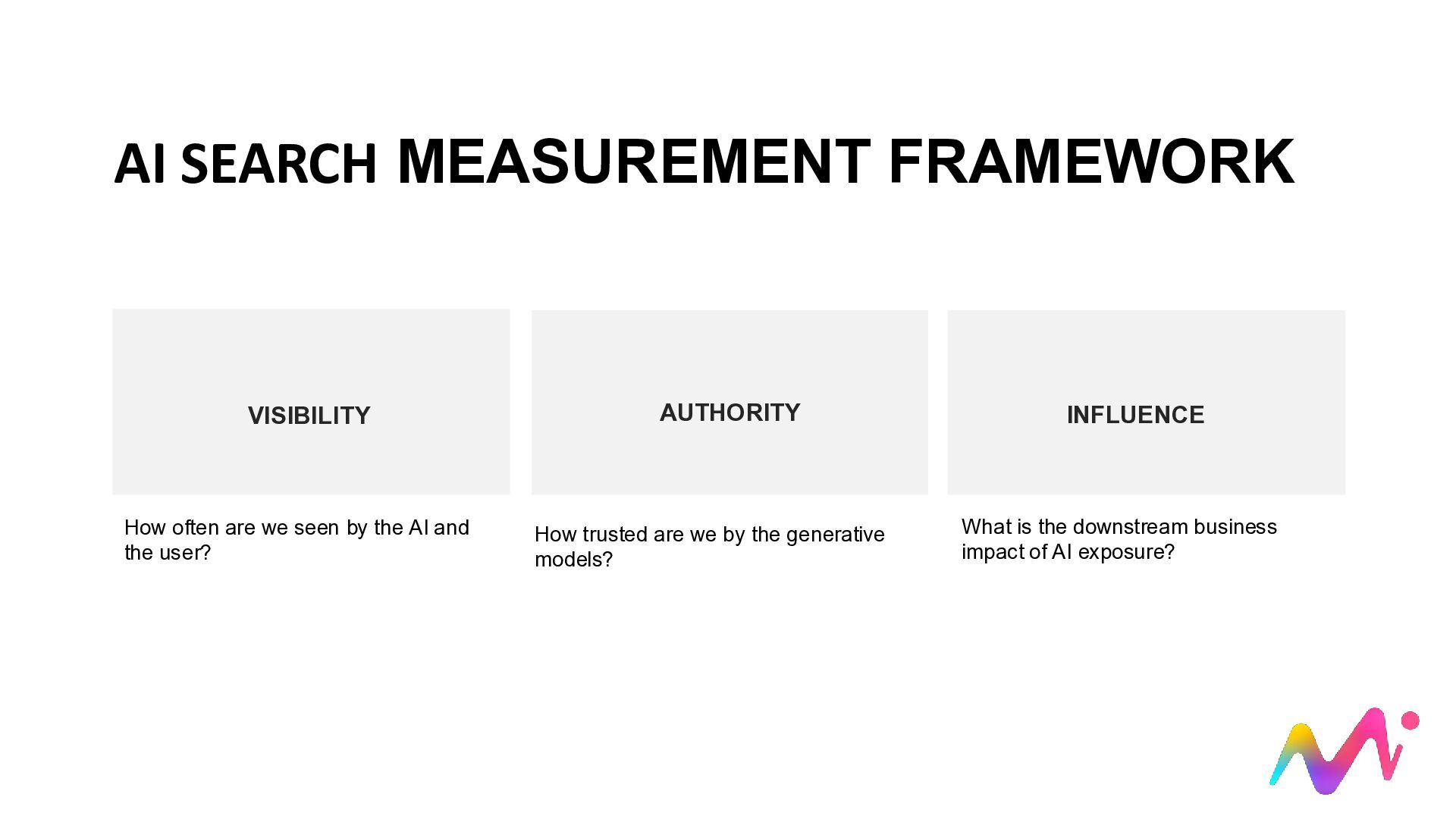
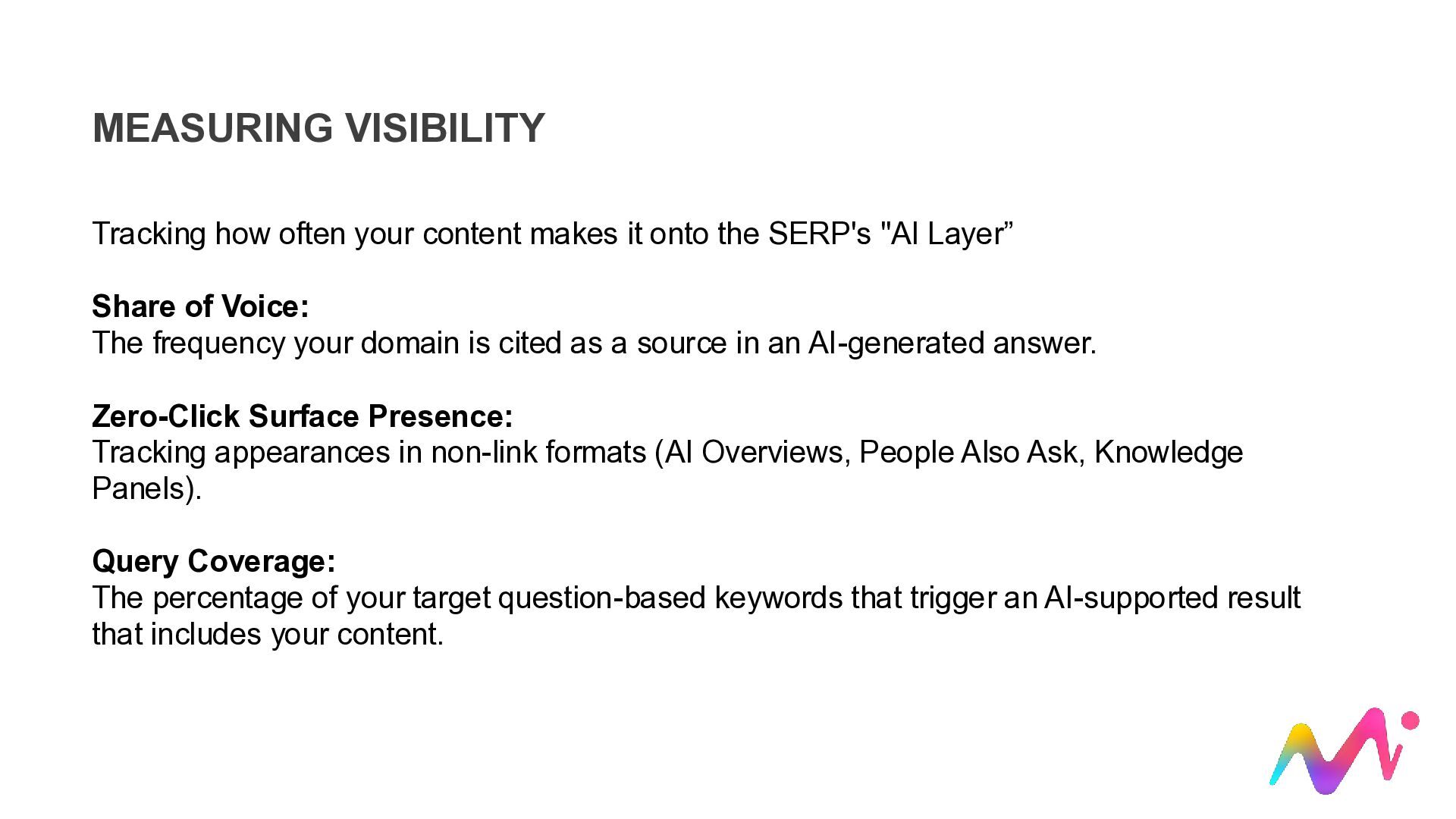
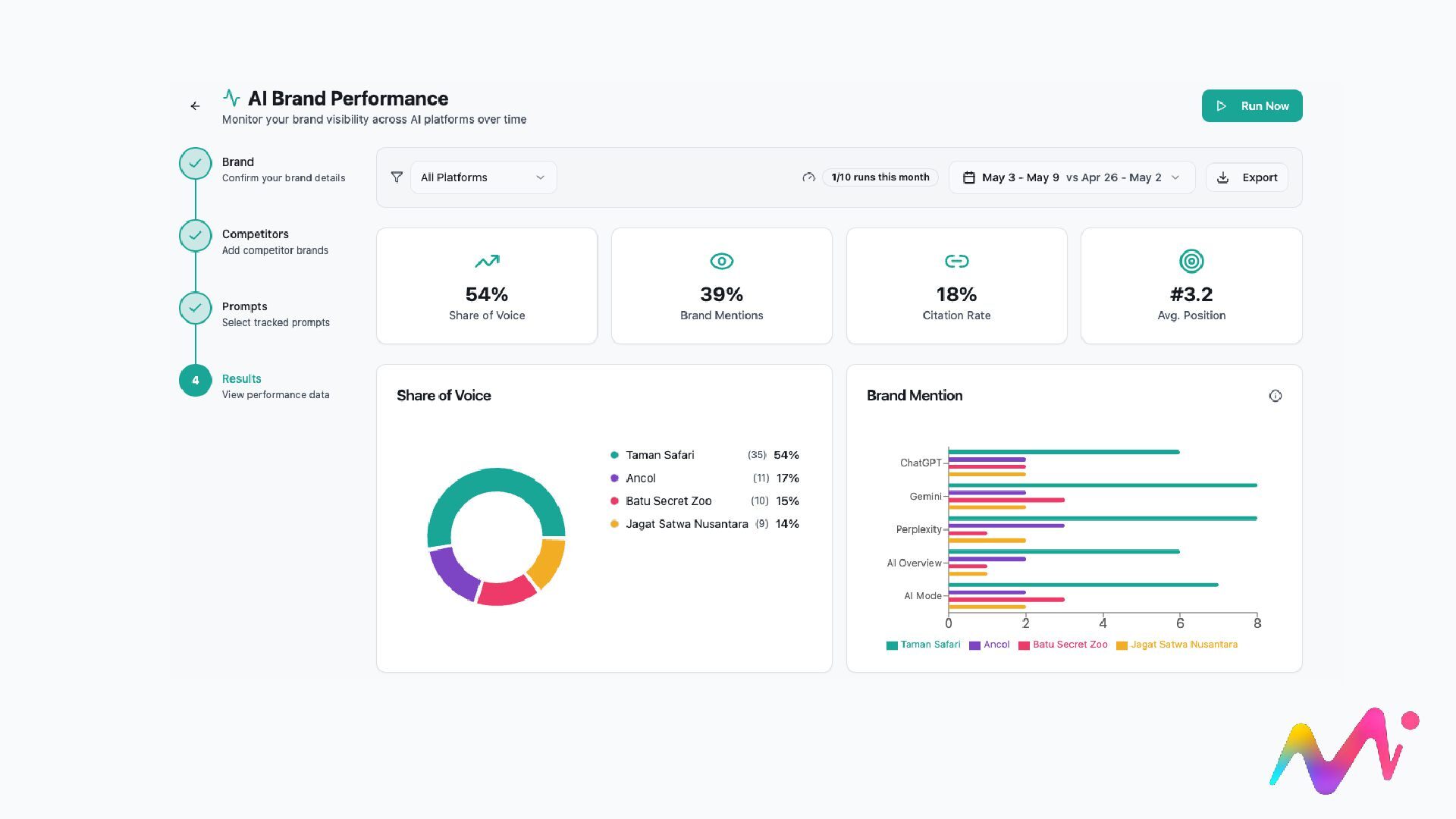
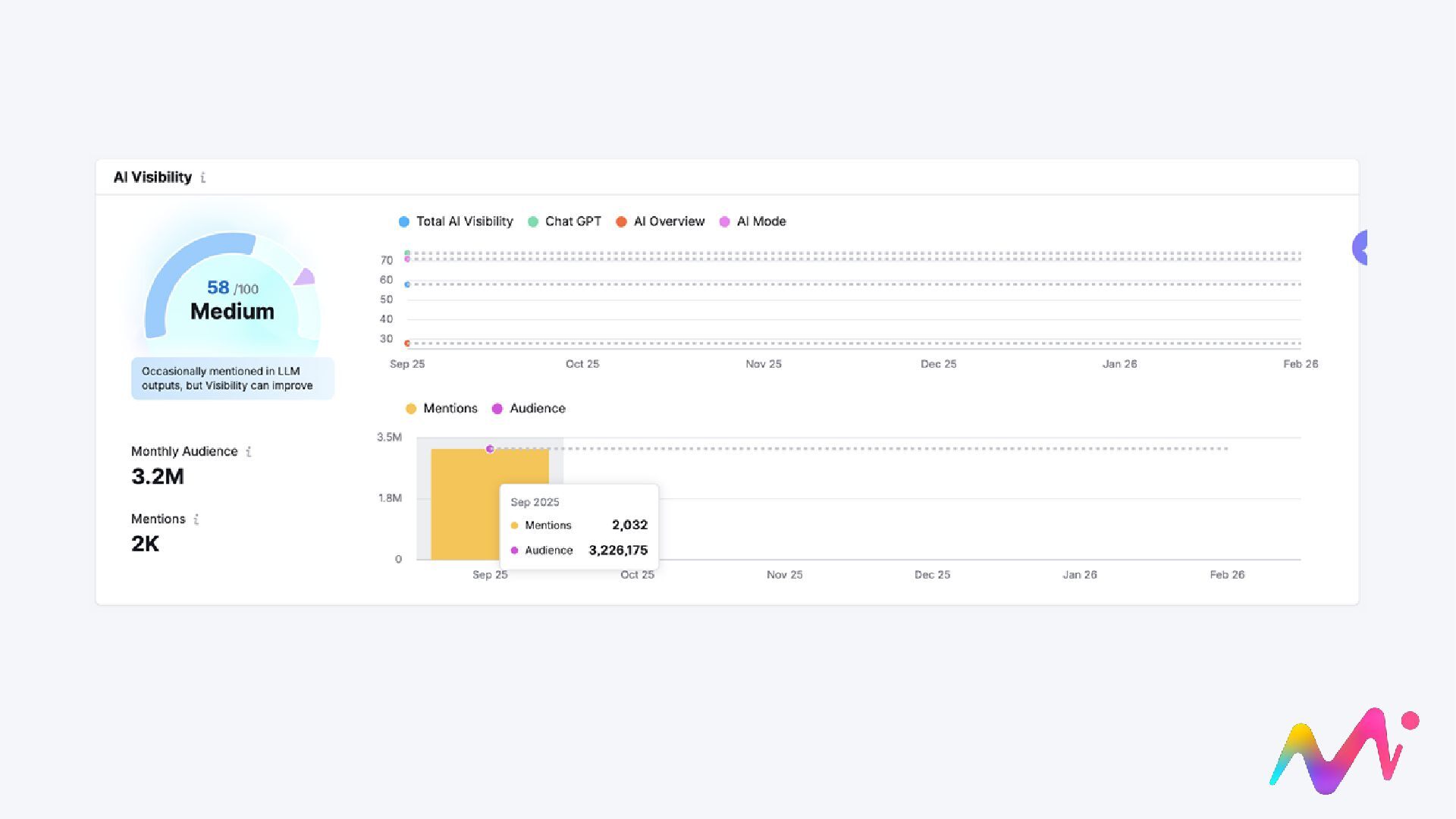
the SERP's "AI Layer” Share of Voice: The frequency your domain is cited as a source in an AI-generated answer. Zero-Click Surface Presence: Tracking appearances in non-link formats (AI Overviews, People Also Ask, Knowledge Panels). Query Coverage: The percentage of your target question-based keywords that trigger an AI-supported result that includes your content.
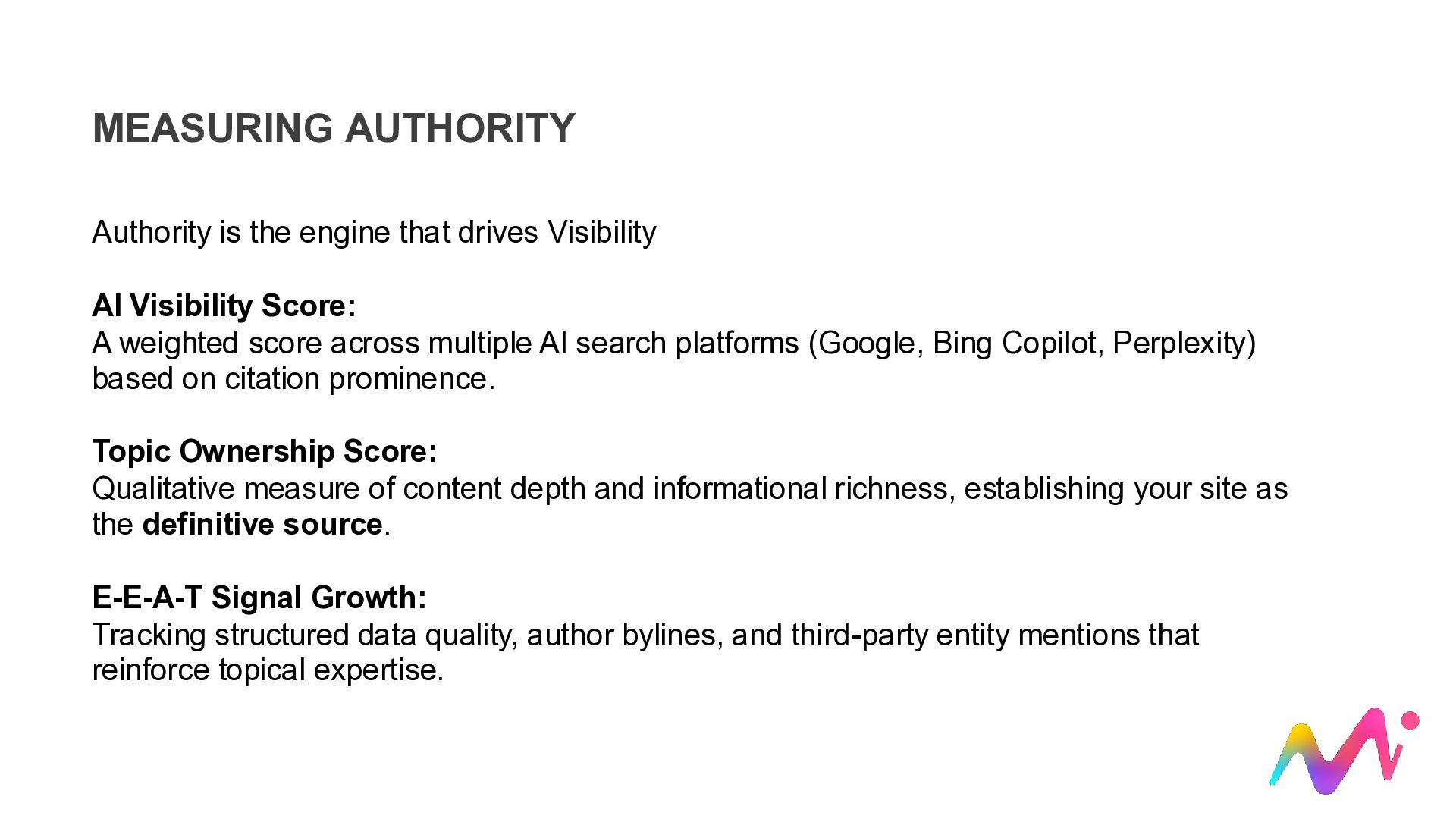
Visibility Score: A weighted score across multiple AI search platforms (Google, Bing Copilot, Perplexity) based on citation prominence. Topic Ownership Score: Qualitative measure of content depth and informational richness, establishing your site as the definitive source. E-E-A-T Signal Growth: Tracking structured data quality, author bylines, and third-party entity mentions that reinforce topical expertise.
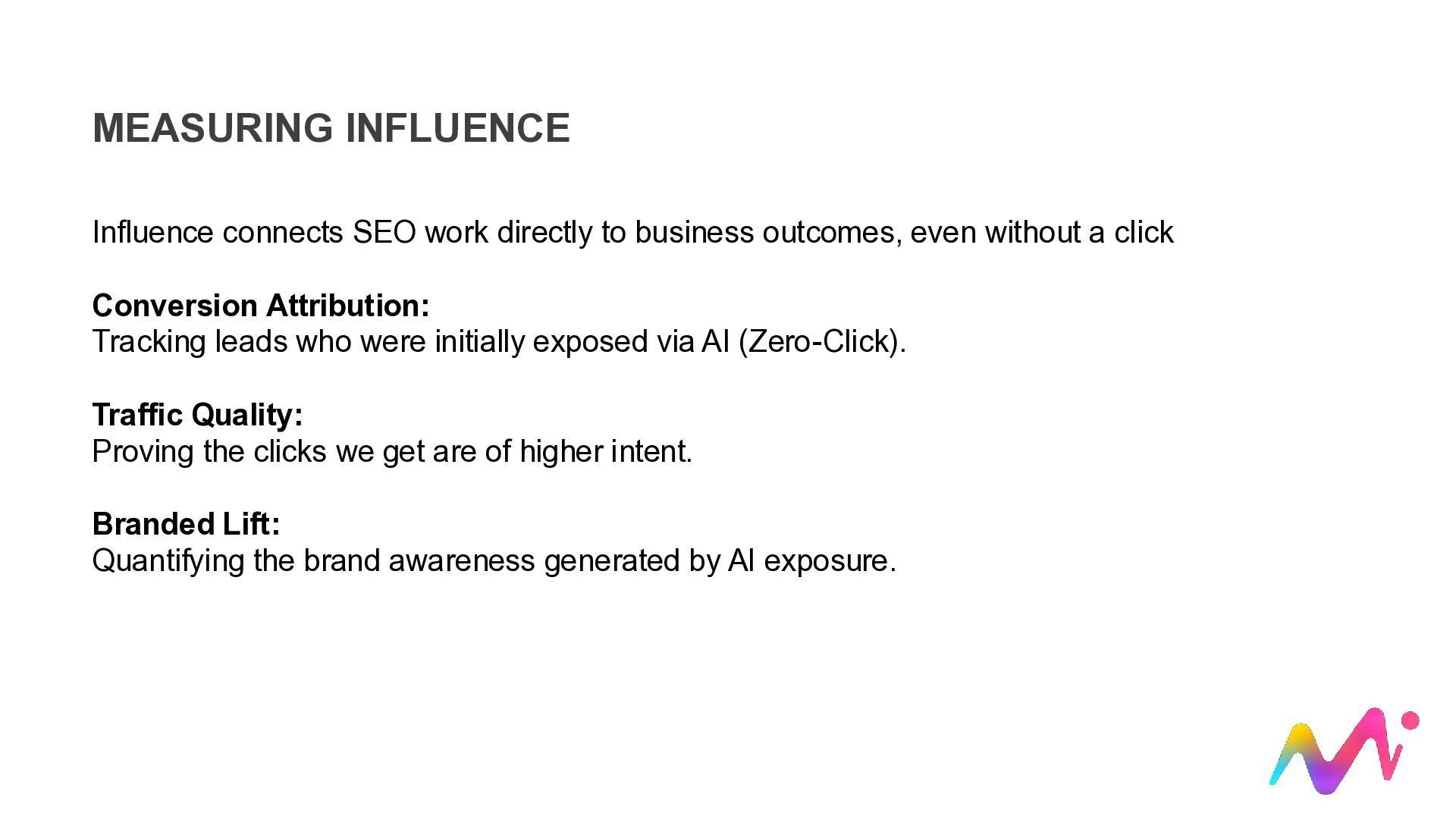
even without a click Conversion Attribution: Tracking leads who were initially exposed via AI (Zero-Click). Traffic Quality: Proving the clicks we get are of higher intent. Branded Lift: Quantifying the brand awareness generated by AI exposure.
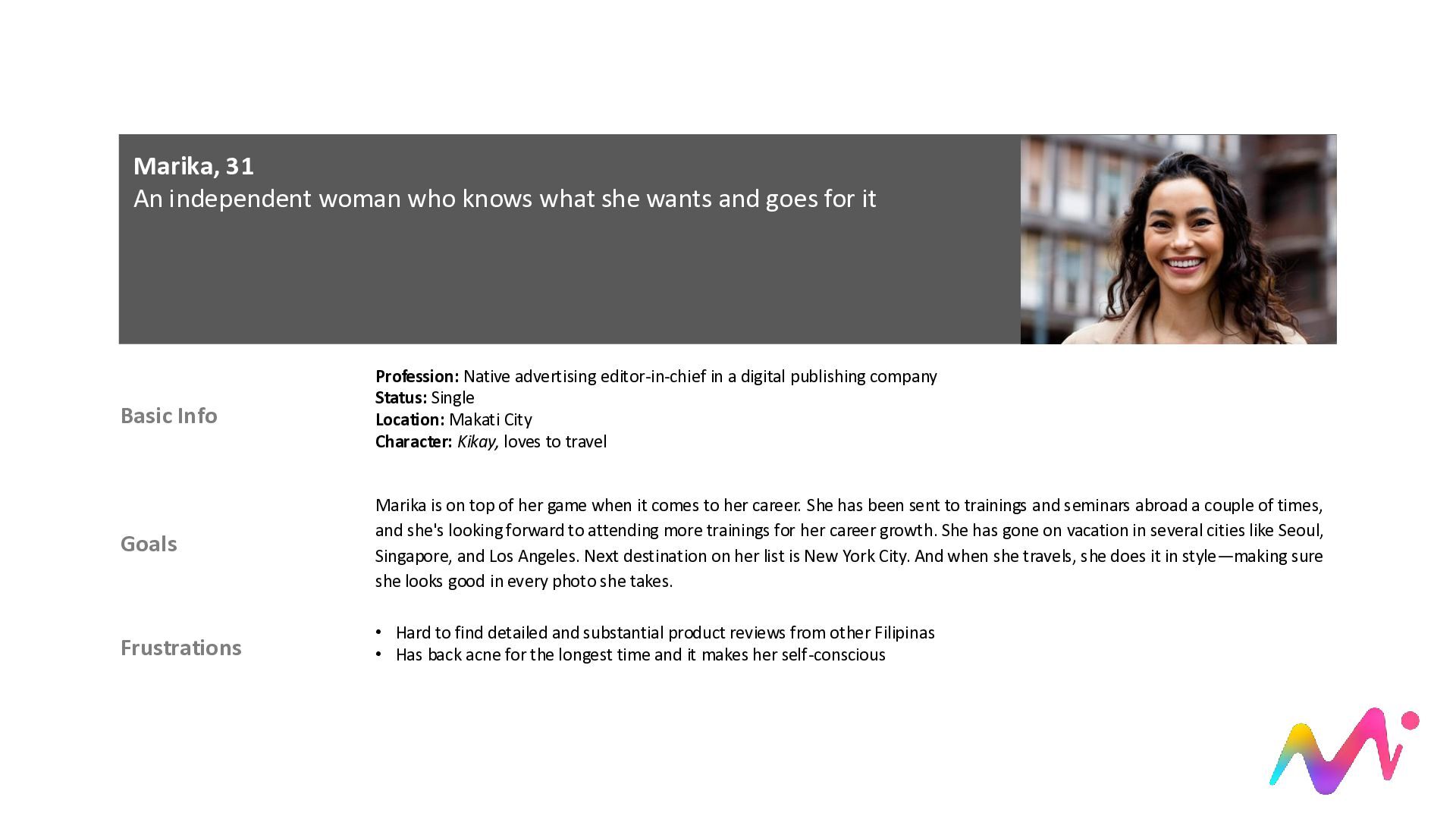
and goes for it Basic Info Profession: Native advertising editor-in-chief in a digital publishing company Status: Single Location: Makati City Character: Kikay, loves to travel Goals Marika is on top of her game when it comes to her career. She has been sent to trainings and seminars abroad a couple of times, and she's looking forward to attending more trainings for her career growth. She has gone on vacation in several cities like Seoul, Singapore, and Los Angeles. Next destination on her list is New York City. And when she travels, she does it in style—making sure she looks good in every photo she takes. Frustrations • Hard to find detailed and substantial product reviews from other Filipinas • Has back acne for the longest time and it makes her self-conscious
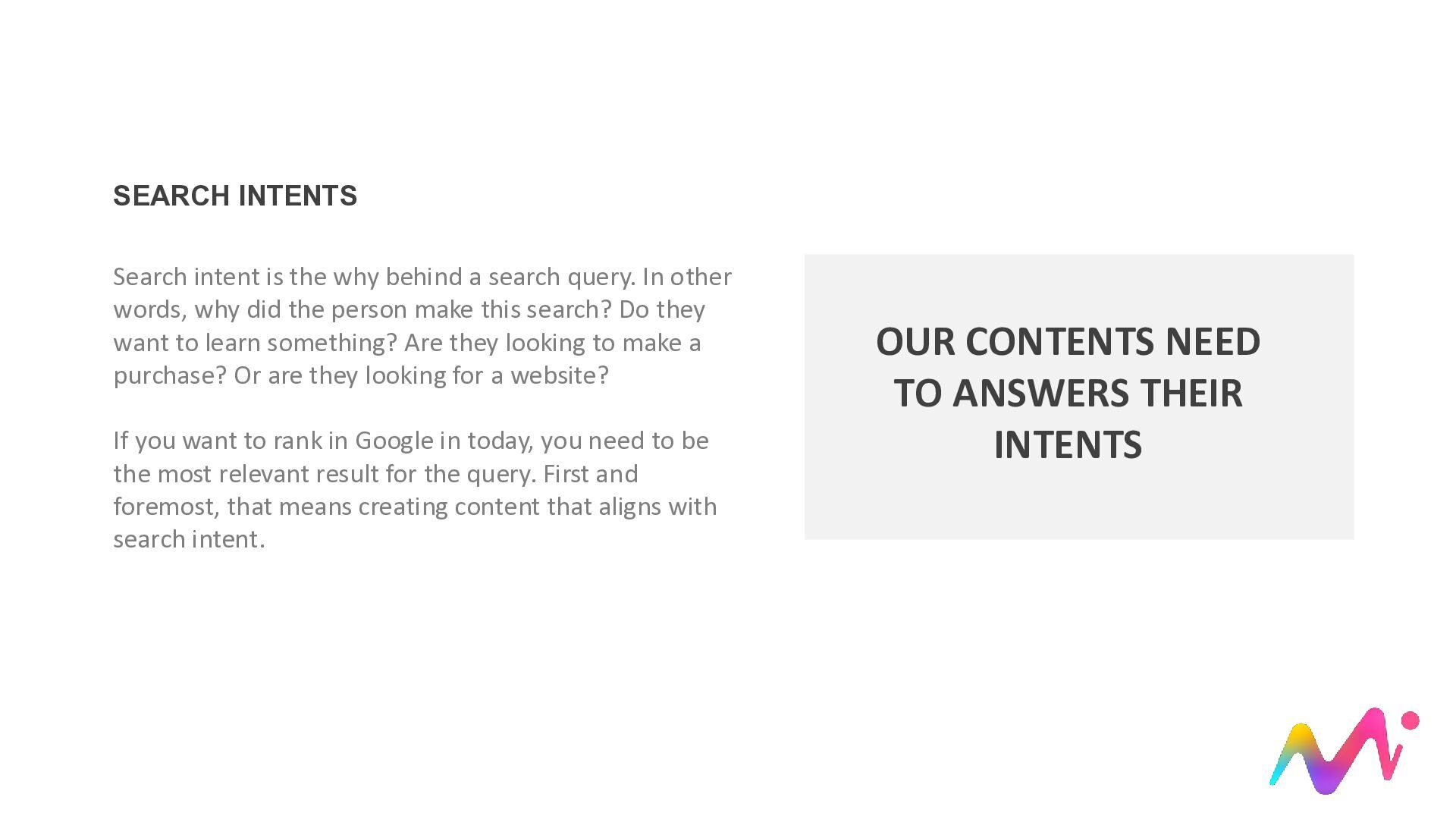
query. In other words, why did the person make this search? Do they want to learn something? Are they looking to make a purchase? Or are they looking for a website? If you want to rank in Google in today, you need to be the most relevant result for the query. First and foremost, that means creating content that aligns with search intent. OUR CONTENTS NEED TO ANSWERS THEIR INTENTS
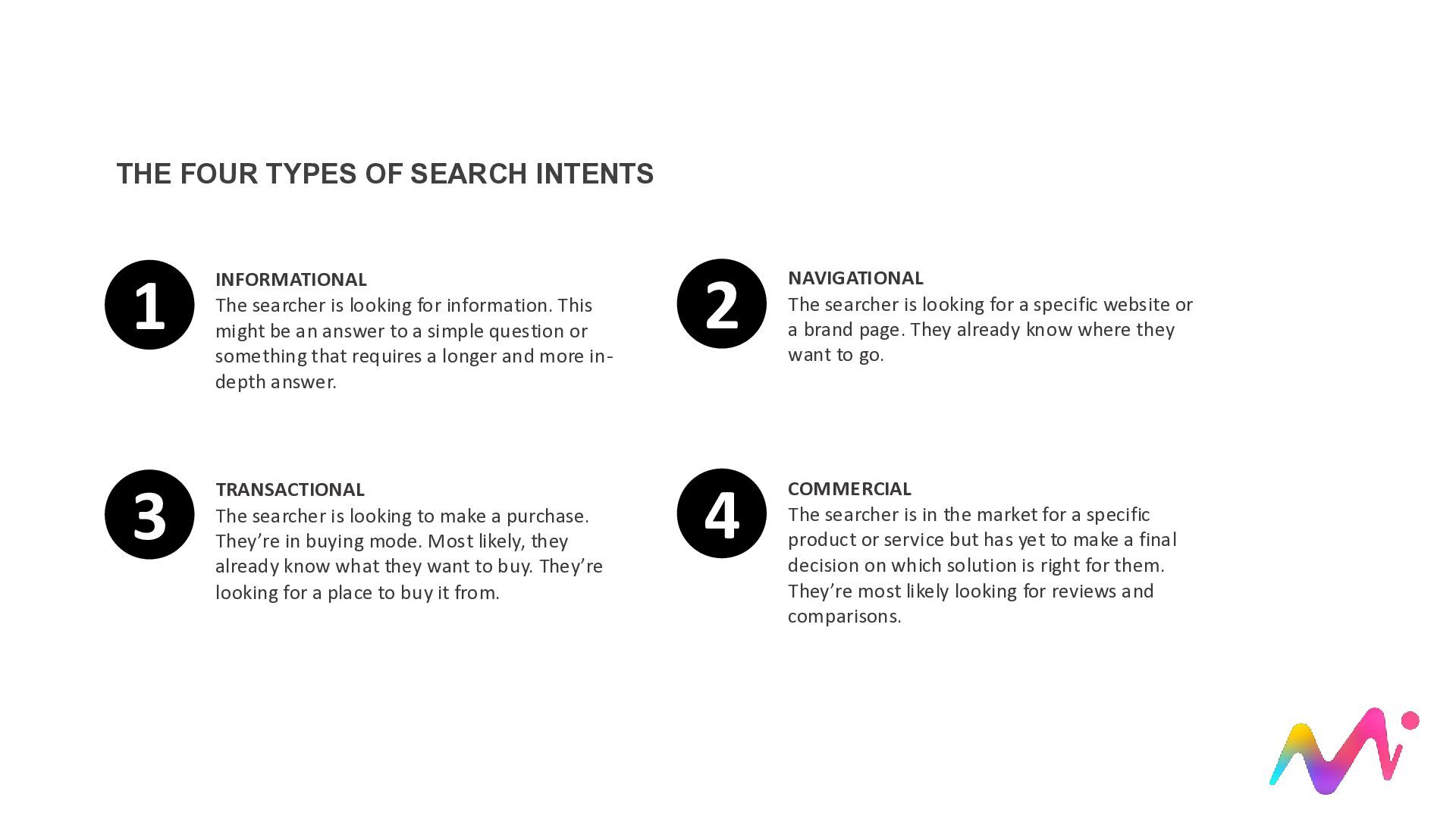
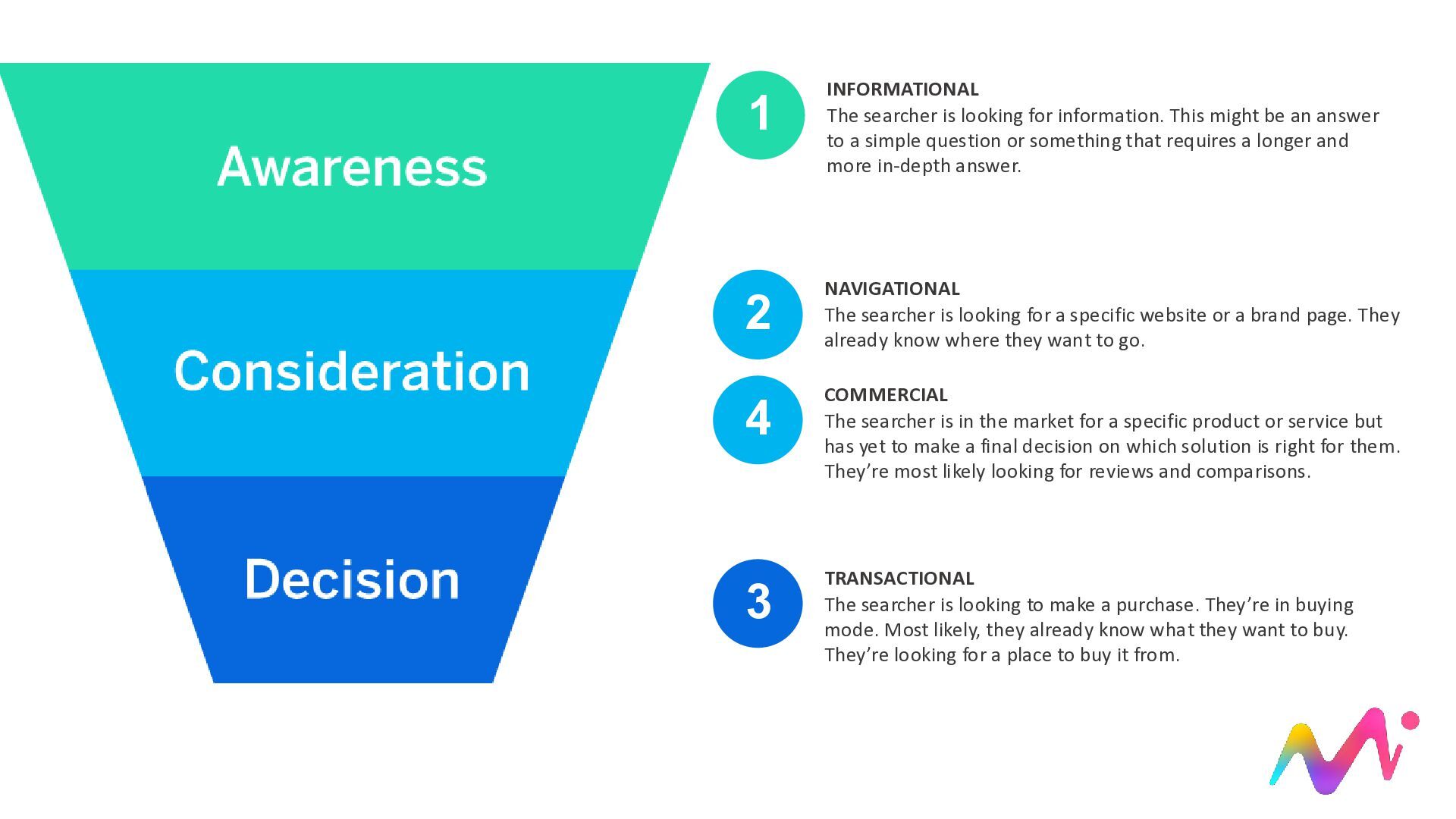
looking for information. This might be an answer to a simple question or something that requires a longer and more in- depth answer. 1 NAVIGATIONAL The searcher is looking for a specific website or a brand page. They already know where they want to go. 2 TRANSACTIONAL The searcher is looking to make a purchase. They’re in buying mode. Most likely, they already know what they want to buy. They’re looking for a place to buy it from. 3 COMMERCIAL The searcher is in the market for a specific product or service but has yet to make a final decision on which solution is right for them. They’re most likely looking for reviews and comparisons. 4
an answer to a simple question or something that requires a longer and more in-depth answer. 1 NAVIGATIONAL The searcher is looking for a specific website or a brand page. They already know where they want to go. 2 TRANSACTIONAL The searcher is looking to make a purchase. They’re in buying mode. Most likely, they already know what they want to buy. They’re looking for a place to buy it from. 3 COMMERCIAL The searcher is in the market for a specific product or service but has yet to make a final decision on which solution is right for them. They’re most likely looking for reviews and comparisons. 4
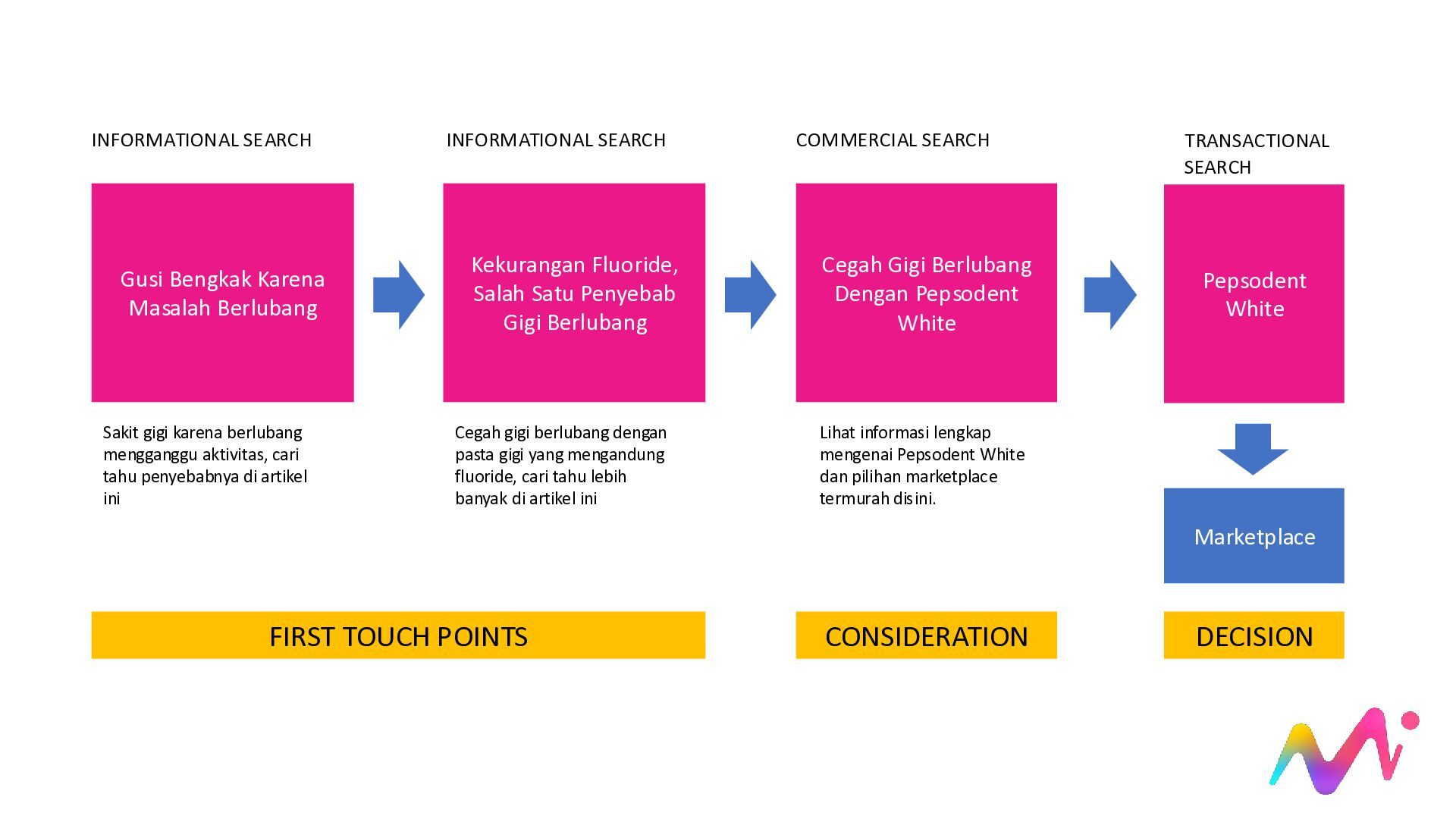
Gigi Berlubang Cegah Gigi Berlubang Dengan Pepsodent White Sakit gigi karena berlubang mengganggu aktivitas, cari tahu penyebabnya di artikel ini Cegah gigi berlubang dengan pasta gigi yang mengandung fluoride, cari tahu lebih banyak di artikel ini Lihat informasi lengkap mengenai Pepsodent White dan pilihan marketplace termurah disini. INFORMATIONAL SEARCH INFORMATIONAL SEARCH COMMERCIAL SEARCH Pepsodent White Marketplace TRANSACTIONAL SEARCH FIRST TOUCH POINTS CONSIDERATION DECISION


 idowebid
 amandafloq
 clarasoteras
 joss1
 yoshiesan
 portentint
 greggifford
 speedyindexteam
 cargoodrich
 guaca
 liddle
 aleyda
 jakevdp
 irinanazarova
 kneath
 ryanjones
 gurzu
 smashingmag
 letsgokoyo
 baasie
 tmiket
 jmmastey
 jonoalderson
 konakalab