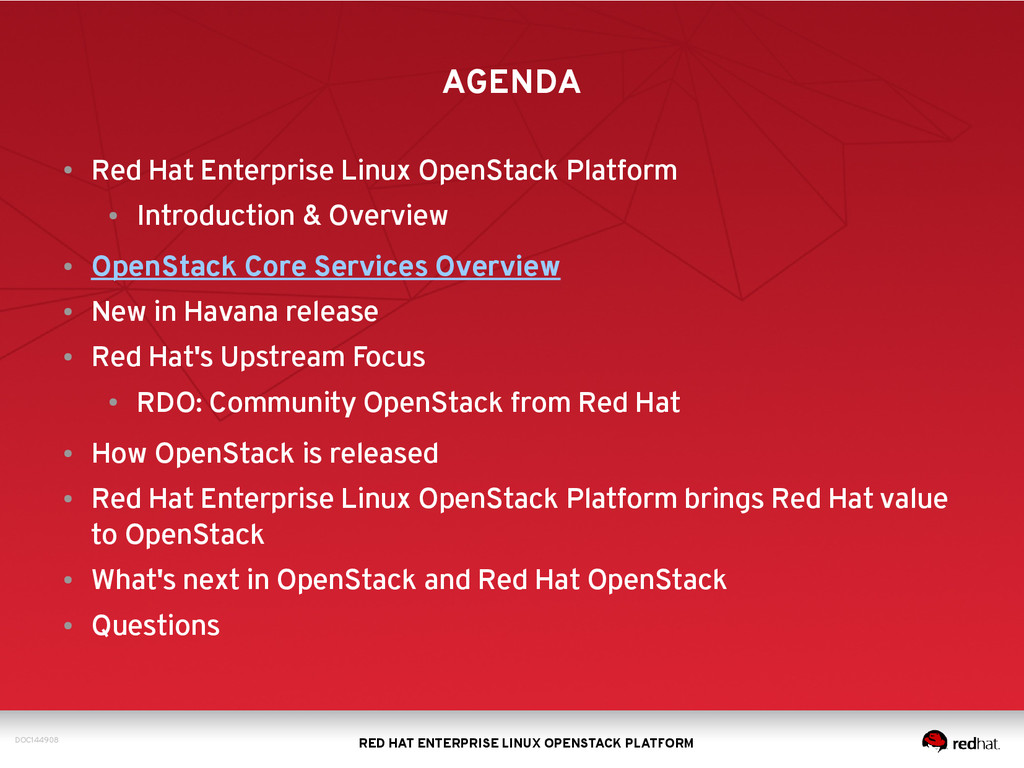
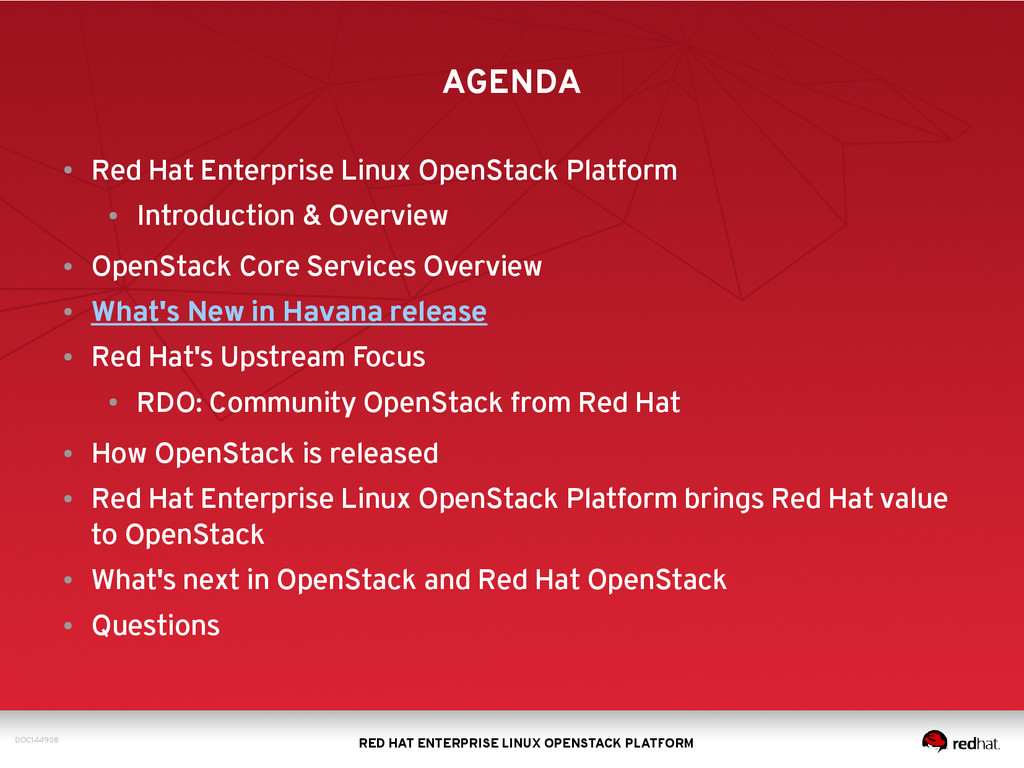
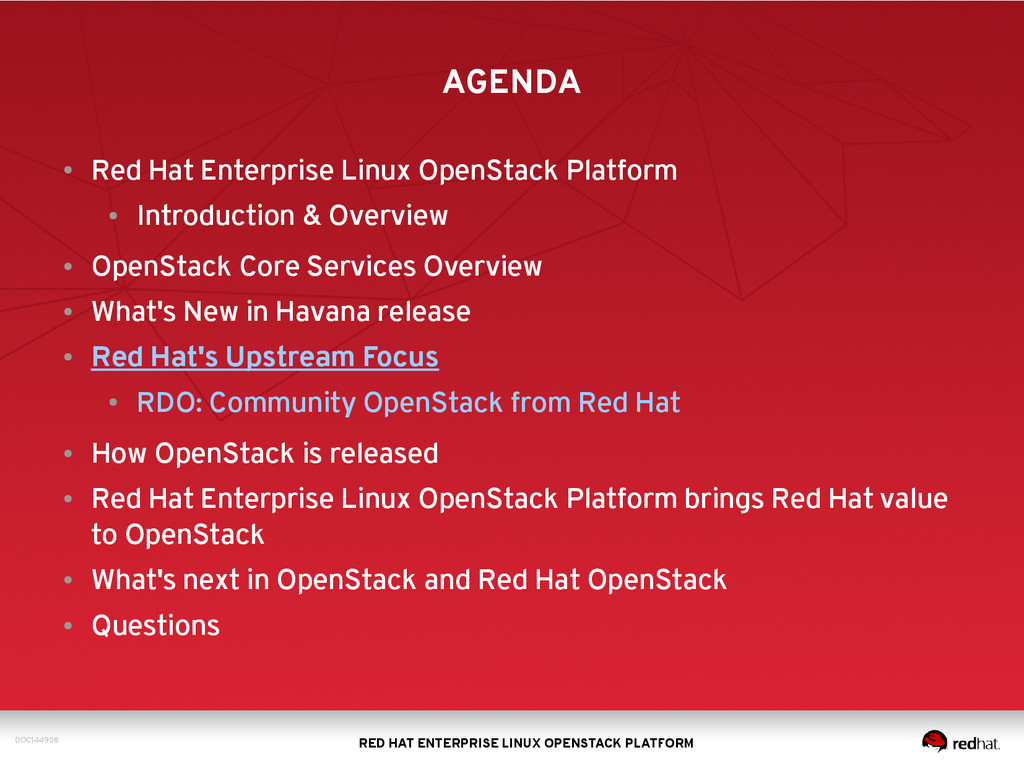
Hat Enterprise Linux OpenStack Platform • Introduction & Overview • OpenStack Core Services Overview • New in Havana release • Red Hat's Upstream Focus • RDO: Community OpenStack from Red Hat • How OpenStack is released • Red Hat Enterprise Linux OpenStack Platform brings Red Hat value to OpenStack • What's next in OpenStack and Red Hat OpenStack • Questions
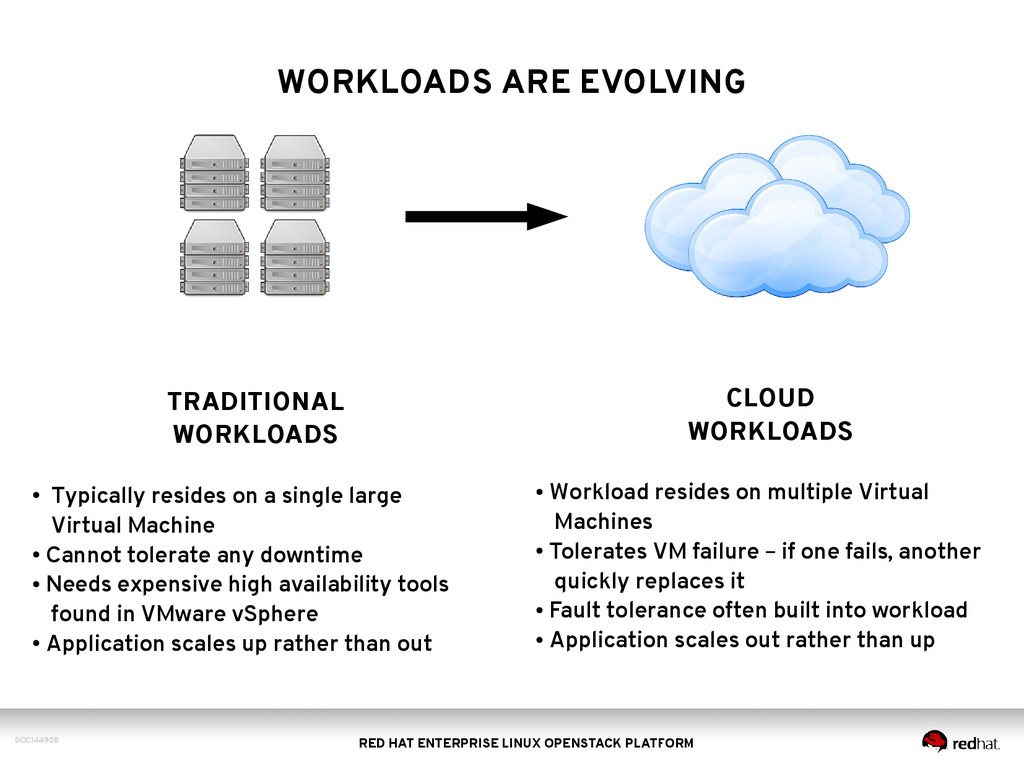
TRADITIONAL WORKLOADS • Typically resides on a single large Virtual Machine • Cannot tolerate any downtime • Needs expensive high availability tools found in VMware vSphere • Application scales up rather than out CLOUD WORKLOADS • Workload resides on multiple Virtual Machines • Tolerates VM failure – if one fails, another quickly replaces it • Fault tolerance often built into workload • Application scales out rather than up
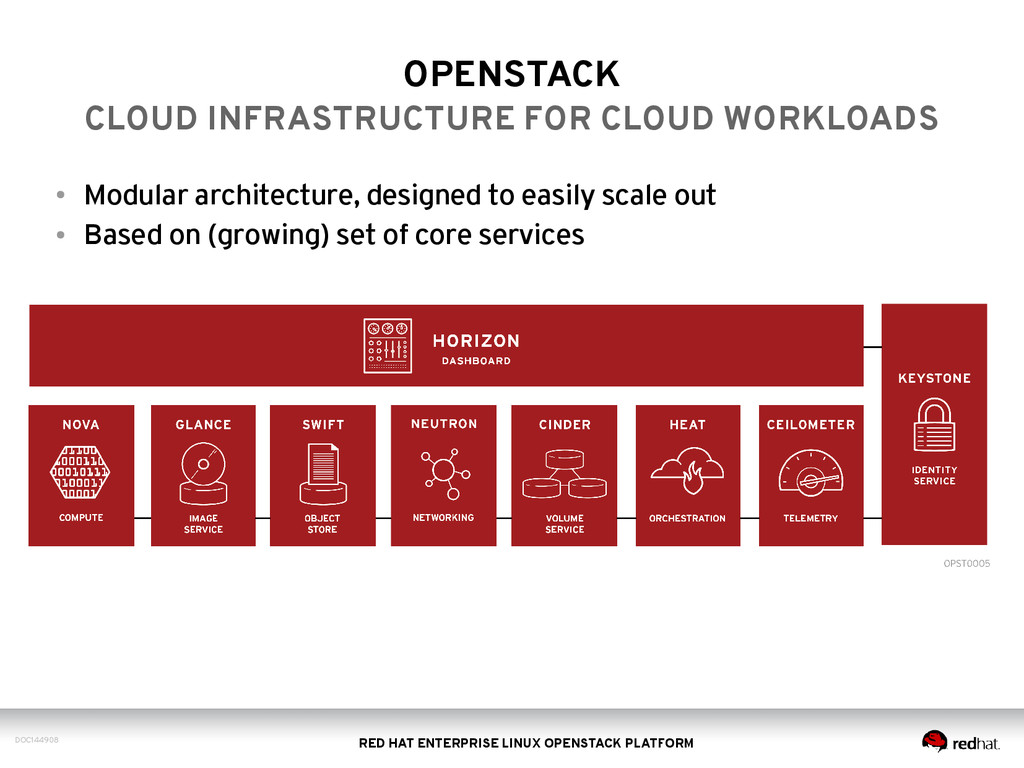
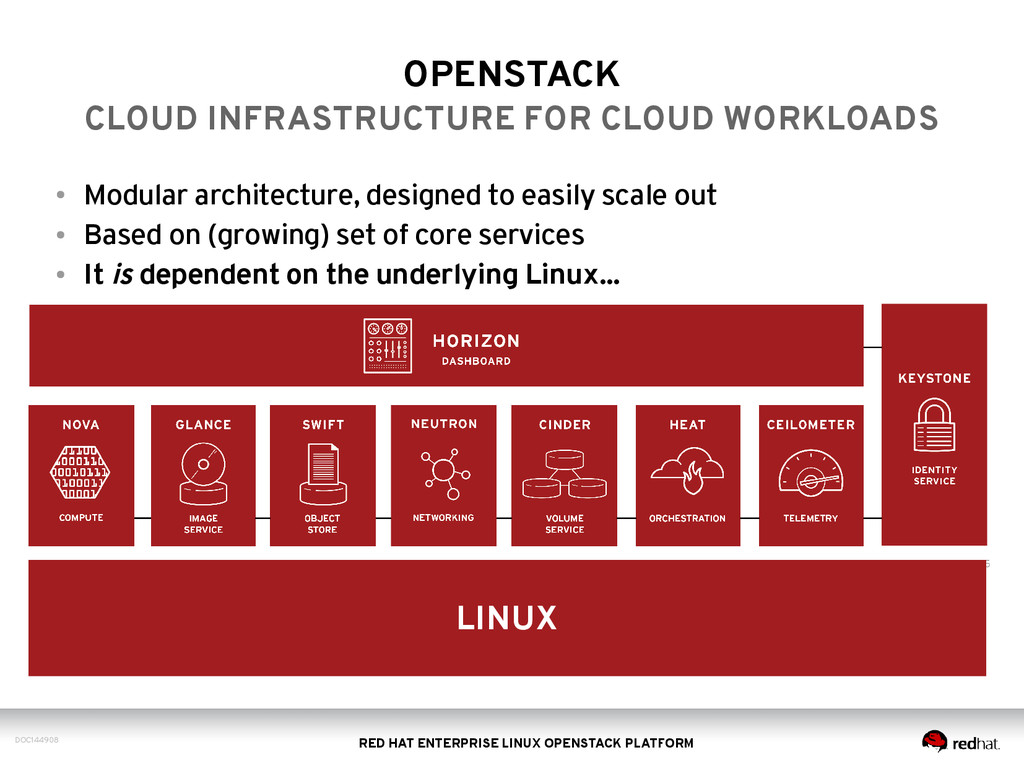
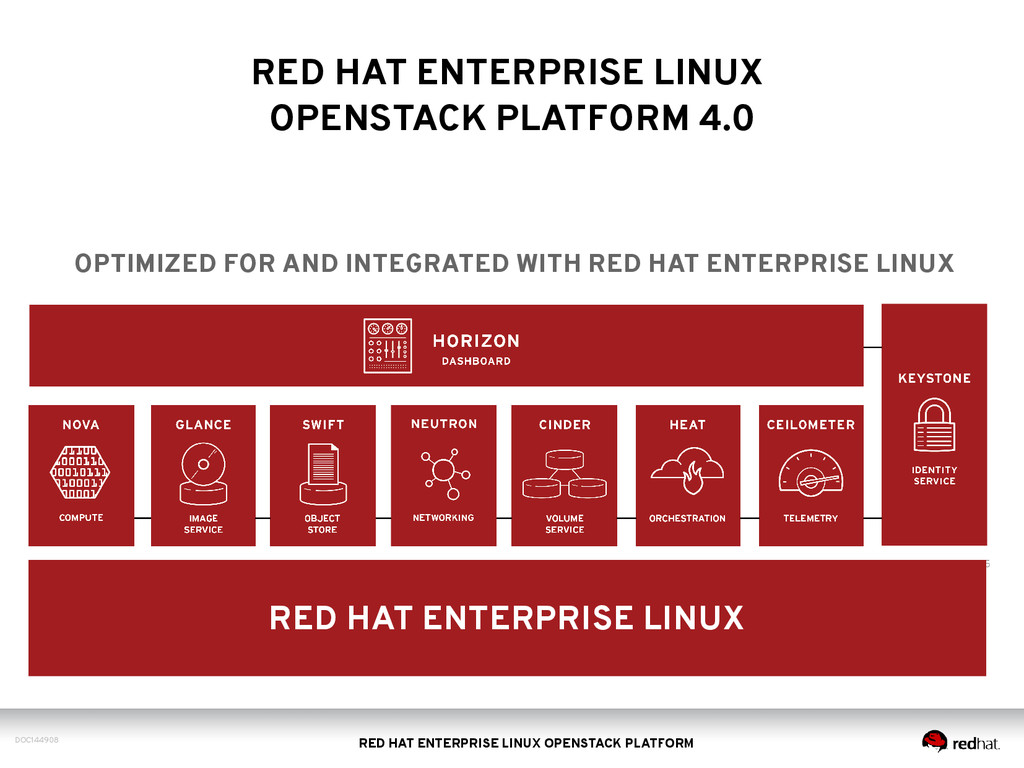
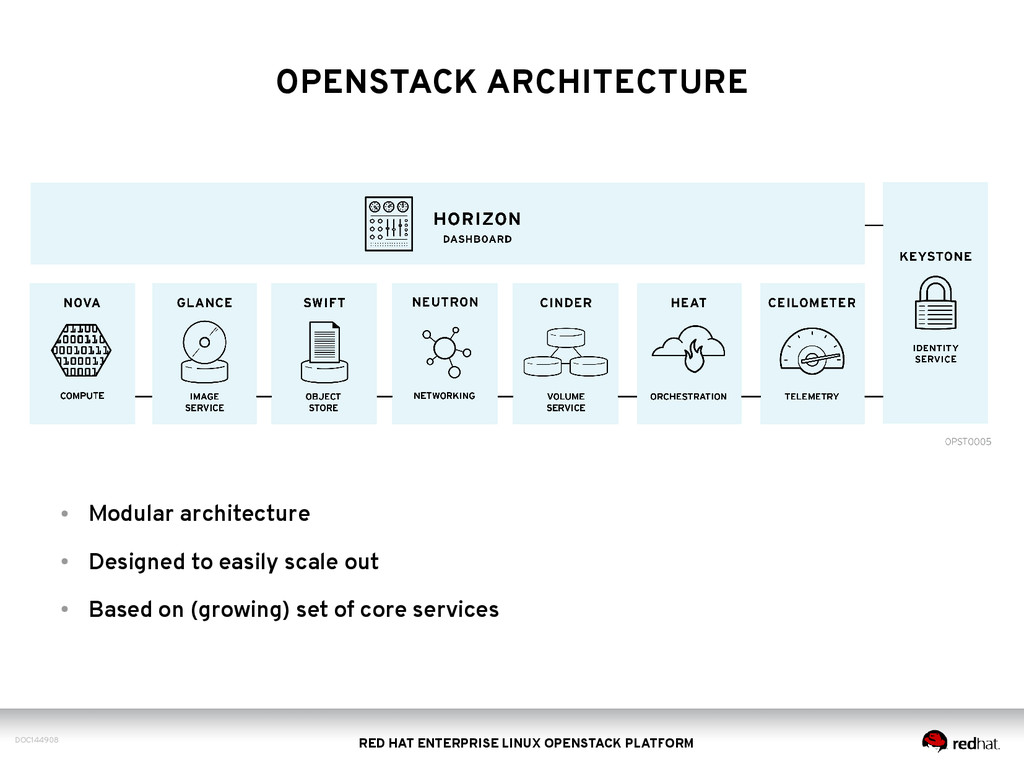
designed to easily scale out • Based on (growing) set of core services • It is dependent on the underlying Linux... LINUX OPENSTACK CLOUD INFRASTRUCTURE FOR CLOUD WORKLOADS
Hat Enterprise Linux OpenStack Platform • Introduction & Overview • OpenStack Core Services Overview • New in Havana release • Red Hat's Upstream Focus • RDO: Community OpenStack from Red Hat • How OpenStack is released • Red Hat Enterprise Linux OpenStack Platform brings Red Hat value to OpenStack • What's next in OpenStack and Red Hat OpenStack • Questions
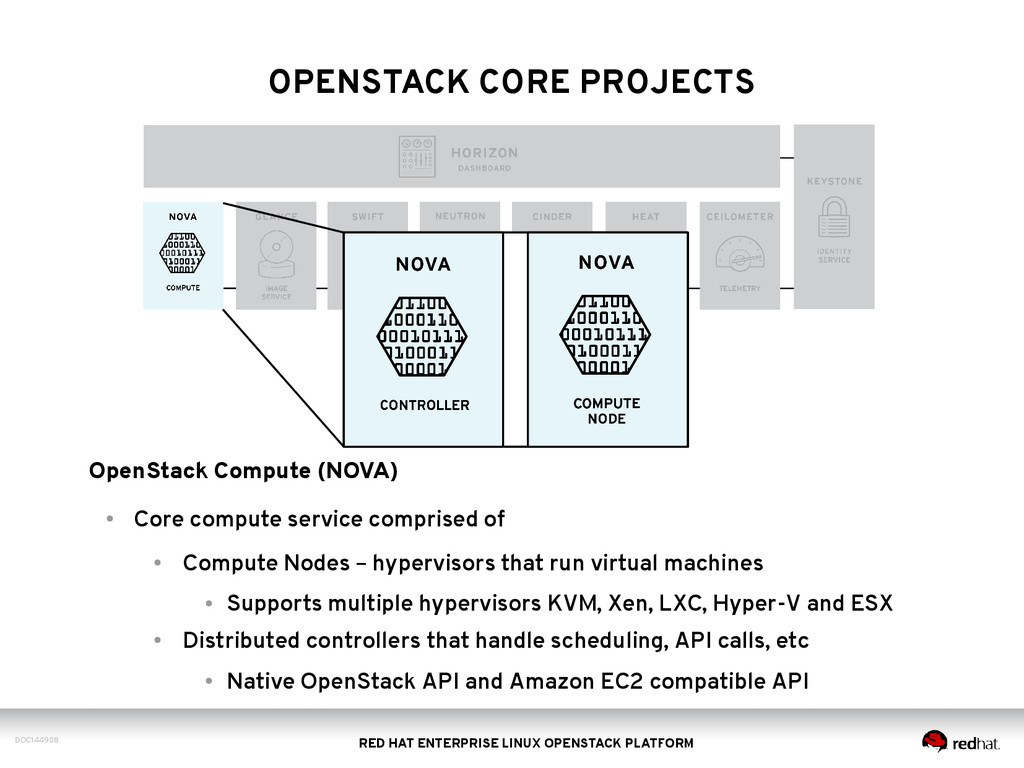
OpenStack Compute (NOVA) • Core compute service comprised of • Compute Nodes – hypervisors that run virtual machines • Supports multiple hypervisors KVM, Xen, LXC, Hyper-V and ESX • Distributed controllers that handle scheduling, API calls, etc • Native OpenStack API and Amazon EC2 compatible API
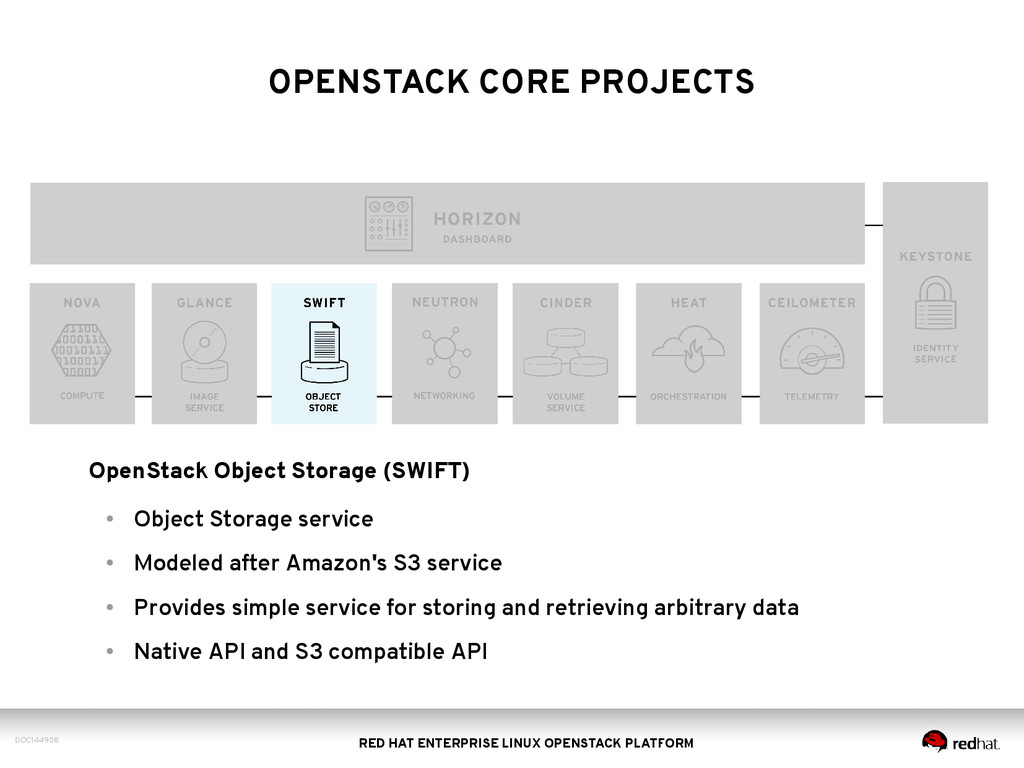
OpenStack Object Storage (SWIFT) • Object Storage service • Modeled after Amazon's S3 service • Provides simple service for storing and retrieving arbitrary data • Native API and S3 compatible API
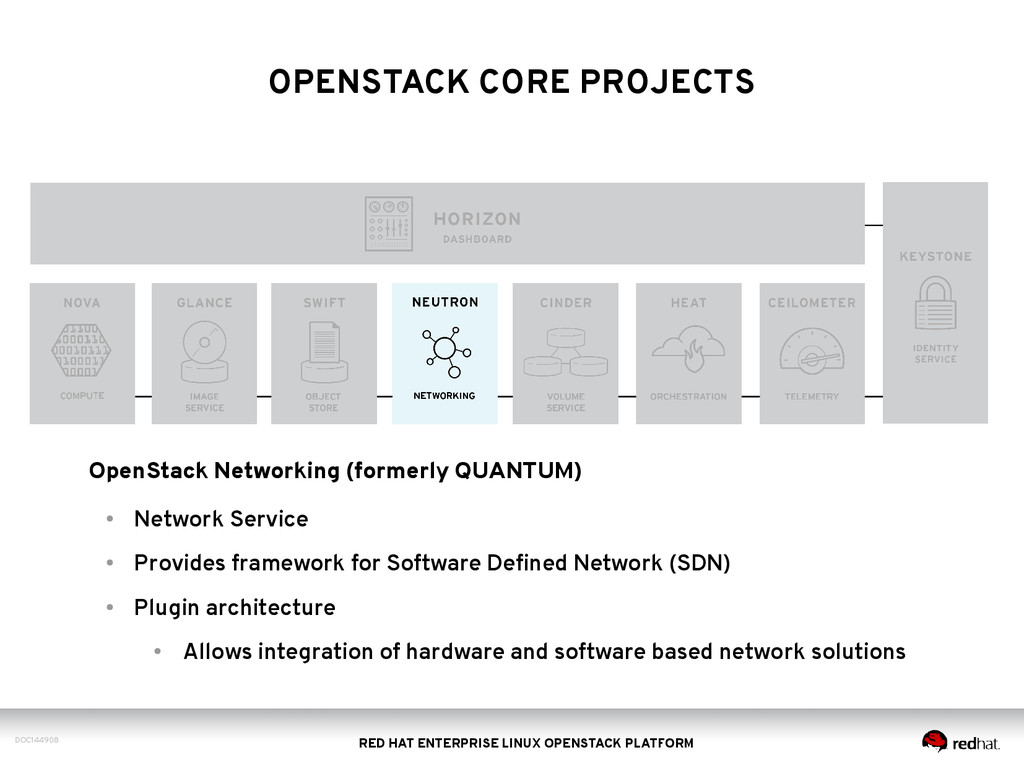
OpenStack Networking (formerly QUANTUM) • Network Service • Provides framework for Software Defined Network (SDN) • Plugin architecture • Allows integration of hardware and software based network solutions
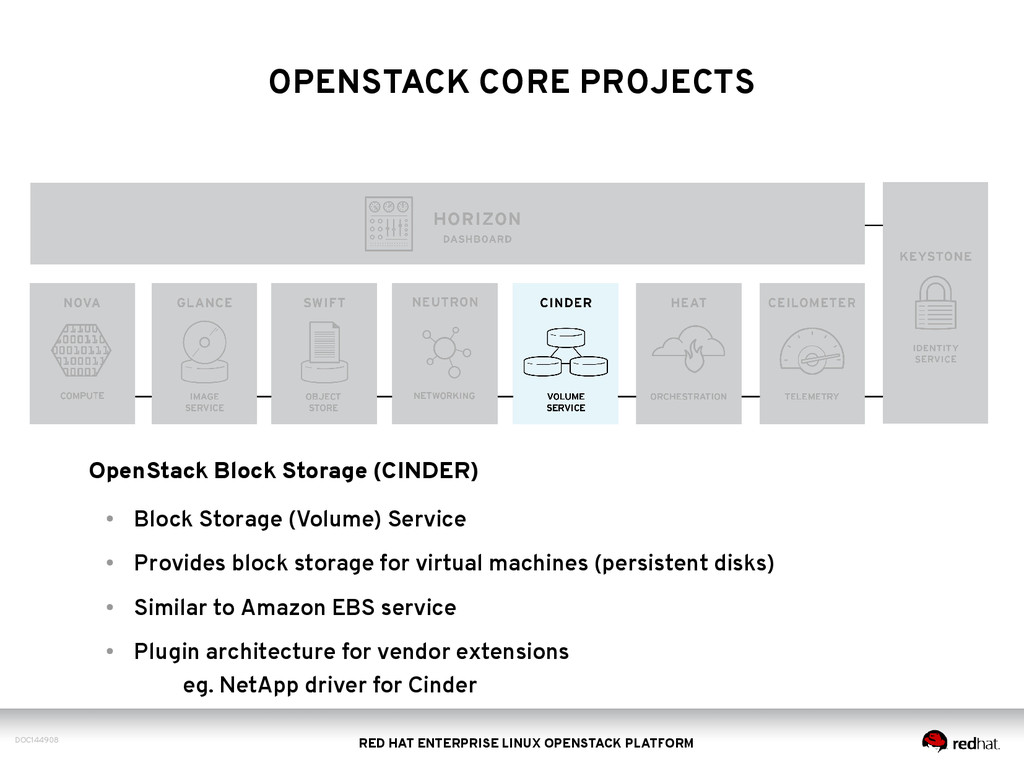
OpenStack Block Storage (CINDER) • Block Storage (Volume) Service • Provides block storage for virtual machines (persistent disks) • Similar to Amazon EBS service • Plugin architecture for vendor extensions eg. NetApp driver for Cinder
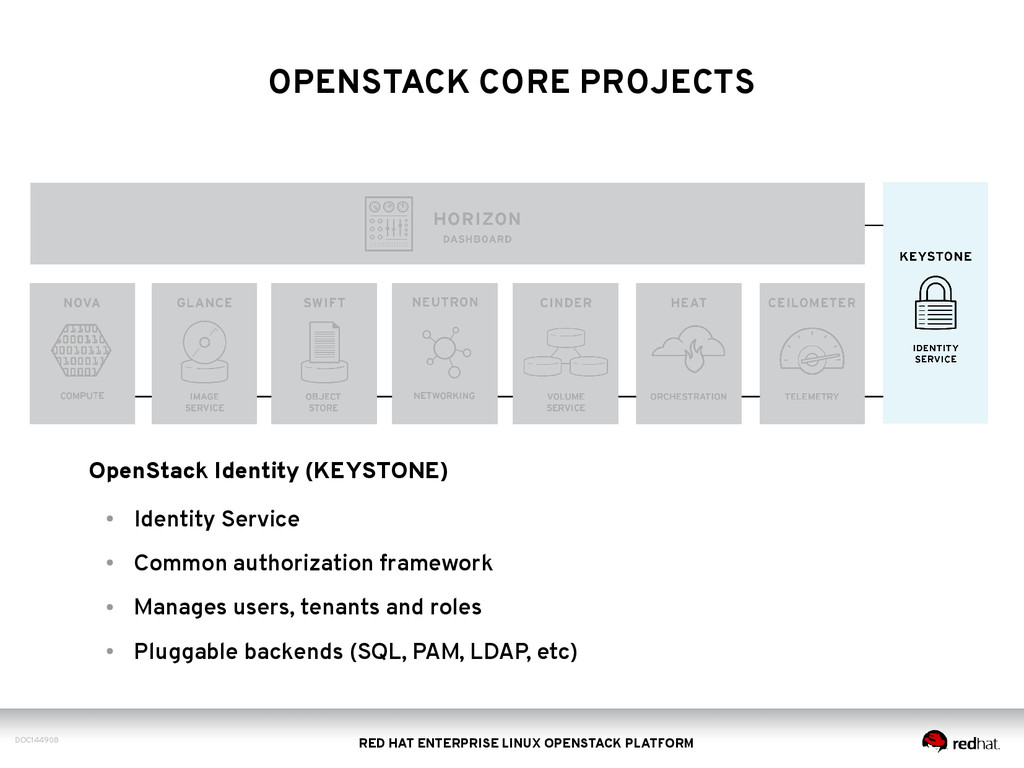
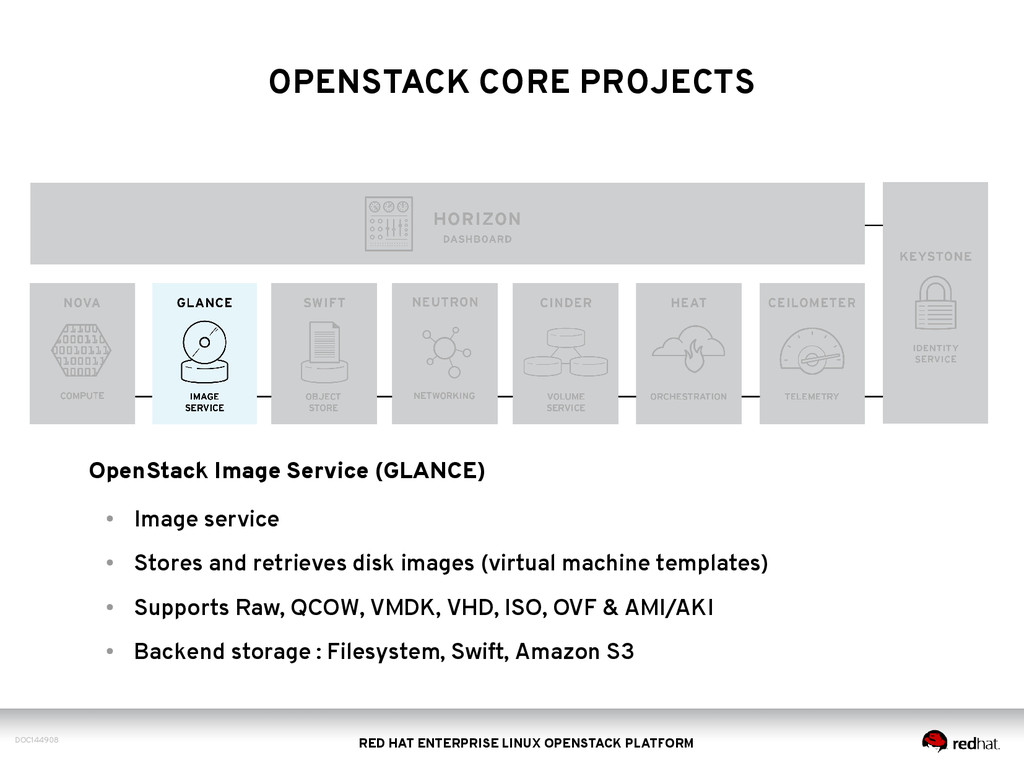
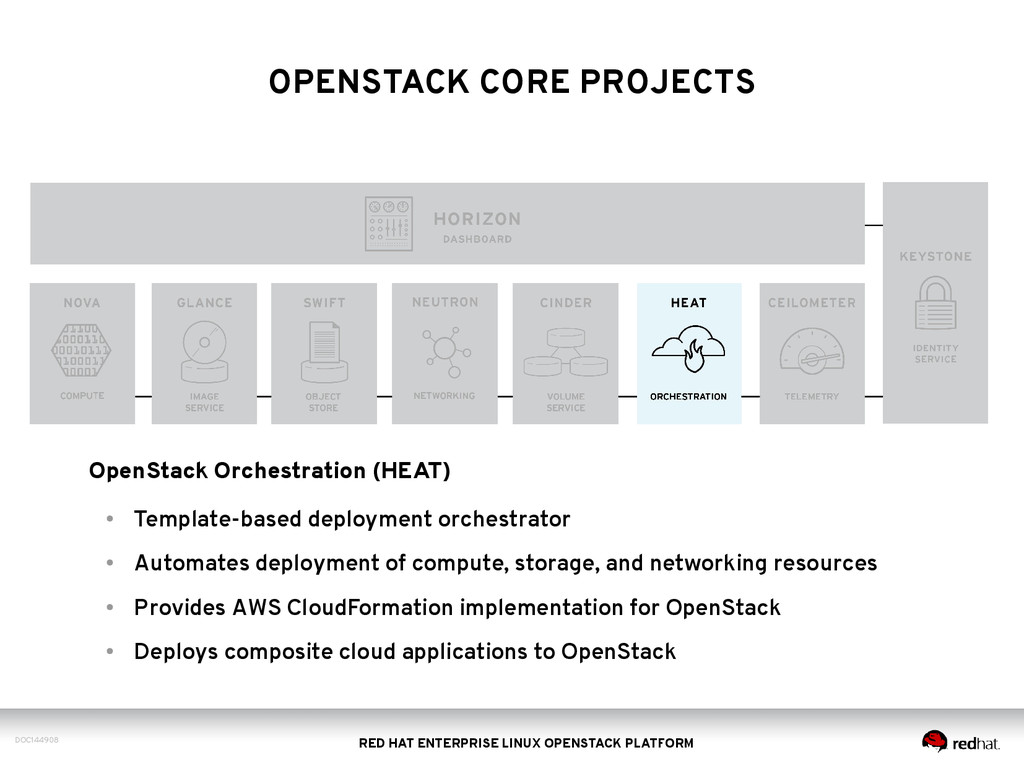
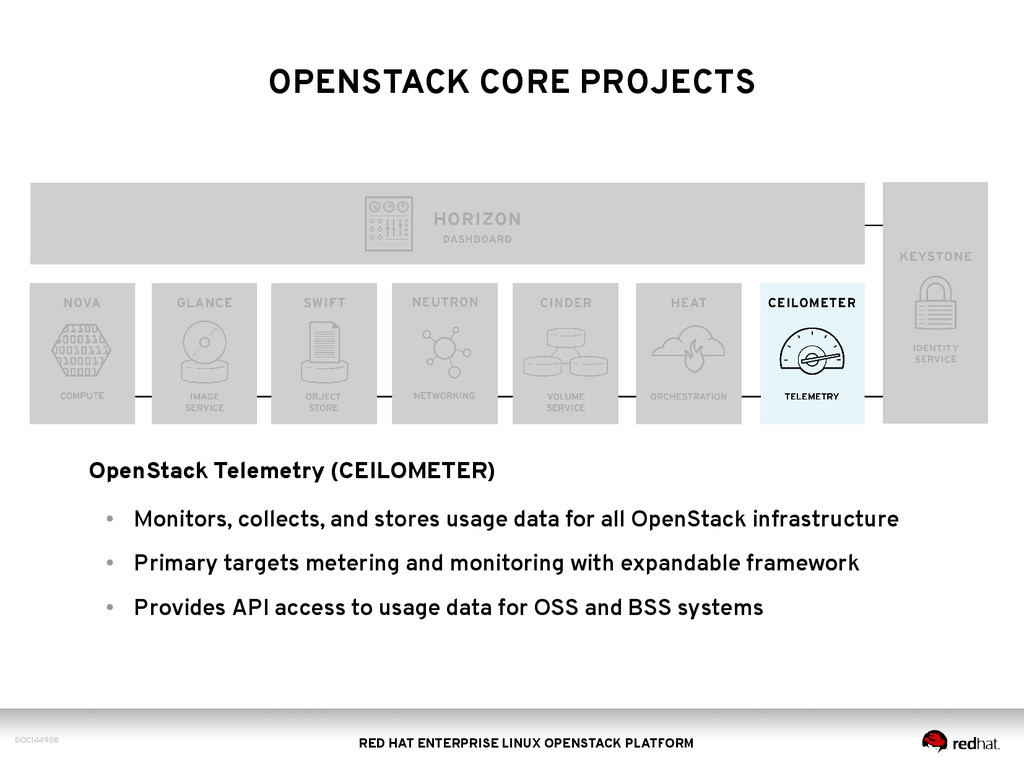
• Monitors, collects, and stores usage data for all OpenStack infrastructure • Primary targets metering and monitoring with expandable framework • Provides API access to usage data for OSS and BSS systems OPENSTACK CORE PROJECTS
Hat Enterprise Linux OpenStack Platform • Introduction & Overview • OpenStack Core Services Overview • What's New in Havana release • Red Hat's Upstream Focus • RDO: Community OpenStack from Red Hat • How OpenStack is released • Red Hat Enterprise Linux OpenStack Platform brings Red Hat value to OpenStack • What's next in OpenStack and Red Hat OpenStack • Questions
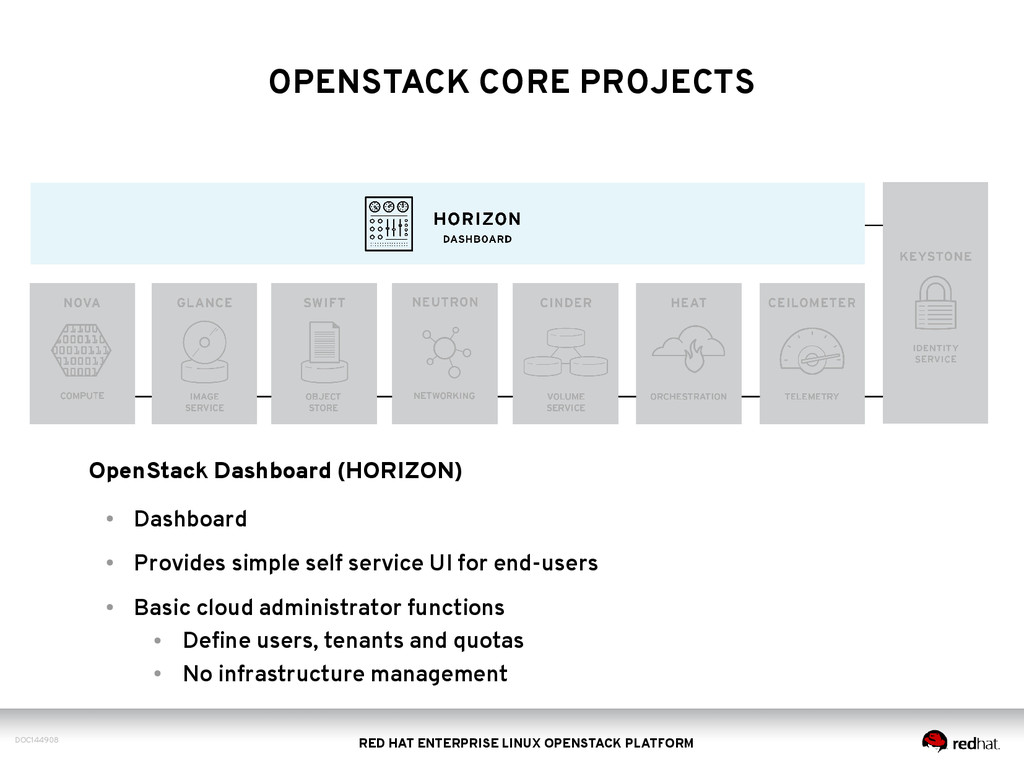
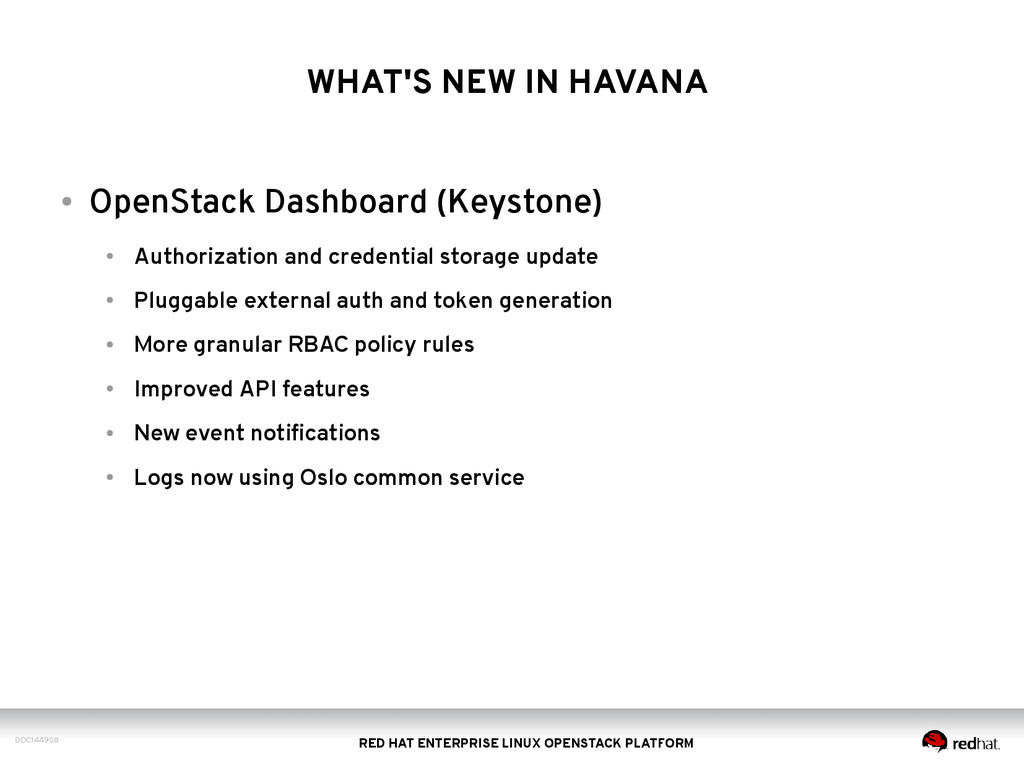
HAVANA • OpenStack Dashboard (Keystone) • Authorization and credential storage update • Pluggable external auth and token generation • More granular RBAC policy rules • Improved API features • New event notifications • Logs now using Oslo common service
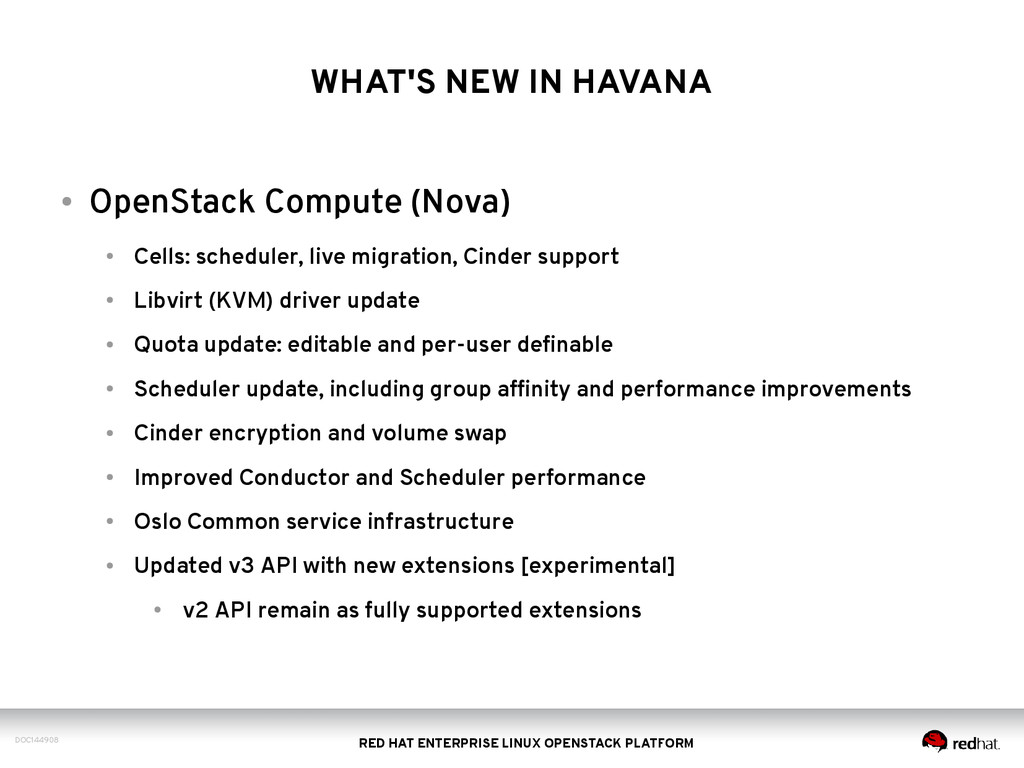
HAVANA • OpenStack Compute (Nova) • Cells: scheduler, live migration, Cinder support • Libvirt (KVM) driver update • Quota update: editable and per-user definable • Scheduler update, including group affinity and performance improvements • Cinder encryption and volume swap • Improved Conductor and Scheduler performance • Oslo Common service infrastructure • Updated v3 API with new extensions [experimental] • v2 API remain as fully supported extensions
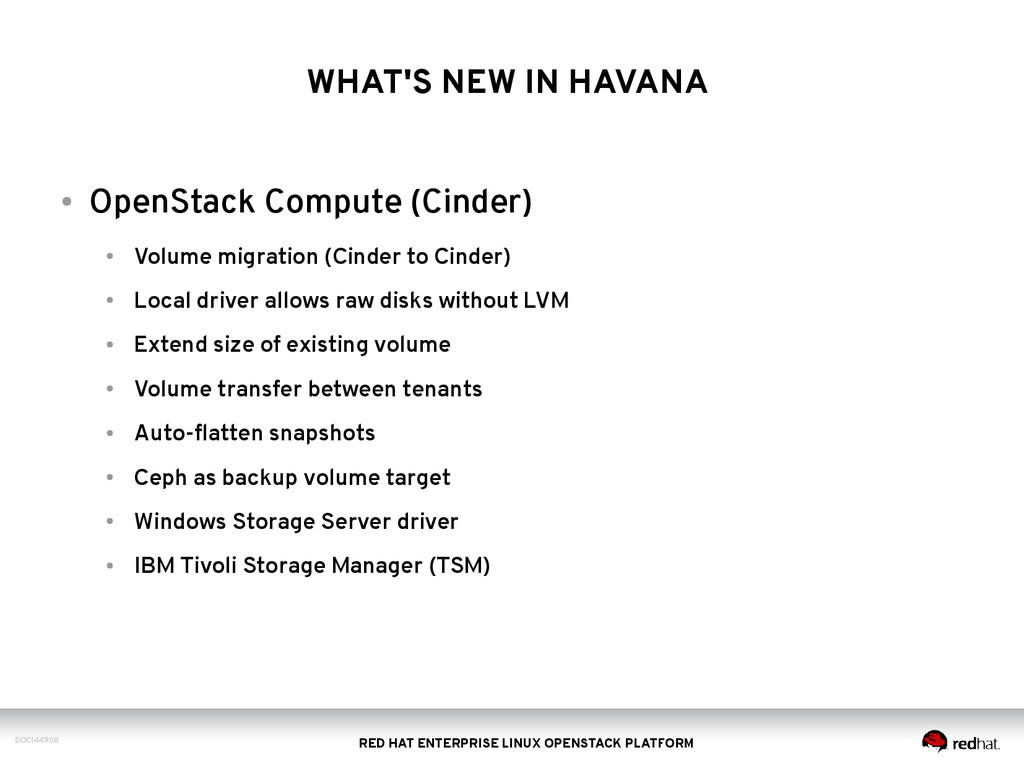
HAVANA • OpenStack Compute (Cinder) • Volume migration (Cinder to Cinder) • Local driver allows raw disks without LVM • Extend size of existing volume • Volume transfer between tenants • Auto-flatten snapshots • Ceph as backup volume target • Windows Storage Server driver • IBM Tivoli Storage Manager (TSM)
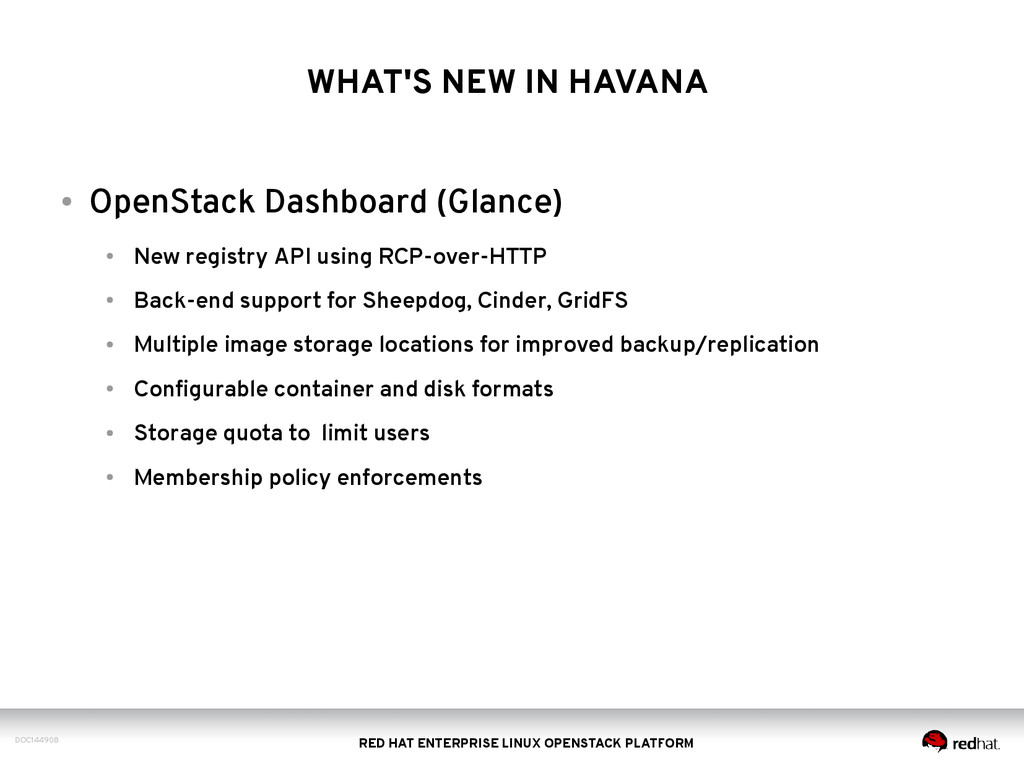
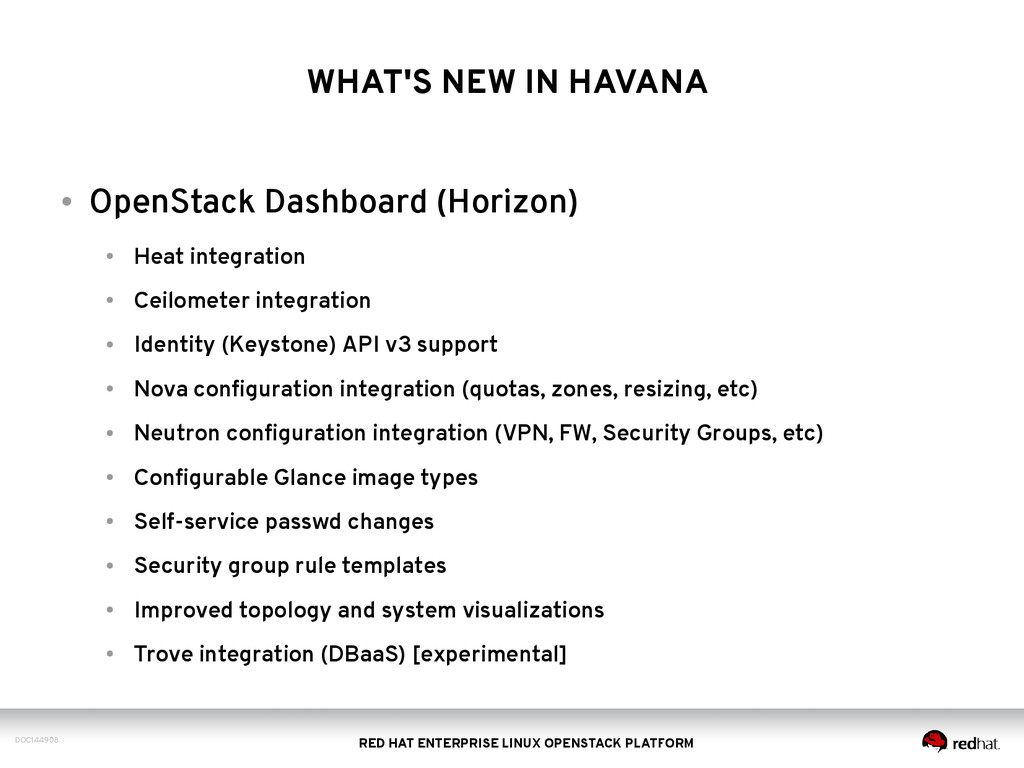
HAVANA • OpenStack Dashboard (Glance) • New registry API using RCP-over-HTTP • Back-end support for Sheepdog, Cinder, GridFS • Multiple image storage locations for improved backup/replication • Configurable container and disk formats • Storage quota to limit users • Membership policy enforcements
Hat Enterprise Linux OpenStack Platform • Introduction & Overview • OpenStack Core Services Overview • What's New in Havana release • Red Hat's Upstream Focus • RDO: Community OpenStack from Red Hat • How OpenStack is released • Red Hat Enterprise Linux OpenStack Platform brings Red Hat value to OpenStack • What's next in OpenStack and Red Hat OpenStack • Questions
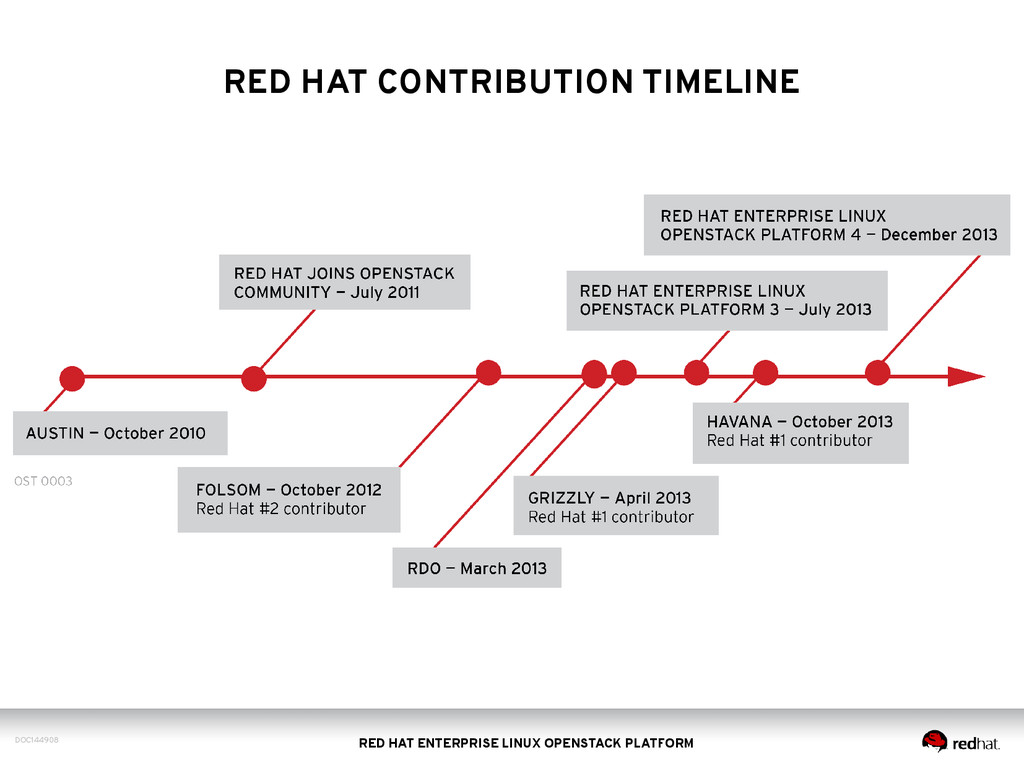
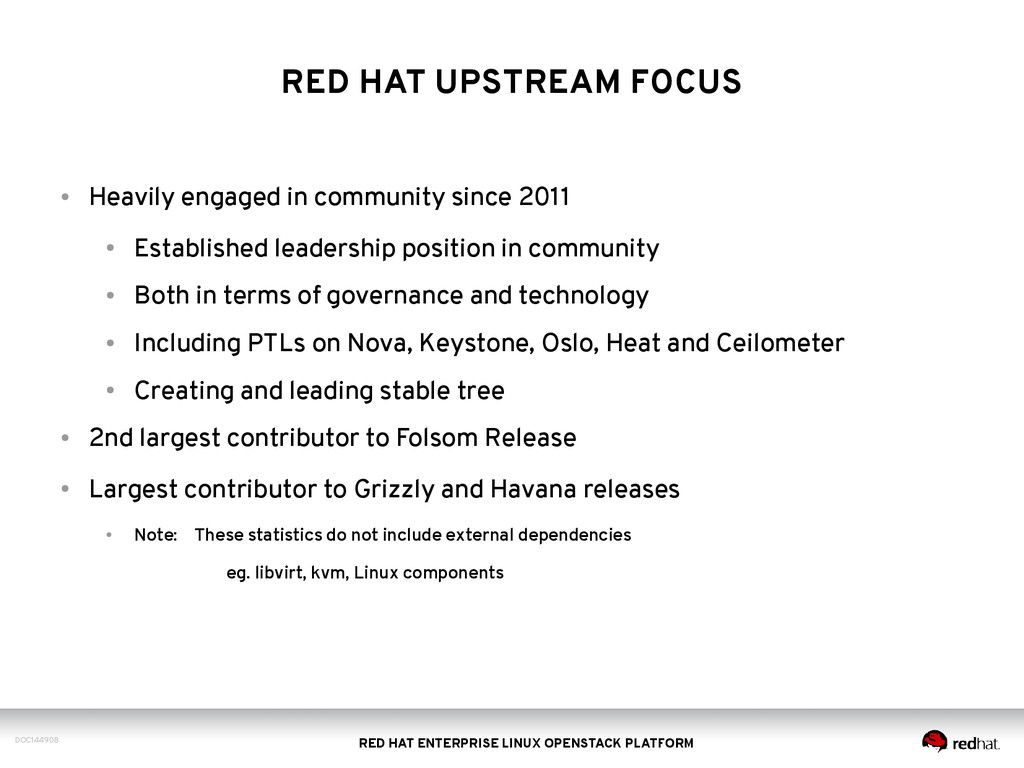
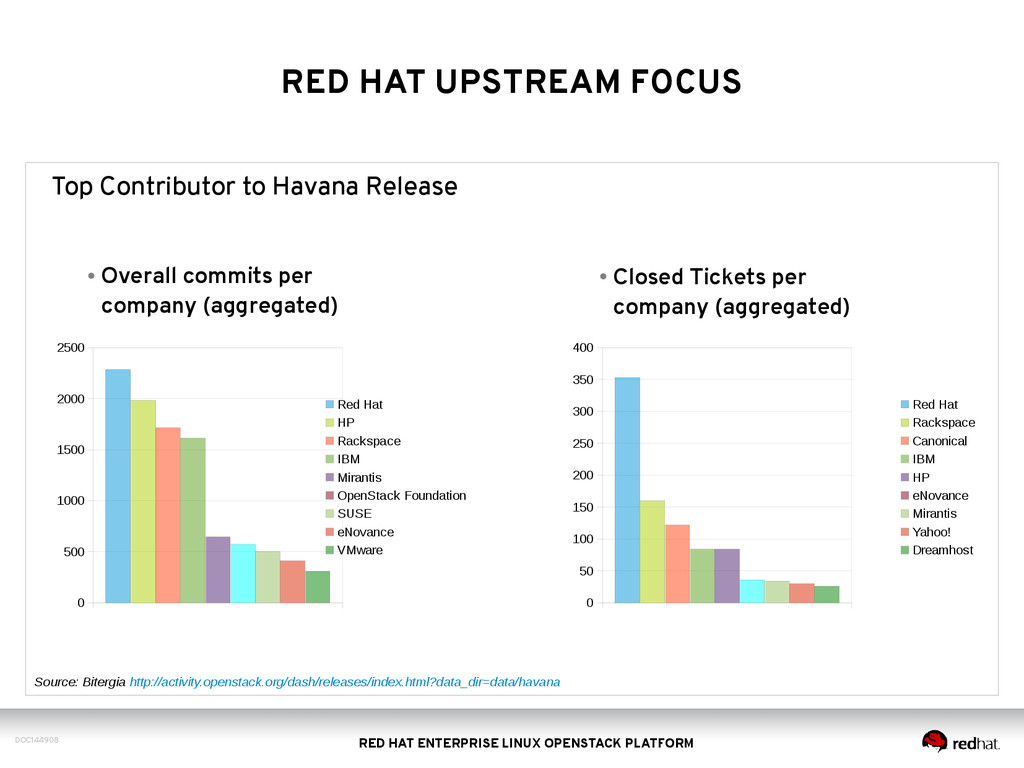
FOCUS • Heavily engaged in community since 2011 • Established leadership position in community • Both in terms of governance and technology • Including PTLs on Nova, Keystone, Oslo, Heat and Ceilometer • Creating and leading stable tree • 2nd largest contributor to Folsom Release • Largest contributor to Grizzly and Havana releases • Note: These statistics do not include external dependencies eg. libvirt, kvm, Linux components
FOCUS Source: Bitergia http://activity.openstack.org/dash/releases/index.html?data_dir=data/havana Top Contributor to Havana Release 0 500 1000 1500 2000 2500 Red Hat HP Rackspace IBM Mirantis OpenStack Foundation SUSE eNovance VMware 0 50 100 150 200 250 300 350 400 Red Hat Rackspace Canonical IBM HP eNovance Mirantis Yahoo! Dreamhost • Overall commits per company (aggregated) • Closed Tickets per company (aggregated)
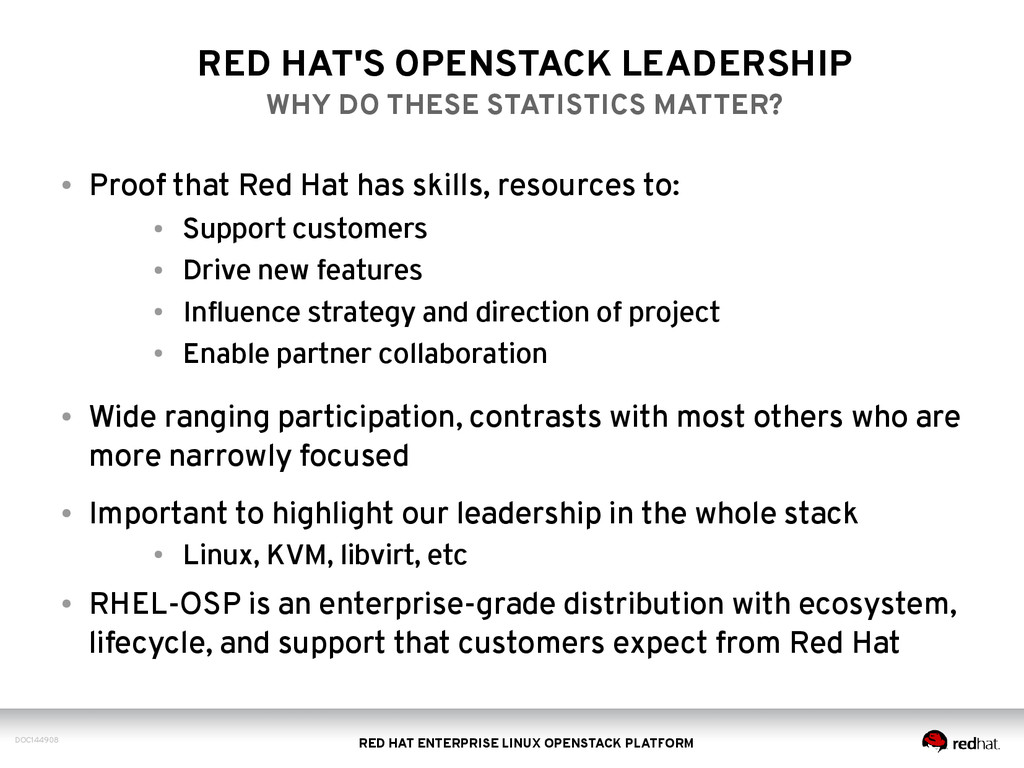
LEADERSHIP WHY DO THESE STATISTICS MATTER? • Proof that Red Hat has skills, resources to: • Support customers • Drive new features • Influence strategy and direction of project • Enable partner collaboration • Wide ranging participation, contrasts with most others who are more narrowly focused • Important to highlight our leadership in the whole stack • Linux, KVM, libvirt, etc • RHEL-OSP is an enterprise-grade distribution with ecosystem, lifecycle, and support that customers expect from Red Hat
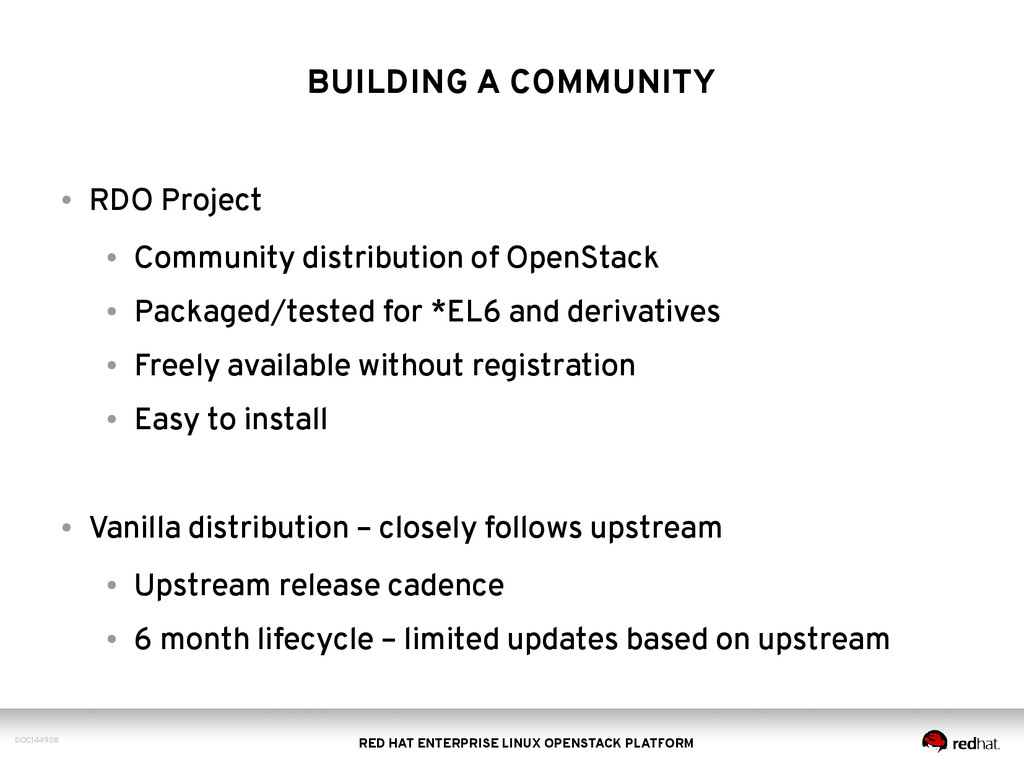
• RDO Project • Community distribution of OpenStack • Packaged/tested for *EL6 and derivatives • Freely available without registration • Easy to install • Vanilla distribution – closely follows upstream • Upstream release cadence • 6 month lifecycle – limited updates based on upstream
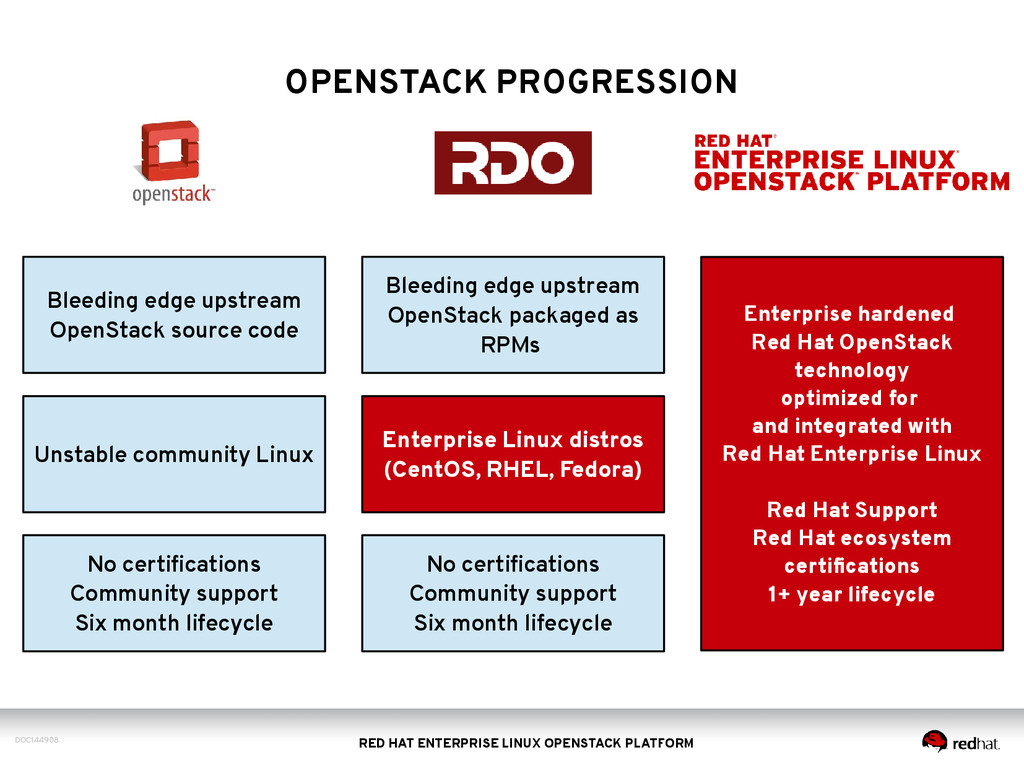
hardened Red Hat OpenStack technology optimized for and integrated with Red Hat Enterprise Linux Red Hat Support Red Hat ecosystem certifications 1+ year lifecycle Bleeding edge upstream OpenStack source code Unstable community Linux No certifications Community support Six month lifecycle Bleeding edge upstream OpenStack packaged as RPMs Enterprise Linux distros (CentOS, RHEL, Fedora) No certifications Community support Six month lifecycle
Hat Enterprise Linux OpenStack Platform • Introduction & Overview • OpenStack Core Services Overview • What's New in Havana release • Red Hat's Upstream Focus • RDO: Community OpenStack from Red Hat • How OpenStack is released • Red Hat Enterprise Linux OpenStack Platform brings Red Hat value to OpenStack • What's next in OpenStack and Red Hat OpenStack • Questions
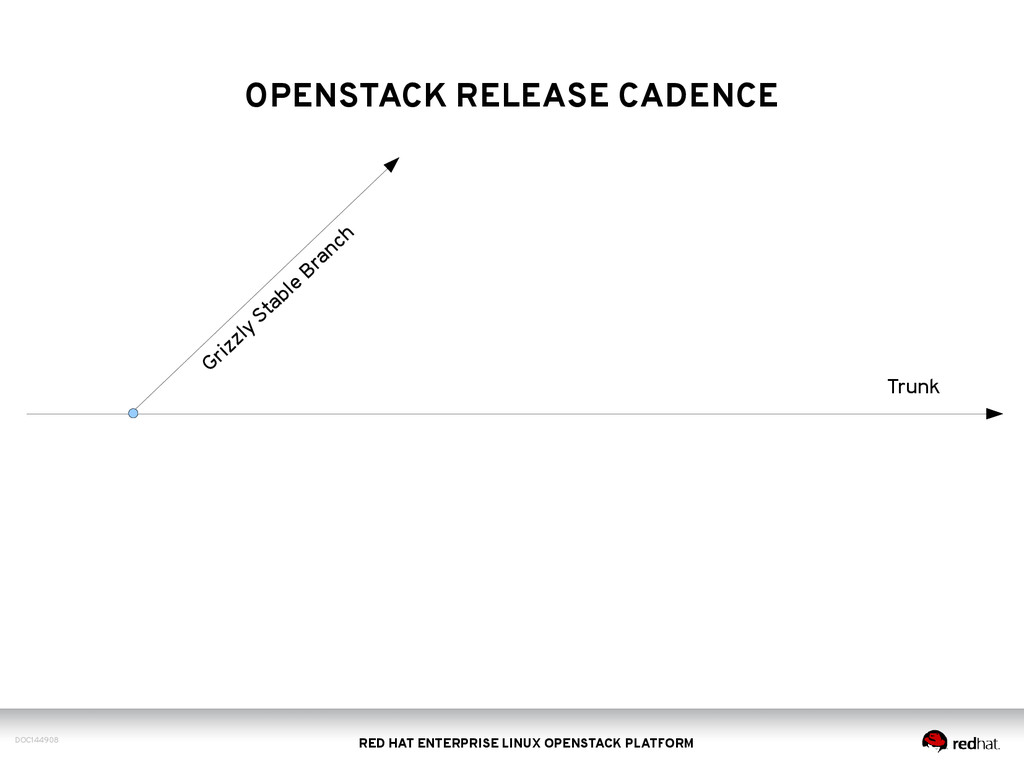
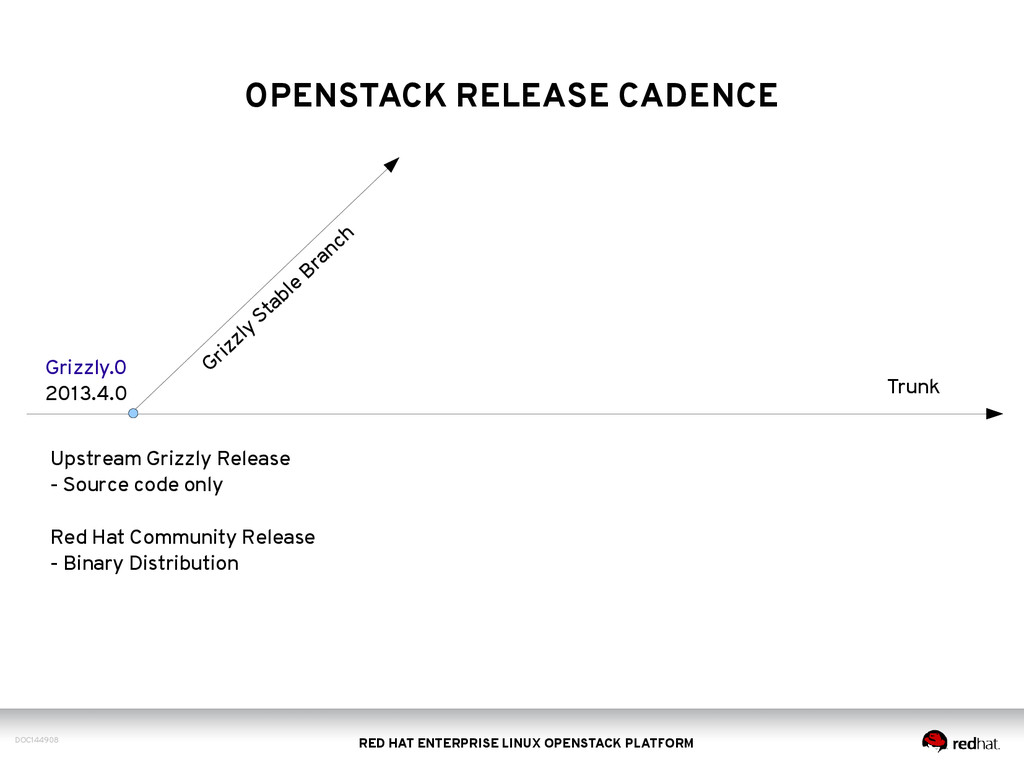
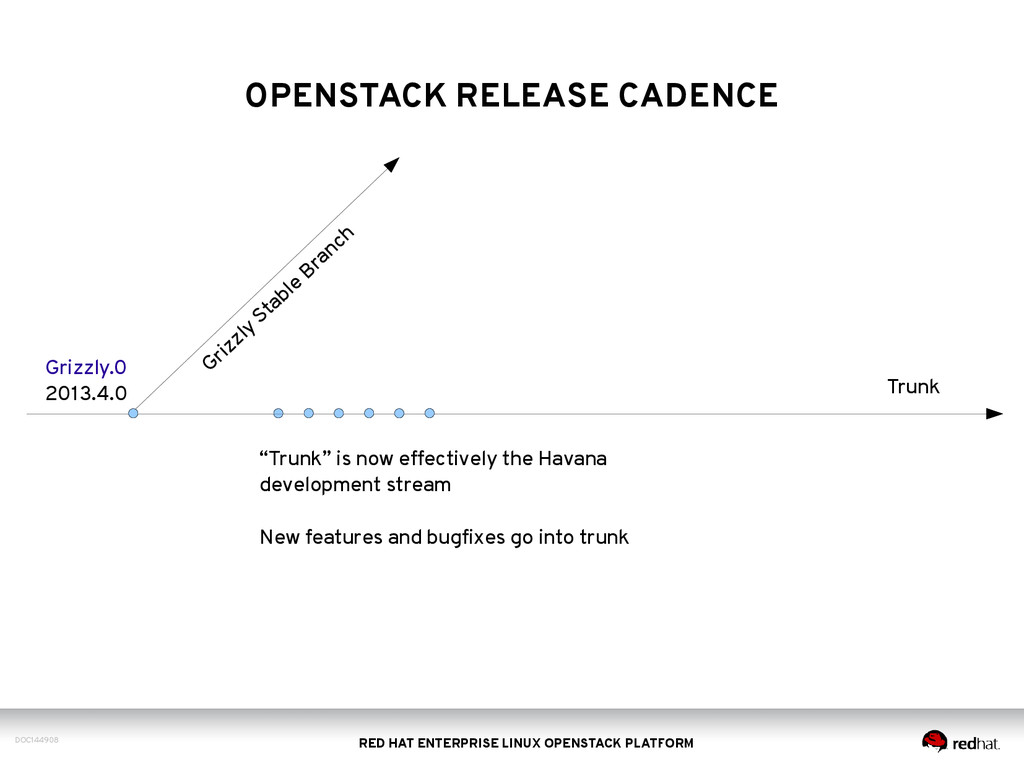
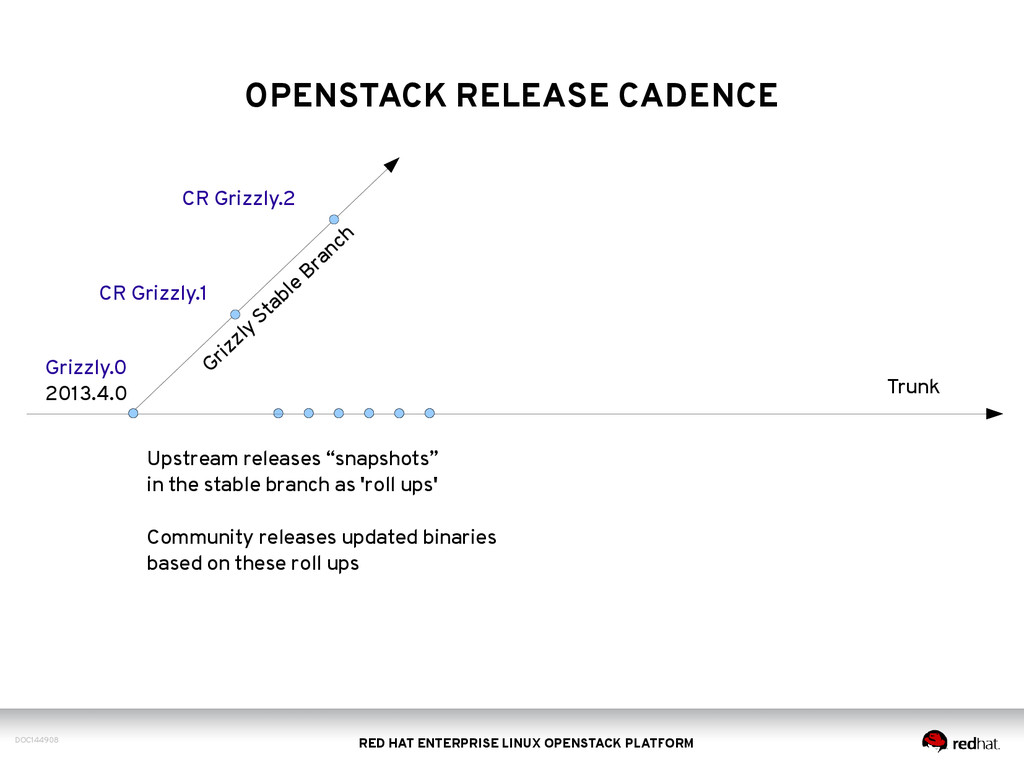
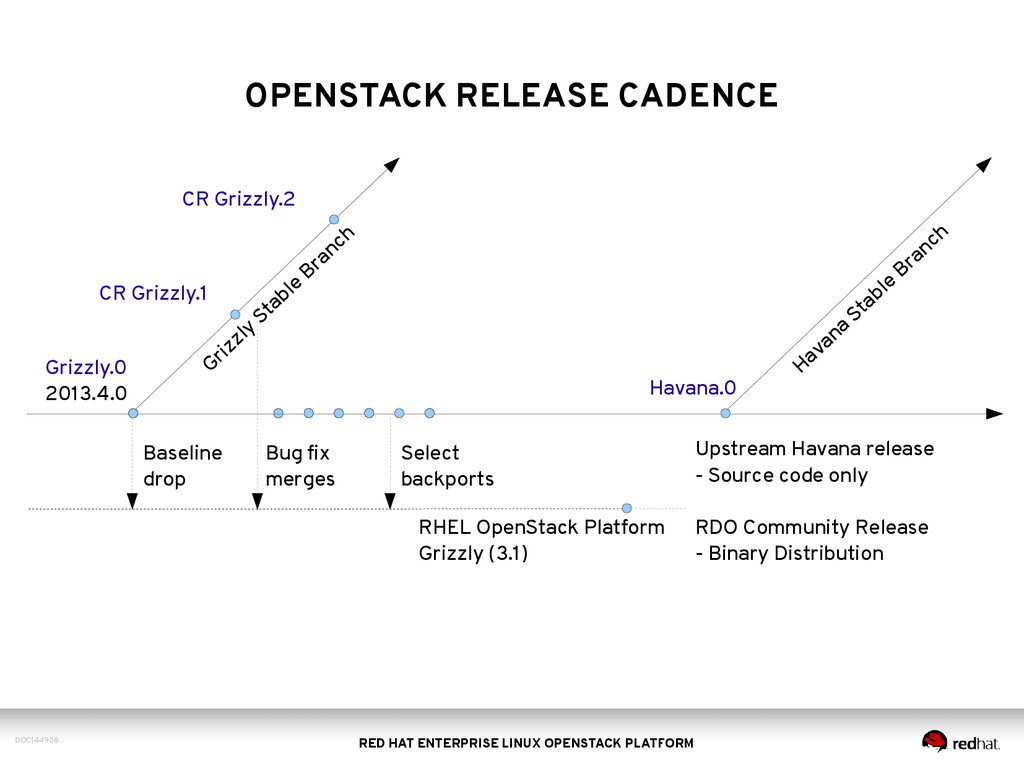
OPENSTACK RELEASE CADENCE Trunk Upstream releases “snapshots” in the stable branch as 'roll ups' Community releases updated binaries based on these roll ups CR Grizzly.1 Grizzly.0 2013.4.0 CR Grizzly.2
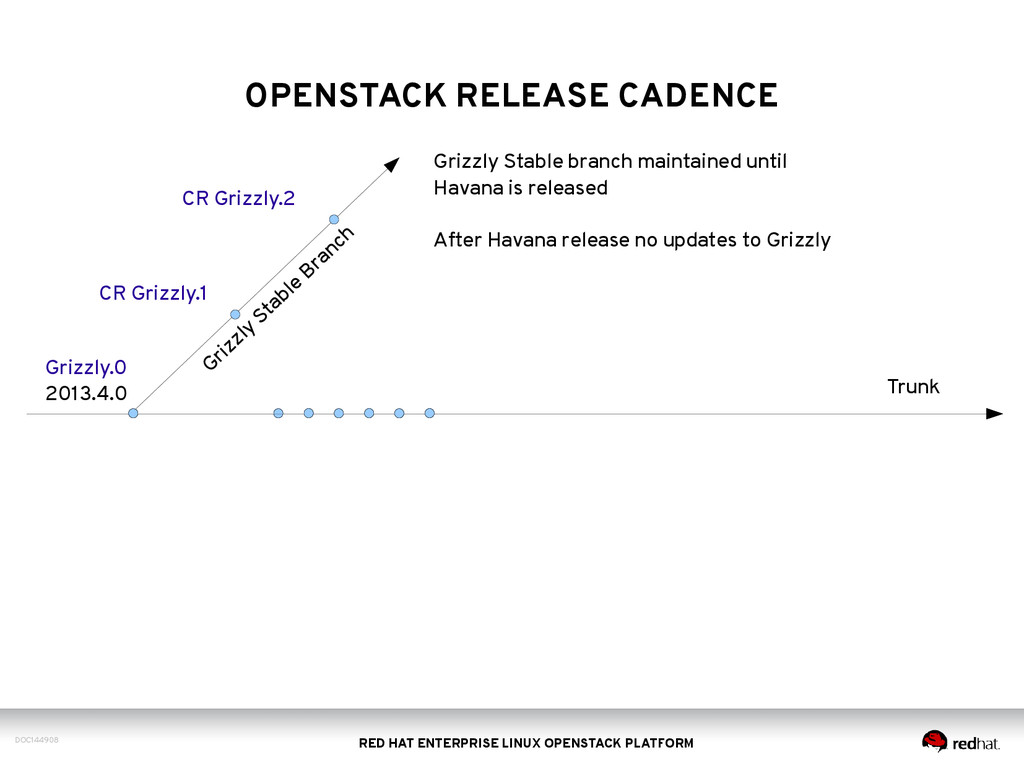
OPENSTACK RELEASE CADENCE Trunk Grizzly Stable branch maintained until Havana is released After Havana release no updates to Grizzly CR Grizzly.2 CR Grizzly.1 Grizzly.0 2013.4.0
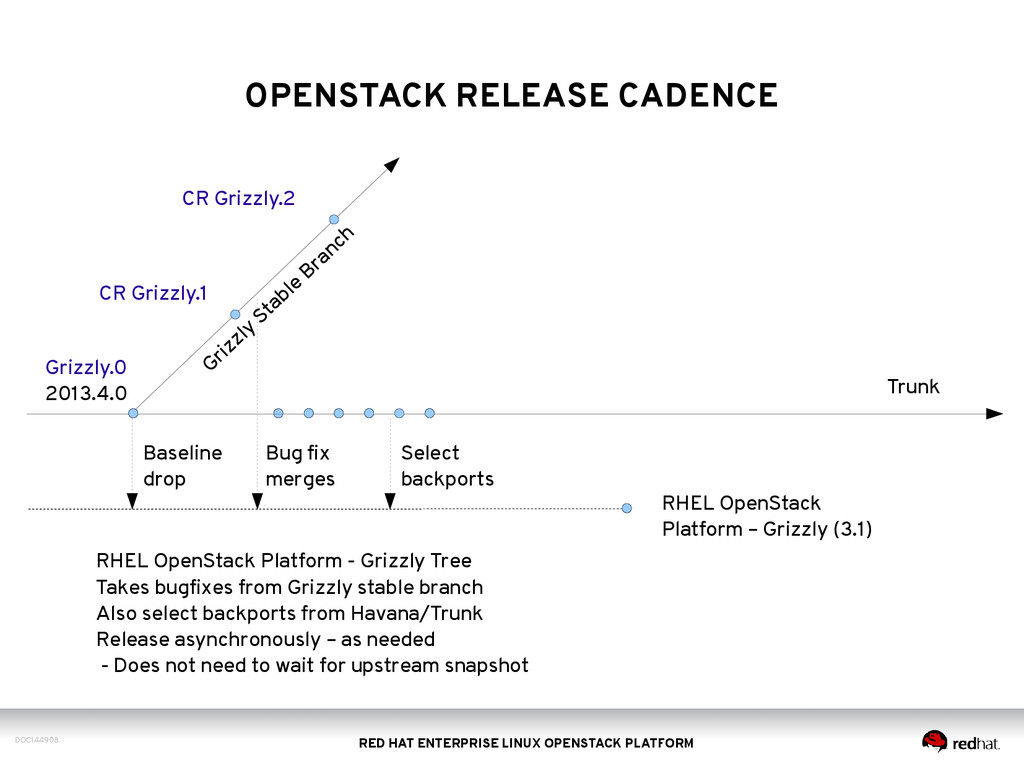
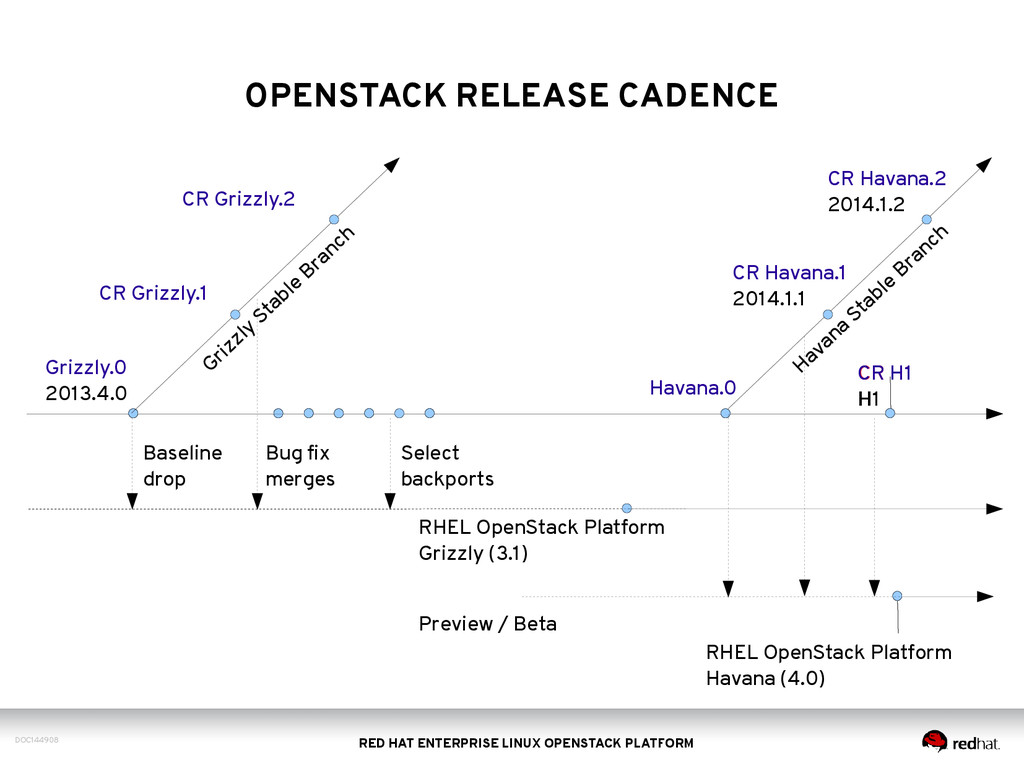
OPENSTACK RELEASE CADENCE Trunk Baseline drop Bug fix merges Select backports RHEL OpenStack Platform - Grizzly Tree Takes bugfixes from Grizzly stable branch Also select backports from Havana/Trunk Release asynchronously – as needed - Does not need to wait for upstream snapshot RHEL OpenStack Platform – Grizzly (3.1) CR Grizzly.2 CR Grizzly.1 Grizzly.0 2013.4.0
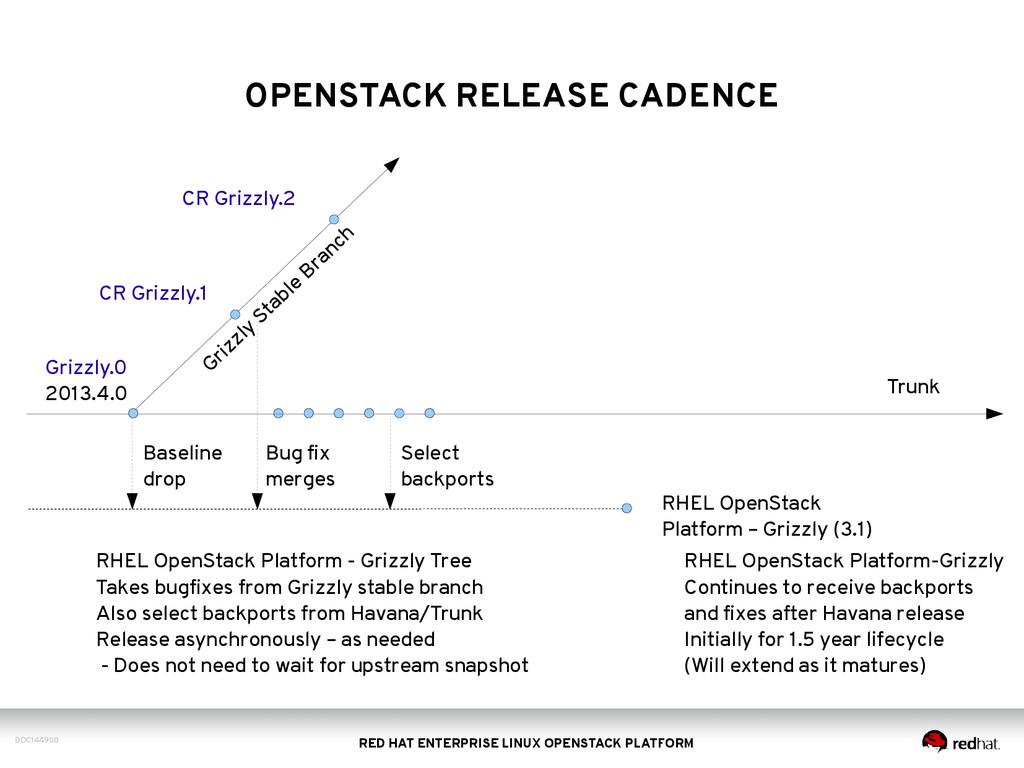
OPENSTACK RELEASE CADENCE Trunk Baseline drop Bug fix merges Select backports RHEL OpenStack Platform - Grizzly Tree Takes bugfixes from Grizzly stable branch Also select backports from Havana/Trunk Release asynchronously – as needed - Does not need to wait for upstream snapshot RHEL OpenStack Platform-Grizzly Continues to receive backports and fixes after Havana release Initially for 1.5 year lifecycle (Will extend as it matures) RHEL OpenStack Platform – Grizzly (3.1) CR Grizzly.2 CR Grizzly.1 Grizzly.0 2013.4.0
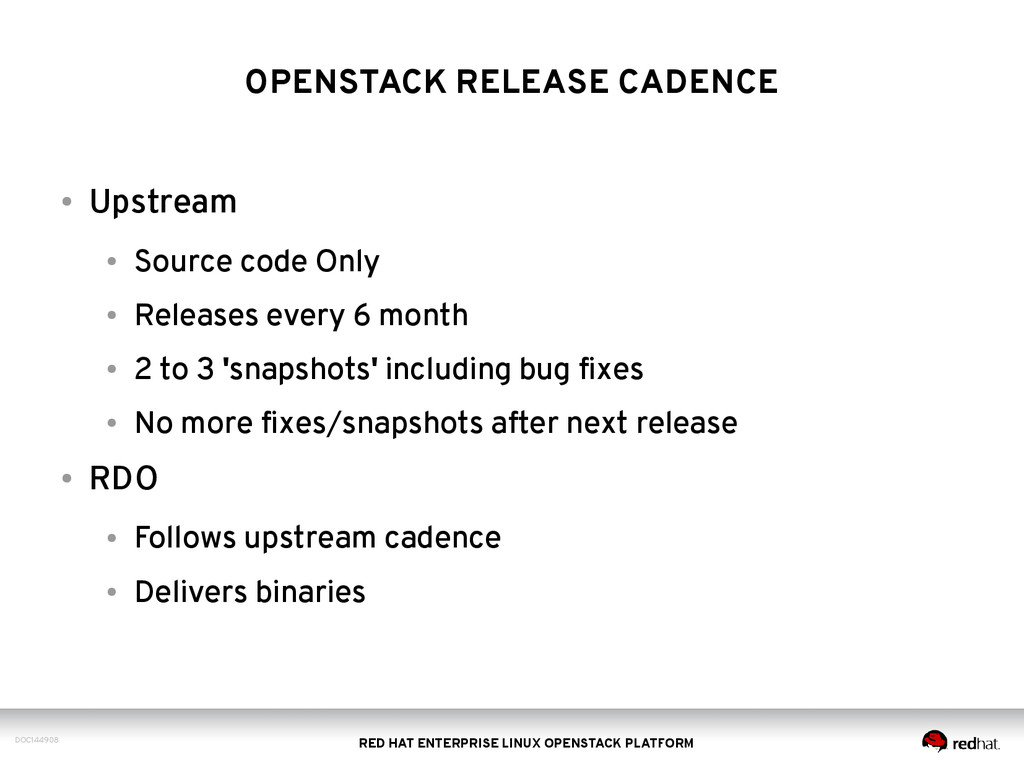
• Upstream • Source code Only • Releases every 6 month • 2 to 3 'snapshots' including bug fixes • No more fixes/snapshots after next release • RDO • Follows upstream cadence • Delivers binaries
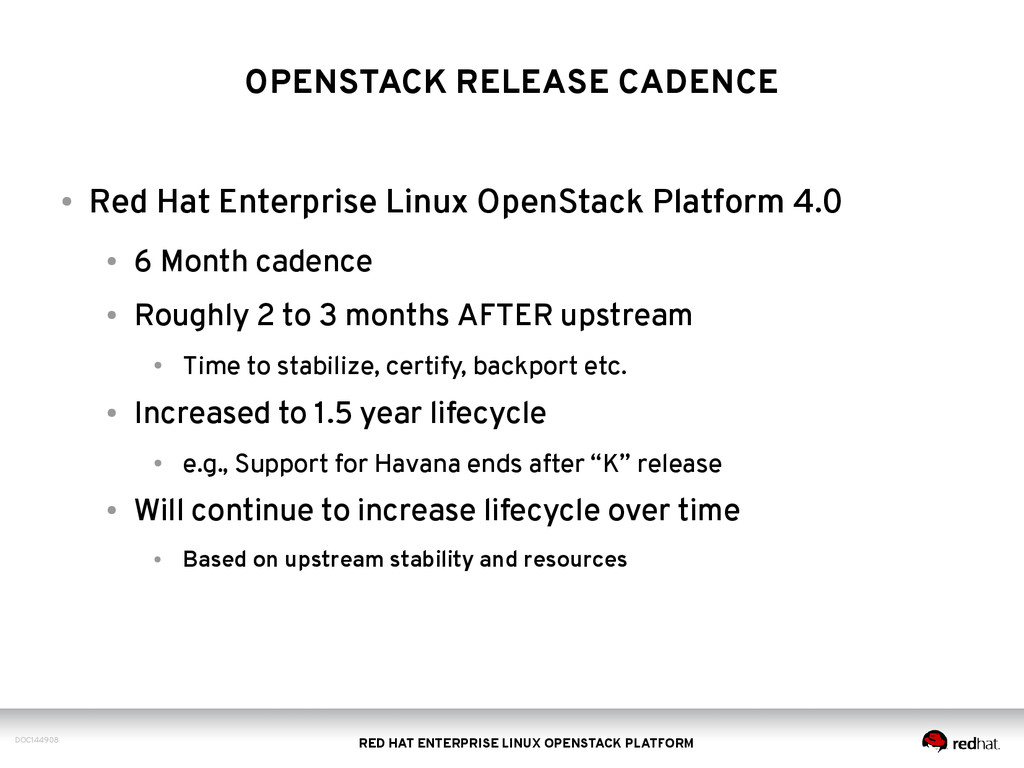
• Red Hat Enterprise Linux OpenStack Platform 4.0 • 6 Month cadence • Roughly 2 to 3 months AFTER upstream • Time to stabilize, certify, backport etc. • Increased to 1.5 year lifecycle • e.g., Support for Havana ends after “K” release • Will continue to increase lifecycle over time • Based on upstream stability and resources
Hat Enterprise Linux OpenStack Platform • Introduction & Overview • OpenStack Core Services Overview • What's New in Havana release • Red Hat's Upstream Focus • RDO: Community OpenStack from Red Hat • How OpenStack is released • Red Hat Enterprise Linux OpenStack Platform brings Red Hat value to OpenStack • What's next in OpenStack and Red Hat OpenStack • Questions
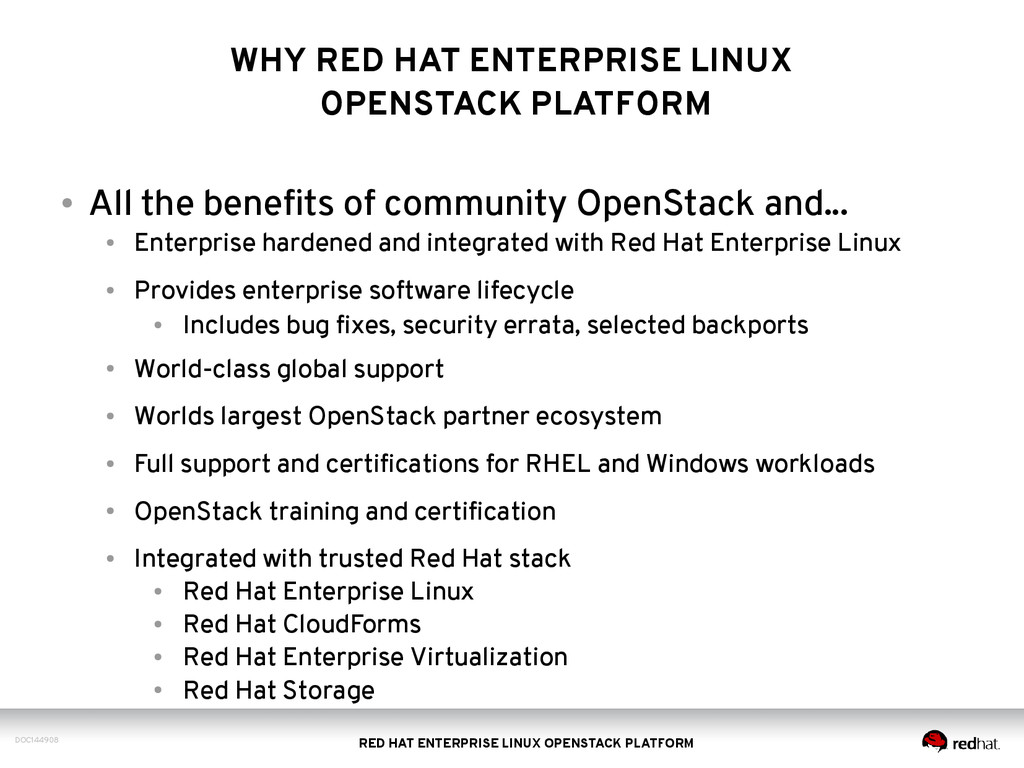
ENTERPRISE LINUX OPENSTACK PLATFORM • All the benefits of community OpenStack and... • Enterprise hardened and integrated with Red Hat Enterprise Linux • Provides enterprise software lifecycle • Includes bug fixes, security errata, selected backports • World-class global support • Worlds largest OpenStack partner ecosystem • Full support and certifications for RHEL and Windows workloads • OpenStack training and certification • Integrated with trusted Red Hat stack • Red Hat Enterprise Linux • Red Hat CloudForms • Red Hat Enterprise Virtualization • Red Hat Storage
Hat Enterprise Linux OpenStack Platform • Introduction & Overview • OpenStack Core Services Overview • What's New in Havana release • Red Hat's Upstream Focus • RDO: Community OpenStack from Red Hat • How OpenStack is released • Red Hat Enterprise Linux OpenStack Platform brings Red Hat value to OpenStack • What's next in OpenStack and Red Hat OpenStack • Questions
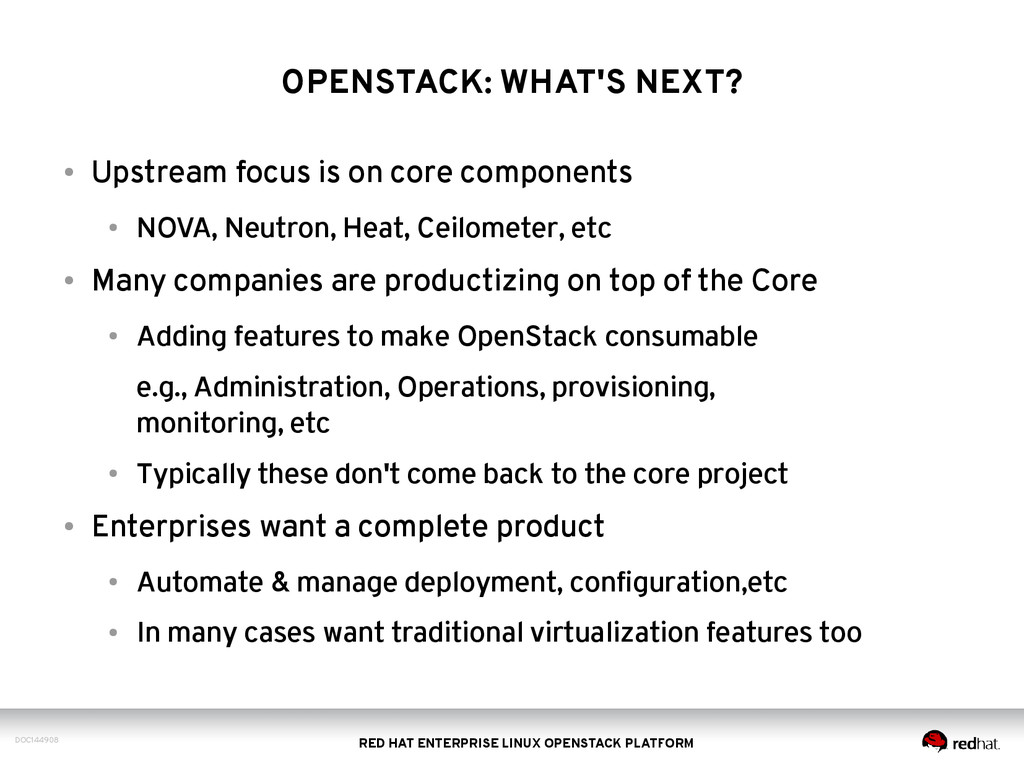
• Upstream focus is on core components • NOVA, Neutron, Heat, Ceilometer, etc • Many companies are productizing on top of the Core • Adding features to make OpenStack consumable e.g., Administration, Operations, provisioning, monitoring, etc • Typically these don't come back to the core project • Enterprises want a complete product • Automate & manage deployment, configuration,etc • In many cases want traditional virtualization features too
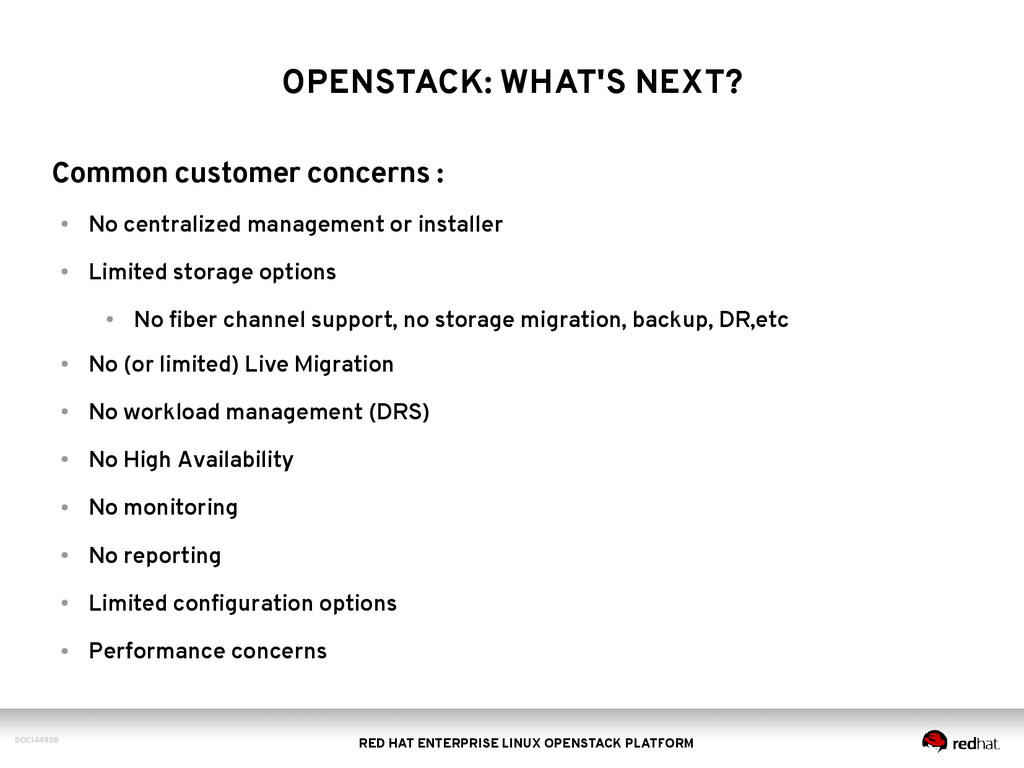
: • No centralized management or installer • Limited storage options • No fiber channel support, no storage migration, backup, DR,etc • No (or limited) Live Migration • No workload management (DRS) • No High Availability • No monitoring • No reporting • Limited configuration options • Performance concerns OPENSTACK: WHAT'S NEXT?
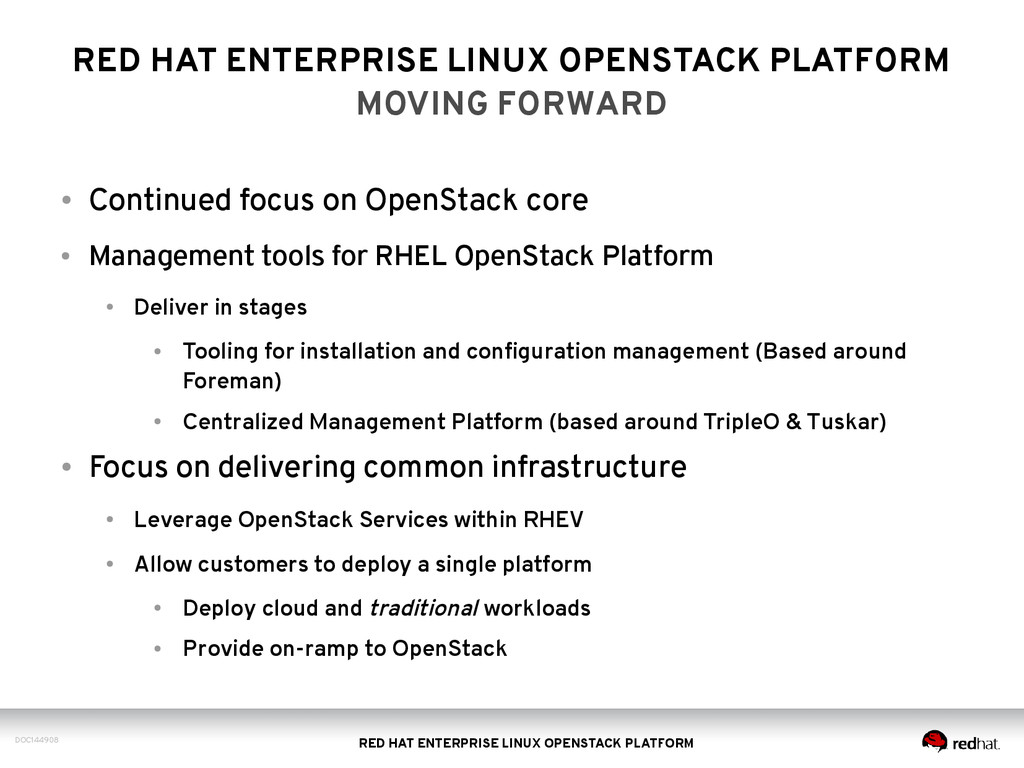
LINUX OPENSTACK PLATFORM MOVING FORWARD • Continued focus on OpenStack core • Management tools for RHEL OpenStack Platform • Deliver in stages • Tooling for installation and configuration management (Based around Foreman) • Centralized Management Platform (based around TripleO & Tuskar) • Focus on delivering common infrastructure • Leverage OpenStack Services within RHEV • Allow customers to deploy a single platform • Deploy cloud and traditional workloads • Provide on-ramp to OpenStack


 ueponx
 teamlab
 codatum
 nealle
 kentapapa
 sansantech
 odashi
 bgpat
 raspython3
 pfn
 mhrtech
 gogutan
 elsirapls
 techseoconnect
 aleyda
 notwaldorf
 mongodb
 thirion
 lemiorhan
 gurzu
 aki_iinuma
 marktimemedia
 ryanjones