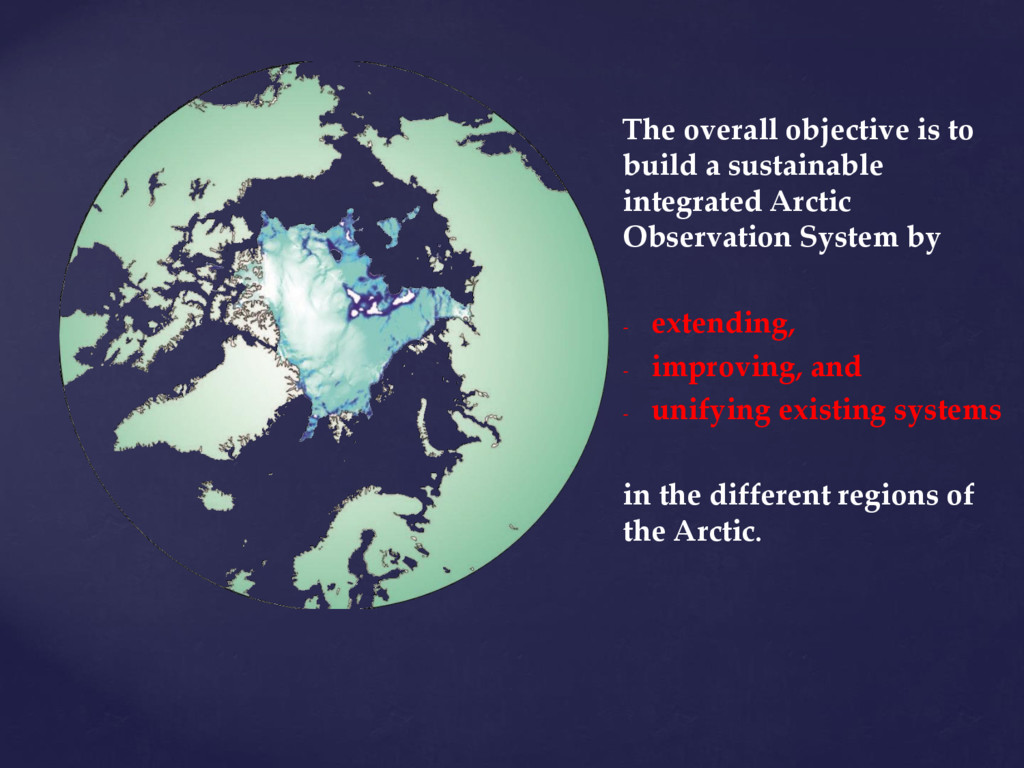
by the European Commission 2017-2021 (5 years) Climate change will have wide implications for the global and Arctic environment, its ecosystems, the indigenous and local communities, and for the access to the Arctic and its natural resources.
international assessments of global challenges such as climate change, scarcity of natural resources, and global-scale hazards such as earth quakes ((=provide example of the kind of hazard we have in mind)) . to strengthen the societal and economic role of the Arctic region, and to support the EU strategy for the Arctic and related maritime and environmental policies. It is of paramount importance to establish an integrated Arctic Observing System By ‘integrated’, we mean connected across 1) institutions, 2) disciplines, and 3) ways of knowing =my suggestion!
chemistry and biology for the Atmosphere Ocean Terrestrial At high time and space resolution and in real time. To help fill the gaps extensive in-situ and remote sensing is needed, in addition to numerical models A sustainable iAOS addressing all the needs are challenging By ‘sustainable’, we mean an iAOS that can be sustained beyond the lifetime of the project =my suggestion only!
and collaboration between organizations involved in developing Arctic observing systems. Exploit existing observing systems and databases of atmosphere, ocean, cryosphere, geosphere and terrestrial data, incl. community-based observing, as the backbone of an integrated Arctic Observing System (iAOS). Contribute to fill gaps of the in situ observing system by use of robust technologies suitable for the Arctic. Develop a Roadmap for future implementation of a Sustainable Arctic Observing System. INTAROS Specific objectives
of scientists and community members Develop and implement the iAOS platform for integration and analysis of multidisciplinary science w/ distributed data repositories. Add value to observations through models Demonstrate benefits of the iAOS functionality Develop professional skills in using the iAOS platform and new data products within industry, government agencies, education and science. INTAROS Specific objectives
data in the Arctic with a view to improving the assessment and prediction capacity of Arctic and planetary changes. Support standardization and calibration/validation activities, and improve the inter-operability of Arctic observational data. Improve the sustained integration of space-based and in-situ Arctic observations into process models and forecast systems showing benefit to the Copernicus monitoring services. Contribute to the long-term improvement of Arctic observation systems and related services. Impact on establishing an integrated Arctic Observing System
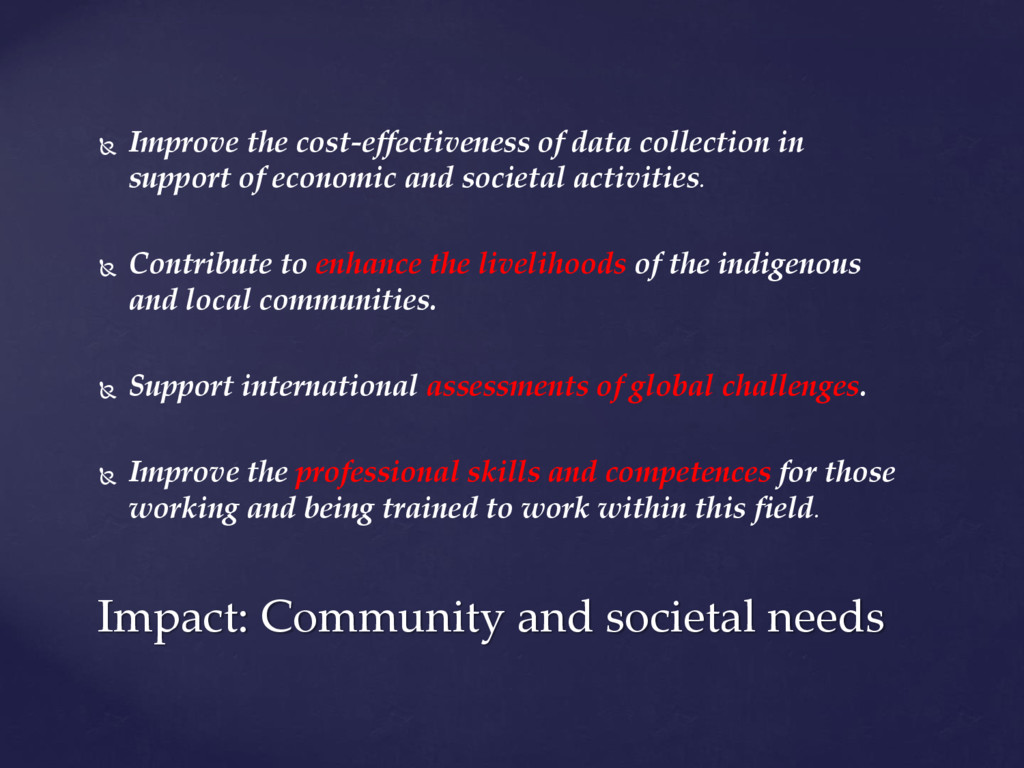
economic and societal activities. Contribute to enhance the livelihoods of the indigenous and local communities. Support international assessments of global challenges. Improve the professional skills and competences for those working and being trained to work within this field. Impact: Community and societal needs
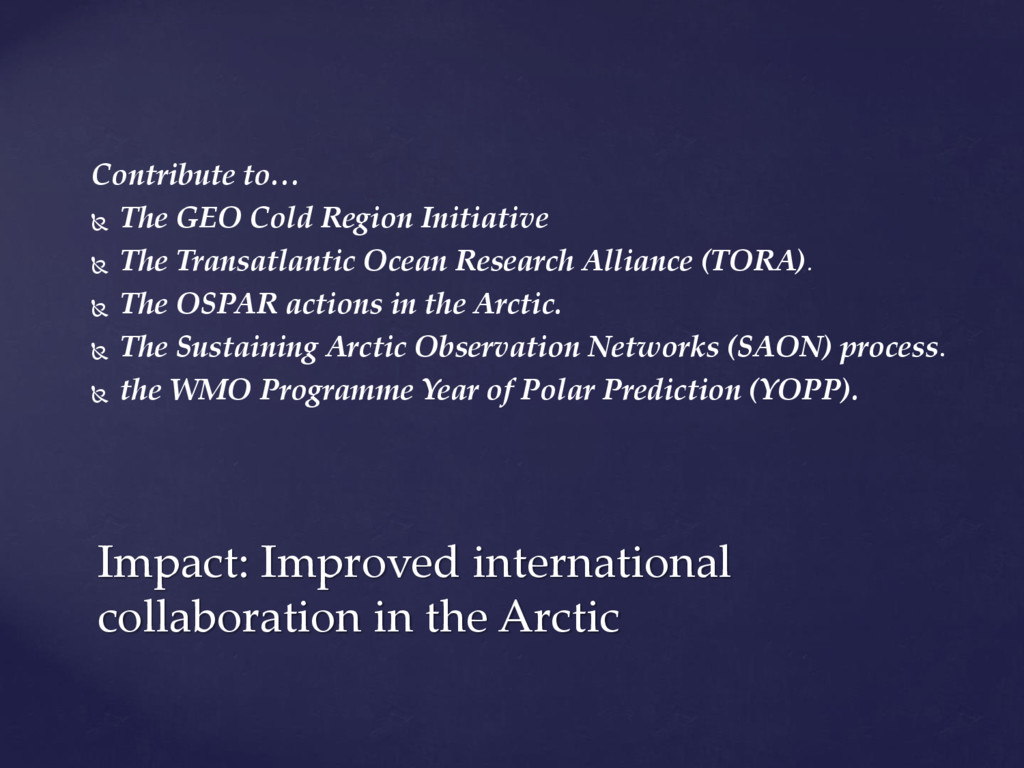
Transatlantic Ocean Research Alliance (TORA). The OSPAR actions in the Arctic. The Sustaining Arctic Observation Networks (SAON) process. the WMO Programme Year of Polar Prediction (YOPP). Impact: Improved international collaboration in the Arctic
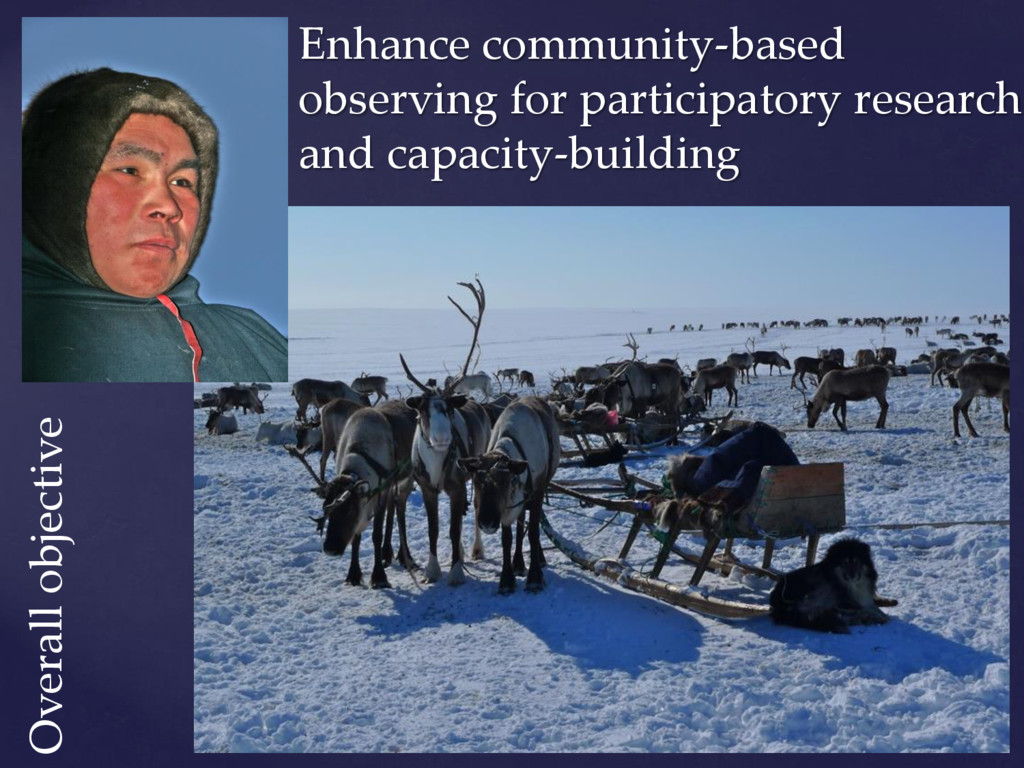
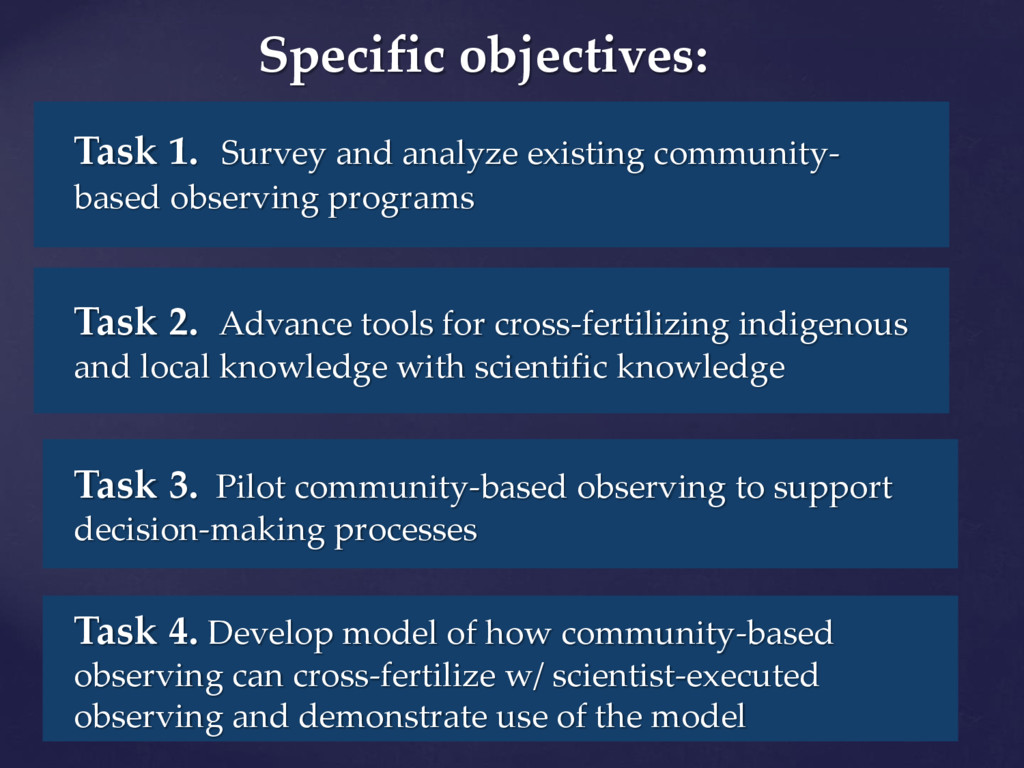
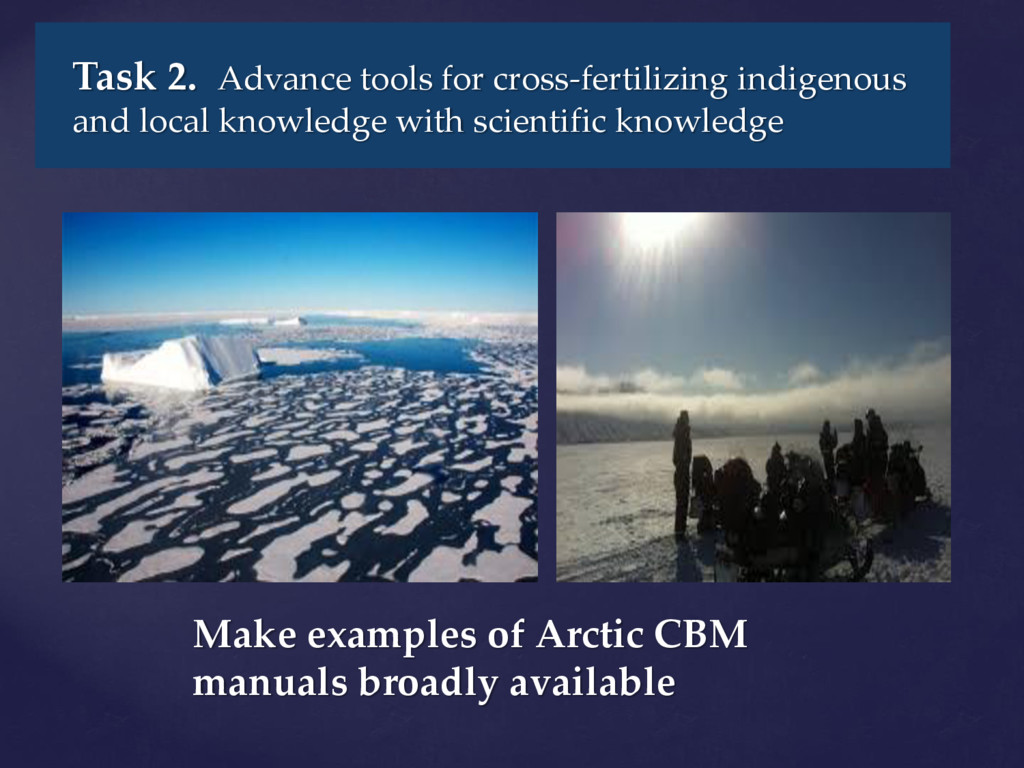
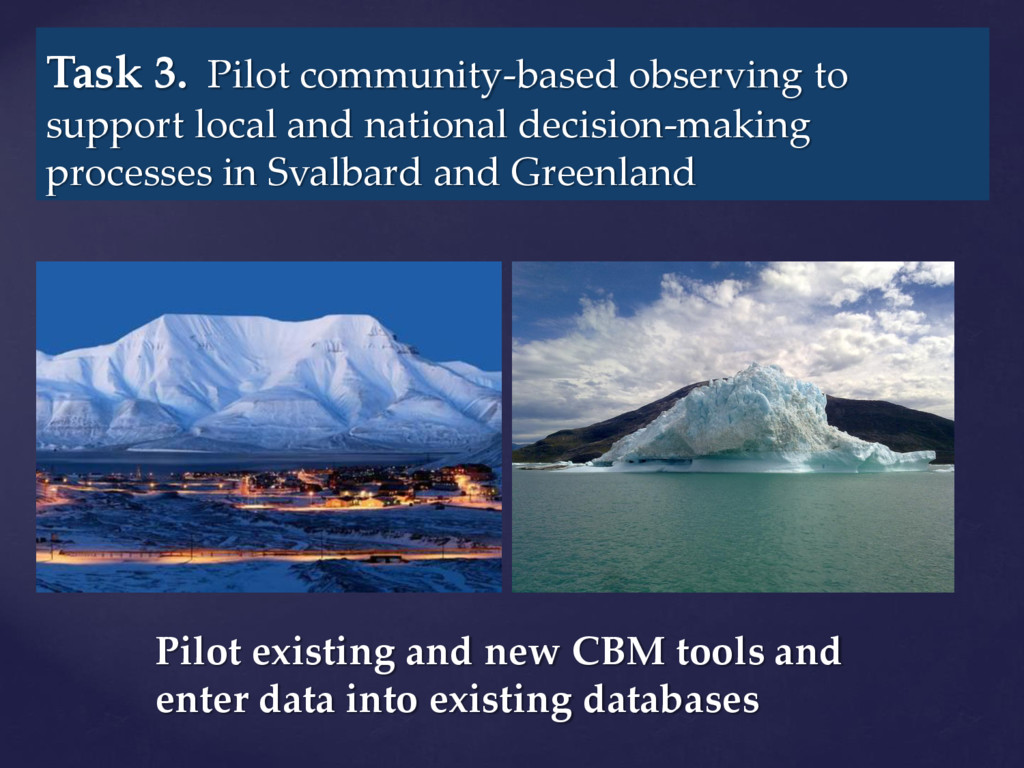
Specific objectives: Task 2. Advance tools for cross-fertilizing indigenous and local knowledge with scientific knowledge Task 3. Pilot community-based observing to support decision-making processes Task 4. Develop model of how community-based observing can cross-fertilize w/ scientist-executed observing and demonstrate use of the model
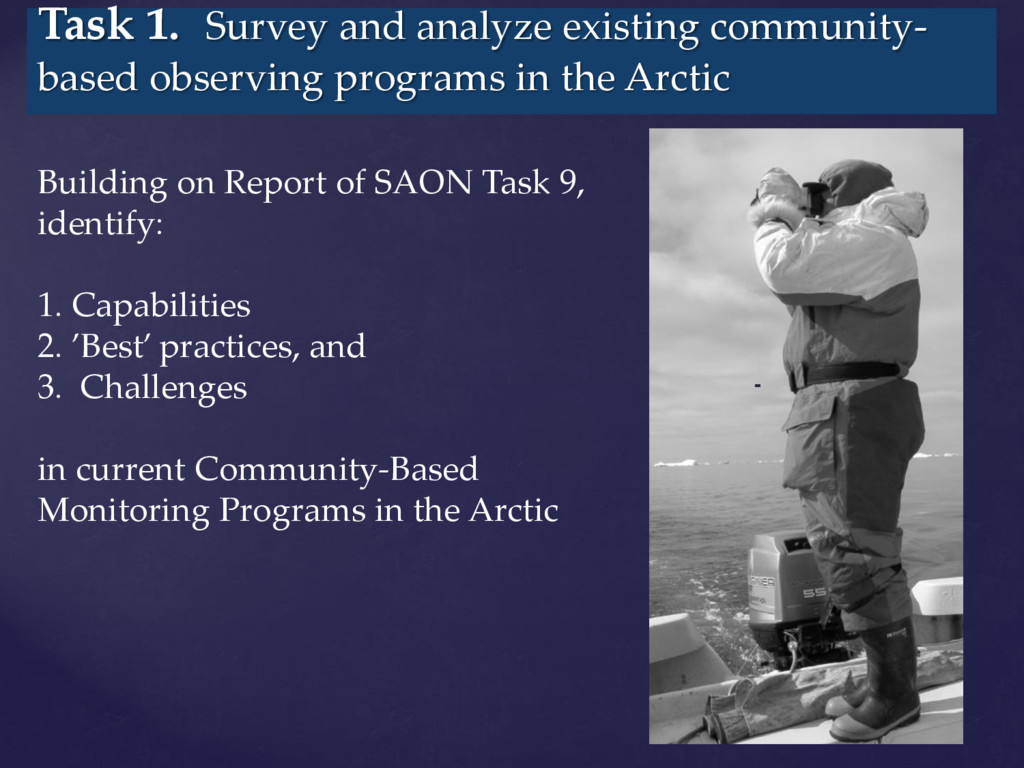
2. ’Best’ practices, and 3. Challenges in current Community-Based Monitoring Programs in the Arctic Task 1. Survey and analyze existing community- based observing programs in the Arctic
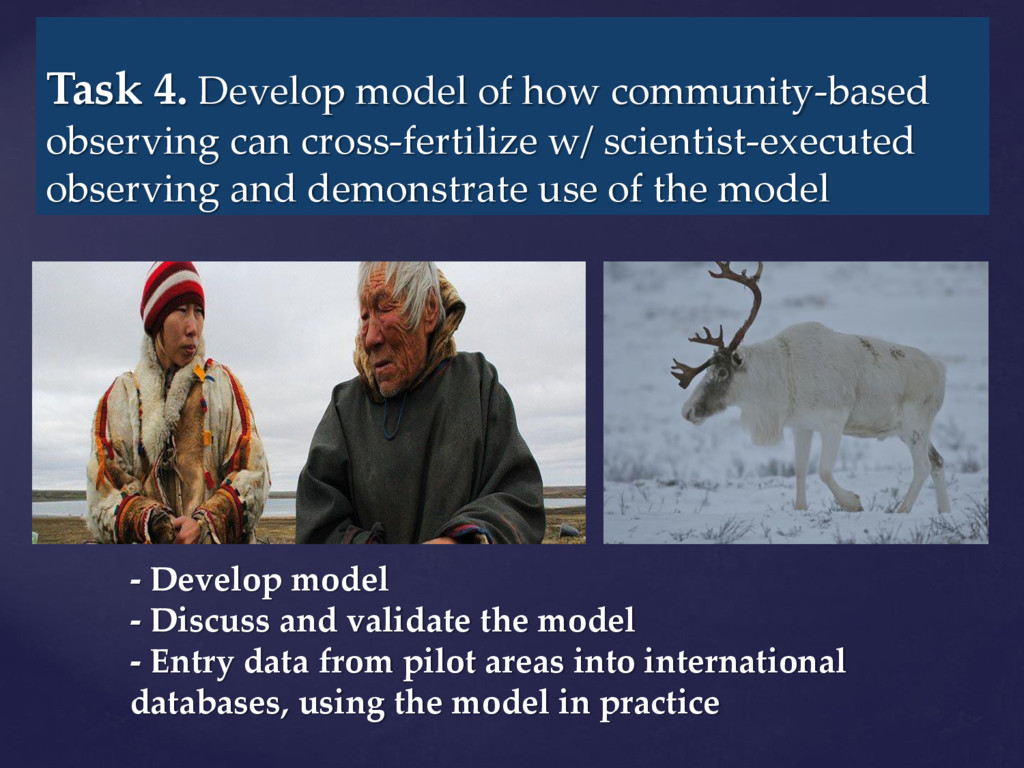
Entry data from pilot areas into international databases, using the model in practice Task 4. Develop model of how community-based observing can cross-fertilize w/ scientist-executed observing and demonstrate use of the model


 ipfbrussels
 lara
lara
 lynnandtonic
 takai
takai
 aleyda
 chriscoyier
 mayunak
 schlessera
 akihiro_kokubo
 mza
mza
 pauljervisheath
 philnash
 sonatard