Upgrade to Pro — share decks privately, control downloads, hide ads and more …

Know your impact: An introduction to AB testing

Avatar for Jalyna Jalyna
November 03, 2016

Know your impact: An introduction to AB testing

As developers we care a lot about metrics and benchmarks related to our code and its speed. You know how to improve the test coverage or how to make this one request faster. But how do you improve your conversion rate, how can you validate if a feature was a success?

In this talk I will tell about my own journey from low motivation to AB-Testing and how small measurements can keep you happy. I will give you an introduction about the statistical background of AB Testing and some best practices you can easily apply.

Avatar for Jalyna

Jalyna

November 03, 2016

More Decks by Jalyna

Other Decks in Programming

Transcript

  1. What motivates you? • Autonomy: when, what? • Mastery: not

    too easy, not too hard • Purpose: what is the outcome?
  2. What motivates you? • Autonomy: when, what? • Mastery: not

    too easy, not too hard • Purpose: what is the outcome?
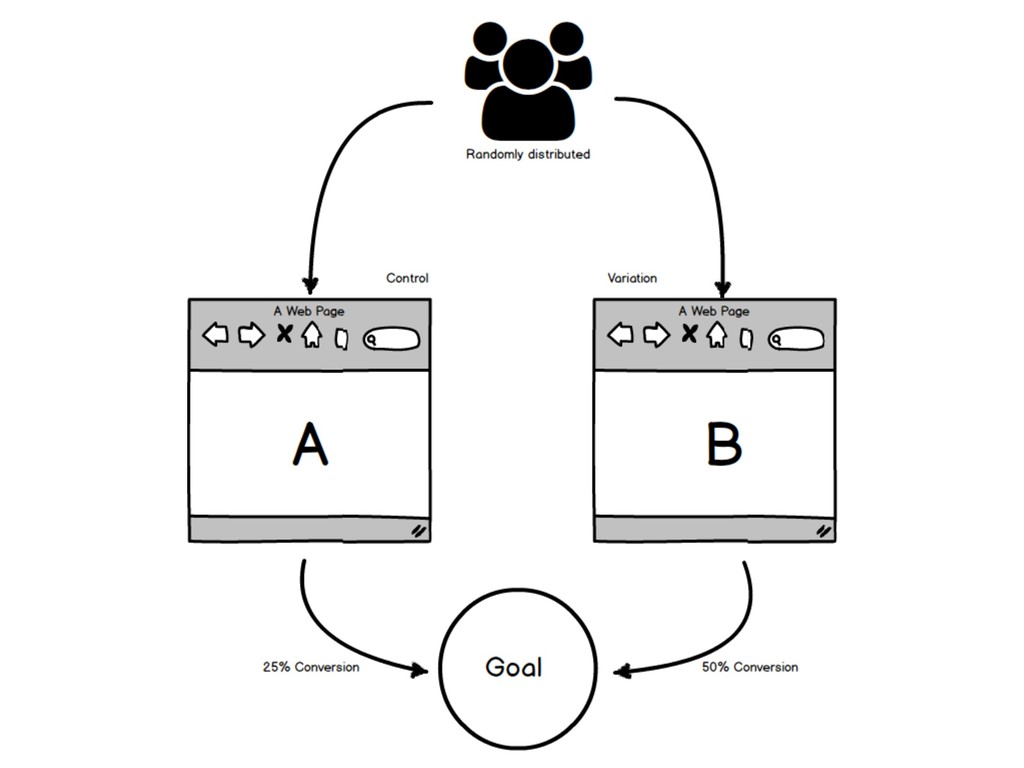
  3. A

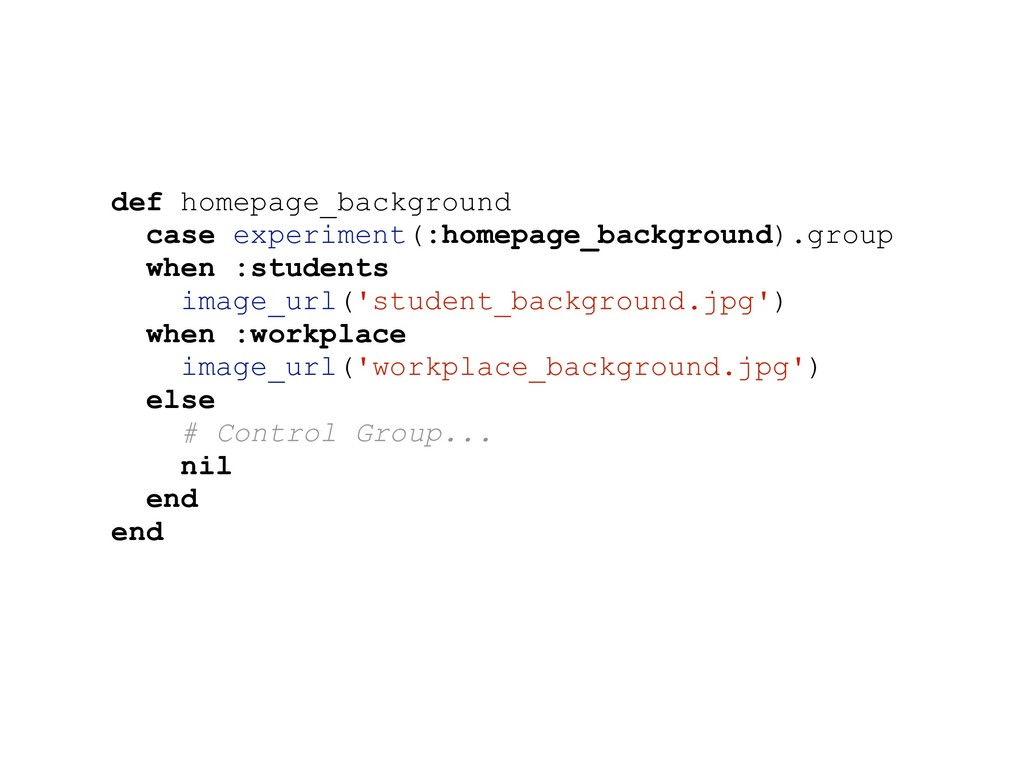
  4. experiment :homepage_background do goal 'sign up' group :students, description: 'photo

    of real students' group :workplace, description: 'photo of workplace with laptop' end
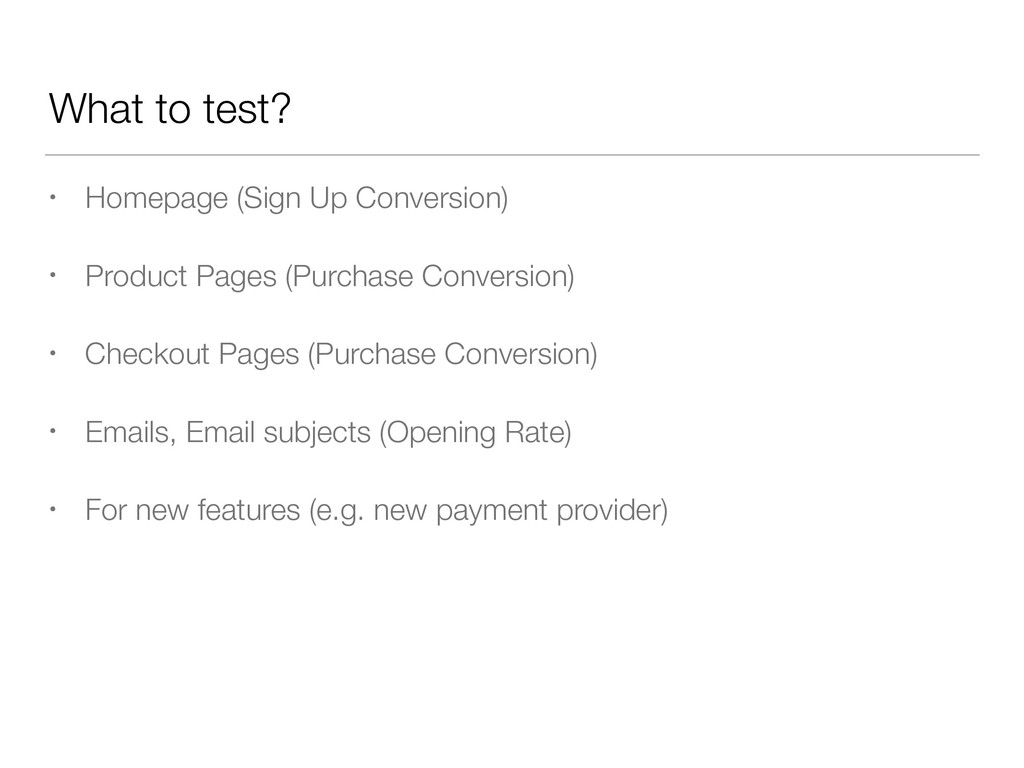
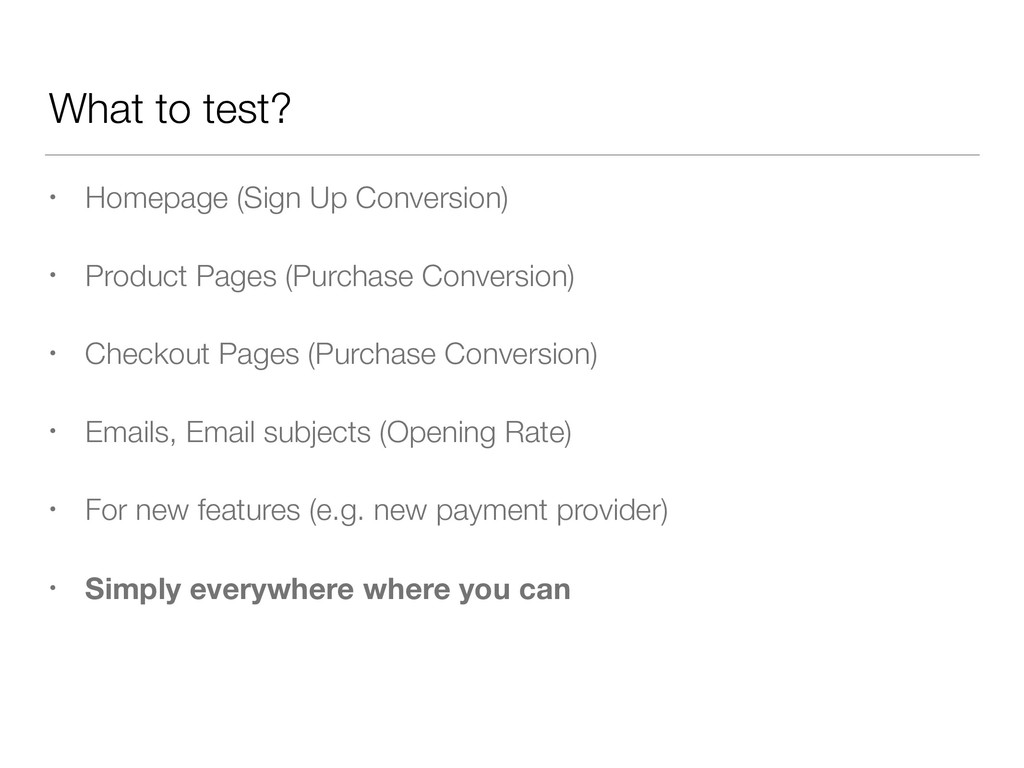
  5. What to test? • Homepage (Sign Up Conversion) • Product

    Pages (Purchase Conversion) • Checkout Pages (Purchase Conversion) • Emails, Email subjects (Opening Rate) • For new features (e.g. new payment provider)
  6. What to test? • Homepage (Sign Up Conversion) • Product

    Pages (Purchase Conversion) • Checkout Pages (Purchase Conversion) • Emails, Email subjects (Opening Rate) • For new features (e.g. new payment provider) • Simply everywhere where you can
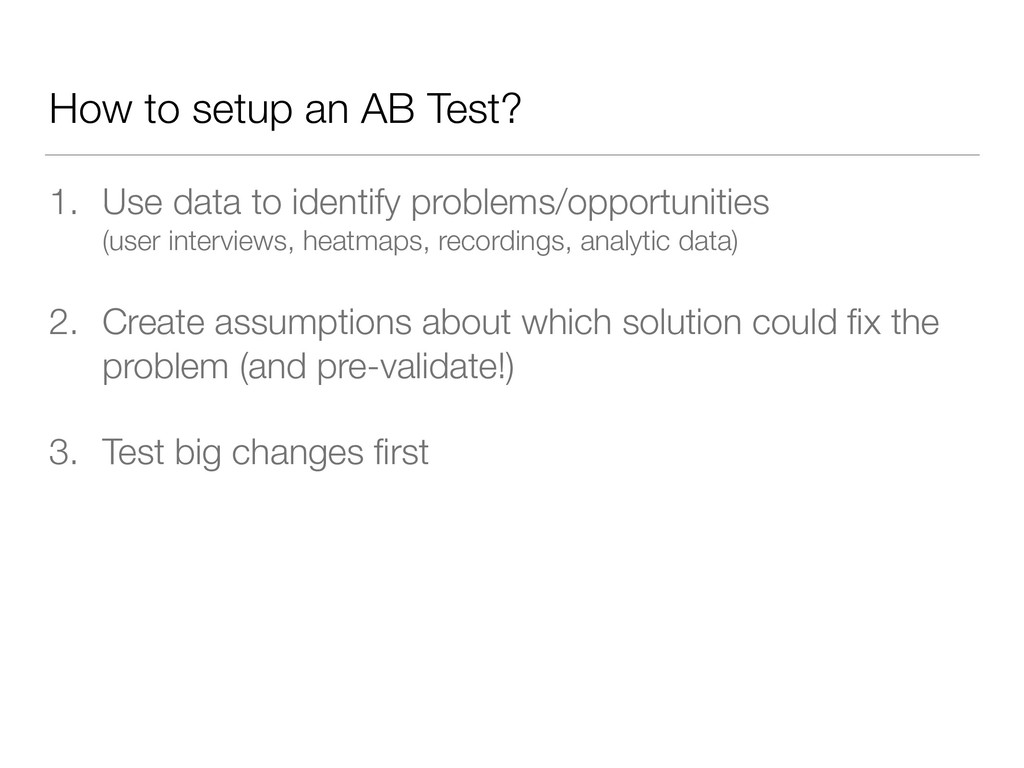
  7. How to setup an AB Test? 1. Use data to

    identify problems/opportunities
 (user interviews, heatmaps, recordings, analytic data) 2. Create assumptions about which solution could fix the problem (and pre-validate!) 3. Test big changes first
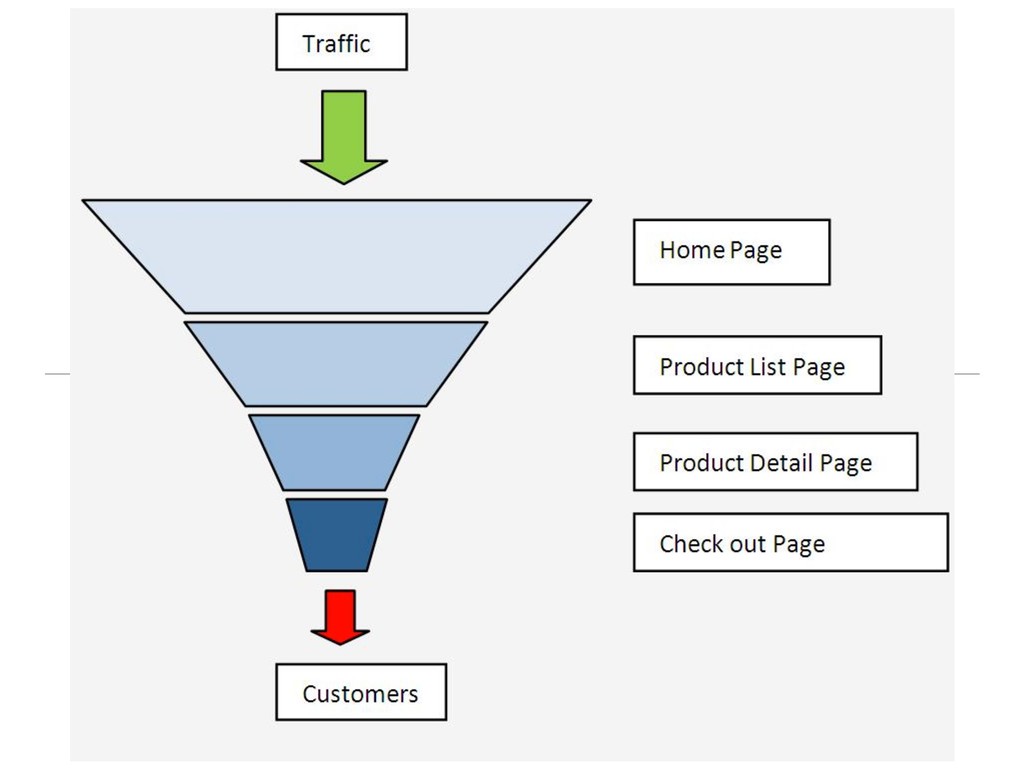
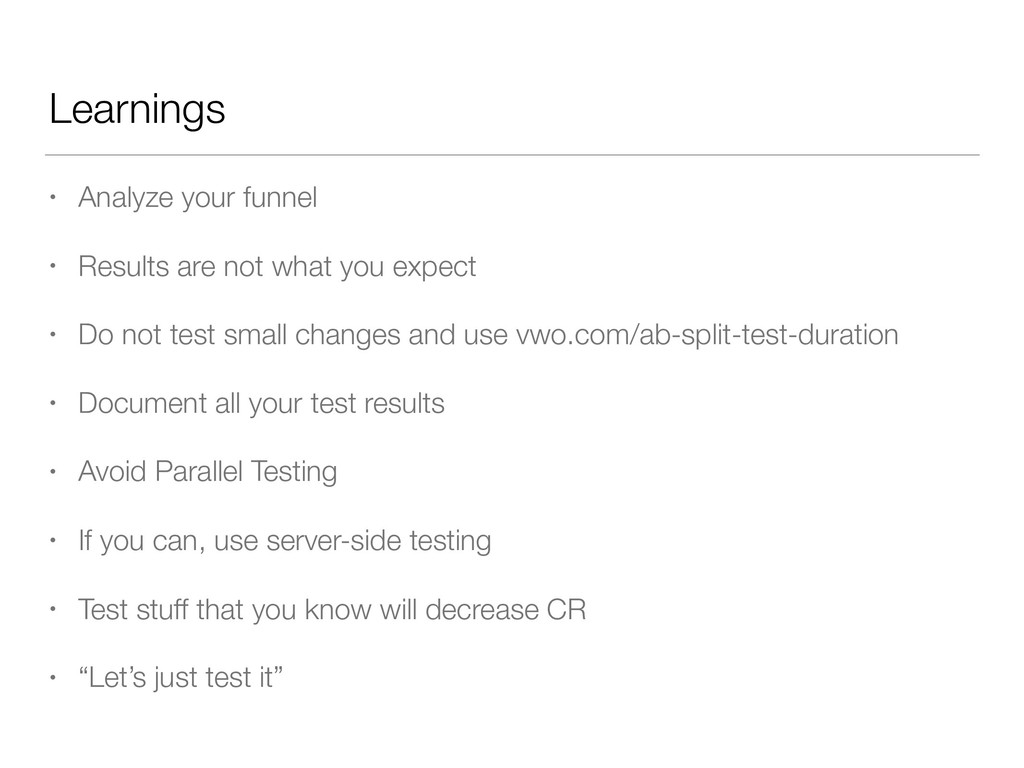
  8. Learnings • Analyze your funnel • Results are not what

    you expect • Do not test small changes and use vwo.com/ab-split-test-duration • Document all your test results • Avoid Parallel Testing • If you can, use server-side testing • Test stuff that you know will decrease CR • “Let’s just test it”
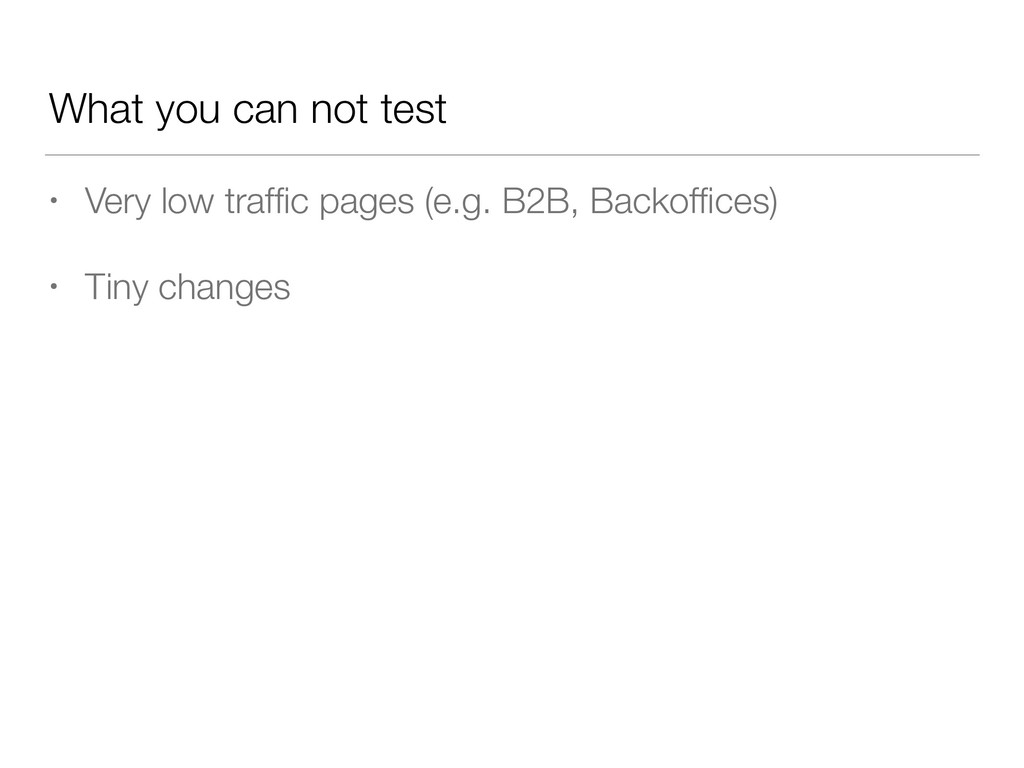
  9. What you can not test • Very low traffic pages

    (e.g. B2B, Backoffices) • Tiny changes
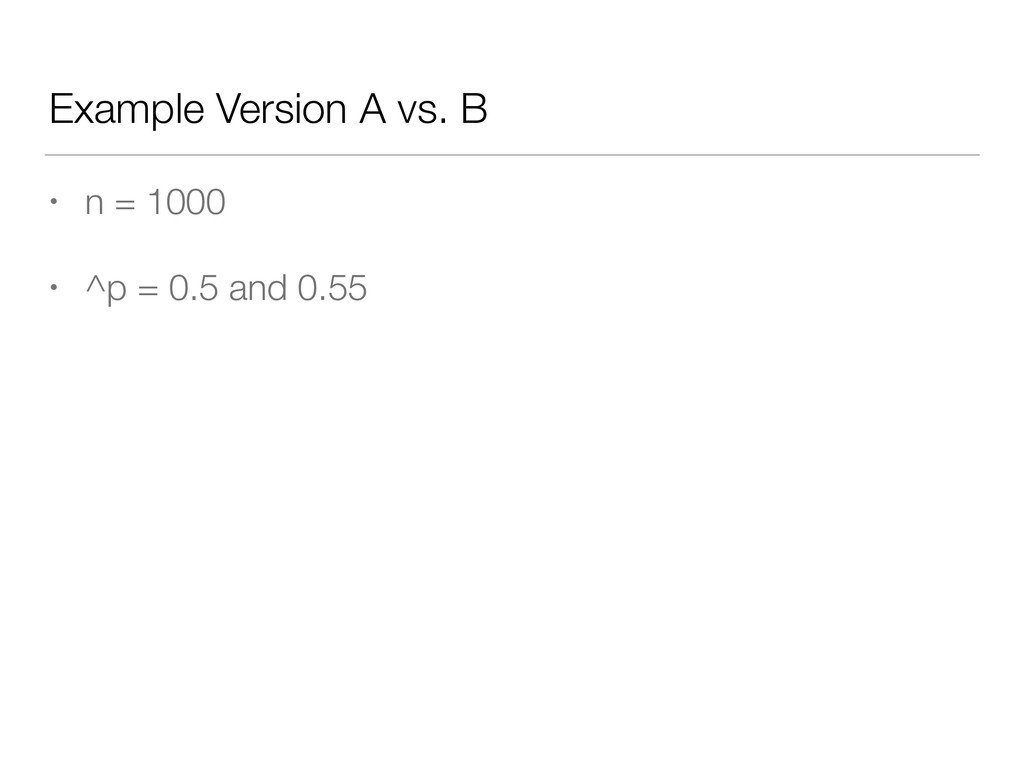
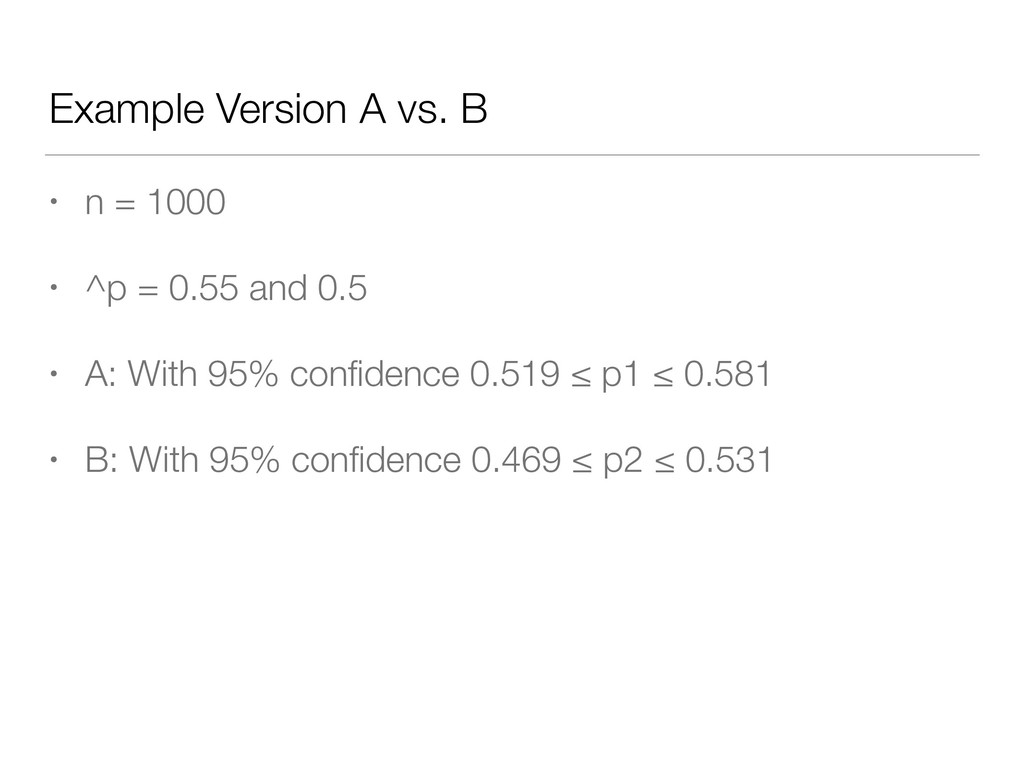
  10. Example Version A vs. B • n = 1000 •

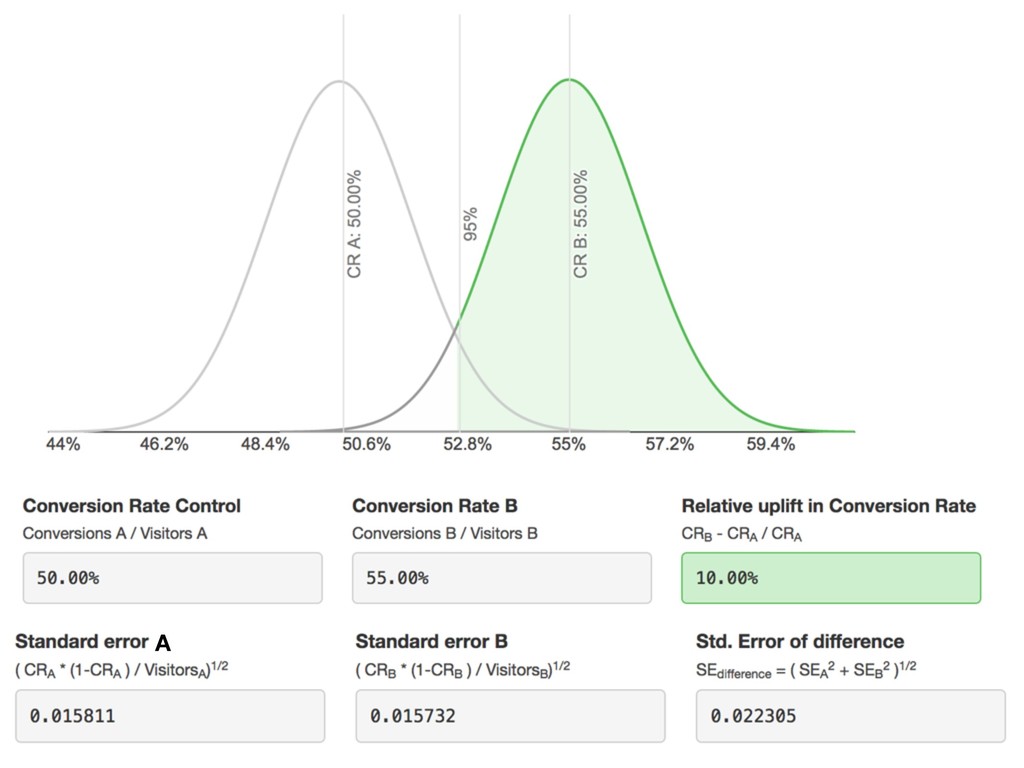
    ^p = 0.55 and 0.5 • A: With 95% confidence 0.519 ≤ p1 ≤ 0.581 • B: With 95% confidence 0.469 ≤ p2 ≤ 0.531
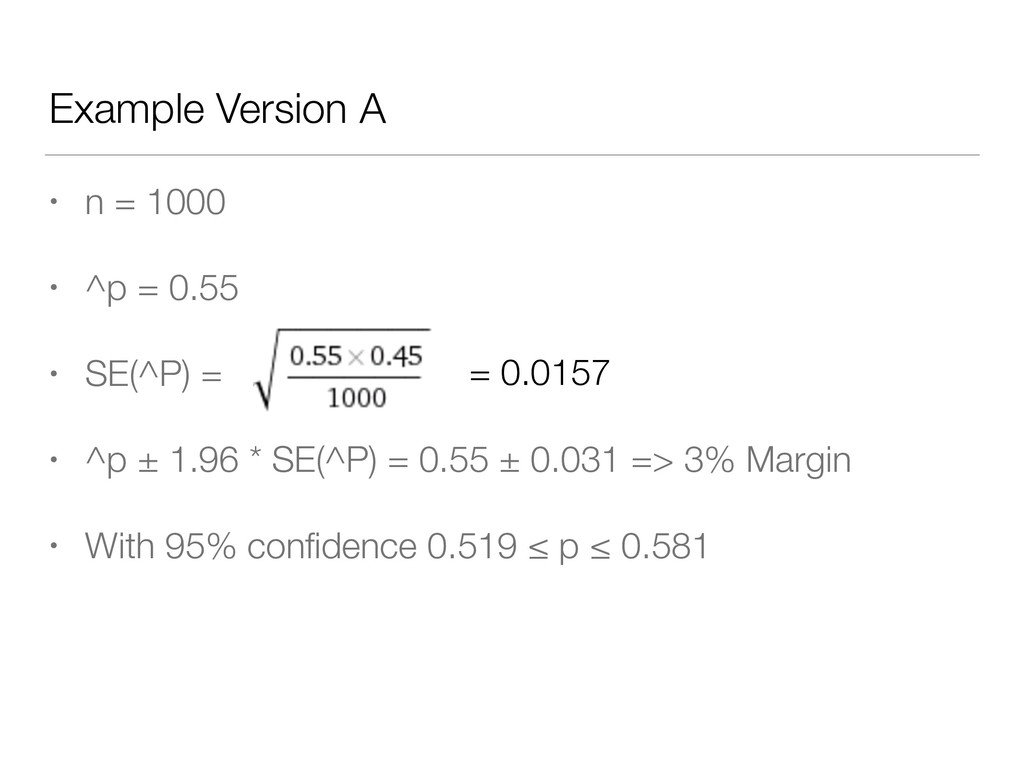
  11. Example Version A • n = 1000 • ^p =

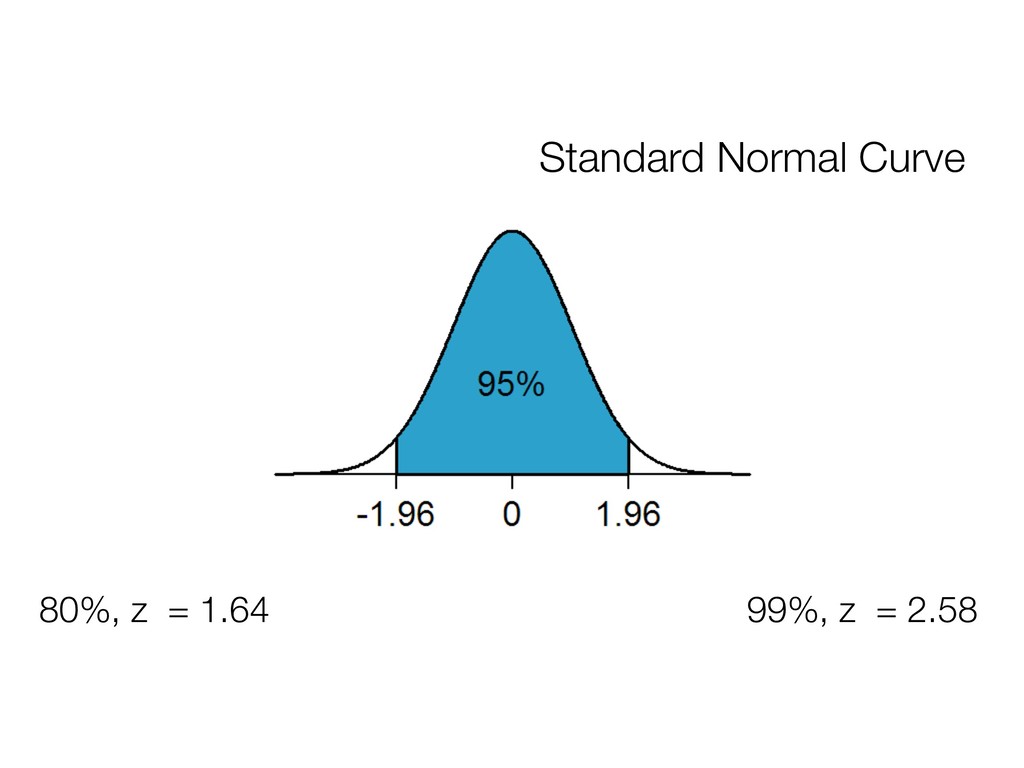
    0.55 • SE(^P) = • ^p ± 1.96 * SE(^P) = 0.55 ± 0.031 => 3% Margin • With 95% confidence 0.519 ≤ p ≤ 0.581 = 0.0157
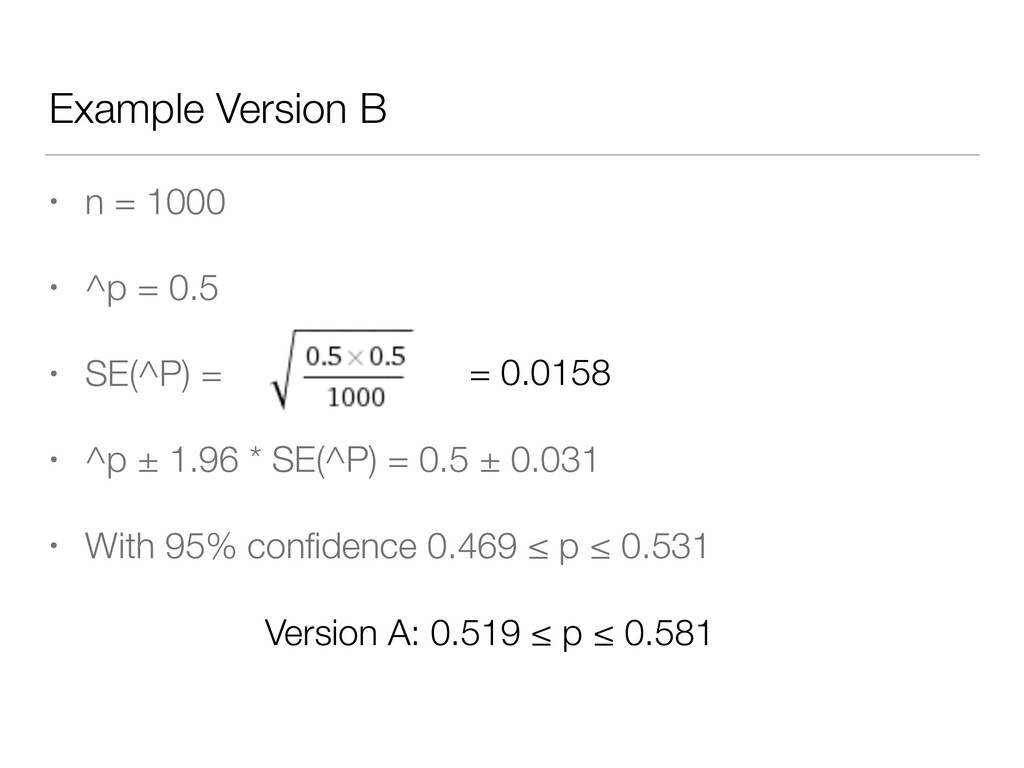
  12. Example Version B • n = 1000 • ^p =

    0.5 • SE(^P) = • ^p ± 1.96 * SE(^P) = 0.5 ± 0.031 • With 95% confidence 0.469 ≤ p ≤ 0.531 = 0.0158 Version A: 0.519 ≤ p ≤ 0.581