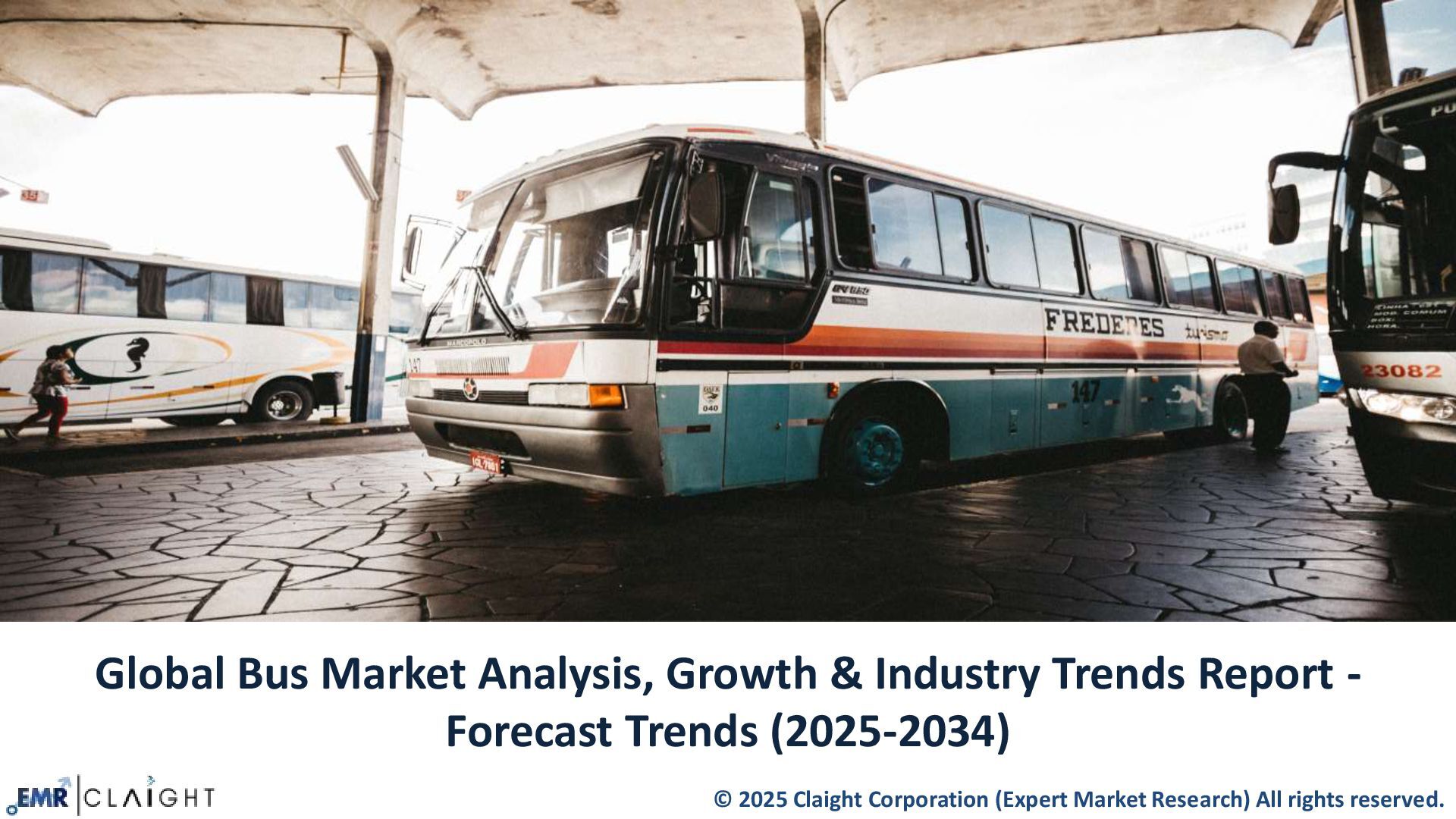
Global Bus Market Size, Share & Growth Report Forecast (2025-2034)
The global bus market value was around USD 52.37 Billion in 2024. The market is further estimated to grow in the forecast period of 2025-2034 at a CAGR of 7.90%, to reach nearly USD 112.02 Billion by 2034.
About Claight Claight Corporation is the literal incorporation of clarity and insights. We have one principal objective for our clients- Growth! With our robust plan of action, a team of seasoned insight analysts, and experienced consultants, we deliver Success! Dedicated Team: 400+ Our team, with its diverse backgrounds and expertise, is dedicated to providing clients with high-quality, actionable insights. Competent Experts: 3000+ Our panel of consultants know where you are exactly stuck and what should be the right strategy for you to get that pull- back off your back! Industry Reports: 10000+ Our reports are fueled by vast databases covering an array of industries. We provide insights backed by the latest, most relevant data. Industry Domains: 15+ With our deep-rooted expertise and extensive experience, we craft market research solutions specifically designed for your industry's needs.
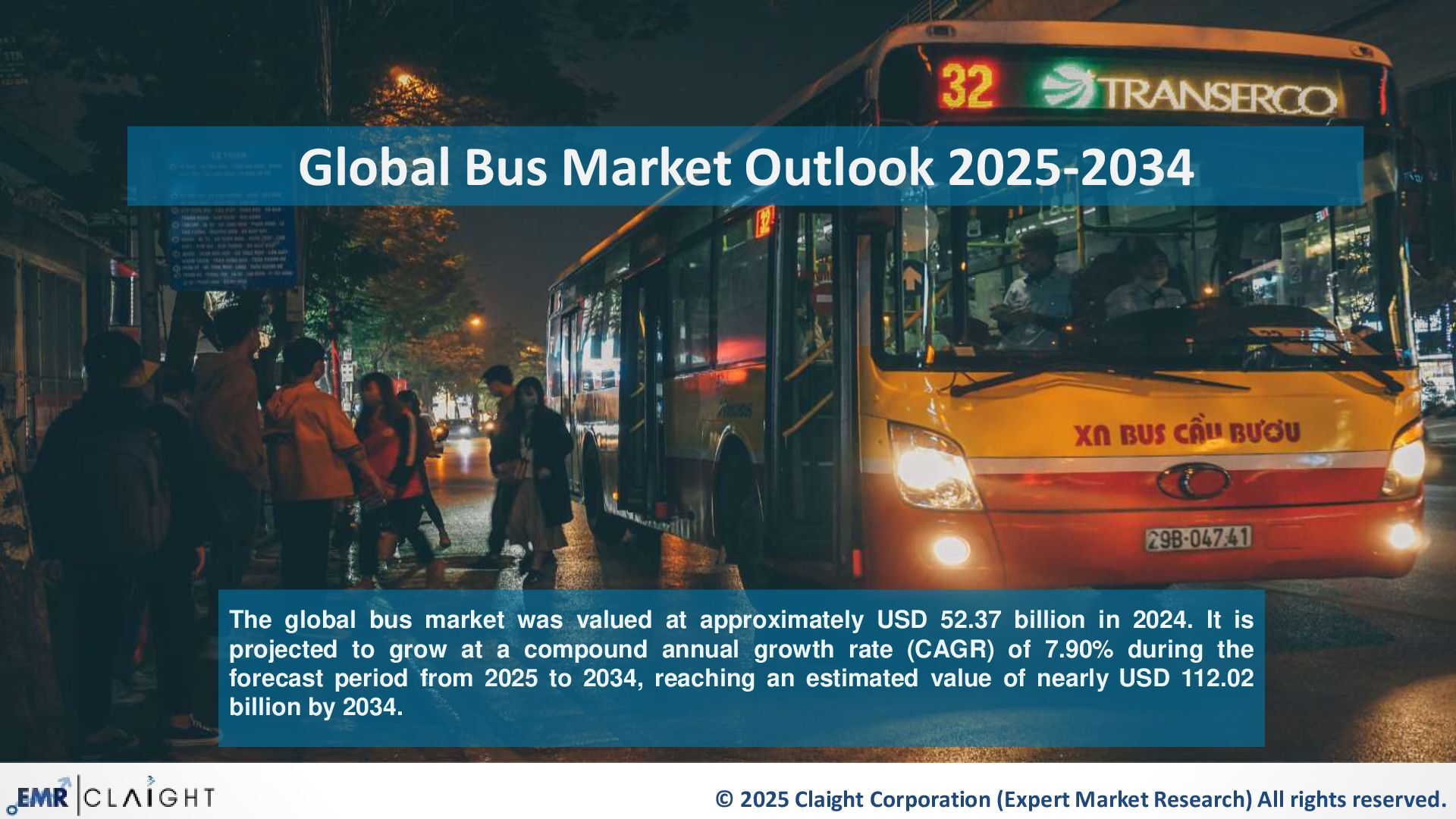
The global bus market was valued at approximately USD 52.37 billion in 2024. It is projected to grow at a compound annual growth rate (CAGR) of 7.90% during the forecast period from 2025 to 2034, reaching an estimated value of nearly USD 112.02 billion by 2034. Global Bus Market Outlook 2025-2034
Global Bus Market Growth 05 01 This is a sample text. Trade Data Analysis The global bus market has experienced significant growth in recent years, reaching a value of approximately USD 52.37 billion in 2024. This expansion has been driven by increasing urbanization, rising demand for public transportation, and government initiatives aimed at reducing traffic congestion and lowering carbon emissions. As cities around the world invest in expanding and modernizing their public transport networks, buses remain a critical component of sustainable and efficient urban mobility solutions. Looking ahead, the market is expected to grow at a compound annual growth rate (CAGR) of 7.90% during the forecast period from 2025 to 2034, reaching nearly USD 112.02 billion by 2034. Key factors fueling this growth include advancements in electric and hybrid bus technologies, rising fuel prices prompting a shift away from personal vehicles, and increased investments in smart city infrastructure. Governments across Asia, Europe, and North America are offering subsidies and incentives to encourage the adoption of environmentally friendly public transportation systems, further boosting market growth. In addition to technological innovations, the bus market is also witnessing a rise in demand for premium and customized buses, especially for tourism, intercity travel, and corporate transportation. Manufacturers are focusing on enhancing passenger comfort, safety features, and connectivity options to meet changing consumer expectations. With growing awareness about climate change and the urgent need for sustainable transport, the global bus market is poised to play a crucial role in shaping the future of mobility.
Global Bus Market Trends 05 01 This is a sample text. Trade Data Analysis The global bus market is experiencing significant growth, driven by increasing urbanization and the rising demand for sustainable public transportation solutions. With cities expanding rapidly, there is a growing need for efficient and cost- effective modes of transport that can reduce traffic congestion and pollution. Buses, as a key component of public transit systems, offer an affordable solution for moving large numbers of passengers over short to medium distances. Their ability to navigate through traffic and their role in connecting different parts of cities make buses an essential part of modern transportation infrastructure. A major trend in the global bus market is the shift towards electric and hybrid buses. Governments around the world are implementing stricter emissions regulations and offering incentives for adopting greener technologies. Electric buses, in particular, are gaining popularity due to their environmental benefits, reduced operating costs, and lower maintenance requirements compared to traditional diesel buses. This shift is also influenced by advancements in battery technology, making electric buses more viable for large-scale deployment in urban areas. As sustainability becomes a key focus for cities, the adoption of electric and hybrid buses is expected to increase significantly in the coming years. Another emerging trend in the global bus market is the integration of digital technologies and smart transportation solutions. Innovations such as real-time tracking, automated ticketing systems, and smart scheduling are improving the efficiency and convenience of bus services. Additionally, the development of autonomous buses is gaining attention, with several pilot projects underway to explore their potential for reducing human error and optimizing routes. These technological advancements are not only enhancing the passenger experience but also helping transit authorities optimize operations, reduce costs, and improve overall service reliability.
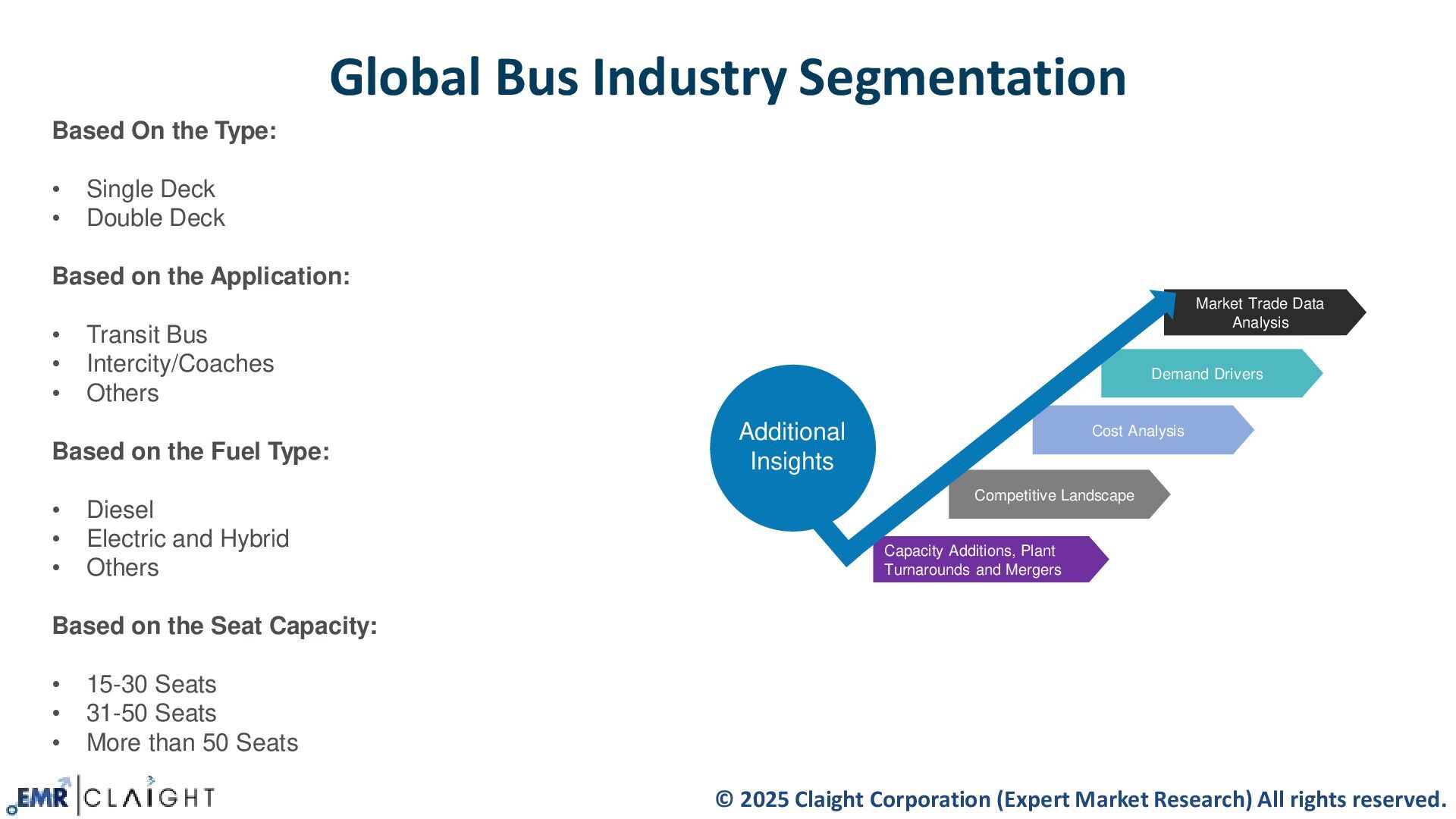
Global Bus Industry Segmentation 05 01 This is a sample text. Trade Data Analysis Based On the Type: • Single Deck • Double Deck Based on the Application: • Transit Bus • Intercity/Coaches • Others Based on the Fuel Type: • Diesel • Electric and Hybrid • Others Based on the Seat Capacity: • 15-30 Seats • 31-50 Seats • More than 50 Seats 01 Trade Data Analysis Capacity Additions, Plant Turnarounds and Mergers Competitive Landscape Cost Analysis Demand Drivers Market Trade Data Analysis Additional Insights
Global Bus Industry Segmentation 05 01 This is a sample text. Trade Data Analysis Market breakup by Region: • North America • Europe • Asia Pacific • Latin America • Middle East and Africa 01 Trade Data Analysis Capacity Additions, Plant Turnarounds and Mergers Competitive Landscape Cost Analysis Demand Drivers Market Trade Data Analysis Additional Insights
Leading Companies in the Global Bus Market The companies specialize in manufacturing a diverse range of commercial vehicles, including trucks and buses, tailored for various industrial applications. They are making significant strides in the development of electric and autonomous vehicle technologies, with a focus on creating sustainable transportation solutions. Anhui Ankai Automobile Company Anhui Ankai Automobile Company, based in China, is a prominent manufacturer of buses and coaches. It is known for producing a wide range of vehicles, including city buses, intercity buses, and electric buses. The company has expanded its presence internationally and is dedicated to innovations in electric bus technology and sustainable transportation solutions. Daimler Truck Holding AG Daimler Truck Holding AG, a global leader based in Germany, specializes in the production of trucks, buses, and other commercial vehicles. The company is renowned for its brands such as Mercedes-Benz, Freightliner, and Western Star. Daimler Truck is actively advancing electric and autonomous vehicle technologies, aiming to revolutionize the transportation industry with sustainable and efficient solutions. NFI Group Inc. NFI Group Inc., headquartered in Canada, is one of the world’s largest bus manufacturers, offering a wide variety of buses and coaches for both public and private transportation. The company produces vehicles under various brands, including New Flyer, MCI, and ARBOC. NFI Group is also focusing on the development of zero-emission buses, particularly electric and hybrid models, to meet the growing demand for sustainable transportation.
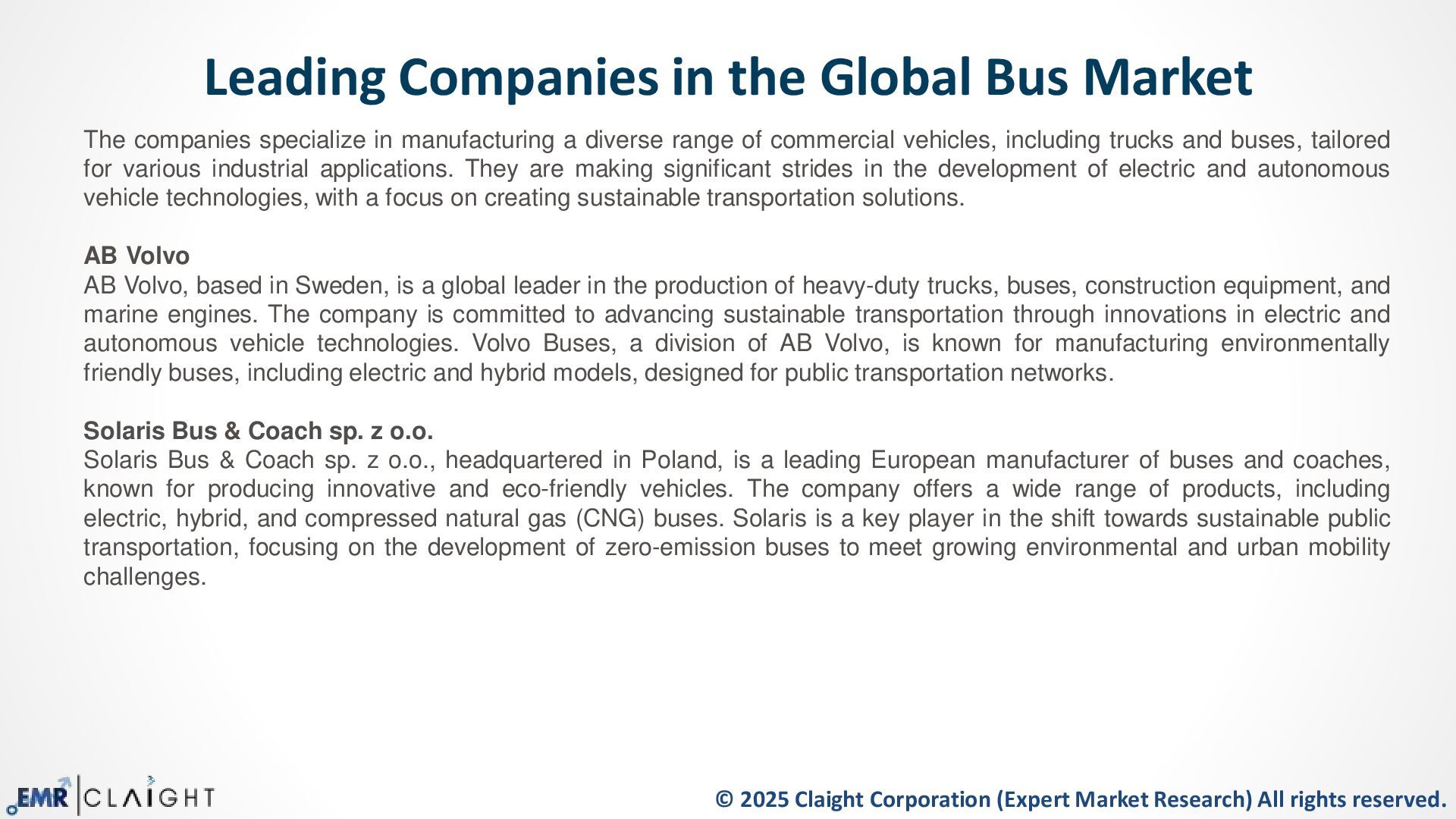
Leading Companies in the Global Bus Market The companies specialize in manufacturing a diverse range of commercial vehicles, including trucks and buses, tailored for various industrial applications. They are making significant strides in the development of electric and autonomous vehicle technologies, with a focus on creating sustainable transportation solutions. AB Volvo AB Volvo, based in Sweden, is a global leader in the production of heavy-duty trucks, buses, construction equipment, and marine engines. The company is committed to advancing sustainable transportation through innovations in electric and autonomous vehicle technologies. Volvo Buses, a division of AB Volvo, is known for manufacturing environmentally friendly buses, including electric and hybrid models, designed for public transportation networks. Solaris Bus & Coach sp. z o.o. Solaris Bus & Coach sp. z o.o., headquartered in Poland, is a leading European manufacturer of buses and coaches, known for producing innovative and eco-friendly vehicles. The company offers a wide range of products, including electric, hybrid, and compressed natural gas (CNG) buses. Solaris is a key player in the shift towards sustainable public transportation, focusing on the development of zero-emission buses to meet growing environmental and urban mobility challenges.
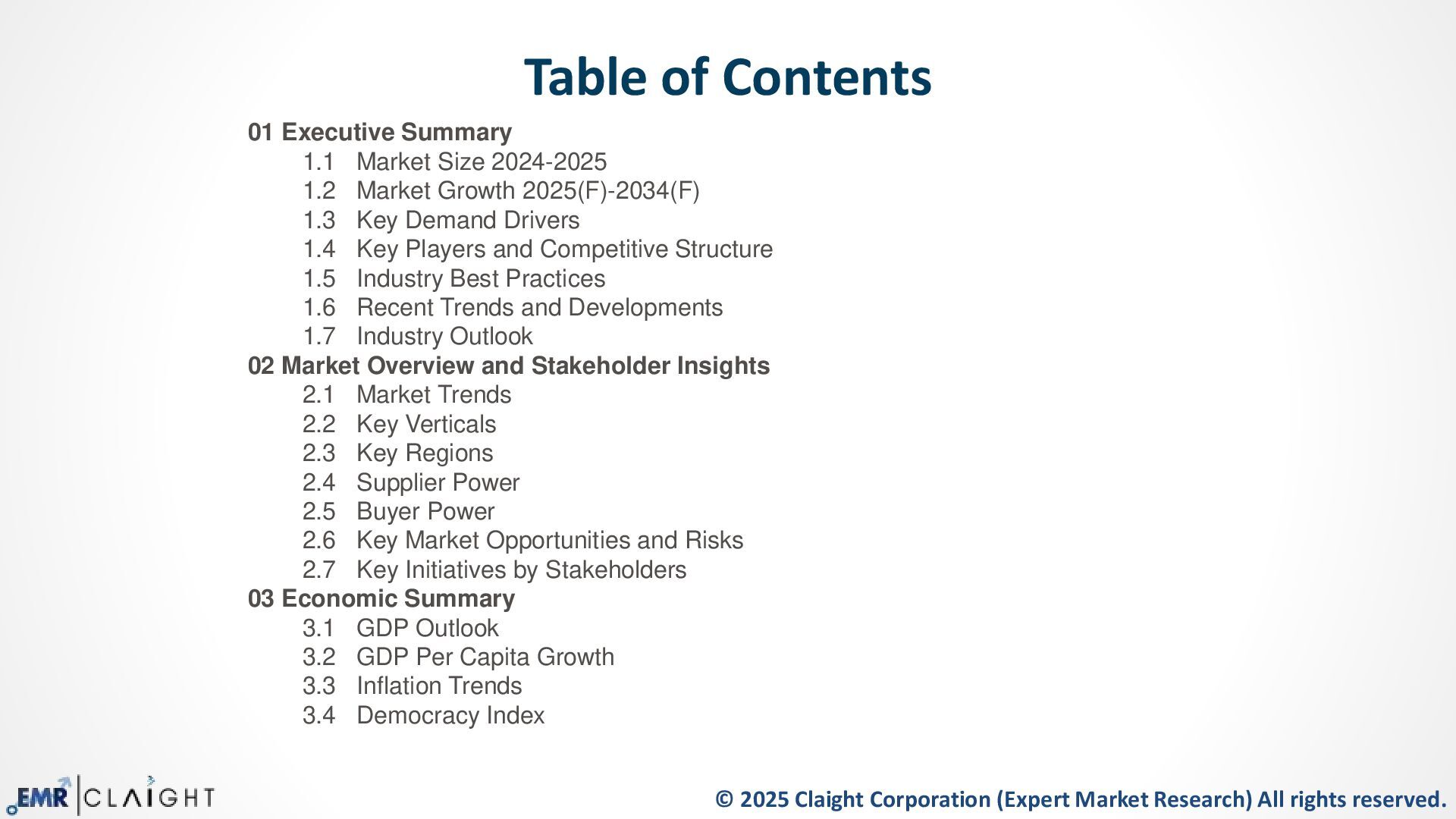
Table of Contents 01 Executive Summary 1.1 Market Size 2024-2025 1.2 Market Growth 2025(F)-2034(F) 1.3 Key Demand Drivers 1.4 Key Players and Competitive Structure 1.5 Industry Best Practices 1.6 Recent Trends and Developments 1.7 Industry Outlook 02 Market Overview and Stakeholder Insights 2.1 Market Trends 2.2 Key Verticals 2.3 Key Regions 2.4 Supplier Power 2.5 Buyer Power 2.6 Key Market Opportunities and Risks 2.7 Key Initiatives by Stakeholders 03 Economic Summary 3.1 GDP Outlook 3.2 GDP Per Capita Growth 3.3 Inflation Trends 3.4 Democracy Index
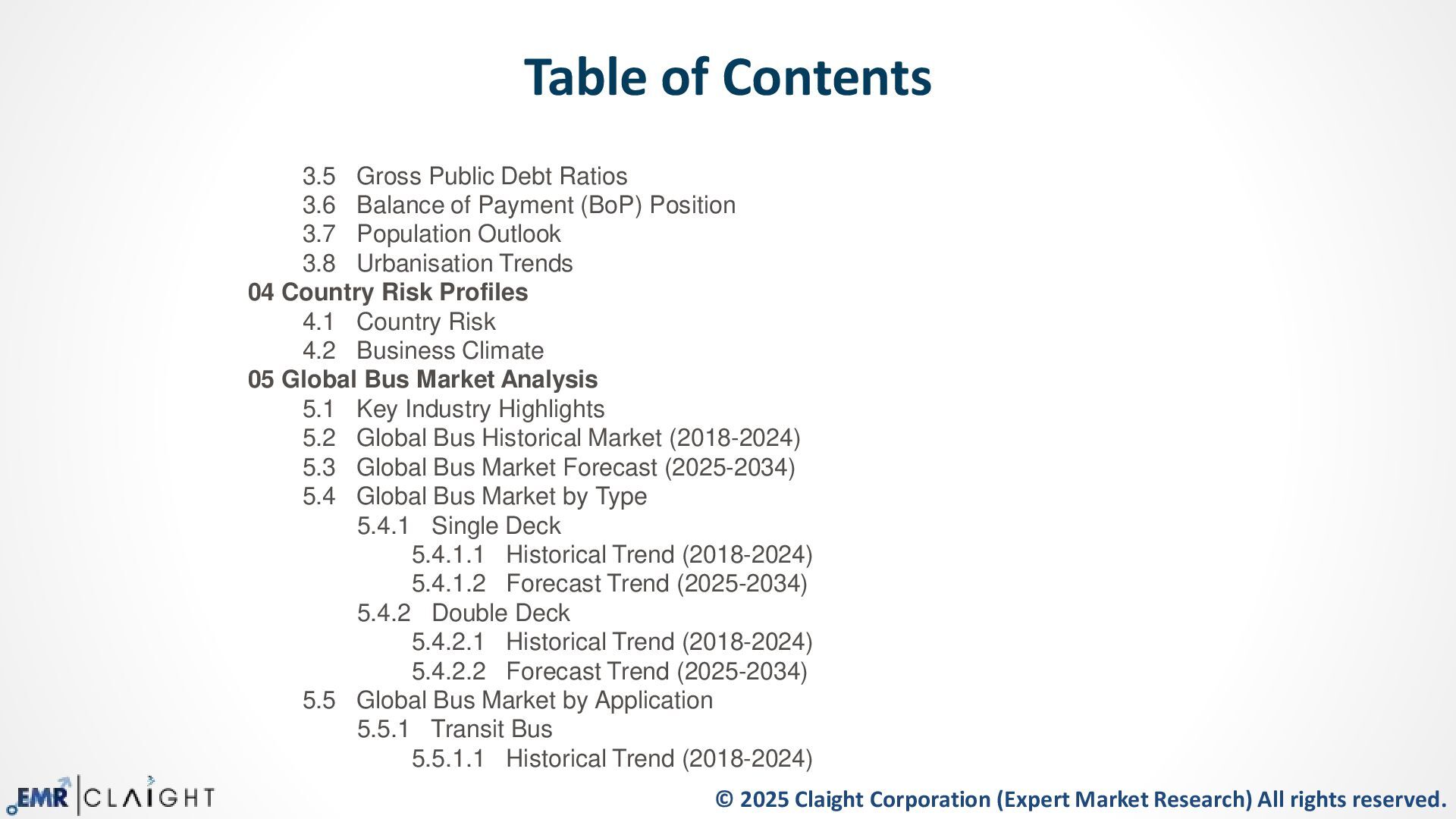
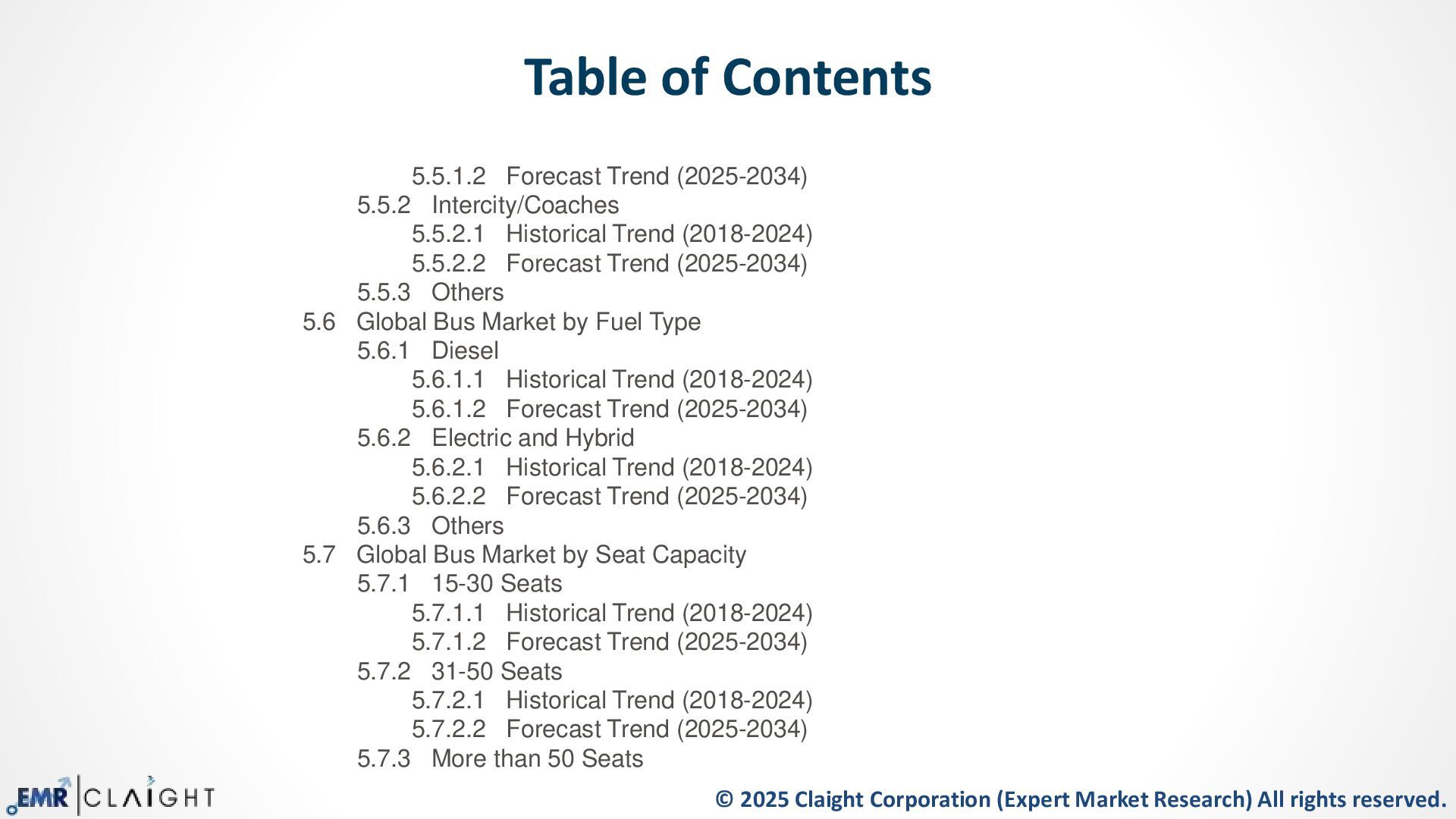
Table of Contents 3.5 Gross Public Debt Ratios 3.6 Balance of Payment (BoP) Position 3.7 Population Outlook 3.8 Urbanisation Trends 04 Country Risk Profiles 4.1 Country Risk 4.2 Business Climate 05 Global Bus Market Analysis 5.1 Key Industry Highlights 5.2 Global Bus Historical Market (2018-2024) 5.3 Global Bus Market Forecast (2025-2034) 5.4 Global Bus Market by Type 5.4.1 Single Deck 5.4.1.1 Historical Trend (2018-2024) 5.4.1.2 Forecast Trend (2025-2034) 5.4.2 Double Deck 5.4.2.1 Historical Trend (2018-2024) 5.4.2.2 Forecast Trend (2025-2034) 5.5 Global Bus Market by Application 5.5.1 Transit Bus 5.5.1.1 Historical Trend (2018-2024)
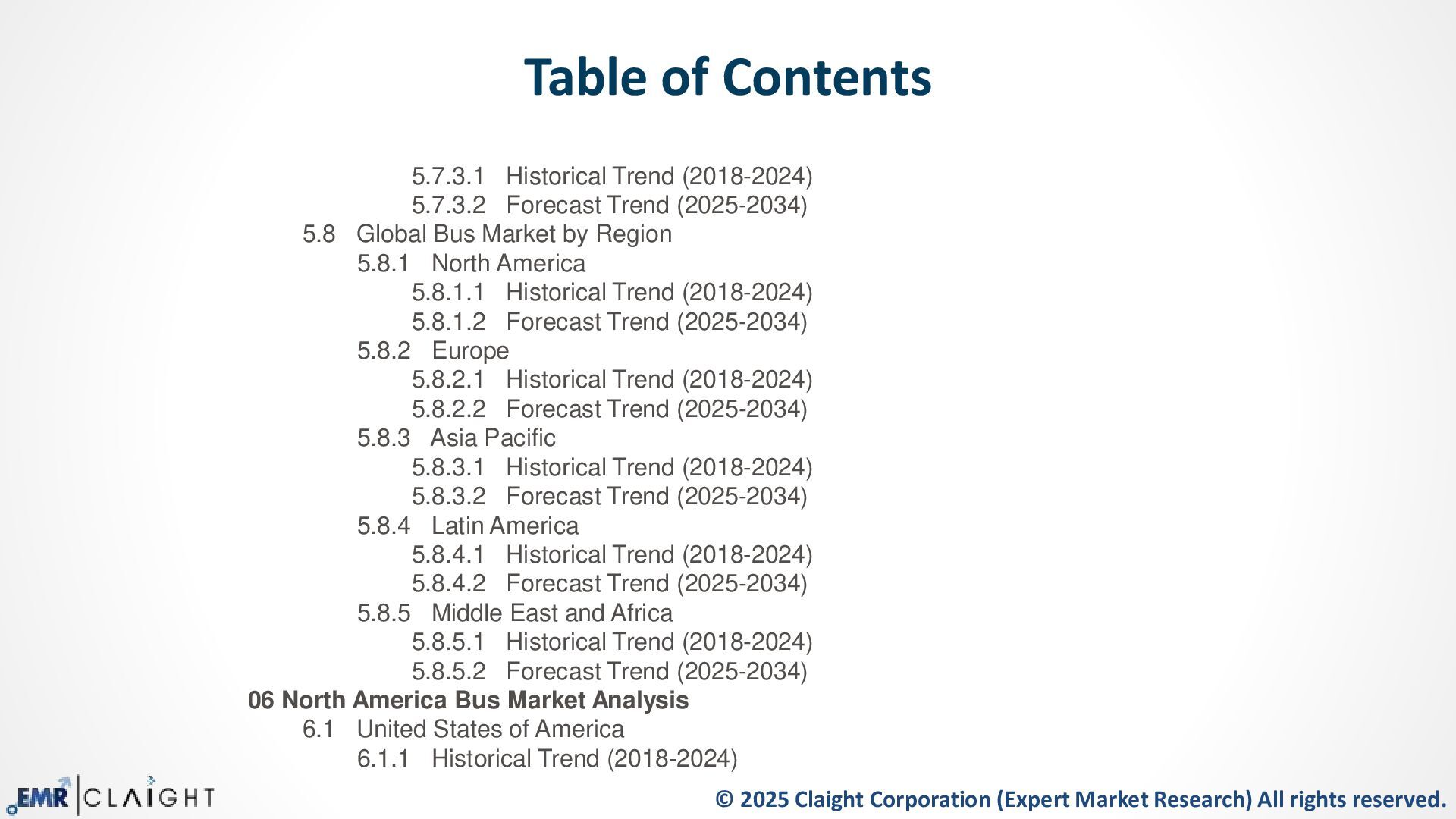
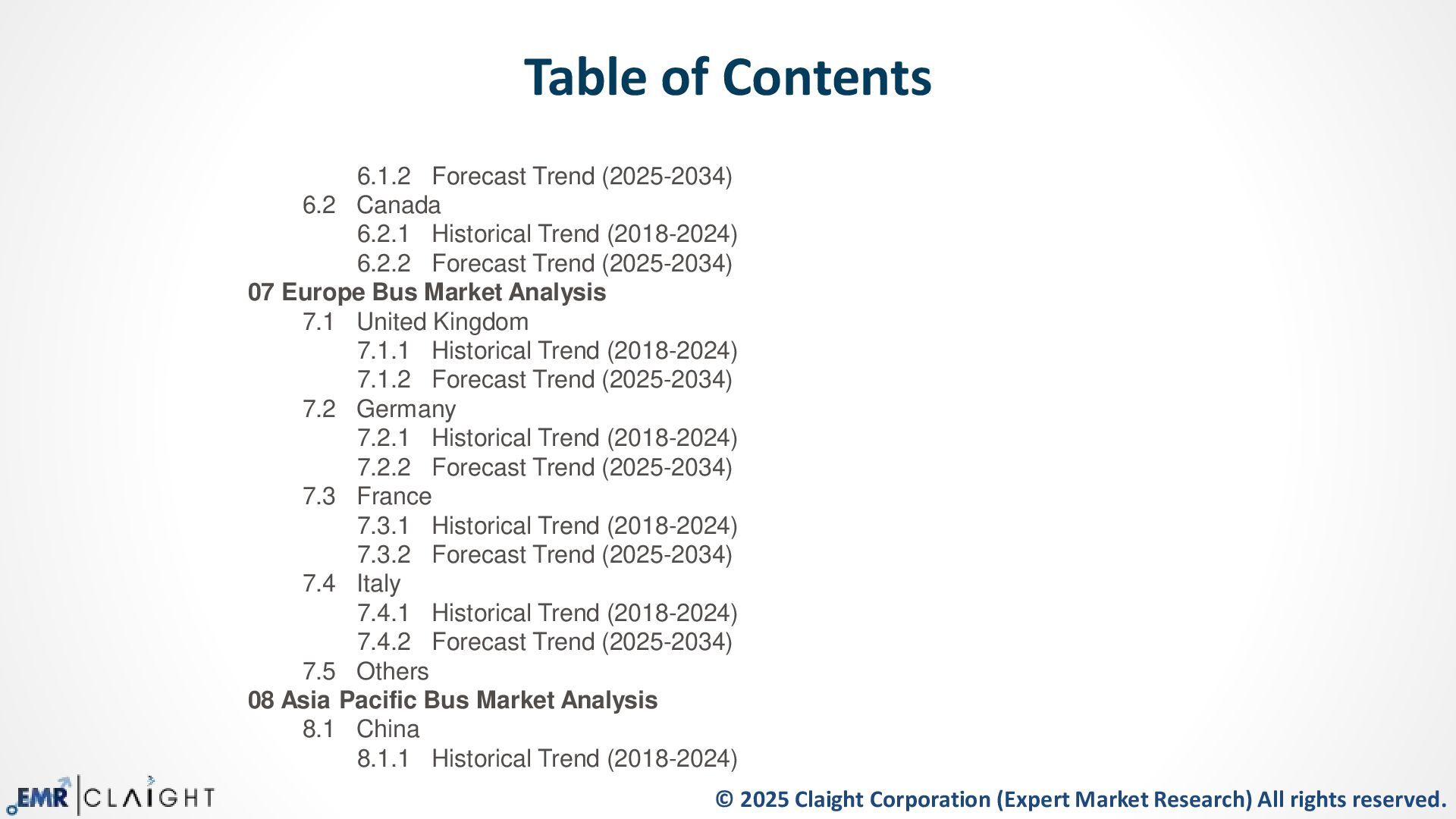
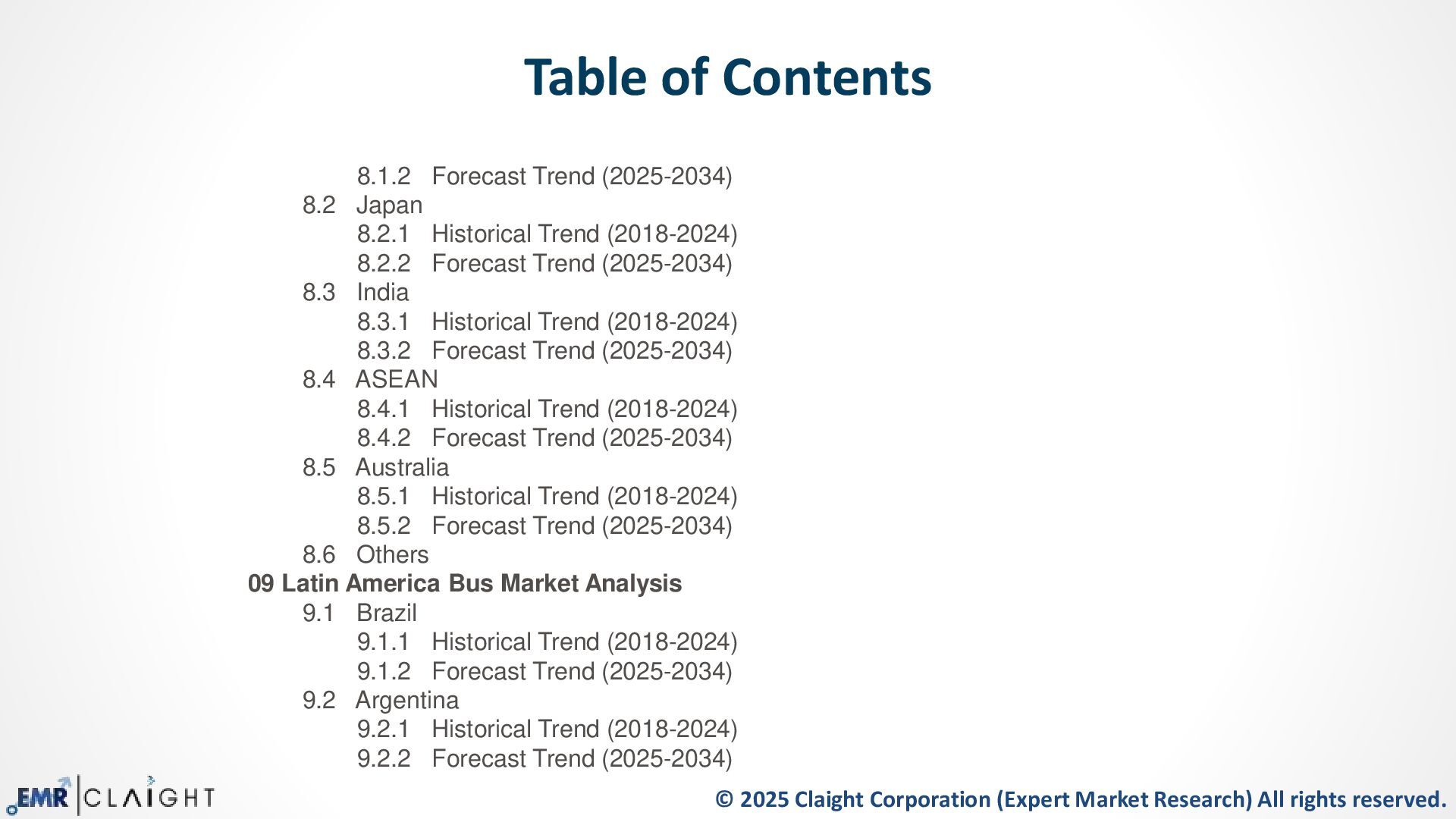
Table of Contents 5.7.3.1 Historical Trend (2018-2024) 5.7.3.2 Forecast Trend (2025-2034) 5.8 Global Bus Market by Region 5.8.1 North America 5.8.1.1 Historical Trend (2018-2024) 5.8.1.2 Forecast Trend (2025-2034) 5.8.2 Europe 5.8.2.1 Historical Trend (2018-2024) 5.8.2.2 Forecast Trend (2025-2034) 5.8.3 Asia Pacific 5.8.3.1 Historical Trend (2018-2024) 5.8.3.2 Forecast Trend (2025-2034) 5.8.4 Latin America 5.8.4.1 Historical Trend (2018-2024) 5.8.4.2 Forecast Trend (2025-2034) 5.8.5 Middle East and Africa 5.8.5.1 Historical Trend (2018-2024) 5.8.5.2 Forecast Trend (2025-2034) 06 North America Bus Market Analysis 6.1 United States of America 6.1.1 Historical Trend (2018-2024)
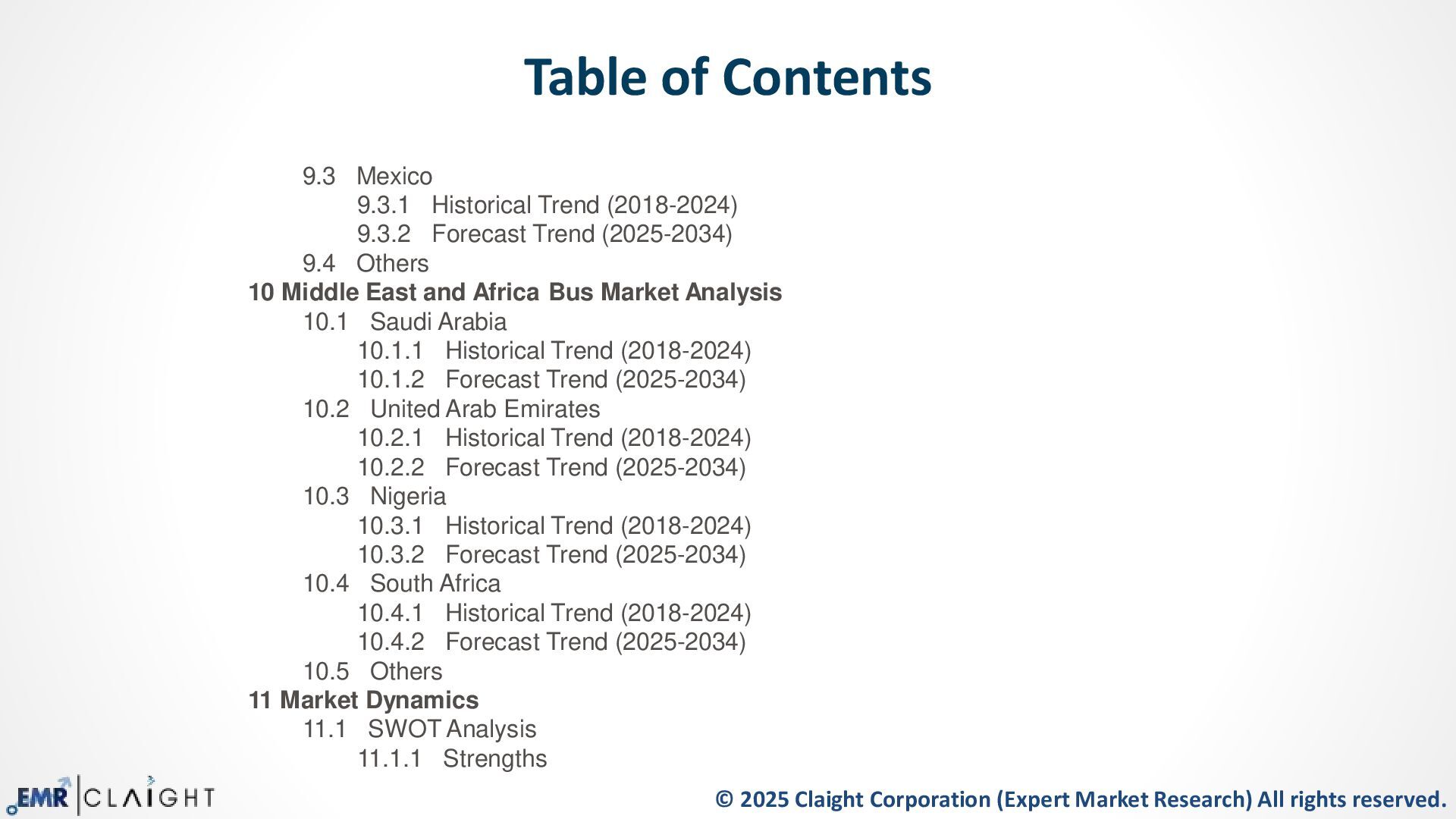
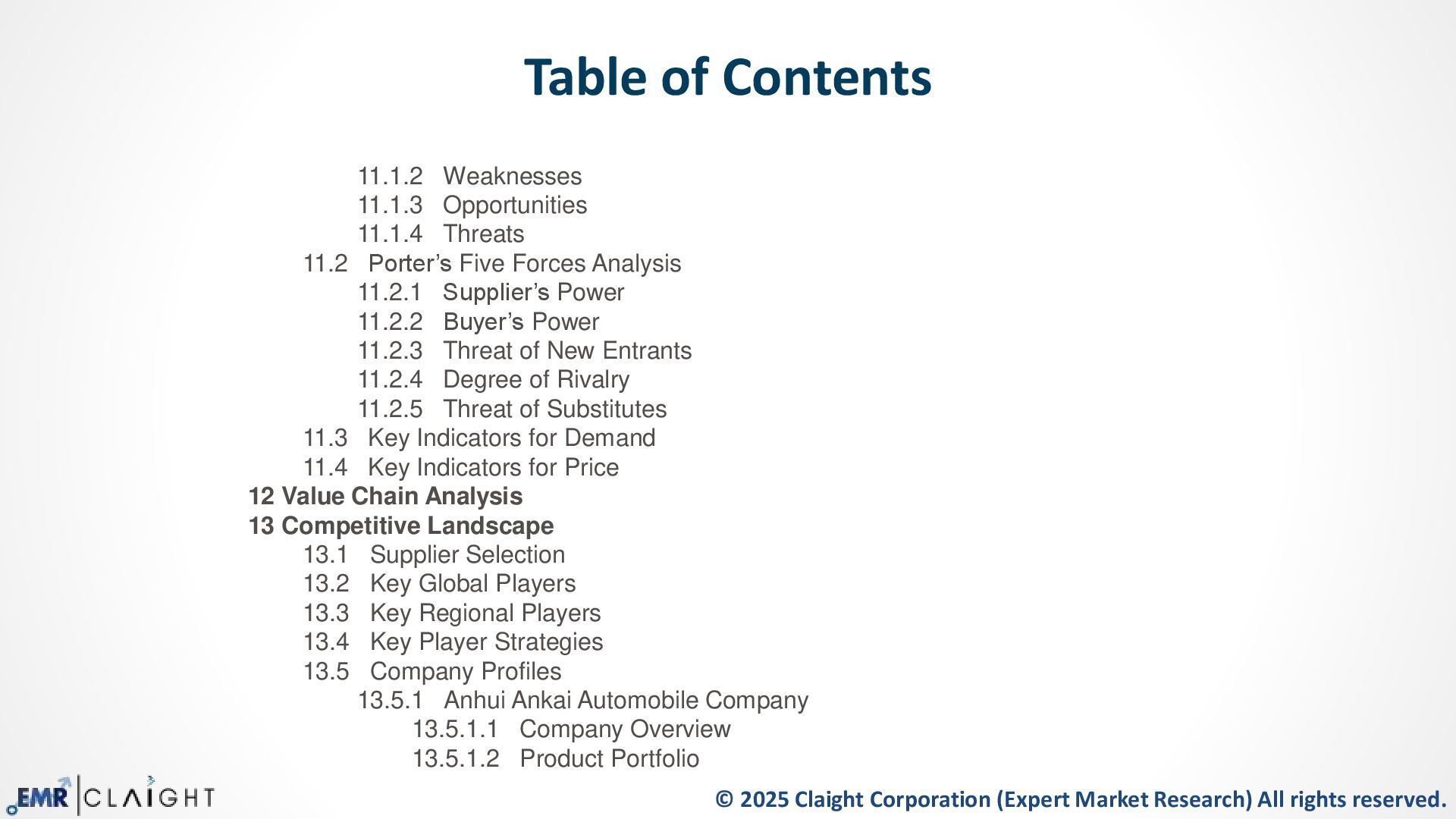
Table of Contents 11.1.2 Weaknesses 11.1.3 Opportunities 11.1.4 Threats 11.2 Porter’s Five Forces Analysis 11.2.1 Supplier’s Power 11.2.2 Buyer’s Power 11.2.3 Threat of New Entrants 11.2.4 Degree of Rivalry 11.2.5 Threat of Substitutes 11.3 Key Indicators for Demand 11.4 Key Indicators for Price 12 Value Chain Analysis 13 Competitive Landscape 13.1 Supplier Selection 13.2 Key Global Players 13.3 Key Regional Players 13.4 Key Player Strategies 13.5 Company Profiles 13.5.1 Anhui Ankai Automobile Company 13.5.1.1 Company Overview 13.5.1.2 Product Portfolio
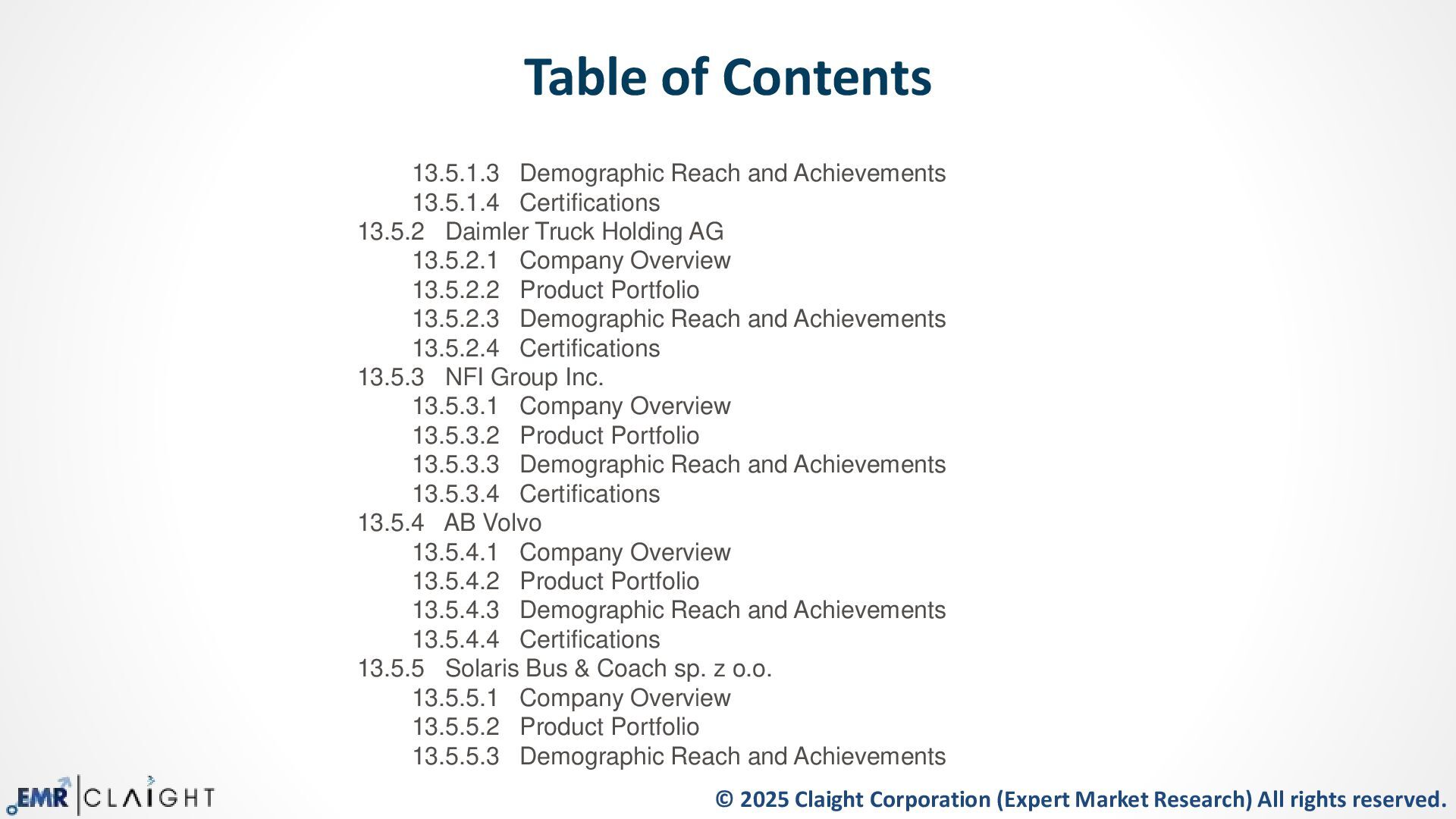
Table of Contents 13.5.1.3 Demographic Reach and Achievements 13.5.1.4 Certifications 13.5.2 Daimler Truck Holding AG 13.5.2.1 Company Overview 13.5.2.2 Product Portfolio 13.5.2.3 Demographic Reach and Achievements 13.5.2.4 Certifications 13.5.3 NFI Group Inc. 13.5.3.1 Company Overview 13.5.3.2 Product Portfolio 13.5.3.3 Demographic Reach and Achievements 13.5.3.4 Certifications 13.5.4 AB Volvo 13.5.4.1 Company Overview 13.5.4.2 Product Portfolio 13.5.4.3 Demographic Reach and Achievements 13.5.4.4 Certifications 13.5.5 Solaris Bus & Coach sp. z o.o. 13.5.5.1 Company Overview 13.5.5.2 Product Portfolio 13.5.5.3 Demographic Reach and Achievements
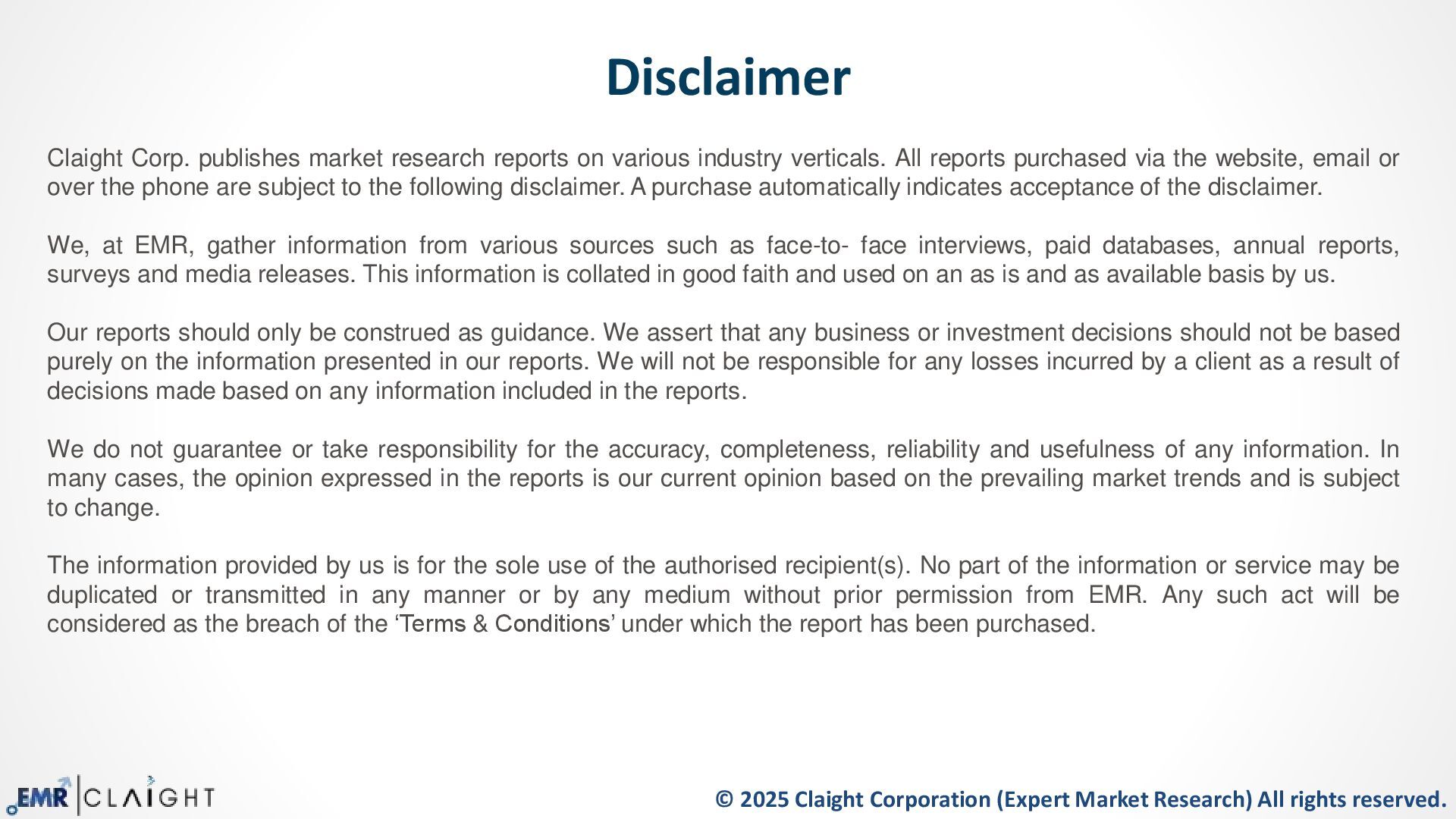
Disclaimer 05 01 This is a sample text. Trade Data Analysis Claight Corp. publishes market research reports on various industry verticals. All reports purchased via the website, email or over the phone are subject to the following disclaimer. A purchase automatically indicates acceptance of the disclaimer. We, at EMR, gather information from various sources such as face-to- face interviews, paid databases, annual reports, surveys and media releases. This information is collated in good faith and used on an as is and as available basis by us. Our reports should only be construed as guidance. We assert that any business or investment decisions should not be based purely on the information presented in our reports. We will not be responsible for any losses incurred by a client as a result of decisions made based on any information included in the reports. We do not guarantee or take responsibility for the accuracy, completeness, reliability and usefulness of any information. In many cases, the opinion expressed in the reports is our current opinion based on the prevailing market trends and is subject to change. The information provided by us is for the sole use of the authorised recipient(s). No part of the information or service may be duplicated or transmitted in any manner or by any medium without prior permission from EMR. Any such act will be considered as the breach of the ‘Terms & Conditions’ under which the report has been purchased.
Contact Us 05 01 This is a sample text. Trade Data Analysis https://www.expertmarketresearch.com https://www.linkedin.com/company/expert-market-research https://www.instagram.com/expertmarketresearch [email protected] https://x.com/expertmresearch https://www.facebook.com/expertmarketresearch https://www.youtube.com/c/Expertmarketresearch https://expertmarketresearch-emr.blogspot.com +1-415-325-5166


 janewatson
 thirion
 lara
lara
 jonoalderson
 62gerente
 nonsquared
 mlcsv
mlcsv
 inesmontani
 tmiket
 hannesfritz
 chriscoyier