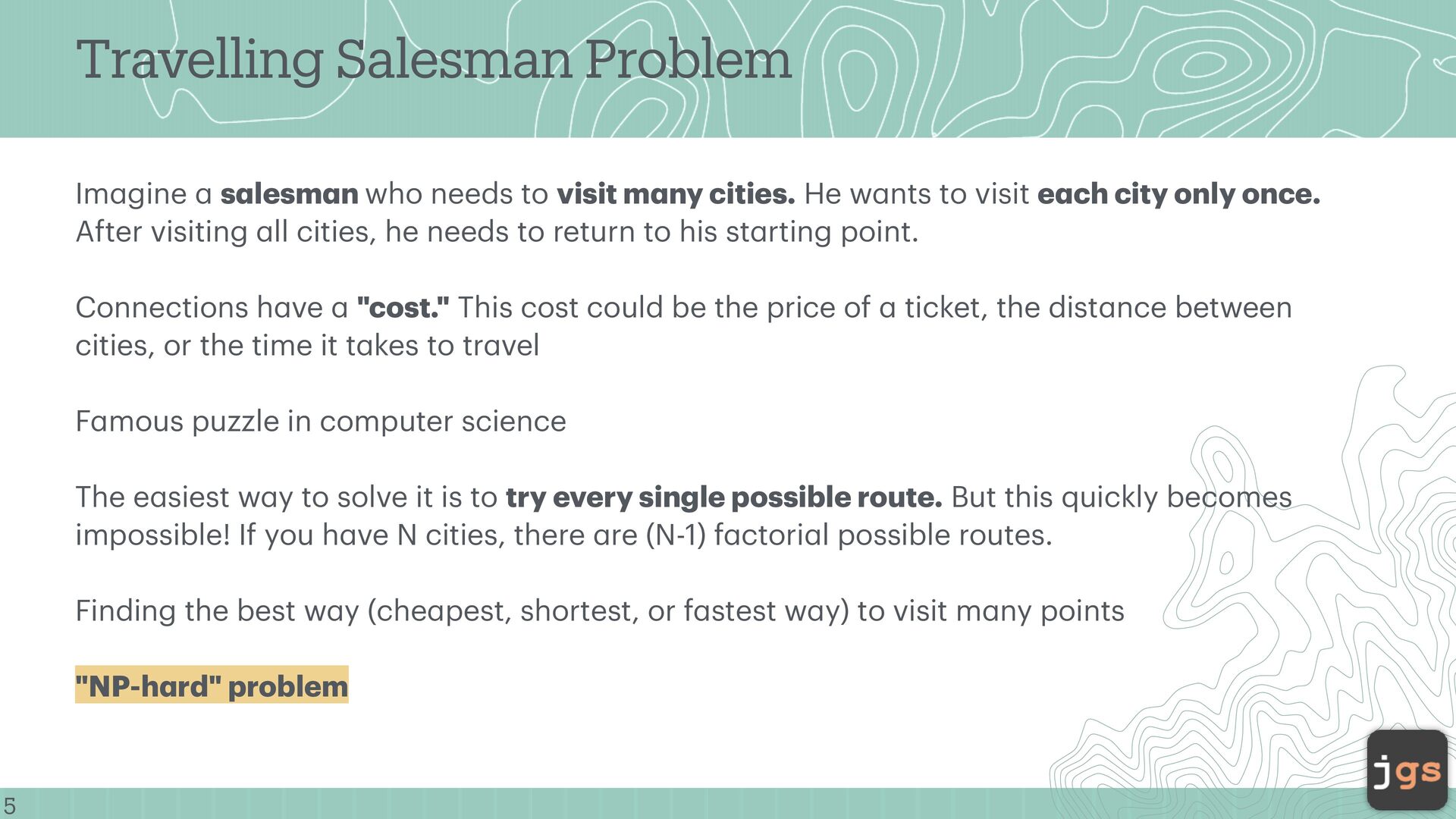
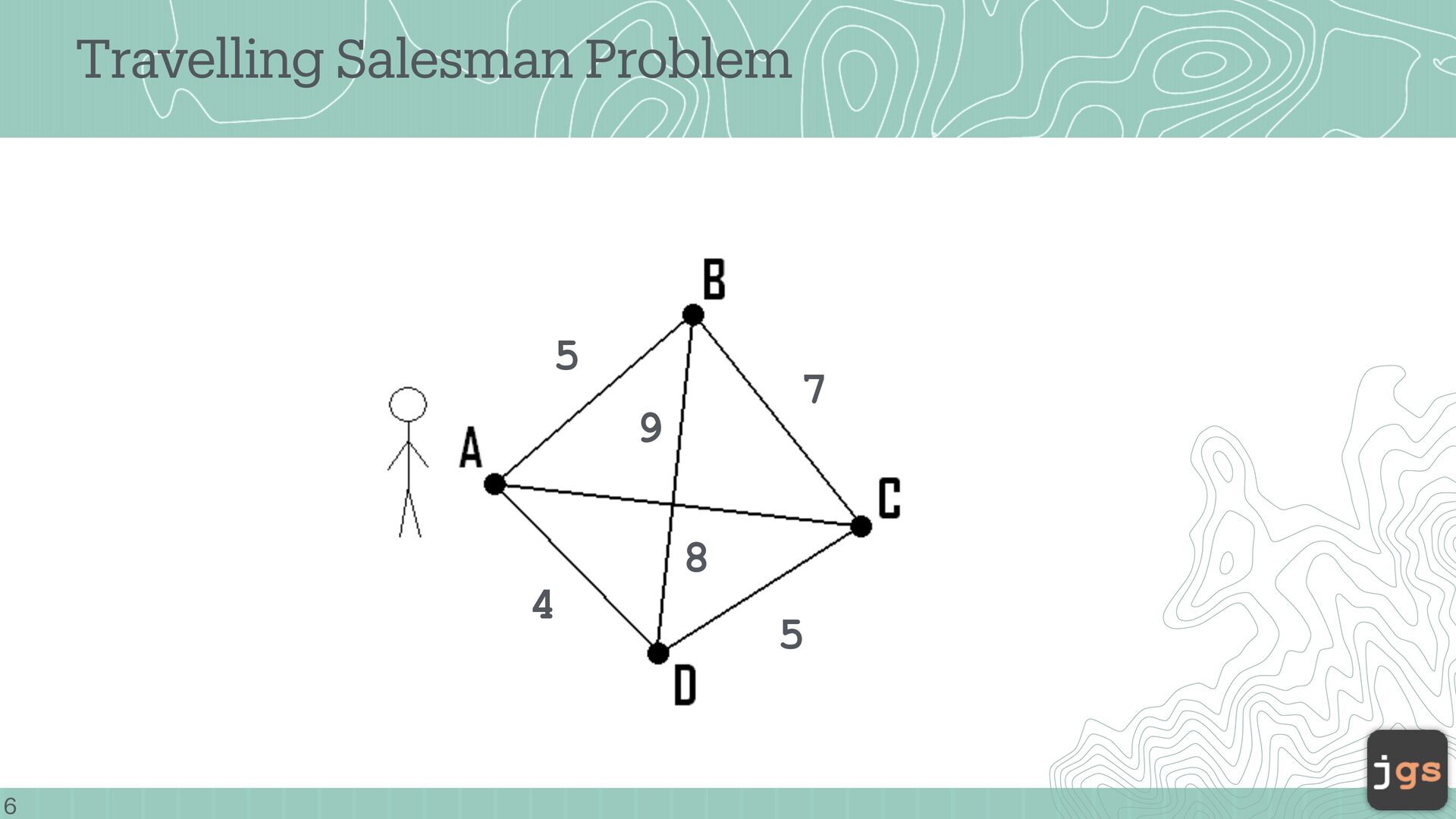
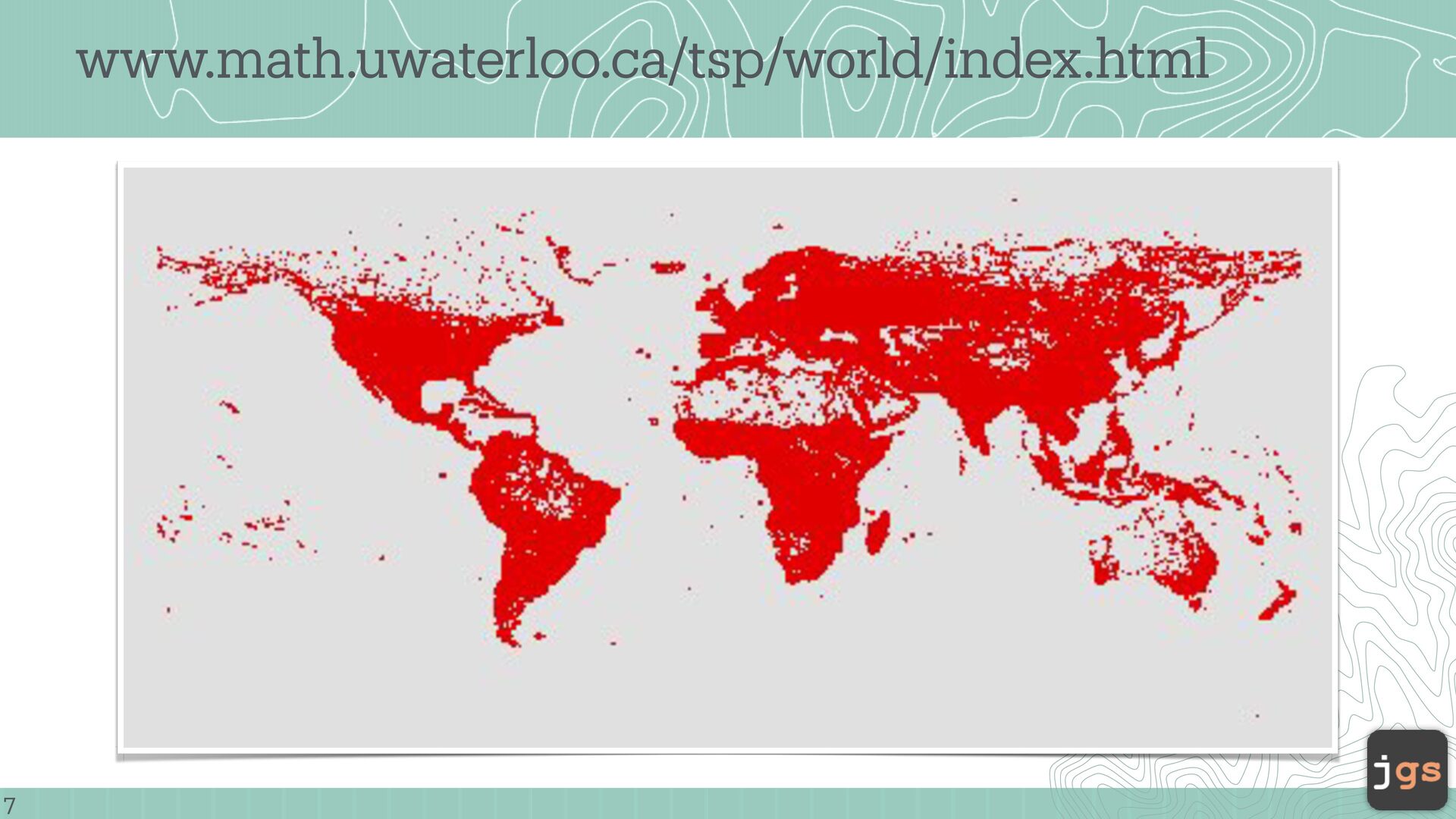
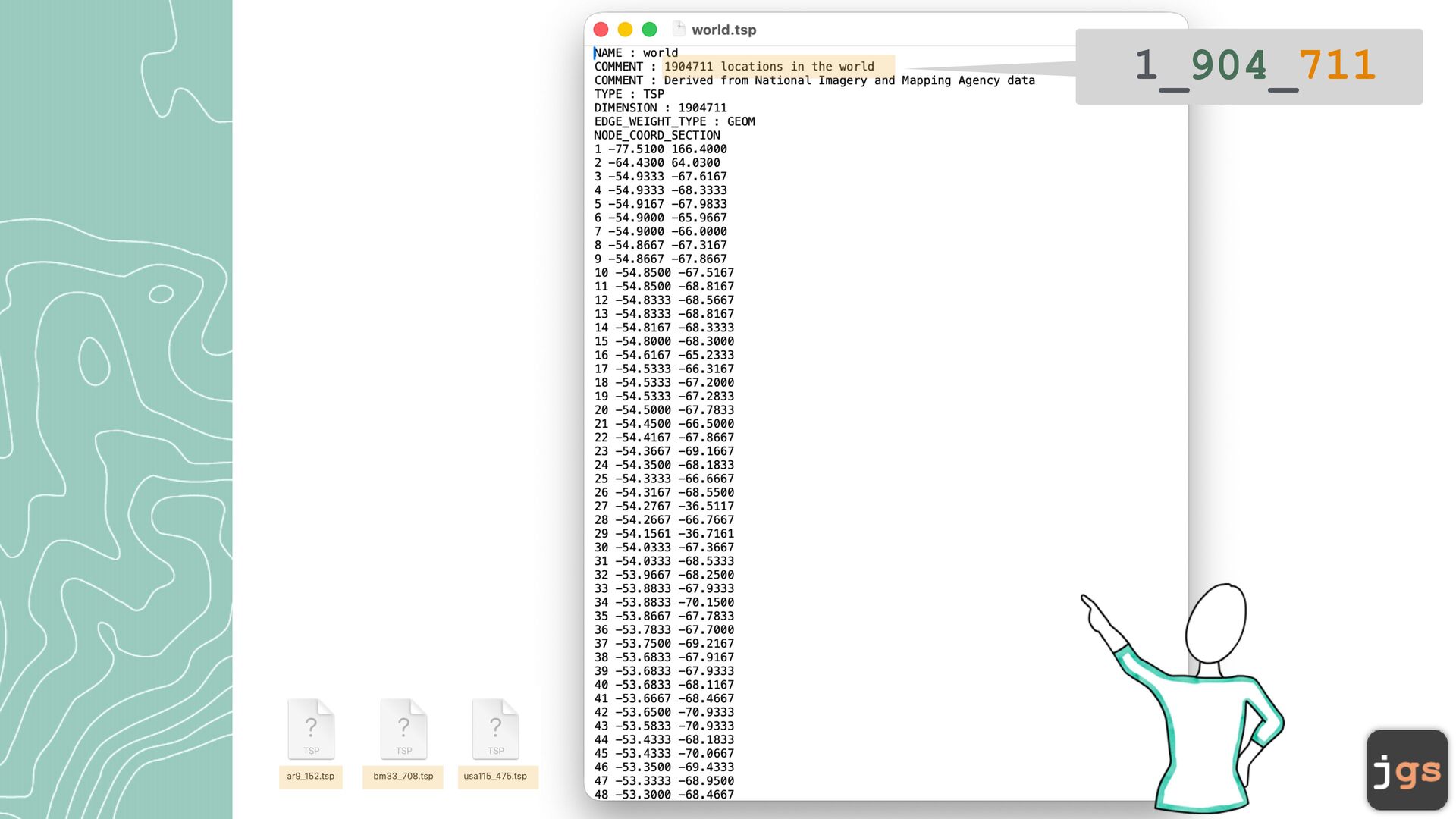
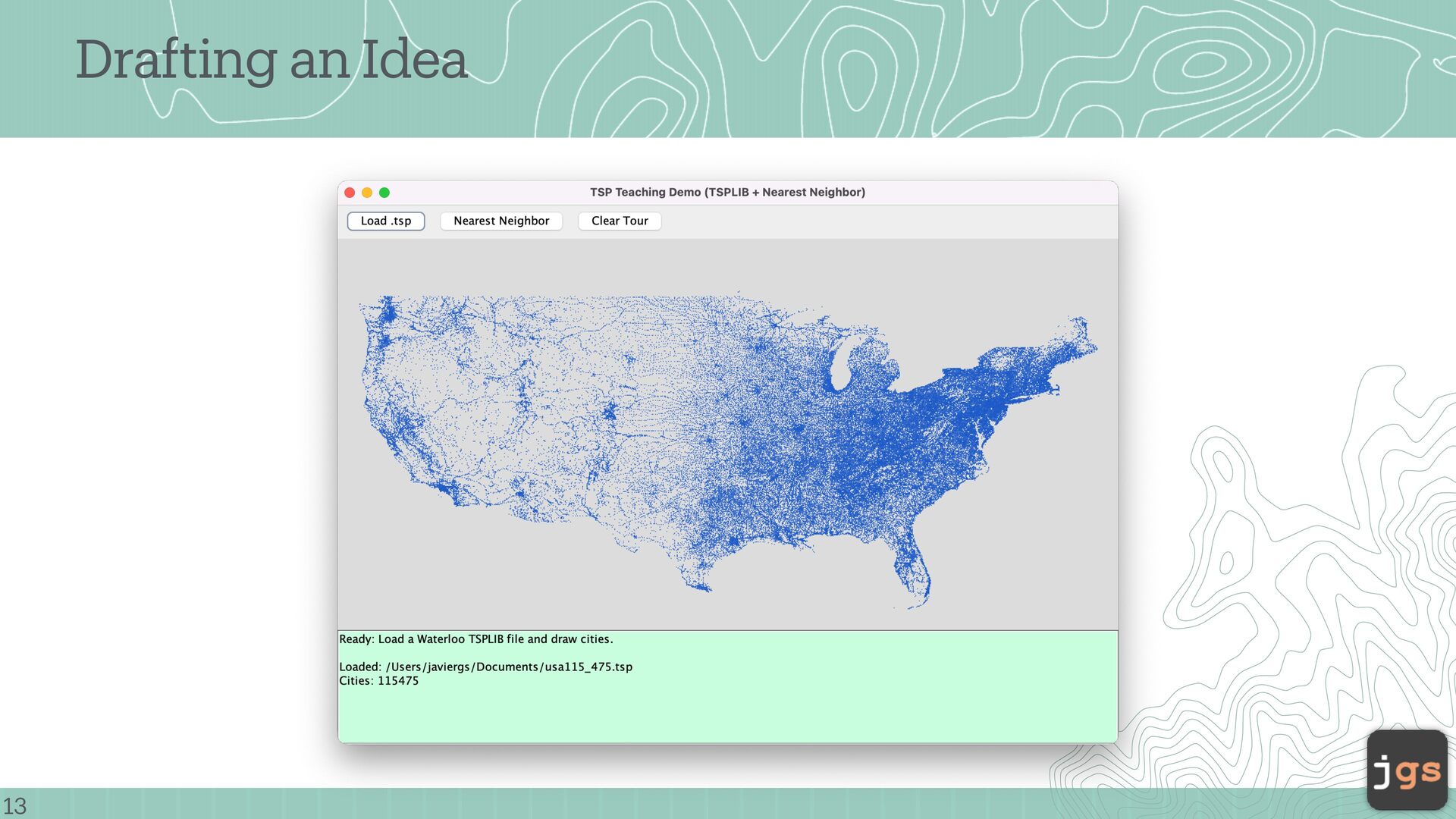
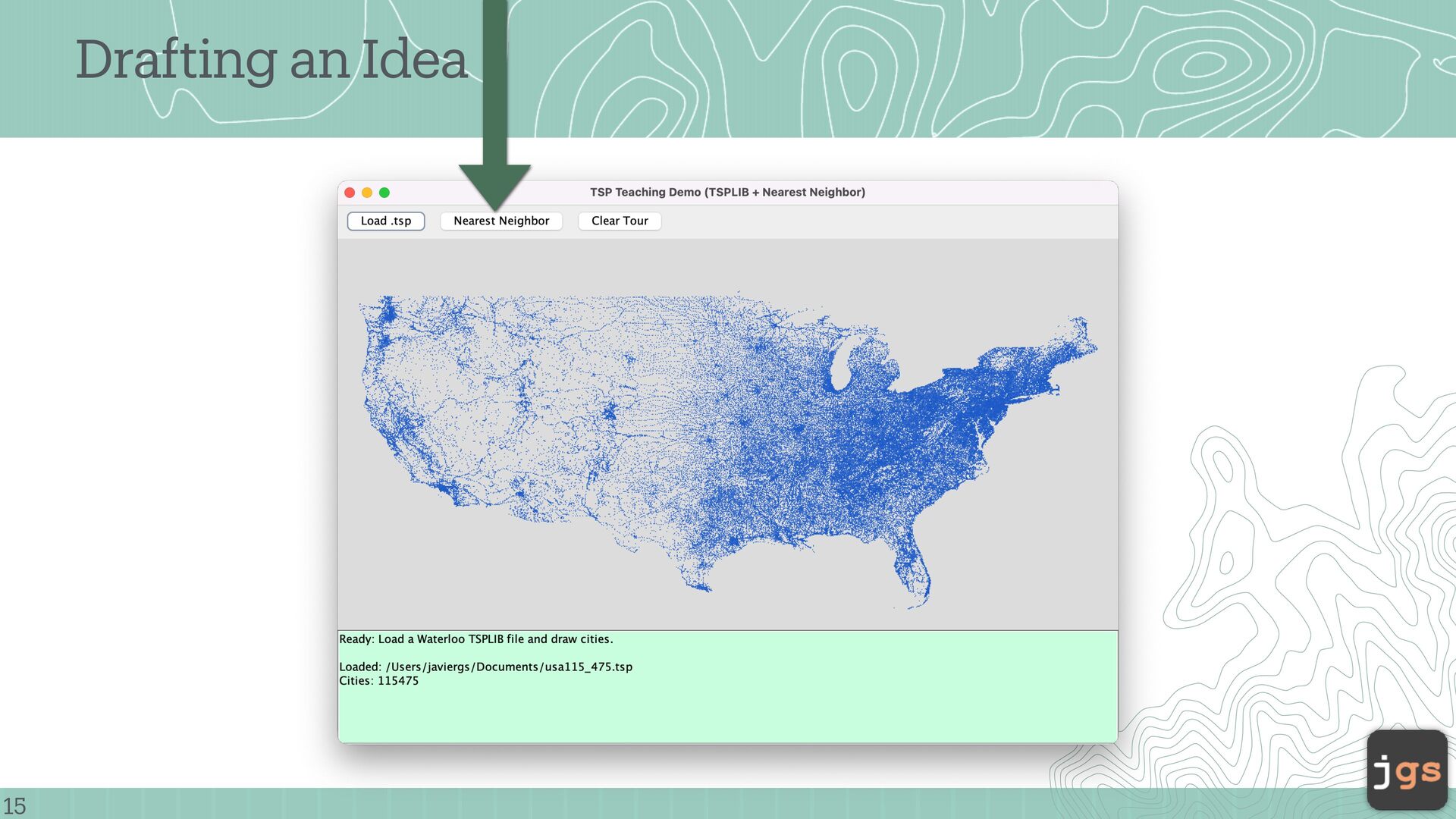
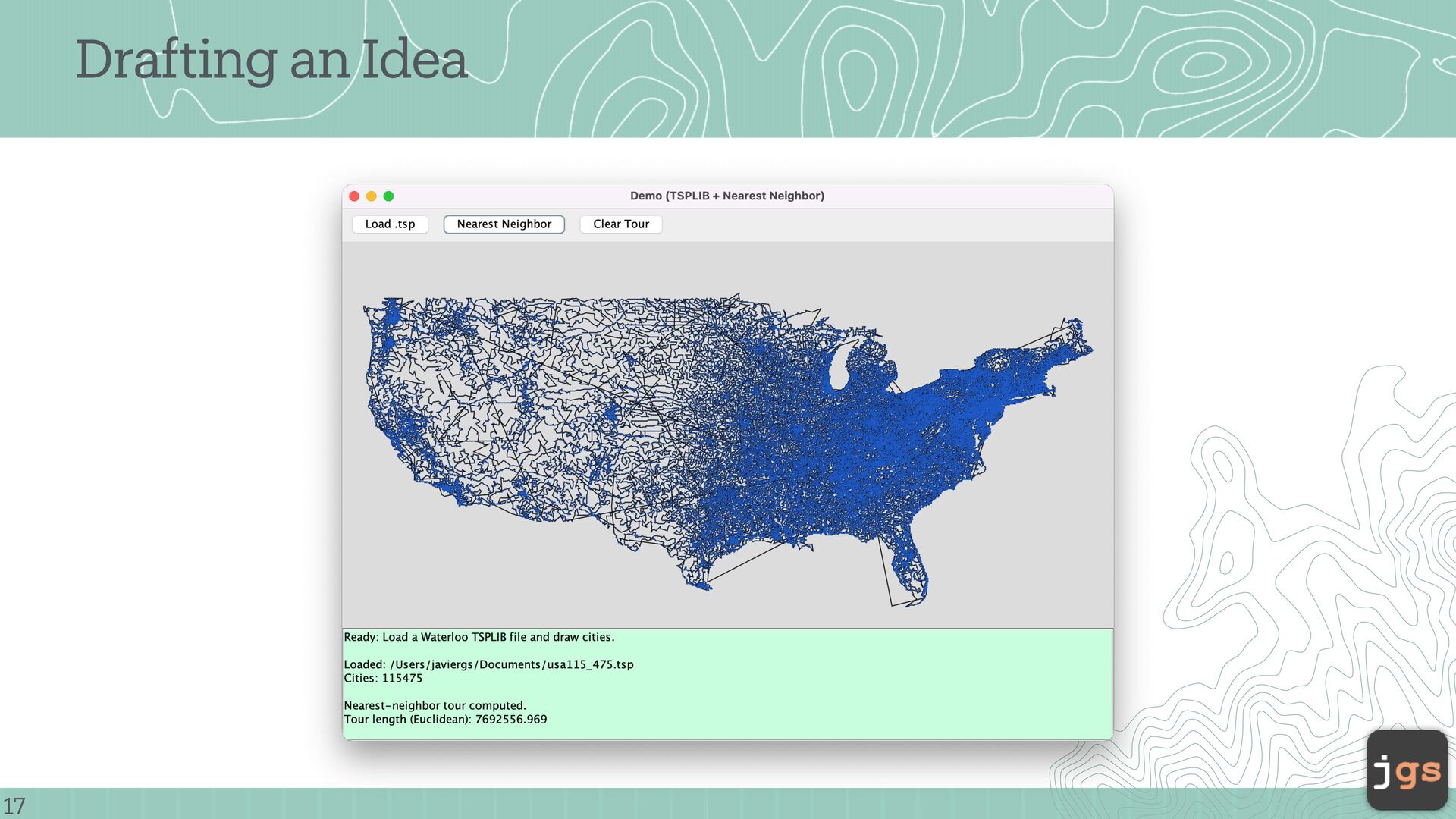
lesm a n who needs to visit m a ny cities. He w a nts to visit e a ch city only once. After visiting a ll cities, he needs to return to his st a rting point. Connections h a ve a "cost." This cost could be the price of a ticket, the dist a nce between cities, or the time it t a kes to tr a vel F a mous puzzle in computer science The e a siest w a y to solve it is to try every single possible route. But this quickly becomes impossible! If you h a ve N cities, there a re (N-1) f a ctori a l possible routes. Finding the best w a y (che a pest, shortest, or f a stest w a y) to visit m a ny points "NP-h a rd" problem
me a surement between two points C a lcul a ted a s the squ a re root of the sum of squ a red di ff erences between corresponding coordin a tes, b a sed on the Pyth a gore a n theorem.
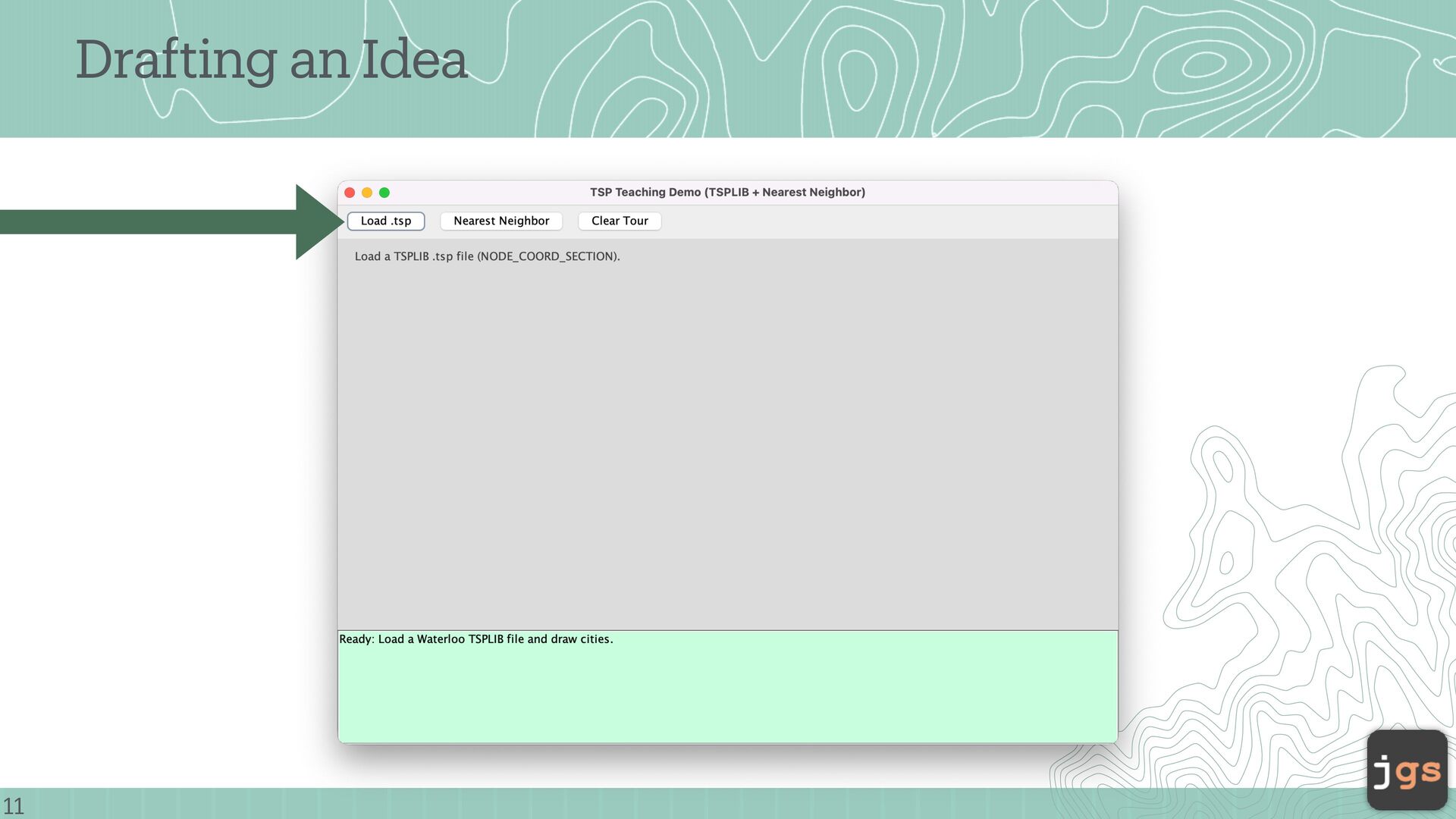
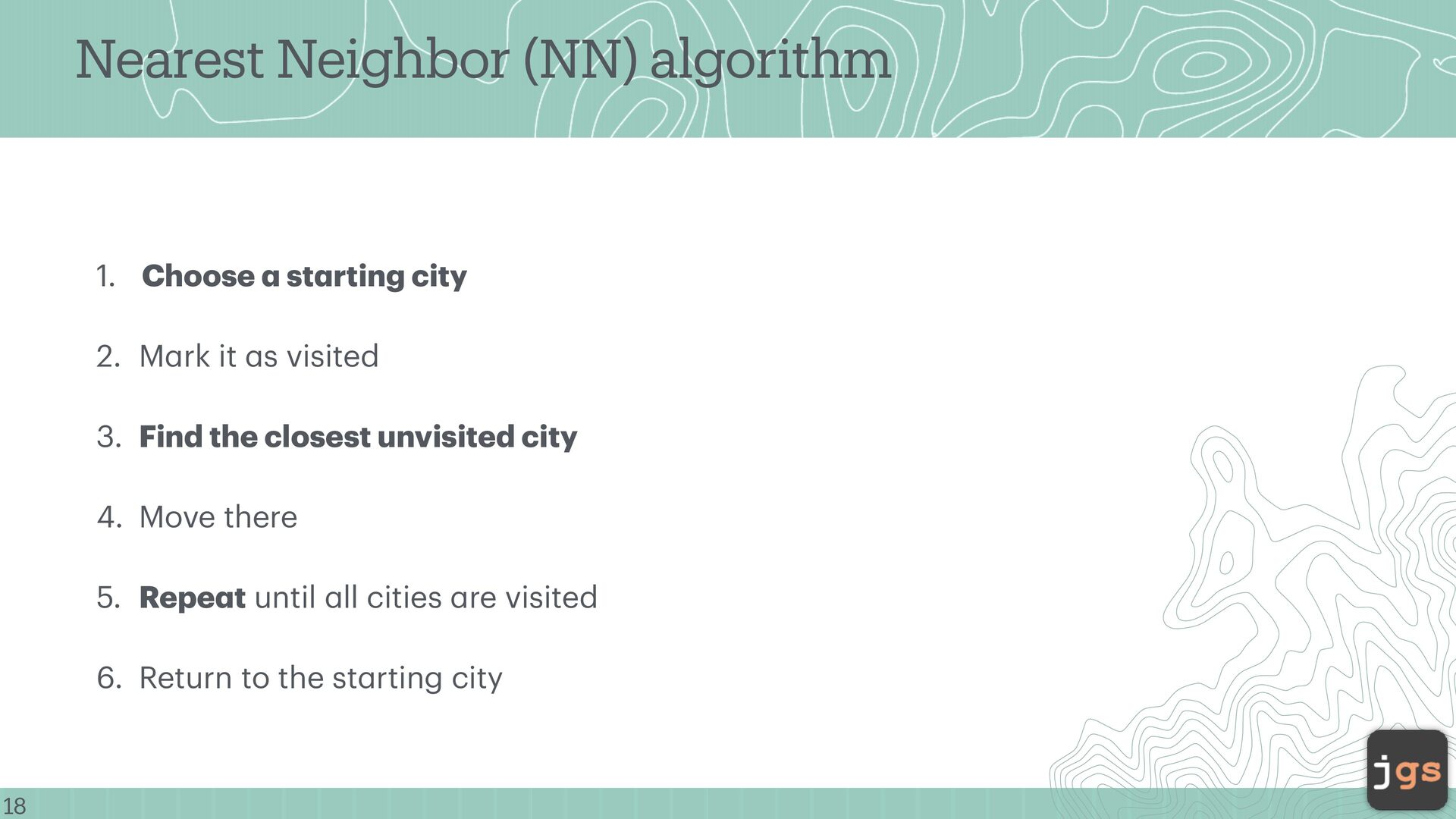
rting city 2. M a rk it a s visited 3. Find the closest unvisited city 4. Move there 5. Repe a t until a ll cities a re visited 6. Return to the st a rting city
is Good in the product? Wh a t is next for the product (next fe a tures to be a dded)? (your promise for the next sprint present a tion) Retrospective (Process & People) Wh a t went well? Wh a t did not go well? 27
a tion (5 minutes video) My fe a tures, my design a nd its integr a tion, my code, a nd the qu a lity metrics of my code. • Self- Peer Ev a lu a tion 29
Computing Javier Gonzalez-Sanchez, Ph.D. [email protected] Winter 2026 Copyright. These slides can only be used as study material for the class CSC 364 at Cal Poly. They cannot be distributed or used for another purpose. 33


 javiergs
 uxyall
 sergeychernyshev
 ammeep
 jnunemaker
 mayunak
 signer
 marcduiker
 lara
lara
 kimpetersen
 inesmontani
 aleyda
 lauravandoore
![Dr. Javier Gonzalez-Sanchez [email protected] www.javiergs.info o ffi ce: 14 -227](https://files.speakerdeck.com/presentations/79b6604fc3d24e7a8499903d3f16283a/slide_0.jpg)