Upgrade to Pro
— share decks privately, control downloads, hide ads and more …
Speaker Deck
Sign up for free
Menu
Search
Features
All features
Private URLs
Password Protection
Custom URLS
Scheduled publishing
Remove Branding
Restrict embedding
Deck Collections
Notes
Features
All features
Private URLs
Password Protection
Custom URLS
Scheduled publishing
Remove Branding
Restrict embedding
Deck Collections
Notes
Explore
Featured decks
Featured speakers
Programming
Technology
Storyboards
Explore
Featured decks
Featured speakers
Programming
Technology
Storyboards
Pricing
Search
Sign in
Sign up for free
Intro to Designing Online Courses
Search
Sponsored
·
Your Podcast. Everywhere. Effortlessly.
Share. Educate. Inspire. Entertain. You do you. We'll handle the rest.
→
John Muir
May 13, 2015
Education
79
1
Share
Embed
Copy iframe code
Copy JS code
Copy link
Start on current slide
Intro to Designing Online Courses
Session for the OSU CFAES eCourse session on 2015-05-13
John Muir
May 13, 2015
More Decks by John Muir
See All by John Muir
Flipped 2
johnmuir
0
130
Maximizing Learning, Creativity, and Innovation for All #DTLwisc
johnmuir
1
2.5k
Flipped Classroom Series: Session 1
johnmuir
0
140
A beautiful, accessible, instructionally sound online course template
johnmuir
1
3.9k
Introduction to Flipping the Classroom
johnmuir
0
130
Instructional Design @ ODEE
johnmuir
0
510
Other Decks in Education
See All in Education
Dronegeografía innovación didáctica y fotogrametría 3D para la enseñanza de la geografía local y la ciudadaniía activa
juanmartin2026
0
39k
Human Perception and Cognition - Lecture 4 - Human-Computer Interaction (1023841ANR)
signer
PRO
0
1.7k
Sekolah Sabat - Triwulan 3 2026 - Pelajaran 12
hiola
0
12k
Quality Control of Crude Drugs
pawan_pharm
0
200
Padlet opetuksessa
matleenalaakso
12
16k
Digijulkaisut
matleenalaakso
1
10k
学生のうちに考えておきたい信頼の話
suisan
1
840
マークシート試験のTeX言語を用いた自動採点について
doratex
0
6.1k
Railsチュートリアル × 反転学習の事例紹介
yasslab
PRO
3
190k
吉岡研究室紹介(2026年度)
kentaroy47
0
350
組合せ最適化特論
tasusu
0
230
GENERAL PHARMACOLOGY
pawan_pharm
0
210
Featured
See All Featured
"I'm Feeling Lucky" - Building Great Search Experiences for Today's Users (#IAC19)
danielanewman
230
23k
Ruling the World: When Life Gets Gamed
codingconduct
0
400
Building the Perfect Custom Keyboard
takai
2
910
Unlocking the hidden potential of vector embeddings in international SEO
frankvandijk
0
990
HU Berlin: Industrial-Strength Natural Language Processing with spaCy and Prodigy
inesmontani
PRO
0
750
Docker and Python
trallard
47
4.2k
Noah Learner - AI + Me: how we built a GSC Bulk Export data pipeline
techseoconnect
PRO
0
460
Hiding What from Whom? A Critical Review of the History of Programming languages for Music
tomoyanonymous
3
1.3k
The Illustrated Guide to Node.js - THAT Conference 2024
reverentgeek
1
570
<Decoding/> the Language of Devs - We Love SEO 2024
nikkihalliwell
1
360
How to Create Impact in a Changing Tech Landscape [PerfNow 2023]
tammyeverts
56
3.5k
How To Stay Up To Date on Web Technology
chriscoyier
790
250k
Transcript
None
TECHNOLOGY OF TEACHING
None
None
None
None
None
None
Experimenting, trying new things
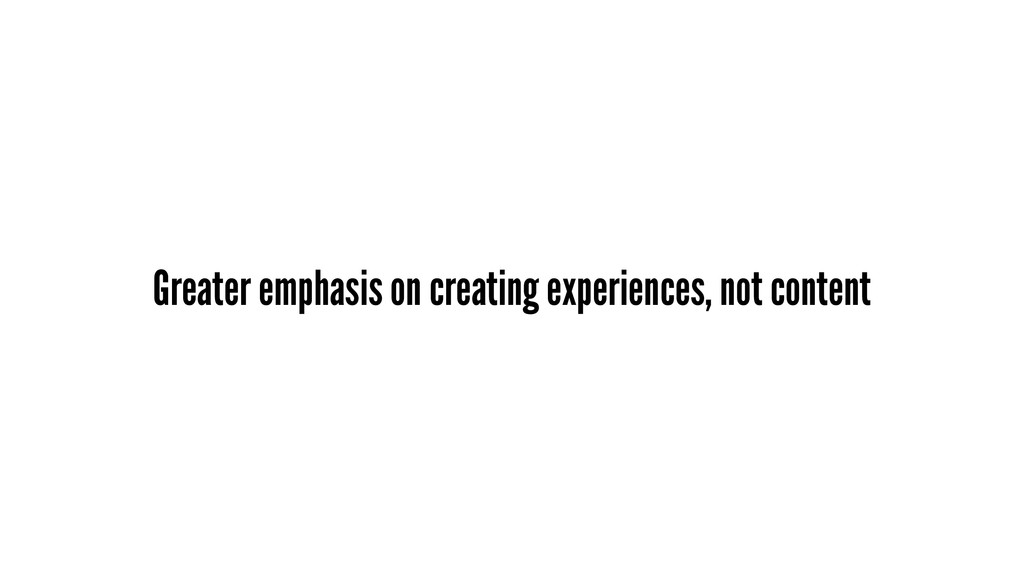
Greater emphasis on creating experiences, not content
Taking advantage of the technology of online learning, not being
constrained by it
SOME DEFINITIONS
Synchronous: Course or activity that takes place live, in real
time Asynchronous: Course or activity where students can participate at different times, according to their own schedule
Distance: Connecting students off campus to instruction at OSU Online:
Courses or activities that take place online (e.g., in Carmen, Moodle, iTunesU)
MAKING A GREAT ONLINE COURSE
1. A strong foundation 2. A great start to the
course 3. An engaging weekly routine
1. Strong foundation
BACKWARD DESIGN A focus on your goals and objectives, willingness
to reimagine everything else
None
None
BEST PRACTICES BASED ON EXPERIENCE AND RESEARCH ▸ attention and
memory ▸ critical thinking ▸ motivation and self-regulation ▸ multimedia learning
Ambrose, Susan A. 2010. How learning works: seven research-based principles
for smart teaching. San Francisco, CA: Jossey-Bass.
Miller, Michelle D. 2014. Minds online: teaching effectively with technology.
Quality Matters rubric
Accessibility and universal design
A plan for online assessments (and manageable workload for grading
& feedback)
Opportunity (and need!) for your personality and teaching style
2. Great start to the course
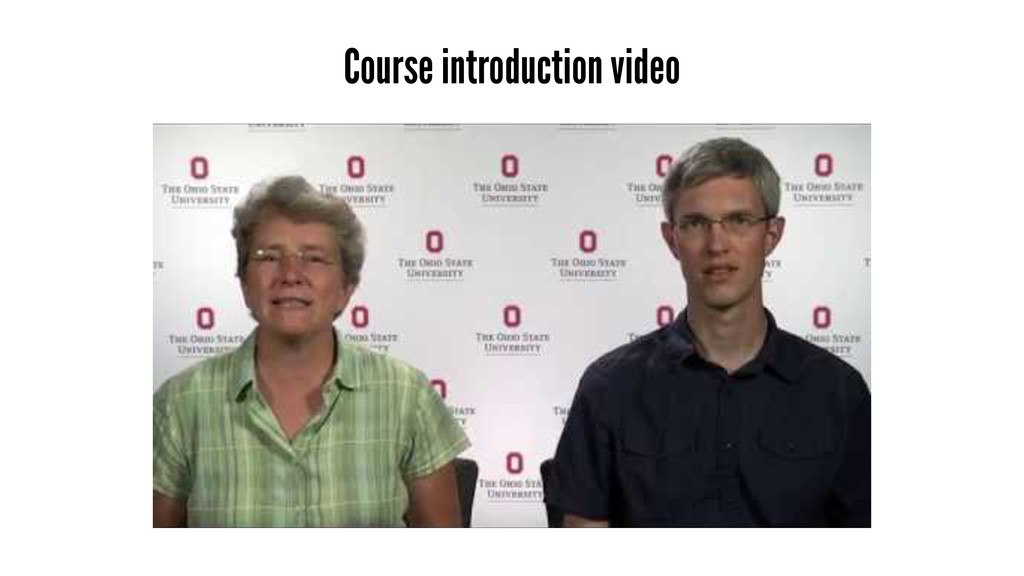
Course introduction video
Course overview and web-based syllabus
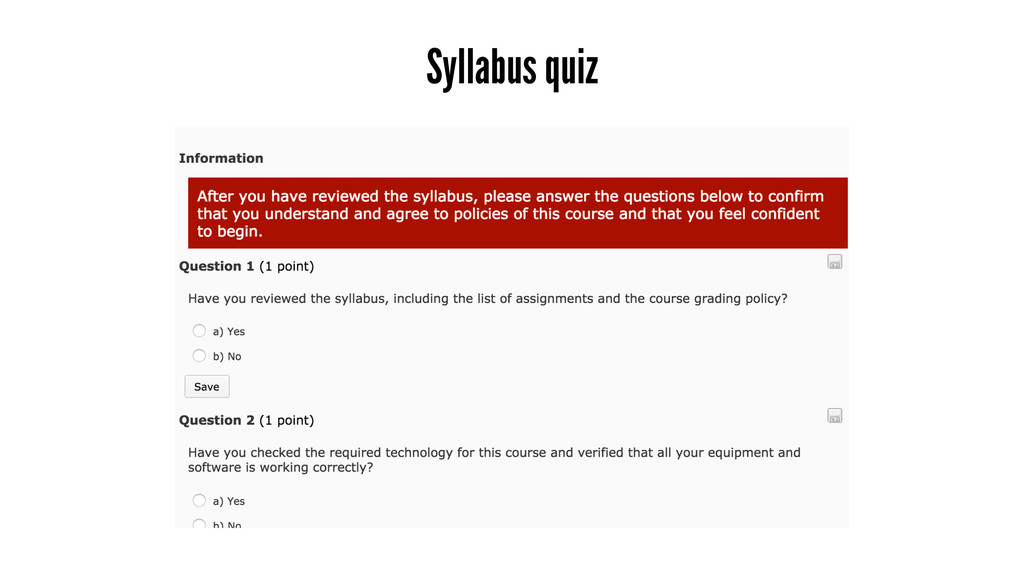
Syllabus quiz
Clear technical requirements, resources, and setup tasks
Pre-assessment about the subject area
Personal connection, push for students to introduce themselves and engage
on a personal level
3. Engaging weekly routine
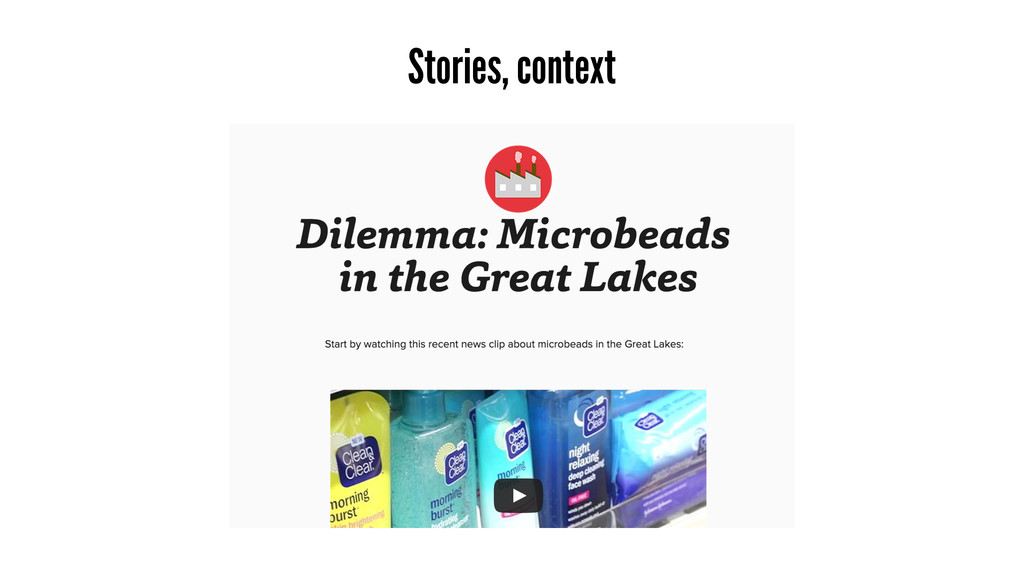
Stories, context
Things to do: Practice with tools and sources in your
subject area
Weekly roadmaps, including check-in video
Weekly opportunities for contact with you
Instructional multimedia that's there to support what you're having them
do
▸ elearning that alternates text or video with quiz/reflection ▸
primary source materials introduced by instructor videos ▸ self-produced or third-party video and multimedia ▸ reading assignments that are accompanied by guiding questions
Frequent formative assessment
Space for discussion and collaboration
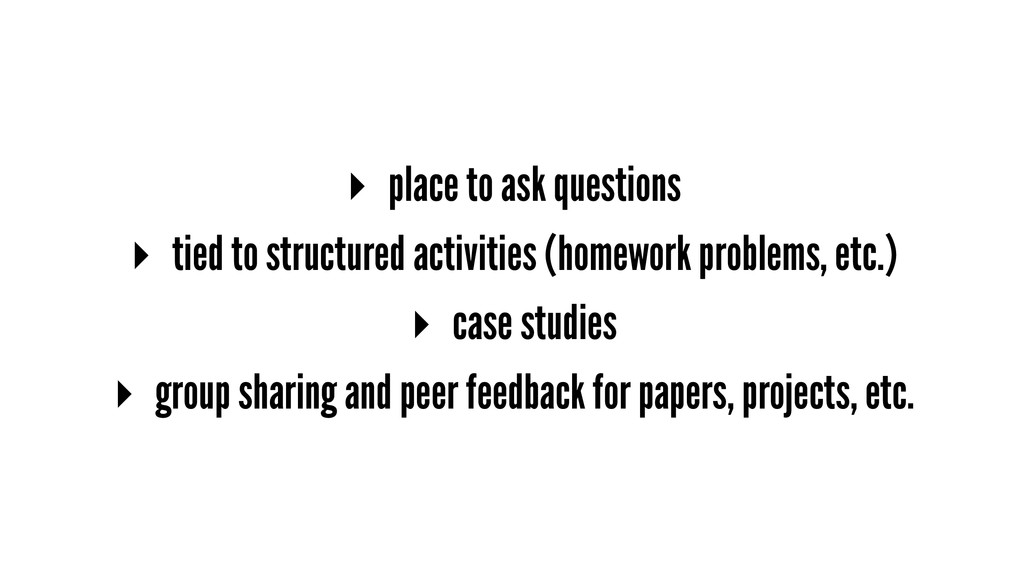
▸ place to ask questions ▸ tied to structured activities
(homework problems, etc.) ▸ case studies ▸ group sharing and peer feedback for papers, projects, etc.
✭ How to find help
Instructional designers and other support in CFAES and ODEE
OSU toolkit and recommendations for additional authoring or course tools
Carmen course shell
Carmen course shell
Menu of training opportunities for instructors (e.g., ODEE, Quality Matters)
Technical support for all OSU tools while you're teaching
Options for course evaluations and quality reviews (Quality Matters)
? 7 questions to get you started
1 What do you really want students to take away
from the course, apart from the foundational knowledge you want them to gain?
2 How can students tell that they’ve mastered what you
want them to learn and met the other goals you have for them?
3 What are the 5 best things a student could
do in a typical week to learn and practice what you’re teaching?
4 How can students, and you, tell if they’re keeping
up as the course progresses?
5 How can you give students access to your expertise
and your personality? What could they benefit from?
6 How can you get students to learn from one
another and benefit from one another’s experience and presence in the course?
7 How can you get students to enjoy the course
and care about what you’re teaching?

 Your Podcast. Everywhere. Effortlessly.


 johnmuir
 juanmartin2026
 signer
 hiola
hiola
 pawan_pharm
 matleenalaakso
 suisan
 doratex
 yasslab
 kentaroy47
 tasusu
 danielanewman
 codingconduct
 takai
takai
 frankvandijk
 inesmontani
 trallard
 techseoconnect
 tomoyanonymous
 reverentgeek
 nikkihalliwell
 tammyeverts
 chriscoyier