Upgrade to Pro — share decks privately, control downloads, hide ads and more …

Introduction to ES6 - React Community Kampala

Sponsored · SiteGround - Reliable hosting with speed, security, and support you can count on. →

Introduction to ES6 - React Community Kampala

This is the first meetup content containing an introduction to ES6. It is very important that one learns the new ES6 features before they begin on their ReactJS journey. This meetup was met to bridge this gap and ensure that all participants were familiar with the new ES6 features.

This deck also contains a link to the Beginner ReactJs book I co-authored with Edmond Atto. You can get your copy at www.vumbula.io

Avatar for John Kagga

John Kagga

July 06, 2019

Other Decks in Programming

Transcript

  1. R E A C T C O M M U

    N I T Y ANDELA & DEVC KLA KAMPALA
  2. Today's Agenda Arrival & Welcome Remarks Purpose of the community

    What is React? Expectations Questions Introduction to ES6 Hello World Networking Departure LINE-UP
  3. Senior Software Engineer, Andela EDMOND ATTO THE TEAM Software Engineer,

    Andela GIDEON BAMULESEYO Software Engineer, Andela PROSSY NAKIMERA Software Engineer, Andela JOHN PAUL SEREMBA Curriculum Developer, Andela ALEX NKUSI
  4. Why the community? - Knowledge sharing - Learn together -

    Peer learning - Grow your Network - Mentorship
  5. What is ReactJS? - React is a JavaScript library for

    building user interfaces, that is maintained by Facebook as an Open Source project under the MIT license.
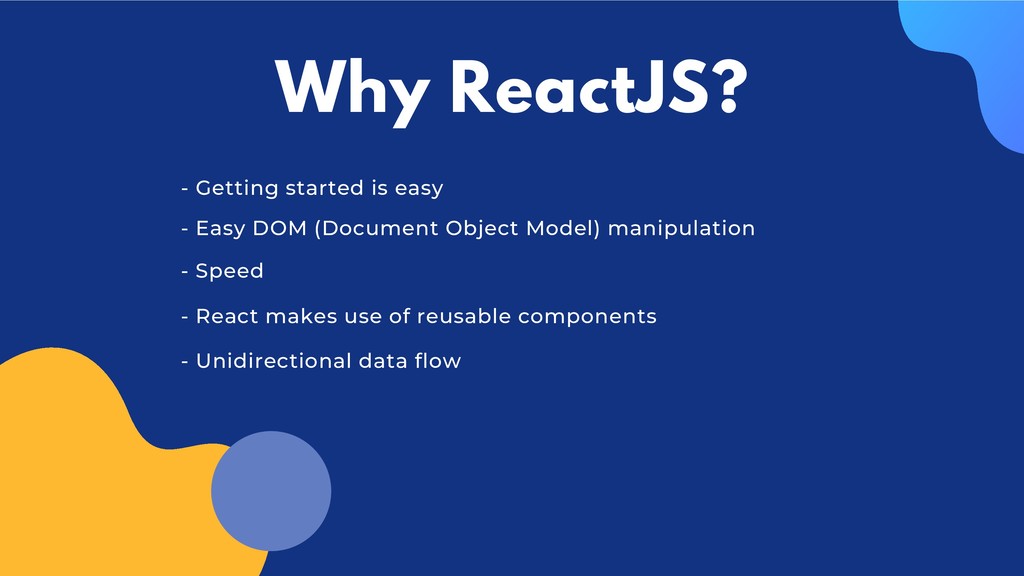
  6. Why ReactJS? - Getting started is easy - Easy DOM

    (Document Object Model) manipulation - Speed - React makes use of reusable components - Unidirectional data flow
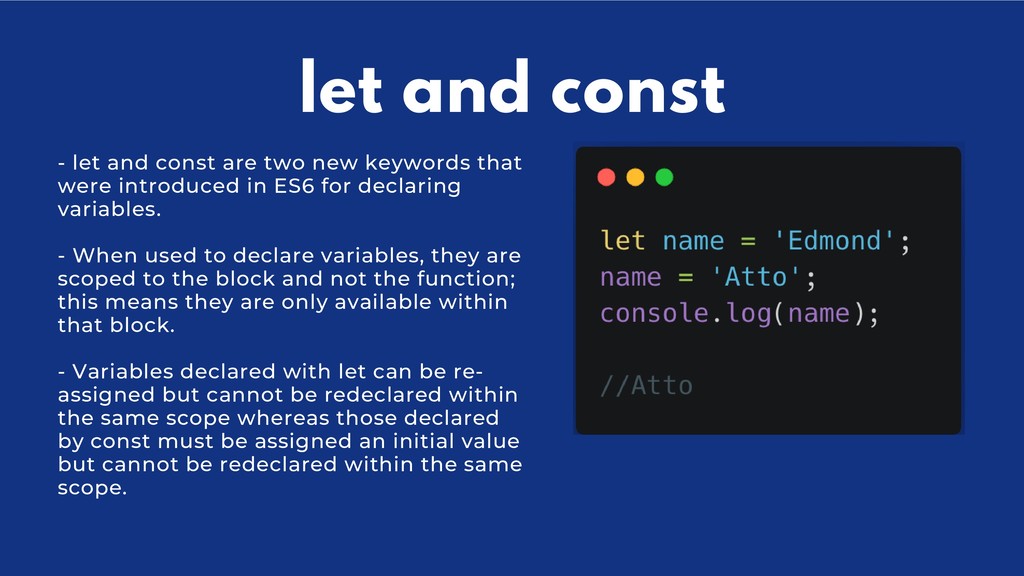
  7. let and const - let and const are two new

    keywords that were introduced in ES6 for declaring variables. - When used to declare variables, they are scoped to the block and not the function; this means they are only available within that block. - Variables declared with let can be re- assigned but cannot be redeclared within the same scope whereas those declared by const must be assigned an initial value but cannot be redeclared within the same scope.
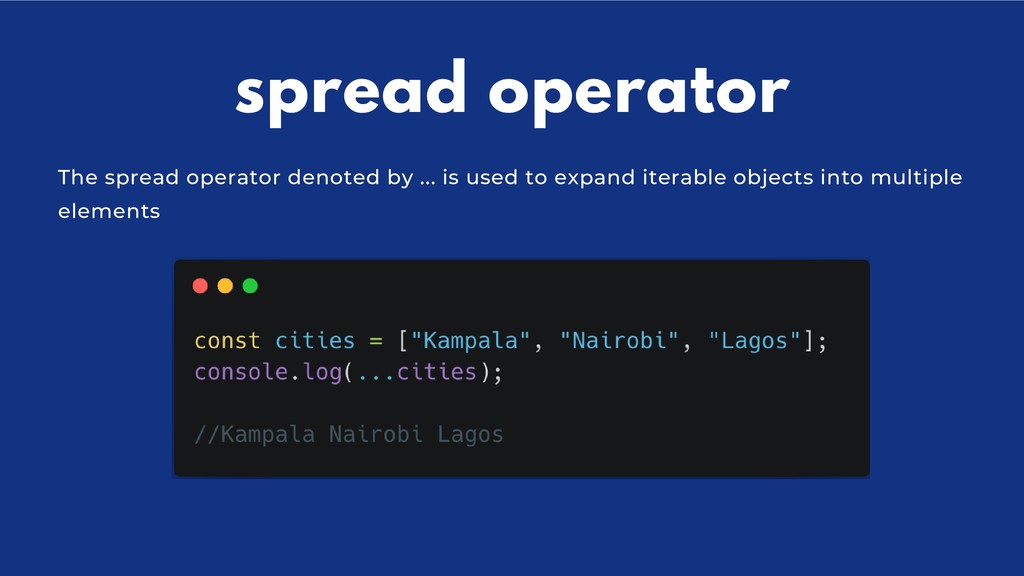
  8. spread operator The spread operator denoted by ... is used

    to expand iterable objects into multiple elements
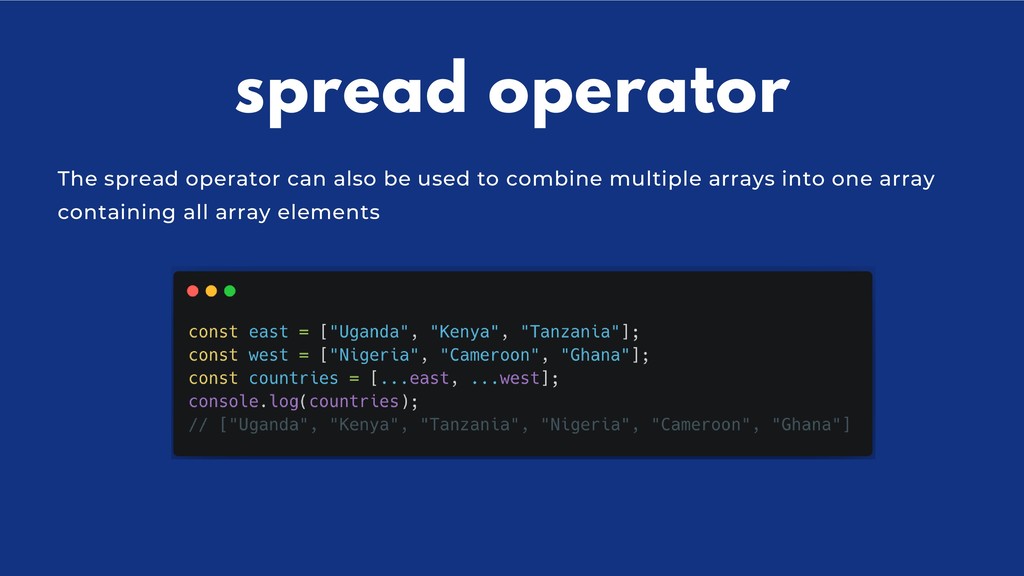
  9. spread operator The spread operator can also be used to

    combine multiple arrays into one array containing all array elements
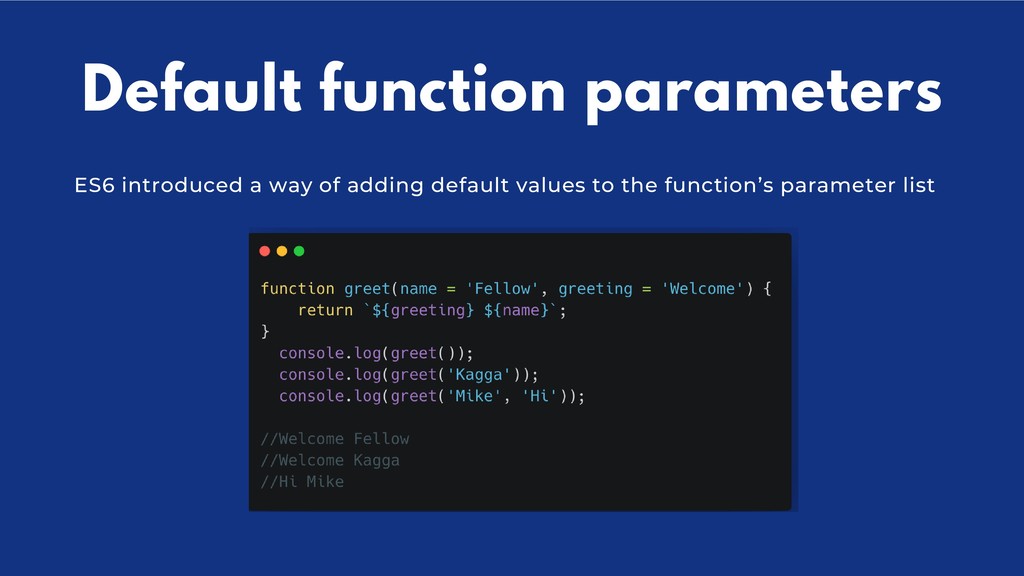
  10. Default function parameters ES6 introduced a way of adding default

    values to the function’s parameter list
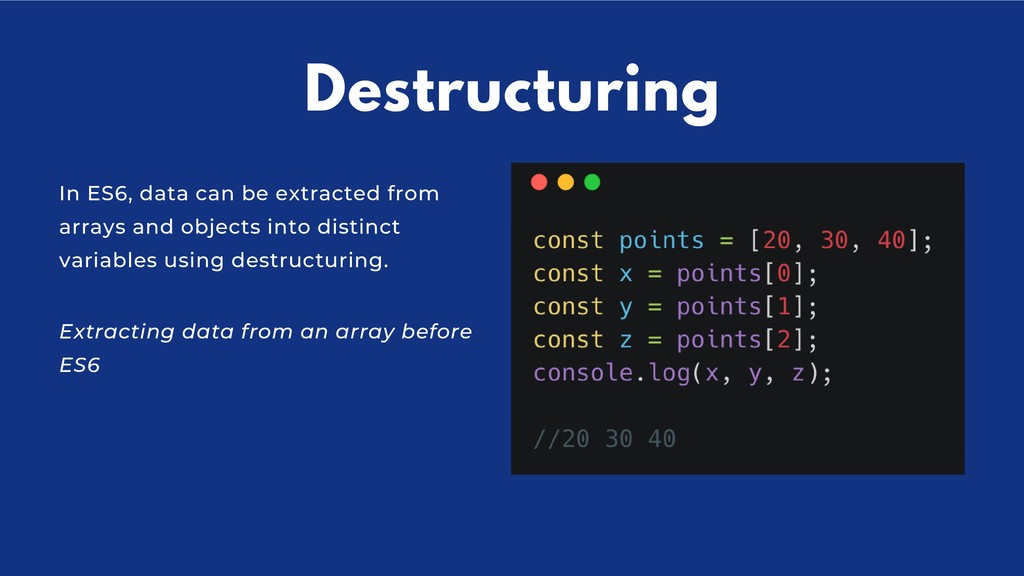
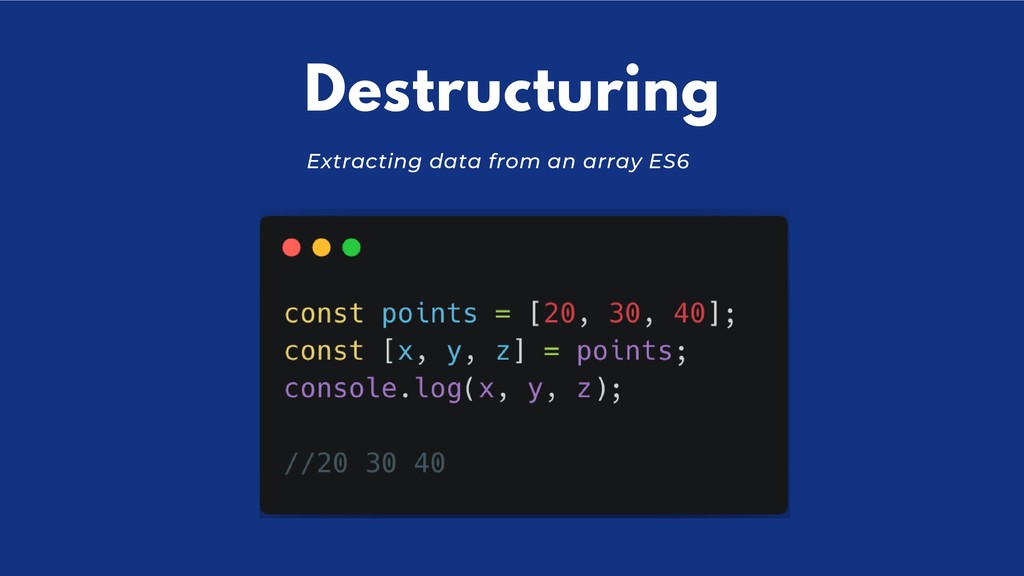
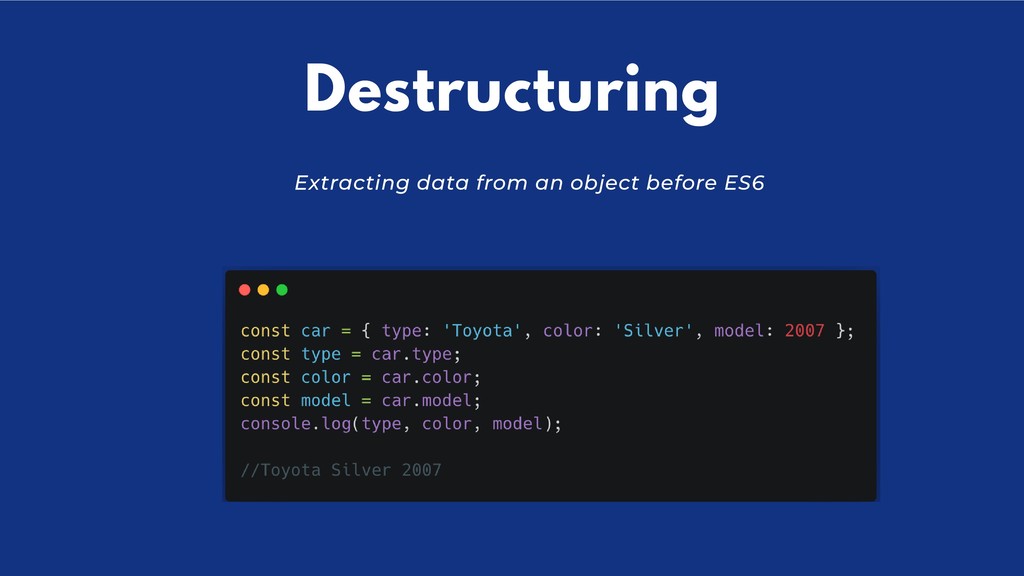
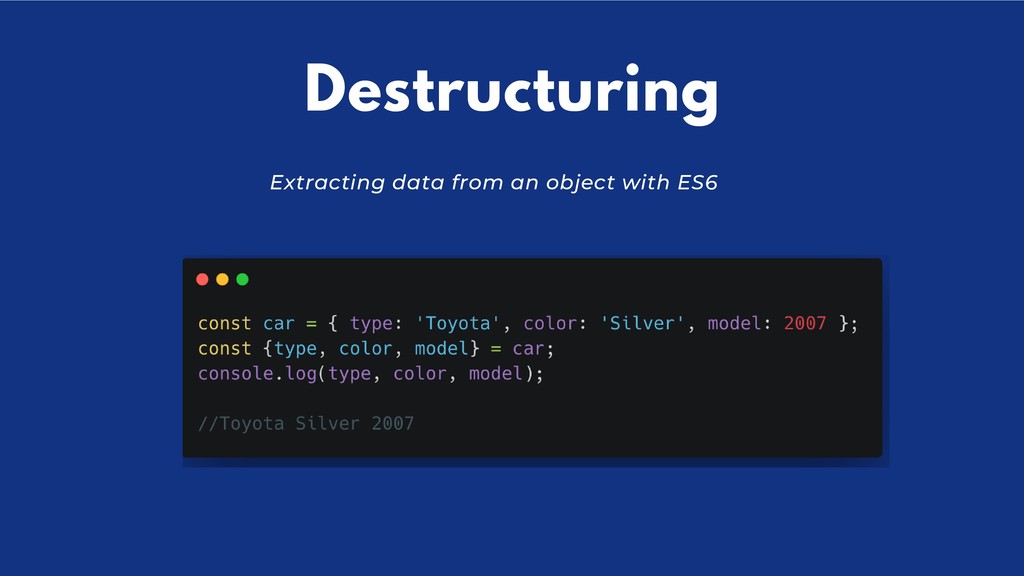
  11. Destructuring In ES6, data can be extracted from arrays and

    objects into distinct variables using destructuring. Extracting data from an array before ES6
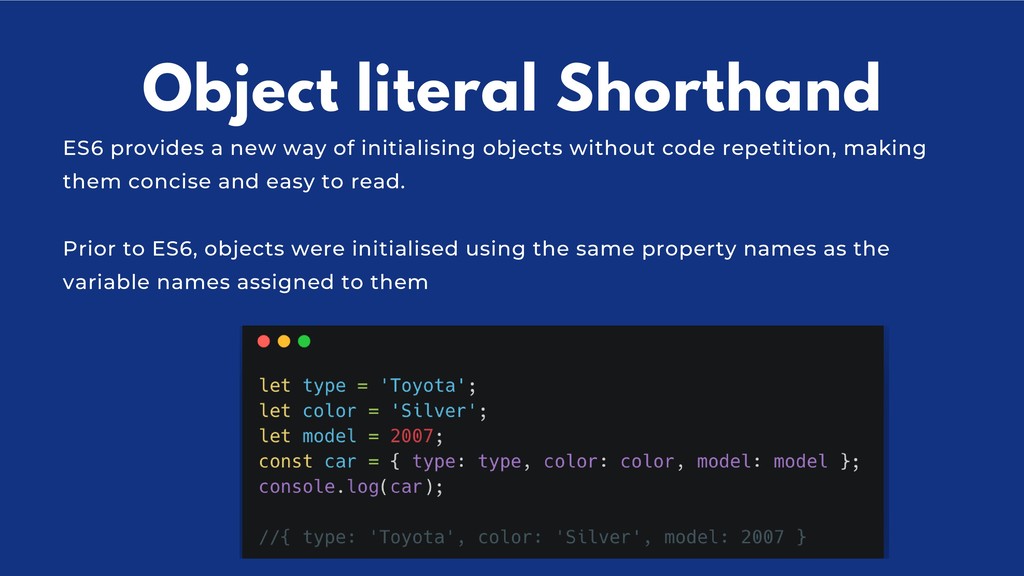
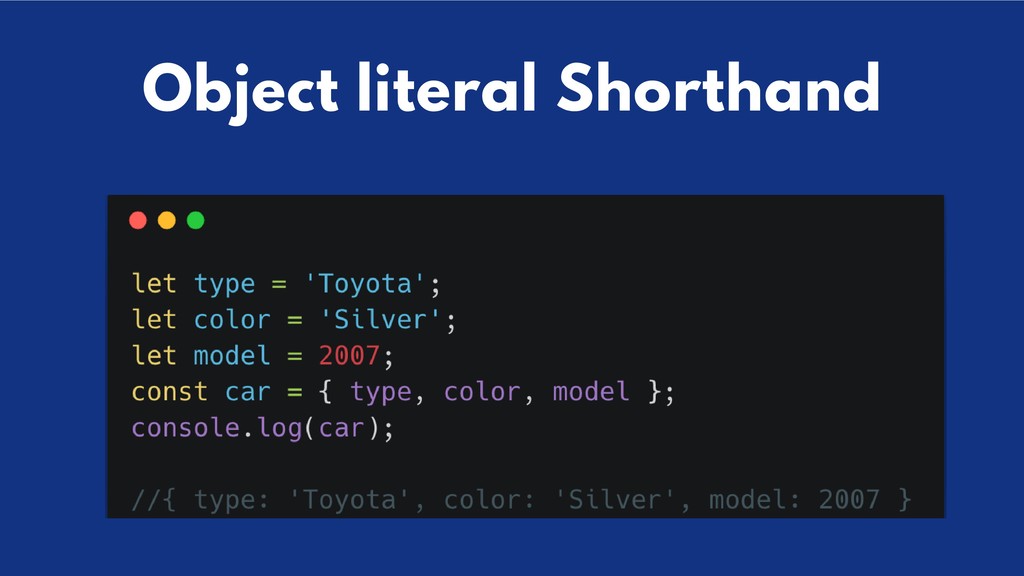
  12. Object literal Shorthand ES6 provides a new way of initialising

    objects without code repetition, making them concise and easy to read. Prior to ES6, objects were initialised using the same property names as the variable names assigned to them
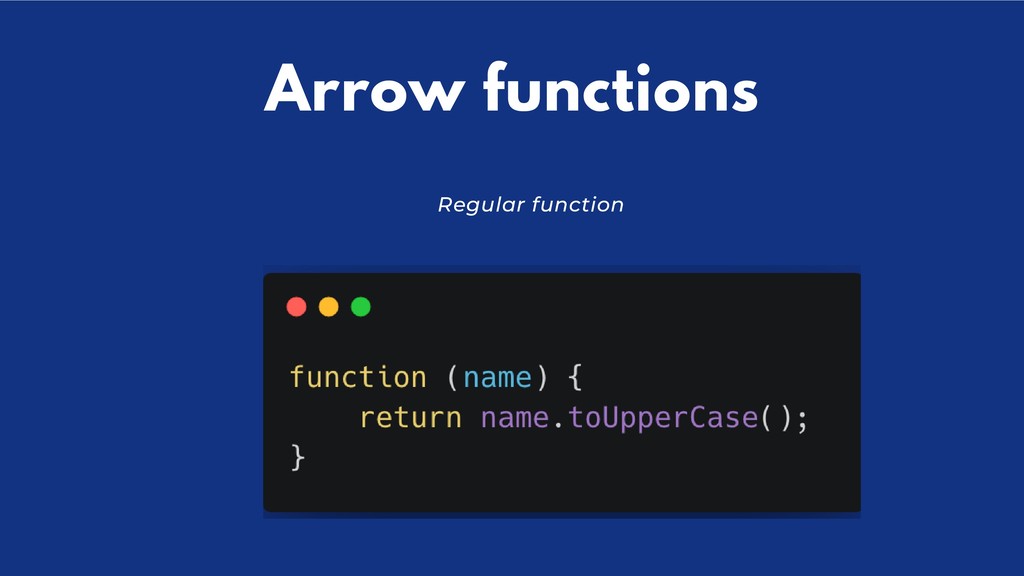
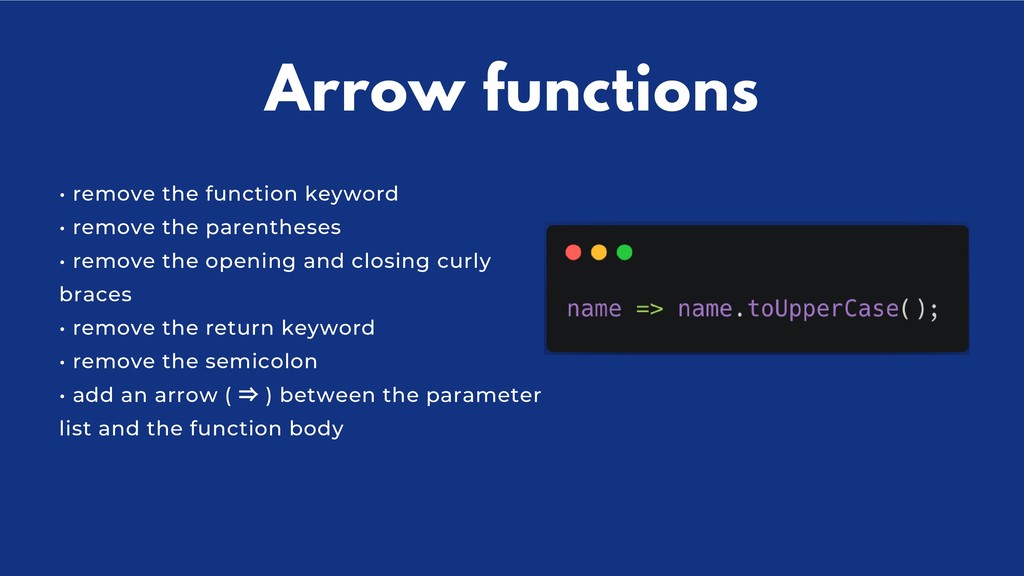
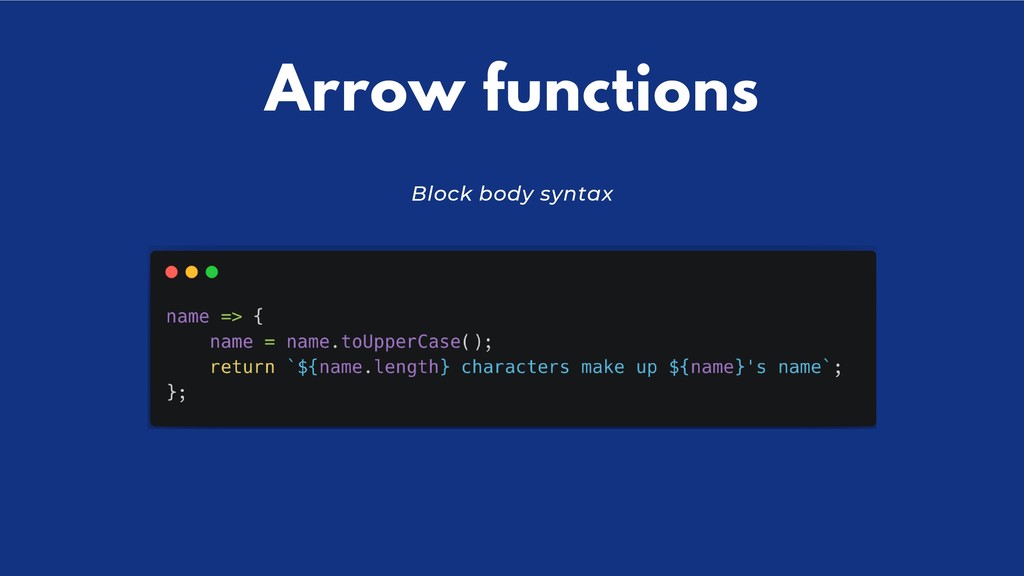
  13. Arrow functions • remove the function keyword • remove the

    parentheses • remove the opening and closing curly braces • remove the return keyword • remove the semicolon • add an arrow ( ⇒ ) between the parameter list and the function body
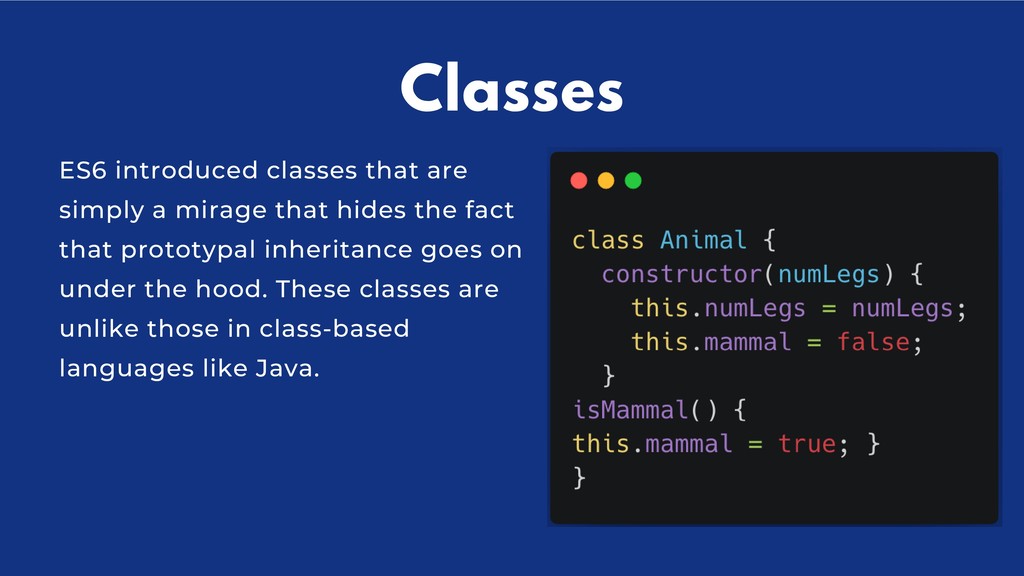
  14. Classes ES6 introduced classes that are simply a mirage that

    hides the fact that prototypal inheritance goes on under the hood. These classes are unlike those in class-based languages like Java.