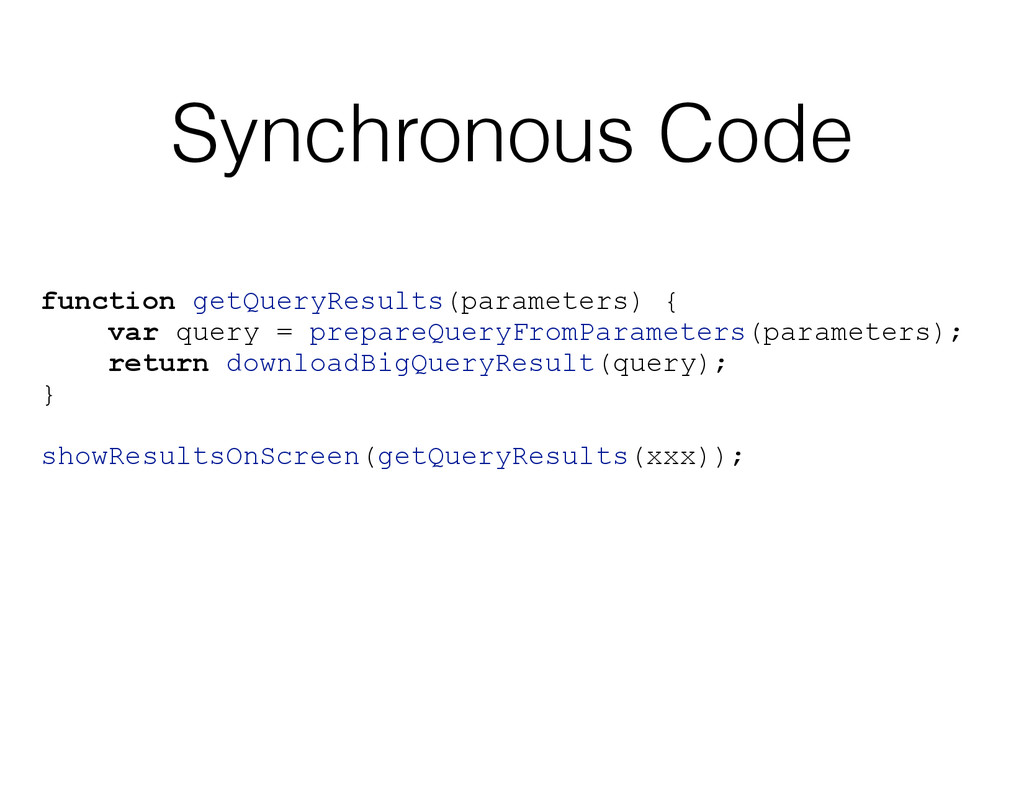
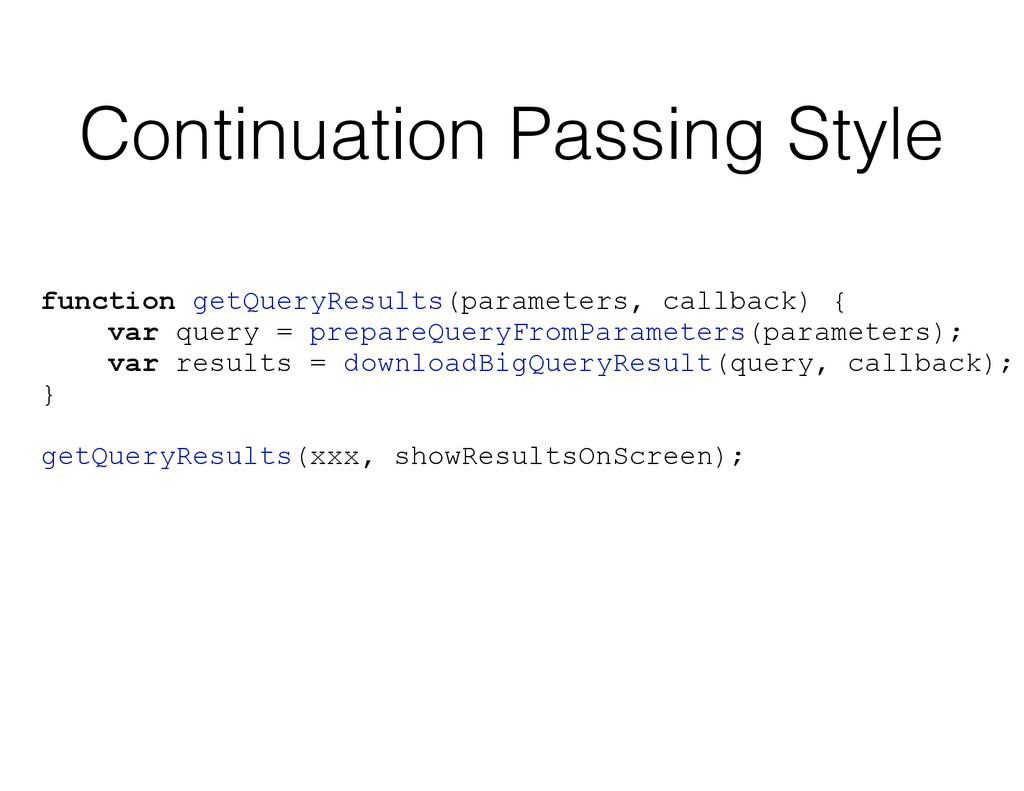
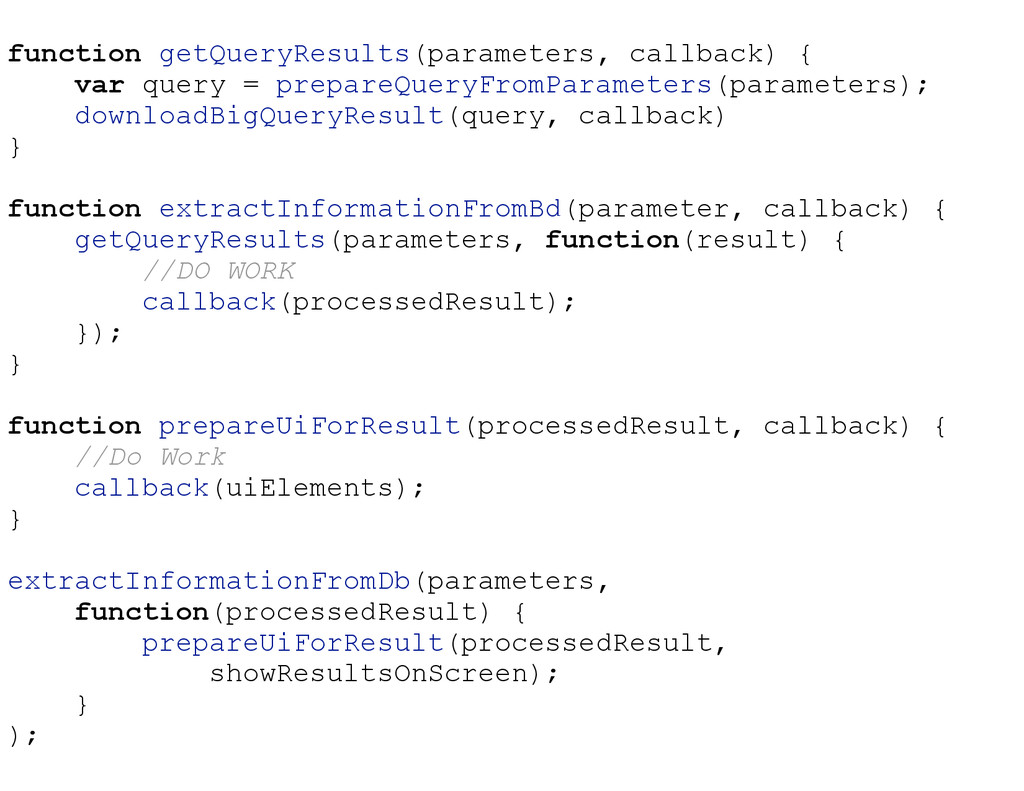
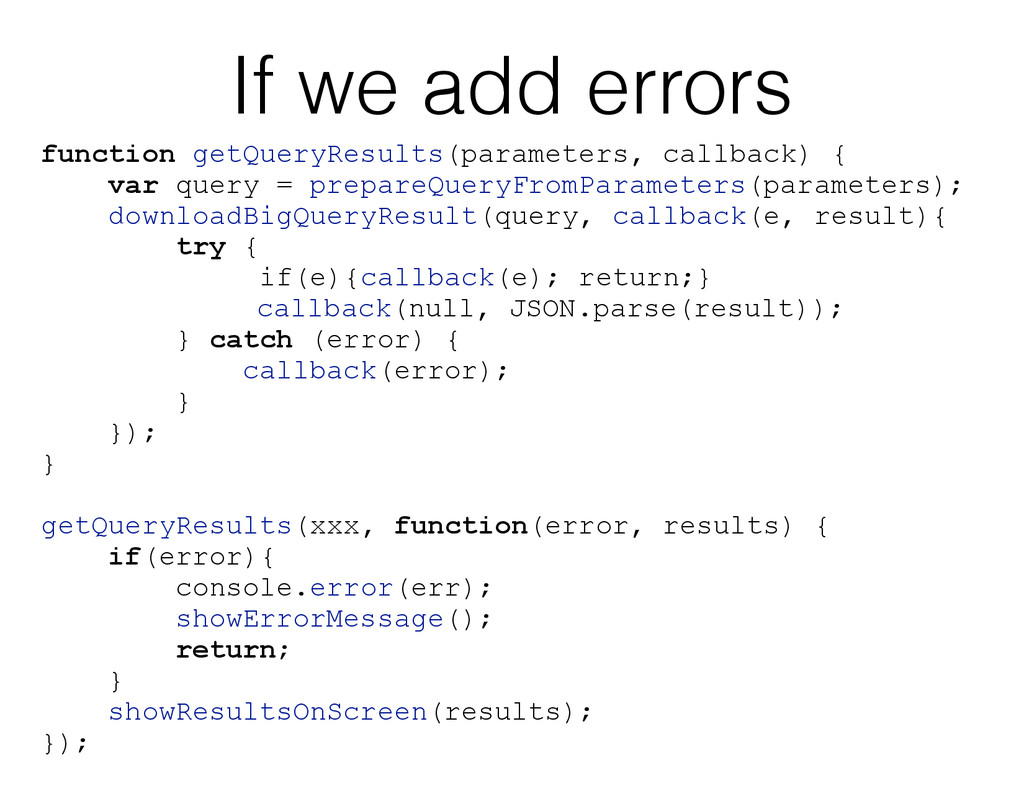
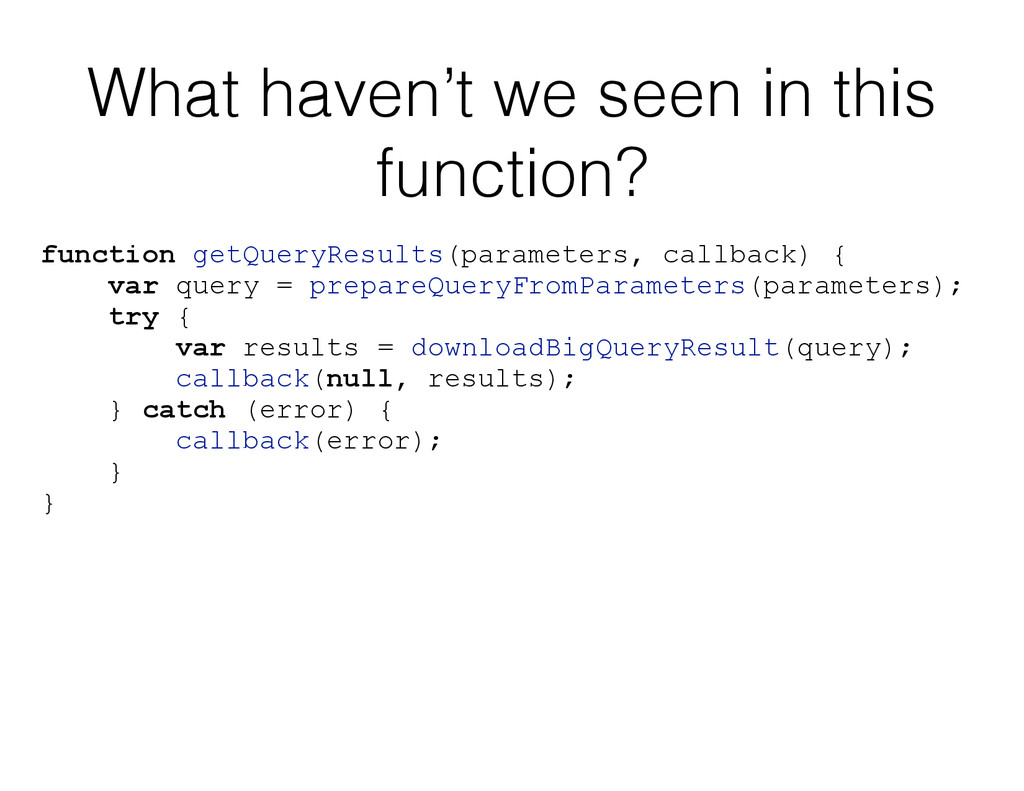
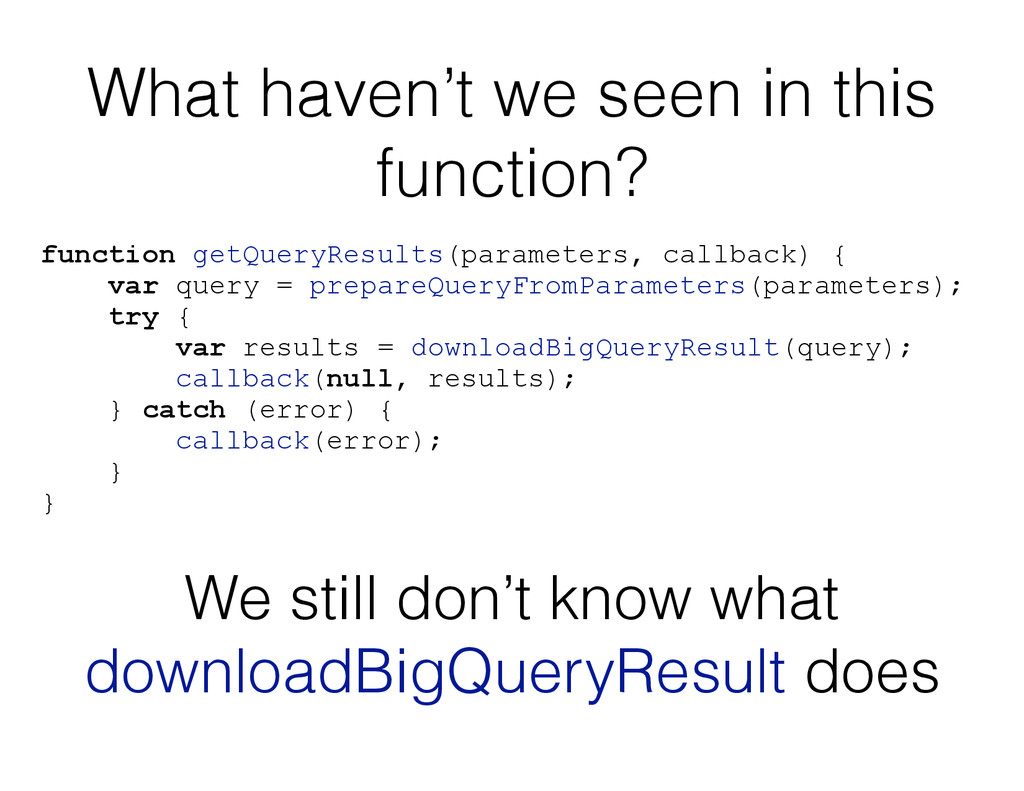
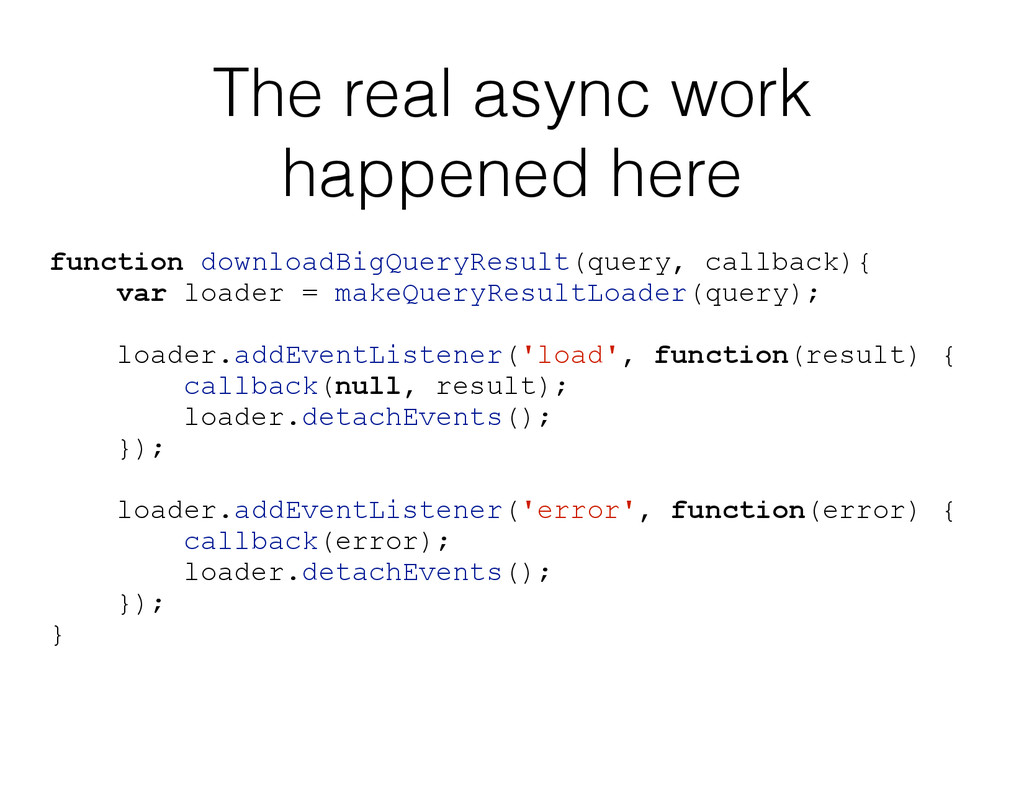
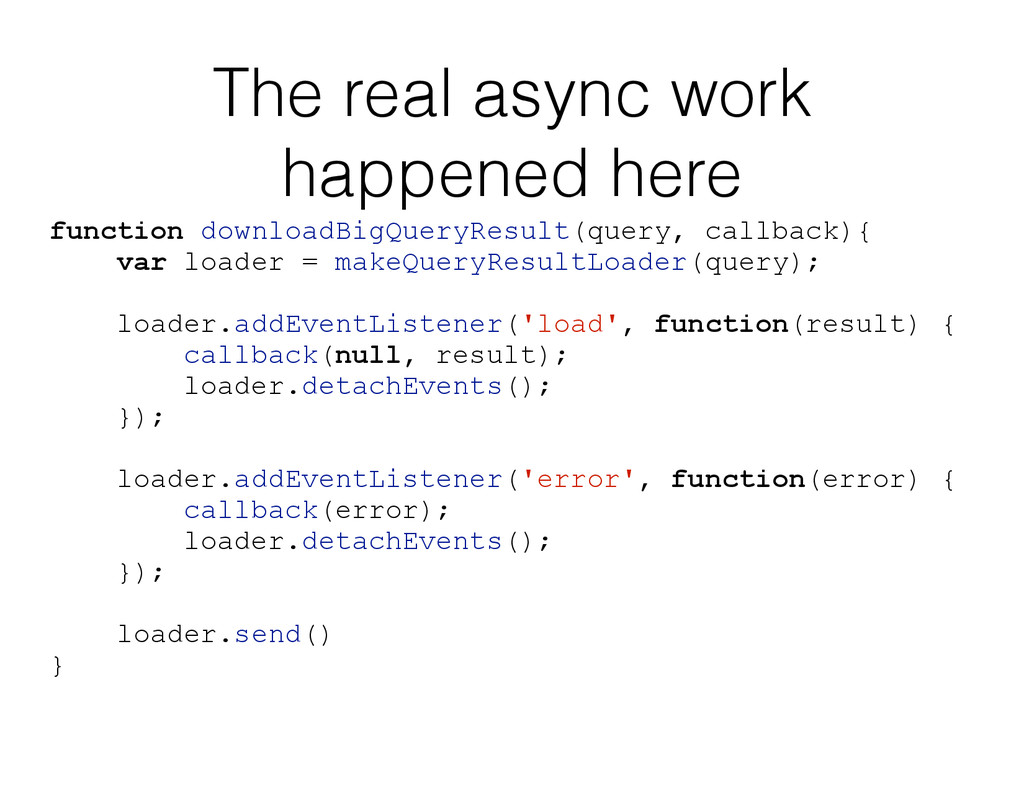
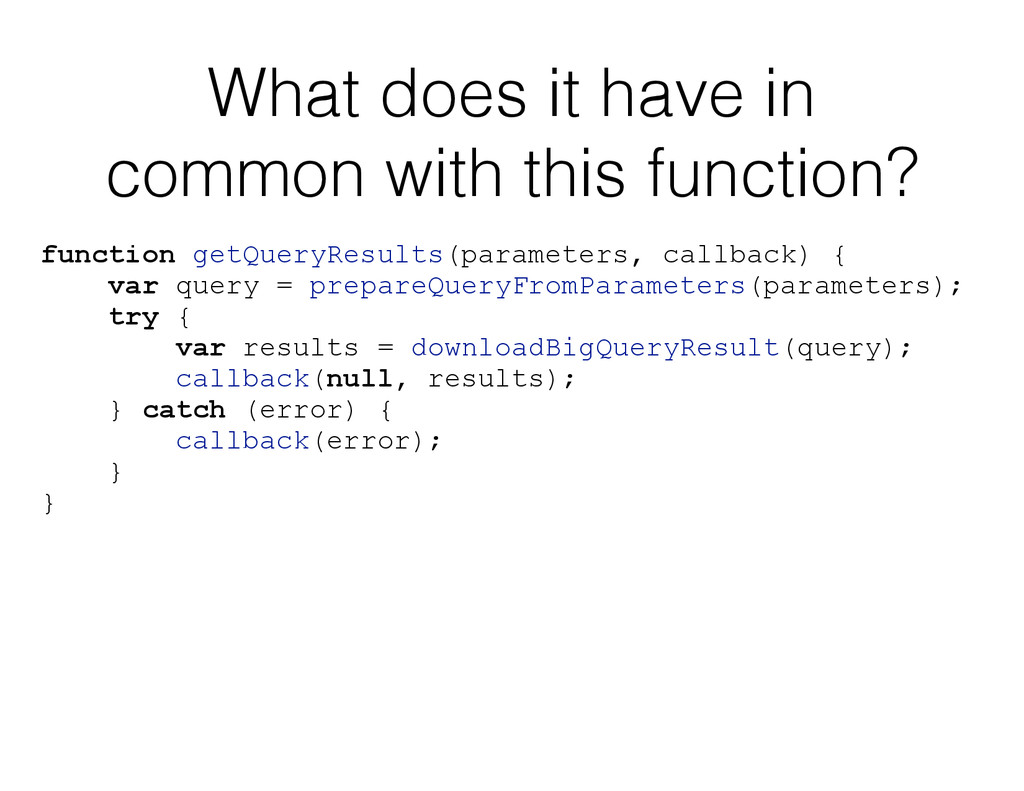
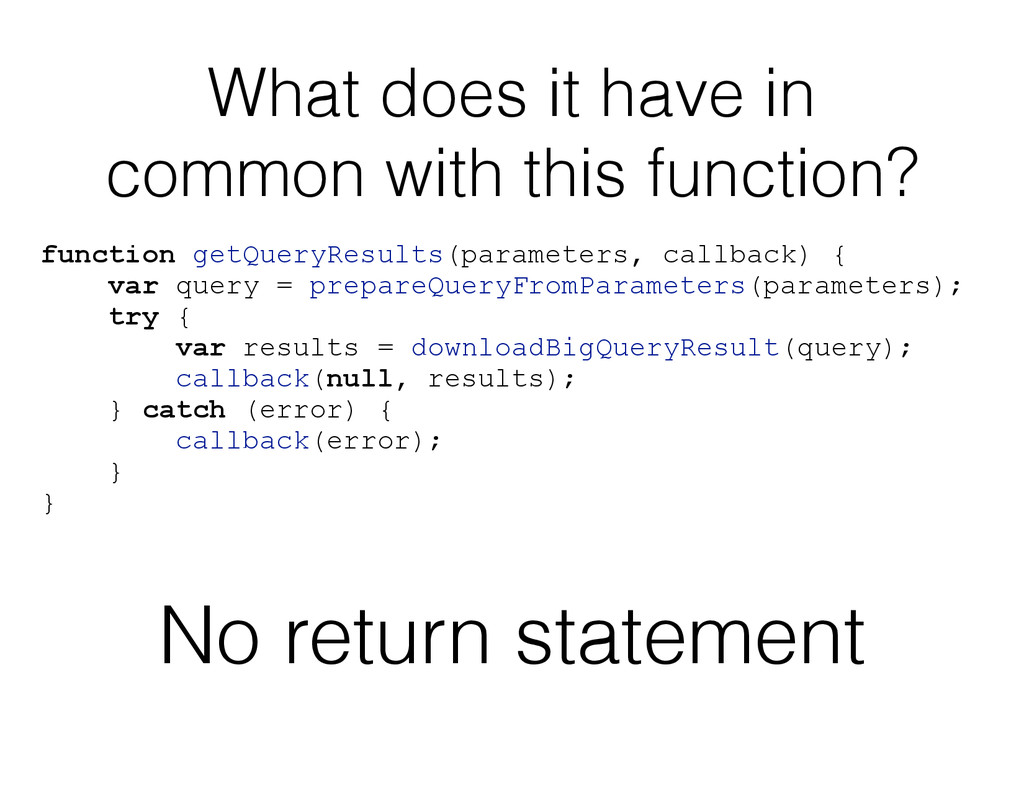
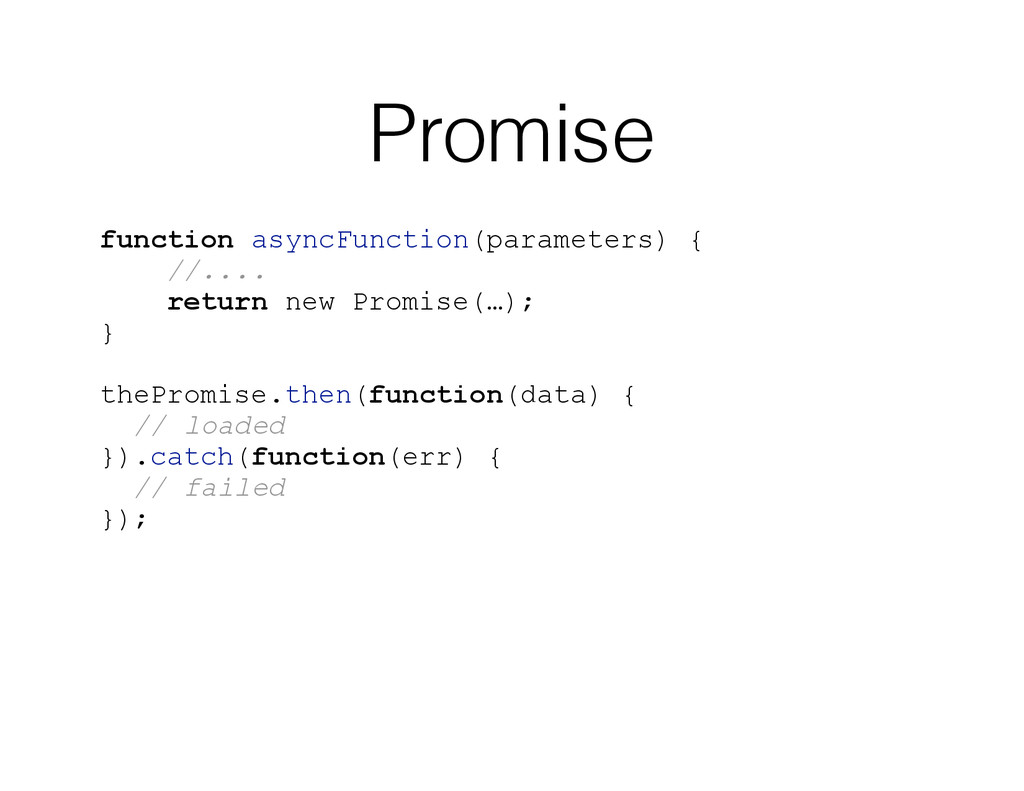
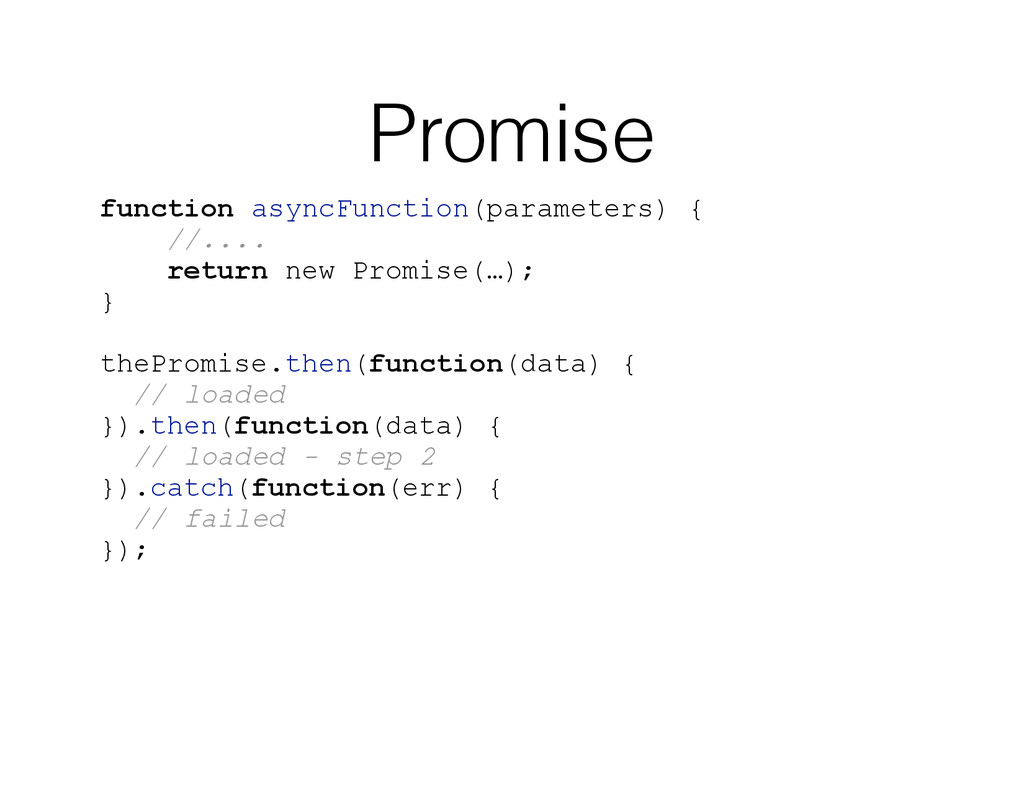
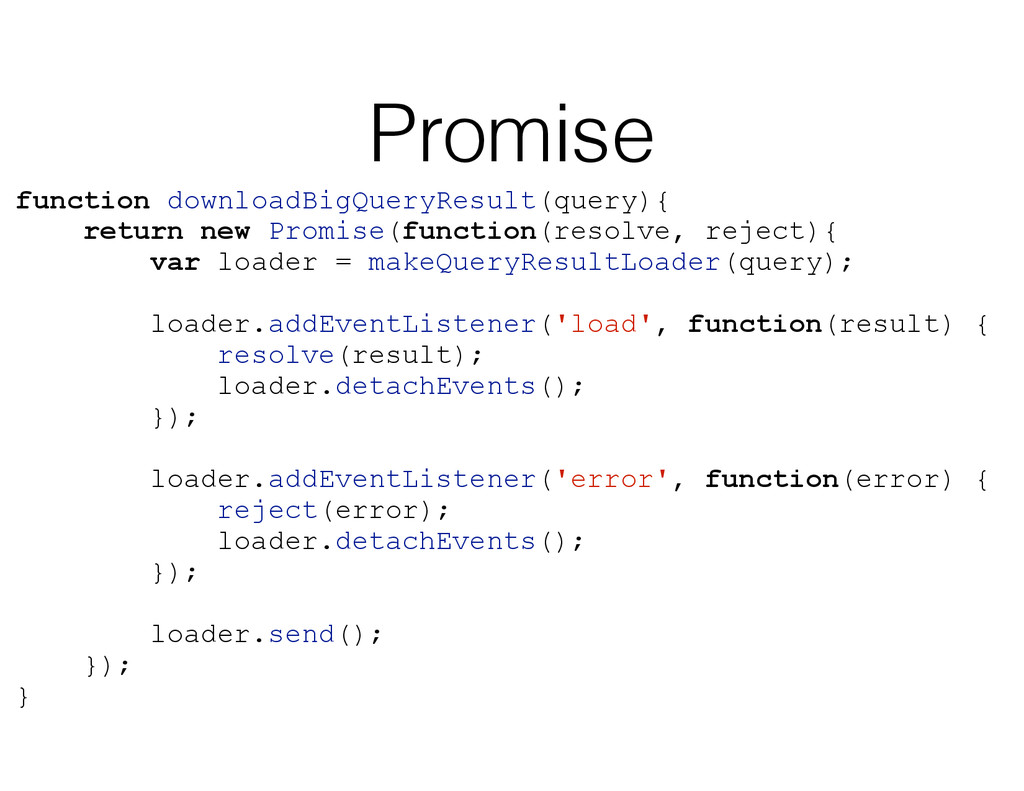
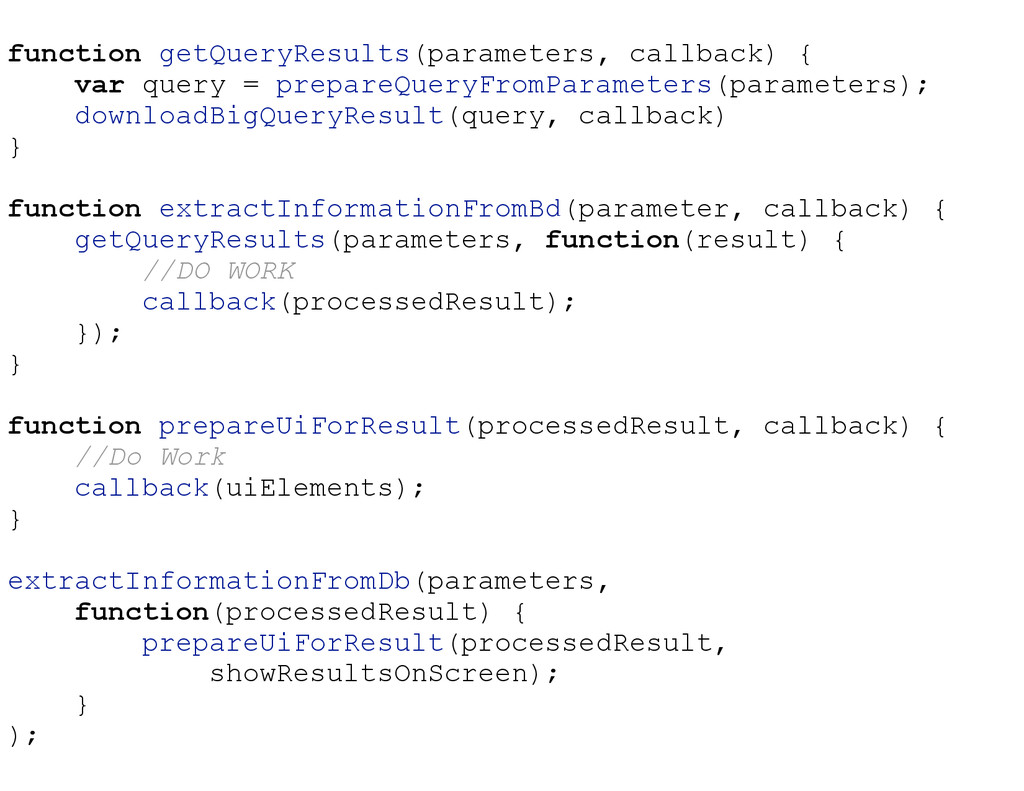
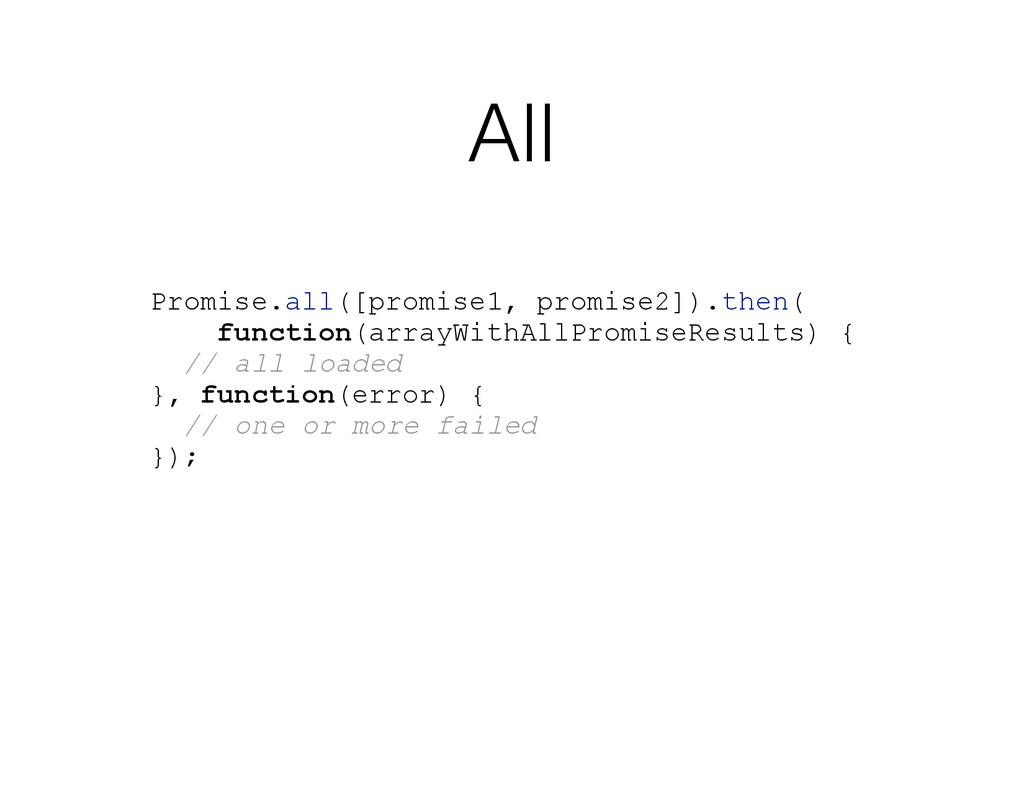
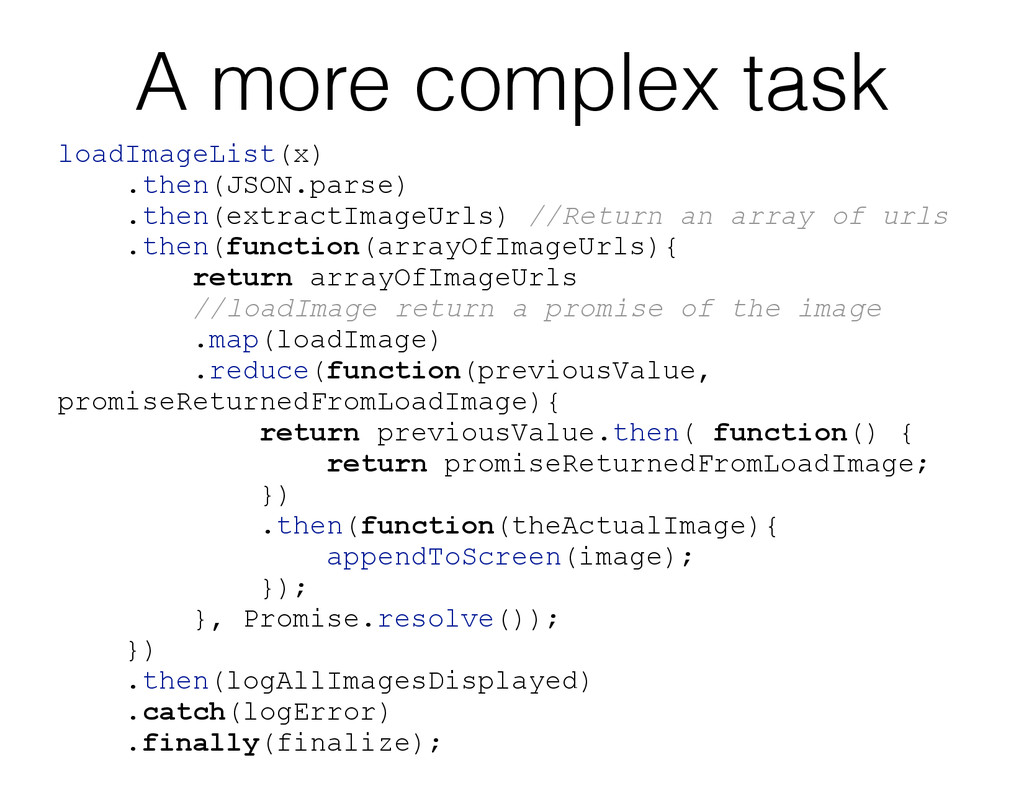
{ var query = prepareQueryFromParameters(parameters); try { var results = downloadBigQueryResult(query); callback(null, results); } catch (error) { callback(error); } } We still don’t know what downloadBigQueryResult does
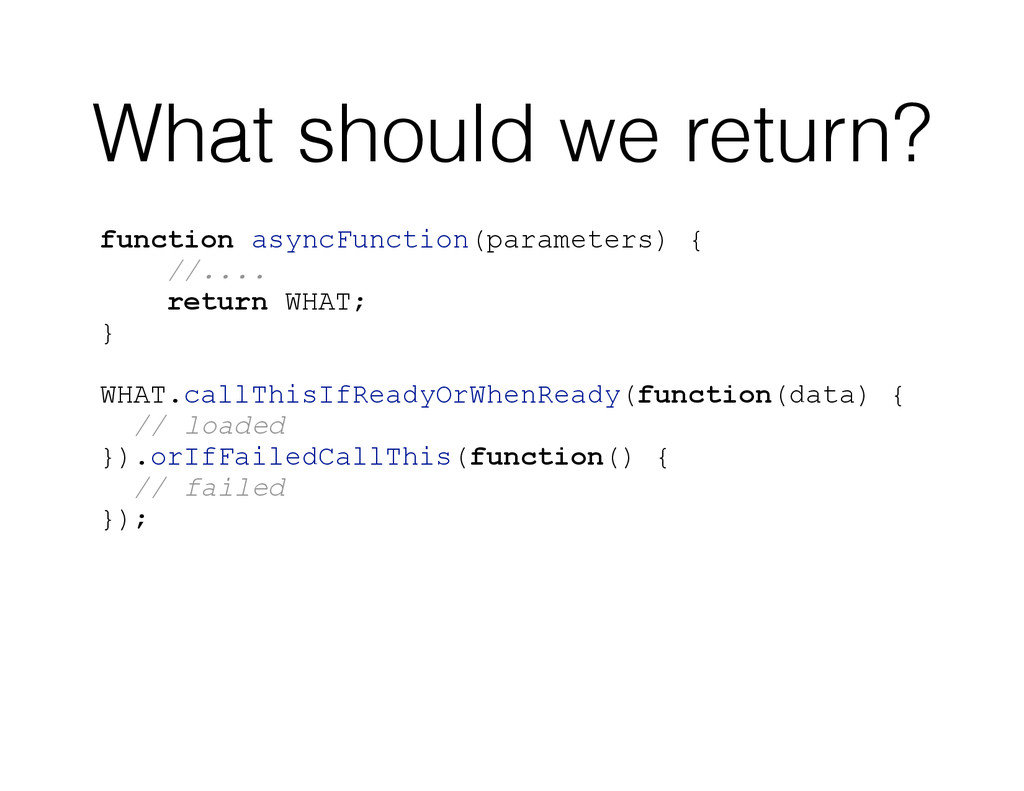
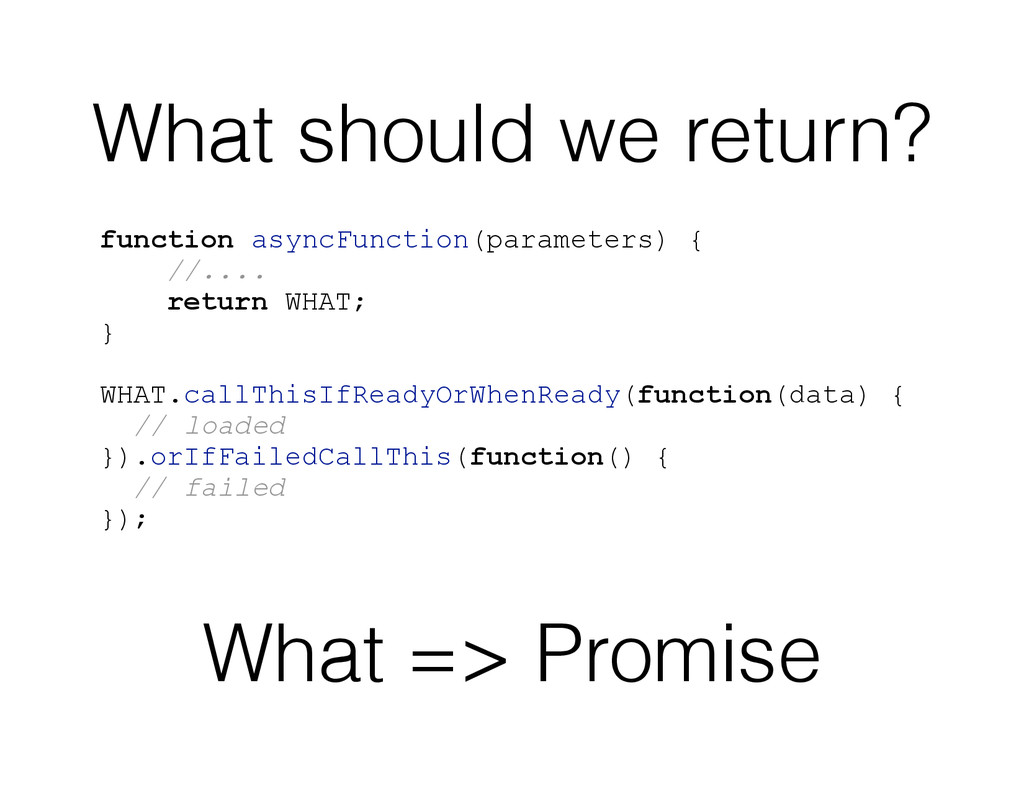
var results = downloadBigQueryResult(query); callback(null, results); } catch (error) { callback(error); } } No return statement What does it have in common with this function?
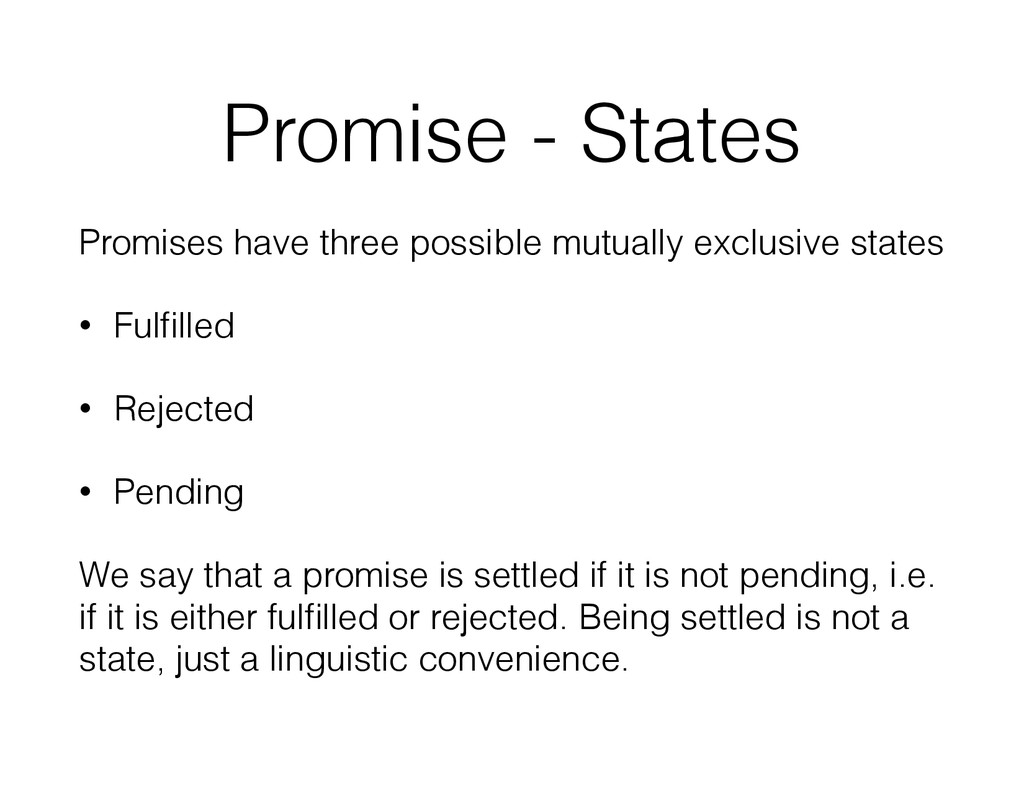
• Fulfilled • Rejected • Pending We say that a promise is settled if it is not pending, i.e. if it is either fulfilled or rejected. Being settled is not a state, just a linguistic convenience.
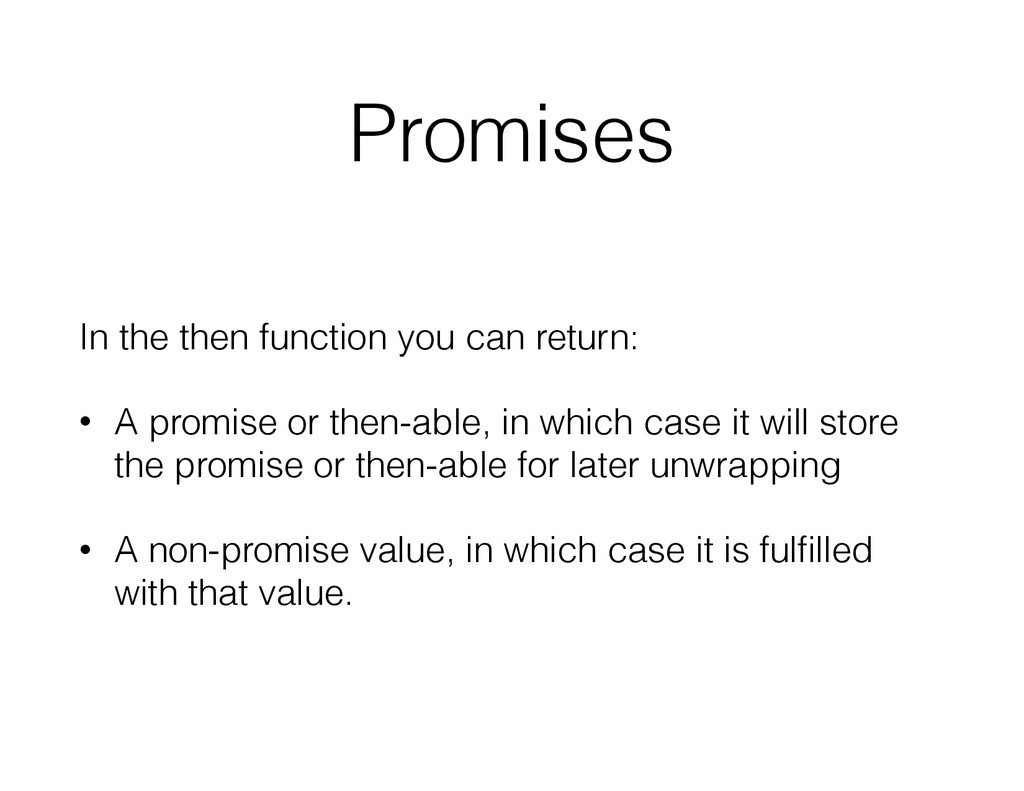
promise or then-able, in which case it will store the promise or then-able for later unwrapping • A non-promise value, in which case it is fulfilled with that value.
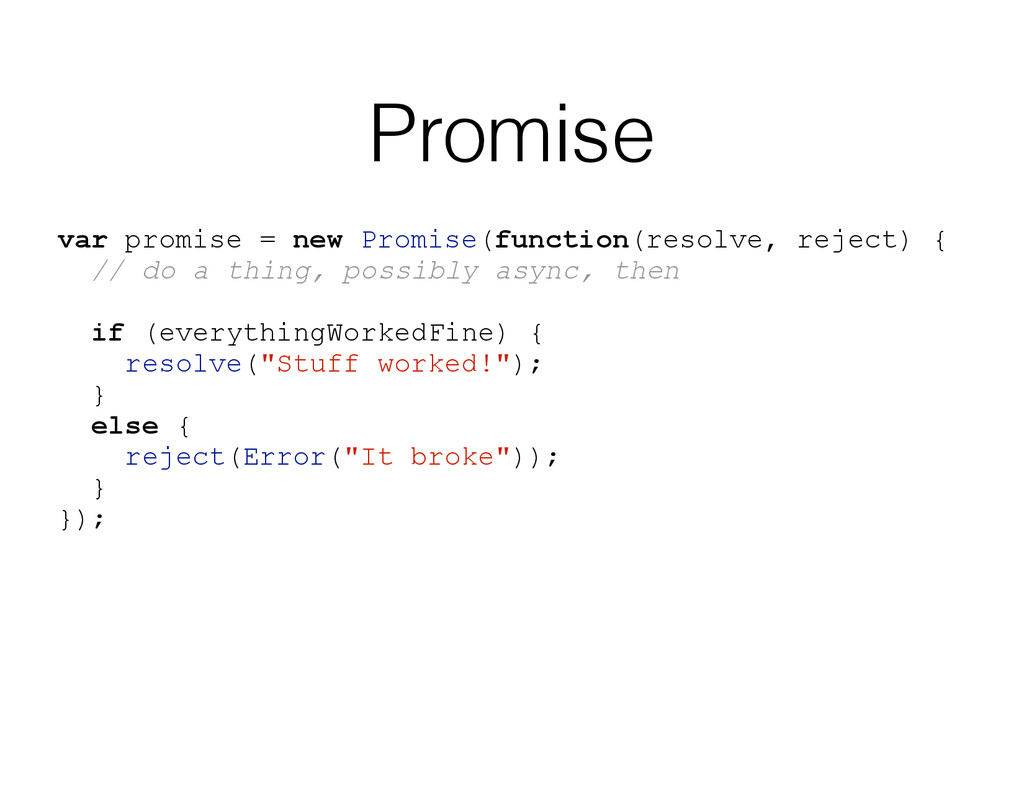
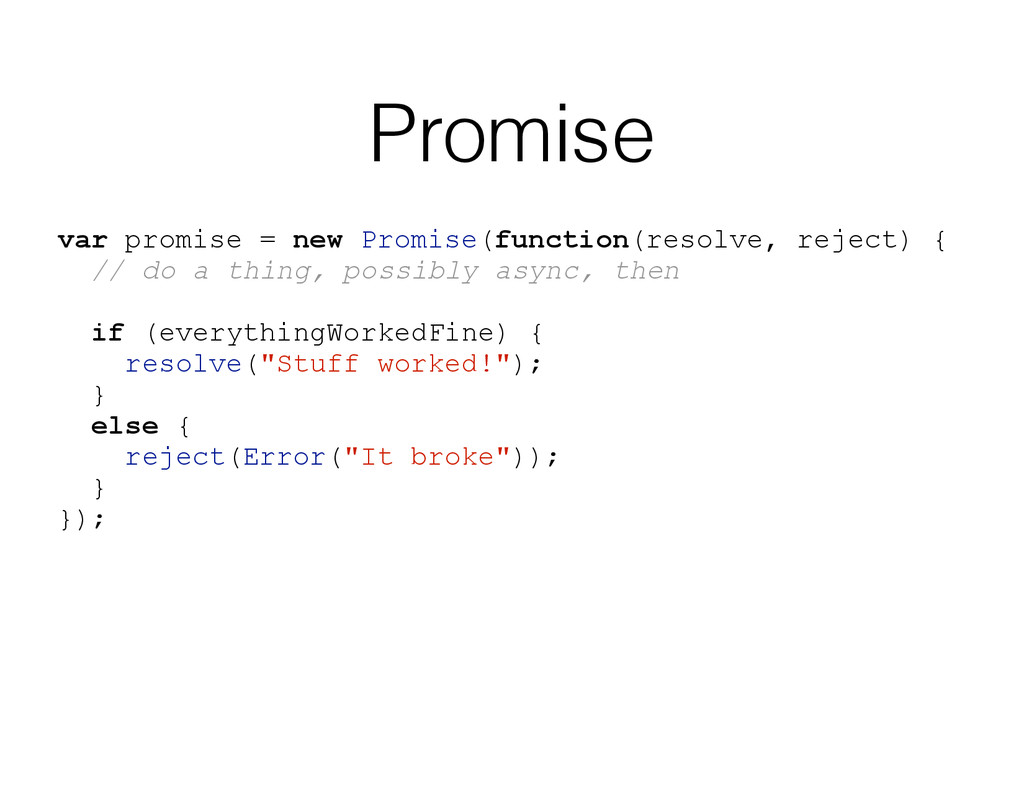
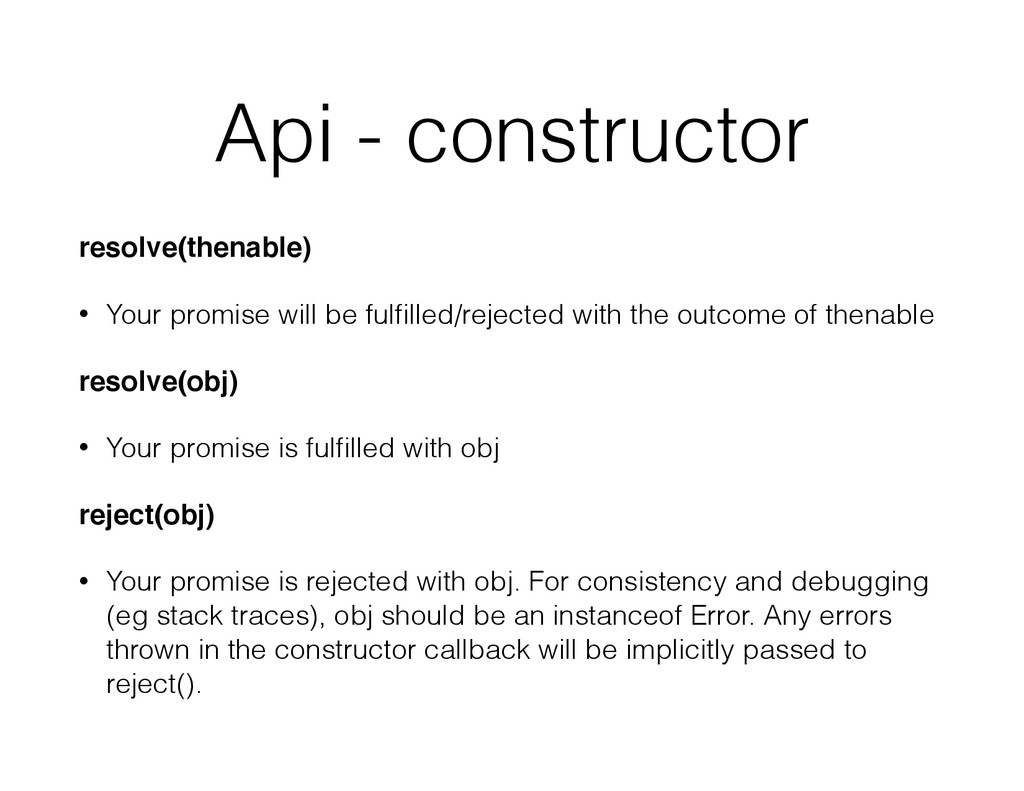
with the outcome of thenable resolve(obj)! • Your promise is fulfilled with obj reject(obj)! • Your promise is rejected with obj. For consistency and debugging (eg stack traces), obj should be an instanceof Error. Any errors thrown in the constructor callback will be implicitly passed to reject().
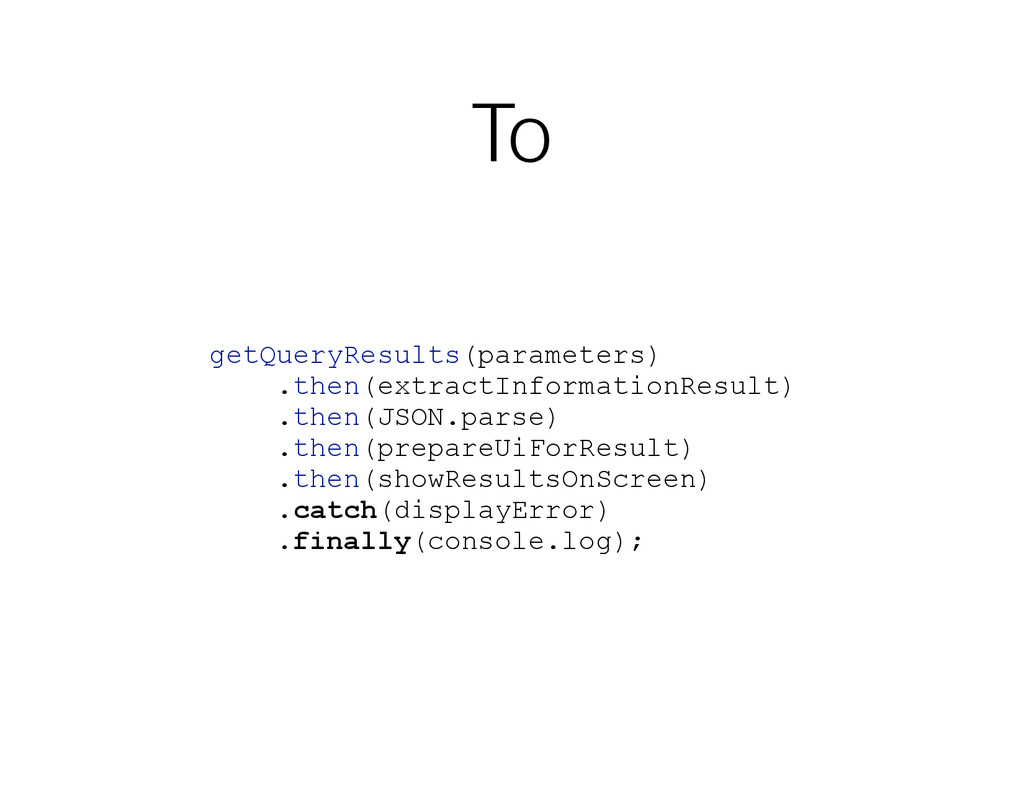
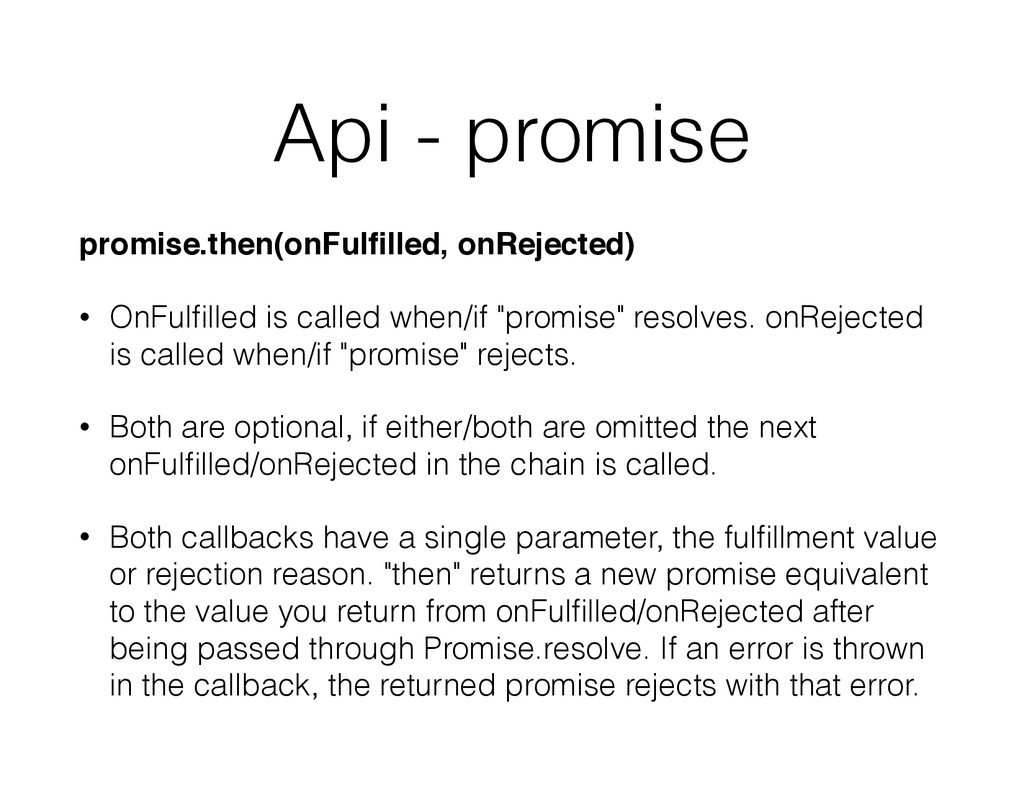
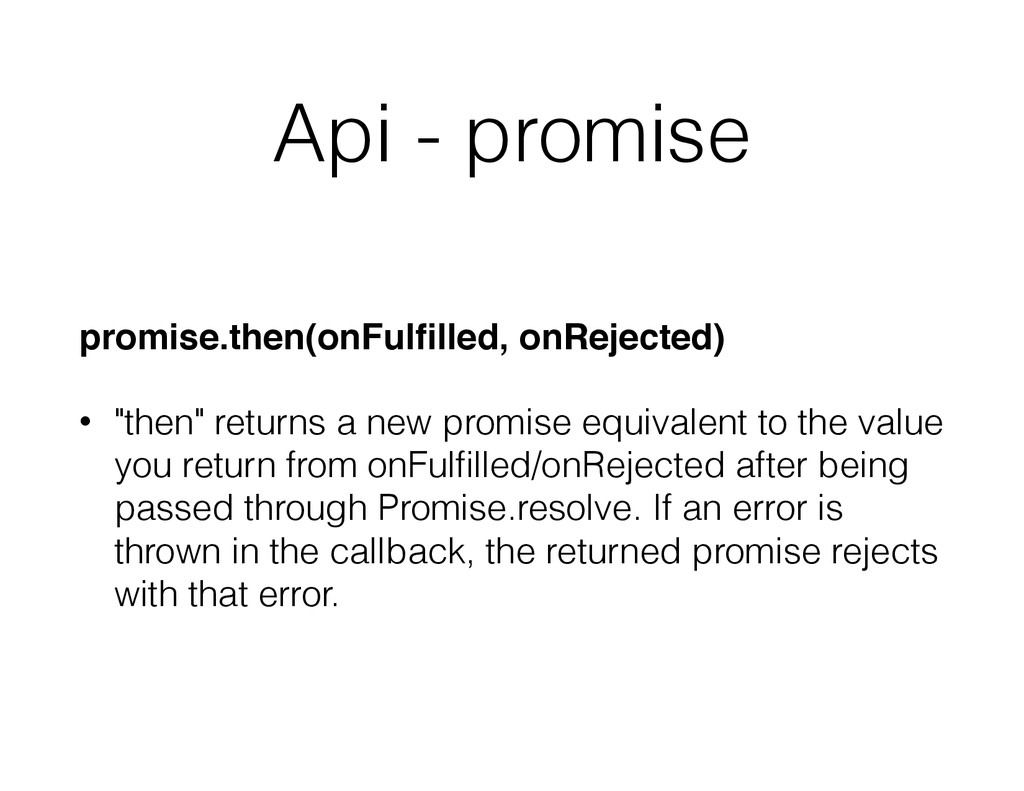
"promise" resolves. onRejected is called when/if "promise" rejects. • Both are optional, if either/both are omitted the next onFulfilled/onRejected in the chain is called. • Both callbacks have a single parameter, the fulfillment value or rejection reason. "then" returns a new promise equivalent to the value you return from onFulfilled/onRejected after being passed through Promise.resolve. If an error is thrown in the callback, the returned promise rejects with that error.
promise equivalent to the value you return from onFulfilled/onRejected after being passed through Promise.resolve. If an error is thrown in the callback, the returned promise rejects with that error.


 deka_morita
 satoshi256kbyte
 uyuki234
 sylph01
 rshindo
 o0h
 suneo3476
 nao_randd
 chobishiba
 gam0022
 marcoroth
 iwiwi
 davetheseo
 aarron
 frankvandijk
 kneath
 mkilby
 bermonpainter
 mayunak
 tenderlove
 yeseniaperezcruz
 axbom
 orderedlist
 keithpitt