Upgrade to Pro — share decks privately, control downloads, hide ads and more …

Computer Science for Self-Taught Programmers

Computer Science for Self-Taught Programmers

When people talk about Big O notation do you go cross eyed? Do you not get the point of learning about implementing linked lists or depth first search? Join me as I introduce the CS fundamentals that helped me ace my Google interview, even though I didn't get a formal CS education.

Talk given at PyCon 2014 in Montreal

Avatar for Justin Abrahms

Justin Abrahms

April 11, 2014

More Decks by Justin Abrahms

Other Decks in Programming
Transcript

  1. Who am I? • Justin Abrahms • Director of Product

    Engineering at Quick Left • Author of Imhotep • @justinabrahms or github://justinabrahms
  2. Overview • How I learn about Big O? • What

    is Big O? • How is Big O done? • Resources and learned wisdom
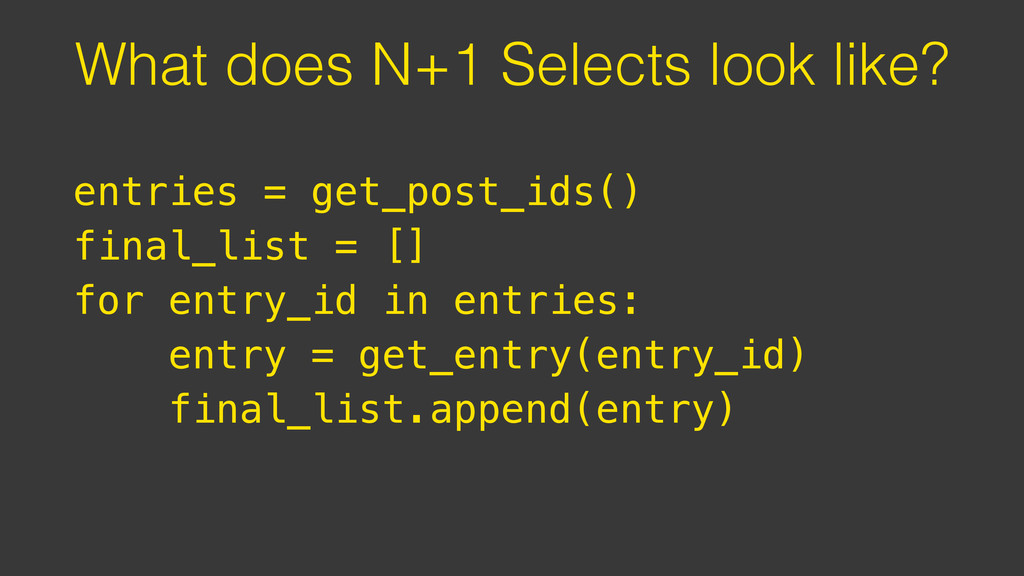
  3. What does N+1 Selects look like? entries = get_post_ids() final_list

    = [] for entry_id in entries: entry = get_entry(entry_id) final_list.append(entry)
  4. Questions • How did I miss this? • How did

    this guy know about it and I didn’t? • How can I make sure this never happens again.
  5. –Wikipedia (aka Inducer of Impostor Syndrome) In mathematics, big O

    notation describes the limiting behavior of a function when the argument tends towards a particular value or infinity, usually in terms of simpler functions.
  6. –Me Big O is how programmers talk about the relation

    of how much stuff is being done when comparing two pieces of code.
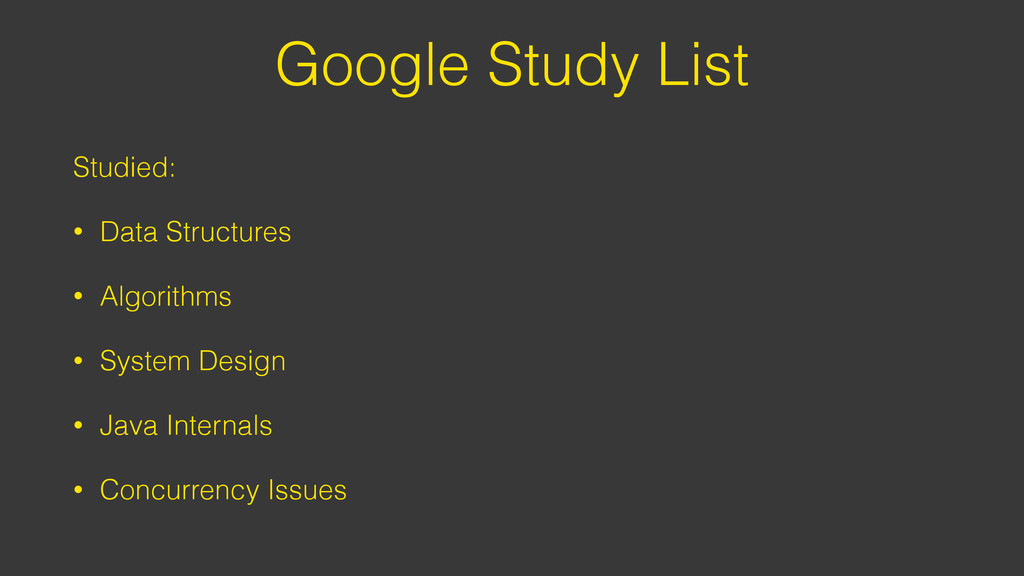
  7. Google Study List Studied: • Data Structures • Algorithms •

    System Design • Java Internals • Concurrency Issues
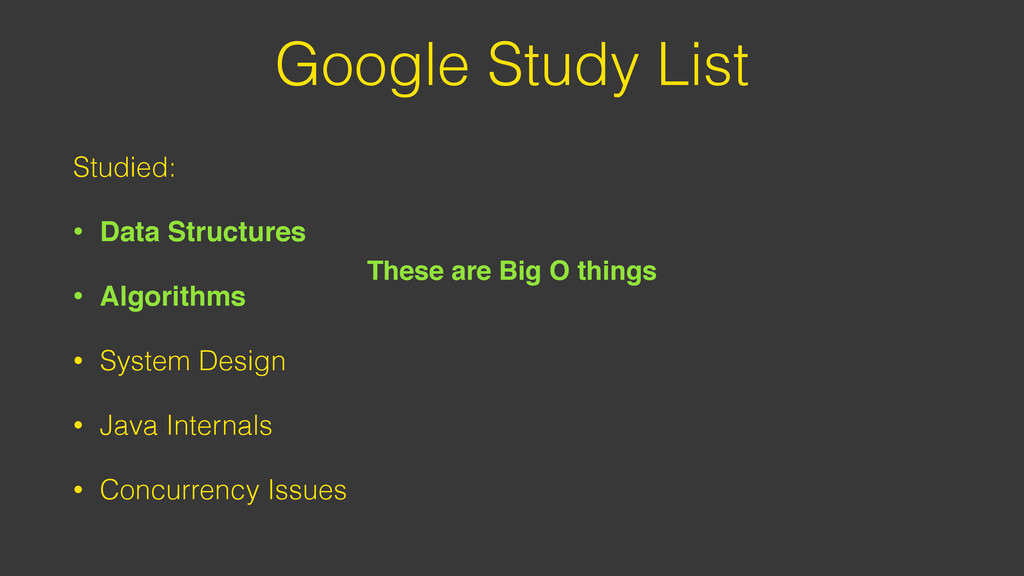
  8. Google Study List Studied: • Data Structures! • Algorithms! •

    System Design • Java Internals • Concurrency Issues These are Big O things
  9. –Wikipedia A data structure is a particular way of storing

    and organizing data in a computer so that it can be used efficiently.
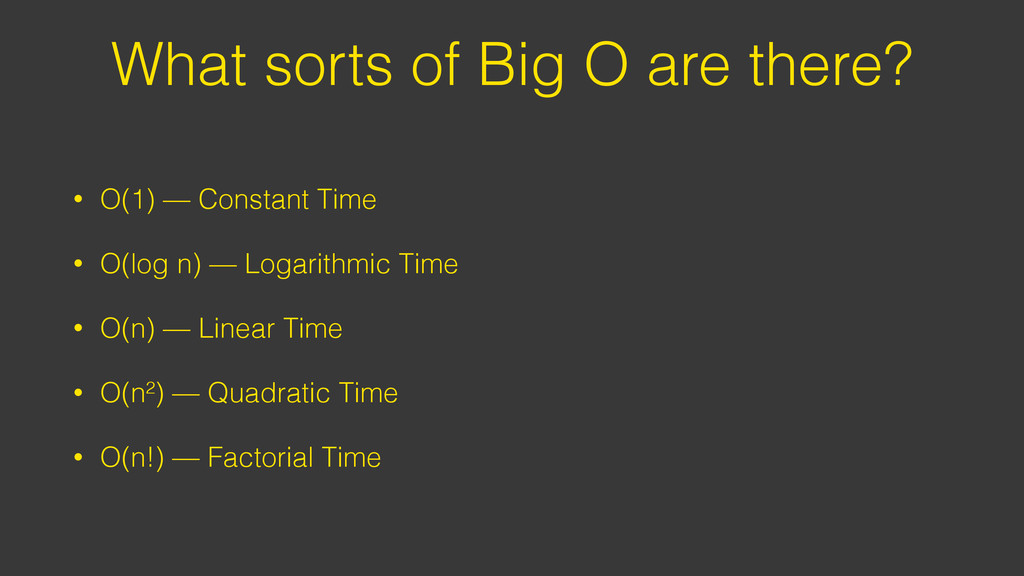
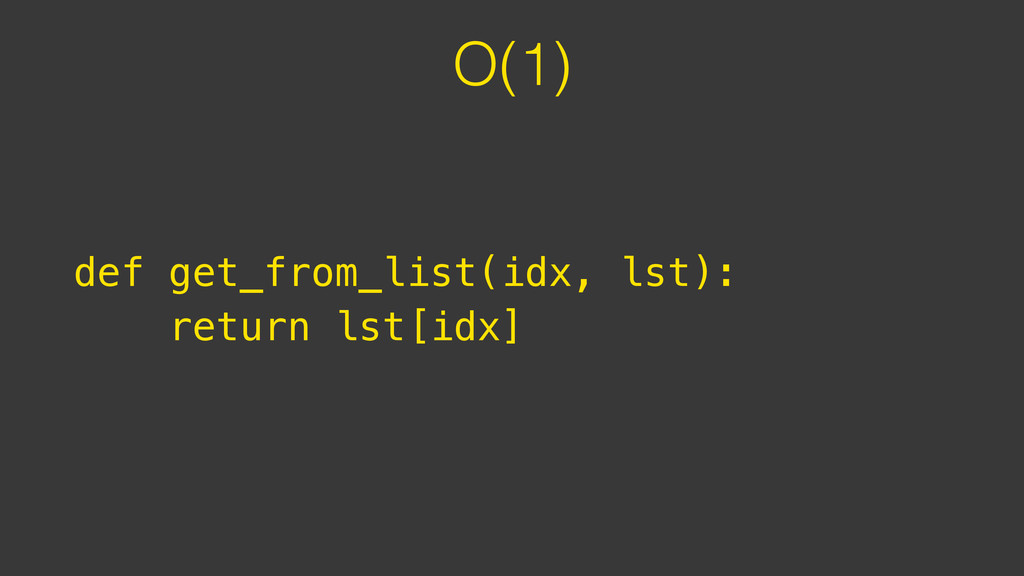
  10. What sorts of Big O are there? • O(1) —

    Constant Time • O(log n) — Logarithmic Time • O(n) — Linear Time • O(n²) — Quadratic Time • O(n!) — Factorial Time
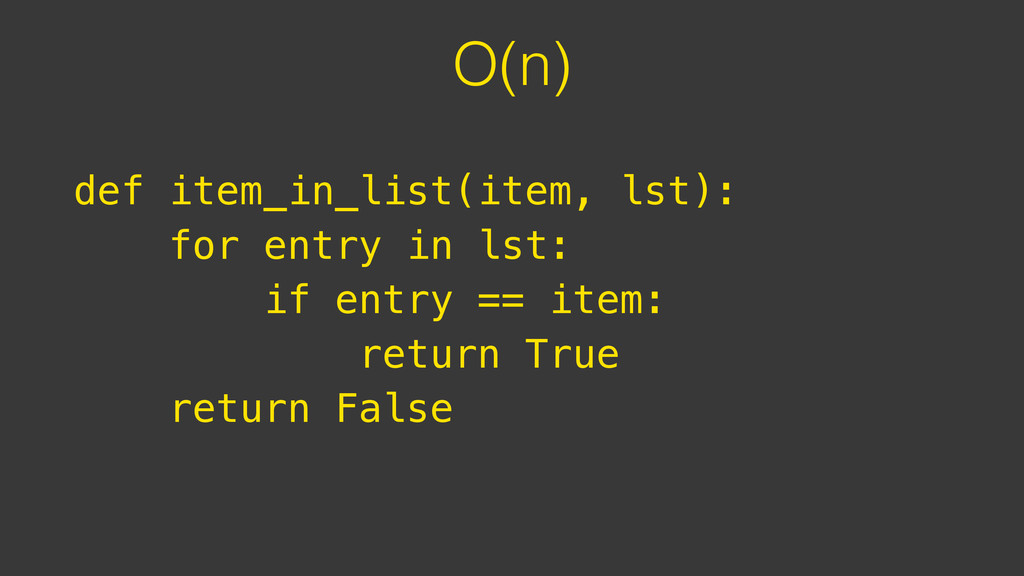
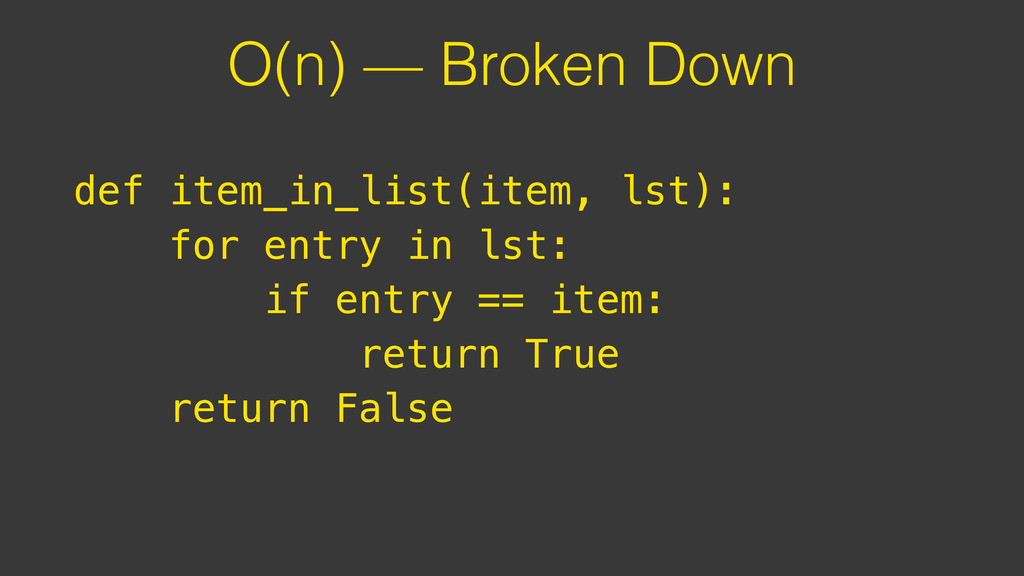
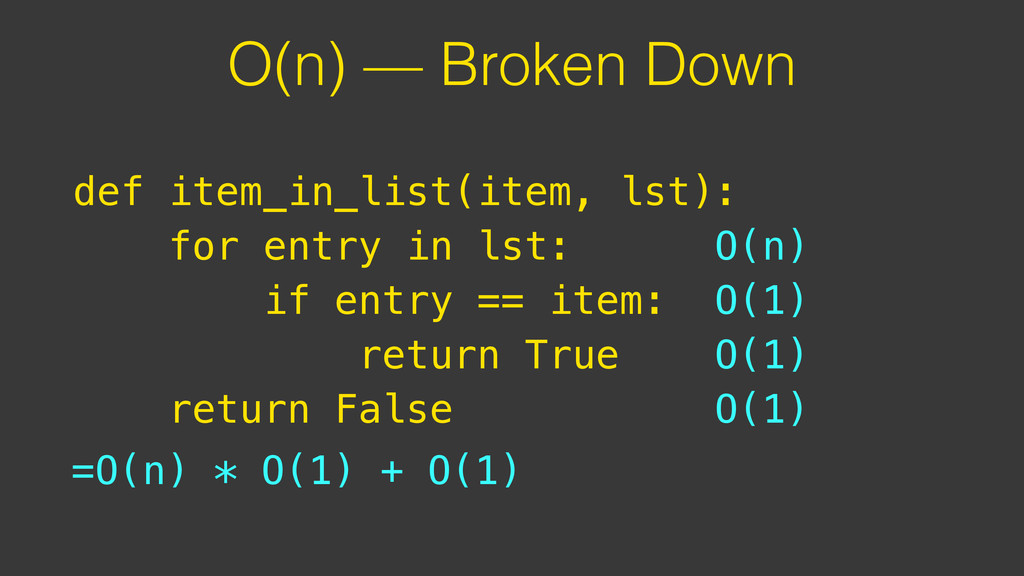
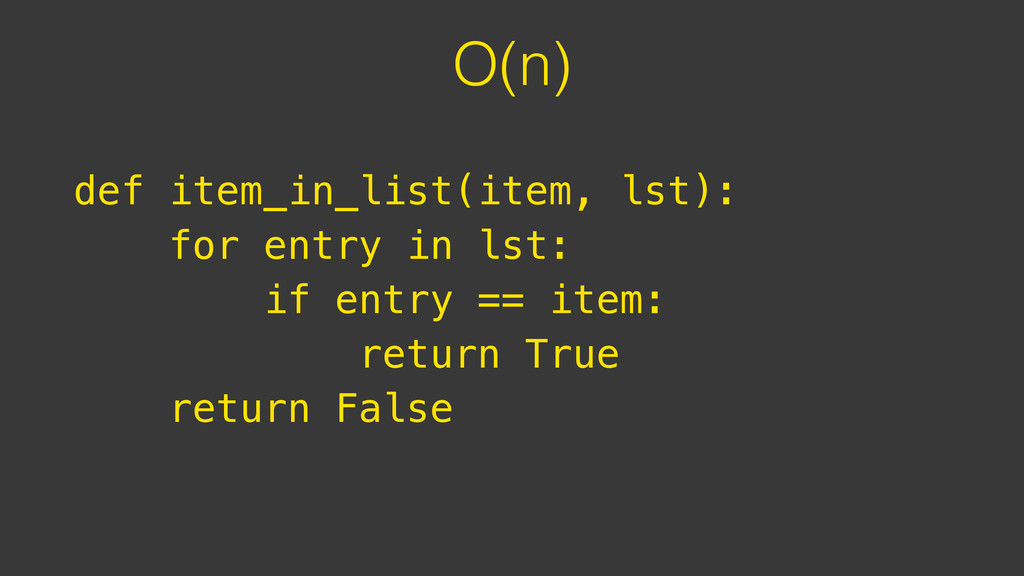
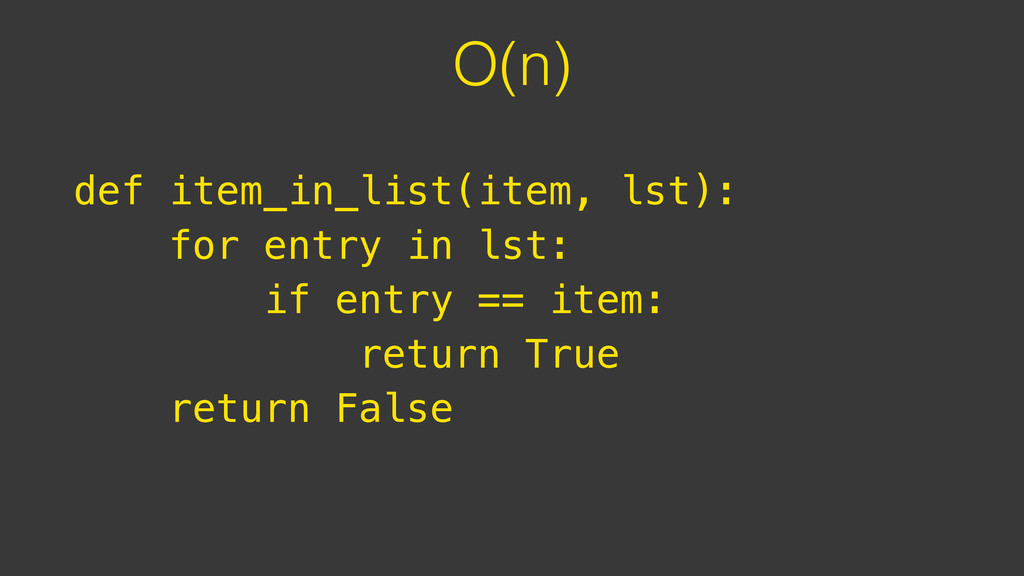
  11. def item_in_list(item, lst): for entry in lst: if entry ==

    item: return True return False O(n) — Broken Down
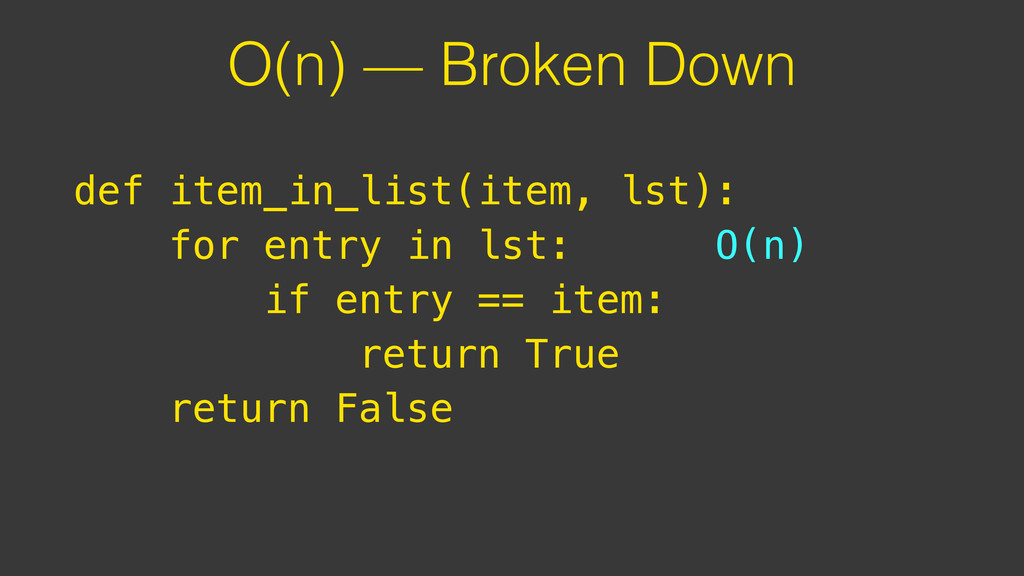
  12. def item_in_list(item, lst): for entry in lst: O(n) if entry

    == item: return True return False O(n) — Broken Down
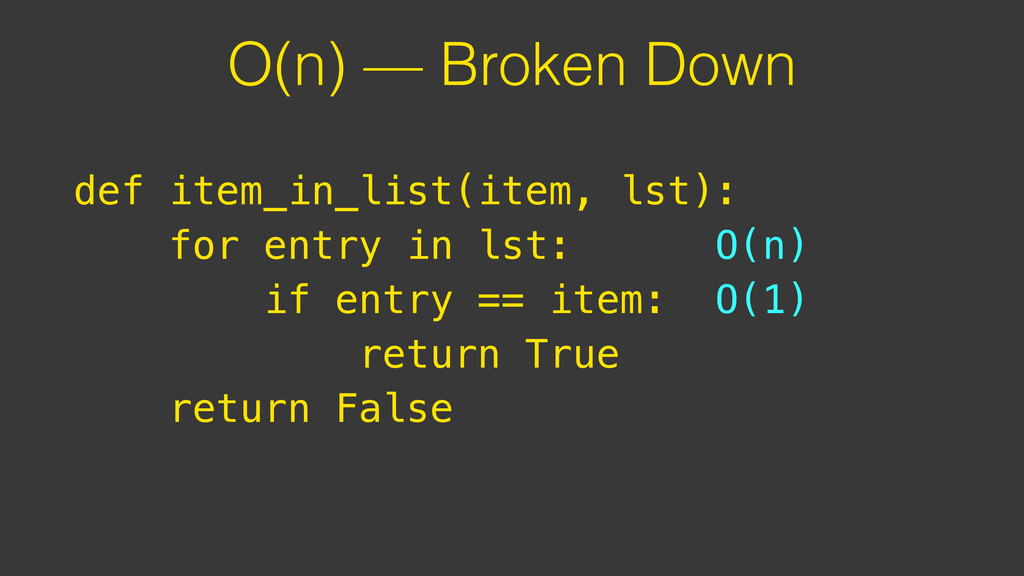
  13. def item_in_list(item, lst): for entry in lst: O(n) if entry

    == item: O(1) return True return False O(n) — Broken Down
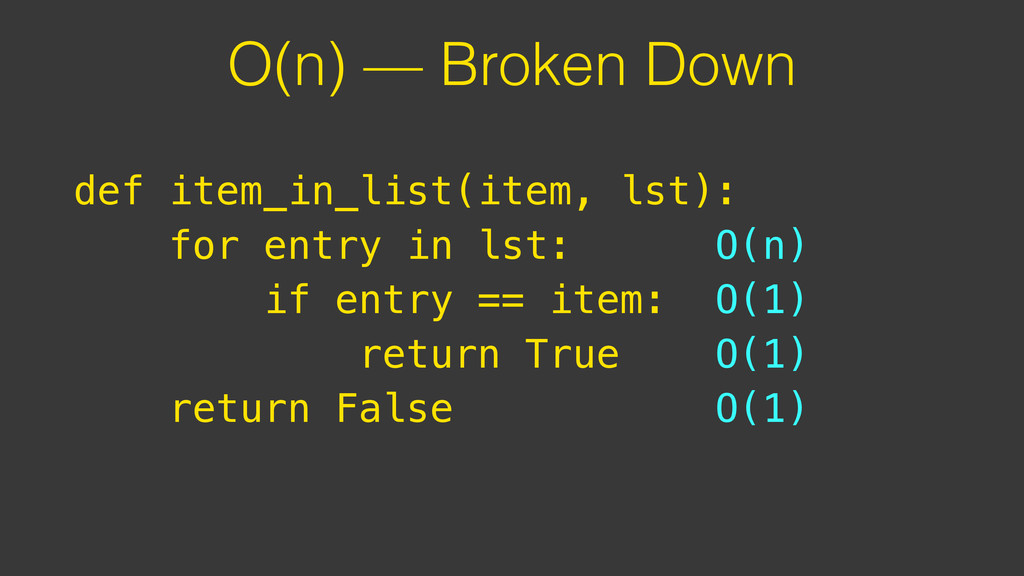
  14. def item_in_list(item, lst): for entry in lst: O(n) if entry

    == item: O(1) return True O(1) return False O(1) O(n) — Broken Down
  15. def item_in_list(item, lst): for entry in lst: O(n) if entry

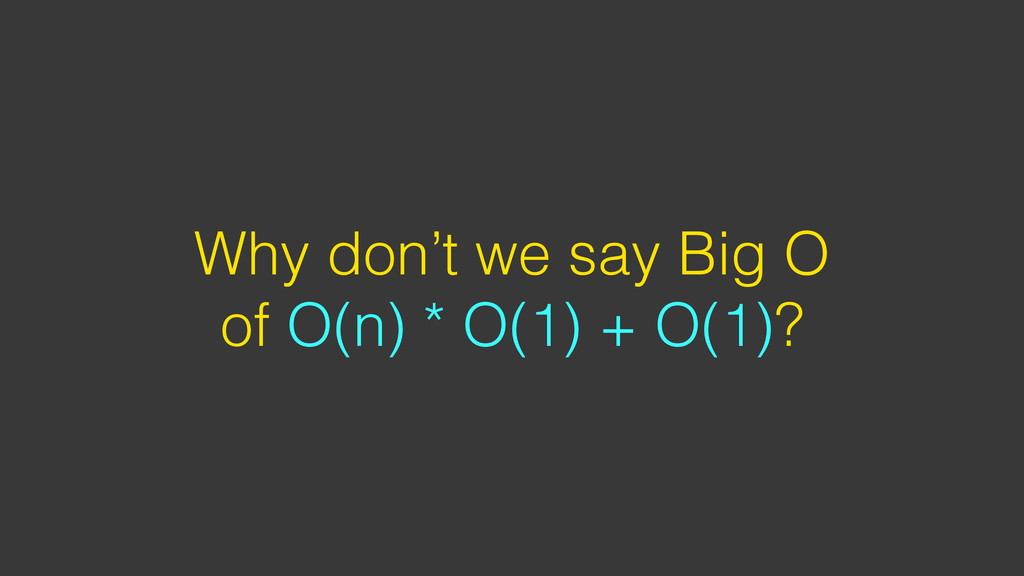
    == item: O(1) return True O(1) return False O(1) O(n) — Broken Down =O(n) * O(1) + O(1)
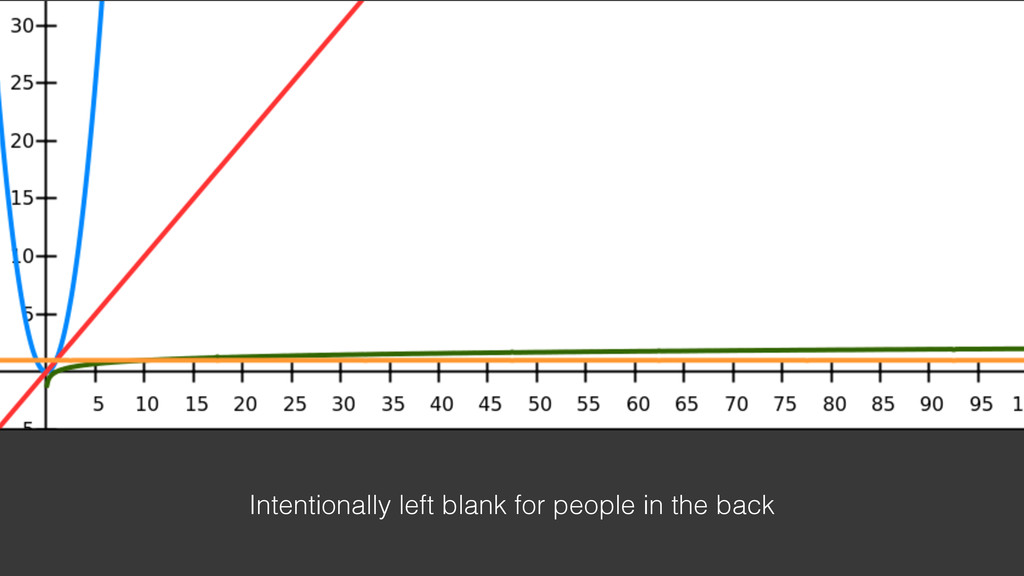
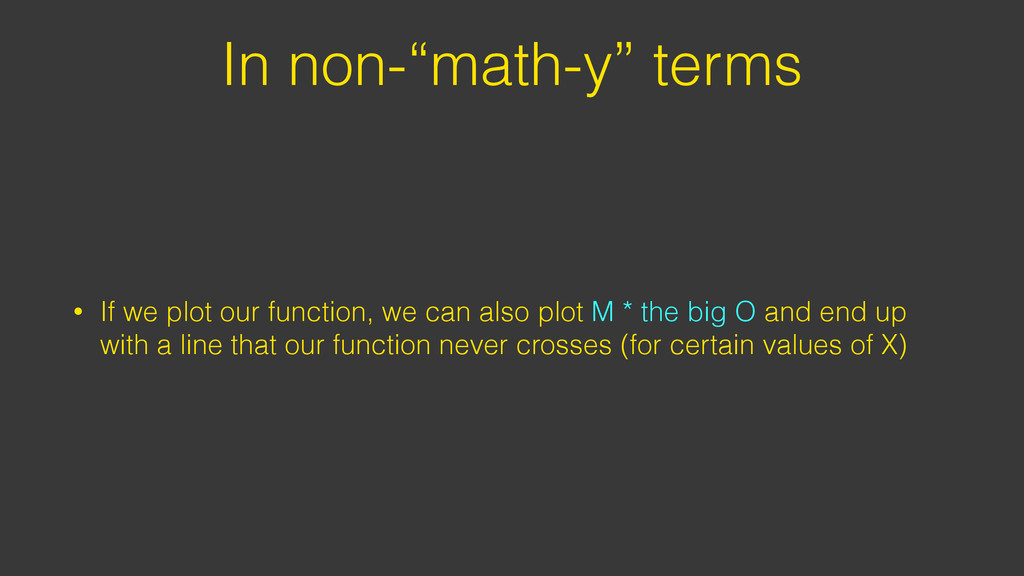
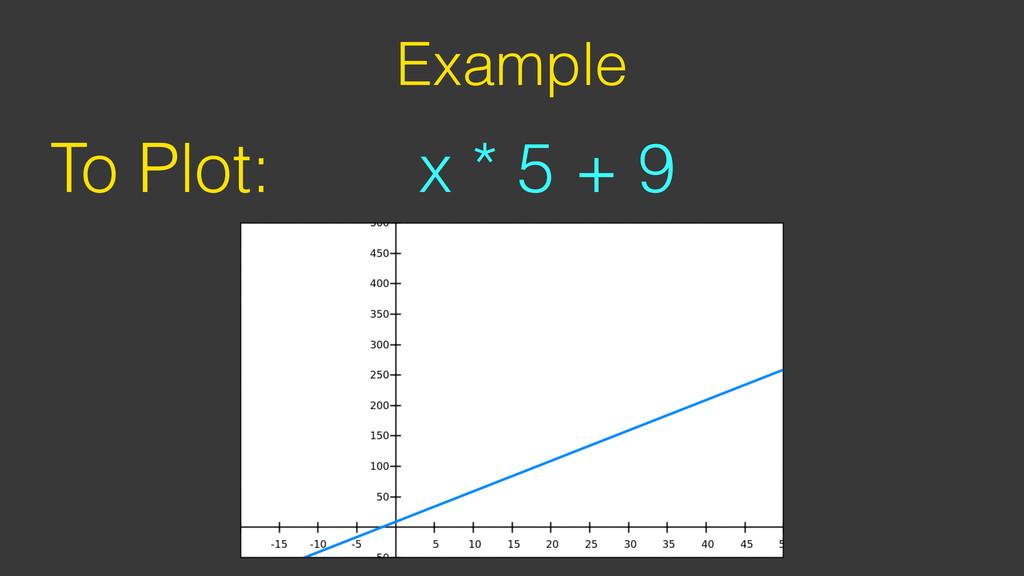
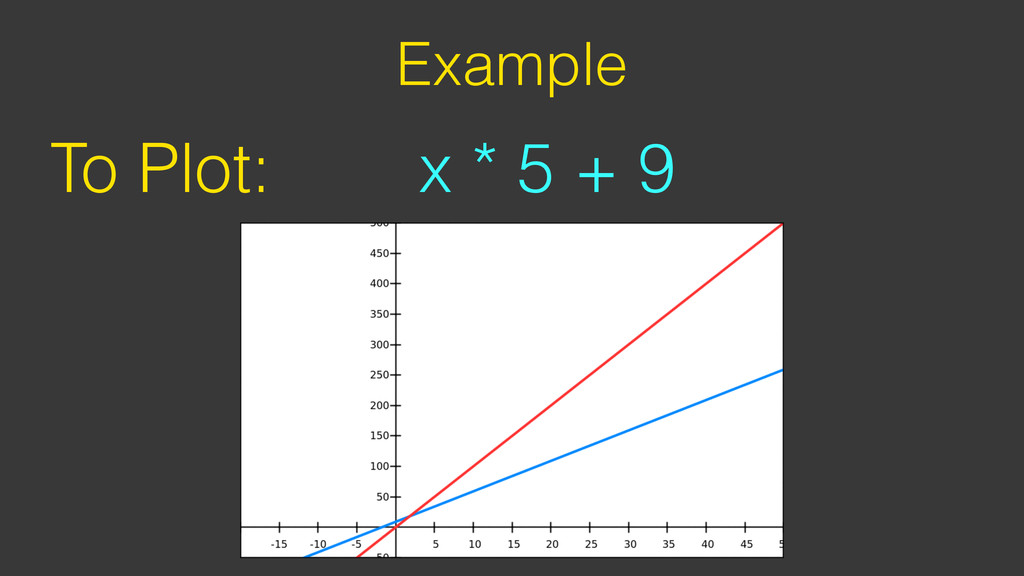
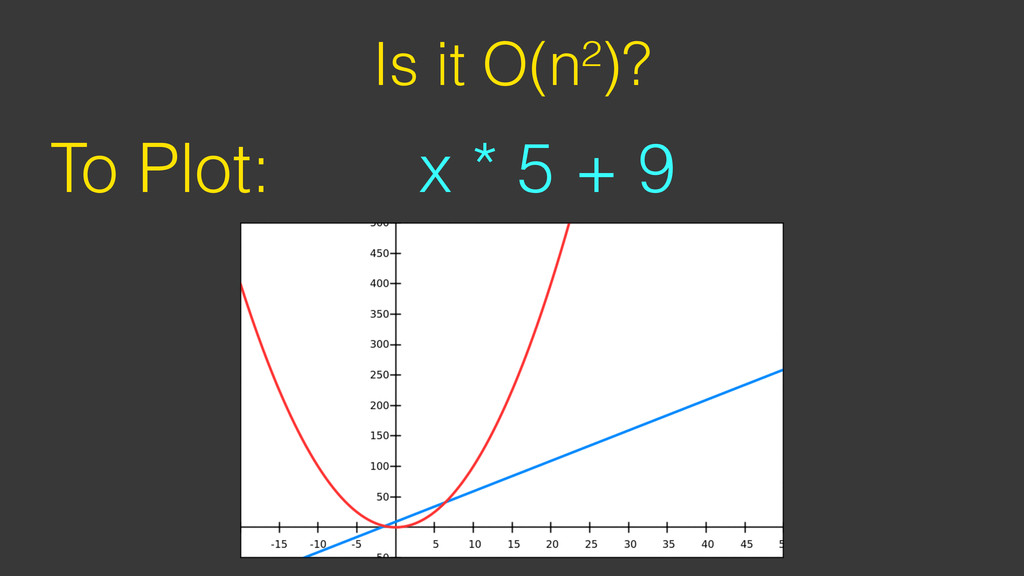
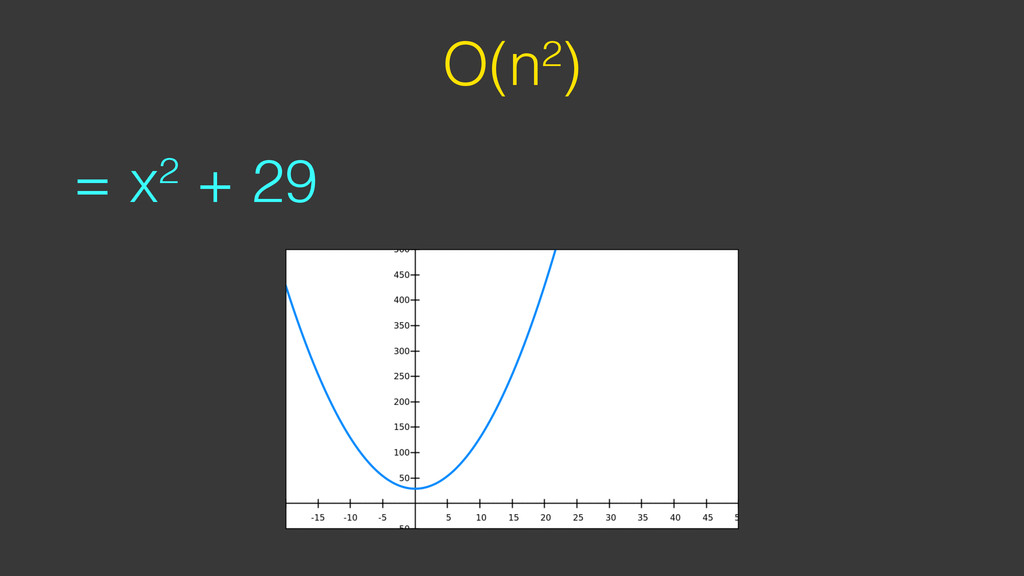
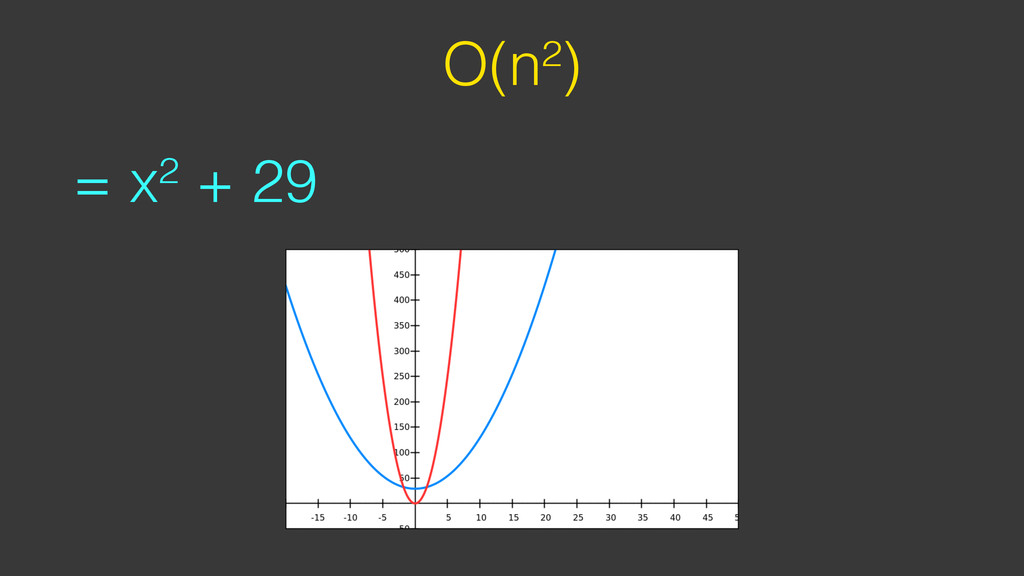
  16. In non-“math-y” terms • If we plot our function, we

    can also plot M * the big O and end up with a line that our function never crosses (for certain values of X)
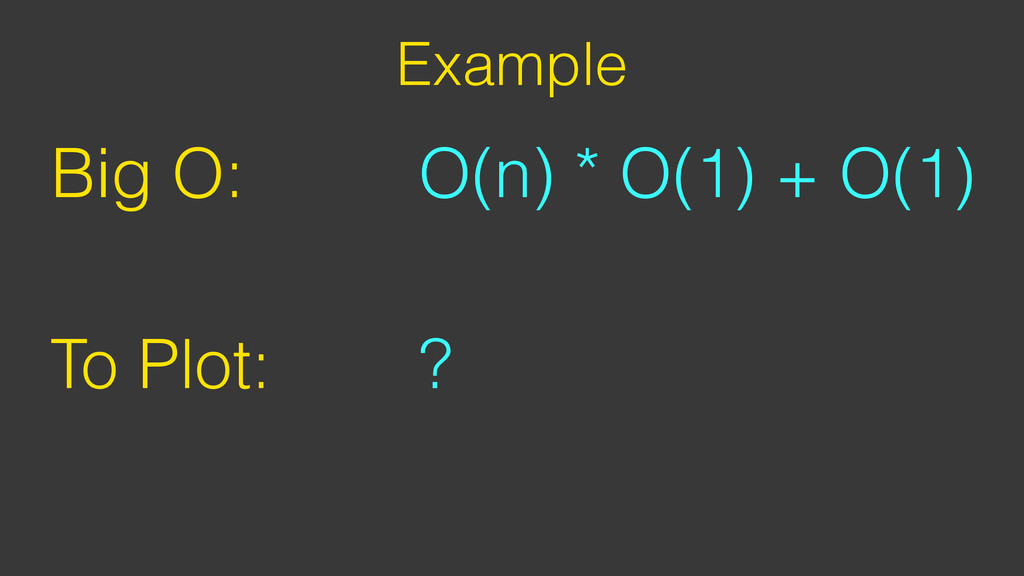
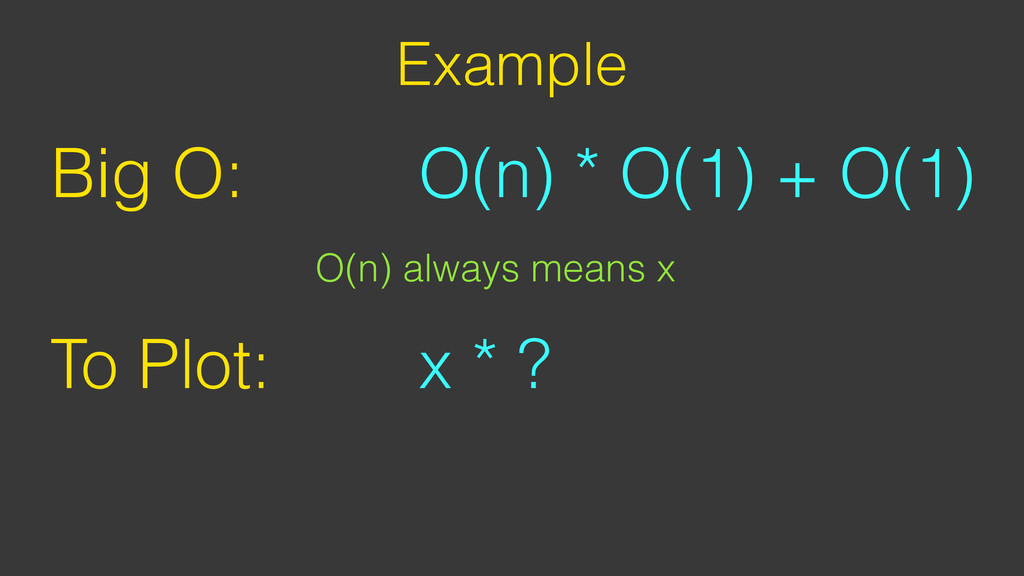
  17. Example O(n) * O(1) + O(1) Big O: To Plot:

    x * ? O(n) always means x
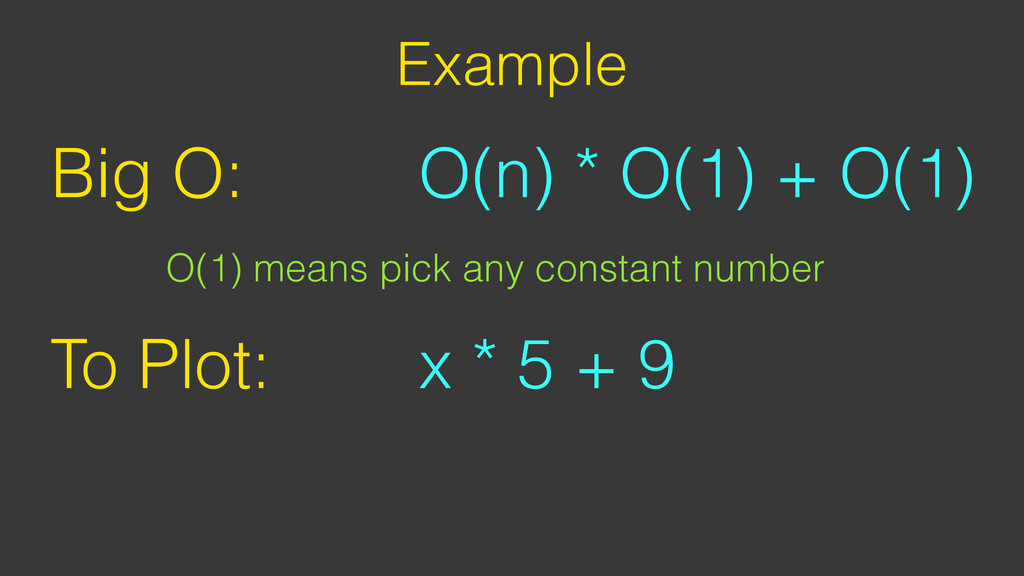
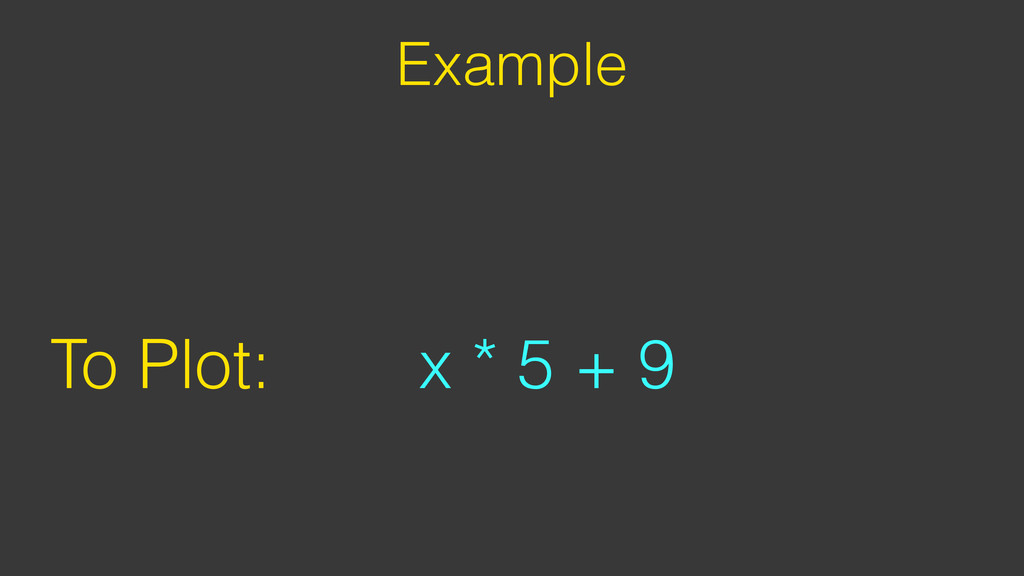
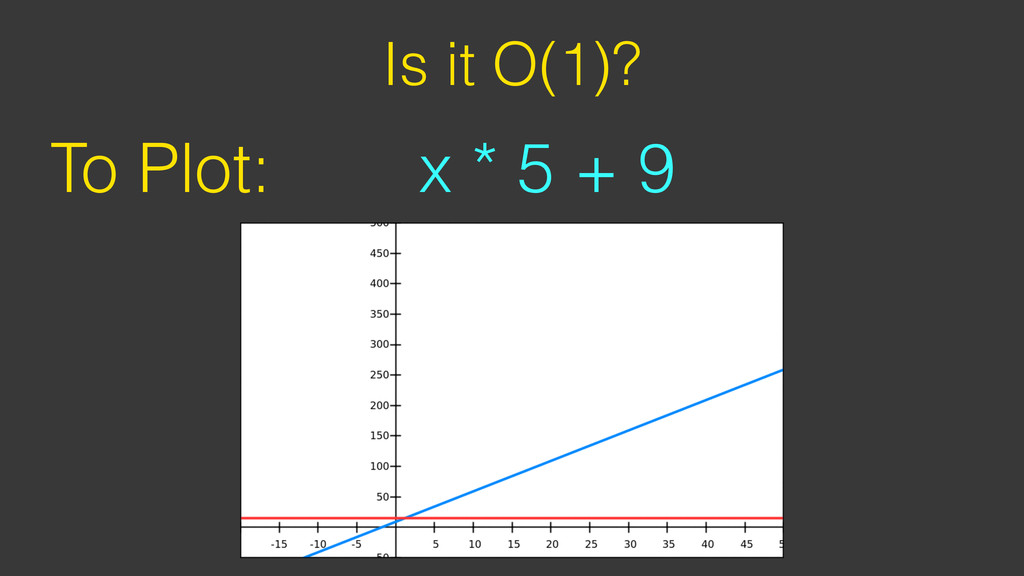
  18. Example O(n) * O(1) + O(1) Big O: To Plot:

    x * 5 + 9 O(1) means pick any constant number
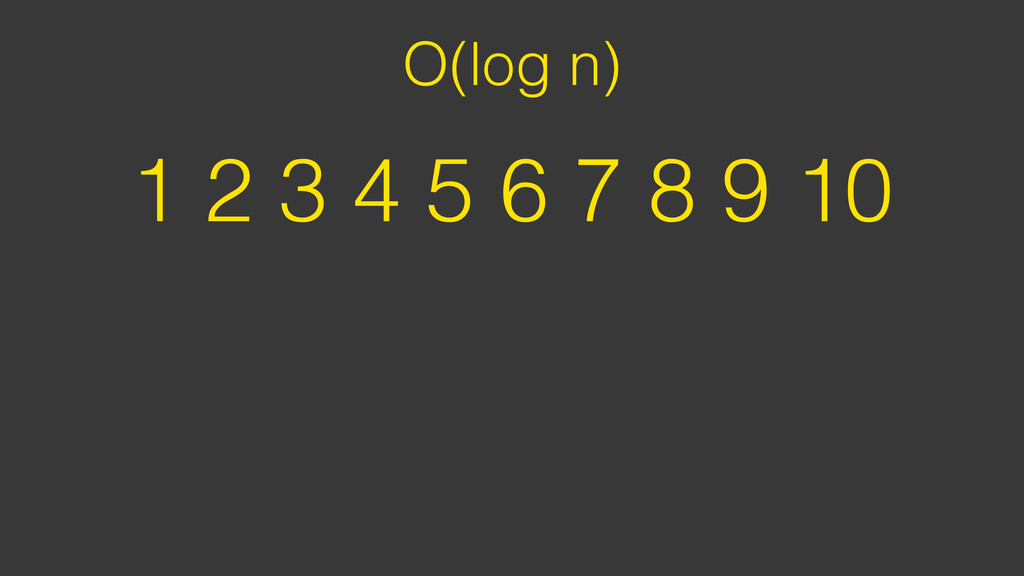
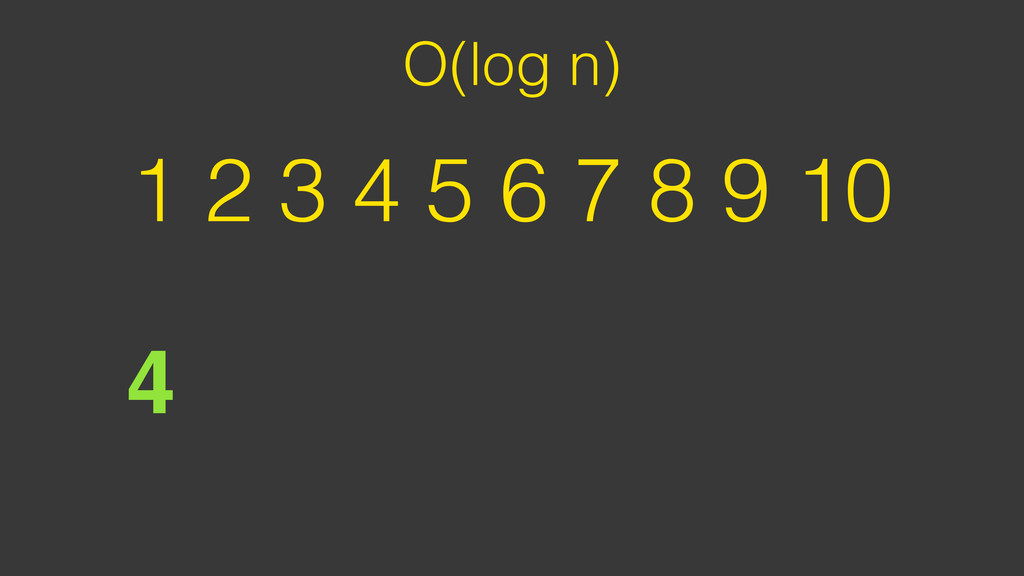
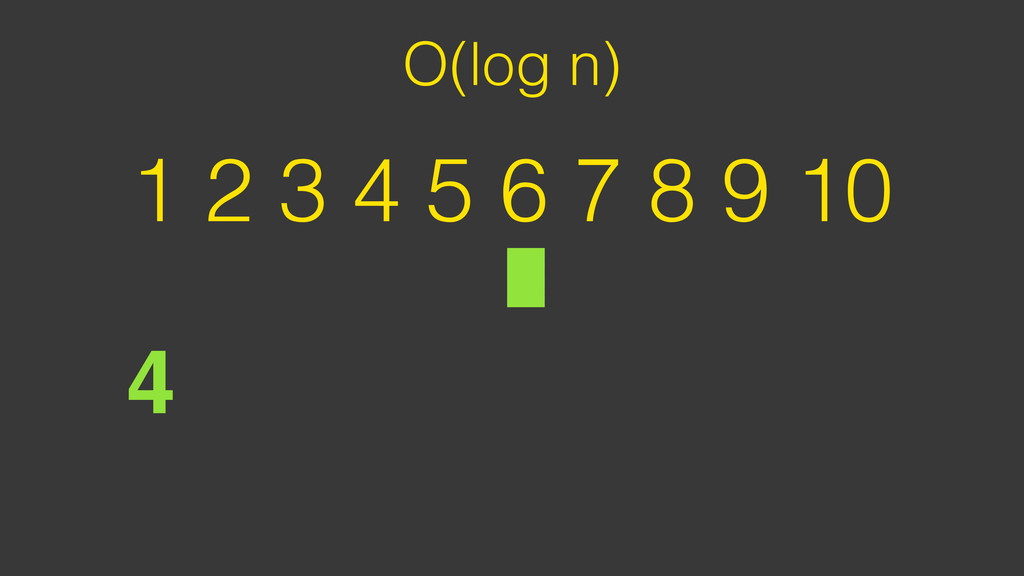
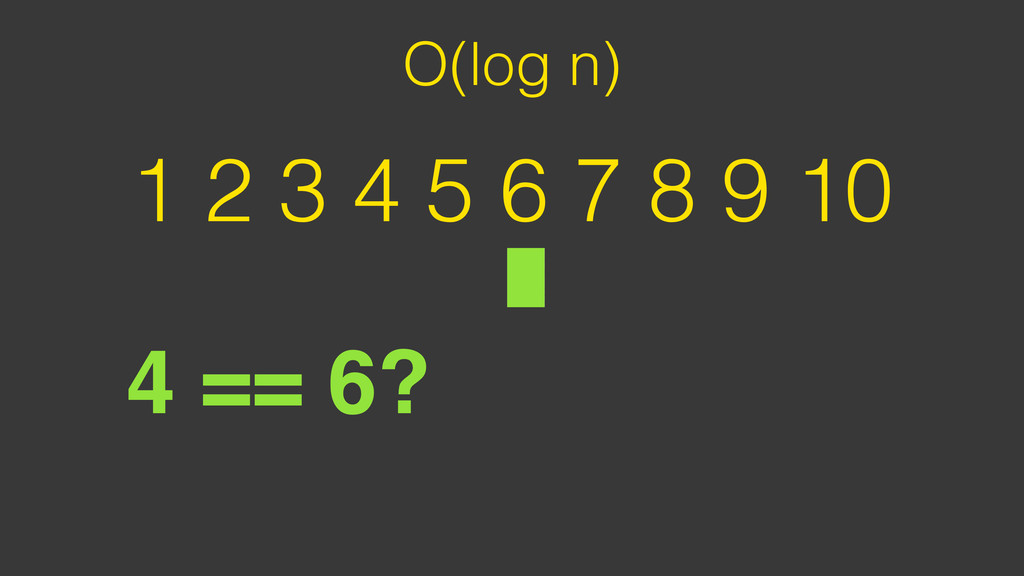
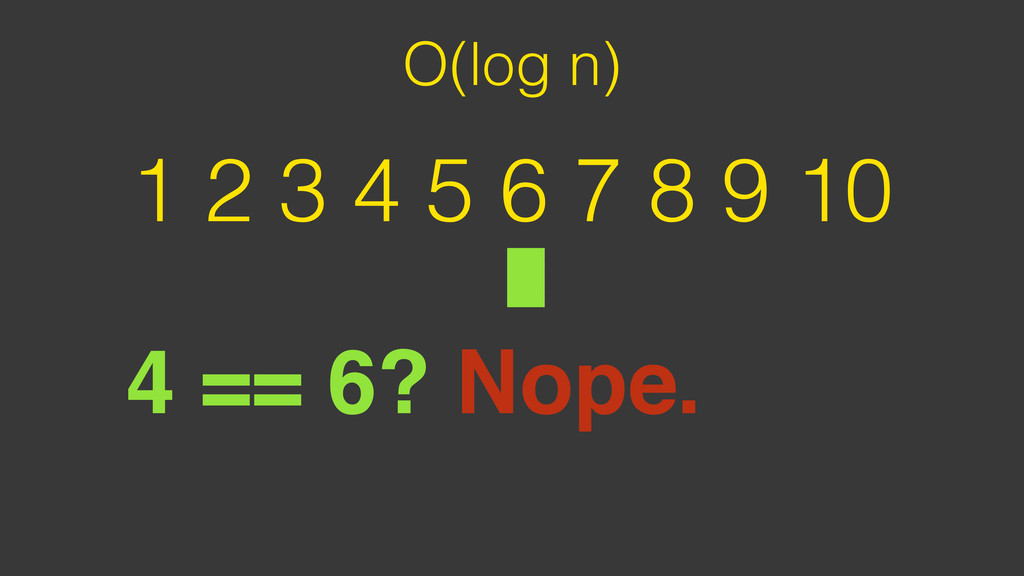
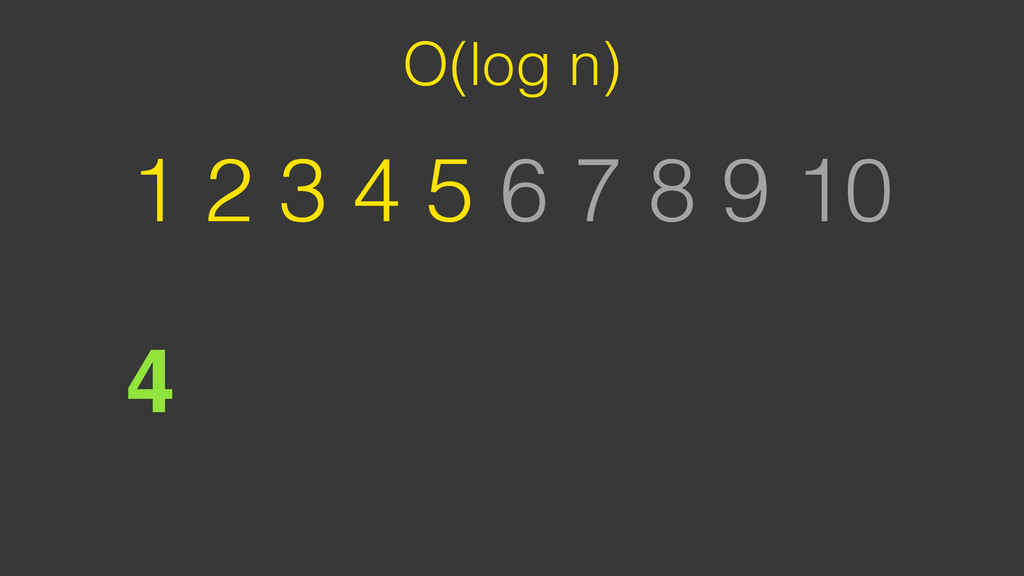
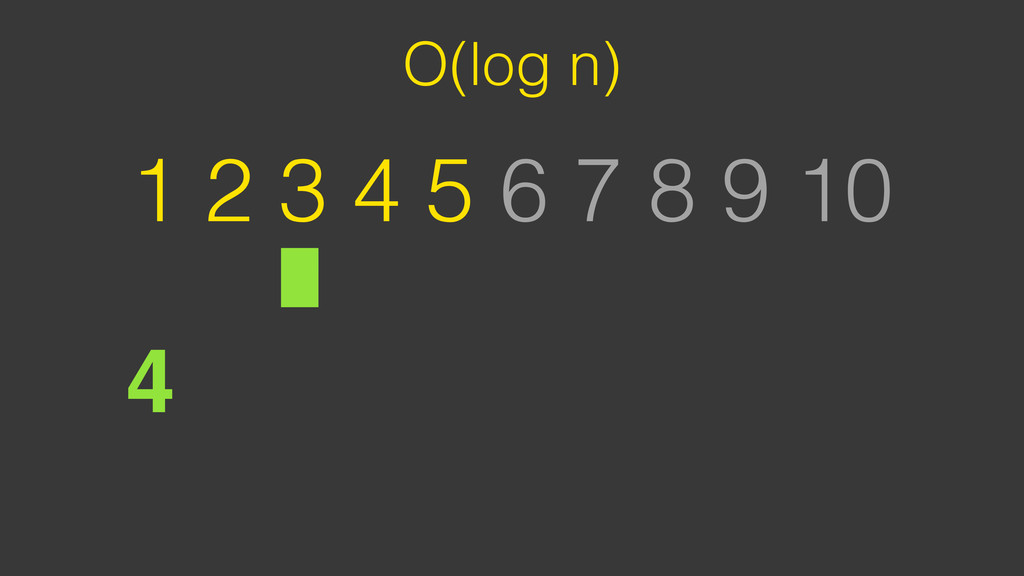
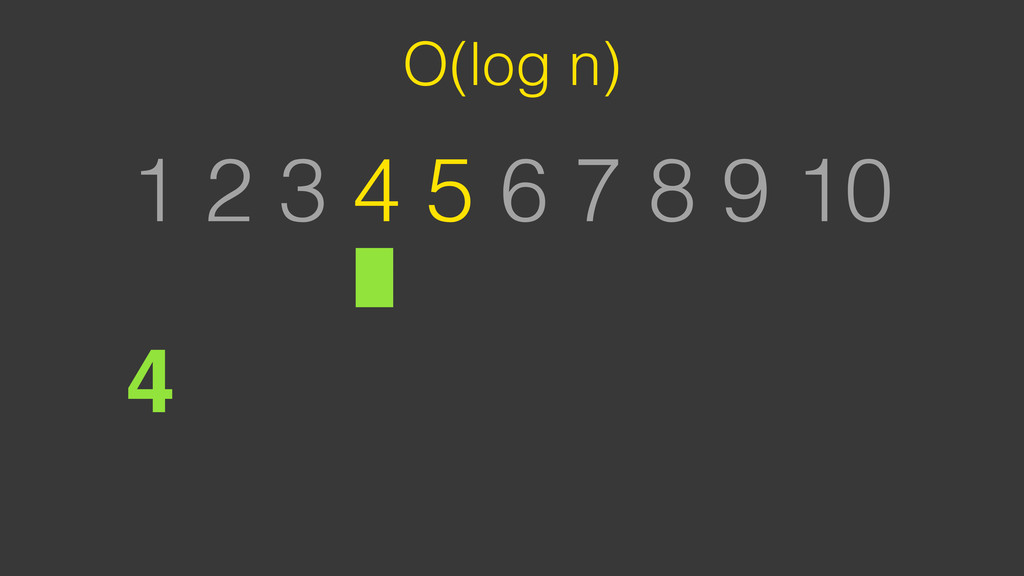
  19. O(log n) 1 2 3 4 5 6 7 8

    9 10 4 == 6? Nope.
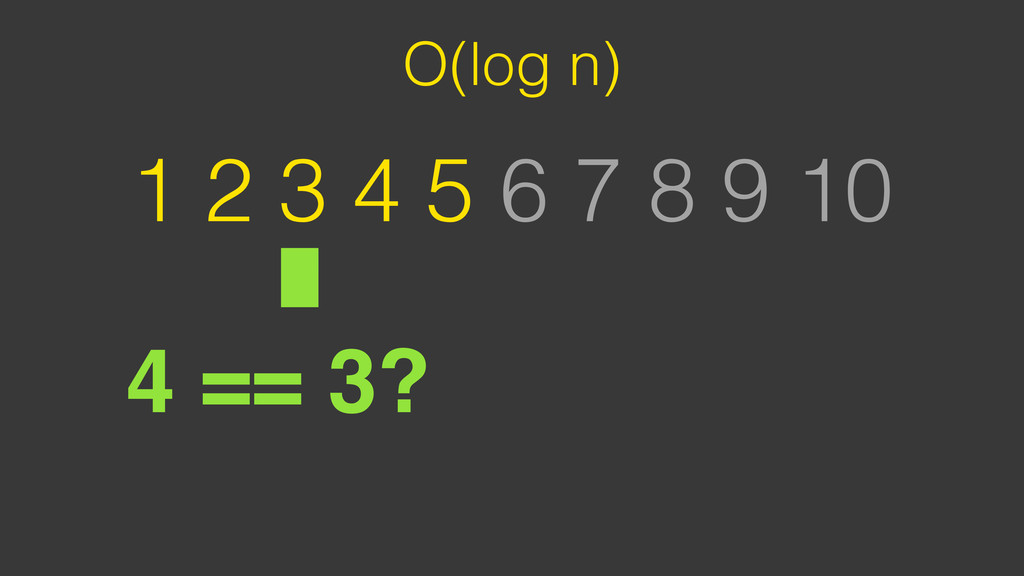
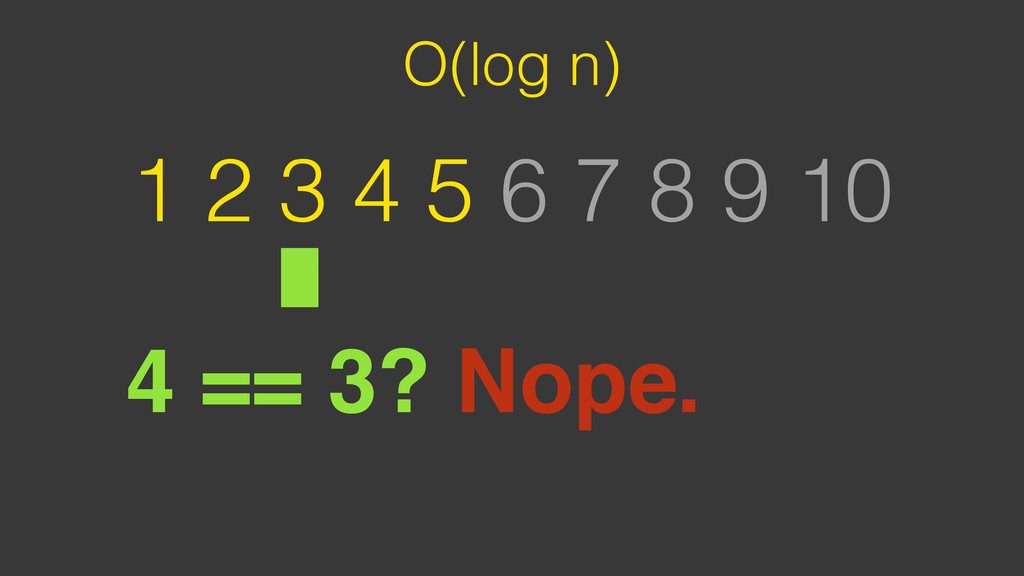
  20. O(log n) 1 2 3 4 5 6 7 8

    9 10 4 == 3? Nope.
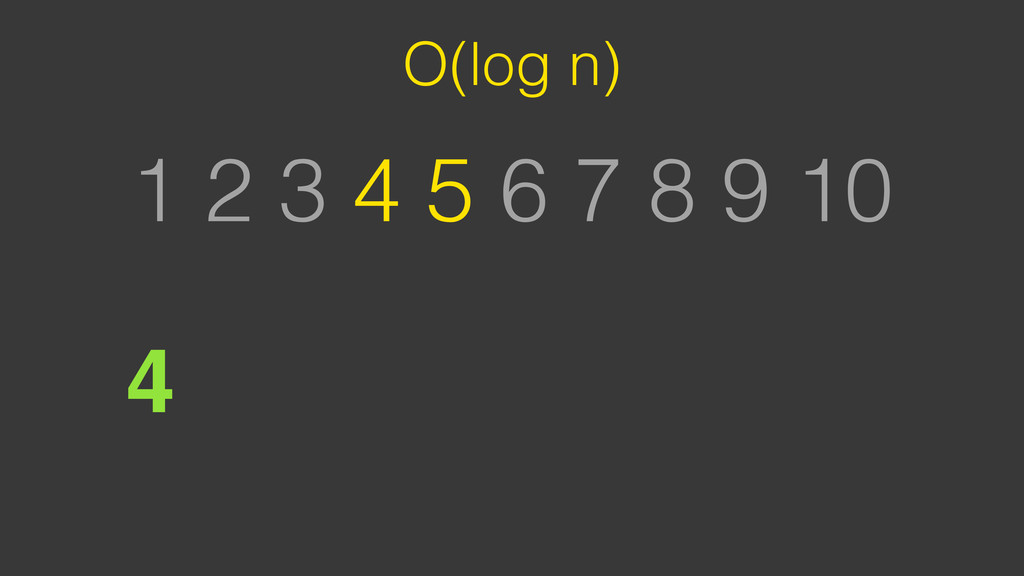
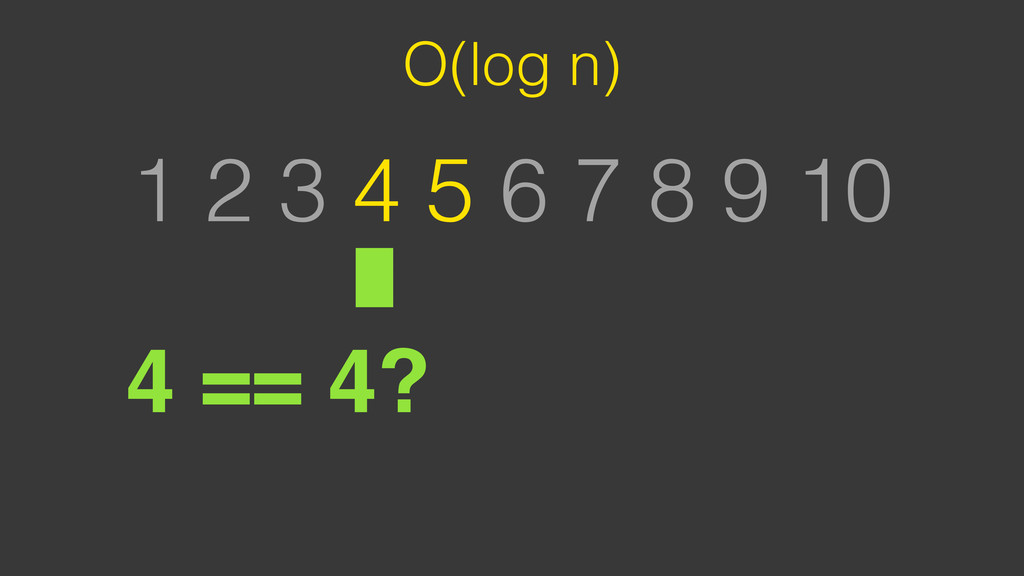
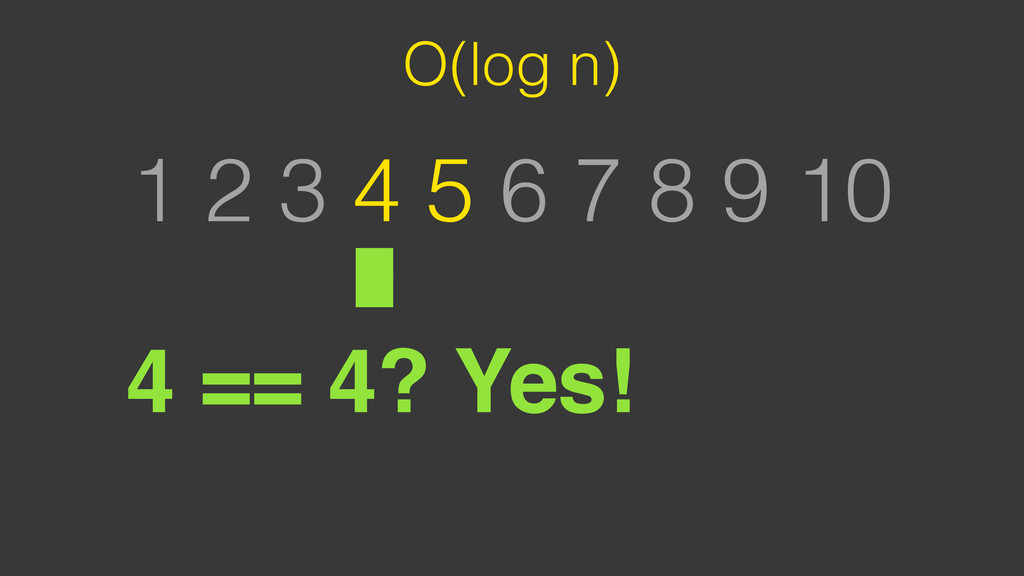
  21. O(log n) 1 2 3 4 5 6 7 8

    9 10 4 == 4? Yes!
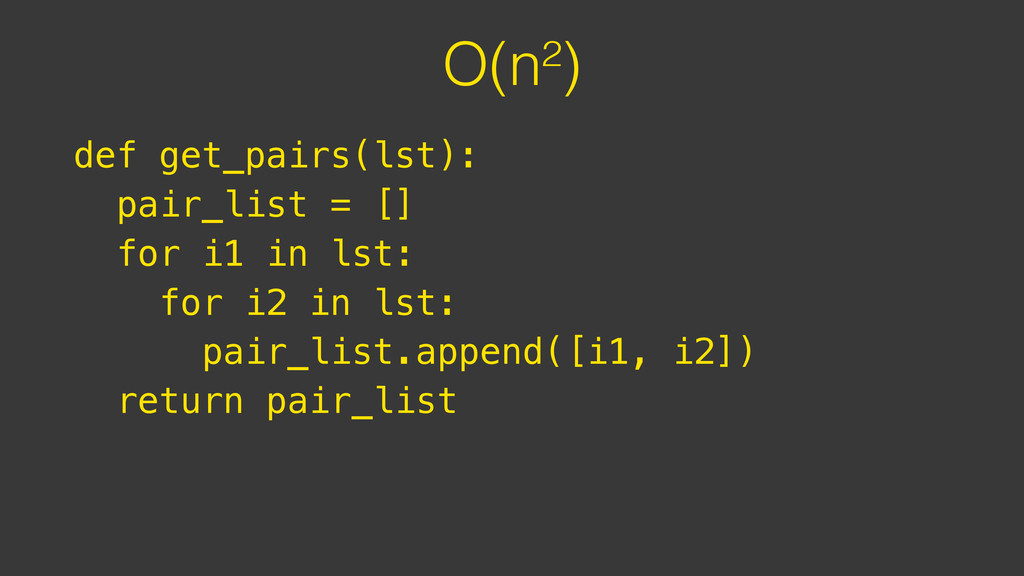
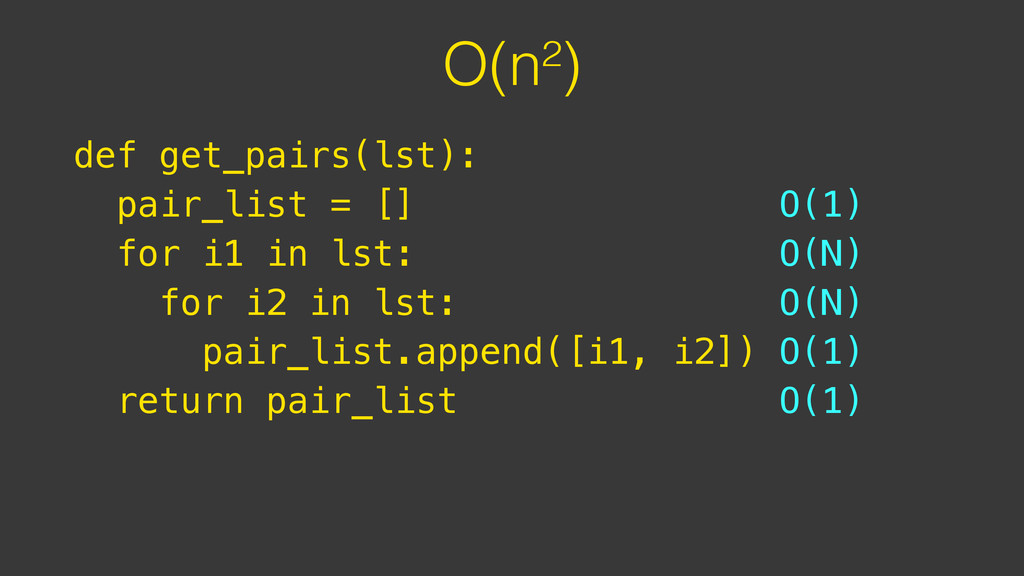
  22. def get_pairs(lst): pair_list = [] for i1 in lst: for

    i2 in lst: pair_list.append([i1, i2]) return pair_list ! O(n²)
  23. def get_pairs(lst): pair_list = [] O(1) for i1 in lst:

    O(N) for i2 in lst: O(N) pair_list.append([i1, i2]) O(1) return pair_list O(1) ! O(n²)
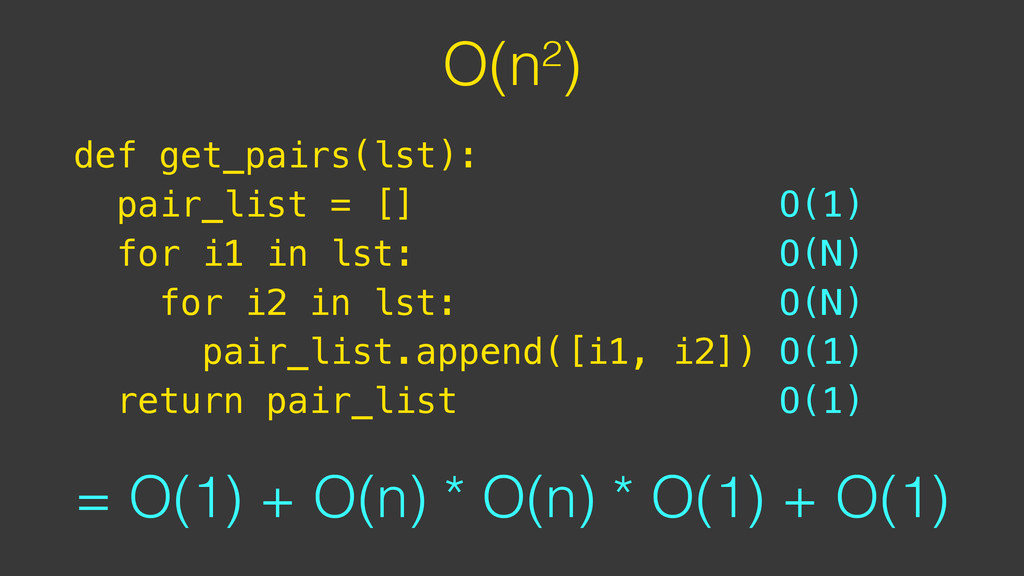
  24. def get_pairs(lst): pair_list = [] O(1) for i1 in lst:

    O(N) for i2 in lst: O(N) pair_list.append([i1, i2]) O(1) return pair_list O(1) ! O(n²) = O(1) + O(n) * O(n) * O(1) + O(1)
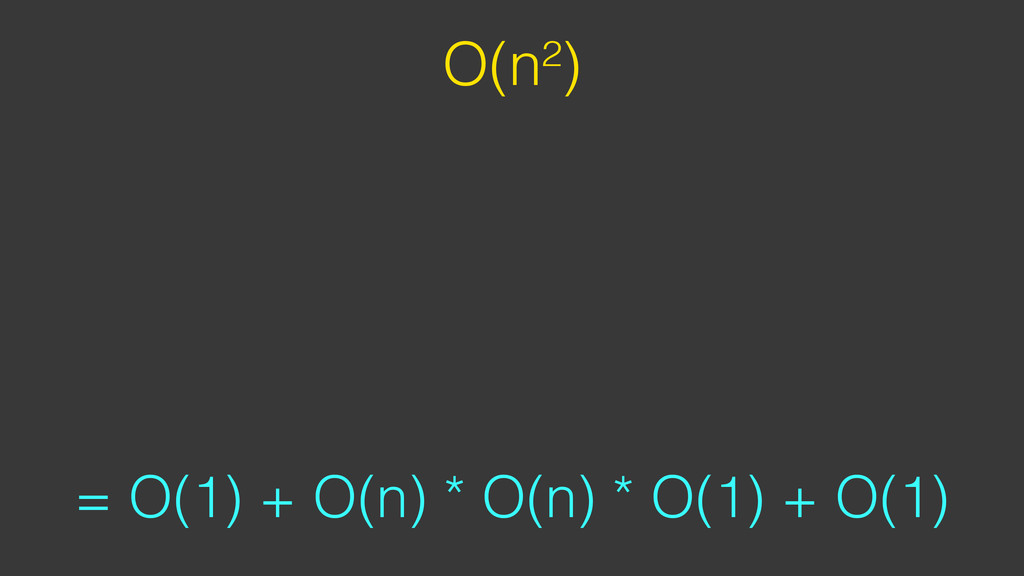
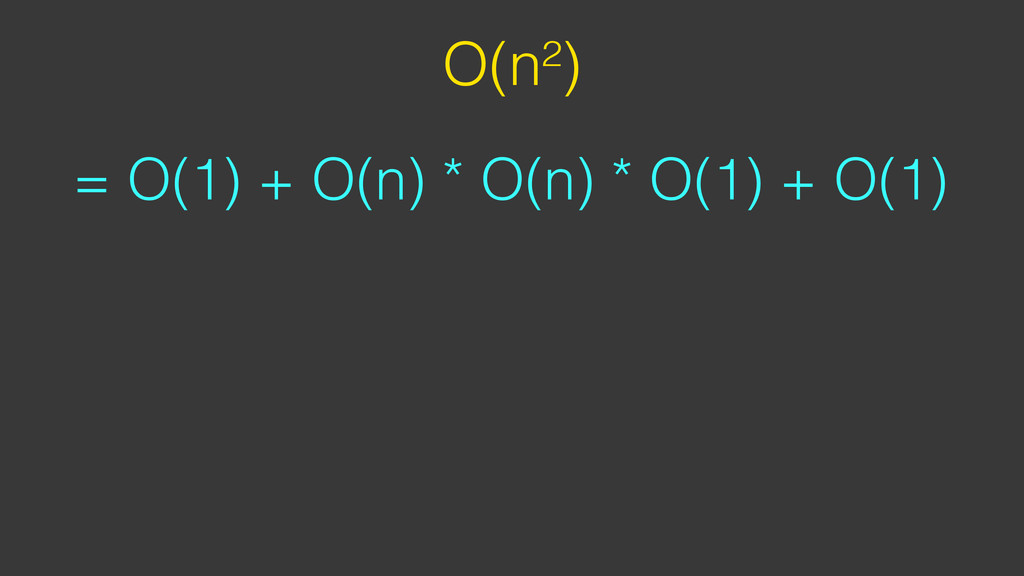
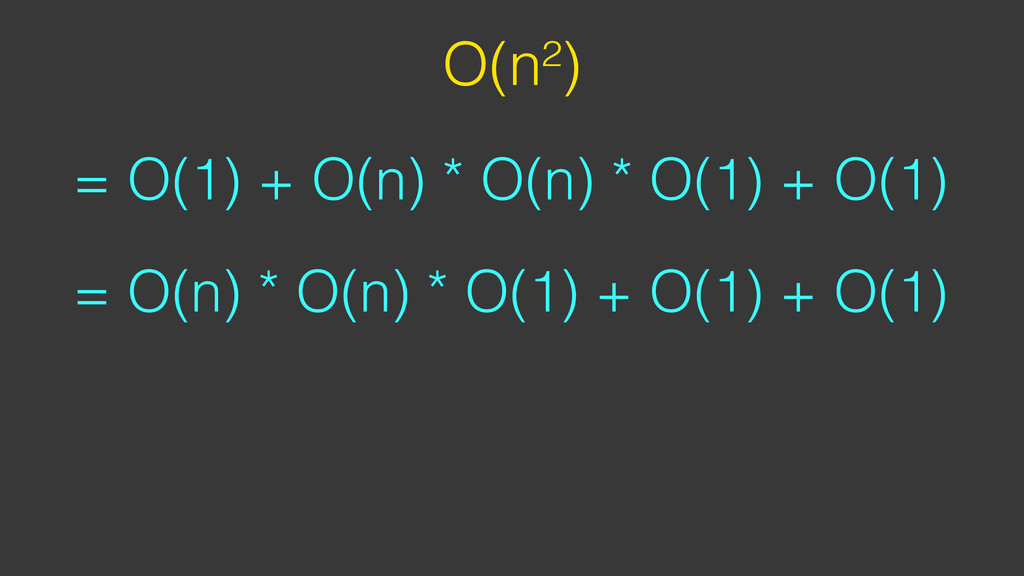
  25. O(n²) = O(1) + O(n) * O(n) * O(1) +

    O(1) = O(n) * O(n) * O(1) + O(1) + O(1)
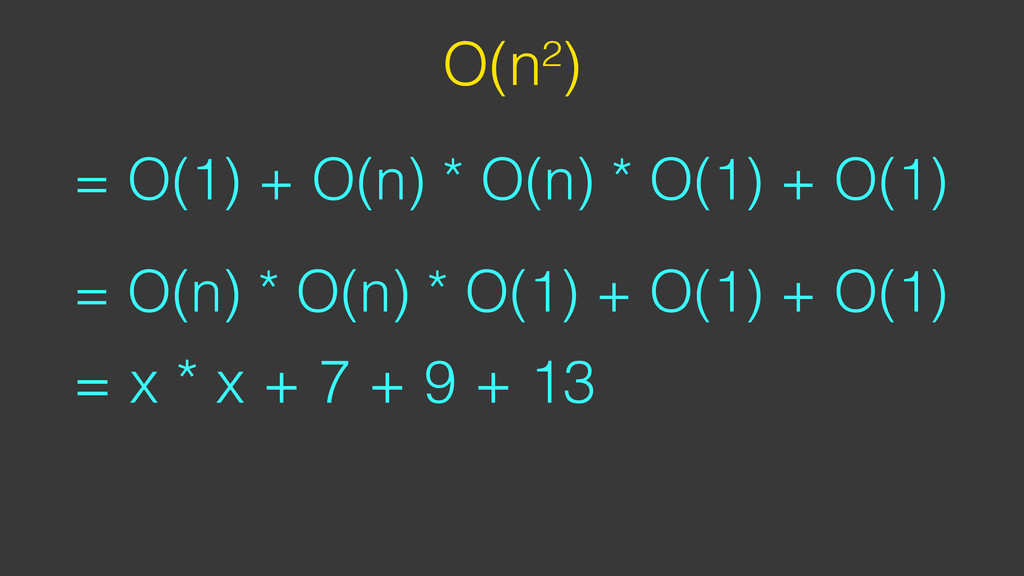
  26. O(n²) = O(1) + O(n) * O(n) * O(1) +

    O(1) = O(n) * O(n) * O(1) + O(1) + O(1) = x * x + 7 + 9 + 13
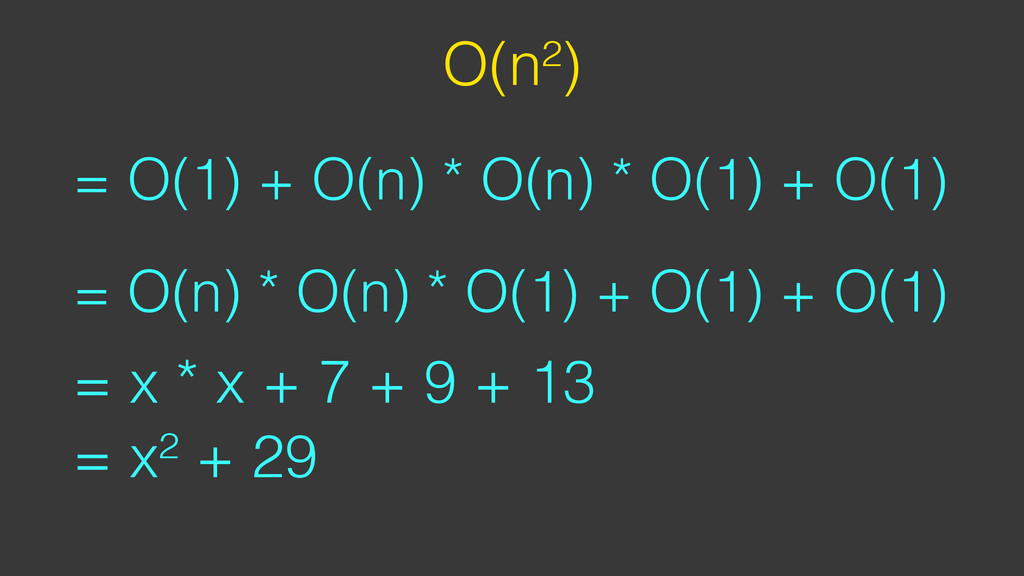
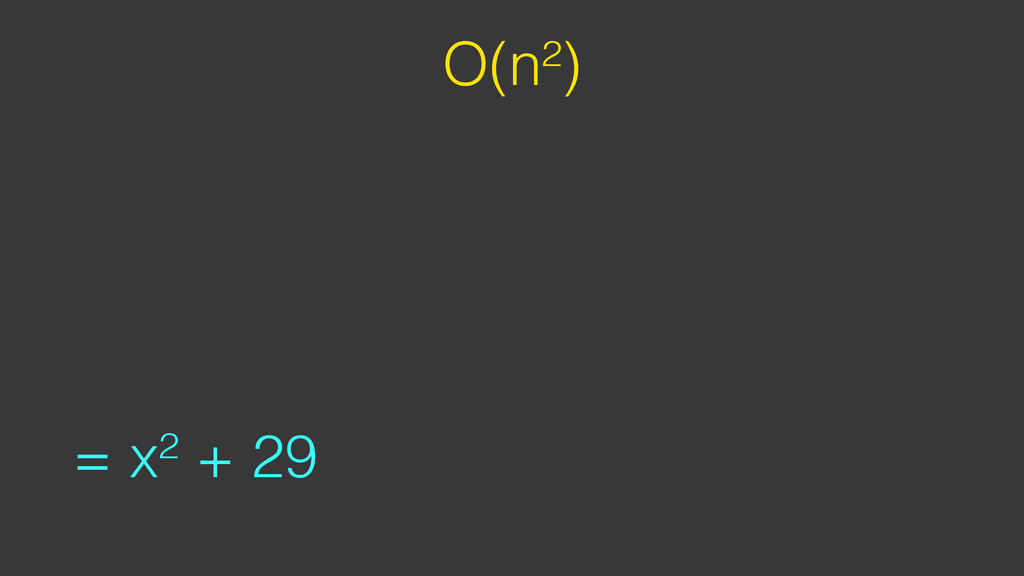
  27. O(n²) = O(1) + O(n) * O(n) * O(1) +

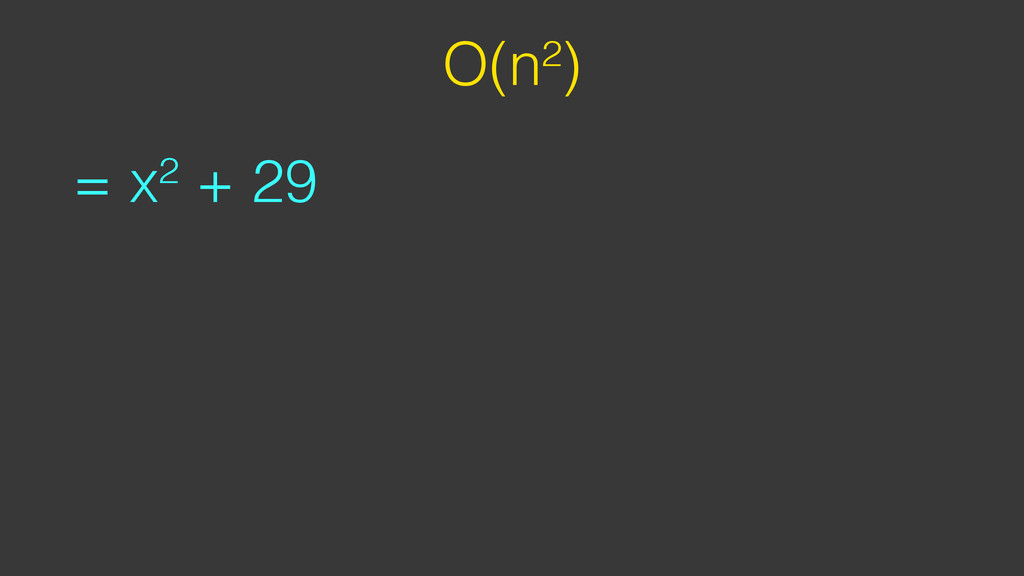
    O(1) = O(n) * O(n) * O(1) + O(1) + O(1) = x * x + 7 + 9 + 13 = x² + 29
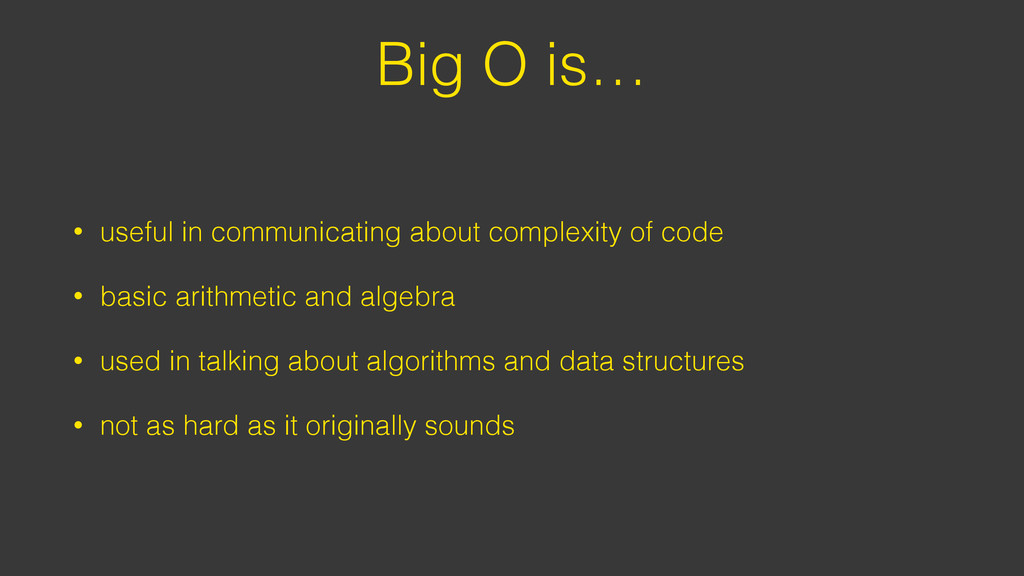
  28. Big O is… • useful in communicating about complexity of

    code • basic arithmetic and algebra • used in talking about algorithms and data structures • not as hard as it originally sounds