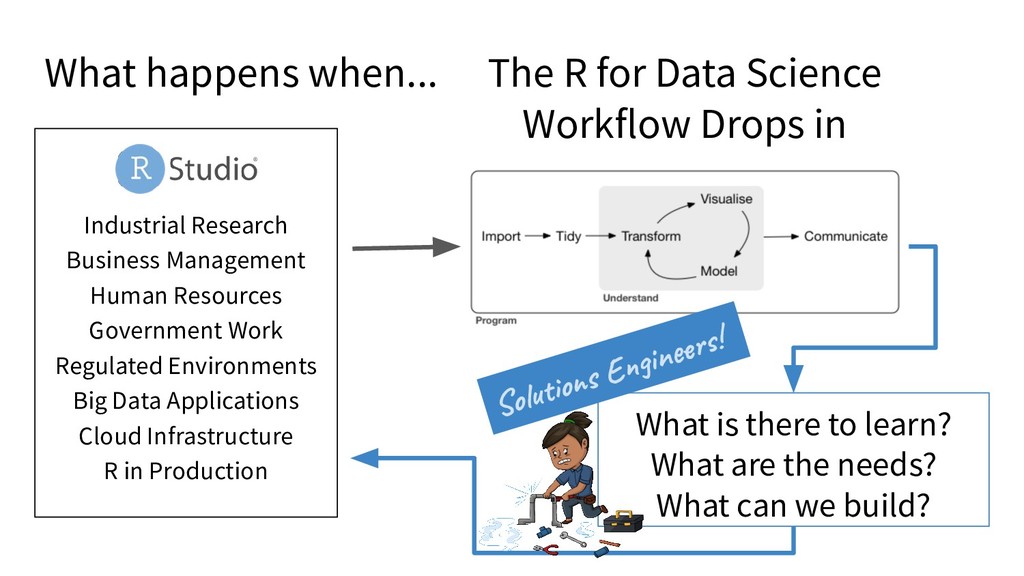
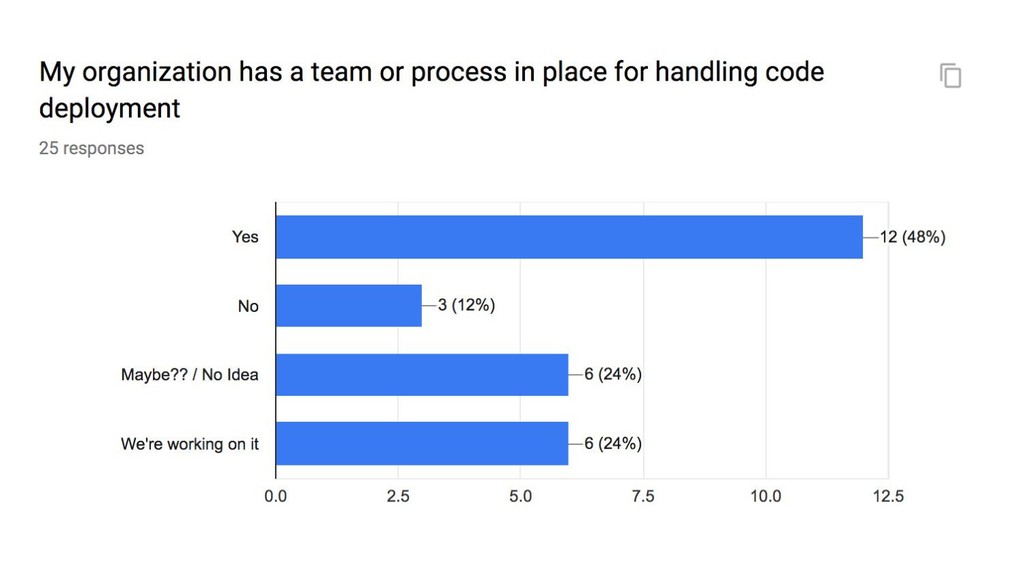
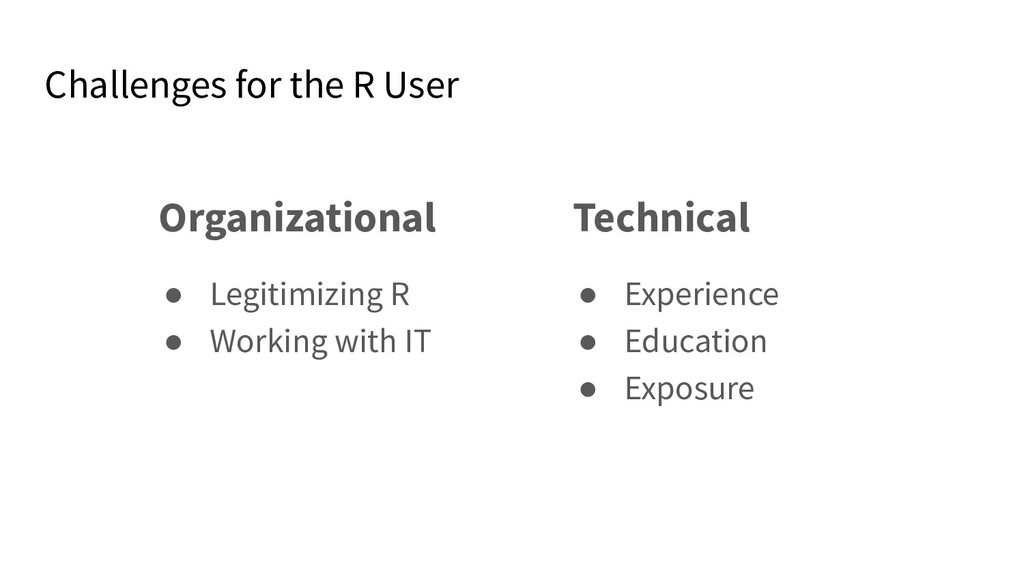
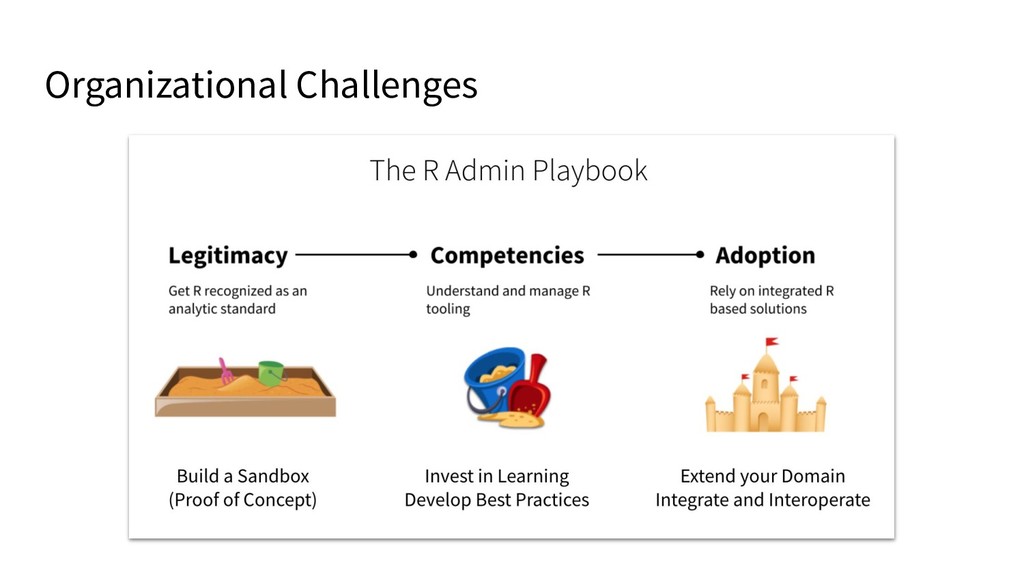
Work Regulated Environments Big Data Applications Cloud Infrastructure R in Production What is there to learn? What are the needs? What can we build? The R for Data Science Workflow Drops in Solutions Engineers!
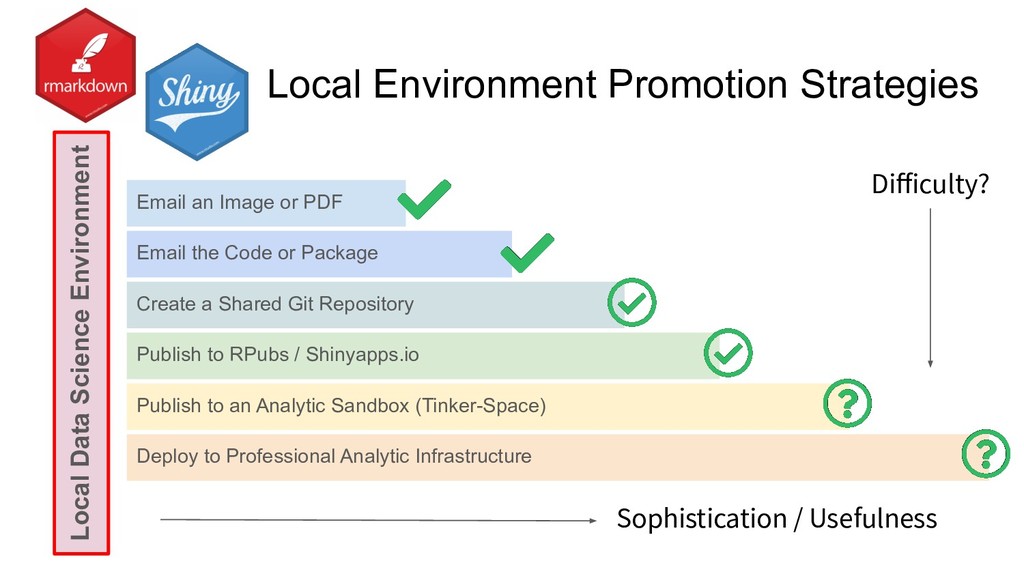
Image or PDF Email the Code or Package Create a Shared Git Repository Publish to RPubs / Shinyapps.io Publish to an Analytic Sandbox (Tinker-Space) Deploy to Professional Analytic Infrastructure Sophistication / Usefulness Difficulty?
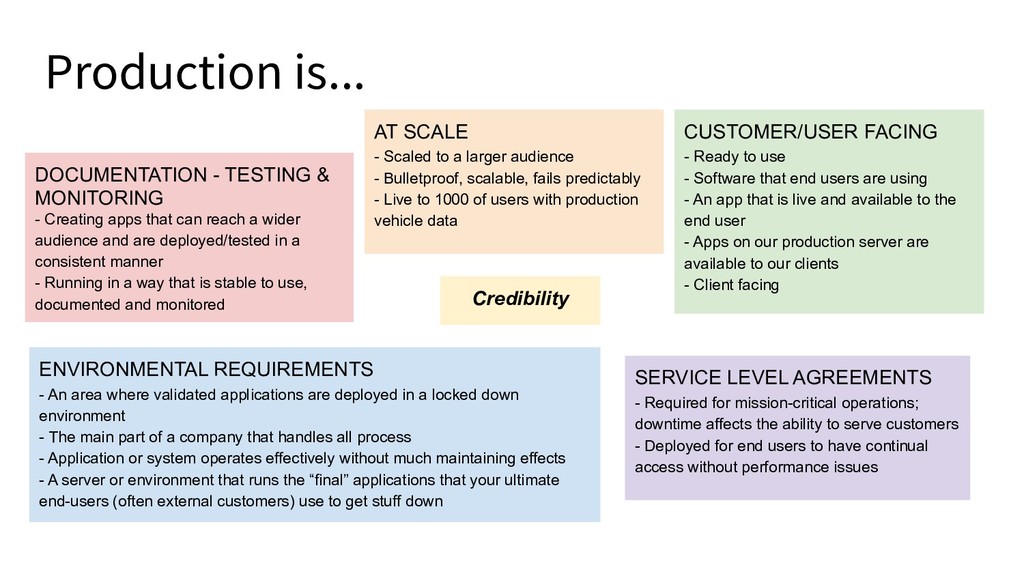
that end users are using - An app that is live and available to the end user - Apps on our production server are available to our clients - Client facing Credibility AT SCALE - Scaled to a larger audience - Bulletproof, scalable, fails predictably - Live to 1000 of users with production vehicle data SERVICE LEVEL AGREEMENTS - Required for mission-critical operations; downtime affects the ability to serve customers - Deployed for end users to have continual access without performance issues ENVIRONMENTAL REQUIREMENTS - An area where validated applications are deployed in a locked down environment - The main part of a company that handles all process - Application or system operates effectively without much maintaining effects - A server or environment that runs the “final” applications that your ultimate end-users (often external customers) use to get stuff down DOCUMENTATION - TESTING & MONITORING - Creating apps that can reach a wider audience and are deployed/tested in a consistent manner - Running in a way that is stable to use, documented and monitored
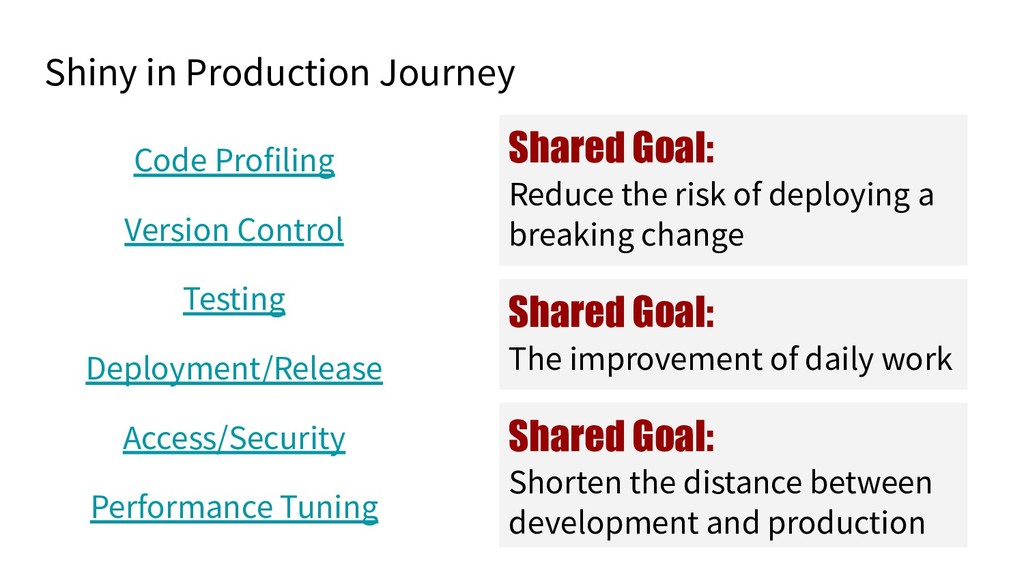
profiling - Version control - Testing - Deployment - Release Experience with Analytic administration - Infrastructure - Environments - Automation - Monitoring R is integrated, used for orchestration opposed to brute-force development
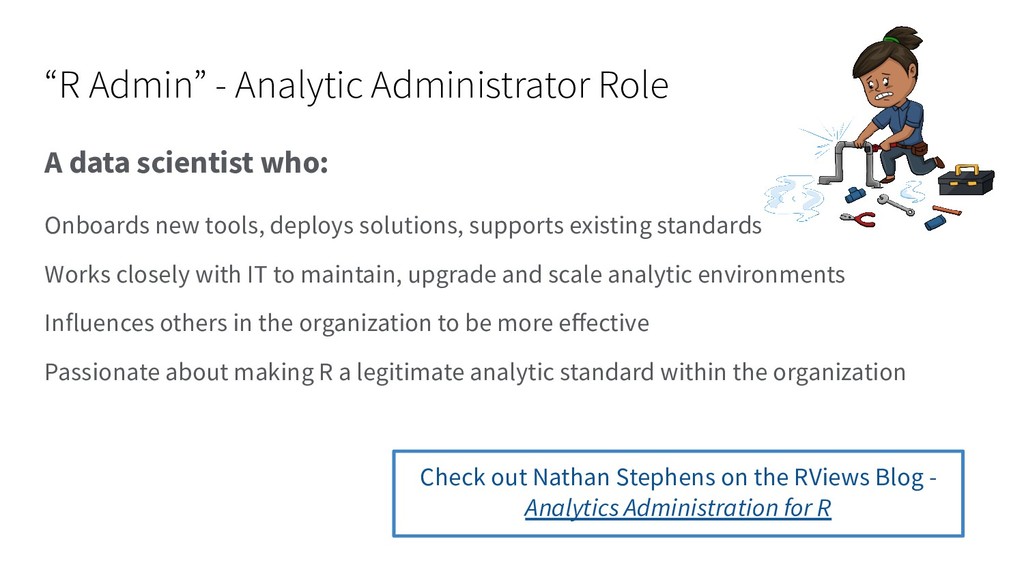
Onboards new tools, deploys solutions, supports existing standards Works closely with IT to maintain, upgrade and scale analytic environments Influences others in the organization to be more effective Passionate about making R a legitimate analytic standard within the organization Check out Nathan Stephens on the RViews Blog - Analytics Administration for R
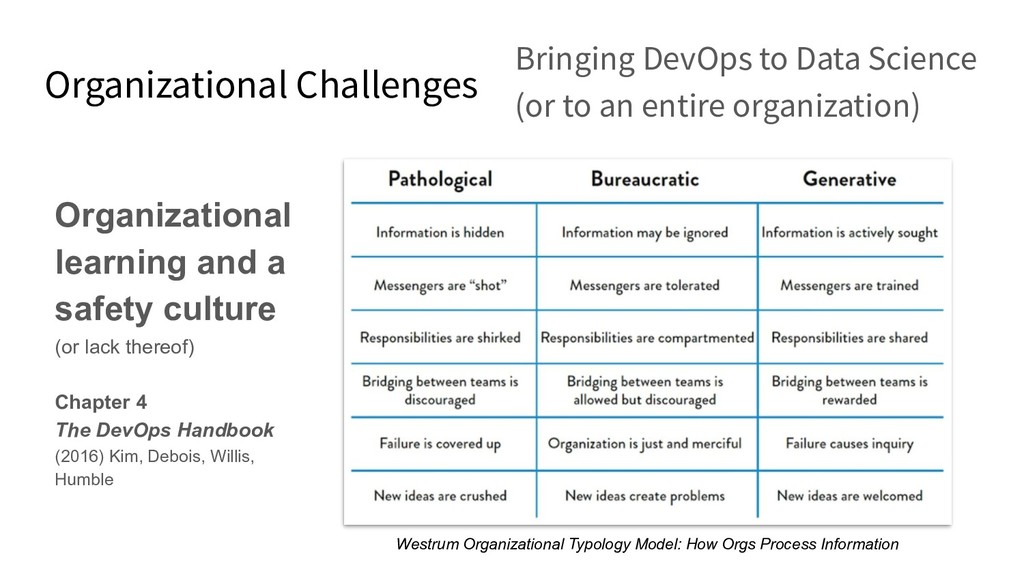
entire organization) Organizational learning and a safety culture (or lack thereof) Chapter 4 The DevOps Handbook (2016) Kim, Debois, Willis, Humble Westrum Organizational Typology Model: How Orgs Process Information
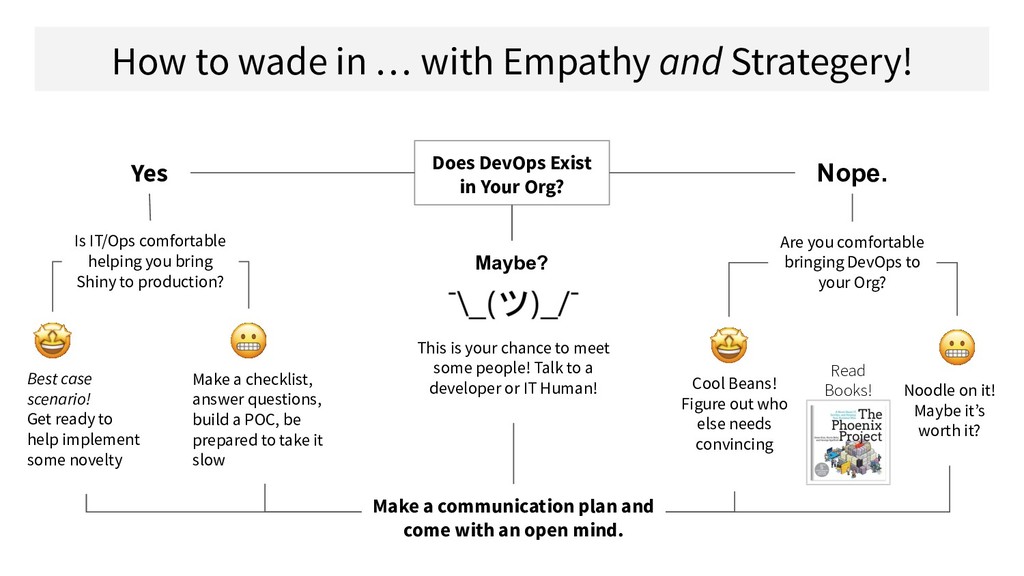
DevOps Exist in Your Org? Yes Maybe? Nope. Is IT/Ops comfortable helping you bring Shiny to production? ! . Best case scenario! Get ready to help implement some novelty Make a checklist, answer questions, build a POC, be prepared to take it slow This is your chance to meet some people! Talk to a developer or IT Human! Are you comfortable bringing DevOps to your Org? ! . Cool Beans! Figure out who else needs convincing Noodle on it! Maybe it’s worth it? Make a communication plan and come with an open mind. Read Books!
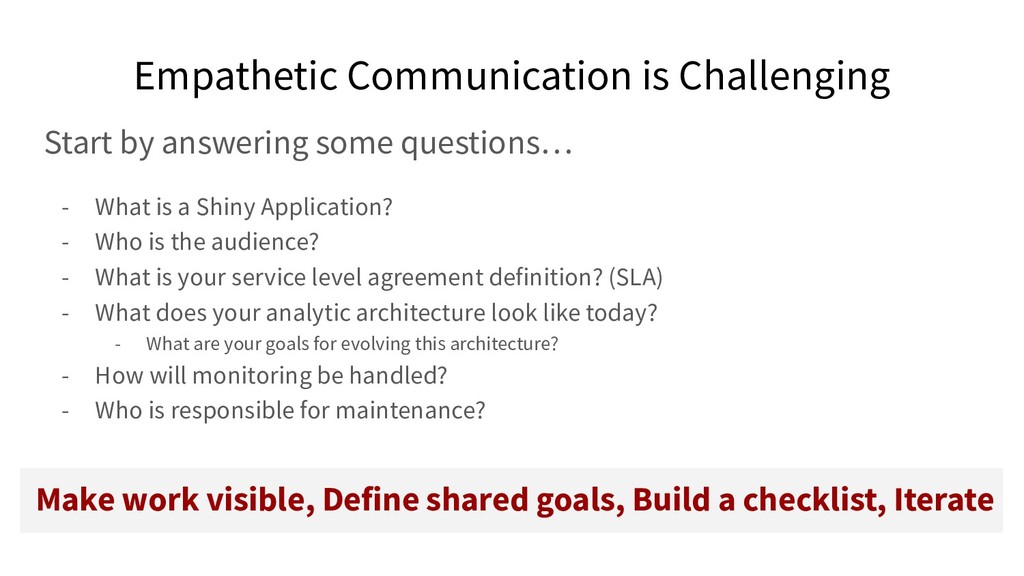
Application? - Who is the audience? - What is your service level agreement definition? (SLA) - What does your analytic architecture look like today? - What are your goals for evolving this architecture? - How will monitoring be handled? - Who is responsible for maintenance? Make work visible, Define shared goals, Build a checklist, Iterate Empathetic Communication is Challenging
Access/Security Performance Tuning Shared Goal: Shorten the distance between development and production Shared Goal: The improvement of daily work Shared Goal: Reduce the risk of deploying a breaking change


 kellobri
 kairim0
 kentarofujii
 yut0naga1_fa
 akhino
 usanchuu
 sansantech
 oasis1994liveforever
 techtekt
 ivry_presentationmaterials
 shumei_ito
 pfn
pfn
 takahashim
 konakalab
 tammielis
 pauljervisheath
 irinanazarova
 lfama
lfama
 marcoroth
 tammyeverts
 62gerente
 productmarketing
 tanoku
 kneath
 techseoconnect