statement that addresses the questions to follow. Ensure you use personal anecdotes from your own teaching and learning background. Questions: In your opinion, how do people learn when studying online? What are your goals for your online students? When working with online students, why do you teach the way you do? How do you teach in the online environment? * 4 3.5
that addresses the questions to follow. Ensure you use personal anecdotes from your own teaching and learning background. Questions: In your opinion, how do people learn when studying online? What are your goals for your online students? When working with online students, why do you teach the way you do? How do you teach in the online environment? * 4 3.5 https://bit.ly/35cold https://bit.ly/40cold
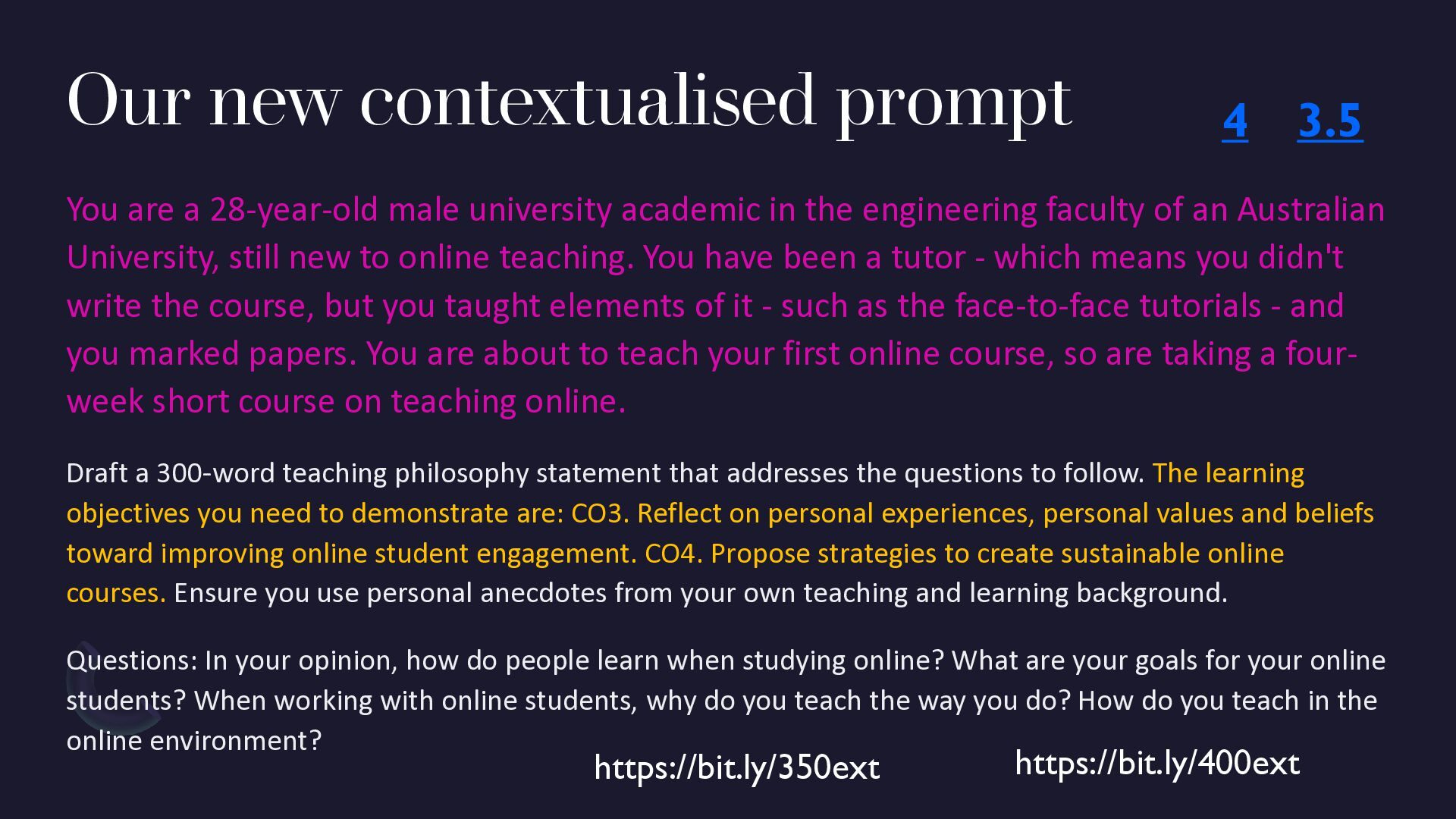
academic in the engineering faculty of an Australian University, still new to online teaching. You have been a tutor - which means you didn't write the course, but you taught elements of it - such as the face-to-face tutorials - and you marked papers. You are about to teach your first online course, so are taking a four- week short course on teaching online. Draft a 300-word teaching philosophy statement that addresses the questions to follow. The learning objectives you need to demonstrate are: CO3. Reflect on personal experiences, personal values and beliefs toward improving online student engagement. CO4. Propose strategies to create sustainable online courses. Ensure you use personal anecdotes from your own teaching and learning background. Questions: In your opinion, how do people learn when studying online? What are your goals for your online students? When working with online students, why do you teach the way you do? How do you teach in the online environment? 4 3.5 https://bit.ly/350ext https://bit.ly/400ext
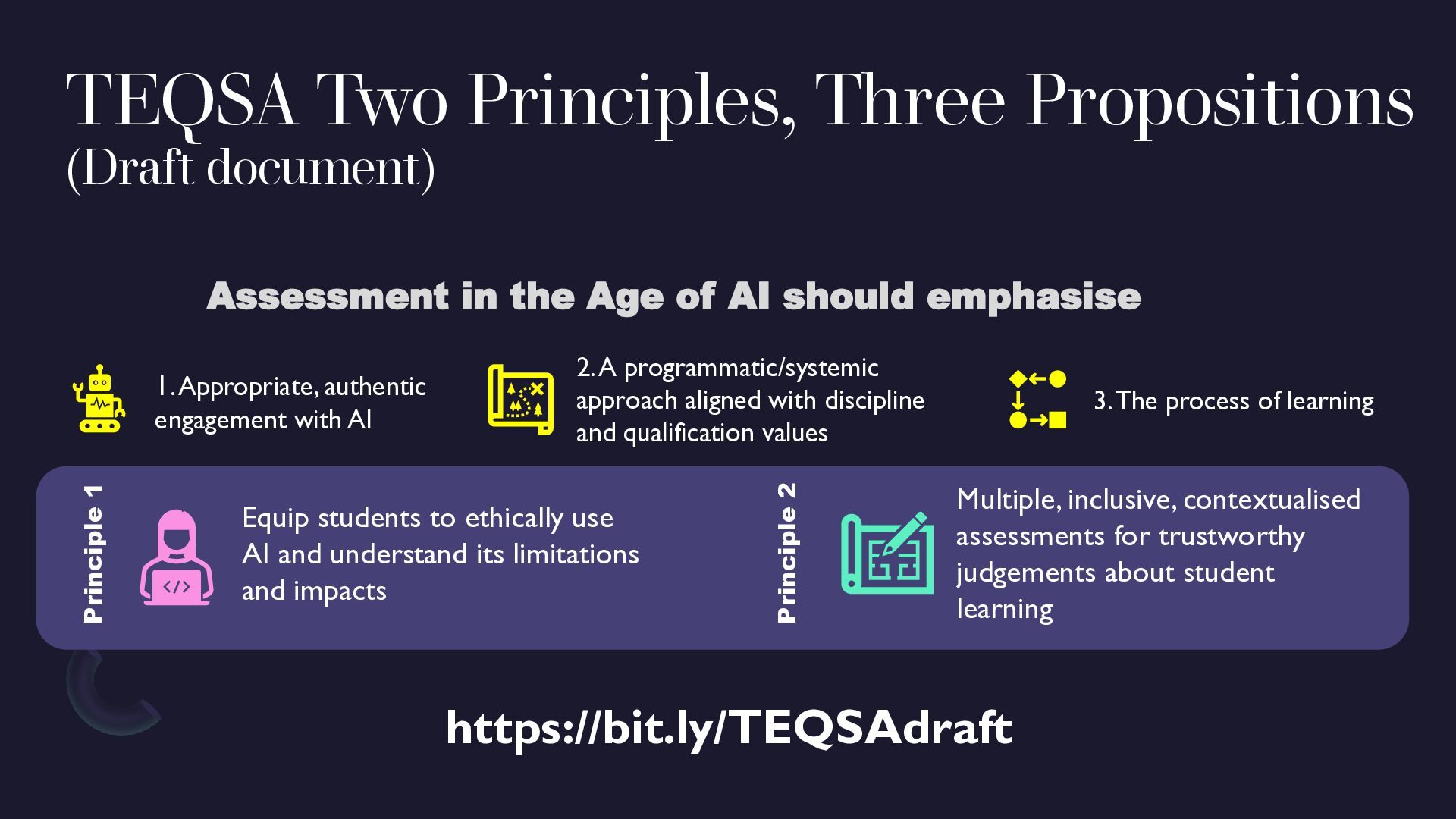
Age of AI should emphasise 1. Appropriate, authentic engagement with AI 2. A programmatic/systemic approach aligned with discipline and qualification values 3. The process of learning Equip students to ethically use AI and understand its limitations and impacts Multiple, inclusive, contextualised assessments for trustworthy judgements about student learning Principle 1 Principle 2 https://bit.ly/TEQSAdraft
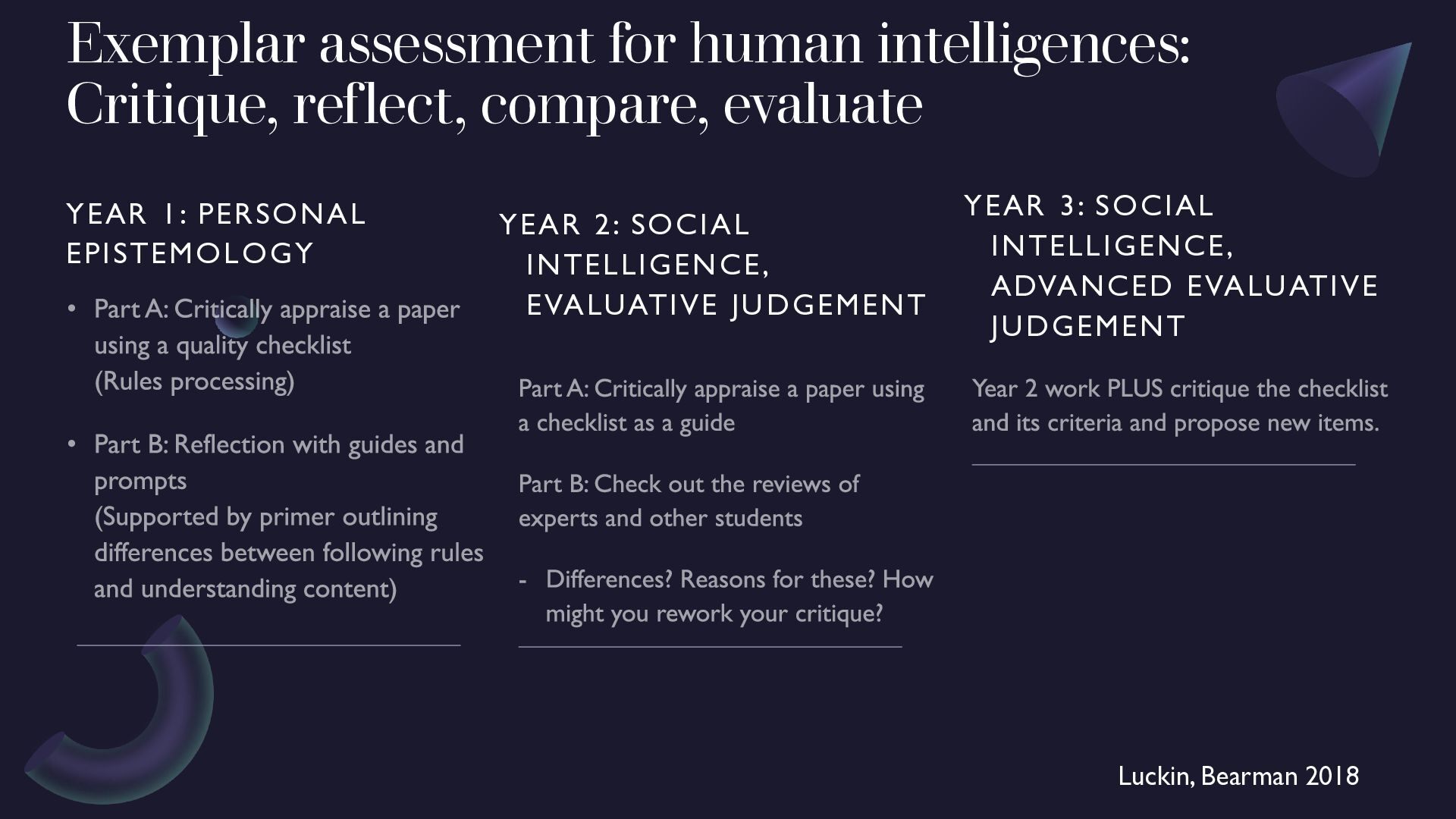
1: PERSONAL EPISTEMOLOGY YEAR 2: SOCIAL INTELLIGENCE, EVALUATIVE JUDGEMENT YEAR 3: SOCIAL INTELLIGENCE, ADVANCED EVALUATIVE JUDGEMENT Luckin, Bearman 2018
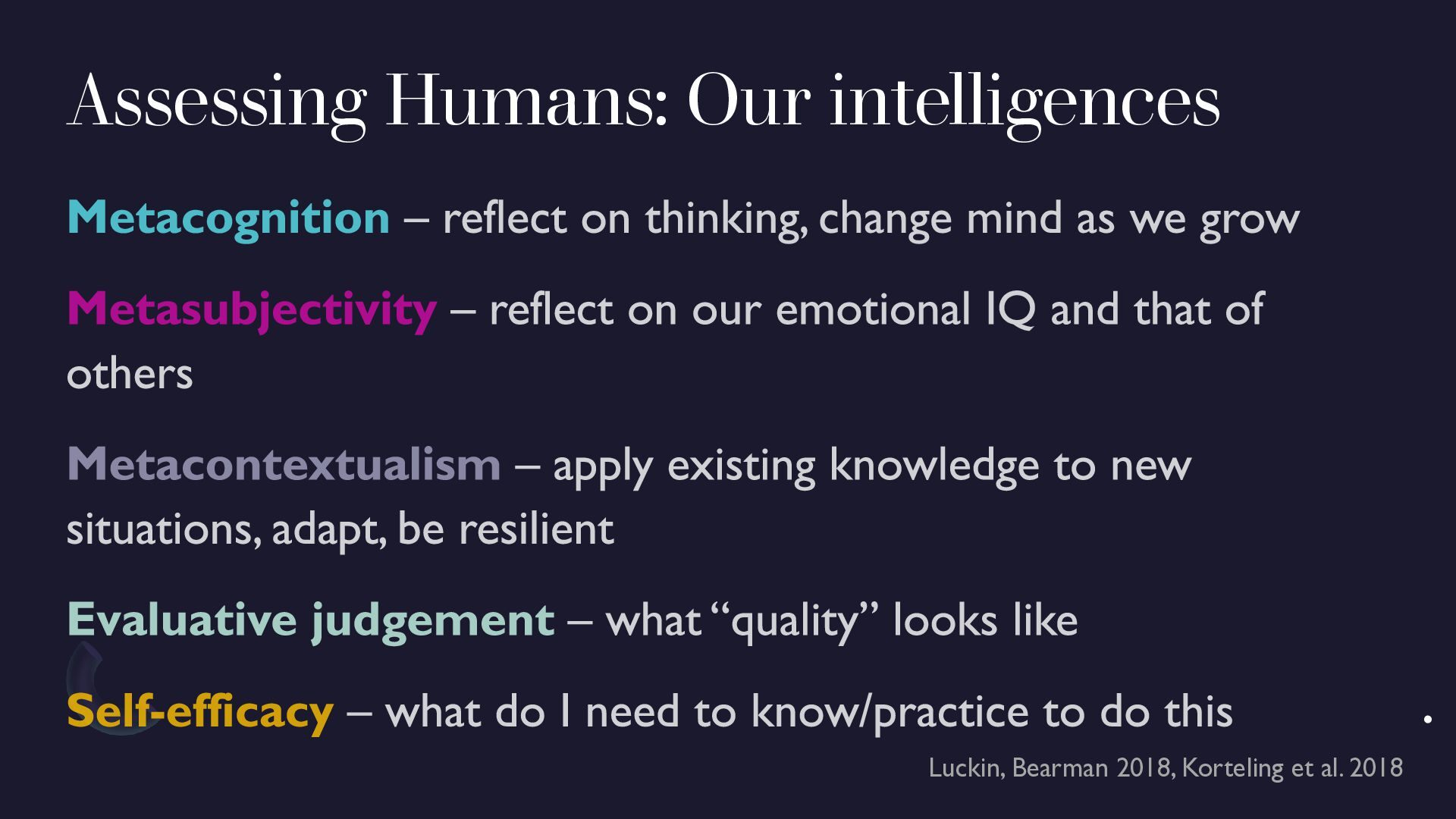
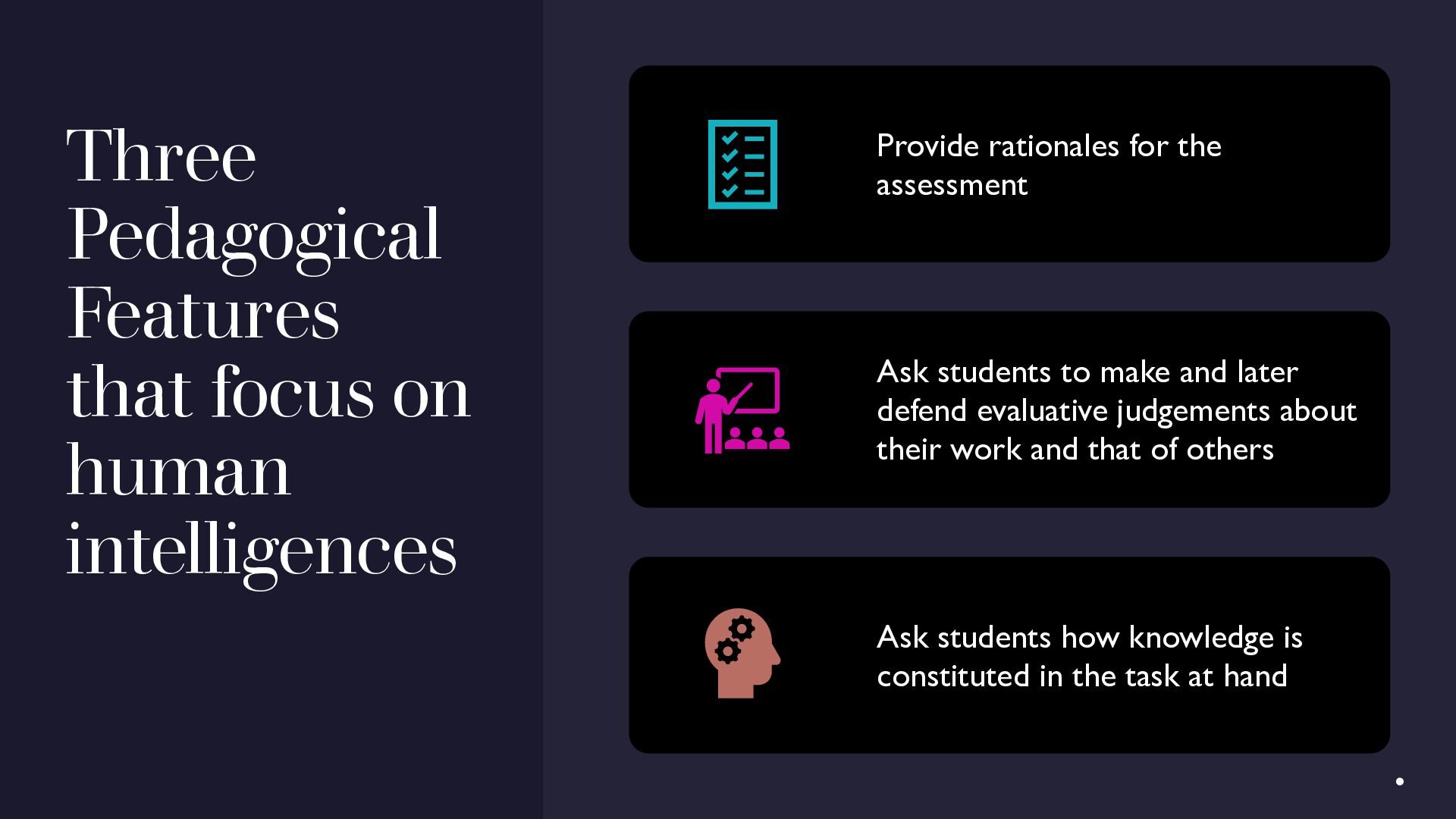
for the assessment Ask students to make and later defend evaluative judgements about their work and that of others Ask students how knowledge is constituted in the task at hand .
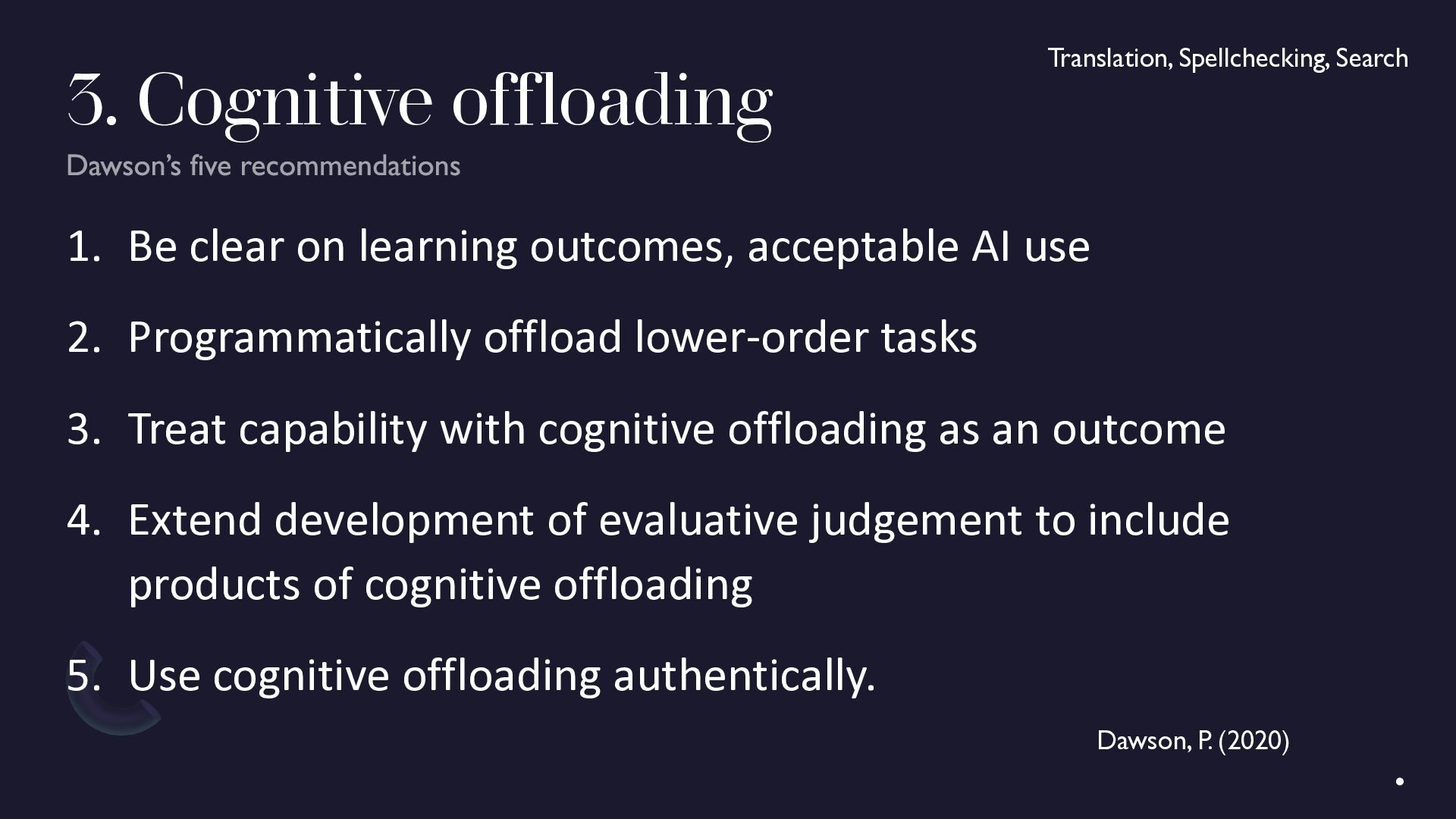
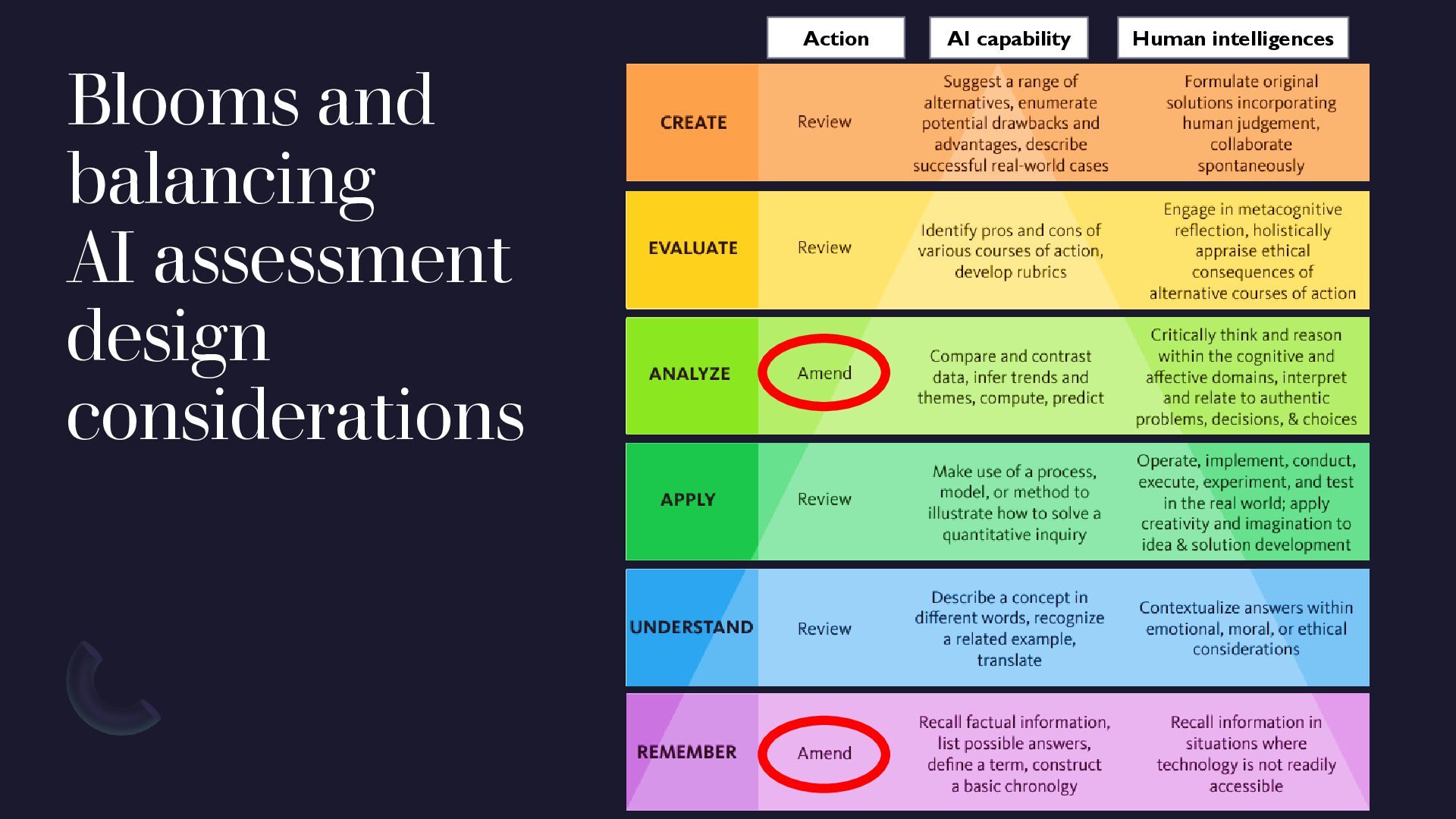
AI use 2. Programmatically offload lower-order tasks 3. Treat capability with cognitive offloading as an outcome 4. Extend development of evaluative judgement to include products of cognitive offloading 5. Use cognitive offloading authentically. Dawson, P. (2020) Translation, Spellchecking, Search .
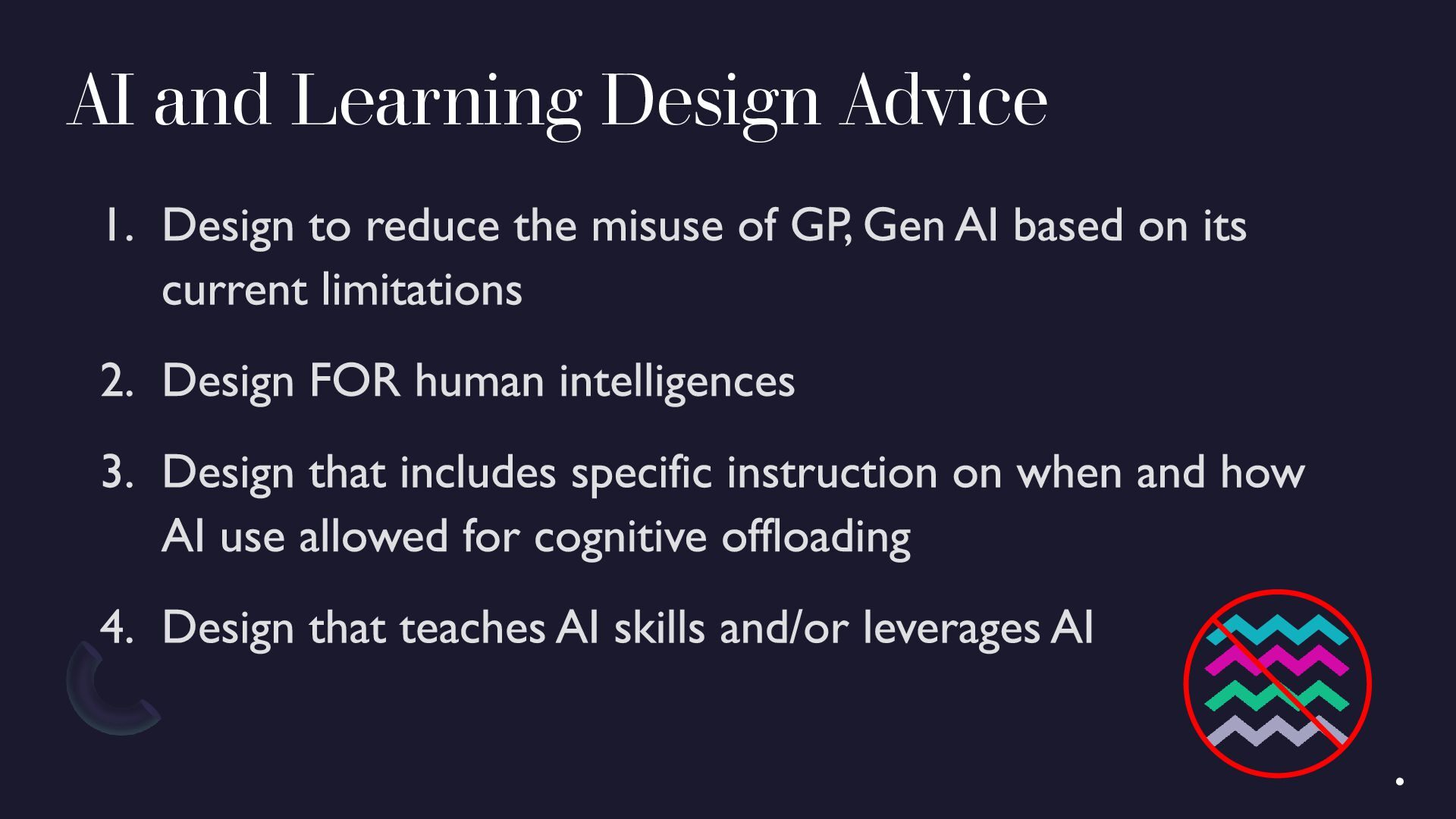
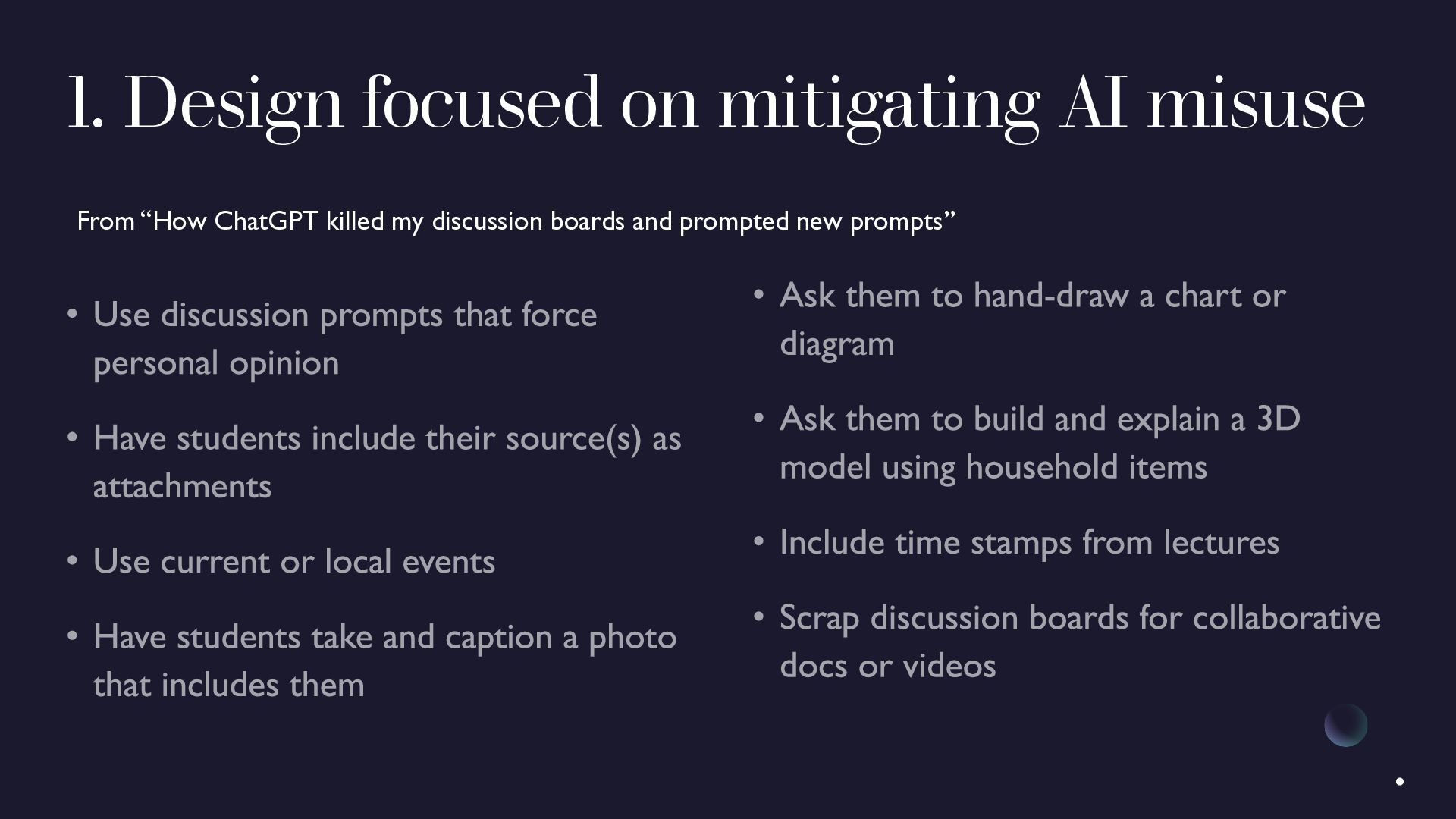
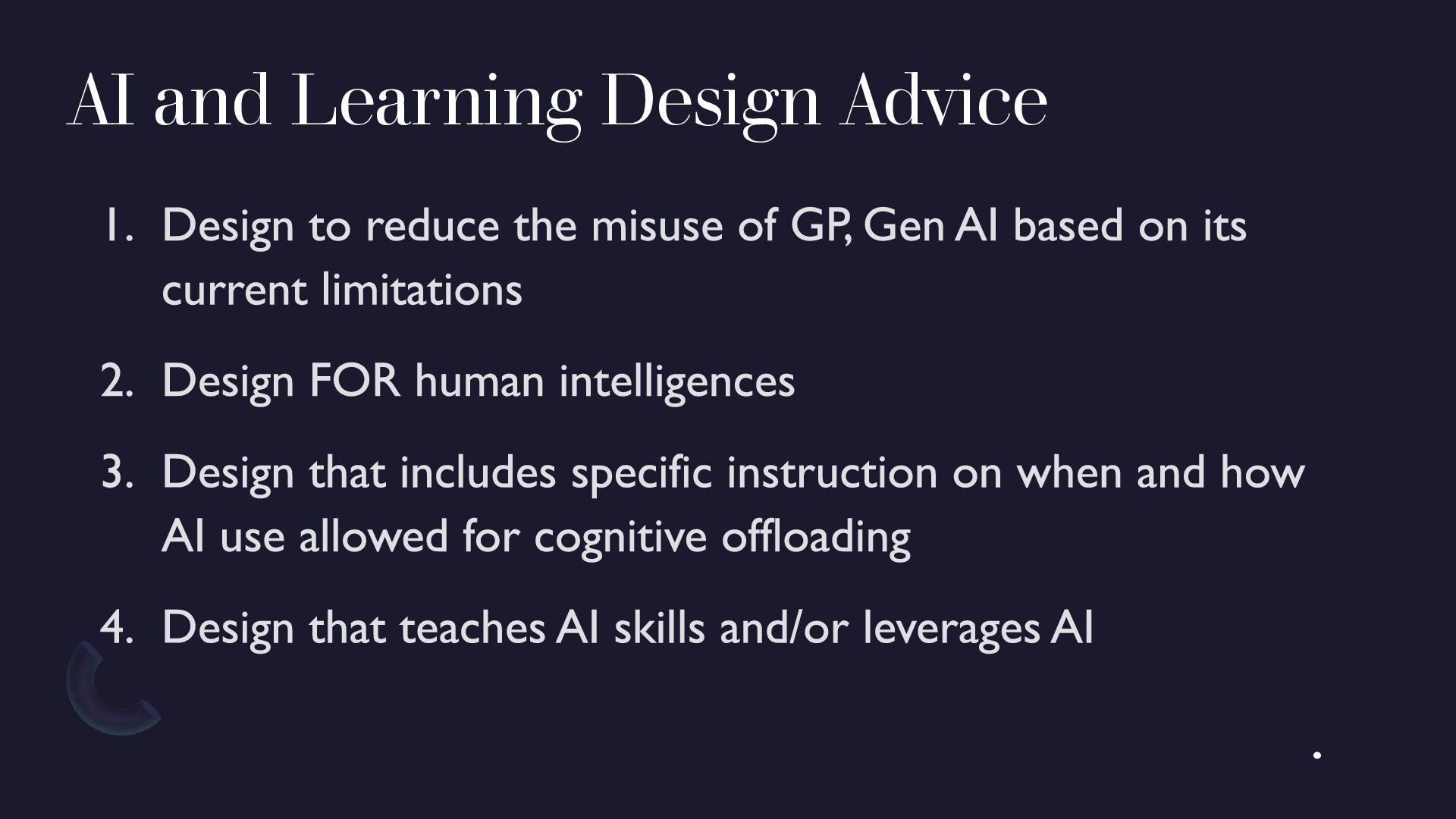
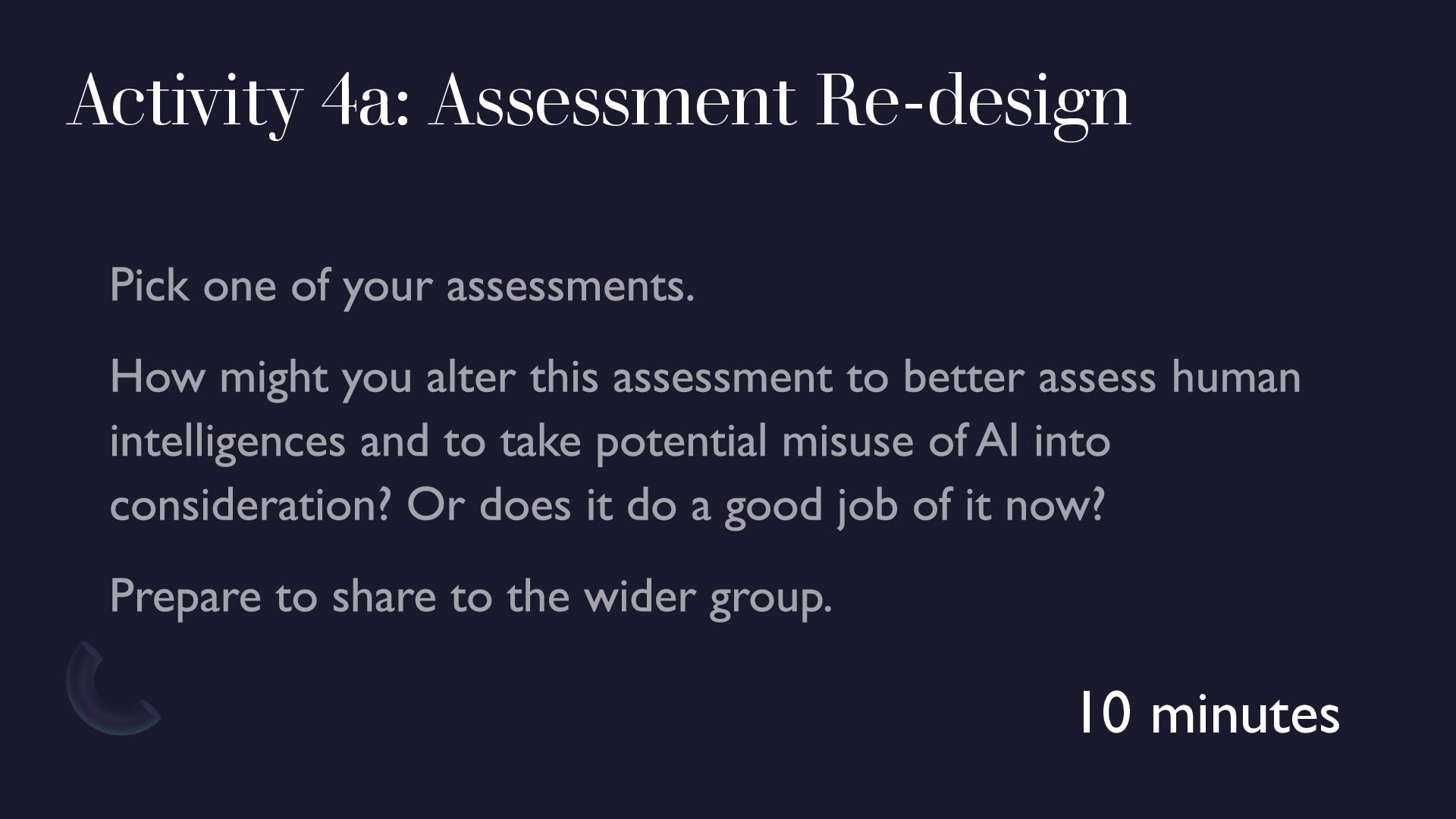
that addresses the questions to follow. Ensure you use personal anecdotes from your own teaching and learning background. Questions: In your opinion, how do people learn when studying online? What are your goals for your online students? When working with online students, why do you teach the way you do? How do you teach in the online environment? Mitigate misuse of AI Design for human intelligences Cognitive offloading Teach AI skills/AI Affordances 10 minutes
discussions of AI writing https://www.facebook.com/groups/6329308355 01841 Annotated bibliography of AI in HE Undergrad Text-based Assessment design https://bit.ly/abib823 Ethan and Lilach Mollick AI Series https://bit.ly/molAI .


 signer
 soudai
 doratex
 coderdojojapan
 juanmartin2026
 yoshimura_datam
 yatabe
 drpoonamkc
 hiola
 2720japanoke
 kaityo256
 takai
 jonyablonski
 tammyeverts
 davidcarrasco
 tenderlove
 keithpitt
 addyosmani
 rkendrick25
 maltzj
 aemeredith
 andyhume
 raygrieselhuber