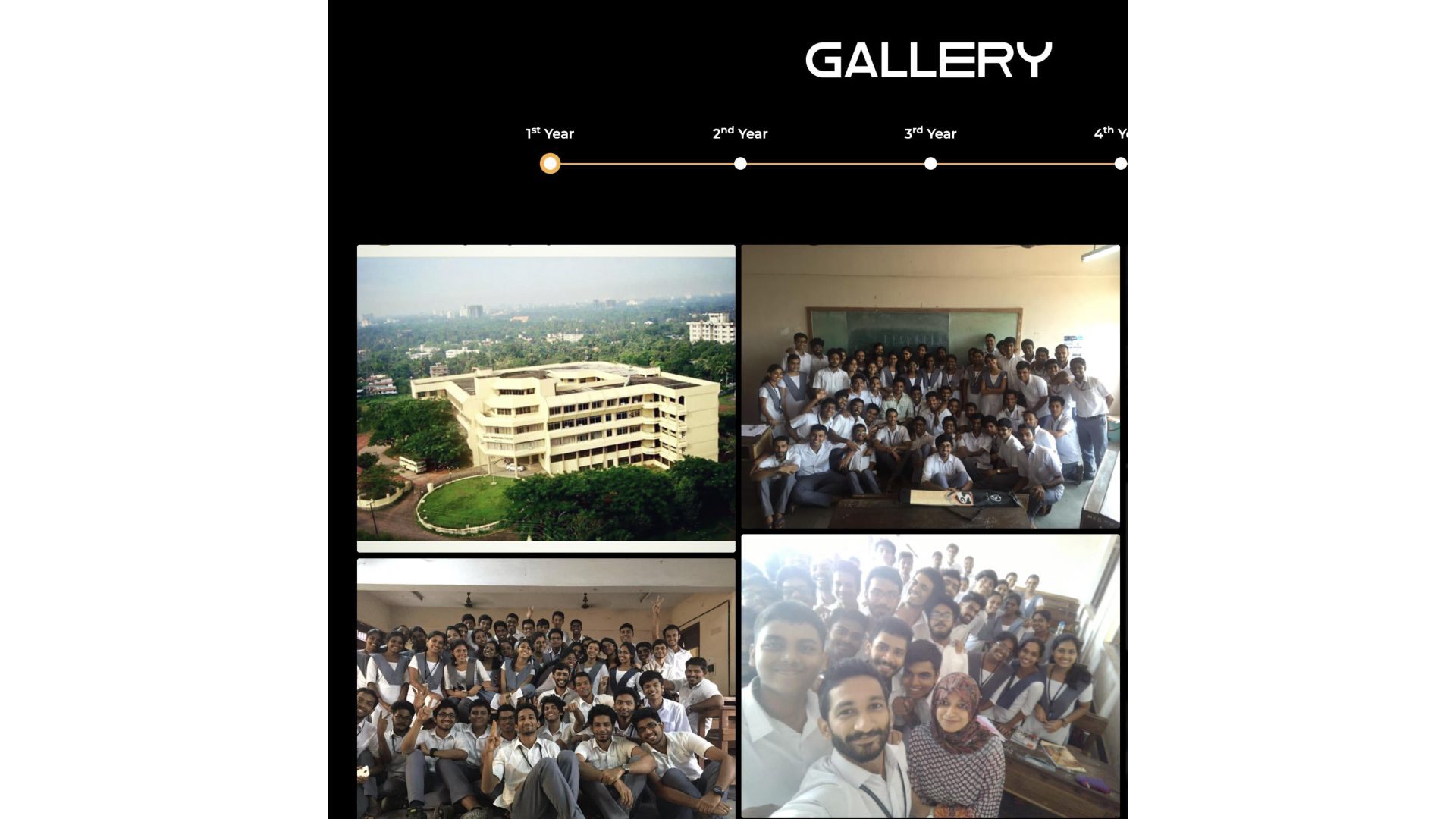
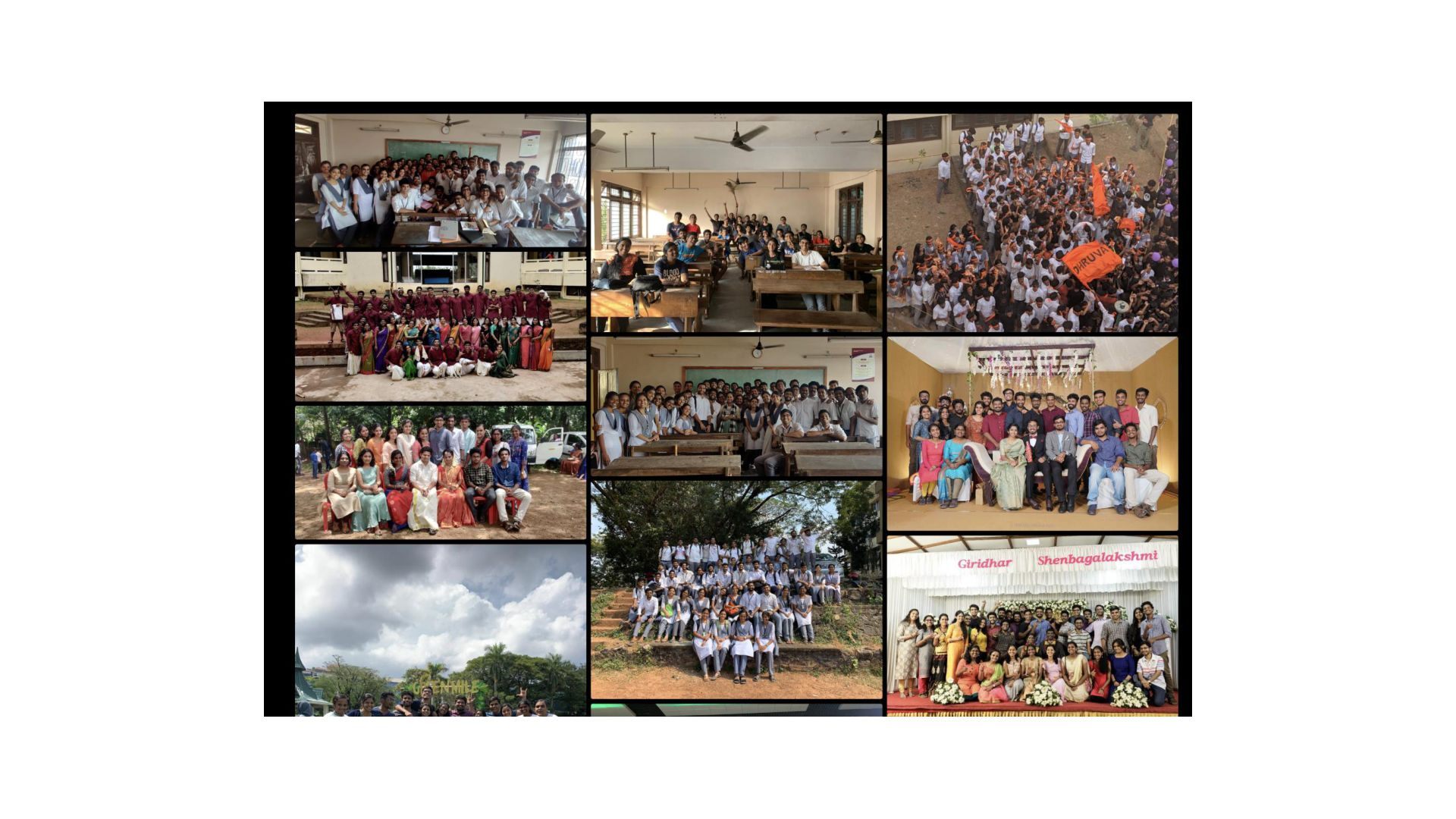
I was asked to present an orientation talk to first year Computer Science students of Batch of 2030 in Model Engineering college, by the CS department.
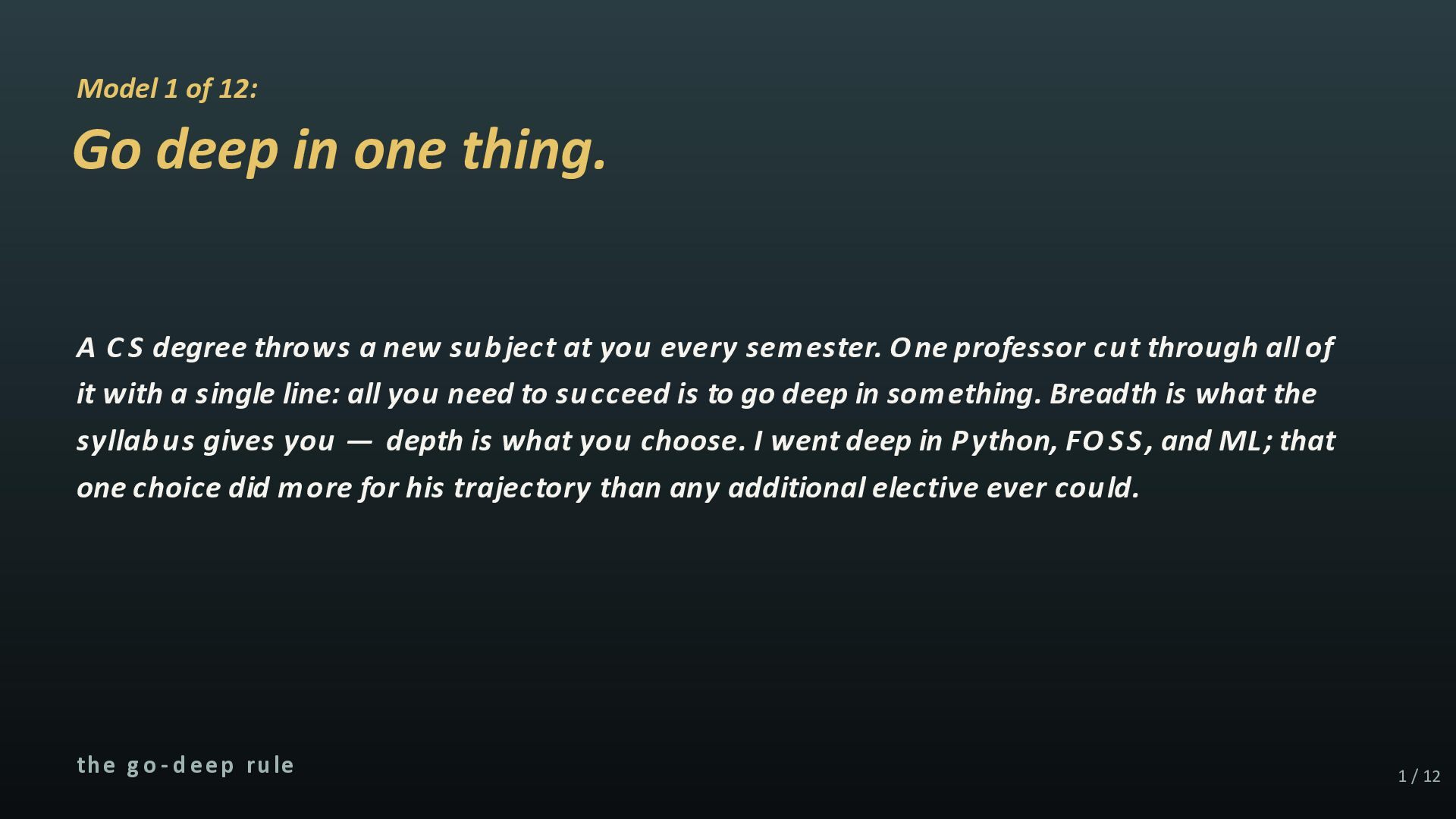
C S degree throws a new sub ject at you every sem ester. O ne professor cut through all of it with a single line: all you need to succeed is to go deep in som ething. Breadth is what the syllab us gives you — depth is what you choose. I went deep in P ython, FO S S , and ML; that one choice did more for his trajectory than any additional elective ever could. th e g o - d e e p ru le 1 / 12
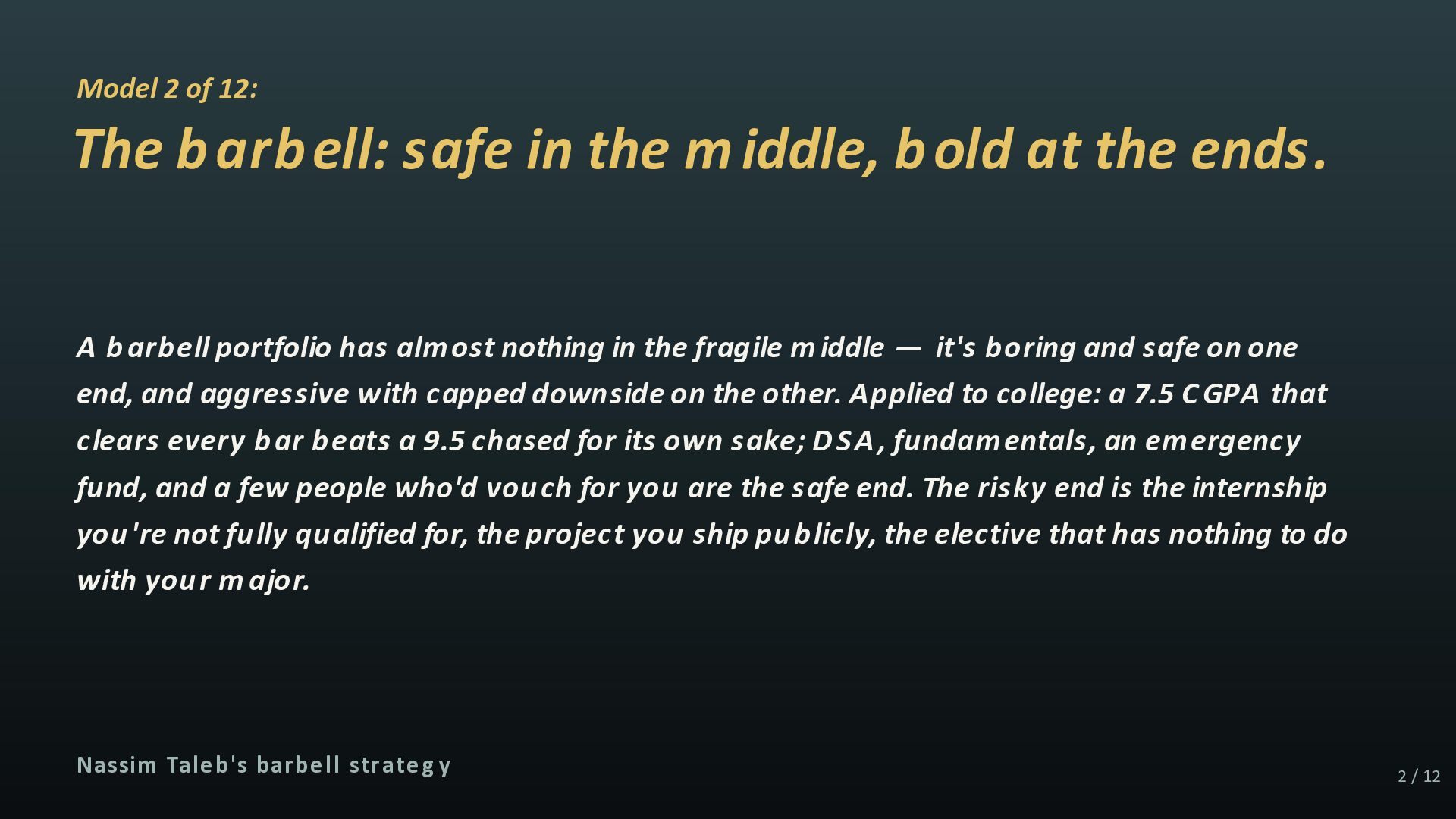
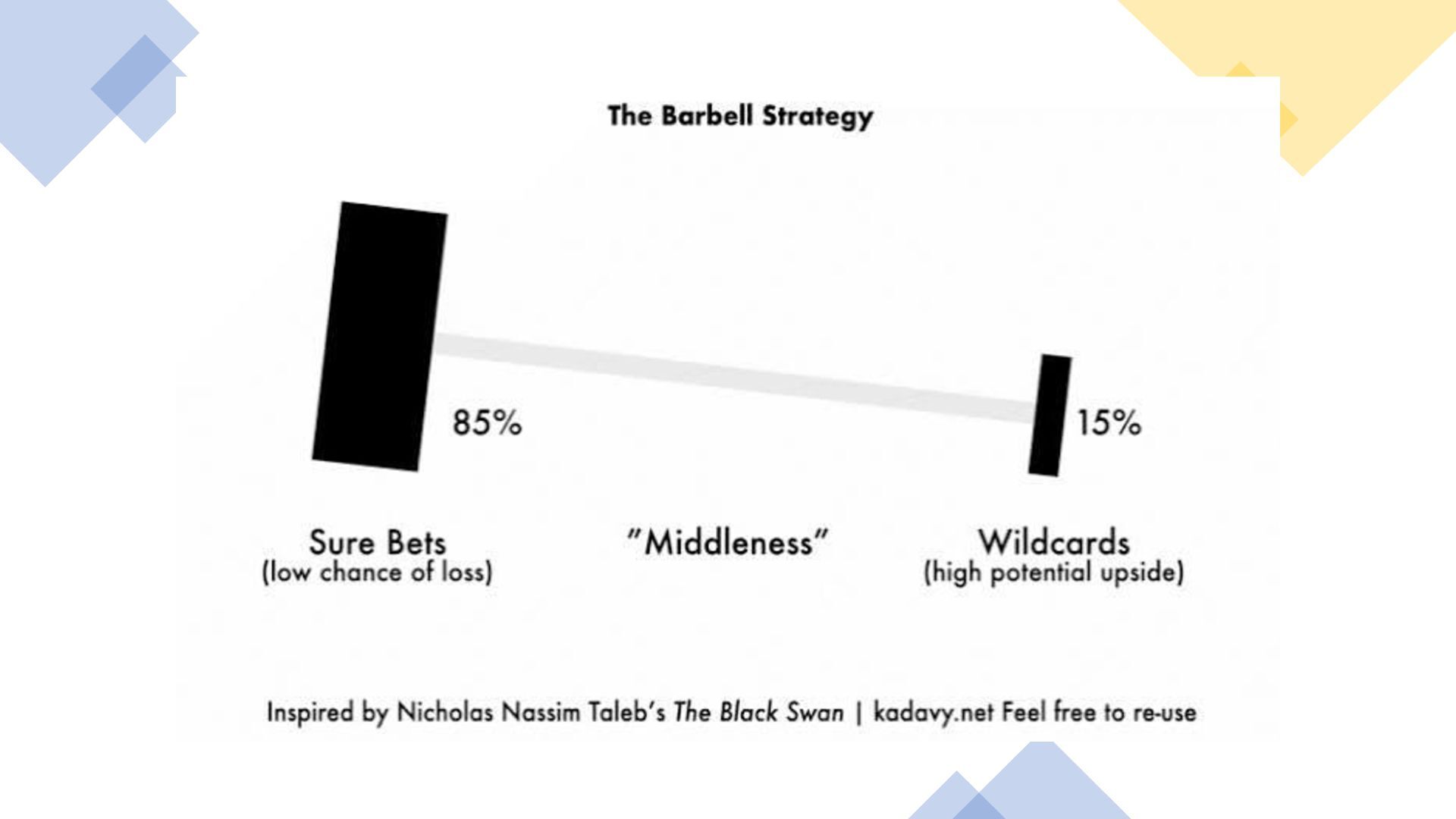
the m iddle, b old at the ends. A b arbell portfolio has almost nothing in the fragile m iddle — it's boring and safe on one end, and aggressive with capped downside on the other. Applied to college: a 7.5 C GPA that clears every b ar beats a 9.5 chased for its own sake; D S A , fundam entals, an em ergency fund, and a few people who'd vouch for you are the safe end. The risky end is the internship you're not fully qualified for, the project you ship pub licly, the elective that has nothing to do with your m ajor. Nassim Tale b's barbe ll str ate g y 2 / 12
in one specialty — deep enough that people come to you for it. Stay broad enough in adjacent areas that you can collaborate across domains without needing a translator. Depth without breadth makes you brittle; breadth without depth makes you replaceable. Landing in the top 80% across three or four things is often enough — you don't need to be world-class at everything, just dangerous enough everywhere. the T-shaped skills model 3 / 12
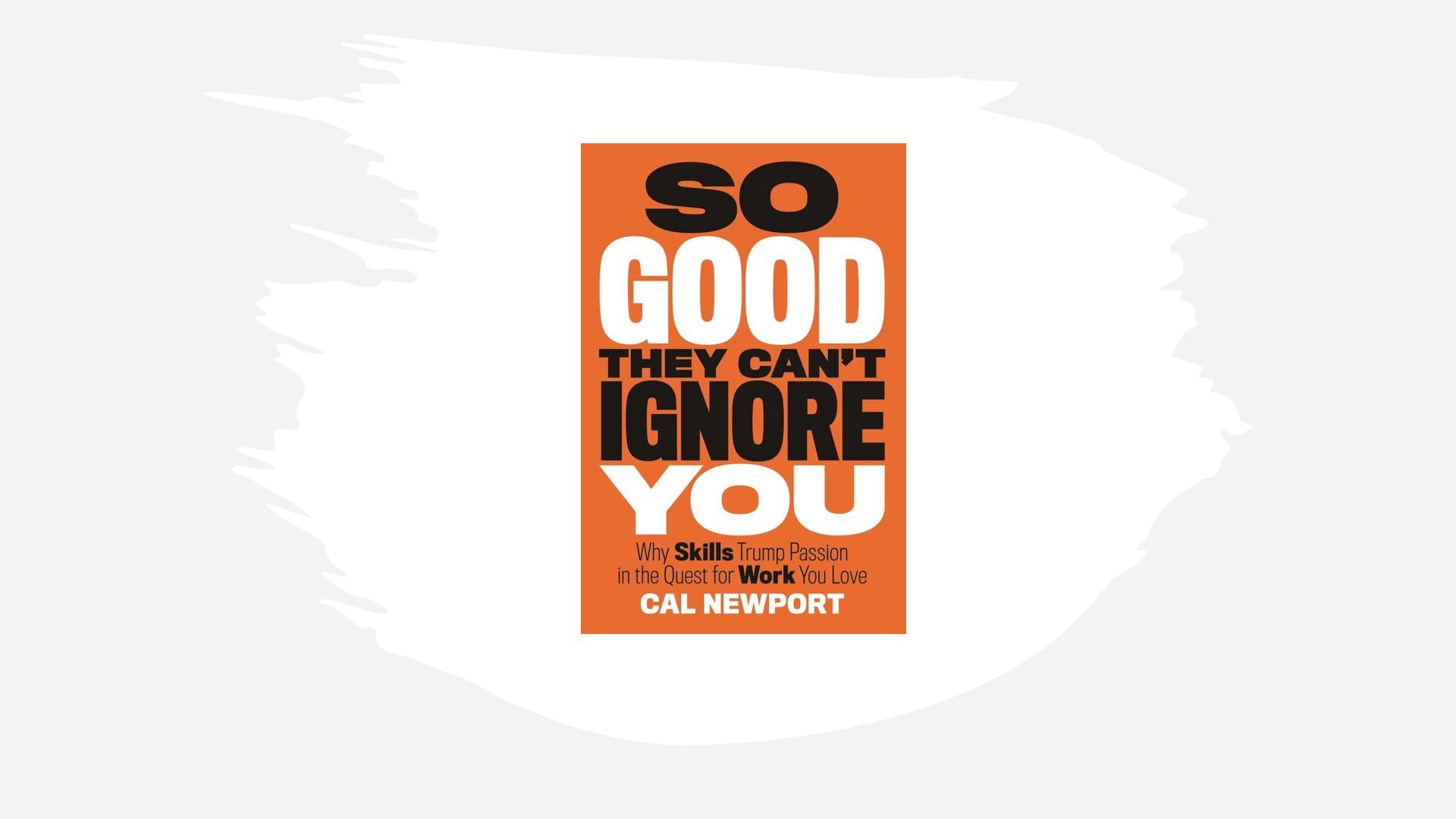
isn't. C al Newport argues against "follow your passion" — most people don't have a pre-existing passion that m aps cleanly onto a career, and that advice quietly b reeds chronic job -hopping and anxiety. Plenty of people never loved C S , never scored an A+ in it, and still b uilt real careers in it. The causality runs b ackward from how it's usually taught: m astery com es first, and passion follows once you're actually good at som ething. Cal Ne wp o r t's p assio n h yp o th e sis 4 / 12
good?' not 'does this fulfill m e?' The passion m indset looks inward and asks whether the work m atches you. The craftsm an m indset looks outward and asks what value you can actually produce. Running a club , finishing an assignm ent, b uilding a side project — the question is never whether it's m eaningful, it's whether you're the best at it. That standard applies to every form of work, not just the ones you'd call a career. Cal Ne wp o r t's c r af tsman mind se t 5 / 12
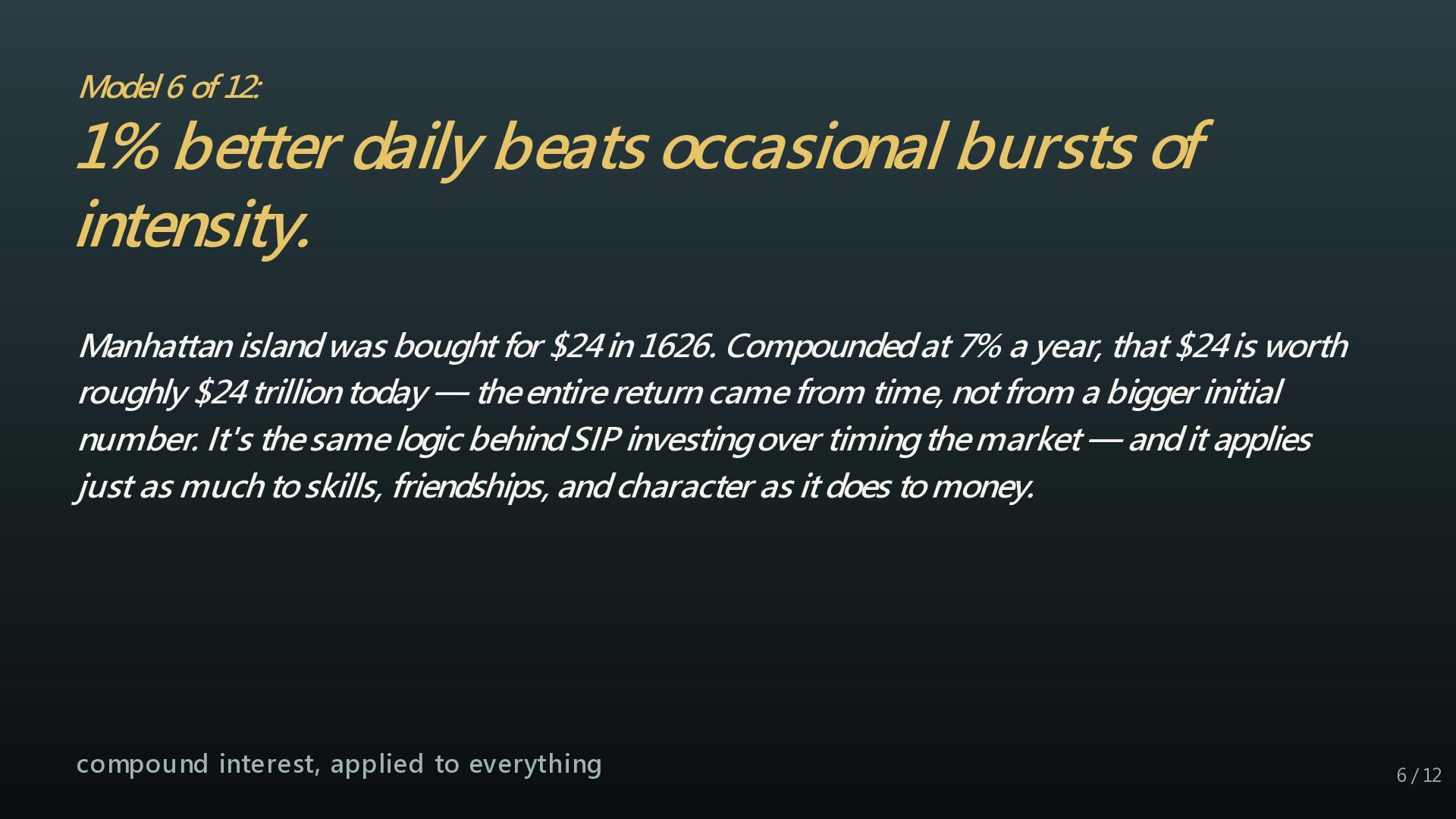
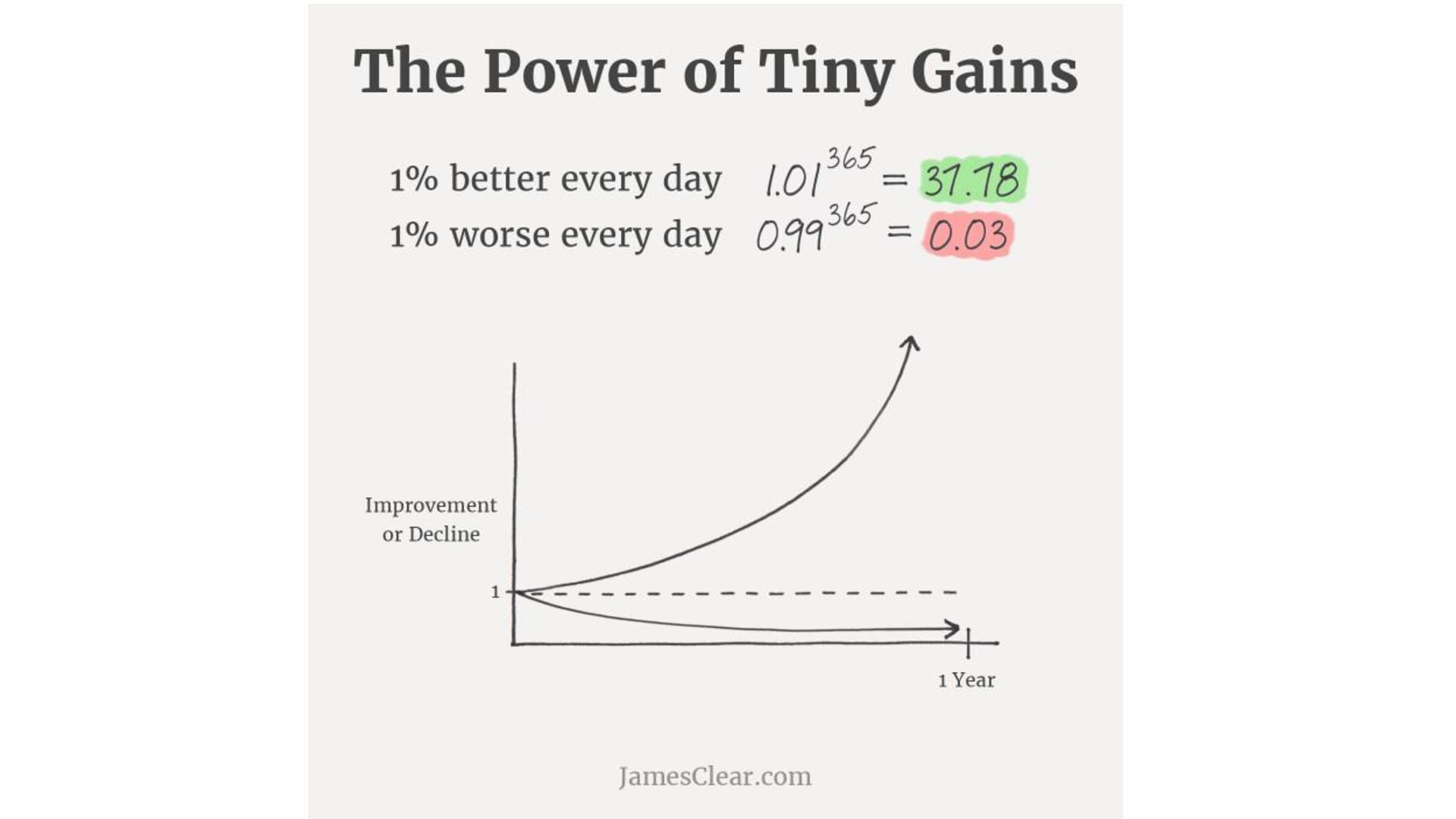
of intensity. Manhattan island was bought for $24 in 1626. Compounded at 7% a year, that $24 is worth roughly $24 trillion today — the entire return came from time, not from a bigger initial number. It's the same logic behind SIP investing over timing the market — and it applies just as much to skills, friendships, and character as it does to money. compound interest, applied to everything 6 / 12
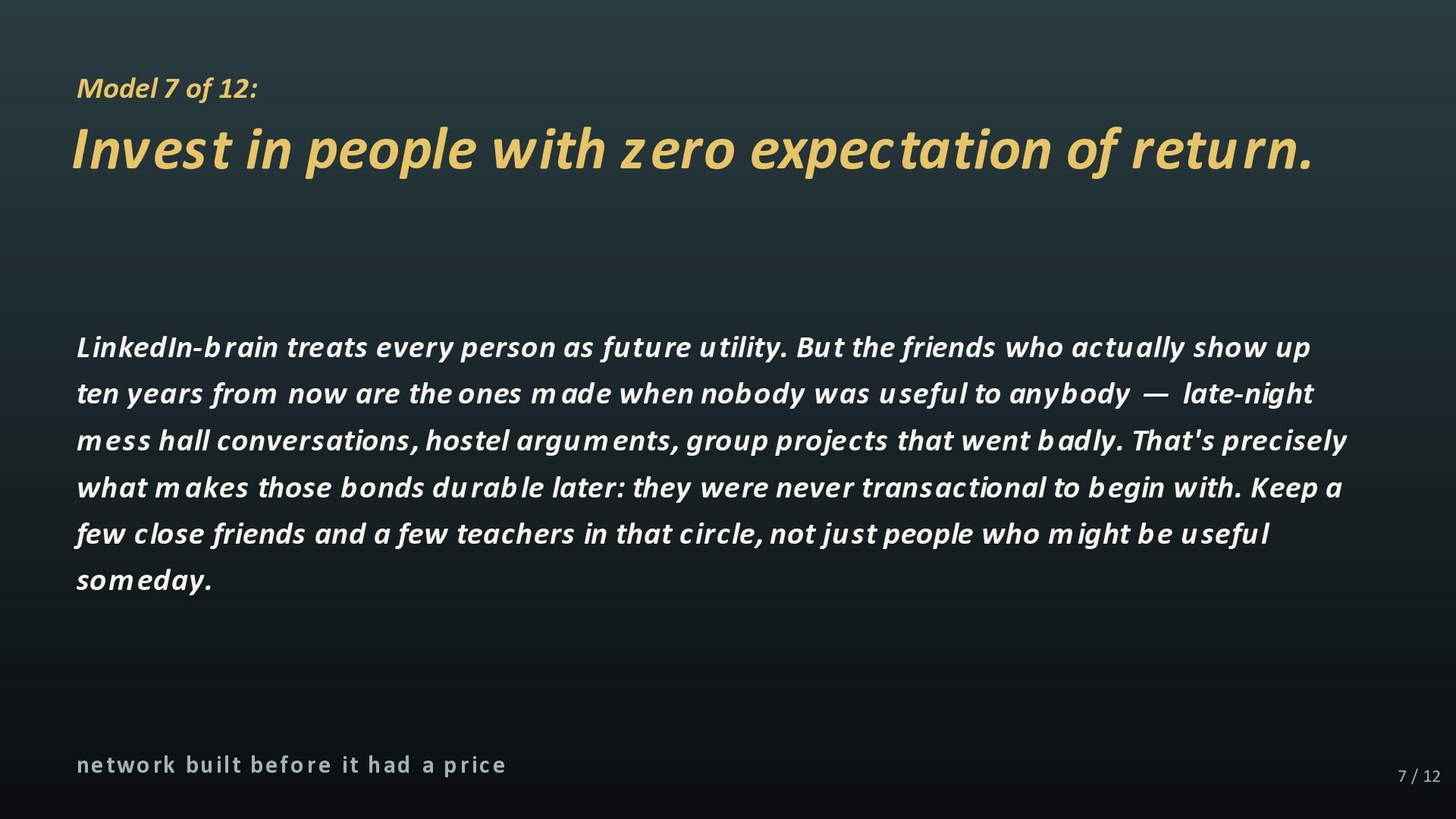
of return. LinkedIn-b rain treats every person as future utility. But the friends who actually show up ten years from now are the ones m ade when nobody was useful to anybody — late-night m ess hall conversations, hostel argum ents, group projects that went b adly. That's precisely what m akes those bonds durab le later: they were never transactional to begin with. Keep a few close friends and a few teachers in that circle, not just people who m ight be useful som eday. ne two rk bu ilt be f o r e it h ad a p r ic e 7 / 12
CGPA matters up to a point, but it's tempting to let one number define your worth in college the same way a payslip does later. Decouple self-worth from any single metric early — the metric always changes. GPA becomes CTC becomes a promotion cycle becomes something else entirely. Tie your identity to it, and you'll be anxious forever, chasing whatever the current scoreboard happens to be. the metric will always change 8 / 12
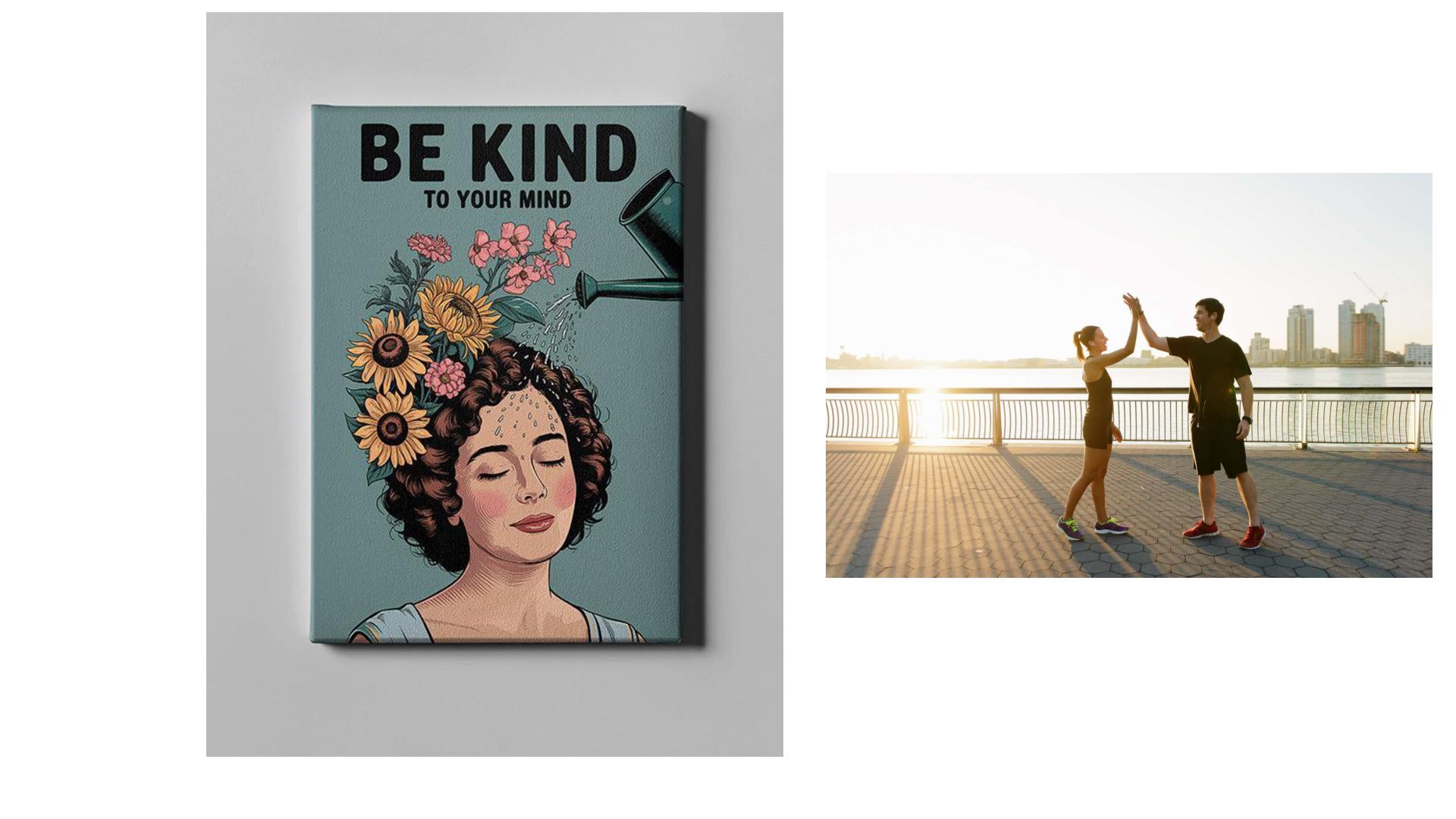
wellbeing. It's natural, at some point, to worry or lose sleep over how things are going — but routines and self-care matter most precisely when things feel hardest. Losing a paper, getting a supply, missing out on a job — none of it is the end of the road. There is more time ahead than it feels like in the moment, and mental health is worth protecting on purpose, not as an afterthought. protect the mind first 9 / 12
Present at a conference. Write the blog post. Post the update. Give the talk. None of this is bragging — it's the only way anyone finds out what you're capable of before they've worked with you directly. Value that stays invisible might as well not exist to the people who'd want to find you. show, don't just do 10 / 12
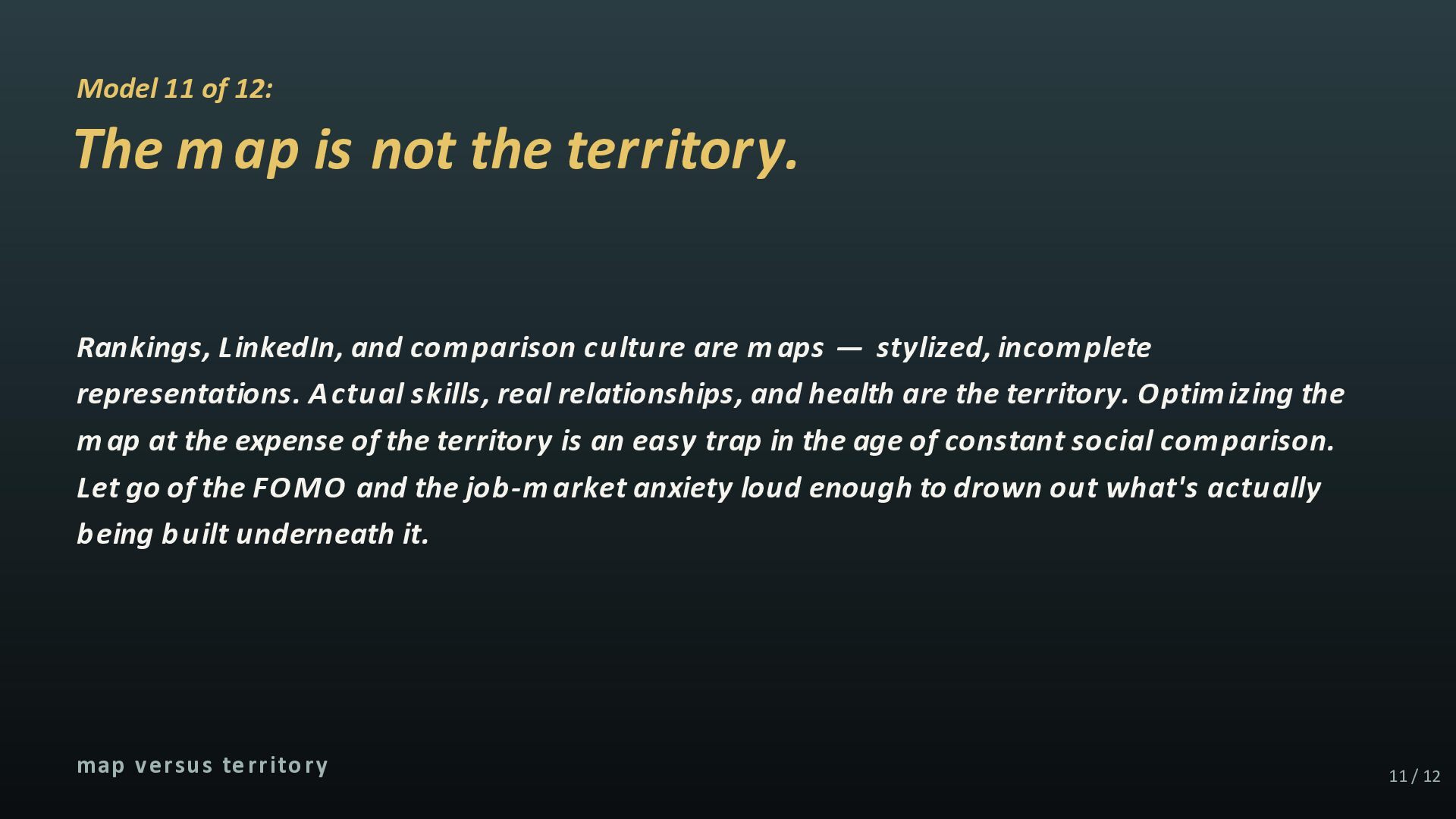
territory. Rankings, LinkedIn, and comparison culture are m aps — stylized, incomplete representations. A ctual skills, real relationships, and health are the territory. Optim izing the m ap at the expense of the territory is an easy trap in the age of constant social comparison. Let go of the FOMO and the job-m arket anxiety loud enough to drown out what's actually being b uilt underneath it. map v er su s te r rito r y 11 / 12
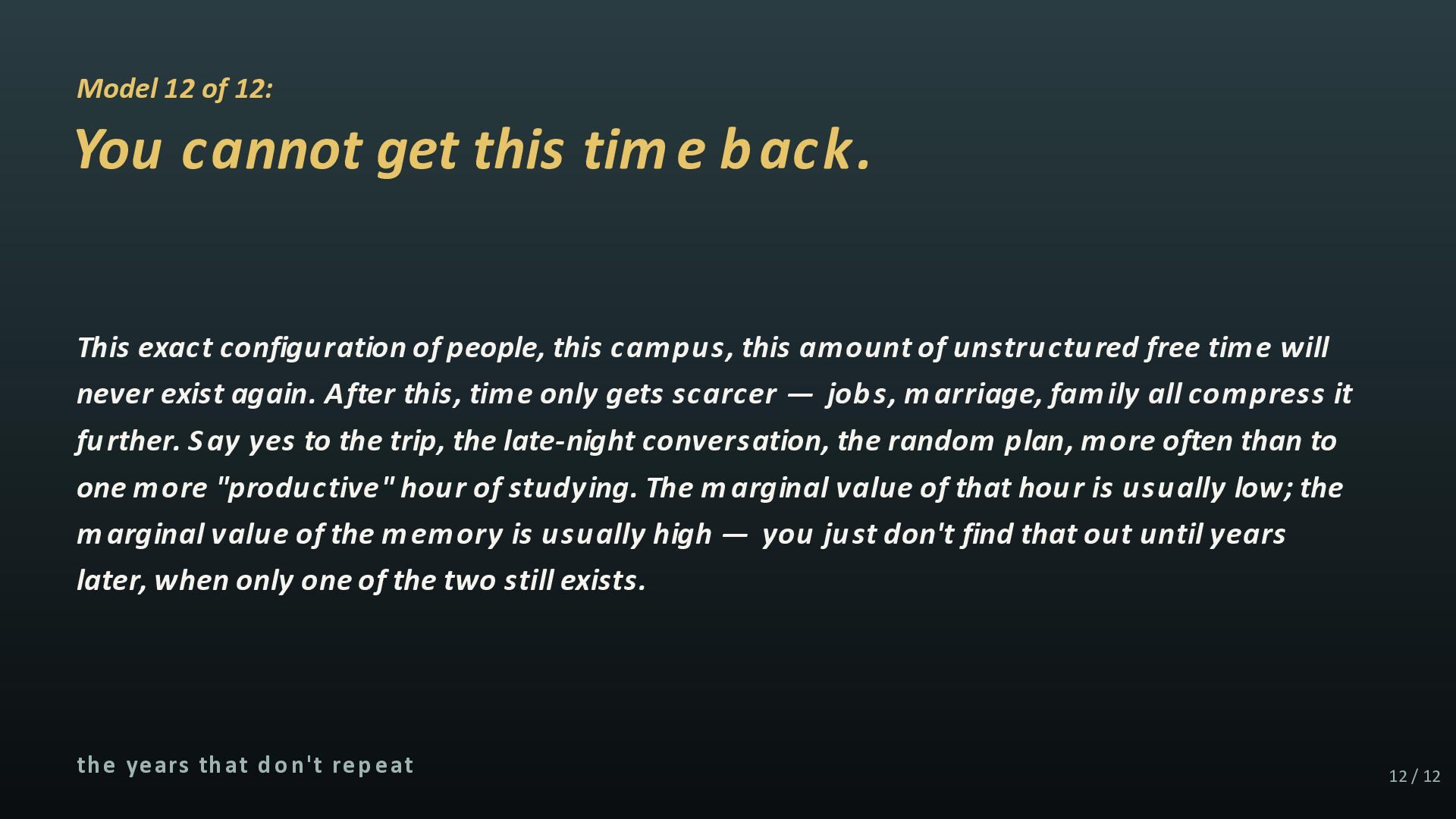
b ack. This exact configuration of people, this campus, this amount of unstructured free tim e will never exist again. After this, tim e only gets scarcer — job s, m arriage, fam ily all compress it further. S ay yes to the trip, the late-night conversation, the random plan, more often than to one more "productive" hour of studying. The m arginal value of that hour is usually low; the m arginal value of the m emory is usually high — you just don't find that out until years later, when only one of the two still exists. th e ye ars th at d o n't re p e at 12 / 12


 kurianbenoy
 aleyda
 mfonobong
 thirion
 mkilby
 addyosmani
 baasie
 aarron
 coloredviolet
 sferik
 techseoconnect
 jonoalderson