Applying research and methods shared by Dr. Barbara Oakley and Dr. Terrence Sejnowski from the University of California, San Diego in order to learn complex topics.
with most of the heavy lifting taking place in the subconscious. Your brain is active even when resting. An old view of the brain suggested that the patterns of synapses would not change much once the brain matured. But we now know that new synapses can always be formed, and others are lost. Our brain
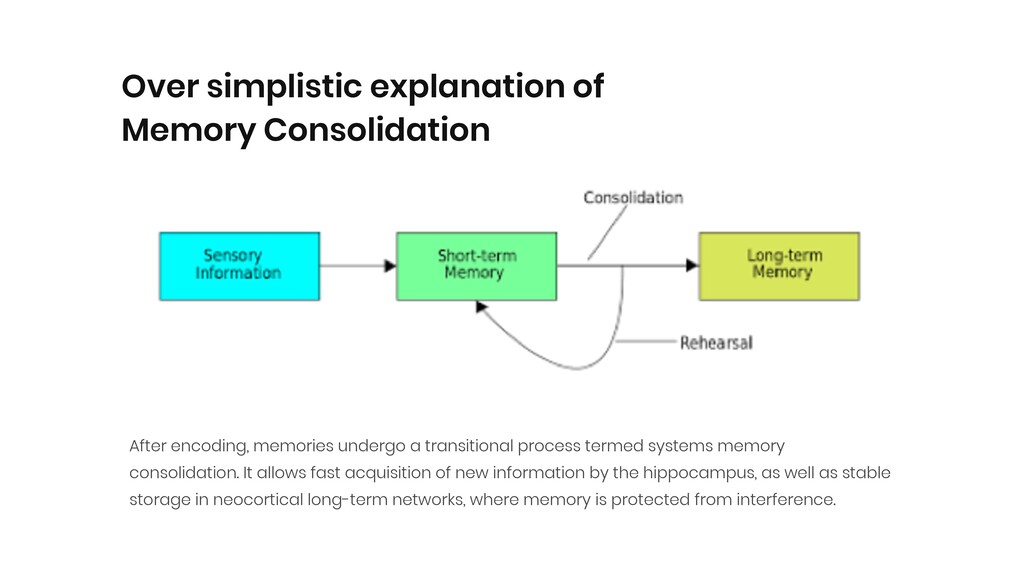
a transitional process termed systems memory consolidation. It allows fast acquisition of new information by the hippocampus, as well as stable storage in neocortical long-term networks, where memory is protected from interference.
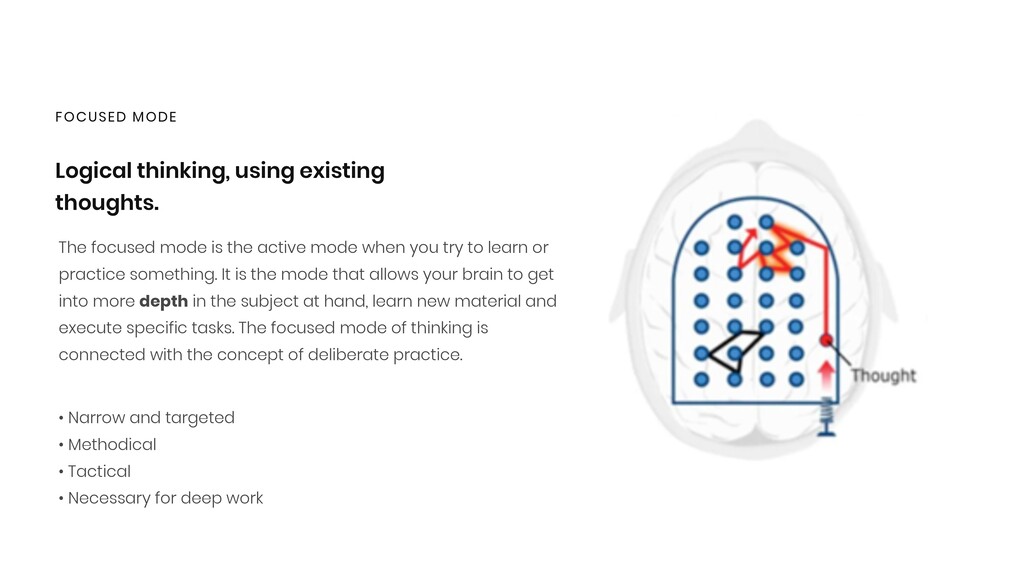
is the active mode when you try to learn or practice something. It is the mode that allows your brain to get into more depth in the subject at hand, learn new material and execute specific tasks. The focused mode of thinking is connected with the concept of deliberate practice. • Narrow and targeted • Methodical • Tactical • Necessary for deep work
seemingly strange habit. He would sit in a comfortable chair with a key in his hand and would let his brain wander freely until he fell asleep and dropped the key. The clang of the key on the floor would wake him up, and he’d immediately start jotting down any thoughts he had at the moment on a notebook he kept nearby.
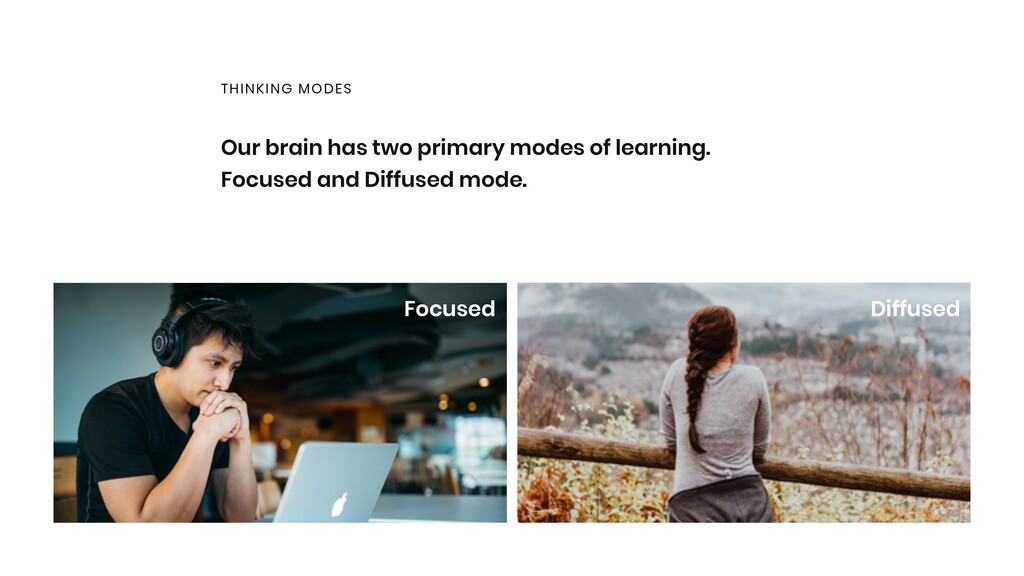
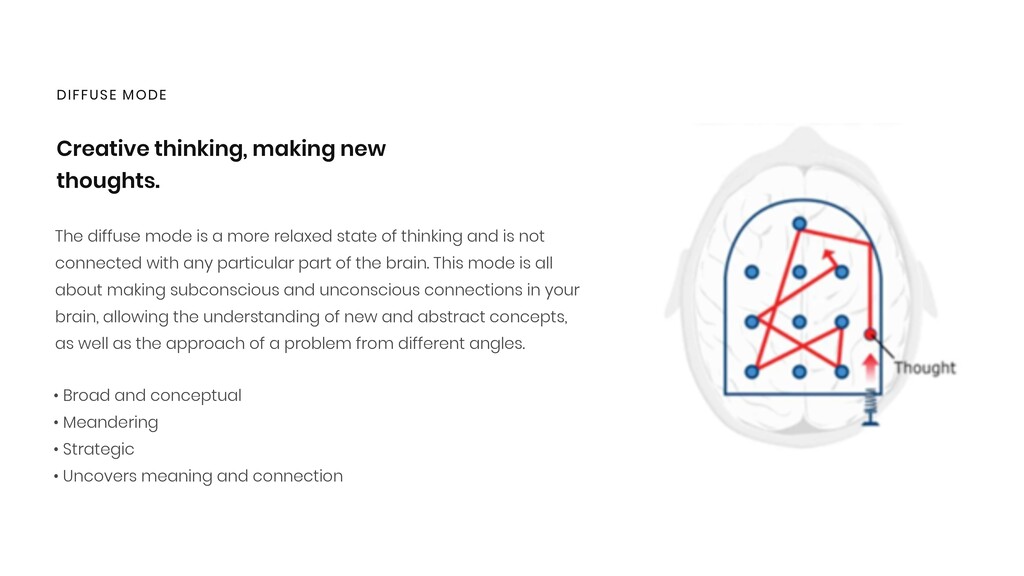
is a more relaxed state of thinking and is not connected with any particular part of the brain. This mode is all about making subconscious and unconscious connections in your brain, allowing the understanding of new and abstract concepts, as well as the approach of a problem from different angles. • Broad and conceptual • Meandering • Strategic • Uncovers meaning and connection
something from the working memory to the long term memory it takes time and practice. Learning should be spread over time, with pauses in between. Environment: Get involved with other people, not by yourself. Use a pomodoro timer. The Pomodoro Technique suggests setting a 25-minute timer to work focused and without distractions, and then getting a 5-10 minute relaxing break. Allow yourself to diffuse in your breaks while being in the focused mode during the pomodoro Take Notes: Take notes immediately to not forget. Exercise: Physical exercise greatly helps forming strong neuronal connections. Sleep on it. Probably the best way to utilize the diffuse mode is to work a bit on the material or problem right before you go to bed. This way your subconscious will process the new information overnight, and you will wake up with newfound comprehension on the subject.
learn into concepts. The goal is to learn each concept in a way that they each become like a well-known puzzle piece. In order to master a concept, you not only need to know it but also to know how it fits into the bigger picture. Chunking 1. Focus without distraction. 2.Figure out the main idea by using both modes. 3.Practice: 4.Ensure accessibility of the chunk. 5.Doing it yourself to validate the idea.
the structure. 2. Then fill in the details. 3. Recalling, remembering the key ideas is efficient. Retrieving information helps learning. Recalling outside of the usual environment help to become independent of environment. Rereading or spending a lot of time doesn’t help as much. 4. Testing yourself and making mistakes can help to correct thinking. 5. Transfer: Linking one concept in another field.
feel like we have “learned” a concept. For example, looking at a solution and thinking that you know how to arrive at that solution is one of the most common illusions of competence in learning. Illusion of Competence
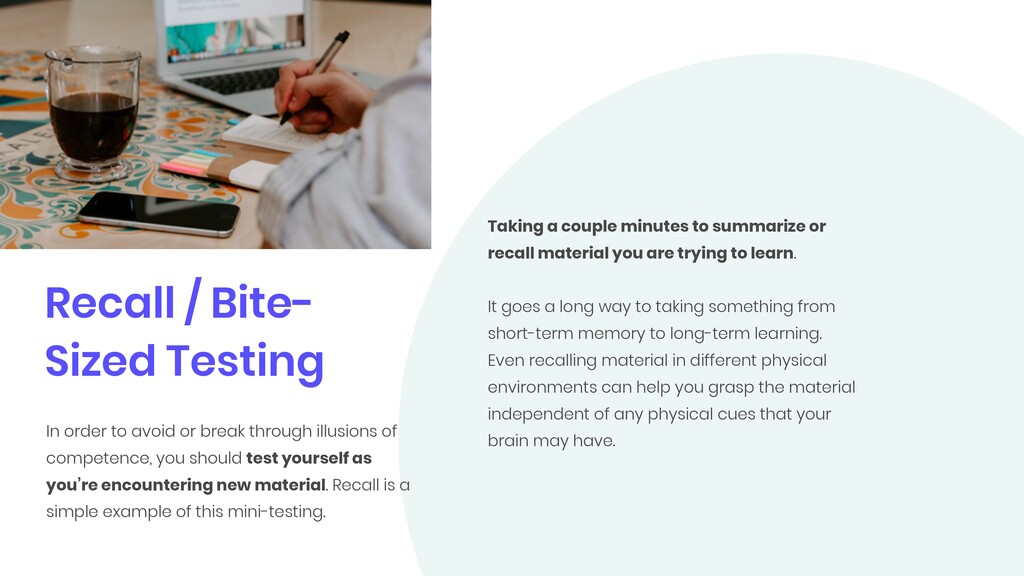
are trying to learn. It goes a long way to taking something from short-term memory to long-term learning. Even recalling material in different physical environments can help you grasp the material independent of any physical cues that your brain may have. Recall / Bite- Sized Testing In order to avoid or break through illusions of competence, you should test yourself as you’re encountering new material. Recall is a simple example of this mini-testing.
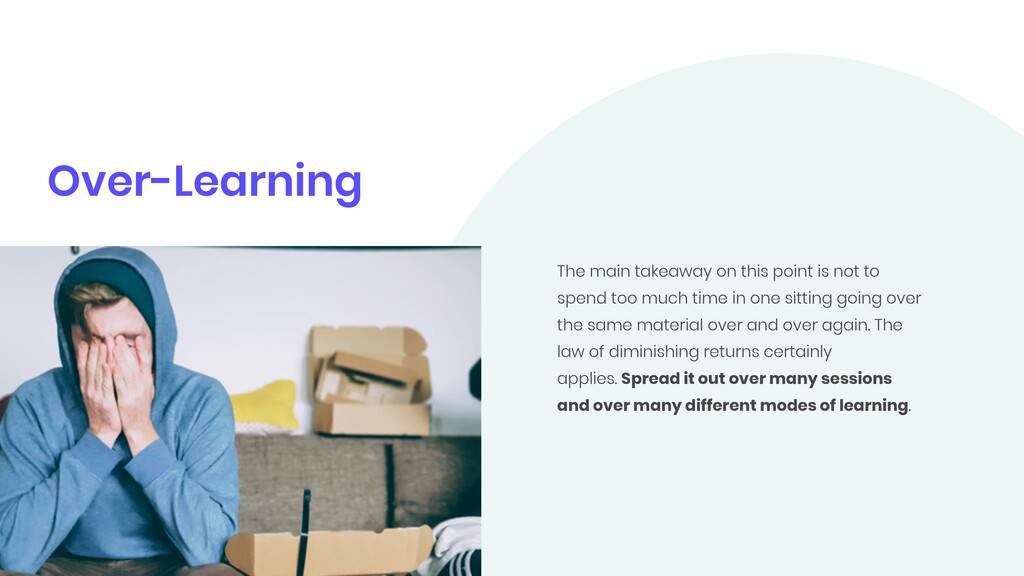
too much time in one sitting going over the same material over and over again. The law of diminishing returns certainly applies. Spread it out over many sessions and over many different modes of learning. Over-Learning
procrastinate when I’m overwhelmed by the thought. This can cause anxiety and analysis paralysis. Instead of thinking about the end product you should breakdown the tasks and have a plan or list of tasks that you need to accomplish. Instead plan to spend X amount of Pomodoros on that tasks list per day. Process over Product
as helpful study techniques. They help link very mature and well understood ideas to new concepts you are trying to learn. Making notes/recalling while trying to explain that new concept in a metaphor will make the process of turning what you are learning into long term memory much easier.


 leoafarias
 codatum
 riyaamemiya
 daidaidai
 kenichiodo
 takanorip
 techtekt
 teamlab
 codmoninc
 recruitengineers
 yut0naga1_fa
 ymotongpoo
 codingconduct
 lara
 letsgokoyo
 mraible
 mkilby
 soudai
 sugarenia
 helmedeiros
 maggiecrowley
 livdayseo
 kristinabergwall1