Share
Embed
LINE Research on speech source separation with deep learning
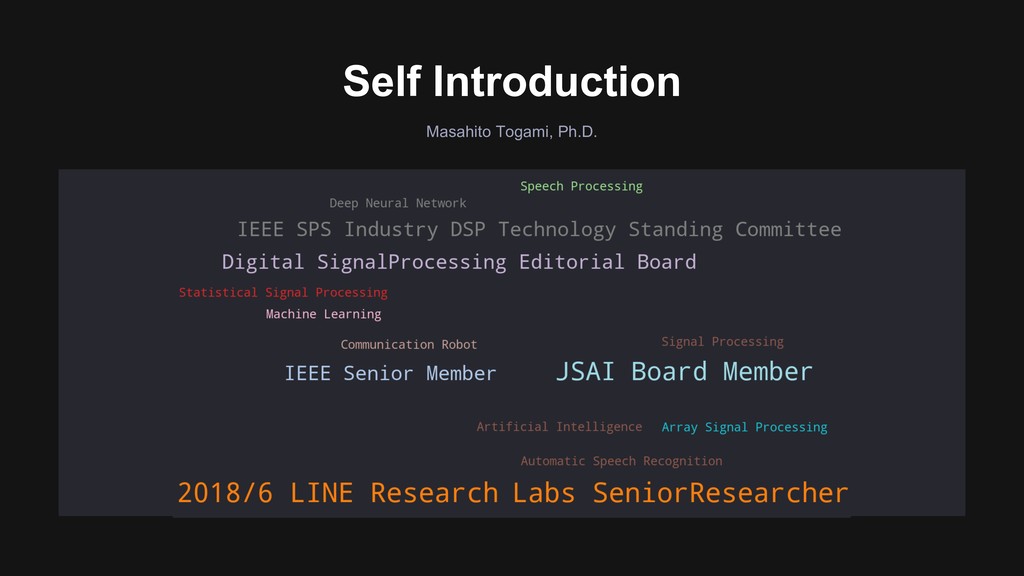
Masahito Togami
LINE Research Labs Senior Researcher
https://linedevday.linecorp.com/jp/2019/sessions/F1-5
LINE DevDay 2019
November 20, 2019
Transcript
59 slides
-
2019 DevDay LINE Research on Speech Source Separation With Deep
Learning > Masahito Togami > LINE Research Labs Senior Researcher -
LINE Research Labs (April 2018-) > Collaboration with National Institute
of Informatics (NII)/ Center for Robust Intelligence and Social Technology (CRIS) > Submitting papers for major international conferences (3 ICASSP2019, 3 INTERSPEECH2019, 1 WASPAA2019, 1 BigData2019, 1 SIGIR2019). > Objective is to proceed fundamental research which will contribute to future LINE business -
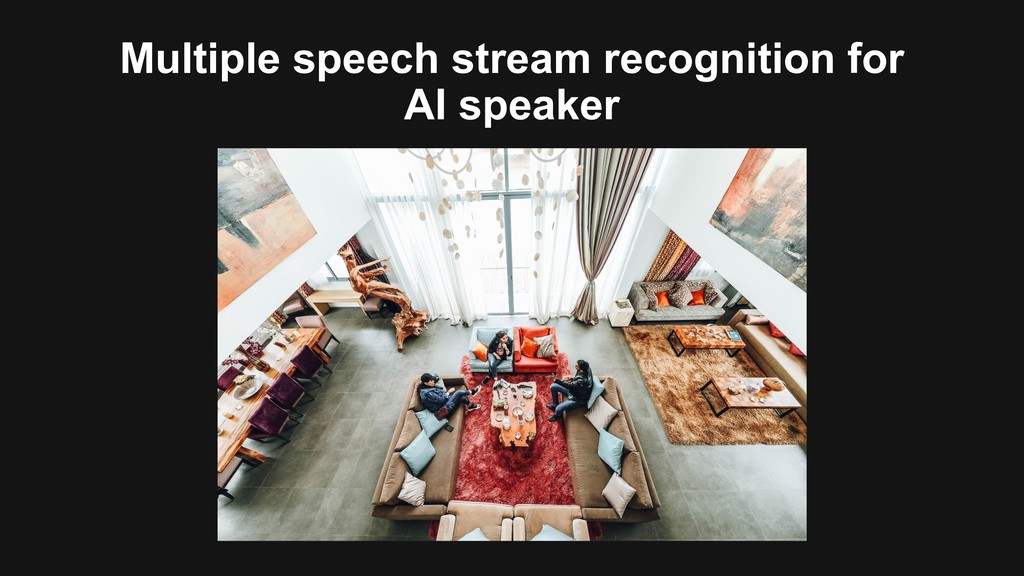
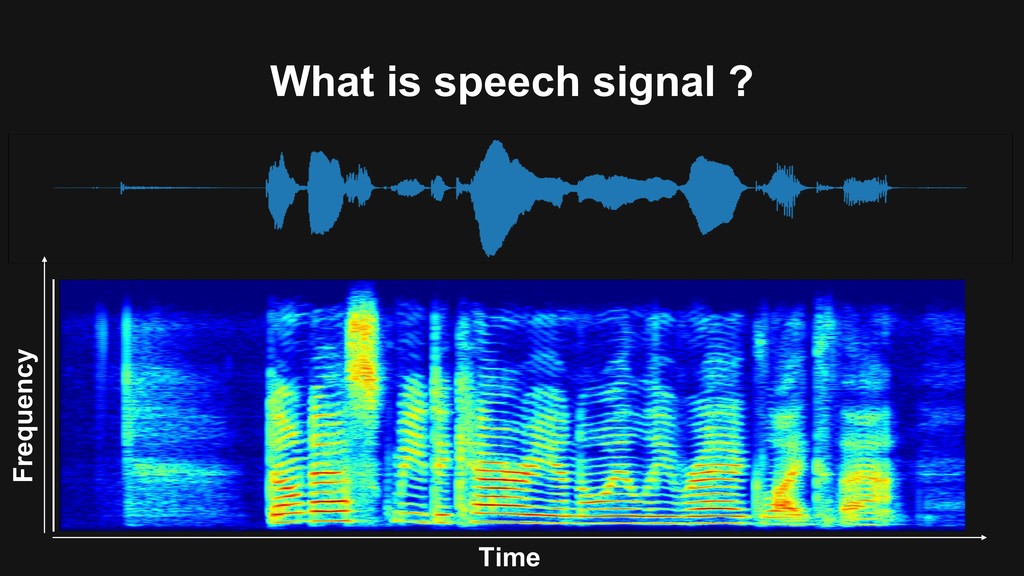
> What is speech source separation ? > Speech source
separation with statistical modeling > Speech source separation with deep neural network > LINE’s research on deeply integrated approach Agenda -
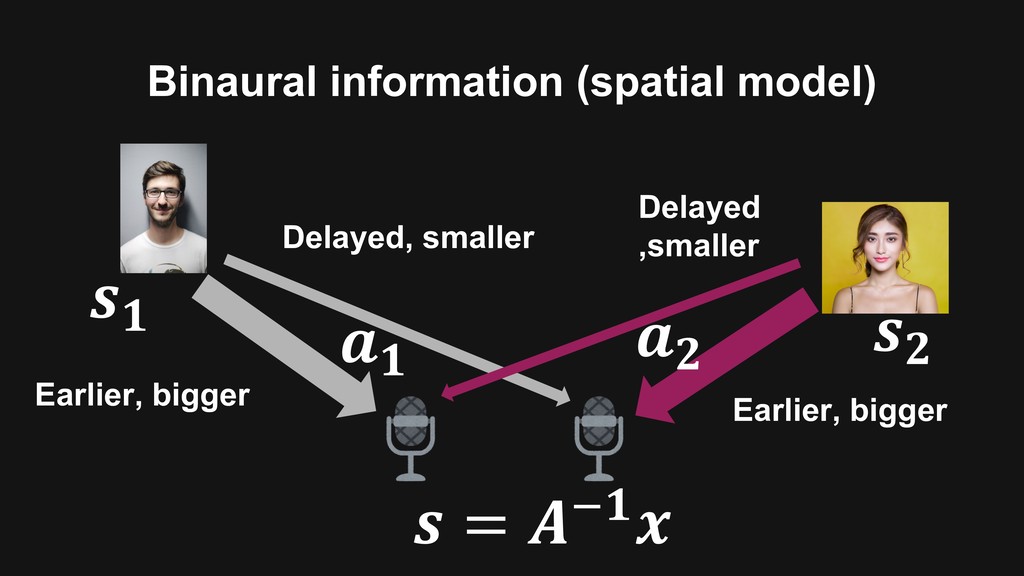
Binaural information (spatial model) Earlier, bigger Earlier, bigger Delayed, smaller
Delayed ,smaller ! = #$ %& $& $' %' $ = #(&! -
! = #$%& Binaural information (spatial model) Earlier, bigger Earlier,
bigger Delayed, smaller Delayed ,smaller '% !% !( '( -
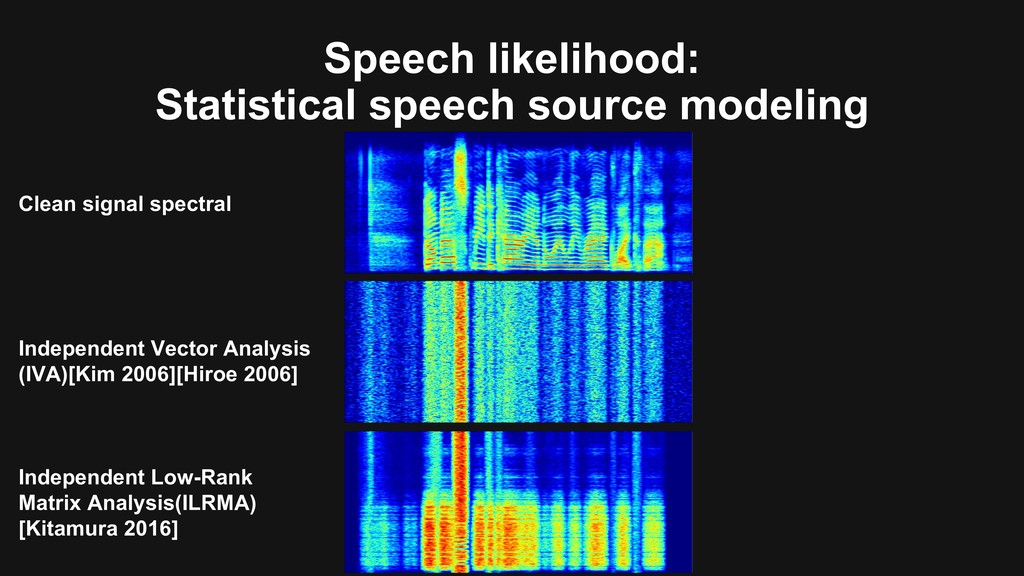
Speech likelihood: Statistical speech source modeling Independent Vector Analysis (IVA)[Kim
2006][Hiroe 2006] Independent Low-Rank Matrix Analysis(ILRMA) [Kitamura 2016] Clean signal spectral -
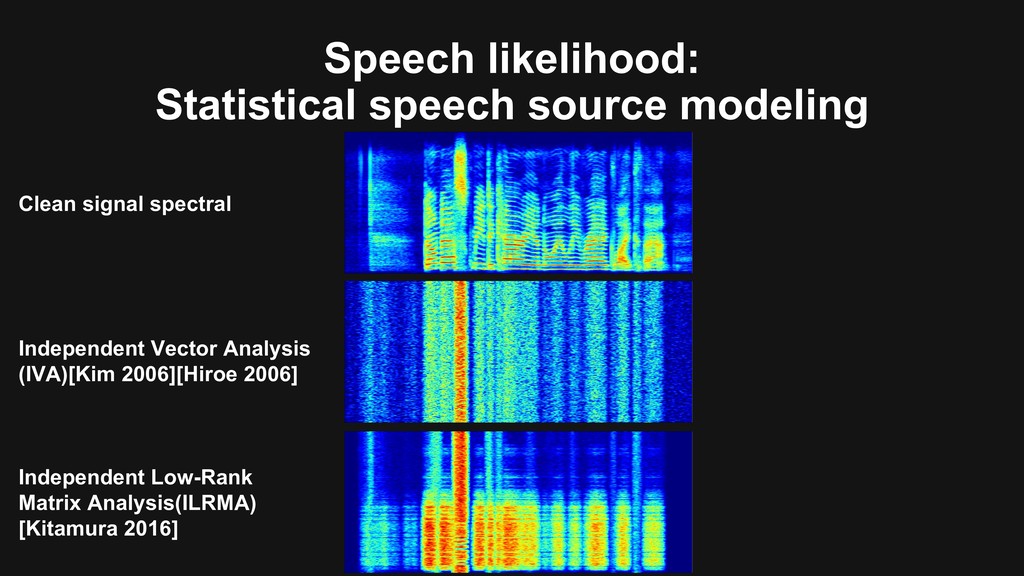
Speech likelihood: Statistical speech source modeling Independent Vector Analysis (IVA)[Kim
2006][Hiroe 2006] Independent Low-Rank Matrix Analysis(ILRMA) [Kitamura 2016] Clean signal spectral -
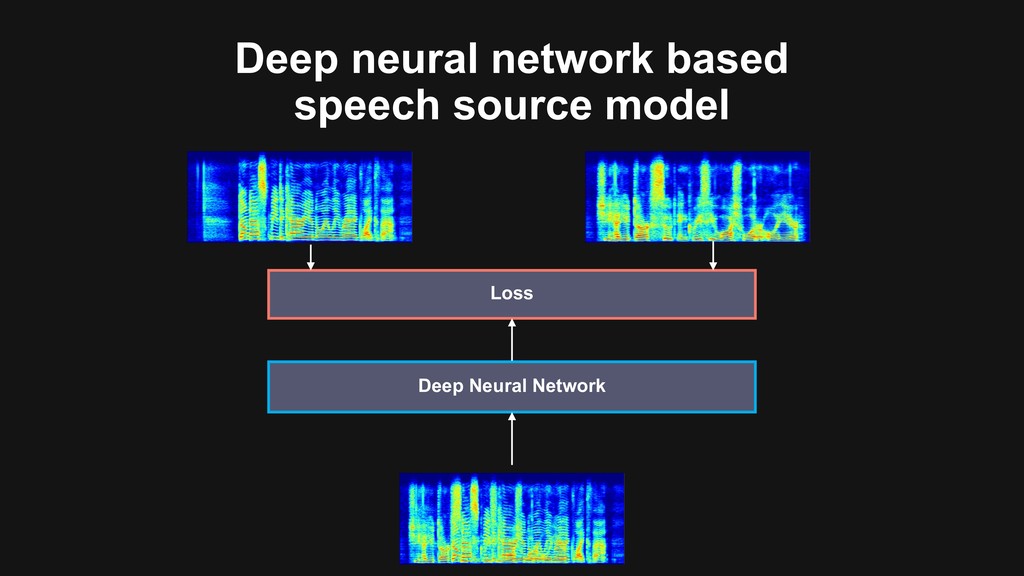
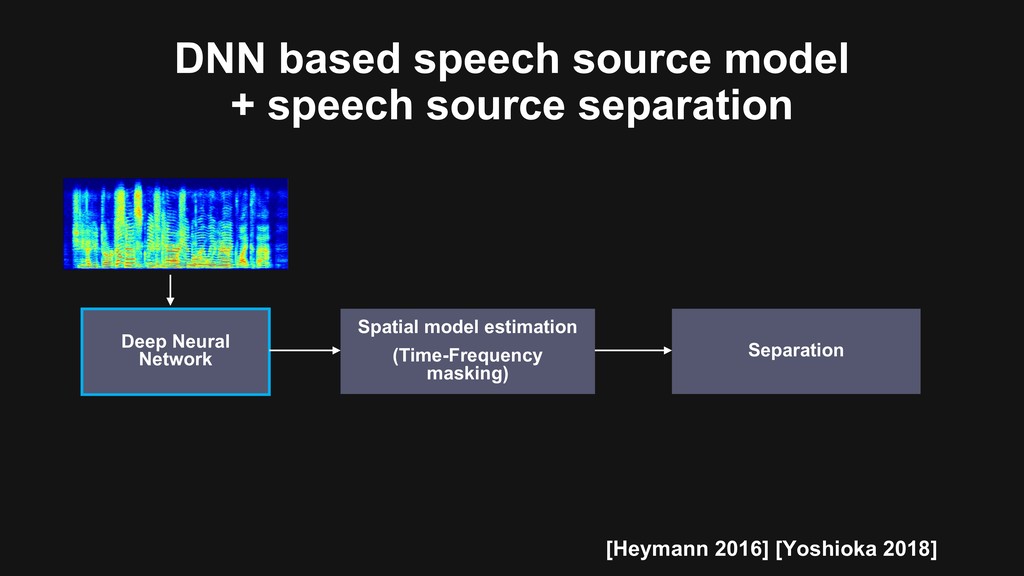
Deep Neural Network DNN based speech source model + speech
source separation Spatial model estimation (Time-Frequency masking) [Heymann 2016] [Yoshioka 2018] Separation -
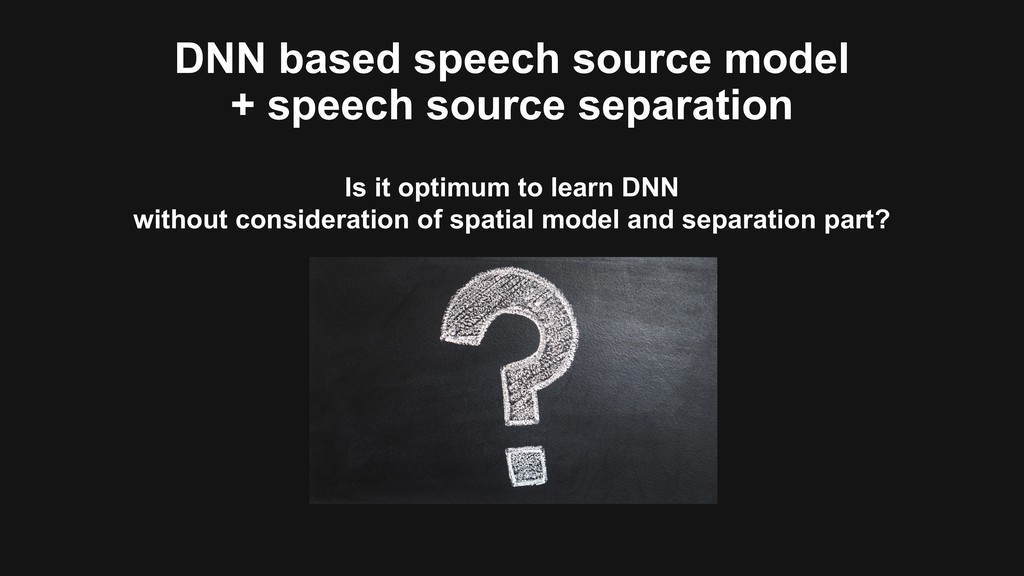
DNN based speech source model + speech source separation Is
it optimum to learn DNN without consideration of spatial model and separation part? -
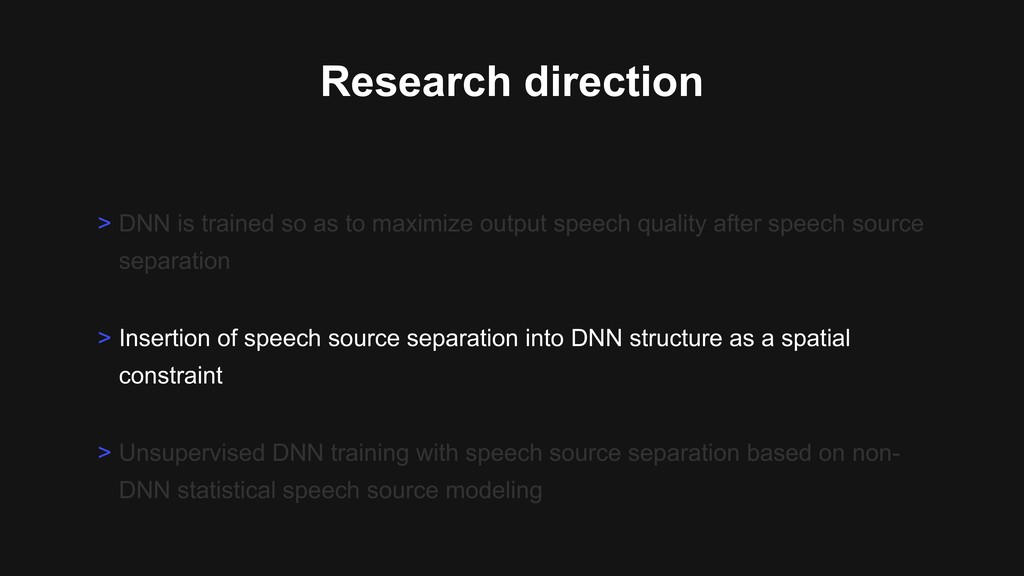
Research direction > Insertion of speech source separation into DNN
structure as a spatial constraint > Unsupervised DNN training with speech source separation based on non- DNN statistical speech source modeling > DNN is trained so as to maximize output speech quality after speech source separation -
Research direction > Insertion of speech source separation into DNN
structure as a spatial constraint > Unsupervised DNN training with speech source separation based on non- DNN statistical speech source modeling > DNN is trained so as to maximize output speech quality after speech source separation -
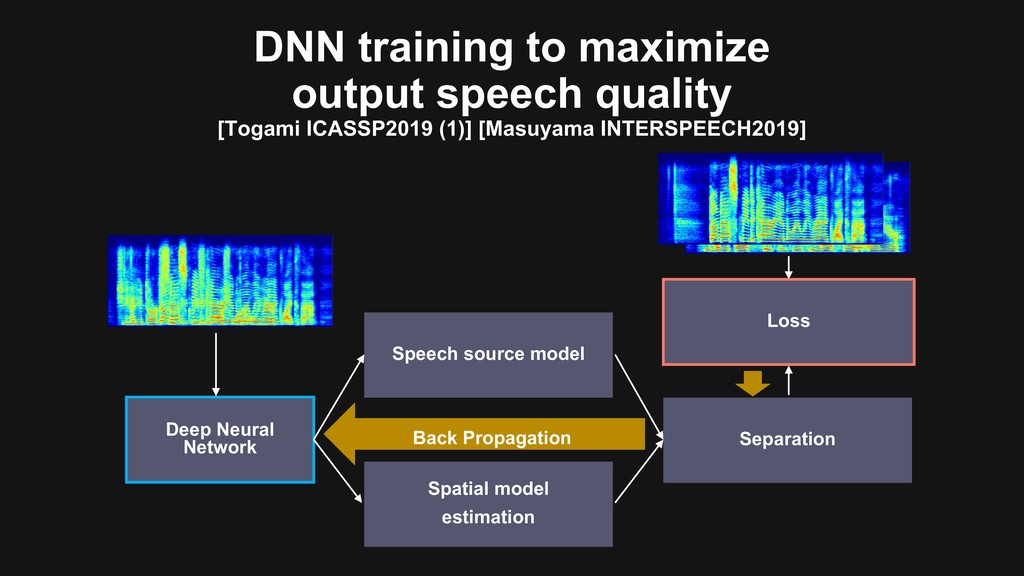
Deep Neural Network DNN training to maximize output speech quality
[Togami ICASSP2019 (1)] [Masuyama INTERSPEECH2019] Speech source model Spatial model estimation Back Propagation Loss Separation -
DNN training to maximize output speech quality [Togami ICASSP2019 (1)]
[Masuyama INTERSPEECH2019] Oracle clean signal ! Estimated speech signal " ! Loss = ! − " ! ( -
DNN training to maximize output speech quality [Togami ICASSP2019 (1)]
[Masuyama INTERSPEECH2019] Oracle clean signal ! Estimated speech signal " ! # $ Estimated variance Loss = ! − " ! * -
DNN training to maximize output speech quality [Togami ICASSP2019 (1)]
[Masuyama INTERSPEECH2019] Oracle clean signal ! Estimated speech signal " ! # $ Estimated variance Loss = ! − " ! *# $+, ! − " ! + log # $ -
DNN training to maximize output speech quality [Togami ICASSP2019 (1)]
SIR (dB) SDR (dB) L2 loss 11.99 9.46 Proposed loss 12.16 10.17 Speech source separation performance -
DNN training to maximize output speech quality [Masuyama INTERSPEECH2019] SIR
(dB) SDR (dB) Conventional DNN training (PSA) 6.21 5.79 Proposed 7.57 7.10 Spatial model estimation performance -
Research direction > Insertion of speech source separation into DNN
structure as a spatial constraint > Unsupervised DNN training with speech source separation based on non- DNN statistical speech source modeling > DNN is trained so as to maximize output speech quality after speech source separation -
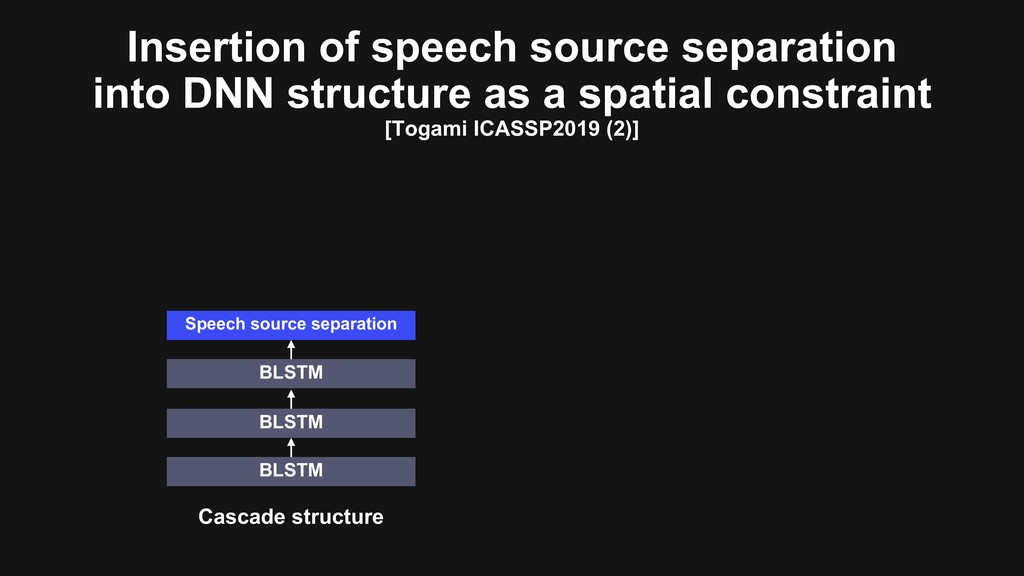
Insertion of speech source separation into DNN structure as a
spatial constraint [Togami ICASSP2019 (2)] BLSTM BLSTM BLSTM Speech source separation Cascade structure -
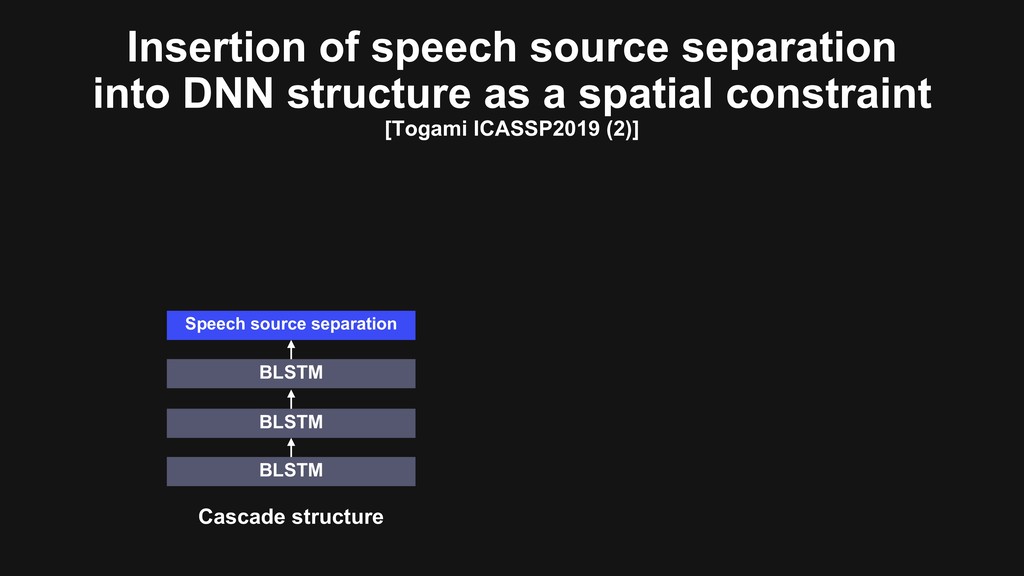
Insertion of speech source separation into DNN structure as a
spatial constraint [Togami ICASSP2019 (2)] BLSTM BLSTM BLSTM Speech source separation Cascade structure -
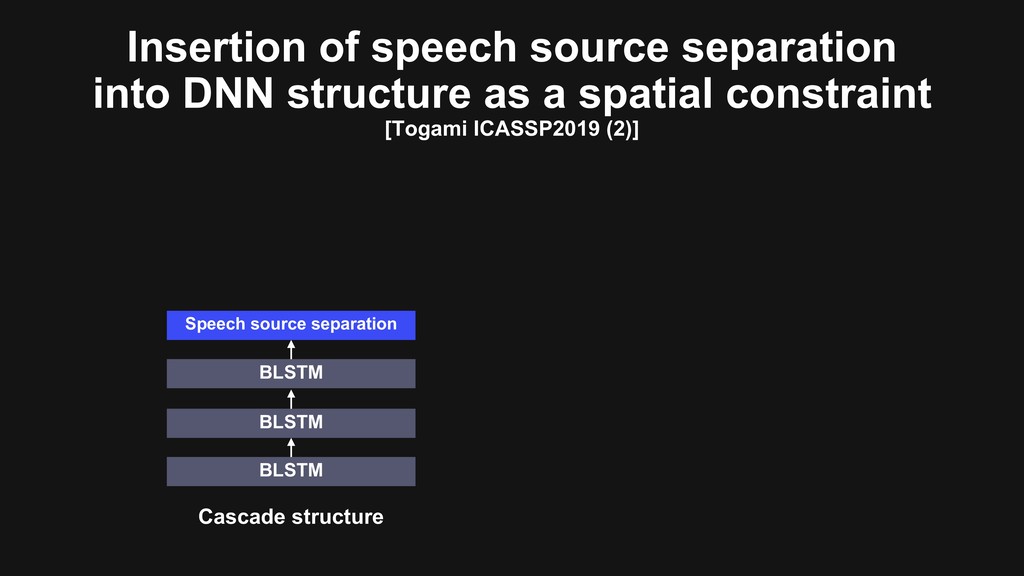
Insertion of speech source separation into DNN structure as a
spatial constraint [Togami ICASSP2019 (2)] BLSTM BLSTM BLSTM Speech source separation Cascade structure -
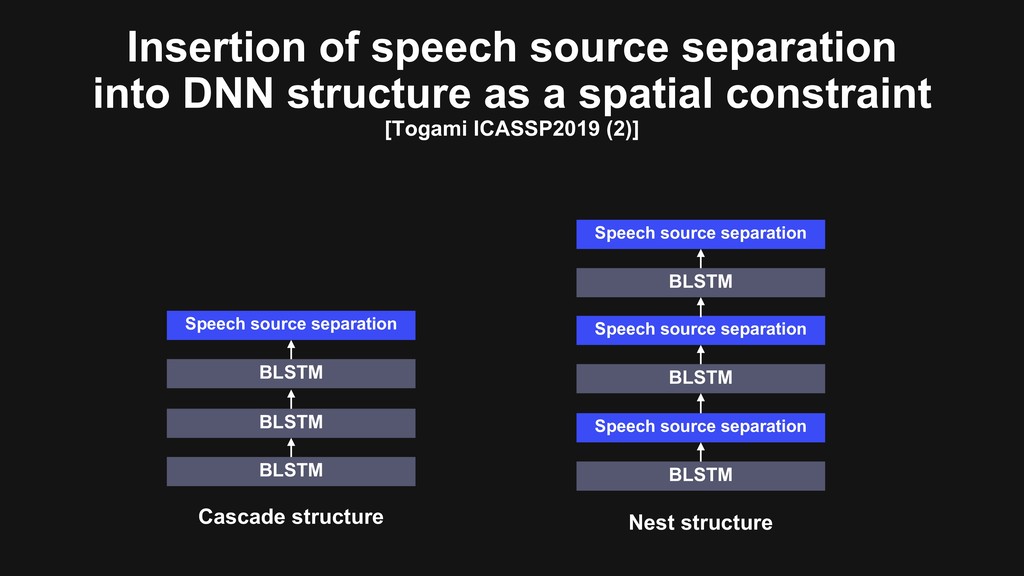
Insertion of speech source separation into DNN structure as a
spatial constraint [Togami ICASSP2019 (2)] BLSTM Speech source separation BLSTM Speech source separation BLSTM Speech source separation BLSTM BLSTM BLSTM Speech source separation Cascade structure Nest structure -
Insertion of speech source separation into DNN structure as a
spatial constraint [Togami ICASSP2019 (2)] BLSTM Speech source separation BLSTM Speech source separation BLSTM Speech source separation BLSTM BLSTM BLSTM Speech source separation Cascade structure Nest structure Back Propagation -
Insertion of speech source separation into DNN structure as a
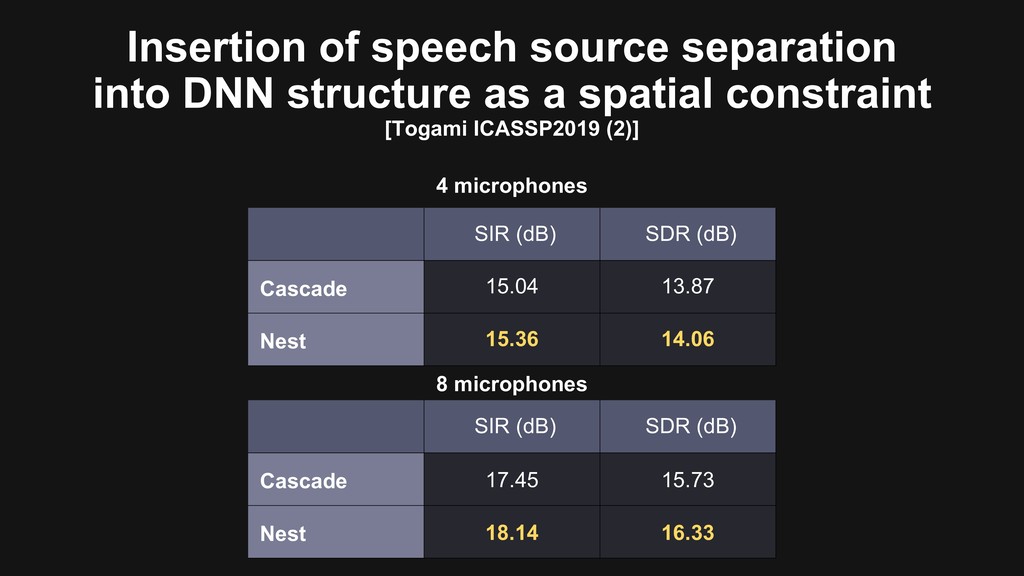
spatial constraint [Togami ICASSP2019 (2)] SIR (dB) SDR (dB) Cascade 15.04 13.87 Nest 15.36 14.06 4 microphones SIR (dB) SDR (dB) Cascade 17.45 15.73 Nest 18.14 16.33 8 microphones -
Research direction > Insertion of speech source separation into DNN
structure as a spatial constraint > Unsupervised DNN training with speech source separation based on non- DNN statistical speech source modeling > DNN is trained so as to maximize output speech quality after speech source separation -
Unsupervised DNN training [Togami arxiv2019] It is hard to obtain
oracle clean signal ! -
Unsupervised DNN training [Togami arxiv2019] It is hard to obtain
oracle clean signal ! -
Deep Neural Network Unsupervised DNN training [Togami arxiv2019] Speech source
model Spatial model estimation Separated signal and estimated variance Non-DNN speech source separation Separated signal and estimated variance Loss Non-DNN speech source separation is utilized as a pseudo clean signal generator ! Back Propagation -
Deep Neural Network Unsupervised DNN training [Togami arxiv2019] Speech source
model Spatial model estimation Separated signal and estimated variance Non-DNN speech source separation Separated signal and estimated variance Loss Non-DNN speech source separation is utilized as a pseudo clean signal generator ! Back Propagation -
Deep Neural Network Unsupervised DNN training [Togami arxiv2019] Speech source
model Spatial model estimation Separated signal and estimated variance Non-DNN speech source separation Separated signal and estimated variance Loss Non-DNN speech source separation is utilized as a pseudo clean signal generator ! Back Propagation -
Unsupervised DNN training [Togami arxiv2019] Speech source model Spatial model
estimation Separated signal and estimated variance Back Propagation Non-DNN speech source separation Separated signal and estimated variance Loss Non-DNN speech source separation is utilized as a pseudo clean signal generator ! Deep Neural Network -
Unsupervised DNN training [Togami arxiv2019] Speech source model Spatial model
estimation Separated signal and estimated variance Back Propagation Non-DNN speech source separation Separated signal and estimated variance Loss Non-DNN speech source separation is utilized as a pseudo clean signal generator ! Deep Neural Network Kullback Leibler Divergence (KLD) -
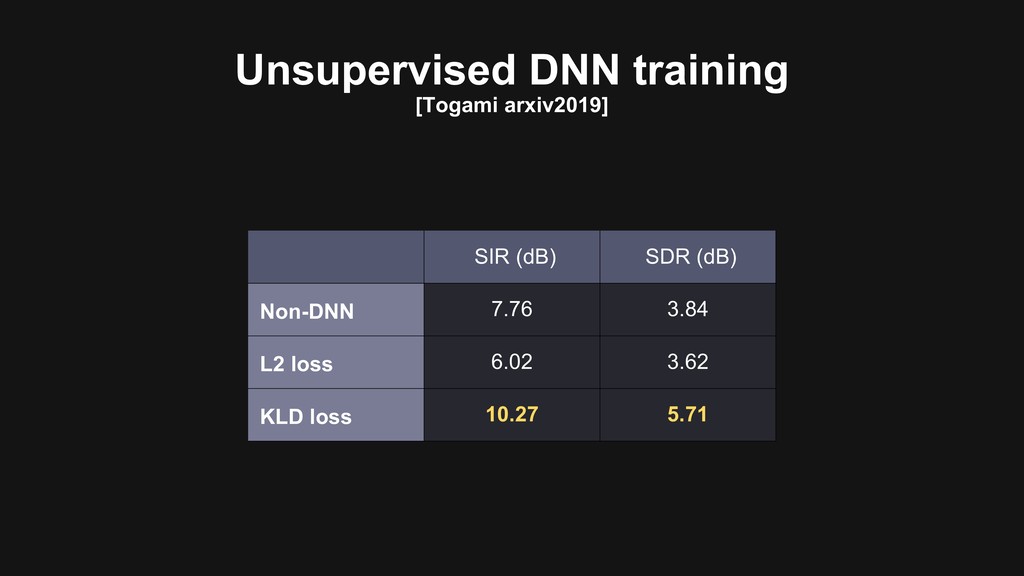
SIR (dB) SDR (dB) Non-DNN 7.76 3.84 L2 loss 6.02
3.62 KLD loss 10.27 5.71 Unsupervised DNN training [Togami arxiv2019] -
Unsupervised DNN training [Togami arxiv2019] Oracle clean Noisy microphone input
Non-DNN DNN (KLD loss) -
Unsupervised DNN training [Togami arxiv2019] Oracle clean Noisy microphone input
Non-DNN DNN (KLD loss) -
Unsupervised DNN training [Togami arxiv2019] Oracle clean Noisy microphone input
Non-DNN DNN (KLD loss) -
Acknowledgements > Special thanks to my internship students, Mr. Nakagome
and Mr. Masuyama (Waseda University) > Thanks for fruitful discussion, Prof. Kobayashi, Prof. Ogawa (Waseda University), Prof. Kawahara, Prof. Yoshii (Kyoto University), Prof. Hirose (NII), and Mr. Komatsu -
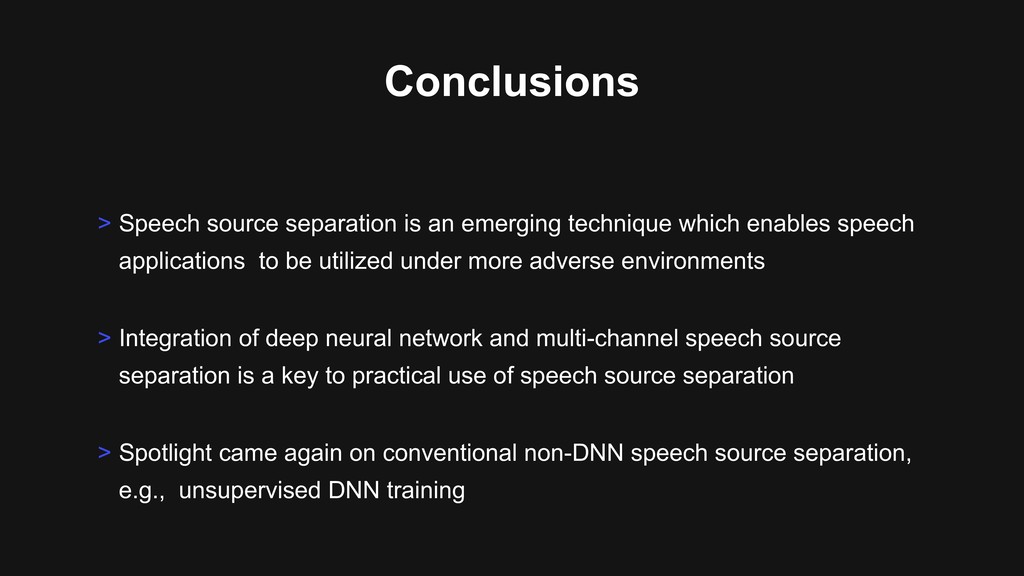
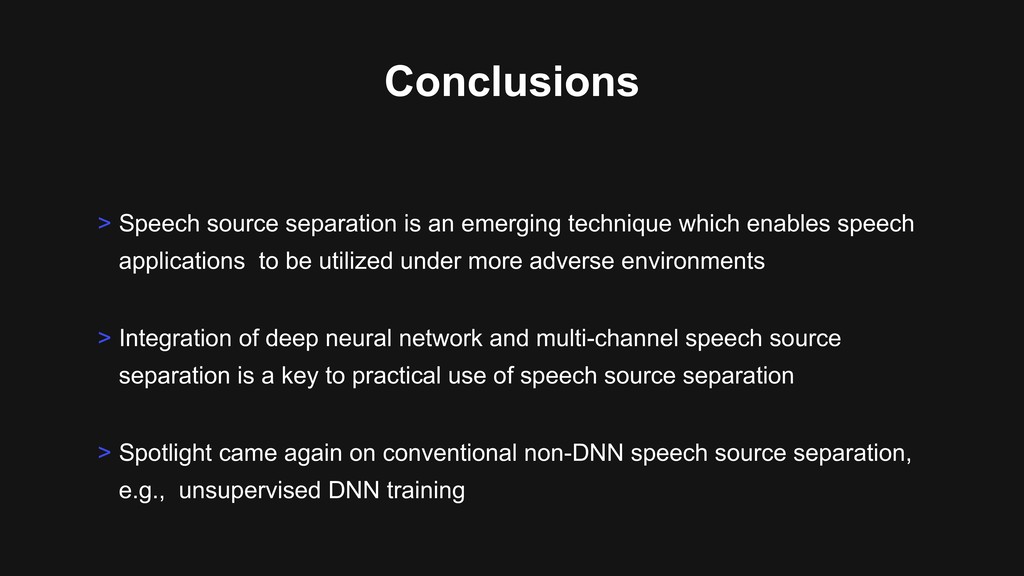
Conclusions > Integration of deep neural network and multi-channel speech
source separation is a key to practical use of speech source separation > Spotlight came again on conventional non-DNN speech source separation, e.g., unsupervised DNN training > Speech source separation is an emerging technique which enables speech applications to be utilized under more adverse environments -
Conclusions > Integration of deep neural network and multi-channel speech
source separation is a key to practical use of speech source separation > Spotlight came again on conventional non-DNN speech source separation, e.g., unsupervised DNN training > Speech source separation is an emerging technique which enables speech applications to be utilized under more adverse environments -
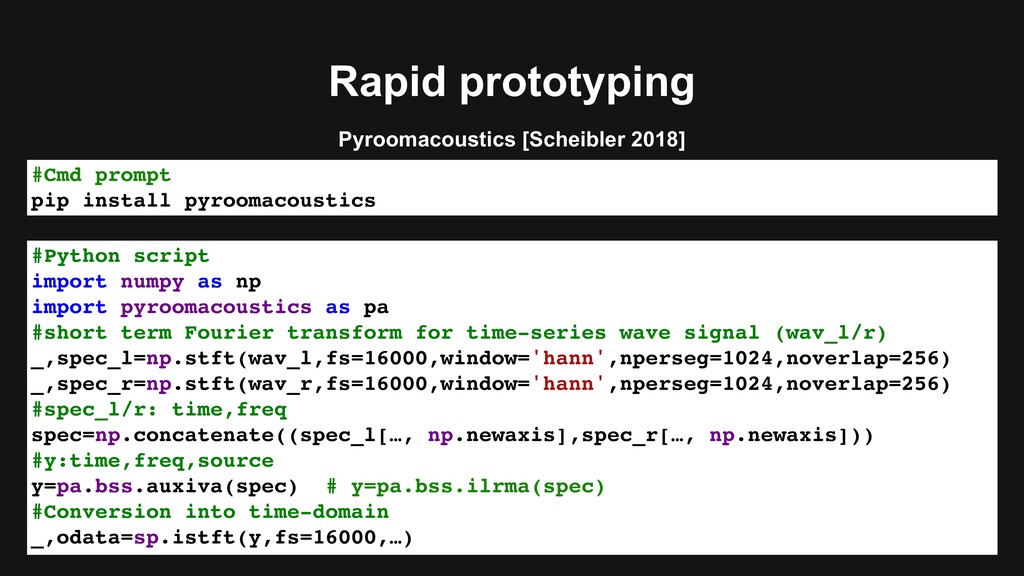
Rapid prototyping #Python script import numpy as np import pyroomacoustics
as pa #short term Fourier transform for time-series wave signal (wav_l/r) _,spec_l=np.stft(wav_l,fs=16000,window='hann',nperseg=1024,noverlap=256) _,spec_r=np.stft(wav_r,fs=16000,window='hann',nperseg=1024,noverlap=256) #spec_l/r: time,freq spec=np.concatenate((spec_l[…, np.newaxis],spec_r[…, np.newaxis])) #y:time,freq,source y=pa.bss.auxiva(spec) # y=pa.bss.ilrma(spec) #Conversion into time-domain _,odata=sp.istft(y,fs=16000,…) Pyroomacoustics [Scheibler 2018] #Cmd prompt pip install pyroomacoustics -
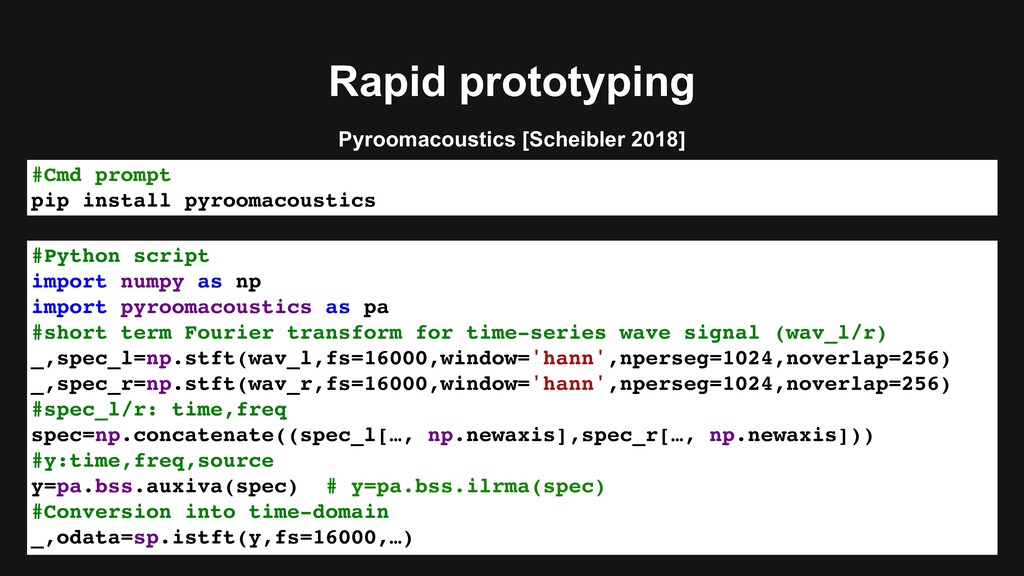
Rapid prototyping #Python script import numpy as np import pyroomacoustics
as pa #short term Fourier transform for time-series wave signal (wav_l/r) _,spec_l=np.stft(wav_l,fs=16000,window='hann',nperseg=1024,noverlap=256) _,spec_r=np.stft(wav_r,fs=16000,window='hann',nperseg=1024,noverlap=256) #spec_l/r: time,freq spec=np.concatenate((spec_l[…, np.newaxis],spec_r[…, np.newaxis])) #y:time,freq,source y=pa.bss.auxiva(spec) # y=pa.bss.ilrma(spec) #Conversion into time-domain _,odata=sp.istft(y,fs=16000,…) Pyroomacoustics [Scheibler 2018] #Cmd prompt pip install pyroomacoustics -
References [Kim 2006] T. Kim, et al., “Independent vector analysis:
an extension of ica to multivariate components,” in ICA, pp. 165–172, Mar. 2006. [Hiroe 2006] A. Hiroe, “Solution of permutation problem in frequency domain ica using multivariate probability density functions,” in ICA, pp. 601–608, Mar. 2006. [Kitamura 2016] D. Kitamura, et al., “Determined blind source separation unifying independent vector analysis and nonnegative matrix factorization,” IEEE/ACM TASLP., vol. 24, no. 9, pp. 1626-1641, 2016. [Scheibler 2018] R. Scheibler, et al., “Pyroomacoustics: A Python Package for Audio Room Simulation and Array Processing Algorithms,” in ICASSP, 2018, pp. 351-355 [Heymann 2016] J. Heymann, et al., “Neural network based spectral mask estimation for acoustic beamforming,” in ICASSP, 2016, pp. 196-200. [Yoshioka 2018] T. Yoshioka, et al., “Multi-Microphone Neural Speech Separation for Far-Field Multi-Talker Speech Recognition,” in ICASSP, 2018, pp. 5739-5743. [Togami ICASSP2019 (1)] M. Togami, “Multi-channel Itakura Saito Distance Minimization with deep neural network,” in ICASSP, 2019, pp. 536-540. [Masuyama INTERSPEECH2019] Y. Masuyama, et al., “Multichannel Loss Function for Supervised Speech Source Separation by Mask-based Beamforming,” in INTERSPEECH, Sep. 2019. [Togami ICASSP2019 (2)] M. Togami, “Spatial Constraint on Multi-channel Deep Clustering,” in ICASSP, 2019, pp. 531-535. [Togami arxiv2019] M. Togami, et al., “Unsupervised Training for Deep Speech Source Separation with Kullback-Leibler Divergence Based Probabilistic Loss Function,” in arxiv1911.04228, 2019.