Share
Embed
Using the PSoC USB
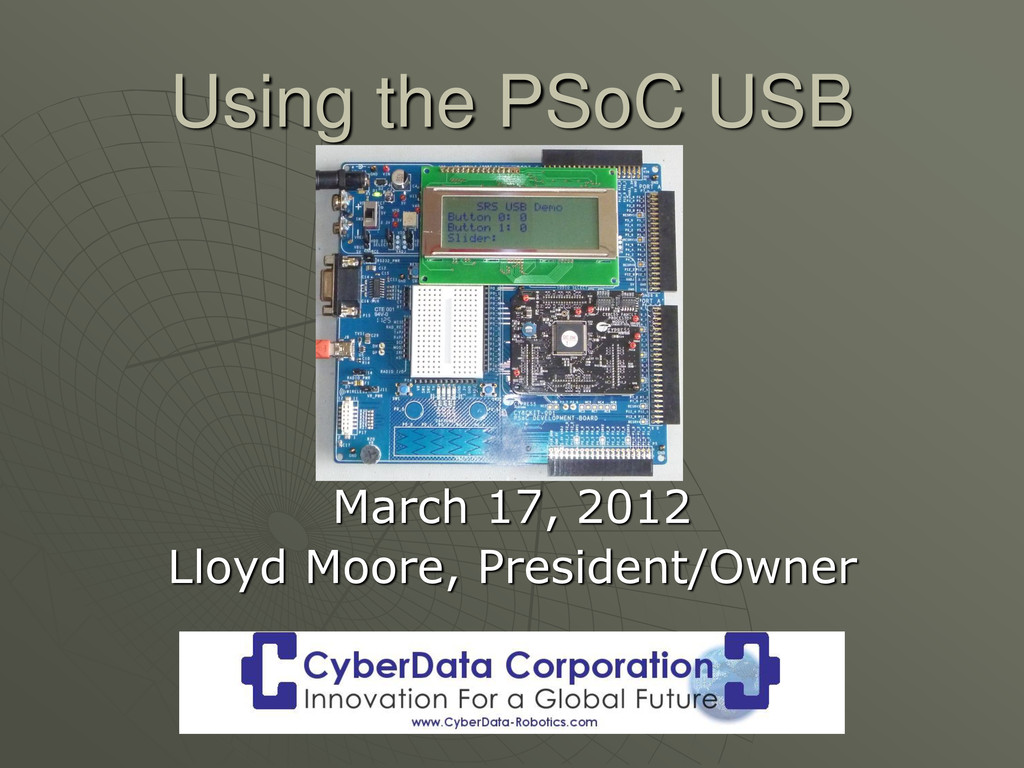
This talk will cover the USB fundamental needed to implement as USB HID joystick device using the Cypress PSoC 5 processor. The concepts covered by the talk are common to USB communications in general and can be used with other processors as well as implementing other types of devices.
Lloyd Moore
March 17, 2012
Transcript
16 slides
-
Overview USB Background USB Standard Classes Endpoints
and Transfer Types Enumeration USB Descriptors Example Project -
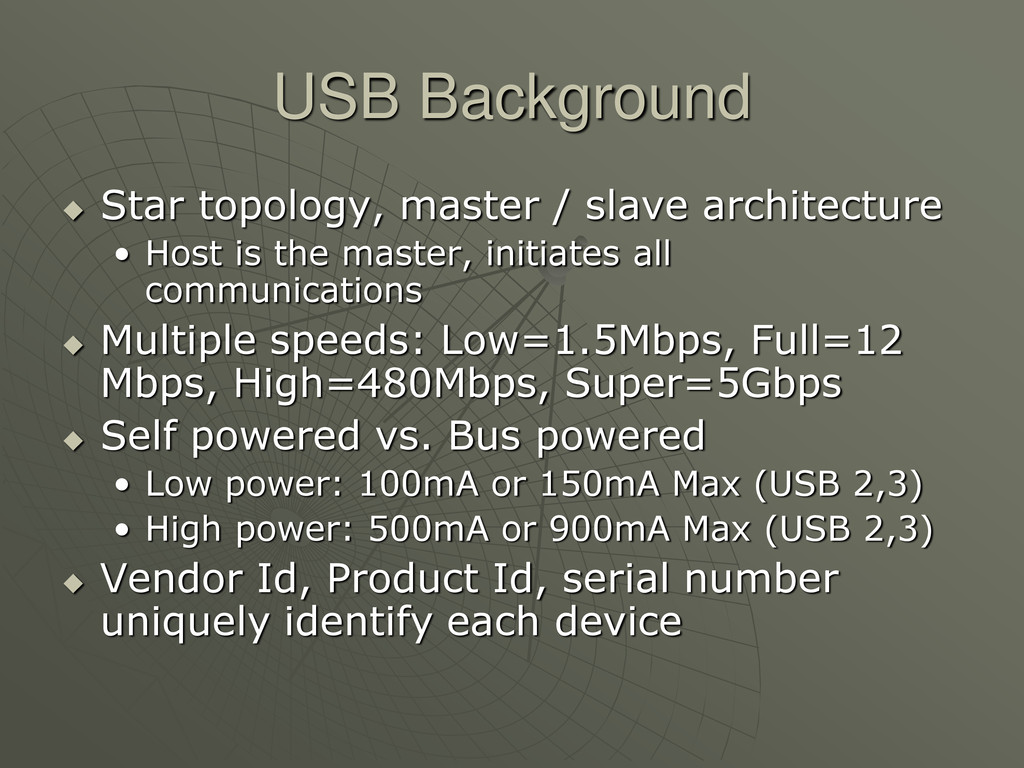
USB Background Star topology, master / slave architecture •
Host is the master, initiates all communications Multiple speeds: Low=1.5Mbps, Full=12 Mbps, High=480Mbps, Super=5Gbps Self powered vs. Bus powered • Low power: 100mA or 150mA Max (USB 2,3) • High power: 500mA or 900mA Max (USB 2,3) Vendor Id, Product Id, serial number uniquely identify each device -
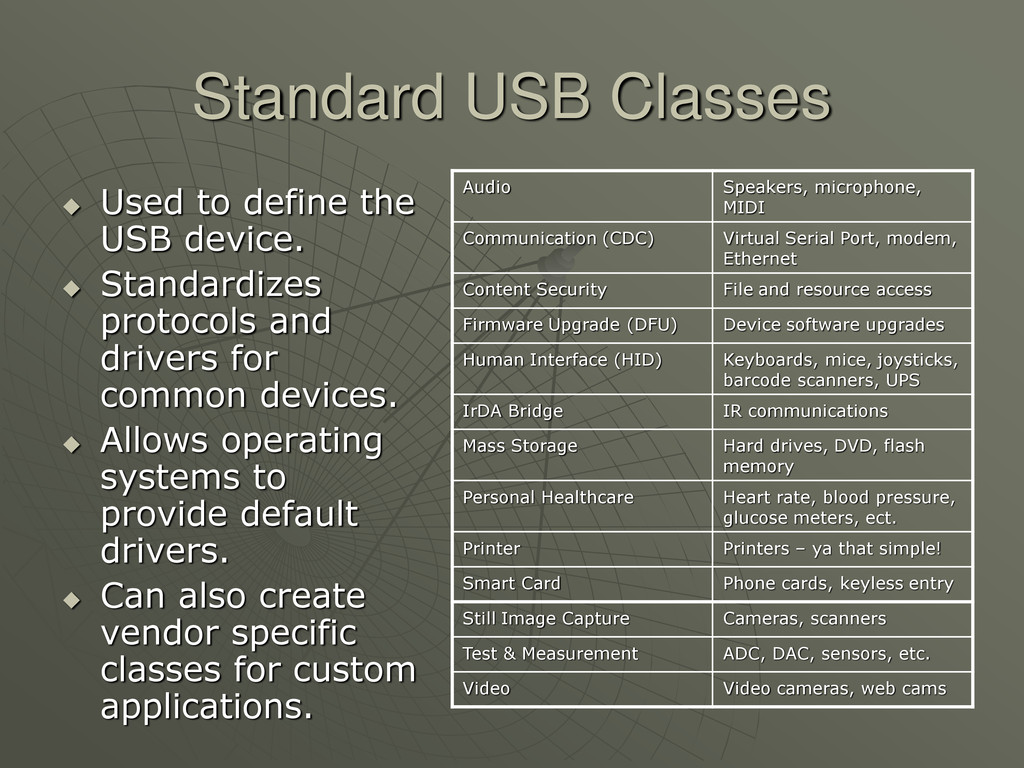
Standard USB Classes Used to define the USB device.
Standardizes protocols and drivers for common devices. Allows operating systems to provide default drivers. Can also create vendor specific classes for custom applications. Audio Speakers, microphone, MIDI Communication (CDC) Virtual Serial Port, modem, Ethernet Content Security File and resource access Firmware Upgrade (DFU) Device software upgrades Human Interface (HID) Keyboards, mice, joysticks, barcode scanners, UPS IrDA Bridge IR communications Mass Storage Hard drives, DVD, flash memory Personal Healthcare Heart rate, blood pressure, glucose meters, ect. Printer Printers – ya that simple! Smart Card Phone cards, keyless entry Still Image Capture Cameras, scanners Test & Measurement ADC, DAC, sensors, etc. Video Video cameras, web cams -
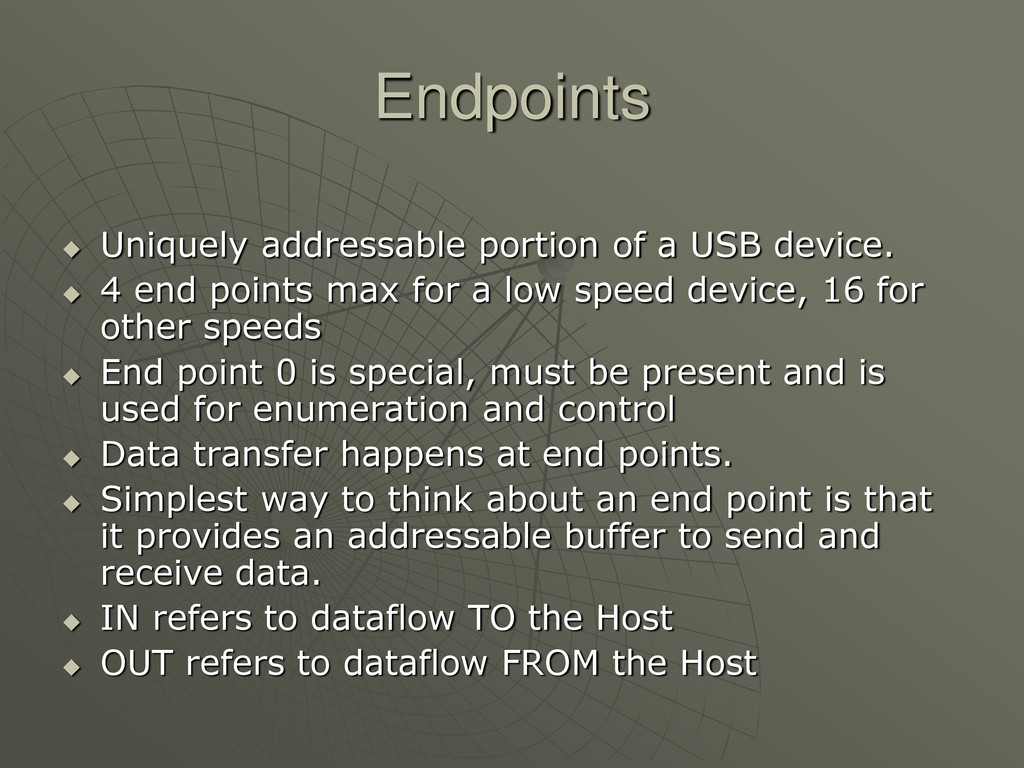
Endpoints Uniquely addressable portion of a USB device.
4 end points max for a low speed device, 16 for other speeds End point 0 is special, must be present and is used for enumeration and control Data transfer happens at end points. Simplest way to think about an end point is that it provides an addressable buffer to send and receive data. IN refers to dataflow TO the Host OUT refers to dataflow FROM the Host -
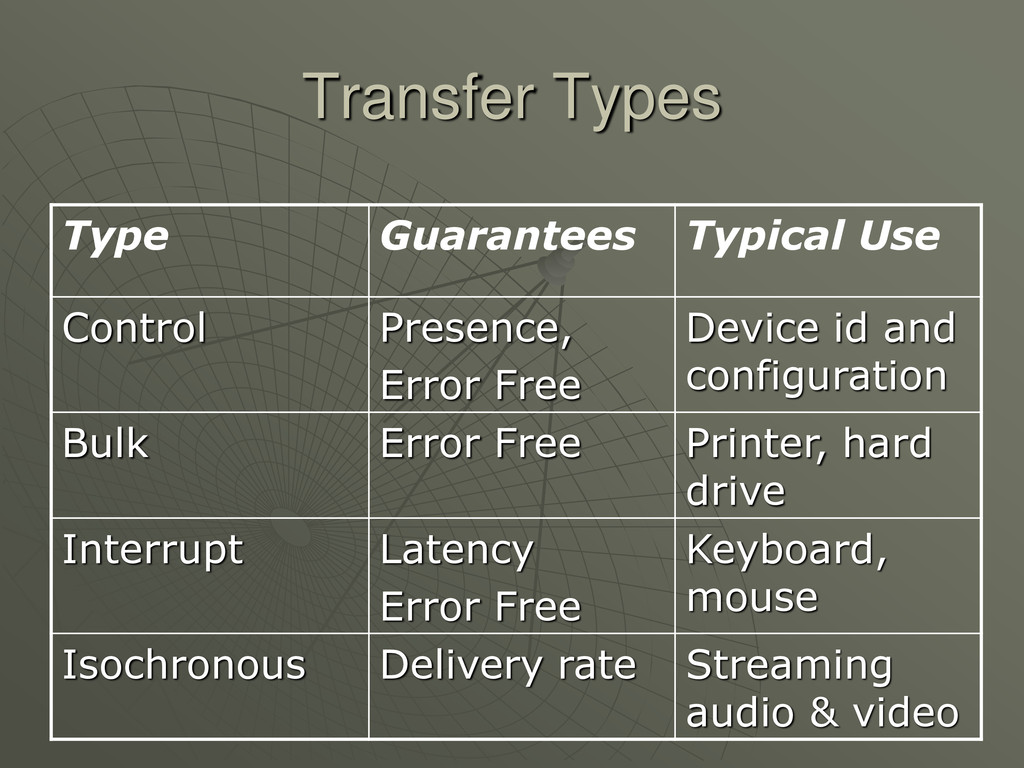
Transfer Types Type Guarantees Typical Use Control Presence, Error Free
Device id and configuration Bulk Error Free Printer, hard drive Interrupt Latency Error Free Keyboard, mouse Isochronous Delivery rate Streaming audio & video -
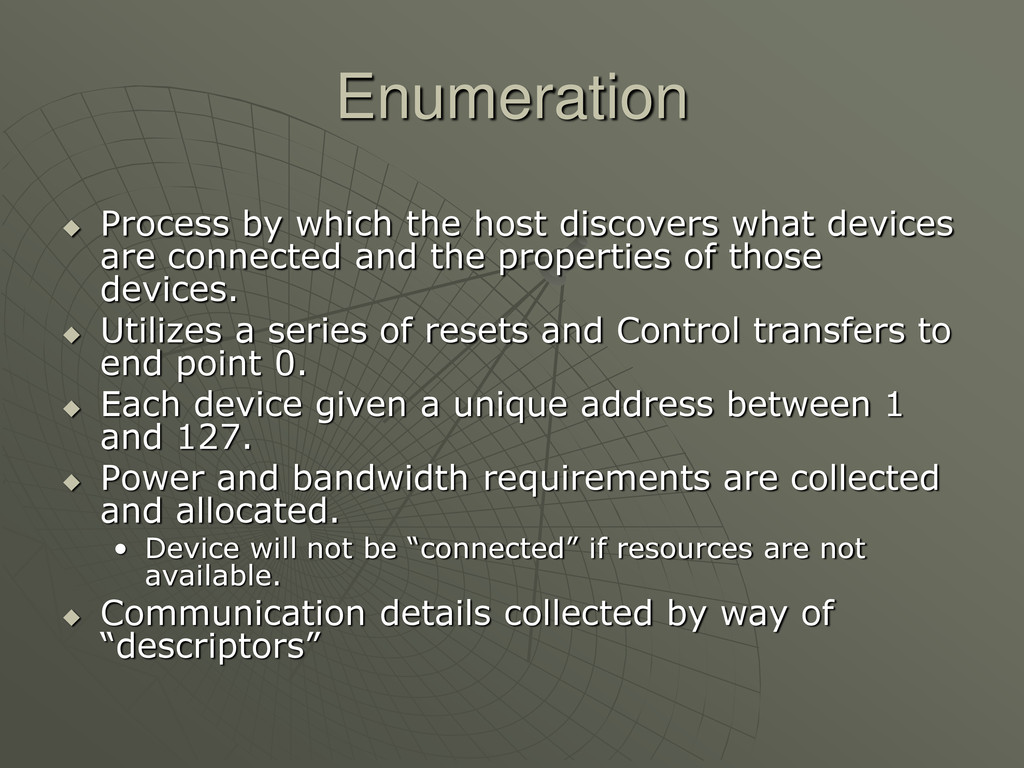
Enumeration Process by which the host discovers what devices
are connected and the properties of those devices. Utilizes a series of resets and Control transfers to end point 0. Each device given a unique address between 1 and 127. Power and bandwidth requirements are collected and allocated. • Device will not be “connected” if resources are not available. Communication details collected by way of “descriptors” -
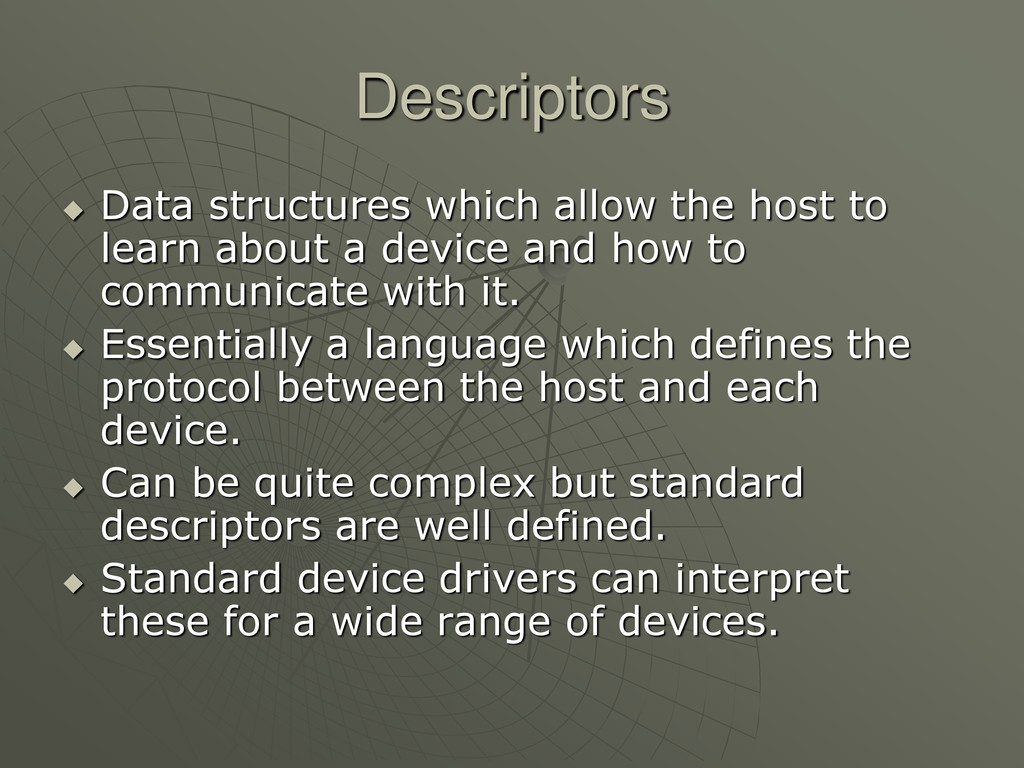
Descriptors Data structures which allow the host to learn
about a device and how to communicate with it. Essentially a language which defines the protocol between the host and each device. Can be quite complex but standard descriptors are well defined. Standard device drivers can interpret these for a wide range of devices. -
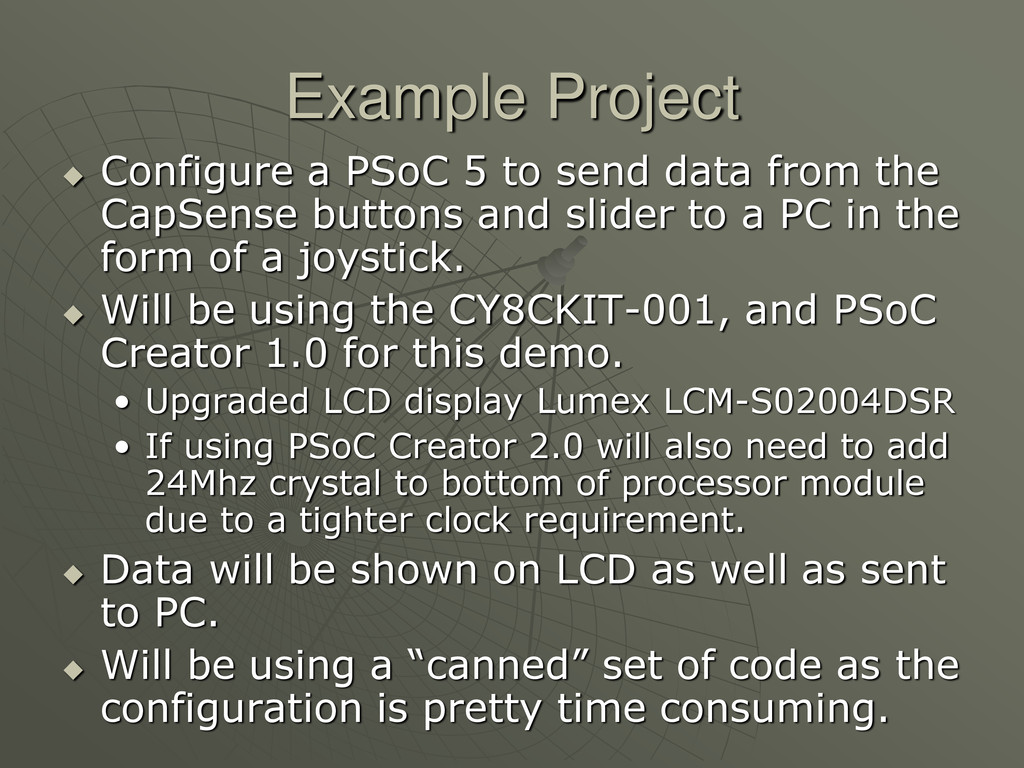
Example Project Configure a PSoC 5 to send data
from the CapSense buttons and slider to a PC in the form of a joystick. Will be using the CY8CKIT-001, and PSoC Creator 1.0 for this demo. • Upgraded LCD display Lumex LCM-S02004DSR • If using PSoC Creator 2.0 will also need to add 24Mhz crystal to bottom of processor module due to a tighter clock requirement. Data will be shown on LCD as well as sent to PC. Will be using a “canned” set of code as the configuration is pretty time consuming. -
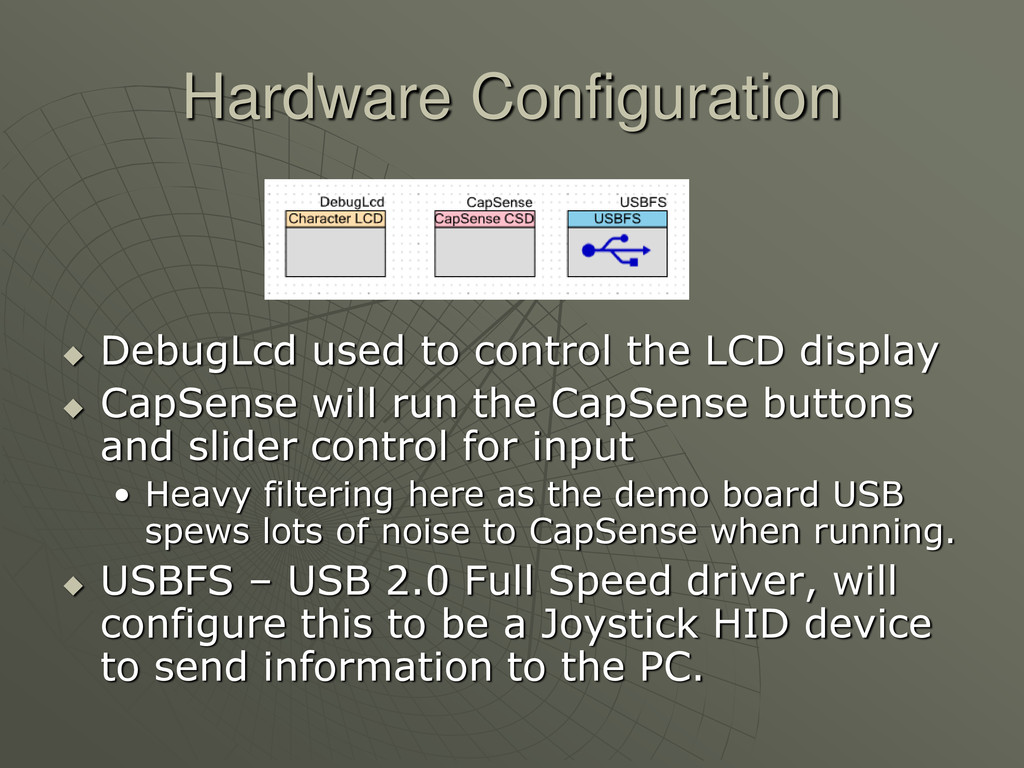
Hardware Configuration DebugLcd used to control the LCD display
CapSense will run the CapSense buttons and slider control for input • Heavy filtering here as the demo board USB spews lots of noise to CapSense when running. USBFS – USB 2.0 Full Speed driver, will configure this to be a Joystick HID device to send information to the PC. -
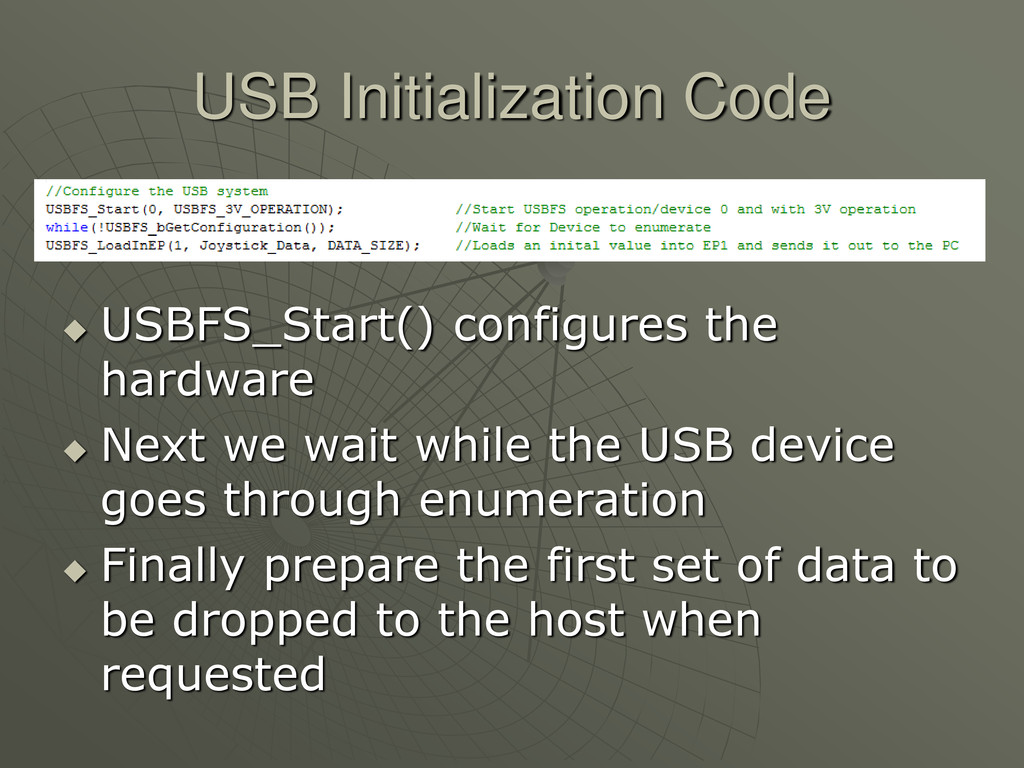
USB Initialization Code USBFS_Start() configures the hardware Next
we wait while the USB device goes through enumeration Finally prepare the first set of data to be dropped to the host when requested -
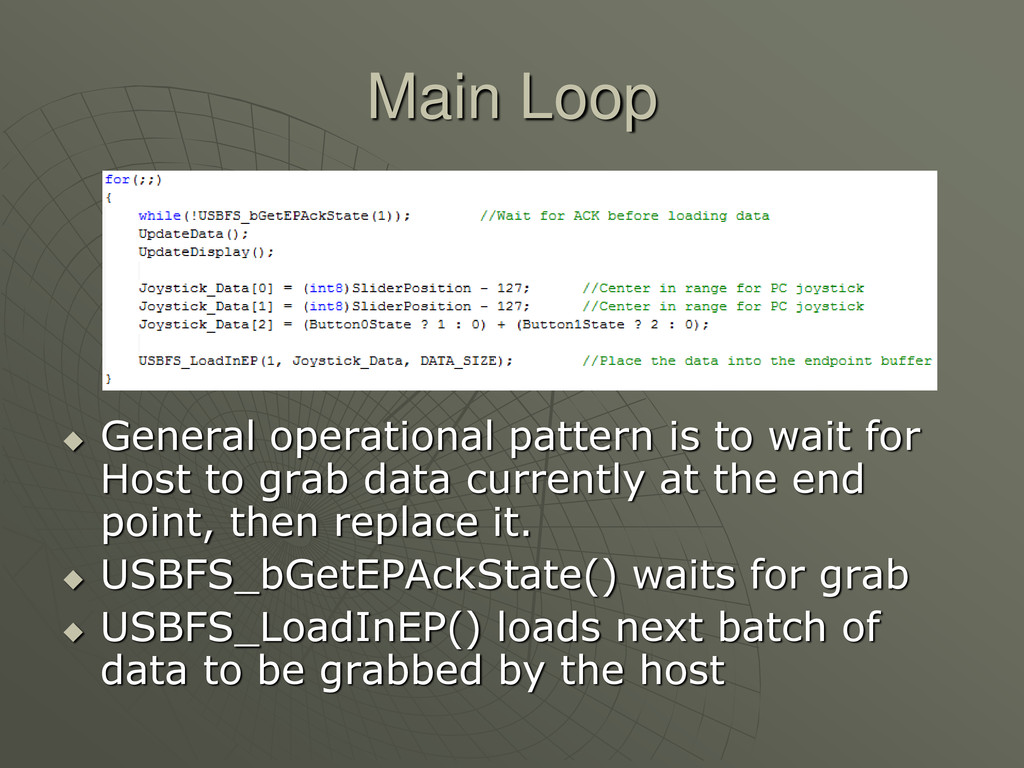
Main Loop General operational pattern is to wait for
Host to grab data currently at the end point, then replace it. USBFS_bGetEPAckState() waits for grab USBFS_LoadInEP() loads next batch of data to be grabbed by the host -
Resources Book: USB Complete, Fourth Edition • Jan Axelson
• ISBN: 978-1-931448-08-6 PSoC Application notes: AN57294, AN57473, AN58726 PSoC Product Web Site: • http://www.cypress.com/?id=1353 PSoC Developer Community: • http://www.psocdeveloper.com/forums/ PSoC Training On Demand: • http://www.cypress.com/training PSoC Full Development Kit (1, 3, 5): $249 • http://www.cypress.com/?rID=37464 My Contact Info: • [email protected] • http://www.CyberData-Robotics.com -
Questions???? Will be around a bit after the meeting
for individual questions Feel free to e-mail me