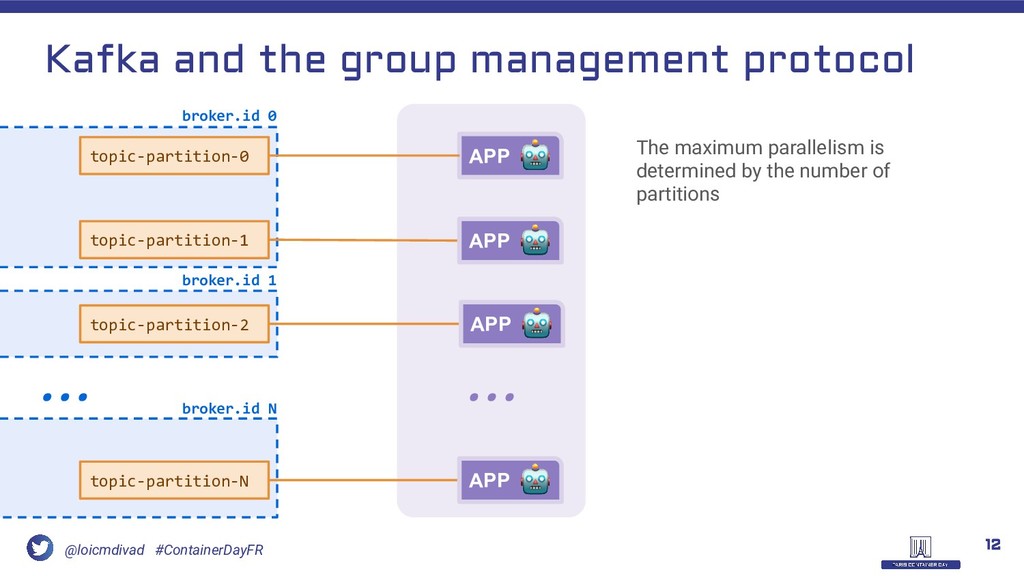
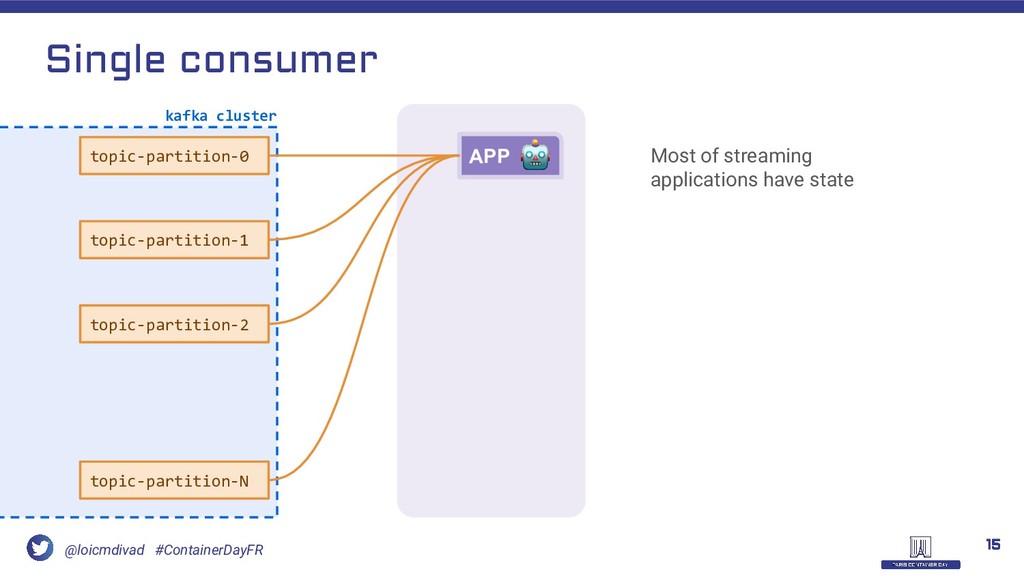
broker.id 0 broker.id N broker.id 1 . . . Kafka and the group management protocol 12 The maximum parallelism is determined by the number of partitions . . .
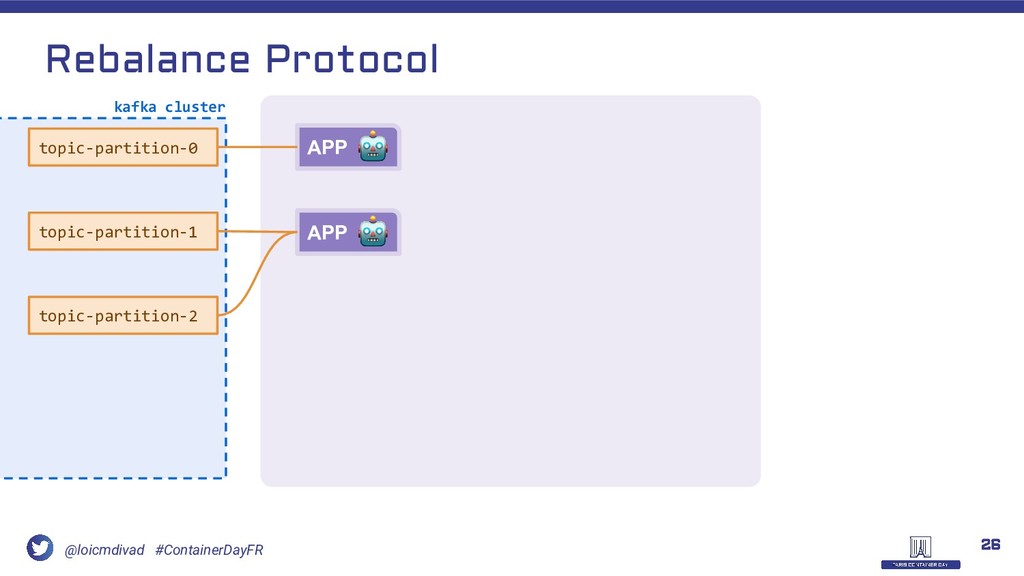
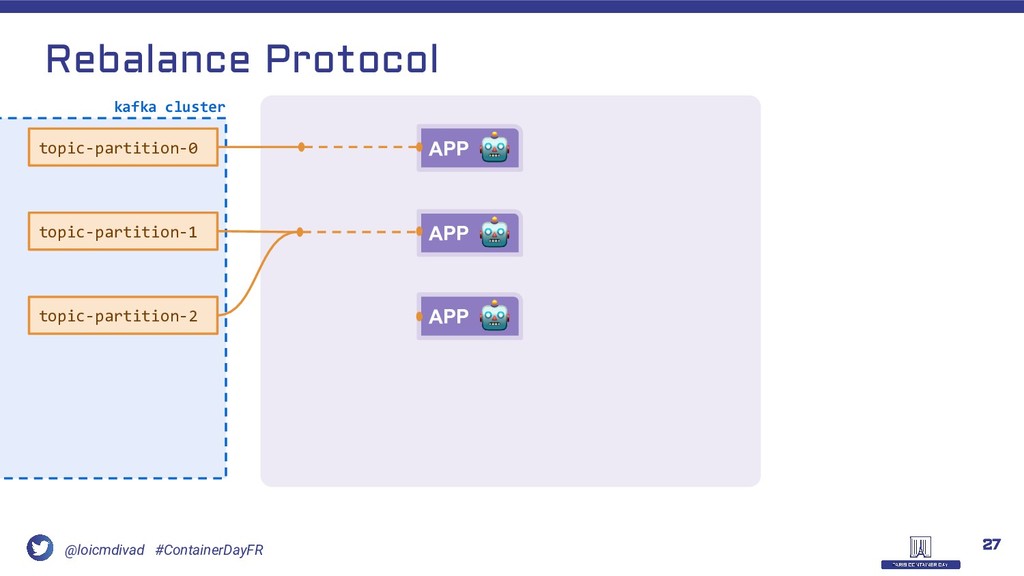
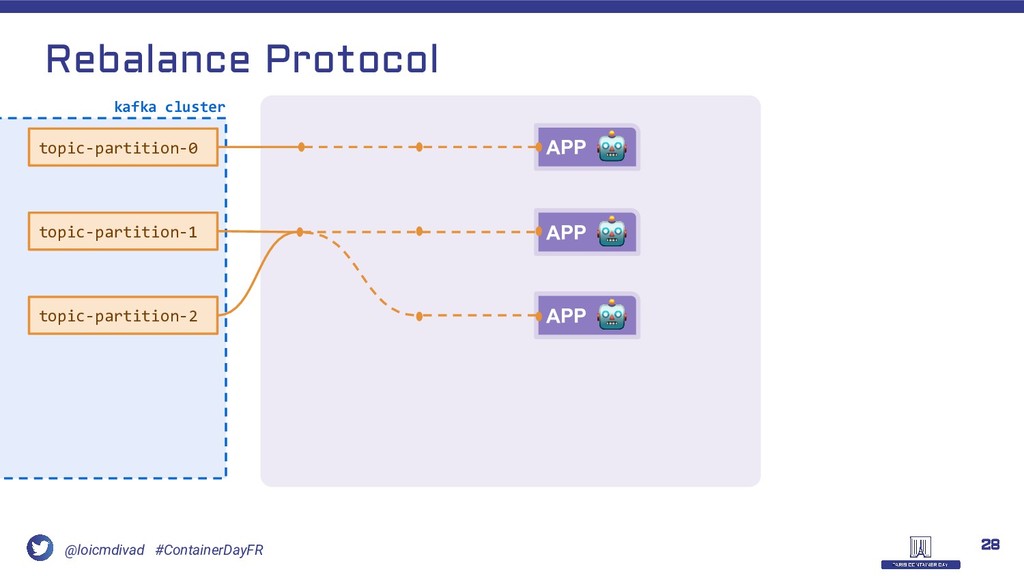
of partitions 13 topic-partition-0 topic-partition-1 topic-partition-2 topic-partition-N APP APP APP APP Kafka and the group management protocol kafka cluster
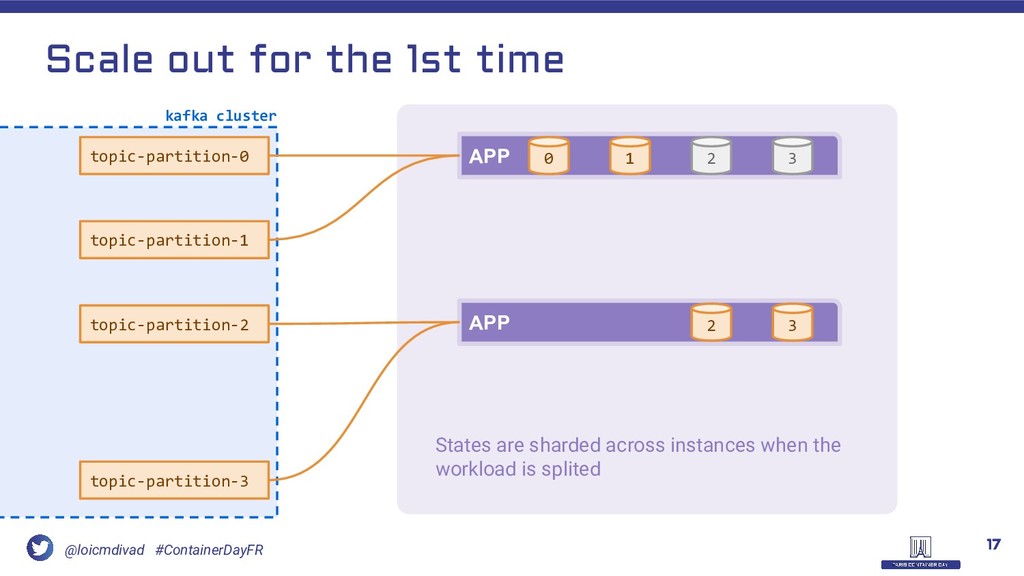
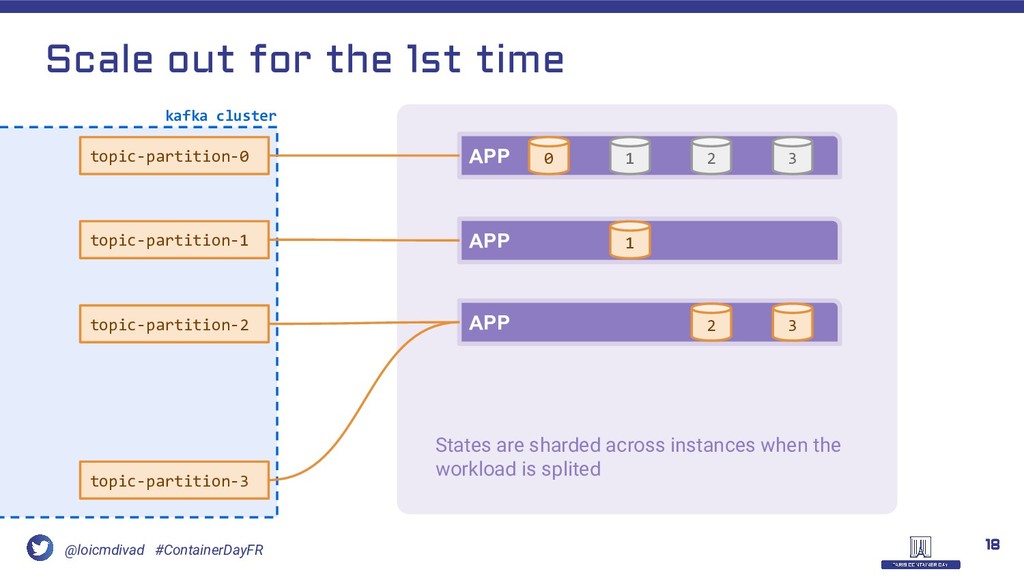
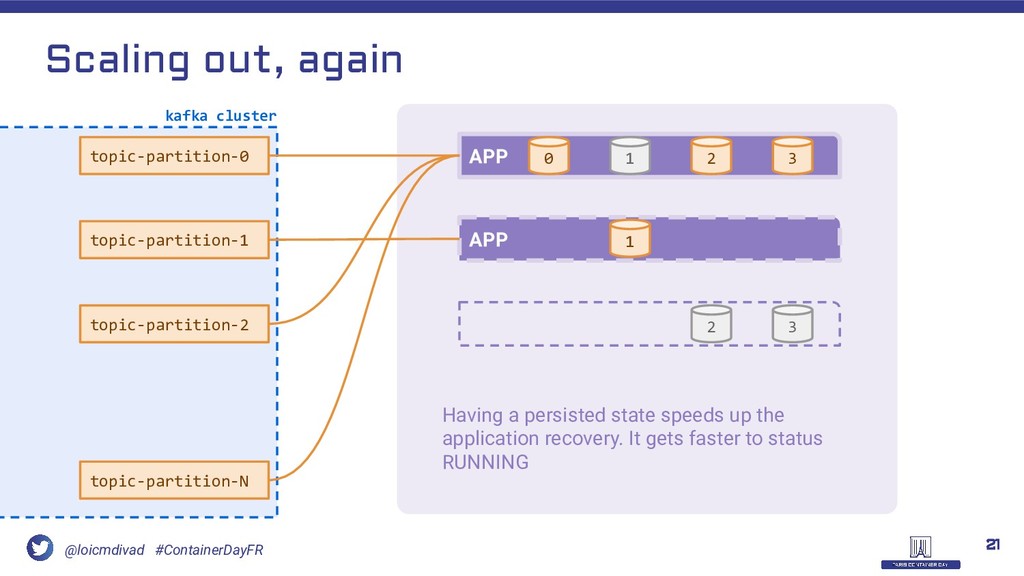
workload is splited 0 1 APP 2 3 2 3 17 Scale out for the 1st time topic-partition-0 topic-partition-1 topic-partition-2 topic-partition-3 kafka cluster
across instances when the workload is splited 0 1 2 2 topic-partition-0 topic-partition-1 topic-partition-2 topic-partition-3 kafka cluster Scale out for the 1st time 3 3
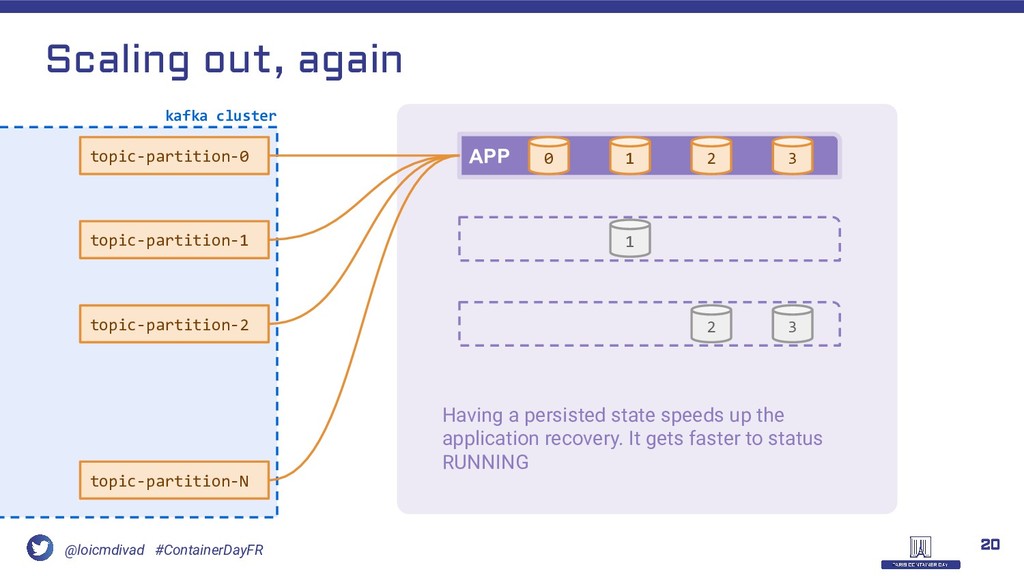
changelog topic, which is compacted my-application-state-partition-3-changelog Topic Partition Topic Segments Compacted Topic Segments 1 GB Streams as a changelog of states 19
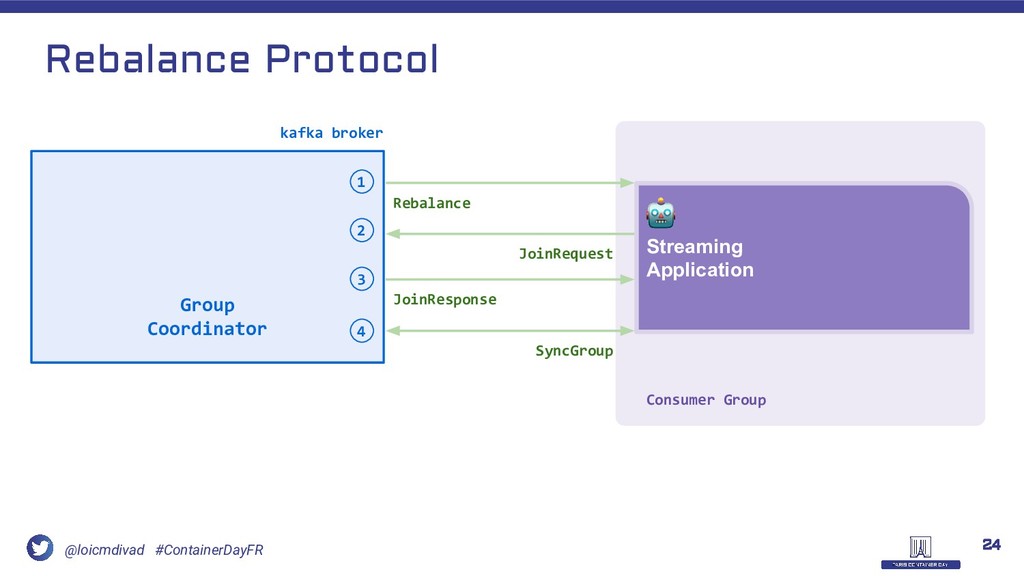
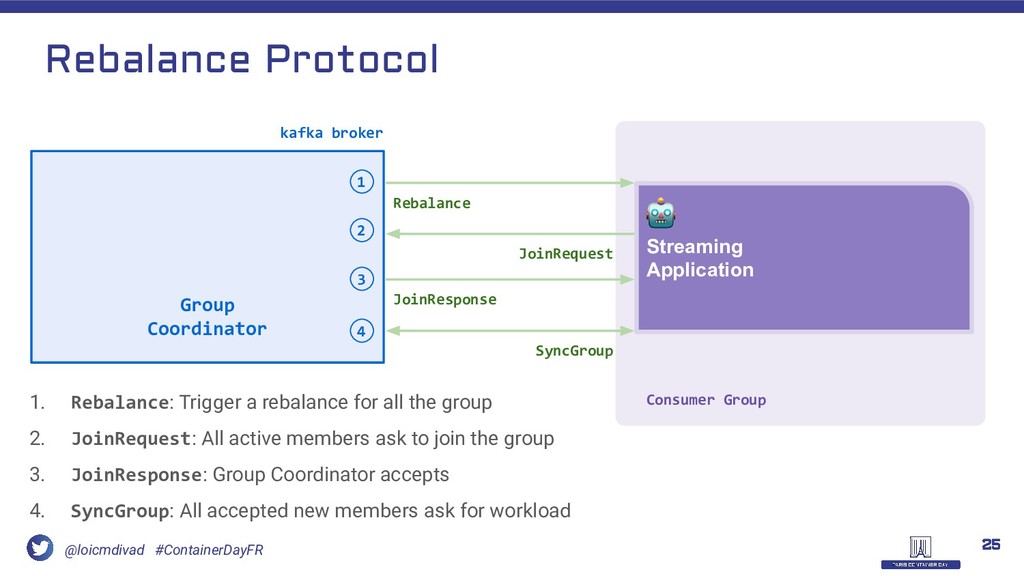
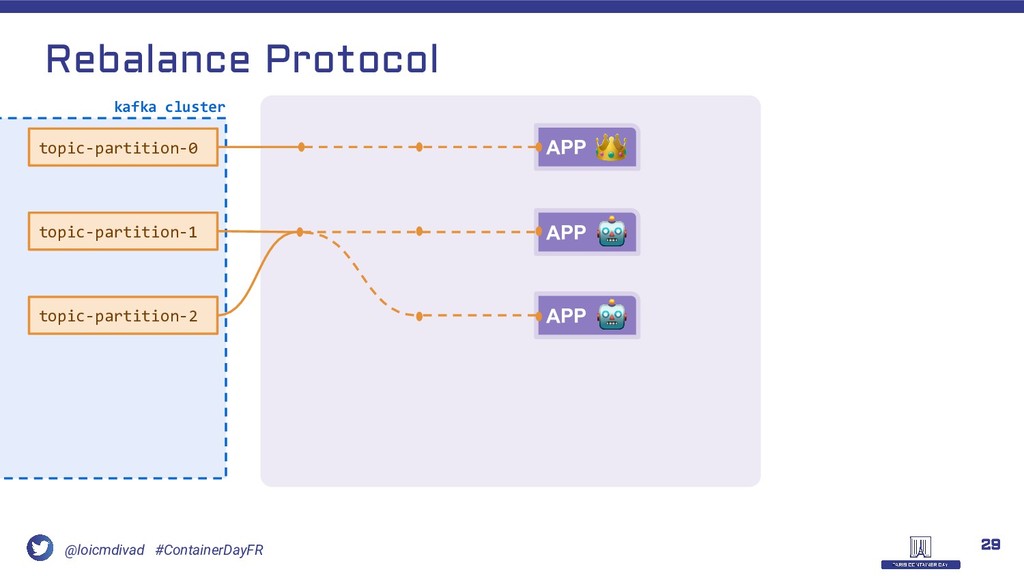
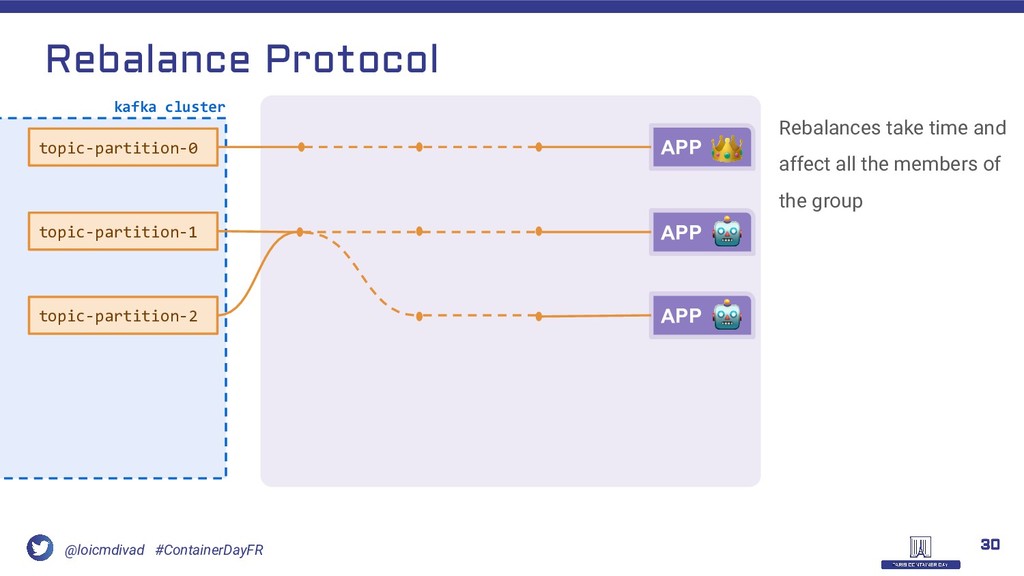
group 2. JoinRequest: All active members ask to join the group 3. JoinResponse: Group Coordinator accepts 4. SyncGroup: All accepted new members ask for workload Rebalance Protocol 25 kafka broker Group Coordinator Streaming Application Consumer Group Rebalance 1 JoinRequest 2 JoinResponse 3 SyncGroup 4
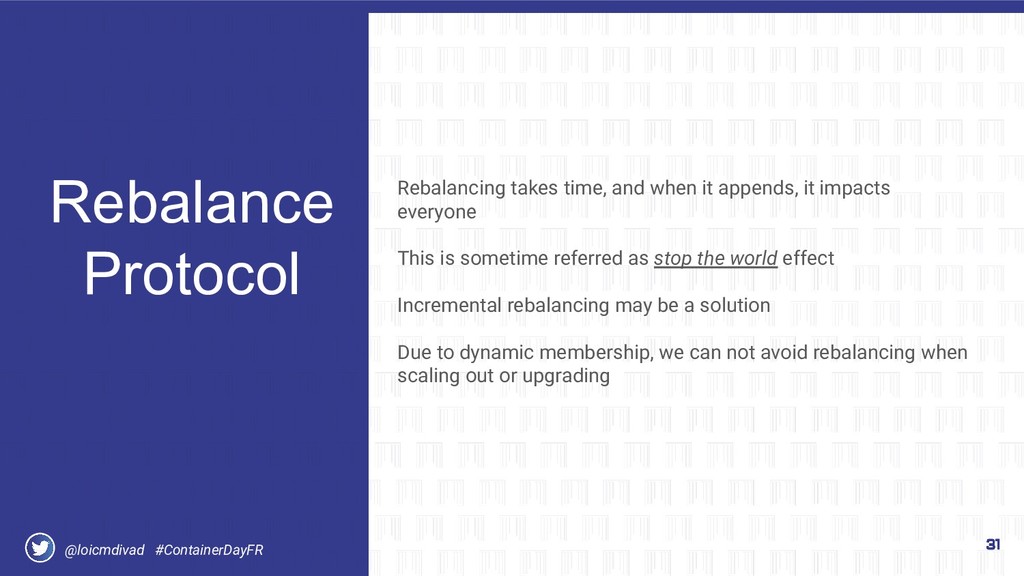
appends, it impacts everyone This is sometime referred as stop the world effect Incremental rebalancing may be a solution Due to dynamic membership, we can not avoid rebalancing when scaling out or upgrading 31
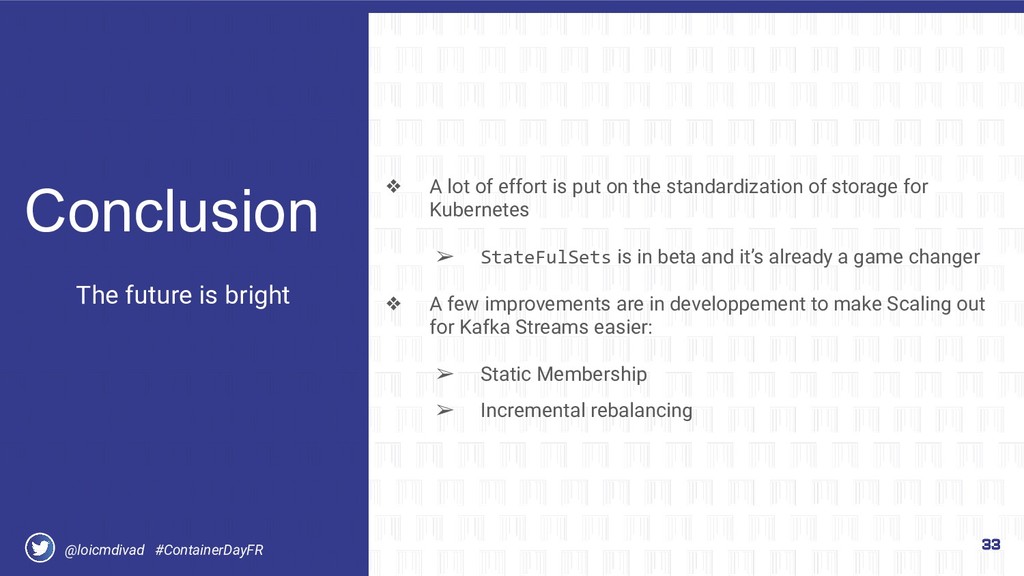
of effort is put on the standardization of storage for Kubernetes ➢ StateFulSets is in beta and it’s already a game changer ❖ A few improvements are in developpement to make Scaling out for Kafka Streams easier: ➢ Static Membership ➢ Incremental rebalancing 33
with Docker and Kubernetes - by Gwen Shapira and Matthias J. Sax ◦ Everything You Always Wanted to Know About Kafka’s Rebalance Protocol but Were Afraid to Ask - by Matthias J. Sax ◦ Horizontal Pod Autoscaler Reloaded - Scale on Custom Metrics - Maciej Pytel & Solly Ross • Pictures: ◦ Photo by Shwetha Shankar on Unsplash ◦ Photo by chuttersnap on Unsplash ◦ Photo by Bonnie Kittle on Unsplash Resources 37


 loicdivad
 satoshi256kbyte
 andpad
 panda728
 rshindo
 optim
optim
 oniak3ibm
 timakin
 kinopeee
 kenjiyoneyama
 jame2408
 uyuki234
 drumath2237
 chriscoyier
 skipperchong
 retrage
 cassininazir
 afnizarnur
.png) helenjbeal
helenjbeal
 eileencodes
 stephaniewalter
 jlugia
 reverentgeek
 bluesmoon
 ryanjones







![@loicmdivad #ContainerDayFR [k8s] StatefulSet, Pods for stateful applications and distributed](https://files.speakerdeck.com/presentations/0526c27c53be4bbfa232fa97f6d3aa51/slide_33.jpg)