Upgrade to Pro
— share decks privately, control downloads, hide ads and more …
Speaker Deck
Sign up for free
Menu
Search
Features
All features
Private URLs
Password Protection
Custom URLS
Scheduled publishing
Remove Branding
Restrict embedding
Deck Collections
Notes
Features
All features
Private URLs
Password Protection
Custom URLS
Scheduled publishing
Remove Branding
Restrict embedding
Deck Collections
Notes
Explore
Featured decks
Featured speakers
Programming
Technology
Storyboards
Explore
Featured decks
Featured speakers
Programming
Technology
Storyboards
Pricing
Search
Sign in
Sign up for free
文献紹介 : More is not always better: balancing se...
Search
masaya82
February 14, 2019
170
0
Share
Embed
Copy iframe code
Copy JS code
Copy link
Start on current slide
文献紹介 : More is not always better: balancing sense distributions for all-words
masaya82
February 14, 2019
More Decks by masaya82
See All by masaya82
文献紹介:Enhancing Modern Supervised Word Sense Disambiguation Models
masaya82
0
180
文献紹介:The Word Sense Disambiguation Test Suite at WMT18
masaya82
0
120
文献紹介:Preposition Sense Disambiguation and Representation
masaya82
0
150
文献紹介:Word Sense Disambiguation Based on Word Similarity Calculation Using Word Vector Representation from a Knowledge-based Graph
masaya82
0
170
Distributional Lesk: Effective Knowledge-Based Word Sense Disambiguation
masaya82
0
140
Japanese all-words WSD system using the Kyoto Text Analysis ToolKit
masaya82
0
160
Improving Word Sense Disambiguation in Neural Machine Translation with Sense Embeddings
masaya82
0
160
Learning_to_Identify_the_Best_Contexts_for_Knowledge-based_WSD
masaya82
0
170
Using Linked Disambiguated Distributional Networks for Word Sense Disambiguation
masaya82
0
120
Featured
See All Featured
Improving Core Web Vitals using Speculation Rules API
sergeychernyshev
21
1.7k
How to optimise 3,500 product descriptions for ecommerce in one day using ChatGPT
katarinadahlin
PRO
3
3.9k
Bioeconomy Workshop: Dr. Julius Ecuru, Opportunities for a Bioeconomy in West Africa
akademiya2063
PRO
1
390
30 Presentation Tips
portentint
PRO
1
420
First, design no harm
axbom
PRO
2
1.3k
Google's AI Overviews - The New Search
badams
0
1.6k
Put a Button on it: Removing Barriers to Going Fast.
kastner
60
4.6k
Large-scale JavaScript Application Architecture
addyosmani
516
110k
[SF Ruby Conf 2025] Rails X
palkan
3
1.4k
Making the Leap to Tech Lead
cromwellryan
135
10k
The Limits of Empathy - UXLibs8
cassininazir
2
710
Music & Morning Musume
bryan
48
7.4k
Transcript
More is not always better: balancing sense distributions for all-words
Marten Postma , Ruben Izquierdo Bevia , Piek Vossen 2019 2/14 文献紹介 長岡技術科学大学 自然言語処理研究室 福嶋 真也 Proceedings of COLING 2016, the 26th International Conference on Computational Linguistics: Technical Papers, pages 3496–3506, Osaka, Japan, December 11-17 2016.
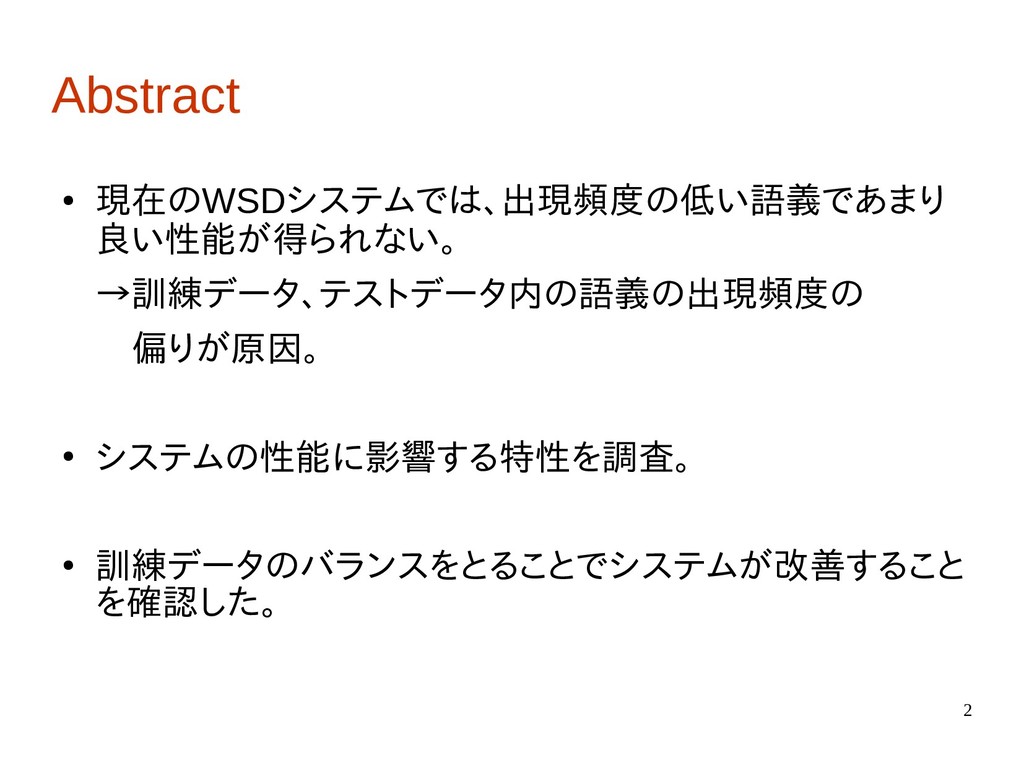
2 Abstract • 現在のWSDシステムでは、出現頻度の低い語義であまり 良い性能が得られない。 →訓練データ、テストデータ内の語義の出現頻度の 偏りが原因。 • システムの性能に影響する特性を調査。 •
訓練データのバランスをとることでシステムが改善すること を確認した。
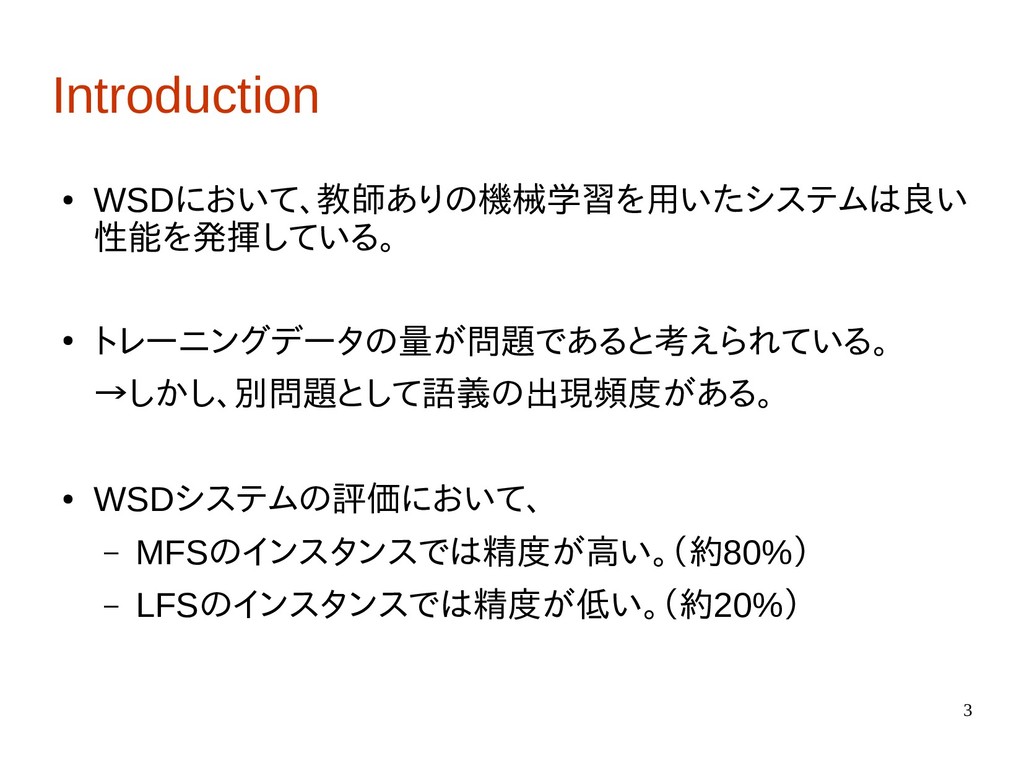
3 Introduction • WSDにおいて、教師ありの機械学習を用いたシステムは良い 性能を発揮している。 • トレーニングデータの量が問題であると考えられている。 →しかし、別問題として語義の出現頻度がある。 • WSDシステムの評価において、
– MFSのインスタンスでは精度が高い。(約80%) – LFSのインスタンスでは精度が低い。(約20%)
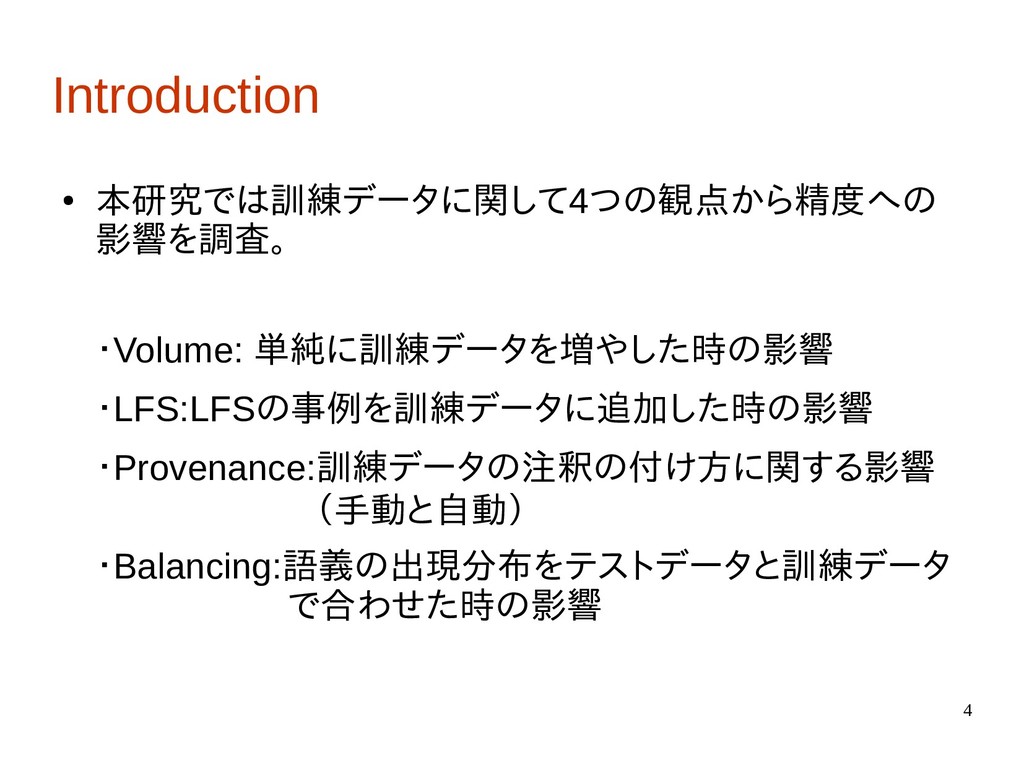
4 Introduction • 本研究では訓練データに関して4つの観点から精度への 影響を調査。 ・Volume: 単純に訓練データを増やした時の影響 ・LFS:LFSの事例を訓練データに追加した時の影響 ・Provenance:訓練データの注釈の付け方に関する影響 (手動と自動)
・Balancing:語義の出現分布をテストデータと訓練データ で合わせた時の影響
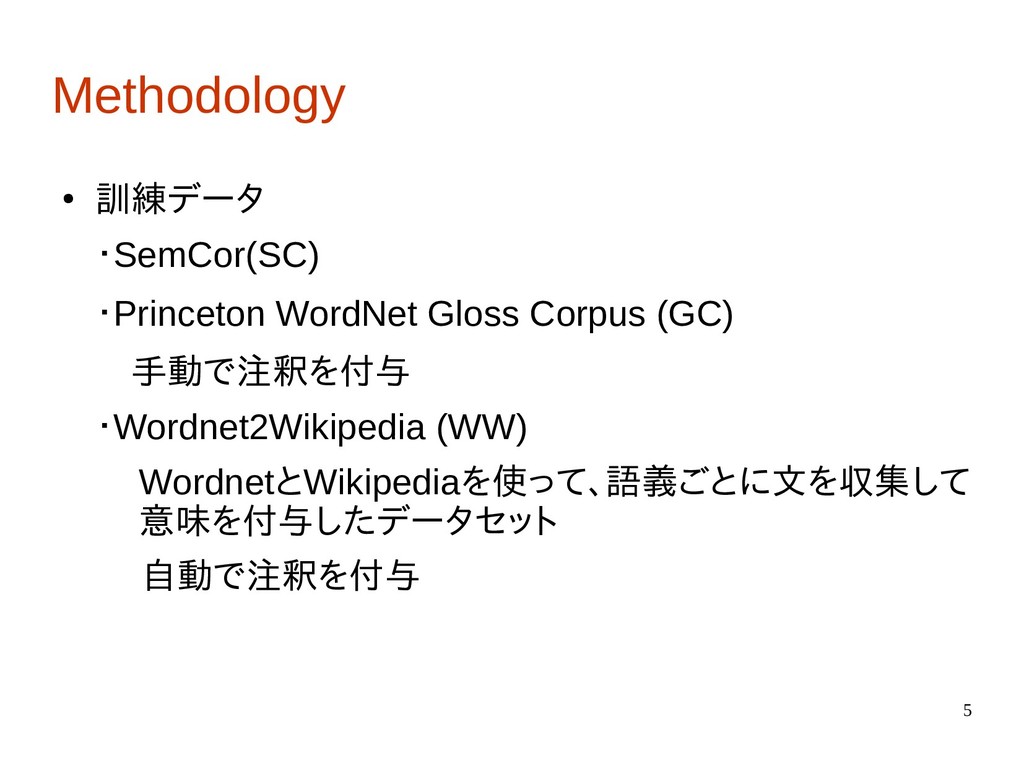
5 Methodology • 訓練データ ・SemCor(SC) ・Princeton WordNet Gloss Corpus (GC)
手動で注釈を付与 ・Wordnet2Wikipedia (WW) WordnetとWikipediaを使って、語義ごとに文を収集して 意味を付与したデータセット 自動で注釈を付与
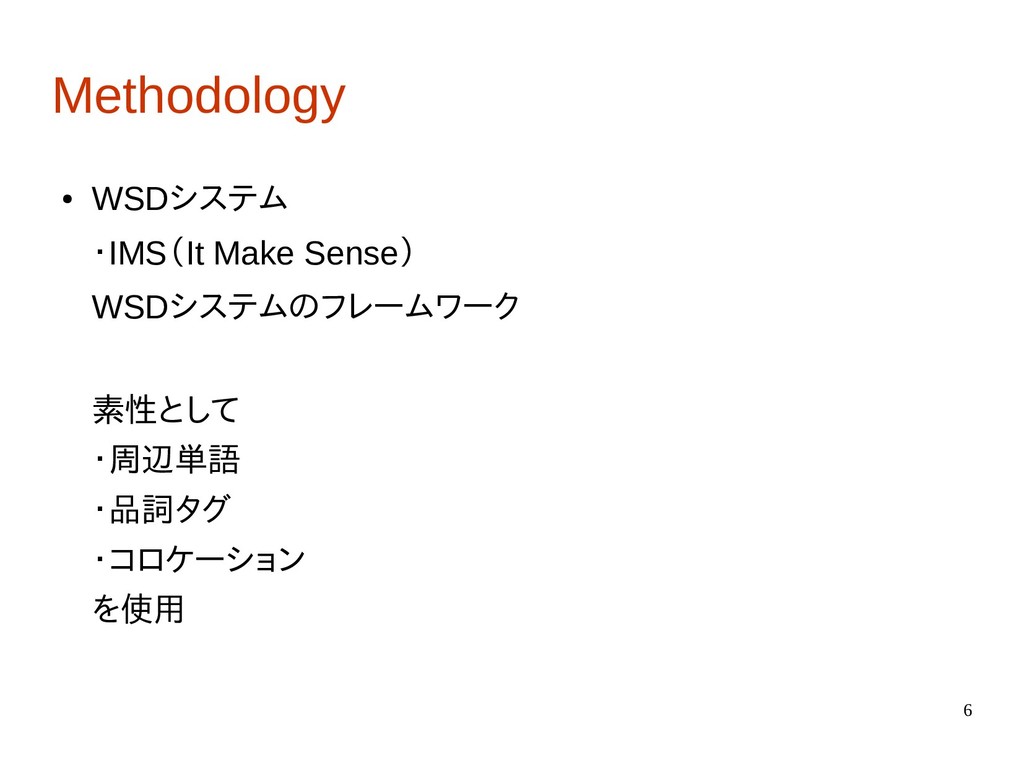
6 Methodology • WSDシステム ・IMS(It Make Sense) WSDシステムのフレームワーク 素性として ・周辺単語
・品詞タグ ・コロケーション を使用
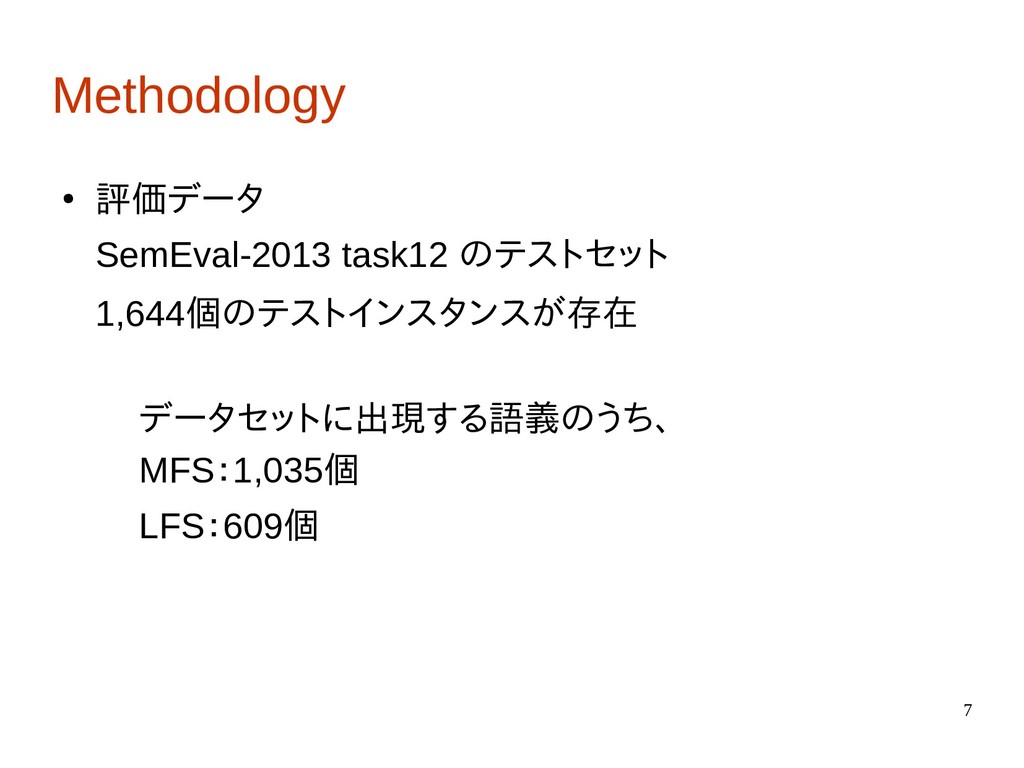
7 Methodology • 評価データ SemEval-2013 task12 のテストセット 1,644個のテストインスタンスが存在 データセットに出現する語義のうち、 MFS:1,035個
LFS:609個
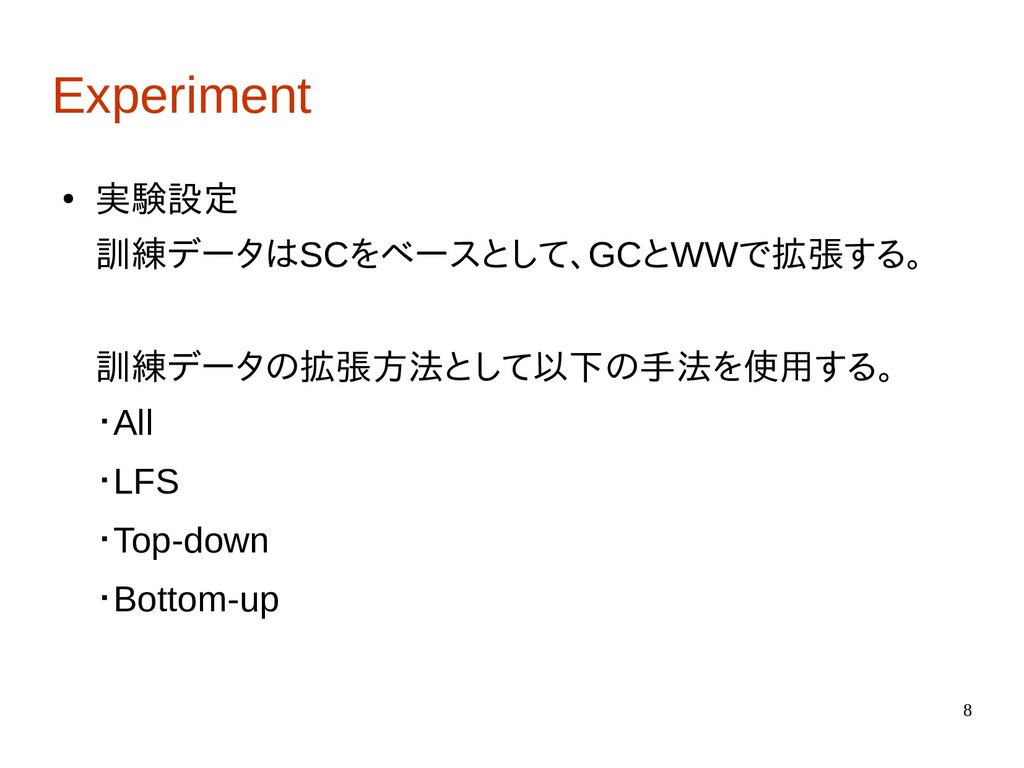
8 Experiment • 実験設定 訓練データはSCをベースとして、GCとWWで拡張する。 訓練データの拡張方法として以下の手法を使用する。 ・All ・LFS ・Top-down ・Bottom-up
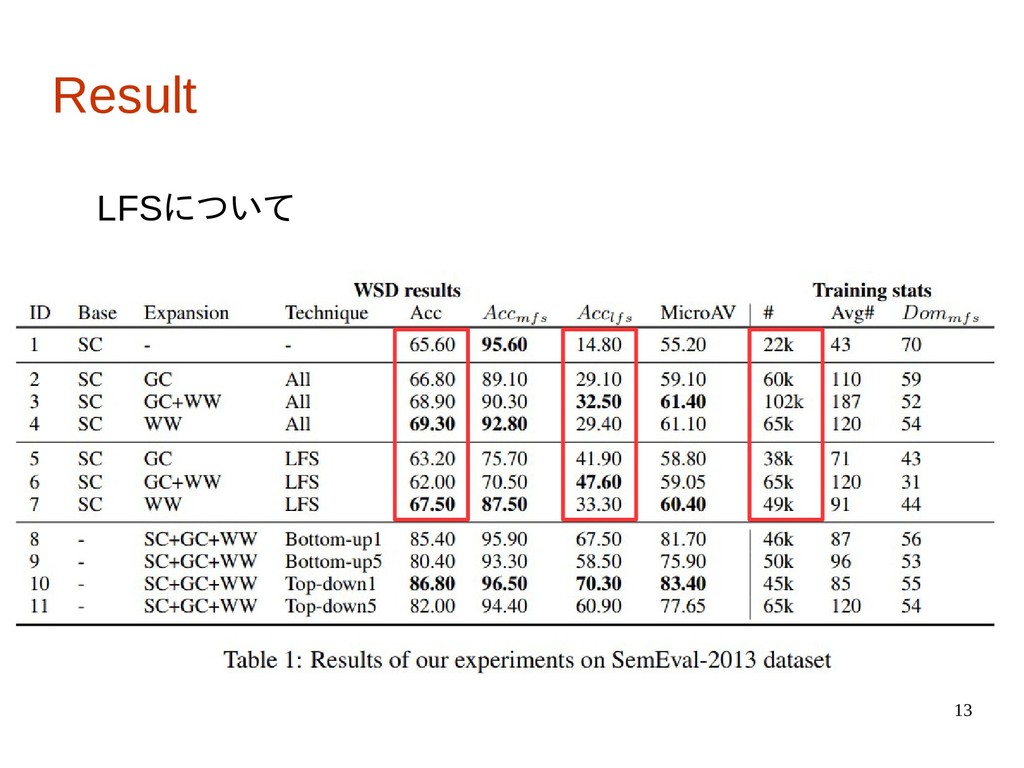
9 Experiment ・All MFSとLFSのインスタンスを両方加える。 ・LFS LFSのインスタンスのみ加える。
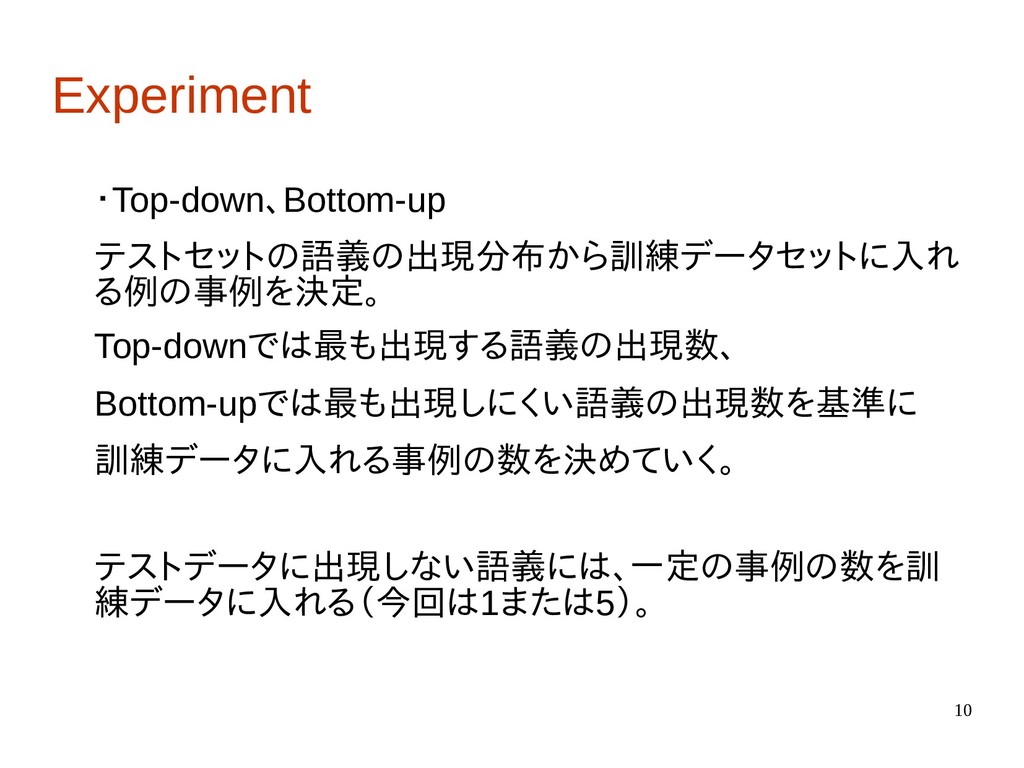
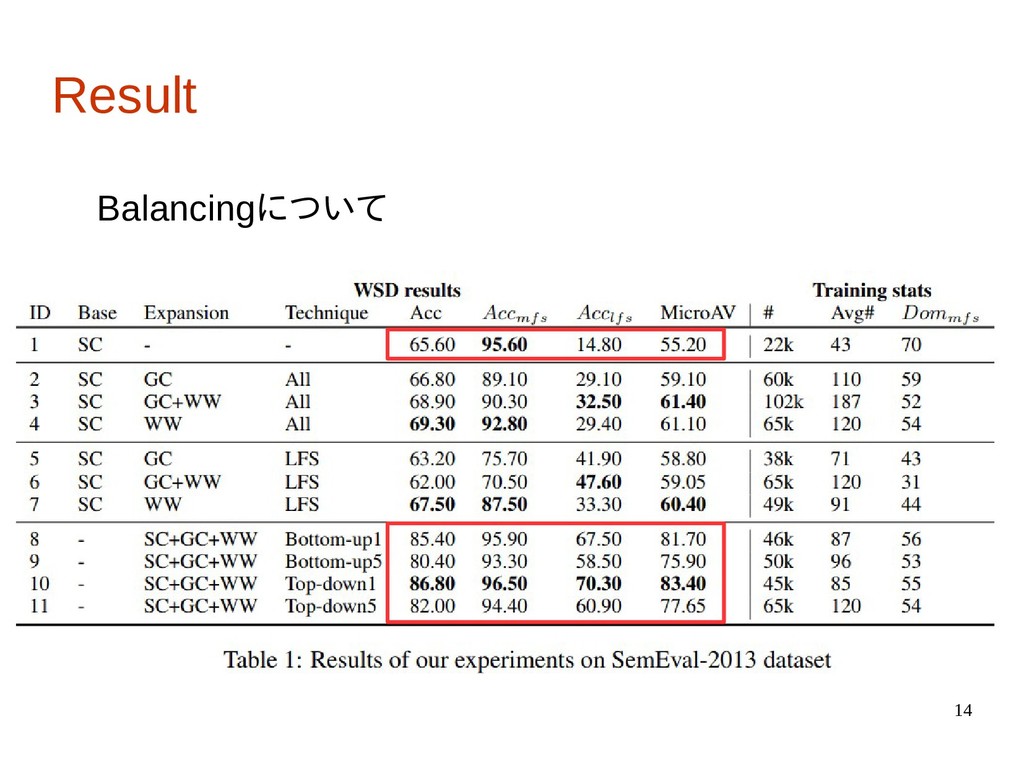
10 Experiment ・Top-down、Bottom-up テストセットの語義の出現分布から訓練データセットに入れ る例の事例を決定。 Top-downでは最も出現する語義の出現数、 Bottom-upでは最も出現しにくい語義の出現数を基準に 訓練データに入れる事例の数を決めていく。 テストデータに出現しない語義には、一定の事例の数を訓 練データに入れる(今回は1または5)。
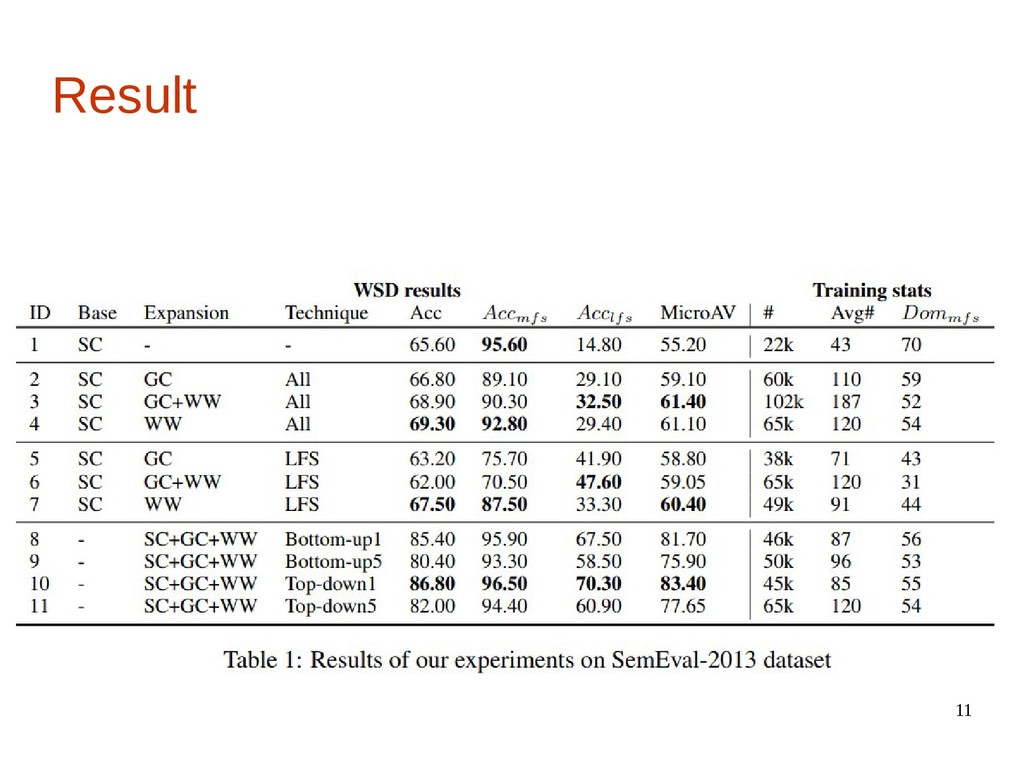
11 Result
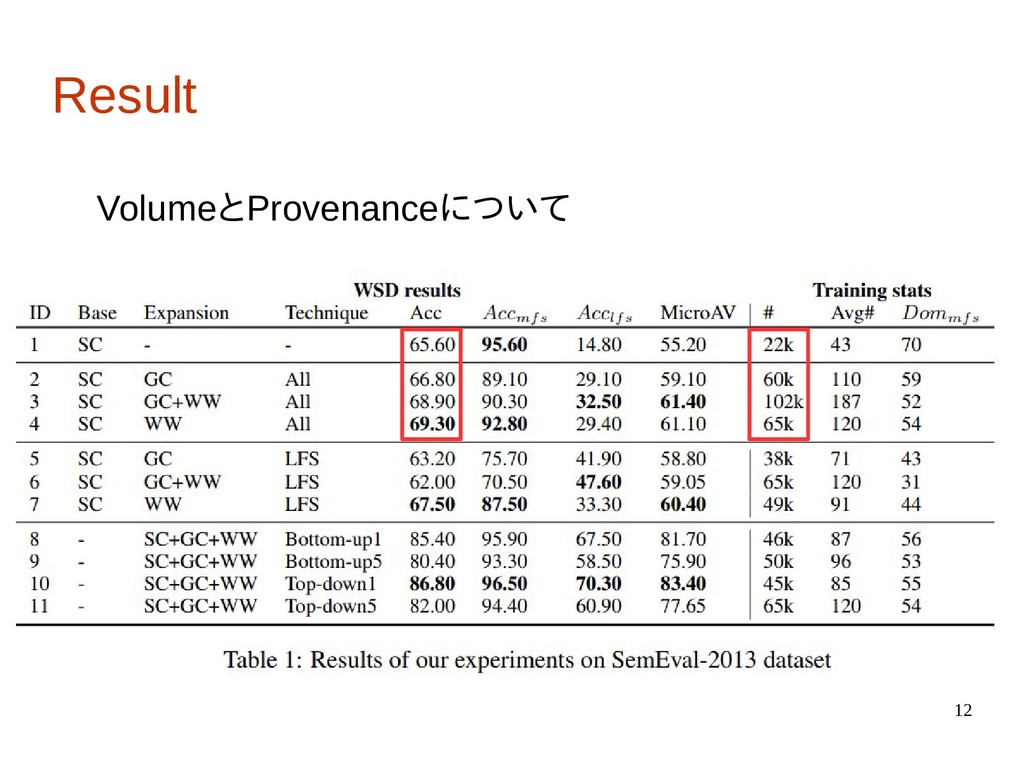
12 Result VolumeとProvenanceについて
13 Result LFSについて
14 Result Balancingについて
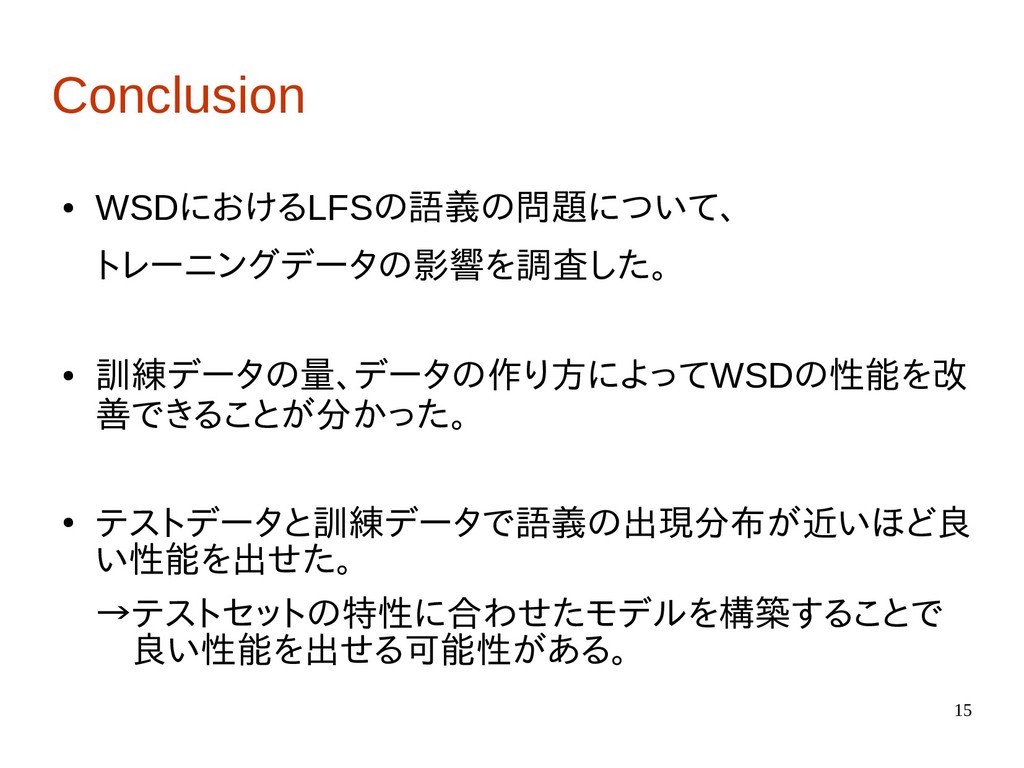
15 Conclusion • WSDにおけるLFSの語義の問題について、 トレーニングデータの影響を調査した。 • 訓練データの量、データの作り方によってWSDの性能を改 善できることが分かった。 • テストデータと訓練データで語義の出現分布が近いほど良
い性能を出せた。 →テストセットの特性に合わせたモデルを構築することで 良い性能を出せる可能性がある。


 masaya82
 sergeychernyshev
 katarinadahlin
 akademiya2063
 portentint
 axbom
axbom
 badams
 kastner
 addyosmani
 palkan
 cromwellryan
 cassininazir
 bryan
bryan