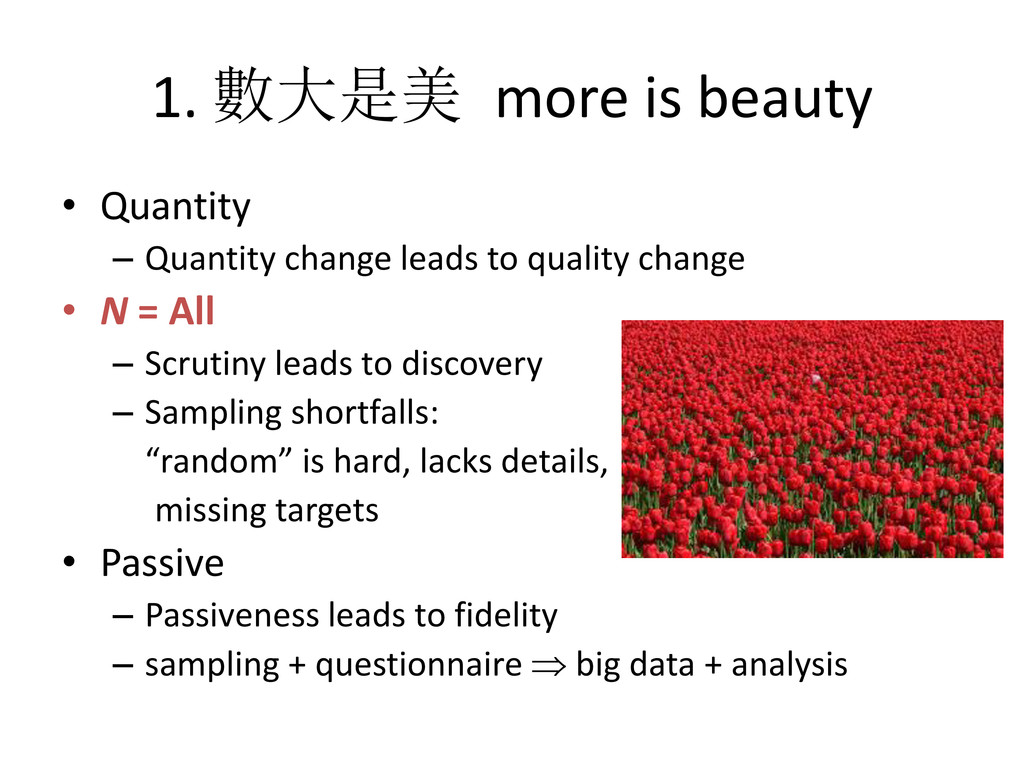
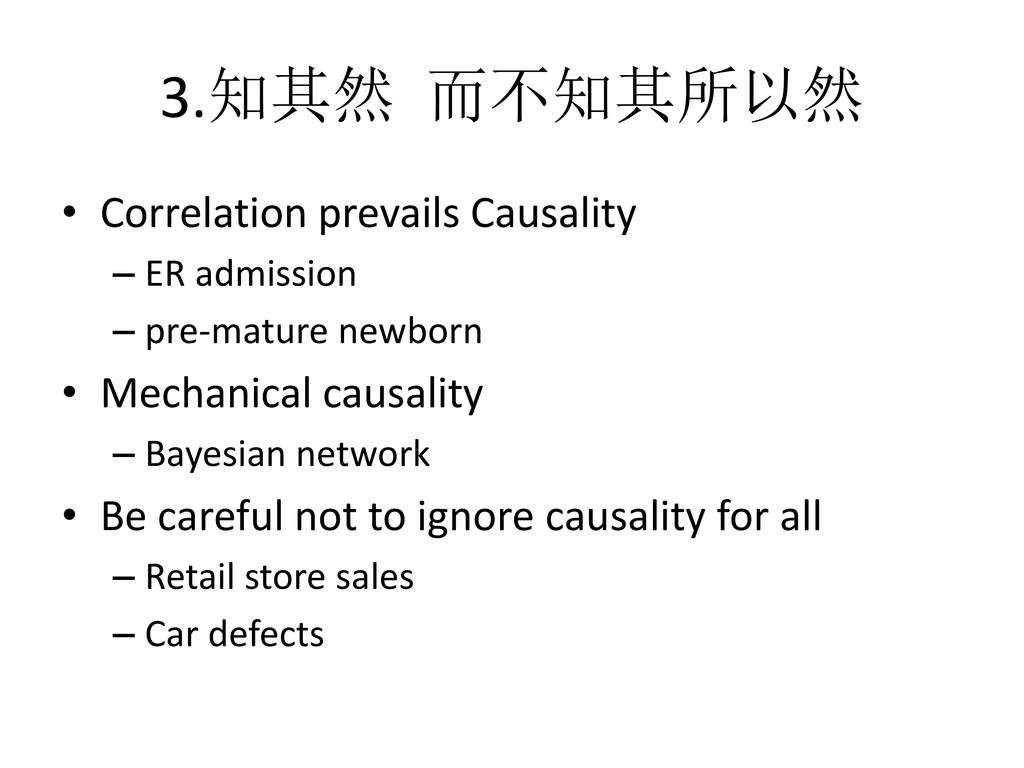
leads to quality change • N = All – Scrutiny leads to discovery – Sampling shortfalls: “random” is hard, lacks details, missing targets • Passive – Passiveness leads to fidelity – sampling + questionnaire big data + analysis
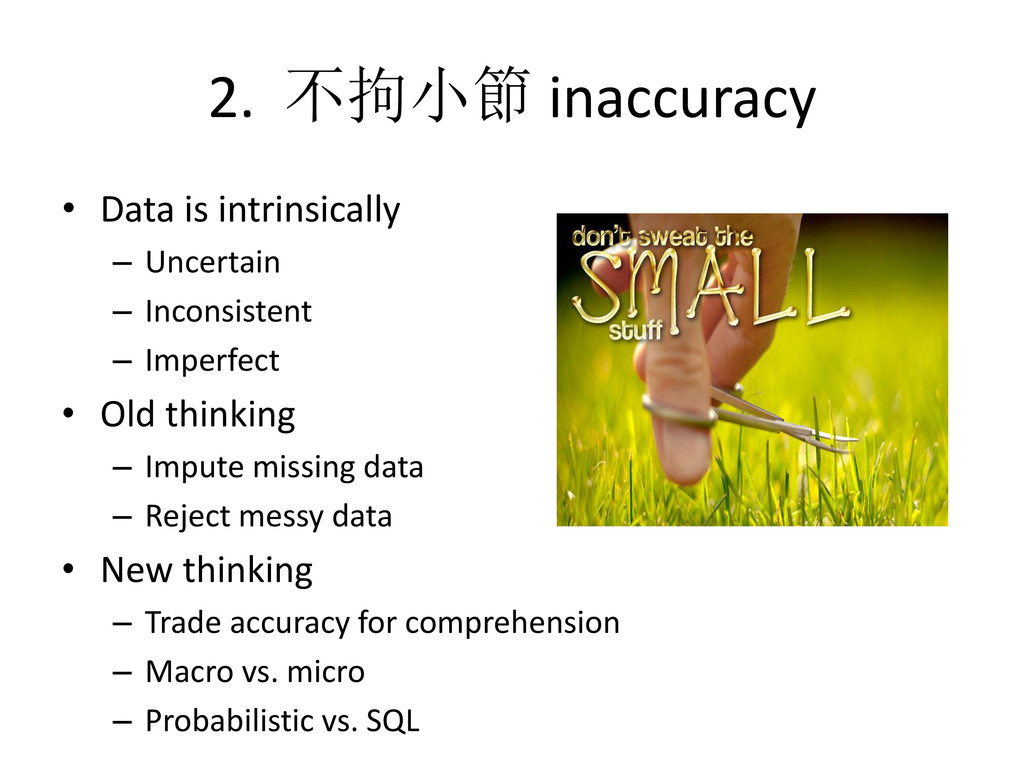
Inconsistent – Imperfect • Old thinking – Impute missing data – Reject messy data • New thinking – Trade accuracy for comprehension – Macro vs. micro – Probabilistic vs. SQL
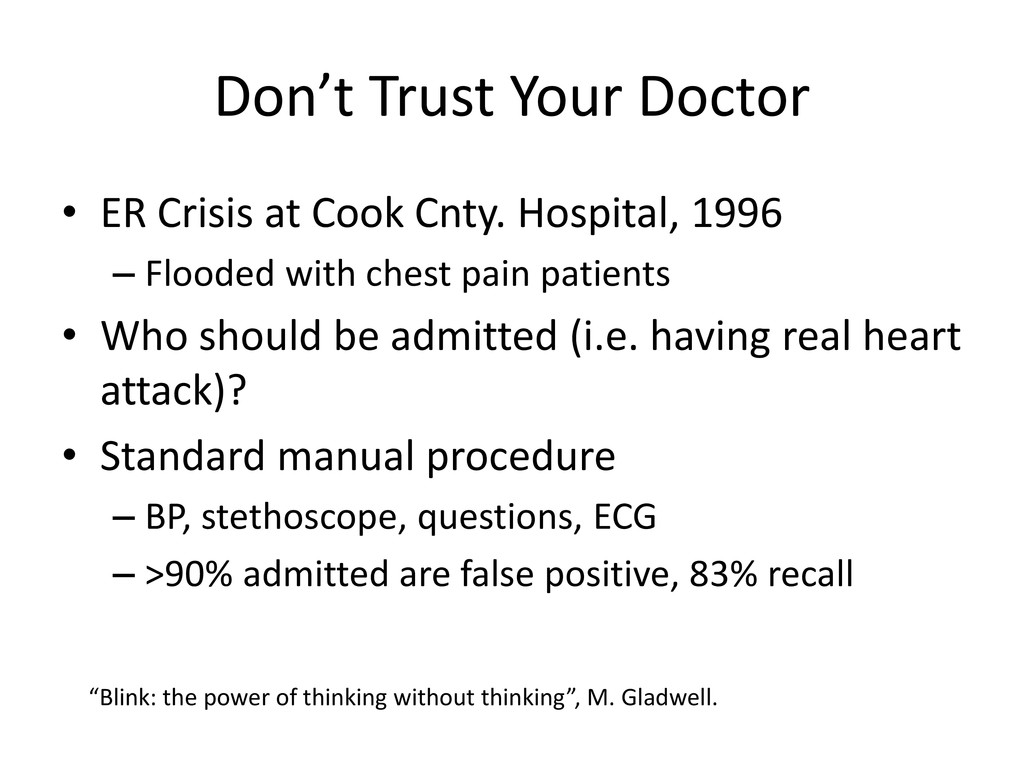
Hospital, 1996 – Flooded with chest pain patients • Who should be admitted (i.e. having real heart attack)? • Standard manual procedure – BP, stethoscope, questions, ECG – >90% admitted are false positive, 83% recall “Blink: the power of thinking without thinking”, M. Gladwell.
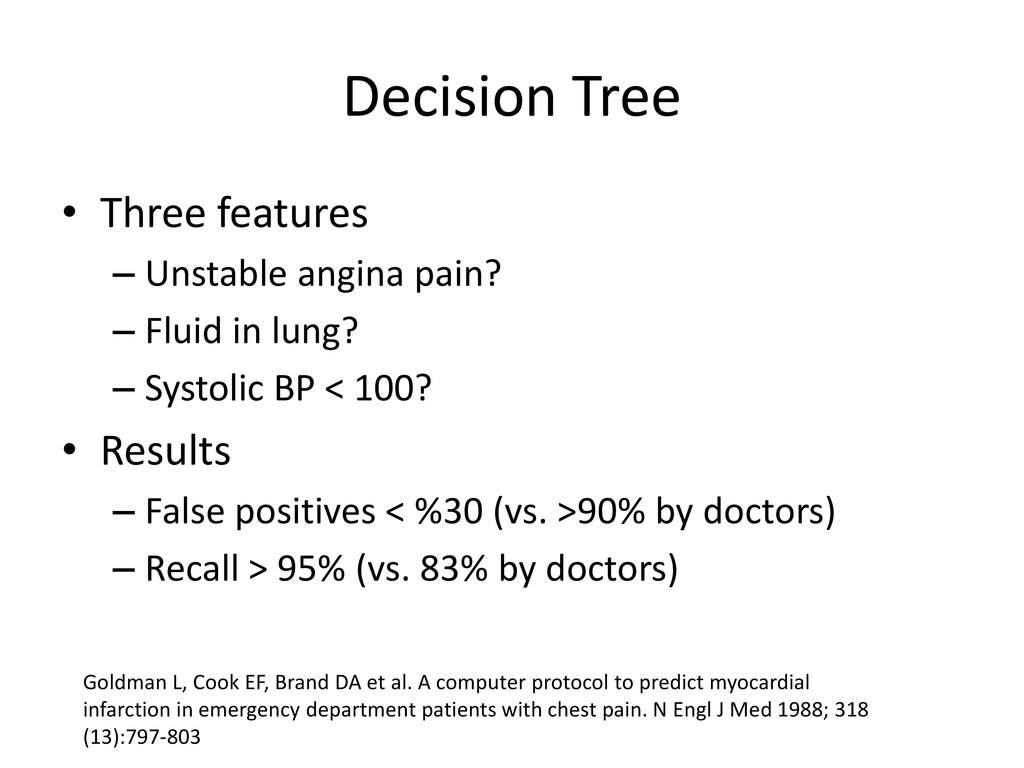
Fluid in lung? – Systolic BP < 100? • Results – False positives < %30 (vs. >90% by doctors) – Recall > 95% (vs. 83% by doctors) Goldman L, Cook EF, Brand DA et al. A computer protocol to predict myocardial infarction in emergency department patients with chest pain. N Engl J Med 1988; 318 (13):797-803


 mc2013
 mraible
 baasie
 mlcsv
mlcsv
 bkeepers
 maggiecrowley
 portentint
 tmiket
 reverentgeek
 sonatard
 letsgokoyo
 kevinliebholz